




Abstract
People complain that they do not know what to say to soften the blow of social rejection. The adoption of language principles (i.e., avoiding apologies while using positive regard, sincere alternatives, and more words) may mitigate the negative consequences of social rejection. Does training help people independently exhibit greater communication skill or do people fail to perform despite “knowing better?” In Study 1, drift diffusion modeling suggested that training helped people “know it when they see it” (i.e., recognize precrafted wording options which better conveyed the language principles). Study 2 found that training aided people’s success in independently crafting wording to convey the language principles. The current research highlights that existing social rejector frameworks and previous research on skill acquisition do not capture the experience of nonpunitive rejectors and presents a way that psychological science can address people’s concerns about how to soften the blow of social rejection.
Introduction
Imagine you are sitting on an airplane next to a stranger who keeps trying to start a conversation. What do you say to reject their conversation attempt that will not hurt their feelings? If you were given advice about language principles to consider, would you be able to translate that advice into specific words to say to your seatmate? In other social domains, people can learn new communication strategies in the abstract, but they cannot always enact them in relevant situations (Alfano et al., 2008; Beidel et al., 1999; Hirsch et al., 2004). Research on social rejection has mostly focused on the recipient of the rejection, but the little research on social rejectors suggests that people often want to protect others’ feelings but do not feel they know what to say to soften the blow of their rejection (Baumeister et al., 1993; Besson et al., 1998; Ciarocco et al., 2001; Folkes, 1982). Previous research raises some helpful general principles which may soften the blow of social rejection (Freedman et al., 2016; Freedman et al., 2017), but can training help people independently select specific words, or are they reliant on options to pick from? Research which investigates an effective and easily disseminated training program will be helpful in advancing what psychological science can tangibly do to help people who do not want to hurt others through social rejection. Therefore, the current research investigates whether educating people about language principles proposed to soften the blow will help them identify (Study 1) and generate (Study 2) social rejection messages which contain wording aligned with the principles.
The negative consequences of social rejection for rejectees are well known but much less is understood about social rejectors (e.g., Baumeister et al., 2007; Leary, 1990, 2010; Williams, 2009; but see Freedman et al., 2016, 2017). Social rejection is associated with a host of negative consequences for rejectees such as loneliness and aggression (Asher & Paquette, 2003; Boivin et al., 1995; DeWall & Bushman, 2011; Jones, 1990; Leary et al., 2001; McDougall et al., 2001). Yet very little attention has been paid to the ways that social rejectors can minimize the negative consequences. In contrast to bullies who socially reject others for entertainment or power (e.g., Olweus, 1995; Vaillancourt et al., 2009; Wesselmann et al., 2013), social rejection frequently occurs for reasons that are neither punitive nor exploitative. Social rejectors who are not motivated by punishment or entertainment tend to be concerned about protecting the feelings of the rejectee, yet they do not know what to say to soften the blow (Baumeister et al., 1993; Besson et al., 1998; Ciarocco et al., 2001; Folkes, 1982).
What Language Principles Should People Be Trained On?
What might people say to soften the blow of social rejection? While the wording of a social rejection needs to be tailored for each situation, the Responsive Theory of Social Exclusion suggests language principles to aid word selection to soften the blow of the social rejection (Freedman et al., 2016). Specifically, four language principles have been theorized to be beneficial for delivering a social rejection: avoiding apologies, using positive regard, offering a sincere alternative, and using more words (Freedman et al., 2016, 2017).
For example, while apologies can be helpful to appease others after social transgressions (Darby & Schlenker, 1982; Hodgins & Liebeskind, 2003), apologizing after a transgression that is perceived as intentional can backfire (Struthers et al., 2008). Social rejections are often perceived as more intentional than other social transgressions (Freedman et al., 2016). Despite many people offering apologies in the hopes of softening the blow, previous research finds that apologies are not helpful in mitigating hurt feelings from a social rejection (Freedman et al., 2017). In contrast, positive regard and offering sincere alternatives are associated with better outcomes for both parties (Aamodt & Peggans, 1988; Feinberg et al., 1996). Positive regard is conveyed with words which communicate the value of the rejectee to the rejector (e.g., “I have so much fun with you, but I do not want to go to lunch today”; Freedman et al., 2016). Alternatives to the request must be sincere and feasible (e.g., “I cannot go today but I can next Monday” rather than a vague promise of an alternative meeting; see Freedman et al., 2016). Finally, responsiveness in a conversation has been associated with greater feelings of control and more favorable impressions of both people involved in a rejection (Davis & Perkowitz, 1979); taking the time to say more is one way to communicate responsiveness (Freedman et al., 2016).
Skill Acquisition and the Difference between Knowing and Doing
While it may be tempting to think that deciding on wording which embodies the principles (i.e., positive regard, avoiding apologies, sincere alternatives, and more words) would be an easy thing to train people to do, it is important to understand to what extent training helps people know what to do in theory or whether they can independently transfer that knowledge into action. That is, theory and previous research on skill acquisition point to knowing versus doing as different mechanisms by which people acquire new skills (e.g., Anderson, 1982; Dreyfus, 2004; Gresham, 1998; Schmidt, 1975; Turner et al., 2017).
People are characterized as having acquired knowledge of a new skill to the extent that they know what to do in theory (Anderson, 1982; Dreyfus, 2004; Schmidt, 1975). They may be able to recite rules or use rules to make decisions about externally provided options. However, knowledge of the new skill is distinguished from the extent to which people can do the new skill, that is, the extent that they can independently translate new knowledge into action for a particular situation (Anderson, 1982; Dreyfus, 2004; Gresham, 1998;Schmidt, 1975; Turner et al, 2017). People are characterized as having the ability to do the new skill when they can generate their own skilled behavior in a situation they were not specifically trained on. Although the details vary, theories of skill acquisition characterize the translation of knowledge into behavior as a distinct mechanism of acquisition which may reflect the development of new cognitive schema (Anderson, 1982; Dreyfus, 2004; Schmidt, 1975). These schema enable people to flexibly integrate their skilled knowledge (e.g., rules for social rejection communication) with situation-specific information to independently enact behavior without the need for external options.
Social interactions are one domain in which people can fail to independently execute skilled behavior despite adequate knowledge as previously demonstrated in lab environments and in everyday life (Alfano et al., 2008; Beidel et al., 1999; Hirsch et al., 2004). For example, interventions intended to build conflict resolution skills do not always have the intended result. People can acquire new knowledge from interventions about things they can do to reduce conflict during interpersonal interaction, but still fail to implement what they have learned when choosing what to say (Bradbury & Bodenmann, 2020; Bradbury & Lavner, 2012; Hielscher et al., 2021; Neff & Karney, 2005).
Similarly, there is potential for disconnection between knowledge and behavior when training people on the language principles recommended to soften the blow of social rejection. The recommended language principles do not provide specific words to use in a social rejection (Freedman et al., 2016). Instead, they provide general guidelines to aid word selection. After training, a person may know in theory they are supposed to use positive regard, but they must decide on wordings which convey positive regard. That wordings may differ depending on the situation, the person they are rejecting, etc. If after training, people have acquired skilled knowledge of social rejection communication, then they may be able to recognize wording which better conveys the principles. However, acquisition of skilled knowledge is theoretically distinguished from the acquisition of behavioral skill. If after training people have acquired the behavioral skill of social rejection communication, then they will produce their own specific wordings which convey the principles when faced when socially rejecting someone. Finally, previous research suggests that a failure to perform despite knowing better may be especially likely in stressful situations (Beilock & Carr, 2001). Social rejection tends to be stressful; people characterize social rejection as difficult and stressful when they reject others in the lab and everyday life (Bastian et al., 2012; Bohns & DeVincent, 2019; Ciarocco et al., 2001; Joel et al., 2014; Legate et al., 2013). Therefore, it is important to test the extent to which training can aid people’s word selection for social rejection, the extent to which they can generate their own words independently, and to explore whether stress plays a role in people’s use of their training.
Drift Diffusion Modeling and the Psychological Characterization of Wording Choice Shaped by Skilled Knowledge and Skilled Behavior
Drift diffusion modeling (DDM: Ratcliff, 1978) is an analytical approach from decision science which provides insight into how word selection may be shaped by skilled knowledge and skilled behavior (e.g., Flagan et al., 2017; Krajbich et al., 2012; Milosavljevic et al., 2010). This approach moves beyond considering the extent to which someone chooses wording which incorporates helpful language principles or how quickly they select among wording options.
Conceptually, DDM estimates decision parameters by integrating the probability that someone will choose an option (e.g., wording options which do or do not incorporate helpful language principles) with properties from their response time distribution. For example, DDM can characterize whether an individual’s proportion of wording preferences tends to stay consistent across their shorter and longer response times or changes across different quantiles of their response time distribution (White & Poldrack, 2014). DDM posits that different integrations of choice proportions and response time distribution reflect the extent to which decisions are driven by real-time analyses of decision options and by knowledge activated prior to seeing the options (White & Poldrack, 2014). Specifically, two DDM parameters reflect the distinction made in theories of skill acquisition (Anderson, 1982; Dreyfus, 2004; Schmidt, 1975) between skilled knowledge (i.e., drift rate, that is, analyses of the options presented to participants) and skilled behavior (i.e., starting point, that is, expectations about what to say activated before options are presented).
Present Research
In the present research, two studies examined the extent to which people benefitted from training on principles to consider when deciding what to say when socially rejecting someone (i.e., avoiding apologies, using positive regard, using sincere alternatives, and using more words). Study 1 tested whether training helped people acquire skilled knowledge, that is, the ability to distinguish wording options which incorporate the principles. Furthermore, Study 1 applied DDM to test whether training significantly changed decision parameters which reflect the contribution of skilled behavior and skilled knowledge. Study 2 tested whether the training helps people acquire skilled behavior, that is, the ability to independently generate social rejection wording that is guided by the principles (and explored whether training effects are undermined by stress). We hypothesized that if training helps people acquire skilled knowledge and behavior for social rejection communication, then training should increase people’s ability to recognize (Study 1) and generate wording (Study 2) that better aligns with the principles. An alternative hypothesis is that the training enhances skilled knowledge but not the acquisition of skilled behavior. It may be that training only helps people recognize wording which carries out the principles (“know it when they see it”: Study 1) but fails to significantly improve their ability to independently craft their own wording (Study 2).
Study 1
Study 1 investigated whether a training program could help improve skilled knowledge of social rejection communication, that is, people’s ability to recognize social rejection wording that better conveys the principles of positive regard, sincere alternatives, and more words while avoiding apologies. Participants were randomly assigned to either the control or training condition and then immersed in a narrative game in which they encountered various scenarios where they needed to socially reject various people (e.g., friends, co-workers, classmates, and family members). For each social rejection scenario, participants had to select between two options of what they would say in the situation. One social rejection wording option drew on one of the language principles and one option did not. That is, participants had to recognize and select wording that employed the principle (i.e., “Can we go see a movie tomorrow night instead?”), rather than select the principle discussed in the training (i.e., offer a sincere alternative). If social rejection language training improves people’s social rejection communication, then they should be better at identifying wording that conveys the principles of positive regard, sincere alternatives, more words, and no apologies when compared to individuals in the control condition.
Furthermore, DDM (Ratcliff, 1978; Stone, 1960) was applied to participant responses and reaction times to compute parameter estimates which more comprehensively characterize the underlying psychological effects of the training condition. Parameters computed by DDM reflect the distinction made in theories of skill acquisition (Anderson, 1982; Dreyfus, 2004; Schmidt, 1975) between skilled knowledge (i.e., drift rate, that is, analyses of the options presented to participants) and skilled behavior (i.e., starting point, that is, expectations about what to say which are activated before options are presented). If the training impacts people’s skilled knowledge of social rejection communication, then people’s confidence in committing to a wording option once they have seen their choices should be improved (i.e., increased drift rate in the training versus control condition). And/or if the training impacts people’s skilled behavior, then people will shift their expectations toward using the principles before they know their specific choices (i.e., starting point will be closer to the principle options in the training condition compared to the control condition).
Method
Participants
After preregistered criteria were applied (https://osf.io/pb68t/overview?view_only=a3a092a478084e9399a77cac49666dac), 506 participants (see Table 1 for demographic information) from a large university took part in the study for course credit and were included in the analyses. As preregistered, participants were excluded for failing the manipulation check (i.e., not indicating whether they had watched the training or control video; n = 3, Control condition and n = 4, Training condition), not providing their age (n = 1, Training condition), or having average reaction times (n = 1, Training condition) or language decision averages (n = 2, Control condition) that fell three standard deviations above or below the sample mean. An additional two participants were excluded because they did not follow instructions (i.e., watched both control and training condition videos; n = 1, Control condition) or because of computer error (i.e., the participant could not see the computer screen; n = 1, Training condition). The 506 participants met the target participant number established in a preregistered power analysis (G*Power 3.1; Faul et al., 2009) which aimed for 80% power in detecting d = 0.25 at p < 0.05 for an independent samples t-test.
Demographic Information for Participants in Study 1 and Study 2.
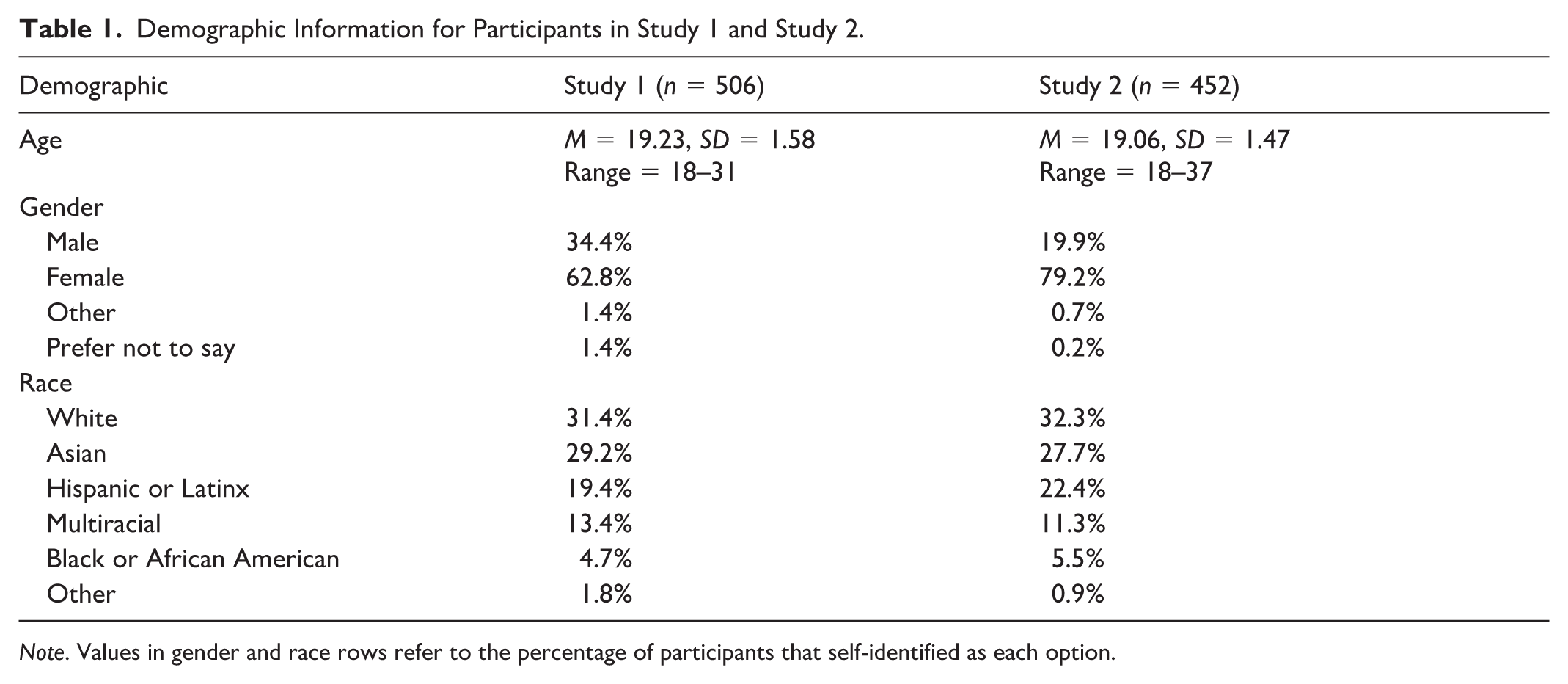
Note. Values in gender and race rows refer to the percentage of participants that self-identified as each option.
Procedure
Overview
After providing informed consent, participants were randomly assigned to the training (n = 253) or Control (n = 253) condition. They completed a narrative video game and questionnaires about individual differences, demographics, and a manipulation check (see Supplemental Material: https://osf.io/pb68t/overview?view_only=a3a092a478084e9399a77cac49666dac). The study took approximately 1 hr. We report all preregistered manipulations, measures, exclusions, and analyses; any deviations are indicated. No additional data collection occurred after data analyses began.
Training Manipulation
Participants were randomly assigned to watch a social rejection language training video or a control video. Participants in the training condition watched a 12 min, 32 s social rejection language training video that consisted of advice on using positive regard, sincere alternatives, more words, and avoiding apologies when communicating a social rejection. The video discussed each of the language principles individually and provided one example of phrasing in the context of a cartoon social rejection scenario. In other words, the video emphasized guidelines for social rejectors to consider when wording a social rejection but did not provide an exhaustive list of exact words and phrases to use for any imaginable social rejection. Participants in the control condition watched a 12 min, 19 s video that gave a tour of European cities. The control video was selected to be similar in duration as the training video and to be devoid of social interaction advice.
Interactive Narrative Game
All participants completed an interactive narrative video game (see Freedman et al., 2018; Okland & Beer, 2025) with 20 embedded social rejection scenarios. In the game, participants experienced a study abroad program where they made a variety of forced-choice decisions about where they would like to go, who they would like to spend time with, and what they would like to say to people they socially rejected. In each social rejection scenario, participants were presented with two wording options. One option drew on the principle of no apology, positive regard, sincere alternatives, or more words (five scenarios for each language principle), and one option did not draw on any of these language principles (see Table 2 and https://osf.io/pb68t/overview?view_only=a3a092a478084e9399a77cac49666dac). The social rejection scenarios contained forced-choice options because the drift diffusion modeling analysis (see below) requires only two answer choices. The right-left position of the option which drew on a language principle was counterbalanced across the game. Responses and reaction times were recorded. As preregistered, trials which exceeded three standard deviations from the average reaction time were excluded (Voss et al., 2015).
Examples of Social Rejection Wording Choices in Study 1.
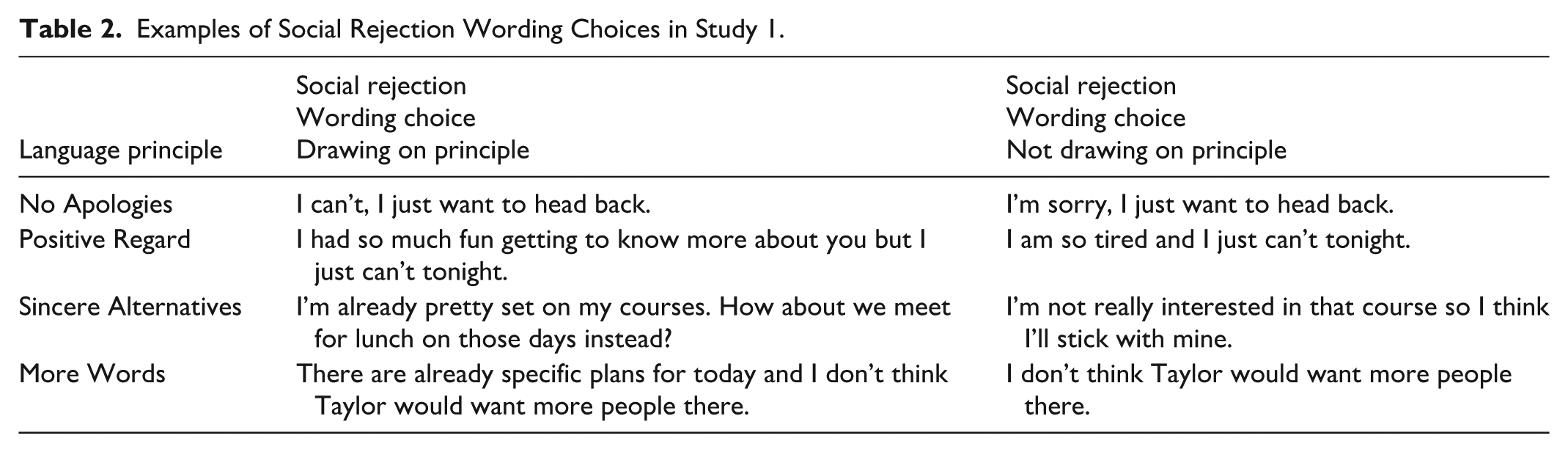
Social Rejection Wording
Wording choices that drew on the four language principles were coded as “1” and wording choices that did not draw on the four language principles were coded as “0.” Summary scores were created for each participant.
Manipulation Check
Participants indicated which video they watched (A = “Walk Through Europe,” B = “I didn’t watch a video,” C = “Training Video on Social Rejection”). Participants passed the manipulation check to the extent that they endorsed “Walk Through Europe” for the Control condition or endorsed “Training Video on Social Rejection” in the Training condition.
Drift Diffusion Modeling
DDM was used to obtain independent parameter estimates which characterize psychological mechanisms consistent with the acquisition of skilled knowledge and skilled behavior. The DDM was conducted with fast-dm (Voss & Voss, 2007), and was fit to accuracy (i.e., selecting the option which drew on a manipulated language principle) and response time. The current study focused on drift rate (v) and starting point (zr) among seven total parameters (see Supplemental Material). Parameter v estimates the rate at which information is accumulated in order to feel confident to endorse one of the two possible options (i.e., make a decision). Parameter zr estimates how much the starting point for evaluation favors one end of a continuum between 0 (the lower threshold) and a (the upper threshold). In this study, the lower threshold (0) corresponded to social rejection wording choices that did not incorporate one of the manipulated language principles, and the upper threshold (a) corresponded to social rejection wording choices that did incorporate one of the manipulated language principles. The starting point and drift rate were estimated for all participants. Model fit was assessed with the Kolmogorov–Smirnov (KS) statistic; all participants met the preregistered inclusion criteria of fitness at p < .05.
Drift Rate: Reflection of Skilled Knowledge
Drift rate estimates were obtained from the DDM analysis to investigate the extent to which participants felt they knew the right answer once they saw it. Drift rate reflected the extent to which participants’ processing of wording choices was facilitated (e.g., they feel confident enough to endorse an option after accumulating evidence). The higher the drift rate, the more quickly a participant was able to accumulate their subjective level of evidence needed to choose between the options.
Starting Point: Reflection of Skilled Behavior
Starting point estimates were obtained from the DDM analysis to investigate the extent to which participants activated a schema about what to say before knowing the externally provided wording options. Starting point reflected the extent to which people a priori activated knowledge about possible wording which would convey the social rejection language principles before knowing their choices (i.e., to the extent that it favored the upper threshold over the lower threshold of the decision space continuum, see DDM above).
Results
Training Increased Selection of Wording Options Which Better Carried Out the Language Principles
Analyses were conducted using R, including the tidyverse (Wickham et al., 2019), dplyr (Wickham et al., 2021), e1071 (Meyer et al., 2021), and QuantPsyc (Fletcher, 2012) packages. As hypothesized, the training condition was associated with significantly more wording choices on average that drew on the language principles (compared to the Control condition: t(504) = −20.53, p < .001, d = 1.83; see Table 3). Preregistered exploratory analyses tested whether the training significantly changed wording choices within the categories of no apology, positive regard, sincere alternative, and more words. Participants who received training were significantly more likely to select social rejection wording choice options for each of the principles they were trained on (no apology: t(504) = −22.50, p < .001, d = 2.00; positive regard: t(504) = −6.17, p < .001, d = 0.55; sincere alternative: t(504) = −5.64, p < .001, d = 0.50; more words: t(504) = −9.63, p < .001, d = 0.86).
Means and Standard Deviations of Study 1 Dependent Variable Measures.
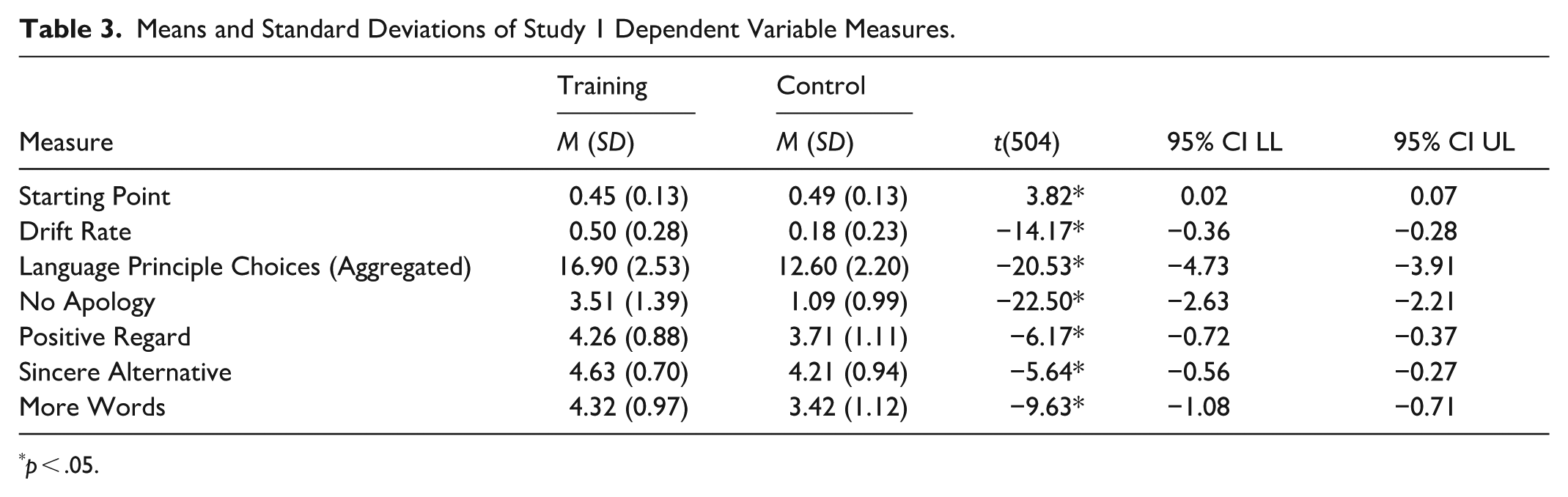
p < .05.
Training Significantly Facilitated Processing Between Language Options and Was Associated with Starting Point
As hypothesized, participants showed facilitated drift rate in the training condition compared to the control condition. An independent samples t-test found that the training condition was associated with significantly higher drift rates than the control condition (t(504) = −14.17, p < .001, d = 1.26; see Table 3). That is, participants who received language training showed facilitated processing of wording options (e.g., were quicker to reach their subjective level of internal confidence needed to commit to one option over the other once they knew what the options were).
Training also showed significant effects on the starting point parameter. An independent samples t-test found that the starting points were significantly different across the control and training conditions (t(504) = 3.82, p < .001, d = 0.34; see Table 3). In the control condition, the starting point was not significantly different from guessing (e.g., midway between the two language options: t(252) = −0.86, p = .389, d = 0.05), yet the starting point in the training condition was significantly different than guessing and closer to the option which did not draw on a language principle: (t(252) = −6.14, p < .001, d = 0.39). When participants received social rejection language training, their generalized expectations of what to say (i.e., before even knowing the exact options for that situation) did not tend to favor wording drawing on the language principles.
Discussion
Study 1 found that the social rejection language training program can help people identify and choose language from precrafted options which draw on the principles of positive regard, sincere alternatives, more words, and avoiding apologies. Participants who received social rejection language training overall selected more options which drew on the language principles, and preregistered exploratory analyses found that these choices improved for each of the language principles discussed in the training. Furthermore, the DDM analysis found that, in this study where participants were tasked with choosing among provided wording options (i.e., did not have to draw on wording they generated themselves), the training effects were more consistent with a change in skilled knowledge. That is, participants in the training condition showed higher drift rates which suggest that the training condition facilitated people’s feeling that they knew the right answer once they saw it. Taken together, the results of Study 1 support the notion that the training can help people acquire skilled knowledge such that they “know it when they see it” when it comes to recognizing which of two wording options is better at conveying the recommended language principles. However, participants in this study did not have to generate their own wording. Therefore, it remains unknown as to whether this same training can help people increase their skilled behavior for social rejection communication, that is, generate their own social rejection wording.
Study 2
Study 2 examined whether training helped improve behavioral skill in social rejection communication, that is, social rejectors’ ability to generate their own situation-specific social rejection wording. It also explored whether the training effects were undermined by feelings of stress. Participants were randomly assigned to receive training or a control condition, then believed they were meeting new acquaintances (that were actually confederates), and eventually had to send a social rejection message to one of them. If the training improves people’s skilled behavior, that is, independent generation of social rejection words which carry out the language principles, then participants who received training should generate words which include fewer apologies, convey more positive regard, include more sincere alternatives, and contain more words than those who did not receive training. Furthermore, previous research in other domains suggests failure to benefit from training may be especially pronounced when stress is higher (Bradbury & Bodenmann, 2020; Bradbury & Lavner, 2012; Hielscher et al., 2021; Knowles et al., 2015; Neff & Karney, 2005; Pearce et al., 2022). Therefore, a preregistered exploratory analysis tested the hypothesis that training effects may be moderated by stress. That is, in the training condition, participants who report greater stress should be less likely to show training effects in their social rejection wording (i.e., wording which included more apologies, conveyed less positive regard, included fewer sincere alternatives, and contained fewer words).
Method
Participants
As preregistered (https://osf.io/5gfxr/overview?view_only=f3bf5dc30e2342fe97b90fe7fb11e631), 452 participants (see Table 1 for demographic information) from a large university took part in the study for course credit. As preregistered, additional participants were excluded for not following directions (e.g., their message did not include a social rejection: n = 2, control condition, n = 2, training condition), personally knowing the confederates (n = 2, training condition), expressing suspicion (n = 4, control condition, n = 19, training condition) or having been told by previous participants (n = 4, control condition, n = 2, training condition) that they were interacting with confederates, and expressing suspicion that their social rejection message was not delivered (n = 1, control condition). 1 Additionally, participants’ data were excluded because they asked that their data not be used after debriefing (n = 2 control condition, n = 6 training condition). Sample size was determined with an a priori power analysis (G*Power 3.1; Faul et al., 2009) which aimed for 85% power in detecting f2 = 0.02 at p < .05 for a linear multiple regression. Although we were aware that Study 1 had found larger effects of the training program (i.e., the smallest effect size was d = 0.34 and the largest was d =2.00), we decided to preregister a conservative effect size when planning our sample size to ensure adequate power in Study 2.
Procedure
Overview
After providing consent, participants were randomly assigned to watch a video (either training or control videos, see Study 1) and were asked to deliver a social rejection to an ostensible participant (see Social Rejection Task description). After being informed that they needed to socially reject someone they had been interacting with, but before completing the social rejection, participants completed a measure of their current feelings of stress for the preregistered exploratory analyses. At the end of the session, participants were probed for suspicion, then debriefed and informed that their social rejection message was not actually delivered. The session took about an hour to complete. We report all preregistered manipulations, measures, exclusions, and preregistered analyses; any deviations are indicated. No additional data collection occurred after data analyses began.
Social Rejection Task
Participants were informed that they were assigned letter “A” for the session and then led to a common area to watch their assigned video. After the video, the experimenter brought two confederates “B” and “C” to ostensibly wait for the next part of the experiment. The confederates facilitated pleasant small talk with the participant while they were waiting. After 4 min, the experimenter re-entered the room and asked for participants “B” and “C” to join them to prepare for the next task. The participant remained behind.
The experimenter then rejoined the participant and told them that they would have some time to hang out with one of the other participants before the next activity started. The experimenter reassured the participant that the social time would not extend the experimental session, and that they would still finish on time. The participant was told that as participant A, they got to choose who they would like to hang out with. The participant was also told that because the social time would not extend their session time, they would finish at the same time as the other “participants,” so they would likely see the person they did not choose to hang out with on their way out of the lab. This statement was included to increase the participant’s feeling of accountability for the social rejection.
The participant was informed that once they made their decision, they would need to write a message on the computer to the person they did not choose to let them know they did not want to hang out with them. They were also told the experimenter would be printing and delivering the message. The experimenter took the participant to a different room to write their rejection message. Before writing the message, participants completed a questionnaire (see Feelings of Stress).
Social Rejection Wording
Wording which conveyed apologies, positive regard, sincere alternative, and more words were measured with a combination of the word counting text analysis software Linguistic Inquiry and Word Count (LIWC-22; Boyd et al., 2022), language coding, and participant self-report.
Apologies
A preregistered custom LIWC-22 dictionary containing the word stem “apolog*” and the word “sorry” measured apologies. A lower frequency of words from the custom dictionary (calculated as percentage of words from the dictionary in relation to the total words) reflected greater use of the “no apologies” language principle.
Positive Regard
As preregistered, positive regard was measured with a combination of a custom LIWC-22 dictionary and judge verification. A 564-word custom dictionary was a subset of LIWC-22’s pre-existing Positive Tone dictionary which reflects positive regard (e.g., admire*, care*, enjoy*, see Supplemental Material for full dictionary). Two judges masked to condition then read through rejector language which had been flagged as containing positive regard to remove entries containing positive regard words that were negated in the context of the complete language (e.g., I do not like. . .) or used to refer to someone or something other than the rejectee (n = 21; see Supplemental Material). A higher frequency of positive regard reflected more recalled use of the positive regard language principle.
Sincere Alternatives
Participants answered the question, “When you wrote your social rejection, did you provide an alternative to hanging out during the lab session (i.e., did you offer to find another time to hang out outside of the lab)?” with Yes or No. They also answered the question, “Was this alternative sincere? In other words, did you intend to follow through on it?” with Yes or No. All social rejections, which participants indicated contained a sincere alternative were verified to actually contain an alternative invitation. A “yes” response to the question about whether their alternative was sincere indicated the rejector recalled using a sincere alternative.
More Words
The use of more words was assessed with the Word Count dimension of LIWC-22. A higher word count reflected more use of this language principle.
Feelings of Stress
Participants rated their current feelings of stress after the experimenter informed them they would be writing the social rejection message, but before they wrote the message. More specifically, participants completed a 44-item Big Five Inventory (John & Srivastava, 1999) as a filler task, and embedded within that questionnaire was a question asking them to rate their agreement with the statement “I must admit, I am feeling a little stressed” on a scale of 1 (Not at all) to 5 (Extremely). Previous research has shown one-item stress measures to be valid measures of momentary stress (i.e., Karvounides et al., 2016; Mavroudis et al., 2021). Higher scores indicated higher feelings of current stress.
Results
Social Rejection Training Significantly Predicts Wording Which More Successfully Conveys all Four Language Principles
Analyses were conducted using R, including the tidyverse (Wickham et al., 2019), dplyr (Wickham et al., 2021), e1071 (Meyer et al., 2021), and QuantPsyc (Fletcher, 2012) packages and PROCESS (Hayes, 2022). As hypothesized (https://osf.io/5gfxr/overview?view_only=f3bf5dc30e2342fe97b90fe7fb11e631), a multivariate regression analysis found that the training condition was significantly associated with wording which better carried out all four language principles (see Table 4). When people received training, they generated wording in their social rejection messages which used significantly fewer words which conveyed apology (β = −.36, p < .001; Control: M = 1.38%, SD = 2.16%; Training: M = 0.15%, SD = 0.61%), significantly more words which conveyed positive regard (β = .14, p = .003; Control: M = 3.72%, SD = 3.58%; Training: M =4.71%, SD = 3.38%), contained significantly more words overall (β = .20, p < .001; Control: M = 48.50, SD = 35.27, Range: 6 - 231; Training: M = 62.14, SD = 30.77, Range: 9 - 197), and were significantly more likely to characterize their message as including a sincere alternative (β = .23, p < .001; Control: 15.49%; Training: 35.84%). No significant confederate effects were found (see Study 2 Supplemental Material for descriptive and inferential statistics).
Inferential Statistics for Study 2 Dependent Variable Measures.
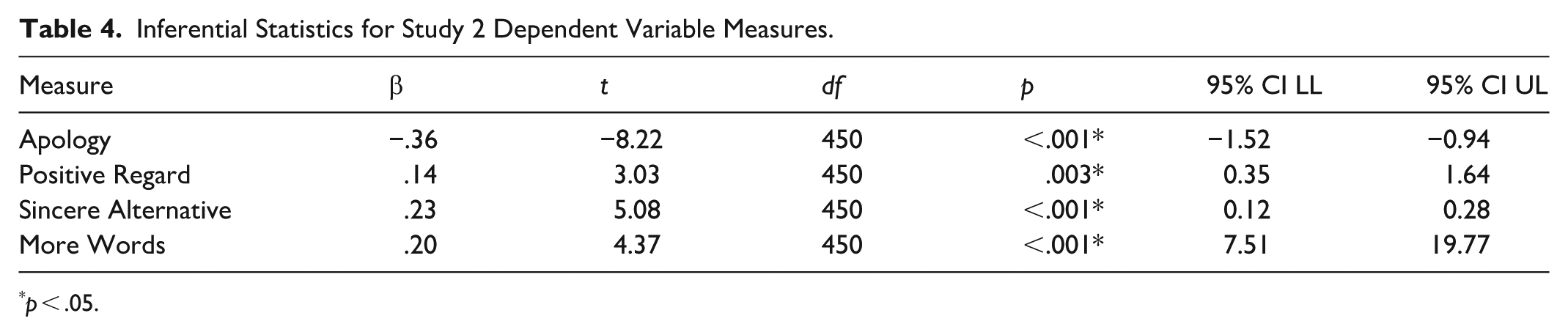
p < .05.
Exploratory Analyses of Stress
A preregistered exploratory analysis considered whether the effects of training were moderated by feelings of stress. Feelings of stress were mean-centered (mean-centering was requested by a reviewer but not pre-registered), and a regression analysis which included the main effect of the training manipulation, the main effect of individual differences in stress, and their interaction to predict wording did not find significant support for moderator effects of stress (No Apology: β = −.07, p = .109; Positive Regard: β = −.02, p = .661; Sincere Alternatives: β = .01, p = .765; More Words: β = .05, p = .279). There also was no significant main effect of stress on the extent to which wording carried out the principles (No Apology: β = .27, p = .052; Positive Regard: β = .13, p = .393; Sincere Alternatives: β = .003, p = .985; More Words: β = −.06, p = .680). A significant effect of the training condition on stress was not expected and, therefore, no analysis was preregistered to test for effects. A post hoc analysis found that the training condition was not associated with significant differences in stress (t(450) = −.65, p = .515; Control: M = 3.08, SD = 1.08; Training: M = 3.15, SD = 1.08). The exploratory analyses did not suggest that training effects were significantly qualified by stress.
Discussion
Study 2 investigated whether the training increased skilled behavior, that is, can it help people draft their own social rejection wording that reflects the principles they learned about? The results suggest that training on the broad principles of positive regard, sincere alternatives, more words, and avoiding apologies does significantly increase the extent to which people include words which reflect these principles in their social rejection messages. Consistent with previous research, participants on average found the social rejection task to be somewhat stressful (i.e., the midpoint of the rating scale on average in both conditions; Bastian et al., 2012; Bohns & DeVincent, 2019; Ciarocco et al., 2001; Joel et al., 2014; Legate et al., 2013) whether they received training or not. In other domains, stress can sometimes undermine the benefits of training (Bradbury & Bodenmann, 2020; Bradbury & Lavner, 2012; Hielscher et al., 2021; Knowles et al., 2015; Neff & Karney, 2005; Pearce et al., 2022). Our exploratory analyses did not find significant support for the possibility that people’s benefits from the training program would be undermined to the extent that they felt stressed. Study 2 results suggest that the training program aids people in their struggle to know what to say to soften the blow of social rejection, and its benefit extends to their ability to do the new skill. That is, the training increases skilled communication behavior in situations where they must come up with their own words when rejecting someone they believe they are likely to see again.
General Discussion
The present research advances knowledge about social rejectors and social skill acquisition and identifies a fruitful avenue for how psychological science can address people’s complaint that they do not know what to say to soften the blow of their social rejection (Baumeister et al. 1993; Besson et al., 1998; Ciarocco et al., 2001; Folkes, 1982). Very little research has looked at social rejector communication and does not tend to include spontaneous language (e.g., Freedman et al, 2016; Folkes, 1982). The present research provides some of the first information about social rejector’s spontaneous language and finds that they do sometimes use recommended language principles. Furthermore, they can be trained to use the recommended language principles. The training program in the current research was effective in helping people employ helpful language principles in their social rejections both when they were presented with wording options (Study 1) and when they had to generate their own wording (Study 2). That is, the training program did not specify all possible wording for any social rejection situation. Instead, it educated people on language principles which required translation into wording for a given social rejection situation. The findings have important implications for advancing theory on nonpunitive social rejection, developing an easily disseminated training program which can help people know what to say when socially rejecting others, and provides a springboard for further evidence-based aid in softening the blow of social rejection.
Specifically, the current findings suggest that nonpunitive social rejectors may operate in a somewhat different manner than suggested by (a) existing theories of social rejection and (b) previous research on acquisition of communication skill in other social domains. First, the current research highlights the importance of developing models of social rejection processes from the standpoint of nonpunitive social rejection. That is, theories developed from the standpoint of bullying tend to brand social rejectors as having poor socioemotional skills (i.e., hostile communication styles) for successfully navigating interpersonal interactions and emphasize the challenges for intervention (Espelage, 2016; Heilbron & Prinstein, 2008; Voulgaridou & Kokkinos, 2015). In contrast, the current research illustrates that nonpunitive rejectors do spontaneously use nonhostile communication such as positive regard to a certain extent. Furthermore, communication training is effective for increasing skilled communication knowledge and behavior for nonpunitive social rejectors.
The current research also highlights how social rejection communication stands in stark contrast to some previous research on social skill acquisition in other domains. When it comes to nonpunitive social rejection, people want to know what they can say to soften the blow (Baumeister et al., 1993; Besson et al., 1998; Ciarocco et al., 2001; Folkes, 1982). However, a desire to communicate better is not enough to guarantee that “knowing better” after training will translate into changes in skilled behavior. For example, research suggests that people struggle to independently translate what they learn about conflict resolution communication into appropriate wording (e.g., Bradbury & Bodenmann, 2020; Bradbury & Lavner, 2012; Hielscher et al., 2021; Neff & Karney, 2005). The current research suggests that at least when it comes to socially rejecting a stranger who they believe they will see again, people can translate their language training into appropriate wording. Taken together, the current research advances our knowledge by showing that social rejectors operate differently than bullies and differently than people faced with communication challenges in other social domains because they do respond well to training.
The present research also presents an evidence-based mechanism through which people can acquire skilled social rejection communication. For example, in its current form, the training program significantly helps people recognize wording for a variety of social rejection contexts which conveys the principles of positive regard, offering a sincere alternative, using more words, and avoiding apologies. That is, Study 1 found that participants in the training program were more likely to choose social rejection wording which reflected the principles they had been trained on and that these choices were driven by an increase in skilled knowledge (i.e., higher drift rate, that is, facilitated feelings of which wording option was correct).
Why is it helpful to have a training program that helps people identify better word choices for their social rejections from externally provided options? There are many situations where rejectors will have precrafted language options at their disposal. For example, people have begun turning to artificial intelligence (AI) tools to craft messages for tricky interpersonal situations (e.g., Fu et al., 2024; Liu et al., 2024). AI-generated responses can easily be referenced when people communicate through texting, email, dating apps, and social media websites. In fact, AI tools geared toward the communication of social rejection already exist (e.g., Bontu, 2024). The current research suggests that the training program may help people enter effective prompts in AI tools to provide them with wording which employs beneficial principles. Additionally, the training program may have long-term benefits if people first apply their new knowledge to select among AI-provided options but, in the long term, use those options to build repertoires of “go to” wording they can reference from memory. The findings from Study 1 support the notion that the training program from the current research lays the groundwork for helping rejectors address their concerns of not knowing how to soften the blow in many circumstances of social rejection.
Study 2 built on Study 1 by showing that training program benefits also extend to skilled behavior, that is, crafting one’s own message of social rejection to an acquaintance they expected to come face to face with in the future. An easily delivered training program which helps people generate their own words aimed at softening the blow of social rejection provides a step toward addressing the loneliness epidemic recently identified as a high priority public health problem (Office of the Surgeon General, 2023; Demarinis, 2020; Jeste et al., 2020; World Health Organization, n.d.). Social rejection is a significant contributor to loneliness (Asher & Paquette, 2003; Boivin et al., 1995; Jones, 1990; Leary et al., 2001; McDougall et al., 2001) and giving people a foothold on how to ameliorate its negative impact is needed. The training program from the current research is the first evidence-based program we are aware of that is focused on aiding people with their social rejection message. It is critical to have a training program tailored to the context of social rejection because helpful advice does not necessarily extend from training on how to deal with related but distinct contexts (e.g., turning down job applicants, giving criticism, or delivering bad news). For example, apologies are not helpful and sometimes make the social rejection hurt worse (e.g., Freedman et al., 2017) but can be helpful in other circumstances (e.g., Hodgins & Liebeskind, 2003). Furthermore, the training program in the current research is advantageous because it is (a) a short video (e.g., rather than a weekend workshop or lengthy book) and (b) lends itself to online posting where it could be easily referenced by programs and institutions which draw the attention of people who need help softening the blow of social rejection (e.g., dating websites, schools, meet up groups). Finally, the training program provides a strong foundation to develop additional modules such as regulation of the rejector’s sense of perceived control or emotional state.
The present research also illustrates how DDM can provide insight into social decision-making. Changes in both skilled knowledge and skilled behavior could lead to the better wording choices found in the training condition of Study 1. DDM analyses, therefore, provided unique insight by finding that training effects were more consistent with improvements in skilled knowledge (i.e., improved drift rate suggesting that participants knew what to do once they could see their options) rather than skilled behavior (e.g., no improvement in starting point which would be expected if participants brainstormed what to say before options were provided and then used those ideas to select among provided options). Additionally, Study 2 directly assessed training effects on skilled behavior but required confederate training and a slower rate of data collection than Study 1. Taken together, Study 1 illustrates the utility of DDM for understanding the contribution of skilled knowledge and skilled behavior in social decision-making when time-intensive procedures may not be practical or possible.
Conclusion
One of social rejectors’ biggest complaints is that they want to protect rejectees from the negative consequences of being rejected, but they do not know what to say to achieve this goal (Baumeister et al., 1993; Besson et al., 1998; Ciarocco et al., 2001; Folkes, 1982). The present research used a combination of immersive gaming, computational modeling, and situational manipulation to test the mechanisms through which social rejectors might acquire skilled social rejection communication. Taken together, the results show that the training significantly improved rejectors’ ability to select precrafted social rejection words (i.e., skilled knowledge) as well as generate their own responses when socially rejecting someone they knew they were likely to see again (i.e., skilled behavior). The present research illustrates how social rejectors are not well explained by existing frameworks which tend to focus on bullies and how the acquisition of social rejection communication may be less challenging than communication training in other domains. Additionally, it provides an evidence-based program to help people soften the blow of social rejection and serves as a foundation for future research examining how rejectors can take steps to minimize the negative consequences of their social rejection.
Supplemental Material
sj-docx-1-psp-10.1177_01461672261439420 – Supplemental material for Knowing versus Doing: How Much Can Training Help People Soften the Blow of Social Rejection?
Supplemental material, sj-docx-1-psp-10.1177_01461672261439420 for Knowing versus Doing: How Much Can Training Help People Soften the Blow of Social Rejection? by Sydney Okland, Gili Freedman and Jennifer S. Beer in Personality and Social Psychology Bulletin
Supplemental Material
sj-docx-2-psp-10.1177_01461672261439420 – Supplemental material for Knowing versus Doing: How Much Can Training Help People Soften the Blow of Social Rejection?
Supplemental material, sj-docx-2-psp-10.1177_01461672261439420 for Knowing versus Doing: How Much Can Training Help People Soften the Blow of Social Rejection? by Sydney Okland, Gili Freedman and Jennifer S. Beer in Personality and Social Psychology Bulletin
Footnotes

Ethical Considerations
The Institutional Review Board at the University of Texas at Austin approved both studies (Approval #2019040041 & Approval #2009080018).
Consent to Participate
All participants provided written consent for review and signature prior to participating.
Funding
The authors disclosed receipt of the following financial support for the research, authorship, and/or publication of this article: This work was supported by the National Science Foundation [NSF BCS 2017085].
Declaration of Conflicting Interests
The authors declared no potential conflicts of interest with respect to the research, authorship, and/or publication of this article.
Data Availability Statement
Data, materials, and measures for this work are publicly available on OSF.
Supplemental Material
Supplemental material is available online with this article.
Notes
References
Supplementary Material
Please find the following supplemental material available below.
For Open Access articles published under a Creative Commons License, all supplemental material carries the same license as the article it is associated with.
For non-Open Access articles published, all supplemental material carries a non-exclusive license, and permission requests for re-use of supplemental material or any part of supplemental material shall be sent directly to the copyright owner as specified in the copyright notice associated with the article.
