




Abstract
Contemporary representations of Native Peoples in mainstream U.S. society are largely scarce and inaccurate. This paper investigates individual differences in Native Peoples’ sensitivity to biased social representations of their group. Across three of the largest surveys conducted with Native Peoples in the United States (NTotal = 16,157), participants, who are more sensitive (vs. less sensitive) to misrepresentation and omission, report poorer psychological well-being (e.g., lower life satisfaction, higher anxiety, and depression). This relationship is explained, in part, by perceptions of group discrimination such that more sensitive individuals are also more attuned to the discrimination Native Peoples experience. These findings suggest that the way Native Peoples are represented or fail to be represented may negatively impact their well-being. One way to improve Native Peoples’ well-being is to systematically acknowledge and discourage omissions and misrepresentations, and to uplift diverse and accurate representations, preferably defined by Native Peoples for Native Peoples.
Introduction
Miigis, a 15-year-old Indigenous 1 student, was asked by her teacher to write a poem to describe herself. She wrote: “Two words, same meaning—Indigenous, invisible.” Miigis’s poem illustrates the prevalent misrepresentation and omission of Native Americans (henceforth referred to as Native People[s] 2 ) in society and the consequences of these biased representations for shaping an individual’s understanding of themselves, their group, and, as we contend here, their well-being (Fryberg & Eason, 2017; Fryberg & Townsend, 2008; Fryberg et al., 2008; Leavitt et al., 2015; Oyserman & Markus, 1998). Consider Miigis as she looks out into the social world for information about who she is and what is possible for someone from her background—a normative process people engage in across all societies and cultures (Oyserman & Markus, 1998). She is faced with two realities: that Native Peoples are largely absent (i.e., omitted) from the representational landscape and that when they are included, the representations are primarily negative or inaccurate (i.e., misrepresented) (Fryberg & Eason, 2017; Fryberg et al., 2024).
Miigis’ self-description reflects the experiences of many Native Peoples across the United States (U.S.) (Fryberg & Eason, 2017; Fryberg et al., 2020) and engenders our investigation into the extent to which Native Peoples notice and feel badly about these biased social representations. We first review theorizing on social representation of self, focusing specifically on two forms of biases embedded in the social representations of Native Peoples—misrepresentation and omission—and their relationship to psychological well-being. We then draw on race-based rejection sensitivity (Mendoza-Denton et al., 2002; Page-Gould et al., 2014) literature that demonstrates that individuals differ in the extent to which they are sensitive to race-based bias, which can have adverse psychological consequences (Mendoza-Denton et al., 2002; Ong et al., 2017; Pinel, 1999; Wilton et al., 2013). We theorize that Native individuals who are more likely to notice and feel badly about (i.e., are more sensitive to) the misrepresentation and omission of their group will report poorer psychological well-being than individuals who are less sensitive. We argue that this relationship is explained, in part, by perceptions of group discrimination such that individuals who are more sensitive to biased social representations are also more attuned to the discrimination their group experiences, which, in turn, is related to poorer psychological well-being.
Biased Social Representations of Native Peoples and Psychological Well-Being
The social identities that individuals are categorized into, such as their race, gender, age, and religion, play an important role in shaping individual experiences. Theorizing about social representation of self contends that social identities are invested with ideas, beliefs, and assumptions about what it means to be a good or moral group member (Oyserman & Markus, 1998). These ideas, beliefs, and assumptions are reflected in social representations and provide individuals with a script for how to think, feel, and behave (Moscovici, 1981). Consequently, the way groups are socially represented influences the development and maintenance of an individual group member’s sense of self (Oyserman & Markus, 1998), which is reflected in their self-esteem, self-concept, and public regard (Fryberg et al., 2008; Lara-Cooper & Cooper, 2016). Despite the important role social representations play in shaping thoughts, feelings, and behaviors, they are not always accurate. Social representations are culturally constructed by individuals and institutions, and, thus, differ in their quality and quantity, which has implications for how groups are understood and treated (Fryberg & Townsend, 2008). Biased social representations portray groups through limited and distorted representations, and thus perpetuate and reify experiences of stereotyping, prejudice, and discrimination.
The current section reviews two forms of biases embedded in the social representation of Native Peoples—misrepresentation (i.e., inaccurate or negative representations) and omission (i.e., the absence of representations; Fryberg & Eason, 2017; Fryberg & Townsend, 2008; Fryberg et al., 2024). Native Peoples are misrepresented and omitted across consequential domains of society, including in media (Cooperative Children’s Book Center, 2023; Davis-Delano, Galliher, et al., 2020; Leavitt et al., 2015; Nielsen, 2020; Tukachinsky et al., 2015), education (National Congress of American Indians, 2019; Sabzalian et al., 2021; Schupman et al., 2022; Shear et al., 2015), government databases (Faircloth et al., 2015; Villegas et al., 2016), and scientific research (Brady et al., 2018; Lopez et al., 2021; Shotton et al., 2013).
In the rare cases where Native Peoples are represented, they are largely rendered as historical figures or are portrayed through negative stereotypes, ranging from savages to poverty-stricken alcoholics and drug addicts (Dai et al., 2021; Davis-Delano, Gone, et al., 2020; Deloria, 1998; Fryberg et al., 2024; King, 2010). Internalizing these distorted representations can induce feelings of internal conflict and shame, and limit an individual’s aspirations (Fryberg & Townsend, 2008). Indeed, Native participants exposed to Native-themed sports mascots, a derogatory and dehumanizing caricature used by U.S. college, secondary, and primary school sports teams (Dai et al., 2021; Jacobs, 2014), (vs. control stimuli) reported decreased self-esteem, positive affect, community worth, and academic goals, and increased dysphoria, depression, hostility, and distress (Fryberg et al., 2008; LaRocque et al., 2011).
While the effects of misrepresentation have been relatively well-studied, there is a dearth of psychological research on the effects of omission in general or specifically for Native Peoples. Until recently, the study of biased social representations almost exclusively focused on misrepresentations (Fryberg & Eason, 2017; Fryberg et al., 2024). Yet for decades, Indigenous scholars theorized about the pernicious effects of being both dehumanized through negative stereotyping and omitted from contemporary life (i.e., being “frozen in time” and potrayed as historical figures; Deloria et al., 2018; Eason et al., 2018; Fryberg & Eason, 2017; Leavitt et al., 2015; Lomawaima & McCarty, 2014; Lopez et al., 2025; Robertson, 2015).
The particularly salient and pernicious experience of being systematically omitted signals to Native Peoples that their group does not belong and does not matter to others (Fryberg & Townsend, 2008). For example, the absence of visible role models to inform identity development can lead to low self-worth and a diminished sense of belonging (Fryberg & Eason, 2025). Covarrubias and Fryberg (2015) found that the absence (vs. presence) of same-race educational role models reduced Native students’ sense of school belonging. Given that fewer than 1% of teachers, college students, and professors are Native (Coopersmith, 2009; Keigher, 2009; Snyder et al., 2009), many Native students may struggle with belonging (Fryberg & Eason, 2025; Fryberg & Townsend, 2008; Leavitt et al., 2015), which can increase emotional distress and health problems (Baumeister & Leary, 1995). These studies suggest that omission has a negative relationship with psychological well-being among Native Peoples.
We conceptualize misrepresentation and omission as distinct, but related, forms of biased social representations. While they operate through different psychological mechanisms—misrepresentation through stereotyping and dehumanization, and omission through absence and exclusion—both work in tandem to erase Native Peoples’ existence, experiences, and perspectives from the representational landscape (Fryberg & Eason, 2017; Fryberg et al., 2024), and ultimately impact how Native Peoples understand and define themselves. To empirically investigate the independent roles of misrepresentation and omission, and to make the case that they are distinct constructs, the current studies test their parallel effects directly and indirectly. Through this methodological approach, the current manuscript is the first to test the unique effects of both misrepresentation and omission.
Individual Differences: Sensitivity to Native Misrepresentation and Omission
Although previous research demonstrates that individuals exposed to Native misrepresentation and omission (vs. those who are not) report mean differences on psychological well-being measures (Covarrubias & Fryberg, 2015; Fryberg et al., 2008; LaRocque et al., 2011), this work has not investigated for whom this effect is relevant. For example, when Native Peoples are misrepresented and omitted in society, some individuals notice and feel badly about these experiences, whereas others may not. To further investigate the effects of misrepresentation and omission, this paper examines (a) individual differences in the extent to which Native Peoples notice and feel badly about misrepresentation and omission, and (b) joint effects of noticing and feeling badly about misrepresentation and omission in relation to psychological well-being.
Toward the first aim, stereotyping and prejudice research finds that individuals differ in their response to and expectations of biased treatment (Nouvilas-Pallejà et al., 2018; Pinel, 1999; Wang et al., 2012). Rejection sensitivity research finds that individuals differ in their expectations of rejection and in their feelings toward rejection. Race-based rejection sensitivity is the process by which individuals anxiously expect, readily perceive, and intensely react to instances of interpersonal race-based rejection, such as experiences of prejudice, discrimination, and exclusion (Mendoza-Denton et al., 2002). People of color differ in the extent to which they notice and feel badly about experiences of race-based rejection (Mendoza-Denton et al., 2002). Like interpersonal experiences of race-based rejection, we argue that the systemic misrepresentation and omission of Native Peoples is a novel source of race-based rejection at a socio-cultural level. As such, we hypothesize that Native individuals differ in the extent to which they notice and feel badly about the misrepresentation and omission of their group.
Toward the second aim, we propose that noticing and feeling badly about biased representations has a joint effect on well-being. Native individuals who notice instances of misrepresentation and omission may report poorer well-being than Native individuals who do not notice, and this adverse effect may be amplified or mitigated by the extent to which they also feel badly about the representations. To account for their combined effect on psychological outcomes, prior psychological research has weighted the affective (hot) and cognitive (cool) processes (Krantz & Tversky, 1971; Mendoza-Denton et al., 2002; Metcalfe & Mischel, 1999). The race-based rejection sensitivity literature operationalizes sensitivity as the multiplicative of cognitive judgments and affective reactions. This work finds that Black, Asian, and Latino participants who report greater (vs. lower) race-based rejection sensitivity are more susceptible to negative mental and physical health outcomes (e.g., increased anxiety and depressive symptoms, lower self-esteem and life satisfaction, higher blood pressure, and sleep difficulties; Brenchley & Quinn, 2016; Burgess et al., 2018; Chan & Mendoza-Denton, 2008; Dai & Levine, 2023; McCleary-Gaddy & James, 2022; Slimowicz et al., 2020; Ong et al., 2017; Orom et al., 2017). Research has yet to examine the relationship between rejection sensitivity and well-being among Native samples.
Considering the conceptual and methodological similarities between the rejection sensitivity framework and the proposed model, henceforth, we refer to the biased social representation constructs as sensitivity to misrepresentation and sensitivity to omission. We hypothesize that Native individuals who are more sensitive to misrepresentation and to omission may report poorer psychological well-being than those who are less sensitive.
The Role of Perceived Group Discrimination
Previous research establishes that experiencing discrimination, both interpersonally (Brenchley & Quinn, 2016; Chan & Mendoza-Denton, 2008; Dai & Levine, 2023; Slimowicz et al., 2020) and generally as a group (Coimbra et al., 2022; Gonzales et al., 2016; Whitbeck et al., 2002), has negative consequences for well-being. Expanding this literature, we propose that perceptions of group discrimination may, in part, explain the relationship between sensitivity to omission, sensitivity to misrepresentation, and psychological well-being.
Native individuals who are more sensitive to the misrepresentation and omission of their group may also be more attuned to the discrimination their group is subjected to (Findling et al., 2019; Fryberg et al., 2024; Harvard T. H. Chan School of Public Health, 2018; Rosay, 2016). Consider, for example, the widespread use of Native-themed sports mascots across the United States (Dai et al., 2021; Jacobs, 2014). Native individuals who are more sensitive to such instances of misrepresentation, compared to those who are less sensitive, are also more likely to be aware of the discriminatory practices that Native-themed mascots encourage. In interviews, Native participants shared that the mascots gave sports fans license to engage in racist rituals, such as painting their skin red, wearing headdresses, and yelping war chants (Jacobs, 2014; Johnston-Goodstar & Roholt, 2017; Robertson, 2015). Empirical studies find that exposing non-Natives to Native-themed mascots increases both explicit (Burkley et al., 2017; Freng & Willis-Esqueda, 2011; Kim-Prieto et al., 2010; Kraus et al., 2019) and implicit (Angle et al., 2017) stereotyping of Native Peoples. This example illustrates how biased social representations lay the foundation for discrimination to occur, and, in turn, produce and maintain poor intergroup relations (Dai et al., 2025; Lopez et al., 2024). Native individuals who are sensitive to misrepresentation and omission may be particularly attuned to their group’s mistreatment. Marginalized individuals, including Native Peoples, who are omitted (Dai, Yellowtail, et al., 2023; Remedios & Snyder, 2018) and misrepresented (Fujioka, 2005; Ortiz & Behm-Morawitz, 2015; Pinel, 1999; Rivadeneyra et al., 2007; Schmader et al., 2015; Schmuck et al., 2017) report greater perceptions of discrimination. We theorize that Native Peoples who are sensitive to misrepresentation and omission are more likely to be perceptive of group discrimination than those who are less sensitive.
In turn, greater perceptions of group discrimination predict poorer psychological well-being (Benner et al., 2018; Carter et al., 2019; Coimbra et al., 2022; Paradies et al., 2015; Schmitt et al., 2014; Williams et al., 2019). Native Peoples who report experiencing racial discrimination also report higher levels of depression, distress, and anger (Gonzales et al., 2016; Whitbeck et al., 2002). We expect that perceptions of group discrimination will explain, at least in part, the relationships between sensitivity to misrepresentation, sensitivity to omission, and psychological well-being.
Current Studies
Three large-scale studies, including one pre-registered study, empirically investigate the relationships between sensitivity to misrepresentation, sensitivity to omission, and psychological well-being among Native Peoples, and whether perceptions of group discrimination mediate these potential relationships. We hypothesize that sensitivity to misrepresentation and sensitivity to omission will have both direct and indirect (through perceptions of discrimination) relations to poorer psychological well-being (see Figure 1). To assess the robustness of the model, we test broad indicators of psychological well-being (Studies 1 & 2), such as life satisfaction and negative affect, and acute indicators of psychological well-being (Studies 2 & 3), such as depression, anxiety, and suicide ideation. Studies 1 and 2 were collected via convenience sampling, and Study 3 was collected via convenience sampling and research panels. The three studies were collected from 2020 to 2022 (see Table 1). The studies are not presented chronologically; instead for clarity of presentation, we begin by establishing the model’s effects on broad indicators of well-being (Studies 1 & 2) and then discuss acute indicators of well-being (2–3).
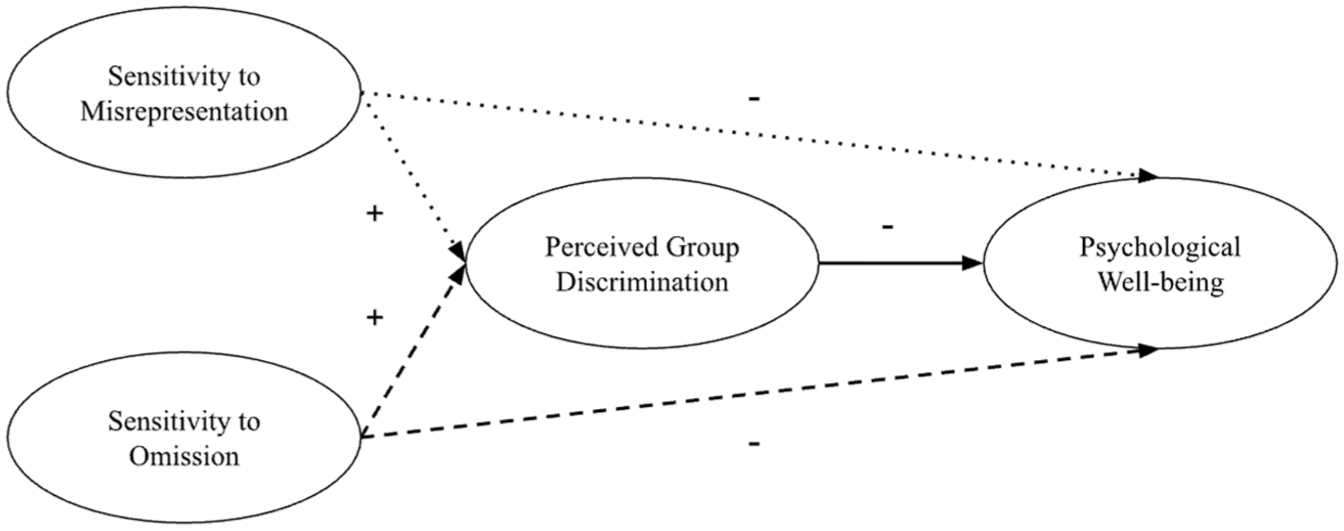
Proposed conceptual and statistical model.
Studies 1 to 3 Participant Demographics.
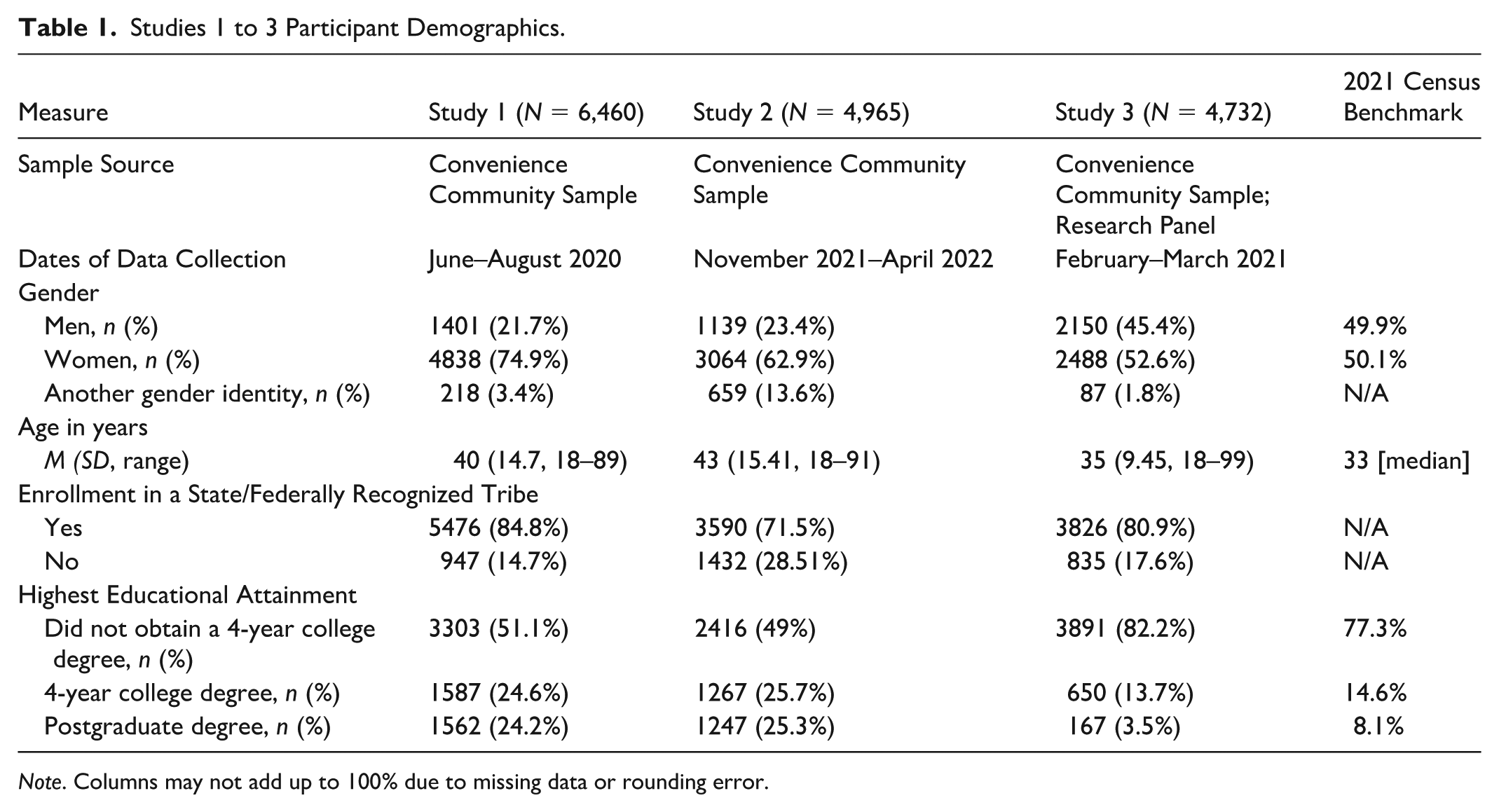
Note. Columns may not add up to 100% due to missing data or rounding error.
Study 1
Study 1 (not pre-registered) served as an initial, exploratory test of the proposed model, examining how sensitivity to misrepresentation and sensitivity to omission relate to psychological well-being. Due to an oversight, the item assessing the cognitive component of sensitivity to misrepresentation was left out of the survey; nonetheless, we refer to the measure as sensitivity to misrepresentation to ensure consistency and coherence. We expect that both greater sensitivity to misrepresentation and greater sensitivity to omission will uniquely relate to poorer psychological well-being directly and indirectly through perceived group discrimination. 3
Methods
Participants
Native adults (N = 6,460) participated in an anonymous 25-min online survey, the Indigenous Futures Survey, and were compensated with entry in a raffle (e.g., chance to win gifts donated by Indigenous artists and businesses). The survey was shared by more than 46 Native organizations, 75 tribes, 60 tribal colleges and universities, and 5 Native media outlets. Eligible participants identified as Indigenous to the Americas (i.e., Native American, Alaska Native, Native Hawaiian, First Nations, and Indigenous to Central or South America) lived in the United States and were at least 18 years old (see Table 1 for demographics). Respondents were excluded if they did not meet these criteria. We aimed to collect as many participants as possible to represent the priorities and needs of diverse communities, during the predefined surveying period.
Procedure and Measures
Study 1 focused on a subset of variables from the Indigenous Futures Survey, which assessed Native Peoples’ priorities and needs prior to the 2020 presidential election. After providing consent, participants completed the survey. Participants responded to the well-being measures first, then the sensitivity and discrimination measures in randomized order. All measures were rated on a scale from 1, “Strongly Disagree” to 5, “Strongly Agree” unless otherwise noted. The full survey, data, code, materials, and codebooks are available at https://osf.io/4ub27/overview?view_only=6457cd29591145e280ac9685cd466bce.
Sensitivity to Misrepresentation
Three items measured participants’ affective reaction to Native misrepresentation (e.g., “I feel disappointed when Native Americans are represented in a negative way.”). Given that the cognitive item was not included in the survey, the affective items were averaged (α = .83). Higher scores indicated greater sensitivity.
Sensitivity to Omission
Two items measured participants’ sensitivity to Native omission. One item assessed a cognitive recognition of Native omission (“I notice when Native Americans are not represented”), and the other assessed their affective reaction to Native omission (“I feel disappointed when Native Americans are not represented”). In line with previous work that has weighted hot (affective) components by the cool (cognitive) components (Krantz & Tversky, 1971; Mendoza-Denton et al., 2002; Metcalfe & Mischel, 1999), a product of the cognitive item and affective items was calculated (r = .61). Higher scores indicated greater sensitivity.
Perceived Group Discrimination
One face valid item measured perceptions of group discrimination (“Native Americans experience discrimination.”). Higher scores indicate greater perceptions of group discrimination.
Psychological Well-Being
Negative Affect
Three items using a 5-point scale (1 = Never, 5 = Very Often) measured how often participants experienced negative affect in the last month (e.g., “In the last month, how often have you felt: Depressed/Stressed/Frustrated”). An average of the three items was calculated (α = .81). Higher scores indicate poorer psychological well-being.
Life Satisfaction
One item using a 10-point scale (1 = Completely Dissatisfied, to 10 = Completely Satisfied) measured participants’ life satisfaction (“All things considered, how satisfied are you with your life as a whole these days?”). Higher scores indicate greater psychological well-being.
Results
Analytic Plan
First, we present the bivariate and partial relationships between all variables of interest—sensitivity to misrepresentation, sensitivity to omission, perceptions of group discrimination, and psychological well-being outcomes.
Next, to formally test the proposed model, we conducted path analyses with a bias-corrected and accelerated bootstrap procedure with 10,000 resamples using the lavaan package (Rosseel, 2012) in R studio (R Core Team, 2018). Each measure of psychological well-being was predicted from sensitivity to misrepresentation and sensitivity to omission through perceived group discrimination (see Figure 1 for model).
Lastly, to ensure the robustness of our results, we present post hoc analyses of two sets of models: (a) models controlling for relevant demographic covariates (i.e., tribal enrollment, gender, age) and (b) multigroup models by gender (i.e., Men and non-Men) and education (i.e., lower and higher educational attainment). Models with reversed relationships between variables were also analyzed (for results, see OSF supplement Reverse Direction Models).
Preliminary Analyses: Bivariate Relations
In line with the proposed model, sensitivity to misrepresentation and sensitivity to omission were significantly correlated with both perceived group discrimination and the two measures of psychological well-being. Further, perceived group discrimination was significantly correlated with both measures of psychological well-being (see Table 2).
Study 1 Descriptive Statistics, Bivariate and Partial Correlations for All Variables.
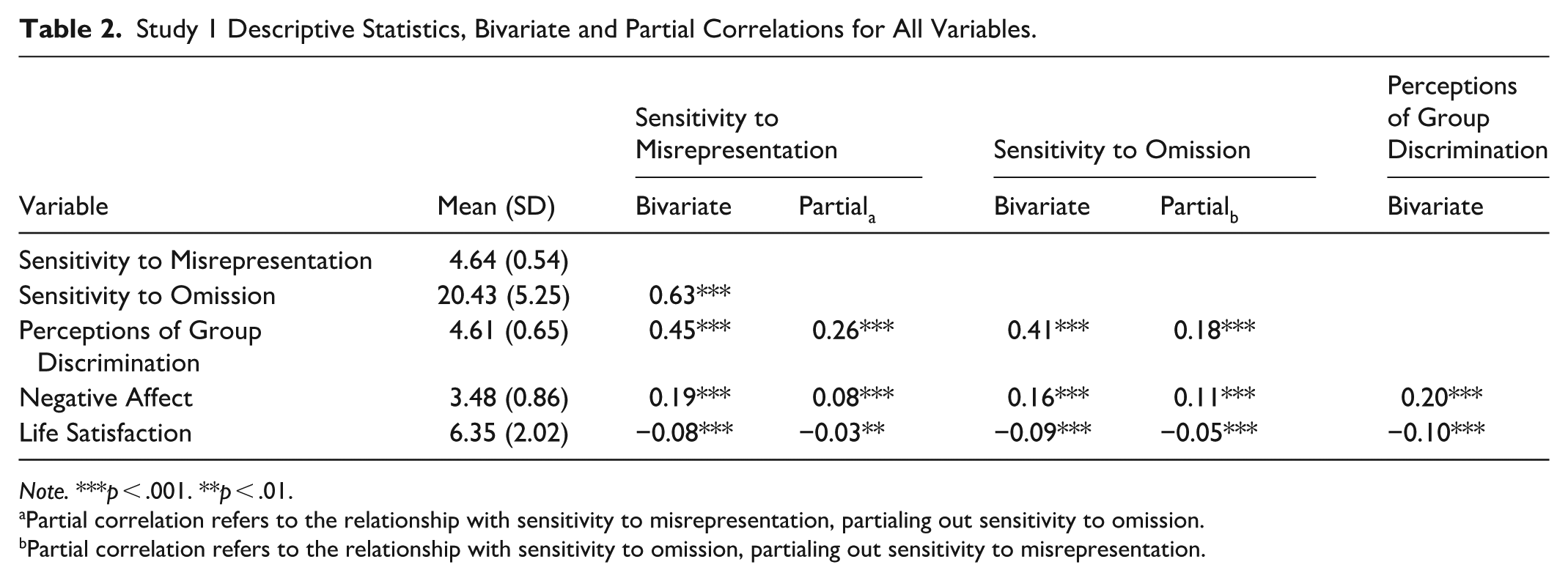
Note. ***p < .001. **p < .01.
Partial correlation refers to the relationship with sensitivity to misrepresentation, partialing out sensitivity to omission.
Partial correlation refers to the relationship with sensitivity to omission, partialing out sensitivity to misrepresentation.
Primary Analyses: Path Models (See Figure 1)
Direct Effects: Relations Between Sensitivity and Well-Being
Direct Effect of Sensitivity to Misrepresentation
Sensitivity to misrepresentation was directly related to one of two well-being outcomes: greater negative affect (p < .001). Unexpectedly, sensitivity to misrepresentation was not directly related to life satisfaction (p = .25).
Direct Effect of Sensitivity to Omission
Sensitivity to omission was directly related to both well-being outcomes. Consistent with hypotheses, greater sensitivity to omission was directly related to greater negative affect and lower life satisfaction (both ps < .003).
Indirect Effects Through Perceptions of Discrimination
As predicted, greater sensitivity to misrepresentation and greater sensitivity to omission were related to greater perceived group discrimination (p < .001). Greater perceptions of group discrimination, in turn, were related to greater negative affect and lower life satisfaction (both ps<.001). All indirect effects of sensitivity to misrepresentation and sensitivity to omission were significant and in the expected direction (see Table 3 for full results, including Total effects).
Study 1 Results of Path Analyses
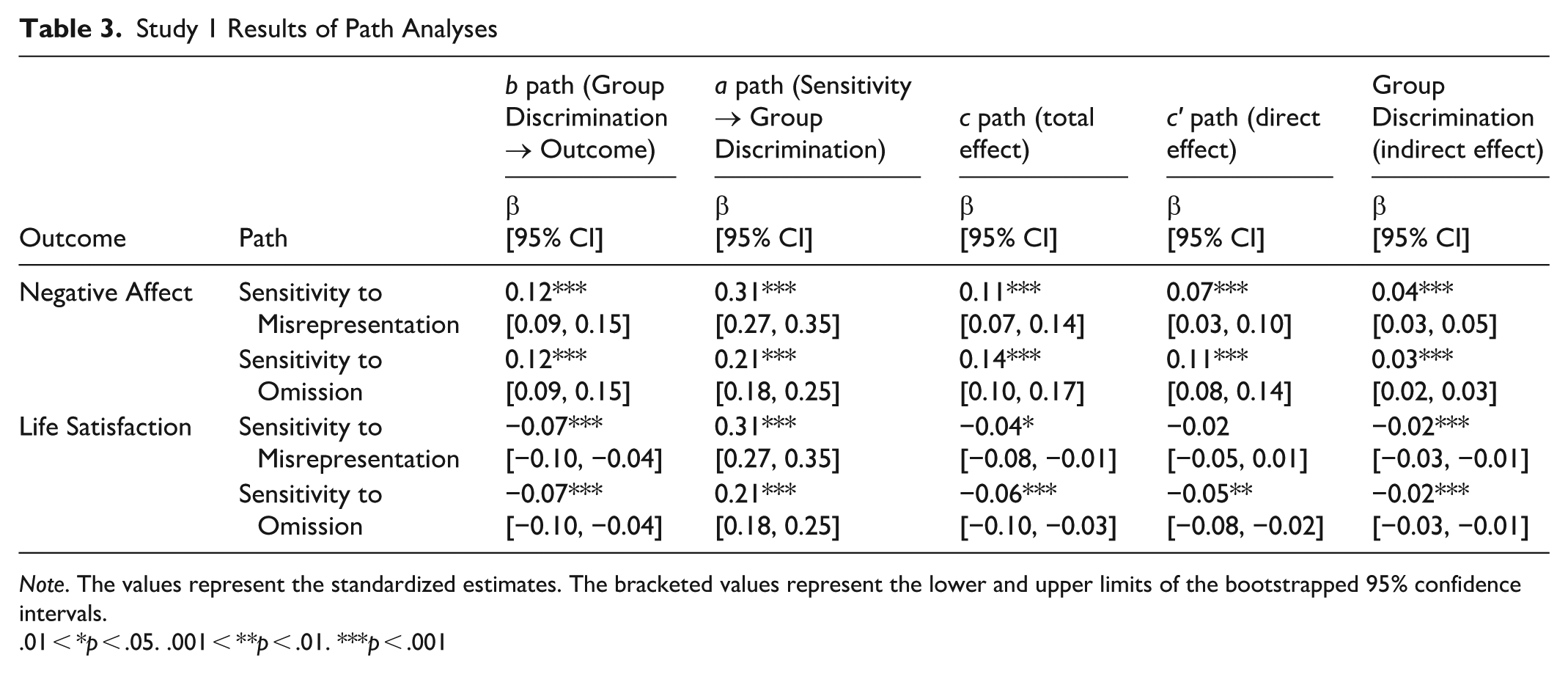
Note. The values represent the standardized estimates. The bracketed values represent the lower and upper limits of the bootstrapped 95% confidence intervals.
.01 < *p < .05. .001 < **p < .01. ***p < .001
Post Hoc Analyses: Robustness Checks
All findings reported in the main manuscript text remained consistent across the covariate models (see OSF supplement Model Results With Covariates) and the multigroup models (see OSF supplement Multigroup Models).
Discussion
Study 1 demonstrates that greater sensitivity to misrepresentation and sensitivity to omission are related to poorer psychological well-being, in part, due to their relationship with greater perceptions of group discrimination. Study 1 was an initial demonstration of the proposed model with broad indicators of psychological well-being. Native Peoples experience disproportionately high levels of acute mental distress, with 21% of Native adults experiencing mental illness (compared to 17.9% of the general population, American Psychiatric Association, 2022). Study 2 examines whether the current model holds for acute indicators of psychological well-being.
Study 2
Study 2 (not pre-registered) serves as a partial replication and extension of Study 1. Specifically, Study 2 tests the consequences of sensitivity to misrepresentation and sensitivity to omission, and perceived group discrimination on broad (i.e., life satisfaction) and acute (i.e., anxiety, depression) indicators of psychological well-being. Additionally, to address a Study 1 oversight, Study 2 included items indexing both the cognitive and affective components of sensitivity to misrepresentation, allowing for a full test of the proposed conceptual model.
Methods
Participants
Native adults (N = 4,965) participated in an anonymous 30-min online survey, the Indigenous Futures Survey 2.0, and were compensated with entry into a raffle (e.g., chance to win gifts donated by Indigenous artists and businesses). The survey was shared by Native organizations, tribes, tribal colleges and universities, and media outlets. As with Study 1, we aimed to collect as many participants as possible during the predefined surveying period. Eligible participants identified as Indigenous to the Americas, lived in the United States, and were at least 18 years old (see Table 1 for demographics). Respondents were excluded if they did not meet these criteria.
Procedure and Measures
Study 2 focused on a subset of variables from the Indigenous Futures Survey 2.0, which assessed Native Peoples’ experiences with racism, mental health, and other contemporary social issues. After providing consent, participants completed the survey. Participants responded to the well-being measures first, then the sensitivity and discrimination measures in randomized order. All measures were rated on a scale from 1, “Strongly Disagree,” to 5, “Strongly Agree,” unless otherwise noted. The full survey, data, code, materials, and codebooks are available at https://osf.io/4ub27/overview?view_only=6457cd29591145e280ac9685cd466bce.
Sensitivity to Misrepresentation
Four items measured participants’ sensitivity to Native misrepresentation. The three items assessing affective reactions to Native misrepresentation were the same as those used in Study 1 (α = .82). One additional item assessed participants’ cognitive recognition of Native misrepresentation (i.e., “I notice when Natives are misrepresented”). A product of the cognitive item and affective items was calculated (r = .64). Higher scores indicated greater sensitivity.
Sensitivity to Omission
Four items measured participants’ sensitivity to Native omission. Two items were the same as those used in Study 1: one cognitive recognition of Native omission and one affective reaction to Native omission. Two additional affective items were added (e.g., “I feel upset when there are no portrayals of Natives”) to be analogous to the misrepresentation items (α = .87). A product of the cognitive item and affective items was calculated (r = .69). Higher scores indicated greater sensitivity.
Psychological Well-Being
Anxiety
Two items, using a 4-point scale (1 = Not at All, 4 = Nearly Every Day), from the Patient Health Questionnaire 4 (PHQ-4) anxiety subscale (Kroenke et al., 2009) measured frequency of anxiety symptoms in the past two weeks. Responses were summed, such that higher scores indicated poorer psychological well-being (r = .74).
Depression
Two items, using a 4-point scale (1 = Not at All, 4 = Nearly Every Day), from the PHQ-4 depression subscale (Kroenke et al., 2009) measured frequency of depression symptoms in the past two weeks. Responses were summed such that higher scores indicate poorer psychological well-being (r = .71).
Results
Analytic Plan
We followed the same analytic plan as in Study 1, including preliminary correlations, the primary models, and the robustness check models. As additional preliminary analyses, we also present confirmatory factory analysis (CFA) of sensitivity to misrepresentation and sensitivity to omission.
Preliminary Analyses
Confirmatory Factor Analysis
A CFA was conducted to empirically investigate theorizing that sensitivity to misrepresentation and sensitivity to omission are distinct, yet related, psychological constructs. The CFA finds that sensitivity to misrepresentation and sensitivity to omission are statistically distinct constructs (see OSF supplement CFA Results).
Bivariate Relations
As with Study 1, sensitivity to misrepresentation and sensitivity to omission were significantly correlated with both perceived group discrimination and the three measures of psychological well-being. Perceived group discrimination was significantly correlated with the three measures of psychological well-being (see Table 4).
Study 2 Descriptive Statistics, Bivariate and Partial Correlations for All Variables.
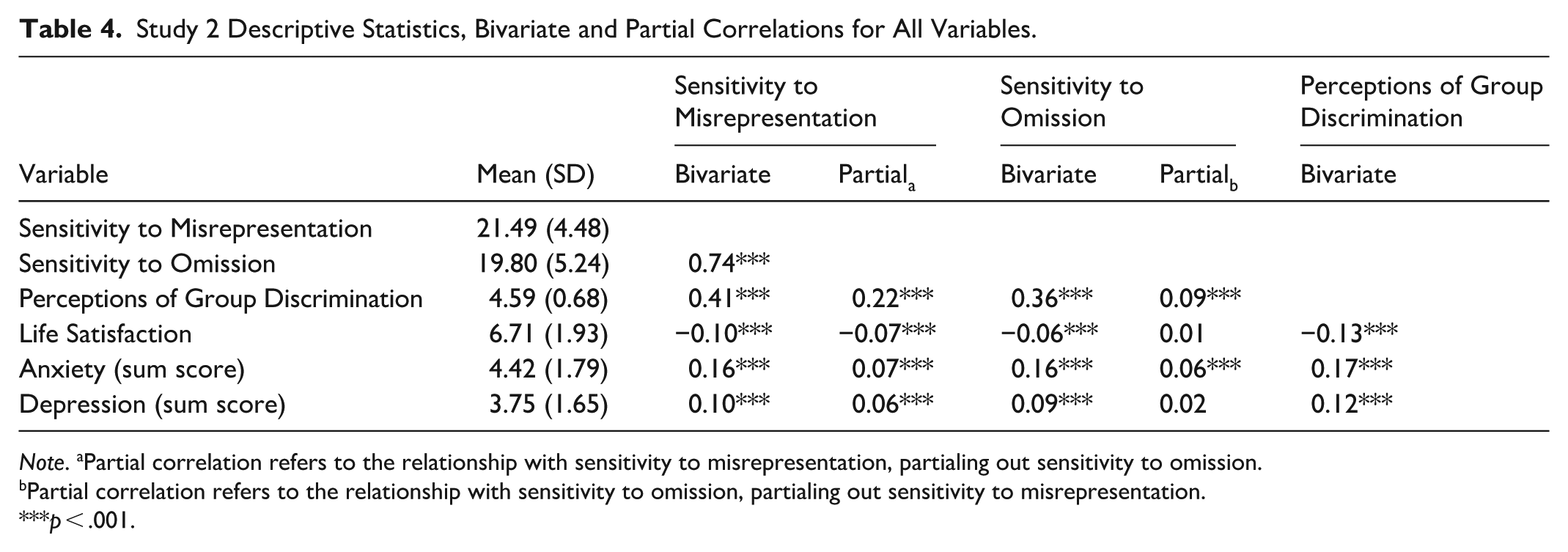
Note. aPartial correlation refers to the relationship with sensitivity to misrepresentation, partialing out sensitivity to omission.
Partial correlation refers to the relationship with sensitivity to omission, partialing out sensitivity to misrepresentation.
p < .001.
Primary Analyses: Path Models
Direct Effects: Relations Between Sensitivity and Well-Being
Direct Effect of Sensitivity to Misrepresentation
Consistent with the hypotheses, greater sensitivity to misrepresentation was directly related to all three well-being outcomes: greater anxiety, greater depression, and, unlike in Study 1, lower life satisfaction (ps < .005).
Direct Effect of Sensitivity to Omission
Sensitivity to omission was directly related to one of three well-being outcomes: greater anxiety (p < .001). Unexpectedly, sensitivity to omission was not directly related to life satisfaction, unlike in Study 1, or depression (ps > .16).
Indirect Effects Through Perceptions of Discrimination
As predicted, greater sensitivity to misrepresentation and greater sensitivity to omission were related to greater perceived group discrimination (p < .001). Greater perceptions of group discrimination, in turn, were related to lower life satisfaction, greater anxiety, and greater depression (ps < .001). All indirect effects of sensitivity to misrepresentation and of sensitivity to omission were significant and in the expected direction (see Table 5 for full results, including Total effects).
Study 2 Results of Path Analyses.
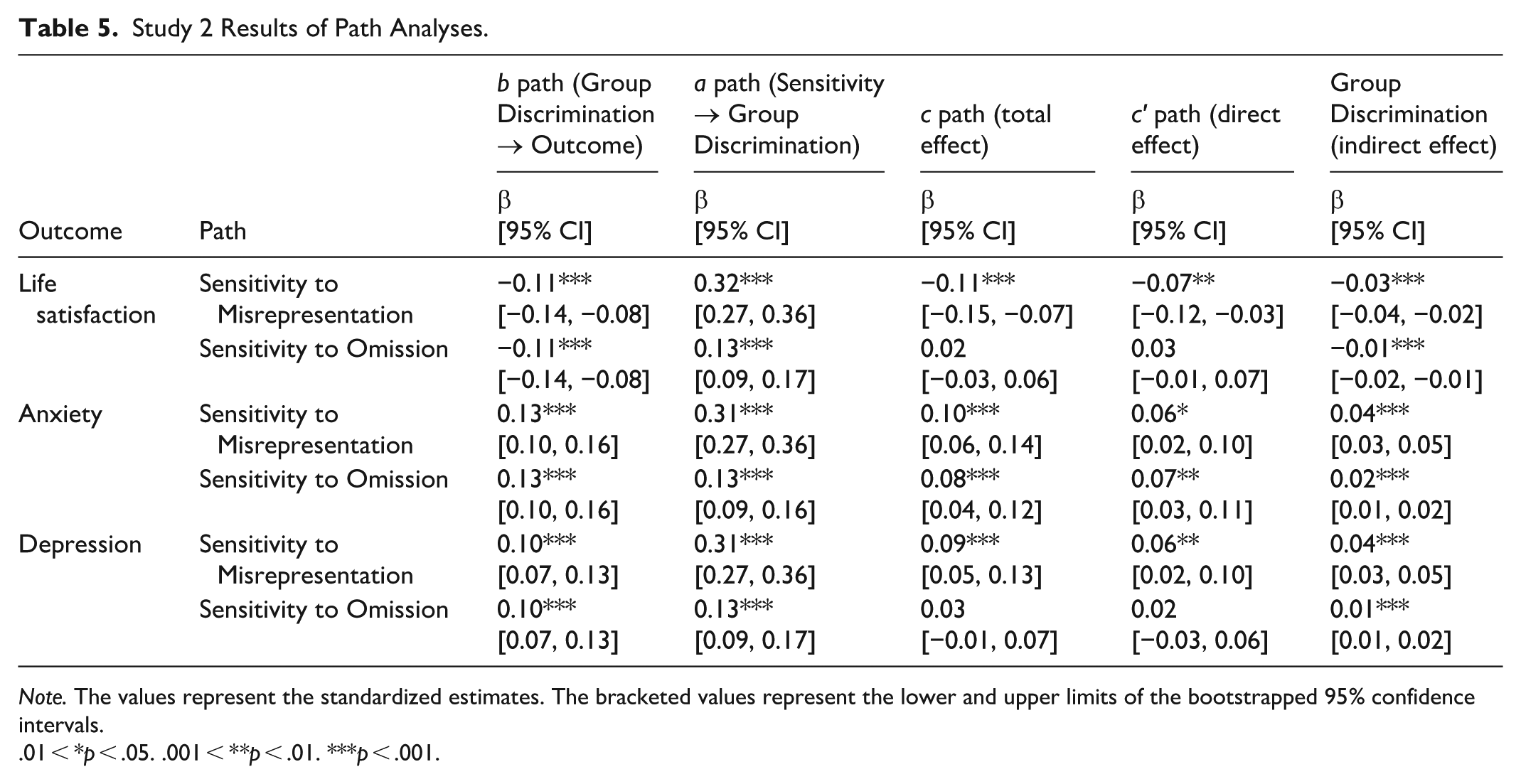
Note. The values represent the standardized estimates. The bracketed values represent the lower and upper limits of the bootstrapped 95% confidence intervals.
.01 < *p < .05. .001 < **p < .01. ***p < .001.
Post Hoc Analyses: Robustness Checks
All findings reported in the main manuscript text remained consistent across the covariate models (see OSF supplement Model Results With Covariates) and the multigroup models (see OSF supplement Multigroup Models).
Discussion
Study 2 provided further evidence consistent with the proposed conceptual model. First, confirmatory factor analysis revealed that sensitivity to misrepresentation and sensitivity to omission were overlapping, but statistically distinct psychological constructs. Moreover, greater sensitivity to misrepresentation and sensitivity to omission had direct relationships with psychological well-being. Greater sensitivity to misrepresentation was directly related to greater anxiety, depression, and lower life satisfaction; and greater sensitivity to omission was directly related to greater anxiety, but not depression or life satisfaction (unlike in Study 1). Finally, both sensitivity to misrepresentation and sensitivity to omission were related to greater perceptions of group discrimination, and, in turn, lower life satisfaction, greater anxiety, and greater depression. The effects of misrepresentation occurred regardless of whether the measure just focused on feeling badly about misrepresentation (as in Study 1) or whether using the full sensitivity construct, which includes noticing and feeling badly about the misrepresentation.
The proposed conceptual model was particularly robust, providing consistent evidence in subsamples of (a) only men, (b) only non-men (women and individuals of another gender identity), (c) only people with at least a 4-year college degree, and (d) only people with less than a 4-year college degree (see OSF supplement Multigroup Models). Studies 1 and 2 demonstrate that, in general, sensitivity to misrepresentation and sensitivity to omission uniquely relate to broad and acute indicators of psychological well-being, both directly and indirectly through perceptions of discrimination.
The findings of Studies 1 and 2 provide broad evidence that sensitivity to misrepresentation and omission have a range of negative relationships with psychological well-being, however there are two findings worth noting. Two direct effects of sensitivity to omission were not significant—the direct effects on life satisfaction and depression. Yet, (a) the bivariate relationships between sensitivity to omission and these two outcomes were significant and in the expected direction; and (b) the indirect effects through perceived discrimination were significant. The lack of direct effects suggests that other variables in the model played a stronger role (i.e., they pulled variance from these relationships). For example, perceived group discrimination explained more of the variance in life satisfaction in Study 2 than in Study 1. Although our results cannot speak to why this is the case, one possibility is that Study 1 was run during the COVID-19 lockdown where people had less opportunity to be exposed to group-based discrimination compared to Study 2.
Study 3
Study 3 served as a confirmatory, pre-registered (https://osf.io/4ub27/overview?view_only=6457cd29591145e280ac9685cd466bce) investigation of the proposed conceptual model on specific clinical indicators of psychological well-being (i.e., anxiety, depression, and suicide ideation) among a relatively more nationally representative sample of Native Peoples (see Table 1). Given that Native communities experience disproportionately high rates of suicide, Study 3 expands the current model to include suicide ideation and risk (Fetter et al., 2022).
Methods
Participants
Native adults (N = 8,549) participated in an anonymous 30-min online survey, the COVID-19 Indigenous Needs Assessment, and were compensated with a $10 gift card and entry in a raffle (e.g., chance to win gifts donated by Indigenous artists and businesses). The survey was shared by Native organizations and tribes across the U.S. A subset of participants was collected via Qualtrics Panel (n = 715). Census-based sampling methods were utilized to ensure tribal diversity and approximate representation across the United States and territories (see Table 1). Eligible participants identified as Indigenous to the Americas, lived in the United States, and were at least 18 years old (see Table 1 for demographics). Respondents were excluded if they did not meet these criteria or did not complete our measures of interest, which resulted in a final sample size of 4,732. As with prior studies, we collected as many participants as possible within the pre-determined study time frame.
Procedure and Measures
Study 3 focused on a subset of variables from the COVID-19 Indigenous Needs Assessment, which evaluated Native Peoples’ health, priorities, and COVID-19 experiences. After providing consent, participants completed the survey. Participants responded to the well-being measures first, then to the sensitivity and discrimination measures in randomized order. All measures were rated on a scale from 1, “Strongly Disagree,” to 5, “Strongly Agree,” unless otherwise noted. The full survey, data, code, materials, and codebooks are available at https://osf.io/4ub27/overview?view_only=6457cd29591145e280ac9685cd466bce.
The same measures of sensitivity to misrepresentation (r = .44), 4 sensitivity to omission (r = .47), 5 anxiety (r = .74), depression (r = .77), 6 and perceived group discrimination were used in Study 2. Due to researcher error, one item assessing participants’ affective reaction to omission was left out of the survey (i.e., “I feel offended when Natives are not mentioned”).
All pre-registered analyses are reported below. Like Studies 1 and 2, the sensitivity measures were calculated by multiplying the cognitive and affective components, which deviates from the pre-registered constructs which were computed as simple averages. The results are consistent regardless of which calculations we used to compute the sensitivity measures (see OSF supplement Model Results with Composite Predictors).
Psychological Well-Being
Suicide Ideation Frequency
One item, adapted from the PHQ-9 (Kroenke et al., 2001), measured the frequency of suicide ideation (“In the past month (30 days), how often do you have thoughts that you would be better off dead or hurting yourself in some way?”) using a 4-point scale (from 0 = Not at All, to 3 = Nearly Every Day). Higher scores indicate worse psychological well-being. 7
Serious Suicide Risk
One item from the Morbidity and Morality Weekly Report (Czeisler et al., 2020) measured serious suicide risk (“In the past month (30 days), at any time, have you seriously considered suicide, that is seriously considered thoughts or plans to harm yourself in some way?”) using a 2-point scale (Yes=1, No=0). 8 Selecting “Yes” indicates serious suicide risk (22% selected Yes).
Results
Analytic Plan
We followed the same analytic plan as in Studies 1 and 2.
Preliminary Analyses
Confirmatory Factor Analysis
Consistent with Study 2, the CFA suggests that sensitivity to misrepresentation and sensitivity to omission are statistically distinct constructs (see OSF supplement CFA Results).
Bivariate Relations
As with Studies 1 and 2, sensitivity to misrepresentation and sensitivity to omission were significantly correlated in the hypothesized direction with both perceived group discrimination and three of the four measures of psychological well-being—anxiety, depression, and suicide ideation frequency, but not serious suicide risk. Perceived group discrimination was significantly correlated with three of the four measures of psychological well-being—depression, suicide ideation frequency, and serious suicide risk, but not anxiety (see Table 6).
Study 3 Descriptive Statistics, Bivariate and Partial Correlations for All Variables.
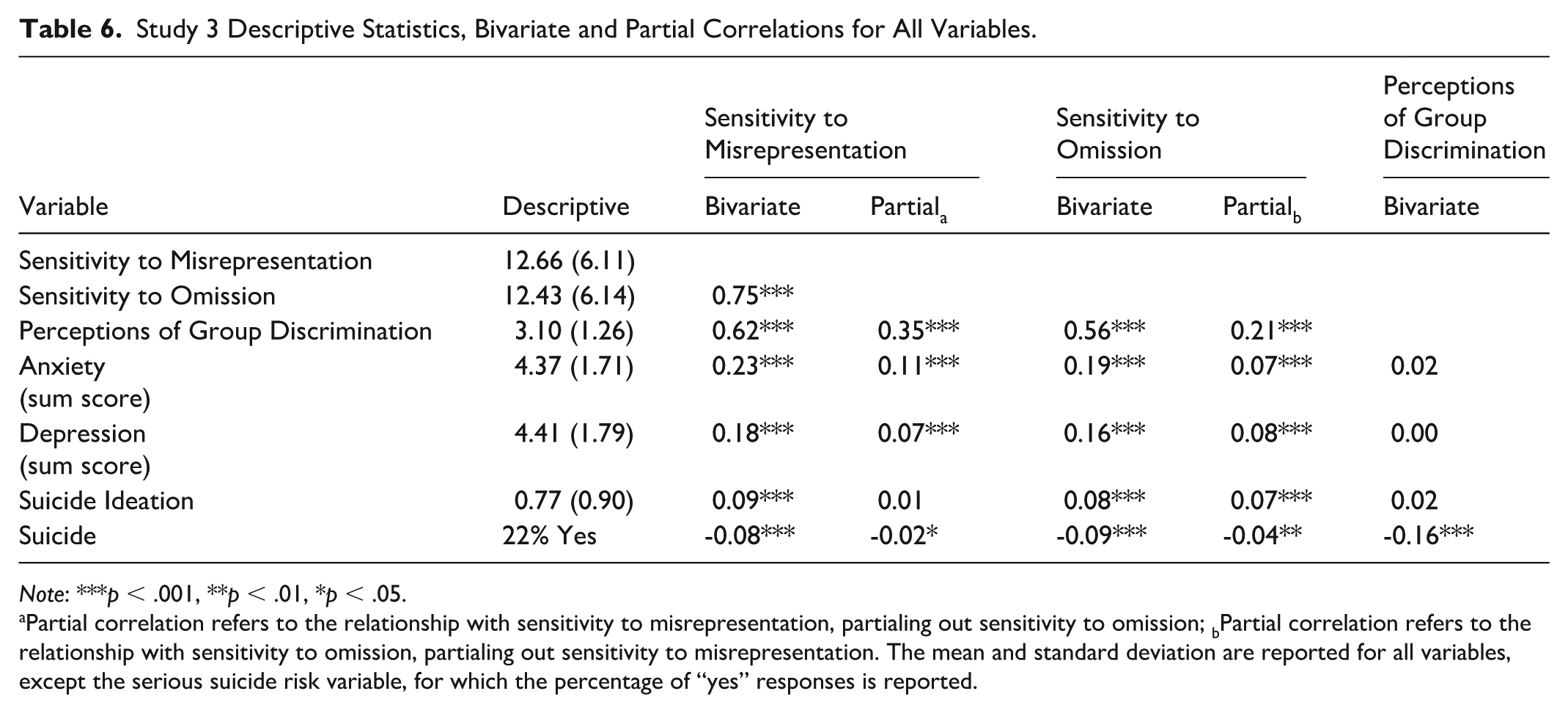
Note: ***p < .001, **p < .01, *p < .05.
Partial correlation refers to the relationship with sensitivity to misrepresentation, partialing out sensitivity to omission; bPartial correlation refers to the relationship with sensitivity to omission, partialing out sensitivity to misrepresentation. The mean and standard deviation are reported for all variables, except the serious suicide risk variable, for which the percentage of “yes” responses is reported.
Primary Analyses: Path Models
As a final test of our proposed model (see Figure 1), we report the results of the series of path analyses below.
Direct Effects: Relations Between Sensitivity and Well-Being
Direct Effect of Sensitivity to Misrepresentation
Sensitivity to misrepresentation was directly related to two of four well-being outcomes: greater anxiety and depression (ps<.001). However, sensitivity to misrepresentation was not directly related to suicide ideation frequency or serious suicide risk (ps≥.08).
Direct Effect of Sensitivity to Omission
Consistent with hypotheses, sensitivity to omission was directly related to all four well-being outcomes: greater anxiety, depression, and suicide ideation frequency (all ps<.01), and, unexpectedly, less serious suicide risk (p=0.01).
Indirect Effects Through Perceptions of Discrimination
As predicted, greater sensitivity to misrepresentation and greater sensitivity to omission were related to greater perceived group discrimination (ps<.001). Greater perceptions of discrimination, however, were only related to one of four well-being outcomes: greater suicide ideation frequency (ps<.001). Unexpectedly, perceptions of discrimination were not related to anxiety, depression, unlike in Study 2, or suicide risk (ps>.304).
Consequently, significant indirect effects of sensitivity to misrepresentation and sensitivity to omission only emerged for suicide ideation frequency (p<.001). All other indirect effects were non-significant (see Table 7 for full results, including Total effects).
Study 3 Results of Path Analyses.
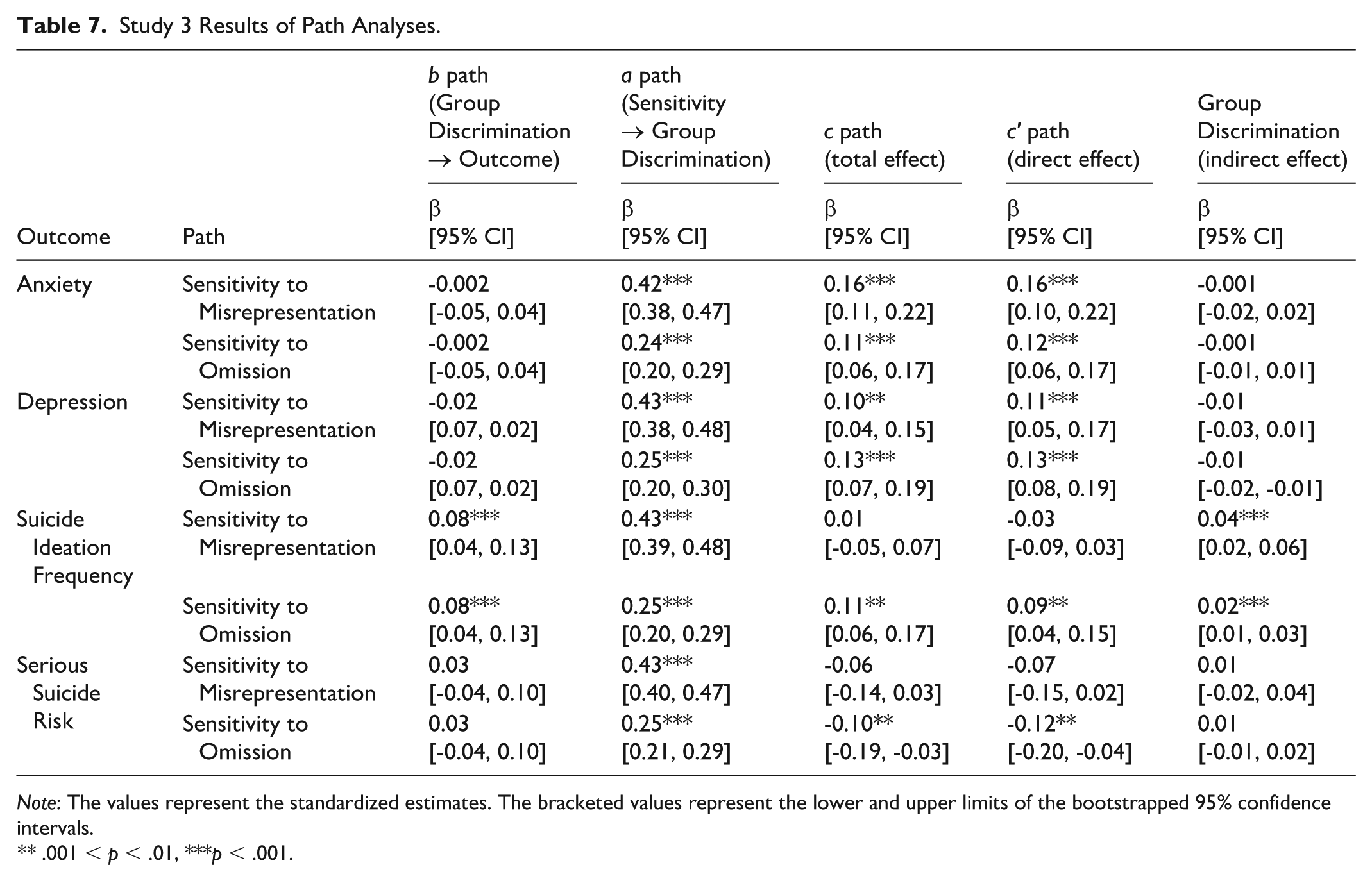
Note: The values represent the standardized estimates. The bracketed values represent the lower and upper limits of the bootstrapped 95% confidence intervals.
** .001 < p < .01, ***p < .001.
Post Hoc Analyses: Robustness Checks
All findings reported in the main manuscript text remained consistent across the covariate models (see OSF supplement Model Results With Covariates) and the multigroup models (see OSF supplement Multigroup Models).
Discussion
As a pre-registered confirmatory investigation, Study 3 provides a more nuanced understanding of our proposed conceptual model. First, the following results were consistent with Study 2: The CFA revealed that sensitivity to misrepresentation and sensitivity to omission were overlapping, but distinct psychological constructs. Sensitivity to misrepresentation was directly related to greater anxiety and depression and sensitivity to omission was directly related to greater anxiety, depression, and suicide ideation frequency. In addition to these direct effects, both sensitivity to misrepresentation and sensitivity to omission predicted greater perceptions of group discrimination. In contrast to Study 2, perceptions of group discrimination was only related to one of the four well-being outcomes: suicide ideation frequency. Overall, these findings provide generally robust evidence for the relationships between sensitivity to misrepresentation, sensitivity to omission, and perceptions of group discrimination among a relatively more nationally representative sample (U.S. Census Bureau, n.d.).
Despite the hypothesized and broadened direct effects and indirect effects, three sets of findings were unexpected and inconsistent, which suggests that there may be important constraints on the generality of the proposed model. First, diverging from Study 2 and prior literature (Paradies et al., 2015; Whitbeck et al., 2002), the effects of group discrimination on anxiety and depression were not significant. One possible explanation for this discrepancy is that Study 3 data were collected about one year into the COVID-19 pandemic. This survey was collected at the height of the pandemic after months of social isolation and collective loss (Grills et al., 2021; Leggat-Barr et al., 2021). Given this context, experiences of anxiety, depression, and suicide risk among Native Peoples may be explained by factors beyond perceived group discrimination, although sensitivity to misrepresentation and sensitivity to omission remained important factors according to the results.
The second set of noteworthy findings are regarding the serious suicide risk outcome. Despite serious suicide risk being positively correlated with suicide ideation frequency, sensitivity to omission was negatively correlated with serious suicide risk. Notably, this unexpected relationship only occurs with serious suicide risk, which is the most extreme indicator of psychological distress in the current manuscript. We propose three potential explanations for the unexpected finding. One reason for the negative relationship may be that sensitivity to biased social representations serves as an attribution that places blame on societal structures for negative life outcomes, which may ultimately buffer against serious suicide risk. Research demonstrates that attributing negative life outcomes to group discrimination helps to buffer self-esteem among Black individuals (Crocker & Major, 1989; Crocker et al., 1991; Major et al., 2002). Critical consciousness research also finds that the recognition of stigma may play a self-protective role and buffer against adverse impacts (Mathews et al., 2020). Another possibility for the negative relationship is that the serious suicide risk variable was dichotomous with 22% of people indicating yes. This rate may have led to a restriction of range, which can reduce confidence in variable relationships. A final and mutually exclusive possibility for the negative relationship is that the effect is an erroneous Type 2 error being that serious suicide risk is the only variable across all our studies in the opposite direction as the predicted model. Understanding the nuances of serious suicide risk is extremely important; therefore, we recommend further investigation into these processes among Native populations.
General Discussion
Three of the largest surveys conducted with Native Peoples in the United States to date (NTotal =16,157) provided evidence of the proposed model that greater sensitivity to misrepresentation and greater sensitivity to omission are related to poorer psychological well-being, in part, due to their relationship with greater perceptions of group discrimination. The more Native Peoples notice and feel badly about their group being misrepresented or omitted, the poorer their psychological well-being across both broad (i.e., negative affect, life satisfaction) and acute (i.e., anxiety, depression, and suicide ideation frequency) indicators, in part, because individuals who are more sensitive to Native misrepresentation and omission are also more perceptive of the discrimination Native Peoples experience. This evidence emerged in samples collected during distinct time periods (during the height of COVID-19 lockdowns and afterwards), as well as across participant gender and educational background. Together, these studies provide evidence that the way Native Peoples are represented or fail to be represented in society is related to poorer psychological well-being.
Theoretical and Methodological Contributions
Considering the dearth of psychological research including Native Peoples (Fryberg & Eason, 2017; Lopez et al., 2021), the current studies offer theoretical and methodological contributions that advance social and cultural psychology. Theoretically, we adapted the race-based rejection sensitivity framework, which posits that individuals differ in their sensitivity to interpersonal experiences of race-based rejection. We conceptualized Native misrepresentation and omission as socio-cultural forms of rejection. Expanding the broader stereotyping literature, we examined the relationship between perceptions of discrimination and psychological well-being with omission—a particularly salient form of rejection Native Peoples face—above and beyond their relationships with misrepresentation. As one of the first empirical inquiries into the independent effects of misrepresentation and omission, these findings affirm Indigenous scholarship on the psychological harm caused by the compounding effect of both experiences (Deloria et al., 2018; Eason & Fryberg, 2025; Eason et al., 2018; Fryberg & Eason, 2017, 2025; Leavitt et al., 2015; Lomawaima & McCarty, 2014; Robertson, 2015). These findings suggest that a holistic understanding of Native Peoples’ experiences requires a serious investigation into the role of omission.
Methodologically, the present studies demonstrate the feasibility of including Native Peoples in empirical research. The exclusion of Native participants from published papers and public reports is often justified due to small sample size and large margins of errors (Brady et al., 2018, 2020; National Congress of American Indians, n.d.). The current methodological approach pushes back against this notion by engaging in a variety of sampling methods (i.e., research panels, convenience/snowball sampling). Community partners shared the online survey links to their networks and the “moccasins on the ground” team collected responses on iPads within Native communities without Internet access. Our multi-pronged and collaborative approach enabled us to represent the voices and lived experiences of thousands of Native individuals, representing hundreds of Native communities across all 50 states. This approach may also be useful when conducting research with communities who face similar methodological barriers as Native communities.
Limitations
Despite successfully collecting multiple large-scale samples of Native participants, there are limitations to consider. For example, there is some possibility that participants engaged in more than one of the surveys. While we cannot assess this possibility, there is no overlap in the dates that data were collected and well-being indicators focus on constrained time periods (e.g., “In the last month, how often have you felt stressed?”). Another limitation to consider is that the current studies were correlational and cannot determine causality. Alternative models, in which perceived group discrimination predicts sensitivity measures, or in which psychological well-being precedes sensitivity are indeed statistically plausible given the possibility of mutually constitutive processes (e.g., Gotlib & Krasnoperova, 1998). However, comparing cross-sectional mediation models involving the same sets of variables, but changing ordering, cannot produce enough information to identify the “correct” model. The best practice is to rely on theory to establish variable ordering (Fiedler et al., 2011; Thoemmes, 2015). The Indigenous and psychological scholarship reviewed thus far posits that misrepresentation and omission of Native Peoples foster discrimination and informs the proposed order of the conceptual model. Future experimental or longitudinal research is needed to establish causal ordering.
Constraints on Generality
While our theorizing is grounded in the experiences of Native Peoples, the proposed conceptual model offers generative insights for future investigation among other social groups who are routinely misrepresented and/or omitted (Fryberg & Eason, 2017; Purdie-Vaughns & Eibach, 2008). Many scholars have long discussed the psychological disequilibrium of being rendered invisible for various social identity groups, including Black Americans (Ellison & Morton 1952) and individuals with intersecting social identities (Rich, 1994). Expanding the rejection sensitivity framework, we investigate omission as a socio-cultural experience of rejection. Future research is needed to understand whether this experience of socio-cultural rejection generalizes to groups who are systematically omitted, including other marginalized groups in the United States and global Indigenous populations (Lopez et al., in press).
Conclusion
When 15-year-old Miigis looked out into the social world to define who she is, she was faced with the reality that people from her background are largely misrepresented and omitted in society; that to be Indigenous is to be rendered invisible. Native Peoples do not need to become less sensitive to this reality. Instead, Native Peoples, like Miigis, deserve a reality where their full humanity is recognized and where they are portrayed through an abundant array of diverse, accurate, contemporary, and historical representations. Infusing mainstream society with such representations has the power to improve Native Peoples’ well-being. To work toward this reality, as a scholarly discipline, we must support the development of theories and empirical research aimed at understanding Native Peoples’ unique experiences. As a society more generally, individuals must acknowledge and discourage Native misrepresentation and omission while simultaneously uplifting social representations defined by Native Peoples for Native Peoples (for recommendations see Fryberg et al., 2024).
Footnotes
Acknowledgements
We want to thank the tribes, urban centers, Native student groups at universities and colleges, and Native-led organizations that partnered with us to give voice to Indigenous experiences. We also offer gratitude to the staffs at Native Organizers Alliance, Center for Native American Youth at Aspen Institute, Indigenous Wellness and Research Institute at the University of Washington, the Research for Indigenous Social Action and Equity Center at Northwestern University, and IllumiNative for the time and effort needed to collect these large-scale datasets, with extra special thanks to Solo Milner, Leah Salgado, Cheyenne Brady, Shelly Means, Savannah Romero, Kendra Becenti, Kelly House, Karina Walters, David Huh, Dr. Rodolfo Mendoza-Denton, and Dr. Rebecca Covarrubias for their feedback and help with these projects.
ORCID iDs
Funding
The authors disclosed receipt of the following financial support for the research, authorship, and/or publication of this article: The current model and narrative interpretations of the data have not been disseminated elsewhere. This project was supported by Mellon (#2009-09307) to Stephanie A. Fryberg; Doris Duke to IllumiNative (#2021206); Robert Wood Johnson Foundation to Nikki Santos and Judith LeBlanc; New Venture Fund (488665-Indigenous Futures Survey 2020) to Stephanie A. Fryberg and Arianne E. Eason; National Science Foundation to Stephanie A. Fryberg (#2041233) and Arianne E. Eason (#2041234). All the data, materials, and analysis code have been made publicly available and can be accessed at  . The authors declare no conflicts of interest. The author affiliations identify where the authors worked or studied when the research was conducted. The following authors’ affiliations have changed since: Julisa J. Lopez, University of California, Santa Cruz; Stephanie A. Fryberg, Northwestern University. All correspondence should be addressed to Julisa J. Lopez, Department of Psychology, University of California, Santa Cruz, Social Sciences 2, Santa Cruz, CA 95064, USA. Email:
Declaration of Conflicting Interests
The authors declared no potential conflicts of interest with respect to the research, authorship, and/or publication of this article.
Supplemental Material
Supplemental material is available online with this article.