




Abstract
Aging is a multifaceted, personal experience rather than a one-size-fits-all journey of universal longevity desires. This study explores the lived experiences of older adults in senior living facilities, focusing on their longevity aspirations and the factors shaping them. In-depth, semi-structured interviews with 20 older adults in four Malaysian senior living facilities were analyzed using Husserl’s phenomenology and Giorgi’s descriptive method. Four themes emerged: balancing the desire to live long versus living well, emotional and existential reflections, hidden emotional and physical adaptations, and shifting dynamics of control over priorities and values. Findings reveal that aging is an unpredictable journey, shaped by ambiguities and uncertainties, where fulfillment does not always stem from longevity. Tailored support that honors older adults’ histories, emotions, and aspirations enables aging with dignity and autonomy, guiding providers, policymakers, and caregivers to enhance quality of life to meaningfully enhance quality of life by aligning care with longevity aspirations.
Introduction
Aging is far from a uniform experience; as people grow older, they encounter heterogeneous changes shaped by health, culture, and circumstance (Bhattacharyya et al., 2023; Westerhof et al., 2023). Although longevity is often assumed to be the central aspiration in later life, older adults vary widely in how they interpret and value extended years. Longevity pursued for its own sake has also become a subject of scholarly debate, with recent anti-aging biotechnology reviews cataloguing interventions aimed at extending lifespan (Chee, 2025b; Hurvitz et al., 2022). At the same time, demographic and biological analyses highlight the implausibility of radical life extension in humans, noting that increases in life expectancy are plateauing and that reaching extreme old age remains rare (Olshansky et al., 2024). These debates position longevity as a contested goal rather than a universal aspiration. In the earlier stages, most older adults focus on maintaining an active lifestyle and managing the onset of new age-related health concerns (Chee, 2024a; LeMonde, 2023; Yokokawa et al., 2023). However, the unpredictable nature of health trajectories, influenced by both biological changes and life course experiences, adds further complexity to the aging process (Chee et al., 2023; Westerhof et al., 2023). As older adults progress into later years, this unpredictability often manifests in cognitive decline, typically evidenced by memory deterioration and a slowdown in mental processing (Bhattacharyya et al., 2023; Chee et al., 2023). These cognitive changes affect their independence and quality of life, making it increasingly challenging to maintain autonomy and engage in preferred daily activities (Badache et al., 2023; Velaithan et al., 2024). Consequently, the decline in memory and cognitive processing capabilities often leads to an increased struggle with routine tasks that were once familiar, resulting in a diminished sense of self-sufficiency and control over their lives (Chee, 2025b; de Paula Couto et al., 2023). These cognitive declines further limit older adults’ independence and quality of life, particularly as functional limitations, chronic health issues, and the need for assistance with daily tasks become more prevalent (LeMonde, 2023; Westerhof et al., 2023). Biomedical research continues to explore anti-aging interventions aimed at extending lifespan (Hurvitz et al., 2022); however, the findings show that older adults interpret longevity less through biological extension and more through autonomy, connection, and quality of daily life.
A range of critical factors, from older adults’ genetic makeup and personal lifestyle choices to their socioeconomic status, healthcare access, mental health, and social support networks, significantly influence their aging experiences and perceptions of longevity (Bhattacharyya et al., 2023; Fristrup & Rasmussen, 2023; Yokokawa et al., 2023; Zábó et al., 2023). Emotional challenges, such as coping with traumatic events or grieving the loss of loved ones, further intensify the difficulties of growing older (Dong et al., 2023; Velaithan et al., 2024). Studies have shown that these emotional factors can negatively impact mental health, sense of security, and overall quality of life as they age. Better health is often associated with a stronger desire for longevity, although this relationship is not consistent across all contexts or individuals (Araújo et al., 2021; de Paula Couto et al., 2023; Westerhof et al., 2023). Longevity is frequently equated with the wish for a long life, but this assumption is culturally contingent. In some contexts, extended years are interpreted as an opportunity for fulfillment, whereas in others they are accepted with resignation or even ambivalence (LeMonde, 2023; Yokokawa et al., 2023). As Ekerdt et al. (2017) argue, public health priorities that frame longevity as inherently desirable risk, obscuring the reality that older adults may value added years in divergent ways, shaped as much by cultural orientation and personal meaning as by health itself. This concern is amplified by demographic analyses showing that radical human life extension is implausible within this century (Olshansky et al., 2024). While some older adults remain healthy and active well into their later years, others experience a more rapid decline (Westerhof et al., 2023). This range of possibilities makes it difficult for older adults and their caregivers to plan for the coming years, as decisions are often influenced by personal preferences, cultural beliefs, familial expectations, and practical concerns (Zábó et al., 2023). For example, in old age, decisions about living arrangements are often discussed in relation to longevity, whether consciously or not, while also being influenced by family dynamics, cultural expectations, and economic circumstances. These choices can significantly impact overall well-being (Chee, 2025b; Tschoe et al., 2024). Some find that aging at home, surrounded by familiar comforts, aligns with their lifelong vision, providing a sense of control and stability. Conversely, others seek the security and readily available care that alternative accommodations, like senior living facilities, can offer to support their longevity goals (Chee et al., 2023; Shieu et al., 2021; Tschoe et al., 2024).
In contexts where senior living facilities exist, structured support and care may sometimes intensify the challenges of aging, such as balancing autonomy and dependence, grieving loss, and monitoring health decline. In many societies, however, cultural norms and stigma surrounding living away from family continue to shape both the availability of such facilities and individual perceptions of aging (Chee, 2025a). Unlike aging at home, where older adults may be surrounded by younger family members, those in senior living facilities are surrounded by peers facing similar age-related changes (Shieu et al., 2021; Tschoe et al., 2024). This environment heightens their awareness of the challenges associated with aging. They witness their peers experiencing varying levels of physical and cognitive decline and frequently face the loss of fellow residents due to illness or death, which serves as a constant reminder of their own mortality (Hasmanová Marhánková & Soares Moura, 2024; Yokokawa et al., 2023). Regularly interacting with others who are also confronting the harsh realities of aging can cruelly mirror their own decline, potentially stoking anxiety and prompting a subdued reflection on the duration and value of their remaining years (Fristrup & Rasmussen, 2023; Shieu et al., 2021; Tschoe et al., 2024). Moreover, the shared living arrangements in senior living facilities require older adults to adjust to collective schedules and communal spaces, a process that can be both beneficial and burdensome owing to the concurrent loss of personal autonomy and the expectation to conform to the facilities’ routines (Bhattacharyya et al., 2023; Fristrup & Rasmussen, 2023). In senior living contexts, longevity is inseparable from social ties and life satisfaction. Socioemotional selectivity theory (Carstensen, 1992, 1999) and research on loneliness (Cacioppo & Cacioppo, 2014; Cacioppo et al., 2002) show that meaningful relationships and isolation strongly influence how added years are valued, setting the stage for the diverse and often ambivalent perspectives that older adults express toward longevity.
Older adults have varied experiences as they age, and the assumption that all older adults aspire to live longer oversimplifies their complex and evolving perspectives on longevity and quality of life. The notion of a fulfilling life is inherently personal and fluid, ebbing and flowing as older adults progress through the multifarious stages of aging (Chee, 2024b; de Paula Couto et al., 2023; Yokokawa et al., 2023). The true challenge lies in the potential disconnect between the care provided in senior living facilities and the actual needs and requirements of older adults. This disconnect can undermine their well-being, leaving them unsatisfied and unsupported. Although existing studies offer insights into aging and perceptions of longevity (Bhattacharyya et al., 2023; LeMonde, 2023; Westerhof et al., 2023; Yokokawa et al., 2023), a significant gap persists in understanding how residents of senior living facilities feel about the prospect of longevity. This study also approaches longevity as embedded in the structural realities of senior living, where institutional rules and financial pressures constrain autonomy and frame how older adults weigh the value of extended life. To address this gap, the study explores the lived experiences of older adults in senior living facilities, focusing on their perceptions of longevity and the personal, social, and cultural factors that shape these views. In doing so, the study also considers how personal responsibility for health, as reflected in Crawford’s (1980) concept of healthism, influences the pursuit of extended life expectancy and its impact on quality of life. These findings are instrumental in guiding policymakers, healthcare providers, and caregivers to develop personalized care plans, culturally sensitive interventions, and support systems.
Methods
Study Design
The use of Husserl’s (1989) phenomenology, combined with Giorgi’s (1997) descriptive phenomenological method of data analysis, offers a structured and comprehensive approach to investigating the phenomenon. This method is well-suited because it emphasizes understanding lived experiences from the participants’ perspectives, guided by the lens of transcendental phenomenology, which seeks to minimize researcher influence by setting aside preconceptions and by avoiding reliance on causal or behavioral explanations or external interpretive frameworks. Husserl's concept of intentionality, which highlights the directedness of consciousness towards experiences, guides this approach, aiming to reveal the essence of participants' experiences as they appear in their consciousness. By employing the “epoché” (bracketing) technique, the researcher intentionally acknowledges and sets aside their own biases and preconceptions, allowing the analysis to remain focused on the participants’ lived experiences as they described them. This bracketing is central to Husserlian phenomenology, as it ensures that the researcher focuses on the phenomenon as it presents itself in the participants' consciousness. Crucially, the researcher must transparently disclose their perspective at the very outset of the study to uncover the universal essence of the phenomenon.
This transparency is vital, as it reinforces the study’s credibility and provides the necessary context to uncover the universal essence of the phenomenon. To uphold this phenomenological perspective, the researcher consistently reflects on their thought processes, diligently recording their reflections and ideas in a research journal throughout the study. This ensures that the analysis concentrates on the participants’ lived experiences rather than the researcher’s own interpretations. The participants' experiences are the focus of the analysis, with Giorgi’s (1997) method emphasizing a descriptive approach rather than interpretation. This means the researcher seeks to describe the experiences as they are presented by the participants, without imposing external theories or personal assumptions. By grounding the findings in the participants' own words and perspectives, the study ensures that the essence of their lived experiences is accurately captured.
Setting and Sample
The research is conducted in four senior living facilities selected based on two distinct funding models: for-profit and not-for-profit. These facilities are located in three urban cities within Selangor, the Malaysian state with the highest population of individuals over 60. Each facility has operated for 5 to 20 years and offers equivalent quality care services, daily living activities, demographic distribution, building typology, and environmental aspects. The total number of beds ranges from 20 to 50, with staff numbers ranging from four to six individuals per facility. A purposive sampling approach is employed to select 20 participants aged 60 years and above, including 12 male and 8 female residents. Participants were older adults who (i) lived with at least one functional limitation, (ii) they must be capable of clearly articulating their thoughts and experiences regarding the phenomenon, and (iii) have resided in the facility for at least 6 months. All participants required staff support due to these functional limitations, which affected their sense of independence, autonomy, and quality of life, which are significant factors influencing their longevity aspirations.
Data Collection
To uphold ethical integrity, this study has been meticulously vetted and approved by the university Human Ethics Committee and the administrative leaders of each participating senior living facility. The research employs semi-structured, in-depth interviews conducted in private, comfortable spaces within the facilities, designed to create an atmosphere in which participants feel secure enough to share their experiences openly. Participants were briefed on the study’s purpose, assured of confidentiality and anonymity, and could withdraw at any time. All data were securely stored, and any discomfort during interviews was addressed by pausing or rescheduling to ensure participants felt safe sharing openly. A set of refined open-ended questions guides the interviews: “How do your personal goals and expectations for longevity shape your daily life and overall well-being?”; “What impact has living in this facility had on your sense of independence and quality of life?”; and “What cultural, financial, or personal factors influence your views on aging and longevity?” Follow-up questions are used to explore participants’ responses in greater depth, such as: “Can you elaborate on how these factors affect your daily experiences?” and “Are there specific instances or examples that illustrate these influences?” To ensure a precise and reliable record of participant responses, each interview is audio-recorded with participants’ consent and generally spans approximately sixty minutes. Follow-up interviews and member checks are conducted to refine and affirm that the preliminary findings truly capture the essence of participants’ experiences. Reflexive notes are meticulously kept to heighten the researcher’s awareness of personal biases, emotions, and preconceptions regarding the phenomenon, thus enhancing the study’s robustness and credibility.
Data Analysis
Data analysis for this study follows Giorgi’s (1997) descriptive phenomenological method, grounded in Husserlian phenomenology, which seeks to uncover the essence of participants' lived experiences through a systematic and structured approach. This method begins with phenomenological reduction, achieved by bracketing, where the researcher intentionally suspends any personal biases, preconceptions, and external theoretical frameworks to focus solely on the phenomenon as described by the participants. In practice, a reflexive journal was maintained to document prior assumptions, which were revisited during coding to ensure that meaning units were derived from participants’ accounts rather than researcher presuppositions. As part of the process, horizontalization is applied, where every statement from the participants is initially treated with equal importance. This step ensured that both detailed narratives and brief remarks carried the same analytic weight before being clustered into broader meaning units, preventing researcher expectations from privileging certain responses over others. Significant statements and phrases are identified, highlighted, and systematically coded. These coded elements are then organized into meaning units or clusters that capture common themes and recurring patterns across the data set. The coding and theme development process is facilitated using NVivo software, which helps to manage and analyze the data efficiently. The descriptive nature of this analysis focuses on pure description. Textural descriptions were developed to capture what participants experienced, while structural descriptions explained how participants perceived and made sense of those experiences. Together, the textural and structural descriptions provide a comprehensive, cohesive narrative that reveals the essential structure of the phenomenon being studied.
Reliability of coded categories was reinforced through several safeguards. Reflexive journaling and bracketing were directly integrated into coding decisions to enhance transparency and procedural rigor. Member checks were conducted by sharing preliminary findings with participants, allowing them to confirm that their perspectives were accurately captured. Triangulation across interview transcripts, observational notes, and reflexive records further strengthened the trustworthiness of the themes by providing multiple vantage points on the same phenomenon. Reflexive journaling is particularly important in maintaining the bracketing process, as it allows the researcher to continually monitor their thoughts, reactions, and potential biases. Sampling continues until thematic saturation is achieved, which occurs when no new themes or significant findings emerge from the data. This ensures that the analysis is thorough and that all key aspects of the participants' experiences have been captured.
Themes
Living Long Versus Living Well—Highs and Lows of Evolving Aspirations and Independence
Older adults moved into long-term care facilities seeking to extend their lifespan and enhance their overall well-being through the comprehensive medical care, personal assistance, and social support provided. Their decision was often shaped by cultural values emphasizing family and filial duty, leading families to pursue the best care for their aging parents, even if it meant placing them in a facility better equipped to meet their needs. However, as they settled into their new environments, they re-evaluated their priorities. The daily realities of aging, the loss of peers, and the physical and emotional challenges they encountered led them to shift their focus toward valuing the quality of their remaining years over the mere pursuit of longevity.
I imagined celebrating my 100th birthday surrounded by family and friends, but after losing so many friends, I see now it’s not about the years. It is about focusing on the who and what matters and realizing each moment’s value before it’s too late. I no longer lose sleep over unimportant stuff. (Participant 4) I came here with a 20-year plan, but now? I want to enjoy the little things every day. I was a businessman, always planning for the future, but my wife says I’m different now. (Participant 10)
Some older adults express a desire to live longer if they could grow old at home instead of in a senior living facility. They associate home with comfort, familiarity, and control over their environment, contributing to their overall well-being. However, interestingly, others feel more inclined to live longer because they feel more assured of receiving necessary care and support in a senior living facility and look forward to it: Home is where everything is familiar, so I think I would live longer. It’s where I raised my children, and every corner holds memories. I know where things are placed, even with my eyes closed! The only downside? I’m in here to have people check in on me in case of any emergency. (Participant 8) Being here means I don’t have to worry about anything. No burden to my kids, no missed doctor’s appointments. Everything’s taken care of, making me look forward to many more years. (Participant 11)
The concept of independence is redefined within the context of senior living facilities. While some participants initially struggle with relying on others, many find a new sense of autonomy in making choices about their daily routines and healthcare within the supportive environment. Having access to personal care services and scheduled activities that improve their day-to-day living situation frequently helps with this mindset adjustment: Having help with daily tasks allows me to focus on things I enjoy, which makes me feel more independent in a different way. I used to think I’d despise relying on others, but I’ve realized that independence isn’t solely about doing everything independently. It’s about making your own choices. Now, getting assistance with cleaning and cooking lets me concentrate on the things I love, such as painting and writing letters to my grandkids. (Participant 6)
Societal pressure to live longer versus personal desires can create internal conflict. Not all participants share the same evolving aspirations and perceptions of independence. Some, especially those who enter the facility at a younger age, struggle with feelings of lost freedom and the prospect of spending many more years in an environment they perceive as limiting.
I came here at 60 thinking I’d relax, but now, 30 more years here feels suffocating. Now I’m stuck with a bunch of old folks, some of whom are decades older, and it’s tough to connect with them. I feel like my freedom has been taken away, and I’m stuck in a place that just does not get what someone my age really needs. (Participant 3)
For some, having accomplished their goals and feeling a sense of contentment, the desire for a longer life diminishes. In contrast, those with unresolved goals or unmet dreams often yearn for more time to achieve their aspirations.
I want to live, not just exist. I’ve had a good run, and accomplished most of my goals, and I’m happy and at peace with my journey, so the thought of living much longer doesn’t interest me. (Participant 18) But there’s still so much I wanna do, like seeing my grandkids grow up and visiting all the places I’ve always dreamed of. I’m motivated to live longer and keep pushing forward because I have much more to accomplish. (Participant 2)
Thus, the goal shifted from simply adding years to their lives to truly living those years. It became a deeply personal journey where balancing the desire for longevity with the need for quality of life was not just a practical matter but an emotional one. Some found new independence and meaning in their daily routines, while others felt a growing sense of confinement and disconnect as they aged.
Emotional and Existential Reflections in Interpersonal Dynamics
As they settle into the routine of senior living, they experience a mix of emotions, such as confusion, contentment, and anxiety. Deep reflections on life, mortality, and legacy become almost inevitable as personal experiences collide with the collective reality of aging: The idea of sticking around for a few decades is absolutely terrifying. I just don’t get it. Every day is such a drag, and I’m unsure if I want to keep going. Sometimes, I feel like I’d rather just give up than continue living like this. (Participant 10)
For some, the idea of longevity stirs fear more than comfort, as it seems to offer an extension of suffering and uncertainty about the future. This uncertainty toward living longer is closely tied to their views on medical advancements because it can tip the scales on how older adults view longevity. The optimists see a future where healthcare advancements add life to their years, while the skeptics worry that those extra years might just mean more suffering and reduced quality of life: I’m optimistic about the future of medicine. With all the advancements we’re seeing, I believe that living longer won’t just mean more years but better years. This hope keeps me looking forward to the future. (Participant 13) I’m not so sure about these so-called breakthroughs. I’ve seen too many promises that did not pan out. Living longer doesn’t excite me if it means just more time being unwell or dependent. (Participant 5)
This period of introspection often leads to profound existential questions about their purpose, achievements, and what they will leave behind. Some turn to spirituality or religion for comfort and guidance, while others find solace in their relationships with fellow residents and family members.
Living here has got me thinking a lot about what I’ve done in life and what I’ll be remembered for. I’m more at peace with not living forever. I often chat with my family about my purpose and what lies ahead. I’ve always been spiritual, but being here has deepened my faith. (Participant 9)
Participants shared how the time and space provided by senior living facilities allowed them to engage in deep, meaningful contemplation. The routine and structure of daily life often allowed them to reflect on their mortality and find peace with it. Relationships within these communities brought unique experiences. New friendships offered emotional support, but the frequent loss of peers was a painful reality. Participants described the bonds they formed as both uplifting and heart-wrenching: Every new friend here is a bittersweet reminder that our time together is limited. I call it a blessing and a curse. As someone who has woken up next to a dead person, let me tell you, there’s no coming back from that. It’s just hard when someone passes. You start seeing new faces moving and subconsciously know they could be the next one. (Participant 11)
Some participants find meaningful connections with younger staff members or volunteers, which provide a refreshing dynamic and bridge generational gaps. These relationships often offer mutual benefits, as younger individuals gain wisdom and older adults enjoy the vitality and perspectives of youth. Many turn to creative outlets like art, music, or writing as an existential exploration. These activities provide a therapeutic way to express feelings, reflect on life, and leave a legacy: I’ve really connected with one of the young volunteers here. She’s like my little grandkid. She suggested giving art a shot as a form of therapy. I’ve started a project to paint portraits of all the friends I have lost here, and hopefully, I will be remembered as the resident artist. (Participant 7)
Close connections can inspire older adults to desire a longer life, whereas strained relationships might lead others to feel the opposite. Not all older adults find solace or meaning through introspection and social connections. Some participants face significant emotional challenges and existential crises, struggling with living longer or finding purpose in their extended lives. Those who experience severe emotional difficulties often feel isolated and unsupported, struggle to engage with others, and feel overwhelmed by their emotional burdens: It’s tough to express my emotions because I don’t think anyone truly gets it. On most days, I just feel lonely and disconnected, you know? The activities and groups don’t help when dealing with so much on the inside. (Participant 19)
The Unseen Emotional and Physical Adaptations—Longevity Seem More Like a Prolonged Struggle than a Blessing
Strong support systems, coping strategies, and past experiences are critical to their successful adjustment. Despite their challenges in adjusting to an unfamiliar environment, many find ways to thrive. Participants draw on previous experiences and receive support from staff and residents to build resilience. However, this resilience is constantly put to the test by the daily obstacles associated with aging and the psychological issues that come with it: Adjusting to life here hasn’t been easy, but my past experiences have been a lifeline. I remember when I lost my spouse years ago; it was a devastating time, but I’ve found ways to make it work. I knew that I had to power through this silent battle and credit to the people in here who made a world of difference. (Participant 12)
Some participants find new meanings and reasons to value life in the facility, but their adaptation and resilience are closely linked to their perceptions of aging and living longer. As they grow stronger and discover new activities they enjoy, the idea of living longer in a supportive environment becomes more appealing. However, these newfound sources of happiness and peace are often accompanied by sadness and anger, frequently tempered by unspoken challenges and frustrations, including missing loved ones, adjusting to physical constraints, and accepting the realities of aging. For some, these hardships and hidden sorrows dampen their desire for longevity: Living here has given me new reasons to value life. Simple things like enjoying the cool breeze on a rainy day bring me comfort. However, the aches and pains sometimes overwhelm me, making it hard to stay positive. The mornings are especially tough when my arthritis flares up, and it is the same vicious cycle. (Participant 1) Sometimes, I wonder if the effort to extend my life is worth it when these challenges make it so difficult to find true bliss. Resilience comes from within, but if I feel empty inside, there’s no fuel left to go the distance. I don’t always share my sorrows, like missing family or aging. Silent struggles can weigh on my heart. During holidays, when I miss my grandchildren most, loneliness is overwhelming. (Participant 15)
Sometimes, the thought of living longer is less appealing due to the underlying sorrows and emotional challenges. Past traumas also influence older adults’ desires for longer or shorter lives. Those who have experienced significant trauma may either seek a longer life to find peace and fulfillment or prefer a shorter life to avoid prolonged emotional suffering: My past has been filled with difficult memories. I often think about the post-war trauma I’ve carried all these years and wonder if I have the strength to carry those burdens any longer. A shorter life seems more peaceful than trying to outlive my past. (Participant 14)
Participants also frequently struggle with the dilemma of finding joy in their current circumstances while facing the harsh realities of aging. The emotional toll of adjusting to a new environment is often less visible, coupled with the inevitable losses that come with aging, which can lead to feelings of loneliness and despair.
Living longer is a grim prospect. Because no one understands, I find it hard to express my feelings. I don’t think it is fair to expect others to understand the weight of uncertainty on someone my age. When I go to bed, I worry about not waking up. After waking up, I am then caught in an endless loop. Group activities don’t help much when you’re dealing with so much inside. It can be really depressing to feel alone. (Participant 15)
They have learned to adjust emotionally in ways that reveal both hidden joys and buried sorrows. For some, the idea of living longer becomes daunting when faced with ongoing emotional and physical struggles. Depression and concerns about dementia can significantly dampen their desire for longevity, as they fear the decline in mental faculties and quality of life: Dealing with depression has made it hard to see the value in living longer. The idea of facing more years with this heavy feeling inside is daunting. Knowing that I might lose my memory and my sense of self to dementia scares me. I used to be so sharp with numbers, but now I forget simple things. Wouldn’t having a shorter life with my mind intact be better than a longer one where I lose myself? (Participant 16)
The fear of becoming a burden on family or caregivers can lead to a preference for a shorter, more independent life. Chronic illnesses can significantly impact an adult’s quality of life, often leading them to question the value of extended longevity if it means prolonged suffering. Functional limitations further complicate this perspective, as the challenges of daily living can make the prospect of a longer life less appealing: I don’t want my children to sacrifice their lives to take care of me. I’d rather have 10 good years than 20 years struggling with my diabetes. Walking, thinking clearly, and enjoying life matters more to me. I’ve used a wheelchair for five years, and if my mobility continues to decline, I don’t see the point in pushing for another decade. (Participant 17)
The Dynamics of Control on Priorities and Values
Faced with these challenges, many older adults take matters into their own hands, striving to manage their health and emotions independently. They often express mixed feelings about the structure and regulations in senior living facilities. For some, comprehensive care provides a sense of security, allowing them to live independently within a supportive framework. However, while some feel empowered by the structure, others find that rigid policies and schedules can clip their wings, limiting their sense of freedom: The care here is excellent, but sometimes I feel like the facility’s rules overshadow my decisions. I appreciate the support, but sometimes I wish I had more say in my daily schedule. (Participant 17) There are so many rules about when and how things should be done. I understand the need for order, but it sometimes feels like my own preferences and needs aren’t considered. I miss the flexibility I had at home. (Participant 12)
These feelings highlight a tug-of-war between the facility’s structured care and participants’ craving for freedom and personalized attention. Although many appreciate the support that lightens the load of aging, they also yearn for greater adaptability and more say in their daily routines. After all, autonomy is not just about picking out the day’s activities; it is about having a hand in the bigger decisions that shape their lives, from finances to health-related decisions: Living here has its benefits; the support I get takes away many of the burdens of aging. However, I often feel like I have to shoulder some of my adult years’ burdens in this one-size-fits-all environment, which is not everyone’s cup of tea. I wish I had more say in my daily schedule, like deciding when to eat or participate in activities. I feel like I’m slowly losing control over decisions, such as opting out unnecessary expenses in my care. I want to feel more involved and empowered in these critical areas. (Participant 20)
Economic security significantly impacts participants’ perceptions of longevity and quality of life. Financial anxieties can take a toll on mental health, pushing participants to get creative with managing their budgets. The costs of care, daily living expenses, and the ever-present uncertainty of future needs often stir up anxiety, forcing them to adjust their expectations to fit their financial constraints: Money worries are a constant stress that keeps me up at night. Do I have enough savings if I were to live another 20 years? I have to opt for less effective treatments that take longer to work to avoid emptying my savings on medical bills. (Participant 10)
Participants noted that constant financial stress chips away at their quality of life and health. The availability and cost of healthcare weigh heavily on how they view longevity. Rising costs and indefinite payments fuel anxiety about whether their savings will last, with some fearing they might have to leave if they can no longer afford the care. Some become more health-conscious, adopting strict management practices: I worry about running out of savings as costs rise or being wiped out by unexpected medical bills. I have to stay healthy and prevent problems before they start because I can’t afford to get sick. The fear of losing care if I run out of money keeps me up at night. (Participant 9) The stress is magnified by not knowing how long I’ll have to keep paying these costs until the day I die. Not having a clue how much I’ll need, especially now that I’m living off my savings, just adds to the anxiety. Sometimes, I ask myself if there’s any point in living into my 80s or 90s if it means draining my savings and not being able to enjoy life. Wouldn’t it be better to spend it on my kids? (Participant 12)
This financial stress often intersects with their values, as their daily lives are deeply rooted in unique circumstances, traditional beliefs, cultural practices, and priorities. These give them a way to make sense of their experiences, help them make choices, and give them a sense of continuity and purpose.
As a single parent with limited savings, this fear feels even more pressing. Living past 80 worries me. Not just for myself, but because I fear exhausting my resources and burdening my children. In my culture, longevity isn’t just about living longer; it’s about living well and with dignity. Sometimes, I wonder if I should save what little I have left to pass on to them for a better future. (Participant 8)
Discussion
Through a transcendental phenomenological lens, this study explored the deep philosophical perspectives on aging and longevity among older adults in senior living facilities. First-hand narratives from 20 older adults provided deep insights into their diverse aspirations for longevity, forming a strong foundation for further discussion.
Freedom Versus Longevity: The Tug-of-War for Control and Autonomy in Senior Living Aspirations
In senior living facilities, older adults’ aspirations and perceptions of independence are far from static; they evolve with every passing year. When older adults initially relocate to these facilities, many believe that better care and assistance will contribute to a longer lifespan so they can be around for their loved ones (Chee, 2025a; Tschoe et al., 2024). This deep desire to stay alive for loved ones often increases family involvement (Tschoe et al., 2024). However, though well-meaning, family support can sometimes worsen stress instead of easing it. Even well-intentioned efforts can stir up more conflict and anxiety than relief, adding fuel to the fire. As older adults work through these challenges, their long-term goals naturally evolve, shaped by their living environment and the psychological and social factors that influence their longevity aspirations (Ekerdt et al., 2017). However, as they adjust to life in these facilities, a tug-of-war emerges between the structured care provided and their craving to remain independent (Bolt et al., 2024; Chee, 2025c; Tschoe et al., 2024). For some, even after transitioning to alternative senior living accommodations, the comfort and familiarity of their longtime home environment can still provide a peaceful backdrop that strongly encourages their desire for continued longevity (Bhattacharyya et al., 2023; Fristrup & Rasmussen, 2023). This aligns with research by Tschoe et al. (2024), which revealed that a familiar environment can significantly improve an older adult’s perceived quality of life and instill a more optimistic outlook on their remaining years. Studies suggest that for older adults to preserve an optimistic outlook on their life expectancy, it is not merely a matter of living longer but rather about feeling safe and stable within their surroundings and having a reliable support system in place (Bhattacharyya et al., 2023; Bolt et al., 2024; LeMonde, 2023). Over time, as older adults accept their new life in senior living facilities, they develop a renewed appreciation for daily activities and relationships, redirecting their focus to making the most of their circumstances (Bhattacharyya et al., 2023; Shieu et al., 2021).
As older adults get accustomed to their new homes in senior living facilities, their goals start to center around finding the right balance between living longer and maintaining a high quality of life (Bhattacharyya et al., 2023; Chee, 2024a). For many, additional years are welcomed, but only if they can spend that time in the “third age” of independent living and not in the “fourth age” of vulnerability and decline (Ekerdt et al., 2017). In that latter stage, longevity is no longer just about tallying up the days ahead but about skillfully making the most of the precious time they have left. Faced with the challenges of aging and structured care in senior living facilities, older adults strive to maintain control over their health, autonomy, and emotions (Neller et al., 2023). Confronted with the daily realities of aging, the loss of peers, and the physical and emotional challenges they face, this struggle for autonomy leads them to value the quality of their remaining years over mere longevity, as they wonder if a longer life is worth the suffering (Bowen & Skirbekk, 2017; Hasmanová Marhánková & Soares Moura, 2024; Nemitz, 2022). Some may feel that the strict routines and schedules in senior living facilities restrict their personal autonomy, while others view the comprehensive care provided as a valuable source of security and empowerment (Chee, 2024b; Tschoe et al., 2024). Research has consistently demonstrated this mixed sentiment, with institutional care having the potential to both empower and constrain older adults, depending on the degree of flexibility and control they are granted (Bhattacharyya et al., 2023; Chee, 2025c). Older adults’ feelings of fulfillment or unfinished goals can significantly influence their perspective on longevity, leading them to either accept the end of life contentedly or desire more time to accomplish their remaining objectives (Ekerdt et al., 2017; LeMonde, 2023; Westerhof et al., 2023).
Autonomy at Crossroads: Balancing Control, Independence, and the Complexities of Aging
Societal expectations to live longer often conflict with older adults’ desires, leading to deep internal turmoil and complicating their lives (Chee, 2024b). Society frequently expects older adults to prioritize longevity and follow medical advice, driven by norms favoring extended life and health maintenance (Ekerdt et al., 2017). Yet these expectations can conflict with older adults' desires for autonomy, comfort, and quality of life over mere survival (de Paula Couto et al., 2023). It has been observed that older adults seek more control over their daily routines, preferring to make these decisions themselves rather than having them made for them. Even in senior living facilities where daily support is necessary, older adults who have long valued their autonomy often struggle to accept help with everyday activities, as independence remains a highly valued possession (Chee, 2025a; LeMonde, 2023). However, they gradually establish a new rhythm and a renewed sense of independence, signs of a deeper acceptance that autonomy can still thrive, albeit in a different form (Chee, 2024b). By reclaiming agency, older adults decide when and what to do, including what to eat and how to monitor their health. This renewed understanding suggests that true independence is not synonymous with doing everything alone, but rather having the power to make their own choices, especially in financial management and healthcare decision-making (de Paula Couto et al., 2023; LeMonde, 2023). Older adults find that being able to exert control over these fundamental areas is crucial for self-determination and personal fulfillment (Bierman et al., 2023; Westerhof et al., 2023).
Societal norms frequently dictate that older adults should gradually accept more assistance and embrace dependency as a natural part of aging. This can conflict with their desire to maintain control over their lives and resist becoming dependent on others, making it challenging to navigate these sometimes conflicting priorities, trying to meet external expectations while also pursuing activities and relationships that bring personal satisfaction (Fristrup & Rasmussen, 2023; Zábó et al., 2023). The desire for longevity is closely tied to their perceptions of medical advancements, with optimists anticipating improved quality of life and skeptics fearing that such advancements might only extend their suffering (Badache et al., 2023; de Paula Couto et al., 2023; LeMonde, 2023). This skepticism often stems from concerns that external interventions may undermine the personal responsibility central to Crawford’s (1980) concept of healthism, which empowers older adults to feel more independent. Taking charge of their health is admirable, but it can be a significant burden for older adults, especially in communal living settings where individual needs are difficult to address. As previous research has shown, the journey to this newfound independence in old age is anything but simple, filled with both rewarding moments and inevitable hurdles (Karppinen et al., 2016; Velaithan et al., 2024; Yokokawa et al., 2023). The constant effort to sustain emotional and mental well-being can make pursuing a longer life a burden instead of a blessing (Ekerdt et al., 2017; Karppinen et al., 2016). Importantly, the link between good health and longevity aspirations is not uniform. Even when physical health and socioeconomic conditions are favorable, some older adults express reluctance toward extended life due to diminished life satisfaction, loss of purpose, or existential distress. Psychological, cultural, and meaning-centered factors carry as much weight as biomedical conditions in shaping the value older adults place on longevity (Nemitz, 2022; de Paula Couto et al., 2023). This emphasis on meaning and connection resonates with broader research on life satisfaction and loneliness. Socioemotional selectivity theory (Carstensen, 1992; Carstensen et al., 1999) reflects the importance of emotionally meaningful relationships, while work on loneliness (Cacioppo et al., 2002; Cacioppo & Cacioppo, 2014) echoes concerns about isolation and its effects on well-being. The phenomenological approach extends these literatures by showing how longevity is interpreted through autonomy, daily quality of life, and belonging in institutional contexts rather than lifespan extension alone. Older adults find support by forming meaningful connections with younger people, benefiting from these intergenerational relationships (Chee, 2025c; Karppinen et al., 2016; Shieu et al., 2021). This redefinition of independence shows the fine line older adults walk between accepting help and retaining control, between desiring a longer life and seeking a life well-lived. It is a balancing act where autonomy is adjusted, redefined, and valued, proving that independence is not lost but transformed in later years (Bhattacharyya et al., 2023; Chee, 2024a; Fristrup & Rasmussen, 2023).
Some individuals are motivated to seek life extension in order to find peace and resolution from past traumas, while others are driven by the fear of prolonged suffering to prefer a shorter lifespan (Dong et al., 2023). The findings also captured how younger “older” adults, in particular, might feel out of place among their older “old” peers, struggling with the sense of lost freedom and the prospect of many more years in a seemingly limiting environment (Chee, 2024b; Dong et al., 2023). This is consistent with research by Shieu et al. (2021), which showed that these younger “older” adults’ feelings of loneliness and reduced well-being can be affected by age incompatibilities and a lack of opportunities for socialization. Especially for those in their early 60s, the idea of a longer life is less about the number of years and more about the quality of those years, making them question the desirability of longevity under such circumstances (Chee, 2025c). Extended longevity, often accompanied by prolonged suffering and increased dependency, has decreased the appeal of living longer, discouraging them from desiring to prolong their lives (Dong et al., 2023; LeMonde, 2023; Velaithan et al., 2024).
The Price of Longevity: The True Cost of Growing Old
In old age, having enough money to cover basic expenses and leave something behind for future generations can feel like a fine line to walk between necessity and legacy (Chee, 2025a; Neller et al., 2023). The challenging balance of maintaining freedom, financial security, and meeting cultural expectations is deeply rooted in personal values (Bierman et al., 2023; Zábó et al., 2023). Feeling distressed over whether their savings will suffice. The irony is evident: what was once an aspirational aim, living longer, now potentially causes compromise and stress. Older adults are particularly concerned about becoming a burden to their children, especially with the uncomfortable possibility of outliving their financial resources (Bierman et al., 2023). Because long-term care can put a strain on family finances and relationships, this worry is pronounced for those who depend financially on their children (Bierman et al., 2023; Chee, 2025a). Even among those fortunate enough to afford the rising costs of senior living, there is recurrent anxiety about spending their hard-earned money on themselves. Neller et al. (2023) state that older adults are troubled by the thought that these resources could have been better utilized to improve the lives of their loved ones.
These financial concerns are a ticking time bomb, affecting older adults’ mental and emotional well-being and their perceptions of longevity and quality of life (Bhattacharyya et al., 2023; Karppinen et al., 2016). Care costs, living costs, and the unknown nature of future financial needs cause a lot of stress, which causes some older adults to live more frugally in old age, in stark contrast to the carefree retirements they once envisioned (Bierman et al., 2023; Bhattacharyya et al., 2023). Driven by fear, they adopt strict health management practices and are motivated less by concern for their health and more by a desire to keep costs down. An additional downside is that financial hardship undermines independent choices. Monetary constraints limit older adults’ ability to make meaningful decisions about their care and lifestyle, trapping them in a cycle of concessions that gradually eat away at their sense of autonomy (Bierman et al., 2023; Chee, 2024a).
The Final Frontier Measured in More Meaningful Currencies
Having navigated the financial tightrope and accepted the uncertainties of aging, older adults find themselves confronting deeper existential questions about life, mortality, and legacy (Bowen & Skirbekk, 2017; Nemitz, 2022). Living longer is now complicated by living well (de Paula Couto et al., 2023; Yokokawa et al., 2023). The true cost of longevity is measured in more meaningful currencies such as purpose, connection, and self-expression (Neller et al., 2023). As expectations develop and the reality of aging sets in, marked by death, health deterioration, and functional limitations (de Paula Couto et al., 2023; Yokokawa et al., 2023), there is a shift from focusing solely on longevity to pursuing a better quality of life and a deeper reevaluation of what it means to live a fulfilled life. For some, a longer life is perceived negatively, as they believe it will only prolong suffering and uncertainty rather than offer comfort (Bowen & Skirbekk, 2017; Nemitz, 2022). For example, although social connections in senior living facilities offer emotional support, the frequent loss of these bonds due to peers passing away presents a recurring challenge. When older adults form and lose connections (Fristrup & Rasmussen, 2023; Velaithan et al., 2024), it creates a social dynamic that is both rewarding and unsettling. They have to find the right balance between embracing new relationships and coping with the inevitable losses that accompany them (Bhattacharyya et al., 2023; Zábó et al., 2023). Some older adults find comfort in spirituality and religion, using practices like prayer and meditation to cope with existential worries, although not everyone finds the same peace or understanding, highlighting the deeply personal nature of this journey (Manoiu et al., 2023; Neller et al., 2023).
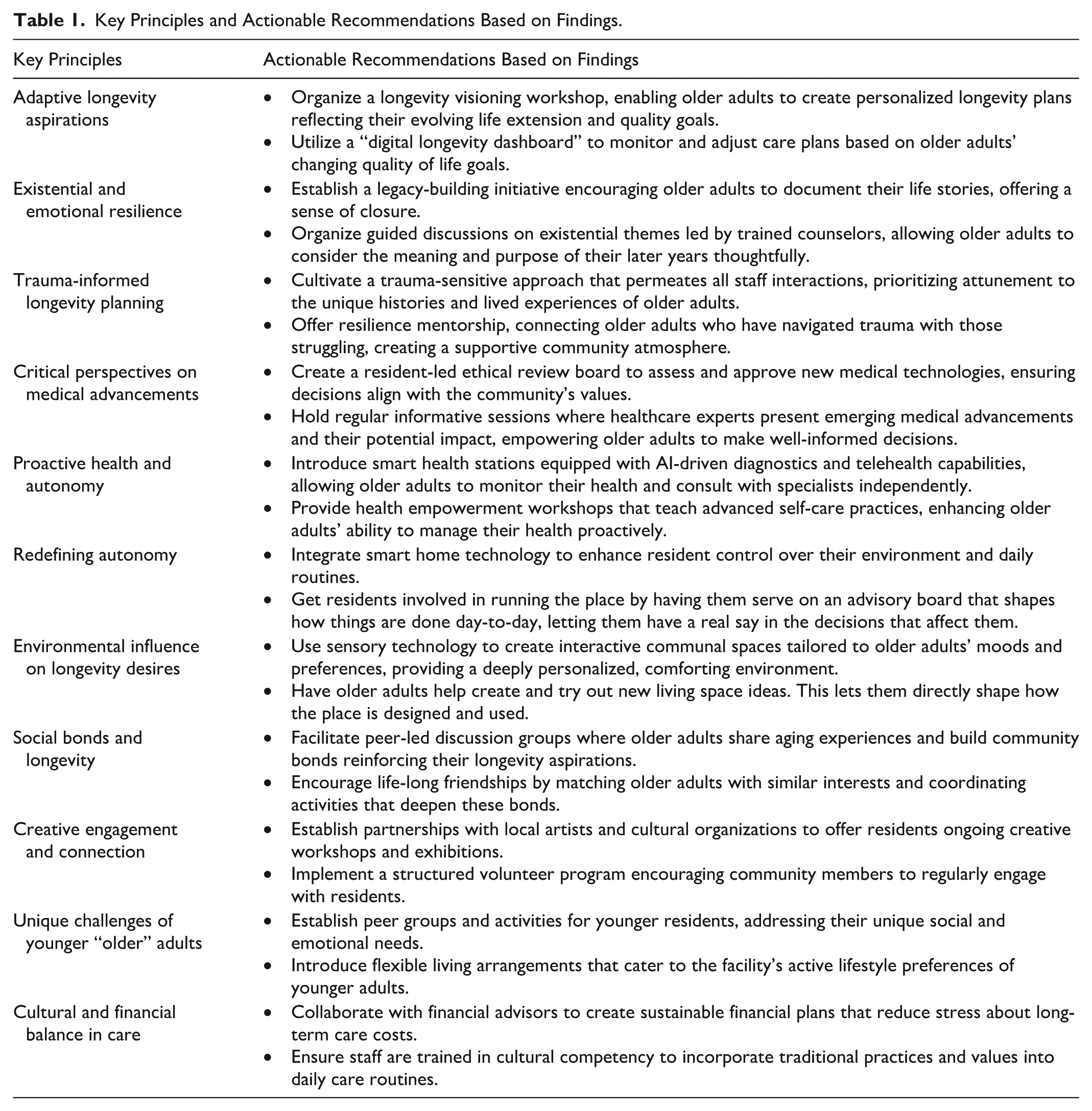
Another important outlet for older adults to process their feelings, reflect on their experiences, and leave a lasting mark beyond their physical life is creative expression expressed through writing, music, or art (Chee, 2024a). Fristrup and Rasmussen (2023) and Manoiu et al. (2023) found that engaging in such pursuits enhances emotional and mental health and provides a therapeutic approach to addressing the existential difficulties associated with aging. However, for some, these activities may not be enough to stave off feelings of loneliness or grief (Chee et al., 2023; Dong et al., 2023). Although older adults may find new meaning and independence through supportive environments, the emotional toll of forming and losing close bonds remains significant. Taking into account Crawford’s (1980) idea of healthism, which argues that personal health habits and personal responsibility affect how one ages, senior living facilities should support older adults’ well-being without imposing undue pressure on them. Table 1 summarizes the key findings and actionable recommendations.
Key Principles and Actionable Recommendations Based on Findings.
Conclusion
Old age is not a race to reach 100, as many find their finish line well before, content with the fullness of their journey. While some aspire to be centenarians, others are satisfied to stop and savor life’s richness earlier on. Aging in one’s 60s might be seen as a time with relatively few health concerns, with a focus on maintaining health to extend active years. However, as individuals move beyond their 70s, the realities of aging, such as physical limitations and chronic health issues, prompt a shift in priorities toward managing health conditions, maintaining independence, and prioritizing comfort. This study, employing Husserl’s phenomenology and Giorgi’s (1997) descriptive phenomenological method, explores the lived experiences of older adults in senior living facilities, uncovering the personal, social, and cultural factors that shape their perspectives on life expectancy and quality of life. The goal is to ensure that each stage of their later years is meaningful, regardless of their longevity goals. Not all older adults aspire to extend their life expectancy; some recognize that savoring and making the most of the time they have left is more important than solely pursuing longevity at the expense of living meaningfully in the present.
The contrasting perspectives on longevity, shaped by different living environments, underscore the complexity of older adults’ aspirations. Some find comfort and a stronger desire to live longer when surrounded by the familiar peace of home, while others feel more secure and optimistic within the structured support of senior living facilities. Strong societal connections and nurturing relationships can ignite a desire for longevity, whereas strained relationships may extinguish it. These varied experiences highlight the need for care approaches as personalized as the individuals themselves, ensuring that each older adult’s journey is respected and thoughtfully supported. Though initially drawn to senior living facilities by cultural norms and the belief that they provide superior care, many older adults move intending to prolong their lives. However, their priorities often evolve as they adjust to these new settings. The realities of aging, the loss of peers, and physical and emotional difficulties compel them to strike a balance between longevity and quality of life. The structured care in these facilities provides security and empowerment, yet some older adults feel restricted by rigid policies and schedules. This tension highlights the need for more flexible care practices that boost personal autonomy, enabling older adults to actively participate in managing their daily routines and major life decisions.
Functional limitations like mobility challenges and chronic illnesses often lead older adults to question the value of an extended lifespan, as it may mean prolonged suffering and a diminished ability to enjoy daily life. They are often torn between optimism about medical breakthroughs extending their lives and skepticism about whether those added years will truly improve their quality of life. Those hopeful about advancements believe innovations will enhance their quality of life, while skeptics fear prolonged life could lead to extended suffering, compounded by past traumas. Many look forward to a long life, but financial instability and concerns about the costs of care, living expenses, and future needs create substantial stress, compelling some to avoid it, fearing the emotional distress that could come with extended years. This stress compels many older adults to adjust their lifestyles and health management practices, with their financial concerns often intersecting with cultural values that influence how they prioritize their daily lives and make decisions about their care. Within the studied context, an older adult’s cultural values, prioritizing family ties and saving wealth for the next generation, significantly shape their approach to later years and decisions about longevity. As Crawford’s (1980) concept of healthism suggests, financial stability is not just about peace of mind, but a crucial factor in maintaining control over one’s health. Although good health may be priceless, ensuring it in later years often comes with a cost that financial security can help manage. Despite the financial concerns that often influence perspectives on longevity, many older adults facing significant mobility challenges, cognitive decline, and increased dependency on others shift their aspirations toward minimizing suffering and finding joy in small, daily interactions rather than solely pursuing extended life expectancy.
In the end, aging is a journey with unique milestones, not merely a condition to be managed. For many, the true finish line is found in the richness and fulfillment of the journey itself. These findings challenge the assumption that all older adults in senior living facilities focus on extending life at any cost, revealing a diverse range of aspirations often unmet by one-size-fits-all care practices. To truly enhance well-being, care must balance structured support with the flexibility to honor individual preferences, acknowledging the personal, social, and cultural factors that shape their views on longevity and quality of life. Policies that support financial security and mental well-being without imposing undue pressure to extend life are equally crucial because the goal is not just to add years to life but to ensure that each year is lived fully. This approach, aligned with Crawford’s (1980) concept of healthism, underscores the importance of personal responsibility for health, suggesting that while older adults should be empowered to take charge of their well-being, this must occur within a framework that respects personal histories and values while considering broader social, cultural, and economic factors.
Strengths, Limitations, and Directions for Future Research
Grounded in phenomenology, this study offers deep insights into the lived experiences of older adults in Malaysian senior living facilities. Several limitations, however, must be acknowledged. Although the study provides valuable insights into the Malaysian context, its geographic focus may limit the applicability of the findings to regions with different cultural, social, economic, and life course conditions. Future research would benefit from including a broader range of geographical locations, financial levels, educational backgrounds, and urban versus rural settings to understand how these dimensions influence perceptions of longevity and quality of life. Furthermore, the study also recognizes that disabilities, functional limitations, and chronic illnesses exert significant influence on perceptions of life expectancy, and it does not go into great detail about identifying participants’ health statuses. Comparative work between older adults who age in place at home and those in senior living facilities would further clarify how different environments structure perceptions of longevity and well-being. Importantly, the study does not capture the perspectives of older adults unable to afford senior living or those who left due to financial pressures. These groups may approach longevity differently, particularly in relation to insecurity and exclusion from institutional care, and their absence highlights a critical area for future research.
The ways in which gender may impact perceptions and experiences related to aging and longevity are also not fully explored in this study. Regarding life expectancy, men and women can have different perspectives because they have different social roles, experience distinct medical conditions, and come across different cultural norms. More attention is also needed to fully comprehend how older adults within senior living facilities perceive longevity as influenced by connections outside the facilities, such as friendships and community ties. Examining these gender-specific characteristics and relational dynamics would advance understanding of how older adults interpret well-being and extended life. Finally, although bracketing and reflexivity were employed, the reliance on self-reported interview data may introduce social desirability bias. Mixed-method designs that combine qualitative interviews with quantitative, alongside longitudinal approaches, would enhance the validity of future research and track how perceptions of longevity change over time.
Footnotes
Correction (January 2026):
Article updated to include the ORCID iD of the corresponding author, Shi Yin Chee. This ORCID iD was verified during peer review but was not included in the original publication.

Ethical Considerations
The authors confirm that the study complies with APA ethical standards in the treatment of the sample. Informed consent was obtained from all participants, and ethical approval was granted by Taylor’s University’s Human Ethics Committee (HEC 2019/070).
Consent to Participant
All participants provided informed consent prior to their involvement in the study.
Author Contributions
Funding
The authors received no financial support for the research, authorship, and/or publication of this article.
Declaration of Conflicting Interests
The authors declared no potential conflicts of interest with respect to the research, authorship, and/or publication of this article.
Data Availability Statement
Due to the sensitive nature of this research and ethical considerations, supporting data are not available. The data are confidential to protect the privacy and anonymity of the participants.