




Abstract
Charitable giving is essential for supporting collective action on various social and environmental problems. Social norms are known to sometimes affect giving, but not always. In this multilevel meta-analysis, we aggregate data from 113 independent samples from research involving 100,469 people in 22 countries to understand the extent to which social norms influence charitable giving (r = .18, p < .001). We test a range of theoretical, methodological, and sample moderators to understand the conditions under which norms may be most effective at promoting giving. The relationship was stronger for injunctive than descriptive norms, when the norm referent was friends and family (vs. no referent or another ingroup), for internalized (vs. externally presented) norms, and potentially when the giving behavior was observed by others. Norms appear effective for most people, and especially for younger people and in non-WEIRD and collectivist contexts. Effects, however, were only found in published research and non-preregistered studies.
Financial help is needed to support advocacy, research, and direct action on some of the world’s most pressing collective problems, including global poverty, finding a cure for cancer, and reversing climate change. Much of the financial help received by organizations working on these issues comes through charitable giving. We define charitable giving as voluntary financial donations that benefit those outside the giver’s family (Bekkers & Wiepking, 2011a). These donations may fund nonprofits to deliver aid or may be offered directly to needy individuals.
Charitable giving is indeed a widespread form of prosocial behavior. The World Giving Index found that 35% of people surveyed across 142 countries reported donating money in the previous month (Charities Aid Foundation, 2024), and giving now exceeds US$577 billion annually in the United States alone (Giving USA, 2024). Donations are the lifeblood of many nonprofits and social change movements, essential for them to achieve their important goals. Understanding the psychological antecedents of charitable giving, and the conditions under which certain approaches may be effective, should therefore be a pressing social psychological concern.
Social norms—the unwritten rules that are broadly shared within groups or society (Legros & Cislaghi, 2020)—are studied prolifically and have now been adopted for use in a broad range of social change interventions (Nyborg et al., 2016; Rhodes et al., 2020), including those designed to promote charitable giving. Evidence pertaining to the influence of social norms on giving is mixed: some studies report positive effects (e.g., Kashif & De Run, 2015), while in other studies no significant effects have been observed (e.g., Jackson, 2016). Occasionally, norms even backfire and depress giving (e.g., Croson & Shang, 2008). By aggregating evidence generated over time in diverse disciplines, a meta-analysis can help nuance theorizing on social norms and offer practical recommendations for when norm-based social change interventions are most likely to be effective.
This study summarizes over 40 years of research on the relationship between social norms and charitable giving. In addition to giving a bird’s-eye view of a broad literature that straddles multiple disciplines (most notably psychology, economics, marketing, and nonprofit studies), we consider a range of theoretical, methodological, and sample moderators to understand when (and for whom) social norms can be leveraged to promote giving and when they are unlikely to work. Results can inform both social norms theorizing and communication strategies of nonprofits to enhance their ability to engage people to support social and environmental campaigns.
The Role of Social Norms in Charitable Giving
Charitable giving is a behavior generally intended to benefit others. As it involves spending one’s financial resources on others, charitable giving can be considered a specific form of prosocial spending (Aknin et al., 2013; Dunn et al., 2014) that is voluntary, benefits people outside one’s family, and specifically involves a gift of money (Bekkers & Wiepking, 2011a). This form of prosocial behavior has traditionally been considered from an individual-level perspective, with scholars seeking to understand who will be most generous and why (e.g., Bekkers & Wiepking, 2011b; Habashi et al., 2016; Wiepking & Bekkers, 2012).
In addition to individualist approaches, some argue that giving is a complex social behavior that is influenced by interpersonal, intergroup, and contextual dynamics (Chapman et al., 2022; Garinther et al., 2022; Levine & Manning, 2013; Louis et al., 2019; Zagefka & James, 2015). Charitable giving is also generally considered to be socially desirable, and people may therefore feel that information about one’s own and others’ giving could be used heuristically to diagnose traits like trustworthiness, kindness, and overall social value. Due to this inherently social nature, charitable giving may be especially susceptible to the influence of social norms.
Norms sometimes influence charitable giving (e.g., Agerström et al., 2016; Chapman et al., 2023; Croson et al., 2009; Nook et al., 2016; Smith & McSweeney, 2007). However, effects vary in magnitude and are not always observed (e.g., Alpizar et al., 2008; Hysenbelli et al., 2013; van Teunenbroek et al., 2021). For example, van Teunenbroek and colleagues (2021) found no significant correlation between experimentally presented injunctive or descriptive information about other people’s donations and the participants’ willingness to donate themselves. Also, Alpizar and colleagues’ (2008) field experiment in a Costa Rican National Park found that sharing normative information about others’ giving behavior sometimes promoted and sometimes depressed giving, depending on the normative donation size. A meta-analysis can help identify the conditions under which social norms will be influential and when they might not be.
Given the social nature of charitable giving, on balance, we hypothesize,
As discussed above, however, there is likely to be variability in the relationship between norms and charitable giving, and part of the goal of this meta-analysis is to understand this variability. To do so, we consider a range of theoretical factors that may help us understand when social norms will (or will not) influence charitable giving.
When Will Social Norms Be Most Influential?
There are few overarching formal theories of social norms, but plenty of theorizing. Indeed, a content analysis of 821 empirical studies on social norms identified 84 different theoretical approaches that have been employed in research (Shulman et al., 2017). The most prominent theoretical approaches that engage with the concept of norms include the Theory of Reasoned Action (Fishbein & Ajzen, 1975), the Focus Theory of Normative Conduct (Cialdini et al., 1990), the Theory of Planned Behavior (Ajzen, 1991), and the Value-Belief-Norm Theory (Stern et al., 1999).
These norm-relevant theories primarily posit that norms, often in addition to other factors like attitudes or values, will influence behavior or behavioral intentions (e.g., Ajzen, 1991; Fishbein & Ajzen, 1975; Stern et al., 1999). For example, the Focus Theory of Normative Conduct (Cialdini et al., 1990, 1991) proposes that people are most likely to act in norm-consistent ways when that norm is made salient and their attention is focused on it. Likewise, Schwartz’s (1977) Norm Activation Model proposes that norms are more likely to influence prosocial behavior under certain situational conditions, such as when people are aware of the consequences of their (in)action and feel a sense of responsibility. To our knowledge, no formal theory summarizes all essential aspects of normative influence into a united theory. As such, we draw inspiration not from a single theory but rather from a range of theoretical perspectives.
Our intention here is not to summarize all theorizing on norms, as this has already been done (see Legros & Cislaghi, 2020 for a good overview). In this section, we instead introduce several components of social norm theorizing that could be relevant to understanding when social norms will be more or less likely to affect charitable giving. Specifically, we elaborate on the distinction between different types of social norms, the effect of being observed, the role of norm referents, whether norms are internalized or external, and the wider cultural context.
Types of Norms
Empirical research has studied a range of norm types (Shulman et al., 2017). Here, we focus on two of the most studied and those that are most familiar to social psychologists: descriptive norms and injunctive norms. Descriptive norms relate to what others commonly do (Reno et al., 1993) and are theorized to motivate action by communicating which actions are likely to be adaptive in the particular context (Cialdini et al., 1990). Injunctive norms, on the other hand, relate to what others approve or disapprove of (Reno et al., 1993). Injunctive norms are theorized to motivate action by the promise of social rewards for norm-conforming behavior or the threat of social sanctions for norm-violating behavior (Cialdini et al., 1990; Lapinski & Rimal, 2006).
Both descriptive and injunctive norms have been shown to promote charitable giving in some contexts (e.g., Chapman et al., 2023; Smith & McSweeney, 2007). It is feasible that either descriptive or injunctive norms could be more relevant for charitable giving. However, we propose that the relationship will be stronger for injunctive than descriptive norms because charitable giving is broadly considered to be a socially desirable behavior and falls within the domain of morality (Nilsson et al., 2020). Consideration of social rewards and sanctions may therefore be particularly strong in this context, making injunctive norms more relevant. In other words, if we fear others’ judgment, we should pay more attention to what they expect of us. On that basis, we hypothesize,
Being Observed
Norms are by nature social, capturing information about what other people do, think, or approve of. Since the early days of psychological research, evidence abounds that humans are often strongly influenced by the presence and behavior of other people. For example, Asch’s famous conformity studies demonstrated that many (though not all) people will conform to inaccurate judgments made by a unanimous majority (Asch, 1955, 1956). These conformity effects are typically stronger when judgments are made face-to-face with others than when judgments are made anonymously (Deutsch & Gerard, 1955), implying that fear of social punishment for deviation from group norms may be a contributing factor in conformity behavior. Because people have been shown to be more likely to conform to group attitudes when in the presence of others, we propose that a behavior will be more affected by social norms when that behavior is observed by others. Therefore,
Norm Referent
Another social aspect of norms is that they are tied to specific groups or communities. Following the social identity approach (Tajfel, 1981; Turner et al., 1987), social norms are not so much rules that people follow in order to fit into society at large, but are instead group-specific. In other words, people do not just adhere to societal norms in a general sense but are instead motivated to follow the norms of specific important social groups they belong to (i.e., ingroups), such as their family, nation, or profession. As such, norms are theorized to influence behavior in part as a way for people to express their group identity (Legros & Cislaghi, 2020). Previous research shows that different social groups have different charitable norms, such as which causes are normative for the group to support (Chapman et al., 2023). For these reasons, norms may especially exert influence on people who identify with the referent group (i.e., the group that the norm applies to; Lapinski & Rimal, 2006; Rimal & Real, 2005). Therefore,
Internalized Versus External Norms
Some theorizing on social norms has distinguished between norms that are internalized and those that are external (Lapinski & Rimal, 2006; Legros & Cislaghi, 2020). In this tradition, external norms are generally imposed on the individual from the outside through direct communication about collectives. For example, when potential donors encounter information in a fundraising appeal about how many other people have donated, this would be considered an external norm. Internalized norms, however, exist at the individual psychological level and represent the individual’s perception of these collective norms. Using the same example, a person’s subjective assumptions about how many other people donate, in the absence of external information, would be considered an internalized norm. Internalized and external norms are not always aligned because the individual may or may not interpret the collective norm correctly (Lapinski & Rimal, 2006). Pluralistic ignorance, for example, whereby groups misapprehend their own norms (Miller, 2023), is the result of a widespread mismatch between internalized and external norms that goes unrecognized. Because internalized norms have by definition been integrated more deeply by the person, they may be more influential. Therefore,
Cultural Tightness-Looseness
Cultural psychologists have identified a broad range of dimensions across which cultures differ. One of these dimensions—cultural tightness-looseness—directly relates to the importance of social norms; specifically, the strength of social norms and the degree of sanctioning for deviant behavior within a society (Gelfand et al., 2011; Uz, 2015). Tight cultures have stronger norms and lower tolerance for deviation, whereas loose cultures have weaker norms and greater tolerance for deviation. In tight cultures, strong external constraints may enhance the role that social norms play in charitable giving. People living in tighter cultures may be more likely to conform to the perceived expectations of others, and deviations from charitable norms may carry greater social costs. In loose cultures, where fewer external constraints are imposed and more behavioral flexibility is allowed, normative cues may exert weaker influence on charitable giving. Instead, individuals might base their giving decisions more on personal values or preferences than social expectations (Berman et al., 2018). On this basis, we therefore hypothesize,
Cultural Individualism-Collectivism
Another dimension on which cultures meaningfully vary is with regard to individualism-collectivism (Triandis, 1995; Triandis et al., 1988). In collectivist cultures, people place a high value on group harmony, interdependence, and maintaining strong relationships within groups. Social norms play a crucial role in guiding behavior to ensure cohesion and stability within these groups. Because collectivist societies emphasize group goals over individual goals, individuals within such societies may be more ready to adjust their behavior to conform to the expectations and norms of the group to avoid disrupting social harmony. Social sanctions for norm violations can be particularly severe in collectivist societies, as nonconformity is seen as a threat to the group’s stability (Hornsey et al., 2006; Kim & Markus, 1999). We therefore hypothesize,
Other Moderators
In addition to the seven theoretical hypotheses developed based on formal theories about social norms, we also, on an exploratory basis, test a range of methodological (i.e., pertaining to research design) and sample (i.e., pertaining to selection of participants) moderators to further understand when and for whom norms may be most strongly related with giving. We also consider research quality markers as potential moderators.
We selected five methodological moderators for consideration: (a) the method used for examining the influence of norms, (b) the mode of study delivery (i.e., online vs. offline), whether the (c) giving outcome and (d) norm related to the likelihood of giving at all or the amount of giving, and (e) whether the giving outcome was self-reported or objective. These moderators are tested to provide guidance to scholars about how study design elements may affect their findings.
There are diverse ways that norms can and have been tested—such as comparing two norms of different strengths (Nook et al., 2016) or comparing the norm to a control (Alpízar & Martinsson, 2012). We therefore consider the method of examining normative influence as a moderator. Another common methodological choice, and one that aligns with conformity being greater when in the presence of others (see discussion above), is the study’s mode of delivery (online vs. offline). We therefore consider whether the mode in which the research is conducted may affect the observed relationship.
Diverse measures have been used to capture charitable giving in research (see Chapman, Thottam, et al., 2025 for a review), and the choice of measure has implications for the observed relationship. Previous research has delineated the effects of various predictors on both the likelihood of donating and the amount donated, often applying the double-hurdle method (e.g., James, 2009; Shaker et al., 2016). Following this approach, donation likelihood is modeled first to understand the probability of any donation being made, and then the conditional donation amount is modeled to understand what promotes heightened generosity among people who do choose to give. Given the popularity of this approach in research on charitable giving, we consider moderators based on whether both the norm and the giving outcome relate to likelihood versus amount. Finally, because divergent effects have been observed dependent on whether giving is captured by self-reported or objective measures (e.g., Shang et al., 2020; Zhou et al., 2021), we consider whether the giving measure was self-reported or objective as a moderator.
We selected four sample moderators for consideration: (a) gender distribution of the sample, (b) average age of the sample, (c) type of country where the data were collected, and (d) whether the sample was students or not. These sample moderators are included because findings will be relevant to nonprofit staff making decisions about whether to use social norm interventions for campaigns for their particular supporter base.
Gender and age have both consistently been shown to be associated with charitable giving (Bekkers & Wiepking, 2011b; Wiepking & Bekkers, 2012). We therefore considered whether these demographic categories may moderate the association between norms and giving. Furthermore, both psychological research (Henrich et al., 2010) and philanthropy research (Wiepking, 2021) have been criticized for relying too much on samples from Western, Educated, Industrialized, Rich, and Democratic (WEIRD; Henrich et al., 2010) countries, calling into question the generalizability of findings. We therefore consider the sample country status (WEIRD vs. non-WEIRD) to assess if these criticisms are founded. Finally, many research studies in the social sciences employ student samples; a practice that has sometimes courted criticism (Ashraf & Merunka, 2017). Because age and income have been shown to be associated with charitable giving (Bekkers & Wiepking, 2011b; Wiepking & Bekkers, 2012), student samples may therefore provide distorted data. For this reason, we tested whether the use of student samples affected the conclusions on the relationship between social norms and giving.
Finally, we consider several markers of research quality as potential moderators: (a) sample size, (b) publication status, and (c) preregistration status. Psychology and nonprofit researchers alike are increasingly aware that some study features can affect the replicability of findings (Bekkers et al., 2025; Nosek et al., 2022). Studies with small sample sizes have reduced power to detect effects (Cohen, 1992), and findings may therefore be more volatile. Publication bias may also contribute to observed effect sizes. Indeed, it is well understood that studies reporting stronger effects have historically been easier to publish (Ferguson & Brannick, 2012). Furthermore, preregistered studies are less likely to be influenced by the normal cognitive biases that may lead to distorted reporting (intentional or otherwise; Nosek et al., 2018). For these reasons, we consider these three research quality moderators to assess if they influence conclusions about the relationship between norms and giving.
The Current Research
To summarize, social norms have been studied extensively in the context of charitable giving, with results returning varying effects. The literature on social norms and charitable giving is therefore ripe for evaluation. Our meta-analysis aggregates decades of research on social norms and giving, published across various disciplines, employing different methods, and sampling people in diverse countries. In doing so, we summarize the overall relationship between norms and giving and identify important moderators and boundary conditions. Theoretically, results can be used to update models of normative influence and donor psychology. Practically, by clarifying when norm interventions are likely to work and for whom, findings can be used to inform social change interventions and to enhance nonprofit strategies to help achieve positive social change.
Method
To identify quantitative research on the relationship between social norms and charitable giving, we conducted a systematic review informed by the Preferred Reporting Items for Systematic Reviews and Meta-analyses (PRISMA; Moher et al., 2015). The study was not preregistered. The meta-analysis data file and code for analysis are available on the Open Science Framework (OSF; https://osf.io/zx25d).
Search Strategy
Initial searches were run in November 2019 on title, abstract, and keywords across four databases: the two largest multidisciplinary academic databases (Scopus and Web of Science) plus content-relevant databases in psychology (PsycINFO) and business (ABI/Inform). Search terms were nested around the two required concepts of social norms (norm, norms, “social information”) and charitable giving (donation*, donate, donor*, philanthrop*, charitable and “not for profit*”, “non profit*”, nonprofit*, NGO*, “non governmental”, “third sector”, “charit*”). Searches were limited to articles published in peer-reviewed journals since 1980. In addition, we supplemented these searches with calls for unpublished data distributed through X (formerly Twitter) and the Society for Personality and Social Psychology, Association for Research on Nonprofit Organizations and Voluntary Action, and American Marketing Association mailing lists. Searches were further updated in September 2024 to cover the intervening years. At that time, we also conducted forward and backward citation searches to capture any relevant articles that had cited or were cited by any of the identified articles in the corpus. All search efforts yielded 512 unique articles published between 1980 and 2024.
Eligibility and Screening
Articles were screened in three rounds: first on title, second on abstract, and third on full text. To be included, articles needed to be written in English and to have quantitatively captured the relationship between social norms and charitable giving (i.e., donations of money to benefit non-kin others). We included both studies looking at interpersonal giving (e.g., dictator games) and studies looking at charitable donations to charities and nonprofits. When articles did not report bivariate effect sizes and had been published within 10 years, we emailed authors to request this information. A summary of the screening process is presented in the PRISMA flowchart (see Figure 1), and a more detailed description of inclusion and exclusion requirements is available in the PRISMA protocol document on the OSF.
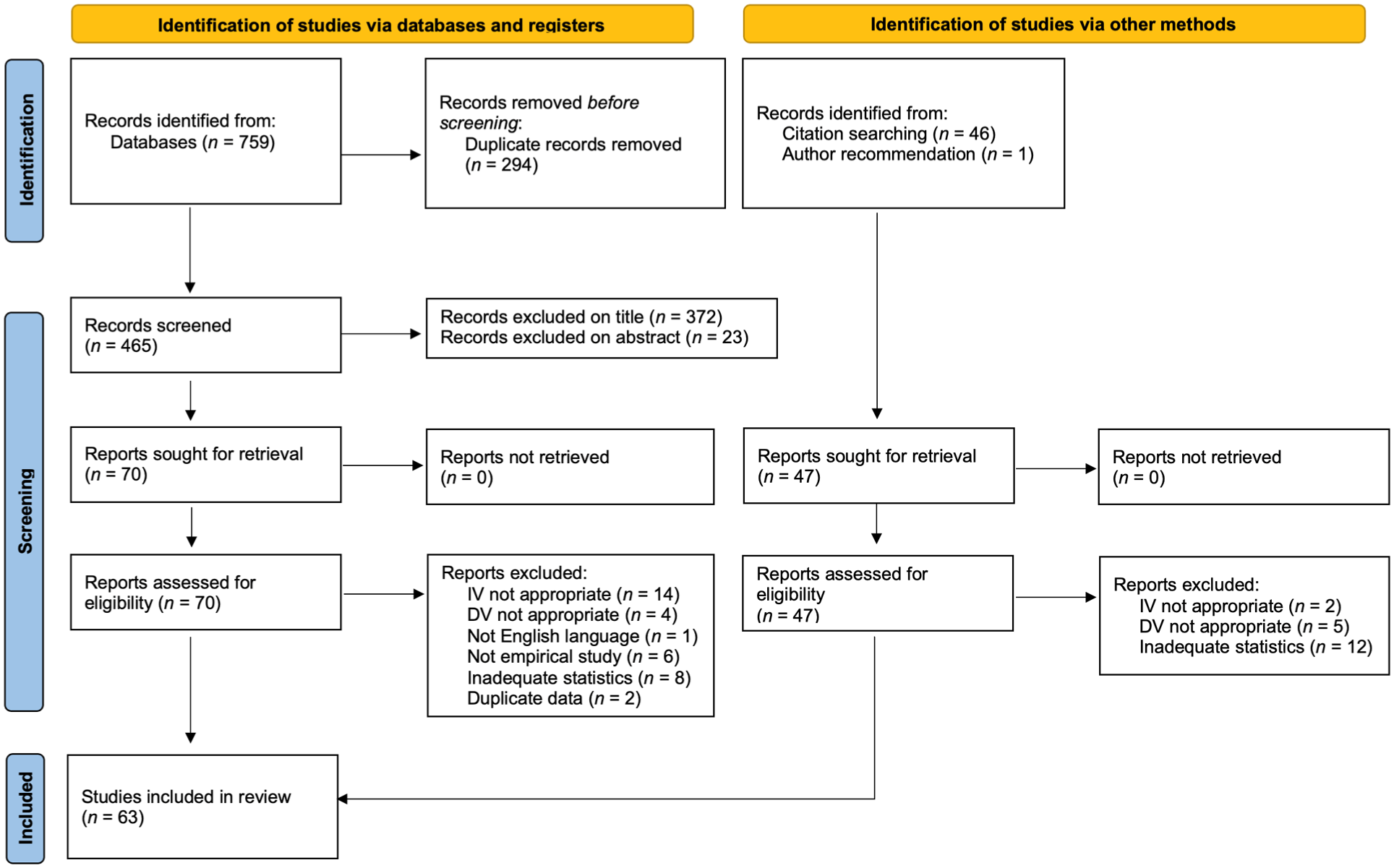
PRISMA Flow Diagram Summarizing the Screening Process.
Coding
Bivariate effect sizes were extracted to ensure the comparability of effect sizes across studies. The type of effect size extracted depended on the particular study design, but effect sizes were typically Pearson’s correlation coefficients (r) for correlational studies or Cohen’s ds for experimental studies. When these values were not provided, we used test statistics (e.g., means and standard deviations, F-values) to calculate effect sizes.
Beyond effect sizes, we also extracted information to test possible moderators of the relationship between social norms and charitable giving. Table 1 summarizes all moderators and provides definitions. Additional information about how the moderator levels were coded and examples of how they have been operationalized can also be found in the Supplementary Materials file on the OSF. The second, third, and fourth authors all extracted data and informally cross-checked one another’s work to ensure reliability and rectify any discrepancies or errors.
Summary of All Moderators Tested in the Meta-Analyses.
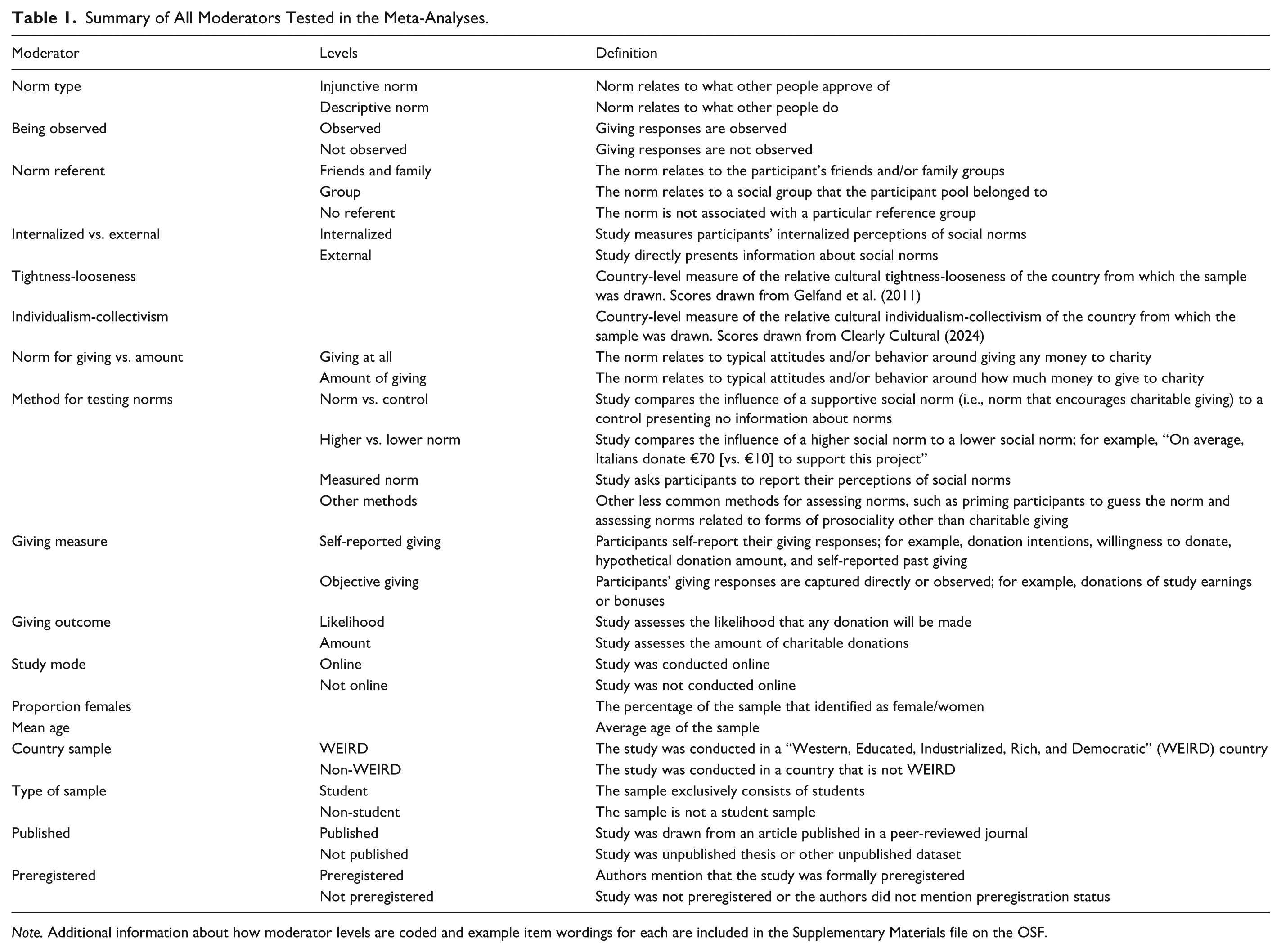
Note. Additional information about how moderator levels are coded and example item wordings for each are included in the Supplementary Materials file on the OSF.
Analyses
The relationship between social norms and charitable giving was represented by a Pearson’s correlation (r). To approximate a normal sampling distribution, all effect sizes were transformed to Fisher’s z correlations for the analyses and then transformed back to Pearson r correlations for reporting to facilitate interpretation of results.
We included all reported effect sizes, and many studies in the corpus contributed more than one effect size (M = 2.27 per sample). We therefore used a three-level meta-analytic approach, with three sources of variance accounted for: sampling variance (Level 1), within-study variance (Level 2), and between-study variance (Level 3; Assink & Wibbelink, 2016). Using the rma.mv function of the Metafor package (Viechtbauer, 2010) in the R environment, we conducted analyses using multilevel random effects models with the restricted maximum likelihood estimation method to calculate model parameters. Following Knapp and Hartung (2003), the t-distribution was used to test individual regression coefficients.
Sensitivity Analyses
A leave-one-out analysis did not identify any studies that substantially influenced the overall findings. To check for extreme effect sizes that may disproportionately influence the results, we screened for those with standardized scores beyond ±3.29 standard deviations (Tabachnik & Fidell, 2013). Two outliers were identified (ES 12 & 123). Overall analyses with these effect sizes included or excluded yielded a similar pattern of findings, 1 so we elected to retain them in all subsequent analyses.
We collected data until all effect sizes that met our search and screening criteria had been captured, which resulted in a final sample size of 257 effect sizes. We performed a sensitivity power analysis in G*Power 3.1 to identify the aggregate effect size (Pearson’s r correlation) we had sufficient power to detect, assuming a two-tailed test and an alpha of .05. A sample of this size provides 80% power to detect an effect of r ≥ .|17.| This indicates our meta-analysis was sufficiently powered.
Publication Bias
We tested for publication bias in three ways, using only the published articles in the sample. First, we created a funnel plot (Figure 2) to visually inspect for potential asymmetry. Apart from one outlier on the right-hand side, the funnel plot did not indicate major asymmetry. Second, we used the trim-and-fill method to estimate how many studies were potentially missing and from which side of the average effect (Duval & Tweedie, 2000). The trim-and-fill procedure estimated zero missing studies on the left side of the funnel plot. Third, we used Egger’s method of regressing the standardized effect size on the precision of the effect size (Sterne & Egger, 2005). This Egger’s test for funnel plot asymmetry was significant, t(96) = 3.12, p = .002, suggesting some publication bias. Collectively, these results indicate the possibility of publication bias in the sample. We therefore include publication status as a moderator in the analyses that follow.
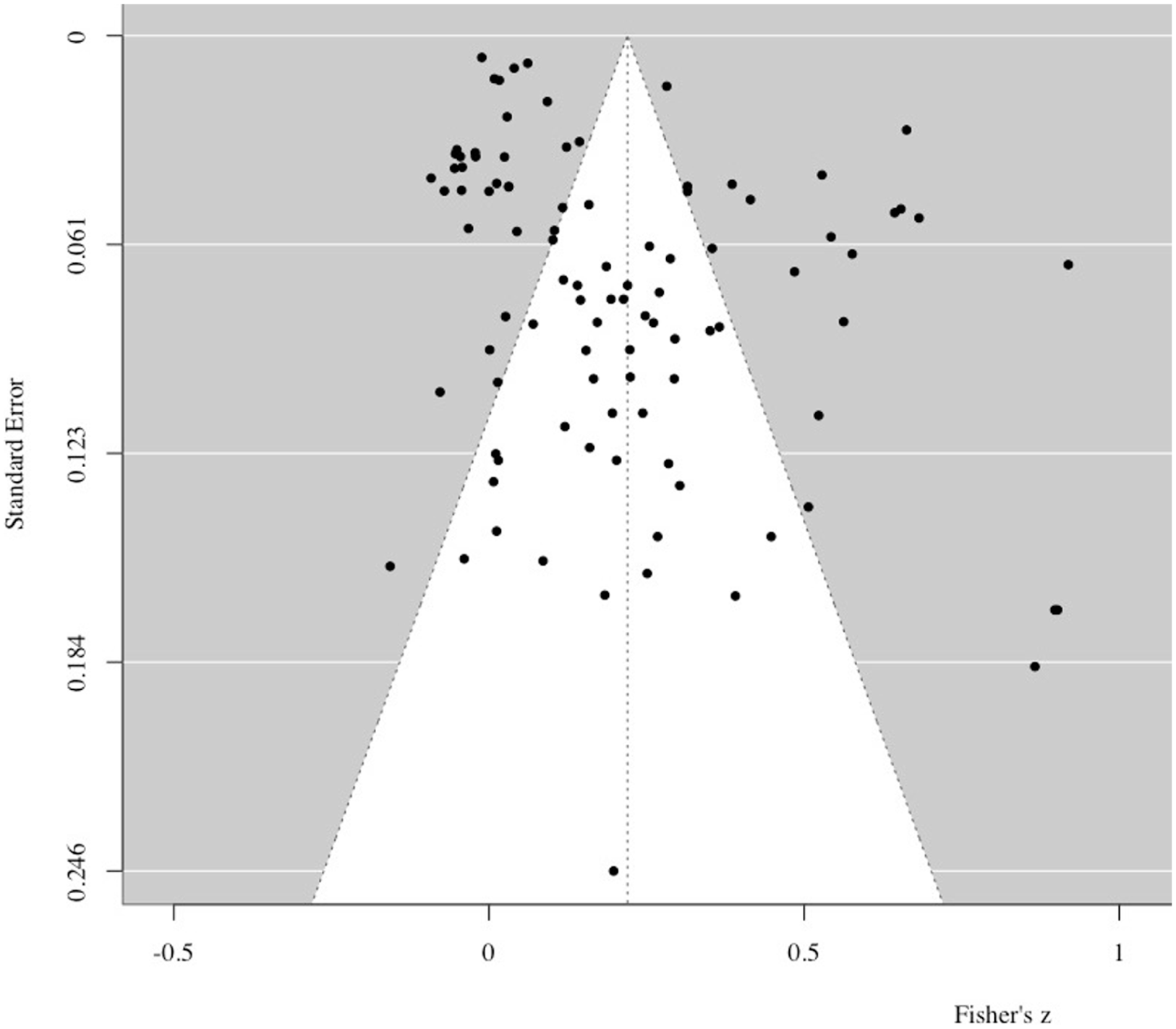
Funnel Plot of the Published Studies Showed No Evidence of Publication Bias.
Results
We extracted 257 effect sizes from the 113 independent samples reported in the 63 articles identified for the meta-analysis. Data came from 100,469 people in at least 22 different countries. 2
Aggregate Effect Size
The aggregate effect size (i.e., overall relationship) was significant and positive, r = .18, t(256) = 7.49, p < .001, 95% CI [.13, .23], indicating a small-to-medium-sized relationship (see Figure 3 for forest plot of all effect sizes).
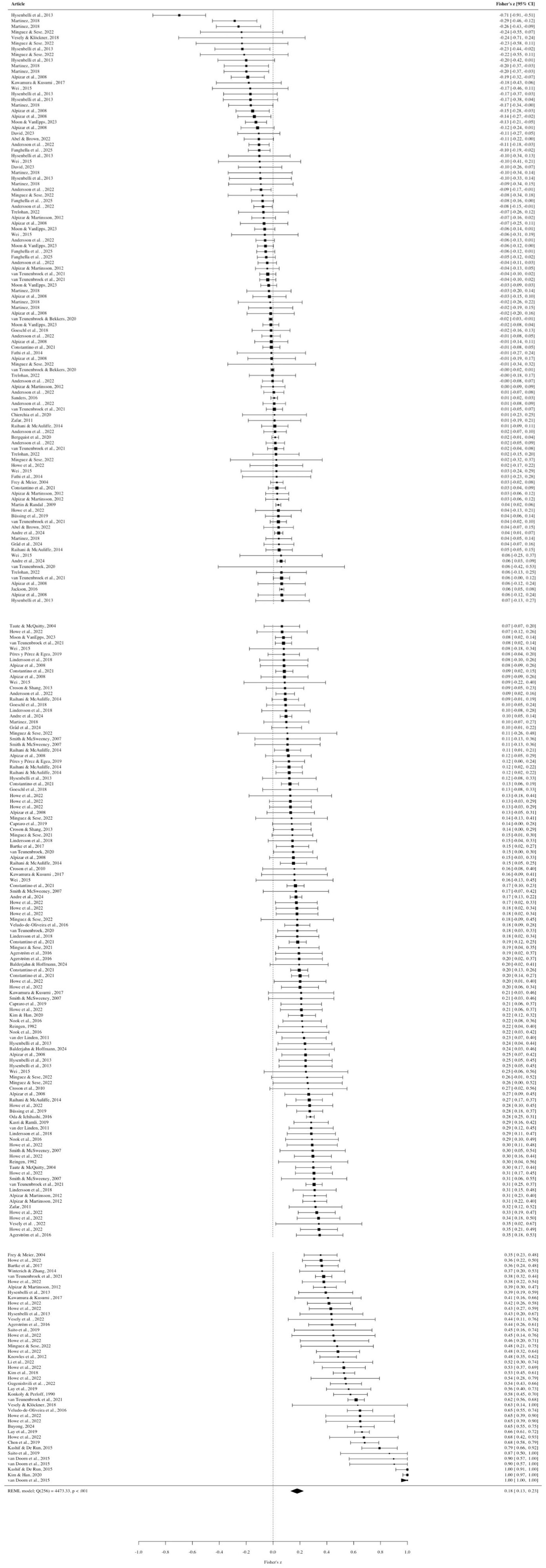
Forest Plot of the 257 Effect Sizes Included in the Meta-Analysis (k = 113 Samples).
Heterogeneity
Significant variance in effect sizes was observed both within studies (p < .001) and between studies (p < .001). We used Cheung’s (2014) formula and found that 2.3% of the total variance could be attributed to sampling variance, 29.5% to within-study variance, and 68.2% to between-study variance. These results indicate that the true relationship between social norms and charitable giving varies significantly across studies and measures. Moderator analyses are therefore warranted to identify the sources of this observed heterogeneity.
As outlined above, we considered a range of theoretical, methodological, and sample moderators (results summarized in Table 2). Each moderator was tested independently, and each is discussed in turn below.
Univariate Tests for Moderation of the Overall Association Between Social Norms and Charitable Giving.
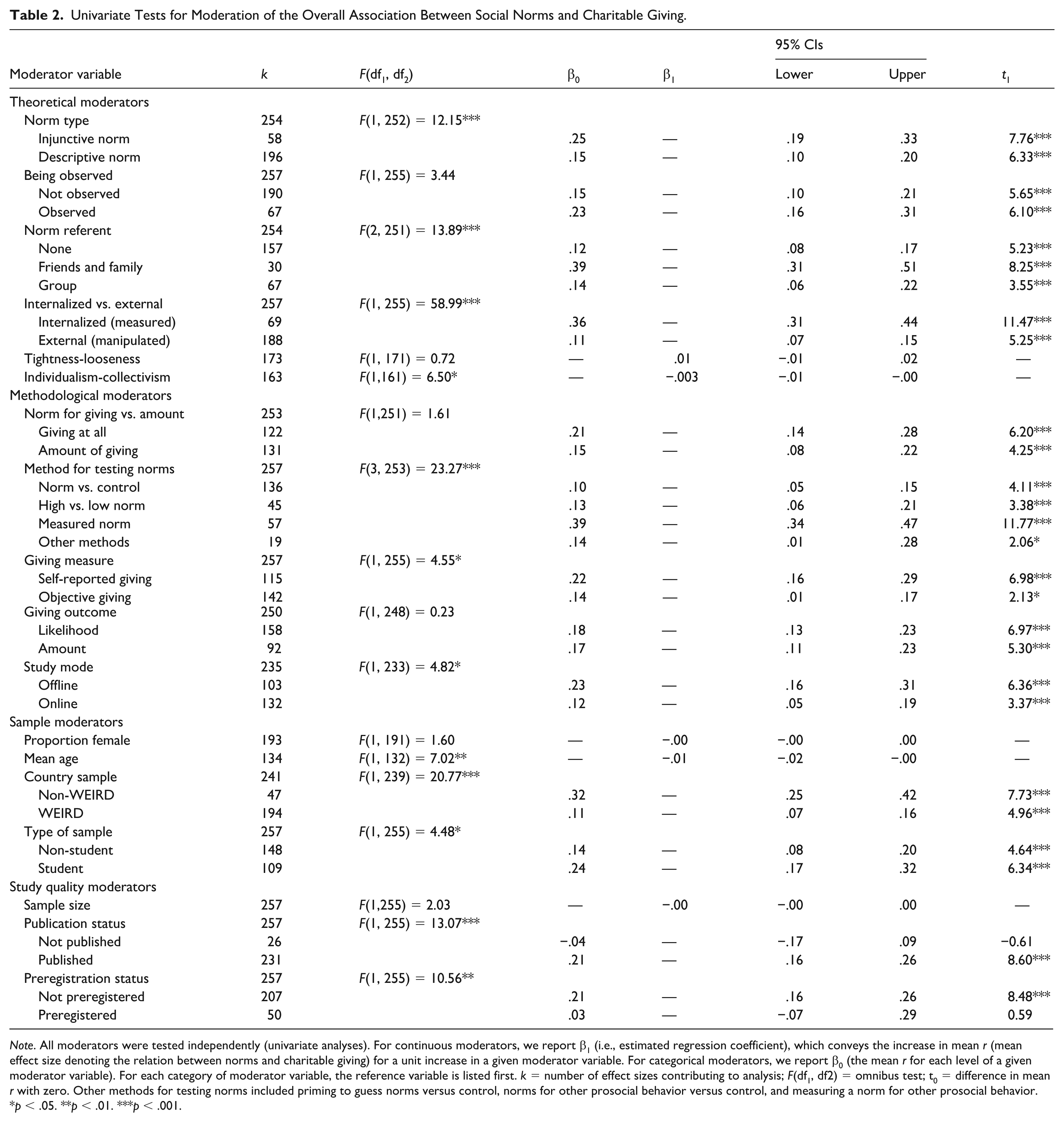
Note. All moderators were tested independently (univariate analyses). For continuous moderators, we report β1 (i.e., estimated regression coefficient), which conveys the increase in mean r (mean effect size denoting the relation between norms and charitable giving) for a unit increase in a given moderator variable. For categorical moderators, we report β0 (the mean r for each level of a given moderator variable). For each category of moderator variable, the reference variable is listed first. k = number of effect sizes contributing to analysis; F(df1, df2) = omnibus test; t0 = difference in mean r with zero. Other methods for testing norms included priming to guess norms versus control, norms for other prosocial behavior versus control, and measuring a norm for other prosocial behavior.
p < .05. **p < .01. ***p < .001.
Theoretical Moderators
Descriptive Versus Injunctive Norms
The size of the relationship between social norms and charitable giving depended on the type of norm being assessed, F(1,252) = 12.15, p < .001. The relationship with giving was larger for injunctive norms (r = .25, p < .001) than for descriptive norms (r = .15, p < .001).
Being Observed
The relationship between norms and giving was not affected by whether the participants’ giving responses were observed, F(1,255) = 3.44, p = .065.
Norm Referent
The relationship between social norms and charitable giving depended on who the norm referenced, F(2,251) = 13.89, p < .001. Compared to no clear referent (r = .12, p < .001), the relationship was stronger when the norm referenced friends and family (r = .39, p < .001; β = .29, p < .001) but no different when the norm referenced another ingroup (r = .14, p < .001; β = .02, p = .671.
Internalized Versus External Norms
The relationship between social norms and giving was much stronger when internalized norms were measured (r = .36, p < .001) than when external norms were manipulated experimentally (r = .11, p < .001), F(1,255) = 58.99, p < .001.
Tightness-Looseness
The relationship between social norms and charitable giving was not affected by the cultural tightness-looseness of the country from which the sample was drawn, F(1,171) = 0.72, p = .396.
Individualism-Collectivism
The sample country’s individualism score moderated the association, F(1,161) = 6.50, p = .012, with countries higher in individualism returning significantly lower relationships between norms and giving (β < −.01).
Methodological Moderators
The method for testing the impact of social norms moderated the relationship between norms and charitable giving, F(3,253) = 23.27, p < .001. The relationship was stronger when participants’ perceptions of norms were measured (r = .39, p < .001; β = .31, p < .001), relative to methods comparing norms with control groups receiving no normative information (r = .10, p < .001). Norms (vs. controls) did not differ significantly (βs ≤ .05, ps ≥ .467) from approaches comparing higher norms with lower norms (r = .13, p < .001) nor approaches using less common methods of assessing norms (r = .14, p = .041).
The relationship between social norms and giving was found to be weaker in studies conducted online (r = .12, p < .001) than in studies conducted offline (r = .23, p < .001), F(1,233) = 4.82, p = .029. A larger relationship was also found when giving was self-reported (r = .22, p < .001) than when an objective behavior was captured (r = .14, p < .001), F(1,255) = 4.55, p = .034. However, no difference in effect size was observed between analyses that assessed the likelihood of donation or the amount donated, F(1,248) = 0.23, p = .632. Similarly, effect sizes did not differ by whether the normative information referred to giving at all or donation amount, F(1,251) = 1.61, p = .206.
Sample Moderators
The proportion of women in the sample did not moderate the relationship, F(1,191) = 1.60, p = .207; however, the average age of the sample did, F(1,132) = 7.02, p = .009. Older samples returned slightly weaker effects (β = −.01). Larger associations between norms and giving were also found in studies recruiting students (r = .24, p < .001) compared to non-student samples (r = .14, p < .001); F(1,255) = 4.48, p = .035.
Geographic location also moderated the relationship, F(1,239) = 20.77, p < .001, with much larger relationships found in non-WEIRD (r = .32, p < .001) than WEIRD countries (r = .11, p < .001).
Study Quality Indicators
Sample size did not moderate the relationship, F(1,255) = 2.03, p = .156. However, both publication status and preregistration status did. Studies that were published found a significant association between norms and giving (r = .21, p < .001), while studies that were not published found no significant association (r = −.04, p = .540), F(1,255) = 13.07, p < .001. Studies that were preregistered also did not find a significant association between norms and giving (r = .03, p = .556), while studies that were not preregistered did (r = .21, p < .001), F(1,255) = 10.56, p = .001.
Multivariate Analyses
We next extended the three-level meta-regression model to simultaneously include all of the theoretically derived moderators (see Table 3, Model 1). 3 Cultural tightness-looseness and individualism-collectivism both had significant missingness due to scores not being available for all countries, leading to a much smaller sample of effect sizes (k = 121). To maintain higher power, we therefore also tested a model excluding the two cultural variables (Model 2; k = 251). Finally, because the study quality indicators of publication and preregistration status were significant at the univariate level, we tested a third meta-regression controlling for these (Model 3).
Multivariate Analyses Including the Theoretically Derived Moderators of the Overall Association Between Social Norms and Charitable Giving.
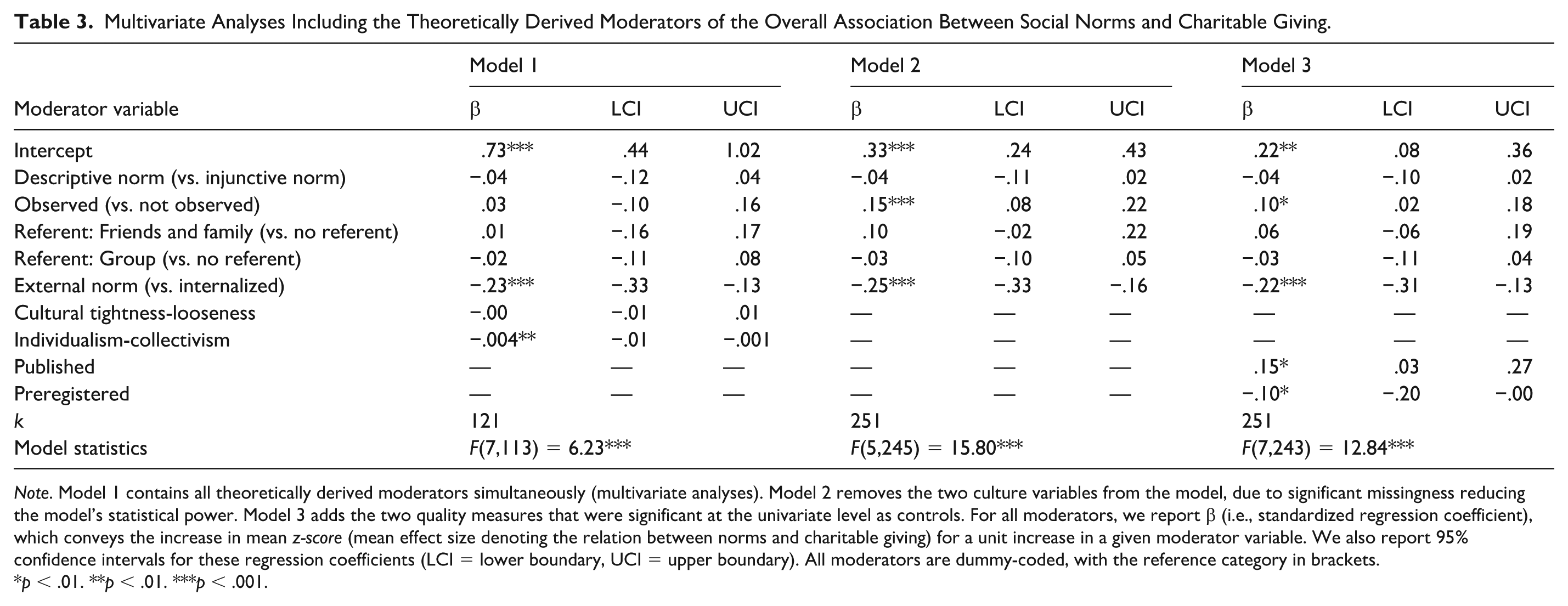
Note. Model 1 contains all theoretically derived moderators simultaneously (multivariate analyses). Model 2 removes the two culture variables from the model, due to significant missingness reducing the model’s statistical power. Model 3 adds the two quality measures that were significant at the univariate level as controls. For all moderators, we report β (i.e., standardized regression coefficient), which conveys the increase in mean z-score (mean effect size denoting the relation between norms and charitable giving) for a unit increase in a given moderator variable. We also report 95% confidence intervals for these regression coefficients (LCI = lower boundary, UCI = upper boundary). All moderators are dummy-coded, with the reference category in brackets.
p < .01. **p < .01. ***p < .001.
All three models were significant, Fs ≥ 6.23, ps ≤ .001. Across all three models, when shared variance between the moderators was accounted for, internalized norm perceptions were more strongly associated with giving than external norms. In Model 1, the relationship between norms and giving was also found to be weaker in more individualist cultures. In Models 2 and 3, with improved statistical power to detect effects, being observed by others resulted in a stronger association between social norms and charitable giving compared to not being observed. Both study quality controls remained uniquely significant when included in Model 3: the association between norms and giving was larger in published (vs. unpublished) studies and smaller in preregistered (vs. non-preregistered) studies. Finally, across all three multivariate analyses, the type of norm (descriptive vs. injunctive), having the norm refer to friends or family or another ingroup (vs. no clear referent), and cultural tightness-looseness of the country from which the sample was drawn did not uniquely predict the strength of the association between social norms and charitable giving.
Discussion
Aggregating over 40 years of research on social norms and charitable giving, we find an overall positive relationship (supporting H1) that was small-to-medium in size (following Cohen, 1992). Across the 257 effect sizes included in our analyses, approximately 3% of the variance in charitable giving could be explained by variance in social norms. The amount of variance in giving explained by social norms is larger than, for example, the amount explained by conscientiousness (<1%; Bleidorn et al., 2025), loneliness (1%; Malon et al., 2024), or agreeableness (2%; Bleidorn et al., 2025), but smaller than the amount explained by trust (5%; Chapman et al., 2021) or social identification (8%; Chapman, Spence, et al., 2025). This overall relationship was significantly affected by a range of theoretical, methodological, and sample moderators, which are discussed below.
The relationship between social norms and charitable giving was stronger when the norm was injunctive than when it was descriptive. In other words, giving may be more strongly motivated by what other people approve of than by what they do. However, norm type did not remain a significant unique predictor in the multivariate meta-regression. Thus, mixed support was found for H2. Previous studies and meta-analyses have found injunctive norms more effective for influencing littering behavior (Reno et al., 1993) and in behavior change appeals (Rhodes et al., 2020), though descriptive norms were found to be more important for purchase and consumption decisions (Melnyk et al., 2022) and adolescent sexual behavior (van de Bongardt et al., 2015). In the case of charitable giving, an emphasis on injunctive norms makes sense, given that generosity is widely considered to be a socially desirable behavior (Lee & Sargeant, 2011). If people are aware of the potential for reputational rewards or punishments for their behavior, they may be more attuned to the expectations of their group than their group’s actual behavior. However, it may be that the selection of norm type (descriptive vs. injunctive) covaried with another theoretical moderator, making their unique effects difficult to untangle. Future research may wish to directly test different components of norm theory orthogonally to reach a firmer conclusion about the role of norm type on the association between social norms and giving.
Whether the giving behavior was observed or not did not affect the role of social norms at the univariate level. However, when considered simultaneously with other theoretical moderators, the predicted moderation emerged: the relationship between norms and giving was stronger in studies where the giving relationship was observed by others. Therefore, mixed support was found for H3. To speculate about why this pattern emerged, it is possible that audiences lose their impact once norms have become internalized. Theorizing suggests that people follow norms in private even when violations are unlikely to be detected. According to Gross and Vostroknutov (2022), norms are likely originally learned via fear of punishment but become socialized over time and eventually become internalized. In such cases, internal feelings of anticipated guilt or shame may result in norm conformity even when one’s behavior is unobserved. Furthermore, people may uphold norms in private simply in order to maintain their self-image as being a decent or moral person (Gross & Vostroknutov, 2022). It is therefore possible that people have previously learned through social reward or punishment to enact norms around charitable giving, and the presence or absence of an audience, therefore, no longer impacts charitable norm compliance. This could explain why the audience effect emerged as a unique predictor only once the effects of internalization were accounted for. Furthermore, it is possible that audience effects may be more prominent for some people than others. For example, both men (Kottasz, 2004) and people of higher social classes (Kraus & Callaghan, 2016) have been found to be more responsive to audience effects and reputation concerns. Future research could explore this proposition directly.
Social norms were more strongly associated with giving when the norm referent was friends and family of the participant, but not when the referent was another ingroup. In other words, the attitudes or behavior of people who are very close to the participant (i.e., friends and family) were more strongly associated with their own giving behavior than were the attitudes or behavior of people who are members of broader social groups or not explicitly part of their ingroups. Theoretically, this is consistent with expectations about how and when normative influence works, especially from within the social identity tradition (see Hornsey, 2008 for a review). No unique effect of friends and family referent was found, however, within the multivariate models. Thus, mixed support was found for H4a, and no support was found for H4b.
According to the social identity approach (Tajfel, 1981; Turner et al., 1987), subjective identification (i.e., the degree to which the participant feels connected to the referent) is expected to be more influential than mere shared group membership. Indeed, a recent meta-analysis of the role of social identification in charitable giving found that subjective identification explained five times as much variance in charitable giving (10% explained) as shared group membership did (2% explained; Chapman, Spence, et al., 2025). The studies included in our meta-analysis did not capture subjective identification, and we therefore could not include it as a moderator. Nevertheless, it is conceivable that participants had much stronger social identification with their close friends and family than with the broader social categories they belonged to. We therefore expect that the observed effects of ingroup referent may underestimate the true effect size, which would likely be stronger if people identified their group membership or subjective identification directly. Future research on social norms may wish to test this in lab experiments or field research to better understand the importance of referent status.
Some theorists have meaningfully distinguished between internalized norms and external norms (e.g., Lapinski & Rimal, 2006; Legros & Cislaghi, 2020). Internalized norms relate to the individual’s perception of group norms, while external norms relate to information about group norms imposed on individuals. Norms are only theorized to be effective to the extent that they are perceived. Both our univariate and multivariate meta-analyses do indeed show that internalized norms (i.e., measured perceived norms) were more effective than external norms (i.e., manipulated norms; supporting H5). Internalized norms likely take time and multiple exposures to shift, and some norm manipulations may be more effective than others, which might explain why external norms presented in single-shot experiments returned weaker effects than measured internalized norms. External norms may instead become internalized over time and multiple exposures, something that could be explored in the future using longitudinal panel experiments.
Nevertheless, a potential confound exists in relation to internalized and external norms. To capture internalized norms, one must measure the participant’s perceived norm. External norms, on the other hand, can be manipulated directly. Therefore, all of the studies capturing internalized norms used self-report norm measures, and all the studies capturing external norms used experimental manipulation. The difference in effect size that we observed between internalized and external norms may therefore reflect both a theoretical distinction and a methodological distinction that speaks instead to the question of causality. Experimental studies allow us to infer causality: when one increases the norm, one observes increases in giving. However, with measured norms, the direction of influence remains unclear: norms may indeed be promoting giving, but giving may also be contributing to norm perceptions. Due to the theoretical definitions of internalized and external norms, it is not possible to disentangle these theoretical and methodological components. However, we conservatively suggest that, due to the methodological component perhaps explaining some of the observed effect, the true effect size of the theoretical component (i.e., comparing internalized and external norms) may be smaller than we have observed.
Some cross-cultural differences emerged. Although the cultural tightness-looseness of the country from which the sample was drawn did not affect the size of the relationship between norms and giving at either the univariate or multivariate level (no support for H6), the predicted moderation was found for cultural individualism-collectivism, with more individualist countries returning smaller effect sizes (H7 supported). Norms were also more effective in samples drawn from countries that were categorized as non-WEIRD (including, for example, China, Ecuador, India, Malaysia, and Saudi Arabia). These findings highlight the importance of including more diverse samples in order to have a broader understanding of human behavior rather than the behavior of people living in a narrow range of similar countries (see also Henrich et al., 2010; Wiepking, 2021).
Diverse other methodological and sample moderators were included due to their relevance for scholars designing future research and nonprofit staff designing campaigns. Social norms were effective regardless of the gender distribution and slightly more effective with younger samples. Larger relationships were found in studies with students than with nonstudents. Given that real-world charity donors tend to be older (Levy, 2024), this suggests researchers should avoid using student samples for studies looking at social norms for charitable giving, as this type of sample may return nongeneralizable findings.
Larger effects were found when the giving measure was self-reported than when it was objective. Self-reports (whether of past giving or future intentions) are less constrained by pragmatic concerns and may therefore represent how much a social norm would affect giving responses in a vacuum. Objective giving, on the other hand, may be constrained by factors like income, cost of living, and ease of giving. Furthermore, well-documented social desirability biases in self-reports of charitable giving (Lee & Sargeant, 2011) could explain why effects are larger for subjective than for objective giving. Typically, effects of various predictors of giving are found to be stronger on self-reported than on objective measures of giving (e.g., Shang et al., 2020; Zhou et al., 2021); likely because self-reported measures are both prone to distortion and not weighed down by practical concerns.
Finally, differences emerged dependent on two markers of study quality: publication status and preregistration status. At the univariate level, only published studies and studies that were not preregistered returned a significant association between social norms and charitable giving. This pattern is consistent with long-standing concerns about publication bias and the potential for inflated effects in studies without preregistration. While these results cannot speak directly to the presence of questionable research practices, they do highlight the importance of critically evaluating the robustness of findings, particularly from earlier studies or those lacking transparency. There are several ways that the robustness of future scholarship on norms and giving could be significantly improved. Our three strongest recommendations are for more preregistered research, a greater willingness of journals to publish null and negative findings, and increased use of objective measurement of charitable giving (see also Chapman, Thottam, et al., 2025). We encourage researchers to apply these emerging best practices for research in future studies.
Strengths, Limitations, and Future Directions
The strengths and limitations of our research are not unique but rather common to all meta-analyses. By meta-analyzing a very broad sample of studies, using different measures, conducted in different countries, and over a period of more than four decades, we can have confidence in the generalizability of our findings. However, meta-analyses are always limited by the corpus available, the choices that previous scholars have made, and what they have reported. Factors that may be worth exploring as potential moderators in future research include income, education, and social class.
In addition to suggestions for future research already made, studies may wish to consider the relevance of beneficiary referents. Social norm beneficiaries have been recently theorized as a relevant category of norm referent (Legros & Cislaghi, 2020). Those authors propose that social norms may be more or less effective depending on who stands to benefit from the norm being enacted. We know that social norms sometimes communicate information not only about if one should help, but also the type of causes that “our” group typically supports (Chapman et al., 2023). Most studies did not report enough information about beneficiaries for us to examine beneficiary referents as a moderator. We therefore suggest future research should examine this notion explicitly by systematically varying the beneficiary of a norm to examine how this may influence its effectiveness.
Conclusion
In this article, we have summarized over 40 years of research on the relationship between social norms and giving. Overall, we find a small-to-medium-sized positive relationship between norms and giving. The relationship was found to be stronger for injunctive than for descriptive norms, when the norm referent group was friends and family of the participant, and for internalized (vs. externally presented) norms. Norms seem to be particularly relevant for giving in non-WEIRD cultures, explained in part by individualism-collectivism but not by cultural tightness-looseness. However, study quality tests indicated that effects may be found only in published research and studies that were not preregistered. Results should therefore be interpreted with caution.
The findings of this meta-analysis have several implications for people who are seeking to increase charitable giving through social change campaigning and fundraising. First, evoking supportive norms will likely be helpful in encouraging charitable giving, especially for campaigners working in non-WEIRD and more collectivist countries. Second, injunctive norms (information about what others approve of) may be more effective than descriptive norms (information about what other people actually do). Third, because norms may be particularly effective when they refer to the attitudes and behaviors of one’s friends and family, peer-to-peer campaign approaches may be an effective context for harnessing the power of social norms. Fourth and finally, because internalized norms are more important than external norms, campaigners should communicate normative information repeatedly over time so that those norms come to be assimilated and therefore exert greater influence on behavior.
Footnotes

Ethical Considerations
This article reports meta-analyses of secondary data. No primary data collection was involved, meaning ethical approval was not required for this study.
Informed Consent Statement
This article reports meta-analyses of secondary data. No primary data collection was involved, meaning informed consent was not required for this study.
Declaration of Conflicting Interests
The authors declared no potential conflicts of interest with respect to the research, authorship, and/or publication of this article.
Funding
The authors disclosed receipt of the following financial support for the research, authorship, and/or publication of this article: Cassandra Chapman is a recipient of the Australian Research Council Discovery Early Career Researcher Award (project number DE220100903) funded by the Australian Government.