




Abstract
We explored the relationship between socio-demographic characteristics and superstition endorsement, distinguishing between the practice of and belief in superstitions, as well as between positive and negative superstitions. We examined specifically whether analytic thinking style, anxiety, and intolerance of uncertainty account for socio-demographic variability in these dimensions of endorsement and to what extent stress from macro-level threatening circumstances moderates these effects. Two pre-registered studies conducted in Israel (N = 751) and the United States (N = 566) revealed that whereas relations of superstition endorsement with socio-demographic characteristics varied across samples, those with the psychological factors were quite robust. In both samples, analytic thinking style consistently mediated these relationships, intolerance of uncertainty mediated some of them, while anxiety mediated none. Experienced stress positively correlated with superstition endorsement, but evidence for its moderating role on the observed indirect effects was weak. These findings provide insights into the psychological and contextual factors shaping superstition endorsement.
Keywords
Endorsement of superstitions is a ubiquitous phenomenon. It characterized not only ancient, pre-industrial cultures but is also prevalent in modern societies (Newport & Strausberg, 2001). The exact definition of superstition endorsement (sometimes considered together with magical, paranormal, and supernatural beliefs) is still under debate (for a review, see Lindeman & Svedholm, 2012). Nonetheless, there is a shared understanding that superstitions are cultural and personal beliefs and practices that explicitly or implicitly accept the potential for omniscient and omnipotent supernatural forces to influence one’s own and others’ future outcomes. As such, superstitions generally involve unfounded associations between objects or events contradicting basic logic and scientific knowledge (Lindeman & Svedholm, 2012; Risen, 2016). The underlying objective of superstitions is to influence immediate or distant future outcomes with the intention to promote good luck or to prevent bad luck. Although there are cultural variations in the content and practice of superstitions, they are universally endorsed (Burger & Lynn, 2005; Chen & Young, 2018; Felson & Gmelch, 1979; Torgler, 2007). Moreover, superstitions were shown to have consequential impacts on people’s decisions in a variety of settings. For example, superstitions affect financial decisions (Bayer et al., 2018; Ng et al., 2010; Wang et al., 2012), determine plans related to the scheduling of significant life events (Antipov & Pokryshevskaya, 2020; Ruiu & Breschi, 2017), and guide health behaviors (Chijoke et al., 2021; Lu at al., 2019). Thus, superstitions play a significant role in people’s lives within personal and social contexts, and understanding why and when they are endorsed can reveal a meaningful aspect of the human experience.
One line of research pursuing this objective has addressed the issue of who is likely to endorse superstitions and aimed in particular to identify population-based differences in the endorsement of superstitions (e.g., Aarnio & Lindeman, 2005; Brashier & Multhaup, 2017; Pelizzo & Kuzenbayev, 2023; for reviews see Irwin, 1993; Vyse, 2013, 2020). A second line of research, mostly studied in isolation from the first, has sought to uncover personal and contextual determinants of superstition endorsement (e.g., Dean et al., 2022; Felson & Gmelch, 1979; Hart et al., 2013; Keinan, 1994). The few studies that combined these research questions to understand the psychology of superstition endorsement focused on a particular population-based difference in the endorsement of superstitions and examined a single factor as its underlying psychological determinant (e.g., Ward & King, 2020). In the current investigation, we offer a more comprehensive analysis of psychological determinants of socio-demographic variability in the endorsement of superstitions. We present a novel multi-dimensional framework to study superstition endorsement that goes beyond the typical conceptualization and assessment of superstitiousness as a unitary construct. Adopting this research framework, we examined whether three psychological factors—analytical thinking style, intolerance of uncertainty, and anxiety—potentially underlie the set of previously documented population-based differences in superstition endorsement. Further, we explored whether experienced stress resulting from macro-level threatful circumstances, which is expected to enhance superstitiousness, moderate the relationships between the socio-demographic characteristics, the underlying psychological factors, and four dimensions of superstition endorsement.
Multi-Dimensional Research Framework of Superstition Endorsement
Scholarship on superstition endorsement has conceptualized and assessed superstitiousness mostly as a unitary construct. This approach, however, may overlook important variations in the endorsement of superstitions, leading to an underestimation of the prevalence of endorsement and its differential associations with other variables. We propose a multi-dimensional framework to more accurately capture the complexity of superstition endorsement and enhance its psychological study. Specifically, endorsement of superstitions can be separated into two distinguishable dimensions: belief and practice. The belief dimension refers to the truth value one assigns to the existence of supernatural forces (including fate and luck) and their capacity to affect outcomes in the future. The practice dimension involves the implementation of rituals and behaviors to influence these supernatural forces. Each dimension represents a form of endorsement that varies in its extent. In principle, these two dimensions are expected to correspond. That is, a person should practice a superstition to the extent that he or she believes in that superstition. Interestingly, however, this is not always the case. Shafir and Tversky (1992) noted that superstitiousness is sometimes at odds with the expected link between beliefs and behavior, because people act as if they could influence uncontrollable events even though they do not fully believe in being able to do so. Empirical findings validated this belief-practice discrepancy in superstitiousness. While people sometimes acknowledge the implausibility of their superstitious beliefs, they nonetheless act as if these supernatural forces affect their outcomes (Caspi et al., 2024; Gallagher & Lewis, 2001). This phenomenon, named “half-belief” (Campbell, 1996; Caspi et al., 2024; Gallagher & Lewis, 2001; McKellar, 1952), may be quite sizable. In the few studies that documented the phenomenon, the share of half-believers in the sample varied from around 30% (Gallagher & Lewis, 2001) to roughly 90% (Caspi et al., 2024), depending on the methods employed to study superstitiousness.
The observed discrepancy between the belief in and practice of superstitions suggests that it is important to assess them as separate dimensions of endorsement, and this is for at least two main reasons. First, adopting this approach provides a more accurate estimation of the prevalence of superstition endorsement because it captures two forms of endorsement that are not fully overlapping. Second, each dimension may be associated differently with other variables, such as socio-demographic characteristics and psychological factors. Indeed, Caspi et al. (2024) found that controlling for other variables, religiosity was associated with the extent of the belief in superstitions but not with the extent of their practice, whereas intolerance of uncertainty was associated with the extent of practicing but not believing in superstitions.
We further propose that the belief and practice dimensions should be crossed with two dimensions representing the type of superstition endorsed. Superstitions were classified (e.g., Fluke et al., 2014; Wiseman & Watt, 2004) into negative superstitions, which are beliefs and practices that aim to prevent bad outcomes (e.g., knocking on wood to protect against a disaster or failure), and positive superstitions, which are beliefs and practices that aim to promote good outcomes (e.g., carrying a lucky charm to facilitate achievements or success). While the endorsements of positive and negative superstitions should be correlated, as both are based on the assumption that fortune, fate, or luck can be changed, it was shown that the two are related differently to measures of individual differences (Fluke et al., 2014; Wiseman & Watt, 2004). For example, Wiseman and Watt (2004) found that life satisfaction scores were associated negatively with a stronger belief in negative superstitions but unrelated to the strength of the belief in positive superstitions. It was also suggested that the endorsement of the two types of superstitions may serve different motivational orientations, avoidance and approach, respectively (Aarnio, 2007; Fluke et al., 2014; Poggie & Gersuny, 1972). Thus, in the present investigation, we adopted a multi-dimensional framework that distinguishes between (a) belief in and (b) practice of (c) positive and (d) negative superstitions, and applied it to explore psychological determinants of socio-demographic variability in the endorsement of superstitions.
Analytic Thinking Style, Intolerance of Uncertainty, and Anxiety as Psychological Determinants of Socio-Demographic Variability in Superstition Endorsement
Past research has identified several socio-demographic characteristics correlated with the endorsement of superstitions. Women, right-wing, and religious people were found to endorse more superstitions than men, left-wing, and non-religious people (Oliver & Wood, 2014; Pelizzo & Kuzenbayev, 2023; Torgler, 2007; Voracek, 2009; Ward & King, 2020; Wiseman & Watt, 2004), while superstitiousness declines with age (Brashier & Multhaup, 2017) and education (Aarnio & Lindeman, 2005). In the present study, we investigated whether these population-based differences in superstitiousness are accounted for by population-based differences in psychological determinants of superstition endorsement. We focused on cognitive as well as emotional-motivational factors that were shown to be related to superstitiousness. In a recent review of six cognitive factors that relate to paranormal beliefs, including superstitions, Dean et al. (2022) found that these types of beliefs were consistently associated with a non-analytic thinking style. Namely, the tendency to display deliberative/analytical thinking (vs. more intuitive, “gut feeling” thinking) was associated with less superstitiousness. Other studies examining the cognitive bases of superstition endorsement found similar results (e.g., Musch & Ehrenberg, 2002; Pennycook et al., 2012), including ones manipulating the capacity for analytic thinking (e.g., Hadjichristidis et al., 2019; Tosyali & Aktas, 2021; Ward & King, 2020), thereby providing strong evidence of its causal impact on reduced superstitiousness. These works indicated that individuals who more critically evaluate the implausible associations underlying superstitions, that is, engage in analytic processing of the information, are less likely to believe in and practice them. Accordingly, population-based differences in analytic thinking style could account for population-based differences in the endorsement of superstitions.
Other studies linked endorsement of superstitions to emotional-motivational factors, and in particular to anxiety and the motivation to avoid uncertainty. According to these works, superstition endorsement helps regain a sense of order and an illusion of control and thus serves as a functional strategy to cope with uncertain outcomes and increased anxiety (e.g., Hobson et al., 2018; Keinan, 1994; Malinowski, 1954). Consistent with this claim, studies have shown that high levels of dispositional stress (Keinan, 1994; Norenzayan & Hansen, 2006), anxiety (Sica et al., 2002; Zebb & Moore, 2003), and intolerance of uncertainty (Hart et al., 2013) were associated with being more superstitious. These findings, albeit correlational, suggest that anxiety and the motivation to avoid uncertainty may be important psychological determinants of endorsing superstitions. Insofar as populations differ in levels of anxiety and intolerance of uncertainty (e.g., Bjelland et al., 2008; Bottesi et al., 2019), these emotional-motivational factors might account for population-based differences in the endorsement of superstitions.
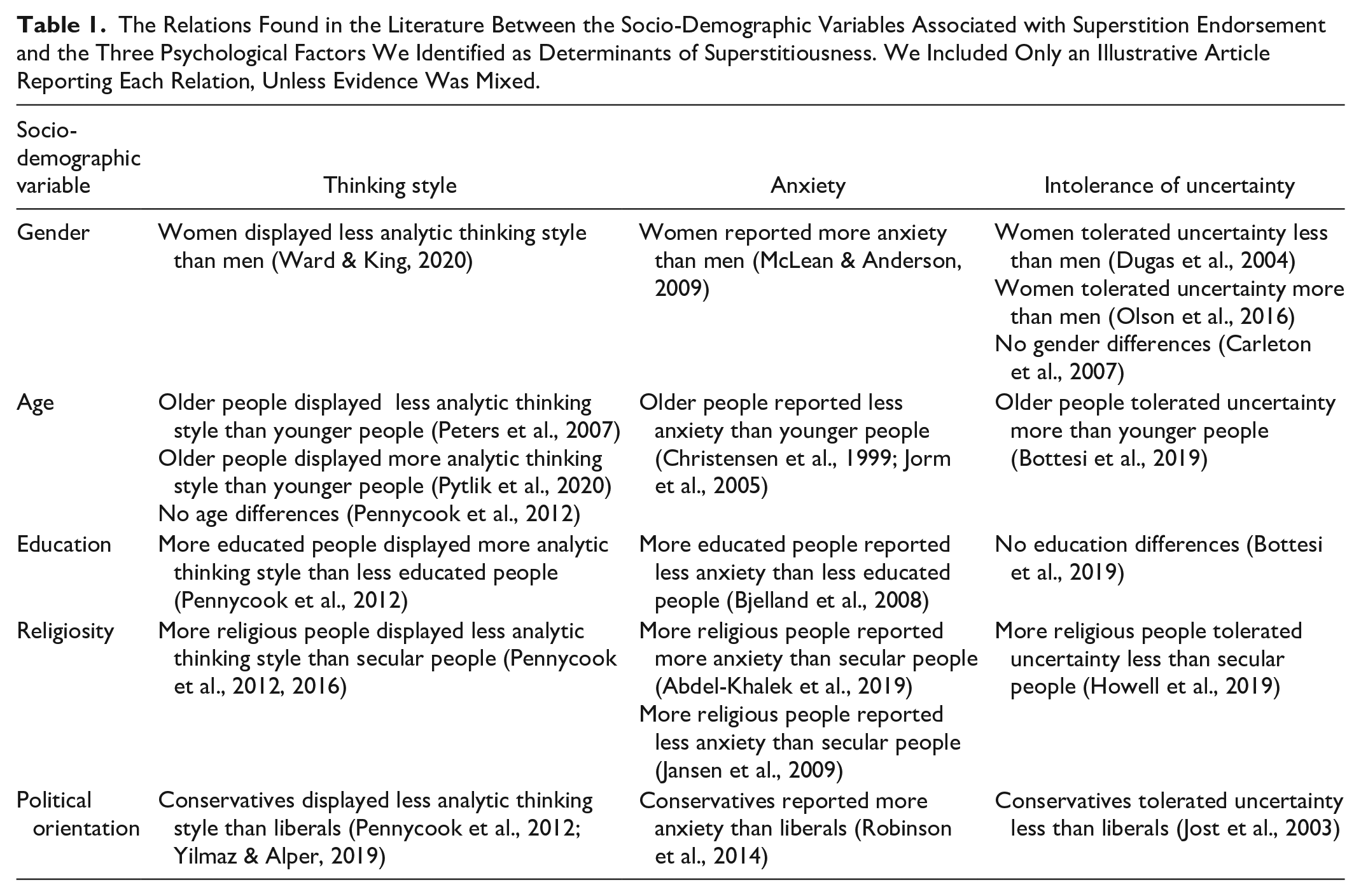
Hence, following the theorizing and empirical results of these past works, we examined whether the associations between socio-demographic characteristics and superstition endorsement are mediated by analytic thinking style, intolerance of uncertainty, and anxiety. We hypothesized that lower levels of analytic thinking and higher levels of intolerance of uncertainty and anxiety would be associated with stronger superstition endorsement at the population level. Supporting evidence for some of the hypothesized relationships between the socio-demographic characteristics and the three psychological factors already exists in the literature. However, as illustrated in Table 1, whereas the results were relatively consistent for some of the relationships (e.g., gender and anxiety), for others the findings were more mixed (e.g., gender and intolerance of uncertainty). It therefore needs to be tested whether the three psychological factors will mediate the associations of all socio-demographic characteristics with superstition endorsement. Furthermore, while the mediating role of analytic thinking style was previously investigated, this was done only for some of the socio-demographic characteristics but not for others. Specifically, Ward and King (2020) found that women’s (vs. Men’s) lower display of analytic thinking style mediated their greater superstition endorsement. Similarly, Pennycook et al. (2012) reported that analytic thinking accounted for the link between religiosity and superstitiousness. While these findings are informative, they are focused on a particular relationship and leave open key questions about the psychological mechanisms underlying population-level differences in superstition endorsement more broadly. For example, does analytic thinking explain socio-demographic variation in both belief and practice? Are cognitive factors better predictors of endorsement than emotional-motivational ones? The narrow scope of prior studies limits their capacity to address these broader issues.
The Relations Found in the Literature Between the Socio-Demographic Variables Associated with Superstition Endorsement and the Three Psychological Factors We Identified as Determinants of Superstitiousness. We Included Only an Illustrative Article Reporting Each Relation, Unless Evidence Was Mixed.
In this research, we aimed to offer a more comprehensive analysis of the psychological determinants underlying population-level variability in superstition endorsement and extend prior work in several ways. First, rather than examine a single socio-demographic variable or psychological factor, we included five characteristics linked to superstitiousness variability (gender, age, religiosity, education, and political orientation) alongside three theoretically derived and empirically grounded psychological determinants: analytic thinking, intolerance of uncertainty, and anxiety. This design enabled us to assess both established and previously unexplored associations within a unified framework. Second, we distinguished between belief and practice, and between positive and negative superstitions, allowing us to test whether patterns of association varied across these four dimensions. Third, we examined whether the three psychological factors simultaneously mediated the links between socio-demographics and superstition endorsement, enabling direct comparisons of cognitive versus emotional-motivational contributions, previously studied in isolation. Finally, we tested these questions in two large, highly powered samples from two distinct cultural contexts, thereby addressing issues of replicability and generalizability of the findings.
The Moderating Effect of Experienced Stress From Macro-Level Threatening Circumstances on Socio-Demographic Variability in Superstition Endorsement
Endorsement of superstitions varies not only by group-level and individual-level differences but also by situations. In particular, superstition endorsement was found to be more pervasive under macro-level stressful circumstances, which are global situations over which an individual has limited control, such as war (Keinan, 1994), recession (Padgett & Jorgenson, 1982), and global pandemic (Hoffmann et al., 2022). Given the minimal capacity to influence such macro-level circumstances, individuals may experience high levels of worry and concern. These self-concerns are expressed through coping strategies such as searching for information about the potential danger and taking self-protective actions against it. Moreover, to effectively cope with macro-level stressful circumstances, individuals must rely heavily on social institutions and authorities, or on social networks, to help them manage such events. Disbelief or lack of trust in the efficacy of others to address the potential harm may elevate stress. Hence, in the face of macro-level threatening circumstances, the extent of superstition endorsement may be related to these stressful experiences of self-concern and lack of trust.
Specifically, we explored the impact of variability in experienced stress from macro-level circumstances on the associations between socio-demographic characteristics, the three psychological factors, and superstition endorsement. We collected data from two samples under circumstances involving different macro-level stressors: a war and the spread of the Coronavirus. To quantify variability in managing these stressful circumstances, we measured participants’ general stress from the war or the Coronavirus, and included additionally two indices of stressful experiences: one index assessing participants’ self-concerns about the possibility of being harmed by the war or being infected by the Coronavirus, and the other index assessing (dis)trust in the capacity of authorities and other citizens to help protect them from the war or the Coronavirus. For both types of stressors, we predicted that higher levels of general stress and self-concern and lower levels of trusting others would be related to increased superstition endorsement. Moreover, insofar as stress, self-concern, and lack of trust affect superstitiousness, we expected these variables to moderate the magnitude of the associations between analytic thinking style, intolerance of uncertainty, and anxiety and superstition endorsement. We predicted specifically that the indirect effect of the socio-demographic variables on superstition endorsement through anxiety, intolerance of uncertainty, and analytic thinking style would be stronger among people who were more (vs. less) stressed and concerned about the war or about being infected by the Coronavirus, as well as among those who distrusted authorities and other citizens more (vs. less) to help them cope with the consequences of the war or the Coronavirus.
To anticipate our main findings, the associations between the socio-demographic characteristics and superstition endorsement varied considerably across the two samples. At the same time, the associations of the psychological factors with superstition endorsement, and their mediating role in accounting for the observed associations between the socio-demographic characteristics and superstition endorsement, were quite consistent across the two samples. To highlight these differences and similarities, we described the methods and results of the two samples together.
Method
Transparency and Openness
We report below how we determined our sample sizes, all data exclusions, and all measures in each study. Studies were pre-registered at: https://osf.io/7235b/registrations and Materials and data are available at: https://osf.io/7235b/
Participants
Power analysis revealed that to detect small effects (r ≈ .20) in models with multiple parallel mediators with alpha < .05 and power of 0.80, a sample of 510 participants is required (Schoemann et al., 2017). We aimed to collect larger samples to increase the power to detect the predicted moderated mediation.
Sample 1: Israeli Sample
Seven hundred and ninety-nine Jewish Israelis were recruited from an online panel to participate in the study. Forty-eight were excluded from the analyses either because they failed an attention check or were unfamiliar with all presented superstitions. Thus, the final sample was comprised of 751 participants (361 men, 48.1%), with an age range of 18 to 88 years (average: 49.71, SD: 18.04). Completion of BA degree or above was reported by 55.9% of the participants. All participants were Jewish, and the average religiosity as measured on a 7-point scale (from “not at all religious” to “very religious”) was 3.19 (SD: 2.09). Political orientation, as measured on an 11-point scale (from “left” to “right”), averaged at 7.41 (SD: 2.48).
Sample 2: U.S. Sample
Five hundred and sixty-three American Prolific workers were recruited to participate in the study. Seven failed an attention check and were excluded from analyses. Thus, the final sample was comprised of 556 participants (279 men, 50.1%; 80% white). All participants resided in the United States, with 98.8% being born in the United States and 88.6% reporting English as their native language. Age ranged from 18 to 85 years (Average: 46.04, SD: 15.92). 50.5% of participants reported having completed BA degree or higher, 39.9% reported no religious affiliation, and the average religiosity was 3.26 (SD: 2.14). Political orientation was distributed roughly equally along the scale, averaging at 5.70 (SD: 2.90).
Measures
Endorsement of Superstitions
Participants were presented with descriptions of nine superstitions in a random order: Four were positive—namely, they associated events (a wish upon a shooting star; getting the number 7; carrying a good luck charm; being pooped on by a bird) with bringing good luck. The other five were negative—namely, they associated events (knocking on wood, and avoiding the following situations: walking under a ladder; a black cat crossing your path; being around a broken mirror; planning events on Friday the 13th) with distancing bad luck. Participants answered three questions about each description, in the following order: (a) Familiarity—Are you familiar with it (yes-no), (b) Practicing—How often do you act upon it (1 =“never” to 5 = “always”), (c) Believing—How likely is it that the description is true (1 = “very unlikely” to 5 = “very likely”). Israeli participants were familiar with 78.5% (SD: 1.94) and U.S. participants were familiar with 86.6% (SD: 1.32) of the superstitions (i.e., participants were familiar, on average, with seven of the nine superstitions presented to them), indicating that the presented superstitions were relatively well-known among our samples. For each participant, we calculated average scores of practicing and believing ratings across the positive and negative superstitions separately, resulting in four indices: Practicing positive superstitions (PPOS), believing in positive superstitions (BELPOS), practicing negative superstitions (PNEG), and believing in negative superstitions (BELNEG). We calculated these indices only based on ratings of superstitions that the participant was familiar with. Correlations between the four indices were medium to high (see Table 2). In addition, to estimate the prevalence of the half-belief phenomenon in our samples, we subtracted the BELPOS mean score from the PPOS mean score and the BELNEG mean score from the PNEG mean score for each participant. If the participant’s practice score was higher than the belief score, the participant was coded as “half-believer.” Thus, participants were coded as half-believers or not for positive and negative superstitions separately.
Reliability (Measured by Cronbach’s Alpha) of and Correlations Between the Four Superstition Endorsement Indices, Which Assessed the Extent to Which Participants Practice and Believe in Positive and Negative Superstitions (All Correlations Significant at p < .001).
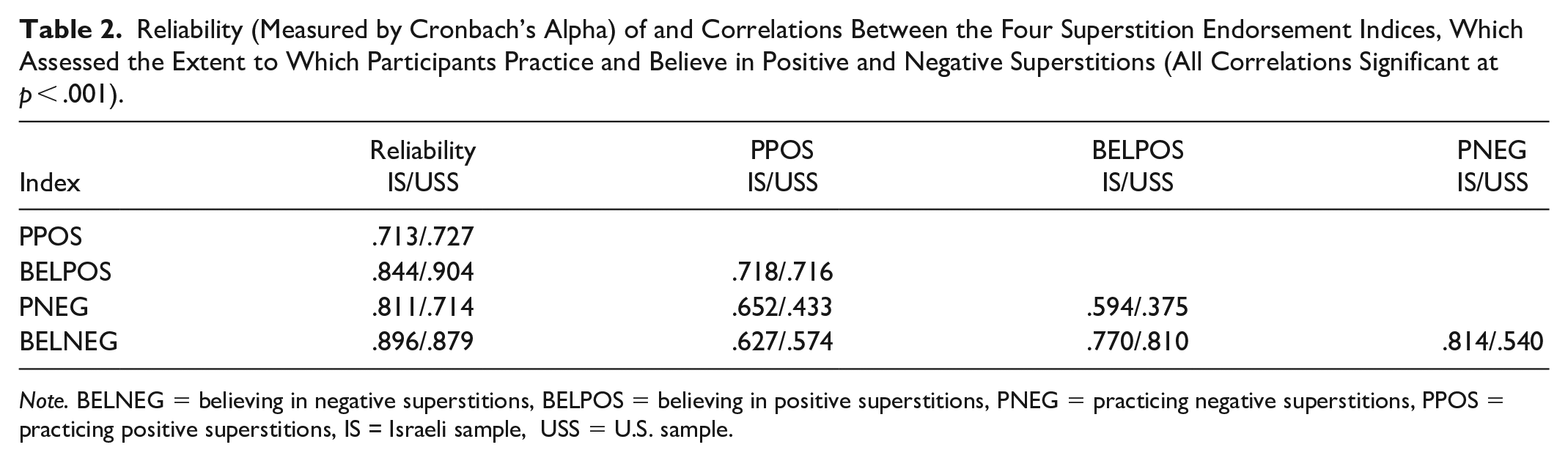
Note. BELNEG = believing in negative superstitions, BELPOS = believing in positive superstitions, PNEG = practicing negative superstitions, PPOS = practicing positive superstitions, IS = Israeli sample, USS = U.S. sample.
Cognitive Reflection Test
To assess participants’ tendency to display an analytic thinking style, we had participants perform a combination of two versions of the cognitive reflection test (CRT; CRT-1, Frederik, 2005; CRT-2, Thomson & Oppenheimer, 2016), which are considered valid measures of this tendency. Participants answered seven questions included in the two tests (e.g., “a bat and a ball cost $1.10 in total. The bat costs $1.00 more than the ball. How much does the ball cost?”). Providing the correct answer to a question (in the above example: “5 cents”) represents the “analytic” response, while an incorrect answer can be either an “intuitive” (“10 cents”) or a “wrong” (e.g., “1.10”) response. Because our focal variable was the tendency to display an analytic thinking style, we calculated for each participant the number of correct responses, which could range from 0 to 7.
Anxiety Short Scale
To assess dispositional anxiety, participants completed Marteau and Bekker’s scale, which includes six items (e.g., “I feel tense”; Marteau & Bekker, 1992). For each item, participants indicated the extent to which they generally experience the specified feeling on a four- (in the English version completed by the USS) or five- (in the Hebrew version completed by the IS) point scale (1 = “not at all” to 4 or 5 = “very much”). For each participant, we averaged responses to all items to create an anxiety index (Cronbach’s alpha = .86 for the IS and .90 for the USS).
Intolerance of Uncertainty (IUS-12)
To assess intolerance of uncertainty, participants completed Carleton et al.’s questionnaire that includes 12 items representing two correlated factors of intolerance of uncertainty (IU): “Prospective IU” (seven items, e.g., “unforeseen events upset me greatly”) and “Inhibitory IU” (five items, e.g., “uncertainty keeps me from living a full life”; Carleton et al., 2007). For each item, participants indicated the extent to which they agree with the provided statement on a five-points scale (1 = “not at all characteristic of me” to 5 = “entirely characteristic of me”; Cronbach’s alpha was .80 and .85 for prospective IU, and .84 and .92 for inhibitory IU, for the IS and USS, respectively). Given the high correlation between responses to the two factors (r = .67 and .61 for the IS and USS, respectively), we computed for each participant a single IU index averaging responses to all 12 items (Cronbach’s alpha = .88 and .99 for the IS and USS, respectively).
Stress-Related Experiences
Israeli Sample
The study was conducted in November 2023, while Israel was at war. Stress, uncertainty, confusion, and fear of injury or death were circumstances facing most Israelis, many of whom were under missile attacks. Still, stress-related experiences and coping from the war varied between individuals. To assess this variability in experienced stress, we included a seven-item questionnaire on war-related experiences. The first item directly asked about participants’ general level of stress (“to what extent do you persistently feel stressed from the current security situation?”). The following three items focused on managing personal worries and concerns related to the security situation in Israel: (a) To what extent do you keep yourself updated regarding the current security situation?, (b) How concerned are you of being harmed by the current security situation?, and (c) To what extent do you take active steps to protect yourself given the current security situation? The last three items focused on the belief in the effectiveness of Israeli authorities and fellow citizens to help manage the stressful circumstances of the war: (a) To what extent do you feel the country is protecting you from the current security situation?, (b) To what extent do you trust that other citizens will obey the authorities’ suggested regulations regarding the necessary steps to protect oneself from the current security situation?, and (c) To what extent do you trust the actions taken by the security forces to address the current security situation? Responses to all items were recorded on a five-point scale ranging from 1 = “not at all” to 5 = “extremely.”
Factor analysis using varimax rotation on the last six items (i.e., excluding the general stress question) revealed two factors that together accounted for 59.1% of the variance. One factor, termed “self-concern,” included responses to the three items regarding personal worries about the security situation (Cronbach’s alpha = .56). The second factor, named “trusting others,” included responses to the last three items (Cronbach’s alpha = .70). Lower scores on this factor indicate more experienced stress resulting from the perceived inefficacy of authorities and other citizens to mitigate threats from the security situation.
U.S. Sample
We sought to test whether the findings of the Israeli sample (IS) replicate in another cultural context where a different macro-level stressor was present. Thus, we ran the same study in the United States at the end of 2023, assessing variability in stress-related experiences from the Coronavirus. Although levels of stress, uncertainty, and threat from the Coronavirus were not as high as in the period of the Covid-19 epidemic outbreak, during the time of data collection, rates of infection and hospitalization were on the rise in the United States and mask mandates were reinstated in health services around the country. Hence, we included in the study a stress-related experiences questionnaire corresponding to the one used with the IS. The questionnaire included six items (an item regarding trusting the security forces was irrelevant and was not included). The first item was a direct question about general levels of stress from the Coronavirus. The next three questions focused on managing personal worries and concerns about being infected by the Coronavirus (e.g., “How concerned are you of being infected by the Coronavirus?”). The last two items focused on trust in the authorities and other citizens to manage the spread of the Coronavirus (e.g., “To what extent do you trust other citizens to obey the authorities’ suggested regulations regarding the measures necessary for protecting oneself from the Coronavirus?”). Responses to all items were recorded on a five- point scale ranging from 1 = “not at all” to 5 = “extremely.”
Factor analysis on the last five items using varimax rotation revealed, similar to the IS, two factors that together accounted for 75.0% of the variance. The first factor, “self-concern,” included responses to the three items regarding personal worries about being infected from the Coronavirus (Cronbach’s alpha = .80). The second factor, “trusting others,” included responses to the last two items (Cronbach’s alpha = .71). Lower scores on this factor indicate more experienced stress resulting from the perceived inefficacy of authorities and other citizens to manage the spread of the Coronavirus.
Results
The Prevalence of Superstition Endorsement and the Half-Belief Phenomenon
How many people do not endorse superstitions at all? In our samples, it seems that very few. In the IS, there were only 105 participants (13.98% of the sample) who did not believe or practice any positive superstition, and 130 participants (17.31%) who did not believe or practice any negative superstition. Merely 55 participants (7.32%) neither believed nor practiced any superstition. In the USS, there were only 88 participants (15.55% of the sample) who did not believe or practice any positive superstition, and 10 participants (1.80%) who did not believe or practice any negative superstition. Only one participant (0.17%) neither believed nor practiced any superstition. Thus, the share of participants who endorsed superstitions was extremely high, higher than in any previous estimate of endorsement known to us, except for Caspi et al. (2024), who found similar rates of superstition endorsement.
As reported in Table 2, for both types of superstitions, the correlation between practicing and believing was positive: the stronger one’s belief in superstitions, the more one practiced them. Still, the half-belief phenomenon (i.e., participants whose practice mean score was higher than their belief mean score) was quite prevalent in our samples. In the IS, there were 380 half-believers (50.6%) in negative superstitions and 210 half-believers (28.0%) in positive superstitions. In the USS, there were 512 half-believers (92.1%) in negative superstitions and 274 half-believers (49.9%) in positive superstitions. Interestingly, as revealed by a Friedman test, in both samples, half-belief in negative superstitions was much higher than half-belief in positive superstitions, χ2(1) = 135.00, p < .001 and χ2(1) = 212.35, p < .001 for the IS and the USS, respectively. Thus, participants were more likely to report that they practiced superstitions more than believed in their veracity for negative than for positive superstitions.
Correlations Between Superstition Endorsement Indices and Socio-Demographic Characteristics, Psychological Factors, and Stress-Related Experiences
Results of descriptive analyses, including means, standard deviations, and correlations of all variables, are presented in Table 3 for the IS and in Table 4 for the USS. Only age was a shared correlate of superstition endorsement across the samples: Older participants, both in Israel and in the United States, believed in superstitions and practiced positive superstitions less than younger participants. For all other socio-demographic characteristics, the pattern of correlations with superstition endorsement was different in the two samples. In the IS, superstition endorsement was stronger among women than men, was negatively correlated with education, and was positively correlated with right-wing political orientation, replicating previous findings. Religiosity was inconsistently related to superstition endorsement in the IS, positively correlated with believing positive superstitions, negatively correlated with practicing negative superstitions, and unrelated to practicing positive superstitions and believing negative superstitions. In contrast, in the USS, superstition endorsement was unrelated to gender, education, and political orientation. The only consistent significant correlate of superstition endorsement other than age was religiosity. The more religious participants were, the more they believed in and practiced positive and negative superstitions, as found in past research. Thus, overall, the pattern of correlations between the socio-demographic characteristics and superstition endorsement varied considerably across the two samples.
Means and Standard Deviations of all Variables Measured in the IS and the Correlations Between Them.
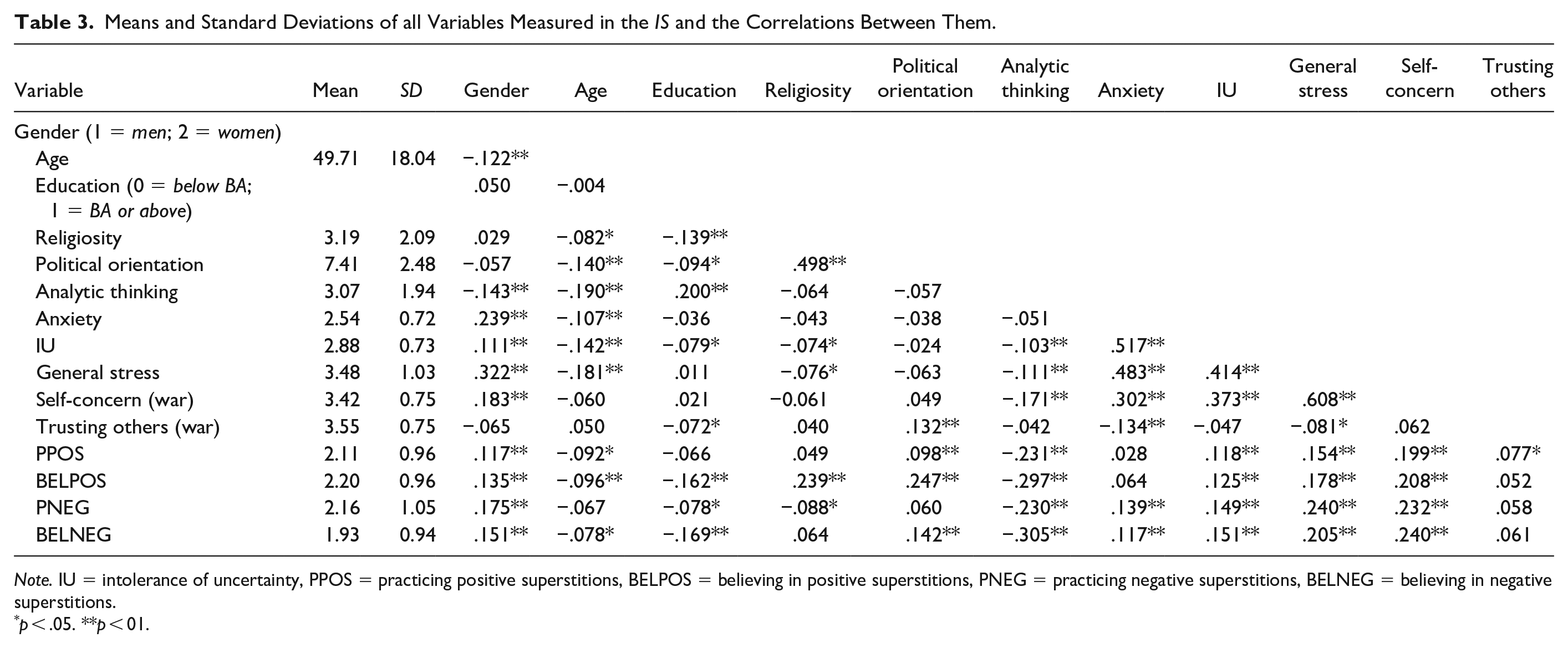
Note. IU = intolerance of uncertainty, PPOS = practicing positive superstitions, BELPOS = believing in positive superstitions, PNEG = practicing negative superstitions, BELNEG = believing in negative superstitions.
p < .05. **p < 01.
Means and Standard Deviations of all Variables Measured in the USS and the Correlations Between Them.
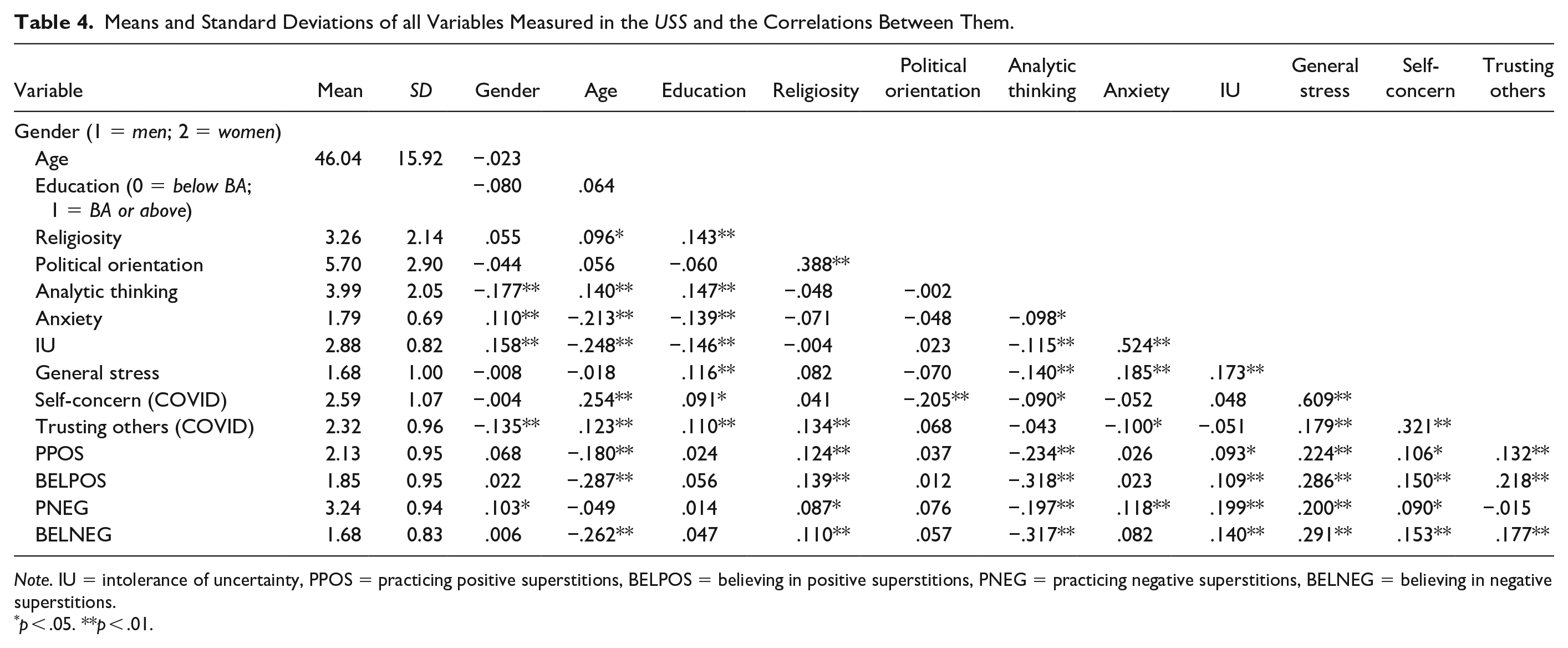
Note. IU = intolerance of uncertainty, PPOS = practicing positive superstitions, BELPOS = believing in positive superstitions, PNEG = practicing negative superstitions, BELNEG = believing in negative superstitions.
p < .05. **p < .01.
In contrast, the associations of the psychological factors and superstition endorsement replicated across the two samples. In both the IS and the USS, analytic thinking style and all superstition endorsement scores were negatively related: The stronger the tendency to display analytic thinking style, the weaker the belief in and practice of both positive and negative superstitions. Notably, analytic thinking style was more strongly negatively correlated with the belief dimension than with the practice dimension for both positive (Z = 2.51, p = .01 and Z = 2.75, p = .006 in the IS and USS, respectively) and negative superstitions (Z = 3.51, p < .001 and Z = 3.08, p = .002 in the IS and USS, respectively). In addition, in both samples, intolerance of uncertainty and all superstition endorsement scores were positively correlated: The less tolerance to uncertainty, the stronger the belief in and practice of positive as well as negative superstitions. Anxiety, on the other hand, was associated only with negative superstition endorsement scores, positively correlated with the belief dimension in both samples, and with the practice dimension in the IS but not in the USS. Thus, across samples, analytic thinking style and intolerance of uncertainty correlated consistently and as expected with the superstition endorsement indices, while anxiety was a much weaker correlate, particularly of positive superstitions.
Finally, the associations of stress-related experiences and superstition endorsement were consistent across the two samples for general stress and self-concern scores, but not for trusting-others scores. As expected, in both the IS and the USS, higher general stress and stronger self-concern from the war or the Coronavirus, respectively, were positively correlated with the practice of and belief in positive and negative superstitions. In contrast, and unexpectedly, trusting others scores were unrelated to superstition endorsement in the IS, whereas in the USS it was correlated positively with superstition endorsement. That is, the more one trusted authorities’ and other citizens’ help to protect from the Coronavirus, the more one believed positive and negative superstitions and practiced positive ones.
Do Analytic Thinking Style, Intolerance of Uncertainty, and Anxiety Mediate Associations Between Socio-Demographic Characteristics and Superstition Endorsement?
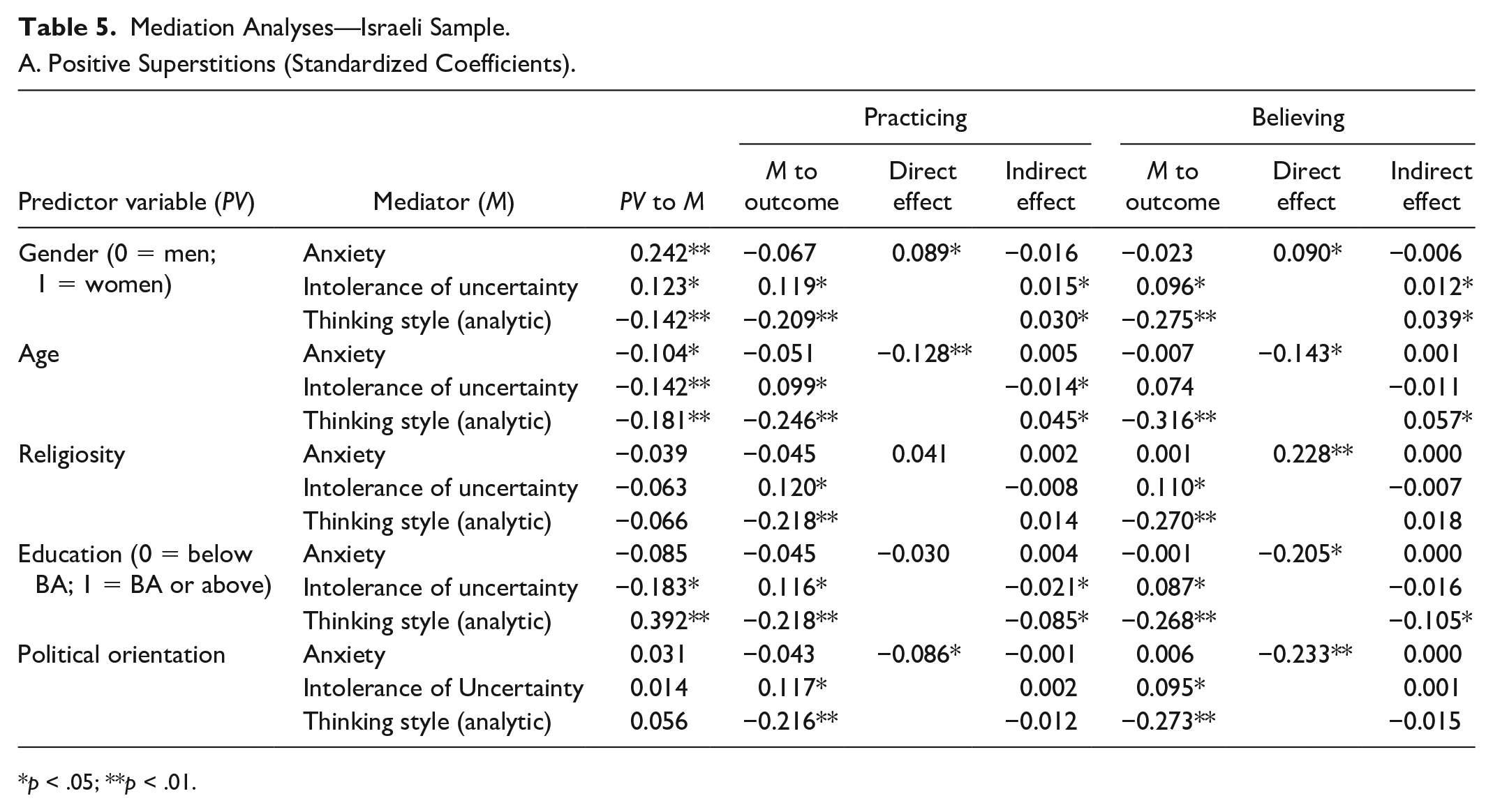
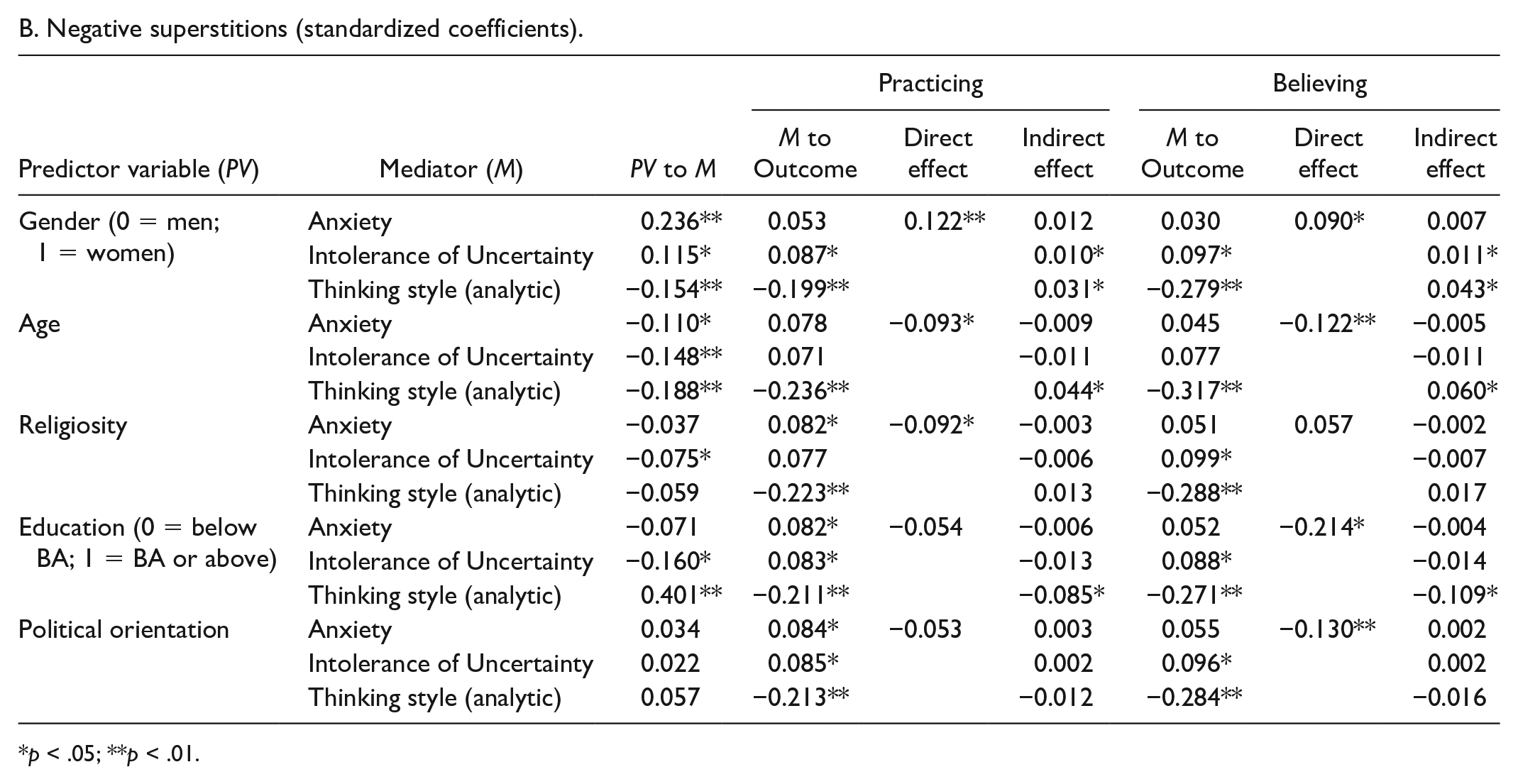
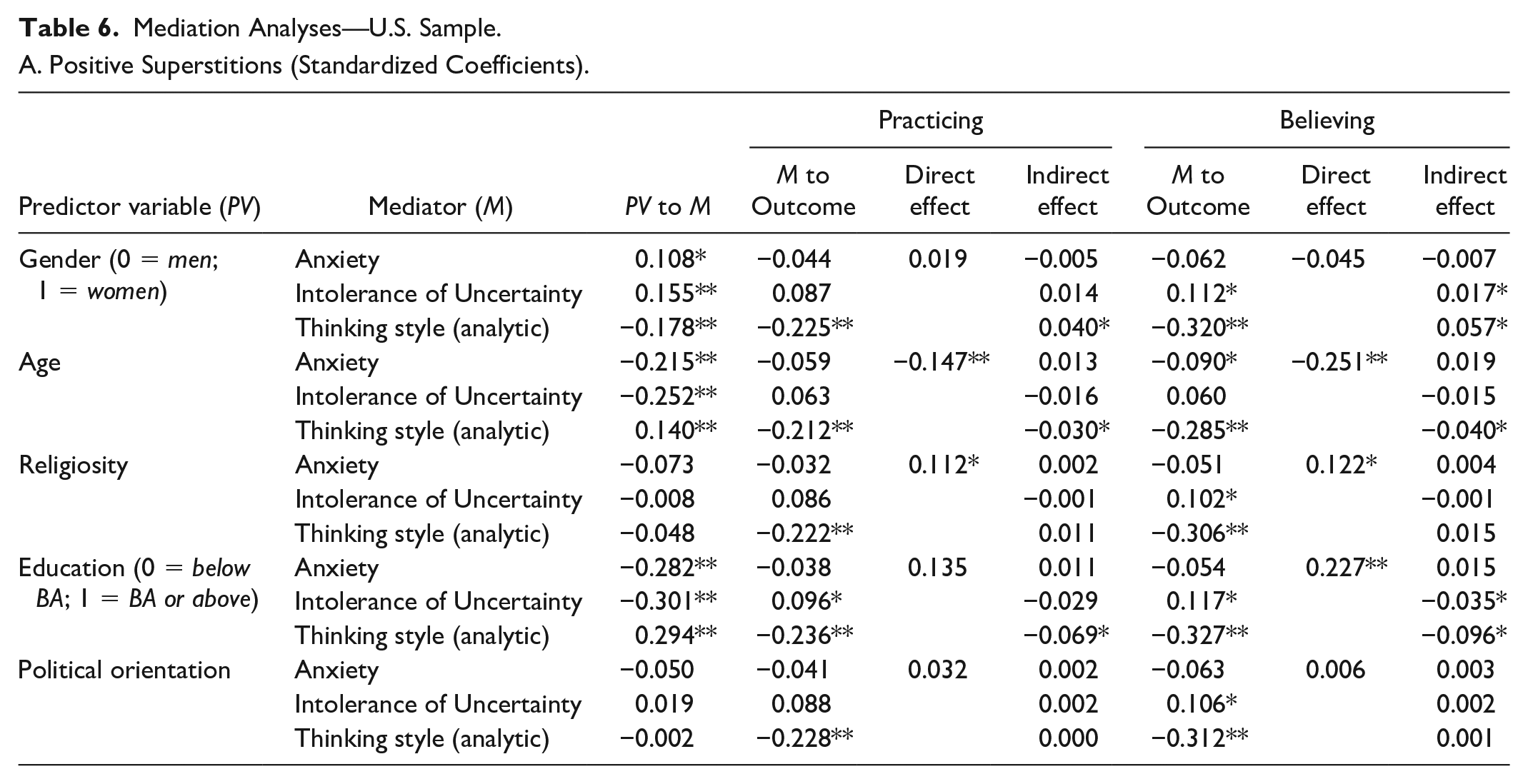
In this study, we sought to test whether five socio-demographic differences (gender, age, religiosity, education, and political orientation) in superstition endorsement are mediated by three psychological factors—analytic thinking, intolerance of uncertainty, and anxiety. We tested these relationships across four endorsement dimensions: belief and practice of both positive and negative superstitions. For each socio-demographic variable, we conducted four mediation models, with the characteristic as the predictor, the three psychological factors as simultaneous mediators, and one of the four endorsement indices as the outcome. Analyses were performed using the PROCESS macro version 3.5 in SPSS (Hayes, 2017), with 10,000 bootstrap iterations. Tables 5 and 6 present the results of the mediation models for the two positive superstition outcome variables (5A in the IS and 6A in the USS) and for the two negative superstition outcome variables (5B in the IS and 6B in the USS).
Mediation Analyses—Israeli Sample.
A. Positive Superstitions (Standardized Coefficients).
p < .05; **p < .01.
B. Negative superstitions (standardized coefficients).
p < .05; **p < .01.
Mediation Analyses—U.S. Sample.
A. Positive Superstitions (Standardized Coefficients).
B. Negative Superstitions (Standardized Coefficients).
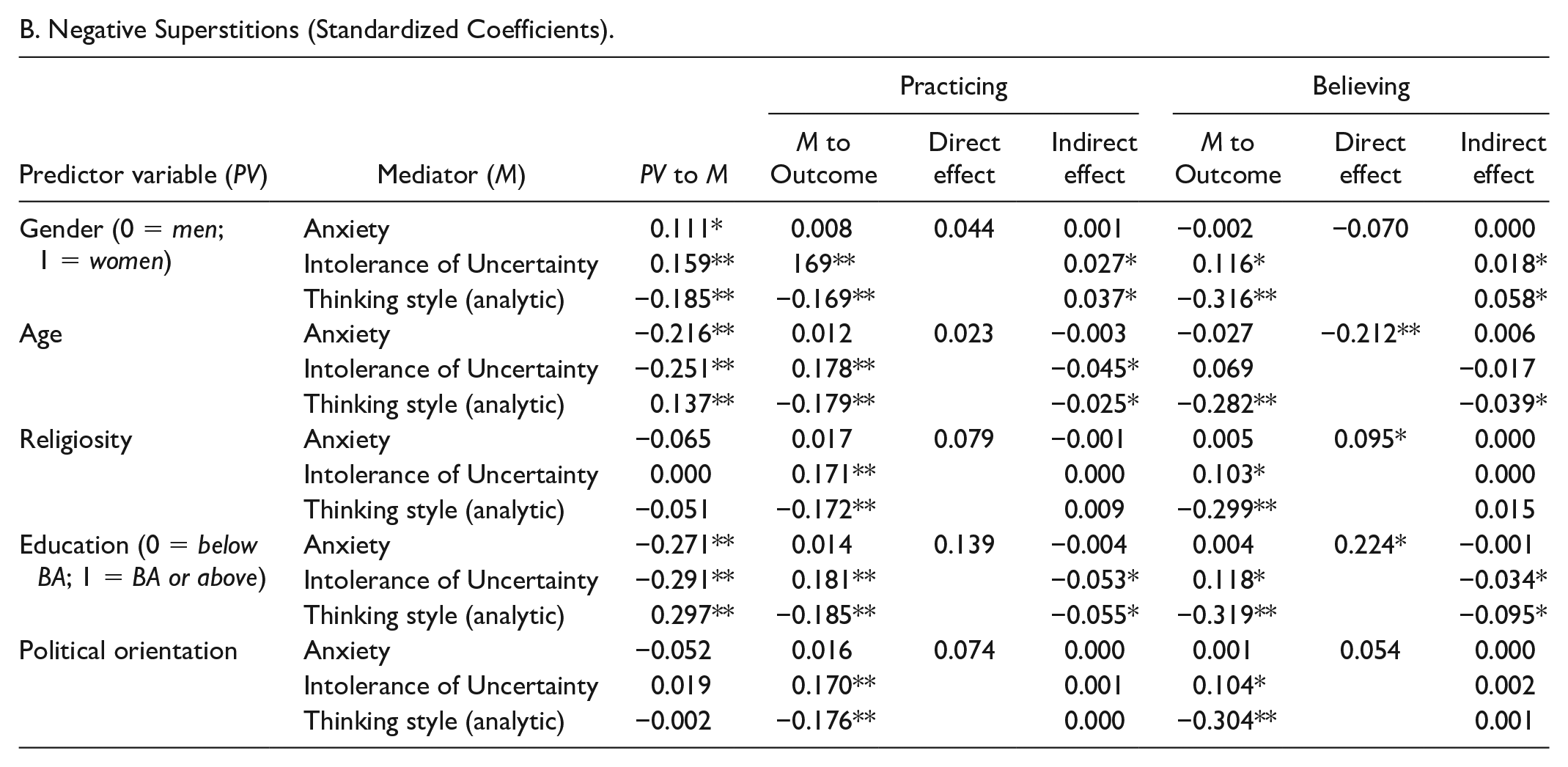
The results can be summarized as follows. Analytical thinking style mediated consistently and across samples the relations between three socio-demographic variables—namely, gender, age, and education—and all four superstition endorsement indices. In both samples, men and more educated people scored higher on the CRT, and these population-level differences in analytical thinking style decreased, in turn, the practice of and belief in positive as well as negative superstitions. Surprisingly, age was related differently to analytical thinking style between the two samples. In the IS, younger people displayed a more analytic thinking style, whereas in the USS, older people displayed a more analytic thinking style. This discrepancy perhaps reflects the mixed results regarding the association between age and analytical thinking style found in past research (see Table 1). More importantly, however, in both samples the observed population-level differences in analytical thinking style mediated the relations between age and the superstition endorsement indices, such that the more the population displayed analytical thinking style (younger people in the IS and older people in the USS), the less it practiced and believed positive as well as negative superstitions.
The mediation results showed that intolerance of uncertainty was a less robust mediator of socio-demographic variability in superstition endorsement. Although intolerance of uncertainty was associated positively with all four indices of superstition endorsement, and was also found to be higher among women, younger and less educated people, and in the IS among more religious people, it mediated consistently and across samples only the relations between gender and the superstition endorsement indices (except for the relations with the practicing positive superstitions index in the USS). Intolerance of uncertainty also mediated the relations between education and superstition endorsement in the USS (except for the relations with the practicing negative superstitions index), but corresponding indirect effects were not reliably found in the IS. With regard to anxiety, we found that younger people reported more anxiety than older people in both the IS and the USS, that women reported more anxiety than men in the IS, and that anxiety was negatively correlated with education level in the USS, all consistent with previous findings (see Table 1). However, in both samples, these population-level differences in anxiety did not mediate the relations between the socio-demographic variables and the negative superstition endorsement indices to which anxiety was related. Thus, our results suggest that of the three psychological factors previously found to be associated with superstitiousness, analytic thinking style most consistently accounted for socio-demographic variability in superstition endorsement.
Lastly, across both the IS and the USS, none of the three psychological factors mediated the associations between religiosity and political orientation and the superstition endorsement indices, even when the bivariate associations were significant. In fact, unlike gender, age, and education, neither religiosity nor political orientation was related to any of the three psychological factors (except for a negative association between religiosity and intolerance of uncertainty in the IS). These findings suggest possible differences between these more social variables and the other three demographic variables in terms of their relations to psychological tendencies.
Do Stress-Related Experiences Moderate Socio-Demographic Variability in Superstition Endorsement?
Based on previous findings showing that experienced stress was related to increased endorsement of superstitions, a result replicated in our study, we expected that general stress, self-concern, and trusting-others scores would moderate the size of the indirect effects of the three psychological factors on the associations between the socio-demographic variables and the superstition endorsement indices. To test these expectations, we performed moderated mediation analyses involving only indirect effects of analytic thinking style and intolerance of uncertainty found to be significant in the mediation analyses, and included stress, self-concern, and trusting others as moderator variables, each in separate models. We used PROCESS macro version 3.5 in SPSS (Hayes, 2017), Model 14, with 10,000 bootstrap iterations to test the significance of the moderated mediation models.
The results did not support our expectations. General stress did not moderate any of the indirect effects, while self-concern and trusting others did so only in a few models. In the USS, self-concern about the Coronavirus strengthened the positive relation between intolerance of uncertainty and belief in positive superstitions among women and among less educated participants. Trusting others had different effects across samples: In the IS, higher trust reduced the mediating role of intolerance of uncertainty, while in the USS, it amplified the mediating role of analytic thinking style. We report the full results of these analyses in an Online Supplemental Material.
Discussion
The current investigation offers a comprehensive analysis of psychological determinants of population-based variability in the endorsement of superstitions. We employed a multi-dimensional assessment of superstition endorsement across two large samples from different cultural contexts and examined the strength of associations between five socio-demographic characteristics and four endorsement dimensions. Additionally, we tested whether these associations were mediated by three psychological factors and moderated by perceived stress stemming from two distinct macro-level threatening circumstances. In the following sections, we discuss the main findings and how they inform and extend previous scientific knowledge related to the endorsement of superstitions.
Implications of a Multi-Dimensional Framework for the Study and Understanding of Superstition Endorsement
We suggested that endorsement of superstitions should be studied not as a unitary construct, but as comprised of four dimensions that distinguish between its belief and practice aspects as well as between the type of superstition endorsed, that is, positive and negative. Adopting this multi-dimensional classification and assessment framework in the current investigation revealed novel findings related to the prevalence of superstition endorsement and its manifestations. Specifically, we found that the endorsement of superstitions, when assessed as a multi-dimensional construct, is highly prevalent, much more than previous research of superstitions and other forms of magical thinking had estimated (e.g., Gallagher & Lewis, 2001; Lu at al., 2019; Philips, 2010; Vyse, 2013; for one exception, see Caspi et al., 2024). Indeed, almost all participants in our samples were superstitious, with only a few neither believing in nor practicing any superstition. We suspect that previous studies underestimated the prevalence of superstition endorsement because they treated endorsement as a unitary construct and therefore did not identify those who report more nuanced forms of endorsement (e.g., half believers) as being superstitious. A multi-dimensional assessment thus affords a more accurate estimation of the prevalence of superstition endorsement in society. The high percentage of endorsement in our samples suggests that the endorsement of superstitions is not restricted to a small proportion of “superstitious individuals” or is characteristic of certain cultures more than others; rather, being superstitious is a fundamental human tendency to accept the existence and impact of supernatural forces in everyday life, a tendency which is almost impossible to reject (Mercier et al., 2018; Norenzayan, 2010). An important implication of this conclusion is that individual and population-based differences may have little predictive power to explain who endorses (versus not) superstitions, and should be examined primarily to explain variability in the degree of superstition endorsement.
A second set of novel findings has emerged from the separate assessment of the belief and practice dimensions of endorsement. While we found that practicing and believing scores were strongly related, in both samples, there was a sizable proportion of half-believers, namely, those who scored higher on the practice dimension than on the belief one. These results inform the study and understanding of superstition endorsement both empirically and theoretically. Empirically, they support theorizing about the half-belief phenomenon as a discrepancy between the belief and practice forms of endorsement (e.g., Campbell, 1996; McKellar, 1952; Risen, 2016; Shafir & Tversky, 1992). Although this discrepancy was noted previously, it was hardly demonstrated. Moreover, some have debated whether half-believers should be considered superstitious or rather individuals who merely act as if they are superstitious (e.g., Campbell, 1996; Shafir & Tversky, 1992). Because the practice dimension in our studies required participants to report the extent to which they perform superstitions specifically to affect luck (i.e., promote good luck or avoid bad luck), our results support the former conclusion. That is, half believers may be somewhat skeptical about the veracity of superstitions, but insofar as their actions are performed to affect supernatural forces implies that they endorse these superstitions. Thus, the proposed distinction between the belief and practice dimensions clarifies the construct of superstition endorsement, and their separate assessment allows to document different and more nuanced manifestations of endorsement.
Further, our results suggest that the belief and practice dimensions are not only different manifestations of superstition endorsement, but their strength of association with other variables varies. Most consistently, belief was more strongly negatively correlated with analytical thinking style than practice. That is, across both samples, as the tendency to display analytic thinking increased, the belief in positive and negative superstitions decreased to a greater extent than their practice. We speculate that this pattern reflects fundamental differences between the expression of these two forms of endorsement. Both belief and practice are related to a mental association between an object (e.g., black cat) and an outcome (e.g., bad luck). Belief is an internal state involving a representation of the veracity of this association. When the object is present or merely thought about, the belief is activated and applied to the object, namely, is expressed. Thus, any variable affecting estimates of superstitions’ veracity, such as analytic thinking, would primarily determine the extent of belief expression. In contrast, practice is a behavior acted upon by the association in a specific situation involving the object (e.g., changing my path to evade the approaching black cat). Whether or not one expresses the behavior depends not only on the activation of the association and the belief linked to it, but also on factors affecting the practice of the behavior in that moment. This suggests, for example, that contextual variables such as situational affordances and constraints of the superstitious behavior, or social norms that approve versus disapprove superstition endorsement, would be primarily related to the extent of practice as they affect the behavioral expression of superstitions. Future investigations could test these predictions to clarify whether belief and practice are enhanced and constrained by different variables, which would also deepen our understanding of the predictors of nuanced manifestations of superstition endorsement.
Finally, two sets of findings shed light on distinctions between endorsing positive versus negative superstitions. Although no consistent mean-level differences emerged across the belief and practice dimensions, half-belief was more frequent for negative than positive superstitions in both samples. Why might people be more inclined to practice than believe in superstitions when those are aimed at avoiding bad luck rather than at approaching good luck? Prior research indicates that threats of potential negative outcomes have a greater psychological impact than appeals of potential positive outcomes (e.g., Baumeister et al., 2001; Kahneman & Tversky, 1979; Norris, 2021). Thus, the perceived cost of bad luck likely outweighs that of missing out on good luck. As a result, individuals may feel more compelled to perform actions meant to ward off bad luck, even if they question their effectiveness. In contrast, the lower cost of not obtaining good luck may lead people to practice positive superstitions in line with the extent of their belief. This idea about different costs suggests that endorsement of positive superstitions is linked primarily to factors associated with the appeal of positive outcomes, while endorsement of negative superstitions is more strongly tied to factors associated with the threat of negative outcomes. Supporting it, anxiety—which heightens sensitivity to environmental threats (e.g., Eysenck, 1992)—was more strongly associated with endorsing negative than positive superstitions in both our samples. Future research could explore whether other variables tied to anticipated rewards versus potential threats also differentially predict these forms of endorsement. One such variable may be chronic regulatory focus (Higgins, 1997): whereas promotion focus, concerned with gains versus non-gains, should relate more strongly to positive superstition endorsement, prevention focus, concerned with non-losses versus losses, should relate more to negative superstition endorsement.
Overall, our findings highlight the value of distinguishing between believing in superstitions and practicing them and between positive and negative superstition endorsement. As such, the multi-dimensional framework enhances our understanding of the superstition endorsement phenomenon, offering insights into its magnitude, different manifestations, variability, and correlates.
The Role of Psychological Factors in Accounting for Population-Based Variability in Superstition Endorsement
The main goal of the current investigation was to examine whether population-level differences in superstition endorsement is determined by three cognitive and emotional-motivational factors. We therefore tested whether population-level differences in analytic thinking style, intolerance of uncertainty, and anxiety mediated the associations between socio-demographic characteristics and our four indices of superstition endorsement. Before we discuss the results of the mediation analyses, it is important to note the different patterns of associations of superstition endorsement with the socio-demographic characteristics versus the three psychological factors and consider their implications. Surprisingly, our findings did not consistently replicate previously documented population-based variability in superstition endorsement. While correlations between four of five socio-demographic variables (gender, age, education, and political orientation) and superstition endorsement aligned with past findings in the IS, this pattern was not revealed in the USS (except for age). Conversely, the commonly observed positive association between religiousness and superstition endorsement emerged in the USS but not in the IS. Although we used a diverse set of superstitions, which were equally familiar to participants in both samples and whose mean endorsement rates did not differ across samples, their content may have different meanings in Israel and the U.S., potentially affecting population-level patterns in our samples. For instance, the set of superstitions—which included ones that are sometimes disapproved of in Judaism (e.g., knocking on wood) or considered unrelated to luck (e.g., Friday the 13th is not considered unlucky because Friday night is a religiously significant time)—may explain why in the IS, composed entirely of Jewish participants, superstition endorsement was generally unrelated to religiousness, and even negatively correlated with the practice of negative superstitions. Overall, our findings suggest that systematic socio-demographic variability in superstition endorsement is not robust. Instead, associations between socio-demographic variables and superstition endorsement likely depend on factors such as the specific superstitions assessed and cultural or sample-related characteristics.
In sharp contrast, the associations between the three psychological factors and the four indices of superstition endorsement were consistent across samples and generally replicated previous findings. Specifically, in both studies, analytic thinking style was negatively associated and intolerance of uncertainty was positively associated with all four superstition endorsement indices, while anxiety was associated with the endorsement of negative superstitions. Thus, individual differences in the three psychological factors appear to exert a relatively stable and general influence on the extent of superstition endorsement. That is, any superstition, regardless of its content, is less likely to be endorsed the more one tends to display an analytic thinking style, and more likely to be endorsed the lower one’s tolerance for uncertainty. Together, these results suggest that relative to socio-demographic variables, cognitive and motivational dispositions may provide more reliable and generalizable answers not only to questions related to why people are likely to endorse superstitions to a greater or lesser extent but also to questions about who is likely to show stronger or weaker superstition endorsement.
Turning to the mediation analyses, we found that although both analytic thinking style and intolerance of uncertainty were associated with superstition endorsement, only analytic thinking style consistently accounted for socio-demographic variability in endorsement. Across both samples, analytic thinking significantly mediated the relationships between three (gender, age, and education) of the five socio-demographic variables and all four superstition endorsement indices. In contrast, intolerance of uncertainty reliably mediated only the relationship between gender and superstition endorsement indices, and anxiety mediated none of the relationships. These findings align with prior work highlighting the explanatory role of analytic thinking in religiosity and gender differences in superstitiousness (Pennycook et al., 2012; Ward & King, 2020), yet also go beyond them. Specifically, our results suggest that analytic thinking style accounts for socio-demographic variability in superstition endorsement broadly, and its effects are not restricted to a specific characteristic. Further, by examining analytic thinking style alongside intolerance of uncertainty and anxiety, we found that a cognitive factor played a more central role than emotional-motivational ones in explaining the variability. This provides stronger and more direct support for accounts attributing superstitiousness differences to cognitive reflection rather than to motivational processes (Pennycook et al., 2012; Risen, 2016).
Our findings seem particularly consistent with Risen’s (2016) refined dual-systems model of superstitiousness. “Corrective” dual-system models (e.g., Kahneman & Frederick, 2005) posit that superstitiousness arises from a superstitious intuition generated by System 1, but is decreased when the intuition is overridden by the engagement of System 2. Risen introduces a third process—acquiescence—where System 2 is engaged but the person still chooses to accept the intuition. The high rates of half-belief found in our study may reflect the operation of this third process. Moreover, the negative association between analytic thinking and superstition endorsement, as well as its mediating role in population-based differences in superstition endorsement, likely reflects enhanced System 2 engagement (Frederick, 2005). In Risen’s and other dual-systems models, intolerance of uncertainty determines the likelihood that a superstitious intuition is activated in the first place. However, because all participants in our study were exposed to superstitions at the start of the study, the positive link between intolerance of uncertainty and endorsement is unlikely to be a result of such activation; instead, it can reflect an increased tendency to acquiesce. While Risen identifies primarily cognitive factors affecting acquiescence, it is possible that intolerance of uncertainty renders superstitious intuitions more compelling, which is considered one factor increasing acquiescence. Future research could examine whether intolerance of uncertainty and related motivational factors affect acquiescence and, in turn, superstition endorsement.
A final point to note concerns the minimal role anxiety played in accounting for sociodemographic differences in superstition endorsement, and even as a correlate of superstition endorsement relative to the other two psychological factors. These findings seem surprising considering that “superstitious” rituals are common among individuals with high levels of anxiety (Hobson et al., 2018). Two methodological reasons can be suggested for anxiety’s minimal mediating role. One, perhaps the scales we used to assess superstition endorsement are insensitive to dispositional anxiety. Yet, if this is true, it is difficult to explain why anxiety correlated with negative superstition endorsement in both samples. Another reason is that the threatening circumstances of war and the spread of the Coronavirus increased state anxiety, which weakened the otherwise stronger impact of dispositional anxiety on superstition endorsement. While plausible, our results are consistent with a few other studies that found a weak or no relationship between dispositional anxiety and superstitiousness in relatively non-threatful times and across a variety of samples (e.g., Caspi et al., 2024; Lim et al., 2021). Thus, anxiety as a trait may not be an impactful determinant of superstition endorsement, as one might expect, which would explain why it did not account for population-based differences in superstition endorsement.
Evidence for the Moderating Effect of Experienced Stress From Macro-Level Threatening Circumstances on Superstition Endorsement
We expected that more stress-related experiences from macro-level circumstances would be associated with stronger superstition endorsement. We included three measures of stress-related experiences: general stress, self-concern about war-related harm or Covid-19 infection, and lower trust in authorities’ and fellow citizens’ capacity to provide support during these crises. In both samples, we found that higher levels of general stress and self-concern were positively related to superstition endorsement. Unexpectedly, corresponding results were not found for the trusting-others index. In fact, in the USS, lower trust was associated with less (rather than more) superstition endorsement. However, we suspect that the (dis)trusting-others index may not be a valid measure of experienced stress, given its negative (rather than positive) associations with general stress and self-concern from the Coronavirus in the USS. Hence, the more robust results, which replicated across both samples, are that the stronger the stress-related experiences from a macro-level stressor, the greater the endorsement of superstitions, consistent with prior findings showing that superstitiousness increases in stressful and disturbing times (Keinan, 1994; Padgett & Jorgenson, 1982; Torgler, 2007). Our findings extend these previous investigations by showing that stress-related experiences are positively related to the belief as well as the practice dimensions of superstitions, and equally to both positive and negative superstitions. Further, having corresponding assessments of stress-related experiences from two distinct macro-level stressors and finding consistent results across the two samples and in two culturally different contexts provide strong support for a generalizable effect of stressful circumstances on superstition endorsement.
More central to the current investigation, we expected that stress-related experiences would moderate the indirect effects of the socio-demographic variables on superstition endorsement via the three psychological factors. Overall, evidence for the moderated mediation effect was weak. Only a handful of models yielded significant results, and the moderating effects of stress-related experiences were inconsistent across the IS and the USS. Models including the trusting-others index as a moderator produced more significant results than those including general stress and self-concern. However, these findings are difficult to interpret given the concerns about trusting others being an index of stress. Hence, we did not find sufficient evidence that stress moderates the psychological underpinnings of population-based variability in superstition endorsement.
Limitations
There are a few limitations to this study. Most notably, we sought to uncover psychological factors underlying population-based variability in superstition endorsement using a correlational design. While our findings establish the unique role of analytic thinking style as a mediator of the associations between socio-demographic variables and superstition endorsement, they do not permit claims of causal influence. Still, our findings replicated past experimental studies showing that analytic thinking style reduced superstition endorsement (e.g., Hadjichristidis et al., 2019; Ward & King, 2020). Thus, it is not unwarranted to conclude from the mediation results that the increased tendency to display an analytic thinking style is at least partly responsible for population-based variability in superstition endorsement. Future research can experimentally manipulate the ease or motivation to engage in an analytic thinking style and assess its effect on such variability.
A second concern is related to the generalizability of our results. As noted earlier, it is possible that the observed relationships and their strength were, at least partly, affected by the specific set of superstitions we used and would be different for another set. In particular, we speculate that endorsement rates in our study, and possibly their correlational strength with other variables, are underestimated as participants might have other preferred superstitious beliefs and practices than the ones included in this study. It would be informative in future investigations to test whether our findings generalize to other, perhaps idiosyncratically chosen superstitions. Another aspect of the study limiting the generalizability of the findings is that the data of both samples were collected under stressful macro-level circumstances. Although an integral part of our investigation, there is a possibility that the findings are specific to these types of circumstances and would not replicate under non-threatening conditions.
Third, we found that a cognitive factor accounted more strongly for population-based differences in superstition endorsement than the two emotional-motivational factors. Although we selected these three psychological factors based on a theoretical and an empirical analysis of prior relevant works, the dominance of analytic thinking style as an explanatory variable may be less pronounced if other emotional-motivational factors were explored. For example, given that experienced stress from threatening circumstances was related to superstition endorsement, perhaps dispositional stress (Wofford & Daly, 1997), instead of dispositional anxiety, it would prove to be an impactful mediator of population-based differences in superstition endorsement. In addition, unlike the analytic thinking style, cognitive factors may be facilitative factors of superstition endorsement. For example, if superstition endorsement is a means to predict and/or control one’s environment, population-level differences in dispositions such as locus of control (Sagone & De Caroli, 2014) or the cognitive ability to detect and exploit information on regularities (Daprati et al., 2019), could also account for population-based differences in superstition endorsement. Future research awaits these questions.
Finally, it is important to be cautious about using socio-demographic characteristics as an explanatory variable for a particular outcome, particularly something such as superstitiousness which is sometimes perceived as irrational. We therefore wish to stress that our research and findings do not address issues of population-based differences in rationality, intellect, or the like. Indeed, showing that practically everyone but a few is superstitious to some extent, implies that superstition endorsement is certainly common among rational and intelligent individuals. What our study does suggest is that the tendency to critically evaluate activated associations may differ between populations, and these differences potentially account for differences in superstition endorsement.
Supplemental Material
sj-docx-1-psp-10.1177_01461672251348772 – Supplemental material for A Comprehensive Analysis of Psychological Determinants of Socio-Demographic Variability in Superstition Endorsement
Supplemental material, sj-docx-1-psp-10.1177_01461672251348772 for A Comprehensive Analysis of Psychological Determinants of Socio-Demographic Variability in Superstition Endorsement by Avner Caspi, Ido Liviatan and Eran Chajut in Personality and Social Psychology Bulletin
Footnotes
Author Contributions
All authors contributed equally to this study.

Declaration of Conflicting Interests
The author(s) declared no potential conflicts of interest with respect to the research, authorship, and/or publication of this article.
Funding
The author(s) received no financial support for the research, authorship, and/or publication of this article.
Ethical Considerations
The two studies were approved by the department’s Ethical Committee, #3516.
Consent to Participate
Participants were informed about the content of the study, its duration, and they right to withdraw at any stage without possible sanctions.
Consent for Publication
Consent for publication is not applicable.
Supplemental Material
Supplemental material is available online with this article.
References
Supplementary Material
Please find the following supplemental material available below.
For Open Access articles published under a Creative Commons License, all supplemental material carries the same license as the article it is associated with.
For non-Open Access articles published, all supplemental material carries a non-exclusive license, and permission requests for re-use of supplemental material or any part of supplemental material shall be sent directly to the copyright owner as specified in the copyright notice associated with the article.
