




Abstract
Exposure to political violence often drives individuals toward extreme attitudes and greater support for retaliatory policies, including heightened perceptions of outgroup homogeneity. In violent intergroup conflicts, such perceptions can be especially dangerous, as they may justify indiscriminate violence against the outgroup. The current research aims to address Jewish Israelis’ perceptions of Palestinians’ variability following the October 7 Hamas attack on Israel. We simultaneously conducted two intervention tournaments in which we examined the effectiveness of different interventions in increasing the perceived heterogeneity of Palestinians from the West Bank and Gaza Strip (N = 1,564) and of Palestinian citizens of Israel (N = 1,628). Several interventions (Outgroup empathy expression, Opinion variance, Internal criticism, Leadership-people distinction, and Moral exemplars) were found effective, suggesting that outgroup perceptions can be altered, even amid extreme violence. Implications for psychological interventions targeting outgroup variability and their implementation in the field are discussed.
Introduction
On October 7, 2023, the Palestinian Hamas organization launched an unprecedented surprise attack against Israel. Backed by a massive launch of rockets, 3,000 Hamas militants stormed from the Gaza Strip into nearby Israeli towns, army bases, and a music festival, killing approximately 1,300 Israelis and foreign nationals and abducting over 240 people—the youngest only 9 months old (AFP, 2023). On the day of the attack, Israeli news stations covered the events as they unfolded, constantly streaming videos taken by the perpetrators that depicted the attack, making it exceptional in terms of Israelis’ direct and indirect exposure to violence (Bezeq, 2023).
Israel’s response to the attack was drastic. Shortly after Hamas militants infiltrated Israel, the Israeli military responded with extensive airstrikes on the Gaza Strip. By the end of October, it launched a ground operation targeting Hamas in the Gaza Strip, which is still taking place to date. The war resulted in the death of more than 45,000 Palestinians to date, including a significant number of innocent civilians, and a substantial humanitarian crisis in the Gaza Strip. Israel has also taken dramatic measures within its borders to deal with critics; the state has employed a hardened approach toward Palestinian citizens of Israel (PCIs), as evidenced by the significant number of PCIs arrested for only expressing their concern for those living in the Gaza Strip (The Guardian, 2023).
We suggest that the extreme measures taken by Israel, and particularly the consensual support for these actions among the Israeli public, could be, at least to some extent, derived from Israelis’ view of the Palestinian people as a homogeneous entity. Often, exposure to violence and extreme levels of threat posed by outgroup members, as Israelis experienced on October 7, strengthens the perception of the outgroup as homogeneous (Hirschberger et al., 2016). Indeed, the perceptions that all Palestinians are the same, or that “there are no innocent people in the Gaza Strip”, have gained significant prominence in elite and public discourse in Israel after the attack (Haaretz, 2023; Lieberman, 2023). For instance, a survey conducted by aChord Center (an Israeli research institute) 2 weeks after the attack revealed elevated perceptions of homogeneity of Palestinians among the Israeli public: 89% of Israelis thought that most Palestinians in the Gaza Strip support the attack, 84% believed that most Palestinians in the West Bank support it, and 54% believed that most PCIs support the attack.
Although not surprising, heightened perceived outgroup homogeneity is particularly dangerous in contexts of intense intergroup violence, as it provides legitimization for the use of violence indiscriminately. In contrast, a more heterogeneous view of the outgroup could contribute to the mitigation of violence and, specifically in the current context, reduce the likelihood of the use of force toward uninvolved civilians both inside and outside Israel. Thus, in the current work, we wanted to address Jewish Israelis’ perceptions of Palestinians as homogeneous following the Hamas attack on October 7. We have done so by exploring interventions aimed at increasing the perceived heterogeneity of Palestinians living in the West Bank and the Gaza Strip, as well as of PCIs.
How Does Exposure to Political Violence Influence Perceived Group Heterogeneity and What Are Its Consequences?
Group variability is the perception individuals have of how different group members are from one another: while some groups are perceived as more homogeneous in terms of characteristics, attitudes, and preferences, others are perceived to be more heterogeneous (Brauer & Er-rafiy, 2011; Hsieh et al., 2022). The central factor found to influence the perceptions of group variability is the individual’s group affiliation (i.e., whether they belong to the said group or not; Simon, 1992). This means that one is more likely to perceive a group as homogeneous when it is their outgroup (i.e., the outgroup homogeneity effect), compared to their ingroup. Furthermore, while there is some debate on this topic (e.g., Brauer, 2001), certain studies suggest that a group’s social position—manifest in its size, status, and power (Boldry & Kashy, 1999)—influences its perceived heterogeneity. Specifically, groups in lower social positions, such as smaller, low-status, or low-power groups, are more likely to be perceived as homogeneous. The tendency to perceive the outgroup as homogeneous is quite prevalent, but this inclination is increased in violent threatening settings (Hirschberger et al., 2016).
Exposure to violence and experience of threat have a wide range of implications for those exposed. From obvious psychological costs, such as psychological distress, impaired well-being, and an experience of post-traumatic stress disorder symptoms (Levi-Belz et al., 2024; Stein et al., 2004), to amplification in support of retaliatory, aggressive policies such as military solutions to terrorism (Canetti et al., 2013, 2017; Canetti-Nisim et al., 2009; Fisk et al., 2019), a stronger preference for national security at the expense of civil liberties (Davis & Silver, 2004), and an increase in the popularity of extreme right-wing and authoritarian political parties and politicians (Lindén et al., 2018; Nagoshi et al., 2007). Exposure to violence and the experience of threat also impact various perceptions of the outgroup; most relevant to the current inquiry is the perception of outgroup homogeneity (Hirschberger et al., 2016). When under intergroup threat, there is both an enhanced salience of intergroup distinctions, which makes the boundaries between groups clearer, and an enhanced availability of negative outgroup exemplars (Albarello et al., 2019). When these tendencies are added to an increased motivation to avoid risks, which encourages people to quickly categorize outgroup members as dangerous (Maner et al., 2012; Miller et al., 2010), individuals will likely generalize their perceptions of the perpetrators’ motivations, goals, and characteristics to each member of the group the perpetrators belong to, establishing a homogeneous and negative perception of that outgroup.
Generally, groups that are perceived as more homogeneous are often subject to increased dehumanization, stereotyping, prejudice, and discrimination (Albarello et al., 2019; Er-rafiy & Brauer, 2012; Kteily et al., 2015). However, in hostile intergroup contexts, this tendency could also contribute to the indiscriminate use of violence. When members of one group attack the other, the increased perception of homogeneity within the attacking group increases the likelihood that the victimized group will generalize the threat the perpetrators pose to them to each member of that group, thus viewing each individual as a potential adversary (McDoom, 2012). Consequently, when the victimized group responds, all outgroup members could be considered legitimate targets. In essence, the prevailing perception of the outgroup as homogeneous serves to justify violence against any member of that group and perpetuates the cycle of violence. Thus, strengthening the perception that the outgroup is somewhat heterogeneous, particularly following violent instances, becomes crucial as it is expected to limit the escalation of violence.
From a Descriptive to an Interventionist Approach: Identifying Effective Interventions in Times of Violence
In recent years, to address intergroup challenges such as discrimination, intergroup hostility, and violence, social scientists have made an increasing shift from a descriptive approach to a more interventionist one, developing evidence-based interventions aimed at improving intergroup relations (Halperin et al., 2023). These theory-driven psychological intergroup interventions address different aspects of intergroup relations: some focus on changing intergroup perceptions and attitudes, such as the outgroup’s malleability (Goldenberg et al., 2018; Halperin et al., 2011) or outgroup meta-perceptions (Nir et al., 2023), while others target intergroup emotions (Čehajić-Clancy et al., 2016) or social norms (Paluck, 2011).
Previous research has demonstrated that perceptions of group homogeneity can be changed. One type of intervention aimed at altering these perceptions is based on the notion that heterogeneity perceptions are influenced by the perceived existence of subgroups within the group (Maurer et al., 1995; Park et al., 1992). Thus, to make a group seem more heterogeneous, one needs to highlight its subgroups in terms of characteristics such as age, gender, and social status (Brauer & Er-rafiy, 2011; 2013) or in terms of their opinions (Hsieh et al., 2022). For example, in their work on the impact of group homogeneity on prejudice and discrimination, Er-raify and Brauer (2012, 2013) increased the perceived heterogeneity of Arab Muslims by displaying a poster depicting group members with diverse appearances with the line “What makes us the same—is that we are all different,” thus drawing attention to various attributes such as age, gender, social status, and profession. This type of intervention was found effective in a set of lab and field studies across different contexts, resulting in decreased prejudice and discrimination toward Arab Muslims among different French populations (i.e., high school and college students and employees in physical therapists’ offices; Er-rafiy et al., 2010).
Another type of intervention used to increase perceived heterogeneity of the outgroup includes describing the group in both positive and negative terms (Brauer et al., 2012). Using this type of description, compared to describing the group only in positive terms, was more effective in increasing its perceived variability because this approach encourages a more complex representation of the group and reduces resistance to the message, as it aligns with individuals’ expectations and avoids triggering reactance by seeming overly biased or unrealistic. In line with these findings, in the current research, we were interested in examining how different interventions, among them those that highlight existing variability among Palestinians or those that stress positive descriptions of Palestinians, impact Palestinians’ perceived heterogeneity among Jewish Israelis.
The Current Research
In the current work, which was initiated just a few weeks after the Hamas attack on October 7, we have employed a crowdsourced intervention tournament design (see Hameiri & Moore-Berg, 2022 for an overview) to examine the most effective ways to increase perceptions of outgroup heterogeneity while intergroup violence was at its peak. An intervention tournament is a large experimental study that estimates the impact of several interventions on a set of predetermined dependent variables using participants from the same pool (Hameiri & Moore-Berg, 2022). This method seemed most suitable for the current context, as intervention tournaments can quickly and effectively test interventions against a control group and offer an answer to social problems in need of an urgent solution (Halperin et al., 2023). The design we employed for the current work reflects a bottom-up approach (Hameiri & Moore-Berg, 2022): immediately after the October 7 events, we reached out to researchers and practitioners with an understanding of the unique context and relevant knowledge and asked them to suggest interventions. Then, we examined and compared these interventions to see which ones were most effective.
We made two modifications in terms of the study’s design to fit the unique context in which the interventions were examined. First, we chose to examine the interventions’ impact on perceptions of outgroup heterogeneity separately for two groups: (a) Palestinians living in the West Bank and Gaza Strip and (b) PCIs. While Palestinians from the West Bank and Gaza Strip make a clearer outgroup to Israelis, who possibly associate them more with Palestinian organizations and movements such as Hamas, PCIs could be perceived as holding a dual identity—both Israeli and Palestinian. This distinction influences Israelis’ baseline perceptions and attitudes toward the two groups. For example, previous research showed that Israelis hold more positive attitudes toward PCIs compared to Palestinians from outside Israel (Levy et al., 2017). Given the possible influence participants’ prior dispositions toward the outgroup might have on the effectiveness of the interventions, we chose to run two separate intervention tournaments: one in which the target of the interventions is Palestinians living in the West Bank and Gaza Strip, and another in which it is PCIs.
Second, we chose to examine political orientation as a moderator of the association between intervention condition and perceived outgroup variability. In psychological intergroup interventions, the congruency of the messages conveyed by the intervention to the participant’s initial attitudes and preferences impacts their effectiveness (Halperin & Schori-Eyal, 2020). Because in Israel, right-left political orientation is tantamount to dovish-hawkish attitudes toward Palestinians and the conflict (Bar-Tal et al., 2012; Canetti et al., 2017; Reifen Tagar et al., 2014), different messages could be more suited to different target audiences and make some interventions more effective for different audiences. Consequently, we chose to include political orientation as a moderator.
Thus, in the current work, we examined the effectiveness of the psychological intergroup interventions, suggested by researchers and practitioners, in increasing Jewish Israelis’ perceived heterogeneity of Palestinians in two intervention tournament studies: In Study A, the target group was Palestinians from the West Bank and Gaza Strip, and in Study B, it was PCIs. Except for minor modifications, described in the methods section of each study, the interventions used for both studies were the same. We evaluated participants’ perceived heterogeneity of the relevant outgroup by asking about their general perceptions of heterogeneity of the target group and by tapping into the generalization of their negative perceptions of outgroup members. These measurements were the same for both studies.
Study A
Materials and Methods
The goal of the current work was to examine the effectiveness of different interventions in increasing Jewish Israelis’ perceived heterogeneity of Palestinians following the violent Hamas attack on October 7. Informed consent was obtained from all participants at the beginning of the survey. The study received ethics approval from the Hebrew University of Jerusalem and was pre-registered on AsPredicted (https://aspredicted.org/Z5W_XVB). 1 We report all manipulations, measures, and exclusions in these studies. All materials, data, and codes are available on OSF (https://osf.io/pswkn/).
Participants
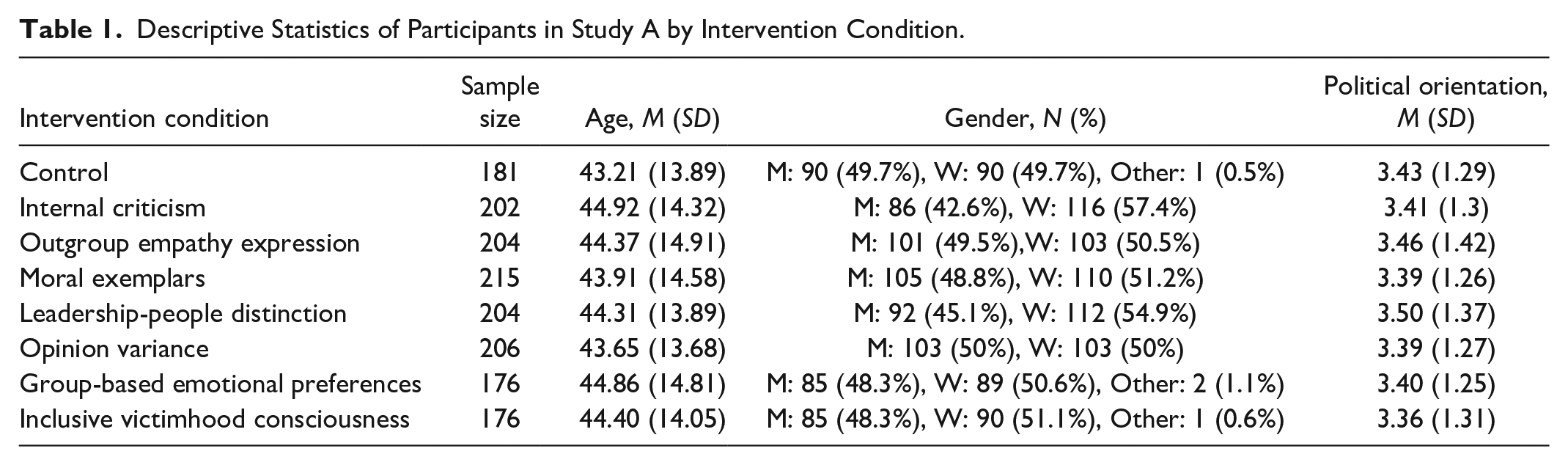
The sample was recruited online through iPanel, an Israeli panel that compensates participants for their participation. Following the pre-registration, we recruited approximately 250 participants per condition, 1,991 in total. This sample size was chosen to allow us to detect possible intervention effects within each political sector while keeping it representative of the Israeli population in terms of political orientation. After excluding 427 participants who failed the reading question from analyses, the final sample consisted of 1,564 participants (for demographic details of participants by condition, see Table 1). A sensitivity power analysis using RStudio for Windows (version 2024.04.1; Posit Team, 2024) indicated that the analysis we ran on our final sample size (n ≈ 195 per condition) was sufficiently powered to detect small effects (f2 = 0.0183) with 0.95 power and an alpha level of .05.
Descriptive Statistics of Participants in Study A by Intervention Condition.
Procedure
The study aimed to determine the effectiveness of various interventions in increasing the perceived heterogeneity of Palestinians from outside Israel. Participants were contacted approximately 3 weeks after October 7 and were invited to participate in a study examining common perceptions among the Israeli public and assessing their reactions to different messages. After providing their consent and basic demographic details, participants were randomly assigned through block randomization to read one of seven intervention messages or to a control condition, all formatted as a post on X (Twitter). Next, participants answered a reading question and the questions measuring the dependent variables.
Interventions
Approximately 2 weeks after October 7, we submitted a call for collaboration via personal networks. We asked researchers and practitioners who hold relevant knowledge to join our project by proposing an intervention that would be used in the study (Voelkel et al., 2024). To ensure standardization (Hameiri & Moore-Berg, 2022) of the proposed interventions, the collaborators were asked to follow a specific format 2 for the interventions they sent and be mindful of the DVs that would be used to determine their effectiveness. When submitting the intervention, collaborators were asked to include the theoretical rationale for their suggested intervention and explain why it is expected to impact the DVs. A total of 16 proposed interventions were submitted, which were subsequently reviewed by the lead authors for potential applicability in real-world contexts and theoretical grounding (Hameiri & Moore-Berg, 2022). Some of the proposed interventions were identical in terms of the theoretical rationale; thus, the lead authors reviewed and edited the interventions to ensure distinct interventions. As mentioned, we prioritized interventions for their real-world applicability; thus, we prioritized interventions addressing ideas that were present in public discourse or those that could be easily introduced into it. Following this rigorous review process, seven distinct and theoretically grounded interventions were selected for the study (see Figure 1 for an example of an intervention). The final intervention scripts were crafted with attention to the psychological principles underpinning each intervention (see Table 2 for the description of the intervention and their theoretical rationales, full scripts are provided in Table S1 in the Supplemental Material).
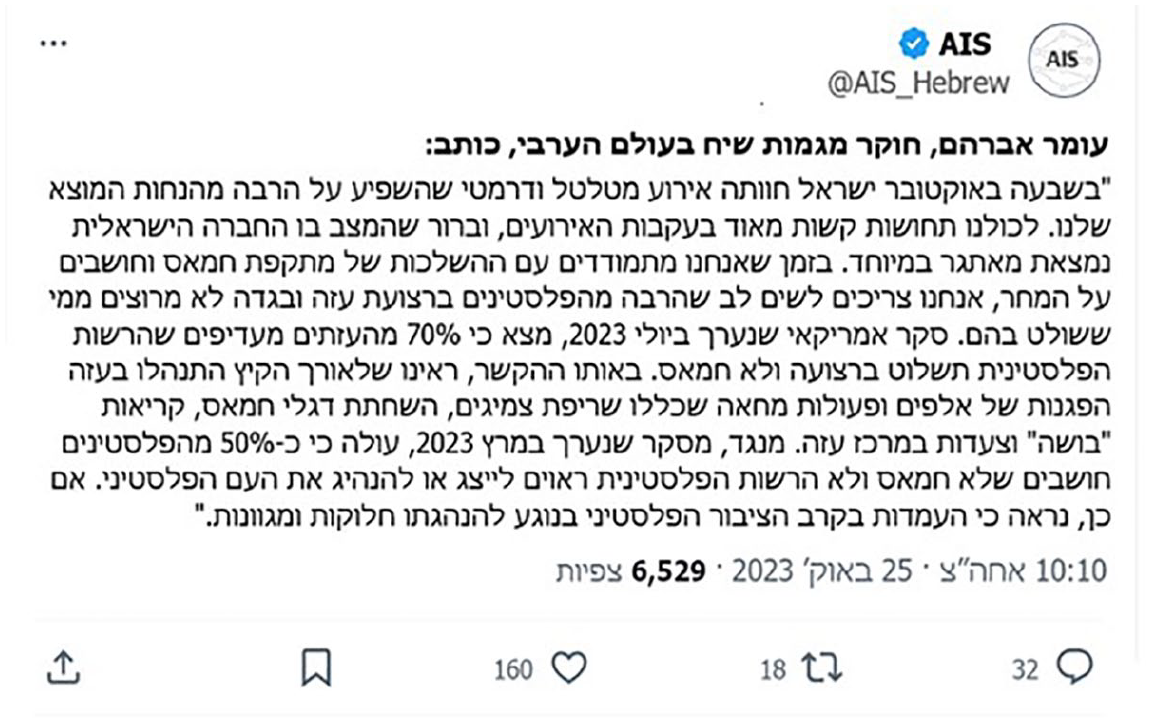
The Opinion variance intervention.
Study A: Intervention Description and Theoretical Rationale.
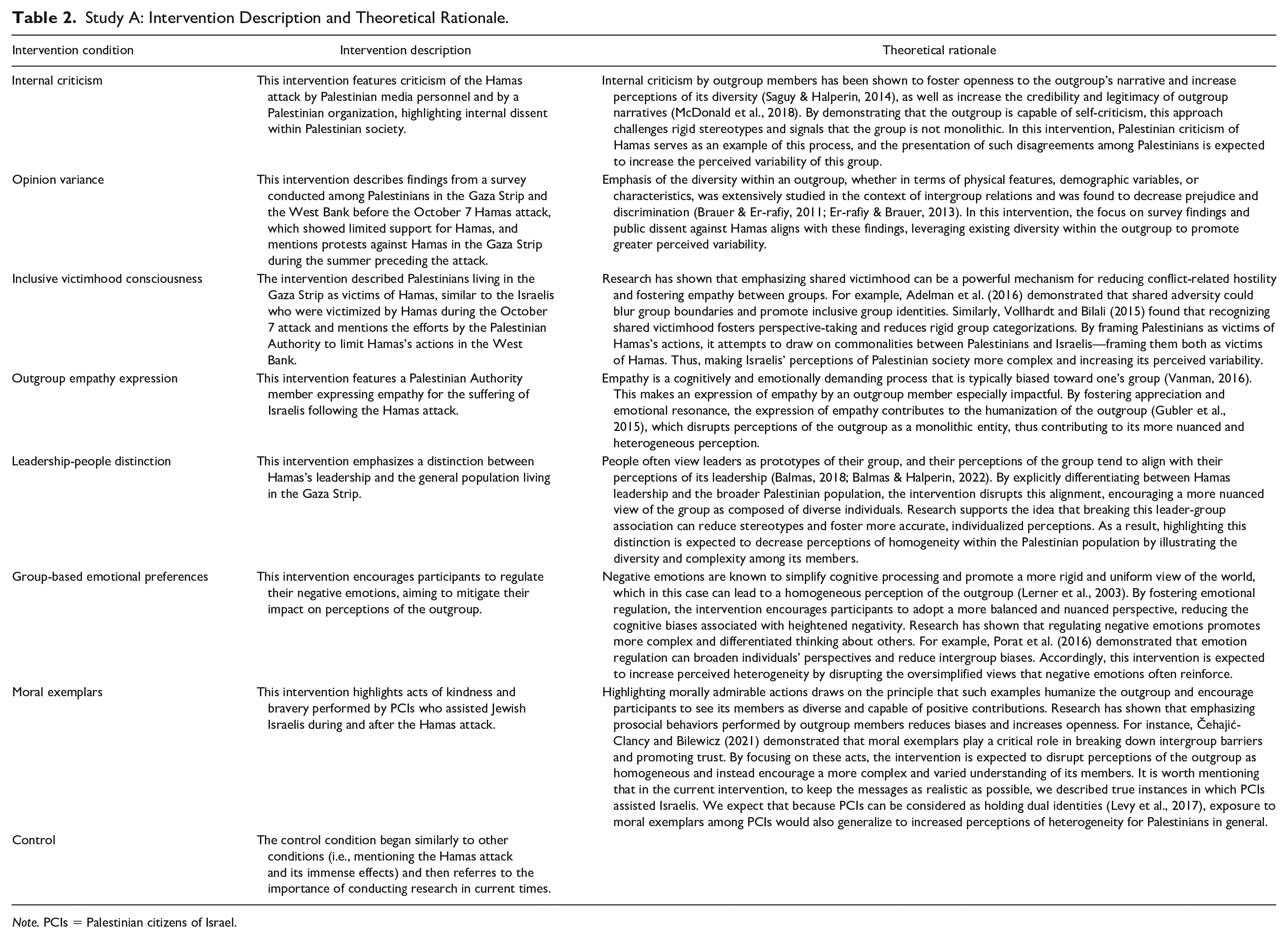
Note. PCIs = Palestinian citizens of Israel.
Measures
In all, participants answered questions measuring general heterogeneity, generalized negative perceptions of the outgroup, political orientation, demographics, and some exploratory variables. 3 Participants responded to all items in Hebrew, the primary language spoken by Jewish Israelis.
Political Orientation was assessed using a single identification question on a 7-point scale ranging from 1 (extreme right) to 7 (extreme left).
General Heterogeneity tapped into participants’ general perceptions of Palestinians’ heterogeneity, regardless of the attack. It was measured by asking the participants to indicate their agreement with three statements on a scale of 1 (not at all) and 6 (very much). The statements were: “All Palestinians are the same” (reverse-coded), “There are Palestinians who differ in terms of their attitudes and characteristics,” and “There are Palestinians who are more moderate and others who are more extreme” (Boldry et al., 2007; Er-rafiy & Brauer, 2013). All statements were averaged to produce a single score indicating perceptions of outgroup heterogeneity (α = .8).
Generalized negative perceptions examined participants’ perceptions of the variability of attitudes within Palestinian society supporting the October 7 violent events in particular. Participants were asked to indicate which percent of Palestinians: “Support the Hamas attack on October 7th”; “Would have personally participated in the Hamas attack on October 7th, if they had the possibility”; and “Want to live peacefully alongside Israelis” (reverse-coded). The question was asked on a 6-point scale indicating percentages (i.e., 0%, 20%, . . .,100%; Boldry et al., 2007). All questions were then averaged to produce a single score (α = .88). A higher score on the scale indicates that participants think that a larger portion of Palestinians support the Hamas attack on October 7. Given Jewish Israelis’ negative attitudes toward the Hamas attack, we interpret higher scores as reflecting an increased generalization of participants’ negative attitudes toward Palestinians. In addition to the general heterogeneity scale, usually used in studies about perceived outgroup heterogeneity (Boldry et al., 2007; Er-rafiy & Brauer, 2013), we chose to include the more specific measure of generalized negative perceptions, which is more timely and concrete. Given that we conducted the study just 3 weeks after the attack, which was highly salient in Israelis’ lives at the time, we wanted to include this measure to better capture potential differences between Israelis’ broader perceptions of Palestinian heterogeneity as well as their perceptions in relation to the recent events.
Demographic Participants also answered demographic questions about their age and gender.
Results
The purpose of Study A was to examine the effectiveness of the suggested interventions in increasing Jewish Israelis’ perceived general heterogeneity of Palestinians living in the West Bank and Gaza Strip generally and decreasing the generalization of negative perceptions of Palestinians. We conducted all analyses in RStudio for Windows (version 2024.04.1; Posit Team, 2024). Linear regression models were used to test the effects of intervention condition (dummy coded, with Control as the reference level) and political orientation (mean-centered) on each of the two dependent variables (general heterogeneity and generalized negative perceptions). We included the interaction between condition and political orientation to examine the moderating role of political orientation on the interventions’ impact on the dependent variables. Post hoc simple slope analyses were conducted for significant interactions to probe their nature.
Overall, across all conditions and political sectors, participants’ perception of the general heterogeneity of Palestinians was around the scale mid-point (M = 3.5, SD = 1.3), and generalized negative perceptions of Palestinians were somewhat above the midpoint (M = 4.4, SD = 1.05; see Table 3 for DV scores by condition). Looking at the percentage of participants who agreed with the different statements (an aggregate of those who chose 4–6, on a 6-point scale) revealed that 57% of participants in the sample agreed with the statement that “All Palestinians are the same” (from the general heterogeneity scale), and 80% of participants thought that most Palestinians support the Hamas attack (from the generalized negative perceptions scale).
General heterogeneity and generalized negative perceptions of Palestinians by intervention Condition.
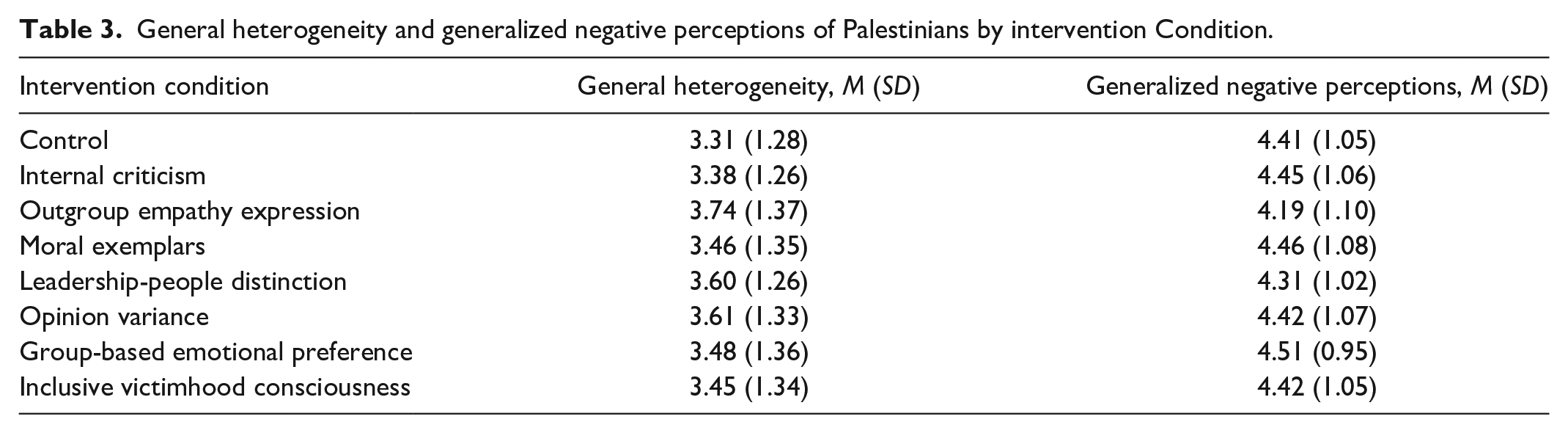
The overall model for predicting general heterogeneity was significant and explained a moderate amount of variance (F(15,1548) = 35.92, p < .001, R2 = .258, adjusted R2 = .251). Political orientation had a strong effect, such that left-leaning participants perceived Palestinians as more heterogeneous overall (B = 0.6, p < .001). On top of these observed differences, we found several main effects of the intervention conditions. Participants in the Outgroup empathy expression condition (M = 3.74, SD = 1.37), in the Leadership-people distinction condition (M = 3.6, SD = 1.26), and in the Opinion variance condition (M = 3.61, SD = 1.33) reported significantly higher perceptions of general heterogeneity compared to those in the Control condition (M = 3.31, SD = 1.28; Outgroup empathy expression: B = 0.42, p < .001; Leadership-people distinction: B = 0.26, p = .027; Opinion variance: B = 0.32, p = .006; see Table S2 in the Supplemental Material for full regression results). In addition, a significant interaction emerged between political orientation and the Internal criticism condition (M = 3.38, SD = 1.26; B = −0.24, p = .008). Looking at the interaction using a simple slope analysis revealed that for individuals whose political orientation is right-leaning (–1 SD), the Internal criticism condition increased the perceived general heterogeneity (B = 0.4, p = .01).
For generalized negative perceptions, the overall model was significant as well and explained a moderate amount of variance (F(15,1548) = 36.69, p < .001, R2 = .262, adjusted R2 = .255). The model revealed that political orientation has a strong effect, with left-leaning participants expressing less generalized negative perceptions of Palestinians (B = −0.46, p < .001). In addition to this effect, across all political orientations, participants in the Outgroup empathy expression condition (M = 4.19, SD = 1.1) reported significantly lower generalized negative perceptions compared to Control (M = 4.41, SD = 1.05; B = −0.21, p = .022). None of the interaction terms reached significance, indicating that the effects of condition on generalized negative perceptions were not moderated by political orientation (see Table S3 in the Supplemental Material for full regression results).
Study B
Participants
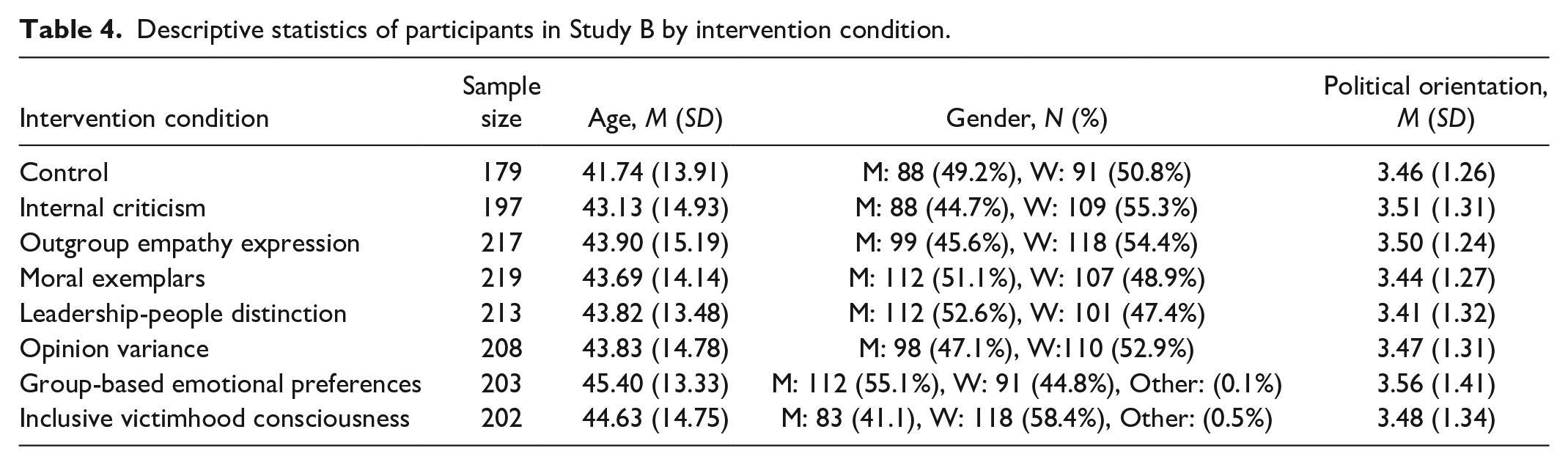
Recruitment of the sample was done similarly to Study A. 2,018 participants completed the survey. After exclusion from analyses of 380 participants who failed the reading question, as detailed in our preregistration, the final sample size consisted of 1,638 participants (for demographic details of participants by condition, see Table 4). A sensitivity power analysis using RStudio for Windows (version 2024.04.1; Posit Team, 2024) indicated that the analysis we ran on our final sample size (n ≈ 205 per condition) was sufficiently powered to detect small effects (f2 = 0.0175) with 0.95 power and an alpha level of .05.
Descriptive statistics of participants in Study B by intervention condition.
Procedure
The study procedure was identical to the one described for Study A.
Interventions
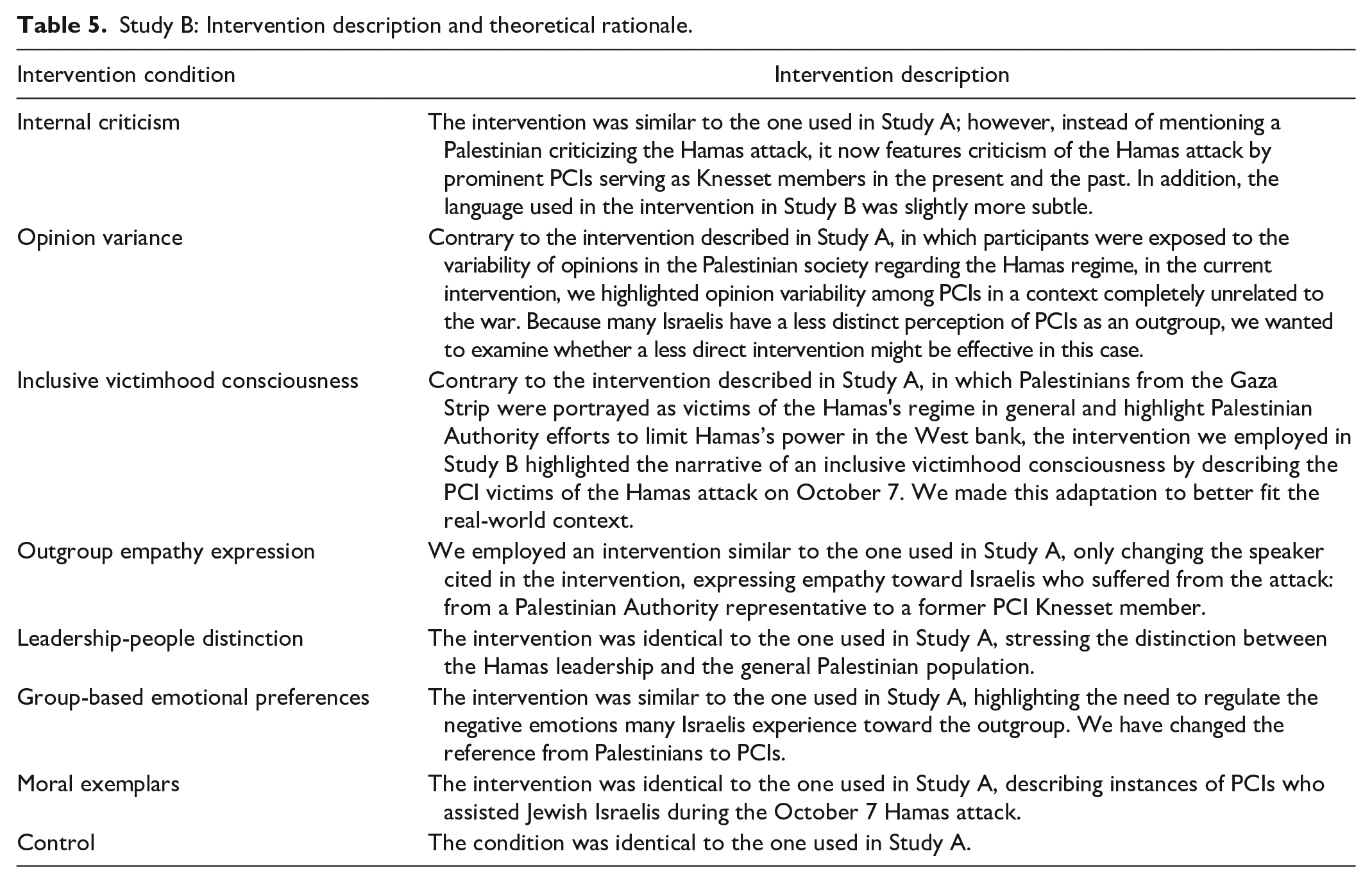
The intervention development process was similar to the one described for Study A. While some of the interventions used in Study B were identical to the ones used in Study A (Leadership-people distinction, Moral Exemplars, Control), in others, we made minor modifications (Internal criticism, Outgroup empathy expression, and Group-based emotional preference), that included changing the speaker mentioned in the intervention to a PCI, to better fit the context. To ensure applicability and real-life contexts and given the unique circumstances that characterize the relations between Jewish Israelis and PCIs, two interventions differed in terms of content between the studies (Opinion variance and Inclusive victimhood consciousness; see Table 5 for elaboration on the modifications made to the interventions).
Study B: Intervention description and theoretical rationale.
Measures
Measures in Study B were the same as the ones used in Study A, with the modification of the outgroup name used in the questions (i.e., “PCIs” instead of “Palestinians”). Questions measuring general heterogeneity were averaged to produce a single scale (α = .76), as well as questions measuring generalized negative perceptions (α = .89).
Results
In Study B, we wanted to examine the effectiveness of the same suggested interventions in increasing Jewish Israelis’ perceived heterogeneity of PCIs, both in terms of general heterogeneity and in terms of the generalization of negative perceptions of PCIs following the attack. Overall, across all conditions and political sectors, the general heterogeneity of PCIs was perceived to be above the midpoint (M = 4.6, SD = 1.1), and generalized negative perceptions of PCIs were below the midpoint (M = 3.1, SD = 1.2) (see Table 6 for DV scores by condition). Looking at the percentage of participants who agreed with the different statements (an aggregate of those who chose 4–6, on a 6-point scale), showed that only 26% of participants in the sample agreed with the statement that “All PCIs are the same”, reflecting a prevalent perception of PCIs as heterogeneous; in contrast, 63% of participants believed most PCIs support the Hamas attack.
General heterogeneity and Generalized negative perceptions of PCIs by Intervention condition.
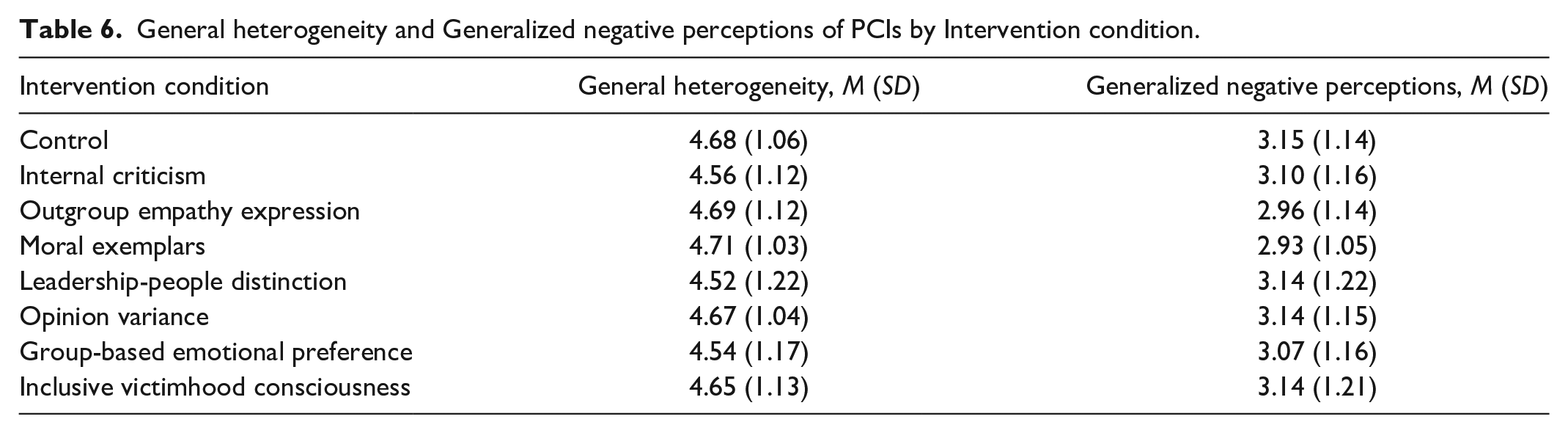
A linear regression model predicting perceptions of general heterogeneity with the intervention condition (dummy coded) and political orientation (mean-centered) revealed that political orientation significantly predicted general heterogeneity, such that participants with a more left-leaning political orientation reported greater heterogeneity (B = 0.36, p < .001). None of the intervention conditions were significant predictors of general heterogeneity. Furthermore, no significant interactions emerged between political orientation and the different intervention conditions on general heterogeneity (see Table S7 in the Supplemental Material for full regression results).
For generalized negative perceptions of PCIs, a similar linear regression model revealed that political orientation significantly predicted the generalization of negative perceptions, with left-leaning participants expressing decreased levels of generalized negative perceptions of PCIs (B = −0.53, p < .001). Moreover, participants in the Moral exemplars condition (M = 2.93, SD = 1.05) reported significantly less generalized negative perceptions of PCIs, compared to the Control (M = 3.15, SD = 1.1) (B = −0.23, p = .018). No significant interactions emerged between political orientation and condition descriptions (see Table S8 in the Supplemental Material for full regression results).
Discussion
The current work aimed to address the expected increase in Jewish Israelis’ perception of Palestinians as homogeneous following the Hamas attack on October 7. Exposure to violence and the experience of imminent threat often lead individuals to adopt more extreme perceptions, attitudes, and preferences, resulting in an amplified perception of the outgroup as homogeneous and the tendency to generalize the actions of some group members to the entire group. The potential and dangerous implications of harboring such perceptions, particularly in times of intergroup violence, highlight the significant challenge posed by perceptions of outgroup homogeneity. Consequently, our work focused on urgently investigating paths to foster a more nuanced understanding of outgroup heterogeneity. In two intervention tournament studies, each targeting perceptions of a different target group—Palestinians from the West Bank and the Gaza Strip and PCIs—we exposed participants to one of seven interventions, or control, and gauged their perceptions of outgroup heterogeneity.
Generally, several interventions were found effective in increasing the general heterogeneity of Palestinians from the West Bank and Gaza Strip: Outgroup empathy expression, Leadership-people distinction, Opinion variance, and Internal criticism. In addition, the Outgroup empathy expression intervention reduced the generalization of negative perceptions of Palestinians, while the Moral exemplars intervention effectively decreased the generalization of negative perceptions of PCIs. Our findings build upon and extend previous research on outgroup variability perceptions. The effectiveness of the Opinion variance intervention aligns with previous work by Er-rafiy and Brauer (2013). Their research demonstrated that highlighting subgroups within an outgroup—in terms of demographics, characteristics, and opinions—increases the group’s perceived heterogeneity and subsequently reduces prejudice and discrimination. Our findings correspond to theirs while demonstrating that this intervention remains effective even in the context of severe intergroup conflict. We have identified additional effective interventions that were not previously examined in the context of variability perceptions, such as the Outgroup empathy expression or the Moral exemplars interventions.
Interestingly, we observed inconsistent effectiveness of the interventions across the two studies. While we did not make specific predictions about these differences, the nuanced results warrant further examination. One possible explanation for the diverging results is the relevance of the intervention content, given the timing in which the studies were conducted. The studies were conducted just a few weeks after the October 7 attack, a period during which Jewish Israelis were deeply immersed in the reality of the war and its consequences. Given the intensity of the situation, participants may have been particularly attuned to information directly related to the conflict and less receptive to content that seemed disconnected from it. In Study B, the Outgroup Variance intervention highlighted diversity among PCIs regarding attitudes toward women’s and LGBT rights, whereas in Study A, it focused on Palestinians’ attitudes toward Hamas. In the heightened emotional and political climate following the attack, the framing used in Study B may have been perceived as unrelated to participants’ immediate concerns, reducing its impact.
Another key factor in explaining the differences is how participants categorized PCIs in relation to Palestinians. PCIs hold a dual identity—they are Palestinians yet hold Israeli citizenship—which likely complicates their classification in Jewish Israelis’ minds (Levy et al., 2017). We suggest that this distinction, namely, the extent to which participants perceived Palestinians and PCIs as belonging to the same group, could serve as another explanation for our findings. For instance, the Leadership-people distinction and Moral exemplars interventions were identical in both studies but had an effect only when the group discussed in the message aligned with the group being evaluated. The Leadership-people distinction intervention, which sought to separate the actions of Palestinian leadership from the broader Palestinian population, did not shift perceptions of PCIs. This suggests that participants may not have strongly associated PCIs with Palestinians, making the message less relevant to changing their attitudes. Similarly, in the Moral exemplars intervention, Jewish Israelis’ perceptions of PCIs improved after hearing a story about PCIs assisting Jewish Israelis during the Hamas attack. However, this intervention did not lead to more positive attitudes toward Palestinians as a whole. Prior research on moral exemplars suggests that for such interventions to generalize, the moral figure must be perceived as representative of the broader group (Beneda et al., 2018). In our case, it is possible that because PCIs were not seen as prototypical Palestinians in the eyes of Jewish Israelis, their moral actions did not extend to reshaping perceptions of Palestinians.
This explanation could also be applied to the limited effectiveness of the Outgroup empathy expression. The intervention was successful in increasing Palestinians’ perceived heterogeneity when the speaker expressing empathy was a Palestinian but was not effective in increasing perceptions of PCIs’ heterogeneity when the speaker was a PCI. It is possible that due to the distinction between PCIs and Palestinians, when a PCI expressed his empathy for the Jewish Israeli victims, it seemed less relevant, as he was not representative of the group responsible for the attack. Finally, differences in the strength or framing of the messages may have also influenced intervention effectiveness. In the Internal criticism intervention, a key difference between the studies was the degree of explicit condemnation of Hamas. In Study A, the criticism was stronger, directly comparing Hamas’s actions to ISIS, whereas in Study B, this comparison was omitted. This variation may have influenced the impact of the intervention, as stronger criticism is likely to be perceived as more meaningful and persuasive.
Taken together, these findings suggest that intervention effectiveness depends not only on the content of the message but also on the perceived identity of the group being addressed. Interventions that directly engaged with the pressing political and social realities of the moment were more impactful, while the way participants categorized PCIs—as distinct from Palestinians—shaped the extent to which certain interventions influenced attitudes toward each group. Overall, interventions aimed at shaping perceptions of outgroup variability, particularly in violent contexts, appear to be most effective when the group and the content discussed in the intervention align with the target group (Hebel-Sela et al., 2025), are relevant to the context and use a stronger framing.
Besides expanding current knowledge on interventions aimed at altering perceptions of heterogeneity and pointing at an additional intervention approach, we believe our study holds two significant practical implications. First is its applicability in terms of content and format. The interventions devised for the tournaments draw from ideas and topics already present in public discourse to some extent, rendering them organic and not overly unfamiliar within the Jewish Israeli public sphere. Furthermore, the messages conveyed in these interventions could be easily adapted into other formats—whether as commentary in news broadcasts, speeches in various forums, or posts on social media platforms. This leads to the second implication, which is related to the potential to implement these interventions urgently as events unfold. Similar to other resilience-focused interventions that prove highly effective when administered promptly following exposure to traumatic events (Qi et al., 2016), there exists a pressing need for timely psychological intergroup interventions to mitigate the adverse consequences of severe conflict-related events on intergroup relations, both in the short and long terms. Considering the known shift in attitudes and preferences that individuals undergo after exposure to violence, along with the potentially harmful consequences of such shifts, there is an imperative to quickly counteract these perceptions in the aftermath of violent events. Our work suggests several paths practitioners can take, found effective specifically in this situation.
While establishing successful interventions for increasing the perceived heterogeneity of Palestinians in a timely and relevant political context, this study has several limitations that should be addressed in future research. First, the observed effect sizes were relatively small. This could be attributed to the moderate intensity of the interventions (a single X post), compared to the extensive exposure of Israelis to media at the time (Bezeq, 2023), which has likely exerted a substantial influence on their perceptions and attitudes toward Palestinians. We suggest that future research would examine a more intense version of the interventions. Second, while the approach we took of a crowdsourced, bottom-up intervention tournament design that focuses on real-world applicability increases external validity (Hameiri & Moore-Berg, 2022), the interventions examined in the studies may have slightly diverged from their theoretical underpinnings. This is a natural tension in these kinds of studies, and in the current work, we prioritized the applicability of the interventions.
Moreover, although the studies reported in the paper point at interventions effective at changing intergroup perceptions, we only manipulated and measured the psychological process without deeply considering the more tangible outcomes related to the conflict (Hakim et al., 2022). Future research should examine the relation between the promising intervention directions found in this work and the outcome variables motivating this paper, such as outgroup hostility and support for violence. Finally, the unique violent context in which these interventions were tested limits their generalizability. Future research should explore their effectiveness in calmer periods of the Israeli-Palestinian conflict and in other contexts where outgroup homogeneity serves as a challenge to intergroup relations. Furthermore, to ensure the effectiveness of the interventions examined in the current work, some of which were not previously examined directly in the context of outgroup perceptions of variability, it is essential to run multiple statistically powered replication studies with new participants (Hameiri & Moore-Berg, 2022). This would also allow us to rule out potential Type I and Type II statistical errors.
Conclusion
Altering perceptions of the outgroup during periods of escalated conflict is a complex challenge, yet a highly important one. The current work delves into the perception of outgroup homogeneity, a perception greatly influenced by exposure to violence, and that holds enduring repercussions on intergroup violence. Our research indicates that even in dire circumstances, perceptions of outgroup heterogeneity can be increased. We hope that the findings of our studies would aid both researchers and practitioners in advancing strategies for mitigating intergroup violence and fostering improved intergroup relations.
Footnotes
Acknowledgements
We also want to thank Daphna Joel, Nira Liberman, Maya Tamir for contributing to the intervention development process.
Author Contributions
Ilana Ushomirsky: Conception and design, data collection, data analysis and interpretation, manuscript drafting; Yossi Hasson: Conception and design, data collection, data interpretation, manuscript revising; Renana Atia, Nitzan Attias, Meital Balmas, Kinneret Endevelt, Tamar Gur, Boaz Hameiri, Shira Hebel-Sela, Oded Adomi Leshem, Nechumi Malovicki-Yaffe, Devorah Manekin, Anat Perry, Roni Porat, Tamar Saguy, Eric Shuman: intervention development, manuscript revising; Eran Halperin: Conception and design, data collection, data interpretation, manuscript revising.
Declaration of Conflicting Interests
The author(s) declared no potential conflicts of interest with respect to the research, authorship, and/or publication of this article.
Funding
The author(s) received no financial support for the research, authorship, and/or publication of this article.
Supplemental Material
Supplemental material is available online with this article.
