




Abstract
Individuals with concealable stigmatized identities (CSIs) may employ avoidance strategies to hide their identities. While seemingly protective, identity avoidance may negatively impact perceived self-knowledge (i.e., self-concept clarity and self-alienation). Across six studies (N = 1,945) with U.S. and Chinese university samples, we found that those with CSIs consistently reported lower levels of perceived self-knowledge than those without (Studies 1a–1d). CSI avoidance was also uniquely associated with decreased levels of perceived self-knowledge, even when controlling for relevant factors. Experimental manipulations (Studies 2 and 3) of concealable identity salience yielded mixed evidence for direct effects on perceived self-knowledge, but consistent indirect effects through identity avoidance. The results emphasize the negative impact avoidance-based concealment may have on perceived self-knowledge among individuals with CSIs, urging future research on mitigating factors and cognitive mechanisms.
Keywords
“Underneath my outside face There’s a face that none can see. A little less smiley, A little less sure, But a whole lot more like me.” Shel Silverstein (2011), Underface.
Imagine starting a job where you are excited to connect with your new coworkers but you feel like you have a secret. As your coworkers cheerfully discuss their weekend activities with their families, you hesitate. You are not ready to reveal that you will be spending part of the weekend at an AA meeting marking one year of sobriety. This moment of internal conflict is all too familiar for individuals with concealable stigmatized identities (CSIs).
Concealable stigmatized identities (CSIs) 1 are social identities that can be hidden from others and are typically viewed negatively by others (Pachankis, 2007; Quinn & Chaudoir, 2009). This umbrella term encompasses many identities, including: mental illnesses, hidden physical illnesses (e.g., cancer, HIV+, epilepsy), sexual and gender minorities (LGBTQIA+), history of addiction, and past criminal actions/history. Individuals with CSIs often find themselves walking a tightrope between self-expression and self-protection, balancing the desire for authenticity against the potential risks of disclosure. As such those with CSIs have to decide how they will manage their identity in social situations. Identity management strategies for those with CSIs include a variety of behaviors ranging from full disclosure to full concealment (Berkley et al., 2019; Button, 2004; Clair et al., 2005). Concealment can take multiple forms including avoidance and fabrication (i.e., actively creating a false narrative; Berkley et al., 2019; Button, 2004). Individuals employing avoidance strategies try to keep their CSI hidden by dodging questions, speaking in generalities, redirecting conversations, and steering clear of situations where these topics are more likely to arise (Button, 2004). Avoidance strategies are a form of concealment that do not necessarily involve active fabrication. The downstream consequences of identity avoidance are important to explore because avoidance is often the default strategy for individuals with CSIs, especially in ambiguous or hostile environments. Avoidance is frequently used when the risks of disclosure feel too weighty, but when fabrication feels too impossible, effortful, or morally uncomfortable.
Given that the possession of a CSI inherently poses identity management challenges, we sought to examine whether CSI status predicts lower perceived self-knowledge. We further sought to examine whether identity avoidance strategies, in particular, might threaten perceived self-knowledge. We further explain the rationale behind both hypotheses below.
Concealable Stigmatized Identities and Perceived Self-Knowledge
Perceived self-knowledge has been linked to numerous positive outcomes, including a greater sense of meaning in life (King & Hicks, 2021; Rivera et al., 2019; Schlegel et al., 2011), enhanced overall well-being (Ryan & Ryan, 2019; Schlegel & Hicks, 2011), increased psychological resilience (Bentall et al., 2014), and the ability to make satisfying and morally sound decisions (Christy et al., 2016, 2017; Schlegel et al., 2013; Zhang et al., 2019). Conversely, self-alienation (i.e., feeling disconnected from one’s true self) is associated with decreased life satisfaction (Wood et al., 2008) and poor intrapersonal and interpersonal outcomes (Kim & Chiu, 2011; Kramer & Pascual-Leone, 2018; Lutz et al., 2023; Wilson, 2009). These findings are consistent with many philosophical and psychological perspectives that suggest that knowing oneself is central to living a fulfilling life (e.g., Aristotle, 2004; Rivera et al., 2019; Rogers, 1957, 1959).
However, CSIs may threaten the formation of a coherent sense of self. For example, CSIs often emerge or are recognized later in life, potentially disrupting previously established self-concepts. While the average age-of-onset varies across mental illnesses, they tend to emerge in early to mid-adulthood after people have somewhat established self-concepts (Kessler et al., 2007). Similarly, individuals identifying as sexual orientation minorities typically begin self-identifying around age 18 and typically disclose this identity around age 20 (Hall et al., 2021). This dissonance between newly discovered aspects of oneself and the previously known self may lead to heightened self-concept confusion (see Christy et al., 2016 for a related discussion). Research indirectly supports this notion, showing that ambiguous self-perceptions may partially explain why stressful events, such as the realization of a stigmatized identity, negatively impact psychological well-being (Richie et al., 2010).
Simply recognizing a CSI may be challenging for one’s sense of self, but the act of concealing it likely adds further emotional and cognitive strain. For example, Critcher and Ferguson (2014) found experimental evidence that concealing one’s identity through identity avoidance strategies, even when it is not associated with stigma or prejudice, is exhausting and has downstream consequences. For example, heterosexual participants who were required to conceal their sexual orientation during an interview exhibited worse outcomes in intellectual acuity, interpersonal restraint, and executive functioning. This was attributed to the effort involved in monitoring and altering their speech and behaviors (e.g., using gender-neutral terms like “my partner” or “my spouse” instead of “my husband” or “my wife”). Supporting this, Larson et al.’s (2015) meta-analysis revealed that high levels of concealment deplete self-regulatory resources. Furthermore, Smart and Wagner (1999) showed that individuals with CSIs, such as eating disorders, experience increased secrecy, thought suppression, and intrusive thoughts when engaging in identity avoidance strategies to conceal their identity, highlighting the cognitive burden of concealment.
Research on secrecy, which shares conceptual overlap with concealment strategies provides additional insights. Research on secrecy shows that people’s minds often wander to their secrets (Bianchi et al., 2024; Slepian et al., 2017). This repeated mind-wandering, particularly when secrets evoke feelings of shame, strongly predicts lower well-being (Slepian et al., 2017, 2020). These findings align with research exploring the connection between mind-wandering and perceived self-knowledge. For instance, Vess (2019) posits that unintentional mind-wandering is directly linked to feelings of disconnection from one’s true self (Williams & Vess, 2016). Subsequent studies have supported this idea. For example, when individuals are motivated by concern for their reputation, secrecy can lead to reduced feelings of authenticity, primarily due to frequent, unwanted thoughts about the secret (McDonald et al., 2020). The studies have similarly demonstrated a positive link between unintentional mind-wandering and lowered perceived self-knowledge (Vess & Maffly-Kipp, 2022; Vess et al., 2016, 2019). These findings raise the possibility that individuals who engage in identity avoidance may similarly experience intrusive thoughts about their CSI such that identity avoidance may paradoxically increase the cognitive salience of the identity, making unwanted thoughts more likely to arise. Over time, such patterns may foster a sense of disconnection from the self (see also Carlson, 2013).
While previous research has primarily focused on the impact of CSIs on mental health (Camacho et al., 2020; Quinn & Chaudoir, 2009; Quinn & Earnshaw, 2011, 2013; Quinn et al., 2017), the current studies aim to explore how both possessing and concealing a CSI through identity avoidance uniquely influences self-understanding. While CSIs are often linked to negative self-evaluations, such as lower self-esteem (Frable et al., 1998; Le Forestier et al., 2024), their relationship with perceived self-knowledge remains unclear. The present studies seek to address this question. We hypothesize that individuals with CSIs who rely more on identity avoidance strategies will perceive less self-knowledge.
Overview of Studies
Across six studies, we examined whether concealable stigmatized identities (CSIs) are associated with lowered perceptions of self-knowledge. In the first four studies (Studies 1a–1d), we used cross-sectional data to investigate whether CSI status is linked to lower perceived self-knowledge and whether identity avoidance is particularly associated with a lack of perceived self-knowledge among those who report having a CSI. To test the robustness of this association, we controlled for other relevant variables (i.e., negative affect, depression, and self-esteem) that have been linked to both CSIs and self-knowledge (Le Forestier et al., 2024; Quinn & Earnshaw, 2013; Rivera et al., 2019). Controlling for these variables allowed for a more stringent test of the relationship between CSI avoidance and perceived self-knowledge, ensuring that avoidance uniquely predicts diminished perceived self-knowledge, rather than simply reflecting general negative feelings or negative self-perceptions. Similarly, we examined whether CSI avoidance strategies are associated with perceived self-knowledge while controlling for general CSI stigmatization (i.e., anticipated and internalized stigma; Studies 1c–1d) when such data were available to ensure that observed results could not be explained by the potential confound of stigma itself. In the final two studies (Studies 2 and 3), we experimentally tested whether making a concealable identity salient would causally impact feelings of perceived self-knowledge.
To operationalize perceived self-knowledge, we assessed two related constructs: self-alienation and self-concept clarity. Self-alienation refers to the subjective experience of feeling disconnected from or out of touch with one’s true self (Wood et al., 2008). In contrast, self-concept clarity reflects the extent to which an individual’s self-concept is well-defined, confidently understood, internally consistent, and relatively stable over time (Campbell et al., 1996). Higher self-concept clarity indicates a coherent self-schema, often considered a measure of “self-strength” (DeMarree & Morrison, 2012). Both constructs reflect self-perceptions without necessarily indicating the accuracy of those beliefs. We hypothesize that possessing and actively concealing a CSI from others through identity avoidance will increase feelings of self-alienation and decrease self-concept clarity.
Studies 1a
The Present Research
In Studies 1a to 1d, we sought to determine whether there were differences in reported perceived self-knowledge between individuals with a concealable stigmatized identity (CSI) and those without one in two different countries (U.S. and China). We hypothesized that individuals with a CSI would report lower levels of perceived self-knowledge compared to those without a CSI. Furthermore, we hypothesized that CSI avoidance would be negatively associated with perceived self-knowledge.
Method
Participants
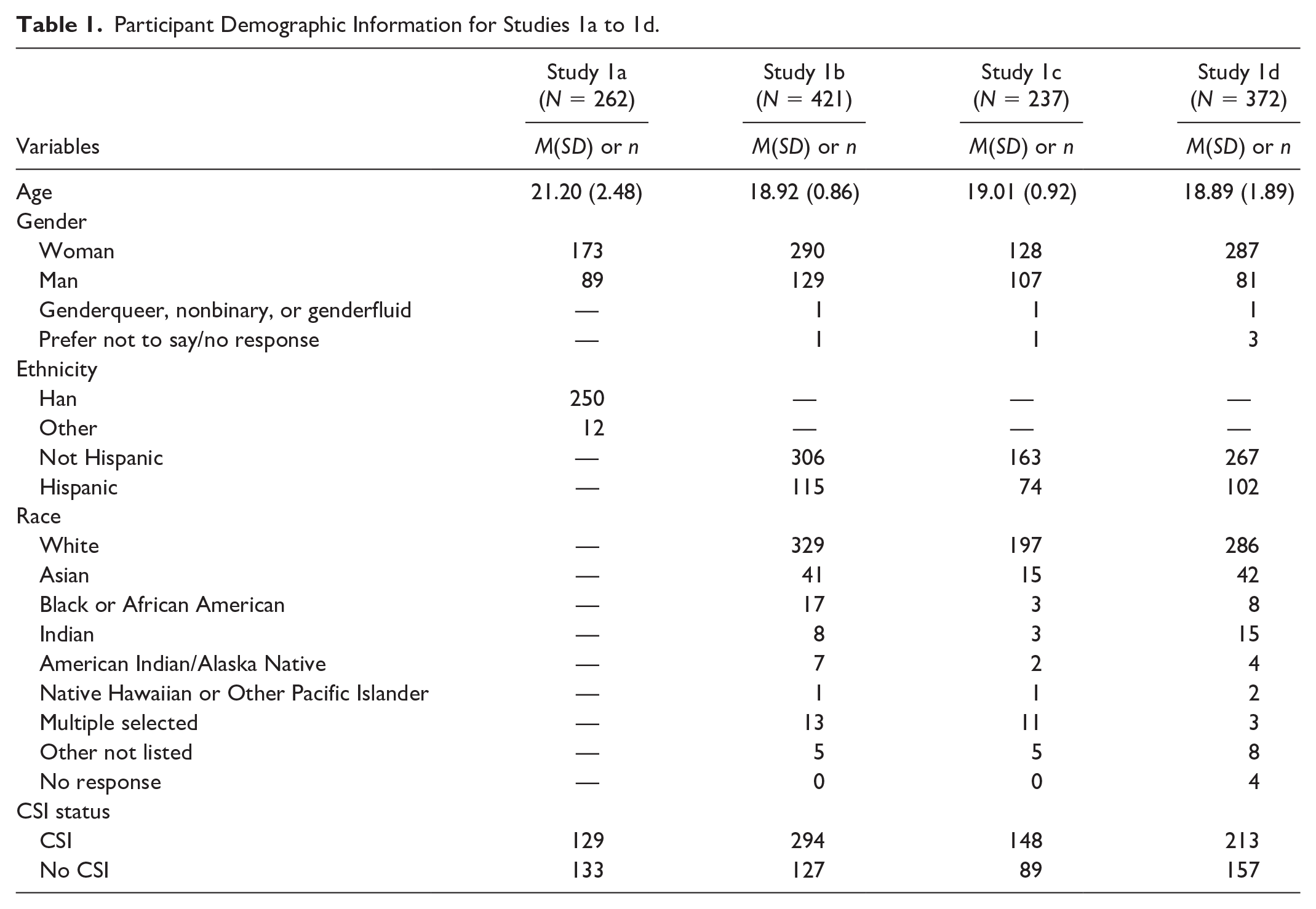
The current studies received ethical approval from the university’s IRB in which the studies took place (i.e., Study 1a at Peking University and Studies 1b–1d at Texas A&M University). We aimed to recruit at least 250 participants per study because this sample size is recommended for obtaining stable correlation estimates (Schönbrodt & Perugini, 2013). We over-recruited as much as possible within lab constraints in order to increase statistical power. Study 1a was conducted in Summer 2023 and included 272 Chinese university students (undergraduates, master’s, and doctoral students). Ten participants who failed the attention check were excluded from the analyses. For Studies 1b to 1d, undergraduate students from Introductory Psychology classes participated for course credit during Spring 2023 (Study 1b), Summer 2023 (Study 1c), and Fall 2023 (Study 1d; see Table 1 for the demographic breakdown by study). Participants who provided mostly incomplete responses or who indicated not taking the study seriously were removed during the data cleaning process of each dataset (see Supplemental Materials for information about exclusions).
Participant Demographic Information for Studies 1a to 1d.
Procedure
Study 1a was posted across multiple university student subject pools, with participants recruited online via wjx.com, a Chinese questionnaire platform similar to Qualtrics. The survey items were presented in Mandarin Chinese, with all translations completed by the fourth and fifth authors of this study (Y.Y. and T.J.). For Studies 1b to 1d, participants were recruited through the Texas A&M University psychology department’s online SONA subject pool and completed the studies via Qualtrics. Across all studies, participants first reviewed the informed consent forms. Subsequently, all participants completed measures unrelated to CSIs, while only those who self-identified as having a CSI completed additional CSI-related measures. These studies were parts of larger research projects that included measures not discussed in this paper (all measures are available in the OSF 2 file within their corresponding Qualtrics survey). Notably, Study 1a was the only study to include a measure of self-concept clarity, while Studies 1c and 1d were the only ones to assess stigma, and Study 1d uniquely included a measure of self-esteem. All other measures, as outlined below, were included across all studies.
Measures
CSI Status. 3
Participants were provided a brief description of various CSIs, including examples such as mental illnesses (e.g., depression, obsessive-compulsive disorder), sexual orientation (e.g., asexual, gay, lesbian), and hidden medical conditions (e.g., diabetes, epilepsy), adapted from prior research (Quinn & Chaudoir, 2009; see Supplemental Materials for complete instructions). They then responded “Yes” or “No” to the question: “Do you have a concealable identity such as the ones listed above?” Across all three studies, over half of the participants self-identified as having a CSI (see Table 1).
Self-Alienation
We used the self-alienation subscale of the Authenticity Scale developed by Wood et al. (2008). This subscale contained four items in which participants rated their agreement with each item on a 7-point Likert scale from 1 (“does not describe me at all”) to 7 (“describes me very well”). Sample items from the self-alienation subscale are: “I don’t really know how I feel inside” and “I feel out of touch with the ‘real me.’” Higher scores indicate greater reported self-alienation (M = 3.21 a , 3.06 b , 3.09 c , 3.13 d ; SD = 1.37 a , 1.45 b , 1.45 c , 1.49 d ). This scale displayed strong internal reliability (α = .85 a , .89 b , .89 c , .89 d ).
Self-Concept Clarity
Self-concept clarity was measured using the 12-item Self-Concept Clarity Scale (SCCS; Campbell et al., 1996). Participants responded to items (e.g., “In general, I have a clear sense of who I am and what I am”) on a 5-point Likert scale ranging from 1 (“strongly disagree”) to 5 (“strongly agree”). The scale demonstrated excellent internal consistency (M = 3.86, SD = 0.95, α = .86). Higher scores indicated greater self-concept clarity.
CSI Avoidance
The CSI avoidance subscale was used to assess how much one tries to avert discussions or activities in an effort to keep their CSI hidden from others. This subscale is from Button’s (2001) larger scale that measured three identity management strategies used by sexual minorities in the workplace (i.e., avoidance and integrating). 4 This scale was adapted to address CSIs more broadly rather than just sexual minorities. Participants rated seven statements on a scale from 1 (“strongly disagree”) to 7 (“strongly agree”). Sample items are as follows: “I avoid situations (e.g., long lunches, parties) where individuals are likely to ask me personal questions” and “I let people think I am ‘distant’ so that they won’t question my lack of straightforwardness on topics related to my concealable identity.” Participants were asked to answer these questions based on how they conduct themselves on average across all interactions with others (i.e., acquaintances, friends, family members, neighbors, and community members). Higher scores indicated greater levels of CSI avoidance (M = 3.34 b , 3.33 c , 3.22 d ; SD = 1.24 b , 1.27 c , 1.27 d ). This scale displayed strong internal reliability (α = .86 b , .87 c , .89 d ).
Depression
The Beck Depression Inventory (BDI; Beck et al., 1961) was used to assess depression symptoms. This scale is commonly used in both psychiatric and non-psychiatric populations (Beck et al., 1988). Items are rated on a scale from “0” (no symptoms) to “3” (severe symptoms). Scores range from 0 to 63. This scale displayed strong internal reliability (α = .90 b , .91 c , .89 d ) and participants scored mostly within the normal to mild mood disturbances ranges (M = 10.33 b , 10.81 c , 9.96 d ; SD = 8.43 b , 9.24 c , 7.69 d ).
Negative Affect
For Studies 1b to 1d, the Negative Affect subscale of the Positive and Negative Affect Schedule (PANAS; Watson et al., 1988) was used. Participants reported how much they felt each of 13 negative emotions (e.g., angry, frustrated, nervous, and unhappy) on a scale from 1 (“very slightly or not at all”) to 5 (“extremely”) at the trait level (i.e., “In general, I tend to feel. . .”). Items were aggregated into a mean negative affect (NA) score (M = 2.50 b , 2.55 c , 2.56 d ; SD = 0.69 b , 0.72 c , 0.73 d ) and displayed acceptable internal reliability (α = .88 b , .89 c , .90 d ).
Self-Esteem
To assess global self-esteem, we used the Rosenberg Self-Esteem scale (RSE; Rosenberg, 1979). This measure consists of 10 items rated on a 5-point scale from 1 (“strongly disagree”) to 5 (“strongly agree”). This measure has been widely used and displayed strong internal reliability in Study 1d (α = .89, M = 3.61, SD = 0.75).
CSI Anticipated Stigma
Anticipated stigma refers to the awareness of and concern about potential negative treatment based on one’s concealable stigmatized identity (Quinn & Chaudoir, 2009). In line with prior research (Quinn & Chaudoir, 2009), we measured anticipated stigma using an adapted version of the 9-item discrimination scale developed by Kessler et al. (1999). Participants rated the likelihood of experiencing various forms of discrimination (e.g., “People act as if you are inferior”) if others were aware of their CSI, using a 7-point Likert scale (M = 3.03 c , 2.68 d ; SD = 1.46 c , 1.36 d ). The measure displayed excellent internal reliability (α = .93 c , .92 d ).
CSI Internalized Stigma
Internalized stigma arises when individuals adopt and accept the negative stereotypes or beliefs directed toward people who share their concealable identity (Quinn & Earnshaw, 2013). Following previous research (Quinn & Chaudoir, 2009; Quinn et al., 2014), we assessed CSI internalized stigma using an adapted version of Link’s (1987) Devaluation-Discrimination scale. Participants used a 7-point Likert scale to rate their agreement with four items (e.g., “I feel that my concealable identity is a sign of personal failure”; M = 3.39 c , 2.86 d ; SD = 1.36 c , 1.29 d ). The measure displayed adequate internal reliability (α = .76 c , .75 d ).
Results
CSI Status
Across four studies, independent sample t-tests consistently revealed that individuals with CSIs report significantly higher levels of self-alienation (Table 2 for means and standard deviations). In Study 1a, a significant difference emerged between groups on SCC as well, t(260) = −3.03, p = .003, d = −0.37, 95% CI [−0.62, −0.13], with CSI individuals reporting lower SCC (M = 3.68, SD = 0.94) compared to individuals without a CSI (M = 4.03, SD = 0.93).
Self-Alienation Scores between Those with No CSI and CSI Experience across Studies 1a to 1d.
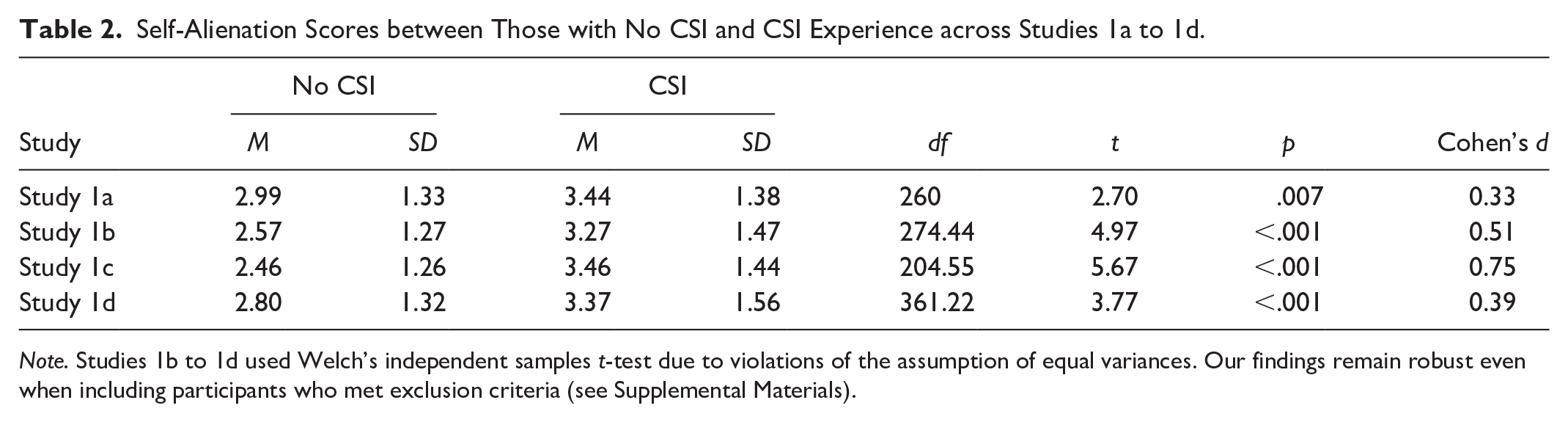
Note. Studies 1b to 1d used Welch’s independent samples t-test due to violations of the assumption of equal variances. Our findings remain robust even when including participants who met exclusion criteria (see Supplemental Materials).
Given the variance in effect sizes in Table 2, we conducted a mini meta-analysis 5 of Cohen’s d across Studies 1a to 1d following the methodology outlined by Goh et al. (2016). Using a fixed effects model with effect sizes weighted by sample size, we found that the overall mean effect size was d = 0.47 (95% CI [0.35, 0.58]), indicating a moderate effect. This indicated a significant difference in self-alienation between participants with and without a CSI (Z = 8.01, SE = 0.06, p < .001).
CSI Avoidance
CSI avoidance was strongly associated with higher levels of self-alienation, depression, negative affect, and lowered self-esteem at the bivariate level (see Table 3). This suggests that individuals who use avoidance strategies to keep their CSI hidden from others avoidance are more likely to experience increased feelings of disconnection from their sense of self.
Pearson’s Correlations Between CSI Avoidance and Relevant Variables.
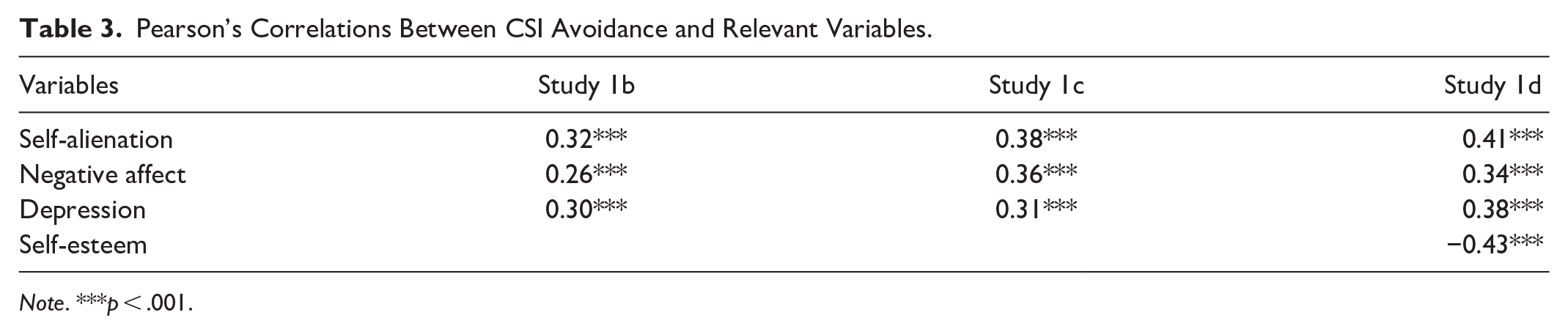
Note. ***p < .001.
To explore the robustness of this relationship over and above important covariates, we conducted hierarchical linear regressions (see Table 4). Across all three studies, we controlled for negative affect and depression as predictors. Study 1d also included self-esteem as a covariate. Across all three studies, avoidance was a significant predictor of self-alienation after controlling for these covariates, suggesting that avoidance plays a unique role in predicting self-alienation.
Hierarchical Regressions of CSI Avoidance Predicting Self-Alienation Controlling for Negative Moods and Self-Views.
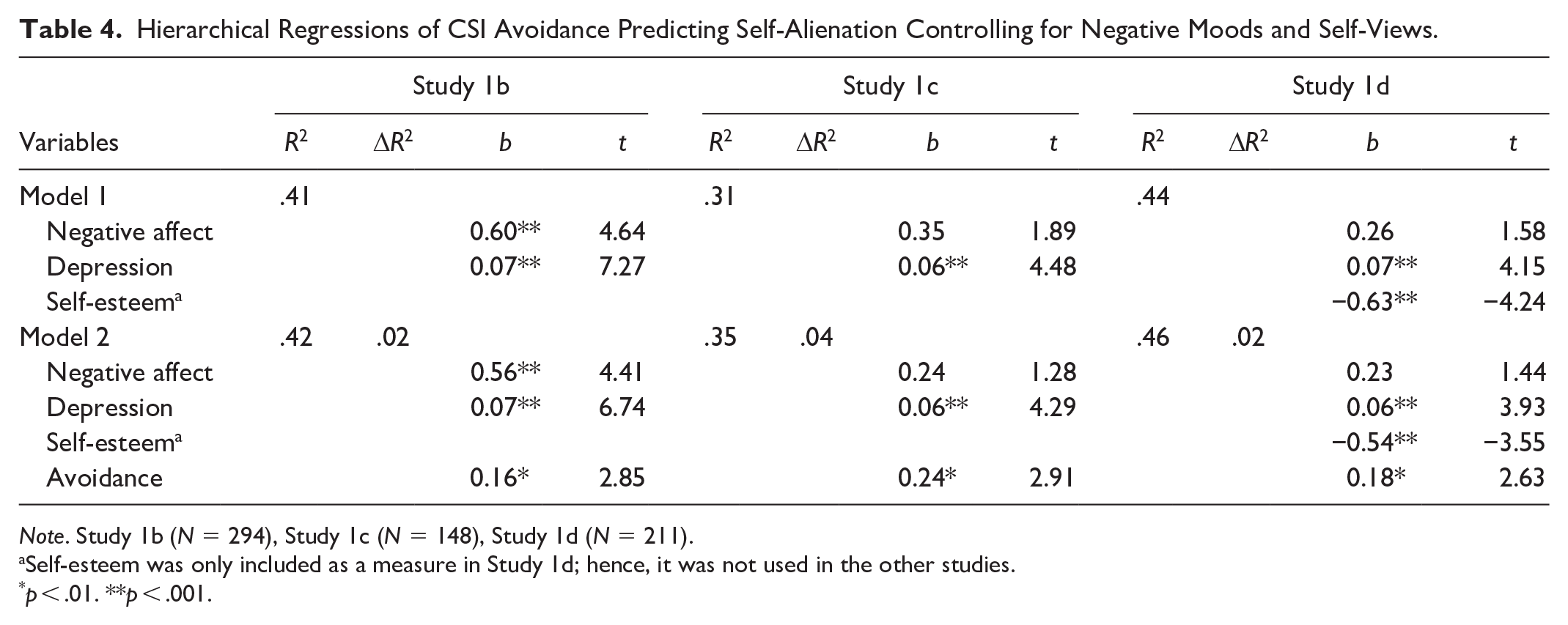
Note. Study 1b (N = 294), Study 1c (N = 148), Study 1d (N = 211).
Self-esteem was only included as a measure in Study 1d; hence, it was not used in the other studies.
p < .01. **p < .001.
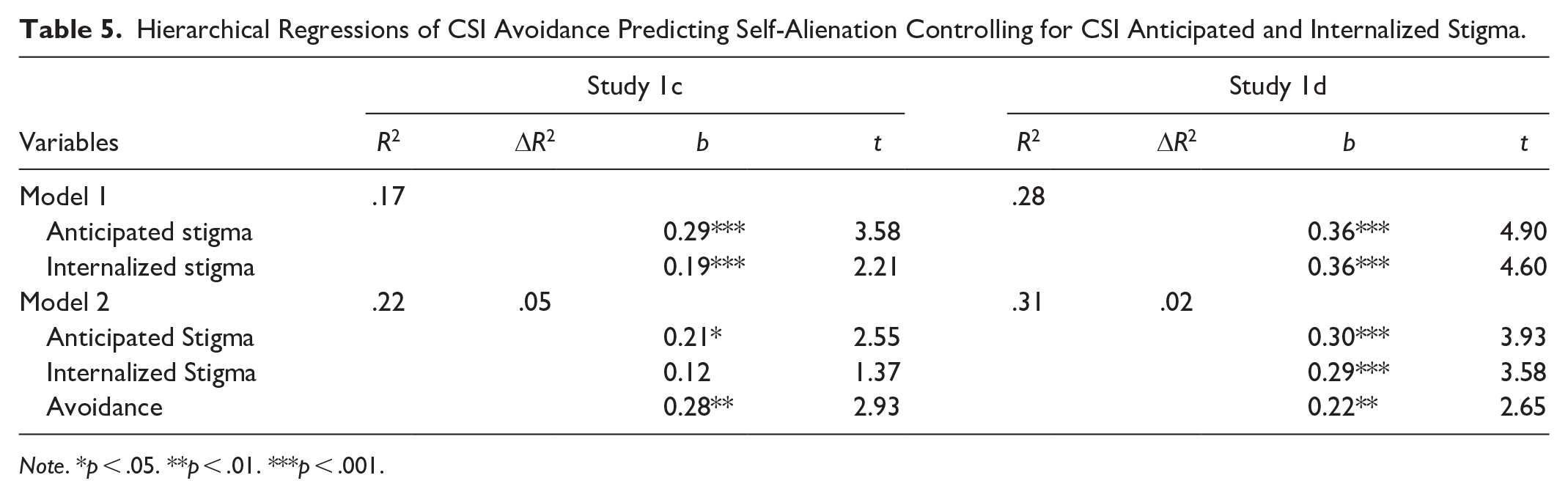
We also sought to examine whether the observed relationship between identity avoidance and self-alienation could be attributed to more general experiences of stigma rather than avoidance of a concealable identity per se. To do this, we examined whether identity avoidance continued to predict self-alienation when controlling for anticipated stigma and internalized stigma. 6 In both models, identity avoidance remained a significant, unique predictor of self-alienation (see Table 5), suggesting that the association between identity avoidance and self-alienation cannot be fully explained by anticipated or internalized stigma.
Hierarchical Regressions of CSI Avoidance Predicting Self-Alienation Controlling for CSI Anticipated and Internalized Stigma.
Note. *p < .05. **p < .01. ***p < .001.
Discussion
These findings suggest that individuals with a CSI are more likely to experience a sense of alienation from themselves than those who do not, particularly if they try to hide that CSI from others using avoidance strategies. Moreover, CSI avoidance uniquely predicted self-alienation even after controlling for other relevant factors such as depression, negative affect, and self-esteem (Study 1d). Although the addition of avoidance in the second model resulted in a small effect, we believe this effect remains noteworthy given the rigorous set of controls already included in the first model. Specifically, because we accounted for self-esteem, negative affect, and depression, each of which is strongly related to both avoidance and self-alienation, it is particularly striking that avoidance still explains unique variance. Moreover, this pattern was replicated across analyses giving credence to the idea that CSI avoidance interferes with perceived self-knowledge beyond mere negative affect, negative self-views, or more general stigmatization.
Study 2
The Present Research
Studies 1a to 1d provided preliminary evidence that individuals with a CSI perceive less self-knowledge, reporting higher self-alienation (Studies 1a–1d) and lower self-concept clarity (Study 1a). These results were consistent across both U.S. and Chinese samples. The studies also showed that using CSI avoidance strategies is positively linked to self-alienation, even after controlling for factors like negative affect, depression, self-esteem, and anticipated/internalized stigma. However, since these studies were correlational, we conducted an experiment to manipulate the salience of participants’ awareness of identity type (concealable vs. visible). We hypothesized that participants made aware of their concealable identities would report less perceived self-knowledge than those made aware of visible identities. We also aimed to replicate previous findings by showing that identity avoidance uniquely predicts perceived self-knowledge, even when controlling for negative affect, self-esteem, and identity likability.
Method
Participants
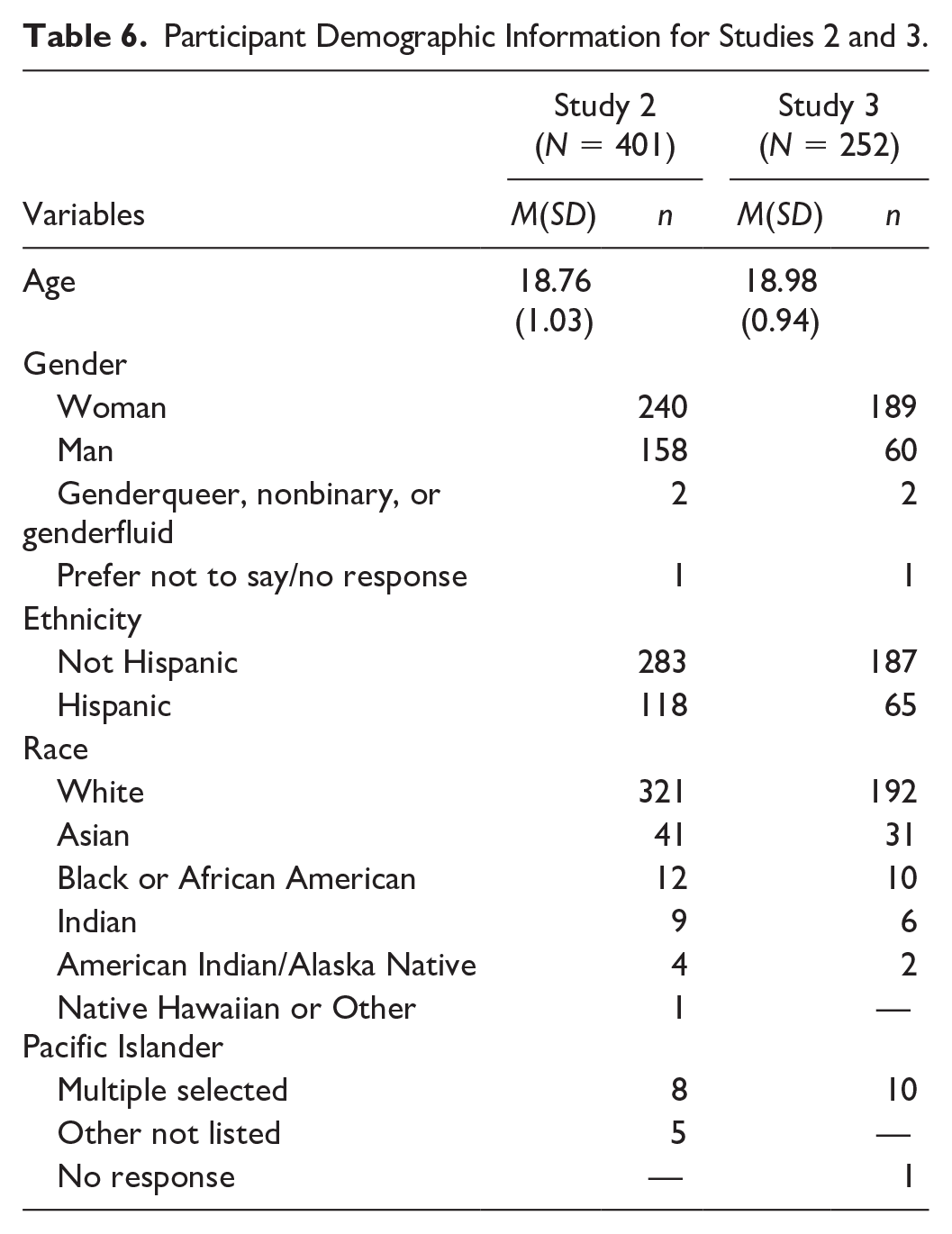
Because we were uncertain about the effectiveness of our manipulation and the strength of the anticipated effects, recruitment was based on the goal of maximizing statistical power within lab resources. We recruited a total of 469 participants. We excluded 55 responses that were incomplete, largely due to technical issues and instances where participants began the survey without reading the instructions, requiring them to start over. Additionally, we removed participants who did not complete both writing prompts (n = 5) or reported that their data were invalid (n = 7). Lastly, we excluded one participant who indicated they were under 18 years of age. This resulted in a total of 401 participant responses from undergraduate students enrolled in an Introductory Psychology course during Fall 2023. The participants completed this study in-person for course credit (see Table 6 for demographic information). We conducted a sensitivity analysis using G*Power (Faul et al., 2007) to determine the smallest effect size our study could reliably detect with 80% power at α = .05. The results indicated that our study was adequately powered to detect effect sizes of f² = 0.03 or larger. This suggests that while our study was sensitive to small-to-medium and larger effects, very small effects may have gone undetected.
Participant Demographic Information for Studies 2 and 3.
Procedure
After providing informed consent, participants were randomly assigned to write about either a concealable or visible aspect of their self-concept. All participants began by reading a general prompt explaining that the self-concept consists of a variety of traits and experiences, addressing the broad question of “Who am I?” Additional details were provided based on the condition to which participants were assigned. Those in the visible identity condition were instructed to write about traits that are “clearly visible to others,” with examples such as gender and race. Participants in the concealable identity condition, however, were asked to write about traits that “can be easily concealed from others,” with examples like mental illness and sexual orientation. 7
Next, participants listed three to five adjectives that best described this part of their self-concept (either concealable or visible), and they described in detail two to three instances where they became highly aware of this identity (see OSF for complete instructions). Following this, they completed identity-related measures, including assessments of identity liking, avoidance, centrality, and concealability. Following a filler task, participants completed a series of measures assessing perceived self-knowledge, as well as negative affect and self-esteem. This was followed by demographic questions and debriefing.
Measures
Identity Concealability
To serve as a manipulation check, we used a shortened 4-item version of the Subjective Identity Concealability Scale developed by Le Forestier et al. (2022). We selected the four items that most directly assessed concealability (α = .76). An example item is: “How easy is it for you to conceal this part of your identity?” with response options ranging from 1 (“Very difficult”) to 5 (“Very easy”). Higher scores indicated greater perceived concealability of the identity (M = 2.70, SD = 0.75).
Identity Liking
Given the likelihood that participants may prefer their visible identity over their concealable identity, we measured how much they liked the specific identity they were instructed to write about. We used a 5-item scale developed for this study (α = .91). Participants rated their agreement with statements such as “In general, this is a part of myself that I like” and “When I reflect upon this part of myself, I find new reasons to appreciate it” on a 7-point Likert scale ranging from 1 (“strongly disagree”) to 7 (“strongly agree”). Higher scores indicated greater liking of one’s identity (M = 4.98, SD = 1.47).
Identity Avoidance
We used a shortened 3-item version of the adapted CSI avoidance subscale (Button, 2001) from Studies 1b to 1d. Items were as follows: “I avoid situations (e.g., study groups, parties) where individuals are likely to ask me questions about this part of myself,” “I withdraw from conversations when the topic turns to things related to this part of myself,” and “I let people think I am ‘distant’ so that they won’t question my lack of straightforwardness on topics related to this part of myself.” The scale demonstrated excellent internal consistency (α = .84; M = 2.94, SD = 1.35).
Self-Alienation
We used the same 4-item self-alienation subscale of the Authenticity Scale (Wood et al., 2008) as in Studies 1b to 1d. The scale demonstrated excellent internal consistency (α = .88; M = 3.46, SD = 1.44).
Self-Concept Clarity
Self-concept clarity was assessed using the same measure as in Studies 1a to 1d. The scale demonstrated excellent internal consistency (α = .85). Higher scores indicated greater self-concept clarity (M = 2.95, SD = 0.69).
Self-Esteem
Global self-esteem was measured using the 10-item Rosenberg Self-Esteem Scale (RSE; Rosenberg, 1979). The scale demonstrated excellent internal consistency (α = .87; M = 2.93, SD = 0.51).
Negative Affect
Negative affect was assessed at the state level using the 13-item Negative Affect subscale of the Positive and Negative Affect Schedule (PANAS; Watson et al., 1988). A mean negative affect (NA) score was calculated for each participant (α = .88; M = 2.02, SD = 0.70).
Results
Preliminary analyses revealed that our manipulation of identity type worked, t(399) = −5.93, p < .001, d = −0.59, 95% CI [−0.79, −0.39], those who wrote about the concealable identities (M = 2.92, SD = 0.75) rated it as more concealable than those who wrote about visible identities (M = 2.49, SD = 0.70). Individuals reported liking their visible identities (M = 5.50, SD = 1.10), t(399) = 7.41, p < .001, d = 0.74, 95% CI [0.54, 0.94], more than their concealable identities (M = 4.48, SD = 1.60). Furthermore, individuals reported more identity avoidance in the concealable identity condition (M = 3.19, SD = 1.42) compared to the visible identity condition (M = 2.68, SD = 1.23), t(399) = −3.80, p < .001, d = −0.38, 95% CI [−0.58, −0.18].
To test for differences between the salience of a concealable versus a visible identity on perceived self-knowledge, we first ran two independent samples t-tests. The t-tests, unexpectedly, revealed there were no significant differences between conditions (concealable vs. visible) on self-alienation (p = .156; Concealable ID: M = 3.56, SD = 1.44; Visible ID: M = 3.35, SD = 1.44). There was, however, a significant difference between conditions on self-concept clarity, t(397) = 2.35, p = .019, d = 0.24, 95% CI [0.04, 0.43]. Specifically, those who wrote about a concealable identity reported less self-concept clarity (M = 2.87, SD = 0.68) compared to those who thought about a visible identity (M = 3.03, SD = 0.70).
There were no significant differences between groups in reports of self-esteem or negative affect (p > .05). Furthermore, a linear regression revealed that identity avoidance, collapsed across conditions, was a unique predictor of self-alienation (b = 0.28, t = 6.25, p < .001) and self-concept clarity (b = −0.13, t = −6.54, p < .001) even when controlling for self-esteem, identity liking, and negative affect (see Tables 2 and 3 in Supplemental Materials for full results).
Exploratory Mediation Analyses
Given the mixed results for our hypothesized differences between groups, we also decided to explore whether the conditions differed in how likely they were to report avoidance strategies and whether this, in turn, might predict decreased self-knowledge. Our thinking was that, by definition, concealable identities are more likely to pose identity management challenges compared to visible identities because they are more likely to require a decision about whether or not to disclose. As such, concealable identities should more easily lend themselves to the use of avoidance strategies. Thus, participants thinking about concealable identities should be more likely to report avoidance than participants thinking about visible identities. This, in turn, might predict self-knowledge, resulting in an indirect effect between condition and self-knowledge. We used two GLM mediation analyses in Jamovi to test this idea. Results revealed an indirect effect of identity avoidance from the identity type condition to self-alienation and self-concept clarity (see Table 7). Those in the concealable identity condition reported more identity avoidance which was then associated with increased self-alienation and decreased self-concept clarity (see Figures 1 and 2, respectively). These results suggest that the increased use of avoidance strategies for concealable identities compared to visible identities may help explain the mean differences in self-knowledge between individuals with a CSI compared to those without a CSI observed in Studies 1a to 1d.
Indirect Effect of Identity Avoidance Between Identity Condition and Self-knowledge Variables.
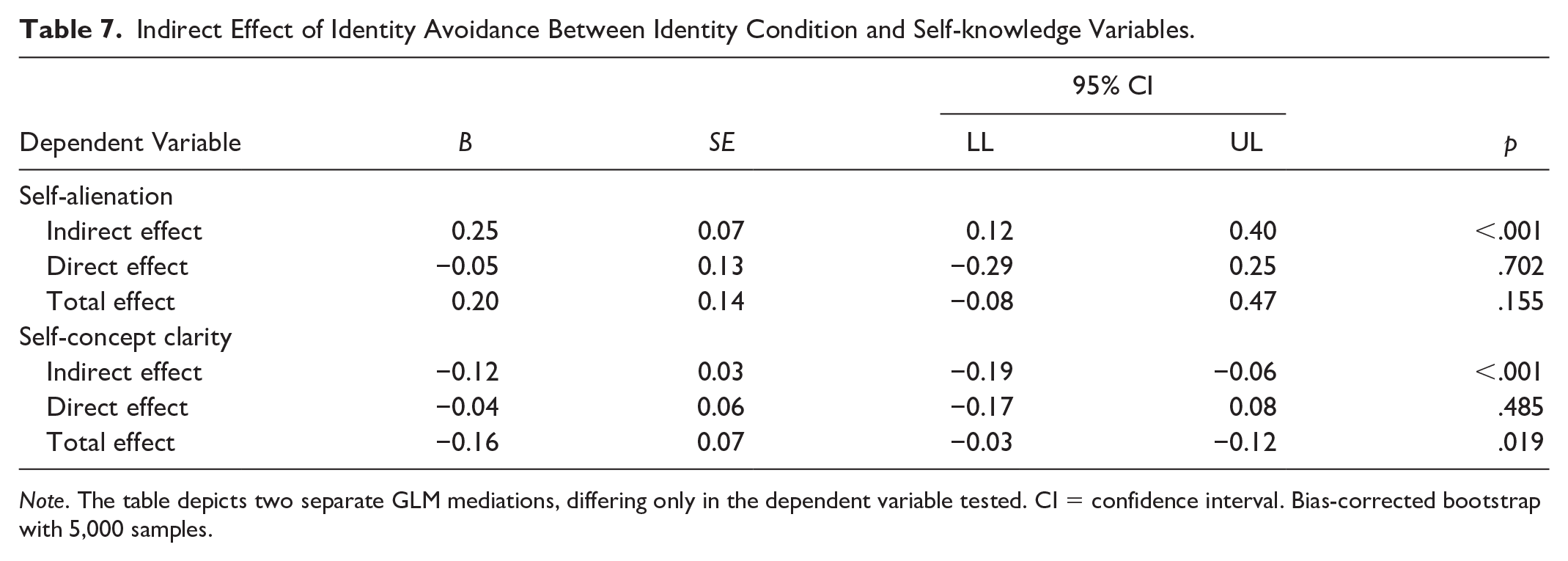
Note. The table depicts two separate GLM mediations, differing only in the dependent variable tested. CI = confidence interval. Bias-corrected bootstrap with 5,000 samples.
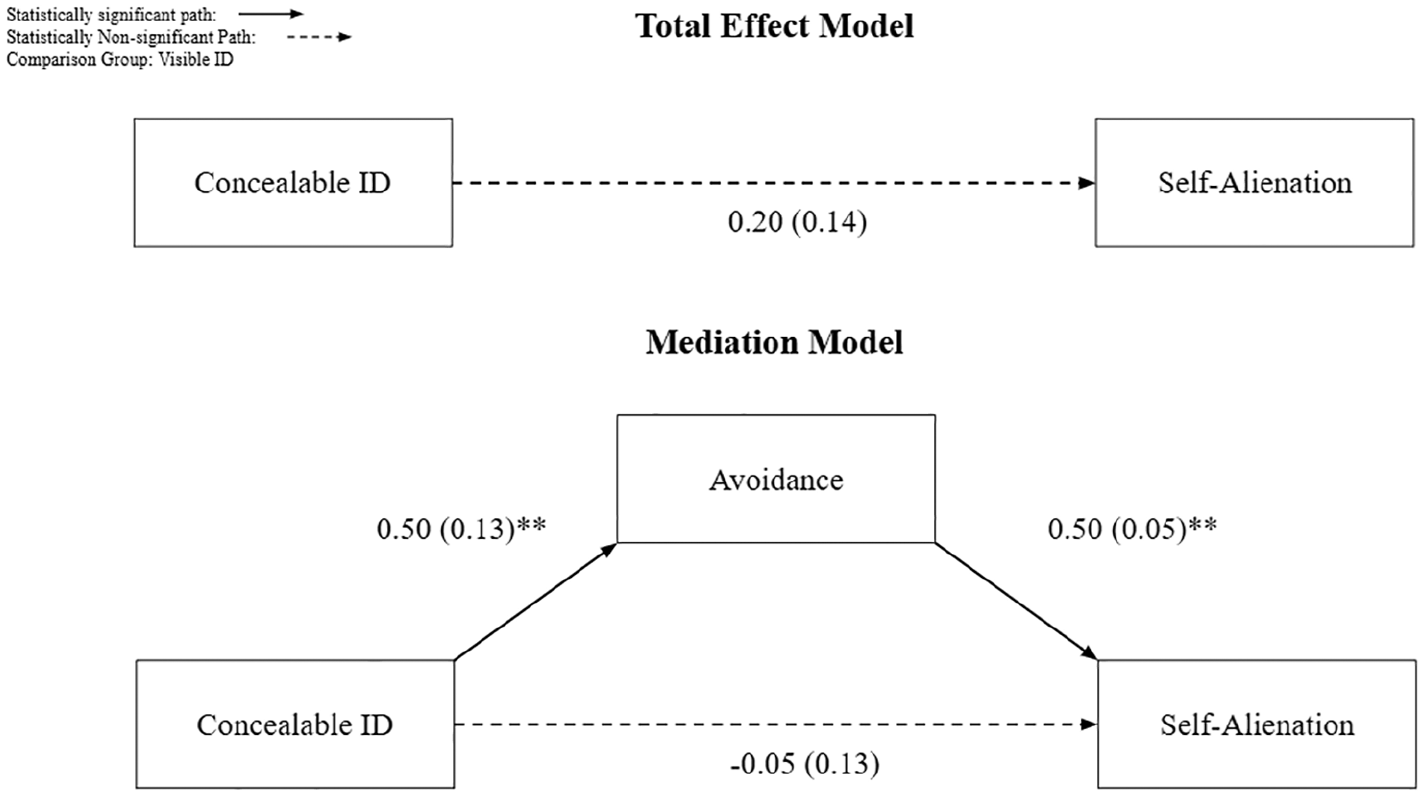
Direct and indirect effects of concealable identity condition on self-alienation via avoidance in Study 2.
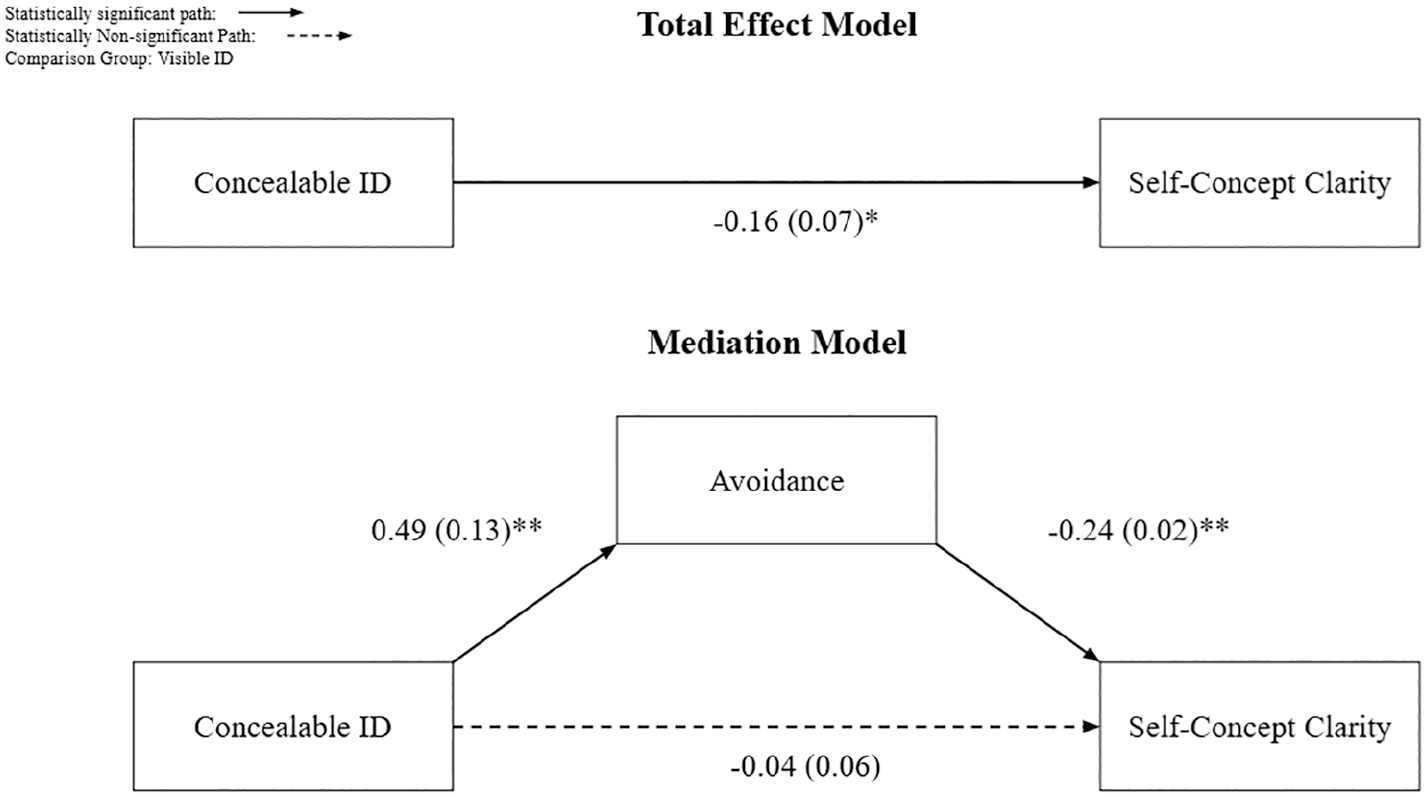
Direct and indirect effects of concealable identity condition on self-concept clarity via avoidance in Study 2.
Discussion
We found mixed support for our first hypothesis: participants in the CSI condition reported lower self-concept clarity compared to those in the visible identity condition, but this effect did not extend to self-alienation. Nonetheless, Study 2 offered additional evidence that identity avoidance may adversely impact perceived self-knowledge. First, when collapsed across conditions, we replicated previous findings (Study 1b–1d) that identity avoidance is a unique predictor of perceived self-knowledge even when controlling for factors such as negative affect, negative self-perceptions, and the extent to which participants liked the identity they described. Furthermore, differences between the conditions in identity avoidance mediated the path between condition and self-knowledge. This suggests that concealable identities are more likely to be avoided, which, in turn, predicts decreased self-knowledge.
Study 3
The Present Research
Study 3 was a preregistered replication (https://aspredicted.org/pz5hg.pdf) of Study 2. 8 In Study 2, participants were included regardless of their CSI status. Study 3 addresses this limitation by focusing exclusively on participants who self-identify as having a CSI. We again hypothesized that those who were made aware of their concealable identities would report less perceived self-knowledge when compared to those who were made aware of their visible identities. We also predicted identity avoidance would uniquely predict perceived self-knowledge, even when controlling for other factors.
Method
Participants
In Spring 2024, we collected responses from a total of 447 participants, all of whom were undergraduate students earning course credit for their participation. Our final sample was determined based on lab resources knowing we would need to exclude approximately 40% (based upon Studies 1b–1d) of participants from analyses for not meeting the CSI requirement. The study was conducted both in-lab (n = 305) and online (n = 142). Applying the same exclusion criteria as in Study 2, we removed 66 responses that were incomplete, 10 participants who did not complete both writing prompts, and nine participants who reported that their data were invalid. This resulted in a final sample of 362 participant responses. Of these, 252 participants self-identified as having a CSI, and thus, they were the final sample that we used in our analyses (see Table 6 for demographic information). We again conducted a sensitivity analysis using G*Power (Faul et al., 2007) to determine the smallest effect size our study could reliably detect with 80% power at α = .05. The analysis indicated that our study was adequately powered to detect effect sizes of f² = 0.04 or larger. This suggests that while we could reliably detect medium and large effects, smaller effects may have gone undetected.
Procedure
The procedure for Study 3 was identical to that of Study 2, except for a final item asking if they identified as having a CSI (“CSI Status” item in Studies 1b–1d).
Measures
The measures used in Study 3 were identical to those used in Study 2. These included: identity concealability (M = 2.60, SD = 0.79, α = .78), identity liking (M = 5.09, SD = 1.44, α = .89), identity avoidance (M = 2.97, SD = 1.37, α = .85), self-alienation (M = 3.40, SD = 1.38, α = .89), self-concept clarity (M = 2.90, SD = 0.70, α = .86), self-esteem (M = 2.96, SD = 0.50, α = .87), and negative affect (M = 2.00, SD = 0.63, α = .86). Lastly, to assess participants’ CSI status, we used the same CSI status administered in Studies 1a to 1d.
Results
Preliminary analyses revealed that the groups did not significantly differ in reports of self-esteem or negative affect (p > .05). Our manipulation of identity type worked, t(250) = −6.49, p < .001, d = −0.82, 95% CI [−1.08, −0.56], those who wrote about a concealable identity (M = 2.92, SD = 0.79) rated it as more concealable than those who wrote about a visible identity (M = 2.32, SD = 0.79). Furthermore, individuals reported liking their visible identities (M = 5.47, SD = 1.18), t(250) = 5.00, p < .001, d = 0.63, 95% CI [0.38, 0.88], more than their concealable identities (M = 4.65, SD = 1.41). Those in the concealable identity group (M = 3.35, SD = 1.48) reported more identity avoidance than those in the visible identity group (M = 2.63, SD = 1.17), t(250) = −4.28, p < .001, d = −0.54, 95% CI [−0.79, −0.29].
To test for a difference between concealable and visible identity conditions on perceived self-knowledge, we ran two independent samples t-tests. Contrary to our hypothesis, the t-tests revealed that there was no effect of identity condition on either self-alienation (p = .993) or self-concept clarity (p = .982).
However, as in Study 2 and consistent with hypotheses, a linear regression revealed that identity avoidance, collapsed across conditions, was a unique predictor of self-alienation (b = 0.16, t = 2.99, p = .003) but not self-concept clarity (b = −0.05, t = −1.59, p = .112) when controlling for negative affect, identity liking, and self-esteem (see Tables 4 and 5 in Supplemental Materials for full results).
Mediation Analyses
Since neither self-alienation nor self-concept clarity showed a significant difference, we turned to our pre-registered secondary analyses to explore whether identity avoidance might evidence an indirect path between condition and our perceived self-knowledge variables. This is a replication of the exploratory analyses reported in Study 2. We used two GLM mediation analyses in Jamovi. We again found a significant indirect effect of identity avoidance between identity condition and both self-alienation and self-concept clarity (see Table 8). Those in the concealable identity condition reported more identity avoidance which was then associated with increased self-alienation and decreased self-concept clarity (see Figures 3 and 4, respectively). 9
Indirect Effect of Identity Avoidance Between Identity Condition and Self-Knowledge Variables for Those with a CSI.
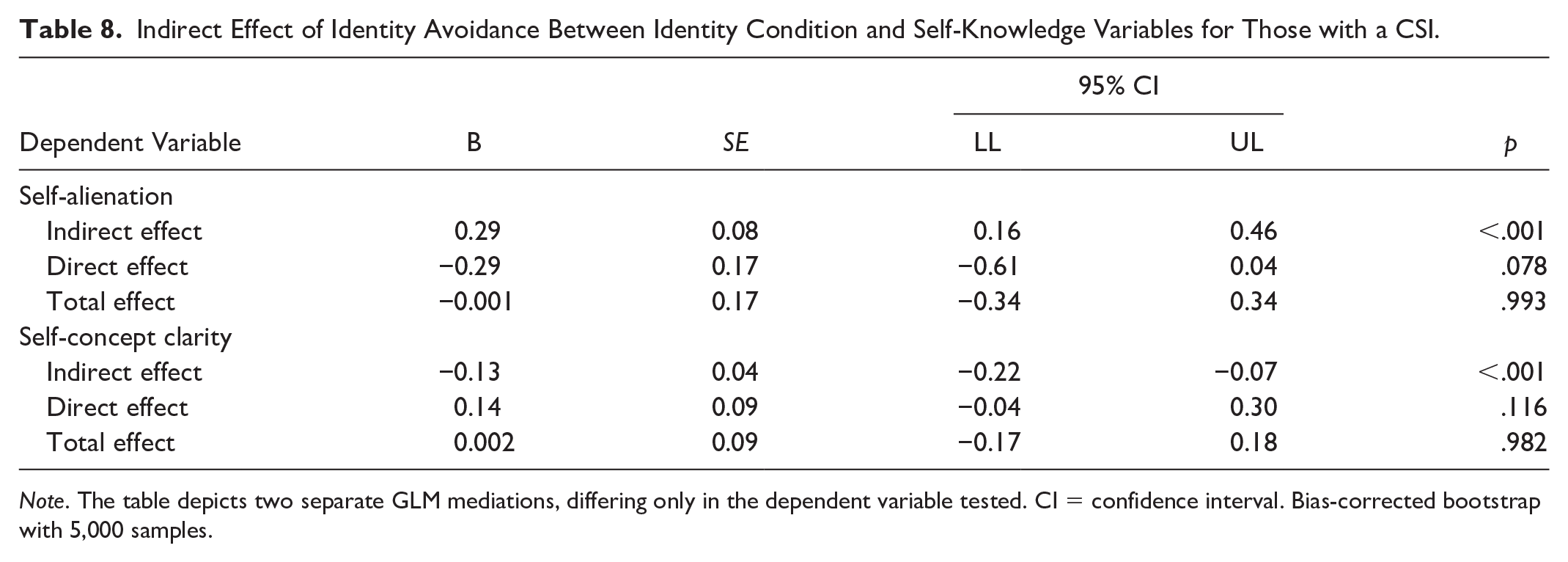
Note. The table depicts two separate GLM mediations, differing only in the dependent variable tested. CI = confidence interval. Bias-corrected bootstrap with 5,000 samples.
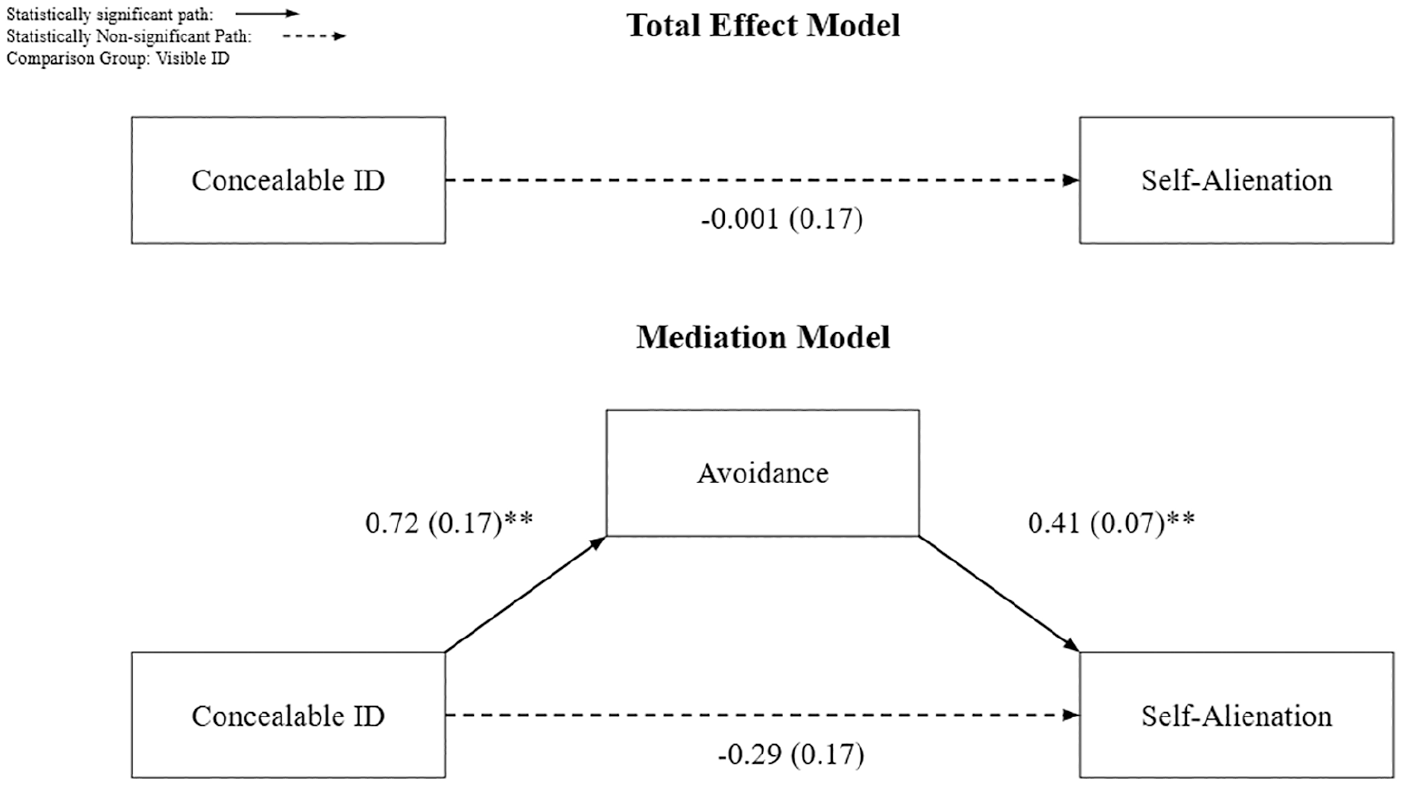
Direct and indirect effects of concealable identity condition on self-alienation via avoidance in Study 3.
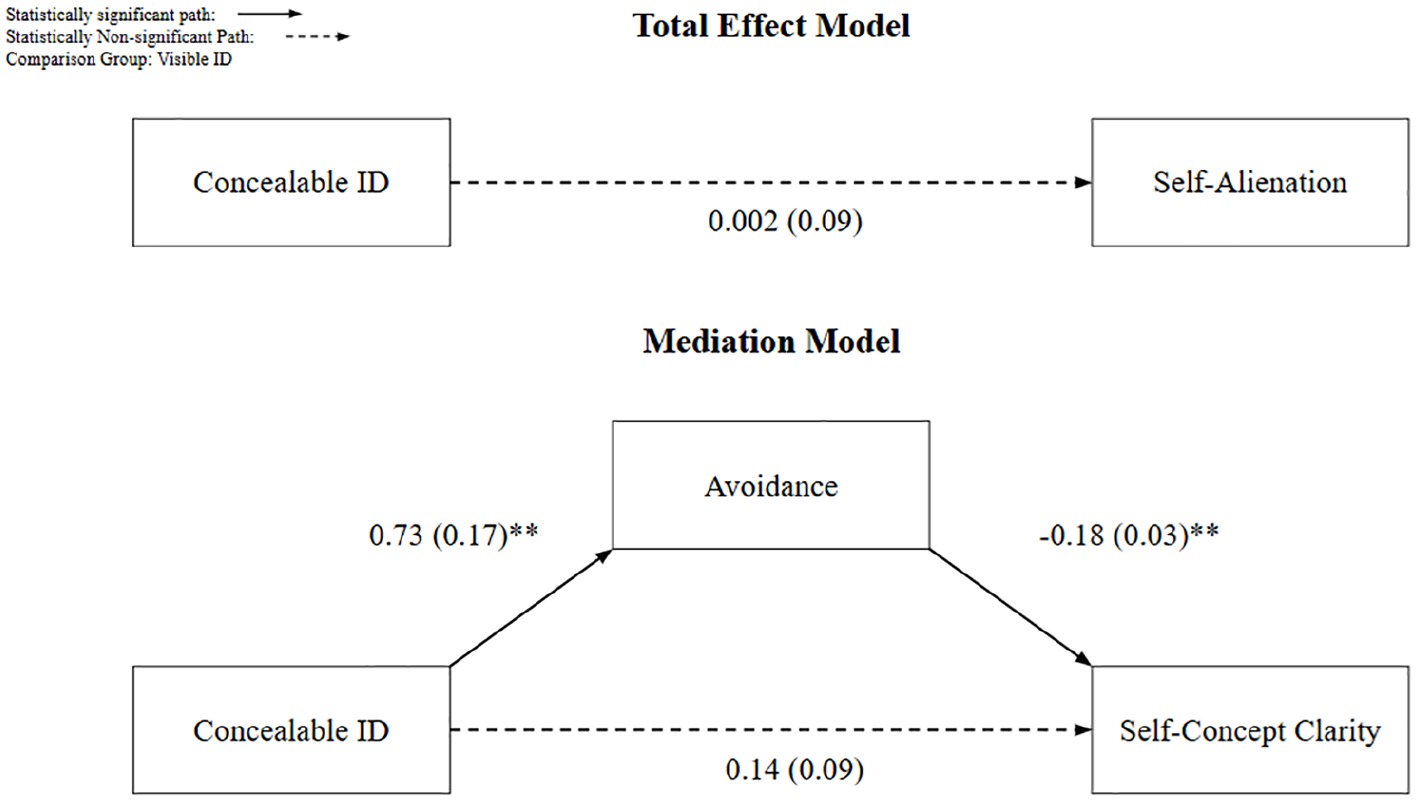
Direct and indirect effects of concealable identity condition on self-concept clarity via avoidance in Study 3.
Discussion
Unexpectedly, the results of Study 3 did not yield condition differences in perceived self-knowledge. When collapsing across conditions, however, we replicated earlier findings (from Studies 2 and 1b–1d), showing that identity avoidance uniquely predicts perceived self-alienation, even when controlling for factors such as negative affect, self-esteem, and participants’ liking of the identity they described. Unlike the previous analyses, identity avoidance was not a statistically significant predictor of self-concept clarity after accounting for these factors, though the effect was in the predicted direction (p = .112). We also replicated the mediation observed in Study 2 that suggests concealable identities are more likely to elicit avoidance strategies than visible identities and that this, in turn, predicts decreased self-knowledge.
General Discussion
Across six studies, we found consistent evidence that individuals with CSIs tend to experience diminished perceptions of self-knowledge, especially if they engage in CSI avoidance. Initially, we found that participants with CSIs reported less perceived self-knowledge than participants who reported not having one (Studies 1a–1d), we also found correlational evidence that CSI avoidance was uniquely linked to higher levels of self-alienation (Studies 1a–1d). These patterns emerged even after controlling for variables such as perceptions of self-worth, mood, depressive symptoms, and anticipated/internalized stigma (excluding one analysis in Study 3). In Studies 2 and 3, we manipulated writing about a concealable versus a visible identity. While our manipulation did not consistently influence perceived self-knowledge as predicted, we did find, following the previous results, that identity avoidance consistently predicted lowered perceived self-knowledge.
Together, these studies provide the first evidence that having and avoiding the disclosure of a CSI (and perhaps even other types of identities; see below) is associated with disruptions to one’s sense of self. While previous research has primarily focused on mental health outcomes for individuals with CSIs (Quinn & Chaudoir, 2009; Quinn & Earnshaw, 2011, 2013), recent work has begun to explore the mechanisms underlying these outcomes, suggesting that self-esteem may play a significant role (Le Forestier et al., 2024). Our research builds on this foundation, proposing that diminished perceived self-knowledge may be another key factor contributing to the negative psychological outcomes associated with CSIs. This possibility is supported by evidence linking higher self-alienation and lower self-concept clarity with adverse psychological effects (Bigler et al., 2001; Campbell et al., 2003; Lutz et al., 2023; Rivera et al., 2019).
Building on these findings, our research not only contributes to understanding the mechanisms underlying CSI-related outcomes but also extends this knowledge across cultural contexts. Although limited to one sample, the similarity in results between the Chinese sample (Study 1a) and the U.S. samples (Studies 1b–1d) suggests that the relationship between CSI experiences and perceived self-knowledge may exhibit some cross-cultural commonalities. One possible explanation is that, regardless of cultural background, avoiding aspects of one’s identity may inherently limit opportunities for self-reflection and authentic self-expression, thereby reducing perceived self-knowledge.
However, it is important to acknowledge that the motivations behind identity avoidance, as well as its psychological consequences, may still vary across cultures. In collectivist cultures like China, stigmatization extends beyond the individual to affect entire social networks, especially families (Yang et al., 2007). In such contexts, identity avoidance may be more normative and socially reinforcing. Moreover, legal and institutional barriers can exacerbate the need for concealment; for example, LGBTQ+ individuals in China often face government-imposed barriers, including censorship of queer media (Miles-Johnson & Wang, 2018) and lack of legal protections (Tu & Lee, 2014). Our data demonstrated that fewer participants in the Chinese sample (49%) reported having a CSI compared to the U.S. samples (consistently over 57%). We believe this difference may reflect cultural variations in stigma perception or willingness to disclose potentially shameful identities. We encourage future research to replicate and build upon our cross-cultural findings.
One possible reason avoidance predicts decreased perceived self-knowledge is that individuals who actively avoid talking about an aspect of their identity may struggle to stay mindful in the present moment. Research shows that people’s minds often wander to their secrets, including concealable identities (Bianchi et al., 2024; Slepian et al., 2017, 2020, 2022). Vess (2019) links mind-wandering to disconnection from one’s true self, especially when individuals feel they lack control over their thoughts (McDonald et al., 2020; Vess & Maffly-Kipp, 2022; Vess et al., 2016, 2019; Wood et al., 2008). In short, lacking control over one’s thoughts fosters disconnection from the true self.
We tested this across several studies (Studies 1a, 1c, 1d, 2, and 3; see Table 6 in Supplemental Materials) and found that avoidance, self-alienation, and self-concept clarity were associated with involuntary mind-wandering in the expected ways. However, our data did not strongly support mind-wandering as a mediator between CSI avoidance and perceived self-knowledge. It remains unclear if this is due to how we measured mind-wandering or if another mechanism better explains the relationship. Future research is needed to explore the underlying mechanism further.
Unexpectedly, in both Studies 2 and 3, there was no consistent main effect of the CSI condition on either of the perceived self-knowledge measures. While Study 2 showed significant results for self-concept clarity (SCC) and a trend in the hypothesized direction for self-alienation (SA), Study 3 produced no significant effects. A key difference between the studies was that Study 3 exclusively included participants who identified as having a CSI. One possible explanation for these inconsistent effects is that for many individuals, CSIs may represent more chronically accessible aspects of identity. As a result, the writing prompts may not have been sufficient to produce differences in perceived self-knowledge between the two conditions, which likely would have been captured with a small effect size. As outlined in the method sections, both studies were underpowered to detect small effects but were adequately powered for detecting medium-sized effects. Another possibility is that writing about a CSI paradoxically led participants to temporarily integrate that aspect of their identity more directly with their overall self-concept, which may have mitigated the typical negative relationship between CSIs and perceived self-knowledge. Unexpectedly, though, Studies 2 and 3 also suggest that avoiding any aspect of one’s identity, even visible ones, may reduce perceived self-knowledge. This idea is supported by the significant path of avoidance to perceived self-knowledge, despite the direct effect of condition being non-significant.
Interestingly, our results from Studies 1a to 1d speak to the distinction between merely identifying as having a CSI and engaging in identity avoidance strategies. The group differences shown in our t-tests (Table 2) suggest that simply having a CSI is moderately associated with greater self-alienation. In contrast, our regression analyses indicate that CSI avoidance is uniquely associated with self-alienation, even when controlling for general stigma perceptions (Table 5) and other relevant variables (Table 4). This distinction is important to consider as not everyone with a CSI automatically and consistently uses avoidance strategies. However, our data suggest that those who use avoidance strategies are likely to encounter decreased self-knowledge. The inconsistencies across Studies 2 and 3 underscore the need for further investigation, particularly given the correlational nature of the current evidence. It remains possible that reduced perceived self-knowledge leads to greater use of identity avoidance strategies, rather than the other way around as we have proposed. Moving forward, testing our post-hoc explanations will require additional studies that incorporate methodological adjustments, particularly experimental designs where possible, and more diverse populations. For example, future research could explore manipulations of identity salience that move beyond the binary framework of identities as strictly “visible” or “concealable.” Additionally, studying older adult samples could offer valuable insights into the effects, as our current samples are limited to college-aged young adults. It may also be worthwhile to incorporate longitudinal methods to better understand how repeated use of avoidance strategies, in connection with self-knowledge, influence health and well-being outcomes over time. These steps would help clarify the nature of the observed patterns.
Additionally, future research should explore other potential factors that could mitigate the negative impact of CSI avoidance on perceived self-knowledge, such as the practice of self-compassion. By encouraging self-kindness and acceptance from a non-judgmental perspective, as well as recognizing common humanity (Neff, 2003), self-compassion practices may help reduce the adverse effects of CSIs. Investigating how self-compassion influences perceived self-knowledge among individuals with CSIs represents a promising direction for future studies, considering self-compassion is a flexible construct with significant effects on various psychological outcomes, including self-criticism, depression, and anxiety (Bluth & Neff, 2018; Ferrari et al., 2019).
The results of the present work must be understood within the context of several limitations. Excluding Study 1a, our findings are limited to WEIRD cultural contexts and cannot be generalized beyond young adults in the U.S. from these populations (Henrich et al., 2010). Additionally, because many CSIs often emerge later in life, it is possible that some participants may not have had much life experience with their CSI. This leaves open the possibility for differences in older adult samples. Another limitation pertains to the cross-sectional nature of the reported studies. While the results provide evidence of a link between self-avoidance and disrupted perceived self-knowledge, the extent to which individuals with CSIs experience these perceived self-knowledge disruptions throughout their daily lives and how that may further relate to socio-environmental fit remains to be longitudinally tested. Lastly, we did not collect information about the types of CSIs participants thought of or were describing in any of the studies. While we were able to broadly demonstrate the effects of CSIs on an individual’s sense of self, we are still limited in further examining potential nuances that likely exist between the types of CSIs within our participant samples.
Conclusion
Despite these limitations, we found consistent evidence that CSI avoidance uniquely predicts disruptions in perceived self-knowledge, such as increased self-alienation and reduced self-concept clarity. Take the example of an individual deciding whether to disclose or conceal their plans to attend an AA meeting. Choosing to withhold this information might temporarily protect them from feeling judged by others, but by chronically doing so, they may unintentionally hinder their own self-understanding.
Supplemental Material
sj-docx-1-psp-10.1177_01461672251343114 – Supplemental material for Exploring the Link Between Identity Avoidance and Perceived Self-Knowledge
Supplemental material, sj-docx-1-psp-10.1177_01461672251343114 for Exploring the Link Between Identity Avoidance and Perceived Self-Knowledge by Lydia Needy, Kianna M. Arthur, Leslie Fernandez, Yige Yin, Tonglin Jiang, Rebecca J. Schlegel and Joshua A. Hicks in Personality and Social Psychology Bulletin
Footnotes
Declaration of Conflicting Interests
The author(s) declared no potential conflicts of interest with respect to the research, authorship, and/or publication of this article.
Funding
The author(s) received no financial support for the research, authorship, and/or publication of this article.
Ethical Approval
This research was approved by the Texas A&M University’s [Study 1a #20200301; Study 1b IRB2023-0221M; Study 1c IRB2023-0221M (amended); Study 1d IRB2023-0221M (amended); Study 2 IRB2023-0967D; Study 3 IRB2023-0967D (amended)] and Peking University’s Institutional Review Boards. All participants gave their consent to participate electronically.
ORCID iDs

Supplemental Material
Supplemental material is available online with this article.
Notes
References
Supplementary Material
Please find the following supplemental material available below.
For Open Access articles published under a Creative Commons License, all supplemental material carries the same license as the article it is associated with.
For non-Open Access articles published, all supplemental material carries a non-exclusive license, and permission requests for re-use of supplemental material or any part of supplemental material shall be sent directly to the copyright owner as specified in the copyright notice associated with the article.
