




Abstract
Abstract thinking and concrete thinking shape how we interpret and interact with the world. One of the most influential approaches to abstract and concrete construals is Construal Level Theory, which has primarily taken a situational approach to studying construal level. The current research develops the General Construal Questionnaire to measure individuals’ general tendencies toward abstract and concrete thinking, opening possibilities for new research that extends past the focus on situational construal. Distinguishing abstract and concrete construals as distinct factors reveals that they have unique effects. Abstract construal correlates with extraversion, openness to experience, a focus on the future, promotion, and desirability, a preference for cognition, tolerance for uncertainty, and a tendency to perceive similarities, stereotype, and evaluate. Concrete construal correlates with conscientiousness, a focus on the present, prevention, and feasibility, a preference for certainty and perfectionism, and a tendency to perceive differences and make daily progress.
Individuals can engage in abstract and concrete thinking, with each of these playing important roles in how we interpret and interact with the world. One of the most influential approaches to abstract and concrete thinking over the last 25 years has been Trope and Liberman’s (2010) Construal Level Theory (CLT). CLT is primarily concerned with assessing situational construal—the degree to which a person at a given moment in time construes things relatively abstractly or concretely. Researchers wishing to consider an individual-difference analog have primarily relied on a measure of action identification not created for this purpose. Drawing on and extending this work, the current research seeks to develop and validate a measure of individual differences in general tendencies toward abstract thinking and concrete thinking.
Construal-Level Theory
According to CLT theorists (Gilead et al., 2020), engaging in an act of abstraction involves forming a belief that distinguishable objects may similarly satisfy a given belief, desire, or intention. For example, forming a belief that both eating a balanced diet and getting adequate sleep are ways to improve your health is an act of abstraction. According to Gilead and colleagues, acts of abstraction can occur when people start with distinguishable objects and identify how they similarly relate to a given belief, or when they apply prior developed abstractions, as in theory-based thinking (cf., Murphy & Medin, 1985). A person who thinks more abstractly tends to recognize that things that are different can similarly relate to a given belief, desire, or intention and to focus on such higher-order—often less directly observable or tangible—meanings. On the contrary, concretization occurs when people focus on the distinct characteristics of objects as they exist within a specific context. A person who thinks more concretely tends to focus on the idiosyncratic characteristics of objects, the details and specifications that can distinguish them from other instantiations of the same abstract concept. A concrete thinker, for example, is likely to focus on what exactly eating a balanced diet looks like.
The fundamental tenet of CLT is that the psychological distance of an event or object shapes individuals’ mental representations, with objects construed more abstractly when they are distant rather than near. Because CLT is a theory about psychological distance, it centers on examining how the psychological distance of a target impacts a person’s situational construal of the target (Liberman & Trope, 1998). Although CLT has historically been primarily concerned with situational construal, it is reasonable to expect that people vary in their general construal tendencies. Moving from a situational to an individual-difference perspective is not trivial: conceptualizing construal as an individual difference evokes construal as a cognitive orientation (i.e., an approach people take when processing information), rather than emphasizing the properties of the resulting representational outcome (i.e., the resulting features of the representation), which are more naturally salient when construal is considered situationally. 1 That is, in early CLT research, the implicit focus was often on features of the outcome of a representational process, and the way that such features varied as a function of whether an object being represented was near or distant. “Construal” in this context was most often used as a noun, where “low level construals” of a situation were more concrete representations, and “high level construals” were more abstract representations. However, construal theorists have shifted more in recent years to emphasize construal as a verb; that is, to focus on the acts of abstraction that lead to different representations (cf., Gilead et al., 2020). An individual difference perspective is in line with this, as it evokes the cognitive tendency to engage in acts of abstraction which may manifest across varied contexts.
Indeed, as interest in construal expanded beyond CLT’s original focus on the distance/construal relationship, researchers have at times sought to examine the implications of individual differences in construal (e.g., Carton et al., 2021; Levy et al., 2002; Napier et al., 2018). In the absence of a measure designed for this purpose, such studies have instead primarily used the Behavioral Identification Form (BIF; Vallacher & Wegner, 1989), an individual-difference measure of action identification, to measure individual differences in abstract or concrete construal.
Limitations of the BIF as a Construal Individual Difference Measure
Although using the BIF to measure individual differences in construal has merit, it faces important conceptual and practical limitations. First, the BIF was originally developed as a measure of individual differences in level of agency, captured by measuring how individuals viewed different actions (Vallacher & Wegner, 1989). Thus, the BIF is a measure of a more specific construct than general abstract or concrete thinking. Second, the BIF consists of a list of 25 actions. Some actions, such as “chopping down a tree,” are no longer pertinent to modern urban experiences. Consequently, researchers often modify the BIF by selecting different items. However, the reliability and validity of these modified, abbreviated versions of the BIF have yet to be fully established (Burgoon et al., 2013). Third, the BIF has been used to measure situational changes in construal and to validate several manipulations of construal (Fujita, Henderson, et al., 2006; Liberman & Trope, 1998). Hence, it is unclear to what extent the BIF is best thought of as a situational measure or a measure of more stable individual differences in construal.
A final limitation is that the BIF asks participants to choose between an abstract and a concrete descriptor of each given behavior. This approach assumes that people’s tendencies to think abstractly and to think concretely exist on a continuum. However, from an individual-difference perspective, abstract construal and concrete construal may exist in separate dimensions. Indeed, similar arguments have been made for constructs such as temporal focus (Shipp et al., 2009), behavioral approach and inhibition (Carver & White, 1994), and regulatory focus (Higgins et al., 2001; Lockwood et al., 2002).
An analogy is the relationship between positive affect and negative affect which has been studied extensively in past research. In a given moment, people are unlikely to experience strong positive affect and strong negative affect simultaneously. However, over a longer period of time, at the individual difference level, positive affect and negative affect tend to be uncorrelated or even positively correlated (Diener & Emmons, 1984; Yik, 2007). This occurs because experiencing one type of affect at one time does not preclude experiencing the other affect at a different time. In fact, the intensity of affective experience might serve as a common factor such that individuals who feel one type of affect strongly may also feel the other type of affect strongly (Diener et al., 1985).
Existing CLT research has typically treated abstract construal and concrete construal as two ends of a single continuum. This might be because CLT has been traditionally interested in situational construal, measuring if people are thinking relatively more abstractly or concretely about an object at a given moment. It may well be that in a given moment, abstract construal and concrete construal are inversely related—thinking more abstractly about a single object usually means thinking less concretely about it. However, an individual difference measure of construal would be concerned with people’s general tendency to construe objects, and would therefore encompass many objects at many points in time. People may switch between abstract construal and concrete construal, as research has shown that people can shift their attention quickly (Horowitz et al., 2009). For instance, thinking abstractly about one’s presentation at work at one point in time does not preclude thinking concretely about the same object (the work presentation) at a different moment. People may also hold mental representations of multiple objects in mind (Cowan, 2010), which enables them to think abstractly about one object but concretely about another (e.g., they may think abstractly about their work presentation while thinking very concretely about what they will make for dinner). In fact, similar to positive and negative affect, general abstract construal and concrete construal may even have a positive correlation, if individuals who tend to think more extensively in one way (abstractly) also think more extensively in another way (concretely).
Recent research by Steiner and Amabile (2022) provides initial support for abstract construal and concrete construal as distinct dimensions. Through interviews, the researchers found that people’s abstract construal and concrete construal of life were orthogonal to each other. Work by Grossmann and colleagues (2024) likewise suggests that when reflecting on a prior event, people’s abstract and concrete construals are distinct, and may be positively correlated. Recent neuroscience research further bolsters the separability of abstract construal and concrete construal by demonstrating that different brain regions are used for each type of construal (Gilead et al., 2014; Stillman et al., 2017).
The Present Research
The present research aims to develop a measurement tool that captures individuals’ general tendencies toward abstract and concrete thinking—termed general abstract construal and general concrete construal—without confining them to a continuum. In Study 1, we developed the scales and conducted their initial validation. The results showed that the scales correlated with BIF and distinguished between groups known to differ in their construal level. Study 2 examined the scales’ convergent validity, demonstrating that general construals were associated with psychological distance-related individual differences, promotion and prevention focus, and considerations of desirability and feasibility. In addition, Study 2 explored the scales’ nomological network by examining their relationships with individual differences in cognitive style, approaches to uncertainty, and goal pursuit. Finally, in Studies 3 and 4, we examined the predictive validity of the scales in predicting social judgment and self-control, outcomes that past CLT research has examined and for which findings have been mixed. All data and analysis codes are available at https://osf.io/z8yc2/?view_only=c2e4e77e4ff24f209e41b1442e375702. All measures are fully described and referenced in the main text and supplemental material.
Study 1
We first describe the item generation and reduction processes, and then provide evidence for the measure’s construct validity.
Item Generation and Reduction
Items were generated deductively based on definitions of abstract construal and concrete construal (Gilead et al., 2020; Trope & Liberman, 2010). A person who thinks more abstractly tends to recognize that things that are different can similarly relate to a given belief, desire, or intention and to focus on such higher-order—often less directly observable or tangible—meanings. In everyday life, this tendency may take many forms, including recognizing underlying principles, making connections between things that appear to be different on the surface, and considering broader themes, theory, meaning, or purpose, which transcend any given manifestation of something to represent that which is more constant and consistent across contexts (Trope et al., 2021). A person who thinks more concretely tends to focus on the idiosyncratic characteristics of objects, the details and specifications that can distinguish them from other instantiations of the same abstract concept. In everyday life, this tendency can take varied forms, including focusing on specific elements and details—which typically serve to distinguish one particular manifestation from another and are often directly observable or tangible—as well as pragmatics and “how” concerns, which involve the particulars of a given situation and its localized context (Brysbaert et al., 2014; Fujita, Henderson, et al., 2006; Liberman & Trope, 1998; Trope et al., 2007).
We sought feedback on the initial set of items from four experts in construal-level research and ChatGPT (GPT-4; OpenAI, 2023). We then revised and reduced items iteratively across six pilot studies, based on exploratory factor analysis (EFA) results. This process 2 results in a final General Construal Questionnaire containing 12 items in total, with 6 items measuring abstract construal and 6 items measuring concrete construal. Participants indicated the extent to which they agree or disagree with the statements on 7-point scales ranging from “strongly disagree” to “strongly agree.”
Scale Validation
Participants
In all, 400 participants recruited via Prolific completed the first part of the study. One week later, 344 participants completed the second part of the study. At both time points, we included attention check questions such as “please ‘strongly disagree’ for this item.” Those who did not follow the instructions did not pass the attention check and were excluded from data analysis. After exclusions, there were 388 and 336 participants remaining for Time 1 and Time 2, respectively, of which 326 participants (157 women, 161 men, 8 nonbinary; Mage = 38.33, SDage = 12.24) completed the study and passed the attention check at both time points. Sensitivity analysis indicated that this sample size allowed us to detect r = .15 with 80% statistical power.
Measures
Participants completed the General Construal Questionnaire at Time 1. To examine the test–retest reliability of the scales, 1 week later we invited participants to complete the same scale for a second time (Time 2). At Time 2, participants also completed the BIF (Vallacher & Wegner, 1989). Participants rated the 25 BIF items on 6-point scales (see Nguyen et al., 2023 for this approach). The responses were coded such that higher scores indicate greater abstract relative to concrete action representations.
Finally, to examine known-group validity, we tested whether managers (vs. nonmanagers) will have greater abstract construal, as measured by our scale. Past research has shown that powerholders think more abstractly than individuals without power (P. K. Smith & Trope, 2006). People who are managers at work may thus develop a tendency to think more abstractly than those who are not managers. At Time 2, we asked participants to indicate their position within the organization they were working for.
Results
Factor Structure and Reliability
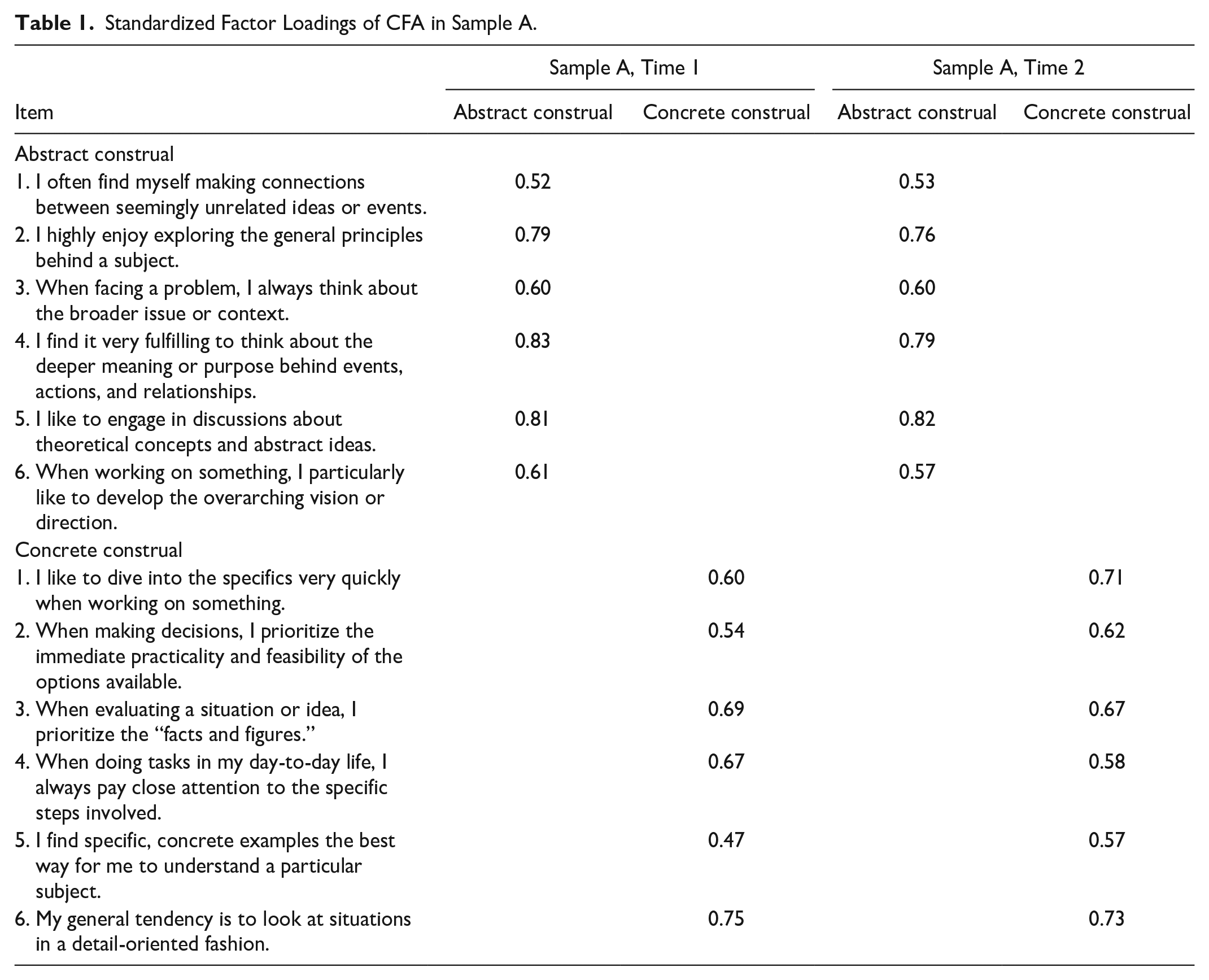
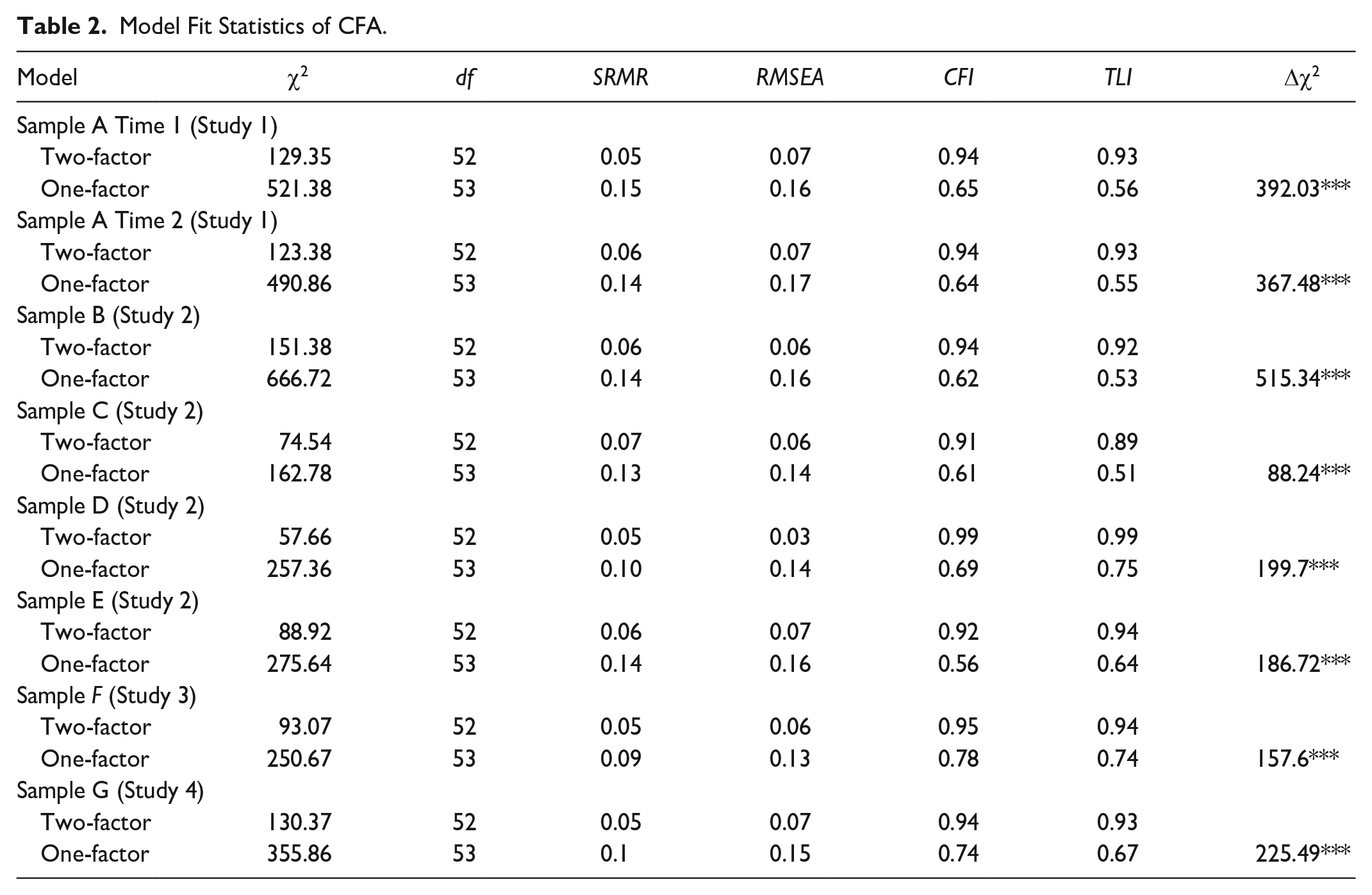
We evaluated the factor structure of the measure by conducting confirmatory factor analysis (CFA) using the “lavaan” package (Rosseel, 2012) in R. We used maximum-likelihood robust estimation, and specified that the abstract construal items and concrete construal items load onto their separate factors while allowing the two factors to correlate with each other. The initial model fit statistics were comparative fit index (CFI) = .93, Tucker–Lewis index (TLI) = .92, root mean square error of approximation (RMSEA) = .07, standardized root mean square residual (SRMR) = .05 for Time 1, and CFI =.92, TLI = .89, RMSEA = .08, SRMR = .06 for Time 2. Modification indices suggest that two abstract construal items: (i.e., “When facing a problem, I always think about the broader issue or context,” and “When working on something, I particularly like to develop the overarching vision or direction”) have high correlated residuals, as they both tap the consideration of the broader issue. As such, we allowed for these two items to have correlated residuals in this study and all subsequent studies (R. O. Mueller & Hancock, 2008).
Table 1 displays the item-level factor loadings for the General Construal Questionnaire. Table 2 displays the CFA model fit statistics. The two-factor model demonstrates a relatively good fit across the two time points and fits better than the alternative one-factor model.
Standardized Factor Loadings of CFA in Sample A.
Model Fit Statistics of CFA.
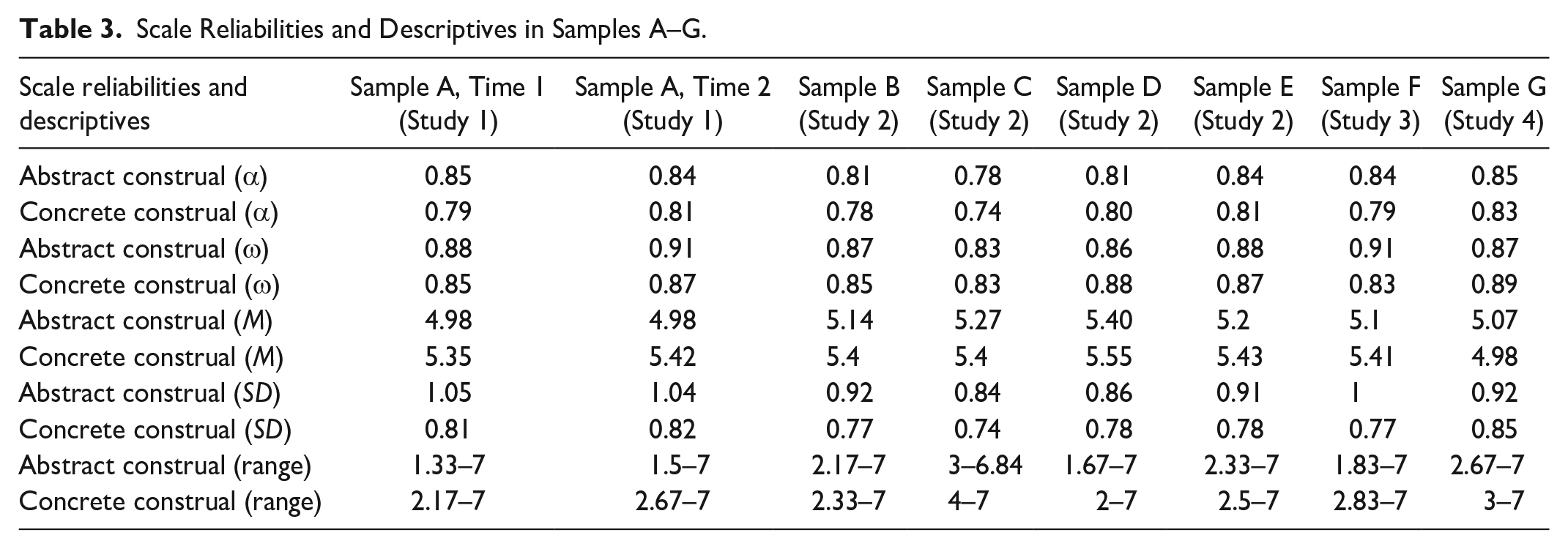
Both the abstract construal and concrete construal scales demonstrate good test–retest reliabilities. The test–retest correlation was r = .85 for abstract construal, and r = .74 for concrete construal. Table 3 lists the internal reliabilities and descriptives for this sample and subsequent samples. To assess the relationship between abstract construal and concrete construal, we calculated the sample-weighted aggregated correlation across all samples. 3 Abstract construal and concrete construal were correlated positively at 0.34, 95% confidence interval [CI]: [0.27, 0.42]. This suggests that, rather than lying on a continuum, one’s general tendency to think abstractly and tendency to think concretely are separate constructs that are positively correlated.
Scale Reliabilities and Descriptives in Samples A–G.
Correlation With BIF and Known-Group Validity
We next examined how the current measurement correlated with the BIF. Because the BIF measures people’s abstract relative to concrete action representations, we examined how the BIF score correlated with the difference score between general abstract construal and general concrete construal. BIF score positively correlated with the difference between general abstract construal and general concrete construal, r = .15. The same 25-item BIF measure was also included in subsequent samples (Sample B and Sample F). The sample-weighted aggregated correlation between general abstract relative to concrete construal and BIF scores is 0.18 [0.08, 0.28]. This correlation is significant, but relatively small. This may be because the BIF is a more specific measure of how people represent actions; action identification has conceptual overlap with, but is not the same as, people’s general tendencies toward abstract and concrete thinking, as measured by the General Construal Questionnaire.
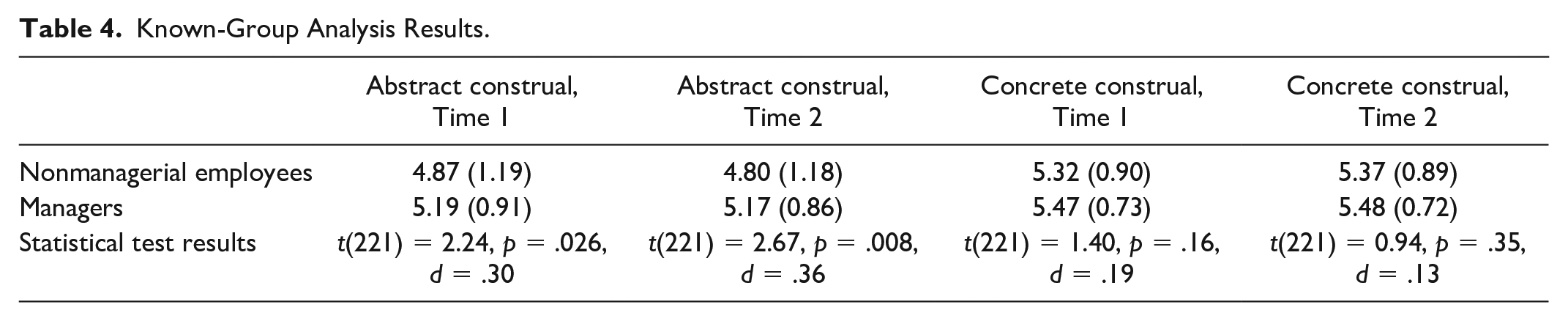
Finally, we examined the measure’s known-group validity (Table 4). In our sample, 124 participants were nonmanagerial employees; 99 participants were managers. Across both time points, managers had higher general abstract construal than nonmanagerial employees. Demonstrating known-group validity. Interestingly, concrete construal was relatively high for both nonmanagerial employees and managers, suggesting that most people tend to think concretely but those who belong to more powerful groups tend to think more abstractly.
Known-Group Analysis Results.
Study 2
Having established the reliability and provided initial evidence for the validity of the General Construal Questionnaire, Study 2 aims to examine its convergent validity and nomological network.
Construal-level theory (CLT) posits an association between psychological distance and abstract mental representations (Trope & Liberman, 2010). This suggests an association between individual differences in general construals and temporal focus (Shipp et al., 2009), such that those who think more abstractly focus more on the future, and those who think more concretely focus more on the present. Similarly, CLT would predict a positive association between abstract construal and temporal distancing—individuals’ tendency to adopt a distant-future perspective on events (Bruehlman-Senecal et al., 2016). Given that visual perspective—adopting an immersed first-person versus a third-person visual perspective—has been linked with construal-relevant outcomes (Libby et al., 2009), we would also expect a positive association between abstract construal and self-distancing (Ayduk & Kross, 2010). Finally, a recent theoretical extension of CLT—regulatory scope theory (Trope et al., 2021)—would predict abstract construal to be associated with an expanded scope that involves a broader range of concerns across time, places, people, and counterfactual alternatives, and concrete construal associated with a contracted scope that involves a narrow set of concerns relevant to the here-and-now.
Lee et al. (2010) theorized that abstract construal induces a focus on desirability congruent with growth and achievement (promotion), whereas concrete construal induces a focus on details congruent with safety and security (prevention). They found that promotion-focused individuals construe information more abstractly (when measures ranged from abstract to concrete), while prevention-focused individuals construed information more concretely. This suggests an association between individual differences in construals and regulatory focus such that those who think more abstractly have more promotion focus and those who think more concretely have more prevention focus.
In addition, it would also be useful to consider convergent validity on measures that go beyond other self-report scales. To this end, we consider the relation of the General Construals Questionnaire with situation-based evaluations of desirability and feasibility considerations. Prior CLT research has argued that desirability considerations (“why” something is done, the value of the end state) are at a more higher level than feasibility-related considerations (“how” something is done, the ease or difficulty of reaching the end state; Liberman & Trope, 1998; Trope & Liberman, 2010). This suggests that people who think more abstractly should focus more on the why or desirability of an action, and those who think more concretely are expected to focus more on the how or feasibility of an action.
The second aim of Study 2 was to examine the nomological network of general abstract and concrete construals by relating them to other well-established individual differences (Cronbach & Meehl, 1955). We didn’t have strong predictions a priori. However, based on a recent theoretical extension of CLT—regulatory scope theory (Trope et al., 2021)—we would broadly expect abstract construal to correlate with individual differences related to expansion of one’s social and cognitive scope (Trope et al., 2021), such as extraversion and need for cognition, whereas concrete construal is predicted to relate more to individual differences related to focusing on close situations that have more familiarity and certainty, such as need for closure.
Method
Participants
We used four samples (Sample B, C, D, and E) in this study. Table 5 provided the sample details, including exclusion criteria, demographic information, and sensitivity analysis. Sample B was preregistered at https://aspredicted.org/GRD_XGB. After exclusions, 571 Prolific participants remained in the analysis. To reduce participants’ burden, we divided the measures into three sets of questions, and participants were randomly assigned to complete one set. 195, 187, and 189 participants remained in the analysis of each of the three sets of questions. Sample C was preregistered at https://aspredicted.org/7SR_MF8; after exclusions, 113 undergraduate students in a large U.S. university remained in the data analysis. Sample D was preregistered at https://aspredicted.org/8z65-44s5.pdf; after exclusions, 187 Prolific participants remained in the data analysis. Sample E was preregistered at https://aspredicted.org/tqp3-rq5h.pdf; after exclusions, 190 Prolific participants remained in the data analysis.
Sample Details in Study 2.
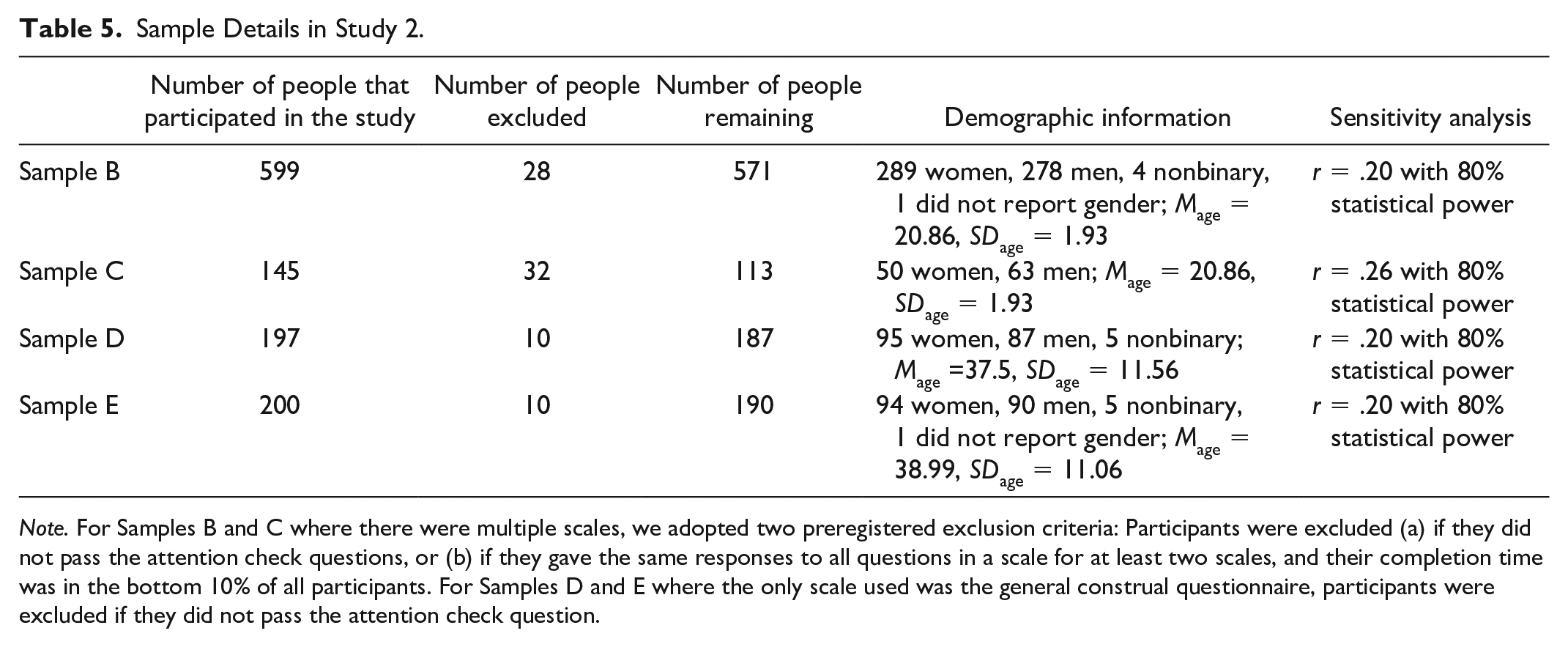
Note. For Samples B and C where there were multiple scales, we adopted two preregistered exclusion criteria: Participants were excluded (a) if they did not pass the attention check questions, or (b) if they gave the same responses to all questions in a scale for at least two scales, and their completion time was in the bottom 10% of all participants. For Samples D and E where the only scale used was the general construal questionnaire, participants were excluded if they did not pass the attention check question.
Measures
Participants in all samples completed the General Construal Questionnaire and other measures. Table 6 lists the measures used in each sample.
Measures Used in Study 2.
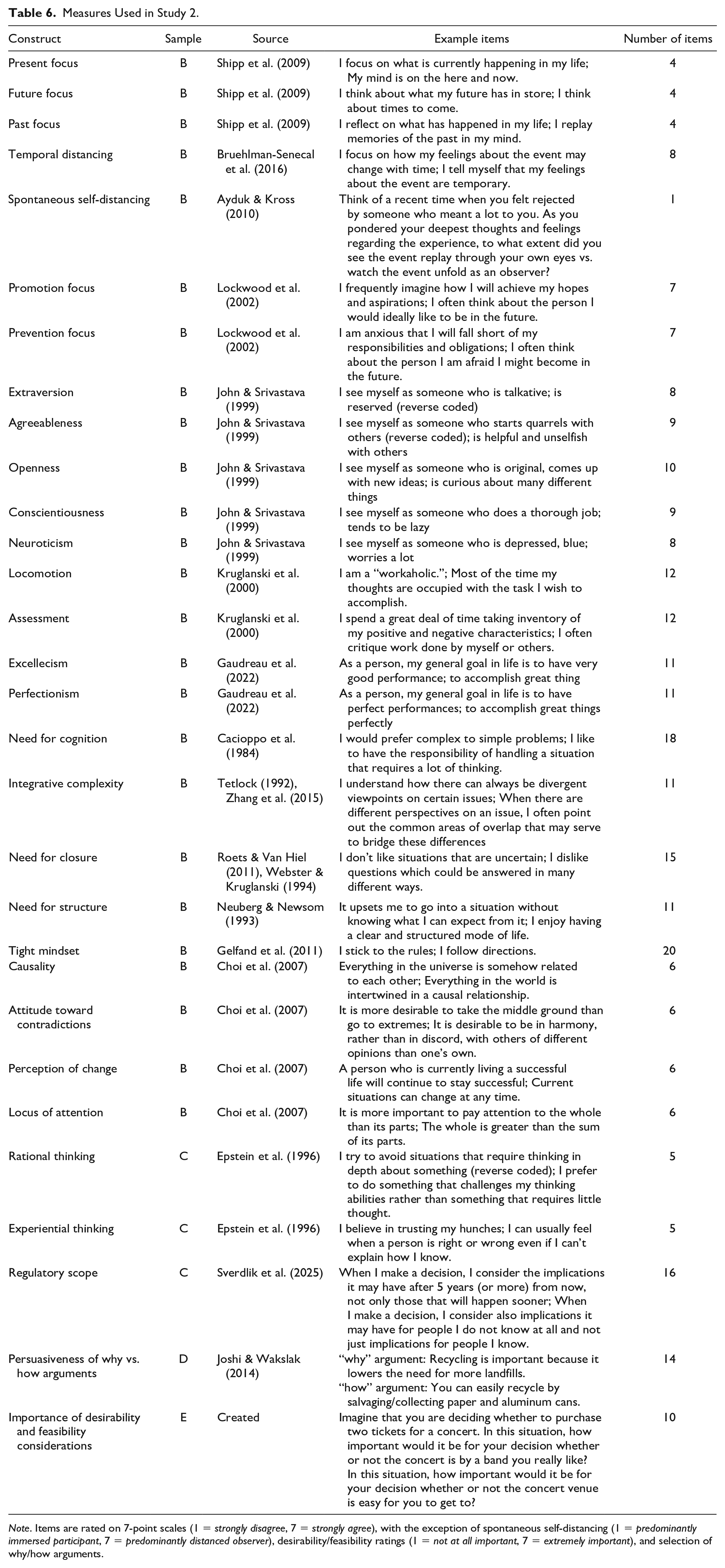
Note. Items are rated on 7-point scales (1 = strongly disagree, 7 = strongly agree), with the exception of spontaneous self-distancing (1 = predominantly immersed participant, 7 = predominantly distanced observer), desirability/feasibility ratings (1 = not at all important, 7 = extremely important), and selection of why/how arguments.
Convergent Validity
Individual differences that have been shown or theorized to correlate with construals were measured, as were desirability and feasibility judgments.
Individual Differences
We measured individual differences in temporal focus (Shipp et al., 2009), temporal distancing (Bruehlman-Senecal et al., 2016), spontaneous self-distancing (Ayduk & Kross, 2010), and regulatory scope (Sverdlik et al., 2025)—all four constructs related to psychological distance—as well as individual differences in regulatory focus (Lockwood et al., 2002).
Desirability and Feasibility
Participants’ focus on desirability and feasibility were measured in two ways. First, we examined how persuasive participants found why vs. how arguments to be. Participants were presented with 14 arguments about recycling (adapted from Joshi & Wakslak, 2014; full text presented in the supplemental material), of which 7 arguments were about why to recycle, and 7 about how to recycle. Participants were asked to choose 7 out of the 14 statements that they found most compelling in persuading them to recycle, requiring them to trade off desirability and feasibility arguments. We counted the numbers of “why” and “how” arguments participants chose.
Second, we measured the perceived importance of desirability and feasibility considerations in decision-making. We created new scenarios (full text presented in the supplemental material) that were modeled after the scenarios in Study 3 of Liberman and Trope (1998), because the original scenarios were created for undergraduate students and were not as relevant today (e.g., choosing a word processor). For each scenario, participants rated the importance of desirability and feasibility considerations on a 7-point scale (1 = not at all important, 7 = extremely important).
Nomological Network
We included measures of well-established individual differences in motivation and cognition. 4
Big-Five Personality Traits
We measured the basic personality traits using scales from John and Srivastava (1999).
Individual Differences in Cognitive Style
Given that abstract construal focuses on things that go beyond direct experiences and therefore usually require a higher level of cognitive processing, we explored how general construals were related to individual differences in cognitive engagement, including need for cognition (Cacioppo et al., 1984), integrative complexity (Tetlock, 1992; Zhang et al., 2015), rational and experiential thinking (Epstein et al., 1996) and holistic/analytic thinking (Choi et al., 2007; Nisbett et al., 2001).
Individual Differences in Approaches to Uncertainty
Given that uncertainty is related to hypotheticality, an important dimension of psychological distance, we explored how general construals were related to individuals’ approaches to uncertainty (Sorrentino et al., 1984), including the need for closure (Roets & Van Hiel, 2011; Webster & Kruglanski, 1994), need for structure (Neuberg & Newsom, 1993), and tightness mind-set (Gelfand et al., 2011).
Individual Differences in Goal Pursuit
Finally, we measured locomotion and assessment, identified by Regulatory Mode Theory (Higgins et al., 2003; Kruglanski et al., 2000) as two essential self-regulatory styles. We also included measures of excellence and perfection pursuit (Gaudreau et al., 2022), to examine how construals were related to individual differences in different ways of pursuing goals.
Results
Tables 7 to 9 display the zero-order correlations. Because abstract construal and concrete construal had a positive correlation, we also calculated the partial correlation between them and other variables.
Correlations of Abstract Construal and Concrete Construal With Variables in Study 2 (Sample B).
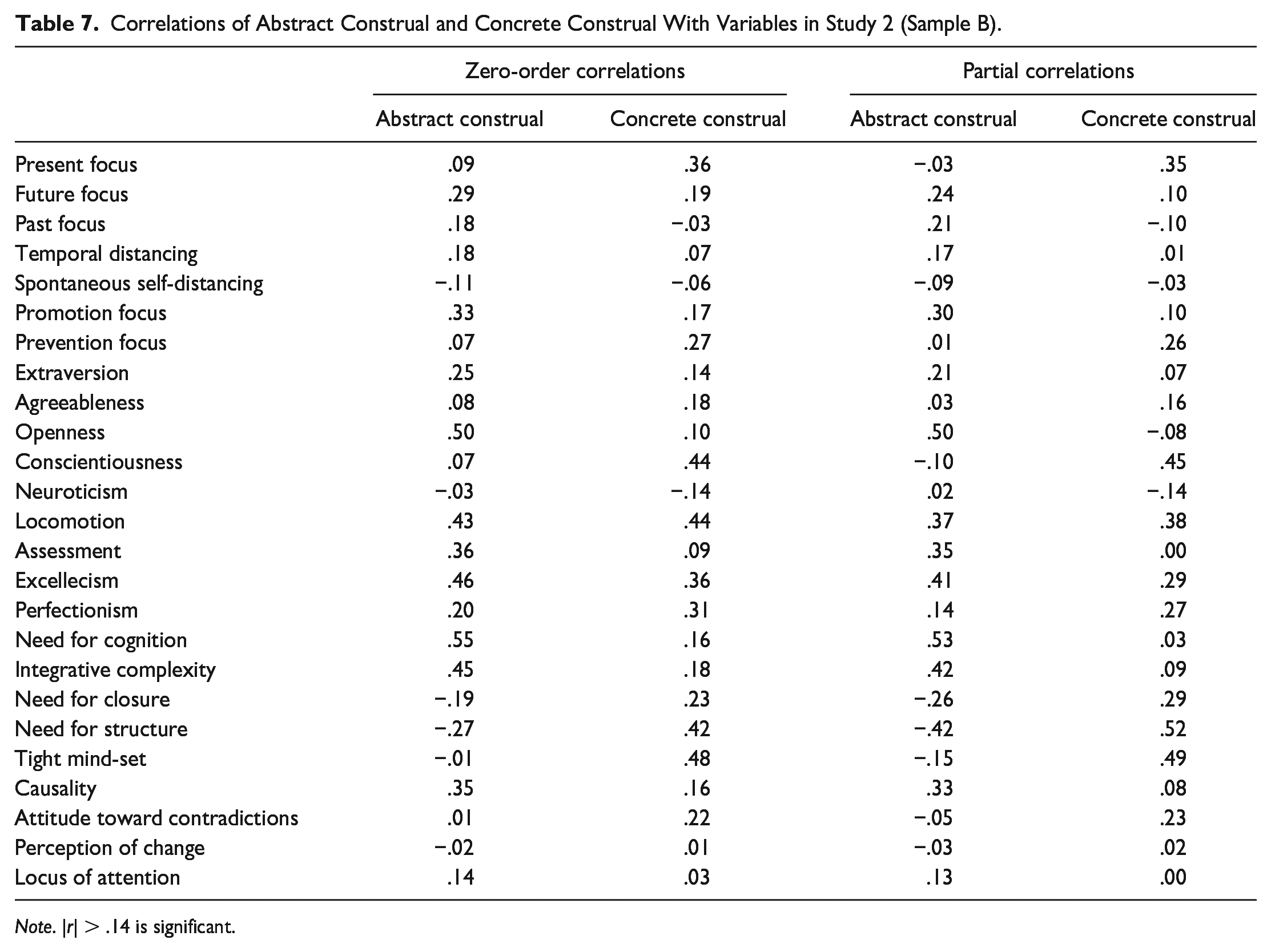
Note. |r| > .14 is significant.
Correlations of Abstract Construal and Concrete Construal With Variables in Study 2 (Sample C).
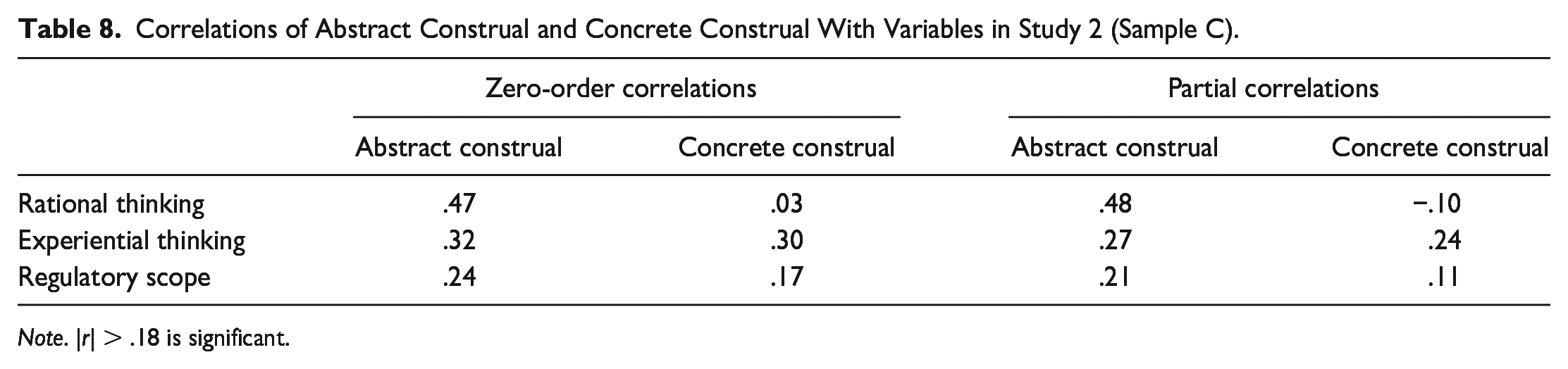
Note. |r| > .18 is significant.
Correlations of Abstract Construal and Concrete Construal With Variables in Study 2 (Samples D and E)
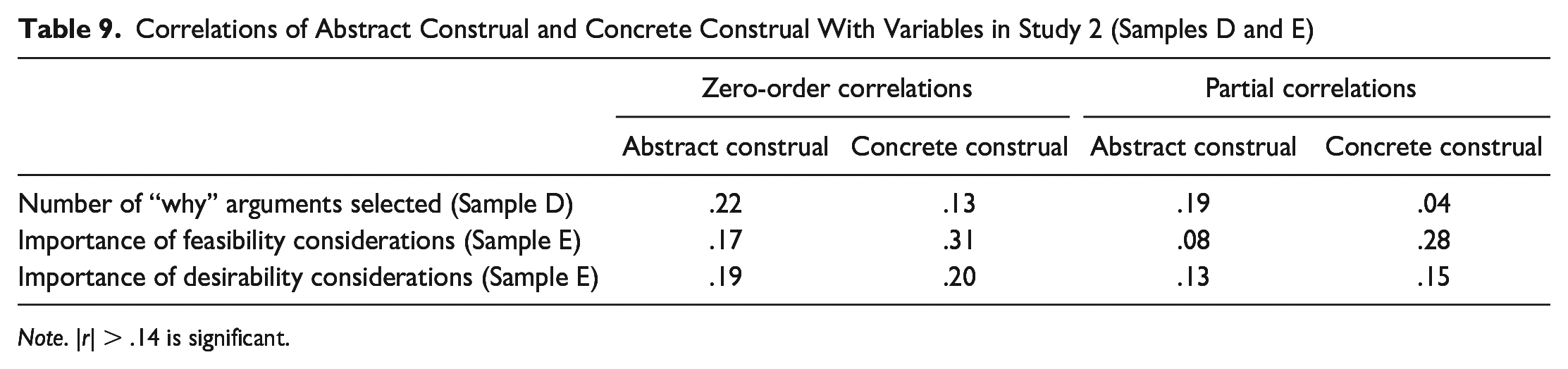
Note. |r| > .14 is significant.
Convergent Validity
Psychological Distance
Consistent with the idea that abstract construal bridges temporal distance regardless of direction (Trope & Liberman, 2010), abstract construal was positively related to future focus, past focus, and temporal distancing, while concrete construal was only positively related to present focus. Abstract construal was also positively correlated to adopting a broader scope, consistent with regulatory scope theory’s position that abstract construal is associated with considering a broader range of targets (Trope et al., 2021).
Spontaneous self-distancing was not associated with general construals. Spontaneous self-distancing was measured using a single item that asked participants to report their distancing in a specific event. It is possible that this one-item measure captured situational self-distancing from the event rather than self-distancing at a general level.
Regulatory Focus
Abstract construal was positively related to promotion focus, and concrete construal was positively related to prevention focus, consistent with prior theorizing and findings (Lee et al., 2010; Affinito et al., 2024).
Desirability and Feasibility
Abstract construal was positively (negatively) related to the number of “why” (how) arguments being selected, whereas concrete construal was not. Consistent with prior research, the results show that those who tend to think more abstractly consider “why” arguments as more compelling than “how” arguments.
Consistent with prior research, concrete construal was positively correlated with the perceived importance of feasibility in decision-making. Interestingly, both abstract construal and concrete construal were correlated with the perceived importance of desirability. However, the correlation between concrete construal and desirability could be explained by the positive correlation between desirability and feasibility considerations. Indeed, after partialing out the perceived importance of feasibility, concrete construal was uncorrelated with desirability (r = .10, p = .15), whereas abstract construal was still correlated with perceived importance of desirability (r = .14, p = .05). The correlation between abstract construal and perceived importance of desirability was relatively small, perhaps because most people consider the desirability factors to be very important (Mean = 5.85, SD = 0.77, Median = 6).
Taken together, these results suggest that abstract and concrete construals are related to people’s weighting of desirability and feasibility information, although specific correlational patterns may depend upon particulars of the decision-making task (e.g., the specific context and personal relevance of desirability and feasibility attributes, whether people have to make tradeoffs between desirability and feasibility)
Nomological Network
Big-Five Personality Traits
Abstract construal was positively related to openness to experience, consistent with prior findings that thinking in general terms supports exploration and creativity (J. S. Mueller et al., 2014; Reyt & Wiesenfeld, 2015). Concrete construal was positively related to conscientiousness, consistent with attention to detail and practicality supporting being organized and thorough in completing tasks. Abstract construal was also positively related to extraversion, possibly because expanding one’s social circle is supported by being able to relate to different others at a more abstract level. Concrete construal was also positively related to agreeableness, although this correlation was relatively small. Neither abstract nor concrete construal was significantly related to neuroticism.
Individual Differences in Cognitive Style
Abstract construal was positively related to the need for cognition, integrative complexity, and rational thinking, consistent with the intuition that abstract construal—which entails going beyond direct experience—often requires a higher level of cognitive processing. Interestingly, both abstract construal and concrete construal were related to experiential thinking.
Abstract construal was positively associated with focusing on connections between elements (causality). Concrete construal was positively associated with avoiding extremes (attitudes toward contradiction). These findings are consistent with the notions that people with higher abstract construal often attend to connections and similarities between things, and people with higher concrete construal recognize the importance of the particular situation when making an assessment (e.g., whether things are right or wrong may depend on the specific situation; Trope & Liberman, 2010). Abstract construal was also marginally positively associated with preference for the whole over parts.
Individual Differences in Approaches to Uncertainty
The need for closure, the need for structure, and a tight mindset all tap into one’s desire for certainty and intolerance of uncertainty. Concrete construal was positively related to all three of these constructs, and abstract construal was negatively related to the need for closure and the need for structure. People higher in uncertainty tolerance may gravitate to details that can provide a sense of verifiability and exactitude; in contrast, those with greater uncertainty tolerance may be more comfortable with abstract thinking, which is less tangible and objective.
Individual Differences in Goal Pursuit
Abstract construal was positively related to assessment. This is consistent with the idea that evaluations of “right” and “wrong” often involve comparisons against values and standards, which are highly abstract (Eyal et al., 2008). It is also consistent with the finding that people who speak abstractly are perceived as being more judgmental (Wakslak et al., 2014). Both abstract construal and concrete construal were positively associated with locomotion and excellence pursuit. Only concrete construal was positively related to perfection pursuit, possibly because of its association with attention to detail (Peters & King, 2012).
Locomotion and excellence pursuit were two constructs that had zero-order correlations of similar size with abstract construal and concrete construal and significant partial correlations with both abstract construal and concrete construal (see Table 7). This suggests that they may explain the common variance between abstract construal and concrete construal. Indeed, the correlation between abstract construal and concrete construal was no longer significant once locomotion or excellencism was controlled for (r = .07 after locomotion was controlled for; r = .09 after excellencism was controlled for). This suggests that both general abstract construal and general concrete construal were related to one’s general engagement in pursuing goals.
Discussion
Study 2 provided evidence for the convergent validity of the General Construal Questionnaire through demonstrating its relationships with psychological distance, regulatory focus, and desirability/feasibility considerations. Examination of the nomological network further revealed associations between abstract or concrete construal and other individual differences that are consistent with and extend prior theorizing about the construal level. Importantly, both abstract and concrete construals were associated with greater engagement in pursuing and achieving goals. This is in line with the regulatory scope theory’s position that construals are important tools people use to regulate their thoughts, feelings, and behaviors for goal pursuit (Trope et al., 2021).
Study 3
Study 3 aimed to test the predictive validity of the General Construal Questionnaire. We focused on social perception because it not only includes important outcomes such as stereotyping but also has produced mixed findings in past research (Alper, 2020; Hess et al., 2018). 5 Prior research has considered abstract and concrete construals on a continuum. Abstract (vs. concrete) construal has been found to increase perceived similarity between people, perspective-taking, and compassion (Levy et al., 2002) which are associated with the inclusion of others. However, it has also been found to increase the perceived homogeneity of members of a social group (Levy et al., 2002), stereotyping (McCrea et al., 2012), and belief in genetic essentialism (Napier et al., 2018), which are often associated with prejudice and discrimination. In Study 4, we sought to examine whether abstract and concrete construals measured using our scales would replicate these prior findings. We also explored whether the separation of abstract construal and concrete construal can help shed light on past mixed findings.
Method
Participants
The study was preregistered at https://aspredicted.org/MDR_QBS. 298 participants on Prolific participated in the study (Sample F). Following the same exclusion criteria as in Study 2 (Samples B-C), 7 participants were excluded, leaving 291 in the data analysis (143 women, 145 men, 3 nonbinary; Mage = 43.56, SDage = 14.54). Sensitivity analysis indicated that this sample size allowed us to detect r = .16 with 80% statistical power.
Measures
Table 10 lists all the measures and example items. The Universal Orientation Scale from Phillips and Ziller (1997) was used to measure perceived similarities and differences between people. Perceived homogeneity of members in a social group and perspective taking and compassion toward members in the group were measured using items from Levy et al. (2002). Stereotyping was measured using an occupational stereotyping task from E. R. Smith et al. (2006). Genetic essentialism was measured using the Genetic Determination Scale (Keller, 2005).
Measures Used in Study 3.
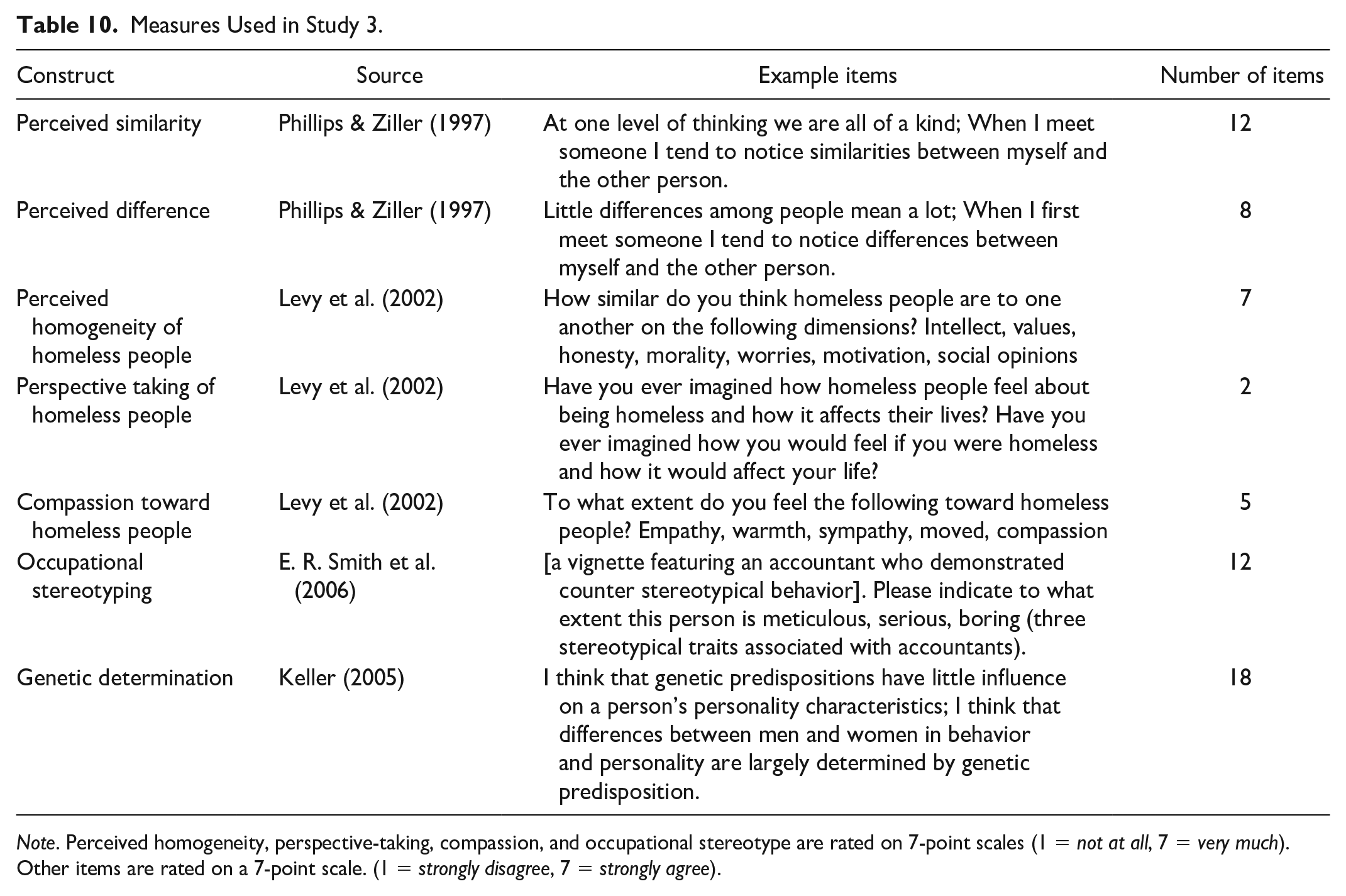
Note. Perceived homogeneity, perspective-taking, compassion, and occupational stereotype are rated on 7-point scales (1 = not at all, 7 = very much). Other items are rated on a 7-point scale. (1 = strongly disagree, 7 = strongly agree).
Results
Table 11 displays the zero-order correlations and partial correlations. Table 12 displays the regression coefficients of abstract construal and concrete construal, controlling for the BIF and Big-Five personality traits.
Correlations of Abstract Construal and Concrete Construal With Variables in Study 3.
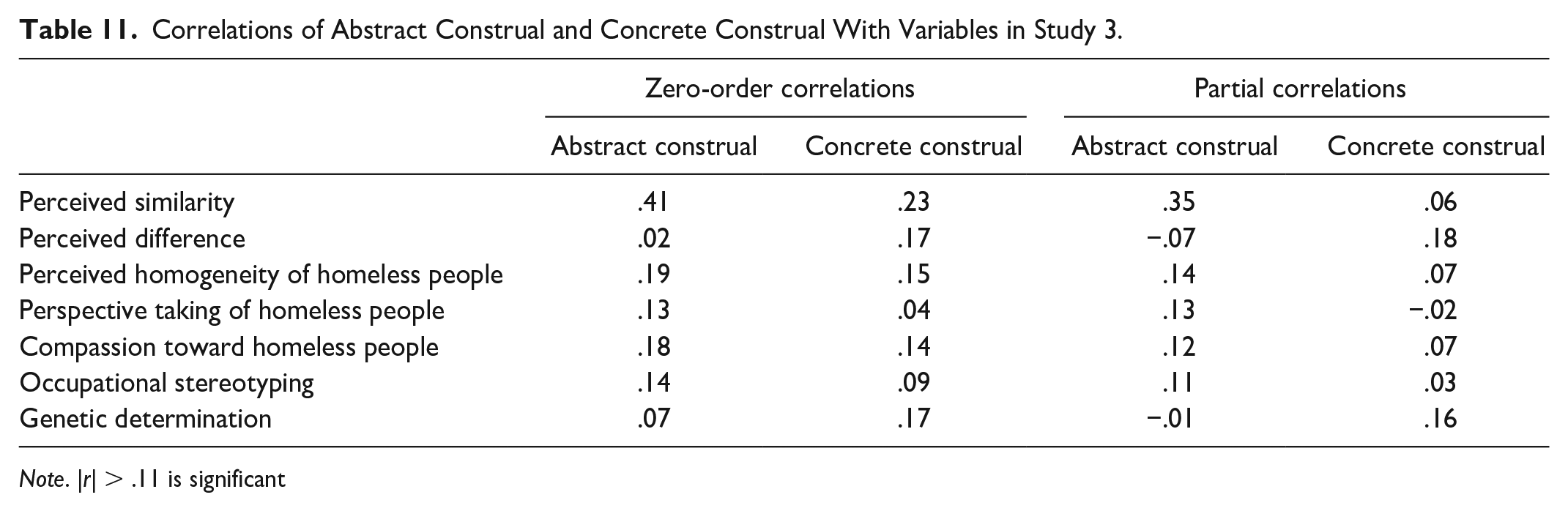
Note. |r| > .11 is significant
Coefficients of Regressions Predicting Variables in Study 3.
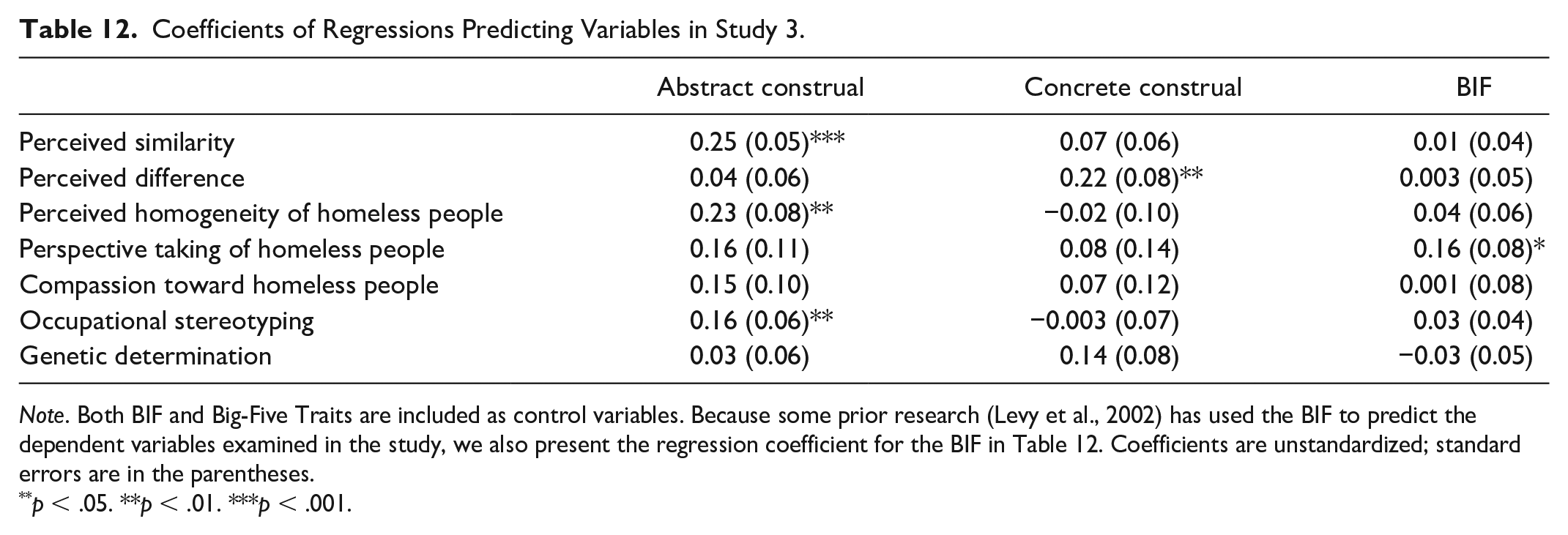
Note. Both BIF and Big-Five Traits are included as control variables. Because some prior research (Levy et al., 2002) has used the BIF to predict the dependent variables examined in the study, we also present the regression coefficient for the BIF in Table 12. Coefficients are unstandardized; standard errors are in the parentheses.
p < .05. **p < .01. ***p < .001.
Main Effects of Abstract Construal and Concrete Construal
Perceptions of Similarity and Difference Between People
Perception of similarity and perception of difference were recognized as two dimensions in the Universal Orientation Scale (Phillips & Ziller, 1997). Levy et al. (2002) did not differentiate the two dimensions and instead reverse-coded the difference items to form a composite measure of perceived similarity. In this study, we differentiated the two dimensions because they were only correlated at -0.11. Levy et al. (2002) found that the BIF score (higher score indicates more abstract vs. concrete action representation) was positively correlated with the perception of similarity between people. This positive correlation was replicated. In addition, concrete construal was positively associated with the perception of difference.
Perceived Homogeneity of Members in a Group
Levy et al. (2002) found that the BIF score was positively correlated with the perception of homogeneity of homeless people. This effect was replicated.
Perspective Taking and Compassion
Levy et al. (2002) found that the BIF was positively correlated with taking the perspective of, and compassion toward, homeless people. These positive correlations were replicated using the general abstract construal scale. However, abstract construal did not significantly predict perspective-taking or compassion after controlling for Big-Five traits and the BIF.
Stereotyping
McCrea et al. (2012) found that manipulated abstract construal increased stereotyping. This result was replicated.
Genetic Determination
Napier et al. (2018) found that manipulated abstract construal increased belief in genetic essentialism. In the current study, we found it was concrete construal that positively correlated with genetic determination, but this effect did not hold after controlling for Big-Five traits and the BIF. 6
Discussion
Study 3’s finding suggests that general abstract construal is associated with perceptions of similarities between people, homogeneity of members who belong to the same group, and consideration of categorical information in social perceptions (i.e., stereotyping), above and beyond the BIF and Big-Five traits. These results were consistent with abstract construal’s emphasis on things that are broad and essential and likely generalize across different situations. Concrete construal was associated with perceiving more differences between people, possibly because people with higher general concrete construal have narrower categories (Liberman et al., 2002; Wakslak et al., 2006). Separating abstract construal and concrete construal as two dimensions thus sheds light on past mixed findings of construal and social perceptions. Both construals may contribute to social exclusion, though through different mechanisms: abstract construal operates through stereotyping, while concrete construal emphasizes differences between people. Notably, abstract construal can also promote inclusion by highlighting similarities between people.
Study 4
In Study 4, we investigated the degree to which the measure can be used to predict people’s thoughts and actions in their daily lives. Because most research on the construal level has adopted a situational approach, investigations of construal-related outcomes have typically been conducted by studying single-shot decisions (notable exceptions to this are recent work on construal-related meta-motivation and academic performance, e.g., Nguyen et al., 2019). Adopting an individual-difference approach allows for a complementary set of questions about how construal-related general tendencies predict everyday thoughts and behaviors.
We examined whether a person’s general construals predict their daily construals and the psychological distance of their daily thoughts. We also examined how general construals contribute to self-regulation. Prior experimental work comparing abstract with concrete construals has shown that abstract construal, with a focus on long-term goals and overarching principles, bolsters resisting short-term temptations (Fujita, Trope, et al., 2006). Concrete construal, with a focus on immediate, detailed action plans, reduces procrastination and facilitates task completion (McCrea et al., 2008). However, self-regulation in an experimental context can be different from self-regulation as it occurs in everyday life. For example, it is possible that while abstract construal improves self-control in the moment, in daily life people’s concrete construal may lead them to create specific plans to avoid facing temptation. In other words, abstract construal and concrete construal may jointly help people exert self-regulation in daily life. The separation of abstract construal and concrete construal into separate dimensions allows us to investigate their independent effects on self-regulation in everyday life, as well as whether they interact with one another to predict effective self-regulation.
Method
Participants
250 participants in a departmental subject pool of a large US university participated in the study for course credit. The study ran from Monday to Thursday for 2 weeks (8 days in total). Participants received two survey links per day; the measures were divided into an afternoon and evening survey to separate in time the daily measures of construal/distance and the daily measures of self-regulation. The afternoon survey was sent at 4 pm; the evening survey was sent at 8 pm. The final sample consists of 1,356 completed afternoon surveys, and 1,307 completed evening surveys, from 249 participants (111 women, 138 men; Mage = 20.45, SDage = 2.08). 7
Prescreening Survey
Participants in this study took a prescreening survey at the beginning of the semester. In the prescreening survey, participants completed the General Construal Questionnaire, a short adapted version of the behavioral identification form (Fujita, Trope, et al., 2006), and the 10-item Big-Five Personality measure (Rammstedt & John, 2007).
Daily Surveys
The daily survey phase began in the first week of November. The time lag between the beginning of the daily survey and the time when participants completed the prescreening survey was on average 40 days. Table 13 lists the measures used. In the afternoon survey, given the association between affect and construal identified in past research (Williams et al., 2014), we measured mood to use it as a control variable. Daily construals were measured using eight items adapted from the General Construal Questionnaire. Daily distal focus and daily proximal focus using eight items adapted from the scope measure (Sverdlik et al., 2025). In the evening survey, we measured self-regulation outcome variables: Participants’ daily progress on what they planned to do, and the extent to which they procrastinated (Yockey, 2016) and resisted temptations. 8
Measures Used in Study 4.
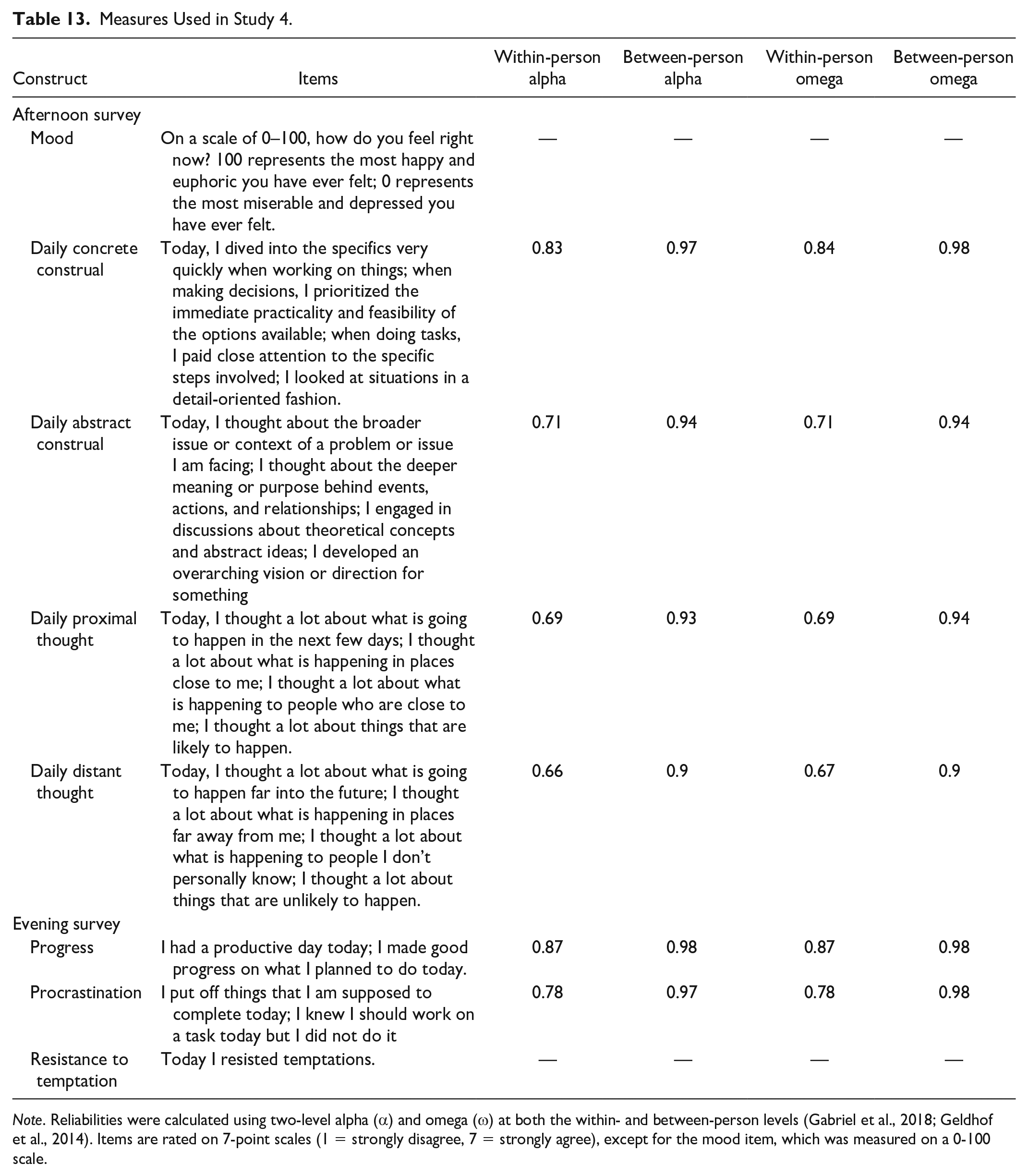
Note. Reliabilities were calculated using two-level alpha (α) and omega (ω) at both the within- and between-person levels (Gabriel et al., 2018; Geldhof et al., 2014). Items are rated on 7-point scales (1 = strongly disagree, 7 = strongly agree), except for the mood item, which was measured on a 0-100 scale.
Results
Do General Construals Predict Daily Construals?
We conducted multilevel regressions with random intercepts, using general abstract construal and general concrete construal to predict each of the dependent variables: daily abstract construal and daily concrete construal. We tested the robustness of the effects by including several control variables: (a) the day and week (Bolger & Laurenceau, 2013); (b) daily mood; (c) BIF and Big-Five personality. Table 14 displays the regression results both with and without control variables. General abstract construal positively predicted daily abstract construal; general concrete construal positively predicted daily concrete construal. These effects were held after including control variables.
Coefficients of Regressions Predicting Daily Construals Using General Construals in Study 4.
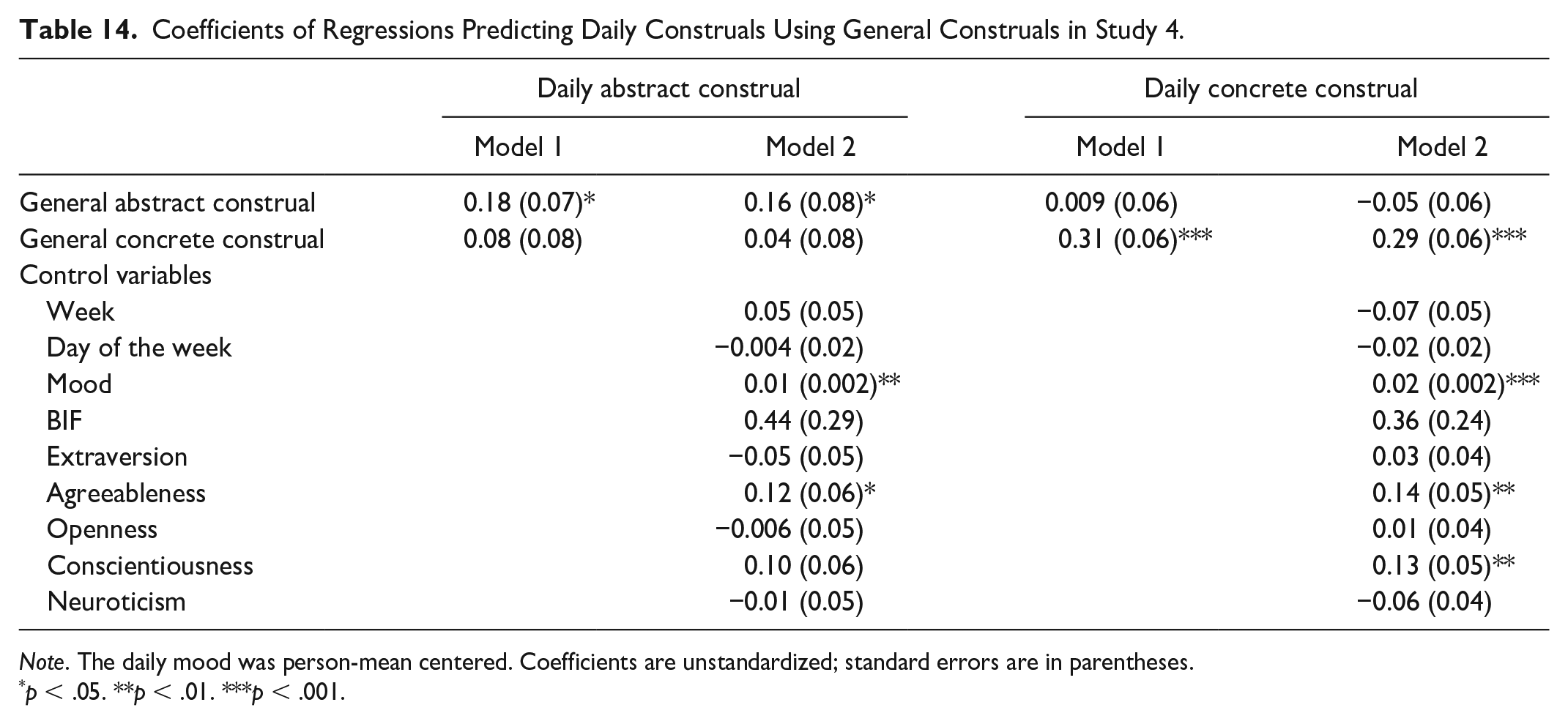
Note. The daily mood was person-mean centered. Coefficients are unstandardized; standard errors are in parentheses.
p < .05. **p < .01. ***p < .001.
Do General Construals Predict Daily Distal/Proximal Focus?
We conducted multilevel regressions with random intercepts, using general abstract construal and general concrete construal to predict each of the dependent variables: daily distant thought and daily proximal thought. We tested the robustness of the effects, including the same control variables (i.e., day, week, daily mood, BIF, Big-Five traits), as well as daily abstract construal and concrete construal, as they were related to general construals and can also be related to daily distant/proximal focus. Table 15 displays the regression results both without and with control variables.
Coefficients of Regressions Predicting Daily Distance Using General Construals in Study 4.
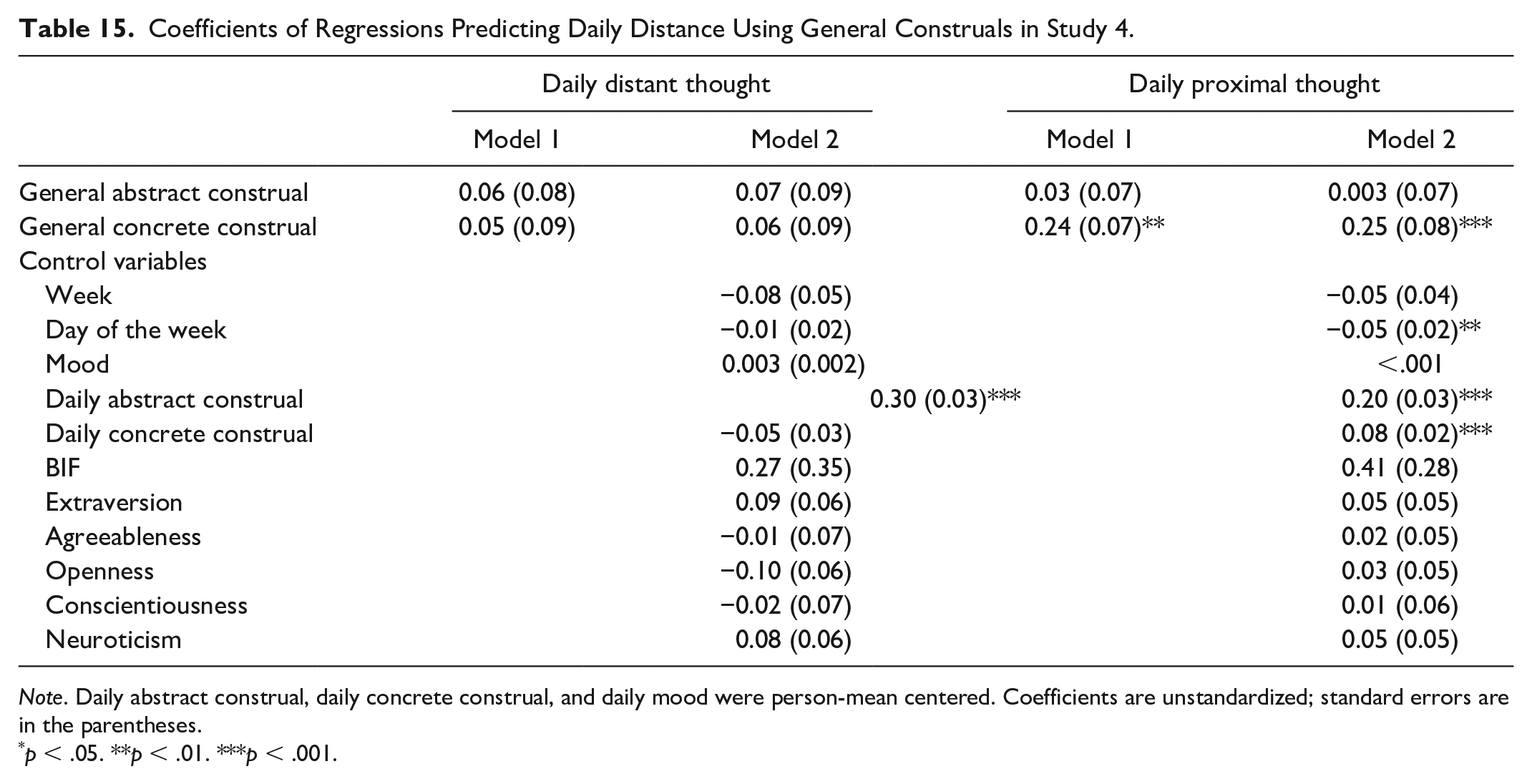
Note. Daily abstract construal, daily concrete construal, and daily mood were person-mean centered. Coefficients are unstandardized; standard errors are in the parentheses.
p < .05. **p < .01. ***p < .001.
General concrete construal positively predicted daily proximal thought. Neither general abstract construal nor general concrete construal predicted daily distant thought; daily abstract construal positively predict daily distant thought. Thus, general concrete construal predicted how much people focused upon proximal things in daily life. However, when it comes to thinking about distant things in daily life, daily abstract construal, rather than general abstract construal, played a larger role.
Do General Construals Predict Daily Self-Regulation?
Finally, we considered how general abstract construal and general concrete construal predicted daily progress, procrastination, and resistance to temptations. We conducted multilevel regressions with random intercepts, predicting each of the dependent variables, using general abstract construal, general concrete construal, and their interaction as predictors. We tested the robustness of the effects by including the same control variables as before. Table 16 displays the regression results both without and with control variables.
Coefficients of Regressions Predicting Daily Outcomes Using General Construals in Study 4.
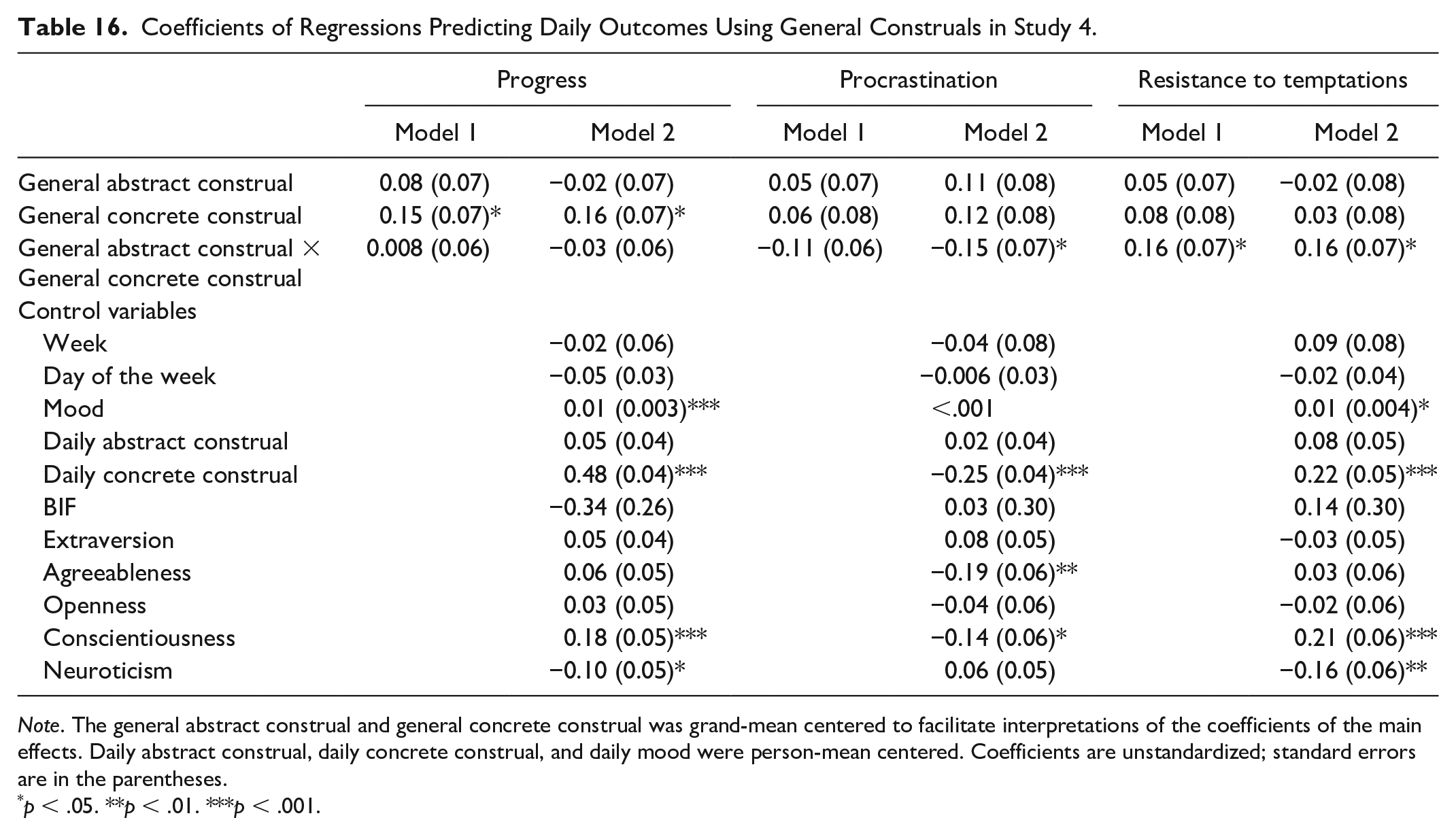
Note. The general abstract construal and general concrete construal was grand-mean centered to facilitate interpretations of the coefficients of the main effects. Daily abstract construal, daily concrete construal, and daily mood were person-mean centered. Coefficients are unstandardized; standard errors are in the parentheses.
p < .05. **p < .01. ***p < .001.
General concrete construal had a positive main effect on daily progress. On procrastination and resistance to temptations, neither abstract nor concrete construal had a main effect.
There was a positive interaction between general abstract construal and concrete construal on resistance to temptations, and this interaction held after including control variables. Figure 1 displays the effects. Johnson–Neyman interval analysis indicated that a person’s general abstract construal predicted greater resistance to temptations only when their concrete construal was higher than 5.84 (Mconcrete= 4.98, SDconcrete = 0.85). Similarly, a person’s general concrete construal predicted greater resistance to temptations only when their abstract construal was higher than 5.59 (Mabstract= 5.07, SDabstract = 0.92).
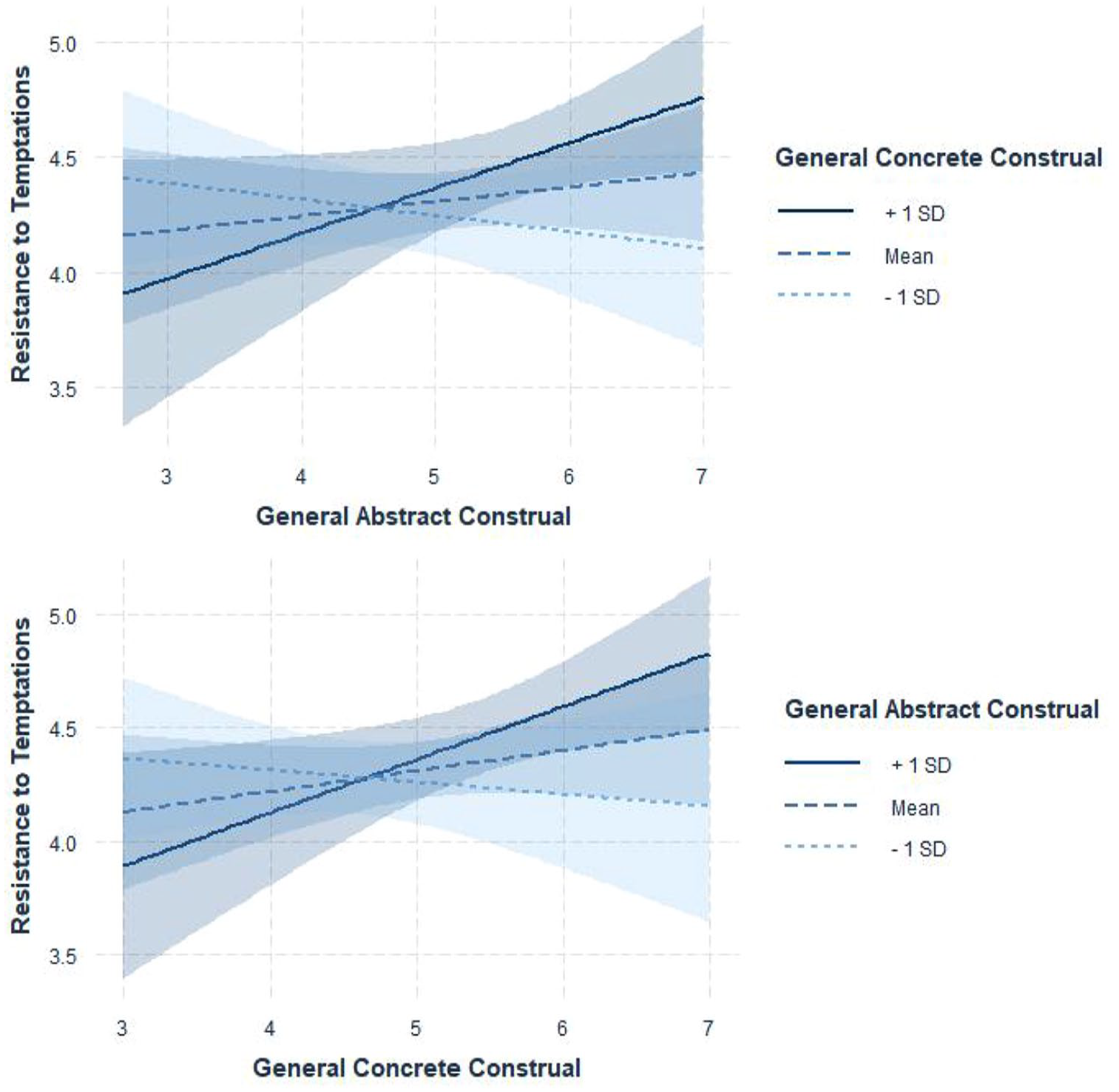
Interaction Between General Abstract Construal and General Concrete Construal on Resistance to Temptations in Study 4.
In other words, high general concrete construal is more beneficial for resisting temptation when accompanied by a relatively high level of general abstract construal, and vice versa. Recent perspectives on resistance to temptations argue that there exists a toolbox of strategies people can use to exert self-control (Fujita et al., 2020). Some of the strategies are more in line with abstract construal (e.g., abstract framing, distancing), while others are more in line with concrete construal (e.g., if-then implementation intentions, plans). Success of resistance to temptations may thus require using tools suitable to the situation, and the ability to use a range of strategies. Our finding is broadly consistent with this argument: People who are high in both general abstract and concrete construals may be equipped with different kinds of self-control tools to help them resist temptations in different situations. 9
Discussion
Study 4 demonstrated that after a time lag of an average of 40 days, the General Construal Questionnaire was able to predict how people think and act in day-to-day life. Individuals who tend to think more abstractly thought more abstractly in their daily lives; those who tend to think more concretely thought more concretely and more about proximal things in their daily lives. General construals also predicted people’s self-regulation in their daily lives: Individuals who tend to think more concretely made more progress on what they planned to do; individuals who tend to think both more abstractly and more concretely were better able to resist temptations. These findings underscore the complexity of self-regulation in everyday life, suggesting that it often requires a blend of both abstract and concrete construal to support the most positive self-regulatory outcomes.
General Discussion
In four studies, the present research develops and validates a measure that captures individuals’ general tendencies toward abstract and concrete thinking without confining these to a continuum. The argument that concrete construal and abstract construal as general tendencies are best considered separately rather than confined to a continuum is supported by several findings. First, confirmatory factor analyses establish that abstract construal and concrete construal are psychometrically distinct dimensions. Second, contrary to a continuum assumption that dictates a large negative correlation between abstract construal and concrete construal, our findings indicate only a small to moderate positive correlation. This is highlighted by the observation that variations in one type of construal account for about 11% of the changes in the other, indicating that increasing or decreasing one form of construal does not necessarily impact the other in a substantive fashion. Relatedly, an intriguing finding from Study 2 is the relevance of goal-oriented behavior to these construals. The correlation between abstract construal and concrete construal diminishes when controlling for factors like an individual’s locomotion or excellence pursuit. This implies that the common variance observed between abstract and concrete construals might be attributed to engagement in goal pursuit.
In addition, the nomological network revealed distinct associations between abstract construal and concrete construal with various variables. General abstract construal was positively associated with future and promotion focuses, a focus on desirability, extraversion, openness to experience, preference for complex cognitive activities, tolerance of uncertainty, and tendency to evaluate. General concrete construal was positively associated with present and prevention focuses, a focus on feasibility, conscientiousness, a preference for certainty, and a tendency to strive for perfection. Studies 3 and 4 expanded on these findings, demonstrating that both general abstract construal and general concrete construal have predictive validity, above and beyond the BIF and Big Five personality traits. Specifically, Study 3 found that general abstract construal predicted perceived similarities between people and stereotyping, whereas general concrete construal predicted perceptions of differences between people. Study 4 illustrated that general abstract construal predicted daily abstract thinking, while general concrete construal predicted daily concrete thinking, proximal thought, and daily progress. Study 4 further revealed that abstract construal and concrete construal complement each other in individuals’ exertion of self-regulation in everyday life. While this finding needs to be replicated, especially considering we did not make a priori hypotheses about the nature of any interaction, it serves to highlight the potential value of considering both types of construal in tandem when trying to understand how they shape varied behaviors.
Our studies make several notable contributions to the field. First, we offer researchers a valuable tool for studying individual differences in construals. This tool may not only be of practical use to researchers, but also spur continued development of the conceptualization of construal as an individual difference, and the understanding of its precursors and implications. Second, our research uncovers new insights into the characteristics associated with each construal, for example, abstract construal related to a preference for complex thinking and a tolerance for uncertainty, whereas concrete construal related to a preference for structure and perfectionism. Finally, by linking general construal tendencies to daily construal patterns, our study paves the way for future research to explore the implications of daily abstract and concrete construals in people’s everyday life.
Construal level has been largely theorized and empirically examined as a situational variable. The development of a measure for individual differences in construals enables researchers to address questions that consider construals as a general tendency, with the potential to empirically extend and theoretically enrich research on the construal level. For example, this measure opens opportunities to examine the implications of individual differences in construals in team settings. It is worth investigating whether teams benefit from having a diverse range of general abstract construal and general concrete construal among their members. In addition, it would be valuable to examine if teams are more effective with members who are high on either general abstract construal or general concrete construal (interpersonal complementarity), or with members who are high on both general abstract construal and general concrete construal (intrapersonal complementarity), similar to discussions around the complementarity of locomotion and assessment styles (Pierro et al., 2018).
The current research also has implications for future CLT research. Prior CLT research often contrasts the effects of abstract construal and concrete construal, assuming that they exist on a continuum with opposing effects. This assumption may hold true when studying the construal of a single object at a specific moment. However, for research that considers construal that may last for a period of time, the effects of abstract construal and concrete construal may be different but not necessarily opposite. For example, CLT research (e.g., Fujita, Trope, et al., 2006) has sometimes evoked construal as “mindset.” This suggests that abstract/concrete construal can be primed as a processing orientation that affects how people think about a range of things. The current research raises intriguing questions: Could abstract and concrete mindsets represent separate dimensions? Could they be activated simultaneously? Could they have distinct effects? Future CLT research could more rigorously test whether people can simultaneously hold abstract and concrete mental representations of the same object in mind, whether they can rapidly switch between abstract and concrete construal (see Grossmann et al., 2024 for an example), and whether engagement in switching has any benefits or costs.
The current scales rely on people’s self-report to measure their construals. Compared to other situational measures, such as language-based or decision-making tasks, self-report scales have strengths and limitations. On one hand, self-report scales may capture individuals’ construal-related general tendencies more effectively, as they directly ask participants to rate their overall tendencies. In addition, these scales are easier to administer beyond the laboratory, making them versatile for a range of study settings. On the other hand, self-report scales reflect individuals’ perceptions of their own thoughts, which may be influenced by their level of self-awareness, and the comparison standards they use, which may themselves be influenced by their construal level. Future research using these self-report scales should consider this important set of tradeoffs.
Another limitation of our current research is its reliance on samples from the United States. Prior research (Nguyen et al., 2020) have not identified significant cross-cultural variations in the relationship between psychological distance and construal, or in people’s understanding of the functions of abstract and concrete construals. If people from other cultures have similar conceptualizations of abstract construal and concrete construal, then the same two-factor structure of the measure should hold in other cultures. However, future research is needed to demonstrate if there is consistency in conceptualizing construal levels across cultures.
Conclusion
This research develops a measure to separately assess individual tendencies toward abstract and concrete thinking. We establish the measure’s reliability and validity and demonstrate its predictive power in areas such as social perceptions and self-regulation. This measure not only constitutes a valuable tool for examining individual differences in construals but also opens new avenues for investigating how they interplay to shape human cognition and behavior.
Supplemental Material
sj-docx-1-psp-10.1177_01461672251321318 – Supplemental material for Developing a General Construal Questionnaire
Supplemental material, sj-docx-1-psp-10.1177_01461672251321318 for Developing a General Construal Questionnaire by Yidan Yin, Robert Barrett, Michele Williams, Batia Mishan Wiesenfeld and Cheryl Jan Wakslak in Personality and Social Psychology Bulletin
Footnotes
Acknowledgements
We thank USC Marshall Behavioral Lab for its research assistance.
Correction (May 2025):
Article updated to correct a reference, Nguyen et al., 2023 in the reference list.
Declaration of Conflicting Interests
The author(s) declared no potential conflicts of interest with respect to the research, authorship, and/or publication of this article.
Funding
The author(s) received no financial support for the research, authorship, and/or publication of this article.

Supplemental Material
Supplemental material is available online with this article.
Notes
References
Supplementary Material
Please find the following supplemental material available below.
For Open Access articles published under a Creative Commons License, all supplemental material carries the same license as the article it is associated with.
For non-Open Access articles published, all supplemental material carries a non-exclusive license, and permission requests for re-use of supplemental material or any part of supplemental material shall be sent directly to the copyright owner as specified in the copyright notice associated with the article.
