




Abstract
Implicit self-theories posit that individuals ascribe to one of two beliefs regarding the self: an incremental theory motivated by learning goals and an entity theory motivated by performance goals. This work proposes that these theories—and their underlying motivations—reflect individuals’ preferences for different knowledge types. Specifically, we propose that incremental theorists prefer knowledge that expands their understanding of diverse experiences within a category (i.e., knowledge breadth), whereas entity theorists prefer knowledge that refines their understanding of a preferred experience within a category (i.e., knowledge depth). Five studies show the effect of implicit self-theories on individuals’ preferences for knowledge breadth and depth and the role of learning and performance goals in motivating these knowledge preferences. We address alternative explanations related to general openness, risk-seeking, and perceived quality differences, and we demonstrate the role of negative feedback in reversing these knowledge preferences.
Implicit self-theories posit that individuals ascribe to one of two theories regarding the self: incremental theory or entity theory (Dweck, 1999). Incremental theorists view the self as malleable; they believe that one can change over time and are motivated by goals that develop a self-concept they view as changeable. Entity theorists, on the contrary, view the self as fixed; they believe that one is unlikely to change over time and are motivated by goals that maximize the strengths of a self-concept they view as fixed.
Self-theories have garnered considerable interest, in part because of their impact on how individuals process and learn about themselves and their environments (Burnette et al., 2013; Dweck & Leggett, 1988; Molden & Dweck, 2006). For instance, incremental and entity theorists respond differently to challenges; incremental theorists view challenges as an opportunity to learn about possible growth opportunities and entity theorists view challenges as a threat that spotlights possible shortcomings (Dupeyrat & Mariné, 2005; Plaks et al., 2001; Yeager & Dweck, 2012). In addition, incremental and entity theorists make different attributions in response to setbacks; incremental theorists attribute failure to a lack of effort (e.g., “I didn’t work hard enough”) and entity theorists attribute failure to a lack of ability (e.g., “I’m not smart enough”; Robins & Pals, 2002). Moreover, incremental and entity theorists hold different beliefs about the meaning of effort; incremental theorists believe effort signals a lack of a learnable skill and entity theorists believe effort signals a lack of an unattainable ability (Blackwell et al., 2007; Yeager & Dweck, 2012).
These documented differences in goals, attributions, and behaviors illustrate the extent to which individuals interpret and assign value to different experiences as a function of their implicit self-theories (Dweck & Yeager, 2019; Molden & Dweck, 2006). We propose these differences extend to preferences for different knowledge types. Research distinguishes between the amount of knowledge individuals acquire and the type of knowledge—specifically, knowledge breadth and knowledge depth (Clarkson et al., 2013; Hoeffler et al., 2013). This difference in knowledge type is important because it informs the (a) prototypical way individuals categorize information to enhance their experiential expertise (Clarkson et al., 2013), (b) knowledge individuals use to construct and retrieve preferences (Hoeffler et al., 2013), (c) cues individuals use to signal their expertise to others (Sela et al., 2019), and (d) opportunities individuals seek to enhance their knowledge of other cultures (Buechner et al., 2022).
We propose these knowledge preferences vary as a function of individuals’ implicit self-theories and the underlying goals they motivate. We posit that incremental theorists prefer knowledge breadth to satisfy their learning goals and entity theorists prefer knowledge depth to satisfy their performance goals. In doing so, we offer an alternative perspective to consider the information-seeking patterns of incremental and entity theories and an unexplored consequence of the meaning systems of incremental and entity theorists.
It is important to note that the target of individuals’ implicit theories can vary from specific traits like intelligence and ability (Dupeyrat & Mariné, 2005) or relationships (Burnette et al., 2013) to more general, self-views about the “kind of person” one is (e.g., fixed or malleable). Research reveals that these theories exist independently, meaning that someone could have a fixed view of intelligence and a malleable view of relationships (Burnette et al., 2013). Furthermore, trait-specific implicit theories are most predictive of related outcomes within the same domain (i.e., implicit self-theories of intelligence predict academic performance; Blackwell et al., 2007). We examine people’s self-theories about the “kind of person” they are because our focal outcome concerns individuals’ higher-order preferences for knowledge acquisition that reveals who they are (e.g., the kind of person who seeks experiences, choices, or products that provide deeper—or broader—knowledge) rather than specific achievement-related or relational outcomes in an interpersonal context.
Differentiating Knowledge Types
Researchers have demonstrated the several ways in which experiences can offer different types of knowledge (e.g., Fazio & Zanna, 1978; Llewellyn, 2021; Zajonc & Markus, 1982). One typology focuses on how knowledge is systematically categorized and accrued through experiences. Specifically, individuals seek information that provides them with insight into either the range of subcategories in a specific domain (knowledge breadth) or the intricacies of a single subcategory in a specific domain (knowledge depth; Clarkson et al., 2013).
To illustrate, consider that certain experiences expand individuals’ existing knowledge base (e.g., sampling wine from four different types of grapes), which allows individuals to recognize core dimensions of specific experiences (Oakes & Spalding, 1997), identify new experiences (Hoeffler et al., 2006), and develop standards to evaluate experiences (Tse & Wilton, 1988). This breadth knowledge allows individuals to learn about similarities and differences between distinct and diverse clusters of experiences (e.g., attributes that distinguish a Merlot from a Malbec), identify new experiential clusters (e.g., novel blends of different types of grapes), and even clarify how to evaluate different clusters of experiences (e.g., the importance of acidity to white wines). Consequently, the accrual of knowledge breadth allows individuals to better recognize and appreciate the diversity of experiences across a category (see left panel, Figure 1).
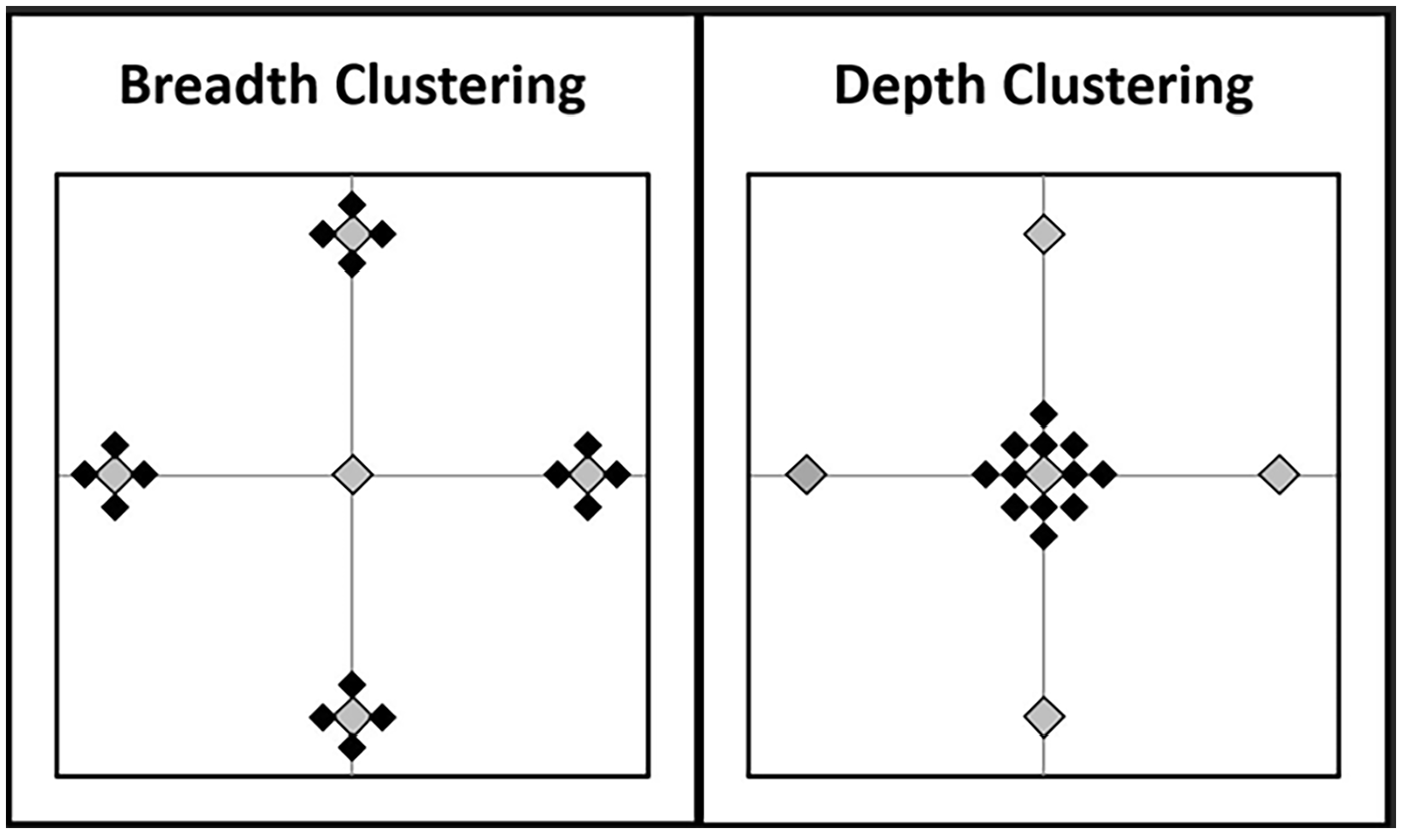
Experiential Clustering as a Function of Knowledge Accrued.
However, other experiences can refine individuals’ existing knowledge structure (e.g., sampling wine from the same grape across four different regions), which helps individuals differentiate nuanced features of an existing experience (Nosofsky, 1986), recognize new features relevant to an existing experience (Goldstone, 1998), and refine existing preferences (Cooke et al., 2004). This depth knowledge allows individuals to learn about subtle differences within a specific cluster of experiences (e.g., Napa Cabernets tend to be slightly fruitier than Bordeaux Cabernets), identify new dimensions by which to evaluate a specific category of experiences (e.g., crop yield affects the aroma of Cabernets), and enrich the vocabulary to label perceptual experiences within a specific cluster (e.g., a stale aftertaste indicates wine oxidization). Consequently, the accrual of knowledge depth allows individuals to better recognize and appreciate the subtle yet important nuances of a specific experience within a category (see right panel, Figure 1).
Although these knowledge types have critical implications for learning (Clarkson et al., 2013; Hoeffler et al., 2013), little is known about what prompts individuals to acquire these different knowledge types. That is, researchers know little about what drives individuals to prefer knowledge breadth versus depth. We posit that individuals’ implicit self-theories motivate them to seek different knowledge types due to their distinct benefits (i.e., breadth offers expansion vs. depth provides refinement).
Motivated Knowledge Acquisition
A wealth of research demonstrates that implicit self-theories shape individuals’ basic motivations (Molden & Dweck, 2006). Incremental theorists are motivated by self-improvement, as their self-concept is tied to a continuing sense of development, whereas entity theorists are motivated by self-enhancement, as their self-concept is tied to proving they possess positive qualities (Nussbaum & Dweck, 2008). Based on these differences, we propose that individuals’ implicit self-theories shape their knowledge preferences.
This proposition is supported by prior work that shows that entity and incremental theorists take divergent approaches to cultivating their passions (O’Keefe et al., 2018). Specifically, those who endorse entity beliefs about passions and interests are less likely to engage with information outside their area of interest than those who endorse incremental beliefs. This work aligns with the possibility that entity theorists tend to double down on their pursuits (i.e., refinement), whereas incremental theorists take a broader view (i.e., expansion) while also supporting the idea that entity theorists prefer simpler, single-cause explanations, whereas incremental theorists take a more varied, multifaceted approach to understanding the self (Plaks, 2017).
Consistent with this research, we propose that incremental and entity theorists prefer different types of knowledge. Specifically, incremental theorists are learning-oriented; they believe people can develop and grow and are thus motivated to seek situations that provide feedback to improve over time (Dweck & Leggett, 1988; O’Keefe et al., 2018; Plaks, 2017). Although both knowledge breadth and knowledge depth offer learning opportunities, we contend that incremental theorists are more likely to seek experiences that expand their knowledge of the multitude of experiences within a category, as knowledge breadth offers the opportunity to learn about the full range of experiences available to them (Clarkson et al., 2013). Indeed, this type of breadth exposure to a diverse range of experiences across subcategories is shown to have a greater impact on preferential exploration across the category (Hoeffler et al., 2013). To illustrate, there is greater expansion potential in consuming several different varietals of wine (e.g., a Chardonnay and a Merlot) rather than a specialty subcategory of a highly regarded varietal (e.g., a Merlot). Such knowledge breadth should, therefore, provide incremental theorists with the opportunity to grow their knowledge base by identifying the attributes that distinguish the range of possible experiences—thus satisfying the desire to maximize learning about the general category.
Alternatively, entity theorists are performance-oriented; they believe people’s attributes are fixed, meaning that one either has good traits or does not, and are thus motivated to prove they possess the best traits and qualities (Dweck & Leggett, 1988). Given this performance goal, we contend that entity theorists seek experiences that refine their knowledge of the particular option within a category they have chosen or believe is best. To illustrate, there is greater performance potential in consuming a different subcategory of wine within a highly regarded varietal (e.g., a Merlot) rather than an entirely new category that may or may not reflect the “best” experiential cluster for their particular tastes (e.g., Chardonnay). This prediction is consistent with research that shows individuals who view passions as largely “fixed” are less engaged with topics beyond their existing interests (O’Keefe et al., 2018). Such knowledge depth should, therefore, provide entity theorists with the opportunity to enhance their knowledge by identifying more nuanced attributes that characterize the best experience—thus satisfying the desire to maximize performance within a specific subcategory.
Overview
We propose that incremental theorists prefer knowledge breadth to satisfy their learning goals, whereas entity theorists prefer knowledge depth to satisfy their performance goals. We test this hypothesis across five studies that examine the effect of implicit self-theories on individuals’ choice between experiences that offer either knowledge breadth or knowledge depth. Furthermore, we investigate the extent to which the effect of implicit self-theories on knowledge preferences is explained by different goals (learning vs. performance); we address alternative explanations related to general openness, risk-seeking, and perceived option quality; and we document the role of negative feedback in reversing these knowledge preferences.
A few notes regarding our methodology are as follows. First, we pretested the choice stimuli used across studies to ensure the options were viewed as differentially providing either knowledge breadth or knowledge depth (see Supplemental Appendix A). Second, we targeted 50 participants per cell, doubling these requirements when a continuous variable was included as a factor in the primary analysis and/or the primary analysis was logistic regression. Post hoc sensitivity analyses (GPower; Faul et al., 2007) revealed that our samples provided 80% power to detect a small-to-medium effect size. We report all data exclusions (if any), manipulations, and measures for each study in their respective method sections. Finally, we report the results of an internal meta-analysis to examine the totality of the effect. All data and materials are available in the OSF data repository: https://osf.io/7mz3k/?view_only=9acafdc4986444399a2e9d65ab7e137b.
Study 1
Our initial study tested the role of implicit self-theories in shaping individuals’ knowledge preferences. To examine this hypothesis, we presented participants with the option to taste one of two different chocolates. Critically, we manipulated the chocolate descriptions to provide either knowledge breadth or depth. Then, we measured participants’ implicit self-theories (Dweck et al., 1995). We predicted that incremental theorists would prefer the chocolate associated with knowledge breadth and entity theorists would prefer the chocolate associated with knowledge depth.
Method
Two hundred twenty undergraduates (55% male; Mage = 19.9) were presented with a choice between two fictitious chocolates: Lindt Exotic or Lindt Extra. Lindt Exotic (the breadth experience) was described as “made with 20% Andalusian cocoa and an exotic flavor to surprise your taste buds,” whereas Lindt Extra (the depth experience) was described as “made with 20% more Belgian cocoa that gives an enhanced chocolate flavor.” The descriptions are based on pretesting (see Supplemental Appendix A).
Following a filler task, participants completed the short-form Implicit Person Theory Scale (Dweck et al., 1995). This scale consists of three items (e.g., “Everyone is a certain kind of person and there is not much that can be done to really change that.”). Responses to each item were obtained on 6-point scales anchored at strongly disagree to strongly agree (α = .70). Higher (lower) values indicated greater endorsement of an entity (incremental) theory. Finally, participants indicated their demographics before being debriefed, thanked for their participation, and given their selected chocolate.
Results
Participants’ choice of chocolate (0 = breadth, 1 = depth) was submitted to logistic regression, with implicit self-theories as the predictor variable. This analysis revealed a significant association with participants’ implicit self-theories (β = .34, SE = .15, Wald’s χ2 = 5.37, p = .020, Cohen’s d = .19; see Figure 2). As participants’ scores progressed from endorsement of an incremental to an entity theory, their choice of chocolate shifted from the knowledge breadth option to the knowledge depth option.
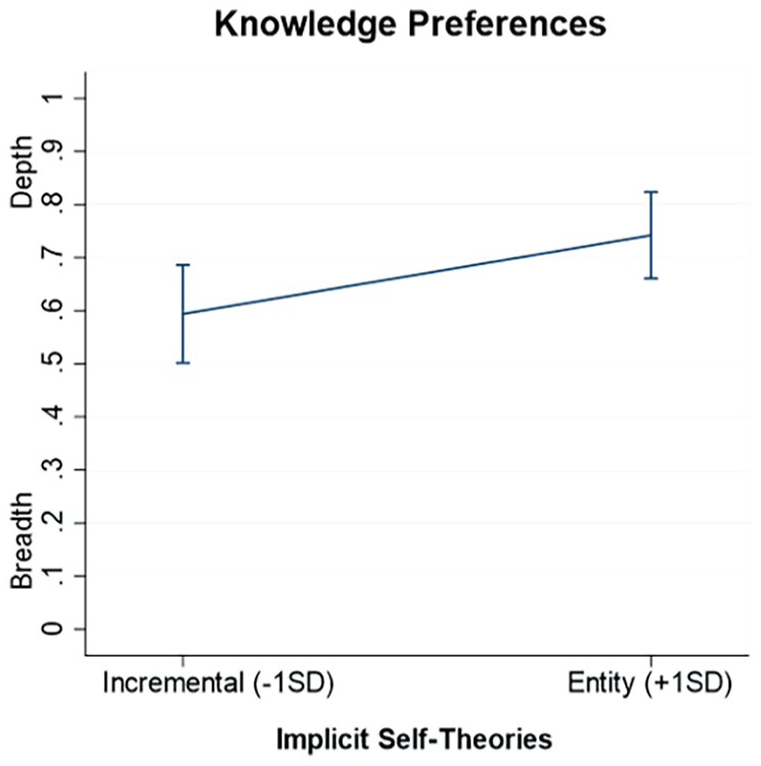
Knowledge Preference as a Function of Implicit Theory in Study 1.
Discussion
The findings of Study 1 provide initial evidence for the role of implicit self-theories in individuals’ knowledge preference. Despite a general preference for knowledge depth, incremental theorists were more likely to prefer knowledge breadth compared with entity theorists in a meaningful experiential choice.
Study 2
The findings of Study 1 support the association between implicit self-theories and knowledge preferences. In Study 2, we designed a more stringent test of this effect. Specifically, we sought to determine whether the effect occurs when including a personal preference (i.e., favored option) in the choice set, as one could argue that rather than responding to differences in knowledge type, incremental and entity theorists may differ in their openness to new experiences. If so, any difference in knowledge preferences would disappear if individuals could choose a favored option. That said, we believe incremental and entity theorists are similarly open to deviating from personal preferences for options with new knowledge potential for two reasons. First, prior work is mixed with respect to the relationship between implicit self-theories and openness to experience (e.g., Satchell et al., 2017; Spinath et al., 2003). Second, research shows that individuals are motivated to forgo personal preferences for experiences that facilitate learning (e.g., Keinan & Kivetz, 2011). Therefore, we tested this possibility by amending our procedure in this study to include personal preferences in the choice set. In addition, we tested the causal role of implicit self-theories by directly manipulating participants’ implicit self-theory.
Method
One hundred six Amazon Mechanical Turk workers (63% female; Mage = 34.6) rated the readability of an ostensible research abstract, which served as our implicit self-theory manipulation. In the incremental theory condition, the abstract detailed how variable/changeable individuals’ traits, personalities, and abilities are over time. In the entity theory condition, the abstract detailed how fixed/stable individuals’ traits, personalities, and abilities are over time. We adapted this manipulation from prior research (Chiu et al., 1997; see Supplemental Appendix B for stimuli). Following this manipulation, participants completed the Implicit Person Theory Scale (Dweck et al., 1995; α = .92) as a manipulation check.
Afterward, participants read descriptions of the two fictitious Lindt chocolates used in Study 1 before indicating their favorite chocolate in a free-response box. Participants then indicated their choice among the breadth experience (Lindt Exotic), the depth experience (Lindt Extra), and their individualized favorite option.
Finally, participants indicated their demographics before being debriefed and thanked for their participation.
Results
Manipulation Check
The implicit self-theories scale was submitted to a t test, with implicit self-theory condition (0 = incremental theory, 1 = entity theory) as the independent variable. The analysis revealed a significant effect of implicit self-theory, t(104) = 2.39, p = .018, Cohen’s d = .47. As expected, participants in the entity theory condition (M = 3.84, SD = 1.27) scored significantly higher on the scale than did those in the incremental theory condition (M = 3.28, SD = 1.13).
Choice
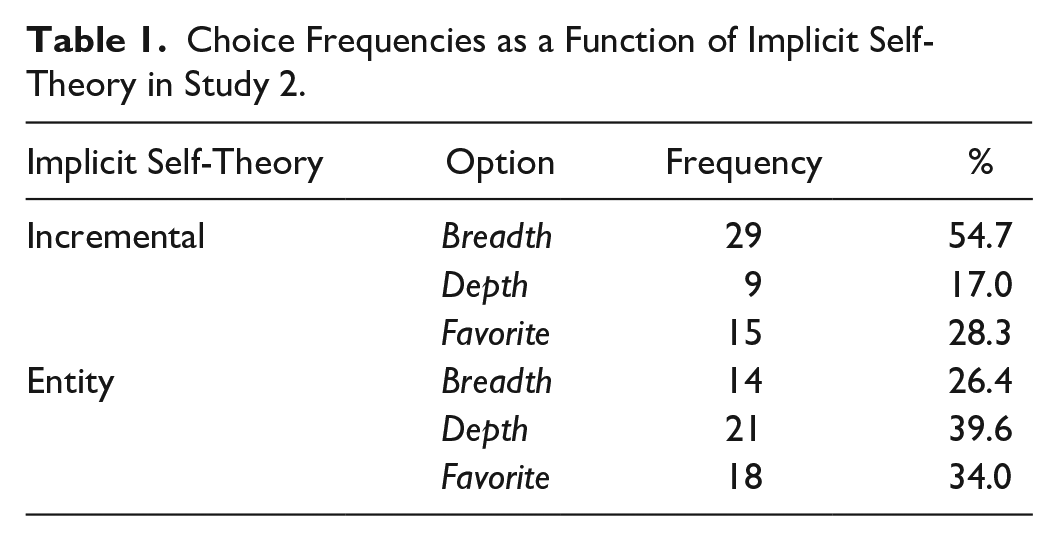
Choice of chocolate (0 = breadth, 1 = depth, 2 = favorite) was submitted to a multinomial logistic regression, with implicit self-theory condition (0 = incremental theory, 1 = entity theory) as the independent variable. This analysis revealed a significant effect of implicit self-theory condition (χ2 = 10.55, p = .005, Nagelkerke R2 = .11; see Table 1 for frequencies). To further explore this effect, we calculated the z-ratio for the significance of the difference between two independent proportions (Festjens & Janiszewski, 2015). This analysis revealed that participants in the incremental theory condition were more likely to select the knowledge breadth option (54.7%) than were those in the entity theory condition (26.4%; z = 2.97, p = .003), and participants in the entity theory condition were more likely to select the knowledge depth option (39.6%) than were those in the incremental theory condition (17%; z = −2.59, p = .009). Of note, participants in the incremental theory (28.3%) and entity theory (34%) conditions were equally likely to choose their favorite option (z = −0.63, p = .53).
Choice Frequencies as a Function of Implicit Self-Theory in Study 2.
Discussion
Study 2 demonstrated that individuals’ implicit theories shape their knowledge preferences, even when the choice set included individuals’ favorite option. This result is consistent with the lack of association between implicit self-theories and openness (Satchell et al., 2017) as well as research demonstrating that individuals forgo favored options to gain knowledge (Keinan & Kivetz, 2011). That said, analysis of choice shares excluding the favorite option revealed a significant effect for incremental theorists (z = 4.59, p < .001) but a marginal effect for entity theorists (z = −1.67, p = .095), which suggests that entity theorists may be less willing than incremental theorists to forgo their preferred option. Finally, the findings occurred after manipulating individuals’ implicit theories, supporting the claim that the differences in knowledge preferences are driven by implicit self-theories.
Study 3
The results across the prior two studies demonstrated the role of implicit self-theories in shaping individuals’ preferences for different knowledge types. However, these findings are from a single category (chocolates) and may, therefore, depend on specific features of that particular paradigm. Study 3 tested the generalizability of the findings by adopting a paradigm that customizes breadth and depth options based on participants’ existing preferences across multiple categories. Specifically, at the outset of the experiment, participants indicated their preferred subcategory for three different categories (e.g., favoring Thai food within the category of Eastern cuisine), and those subcategory preferences were used to generate personalized breadth and depth options for each category. Across categories, we predicted that incremental theorists would prefer the breadth options and entity theorists would prefer the depth options.
Our secondary aim was to clarify the role of risk in our proposed conceptual model. It is possible the documented knowledge preferences do not reflect preferences for different types of knowledge but rather preferences for different levels of risk. Indeed, breadth options may be perceived as riskier because they reflect greater deviation from one’s preferred subcategory and thus reflect greater experiential uncertainty. Moreover, limited work suggests incremental theorists are more risk-seeking than entity theorists (Rai & Lin, 2019). Although possible, we believe breadth and depth options also vary in the type of knowledge they provide about a cluster of experiences and thus should be sufficiently robust to any potential influence of risk perceptions. Indeed, if the findings were strictly a function of risk perceptions, then entity theorists would have simply selected their favorite option in Study 2. However, to test its potential relationship, we included a measure of risk perceptions in Study 3 as a covariate.
Method
One hundred undergraduate students (60% male; Mage = 20.3) participated in a preregistered study (https://aspredicted.org/kb9yk.pdf). Consistent with our preregistration, we removed two people from the study for failing an attention check for a final sample of 98 participants (see Supplemental Appendix C for analysis of the full sample).
Participants first indicated their preferences within three categories (i.e., Italian cheeses, Eastern cuisines, and theme park rides) pretested to be familiar with favorable options (see Supplemental Appendix A). For each category, participants were asked to indicate their preference from a list of subcategory options. Specifically, for Italian cheeses, participants selected from mozzarella, gorgonzola, provolone, asiago, Parmigiano-Reggiano, ricotta, and mascarpone. For Eastern cuisines, participants selected from Chinese, Japanese, Thai, Korean, Indian, Vietnamese, and Indonesian. For theme park rides, participants selected from boat ride, dark ride, roller coaster, drop tower ride, flat ride, and motion simulator. The order in which the categories were presented to participants was randomized. 1
After indicating their subcategory preferences, participants chose between a breadth and depth experience in each category, with specific descriptions based on participants’ unique subcategory preferences. To illustrate, for Italian cheeses, participants chose between a monthly cheese subscription featuring a breadth of three cheeses (i.e., one of their preferred type and two other types of Italian cheeses) or a depth of three cheeses (three of their preferred type of Italian cheese). Pretesting confirmed these descriptions offered greater knowledge breadth and depth, respectively (see Supplemental Appendix A). The order of choice was randomized. Full details and wording are provided in Supplemental Appendix D.
Following the choice task, participants responded to the eight-item Implicit Self-Theories Scale on 7-point scales (strongly disagree to strongly agree; α = .96; Levy et al., 1998; Park & John, 2010) before indicating how risky it would be to choose the options in each of the three categories on 7-point scales (extremely low risk to extremely high risk). Finally, participants answered demographics before being debriefed and thanked for their participation.
Results
Risk
We averaged across the three scenarios to compute separate risk ratings for the breadth and depth experiences. As participants rated both options, the ratings were submitted to a paired-samples t test, which showed that participants rated the breadth experiences as riskier than the depth experiences, MBreadth = 3.99, SD = 1.38 versus MDepth = 2.44, SD = 1.13, t(97) = 9.34, p < .001, Cohen’s d = 1.64. 2
Choice
We coded responses to each choice (0 = breadth, 1 = depth) and averaged responses across the three scenarios to create a composite index of knowledge preference. We submitted this index to a linear regression, with implicit self-theories as the predictor variable. The analysis revealed a significant effect of implicit self-theories, β = .048, SE = .023, t(96) = 2.12, p = .036, f2 = .05; as participants’ scores progressed from endorsement of an incremental to an entity theory, their preferences progressed from the knowledge breadth option to knowledge depth option.
To explore the role of risk on the relationship between implicit self-theories and knowledge preferences, we subtracted the composite risk rating for the breadth option from the composite risk rating from the depth option to reveal an overall difference in risk perception, and we included this risk measure in a regression analysis with implicit theories predicting choice. Although the results revealed the significant main effect of risk perception on choice, β = .050, SE = .017, t(95) = 2.91, p = .004, the analysis still revealed a significant effect of implicit theory on choice, β = .044, SE = .022, t(95) = 2.02, p = .046, f2 = .14.
Discussion
Study 3 provides convergent support for the role of implicit self-theories in shaping individuals’ knowledge preferences. As in the prior two studies, incremental theorists selected options that offered knowledge breadth and entity theorists selected options that offered knowledge depth. Here, however, this difference occurred across three different categories and across personalized knowledge type options. Separately, Study 3 elucidates the role of risk perceptions in shaping the knowledge preferences of incremental and entity theorists. Although the breadth option was perceived as riskier than the depth option, the association between implicit self-theories and knowledge preferences remained robust. Of course, risk could still exert a separate influence on knowledge preferences; entity theorists may simply avoid risk to mitigate the likelihood of failure and maximize their performance goals (e.g., Rai & Lin, 2019). However, the present findings converge with the results of Study 2 to show that these documented knowledge preferences cannot be explained by preferential risk alone.
Study 4
Central to our research is the proposition that the impact of implicit self-theories on individuals’ knowledge type preferences stems from different underlying motivations (Burnette et al., 2013; Dweck & Leggett, 1988). Specifically, incremental theorists are motivated by learning goals, whereas entity theorists are motivated by performance goals. Although we suggest that knowledge breadth typically satisfies learning goals and knowledge depth typically satisfies performance goals, incremental and entity theorists should seek whichever experience (breadth or depth) best achieves their underlying motivation. We tested this possibility in Study 4 by directly manipulating which knowledge type satisfied a performance or learning goal. Specifically, we presented individuals with a choice between a breadth and depth option, although here we included additional information about which option satisfied a learning and performance goal. We manipulated whether the breadth and depth options were either consistent (breadth → learning; depth → performance) or inconsistent (breadth → performance; depth → learning) with the typical knowledge type offered by that experience. This manipulation allowed us to examine the underlying goals of incremental and entity theorists. If preferences are due to underlying learning and performance goals, as we predict, then incremental theorists should prefer whichever option (breadth or depth) satisfies their learning goals and entity theorists should prefer whichever option (breadth or depth) satisfies their performance goals. However, if preferences are due to innate features of knowledge breadth and depth, then incremental theorists should prefer knowledge breadth and entity theorists should prefer knowledge depth, regardless of the underlying goal being satisfied.
Separately, it could be argued that the depth (vs. breadth) option is viewed as of higher quality because the operationalization of depth contains three preferred components. If true, then entity theorists might prefer knowledge depth merely because the higher quality best satisfies their performance motivation (e.g., Park & John, 2012). To test this alternative explanation, we included measures of perceived quality in addition to the risk measure from Study 3.
Method
Two hundred two online Amazon Mechanical Turk workers (60% female; Mage = 40.3) participated in a study similar to Study 3 except that we manipulated whether the knowledge options were associated with learning or performance goals. That is, after indicating their subcategory preferences 3 , participants read information about two classes of experiences: discovery and prestige. This distinction served as the basis for our goal manipulation. Discovery experiences, which were designed to satisfy learning goals, were described as opportunities for personal growth and new discoveries, as prior research links self-improvement to a preference for experiences that offer the opportunity to learn about, develop, and grow the self (Park & John, 2010, 2012). Prestige experiences, which were designed to satisfy performance goals, were described as opportunities for extravagance, as prior research links self-enhancement to a preference for experiences that offer the opportunity to self-signal status and manage favorable impressions to others (Park & John, 2010, 2012; Sun et al., 2020). To ensure that participants understood the distinction, they had to correctly classify four pairs of experiences (i.e., two hotels, two museums, two safaris, and two sushi dishes) as either discovery or prestige experiences before proceeding to the main part of the study.
Next, participants chose between a series of experiences used in Study 3. Recall that each choice included a breadth and depth option, with specific descriptions based on participants’ unique subcategory preferences. Here, however, we also labeled the breadth and depth options as either discovery or prestige experiences. This procedural change allowed us to vary whether the breadth and depth options presented were consistent or inconsistent with learning and performance goals. In the consistent condition, the motivation was consistent with the preferred knowledge type, such that the discovery label accompanied the breadth experience, and the prestige label accompanied the depth experience. In the inconsistent condition, the motivation was inconsistent with the preferred knowledge type, such that the prestige label accompanied the breadth experience and the discovery label accompanied the depth experience. Participants chose between the two options across the three categories (see Supplemental Appendix D for full wording).
Following choice, participants completed the eight-item Implicit Self-Theories Scale (α = .96: Levy et al., 1998). Afterward, participants indicated the riskiness and quality of the choice options. Risk was assessed using the measure described in Study 3. Option quality was assessed by having participants respond to the question: “What do you think of the quality of the two cheese boards/meal boxes/theme park admission books?” on 7-point scales anchored at extremely low quality to extremely high quality. Finally, participants indicated demographics before being debriefed and thanked for their participation.
Results
Risk
We averaged across the three scenarios to compute separate risk ratings for the breadth and depth options. As participants rated both options, the ratings were submitted to a paired-samples t test, which showed that participants rated the breadth options as riskier than the depth options, MBreadth = 3.84, SD = 1.45 versus MDepth = 2.65, SD = 1.34, t(201) = 9.41, p < .001, Cohen’s d = .66. 4
Quality
As with the risk ratings, we averaged across the three scenarios to compute separate quality ratings for the breadth and depth options. The ratings were submitted to a paired-samples t test, which showed no significant difference between the breadth and depth options on perceived quality, MBreadth = 5.41, SD = 1.02 versus MDepth = 5.43, SD = 0.98, t(201) = −0.22, p = .83. 5
Choice
We submitted the choice index (0 = breadth, 1 = depth) to a hierarchical regression, with goal (0 = consistent or 1 = inconsistent) and implicit self-theories (continuous) as predictor variables. There was no significant main effect of goal or implicit theory. However, the analysis revealed a significant Goal × Implicit Theory interaction (β = −.10, SE = .028), t(198) = −3.57, p < .001, f2 = .07 (see Figure 3). Incremental theorists favored the breadth experience in the consistent condition but the depth experience in the inconsistent condition, both of which afforded their learning goals (β = .18, SE = .062), t(198) = 2.96, p = .003. Conversely, entity theorists favored the depth experience in the consistent condition but the breadth experience in the inconsistent condition, both of which afforded their performance goals (β = −.13, SE = .062), t(198) = −2.11, p = .036. This pattern supports the interpretation that the knowledge preferences of incremental and entity theorists are based on their underlying goals.
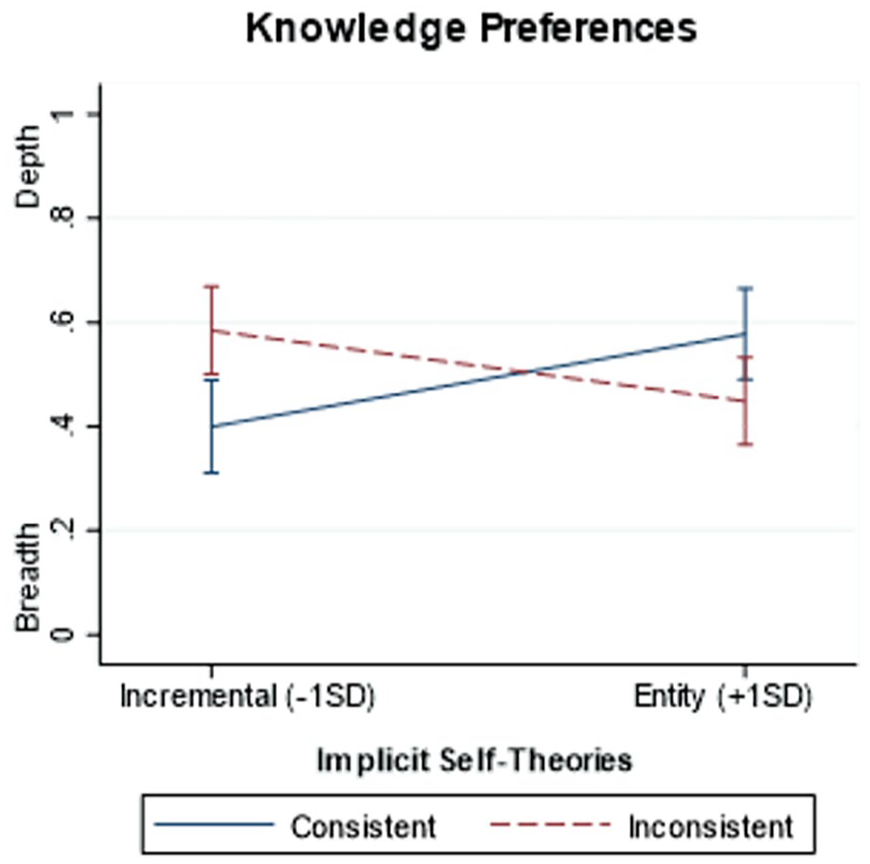
Knowledge Preference as a Function of Implicit Theory and Goal Consistency in Study 4.
To further explore the effect of risk and quality, we computed risk and quality indices and included both in a regression analysis with implicit theories. There was no effect of risk perception (β = .012, SE = .013), t(196) = 0.95, p = .34, but a significant effect of quality perception (β = −.048, SE = .023), t(196) = −2.11, p = .036, on choice. Critically, the regression still revealed a significant Goal × Implicit Theory interaction on choice (β = −.093, SE = .028), t(196) = −3.28, p = .001, f2 = .10. Thus, the relationship between implicit self-theories and knowledge preferences was robust to differences in the perceived quality of the options.
Discussion
Study 4 demonstrated that the knowledge preferences of incremental and entity theorists are driven by their learning and performance goals, respectfully. Indeed, regardless of whether the experience was characterized by knowledge breadth or depth, incremental theorists preferred the experience that satisfied their learning goal and entity theorists preferred the experience that satisfied their performance goal. Moreover, the results occurred despite differences in perceived quality, which demonstrates that the knowledge value of the breadth and depth options superseded any inherent differences in option quality. These results demonstrate that learning and performance goals are independent constructs from knowledge breadth and depth while illustrating the importance of these underlying goals in shaping the knowledge preferences of incremental and entity theorists.
Study 5
Thus far, the findings demonstrated the default knowledge preferences of incremental and entity theorists. Yet, how might these preferences vary if individuals received feedback that undermines their knowledge of a particular subcategory? Research shows that incremental and entity theorists respond very differently to feedback that reflects failure of any kind (Blackwell et al., 2007; Burnette et al., 2013; Hong et al., 1999; Robins & Pals, 2002). Specifically, incremental theorists view negative feedback as an opportunity for personal growth; they attribute failure to effort (vs. ability) and respond by engaging in remedial behaviors to improve their shortcomings (e.g., Hong et al., 1999). Conversely, entity theorists view negative feedback as a threat to their personal identity; they attribute failure to their ability (vs. effort) and respond by engaging in strategies to avoid possible future failures (e.g., Cury et al., 2008).
Given this differential response to failure, we propose that incremental and entity theorists will reverse their default knowledge preferences when confronted with negative feedback regarding their knowledge of a preferred subcategory. For incremental theorists, negative feedback should increase their preference for information that would improve upon their shortcomings in a particular subcategory by enhancing their understanding of that subcategory (i.e., knowledge depth). For entity theorists, negative feedback should motivate them to avoid that particular subcategory, as prior research shows that entity theorists—when confronted with failure—are motivated to move on from the failed task as a means of averting future failures (Dweck, 1999). Furthermore, that avoidance is likely to increase their preference for information that expands their knowledge of other subcategories (i.e., knowledge breadth), which would eventually allow them to identify a new preferred subcategory in which they may be better able to perform well.
We tested this hypothesis by manipulating individuals’ uncertainty in their knowledge of a preferred travel subregion within the United States. Uncertainty was manipulated by providing positive or negative feedback about cultural information in their preferred subregion. We expected that incremental and entity theorists would seek knowledge breadth and depth, respectively, when certain of their knowledge of the subregion. When uncertain of their knowledge of the subregion, however, we expected a preference reversal.
Method
One hundred ninety-eight U.S. recruits from Prolific Academic (61% female; Mage = 36.5) participated in a confidence (high vs. low) by implicit theory (continuous) mixed design. We removed nine people who reported not paying attention and 32 people who did not complete the task that formed the basis of the confidence manipulation, which resulted in a final sample of 157 for analysis (see Supplemental Appendix C for analysis of the full sample).
Participants first indicated their preferred subregion in the United States as a travel destination (i.e., Northeast, mid-Atlantic, Southeast, Midwest, Southwest, Northwest, West) before being tested on their travel knowledge about their preferred subregion to manipulate knowledge confidence. Specifically, participants responded to a series of open-ended questions about the subregion (e.g., “What food dish from X region is the most well-known?”). Upon answering, participants read that survey software computed a knowledge score for their preferred subregion by comparing their responses with the consensus responses of travelers with extensive knowledge of the subregion. Those in the high confidence condition were informed that they had scored in the upper 25% quartile, which indicated they possessed significant knowledge of their preferred subregion. Those in the low confidence condition were informed that they had scored in the lower 25% quartile, which indicated they lacked adequate knowledge of their preferred subregion. A bell curve further illustrated their placement.
Afterward, we measured participants’ knowledge preferences by asking them to choose between two travel articles and two travel videos that would provide more information about U.S. travel subregions. The two articles were described as focusing on either the culture and natural attractions in their preferred U.S. travel subregion (depth option) or the culture and natural attractions from many U.S. travel subregions (breadth option). The two travel videos were described as video clips on either the culture of their preferred U.S. travel subregion (depth option) or the culture of many U.S. travel subregions (breadth option). The options were pretested to convey depth and breadth, respectively (see Supplemental Appendix A).
Participants then responded to the eight-item Implicit Self-Theory Scale (α = .94; Levy et al., 1998), a 7-point knowledge confidence manipulation check (“How confident are you in your knowledge about travel to X region?” not at all to extremely confident), and demographics before being debriefed and thanked for their participation.
Results
Manipulation Check
Participants in the low confidence condition reported significantly less confidence in their travel knowledge than participants in the high confidence condition (MLow = 4.29, SD = 1.41 vs. MHigh = 4.76, SD = 1.31), t(155) = 2.20, p = .029, Cohen’s d = .35.
Choice
We averaged participants’ travel choices (0 = breadth, 1 = depth) and submitted them to a hierarchical regression, with knowledge confidence (0 = low confidence, 1 = high confidence) and implicit self-theories (continuous) as the predictor variables. The analysis did not reveal any main effects of implicit theories or knowledge confidence, but there was a significant Knowledge Confidence × Implicit Theory interaction (β = .16, SE = .06), t(153) = 2.87, p = .005, f2 = .06 (see Figure 4).
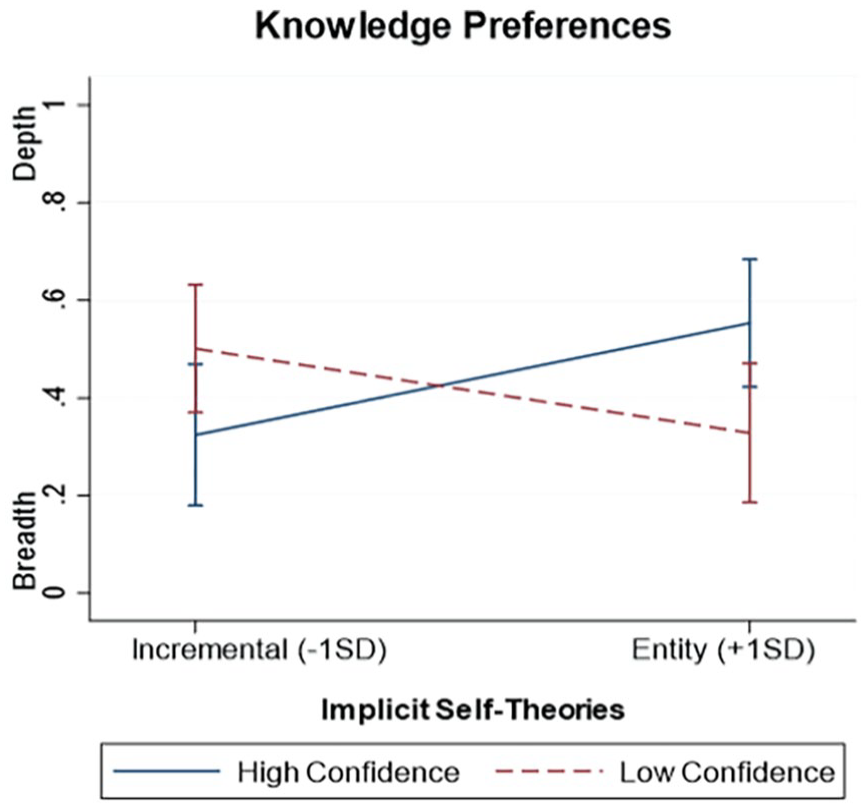
Knowledge Preference as a Function of Implicit Theory and Knowledge Confidence in Study 5
Incremental theorists marginally favored knowledge breadth options in the high confidence condition but knowledge depth options in the low confidence condition (β = −.17, SE = .098), t(153) = −1.77, p = .078. Conversely, entity theorists favored knowledge depth options in the high confidence condition but knowledge breadth options in the low confidence condition (β = .22, SE = .098), t(153) = 2.30, p = .023. Viewed differently, in the high confidence condition, incremental theorists favored knowledge breadth options and entity theorists favored knowledge depth options (β = .092, SE = .040), t(153) = 2.28, p = .024. In the low confidence condition, however, participants’ knowledge preference reversed; incremental theorists marginally favored knowledge depth options and entity theorists favored knowledge breadth options (β = −.069, SE = .034), t(153) = −1.78, p = .078.
Discussion
Study 5 demonstrated how undermining knowledge confidence reverses the knowledge type preferences of incremental and entity theorists. This reversal is consistent with prior work that demonstrates that the role of implicit theories in shaping individuals’ response to negative feedback (Blackwell et al., 2007; Burnette et al., 2013; Hong et al., 1999; Robins & Pals, 2002) and the role of uncertainty in motivating individuals to not only engage in greater information search (e.g., Edwards, 2003) but to strategically seek out information that restores certainty (e.g., Clarkson et al., 2017; Sawicki et al., 2011). Furthermore, the preference reversal of entity theorists in the low confidence condition aligns with work demonstrating that entity theorists are more likely to quit and move on to a different task when faced with failure (Dweck, 1999). These findings also align with research showing that entity theorists’ desire for simple explanations can lead them to change their otherwise persistent impressions when those impressions are sufficiently undermined (Plaks et al., 2001) while offering further evidence that individuals’ knowledge preferences can vary as a function of contextual factors (see Study 4).
Internal Meta-Analysis
To examine the totality of the effect of implicit theories on knowledge preferences, we conducted an internal meta-analysis. We used the five studies from this article which, after adjusting for sample size and scale reliability, included four significant effects and one marginal effect. 6 The results of the meta-analysis revealed a significant grand mean correlation of .21 (95% confidence interval [CI] = [.090, .33], z = 3.37, p < .001). Table 2 contains the individual statistics for each study and the pooled effect. Importantly, given the methodological artifacts present across the studies (i.e., continuous vs. categorical dependent measures, measured vs. manipulated independent variables, three-item vs. eight-item independent variable scales, student vs. online subject pools), we ran a series of sensitivity analyses. The main effect was robust across all artifacts: (a) operationalization of the dependent variable (rcategorical = .22, 95% CI = [–.11, .51] vs. rcontinuous = .24, 95% CI = [.12, .35]), (b) operationalization of the independent variable (rmeasured = .17, 95% CI = [.061, .27] vs. rmanipulated = .40, 95% CI = [.17, .59]), (c) measurement scale of the independent variable (rthree-item scale = .078, 95% CI = [–.001, .16] vs. reight-item scale = .24, 95% CI = [.12, .35]), and (d) type of subject pool (rstudent = .11, 95% CI = [–.002, .22] vs. ronline = .29, 95% CI = [.17, .40]). Note the results should be interpreted with appropriate caution due to the limited number of studies from which to draw (Higgins & Thompson, 2002; Huedo-Medina et al., 2006).
Internal Meta-Analysis.
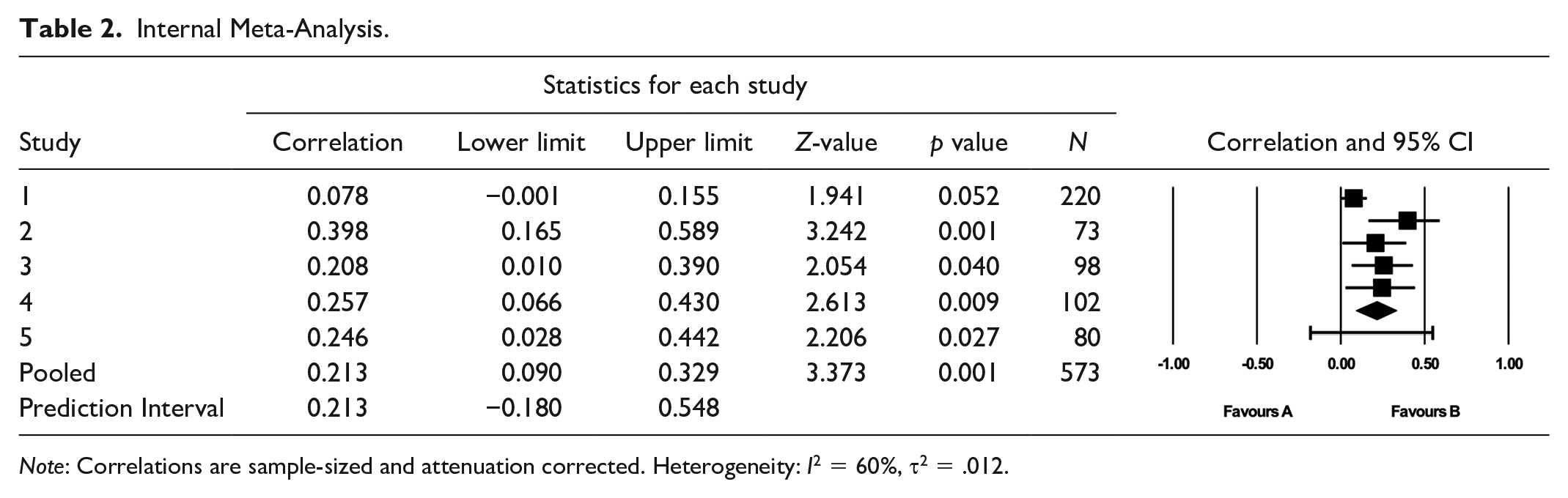
Note: Correlations are sample-sized and attenuation corrected. Heterogeneity: I2 = 60%, τ2 = .012.
General Discussion
A wealth of research demonstrates the value of individual differences in beliefs about the mutability of the self, with these differences shaping distinct approaches to learning (Dupeyrat & Mariné, 2005; Plaks et al., 2001; Yeager & Dweck, 2012). Consistent with work on meaning systems (Dweck & Yeager, 2019; Molden & Dweck, 2006), we suggest these differences extend to preferences for different knowledge types. Research distinguishes between knowledge breadth and knowledge depth (e.g., Clarkson et al., 2013), and the current research demonstrates that incremental theorists are fundamentally motivated to seek knowledge breadth and entity theorists are fundamentally motivated to seek knowledge depth.
In addition, the effect of implicit self-theories on individuals’ knowledge preferences was shown to be driven by different motivations (Dweck & Leggett, 1988). Specifically, incremental theorists tend to be learning-oriented; they believe the self can develop and therefore seek experiences that offer the potential to improve themselves over time. Conversely, entity theorists tend to be performance-oriented; they believe the self is fixed and, therefore, seek experiences that offer the potential to prove they possess positive qualities. We show these learning and performance motives shape the knowledge type preferences of incremental and entity theorists, respectively. Moreover, we find that general openness, perceived risk, or perceived quality is not sufficient to explain the knowledge preferences of incremental and entity theorists. That is not to say these alternative factors do not shape knowledge preferences more broadly, just that these factors are not sufficient to explain the knowledge preferences of incremental and entity theorists.
Finally, although preferences for breadth and depth knowledge naturally vary due to their ability to satisfy the underlying motivations of learning for incremental theorists and performance for entity theorists, these knowledge preferences can satisfy either goal depending on knowledge confidence. When confident in their knowledge of a specific subcategory, incremental and entity theorists preferred knowledge breadth and depth, respectively. When unconfident, however, these knowledge preferences reversed. This reversal aligns with prior research showing differences in how incremental and entity theorists respond to setbacks (Robins & Pals, 2002). Undermining confidence of subcategory knowledge leads incremental theorists to persist and thus narrow their knowledge preferences to learn more about the subcategory, and entity theorists to quit and thus widen their knowledge preferences to possibly identify a subcategory with better performance potential. Indeed, this result is consistent with research on the need for cognitive closure that finds that those seeking closure will engage in greater information search when it is strategically beneficial (e.g., Kruglanski et al., 1993; Otto et al., 2022). Interestingly, entity theorists may share a similar motivated close-mindedness (Kruglanski & Chun, 2008), whereby they widen their information search under conditions of uncertainty (e.g., Kruglanski et al., 1991).
Theoretical Contributions
This work offers fundamental insight into the information-seeking patterns of entity and incremental theorists driven by the distinct ways that these individuals are motivated to make sense of their world (Dweck & Yeager, 2019; Molden & Dweck, 2006). Moreover, beyond identifying an unexplored consequence of the meaning systems of incremental and entity theorists, these distinct knowledge preferences align with differences in the development of interests and passions. For instance, entity theorists’ preference for knowledge that refines (vs. expands) their existing knowledge coincides with research on implicit theories of interest, which shows that those who believe interests are fixed (vs. developed) are less engaged with topics outside of their existing interests (O’Keefe et al., 2018). Indeed, these findings support a broader perspective on implicit self-theories that suggests entity theorists prefer simpler representations of the capabilities of the self-concept than incremental theorists (e.g., Plaks, 2017). Separately, these findings raise the possibility that the chronic pursuit of specific knowledge types could affect the way knowledge is structured over time (e.g., Chi et al., 1981), which suggest differences in how incremental and entity theorists categorize knowledge and, therefore, offer an alternative perspective on classic areas in this literature (e.g., stereotyping; Levy et al., 1998). Finally, these findings offer a framework to consider individual differences in the development and progression of different types of expertise, as the chronic preference for knowledge breadth and depth may offer unique insight into the formation of generalists (i.e., knowing a little about a lot) versus specialists (i.e., knowing a lot about a little), respectively.
Limitations
The limitations of this research may constrain its generality (Simons et al., 2017). Our results are based on participants included from WEIRD populations, which may not generalize to more diverse populations. In addition, our procedures used a subset of choice options within experiential contexts. Although these contexts have direct relevance for the role of implicit self-theories on experiential choice (Murphy & Dweck, 2016), they may lack relevance to alternative learning contexts (e.g., education; Robins & Pals, 2002). Finally, some samples involve participants recruited from online platforms (i.e., Amazon Mechanical Turk, Prolific), and online data can pose a threat to data integrity despite the use of quality measures like attention checks (e.g., Dennis et al., 2020).
Future Directions
The influence of implicit self-theories on individuals’ knowledge preferences raises several avenues for future research. For example, the preference for knowledge breadth or depth should impact the type of knowledge that incremental and entity theorists ruminate on and have most accessible in memory. Knowledge accessibility plays a critical role in basic information processing, storage, and retrieval (e.g., Higgins, 1996), and documenting differences in the accessibility of knowledge breadth and depth would provide ample opportunity to explore such consequences of these knowledge preferences. Relatedly, although knowledge depth is conceptualized as refining an existing knowledge structure (e.g., Clarkson et al., 2013), individuals may initially seek knowledge depth when confronted with a new knowledge category. For instance, certain expectations about a novel category (e.g., high homogeneity; Linville et al., 1989) or specific search goals (e.g., exploitation; Hills et al., 2008) may motivate individuals to initially prefer knowledge depth over breadth. Finally, the present results may predict a sharp distinction in the experiential checklists of entity and incremental theorists (Keinan & Kivetz, 2011), as entity theorists might aspire to collect highly convergent experiences and incremental theorists might aspire to collect highly divergent experiences.
Conclusion
This research demonstrates the role of implicit self-theories in shaping individuals’ preferences for different types of knowledge (i.e., breadth and depth). The findings detail the role of learning and performance motivations in driving the knowledge preferences of incremental and entity theorists as well as the role of knowledge confidence in reversing these knowledge preferences. Collectively, our hope is that this research offers an alternative perspective to consider the information-seeking patterns of incremental and entity theories and thus the cognitive consequences of their meaning systems.
Supplemental Material
sj-docx-1-psp-10.1177_01461672231211635 – Supplemental material for Motivated Knowledge Acquisition: Implicit Self-Theories and the Preference for Knowledge Breadth or Depth
Supplemental material, sj-docx-1-psp-10.1177_01461672231211635 for Motivated Knowledge Acquisition: Implicit Self-Theories and the Preference for Knowledge Breadth or Depth by Cammy Crolic, Joshua J. Clarkson, Ashley S. Otto and Mary C. Murphy in Personality and Social Psychology Bulletin
Footnotes
Acknowledgements
The authors would like to thank Chris Janiszewski, Derek Rucker, and Zak Tormala for their feedback.
Authors’ Note
Study 3’s study design, hypotheses, planned sample size, inclusion/exclusion criteria, and planned primary analyses were preregistered and the details are available at: https://aspredicted.org/kb9yk.pdf. The remaining studies were not preregistered. The experimental questions and survey programming, data files, codebook, and the syntax used for analysis are available in the OSF data repository:  .
.
Declaration of Conflicting Interests
The author(s) declared no potential conflicts of interest with respect to the research, authorship, and/or publication of this article.
Funding
The author(s) received no financial support for the research, authorship, and/or publication of this article.
Supplemental Material
Supplemental material is available online with this article.
Notes
References
Supplementary Material
Please find the following supplemental material available below.
For Open Access articles published under a Creative Commons License, all supplemental material carries the same license as the article it is associated with.
For non-Open Access articles published, all supplemental material carries a non-exclusive license, and permission requests for re-use of supplemental material or any part of supplemental material shall be sent directly to the copyright owner as specified in the copyright notice associated with the article.
