




Abstract
This is the first meta-analysis to synthesize the literature on insecure attachment and negative attribution bias (NAB) from both developmental and social/personality attachment traditions. This meta-analysis is important because extant studies report inconsistent associations, making it difficult to draw conclusions about the nature of these associations. Based on 41 samples (N = 8,727) from 32 articles, we specify and compare the effect sizes of these associations across studies. Results confirmed positive associations between NAB and anxious and avoidant attachment dimensions and an insecure composite, with a medium effect size. Correlations were moderated by age group, type of attachment measurement, and cultural background. Our findings advance knowledge and build on attachment and attribution theories, reconcile mixed findings, and inform the development of NAB interventions. Important gaps in the literature are revealed that will inspire future research.
Keywords
Attribution theory represents an important framework for understanding how individuals interpret others’ behaviors and causes of events (Heider, 1958). While people make attributions to better understand social situations, perceptions of causality are often distorted by cognitive biases. One common category of attribution bias is negative attribution bias (NAB), which refers to negative biases of social information processing and distorted judgments in which individuals attribute hostility and blame to others’ behaviors (Crick & Dodge, 1994; Dodge, 1986). Individual differences in attributions styles exist; some people are more prone to NAB than others. Studies have shown that NAB is associated with trait aggression and exaggerated anger responses (Dodge, 2006).
NABs are associated with early life relational experiences. For example, insecure childhood attachment, child abuse, exposure to domestic violence, and peer rejection have all been identified as being positively related to hostile attributions in younger groups (Dodge, 2006). Studies show that NAB has been positively associated with aggression in children and adolescents, including physical aggression (e.g., hitting, fighting), relational aggression, and social exclusion (Werner, 2012). Attributional style tends to be stable and become more chronically available and accessible across time from childhood to adulthood, and negative life events can increase the tendency to make negative attributions (Gibb et al., 2006).
The typical types of NAB and main targets of NAB are distinct between adult and child samples. The targets of adults’ attributions include romantic partners, friends, and strangers and are usually measured by vignettes (i.e., attributional vignettes from Raikes & Thompson, 2008) and self-report scales (i.e., Relationship Attribution Measure, Fincham & Bradbury, 1992). For example, causal attribution (explaining why events and behaviors occur) and responsibility attribution (assigning accountability for an event) are both typical types of NAB in adult samples. Individuals with more negative causal attribution tend to interpret internal factors (rather than situational factors) as the cause of negative events. Individuals with more negative responsibility attribution tend to attribute failure to partners (rather than the self), seeing it as unchanging (Fincham & Bradbury, 1992; Pearce & Halford, 2008). In child samples, hostile attribution bias is the most typical type of NAB and refers to a tendency to interpret others’ ambiguous behaviors as hostile (mainly toward peers, parents, and teachers) (Dodge, 2006). The primary measures of hostile attribution are vignettes or stories presenting ambiguous situations to children who are asked to attribute a rationale for each negative event described (Dodge & Price, 1994).
Given the links between early and later life negative relational experiences and NAB, it is perhaps unsurprising that researchers have identified associations between attachment insecurity and NAB. We first summarize the principles of attachment theory and characteristics of attachment insecurity, before describing the literature linking attachment insecurity to NAB.
Attachment Theory
According to attachment theory, through interaction and consistency of experience in important relationships (e.g., of care or rejection) people develop relatively stable beliefs and chronically activated cognitive and behavioral templates. The internal working models of attachment shape individuals’ thoughts and behaviors in relationship-relevant situations (Baldwin et al., 1996; Bowlby, 1973). Individual differences in working models of attachment that reflect different relational experiences are known as attachment orientations. They are commonly thought to vary on two dimensions: anxiety regarding abandonment and avoidance of intimacy (Brennan et al., 1998). Insecure attachment is reflected in being high on either or both dimensions, by contrast, being low on both dimensions is defined as secure attachment. In addition to the anxious and avoidant dimensions, there is a further insecure orientation, disorganized attachment orientation, which results from fear of the caregiver or exposure to violence and is characterized by disoriented or ambivalent behaviors toward the caregiver (Wartner et al., 1994).
High attachment-related anxiety is expressed in hyperactivating strategies and seeing the self as unworthy of love and others as unreliable. Hyperactivating strategies are characterized by hypervigilance to threat and associated with negative emotions and behaviors when dealing with conflict (Harris & Darby, 2010). The avoidant attachment dimension, on the other hand, is expressed in deactivating strategies, seeing others as unreliable and untrustworthy. Avoidance is associated with higher hostility, negativity, and distrusting views of the social world in general, relative to security (Wright, 2017). Thus, attachment anxiety and avoidance are differentially associated with maladaptive emotion regulation strategies (Kobak & Sceery, 1988). Conversely, secure individuals regulate emotions optimally and seek support and rely on others when needed, seeing the self as worthy of love and others as trustworthy and available (Baldwin et al., 1996). Disorganized attachment is associated with inconsistent emotion regulation strategies and the inability to view the primary attachment figure as a secure base or to seek support when needed (Wartner et al., 1994).
There are several methods of measuring attachment style, specific to different age groups. The use of different measures is underpinned by distinct conceptualizations of attachment between the developmental and adult attachment literatures. The developmental literature comes mostly from a psychoanalytic tradition and conceptualizes attachment processes from this perspective, while the adult attachment literature comes mostly from a personality/social psychology tradition (Blatt & Levy, 2003), although this is not exclusively the case. For infants, the most commonly used measure is the Strange Situation paradigm, in which infants and caregivers are separated while being observed in a laboratory setting (Ainsworth et al., 1978). The behavior during the separation and on reunion are the dependent variables of interest. While securely attached children show some distress when the caregiver leaves, they are easily comforted on their return. By contrast, avoidantly attached children show little emotion on caregiver departure or return and anxiously attached children are very upset at the departure and difficult to comfort on the caregiver’s return. As cognitive and language abilities develop, pre-school and school-aged children’s attachment styles can be measured by language-based assessment. For example, the beginning of a story with an attachment theme may be read to children by the experimenter followed by a requirement that they complete the story (i.e., Manchester Child Attachment Story Task, Green et al., 2000). Story completions typically reveal the child’s expectations of attachment figures and in this way their attachment style. For adolescents, evidence-based self-report scales (Security Scale, Kerns et al., 1996) and semi-structured interviews (Child Attachment Interview, Target et al., 2003) which indicate attachment styles or dimensions are used. Adult attachment styles are measured by self-report scales (i.e., Experiences in Close Relationships Scale, Brennan et al., 1998) and by semi-structured interviews about current attachment relationships (i.e., Attachment Style Interview, Bifulco et al., 2008) and are from a more social/personality research tradition, or semi-structured interview about parental attachment relationships such as Adult Attachment interview (George et al., 1996) which assesses state of mind with regard to attachment and are from a developmental research tradition.
Insecure Attachment and NAB
According to the Social Information Processing (SIP) theory, when individuals come into social situation, a series of mental operations take place in sequence, from deciphering social signs to creating behavioral responses (Crick & Dodge, 1994). Attachment working models and SIP are conceptually connected (Gifford-Smith & Rabiner, 2004). Internal attachment working models, based on past experiences and memories with attachment figures, function to guide the processing of social cues, influencing social behavioral scripts (Crick & Dodge, 1994). Indeed, while secure individuals are likely to perceive positive and benign information in interpersonal interactions the opposite can be true of individuals high in attachment anxiety and/or avoidance (Dodge, 2006).
The mechanisms underpinning the association between attachment anxiety and NAB and those underpinning the association between attachment avoidance and NAB are distinct. Individuals high in attachment anxiety report emotional distress because their attachment needs are not satisfied (Collins et al., 2006). In interactions, anxious individuals tend to choose punishing behavior to attempt to control their attachment figure’s behavior and may express negative emotions (such as anger) when others are not responsive to their needs (Bowlby, 1973; Collins et al., 2006). These patterns of behavior can lead to negative responses from attachment figures and thus generate negative attributions in the highly anxious individual (Sümer & Cozzarelli, 2004). Avoidant-attached individuals can respond negatively when attachment figure needs attention or intimacy. They are also generally less constructive and more negative in coping with interpersonal conflict (Wright, 2017). Negative and defensive strategies are used by avoidant individuals to protect themselves; these may include NABs (Schumann & Orehek, 2019). Numerous studies of adult and child samples have demonstrated stronger correlations for NAB and attachment anxiety than for NAB and avoidance (Boska, 2014; Kamkar et al., 2012).
Parent–Child Attachment and NAB
NAB has been identified in attachment-insecure children. A longitudinal study found that attachment security in infancy predicted NAB 4 years later (National Institute of Child Health and Human Development Early Child Care Research Network, 2003). In addition, more security to fathers in sixth-grade boys significantly predicted less NAB toward friends in hypothetical scenarios (Dwyer et al., 2010), and low quality of attachment to mother was found to significantly predict hostile attribution with unspecified peers (Simons et al., 2001). In adolescence, insecurely attached individuals felt less support from parents and tended to express more dysfunctional anger and maladaptive attributions (Dwyer et al., 2010). Taken together, these findings suggest that insecure attachment and NAB are positively associated among child and adolescent samples.
Studies of NAB and insecurity in child samples show inconsistency in findings. For instance, one study reported that both attachment anxiety and avoidance to parents were positively correlated with NAB (Fitter, 2020), while another study (Kamkar et al., 2012) found that the relationship between attachment anxiety to mother and NAB was significantly stronger than attachment anxiety to father and NAB. Furthermore, in this study attachment avoidance to parents (both mother and father) and NAB were not significantly correlated. However, these studies have used different attribution measures (some focused on general negative attributions, some emphasized NAB in peers), which might be one reason for inconsistent findings. Thus, the mixed results are reasons why the literature on NAB and attachment insecurity requires synthesizing.
Adult Attachment and NAB
Insecurity also makes it difficult for adults to interpret partners in a favorable light (Helfritz-Sinville & Stanford, 2014). Insecure-attached individuals tend to negatively interpret ambiguous partner behaviors (Shaver & Mikulincer, 2002). Studies have found that both adult attachment anxiety and avoidance are positively related to NAB of partner’s behaviors (Collins et al., 2006; Pearce & Halford, 2008).
Although several studies have examined the relationship between insecure attachment and NAB in adults, results have been inconsistent. Some have reported positive relationships between NAB and both attachment dimensions (e.g., Boska, 2014; Ly, 2010). Interestingly, in these studies, anxious attachment and NAB were reported to have a stronger positive association than avoidant attachment and NAB. Other studies report positive associations between NAB and both dimensions but for one sample (husbands or wives) and not another. Gallo and Smith (2001) found positive relationships between husbands’ (but not wives’) anxious and avoidant attachment and their NAB. By contrast, Pearce and Halford (2008) reported that wives with high attachment anxiety or high attachment avoidance showed higher NAB compared with those with low attachment anxiety or avoidance (respectively), but only husbands’ attachment anxiety was positively associated with NAB.
Despite the mixed findings (some positive associations, some no associations), interventions designed to improve social functioning and interpersonal relationships in adults and children often target NAB (Houts & Horne, 2008; Kimmes et al., 2015). For example, attribution therapies help distressed couples refrain from making negative partner attributions, while the Cognitive Bias Modification of Interpretations (CBM-I) procedure for children helps children interpret ambiguous social events in positive ways (Orchard et al., 2017). To synthesize the inconsistent literature and provide clarity on the exact nature of the relationships between the attachment dimensions and NAB by meta-analysis as we do here, is important. It may be informative for the refinement of current attribution-based interventions for improving relationships, because current interventions are considered by some researchers to be short lasting in effectiveness (Houts & Horne, 2008). Such researchers suggest that NABs and their impact on relationship satisfaction might reflect more fundamental issues involving attachment. Instead of changing attributions for isolated events, therefore, it may be more fruitful and produce more long-lasting changes in attributions, to consider attachment when developing such interventions (Kimmes et al., 2015).
Potential Moderators of the Relationship Between Attachment Orientation and NAB
In conducting the current meta-analysis, we considered potential moderators of the relationship between insecure attachment and NAB.
First, we examined age group and type of relationship (adult attachment or parent–child attachment) as potential moderators of the relationships between attachment dimensions and NAB. We included adult and child samples, in other words, both parent–child attachment and adult–adult attachment were analyzed. Previous studies suggest that attachment insecurity in both types of samples is positively related to NAB (Helfritz-Sinville & Stanford, 2014) but no study has synthesized NAB and attachment research from both the developmental and social/personality attachment research traditions, making the current meta-analysis the first to do so. To make the results as age specific as possible, we examined the moderator of age in child, adolescent, and adult age groups.
Second, we examined gender as a potential moderator. While attachment security has been related to NAB in both male and female adult samples, some studies showed these associations differ for husbands or wives (see above; e.g., Gallo & Smith, 2001). Some studies report that females are more interpersonally orientated than males, and this may be reflected in differential associations between attachment insecurity and NAB, with the relationships being stronger for women than for men (McElwain et al., 2008).
Third, we examined participants’ cultural background as a potential moderator. While cultural differences have been discussed in relation to attachment theory and attribution theory separately (van IJzendoorn & Kroonenberg, 1988), few studies have considered cultural differences in the link between attachment and attributions. We here took the opportunity to explore the role of cultural background, comparing North American, European, and Middle Eastern cultural backgrounds in an exploratory capacity.
Fourth, we examined the type of parental attachment figure (mother or father) in the parent–child attachment relationship as potential moderator. While mother and father have similar influences on child secure base behaviors, studies suggest that mother–child attachment is more significant in the development of a child’s internal emotional world, and father–child attachment is more significant for the development of the child’s external world (such as skills in interaction with peers, Pinto et al., 2015).
Finally, we examined measurement type as a potential moderator. The studies included in this meta-analysis used observation measures, such as the Strange Situation, and various self-report scales to evaluate attachment orientation. It has been suggested that observation and interview measures may capture more unconscious processes related to attachment than self-report scales (Ravitz et al., 2010). On this basis, it is informative to explore measurement type as potential moderator of the relationship between insecure attachment and NAB.
The Present Meta-Analysis
This meta-analysis synthesized relevant studies and current findings to obtain an overall specification of the relationship between attachment insecurity and NAB. In addition, the meta-analysis aimed to specify and compare the size of the relationship between each attachment dimension and NAB and to examine the role of potential moderators of these relationships.
To conduct a comprehensive analysis and include the maximum number of high-quality studies, we included participants of all ages and both adult–adult attachment and parent–child attachment. Given the limited number of child studies (n = 8) of NAB and attachment insecurity we deemed it not appropriate to conduct separate meta-analyses for each of these groups. We examined anxious attachment, avoidant attachment, and a composite insecure attachment (the composite consists of two types: anxious and avoidant dimensions collapsed together, or insecurity within a simple secure versus insecure distinction). The NABs included in the meta-analysis were hostile attribution bias (e.g., Collins et al., 2006), negative/critical attributions for partners’ behavior (e.g., Fincham & Bradbury, 1992), negative attributions related to recent conflict within romantic relationship (e.g., Sanford, 2010), and pessimistic attributional style (e.g., Kimmes et al., 2015).
We hypothesized that both attachment anxiety and avoidance would be positively related to NAB (Hypothesis 1 [H1]); and the correlation would be stronger for the anxiety dimension of attachment than for avoidance (Hypothesis 2 [H2]); and there would be a positive relationship between the composite insecure attachment and NAB (Hypothesis 3 [H3]). Furthermore, we explored whether the relationship between insecure attachment and NAB would be moderated by age group, gender, participants’ cultural background, type of parental relationship, the attachment figure in child studies, study design, and the type of instrument used to measure attachment style and attributions.
Method
This meta-analysis followed the Preferred Reporting Items for Systematic Reviews and Meta-Analyses (PRISMA) guidelines. Our preregistration of the meta-analysis is available on PROSPERO (project ID: CRD42020221942). Furthermore, all data, materials, and code can be found on the Open Science Framework (OSF) project page (https://osf.io/guz5j/).
Search Strategy
All studies on the relation between attachment styles and NAB were searched in the following databases: Google Scholar, PsycInfo, Science Direct, Web of Science, ProQuest, PsycArticle (including dissertations/theses in ProQuest). Within all databases, the following strings were searched: “attachment” OR “attachment style*” OR “attachment orientation*” OR “secure attachment” OR “insecure attachment” in combination with “attribution” OR “negative attribution*” OR “negative attribution bias*” OR “hostile*” OR “intent attribution” OR “attribution bias*” OR “hostile attribution*” OR “information processing.” We included all studies in the English language that were completed before July 2021.
Included/Exclusion Criteria
A PRISMA flow diagram for search strategies and selection processes of studies is presented in Figure 1. We found 245 references through the database searching. After duplicates were removed, there were 154 candidate articles remaining. First, the selection was based on titles and abstracts, which resulted in the exclusion of 75 studies that were not relevant. Subsequently, we screened and evaluated the 79 remaining articles in the full-texts, which resulted in the exclusion of 47 studies. Thus, a total of 32 articles were included in the current meta-analysis. The inclusion and exclusion criteria were the following: (a) repeated published and repeated samples excluded; (b) studies were excluded if samples were criminals or patients who were being treated at the time of testing; (c) studies were required to have assessed both attachment and attribution; and (d) studies were required to have reported adult attachment or parent–child attachment (instead of brand attachment, place attachment), and reported negative attribution (instead of benign attribution, support attribution, global attribution, personality attribution, moral attribution, humanity attribution or achievement attribution 1 ); (e) studies were excluded if the correlation coefficient between attachment style and negative attribution was not available. We tried to contact the corresponding authors of eight studies to obtain missing coefficients. The coefficients for two of these studies were provided and included in this meta-analysis. However, the remaining six articles lacked necessary values to calculate the r coefficient.
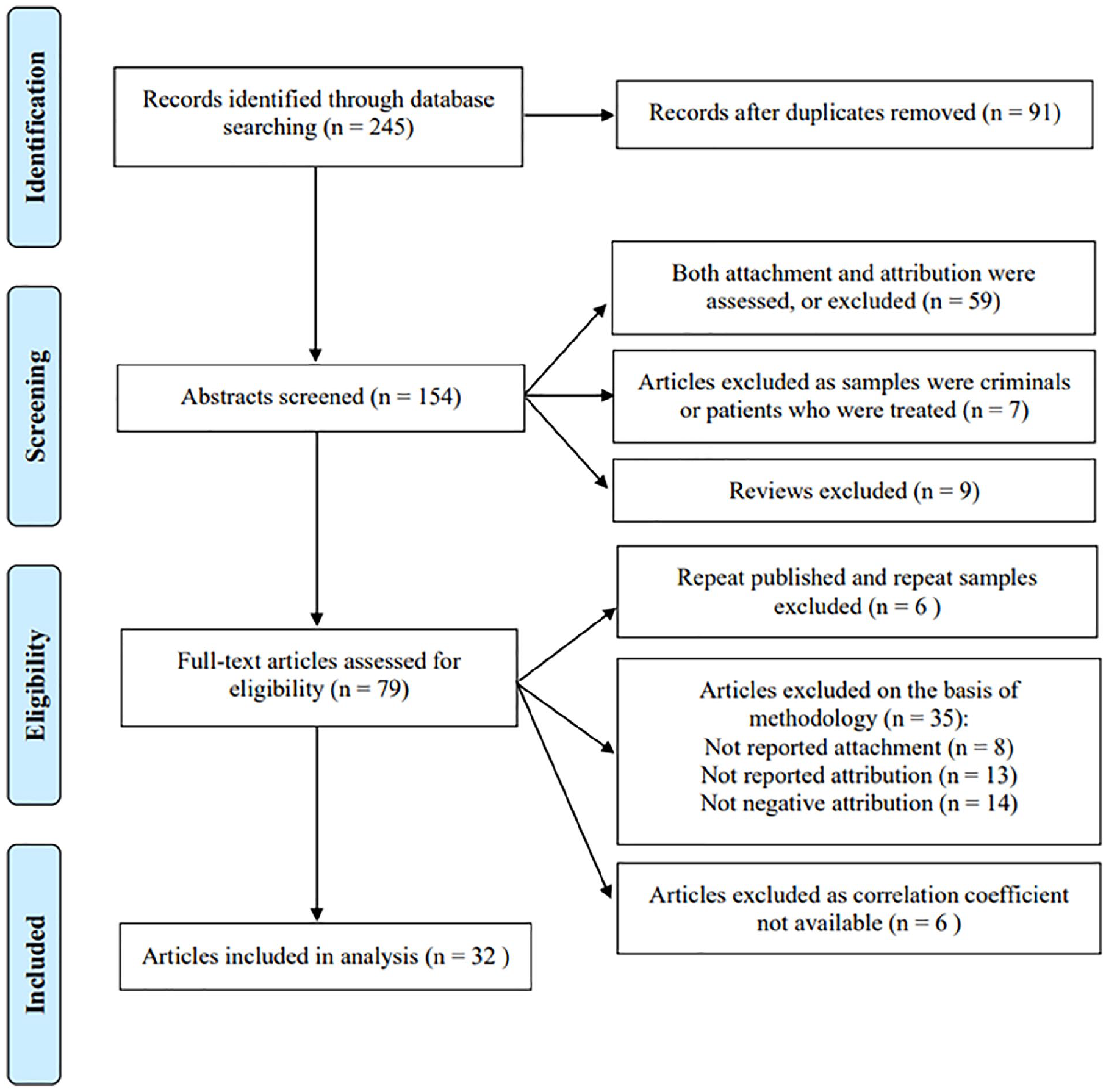
Preferred Reporting Items for Systematic Reviews and Meta-Analyses (PRISMA) systematic review checklist.
The first author completed the literature searches and removed any duplicates that had been included. Then all the processes of screening and evaluating were completed by the first author and an independent researcher.
Data Extraction
After the articles were selected, we coded to extract data regarding (a) author(s) and year of publication; (b) sample characteristics (sample size, mean age, gender composition, country); (c) design characteristics (type of design [cross-sectional vs. longitudinal], measure used to assess attachment, attachment figure [parents [both or mother or father] vs. romantic relationship partner], measure used to assess attribution); and (d) necessary data to compute effect size for each study. Both the author and an independent coder completed the data extraction. The inter-rater reliability was good (around 96%) and discrepancies regarding eligibility were resolved through discussion. If a study reported multiple independent samples at the same time, we coded them separately. A total of 32 articles with 41 independent studies were included in the current meta-analysis.
Data Analysis
The statistical analyses were conducted using the metafor package (Version 1.4-0; Viechtbauer, 2010) for R program. Attachment insecurity was reported inconsistently across studies: (a) some studies made only secure versus insecure distinction between styles (n = 18); (b) some reported both attachment anxiety and avoidance (n = 12); (c) some reported attachment anxiety, attachment avoidance, and insecurity (the combination of anxiety and avoidance) together (n = 3); (d) and some just reported one insecure dimension/style (either anxiety or avoidance) (n = 8). Therefore, the correlation coefficient represents the strength of the relationship between the different attachment indices and NAB; in this way, one study may report more than one correlation coefficient value (such as situation two and three, described above). Two of these studies reported both attachment insecurity and attachment disorganization. To ensure homogeneity of main variables, we used the coefficient of NAB and attachment insecurity (Granot & Mayseless, 2012; Zajac et al., 2020). In addition to examining the relationship between anxiety/avoidance and NAB, we explored the relationship between a composite of attachment insecurity and NAB. Our composite of insecurity is made up of attachment anxiety and avoidance collapsed together, such as described in (c) above, and insecurity as assessed by a secure-insecure distinction as in (a) above (e.g., as is the case in the Inventory of Parent and Peer Attachment [IPPA], a measure of attachment where higher scores indicate more secure attachments; Hutchison, 2003). Thus, three effect sizes were computed in total: the anxious attachment effect size, the avoidant attachment effect size, and the composite insecure attachment effect size.
We computed the correlation effect size and its 95% confidence interval (CI) for each study. As Cohen’s (1992) criteria, r of .10, .30, and .50, respectively, represent small, medium, and large effect size. The random effects model was tested, because it allows for wider generalization and is more likely to fit the actual sampling distribution (Borenstein et al., 2009). Then, we computed the “one study removed” sensitivity analysis to examine stability of results and to test whether the effect size changed significantly after removing each study.
For the heterogeneity test, both Q-tests (when significant, indicates heterogeneity in the sample) and I 2 percent were used. The I 2 percent represents the percentage of variation across studies that is due to heterogeneity instead of chance (Higgins & Thompson, 2004). And I 2 percent has high power to test heterogeneity, especially when the number of studies is small. The value of 25%, 50%, and 75% of I 2 respectively means low, medium, and high heterogeneity (Higgins & Thompson, 2004). Funnel plot and Egger t test were used to test the bias detection (Egger et al., 1997).
Potential moderators were calculated by subgroup analysis, including age group (children, adolescents or adults 2 ), gender (male or female), cultural background (North American, European or Middle Eastern), relationship type (adult–adult attachment or parent–child attachment 3 ), attachment figure of parent–child attachment relationship (mother or father), and measurement of main variables (self-report scale or observation; self-report scale or self-report vignettes/ stories). It should be noted that we coded Australia as European because its predominant cultural influence is European (Berndt, 1951). The studies from Israel and Iran were coded as Middle Eastern samples.
Results
Study Characteristics
There were a total of 32 articles (41 independent studies) with 8,727 participants that met the criteria and were included in this meta-analysis. Characteristics of these studies are presented in Table 1. From these, 54.35% of the participants were female; the mean age for the whole sample was 18.7 years.
Characteristics of Included Studies.
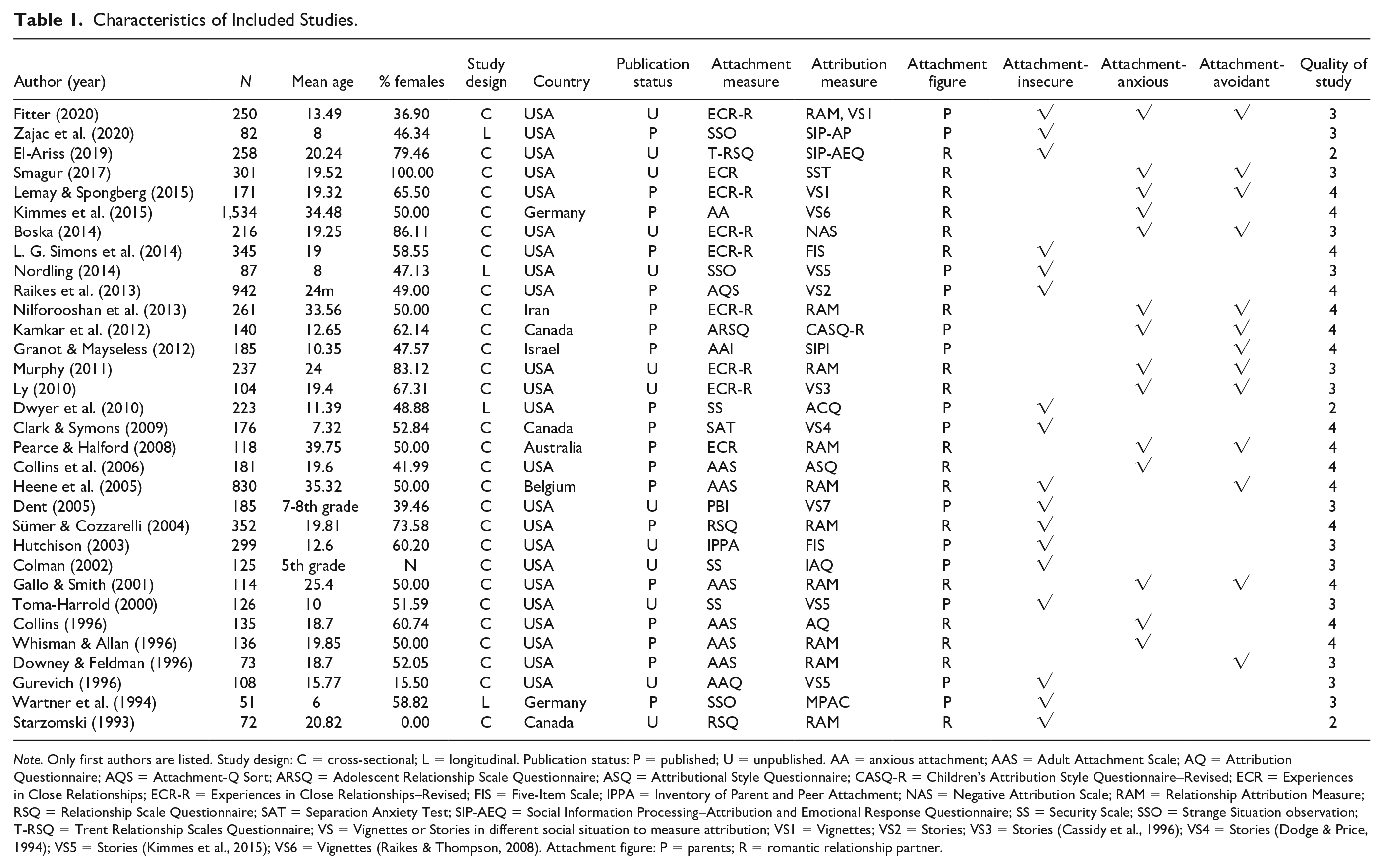
Note. Only first authors are listed. Study design: C = cross-sectional; L = longitudinal. Publication status: P = published; U = unpublished. AA = anxious attachment; AAS = Adult Attachment Scale; AQ = Attribution Questionnaire; AQS = Attachment-Q Sort; ARSQ = Adolescent Relationship Scale Questionnaire; ASQ = Attributional Style Questionnaire; CASQ-R = Children’s Attribution Style Questionnaire–Revised; ECR = Experiences in Close Relationships; ECR-R = Experiences in Close Relationships–Revised; FIS = Five-Item Scale; IPPA = Inventory of Parent and Peer Attachment; NAS = Negative Attribution Scale; RAM = Relationship Attribution Measure; RSQ = Relationship Scale Questionnaire; SAT = Separation Anxiety Test; SIP-AEQ = Social Information Processing–Attribution and Emotional Response Questionnaire; SS = Security Scale; SSO = Strange Situation observation; T-RSQ = Trent Relationship Scales Questionnaire; VS = Vignettes or Stories in different social situation to measure attribution; VS1 = Vignettes; VS2 = Stories; VS3 = Stories (Cassidy et al., 1996); VS4 = Stories (Dodge & Price, 1994); VS5 = Stories (Kimmes et al., 2015); VS6 = Vignettes (Raikes & Thompson, 2008). Attachment figure: P = parents; R = romantic relationship partner.
Quality of Included Studies
Included studies with high risk of bias can invalidate the results of a meta-analysis; therefore, we assessed the quality of individual studies using the following criteria (Dalili et al., 2015; Molloy et al., 2014): (a) Sufficient sample size (above 85). The power analysis (with power 80% β = .20 and significance level α (two-tailed) =.05) showed 85 was the minimum sample size when the expected correlation coefficient was a medium level (r = .30) (Cohen, 1992); (b) measurement of attachment styles: the study used either established questionnaire or well-validated observation paradigm and the inter-rater reliability for categorical classifications was at least .70; (c) measurement for intent attribution: either established measurement (scale/vignette stories) or the authors reported how the measurement was devised and the Cronbach’s alpha of at least .70; (d) peer review. Each study scored 1 point for each criterion item that was met. The inter-rater consistency of first author and the independent coder was .94.
Effect Size
Effect sizes were reported as correlations between attachment styles and NAB. It should be noted that we only included one correlation value for each independent sample when calculating the composite insecure effect size; otherwise, it affected the weight of the sample in the entire pool. Five studies reported separate effect sizes for wives and husbands (Gallo & Smith, 2001; Heene et al., 2005; Kimmes et al., 2015; Pearce & Halford, 2008) or girls and boys (Nordling, 2014). They were independent samples and therefore we coded the effect sizes for women and men separately. Four longitudinal studies, we collected data at multiple time points and assessed attachment style several times; however, the NAB was only assessed once rather than multiple time points (Dwyer et al., 2010; Nordling, 2014; Wartner et al., 1994; Zajac et al., 2020). In coding, we extracted the correlation effect size for when attachment and NAB were assessed at the same time.
To calculate the composite insecure attachment effect size, we used these criteria to confirm correlation coefficient of each independent sample: (a) If the correlation value of insecure attachment (the combination of anxiety and avoidance) and NAB was reported, we used this value to calculate effect size directly; (b) if the correlation value of insecure attachment (the combination of anxiety and avoidance) and NAB was not reported, we calculated the average correlation across attachment anxiety and avoidance with the NAB score to compute the composite effect size.
The composite insecure attachment effect sizes were calculated for the correlation between attachment and NAB. The result (k = 41) indicated there was a significant positive correlation between composite insecure attachment and NAB across studies, of moderate size (r = .30, 95% CI [.24, .36], p < .001) with significant heterogeneity (I2 = 87%). We also used forest plot (see Figure 2) to illustrate effect sizes from largest to the smallest. The squares represented the effect sizes for the correlation between insecure attachment and NAB with the horizontal lines representing the 95% CI. The vertical solid line corresponded to a correlation of 0. The effect sizes ranged between .05 to .65 and the average effect size was .30 (vertical dashed line). The “one study removed” sensitivity analysis revealed that these results were stable.
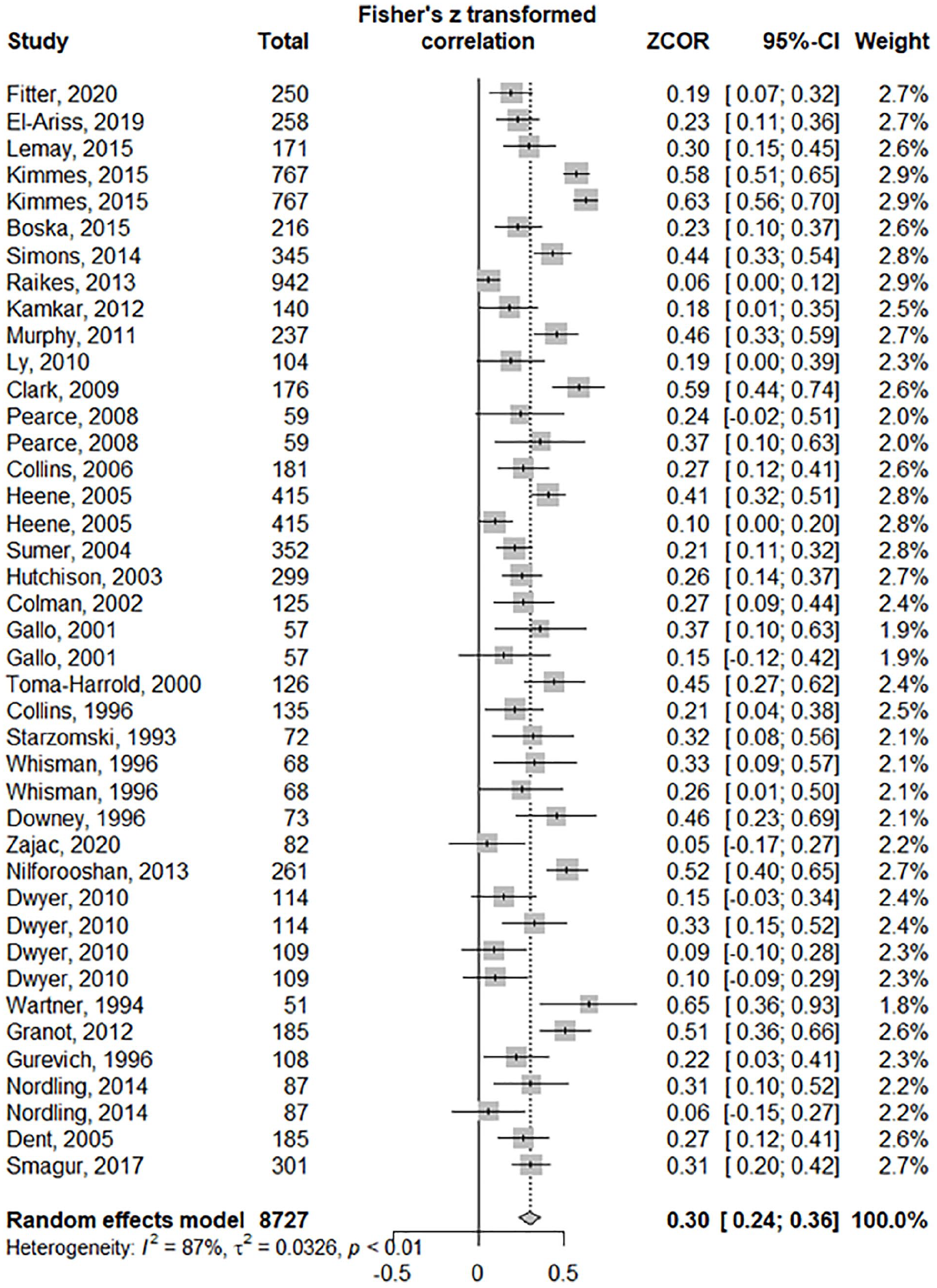
Forest plot of all fisher-transformed correlations and their 95% CIs.
Specifically, the correlation effect size for attachment anxiety/avoidance and NAB were both significantly positive and medium in size, as hypothesized in H1 (attachment anxiety and NAB: r = .34, 95% CI [.25, .42], p < .001; attachment avoidance and NAB: r = .29, 95% CI [.19, .42], p < .001) (see Table 2). Hypothesis 2 was not supported. The r value for attachment anxiety was higher than that for attachment avoidance, meaning that the correlation with NAB was stronger for the anxiety dimension of attachment than avoidance; however, the difference was not statistically significant (t = 1.42, p = .17). As hypothesized in H3, the correlation effect size for composite insecure attachment and NAB was also significantly positive and medium in size (r = .30, 95% CI [.24, .36], p < .001). We also found significant heterogeneity across the samples (k = 18, I2 = 84%; k = 16, I2 = 89%; k = 41, I2 = 87%, respectively).
Meta-Analysis of Attachment and Negative Attribution Bias.
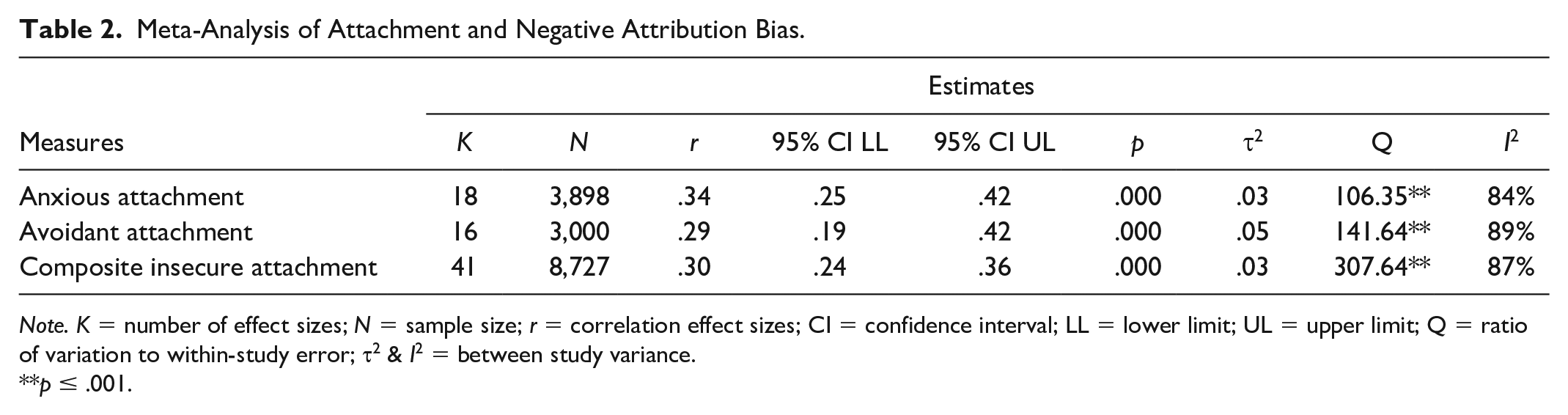
Note. K = number of effect sizes; N = sample size; r = correlation effect sizes; CI = confidence interval; LL = lower limit; UL = upper limit; Q = ratio of variation to within-study error; τ2 & I2 = between study variance.
p ≤ .001.
Moderator Analysis
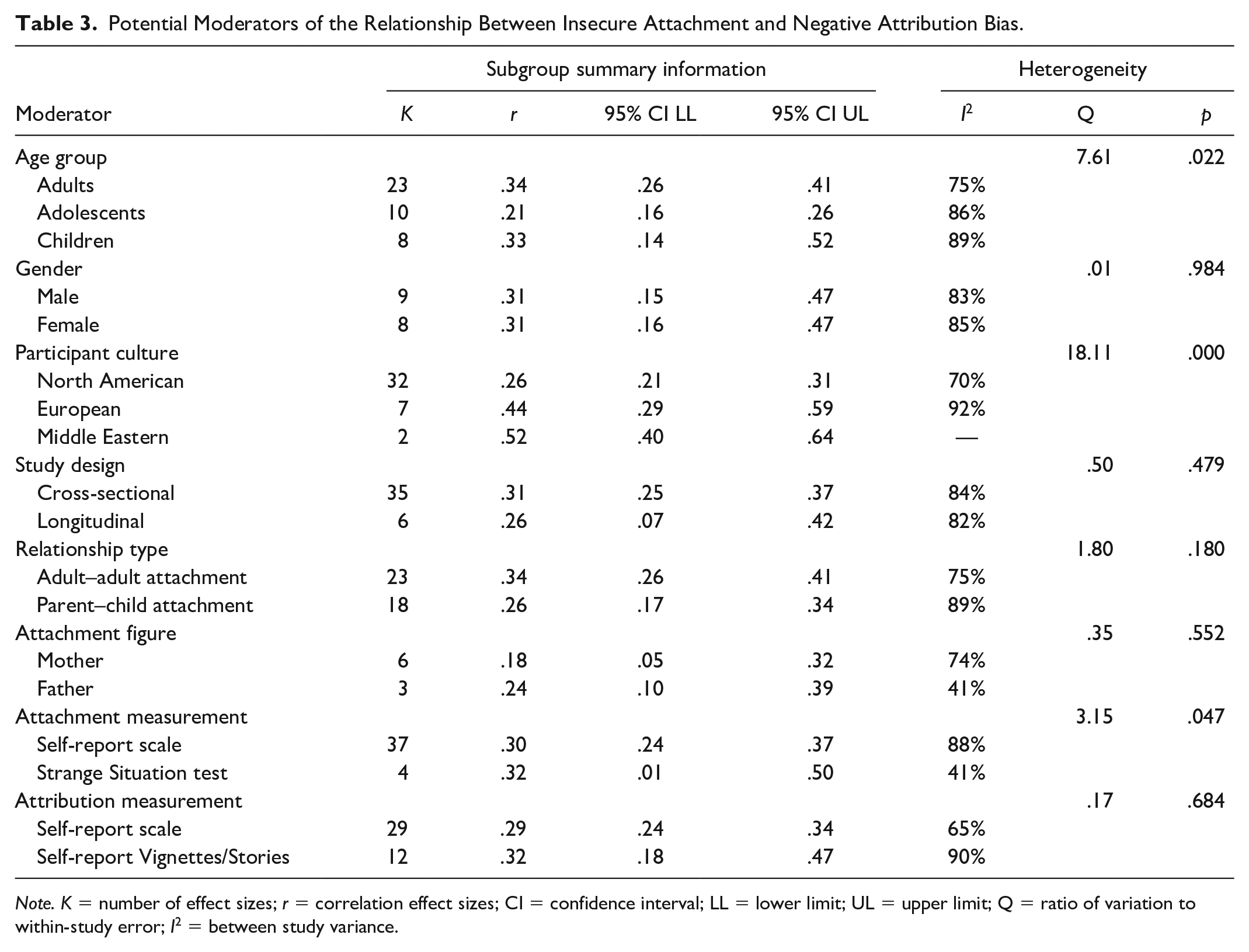
The moderator analyses for the relationship between attachment and NAB are shown in Table 3. These moderators were examined one at a time (not all the moderators in one multiple model). Previous studies and the Cochrane handbook recommend the multiple model when there are several moderators to be taken into consideration (Klein et al., 1968). However, large sample sizes are needed when the multiple model is used, since multiple models are estimated with maximum likelihood methods (McNeish & Stapleton, 2016). Thus, we chose the one-variable-at-a-time approach subgroup analyses to test moderator effects (Higgins & Thompson, 2004). As suggested, subgroup analysis was more appropriate than overall random-effects analysis when researchers aimed to make comparisons across levels of categorical variables (Jak & Cheung, 2018), and the interpretation of subgroup analysis can bring researchers informative results that would not be obtained from the overall analysis (Richardson et al., 2019). The moderator analysis was calculated for composite insecure attachment and not the different attachment dimensions, separately, due to the sample size. We found no publication bias in this meta-analysis (details and funnel plot can be found in the Supplemental Material).
Potential Moderators of the Relationship Between Insecure Attachment and Negative Attribution Bias.
Note. K = number of effect sizes; r = correlation effect sizes; CI = confidence interval; LL = lower limit; UL = upper limit; Q = ratio of variation to within-study error; I2 = between study variance.
There were three significant moderators. The first was age group (Q = 7.61, p < .05). The effect size for adolescents was lower than for children and adults. The measurement of attachment was the second significant moderator (Q = 3.15, p < .05). The effect size for attachment-related self-report scales was slightly lower than for observation measures, the Strange Situation paradigm. In addition, the effect sizes of European and Middle Eastern samples were significantly higher than North American samples (Q = 18.11, p < .001). All other potential moderators tested here, that is gender, study design, type of relationship, attachment figure of child studies, attribution measurement, and publication bias, were not significant.
Discussion
To advance current knowledge and clarify the nature of the association between NAB and attachment, we conducted a meta-analysis. This meta-analysis is the first to synthesize current findings, specify, and compare the correlation effect size of the relationship between insecure attachment dimensions and NAB, from both the developmental and social/personality attachment research traditions. We found significant positive associations between attachment anxiety and NAB, between attachment avoidance and NAB, and between a composite of insecure attachment and NAB, all with medium effect sizes. Attachment insecurity increased the tendency of NABs. In line with SIP theory (Gifford-Smith & Rabiner, 2004), attachment orientations are important when it comes to processing social cues and making attributions (Dwyer et al., 2010) as they bias information processing in orientation-congruent ways (Baldwin et al., 1996; Rowe & Carnelley, 2003). Individuals with insecure internal working models have negative views of the self, others, and social relationships, and tend to attribute negatively. Conversely, secure working models of attachment are characterized by positive views of self, others, and social relationships, and this is associated with less biased and more accurate responses and more positive attributions of others (Clark & Symons, 2009).
In addition, the correlations are slightly higher for attachment anxiety and NAB than for avoidance and NAB, both in adult and child samples (e.g., Boska, 2014; Kamkar et al., 2012), but, contrary to our hypothesis, this difference was not statistically significant. Our hypothesis was based on findings such as those reported by Collins et al. (2006), who reported that anxious-attached individuals tended to attribute partner’s behaviors to internal causes and believe their partner to be blameworthy. Individuals with high (versus low) attachment-related anxiety are also reported to perceive higher levels of conflict in their relationships and respond to conflict in more negative ways (Feeney, 2011). In explaining the statistical non-significance, it may be useful to consider the possibility that for individuals in romantic relationships, the quality of the relationship may have acted as a moderator in the association between attachment anxiety and NAB (Collins et al., 2006). Unfortunately, we were not able to examine the moderating effect of relationship quality as only three included studies assessed it in the association between attachment and NAB (i.e., Kimmes et al., 2015; Murphy, 2011; Sümer & Cozzarelli, 2004). We can therefore draw no firm conclusions; this is an area for future research.
Moderators
Three significant moderators emerged in the meta-analysis. These were age group, type of attachment style measure, and participants’ cultural background. With regard to age, adolescent studies showed a smaller effect size than did child or adult studies; however, no significant difference was found between effect sizes for child and adult samples. In addition, the effect sizes between NAB and parent–child attachment/adult–adult attachments did not differ. These findings suggest that the association between attachment insecurity and NAB from childhood to adulthood has a similar effect size but is lower in adolescence. Adolescence can be one of the most important developmental transitions in life, including physical, cognitive, and social changes occurring within a relatively short time frame (Fitter, 2020). An attachment dilemma may occur for adolescents. Adolescents are willing to maintain association with parents, yet they also try to explore new social roles by distancing from the family, putting more emphasis on peer relationships and commencing bonds with romantic partners (Dent, 2005). This ambivalent and developing relationship to attachments may be reflected in the observed effect size of attachment insecurity and NAB.
The effect size from studies using attachment-related self-report scales was significantly lower than for those using observation paradigms (e.g., Strange Situation). Previous studies have identified important differences between measures that might be reflected in these findings. First, there are many approaches to conceptualizing, measuring, and classifying attachment styles, in particular for different age groups as mentioned above. Jacobvitz et al. (2002) suggest that self-report attachment questionnaires may cause anxiety about relationships, triggering defense strategies characteristic in insecure individuals, thus reducing the accuracy of their reports by rendering responses more extreme. A recent meta-analysis of attachment measurement found that the mean attachment security score derived from self-report measures was significantly higher than that for observational measures (Cadman et al., 2018), reflecting underlying conceptual differences between measure types. It should be noted that, in the moderator analysis, attachment measurement and age group were partly conflated, since observation was often used to assess parent–child attachment and self-report was often used to assess adult attachment. The different effect sizes of two types of attachment measurement may reflect the distinct conceptual approaches to attachment orientation measurement taken by the developmental and adult attachment research traditions. Although this difference exists, both approaches (observation and self-report scale) are similarly linked to numerous attachment-relevant conceptions, such as social information processing, emotion regulation, aggression, and relationship satisfaction (Dodge, 2006; Dodge & Price, 1994).
We also found that cultural background was a significant moderator. Although the North American samples showed a lower effect size in the link between attachment and NAB, the number of included studies was different: North American (n = 32), European (n = 7), and Middle Eastern (n = 2). It was noteworthy that we interpret this finding with caution due to the limited number of included European and Middle Eastern samples. In addition, as mentioned in the Introduction, cultural differences have been discussed in terms of both attachment theory and attribution theory separately; however, few studies have explored cultural differences in the association between attachment and attribution.
Importantly, the results revealed that the association between attachment insecurity and NAB existed in both parent–child attachment and adult–adult attachment. Although both adult attachment and parent–child attachment insecurity were positively related to NAB, the association may have different consequences for children versus adults. For child samples, the link between insecure attachment and NAB played an important role in aggression in peers among children and adolescents (Fitter, 2020; Hutchison, 2003). Furthermore, when insecure children and young adolescents begin to explore romantic relationships they are likely to hold NAB toward their romantic partners (Fitter, 2020). The link between adult insecure attachment and NAB was associated with low relationship satisfaction (Murphy, 2011), negative couple communication (Pearce & Halford, 2008), and poor marital adjustment (Gallo & Smith, 2001). Peer relationships in childhood and romantic relationships in adulthood are both important in an individual’s life development. These findings suggest the possibility that NAB in adolescence may instigate a vicious cycle of NAB in romantic relationships later in life, which in turn may undermine individuals’ ability to achieve felt-security (Collins et al., 2006).
This meta-analysis revealed that, in line with previous findings, there were no gender differences in the relationship between insecure attachment and NAB (Cassidy et al., 1996; Heene et al., 2005). In addition, in child samples, the effect size between NAB and attachment to father was slightly higher than the association between NAB and attachment to mother. However, this difference was not statistically significant. Studies demonstrated that insecure paternal attachment predicts poorer child–peer interactions and poorer abilities in dealing with others and increases reactive aggression in social contexts (Kennedy et al., 2015).
Strengths and Implications
The current meta-analysis advances knowledge and clarifies the nature of the association between NAB and attachment. The meta-analysis approach allows for a thorough consideration of the relationships between the attachment dimensions and NAB. To ensure the quality of the included studies, we used explicit inclusion/exclusion criteria during literature searching and two independent coders rated the quality of each study (with excellent inter-rater consistency, .94). The findings of the current meta-analysis not only integrate and clarify the literature on these important associations but are consistent with findings from studies that we were not able to include in the meta-analysis due to missing correlation coefficients (e.g., Ziv et al., 2004), confirming the robustness of our findings and approach.
In addition, this meta-analysis makes important contributions to the body of literature on attachment and NAB in three ways. First, it is the first meta-analysis to synthesize previous studies demonstrating links between attachment insecurity and NAB. Second, the meta-analysis is the first to synthesize the NAB and attachment findings across both the developmental and social/personality attachment research traditions. It included child and adult samples and concluded that the relationship between attachment insecurity and NAB holds for both. Third, the meta-analysis revealed some important gaps in the literature, for example, (a) A lack of longitudinal studies. We identified several potentially qualifying longitudinal studies in our literature search but four of them were from the same project with repeated samples (Augustine, 2011; McElwain et al., 2008; Raikes et al., 2013; Raikes & Thompson, 2008) (they used the same data taken from a large longitudinal project in the United States). The other studies traced the development of parent–child attachment and tested (just once) NAB when participants went to school, instead of recording the development of NAB or tracing the links between attachment and NAB (e.g., Nordling, 2014). It is valuable to demonstrate the link between child attachment/NAB associations and adult attachment/NAB associations. Longitudinal studies are particularly important because attachment and NAB may change over time (Burger, 1991), and it is necessary for us to better understand the mechanisms through which these changes happen. Longitudinal studies can also verify whether NAB changes over time are due to attachment orientation changes or to other characteristics. (b) A lack of samples from Eastern cultures (only two studies from Middle Eastern countries included herein: Iran and Israel). This is unfortunate as there are reasons to assume that the relationship between attachment and NAB may differ between Eastern collectivist and Western individualist cultures due to differences in emotion expression/suppression and attributional inclinations between the two (Candel & Turliuc, 2019). Compared with individualist cultures, people from collectivist cultures tend to suppress strong emotions, show greater signs of avoidance, and make fewer fundamental attribution errors due to their external/situational attributions (Candel & Turliuc, 2019). It is important to note that our inclusion criterion of “English language” may have served to exclude potential Eastern studies written in their language of origin. Future research on attachment and attribution in Eastern cultures would therefore be a welcome contribution to the literature.
In terms of the clinical and practical implications of our findings, NAB interventions for couples are common, but are most effective for changing attributions of isolated events and not for resolving the underlying attributional problems (Kimmes et al., 2015), leading researchers to conclude that NAB interventions are of limited effectiveness (Houts & Horne, 2008). Simply targeting negative attributions toward partners is not enough to produce long-term changes in relationships (Pearce & Halford, 2008). The adjusted attribution may be easily reversed. The medium effect size between insecure attachment and NAB suggests it would be fruitful to reduce attachment insecurity as part of NAB interventions. Researchers propose that it may be beneficial for clinicians to assess partners for attachment issues when pessimistic attributions are a part of a presenting problem or become a theme in couples therapy. In those cases, instead of attempting to directly ameliorate pessimistic attributions, concentrating on issues involving attachment would likely be associated with more long-lasting changes in attributions. (Kimmes et al., 2015, p. 559)
This quote speaks to the value of current meta-analysis in specifying the important relationship between attachment insecurity and NAB beyond academic pursuit. This is particularly important as NAB that is associated with insecure attachment may place individuals at risk for poor relationship outcomes. If therapists view negative attributions and emotions from an attachment theory perspective, they may reframe relationship dissatisfaction and interaction strategies in terms of how they meet attachment security needs. After clients’ felt-security is enhanced they may be better able to improve communication and make more generously attributions for partner’s behaviors during therapy (Pearce & Halford, 2008).
As mentioned above, research on attachment insecurity and NAB contributes to a better understanding of social interactions, romantic relationships, and social functioning generally. The mixed and inconsistent results in the literature needed to be synthesized to inform research and to promote further relevant research, clinical interventions, and even policy applications (Cassidy et al., 2013).
Limitations and Future Directions
The meta-analysis has a few limitations. The number of included studies was a moderate size, but it should be noted that research on adult attachment only started in 1987 (Hazan & Shaver, 1987). This meta-analysis specified the significant positive associations between attachment insecurity and NAB in both child and adult samples. However, future longitudinal studies need to examine the link and the continuity between child/adult attachment insecurity and NAB from a developmental perspective. In addition, only three included studies examined dyadic relationship attributions in romantic relationships, and these showed inconsistent results. One of the dyadic studies showed that an individual’s attachment orientation was related to self and partner attributions (Kimmes et al., 2015), another reported wives’ avoidance was not significantly related to husbands’ attribution (Gallo & Smith, 2001; Pearce & Halford, 2008), and Gallo and Smith’s study found that husbands’ avoidant attachment was not significantly related to wives’ attribution. It follows that the actor and partner effects in dyadic studies may be quite valuable to explore. Individuals’ attachment-related behaviors can have an influence on their partners’ behaviors, and likewise, individuals’ attributions can also affect their partners’. One review has found that the attribution made by actor for partner’s behavior has effects on actor’s subsequent behavior in romantic relationship (Bradbury & Fincham, 1990). These findings suggest that the dyadic effects in the association between attachment and NAB is an interesting direction for future studies and has obvious theoretical and practical significance.
Conclusion
In summary, this meta-analysis has advanced knowledge in both attachment theory and attribution theory. By synthesizing research on attachment and NAB, specifying and comparing the effect sizes of these relationships, and examining their moderators across the developmental and social/personality attachment research traditions, we contribute to important findings to the literature. We found the correlation between insecure attachment and NAB to be significant and positive and of a medium effect size, with both anxiety and avoidance being positively associated with NAB. The results were consistent in both adult samples and child samples. In addition, these correlations did not vary according to gender, study design, type of relationship or attachment figure of parent–child attachment. We found adolescents showed lower correlations between attachment insecurity and NAB, and also identified the correlation effect size from studies using observational measures to be greater than for those using self-report scales. Furthermore, the correlation effect size of North American samples was greater than for other countries. Our findings are of significant relevance to academic study in this area and have practical implications for the development of NAB intervention therapy for families and couples.
Supplemental Material
sj-docx-1-psp-10.1177_01461672221117690 – Supplemental material for Insecure Attachment Orientation in Adults and Children and Negative Attribution Bias: A Meta-Analysis
Supplemental material, sj-docx-1-psp-10.1177_01461672221117690 for Insecure Attachment Orientation in Adults and Children and Negative Attribution Bias: A Meta-Analysis by Danyang Li, Katherine B. Carnelley and Angela C. Rowe in Personality and Social Psychology Bulletin
Footnotes
Declaration of Conflicting Interests
The author(s) declared no potential conflicts of interest with respect to the research, authorship, and/or publication of this article.
Funding
The authors disclosed receipt of the following financial support for the research, authorship, and/or publication of this article: The authors would like to thank the China Scholarship Council for supporting Danyang Li by granting a scholarship (CSC, 202009110154).
Ethics Statement
Ethical review and approval were not required for conducting a meta-analysis as data were from previous published studies.

Supplemental Material
Supplemental material is available online with this article.
Notes
References
Supplementary Material
Please find the following supplemental material available below.
For Open Access articles published under a Creative Commons License, all supplemental material carries the same license as the article it is associated with.
For non-Open Access articles published, all supplemental material carries a non-exclusive license, and permission requests for re-use of supplemental material or any part of supplemental material shall be sent directly to the copyright owner as specified in the copyright notice associated with the article.
