




Abstract
Self-licensing, employing reasons to justify indulgence, may help resolve the conflict between immediate temptations and long-term goals in favor of the former. It was hypothesized that this conflict-resolving potential of self-licensing may benefit self-regulation over time. With a momentary assessment design, we examined how self-licensing affects self-regulatory ability and the capacity to deal with subsequent self-regulatory conflicts. One hundred thirty-six female participants filled out surveys eight times per day for one week. Food temptation strength, conflict, resistance, and enactment were assessed, as well as license opportunity and perceived self-regulatory ability. When self-licensing opportunity was high (vs. low), a weaker association between temptation strength and conflict was observed. High license opportunity was associated with higher perceived self-regulatory ability for instances of low degrees of temptation enactment and predicted better handling of subsequent conflict after high degrees of prior temptation enactment. These results suggest that self-licensing can support self-regulation after initial failure.
Resisting food temptations can be quite a challenge. Take Suzie, for example, a self-proclaimed chocolate addict who has decided to cut down on her favorite treat to lose a few pounds. At the office, she finds herself able to stay away from the communal chocolate chip cookie jar, but things go wrong when her colleague offers her a piece of delicious chocolate cake. Realizing that enjoying this cake would mean violating her self-imposed chocolate restriction, but simultaneously feeling a strong desire to eat it, she vigorously starts searching for reasons that would allow her to have a piece. “It would be impolite to say no,” she says to herself. “Perhaps it is even good to have one last chocolate treat before completely restricting myself,” she thinks while her colleague cuts a piece of cake for her. So, despite her good intentions, there she is having a chocolate fix.
Suzie’s case is a typical illustration of self-licensing. Self-licensing occurs when people rely on justifications to allow themselves to give in to temptations that violate their long-term goals and has been defined as “the act of making excuses for one’s discrepant behavior before actual enactment, such that the prospective failure is made acceptable for oneself” (de Witt Huberts, Evers, & de Ridder, 2014a; p. 121). Hence, reasoned processes that are typically associated with self-regulation success (e.g., Hofmann, Friese, & Wiers, 2008; Strack & Deutsch, 2004) can be employed to justify behaviors that would otherwise be perceived as failure (generally conceptualized as the inability to align one’s behavior with long-term goals; Baumeister & Heatherton, 1996). Self-licensing may thus resolve the self-regulatory conflict between short-term “want” (indulge in forbidden foods) and long-term “should” (weight control) goals, in favor of the immediately gratifying option. Accordingly, empirical studies have shown that self-licensing leads to behaviors representative of self-regulation failure, like an increase in unhealthy food intake (e.g., de Witt Huberts, Evers, & de Ridder, 2012; Taylor, Webb, & Sheeran, 2013) or unhealthy food choices (e.g., Weibel, Messner, & Brügger, 2014; Wilcox, Kramer, & Sen, 2011), as well as a higher preference for luxury over necessity goods (e.g., Khan & Dhar, 2006; Kivetz & Zheng, 2006) and displays of immoral behavior (e.g., Mazar & Zhong, 2010; Monin & Miller, 2001).
Such outcomes demonstrate that self-licensing promotes self-regulation failure and suggest that self-licensing should be prevented. However, by focusing on a single act of self-licensing and the ensuing failure, thereby ignoring the temporal dynamics, potentially beneficial (secondary) effects resulting from self-licensing processes may be overlooked. Specifically, the observation that self-licensing leads to resolution of self-regulatory conflict, albeit to the advantage of the temptation, may imply that self-perceptions of being an effective self-regulator are protected. That is, through self-licensing, a goal violation is perceived as more justified (Prinsen, Evers, & de Ridder, 2016), and presumably experienced less as failure. Importantly, this may in turn influence how subsequent temptations are handled. Yet only little is known about these consequences, as well as the underlying mechanism that is expected to contribute to these outcomes. Therefore, the present momentary assessment study consecutively examined (a) the proposition that self-licensing (partly) resolves self-regulatory conflict (Note: In the remainder of this article, goal conflict resolution refers to resolution in favor of immediate gratification), (b) the effects of self-licensing on perceived self-regulatory ability, and (c) self-licensing effects in sequential temptation enactment. In the following, these research aims are further elaborated upon.
Conflict-Resolving Qualities of Self-Licensing
In the literature, the general view of the mechanism underlying self-licensing is that self-licensing (partly) resolves the conflict between competing goals (e.g., de Witt Huberts et al., 2014a; 2014b; Taylor et al., 2013). The aforementioned definition of self-licensing already implies that the mental conflict that arises when thinking about pursuing the discrepant “want” goal can be decreased by employing justifications, as then actual enactment of this goal becomes “acceptable” (de Witt Huberts et al., 2014b). However, despite the sound theoretical basis of the conflict-resolving qualities of self-licensing, no empirical studies have directly examined this process that is expected to underlie self-licensing effects.
Self-regulatory conflict plays a pivotal role in successfully pursing long-term goals, like getting a degree, saving money, or losing weight. More specifically, the identification of conflict is a prerequisite for self-control effort to be exerted (Gillebaart & de Ridder, 2015; Myrseth & Fishbach, 2009). Self-licensing has the potential to resolve this conflict in favor of the tempting option, by lowering the perception that the temptation threatens successful goal pursuit. Thereby, the need for activating self-control strategies is attenuated. Suzie, for example, experiences reduced conflict when she believes that the chocolate cake will be her last chocolate indulgence, as this one piece will not seriously harm the attainment of her weight loss goal. Hence, resolving conflict through self-licensing diminishes the opportunity to successfully self-regulate, by (partly) taking away the need to do so.
Self-regulatory conflict is not only determined by the mere presence or absence of a temptation but also by the relative strength of the temptation. That is, conflict is more easily identified when the strength of a temptation is high. Accordingly, strong (food) temptations are more effective in activating long-term goals (Fishbach, Friedman, & Kruglanski, 2003) and instigating self-control processes (Kroese, Evers, & de Ridder, 2013) than weak temptations. At the same time, it has been found that strong temptations are more effective in activating self-licensing processes as the strength represents the urge to enact the temptation (de Witt Huberts et al., 2014b). So, whereas normally conflict is expected to increase when temptations become stronger, this is probably not the case when self-licensing comes into play. Then, instead of strong temptations evoking increased conflict, self-licensing helps downplay perceived conflict especially for those temptations that are desired most. Therefore, the present study takes temptation strength into account when testing the conflict-resolving qualities of self-licensing.
Self-Licensing and Perceived Self-Regulatory Ability
The conflict-resolving qualities that are suggested to underlie self-licensing effects on initial moments of failure may change how this succumbing to temptation affects one’s perceived self-regulatory ability. Going back to Suzie, she may feel better able to control her chocolate cravings when she perceives accepting a piece of chocolate cake as an exception, as “a last chocolate treat,” than when she sees it as failing to restrict her chocolate intake. Similarly, by making external attributions (“It is my colleague’s birthday, it would be rude to not have cake”), rather than internal attributions (“I have no willpower”), feelings of failure can be attenuated (Marlatt & Gordon, 1980).
Importantly, this secondary effect pertaining to how goal violations are incorporated into one’s self-perceptions, may point to a positive side of self-licensing. Indeed, a recent vignette study showed that when participants imagined themselves in a situation where they violated their diet with a license, they subsequently reported higher feelings of self-efficacy than participants who did not have a license for this transgression (Prinsen et al., 2016). This finding supports our proposition that self-licensing helps maintain or may even increase perceived self-regulatory ability because it determines how self-regulation “failure” is interpreted. In the present study, self-regulatory ability is conceptualized not only as perceptions of self-efficacy and motivation (see Prinsen et al., 2016) but also as feelings of control over one’s behavior (Conner, Norman, & Bell, 2002) and the importance of a particular self-regulatory goal (Locke & Latham, 1990). In general, such self-perceptions have been linked to self-regulatory success (Nguyen & Polivy, 2014) and, hence, comprise an important outcome when studying the secondary effects of self-licensing.
Altogether, the literature discussed above points toward beneficial secondary effects of self-licensing as it may (partly) resolve ongoing self-regulatory conflict and safeguard perceived self-regulatory ability despite having given in to temptation. Evidently, the next question is whether these potential beneficial effects of self-licensing also translate into beneficial behavior, thus, by promoting the successful handling of subsequent self-regulatory conflicts.
Self-Licensing and Sequential Temptation Enactment
A central question when looking at sequential temptation enactment, as in a series of indulgent choices, is whether an initial justified indulgence makes a subsequent act of failure more or less likely than an initial unjustified indulgence. At first sight, it might be expected that a prior justified indulgence makes subsequent failure more likely. After all, a license for a first indulgence can simply be used again for a second indulgence. Evidence for this scenario has been found in a vignette study (Prinsen et al., 2016), where participants were more likely to buy a second unhealthy food item after they decided to buy a chocolate cake when this former decision was presented as being justified.
However, there are reasons to expect that justified indulgence makes subsequent giving in to temptation less likely. These follow directly from the conflict resolving potential of self-licensing, and the proposed accompanying benefits for perceived self-regulatory ability. To begin with the former: When an initial confrontation with temptation does not need to be resolved in favor of the long-term goal because there was a good reason to give in to this temptation, as a result of self-licensing lowering feelings of conflict, it does not necessarily require the activation of self-regulatory efforts. Consequently, these efforts can be directed to subsequent challenges, and there might be more willingness to do so (Inzlicht & Schmeichel, 2012).
Then there is the latter proposition that self-licensing has the potential to preserve an individual’s perceived self-regulatory ability by affecting how indulgent acts are interpreted. These self-perceptions of being able to handle self-regulatory conflicts can be expected to result in actual effective behavior. A parallel can be drawn here with implicit theories of willpower. It has been demonstrated that the belief that willpower is highly limited predicts poor self-regulation, whereas the belief that willpower is plentiful or even self-regenerating predicts successful self-regulation and more persistence when facing difficult challenges (Job, Dweck, & Walton, 2010). Perceiving oneself as motivated, self-efficacious, and in control when facing temptations may produce similar outcomes. Another consideration that points to the beneficial side of self-licensing in sequential temptation enactment is that justifying indulgence may prevent the so called “what the hell effect.” This has been observed in several behavioral domains, most notably in eating behavior. It refers to a little slip leading to the thought that now one’s diet is blown, there is no point in further restriction (Herman & Mack, 1975). This is also known as “counter regulatory eating,” a term based on the observation that dieters, but not nondieters, ate even more once they received a “forced preload” (i.e., a milkshake; Herman & Mack, 1975). However, by justifying the “little slip,” the perceived damage to one’s diet is most likely attenuated, which consequently prevents the escalation of goal derailment that is likely to occur otherwise.
As most studies discussed above have not been conducted in the context of self-licensing, there is not enough direct empirical evidence to draw valid conclusions regarding self-licensing effects in sequential temptation enactment. Although it is plausible that justified indulgence leads to a sequence of failure, there is considerable theoretical ground to examine an opposite scenario where self-licensing supports subsequent handling of temptation. Hence, the present study looks into this potentially beneficial effect of self-licensing with a momentary assessment design.
The Present Study
The aim of the present study was to examine whether resolution of goal conflict by relying on licenses benefits or harms perceived self-regulatory ability and the handling of subsequent temptations. It was expected that (a) self-licensing (partly) resolves the goal conflict that arises when facing temptations, with most pronounced effects for strong temptations; (b) justified indulgence, compared with unjustified indulgence, results in higher levels of perceived self-regulatory ability, in terms of feelings of control, motivation, self-efficacy, and goal importance; and (c) justified indulgence, compared with unjustified indulgence, leads to better handling of subsequent temptations. The study was conducted in the domain of eating behavior and among a female sample, as food temptations typically evoke self-regulatory conflict (Vohs & Baumeister, 2011), but particularly in women as they are in general more concerned about their body weight than men (Grabe, Ward, & Hyde, 2008).
A difficulty with measuring self-licensing is that a direct assessment may interfere with justification processes, most notably when participants become aware of the fact that they are generating excuses to give in to food temptations. An opposite effect can occur as well, when making participants aware of license opportunities prompts self-licensing that would not have occurred naturally. Therefore, in the present study, self-licensing was assessed indirectly. To this end, participants were presented with a list of “circumstances” and indicated which circumstances applied to them, unknowingly of the fact that they represented generally employed justifications like “I was bored” or “I worked hard” (Taylor et al., 2013; Verhoeven, Adriaanse, de Vet, Fennis, & de Ridder, 2014). Endorsing more “circumstances,” that is, more available licenses, meant more opportunity to use one or more of these licenses to justify temptation enactment. Hence, this index of available potential licenses represented license opportunity.
Temptation enactment was measured on a continuous scale, as there can be gradual differences in the extent food temptations are given into (e.g., eating a handful of crisps vs. eating a whole bag). In addition to the degree of temptation enactment, the strength of the temptation, the perceived conflict, and the degree of resistance (i.e., self-control effort) were assessed. By doing so, all relevant steps that are involved in the enactment (or resistance) of food temptations were covered (Hofmann, Baumeister, Förster, & Vohs, 2012).
To reliably capture self-licensing opportunity and the handling of food temptations, momentary assessment was preferred over an experience sampling procedure. With random sampling, chances of missing potential licenses and food temptations increase. Therefore, the present study employed a momentary assessment design in which participants were signaled every 2 hr and reported on license opportunity and food temptations over the last 2 hr. In this way, it was ensured that all occasions of interest were covered (with the exception of nonresponse). For the analyses, we first looked at the associations between variables measured at the same occasion, followed by analyses of lagged effects, where we took the scores from the previous occasion to see whether these predicted outcomes in the following occasions. Based on previous studies where the dependent measure followed directly after the self-licensing manipulation (e.g., de Witt Huberts et al., 2012; Taylor et al., 2013), it can be expected that self-licensing effects occur close in time. However, these studies were conducted in a lab setting where participants are provided with an opportunity to indulge. Hence, it is possible that in daily life, such opportunities are not always readily available, with more distal effects as a result. Also, there are currently no indications for how long a license opportunity can be effectively used to justify indulgent behavior. By looking at lagged effects, a wider time frame is covered, which can provide more insight in the temporal spacing of self-licensing effects. Also, in comparison with associations between variables measured at the same time point, finding lagged relationships provides stronger evidence for the proposed order of effects.
Method
Participants
A total of 275 women were screened for eligibility (see “Procedure”) and were selected to participate, of whom 193 chose to proceed with their participation. Of these participants, 53 participants quit prematurely or provided insufficient data (response rate < 62.5%; see “Procedure”). In addition, two participants reported no temptations, 1 and two participants did not hold a sufficiently strong diet goal (i.e., outliers on diet goal; see “Measures”). This resulted in a final sample of 136 participants, with a mean age of 27.06 years (SD = 9.74; range = 18-63) and a mean body mass index (BMI) of 23.03 (SD = 3.35; range = 16.90-37.98). 2 After completing the study, participants were reimbursed with 20 euros and the chance to win a book on the psychology of eating behavior.
Procedure
Participants were recruited through social media (e.g., Facebook) and through advertisements placed on the message boards of supermarkets. Women between the ages of 18 and 65 who were interested in participating in a study on food temptations were asked to respond by sending an e-mail to the experimenters. Respondents received a link to an online screening survey, in which demographics, BMI, diet goal, target weight (in kg), trait self-control, and the presence of a current eating disorder (exclusion criterion) were assessed. See Figure 1 for a flow chart. Subsequently, participants received instructions and a link to an information video through e-mail, explaining the content, goal, and procedure of the study. A cover story led participants to believe that the study looked into food temptations in daily life, by examining a broad set of variables including the experience of food temptations. After watching the video, a link to an informed consent form was presented, which they needed to sign to proceed. In this form, it was also verified that the participants owned a smartphone with constant Internet connection, and it was assessed at what time they wanted to start receiving text messages during the momentary assessment phase of the study (i.e., 8, 9, or 10 a.m.).
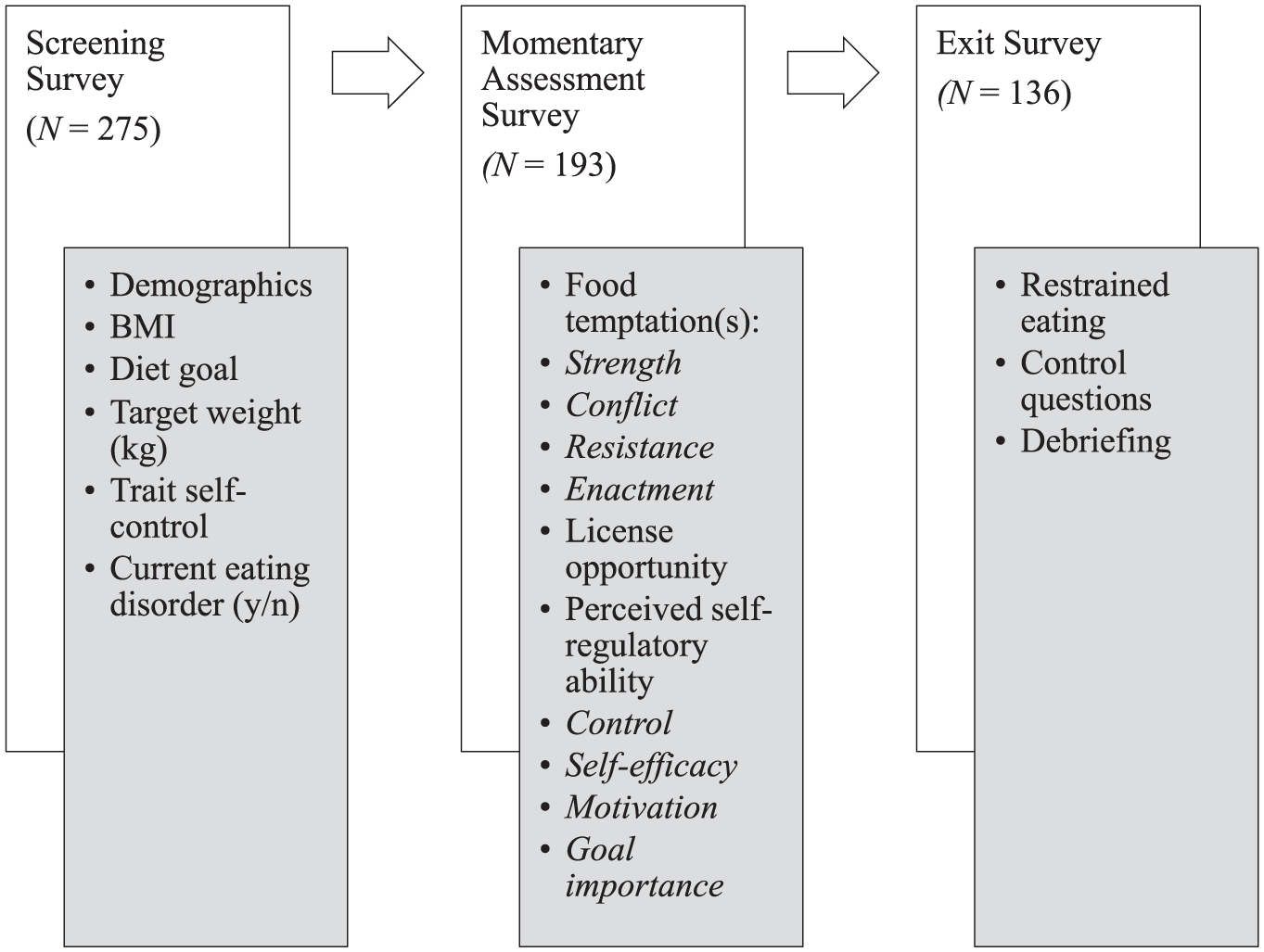
Flow chart of the experimental procedure.
The momentary assessment phase comprised a full week (i.e., Monday to Sunday). The start time varied over the course of the week, ranging from 10 min before to 10 min after. Participants received a text message with a link to a short online survey, and this was repeated precisely every 2 hr. Consequently, participants could answer the surveys around—yet not exactly—the same time, so that it would not always coincide with specific recurring events (e.g., lunch at 12 p.m.). For each survey, participants had 20 min to respond, otherwise the survey closed and was registered as a nonresponse. Every day, participants received eight text messages, spanning a time window of 14 hr. The last survey was sent at 10 p.m. (in the 8 a.m. group) or 10.15 p.m. (in the 9 and 10 a.m. groups), and participants were instructed to fill out this survey right before they went to sleep. Hence, this survey was accessible until morning. Participants provided sufficient data when they responded to a minimum of five text messages per day. Those who did not meet this criterion were given the opportunity to receive text messages for an extra day, resulting in a minimum of 35 responses in total per participant (excluding noncompleters).
In the survey, participants were instructed to report the food temptations that they experienced within the last 2 hr. Participants provided a short description of the most focal temptation, the strength of this temptation, the degree of self-regulatory conflict they perceived, to what degree they resisted the temptation, and to what degree they enacted on the temptation. In addition, participants were asked to indicate what “circumstances” (i.e., potential licenses) applied to them over the last 2 hr, by going through a list of 25 items (see Table 1). Lastly, participants reported how they perceived their self-regulatory ability, in terms of how much control, self-efficacy, motivation, and goal importance they felt with respect to their diet.
Prevalence of Potential Licenses.
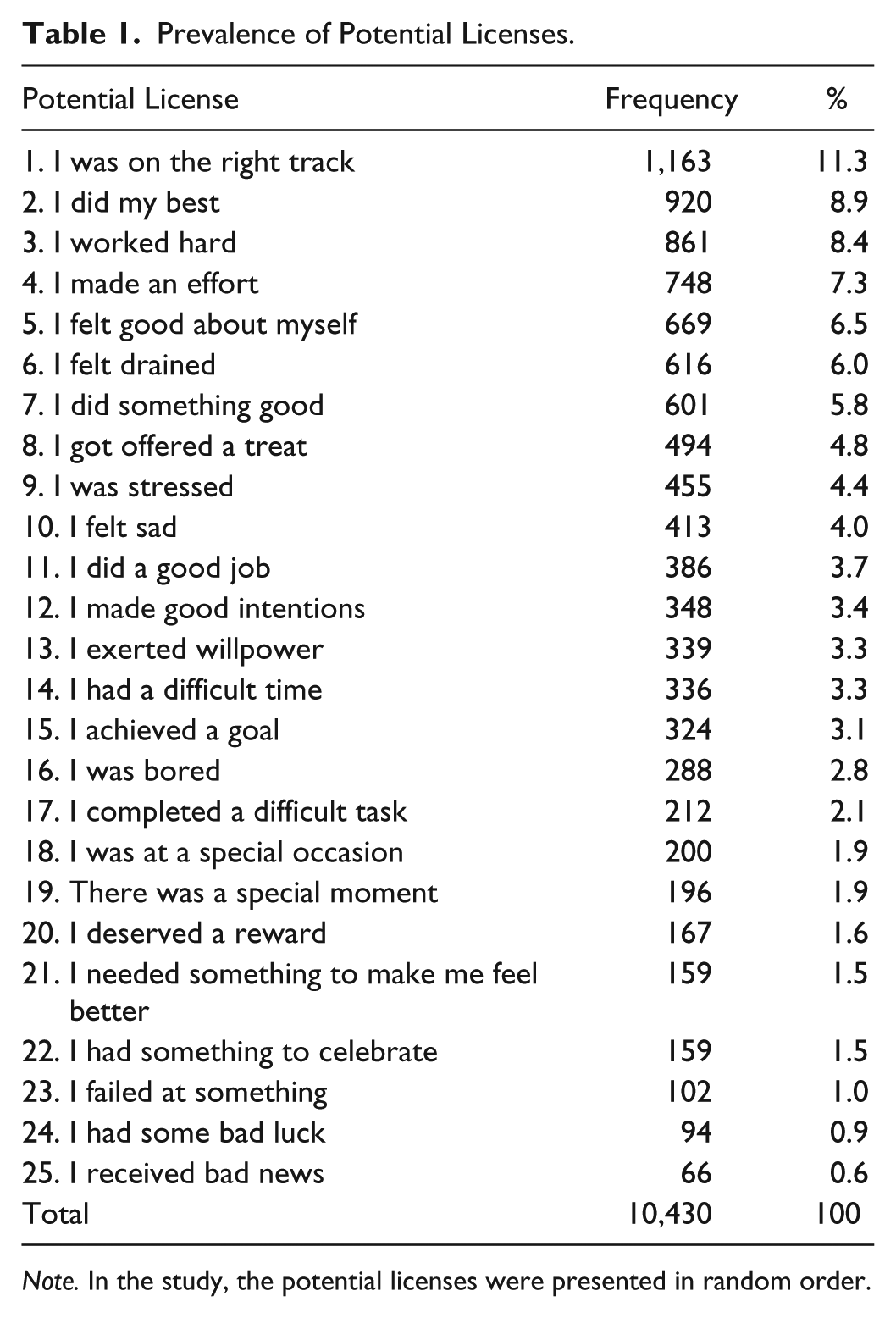
Note. In the study, the potential licenses were presented in random order.
After the week of momentary assessments, the study ended with an exit survey in which restrained eating was assessed. It was also checked whether participants had any idea about the true goal of the study, and they were probed to indicate how carefully they had answered the momentary assessment surveys. Finally, participants were debriefed and thanked for their participation.
Materials 3
Screening survey
Demographics
Participants reported their age, completed or current education, occupation, work hours per week, and their household composition.
BMI
Participants’ BMI was calculated using their reported weight and height.
Diet goal
To verify that participants experienced self-regulatory conflict when facing food temptations, it was examined whether they had the goal to lose weight (“Losing weight is one of my personal goals”) and/or to eat healthily (“Eating healthily is one of my personal goals”). Answers were given on a visual analogue scale (VAS) running from 0 (not at all applicable to me) to 100 (totally applicable to me). Participants who scored 0 on both goals were excluded from further participation. For the final sample, a sum score was computed to represent participants’ diet goal. Hence, diet goal referred to both the goal to lose weight as well as to eat healthily.
In addition, for the goal(s) that participants scored > 0, the importance of the goal was measured: “How important is this goal to lose weight for you?” and “How important is this goal to eat healthily for you?” for the weight loss and healthy eating goal, respectively. Answers were given on a VAS running from 0 (not important at all) to 100 (very important).
Weight loss target (kg)
The amount of body weight participants wanted to lose (or gain) was calculated by subtracting their reported target weight from their current weight. In addition, they were asked, “How important is it for you to reach or keep this target weight?” with answers given on a VAS running from 0 (not important at all) to 100 (very important).
Trait self-control
The short version of the Trait Self-Control Scale (Tangney, Baumeister, & Boone, 2004) consisting of 13 items was used to measure dispositional self-control. A sample items is, “I am able to work effectively toward long-term goals.” Answers were given on a Likert scale ranging from 1 (totally disagree) to 5 (totally agree). A mean score was computed (α = .82).
Eating disorder
Participants were asked to indicate whether they were currently suffering from an eating disorder (yes/no). If this was the case, they were excluded from participation.
Momentary assessment survey. 4
To avoid order effects, the item blocks food temptations and license opportunity were randomized every time a new survey was opened. Self-regulatory ability was always assessed last, as this constituted more reflective items that may affect participants’ further responses.
Food temptations
Participants were instructed to report the food temptations that they experienced within the last 2 hr (“Did you experience a food temptation?”). If they did not experience a temptation, they received no further questions. In cases where more than one temptation was experienced, they had to remember the most focal temptation. After providing a short description, strength (“How strong was this food temptation?”), conflict (“To what degree did this food temptation conflict with your diet goal?”), resistance (“To what degree did you try to resist this food temptation?”), and enactment (“To what degree did you give in to this food temptation?”) were addressed. Answers were given on a VAS ranging from 0 (not at all) to 100 (very much).
License opportunity
Participants were asked to indicate what circumstances applied to them over the last 2 hr, by going through a list of 25 items, interspersed with five filler items. These “circumstances” represented potential licenses that can be used to justify giving in to food temptations, and the more potential licenses, the higher the license opportunity. The items were constructed based on earlier studies looking into self-licensing (de Witt Huberts et al., 2014a; Taylor et al., 2013) and reasons for snacking (Verhoeven, Adriaanse, De Vet, Fennis, & De Ridder, 2015). Example items are “I was bored,” “I worked hard,” and “I received bad news.” Participants checked a box for each license that applied to them. All items were randomized for each survey (see Table 1 for an overview of all licenses).
Perceived self-regulatory ability
Four items addressed participants’ perceived self-regulatory ability. These items were [At this moment, . . .] “To what degree do you feel in control over your eating behavior” (control), “How confident are you that you can resist food temptations?” (self-efficacy), “How motivated are you to act in line with your diet goal?” (motivation), and “How important do you find your diet goal?” (goal importance). All items were randomized for every survey, and answers were given on a VAS ranging from 0 (not at all) to 100 (very much). A mean score was computed to represent perceived self-regulatory ability (α =.89).
Exit survey
Restrained eating
To assess restrained eating, the 10-item Restraint Scale was administered (Polivy, Herman, & Warsh, 1978). An example item is “How often are you dieting?” with an answer scale ranging from 0 (never) to 4 (always). A mean score was computed (α = .74; see Note 2).
Control questions
To check whether a participant’s responses were sufficiently reliable, the following three items were administered: “To what degree have you answered honestly,” “How difficult was it to continue with filling out the surveys,” and “How often did you refrain from reporting a temptation that you did experience?” (numeric answer). The answers on the first two items were given on a VAS ranging from 0 (not at all) to 100 (very much).
Results
Drop-Out Analysis
Participants who did not provide sufficient responses (n = 53; see “Procedure”) were compared with the final sample (n = 136) on the variables collected in the screening survey. Separate ANOVAs with age, diet goal, weight loss target (kg), BMI, and trait self-control as outcome variables revealed no differences between the sample (all ps > .138) except for trait self-control. Participants in the drop-out sample scored lower on trait self-control (M = 2.88, SD = 0.63) than participants in the final sample (M = 3.16, SD = 0.58), F(1, 183) = 8.52, p = .004. 5 Chi-square analyses with the dichotomous/categorical variables student status, education, and household composition showed no differences between samples (all ps > .079).
Descriptives
Adherence
The number of completed surveys ranged from 37 to 60 (Note: Due to the extra day that was provided to participants who did not meet the adherence criterion, the maximum number of responses was 64), with a mean of 49.31 responses (SD = 4.13), resulting in a response rate of 88.1%. Participants indicated that they had been quite honest in answering the survey questions (M = 91.61, SD = 13.36) and that they found it moderately difficult to adhere to filling out the surveys (M = 57.22, SD = 27.50). The number of times that they did not report a temptation although they experienced one was very low, with a mean of 1.53 times (SD = 0.63; range = 1-3).
Demographics and sample characteristics
The sample consisted of 78 students (58.6%), 50 employed (37.6%), and 5 unemployed individuals (3.8%; see Note 2). Descriptive information on education, current study/profession, work hours per week, and household composition showed sufficient diversity. To illustrate, participants worked in different sectors (e.g., finance, health care, education), lived with children (36.4%) or without (63.6%), and worked 0 to 40 hr per week with the majority reporting a 24- to 36-hr work week (60.0%). Further descriptives can be found in Table 2.
Descriptive Statistics and Intercorrelations for Trait and Eating Behavior Variables.
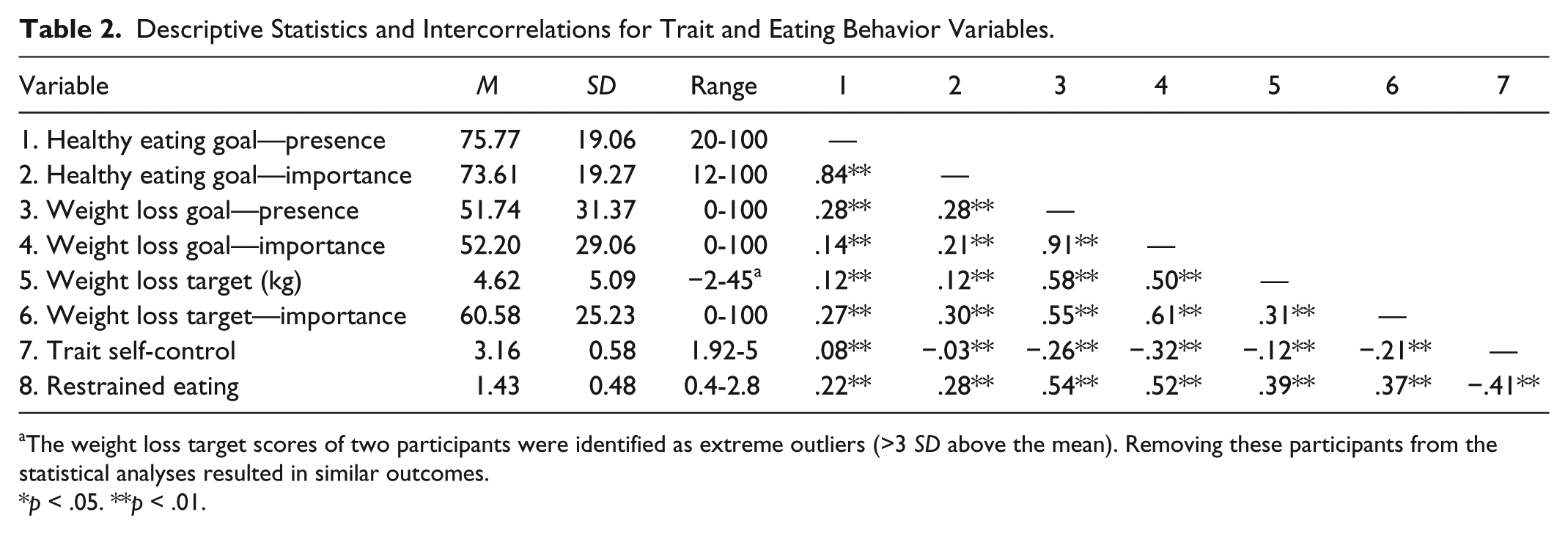
The weight loss target scores of two participants were identified as extreme outliers (>3 SD above the mean). Removing these participants from the statistical analyses resulted in similar outcomes.
p < .05. **p < .01.
Diet goal
Participants’ diet goal scores ranged from 24 to 200, with a mean of 127.51 (SD = 40.98). These scores indicated that all participants experienced self-regulatory conflict, albeit to varying degrees, when facing food temptations.
Food temptations
Participants reported having a temptation in 23.8% of the occasions that they filled out the momentary assessment survey. They reported a total of 1,612 temptations, which constitutes 11.85 temptations per participant over the whole week (1.69 per day). Of these temptations, 1,341 (83.2%) were enacted. On average, temptations were reported to be quite strong (M = 68.98, SD = 20.43) and conflicting with long-term goals (M = 66.27, SD = 25.42). The degree to which participants actively tried to resist the temptation was moderate (M = 42.21, SD = 30.66), and when temptations were enacted, it was to a high degree (M = 62.27, SD = 36.37).
License opportunity
All participants together reported 10,430 potential licenses, which constitutes 76.69 licenses per participant on average (10.96 per day). The total number of potential licenses reported at one occasion ranged from 0 to 16. The potential licenses that were most frequently reported were “I was on the right track” (11.3%), “I did my best” (8.9%), and “I worked hard” (8.4%). The least frequently reported licenses were “I failed at something” (1%), “I had some bad luck” (0.9%), and “I received bad news” (0.6%). This pattern suggests that positive events occurred more often than negative events, meaning that there seems to be more opportunity to use positive events as a license for temptation enactment. See Table 1 for a complete overview.
Self-regulatory ability
On average, participants reported high feelings of control over their diet (M = 72.30, SD = 20.34), high diet self-efficacy (M = 70.45, SD = 21.77), strong diet motivation (M = 71.64, SD = 20.74), and high diet goal importance (M = 72.32, SD = 20.62).
Multilevel Data Analysis
Because of the nested data structure, with momentary assessments nested within days within participants, regression analyses were conducted using the multilevel software HLM (version 6.06; Hox, Moerbeek, & van de Schoot, 2010; Snijders & Bosker, 2012). All Level 1 predictors were person-mean centered, thereby representing the deviation from the participant’s respective mean. Dependent variables were left in their original metric. For some relationships between variables, it was considered insightful to see whether the coefficients were randomly varying (indicating that there are individual differences in the strength of the relationship) or fixed (indicating that the effect is constant across persons). Associations that were theoretically expected to result in randomly varying coefficients were modelled as such, except when the random error terms appeared nonsignificant. To determine this, a more liberal p value of .10 was employed when conducting significance tests of random error terms (Nezlek, 2012). For each analysis, normality assumptions for residuals on all three levels were checked. After removing outliers, 6 no violations were detected, unless reported otherwise.
Conflict-resolving qualities
It was assessed whether license opportunity was associated with less perceived conflict, taking temptation strength into account. Therefore, license opportunity, temptation strength, and their interaction term were regressed on perceived conflict. There was a main effect of temptation strength on perceived conflict, B = .24, p < .001 (randomly varying, p = .008); a nonsignificant main effect of license opportunity, B = −.46, p = .139; and a significant moderator effect, B = −.04, p = .013 (fixed effect, p > .500). Plotting the interaction shows that perceived conflict increased as the temptation became stronger, but this association was weaker when license opportunity was higher (see Figure 2). A simple slopes analyses with bonferroni correction confirmed that these observed positive linear relationships between temptation strength and perceived conflict were significant for both low (simple slope = .30, t = 5.92, p < .001) and high license opportunity (simple slope = .17, t = 4.08, p < .001). Also, for low temptation strength, there was no effect of license opportunity on perceived conflict (simple slope = .22, t = 0.55, p = 1.00), but for high temptation strength, the perceived conflict decreased as license opportunity increased (simple slope = −1.13, t = −2.67, p = .018).
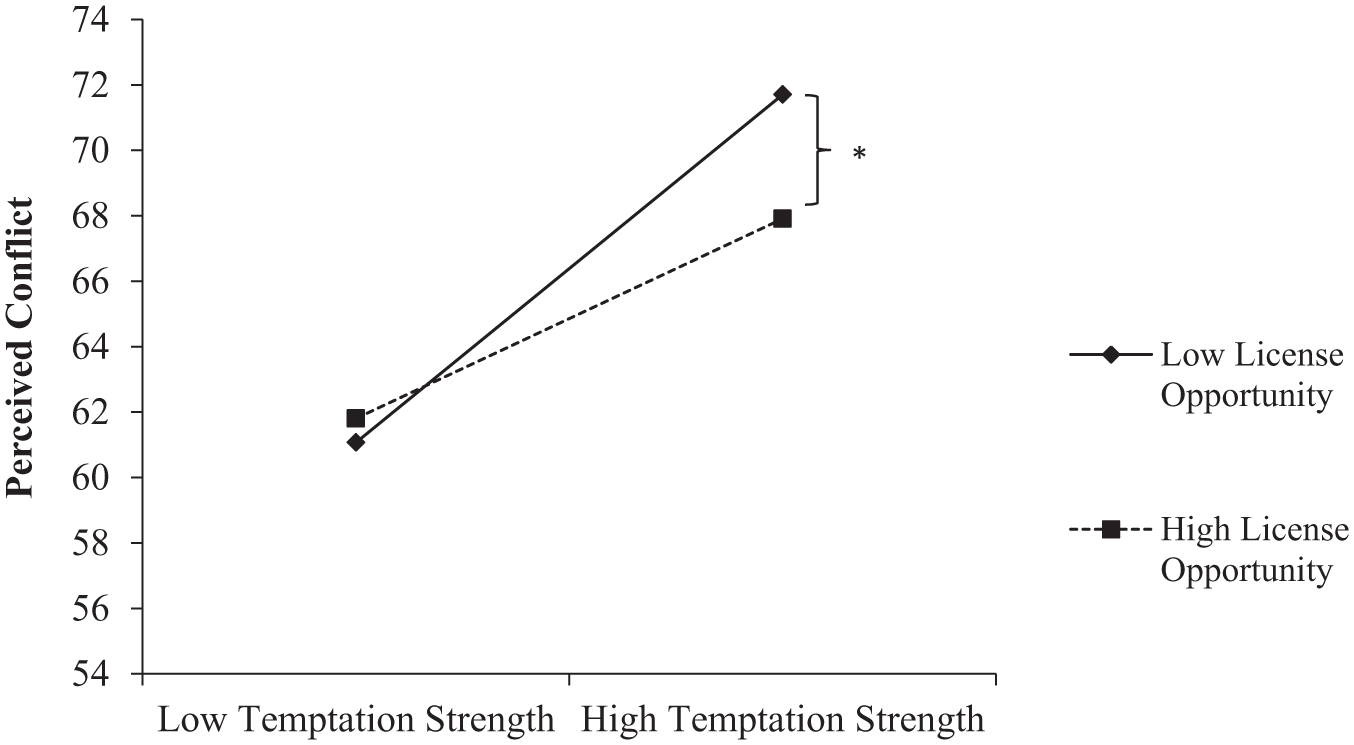
Interaction between temptations strength and license opportunity in affecting perceived conflict.
To test whether license opportunity from a previous occasion predicted conflict on the following occasion, a similar interaction analysis with license opportunity added as lagged predictor (i.e., taking the scores from the previous occasion, indicated as T−1) was performed. This did not reveal a significant interaction effect between temptation strength and license opportunity at T−1 in affecting perceived conflict at T0, B = .03, p = .079 (fixed effect, p > .500), showing that license opportunity on one occasion did not predict perceived conflict on a following occasion.
To examine the other steps that are involved in the enactment (or resistance) of temptations, separate regression analyses on the associations between perceived conflict, resistance, and temptation enactment were performed. It was found that perceived conflict was positively related to resistance, B = .13, p < .001, but not directly to temptation enactment, B = .04, p = .295. Logically, resistance showed a negative association with temptation enactment, B = −.80, p < .001.
Self-regulatory ability
To test whether the degree of temptation enactment (excluding occasions of no enactment, that is, successful resistance) was associated with changes in perceived self-regulatory ability, and whether this depended on license opportunity, a regression analysis was performed with perceived self-regulatory ability as outcome variable. License opportunity, degree of temptation enactment, and their interaction term were added as predictors. It was found that temptation enactment was negatively associated with self-regulatory ability, B = −.08, p < .001. There was no significant association between license opportunity and perceived self-regulatory ability, B = .002, p = .990, but a significant moderator effect of license opportunity on the association between degree of temptation enactment and perceived self-regulatory ability, B = −.02, p = .005 (fixed effect, p > .500) was observed. Plotting the interaction showed that for both low and high license opportunity, higher temptation enactment was associated with lower self-regulatory ability (see Figure 3). Simple slopes analyses with bonferroni correction showed that the observed linear relationship between temptation enactment and perceived self-regulatory ability was significant for high license opportunity (simple slope = −.11, t = −6.57, p < .001) but not for low license opportunity (simple slope = −.05, t = −2.17, p = .062). Moreover, for both low and high temptation enactment, there was no effect of license opportunity on perceived self-regulatory ability (simple slope = .42, t = 1.89, p = .122 for low temptation enactment; simple slope = −.41, t = −1.55, p = .246 for high temptation enactment).
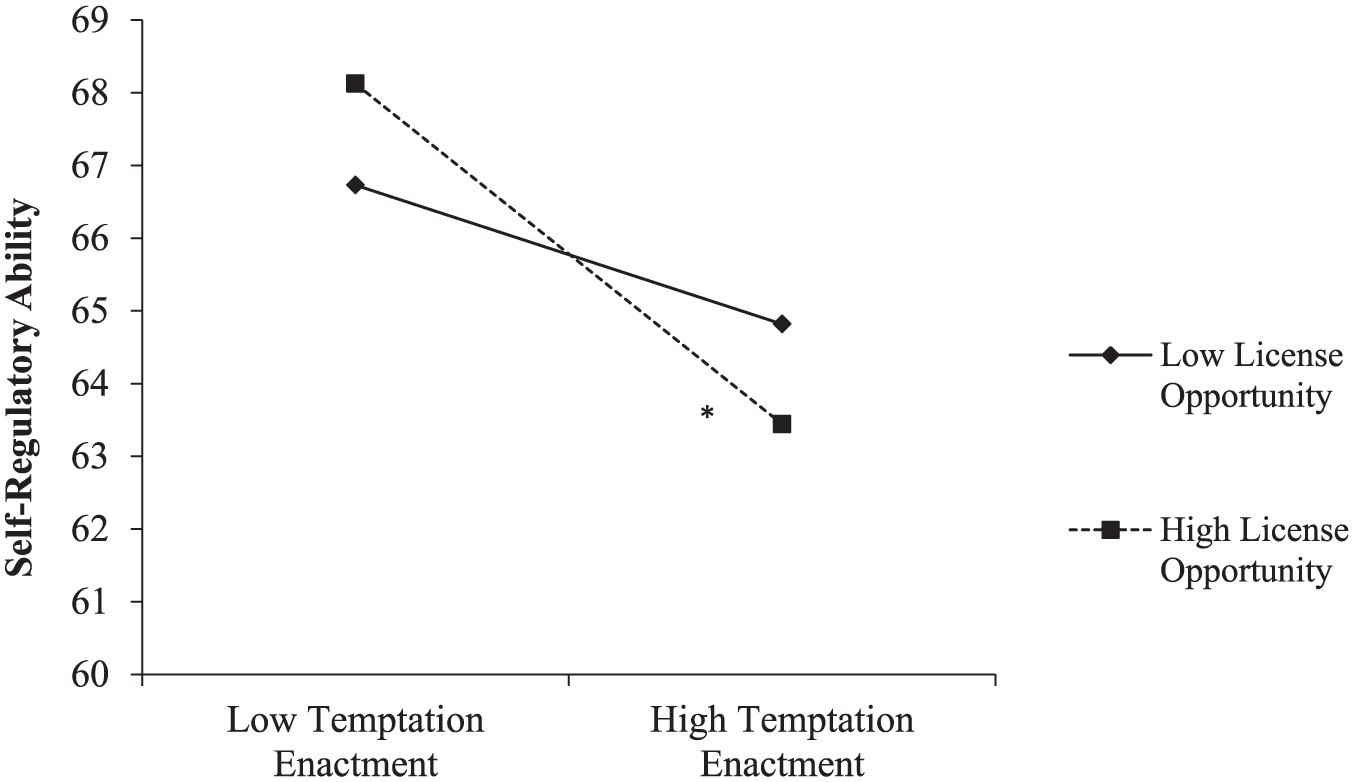
Interaction between degree of temptation enactment and license opportunity in affecting self-regulatory ability.
To test whether license opportunity from a previous occasion predicted perceived self-regulatory ability, a similar interaction analyses with license opportunity added as lagged predictor was performed. This did not reveal a significant interaction effect between degree of enactment and license opportunity at T−1 in affecting perceived self-regulatory ability at T0, B = −.00, p = .763 (fixed effect, p > .500).
To assess whether perceived self-regulatory ability subsequently predicted temptation enactment, a regression analysis with temptation enactment as outcome variable and perceived self-regulatory ability added as a lagged predictor was performed. This showed that perceived self-regulatory ability at T−1 predicted enactment at T0, B = −.34, p < .001 (fixed effect, p = .150). This means that higher self-regulatory ability predicted lower temptation enactment.
Subsequent temptation enactment
It was assessed whether the degree to which a prior temptation was enacted (excluding occasions successful resistance) predicted the degree to which a subsequent temptation (i.e., in the following occasion) was enacted, and whether this depended on license opportunity for the prior temptation. To test this moderator effect of license opportunity on the relationship between prior and subsequent temptation enactment, license opportunity at T−1 and temptation enactment at T−1 and their interaction term were regressed on temptation enactment at T0. Because of minor violations of the normality of error distribution assumption for these analyses, the following results are based on modeling with robust standard errors. Before adding the interaction term, license opportunity had no effect on subsequent temptation enactment, B = −1.95, p = .064. There was also no main effect of prior temptation enactment, B = .10, p = .344 (randomly varying, p = .008). Adding the interaction term resulted in a significant moderator effect of license opportunity on the association between degree of prior and subsequent enactment, B = −.06, p = .036 (fixed effect, p > .500), with similar main effects as in the previous analysis. Plotting the interaction showed that when there was high license opportunity for enacting on a first temptation, the degree of subsequent temptation enactment was not dependent on the degree of the prior enactment. When license opportunity was low, the degree of subsequent temptation enactment seemed to increase as the degree of prior temptation enactment increased (see Figure 4). Simple slopes analyses with bonferroni correction showed that there was indeed no significant linear relationships between prior temptation enactment and subsequent enactment for high license opportunity (simple slope = .03, t = 0.27, p = 1.00). However, neither was the case for low license opportunity (simple slope = .24, t = 2.13, p = .071). Also, in case of low prior temptation enactment, license opportunity did not affect subsequent enactment (simple slope = −1.26, t = −1.42, p = .318), but in case of high prior temptation enactment, higher license opportunity predicted lower subsequent temptation enactment (simple slope = −3.90, t = −2.37, p = .038).
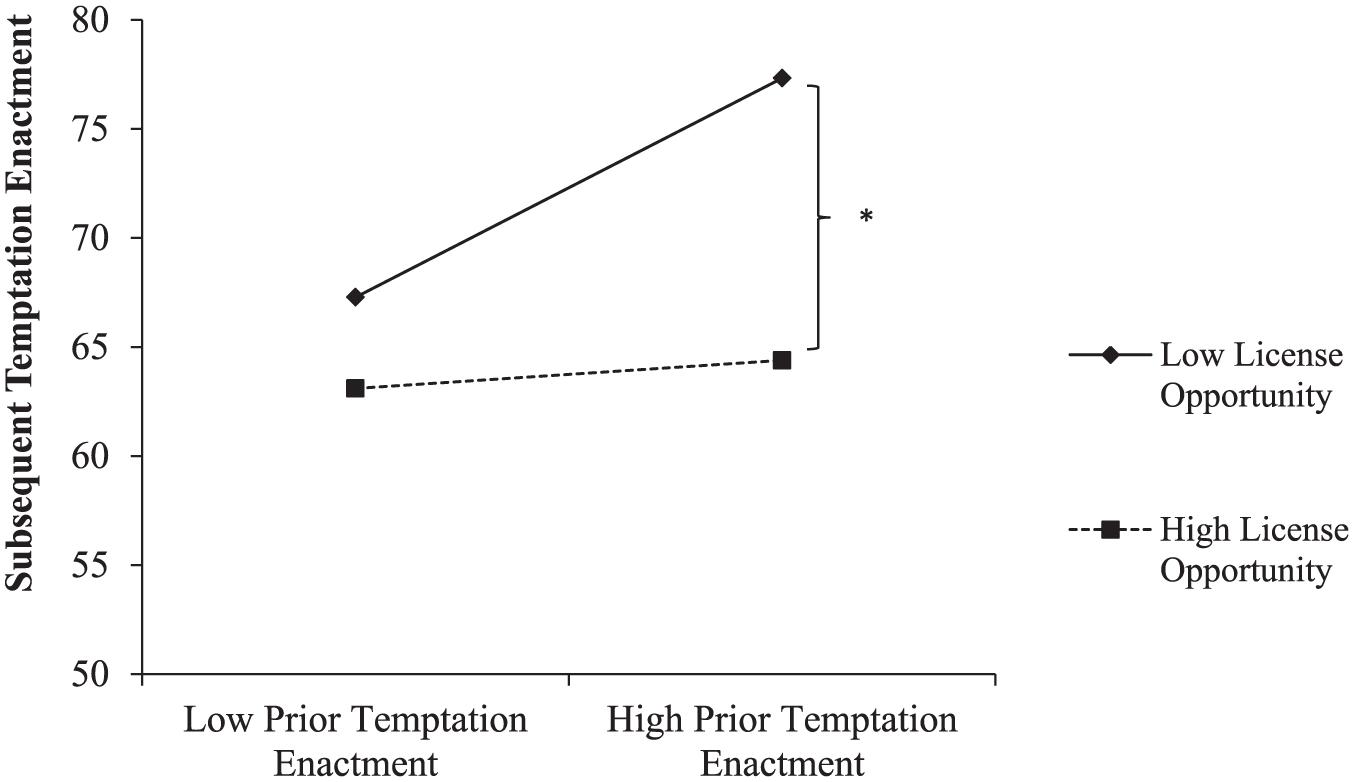
Interaction between degree of prior temptation enactment and license opportunity in affecting degree of subsequent temptation enactment.
Discussion
The present study was designed to provide evidence for the assumed but untested conflict-resolving qualities of self-licensing, and to examine the secondary effects of self-licensing over time in terms of perceived self-regulatory ability and handling of subsequent temptations. We found supporting evidence for our proposition that self-licensing promotes initial self-regulation failure because of its conflict-resolving qualities. Generally, self-regulatory conflict in response to experiencing food temptations increased as temptations became stronger, but this effect was weaker when license opportunity was high as opposed to low. Also, when temptation strength was high, a greater license opportunity was associated with less perceived conflict. When temptation strength was low, no difference was observed between low and high license opportunity. This implies that the enactment of strong temptations needs more justification than the enactment of weak temptations, and when the opportunity to self-license is high, this indeed seems to lower self-regulatory conflict. It was also found that greater conflict increased resistance, which in turn decreased the degree of temptation enactment. This is in line with previous studies showing that the identification of self-regulatory conflict is pivotal for eliciting self-control attempts (Gillebaart & de Ridder, 2015; Myrseth & Fishbach, 2009). More importantly, these findings suggest when conflict is (partly) resolved, this most likely leads to less resistance and more enactment, which is in line with previous observations of self-licensing promoting temptation enactment (e.g., de Witt Huberts et al., 2012; Taylor et al., 2013; Wilcox et al., 2011). Taken together, these findings speak to the assumption that self-licensing leads to less activation of self-control efforts and resolution of self-regulatory conflict in favor of the immediately gratifying option.
The prediction that self-licensing helps maintain perceived self-regulatory ability was partly confirmed. Greater license opportunity resulted in higher perceived ability when temptations were only slightly given into compared with high degrees of indulgence. This suggests that having many licenses available protects the image of being a competent self-regulator only for low degrees of failure. It could be that for high degrees of failure, a sort of boomerang effect occurs, where the realization of having justified indulgence results in less trust in one’s ability to refrain from self-licensing in the future (“I tricked myself again, I always do that”), and hence feelings of low self-regulatory competence.
The expectation that self-licensing benefits the handling of subsequent temptations was also partly confirmed. Only in cases of high prior temptation enactment, more self-licensing opportunity predicted lower degrees of subsequent enactment, and vice versa. This is in line with the notion that self-licensing can help “wipe the slate clean” after an initial goal violation, as low license opportunity for high degrees of prior indulgence predicted higher subsequent enactment. In other words, something indicative of a what-the-hell effect seemed to occur after a prior (most likely) unjustified indulgence. Furthermore, this finding suggests that especially high degrees of indulgence are problematic when there are no reasons or justifications available. Low levels of indulgence did not affect subsequent handling of temptation, irrespective of license opportunity. It could be that low levels of indulgence do not need a justification, or can function as a justification in itself (“a small bite won’t hurt my diet”).
The finding that high license opportunity is beneficial for the handling of subsequent temptations contrasts with previous findings from vignette studies showing that a licensed indulgent choice leads to higher likelihood of making a second indulgent choice (Prinsen et al., 2016). This can be explained by the differences in methodology, as scenarios in vignettes are choices based on what subjects think they would do, whereas the behavior in the present study is based on what subjects actually did. Taken together, it seems that people think that a prior goal violation may initiate a sequence of failure, whereas in reality, having license opportunities results in better handling of subsequent temptations.
Interestingly, when the obtained outcomes are viewed side by side, it becomes evident that the effects of self-licensing on perceived self-regulatory ability and subsequent temptation enactment do not fit the expectation that preserved perceptions of being a good self-regulator lead to better handling of subsequent self-regulatory conflicts. That is, when license opportunity was high, (a) perceived self-regulatory ability decreased as temptation enactment increased, but (b) there was no effect of the degree of prior temptation enactment on the degree of subsequent temptation enactment. However, we did find that, in general (without taking self-licensing opportunity into account), higher perceived self-regulatory ability predicted lower degrees of subsequent failure, which implies that perceptions of being a good self-regulator do translate into actual behavior. A potential explanation, albeit speculative, is that although generally higher perceived self-regulatory ability predicts lower enactment, when this perceived ability is a reaction to prior (licensed) enactment, the effect may be more variable and even in the opposite direction. For example, for some individuals, low levels of perceived self-regulatory ability resulting from the realization they “tricked themselves again” (see “boomerang effect” discussed earlier) can instigate a need to repair these self-perceptions by behaving in line with their goal again. At the same time, high levels of self-regulatory ability due to licensing may result in higher temptation enactment when these perceptions are interpreted as credentials to indulge (“generally, I can handle temptations well, so I can indulge this one time”). Hence, there may be individual differences in how licensed indulgence and self-perceptions are responded to that can account for the (perhaps seemingly) opposing outcomes. Future research is necessary, however, to confirm the merit of these speculations.
Altogether, the insight that self-licensing, a phenomenon that is typically depicted as a showcase of self-regulation failure because people deliberately and strategically use reasons to indulge, may also have positive effects is an innovative finding. Importantly, accommodating these new insights in the current self-licensing framework can greatly contribute to theoretical development. Currently, self-licensing theory remains silent when it comes to predicting effects over time. The positive effects of self-licensing were revealed due to unraveling the temporal dynamics of self-licensing rather than assessing its consequences in a single, momentary moment. Thereby, first encouraging findings are provided that can inspire future research into the potential benefits of self-licensing. Besides corroborating the current conclusions, these future studies can take into account the limitations that are discussed next.
Limitations and Directions for Future Research
Although the predictions on the conflict-resolving qualities of self-licensing and its effects on self-regulatory ability were largely supported, these findings were not substantiated by significant lagged relationships. That is, no effects were found when it was tested whether license opportunity from one occasion predicted outcomes on a following occasion, which would have provided support that one variable predicts the other and not the other way around. However, the lack of significant lagged relationships suggests that just as in lab studies (e.g., de Witt Huberts et al., 2012; Taylor et al., 2013), in daily life, self-licensing effects also occur close in time. In general, finding lagged relationships depends highly on the frequency of occurrence and temporal spacing of the variables of interest. Although the present study was designed to cover all occurrences and handling of food temptations, the number of potential licenses was aggregated over 2 hr periods. As a consequence, when looking at lagged effects, the interval between having a license available and enacting on a temptation could range from 4 hr to a couple of minutes. If self-licensing is indeed dependent on close temporal spacing between potential licenses and experiencing food temptations, this wide range could have obscured the identification of a significant relationship. This may explain the absence of a lagged effect of licenses on resolving perceived conflict and attenuating the detrimental effects of enactment on self-regulatory ability. For future studies, it is recommended to take smaller time intervals between measurements to get a more precise picture of the temporal spacing of self-licensing effects.
One of the major challenges with studying self-licensing remains that direct assessment is not possible. When asked in situ, it potentially interferes with the process. When asked afterward, confabulation can occur, where people come up with faulty reasons (i.e., confabulate) to retrospectively explain their behavior (Adriaanse, Weijers, de Ridder, de Witt Huberts, & Evers, 2014; Bar-Anan, Wilson, & Hassin, 2010). Confabulation effects are not completely ruled out in the present study. It could be that participants impulsively enacted on a temptation, and subsequently felt bad, so while subsequently filling out the survey confabulated a reason or made use of one of the provided reasons, “I indeed worked hard just now, I deserved it.” However, the order of reporting temptations and potential licenses was randomized, which makes this possibility less likely. Nonetheless, future studies on self-licensing should make sure to reliably distinguish between self-licensing and confabulation effects.
Another limitation of how potential licenses were measured is that it was restricted to momentary opportunities, in that the licenses are situations (“I received bad news”) or behaviors (“I worked hard”) that occur in the moment. However, people are very creative in finding reasons to justify goal violations. For example, recalling an altruistic action (Weibel et al., 2014) or a personal achievement (Wilcox et al., 2011) can also license people to make unhealthy food choices in the present, even though these virtuous acts may have happened weeks ago. Also, making plans to compensate the goal violation, known as compensatory intentions (Knäuper, Rabiau, Cohen, & Patriciu, 2004), are a way to resolve self-regulatory conflicts. These types of licenses were not covered in the present study. Nonetheless, the licenses that were used in the present study have been identified as the most common reasons to indulge in unhealthy foods (Taylor et al., 2013; Verhoeven et al., 2014). Future research should examine to what extent licenses that are derived from previous occasions or compensatory intentions can influence self-regulatory efforts over time.
Overall, the present work invokes several important questions for future research. For example, although it was found that, in general, higher perceived self-regulatory ability lead to lower temptation enactment, it can be imagined that high levels of perceived self-regulatory ability are not always good. When an individual repeatedly fails to self-regulate, while maintaining high perceived self-regulatory ability through self-licensing, a need to change one’s behavior seems unlikely. Hence, it would be insightful to see whether there are indeed differences in the functionality of having high perceived ability between “chronic” and “occasional self-licensers.” This may also be related to the individual differences in how licensed indulgence is responded to in terms of self-perceptions, as discussed earlier.
Also, random effects were observed, indicating individual differences in the strength of some relationships. This was the case for the association between temptation strength and self-regulatory conflict, as well the effect of prior temptation enactment on subsequent enactment. For future studies, it is interesting to see what kind of characteristics can explain these individual differences. Lastly, the current conceptualization of license opportunity raises the question of whether more licenses lead to higher degrees of self-regulation failure. Theoretically, one license can be enough to fully indulge oneself, but it seems reasonable to believe that having more reasons makes it easier to abandon one’s goal. Also, having more licenses to indulge (e.g., being bored and stressed while being at a special occasion) can make a situation more distinct and rare, and hence reinforce the belief that the accompanying failure is an one-off event. As a result, there may be no implications for the (perceived) self-regulatory capacity to deal with future challenges. Overall, looking into quantity dependent effects of self-licensing and the underlying mechanisms can be a fruitful avenue for future research.
Notwithstanding these limitations, this study is the first to examine self-licensing in a natural setting and over time. Importantly, reliable data were obtained as the representative sample showed a high adherence rate, which is further substantiated by the fact that they reported honesty and conscientiousness in registering their experiences. Another important strength was the unobtrusive measurement of self-licensing. Although tapping into self-licensing processes requires indirect assessment that has its limitations, the obtained outcomes suggest that an appropriate method was employed.
Conclusion
Self-licensing can be seen as detrimental to the successful attainment of long-term goals, as it promotes self-regulation failure. Nonetheless, when looking at other outcomes of self-licensing processes, there seem to be effects that may promote self-regulatory success in the long run. By showing associations between self-licensing and perceived self-regulatory ability as well as self-licensing effects in sequential temptation enactment, the present study shed light on relatively unexplored yet important secondary outcomes. That is, while it seems like the conflict-resolving qualities of self-licensing do not necessarily help maintain self-regulatory ability, they do appear to promote the handling of subsequent temptations.
Footnotes
Declaration of Conflicting Interests
The author(s) declared no potential conflicts of interest with respect to the research, authorship, and/or publication of this article.
Funding
The author(s) disclosed receipt of the following financial support for the research, authorship, and/or publication of this article: NWO Research Talent Grant 2013 #406-13-010.
Notes
Supplementary Material
Supplementary material is available online with this article.

References
Supplementary Material
Please find the following supplemental material available below.
For Open Access articles published under a Creative Commons License, all supplemental material carries the same license as the article it is associated with.
For non-Open Access articles published, all supplemental material carries a non-exclusive license, and permission requests for re-use of supplemental material or any part of supplemental material shall be sent directly to the copyright owner as specified in the copyright notice associated with the article.
