




Abstract
Purpose:
This study aims to highlight the significance of performing simulations, nasal hump reduction, and rasping in open-technique rhinoplasty for the nasal dorsum. The research utilizes data science methodologies for a thorough examination of the collected survey data.
Methods:
A comprehensive survey comprising 29 questions was presented to surgeons participating in the Eastern Trakya ENT Association Training Meetings-I. This survey, specifically designed to investigate the nuances of open and closed rhinoplasty approaches to nasal dorsum intervention, collected responses from 132 physicians. The collected dataset was thoroughly reviewed and analyzed. The responses were not only graphically represented but also transformed into a dataset primed for data science analysis. Significant results were derived using both association rule-mining algorithms from machine learning and basic statistical analysis.
Results:
The raw data underwent thorough analysis using fundamental statistical methods and association rules within the field of data science. The discerned data patterns revealed significant insights into the behavioral tendencies and approaches adopted by physicians in rhinoplasty. The survey analysis emphasized the widespread acceptance of the open technique for nasal dorsum procedures, even though it may not be the preferred choice for all rhinoplasty cases. A notable 74.6% of rhinoplasty surgeons employing the open technique indicated that the primary long-term challenge during nasal dorsum interventions was irregularity. In addition, among the 132 participating surgeons, 25.8% were found to frequently engage in facial plastic surgery, while 55.4% reported abstaining from simulations. Notably, rhinoplasty surgeons who opted out of simulations, despite exclusively applying the open technique, reported encountering irregularities and requiring more adjustments.
Conclusion:
Rhinoplasty surgeons who do not use simulations in open nasal dorsum approaches reported facing irregularities and performing more revisions. Furthermore, they noted encountering irregularities in both the short and long term following nasal hump reduction and rasping procedures.
Keywords
Introduction
In Western culture, the Greek subtype of the leptorrhine nose is very similar to the modern aesthetic ideal. This subtype consists of a flat dorsal profile and a thin nasal dorsum with small nostrils. 1 Dorsal hump reduction is a commonly performed procedure in individuals of Caucasian descent, often due to the specific characteristics of their nose structure. 2 A harmonious nasal dorsum plays a major role in determining the success of the nasal profile for these patients. Preserving and creating strong dorsal aesthetic lines that define the frontal appearance of the dorsum is important. Since the inception of rhinoplasty operations, the mid-third of the nose has consistently proven to be one of the most challenging regions to address in terms of stability, functionality, and aesthetic lines. 3
The removal of the nasal hump can be achieved through two methods: structured techniques and preservation techniques. Joong Hyuk Sheen provided the initial and consistent definition of nasal dorsal hump resection procedures, considered the beginning of structured techniques, with the use of “spreader grafts” for reconstruction. 4 Structured techniques involve separating the upper lateral cartilages (ULCs) and the dorsal septum, resulting in the complete division of the M-shaped segment into 3 parts. 5 Recently, there has been a suggestion that preservation should replace dorsal resection. Preservation rhinoplasty involves various components of rhinoplasty, including the elevation of nasal soft tissue in the subperichondrial-subperiosteal plane, limited excision of alar cartilages, and preservation of the osseocartilaginous dorsum without violating the bone-cartilage interface. 6
In a recent study on social perception, it was observed that rhinoplasty procedures involving dorsal reduction, with or without tip manipulation, were perceived to enhance a person’s attractiveness and convey a sense of health. 7
Figure 1 illustrates the transition of the nasal dorsum from its preoperative form to the postoperative outcome following a surgical procedure, specifically rasping. The preoperative form shows the side view of the nose from the left lateral aspect, while the postoperative one shows the view of the nasal dorsum following rasping, also from the same lateral aspect. The intermediate illustration features a rasping tool, a common surgical instrument used in rhinoplasty for smoothing and refining the bony or cartilaginous structures of the nasal dorsum.
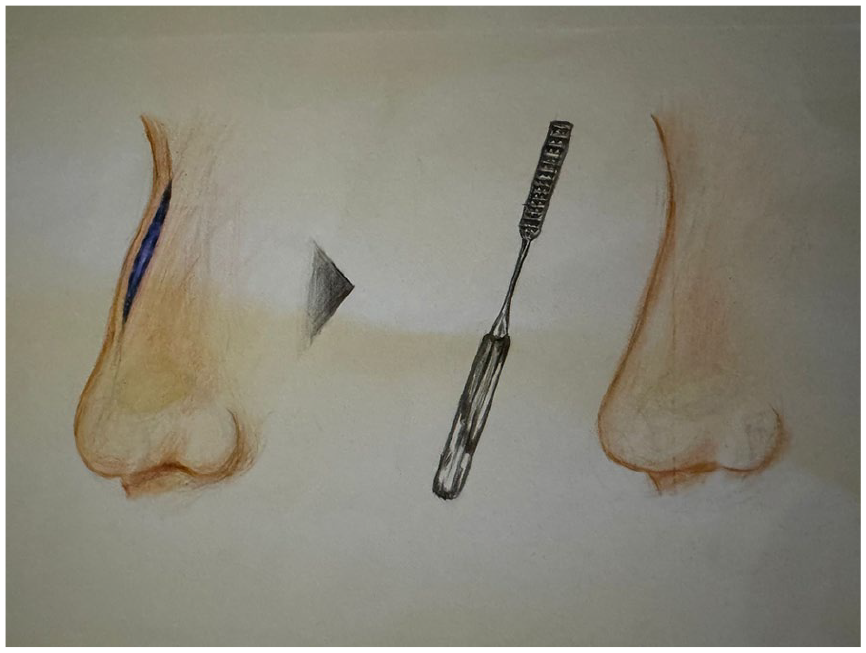
Preoperative form (nasal hump) and postoperative form (after nasal dorsum rasping).
The preoperative image demonstrates a visible nasal hump, commonly targeted during rhinoplasty for aesthetic or functional purposes. The rasping tool, positioned centrally, symbolizes the operative phase of the procedure, where the irregularities of the nasal dorsum are reduced. The postoperative image reveals a smoother and more refined nasal contour, displaying the effectiveness of rasping in achieving the desired nasal shape.
This sequence emphasizes the role of rasping in enhancing the nasal profile and demonstrates the direct impact of this technique on the visual and structural aesthetics of the nasal dorsum.
This study aims to comprehensively understand and evaluate the most robust evidence on structure techniques (ST) and dorsal preservation (DP) through a survey-based methodology. In addition, we intend to conduct a systematic review and analysis of the existing literature on the preservation rhinoplasty. The objective is to aid rhinoplasty surgeons in gaining insights into the potential benefits of various techniques or modified approaches utilized in nasal dorsal interventions. With a specific focus on dorsal reduction indications, challenges, and outcomes, the study aims to uncover hidden patterns among rhinoplasty surgeons. To the best of our knowledge, this study represents one of the initial instances of survey-based research in nasal dorsal approaches in rhinoplasty, providing perspectives from surgeons practicing both structural and dorsal preservation rhinoplasty.
Materials and Methods
Dataset Preparation Procedure
The survey was conducted with the permission of the conference organizers during the February 2022 Eastern Trakya Ear Nose and Throat (ENT) Society Training Meetings (Tekirdağ) Rhinoplasty Days. ENT specialists attending the congress were invited voluntarily to participate in the survey, which was designed to investigate nasal dorsal approaches.
Ethical approval was obtained with the research protocol number 2022.217.11.18 from the Tekirdağ Namık Kemal University. Participation in the survey was entirely optional, and no personal information, such as names or clinic locations, was collected.
The Rhinoplasty questionnaire, tailored to explore nasal dorsal approaches, included a range of questions, such as the number of years participants had been performing rhinoplasty, the frequency of performing rhinoplasty, the preoperative effects of simulation on patients, and the role of simulation in the success of nasal dorsum procedures. It is presented in Appendix 1, comprising 29 questions aimed at elucidating the behavioral patterns of the physicians. Data were individually collected from ENT physicians via Google Forms, transformed into a dataset, and then converted into a comparative benchmarking dataset for broader use.
Basic Statistical Analysis
Before initiating the research, the reliability and consistency of the prepared dataset were analyzed through evaluations of P-confidence values to ensure balanced attribute distributions, alongside basic statistical measurements for consistency. Qualitative assessments and visual inspections using pie and bar charts were conducted to thoroughly examine the data space.
Association Rule Mining
The Apriori algorithm is favored for its efficiency, scalability, simplicity, and clarity on small datasets, and it operates by iteratively extracting and generating itemsets in a breadth-first search, using support measures to prune the search space.
The association process is performed by identifying frequently occurring individual items in the database and expanding them into increasingly larger sets of items until a sufficient amount of these clusters appear in the database. The strong correlations between items can be easily detected by this method. Several metrics are used to evaluate the strength and significance of the discovered association rules. These metrics include Confidence, Lift, Leverage, and Conviction, each providing different insights into the relationship between itemsets in the rules. 8
Confidence measures the reliability of the inference made by a rule. For a Rule A→B, confidence is the proportion of transactions that contain B among those transactions that contain A. The formulation is as follows:

A high confidence value indicates that B is likely to appear in transactions that contain A, but it does not take into account the overall frequency of B in the dataset.
Lift measures how much more often the antecedent and consequent of a Rule A→B occur together than we would expect if they were statistically independent.

Greater than 1.0 values indicate a positive association between A and B, and vice versa. 1.0 means A and B are independent of each other.
Leverage measures the difference between the observed frequency of A and B appearing together and the frequency that would be expected if A and B were independent.

Positive leverage indicates a positive association between A and B, whereas zero leverage indicates independence. Negative values for leverage are not common in market basket analysis.
Conviction measures the degree of expected dependence between an antecedent and a consequent. It compares the probability that A appears without B if they were dependent on the actual observed frequency of A without B.

A higher conviction value means that the consequent is highly dependent on the antecedent. A conviction value of 1.0 means A and B are independent.
Each of these metrics offers a perspective on the rules, helping analysts to select the most relevant and interesting rules.
Experimental Results
Experimental studies can be approached from two fundamental perspectives: basic statistical analysis to understand data characteristics and data science investigations to uncover hidden patterns, correlations, and associations.
Statistical Analysis
In all, 132 surgeons participated in the survey study, with the basic statistical results visually presented in Figure 2. The dataset displayed a balanced distribution of physician professional profiles, with about half working in private hospitals and clinics and the other half in public, university, and research and training hospitals. An individual examination of each graph in Figure 2 confirmed this balance, supporting the reliability of the results.
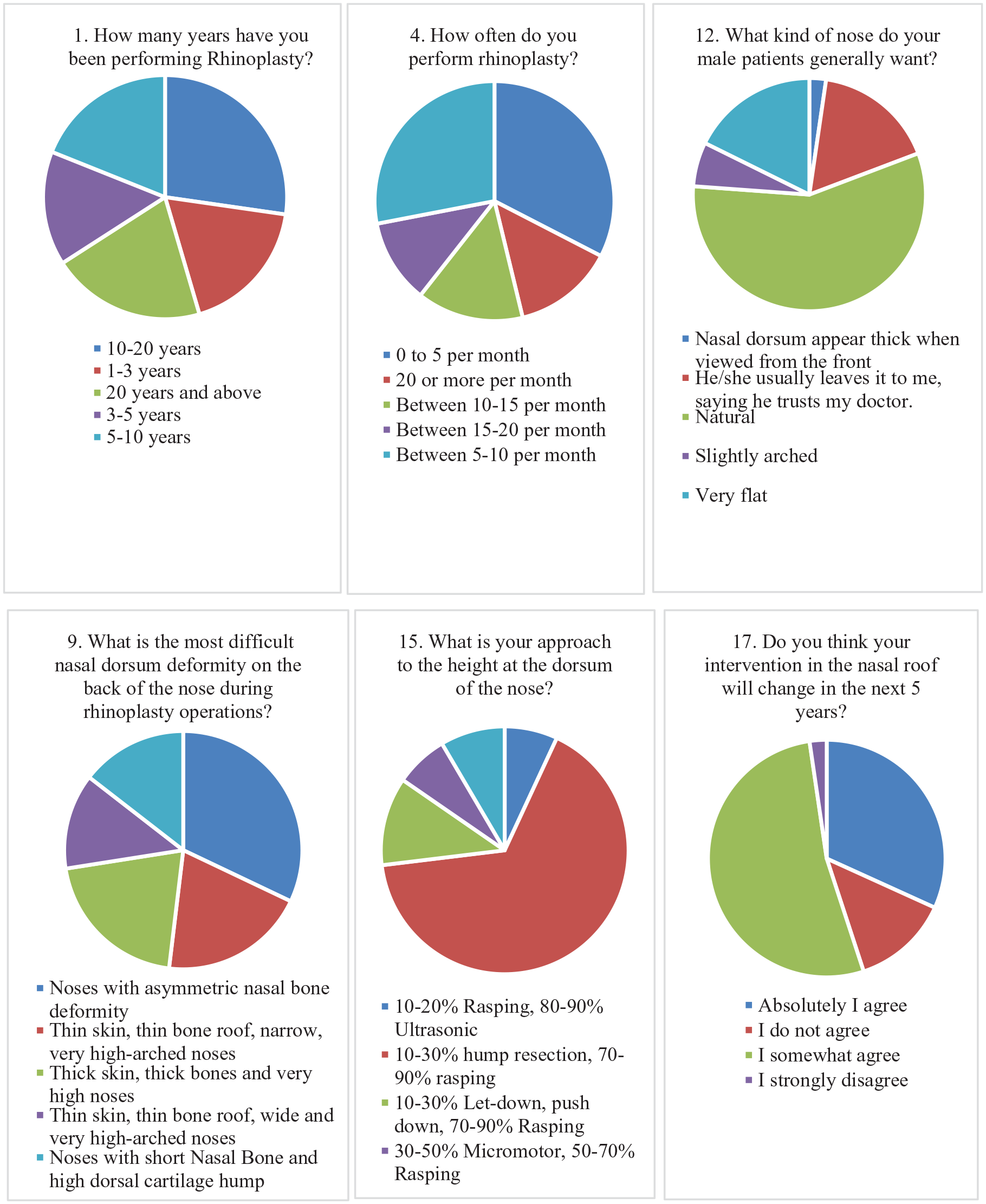
Pie charts.
These graphs analyzing the behavior models and approaches of surgeons revealed several key data patterns: 25.8% frequently performed facial plastic surgeries, 32.6% conducted 0 to 5 rhinoplasty procedures monthly, 24.4% believed simulation had no effect on outcomes, and 55.4% did not use simulation. Concerning their approach to the nasal dorsum, 13% reported no change since starting rhinoplasty, 52.7% anticipated changes within the next 5 years, and among those using the open technique, 74.6% identified irregularities as a significant long-term problem.
Association Rule Mining Results
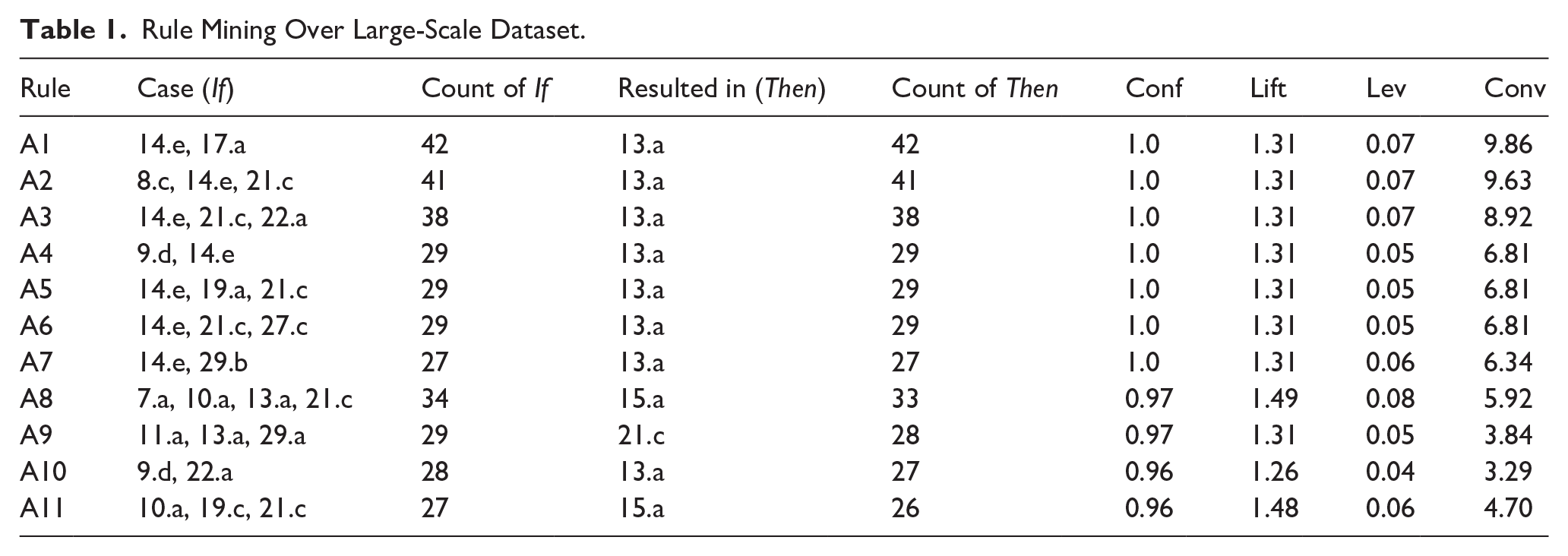
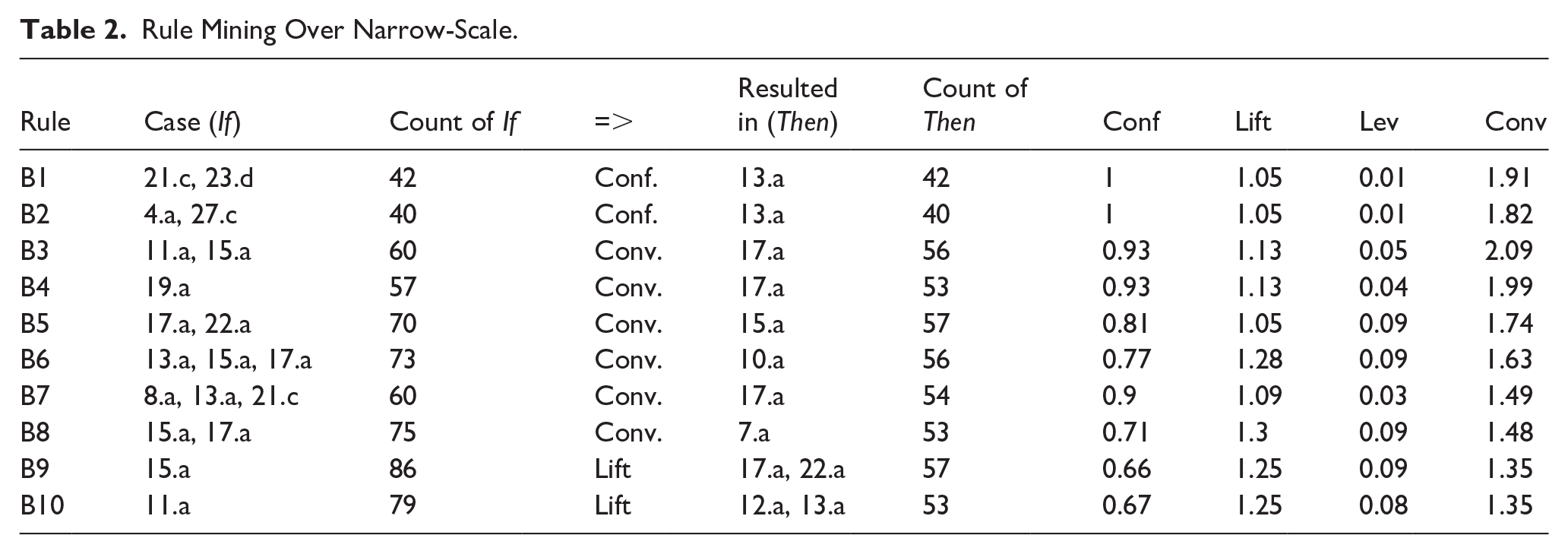
The Apriori algorithm in Weka platform 9 was utilized to obtain experimental results, as presented in Tables 1 and 2, along with the corresponding Conf, Lift, Lev, and Conv values for each experimental result.
Rule Mining Over Large-Scale Dataset.
Rule Mining Over Narrow-Scale.
Patterns From the Large-Scale Dataset
The 21 most valuable rules were selectively extracted, prioritizing their significance according to association rule mining criteria and their medical relevance. These strongest relationships are presented in descending order in Table 1, where the “Case (If)” column uses numbers and letters to reference specific questions and answers from the questionnaire in Appendix 1.
The interpretations of the emerging patterns according to Table 1 are as follows. For Rule-A1, the association rule is shortly as “(14.e) and (17.a) => (13.a) (Conf = 1.0, Lift = 1.31, Lev = 0.07, Conv = 9.86).” Namely, in the survey, 42 of the 42 doctors who marked option e of the 14th question and option a of the 17th question marked option a of the 13th question. The 42 answers to the 14th question “What’s the percentage of your patients requiring nasal roof intervention in your rhinoplasty surgeries?” are “e. 80 to 100%.” Also, the 42 answers to the 17th question “Do you think your intervention in the nasal roof will change in the next 5 years?” are “a. I somewhat agree.” Forty-two physicians also give the answer “a. 0 to 10%” to the 13th question “What’s the percentage of patients to whom you performed rhinoplasty without intervening on the nasal roof?”
“Conf = 1.0” means that in all transactions that contain items (14.e) and (17.a), item (13.a) also appears 100% of the time. The confidence level is 1 (or 100%) indicates a perfect predictor relationship where the presence of (14.e) and (17.a) always implies the presence of (13.a).
“Lift = 1.31” is greater than 1.0 and it indicates that items (14.e) and (17.a) appear with the item (13.a) more frequently than would be expected if they were statistically independent. In this case, the lift of 1.31 suggests a positive association between the antecedent (14.e and 17.a) and the consequent (13.a), meaning that having 14. e and 17.a increases the likelihood of having (13.a) in a transaction.
“Lev = 0.07” measures the difference in the frequency of occurrence of the itemset together compared to what would be expected if they were independent. 0.07 indicates a positive deviation from independence, meaning that the combination of (14.e) and (17.a) with (13.a) occurs more frequently than would be expected by chance alone. This positive leverage confirms that there is a noteworthy association between these items.
“Conv = 9.86” measures the degree of dependence of the consequent on the antecedent. A conviction value of 9.86, which is significantly greater than 1, indicates that the consequent (13.a) is highly dependent on the antecedent (14.e and 17.a). This high value suggests that the likelihood of seeing (13.a) without (14.e) and (17.a) is very low, reinforcing the strong association between these items.
The rule “(14.e) and (17.a) => (13.a)” exhibits a strong association, as evidenced by its high confidence, positive lift, positive leverage, and high conviction. This implies that items (14.e) and (17.a) are significant predictors for the occurrence of item (13.a) in transactions, indicating a potentially valuable rule for applications such as market basket analysis, recommendation systems, or inventory management. As a result, of the technical results given above, the following conclusion and inference can be made: Rhinoplasty surgeons who intervene in the nasal dorsum with a frequency of 80% to 100% reported believing that their interventions in the nasal dorsum would change within the next 5 years.
Rule-A2: Surgeons with a higher ratio of male patients reported more irregularities in open-technique rhinoplasty procedures.
Rule-A3: Irregularities after interventions in the nasal dorsum were more frequently reported following crushed cartilage interventions.
Rule-A4: Surgeons indicating the most challenging nasal bone deformity as asymmetrical nasal bone deformities were applying 80% to 100% open technique.
Rule-A5: Surgeons intervening in the nasal dorsum with a frequency of 80% to 100% reported irregularities after nasal dorsum edema.
Rule-A6: Surgeons intervening in the nasal dorsum with a frequency of 80% to 100% reported the necessity of re-rasping the nasal dorsum along with irregularities.
Rule-A7: Rhinoplasty surgeons reported step deformities as the most common postoperative problem in interventions on the lateral nasal wall.
Rule-A8: Rhinoplasty surgeons who reported not conducting simulations exclusively applied open technique and reported encountering irregularities and performing more rasping.
Rule-A9: Irregularities are reported as the most important issue in long-term interventions in the nasal dorsum, and the most common postoperative problem in interventions on the lateral nasal wall is reported as asymmetries.
Rule-A10: Rhinoplasty surgeons who reported hardship in cases with asymmetrical nasal bone deformities reported using crushed cartilage as camouflage grafts.
Rule-A11: Surgeons applying 100% open technique reported performing more rasping on the nasal dorsum and encountering irregularities in the short and long term.
Patterns From the Narrow-scale Dataset
In the large-scale dataset study, survey questions yielded sparse data due to a limited number of responses and an abundance of answer options, complicating the identification of hidden patterns in the challenging data collection environment. Consequently, the survey responses were condensed from five to three choices to form a narrow-scale dataset, detailed alongside the original in Appendix 1. By analyzing around 2000 association rules from this refined dataset, key patterns emerged, as displayed in Table 2, where the column “=>” denotes the metric type.
In this section, the interpretations of the emerging patterns are as follows.
Rule-B1: Surgeons who reported irregularities as the most significant long-term problem in interventions on the nasal dorsum reported irregularities as the most common problem in revisions performed at other centers.
Rule-B2: Surgeons performing 0 to 10 rhinoplasties per month and frequently intervening in the nasal dorsum reported the need for revisiting the nasal dorsum in their revisions.
Rule-B3: Surgeons who generally encounter female patients desiring a natural nasal dorsum reported that they perform more rasping and hump resection. And they believe that interventions on the nasal dorsum could change in the next 5 years.
Rule-B4: Surgeons reporting nasal dorsum edema as the most important short-term problem in nasal dorsum interventions believed that nasal dorsum interventions would change in the next 5 years.
Rule-B5: Surgeons who believed that nasal dorsum interventions would change in the next 5 years reported using crushed cartilage in nasal dorsum surgery and performing more rasping and hump resection in nasal dorsum surgery.
Rule-B6: Surgeons who frequently intervened in the nasal dorsum and performed more rasping and hump resection think that nasal dorsum interventions could change in the next 5 years. They also reported a preference for open technique.
Rule-B7: Surgeons with a higher proportion of female rhinoplasty patients reported intervening more frequently in the nasal dorsum, reporting irregularities as the most significant long-term problem. They believed that nasal dorsum interventions would change in the next 5 years.
Rule-B8: Surgeons performing more rasping and hump resection reported that nasal dorsum interventions could change in the next 5 years and not using simulations.
Rule-B9: Physicians performing more rasping and hump resection in the nasal dorsum reported using crushed cartilage as a camouflage graft. They believed that nasal dorsum interventions would change in the next 5 years.
Rule-B10: Physicians frequently intervening in the nasal dorsum reported that female and male patients generally want a natural nasal dorsum.
Discussion
Our study has demonstrated the key role of simulations in open-technique rhinoplasty, particularly for procedures involving the nasal dorsum. Through the integration of simulations, surgeons can better anticipate both the short- and long-term outcomes of interventions such as hump reduction and rasping. This approach allows for more precise surgical planning, helping surgeons minimize postoperative complications. Simulations not only aid in improving surgical outcomes but also enhance patient communication by providing a visual representation of potential results. This method is particularly significant as nasal dorsum interventions can be complex and may lead to unpredictable outcomes if not carefully planned.
Previous studies have shown that hidden patterns in data can be uncovered, leading to significant conclusions about existing surgical practices and their outcomes. 10 This concept is relevant in the presented context of rhinoplasty, where subtle variations in technique can have profound impacts on patient results. By implementing data science methodologies, we can gain deeper insights into how specific factors influence surgical success. These findings suggest that nasal dorsum irregularities may often be associated with specific surgical approaches, particularly in open rhinoplasty.
In our study, it was found that rhinoplasty surgeons exclusively using the open technique performed more dorsal rasping and, consequently, reported higher rates of irregularities in both the short and long term (Rule-A11). This observation suggests that the open technique while offering certain benefits, such as improved visibility and access, may increase the risk of postoperative irregularities when combined with extensive dorsal rasping. This supports the need for careful selection of surgical methods based on the anatomy of the patient and desired outcomes. The potential risks highlight the importance of surgeon expertise and precision in the execution of this technique.
Previous studies have indicated that when the surgical goal is the correction of an isolated dorsal hump, a closed or endonasal approach may be preferable. These techniques offer the advantage of minimal disruption to surrounding nasal structures, reducing the likelihood of postoperative complications. 11 However, in cases where more extensive modifications to the nose are necessary, such as in patients requiring significant reshaping, the open technique remains the recommended approach. The open technique provides better access to the nasal framework, allowing surgeons to make more substantial changes, though it comes with a higher risk of irregularities if not executed with precision.
In addition, prior studies have noted that revision rates are generally lower for primary open rhinoplasty techniques compared to the closed approach. 12 This advantage stems from the improved visualization and access that the open technique offers, allowing surgeons to make more precise adjustments. However, the open technique bears its risks. Dorsal irregularities, inverted V deformities, and excessive narrowing of the nasal dorsum have been linked to over-aggressive or improper mid-vault resections. 13 This highlights the need for a balanced and preservation approach when addressing the mid-vault. An over-resection can lead to aesthetic compromises, such as unnatural contours, and functional issues, including compromised airflow. Therefore, maintaining structural integrity while making the necessary corrections is critical for both aesthetic and functional outcomes.
In another study of reducing nasal hump, the surgeon should not focus solely on correcting the dorsal deformity. Instead, achieving an overall balanced projection by addressing both the dorsum and the nasal tip is crucial. This comprehensive approach ensures that the outcome is harmonious with the patient’s facial proportions. A trend toward preservation reductions rather than aggressive hump removal has been noted as a strategy leading to more natural-looking results. 14 This aligns with the idea of preservation rhinoplasty, where minimal interventions produce maximum aesthetic impact while reducing the risk of complications such as dorsal irregularities or tip over-projection.
In our study, rhinoplasty surgeons who frequently perform nasal dorsum interventions reported that both female and male patients generally prefer a natural-looking nasal dorsum (Rule-B10). This preference aligns with the growing trend of subtle, natural results in facial cosmetic surgery, where patients seek enhancements that do not appear overtly altered. Surgeons should tailor their techniques to meet these expectations, avoiding over-correction of the dorsum to maintain a natural and aesthetically pleasing outcome. This patient-driven demand for a natural appearance reinforces the need for preservation surgical approaches in rhinoplasty, especially in dorsal hump reduction.
Previous studies have also mentioned the importance of preserving the natural keystone area during rhinoplasty, especially in traditional hump reduction techniques. While these techniques are often successful, disrupting the keystone area can cause negative aesthetic and functional results. The keystone area plays a pivotal role in maintaining the structural integrity of the nasal dorsum and the internal nasal valve. 15 Preservation of this area is key for achieving aesthetic dorsal lines and ensuring nasal functionality, particularly airflow. Failure to preserve the keystone area can lead to long-term functional complicate emphasizing the importance of careful surgical planning in this region.
In our study, surgeons who believe that nasal dorsum interventions will evolve in the next 5 years reported using crushed cartilage as a camouflage graft during dorsal nasal surgery and applying more rasping and hump reduction (Rule-B5). These surgeons anticipate that surgical practices, particularly in nasal dorsum surgery, will shift toward techniques that enhance both structural integrity and aesthetic outcomes. In addition, the surgeons who frequently intervene in the nasal dorsum and foresee changes in the field reported a preference for the open technique (Rule-B6). The anticipation of changes reflects the dynamic nature of rhinoplasty, where emerging techniques, technologies, and patient expectations continuously shape surgical practices. One such change noted in a previous study was the avulsion of the upper lateral cartilages (ULCs) during hump removal, often necessitating reconstruction with spreader grafts to maintain structural support. 4
Our study highlights several critical findings regarding nasal dorsum interventions, particularly focusing on short- and long-term outcomes. A significant 80.9% of surgeons reported nasal dorsum edema and irregularities as the most challenging short-term complications following interventions (Rule-B4). This observation underscores the prevalence of early postoperative issues and the need for careful postoperative management. Furthermore, irregularities after the use of crushed cartilage in nasal dorsum surgeries were more frequently reported (Rule-A3). This finding raises concerns about the use of crushed cartilage, especially in patients undergoing open rhinoplasty who prefer camouflage grafts. And it brings attention to the importance of technique selection to minimize such complications.
In terms of long-term outcomes, surgeons frequently involved in nasal dorsum interventions identified irregularities as the most significant issue encountered in revision surgeries, particularly those performed at other centers (Rule-B1). This suggests that proper primary intervention is important to reduce the need for revisions and manage long-term aesthetic and functional outcomes.
Interestingly, a previous study highlighted the importance of the male nasal dorsum in altering perceptions of age, attractiveness, health, gender expression, intelligence, and success. 16 This indicates that nasal dorsum interventions do not only impact physical appearance but also carry broader social implications. In our study, surgeons noted that both male and female patients generally desire a natural appearance for their nasal dorsum (Rule-B10). This aligns with the current trend in rhinoplasty toward subtle, natural-looking results, reinforcing the necessity of individualized surgical planning.
Surgeons with a higher proportion of male patients reported more frequent irregularities in open rhinoplasty procedures (Rule-A2), suggesting that a reevaluation of surgical techniques may be necessary for this demographic. This could involve modifying the surgical approach to address the specific anatomical differences and aesthetic preferences of male patients. Conversely, surgeons who primarily treat female patients, and who often desired a natural nasal dorsum, reported performing more rasping and hump reduction and anticipated that nasal dorsum interventions would evolve over the next 5 years (Rule-B3).
In addition, surgeons dealing with a high number of female rhinoplasties cited irregularities as the most significant long-term issue in nasal dorsum interventions (Rule-B7). This group also noted changes in techniques within the next 5 years, particularly concerning rasping on the nasal dorsum. These findings may indicate that female patients are at a higher risk of experiencing irregularities, especially with more aggressive rasping techniques. This proves the need for adopting preservation techniques that minimize the risk of such complications and make them a crucial consideration in future nasal dorsum surgeries.
The benefits of dorsal preservation (DP) should be considered when evaluating patients before surgery. However, some complications may still occur after DP. 17 A previous study highlighted the importance of the nasofrontal angle in women’s attractiveness and its connection to other positive social traits. 18 This adds complexity to how femininity relates to attributes like attractiveness, health, and youthfulness in female faces. 16
In our study, 80% to 100% of rhinoplasty surgeons who frequently intervened in the nasal dorsum reported irregularities following nasal dorsum edema (Rule-A5). Edema increases the risk of irregularities. Surgeons performing more rasping and hump reduction stated they used crushed cartilage as a camouflage graft. They also believed that nasal dorsum interventions would evolve over the next 5 years (Rule-B9). This indicates changing dynamics in rhinoplasty.
Preoperative simulation is a valuable practice, highly appreciated by patients for visualizing potential outcomes before rhinoplasty. While its accuracy is moderate in both primary and revision cases, it remains a useful tool for surgical planning and patient communication. However, it is acknowledged as a potential confounding factor, as surgeons who utilize simulation may incorporate a broader range of techniques into their rhinoplasty approach, potentially influencing the outcomes. This variability underlines the complexity of evaluating simulation’s impact and highlights the importance of further studies to better isolate its specific effects on surgical results. 19
Simulation programs have been a valuable tool in enhancing communication between surgeons and patients for nasal dorsum reduction. 16 However, in our study, 55.4% of surgeons reported not using simulation. Among those, there was a preference for the open technique, with more frequent irregularities and rasping (Rule-A8). Surgeons using rasping and not employing simulation, expected future changes in nasal dorsum interventions (Rule-B8). These findings suggest a link between the absence of simulation, increased rasping, and nasal dorsum irregularities.
A different study emphasized the importance of computer simulation for controlled outcomes, especially in male rhinoplasty patients. 21 Another recent study proposed that each rhinoplasty type—hump reduction, crooked nose correction, and augmentation—should have its learning curve. 20 A separate study found that performance may temporarily decline after reaching technical proficiency, due to factors like more challenging cases or overconfidence. This highlights the need for surgeons to individualize each procedure, considering the patient’s anatomy, deformities, ethnicity, gender, and personal preferences.
In our study, 32.1% of surgeons reported asymmetrical nasal bone deformities as the most challenging issue. Thick skin, thick bone, and a high nasal dorsum were the second most difficult, at 20.6%. Surgeons who intervened in the nasal dorsum at rates of 80% to 100% also reported irregularities as a major factor for revision (Rule-A6). Step deformities were the most common postoperative issue in lateral nasal wall interventions (Rule-A7), suggesting that nasal dorsum approaches may need to be reconsidered.
Nasal dorsum irregularities were highlighted as the most significant long-term concern, while asymmetries were the most common postoperative issue in lateral nasal wall surgeries (Rule-A9). Surgeons struggling with asymmetrical nasal bone deformities frequently used crushed cartilage as camouflage grafts (Rule-A10). This suggests a need to rethink the approach for such cases.
The survey indicated that relying solely on the open technique may not be effective for all nasal dorsum reductions. Success in dorsal hump reduction requires understanding ideal nasal proportions, thorough preoperative examination, and adjustments based on the patient’s anatomy.
It is acknowledged that this study has certain limitations, which are outlined as follows:
The research is based on a survey conducted among a limited number of ENT specialists, which may restrict the generalizability of the findings.
There is a paucity of data related to preservation rhinoplasty procedures.
The complexity of nasal aesthetics, influenced by numerous variables, poses challenges in drawing definitive conclusions.
To address these limitations, further studies, particularly those involving larger sample sizes and multicenter studies, are needed to provide a more comprehensive comparison of the nasal dorsum aesthetic outcomes between traditional and preservation rhinoplasty techniques.
Availability
The large and narrow scales of the questionnaire, CSV dataset including answers, all of the experimental results related to this study, and the broad examinations of the association rule mining experiments can be publicly and freely downloadable for comparison, benchmarking, and further studies from the URL: https://sites.google.com/site/bulutfaruk/study-of-rhinoplasty.
Conclusion
This study has provided a comprehensive analysis of the approaches used by otorhinolaryngologists in nasal dorsum modification during rhinoplasty, emphasizing the widespread use of the open technique. The data-driven insights reveal that surgeons employing the open technique, particularly those performing extensive rasping and hump resection, anticipate potential changes in their surgical strategies within the next 5 years. Notably, these surgeons reported a high incidence of postoperative irregularities, suggesting a correlation between the technique employed and the challenges encountered in achieving optimal nasal dorsum aesthetics and functionality. Our findings highlight a critical need for continuous evaluation and possibly a shift toward more preservation and preservation-oriented techniques in nasal dorsum surgery. The anticipation of changing approaches among surgeons suggests an evolving landscape in rhinoplasty practices that could lead to more refined techniques, minimizing long-term complications and enhancing patient outcomes. Moreover, the study underscores the importance of simulation in surgical planning and patient communication, as surgeons who bypassed this step reported higher rates of irregularities and subsequent revisions. Future studies, particularly those involving larger sample sizes, would be beneficial in advancing our understanding of optimal techniques for nasal dorsum modification.
Footnotes
Appendix 1
While correlation and association studies were being carried out, it was decided to delete some useless questions in the following stages. These questions were found to be unnecessary in terms of general conclusions. The question numbers extracted are as follows: 2, 3, 5, 6, 11, 12, and 14.
Acknowledgements
We would like to thank Basak Ballica for her valuable support in the study.

Ethical Considerations
The ethical approval protocol number is 2022.217.11.18 from the Ethics Committee of Tekirdağ Namık Kemal University.
Long Explanations of the previous line above:
The survey was conducted with the permission of the conference organizers following the February 2022 Eastern Trakya Ear Nose and Throat (ENT) Society Training Meetings (Tekirdağ) Rhinoplasty Days. ENT specialists attending the congress were invited voluntarily to participate in the survey, which was designed to investigate nasal dorsal approaches. Ethical approval was obtained with the research protocol number 2022.217.11.18 from Tekirdağ Namık Kemal University. Participation in the survey was entirely optional, and no personal information, such as names or clinic locations, was collected.
Informed Consent/Patient Consent
All the information.
Funding
The author(s) disclosed receipt of the following financial support for the research, authorship, and/or publication of this article: The Open Access publication of which was funded by the University of Essex.
Declaration of Conflicting Interests
The author(s) declared no potential conflicts of interest with respect to the research, authorship, and/or publication of this article.