




Abstract

A “cannot oxygenate, cannot ventilate, cannot intubate situation” is one of the most stressful moments that might occur at the start of a procedure under general anesthesia. 1 At the occurrence of such an event, frequent actions like jaw-thrust and sniffing positions are applied to resolve the problem. Because the currently used methods are not always successful, ENT doctors are usually called for to be on standby to perform a coniotomy.
In the case of obstructive sleep apnea syndrome (OSAS), patients try to breathe during their sleep but collapse in the airway—which can occur at different sites—causes obstruction and dysfunctional ventilation. Drug-induced sleep endoscopy (DISE) can help in the decision-making for preferred OSAS therapy in individual patients. 2 DISE, using a head-turn, also indicates what the effect of positional therapy might be. 2
During DISE, in many patients with a collapsing and obstructed airway, the airway reopens and airflow becomes possible if the head is turned sideways when the patient is asleep in a supine position (Figures 1, 2 and 3).
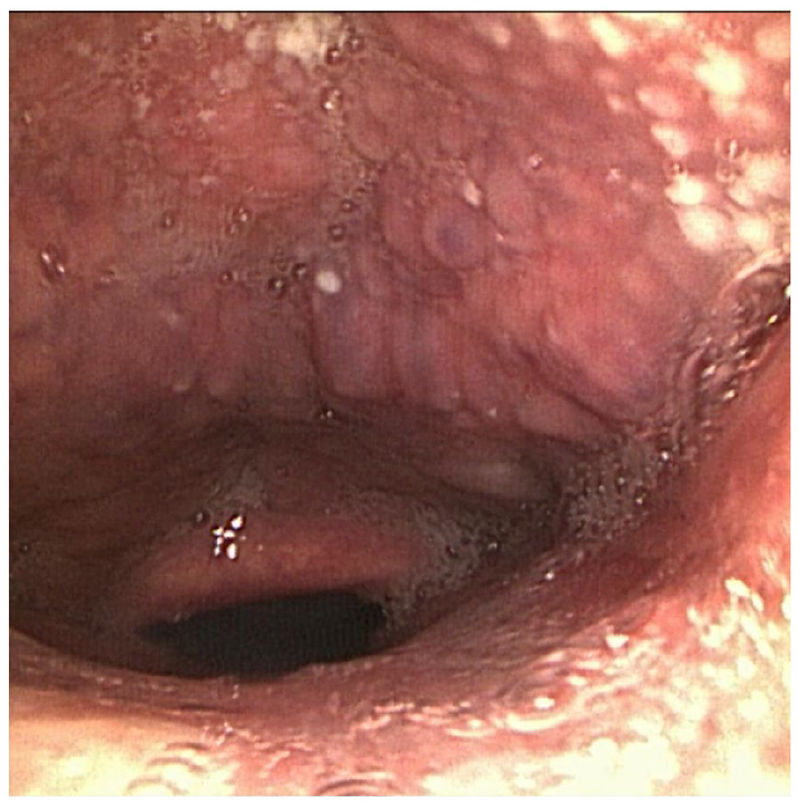
Pharynx of a patient with OSAS during DISE. The patient is in a supine position with the head straight. The top of the picture is the base of the tongue; the bottom of the picture is the dorsal wall of the pharynx. In between, the epiglottis is visible. OSAS, obstructive sleep apnea syndrome; DISE, drug-induced sleep endoscopy.
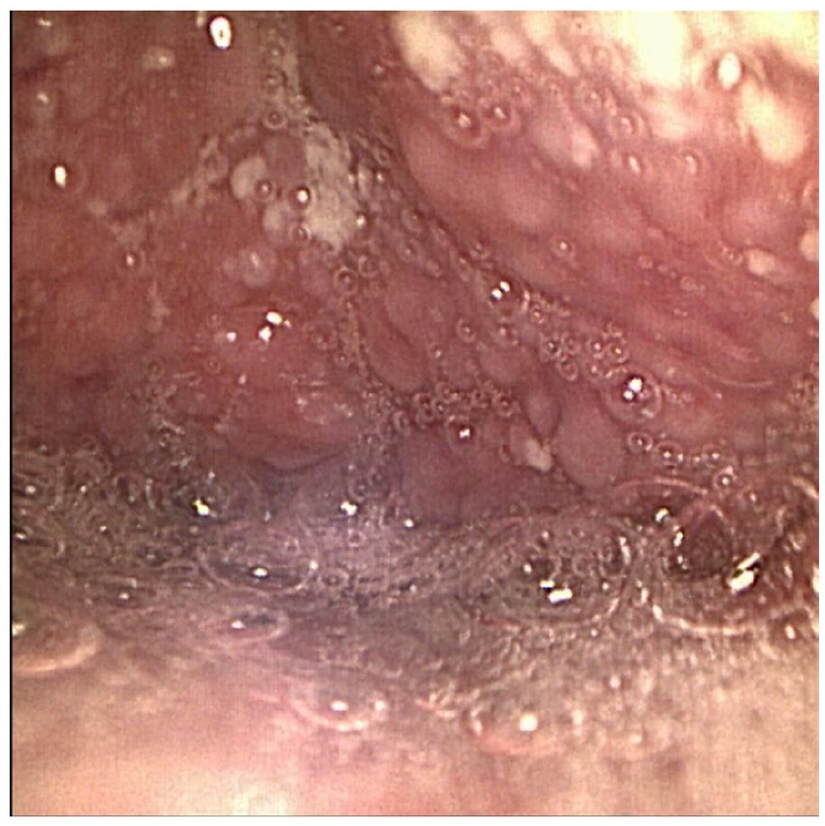
The base of the tongue falls backwards during deeper anesthesia and the airway is completely blocked.

The same patient is in a supine position with the head turned to the right. The airway is opened and ventilation becomes possible.
This experience made us change our vision of the acute non-traumatic “cannot oxygenate, cannot ventilate, cannot intubate situation.” In patients without contraindications for a head-turn, this simple maneuver is performed to reopen the airway and to see if consequently ventilation can be restored.
Like with any therapy, this will not lead to a 100% success rate. Still, it helped us tremendously in many cases, it does not cause any harm, and it is such an easy trick that it would be a shame not to try it.
Footnotes
Declaration of Conflicting Interests
The author(s) declared no potential conflicts of interest with respect to the research, authorship, and/or publication of this article.
Funding
The author(s) received no financial support for the research, authorship, and/or publication of this article.
