




Abstract
Introduction
Chronic sinusitis with nasal polyps (CRSwNP) is a disease characterized by the presence of nasal polyps as well as subjective persistent sinus inflammation for at least 12 weeks. CRSwNP has complex underlying etiologies. The disease is initially managed with pharmacotherapy such as corticosteroids and/or antibiotics, with persistent cases necessitating endoscopic sinus surgery (ESS). However, surgical treatment has been noted to have a recurrence rate of 40% to 79%. 1 Biologic therapies have emerged as novel treatments for patients who suffer from recalcitrant CRSwNP. Dupilumab was the first biologic to receive United States Food and Drug Administration (FDA) approval for CRSwNP in 2019, and since then others have followed.
Patients are increasingly utilizing online medical information. 2 As these newer treatments for CRSwNP are introduced, patients will likely continue to see out information online. The internet is an unregulated source of information; and patients may encounter literature that is not tailored for their education.3,4 There is great variability in the degree of understanding that patients may have regarding their disease and the treatments. 5 Previous studies in otolaryngology have looked at patient educational material online and have found variability in quality metrics of sources available to patients, even from reputable sources.6,7 Specifically looking at chronic rhinosinusitis, studies have found online material that is hard to read for the average adult and identified a need for higher quality audio and visual online material.8,9 To provide the most complete care, physicians would benefit from better understanding what participants are searching for and what information they are accessing.
Given the novelty of biologic therapies for CRSwNP, there is a paucity of information on the quality and content of online material that patients and other interested parties may encounter online. Furthermore, their role in the overall algorithm for treatment of CRSwNP remains debated, and as such, shared decision-making plays a critical role in the use of biologic therapy for an individual patient. We sought to explore the most common questions searched online regarding biologics therapies for CRSwNP, and subsequently assess the quality of the sources that answer those questions. An understanding of this search criteria may immensely aid in patient education.
Methods
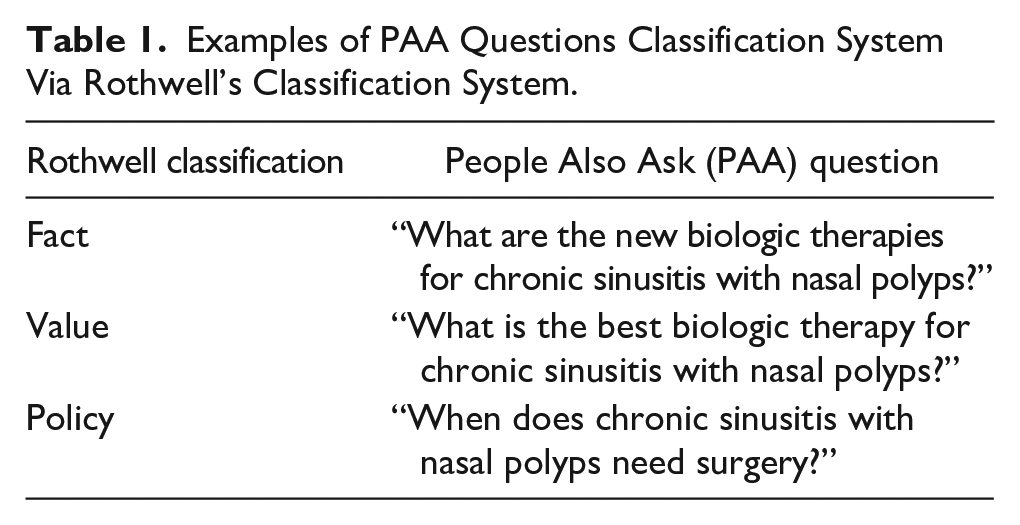
Following the reference for standardization of reporting results for Google Trends published by Nuti et al, on November 10, 2023, Google Trends was queried (Google) and data were downloaded for the following search input: (“chronic sinusitis with nasal polyps” + “nasal polyps” + “biologic therapy” + “chronic sinusitis”). 10 We searched within the United States from January 1, 2023, to November 10, 2023, using the “health” query category. We chose January 1, 2023, as the start date to capture sufficient data prior to publication. We limited our analysis to results from the United States to account for primarily English language posts and to focus on results that would be most likely encountered by patients in the United States. We chose the “health” queue category as we are interested in assessing interest in the context of health. 10 This search was performed in Houston, Texas. The term “Chronic Rhinosinusitis with Nasal Polyps Biologics” was utilized alongside modifiers (dupilumab/Dupixent, omalizumab/Xolair, and mepolizumab/Nucala) for a total of 7 search terms. People Also Ask (PAA) questions are additional questions that Google automatically populates on the web page solely based on the original search query, typically with the most related question listed closer to the top. Google uses its proprietary “RankBrain” and intensive language processing algorithms to display these questions that can be considered a proxy for the most searched related questions searched online regarding the original search query.11 -13 These questions were compiled for each of the 7 search terms with their associated parent website via an online data scraping program [Search Engine Optimization (SEO) Minion] in November of 2023 in a single session. Questions were subsequently separated into fact-, policy-, or value-based delineations according to Rothwell’s content classification via 2 independent reviewers (S.E.R. and L.G.). 14 “Fact” questions ask whether something is true and to what extent. “Value” questions ask for evaluation of an idea, object, or event. “Policy” questions ask whether a certain course of action should be taken to solve a problem. 14 Examples can be seen in Table 1. Websites were categorized as either academic, government, commercial, or private practice. Sources were considered academic if they had an affiliated educational institution or educational purpose, government if they had an associated “.gov” or related uniform resource locator (URL), private practice if associated with a nonacademic medical practice, and commercial if industry sponsored or containing other financial interests. Inter-rater reliability was calculated using Cohen’s kappa (κ) in “R” statistical software version 4.4.0 (R Foundation for Statistical Computing) and questions were organized into different topics and subtopics. The Flesch Reading Ease (FRE) score, reported from 0 (difficult) to 100 (easy), and Flesch-Kincaid Grade Level (FKGL), an estimation of US reading grade level, were used for source readability. The FRE score uses a mixture of word-length and sentence-length to calculate a score than correlates to reading ease. 15 Similarly, the FKGL uses the same variables with different weighting factors to present a score as a US grade level. 16 These scores were calculated via Microsoft Word version 2021 (Microsoft) built-in readability calculators. Quality was assessed via the Journal of American Medical Association (JAMA) benchmark criteria (0-4 scale with a single point each for authorship, attribution, disclosure, and currency) with a source rating ≥3, indicating high-quality material. The Student’s T test was used to assess significance in quantitative data (alpha = .05) in “R” statistical software version 4.4.0 (R Foundation for Statistical Computing).
Examples of PAA Questions Classification System Via Rothwell’s Classification System.
Results
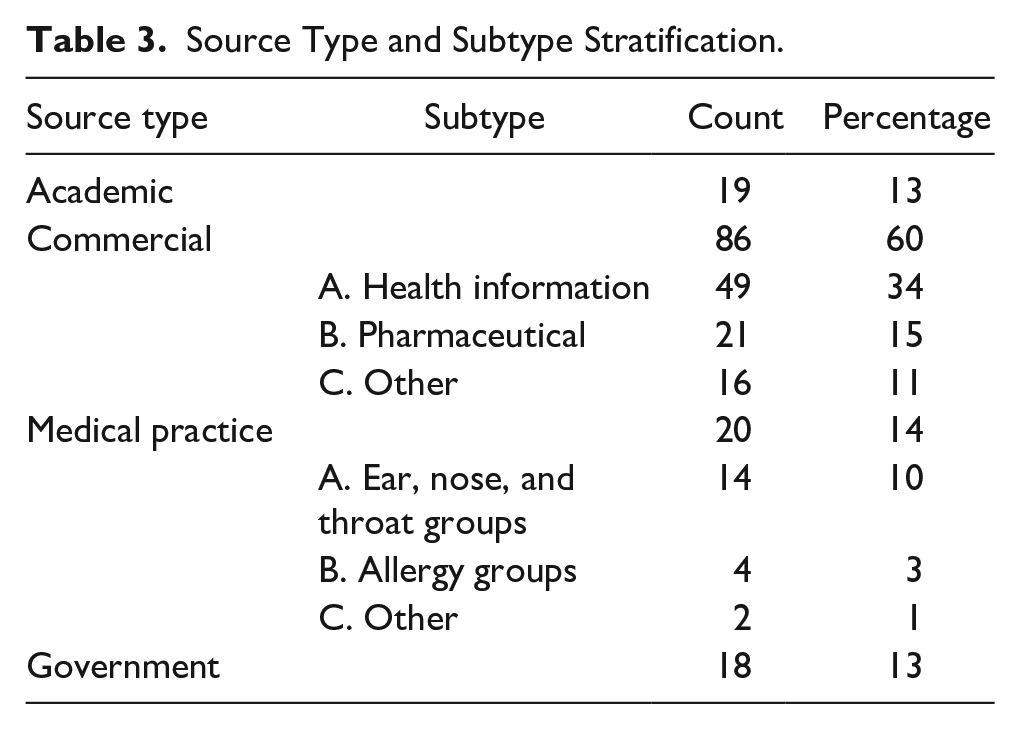
A total of 143 unique PAA questions and unique websites were identified related to CRSwNP using the terms detailed above. When stratifying according to Rothwell’s criteria, questions were primarily fact-based (81.12%), followed by value-based (13.29%) and policy-based (5.59%). Questions were independently organized into 3 categories: questions about biologic therapy overall (38.46%), questions about CRSwNP (37.76%), and questions about treatment options (23.78%; Table 2). Inter-rater reliability was very strong at κ = 0.937. The most common subtopics were related to questions about nasal polyps overall (23.08%), side effects (10.49%), and indications (10.49%) of biologics, and symptom relief from various treatment options (9.79%). FKGL scores found the average reading level to be at approximately a 12th grade level (SD = 3.297). Mean FRE score was 37.6 (SD = 16.77) also indicating low reading ease. Mean JAMA criteria scores were 0.9895 (SD = 0.848), indicating largely low-quality materials. Websites answering PAA questions were from commercial (60.14%), medical practice (13.99%), academic (13.29%), and government (12.59%) sources. Stratification based on source type can be seen in Table 3, with most commercial sources encompassing health information websites (34%) followed by pharmaceutical companies (15%). A total of 70% of medical practices were ENT based followed by allergists (20%). Table 4 presents comparisons of each metric by source type and a visual representation in Figure 1. Notably, academic sources had a JAMA score (1.84 ± 1.08) that was significantly higher than commercial (1.13 ± 0.86), government (0.67 ± 0.74), and private practices (0.80 ± 0.60; P = .003, P = .0007, P = .0008, respectively). For government sources, readability ease (27.64 ± 18.23) was significantly lower than academic (42.04 ± 13.69), commercial (36.83 ± 17.09), and private practice (45.92 ± 9.14) sources (P = .011, .045, .0004, respectively).
People Also Ask (PAA) Questions Divided Into 3 Major Categories.
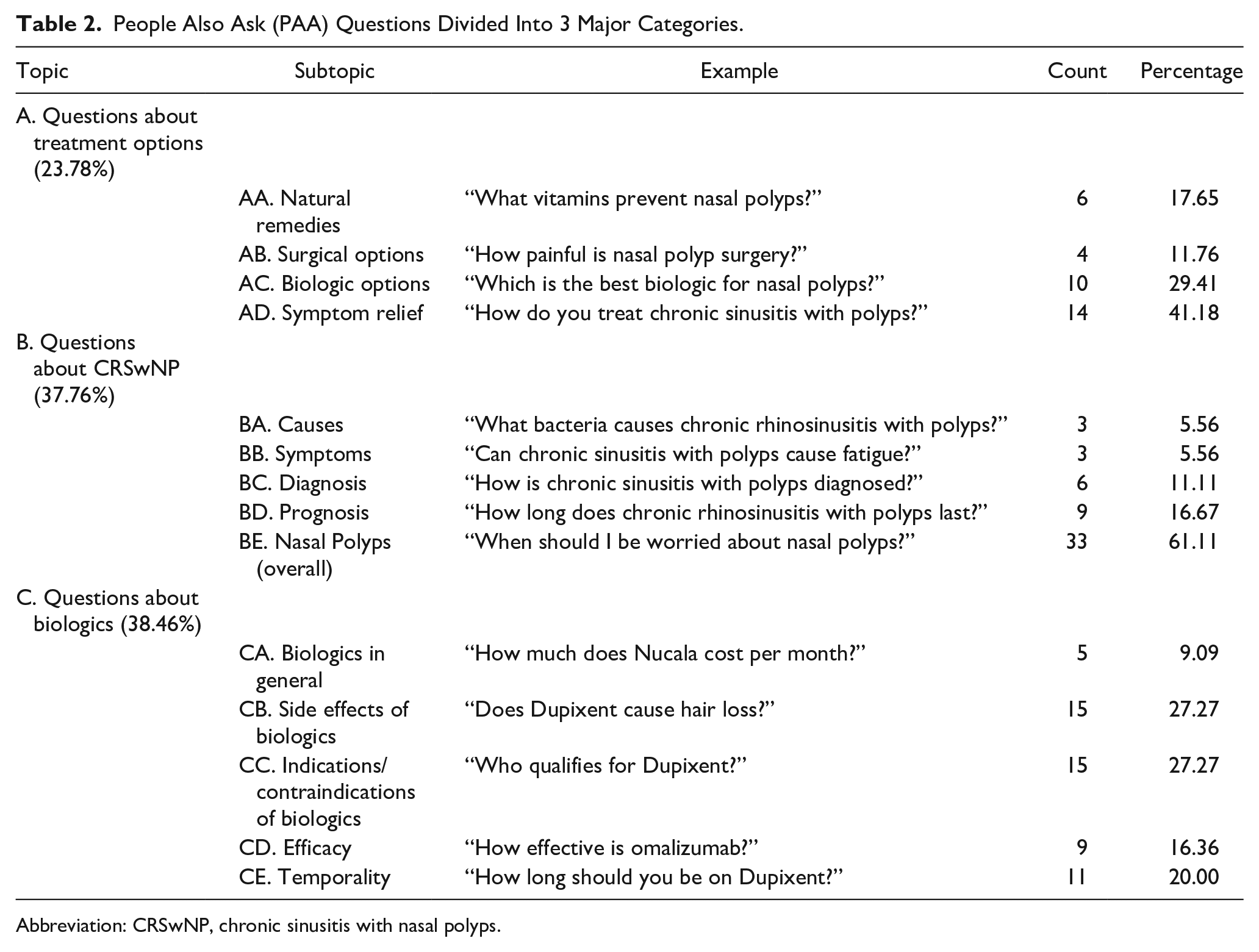
Abbreviation: CRSwNP, chronic sinusitis with nasal polyps.
Source Type and Subtype Stratification.
Full Panel of Statistical Testing Done Between Different Metrics.
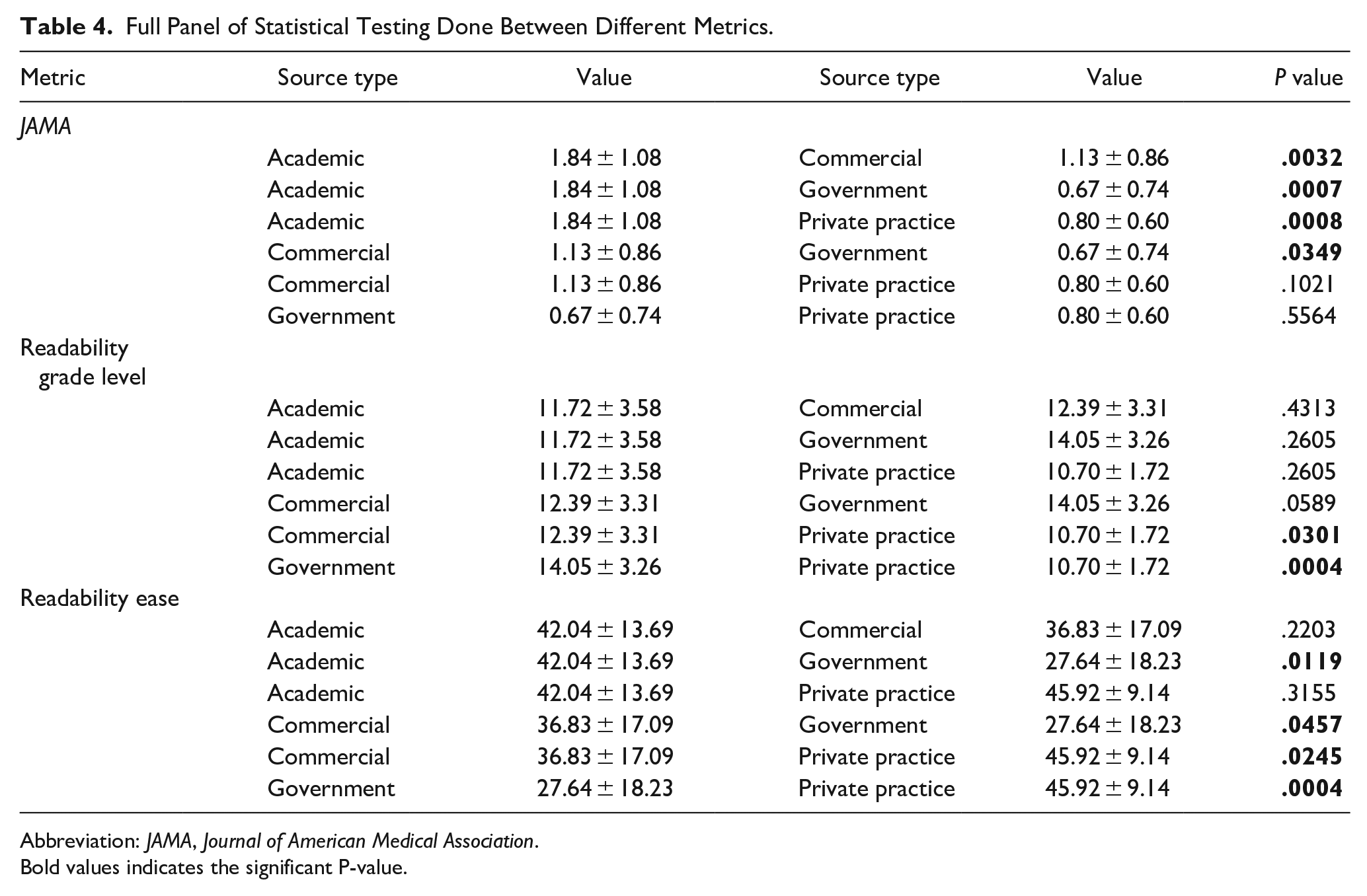
Abbreviation: JAMA, Journal of American Medical Association.
Bold values indicates the significant P-value.
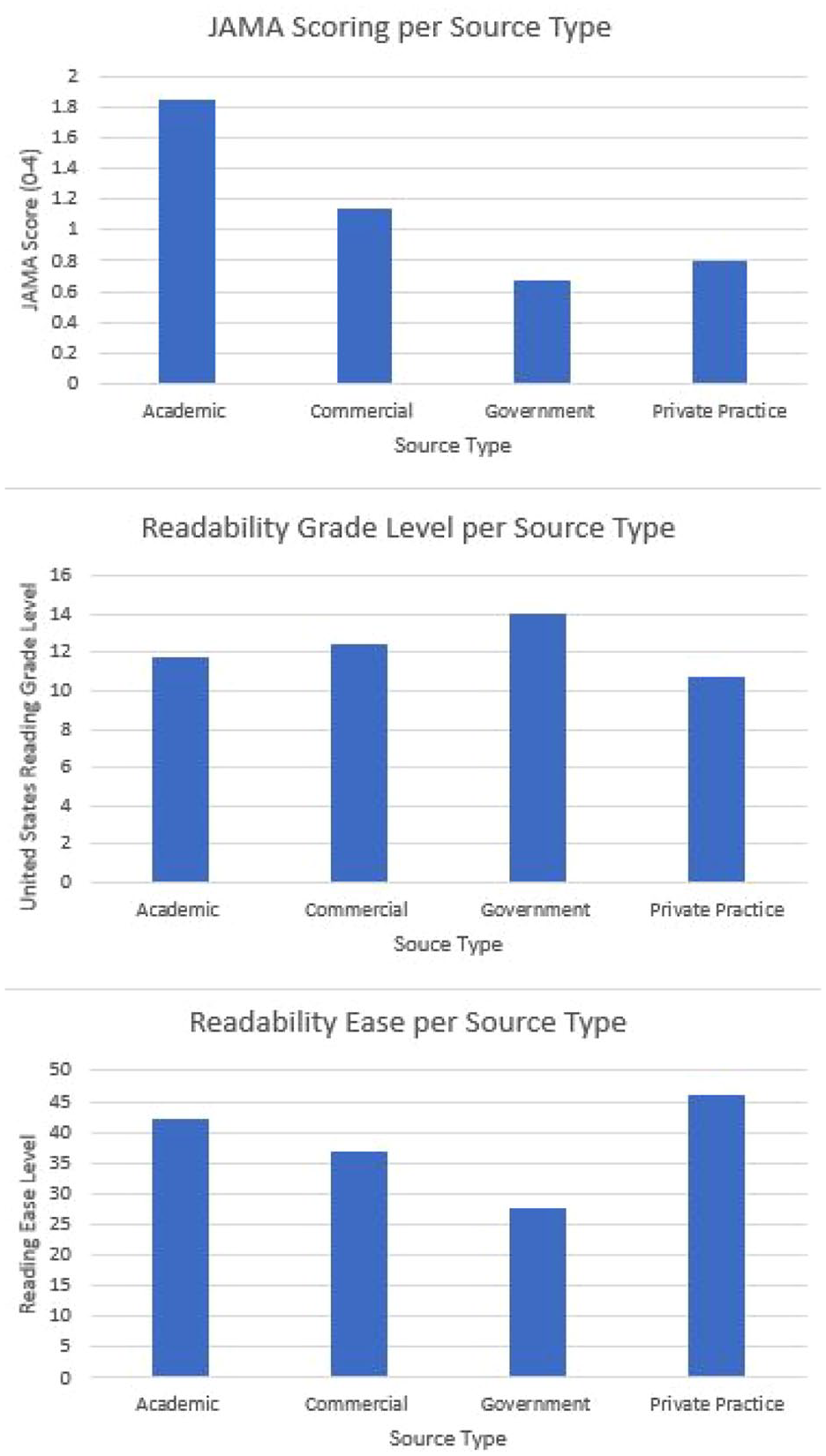
Quality metrics per source type. JAMA, Journal of American Medical Association.
Discussion
This is the first study to utilize Google Trends to analyze searches regarding biologic therapies for CRSwNP. Prior literature has shown that these types of studies can provide insight into tangibly improving patient care.17 -19 An analysis of the types of questions and source content surrounding biologics in online searches was performed to gain insight into this novel therapy for refractory disease with the hopes of improving shared decision-making.
Nearly a third of questions assessed fell into the “questions about biologics” category. Biologic therapies remain relatively novel compared to more established treatments for CRSwNP such as nasal corticosteroids and ESS. Hence, participants seek to understand more about these newer treatment options. Further breakdown reveals that participants are most interested in side effects of biologics followed by the indications and contraindications for use. Most known adverse effects are from industry trials, but recent real-world studies reveal further insights that should be referenced when counseling patients. For example, new long-term studies show the synergy between combined ESS and biologic therapy as well potential long-term side effects of biologic usage.20,21 As a novel treatment option, PAA questions also indicated concern regarding payor coverage for biologic therapies. 22 Other areas of concern involved the efficacy and temporality of these treatment options. Participants seek to understand not only the duration of the drugs’ efficacy but also the length of therapy.
The next most common category was questions about CRSwNP. Within this category, nearly two-thirds of questions referenced learning more about nasal polyps. Questions in this area are expected, given the complex etiology of the disease state. 23 However, these results also provide an opportunity for augmented patient education. The frequency of inquiries about this topic may also stem from interactions with providers, with some studies showing that providers may be dismissive of CRS symptoms which leads to further online searches. 24 Most participants who had questions within this subcategory sought to understand the specific factors that cause nasal polyps in addition to the sequalae of nasal polyps. Of note, participants are also concerned about what may worsen nasal polyps and complications associated with untreated disease. In addition to considerable effects on quality of life, the multifactorial and complex mechanisms behind the development of this disease make these questions some of the more challenging for patients to consider when weighing treatment options. 25
Patients require formal education, and the aforementioned topic areas should be considered as guiding points for complete shared decision-making. 26 With most PAA questions falling into the “Facts” classification via Rothwell’s Classification system, there is a clear interest in learning more about the fundamentals surrounding these topics rather than higher level questions regarding management and evaluation. In the context of brief clinic visits, written materials such as brochures or pamphlets addressing the most asked questions as elucidated here could help ameliorate participants’ confusion regarding this pathology.
In addition to the content of searches, the source content and attribution itself must also be considered. Nearly two-thirds of websites evaluated were from commercial sources (Table 3). Although industry frequently supports biologic trials, these sources may not serve as unbiased information for patients. 27 Physicians should guide patients toward medical information that is accurate, comprehensible, and unbiased. 28 Our results demonstrated that most sources were written well above the recommended sixth grade US reading level for patient educational materials and of low quality. 29 Other studies looking at Google Trends in otolaryngology have found similar results. 30 Academic sources were found to have the highest quality material in most metrics but made up only 13% of websites. Private practice sources had comparable metrics in reading ease and grade level, but worse JAMA Benchmark scoring. This was likely due to less stringent publishing criteria, with most sources having poor authorship, attribution, disclosure, and currency. Government and commercial material had worse quality metrics among all 3 metrics and made up nearly three-quarters of the sources. Overall, academic sources offered the best material for education but were a minority among sources and should not be considered as frequently accessible material. When patients encounter sponsored material through commercial and private practice sources, they may not be aware of bias or commercial interests in these informational materials. Physicians should take an active role in helping patients understand the differences between industry and academic sources online. Furthermore, there is a clear need for material that can provide patients with the best combination of accessibility, accuracy, and relevance.
Armed with the knowledge generated in this study, physicians should refer patients to sources with accurate, comprehensible, and unbiased information about biologic therapies. The highest quality sources per our metrics came from organizations such as the National Health Service of the United Kingdom, Cedars-Sinai Health Library, Cleveland Clinic, and the Mayo Clinic. These sources were the gold standard in providing accurate, digestible, and relevant patient material and should be considered as reference material for patients as well as models for future patient educational materials. Their presentation of material in short, organized paragraphs is conducive to patient understanding and has been shown to improve retention and reduce cognitive load in multimedia learning. 31 The limited number of unbiased, high quality, and easy to understand materials should be considered in shared decision-making as patients may present after having received inaccurate information, or information they are unable to understand. Future quality improvement should include the creation of unbiased and accurate sources for patient education, potentially with the use of artificial intelligence models and preferably within a universal encyclopedia, similar to Wolter’s Kluwer’s UpToDate website that has a compilation of resources for most health-related conditions.
There are limitations to consider in this study. It is not possible to understand the true motivation of the questions and whether these questions were asked exclusively by CRSwNP patients. Caregivers, the public, or healthcare providers may also be conducting searches. Despite this, the information presented in this study is still useful as further insight into online searches regarding this disease state undoubtedly aids in physician understanding of public perception of this condition and biologics as a treatment option. Furthermore, criteria used for evaluating the sources may be skewed from a lack of transparency, rather than misattribution of information. This analysis provides a broad overview of patient trends regarding CRSwNP therapies, but further investigation is needed to better understand the nuances of patient’s inquiries about these treatments.
Conclusion
As biologic therapies become more commonplace in the treatment of CRSwNP, patients are seeking more information online. Patients are curious to learn more about their disease state in general and about the utility of these novel biologic therapies. The majority of patient material is graded as hard to read and understand, with most coming from commercial sources. There is a strong need for physicians to understand these trends and direct and develop patient educational material that is accessible, easy to understand, and relevant.
Footnotes
Authors’ Note
This work was presented as a poster presentation for American Rhinological Society Annual Meeting, Nashville, Tennessee, September 30 to October 4, 2023.
Data Availability Statement
The authors confirm that the data supporting the findings of this study are available within the article.
Declaration of Conflicting Interests
The author(s) declared the following potential conflicts of interest with respect to the research, authorship, and/or publication of this article: O.G.A. is a consultant for Medtronic and Aerin Medical. M.T. is a consultant for Aerin Medical, Medtronic, Acclarent, and LivaNova.
Funding
The author(s) received no financial support for the research, authorship, and/or publication of this article.
Ethics Statement
The Ethics Committee of the Houston Methodist Hospital waived the need for ethics approval and patient consent for the collection, analysis, and publication of the retrospectively obtained and anonymized data for this noninterventional study.
