




Abstract
Objective
The effectiveness of EarWell Ear Correction Kit in the treatment of congenital auricle malformation and the incidence of complications are not particularly clear, so we carried out this study to provide a better reference for plastic surgeons to use EarWell Ear Correction Kit in the treatment of congenital auricle malformation.
Methods
We searched the Chinese and English databases including PubMed, Embase, the Cochrane Library, China National Knowledge Infrastructure, Wanfang, and VIP information databases.
Results
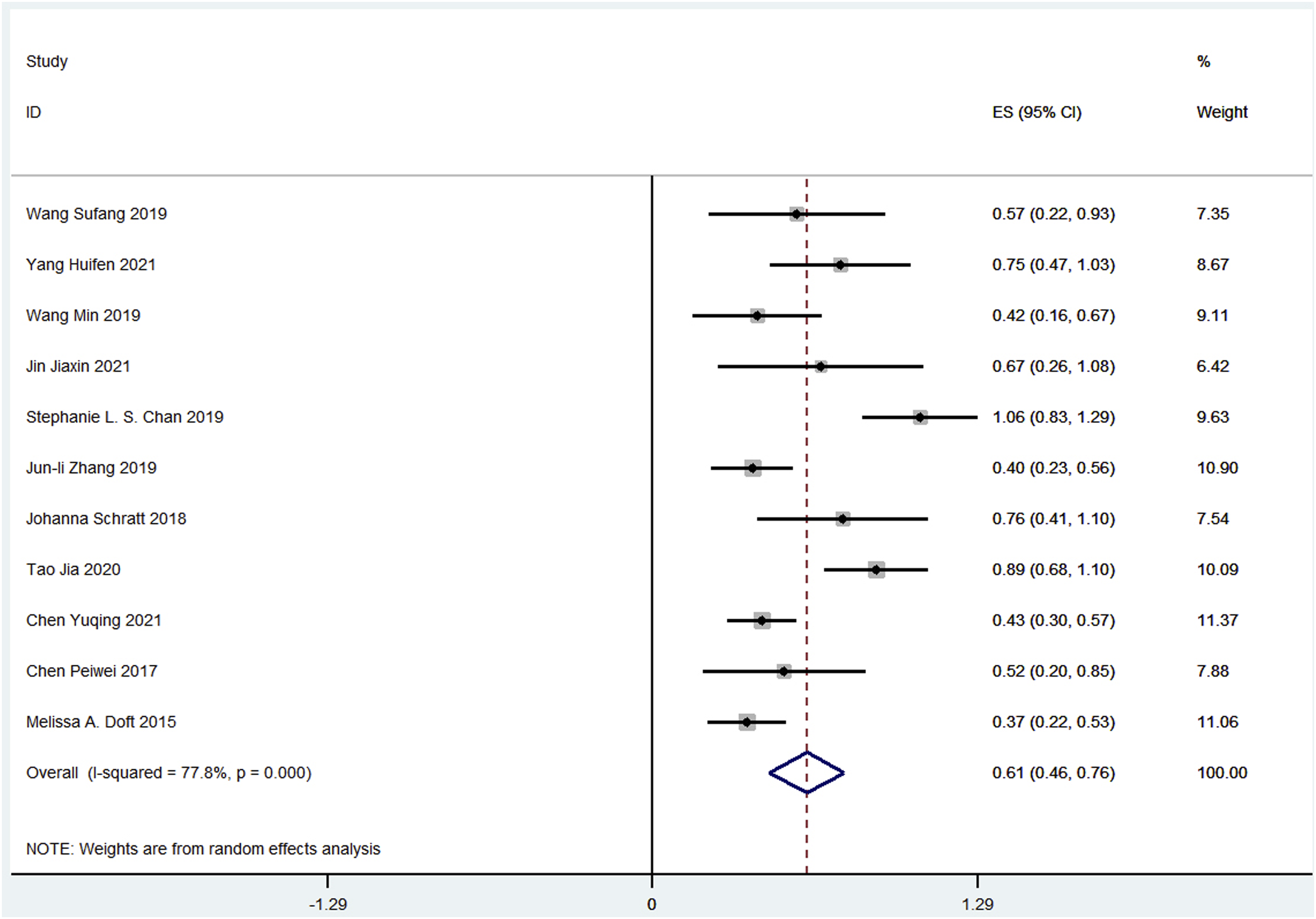
Through this meta-analysis, we found that the effective rate of EarWell Ear Correction Kit was 89.1%. The incidence of complications using EarWell Ear Correction Kit for correction of congenital auricular deformity was 11.4%. In terms of complications, the incidence of skin lesions was 9% and the incidence of dermatitis was 3.4%.
Conclusion
EarWell Ear Correction Kit has high efficiency in the correction of congenital auricular deformity and a low incidence of complications. It can be used for the treatment of congenital auricular deformity in patients within 6 months of birth.
Introduction
Congenital auricle deformity is a common cephalic deformity. The incidence was 11.5 per 10 000. 1 Congenital auricle malformation not only affects the appearance of patients but also affects the hearing of patients, hinders the psychological development of patients, and then affects their mental health and future social activities. 2 At present, congenital auricle malformation is mainly treated by surgery, which requires patients over six years old and over 120 cm in height to receive surgical treatment. 3 Auricle reconstruction requires general anesthesia. The risk of anesthesia and the risk of operation are relatively large. Therefore, the non-surgical treatment of congenital auricle malformation brings new hope for patients and their families.
Studies have found that newborns have high levels of maternal estrogen circulating in their bodies. Within 72 hour after birth, circulating estrogen in the newborn reaches a significant peak, resulting in an increased concentration of hyaluronic acid in the cartilage and a corresponding increase in the ductility and plasticity of the cartilage. 4 The non-surgical therapy is to take advantage of the characteristics of good elasticity and strong plasticity of ear cartilage in the early stage of newborn, and use auricle correction devices to correct the congenital auricle malformation in children so as to achieve normal auricle shape.
At present, clinical auricle correction devices are mainly the EarWell Ear Correction Kit invented by Dr. Steve Byrd in the United States, which can correct various types of Ear morphological malformations. 5 However, the effectiveness of EarWell Ear Correction Kit in the treatment of congenital auricle malformation and the incidence of complications are not particularly clear, so we carried out this study to provide a better reference for plastic surgeons to use EarWell Ear Correction Kit in the treatment of congenital auricle malformation.
Methods
Search strategy
We searched the Chinese and English databases including PubMed, Embase, the Cochrane Library, China National Knowledge Infrastructure, Wanfang, and VIP information databases. The retrieval time was set to the database building until July 2022. The search keywords were "Congenital Auricular Deformity," "Non-surgical," "EarWell," "Auricle Orthosis," and "Auricle Correction Device." No language restrictions were set for this retrieval. This study was not registered on the registration website for systematic reviews such as the Cochrane Library in advance. The specific retrieval strategy of PubMed is (((((((((Congenital Auricular Deformity[MeSH Terms]) OR (Ear Auricle)) OR (Auricle, Ear)) OR (Ear Auricles)) OR (Pinna, Ear)) OR (Auricles, Ear)) OR (Ear Pinna)) OR (Ear Pinnas)) OR (Pinnas, Ear)) AND ((((EarWell) OR (Auricle Orthosis)) OR (Auricle Correction Device)) OR (Non-surgical)).
The inclusive and exclusive criteria
Inclusive criteria: The study population was patients with congenital auricle deformity. The studies were clinical studies of congenital auricular deformity treated with EarWell Ear Correction Kit. The evaluation criteria of the studies included the effective efficiency of EarWell Ear Correction Kit, the incidence of complications, and the complications including ear skin lesions and dermatitis. We placed no restrictions on the types of studies included.
Exclusive criteria: Repeated published articles. The auricle correction device used in the study was not the EarWell Ear Correction Kit. The evaluation indexes of the study do not include the evaluation indexes that need to be extracted, such as the effective efficiency of EarWell Ear Correction Kit and the incidence of complications.
Data extraction and paper quality evaluation
The two researchers (Dan Wu and Liang Li) independently extracted relevant data from the included literature, including the first author of the article, the year of publication, the country, study design, sample size, and evaluation indicators. The researchers used Newcastle-Ottawa Scale (NOS) to evaluate the quality of the included literature. The highest quality of the literature was 9 stars and the lowest 0 stars. A score of 7–9 is high quality (HQ), 3–6 is medium quality (MQ), and 0–2 is low quality (LQ).
Outcome Indicators
In this study, according to the common evaluation indicators in the included literature, we set the effective rate of EarWell Ear Correction Kit as the primary outcome indicator. The secondary outcome indicator was the incidence of complications using EarWell Ear Correction Kit for correction of congenital auricular deformity. Moreover, in terms of complications, we also analyzed the incidence of skin lesions and dermatitis, respectively.
Statistical analysis
Stata 16.0 software was used for statistical analysis of the data. Original data included in the literature were first transformed by double arcsine method to make them conform to normal distribution and then analyzed in Stata. The initial conclusion obtained by Meta-analysis was then restored using formula (P = (sin(tp/2))2) to reach final conclusion. In the process of meta-analysis, random effects model was used. The Egger test was used to evaluate the publication bias of the included literature. If the P < 0.05, it indicates the possibility of publication bias.
Results
A total of 1358 literatures were retrieved, and 12 literatures were finally included in this meta-analysis after screening.
6
-17
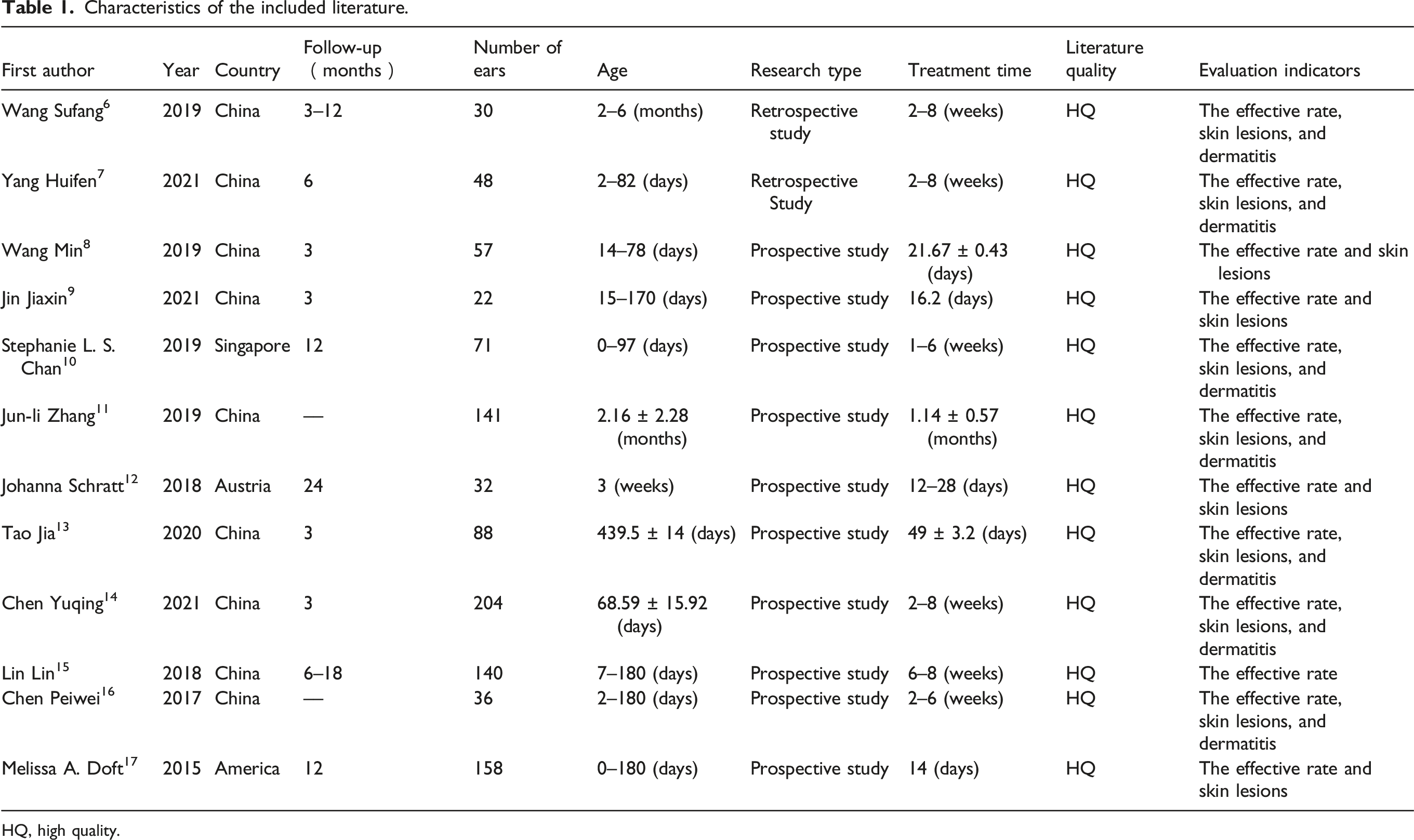
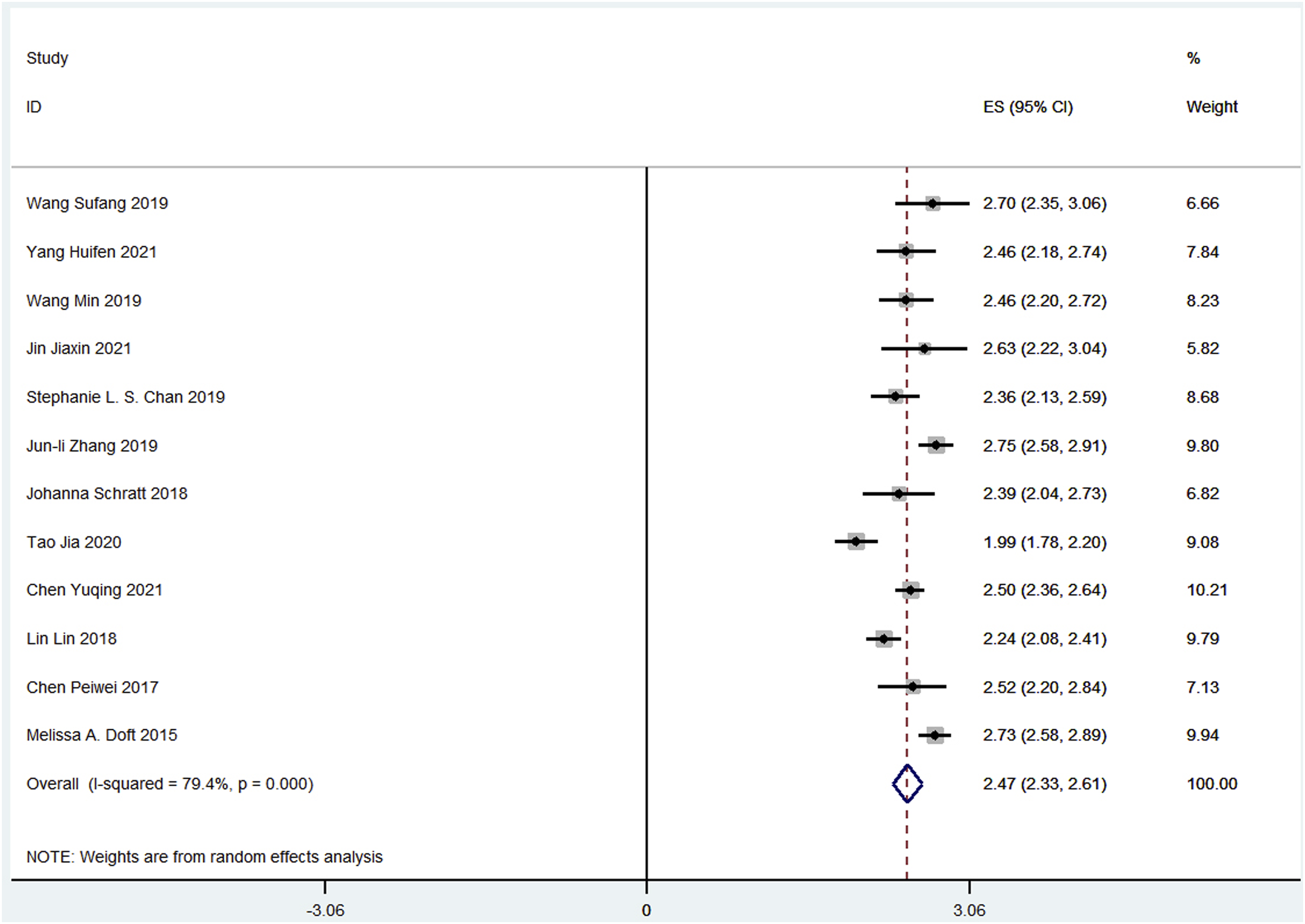
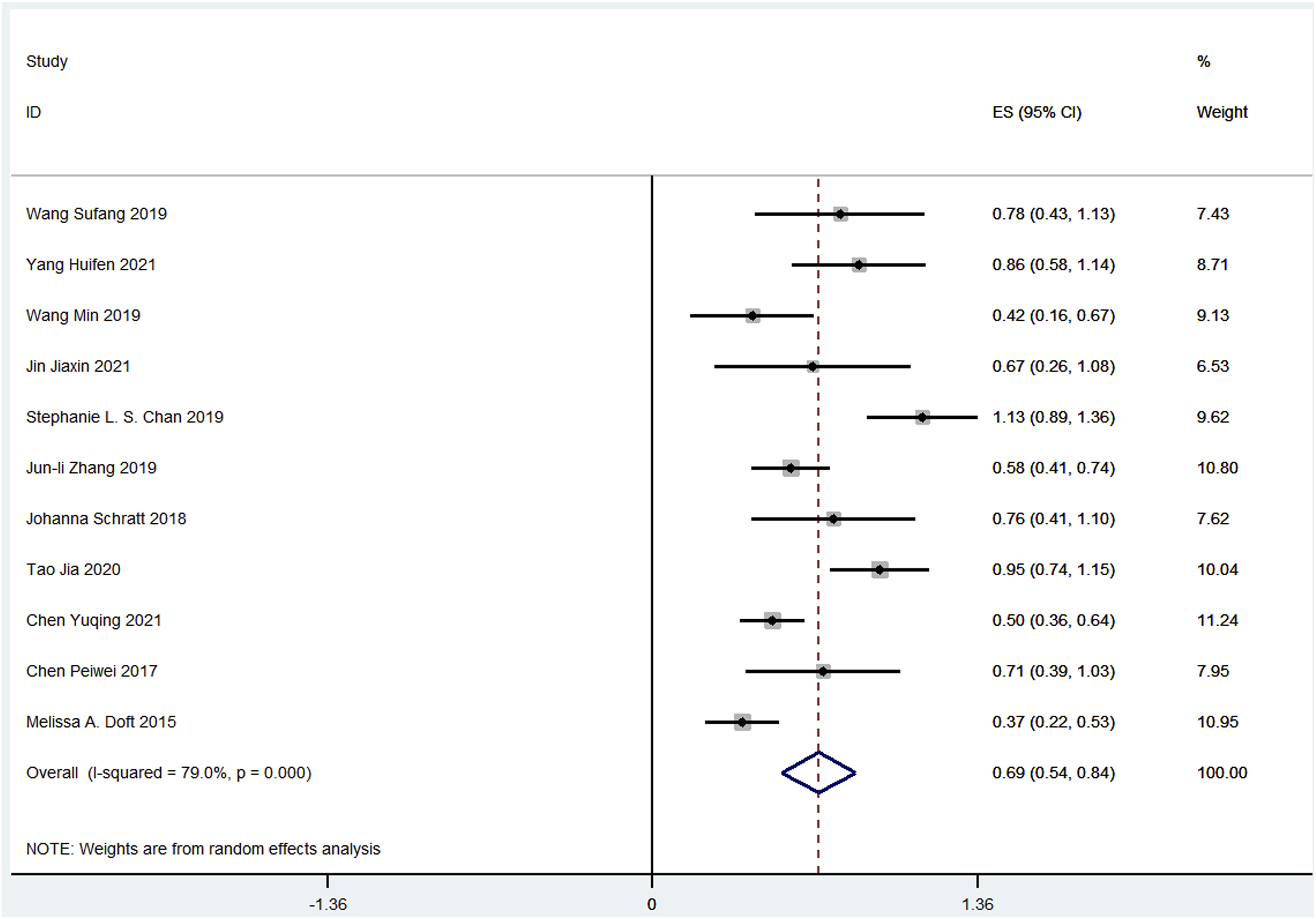
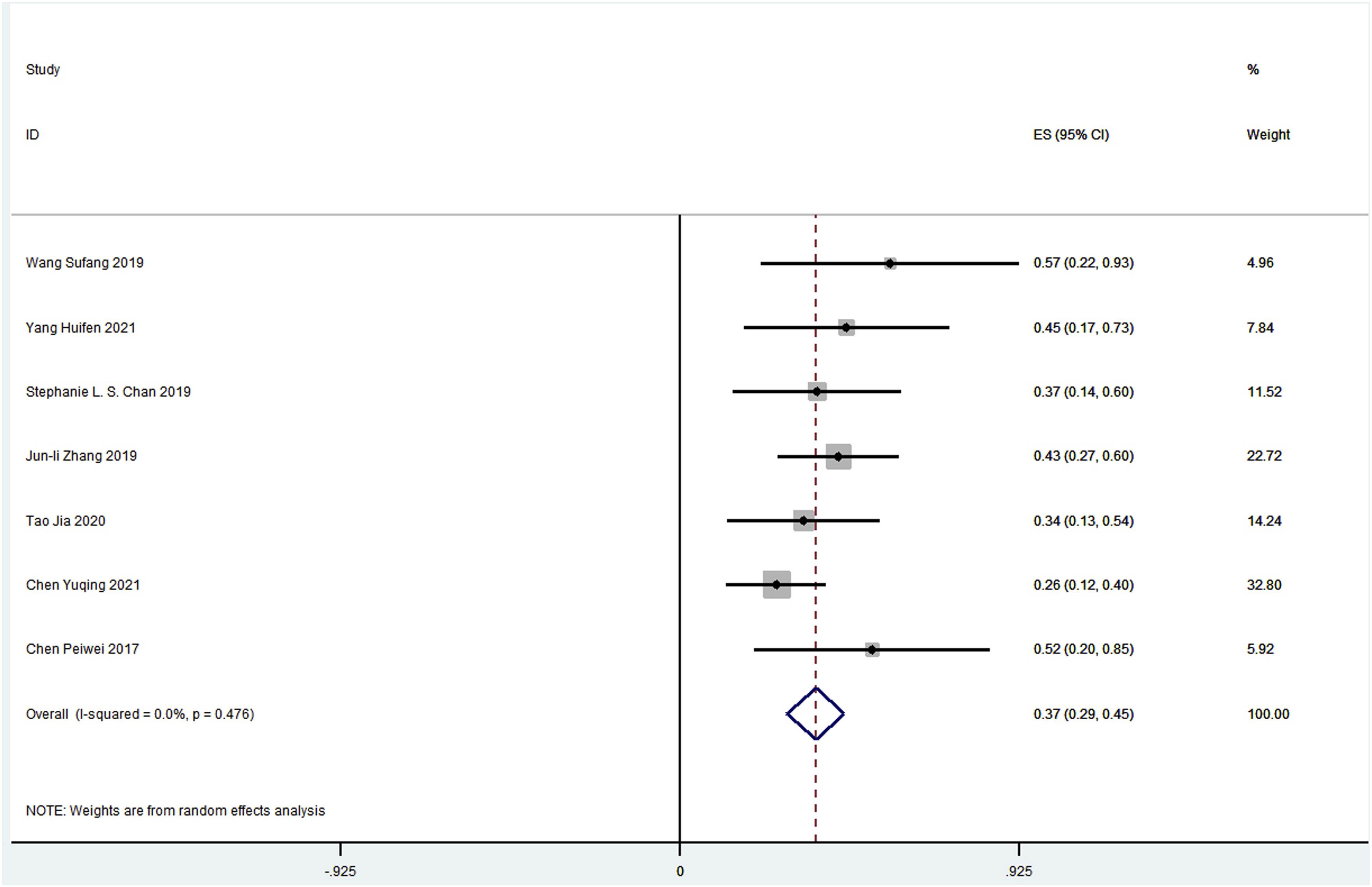
The literature screening process was shown in Figure 1. The features of the included literature were shown in Table 1. Because there was heterogeneity in the single-arm meta-analysis, we used the random effects model to eliminate the influence of heterogeneity on the results. After merging and analyzing the original data, we used the formula (P = (sin(tp/2))2) to restore the results. Through this meta-analysis, we found that the effective rate of EarWell Ear Correction Kit was 89.1% (Figure 2). The incidence of complications using EarWell Ear Correction Kit for correction of congenital auricular deformity was 11.4% (Figure 3). In terms of complications, the incidence of skin lesions was 9% (Figure 4) and the incidence of dermatitis was 3.4% (Figure 5). Meta-analysis results were shown in Table 2. The results of Egger test are shown in Table 3. There was no publication bias in the meta-analysis (P > 0.05). PRISMA flow diagram. Characteristics of the included literature. HQ, high quality. Meta-analysis of the effective rate of EarWell Ear Correction Kit. Meta-analysis of the incidence of complications using EarWell Ear Correction Kit for correction of congenital auricular deformity. Meta-analysis of the incidence of skin lesions. Meta-analysis of the incidence of dermatitis. Meta-analysis results. Results of Egger test.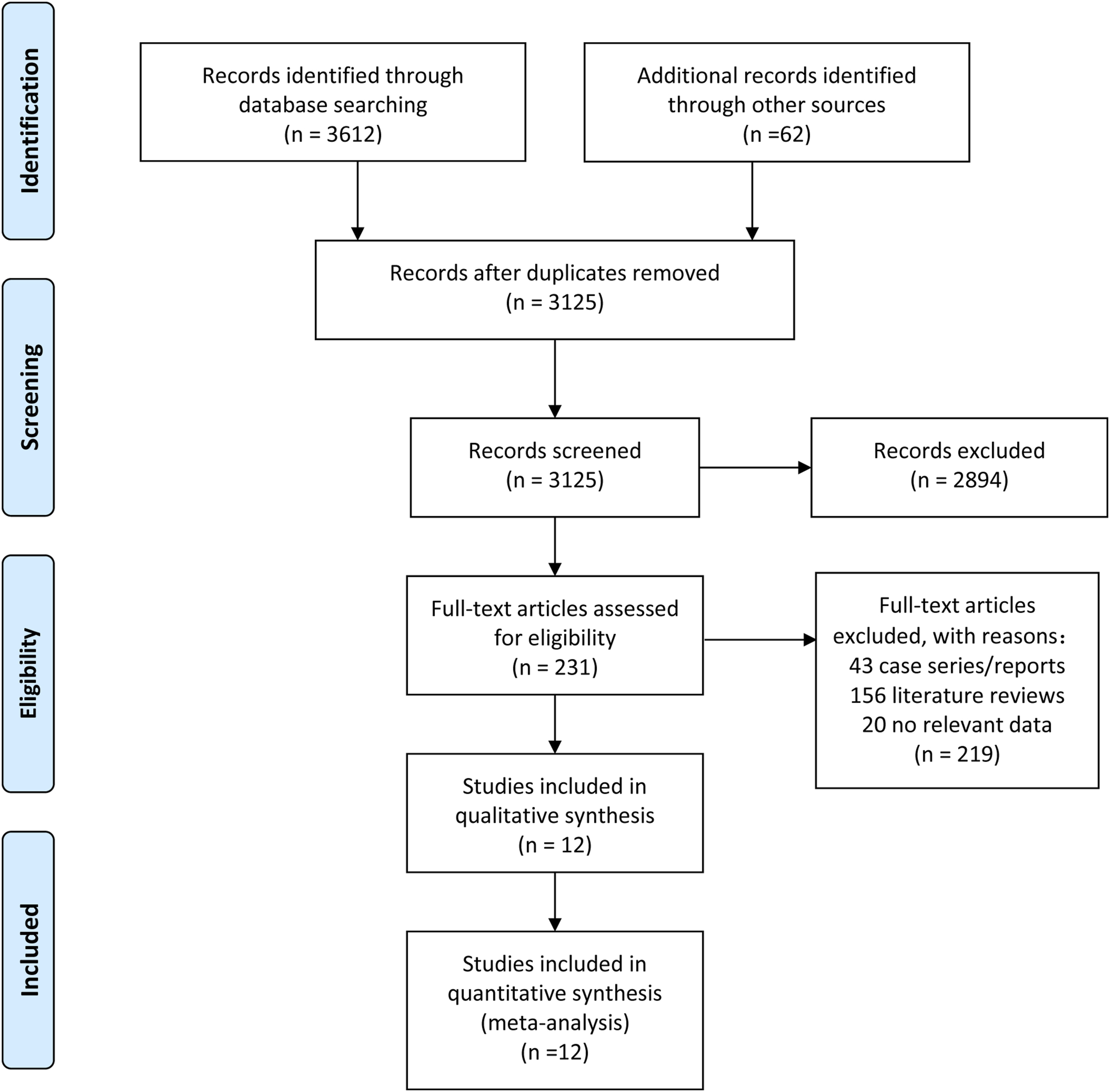


Discussion
In this study, meta-analysis was used to analyze the therapeutic effect of EarWell Ear Correction Kit in the treatment of congenital auricle malformation. Through meta-analysis, we found that the effective rate of EarWell Ear Correction Kit in correcting congenital auricle malformation was 89.1%. The incidence of complications using EarWell Ear Correction Kit for correction of congenital auricular deformity was 11.4%. Complications were mainly skin lesions and dermatitis, with an incidence of 9% and 3.4%. According to these data, it can be known that the EarWell Ear Correction Kit has a relatively obvious effect on the correction of congenital auricle malformation, with not too many complications and a low incidence of complications.
Neonborns have a large number of maternal estrogen in circulation; ear cartilage has high content of hyaluronic acid, with good plasticity. The EarWell Ear Correction Kit uses the plasticity of ear cartilage to correct congenital auricle malformations. 18 Therefore, the treatment time of using EarWell Ear Correction Kit for the treatment of congenital auricular deformity is very critical. Early detection and early treatment of auricle malformation after birth are very important to the effect of non-surgical treatment. Byrd et al. found that the effective rate of EarWell Ear Correction Kit in correcting congenital auricle malformation was higher than 90% within 1 week of birth, but the effective rate of EarWell Ear Correction Kit in correcting congenital auricle malformation was lower than 50% in children over 3 weeks of age. 19 Based on the results of this study, we believed that correction of congenital auricular malformations with EarWell Ear Correction Kit within 6 months of birth is effective and effective higher than 80%. The main reason is that the ear cartilage plasticity of children within 6 months after birth is better, and it is easier to correct the auricle shape during the treatment of EarWell Ear Correction Kit.
The complication rate of congenital auricle malformation corrected by EarWell Ear Correction Kit was not very high. It was mainly skin lesions and dermatitis. The skin lesions were mostly caused by the compression of the ear skin by the EarWell Ear Correction Kit. Children's skin was sensitive, skin metabolism was vigorous, and there were many secretions. Long-term use of EarWell Ear Correction Kit may cause skin allergy and dermatitis in children. If skin lesions occur, treatment with EarWell Ear Correction Kit should be suspended, and antibiotic ointment should be applied externally to prevent wound infection and promote wound healing as soon as possible. If dermatitis occurs, the EarWell Ear Correction Kit treatment should also be suspended to keep the skin clean, and use an anti-allergy cream to make the rash subside. 20
A total of 12 studies were included in this meta-analysis, and a total of 1027 ears were treated with EarWell Ear Correction Kit. To date, this was the first meta-analysis to evaluate the efficacy of EarWell Ear Correction Kit in the treatment of congenital auricle malformation. This study has obtained reliable conclusions through scientific and rigorous meta-analysis. However, this meta-analysis also has some limitations. This study used the method of the single-arm meta-analysis, and the data were analyzed with high heterogeneity because of the lacking of control groups. Although we used the random effects model to eliminate the influence of heterogeneity on the results, the influence of heterogeneity cannot be completely excluded. Among the 12 studies included in this meta-analysis, 9 were from China, 1 was from Singapore, 1 was from Austria, and 1 was from the United States. Chinese patients account for a large proportion, and further verification is needed to determine whether the study results can be applied to patients in other countries. Although the Egger test did not find the existence of publication bias in the included literature, the presence of potential publication bias still cannot be excluded in this study.
In summary, EarWell Ear Correction Kit has high efficiency in the correction of congenital auricular deformity and a low incidence of complications. It can be used for the treatment of congenital auricular deformity in patients within 6 months of birth. The significance of this study is to confirm the effectiveness and safety of EarWell Ear Correction Kit in the treatment of congenital auricle deformity, and to clarify the time window of EarWell Ear Correction Kit in the treatment of congenital auricle deformity. This study provides important evidence-based medical evidence for plastic surgeons to use EarWell Ear Correction Kit to treat congenital auricular deformity.
Supplemental Material
Supplemental Material - Treatment of congenital auricle malformation with EarWell Ear Correction Kit: A meta-analysis
Supplemental Material for Treatment of congenital auricle malformation with EarWell Ear Correction Kit: A meta-analysis by Dan Wu, Liang Li, and Ming Zhou in Ear, Nose, & Throat Journal
Footnotes
Declaration of conflicting interests
The author(s) declared no potential conflicts of interest with respect to the research, authorship, and/or publication of this article.
Funding
The author(s) received no financial support for the research, authorship, and/or publication of this article.

Supplemental Material
Supplemental material for this article is available online.
References
Supplementary Material
Please find the following supplemental material available below.
For Open Access articles published under a Creative Commons License, all supplemental material carries the same license as the article it is associated with.
For non-Open Access articles published, all supplemental material carries a non-exclusive license, and permission requests for re-use of supplemental material or any part of supplemental material shall be sent directly to the copyright owner as specified in the copyright notice associated with the article.
