




Abstract
Adenoid cystic carcinoma (ACC) of the sublingual gland is rare. There are no previous reports of the metastasis of sublingual gland ACC to the upper gingiva. Herein, we report the first case of a patient with metastasis of sublingual gland ACC to the upper gingiva. It should be recognized that although metastasis of sublingual gland ACC to the upper gingiva is very rare, it can occur.
Introduction
Adenoid cystic carcinoma (ACC) of the sublingual gland is rare.1-5 To the best of our knowledge, there are no previous reports of the metastasis of sublingual gland ACC to the upper gingiva. Herein, we report the first case of a patient with metastasis of sublingual gland ACC to the upper gingiva.
Case report
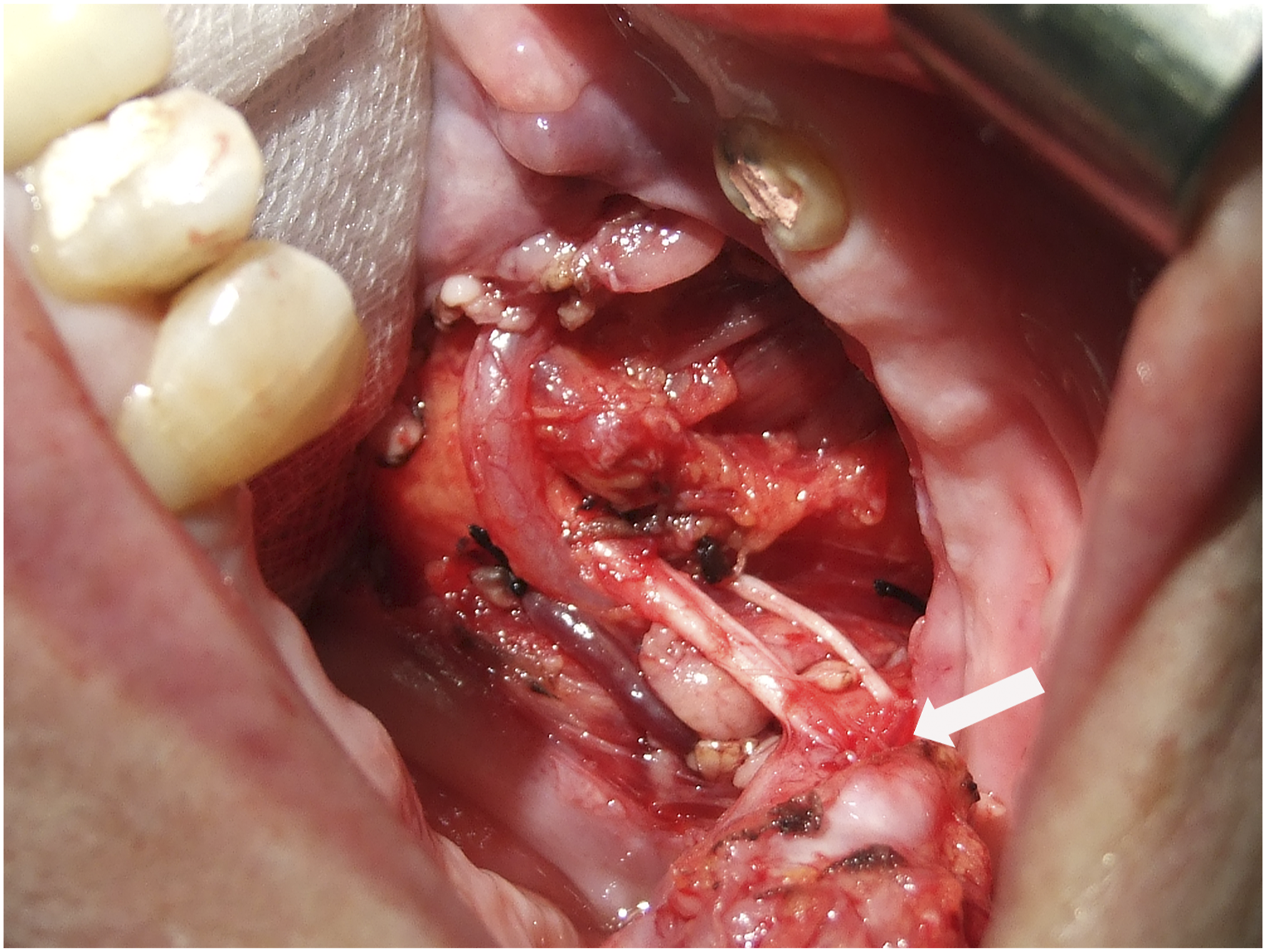
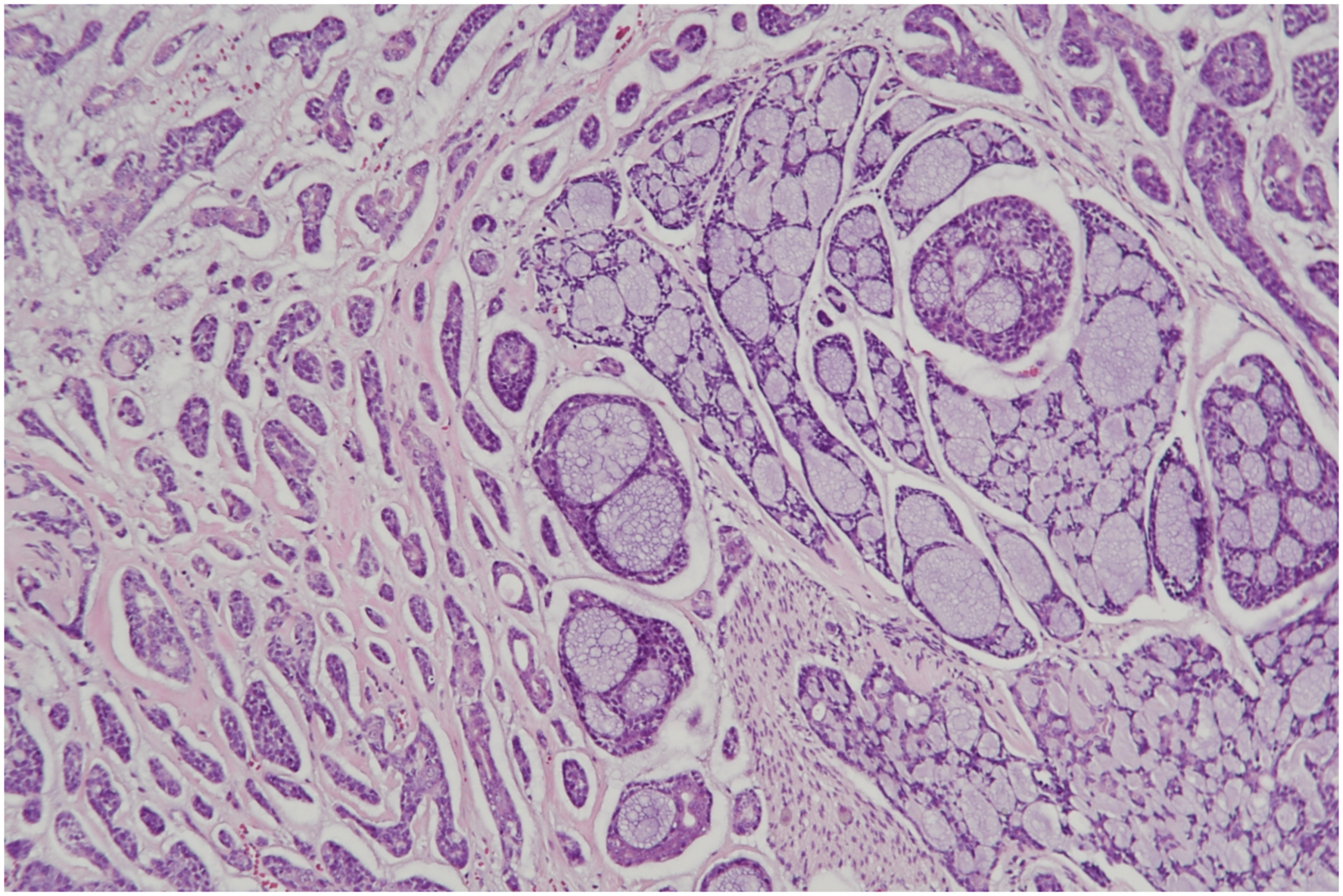
A 63-year-old female patient visited our hospital complaining of oral pain that had begun 5 months earlier. On physical examination, a hard mass covered with normal mucosa was palpable on the right sublingual region. Neck computed tomography (CT) showed a 2.6 × 2.4 cm homogeneously enhancing mass in the right sublingual space, without mandible destruction or enlarged lymph nodes (Fig. 1). It was thought to be a sublingual gland tumor and surgery was performed to provide an accurate diagnosis and treatment. During surgery, the tumor invaded the lingual nerve, and the nerve was removed along with the tumor (Fig. 2). The histopathological examination revealed low-grade adenoid cystic carcinoma with perineural invasion (Fig. 3). After 6000 cGy of postoperative radiotherapy, the patient was followed up periodically without recurrence or metastasis. The neck CT showed a 2.6 x 2.4 cm homogeneously enhancing mass in the right sublingual space (arrow), without mandible destruction or enlarged lymph nodes. Intraoperative photo showing that sublingual gland adenoid cystic carcinoma invaded the lingual nerve (arrow). Slides reveal typical morphology of adenoid cystic carcinoma with tubular and cribriform pattern admixed with myxoid or hyalinized globules and perineural invasion (H & E stain, x100).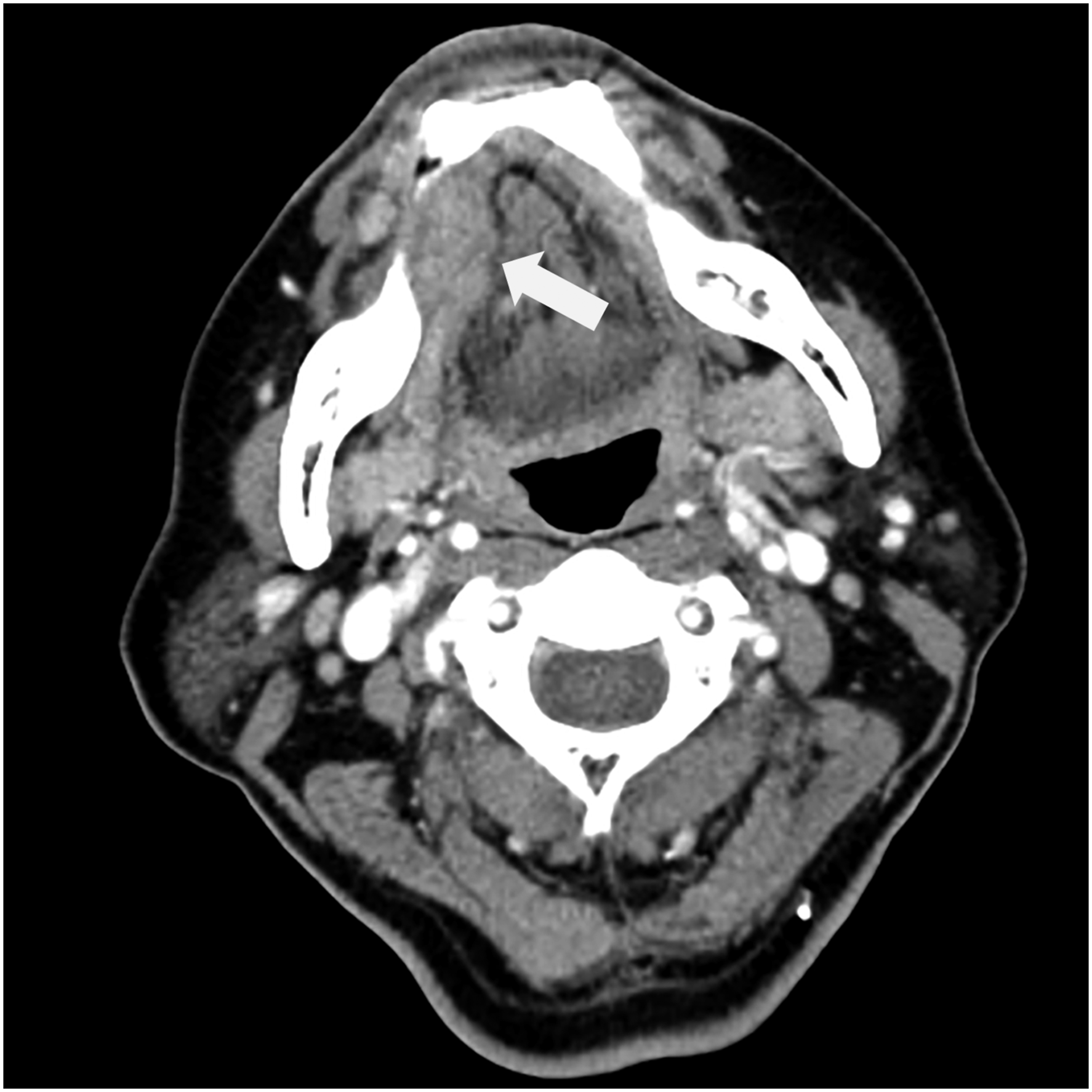
Two years after surgery, lung metastasis was discovered, and chemotherapy was performed for more than 3 years. After 6 years of surgery, lung metastasis was still present despite chemotherapy, and the patient complained of swelling and bleeding in the upper gingiva (Fig. 4). It was judged to be a metastasis of sublingual gland ACC to the upper gingiva. Further examination revealed metastases not only to the lungs and gingiva but also to the brain and liver. The patient received conservative treatment and eventually died 6 years and 6 months after surgery. Metastasis of sublingual gland adenoid cystic carcinoma to the upper gingiva is seen (arrow).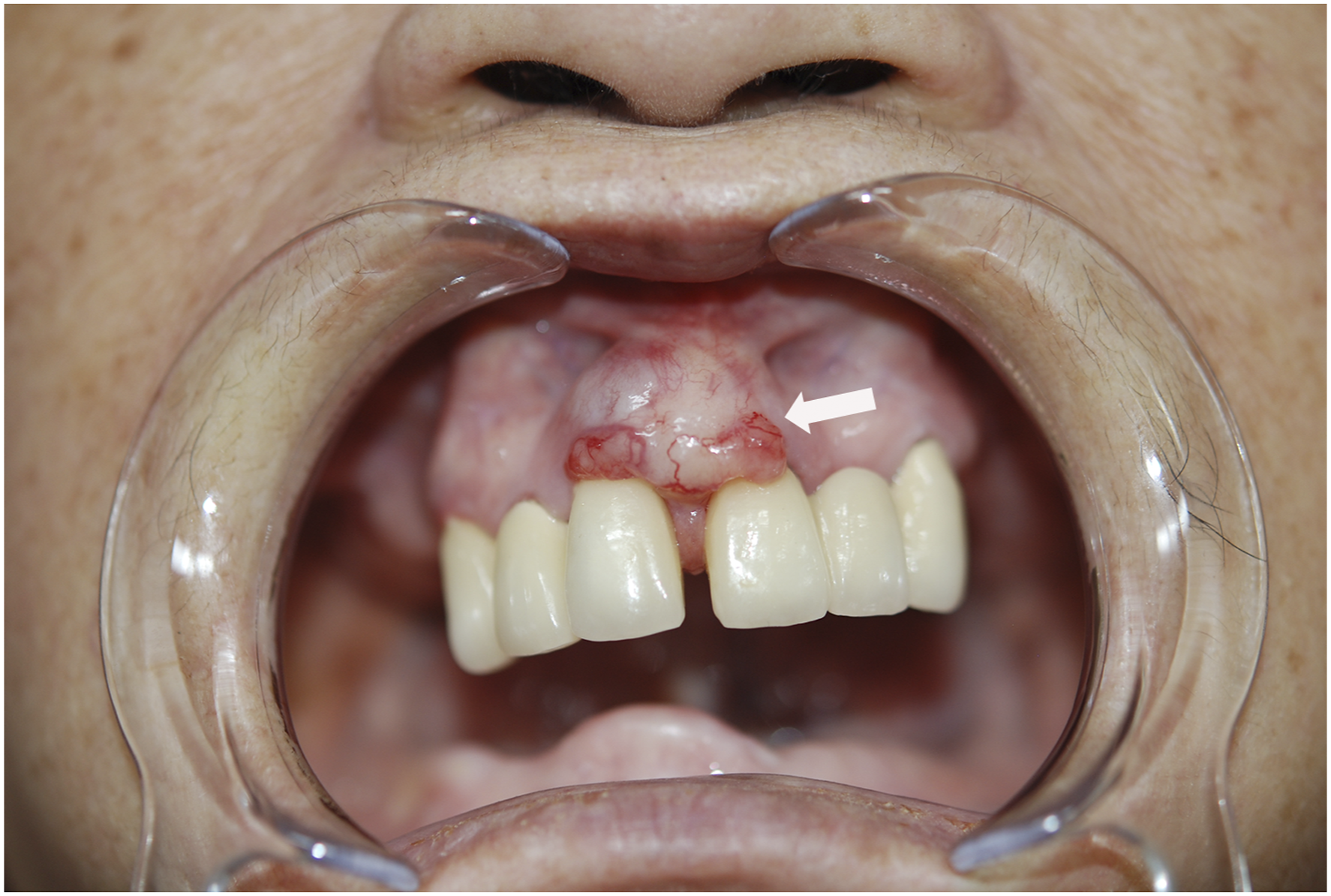
Discussion
ACC is a rare malignant salivary neoplasm, and is characterized by slow growth, local invasive growth, perineural spread, and late distant metastasis.1-5 ACC most commonly occurs in the minor salivary glands of the hard palate, followed by the tongue, buccal mucosa, lip, and floor of the mouth.1-5
ACC usually presents as a slow-growing, hard, circumscribed mass in the affected region.1-4 As in our patient, pain is an important symptom of the perineural spread of ACC.1-4 Imaging examinations are important in determining the location and extent of the lesion and in establishing a treatment plan.1,3 CT helps in determining whether the surrounding structures have been invaded, and magnetic resonance imaging (MRI) helps to confirm perineural or skull-base invasion. 1
The treatment of choice for sublingual gland ACC is surgical excision with clear safety margins and postoperative radiotherapy.1,2,5 ACC is not effective for chemotherapy due to its slow-growing nature, so it is used only in advanced or metastatic cases.1,2 The prognosis for patients with ACC, which includes perineural invasion, positive surgical margins, solid histological patterns, and minor salivary gland, is poor.1,5
Distant metastasis of ACC mainly occurs in the lungs and bones.1,4,5 Our patient also initially had metastasis to the lungs. However, there are no previous reports of the metastasis of sublingual gland ACC to the upper gingiva, as occurred in our patient.
Conclusion
It should be recognized that although metastasis to the upper gingiva of sublingual gland ACC is very rare, it can occur.
