



Abstract
Keywords
Significance Statement
A 52-year-old woman without underlying disease presented left lateral rectus muscle palsy immediately in the recovery room after functional endoscopic sinus surgery. The symptom completely recovered after an hour without any medical treatment. It was deduced to be caused by the local anesthesia. Postoperative unilateral lateral gaze palsy is a rare complication with various etiologies having mostly favorable prognosis. Clinicians should be aware of the local anesthetic effect as a cause of this complication.
Body of Content
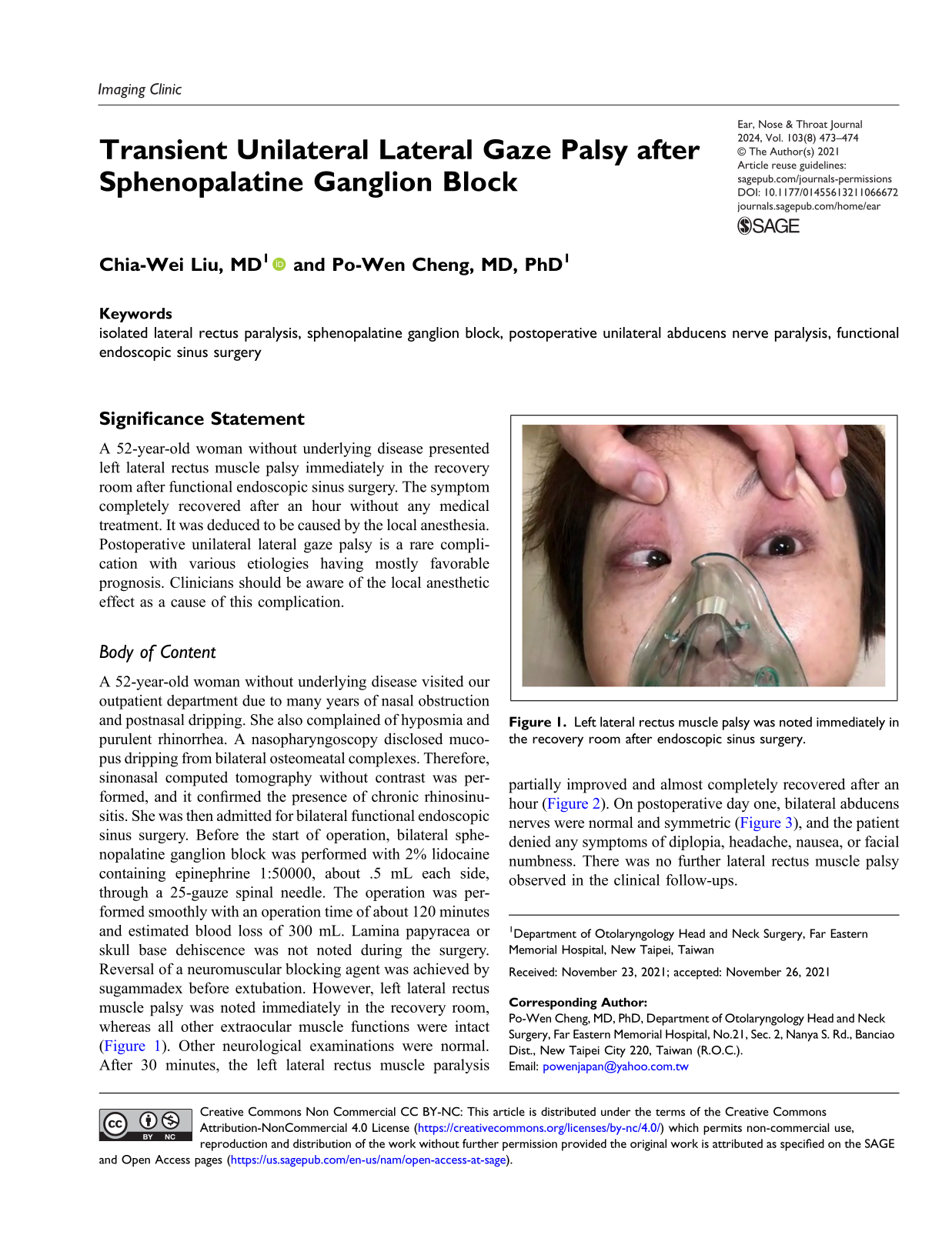
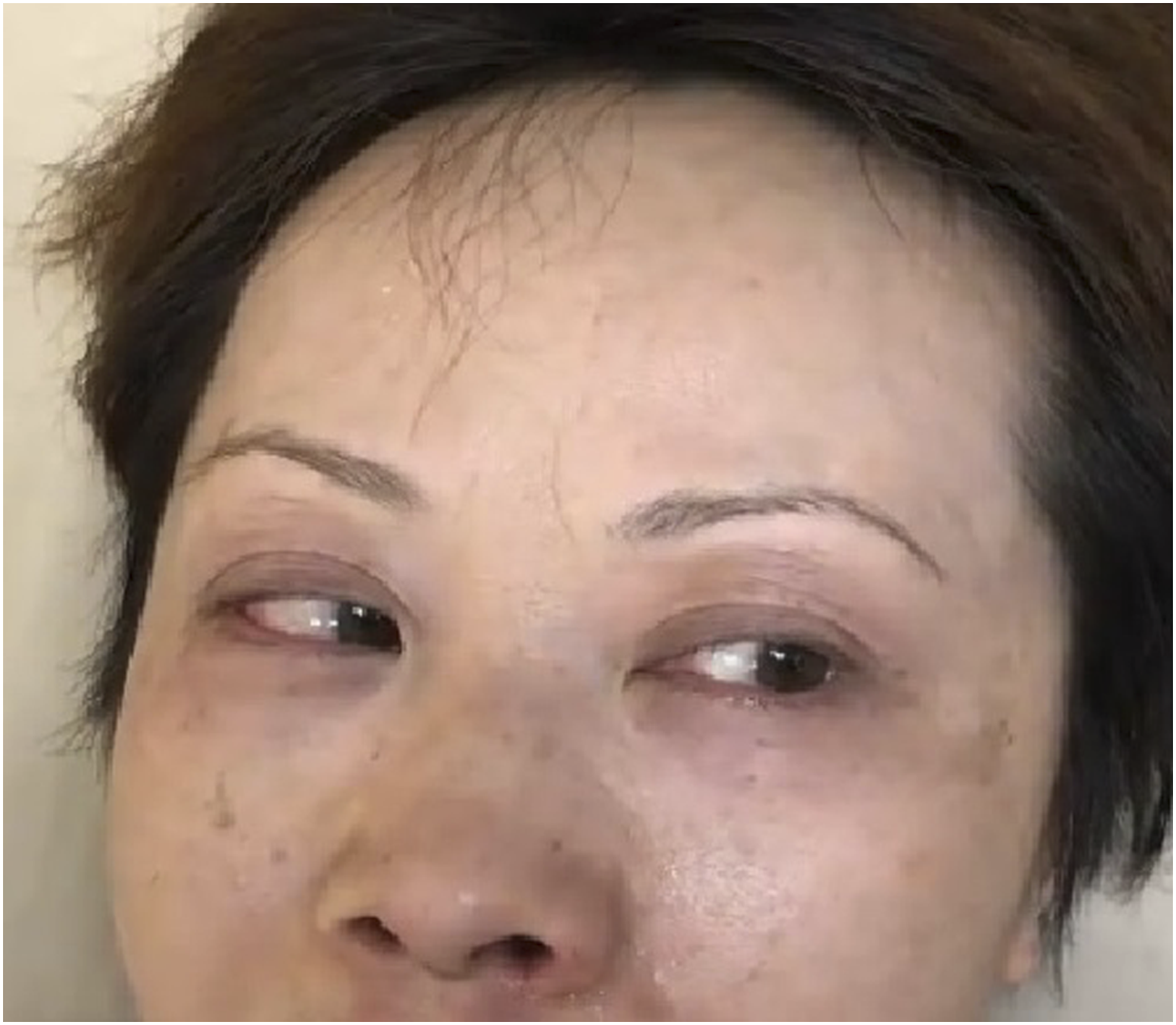
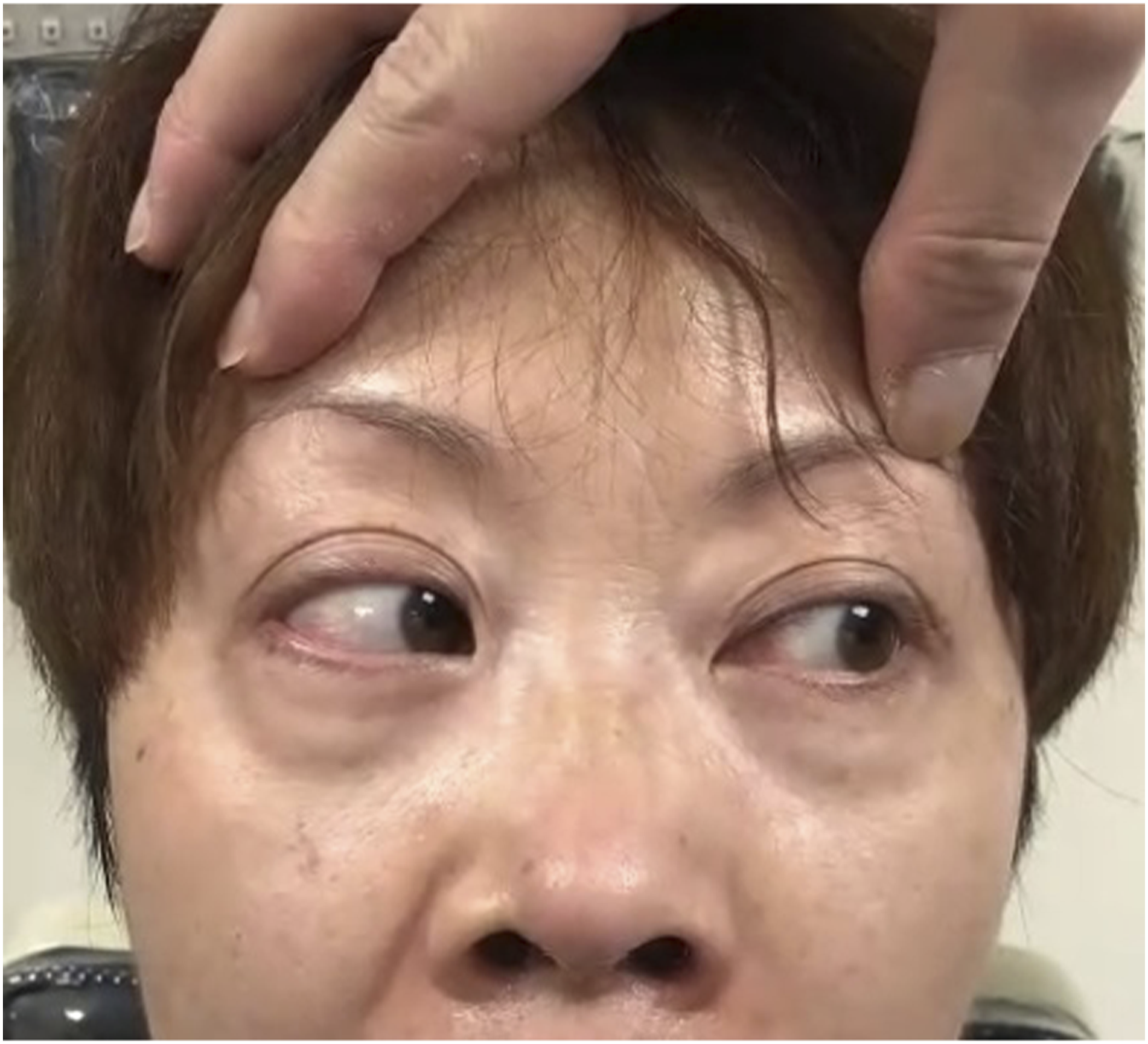
A 52-year-old woman without underlying disease visited our outpatient department due to many years of nasal obstruction and postnasal dripping. She also complained of hyposmia and purulent rhinorrhea. A nasopharyngoscopy disclosed mucopus dripping from bilateral osteomeatal complexes. Therefore, sinonasal computed tomography without contrast was performed, and it confirmed the presence of chronic rhinosinusitis. She was then admitted for bilateral functional endoscopic sinus surgery. Before the start of operation, bilateral sphenopalatine ganglion block was performed with 2% lidocaine containing epinephrine 1:50000, about .5 mL each side, through a 25-gauze spinal needle. The operation was performed smoothly with an operation time of about 120 minutes and estimated blood loss of 300 mL. Lamina papyracea or skull base dehiscence was not noted during the surgery. Reversal of a neuromuscular blocking agent was achieved by sugammadex before extubation. However, left lateral rectus muscle palsy was noted immediately in the recovery room, whereas all other extraocular muscle functions were intact (Figure 1). Other neurological examinations were normal. After 30 minutes, the left lateral rectus muscle paralysis partially improved and almost completely recovered after an hour (Figure 2). On postoperative day one, bilateral abducens nerves were normal and symmetric (Figure 3), and the patient denied any symptoms of diplopia, headache, nausea, or facial numbness. There was no further lateral rectus muscle palsy observed in the clinical follow-ups. Left lateral rectus muscle palsy was noted immediately in the recovery room after endoscopic sinus surgery. Left lateral rectus muscle palsy almost completely recovered after an hour without medical treatment. On postoperative day one, bilateral abducens nerves were normal and symmetric.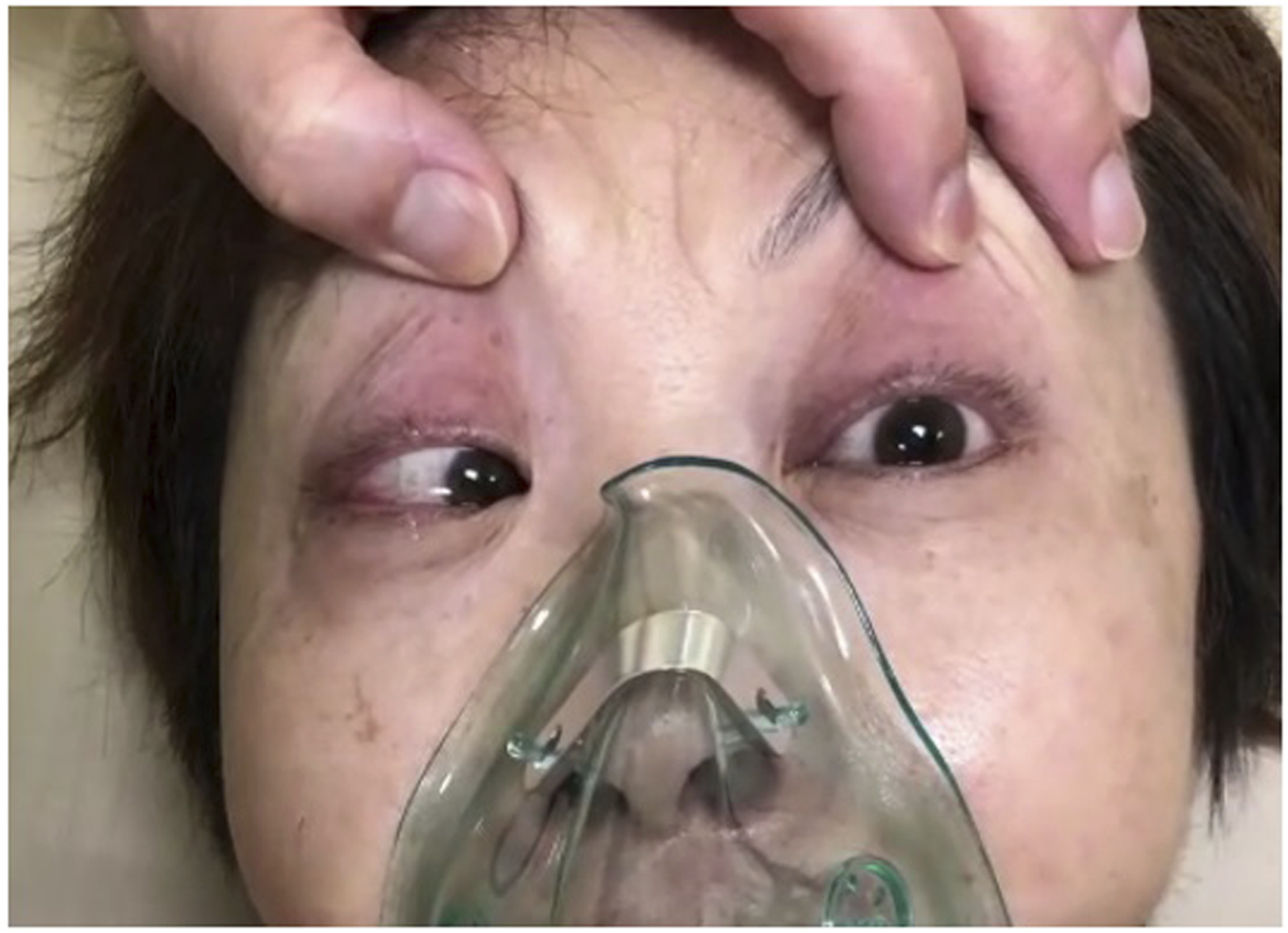
Unilateral abducens nerve palsy (UANP) is a very rare condition in adults. The etiologies had been reported in past literature, including cerebrovascular accidents, intracranial neoplasm, trauma, multiple sclerosis, inflammatory disease, viral infection, local anesthetic effect, and other undetermined factors. They usually result in a favorable prognosis.
Three possible mechanisms of UANP after local anesthetic were proposed in the previous literature: arterial diffusion, venous diffusion, and direct diffusion. First, the lidocaine may get injected into the sphenopalatine artery and retrograde to the lacrimal branch of the ophthalmic artery (which innervates the lateral rectus muscle and abducens nerve) due to the injection pressure. Second, the local anesthetics may spread via the sphenopalatine vein and pterygoid venous plexus to the cavernous sinus where the abducens nerve passes through. Third, the local anesthetics may directly diffuse into the inferior orbital fissure through the pterygopalatine foramen and affect the abducens nerve, which is located inferiorly in the superior orbital fissure.
In the presenting case, there was no trauma or previous surgical history. Immediate postoperative neurologic examination revealed left lateral rectus palsy. The patient recovered quickly without any medical treatment. In total, the UANP lasted for less than 90 minutes. We reviewed the medications used during general anesthesia, but no known adverse effects which induce extraocular muscles paralysis were reported. Being incapable of checking eye movement instantly under general anesthesia, we could not confirm the causality. However, we believed regional aesthetics contribute to abducens nerve paresis as the most possible etiology in our case.
Postoperative unilateral lateral gaze palsy following endoscopic sinus surgery is a rare complication with various etiologies having mostly favorable prognosis. Clinicians should be aware of the local anesthetic effect as a cause of this complication.
Footnotes
Declaration of Conflicting Interests
The author(s) declared no potential conflicts of interest with respect to the research, authorship, and/or publication of this article.
Funding
The author(s) received no financial support for the research, authorship, and/or publication of this article.
