



Abstract
Objectives
This study aims to assess characteristics of same-day clinic appointments in a pediatric population at an academic otolaryngology practice.
Methods
Retrospective chart review of patients aged 18 or younger who had same-day clinic appointments between January 1, 2016, and December 31, 2018, at a single academic institution. Demographic data, diagnosis(es), procedures, and operations completed were included in the analysis.
Results
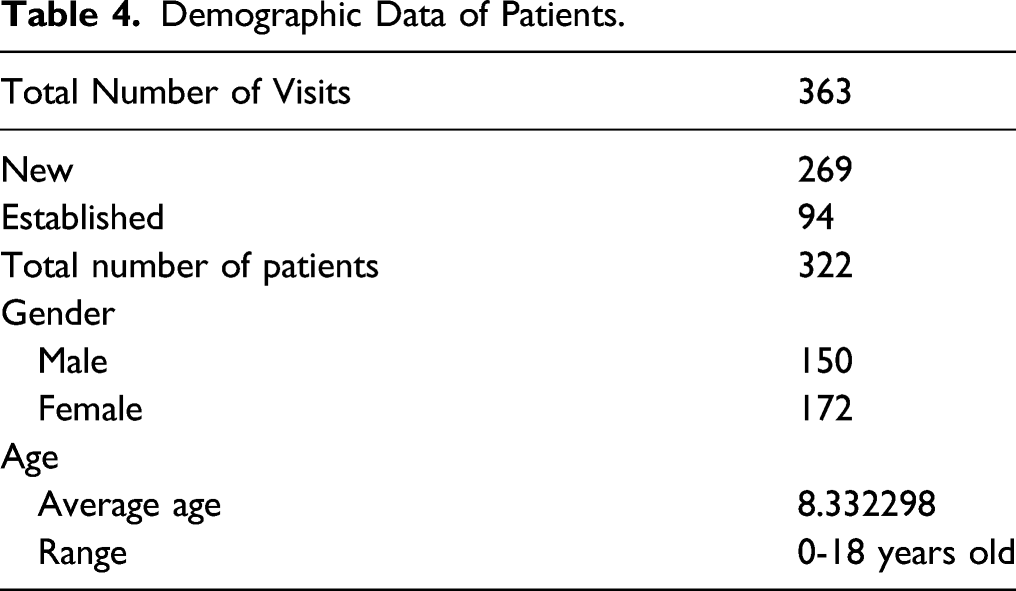
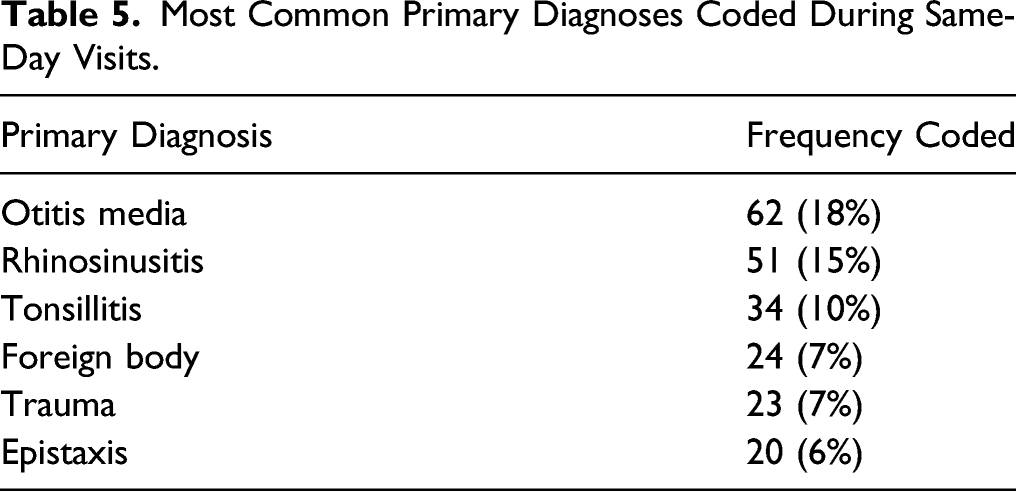
There were 363 same-day visits by 322 patients in the 3-year study period. Two hundred sixty-nine (269) of these visits were from new patients. Otitis media and rhinosinusitis were the most frequently coded diagnoses. One hundred forty-four (144) procedures were completed the day of the visit and 169 operations were performed as a result of the same-day visit. If the patient had a procedure or operation performed, they were more likely to have been referred by another provider.
Conclusions
Providing same-day appointments can help provide timely and appropriate otolaryngology specialty care to pediatric patients. Further evaluation is needed to determine the effects on patient satisfaction as well as no-show rates.
Keywords
Introduction
In the US general population, there are 9.1 visits per 100 persons per year to otolaryngologists. 1 Of these visits, 15.6% of otolaryngology visits in 2015-2016 were for patients less than 15 years of age, and 7.4% were in patients aged 15-24. 1 Access to otolaryngologyhead and neck specialty care can be difficult due to the estimated otolaryngology physician workforce shortage by 2025.2,3 Same-day scheduling may be an option to improve patient access to otolaryngology care. Same-day appointment options may benefit the pediatric population as there is increased no-show rate of pediatric appointments scheduled more than 7 days from the initial contact. 4 It can also benefit a pediatric practice by providing potential procedures or operations. Characteristics of adult same-day visits have been assessed for common diagnoses along with resulting procedures and surgeries; however, this has not been completed for a pediatric population. 5 The goal of this study is to assess characteristics of same-day pediatric visits in an otolaryngology department at an academic institution.
Methods
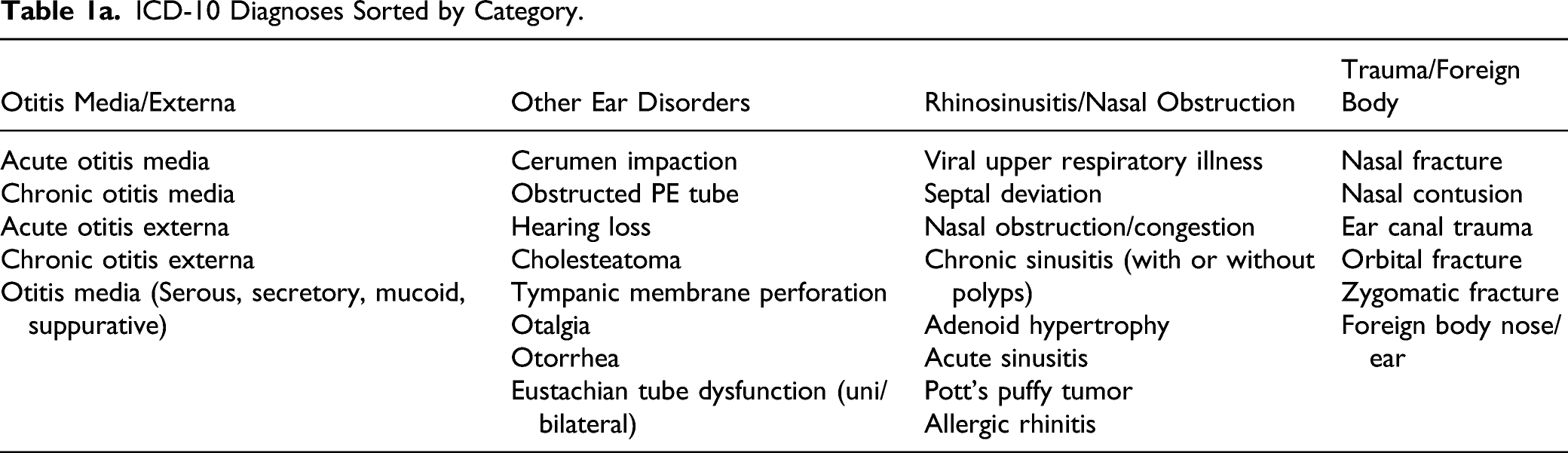
ICD-10 Diagnoses Sorted by Category.
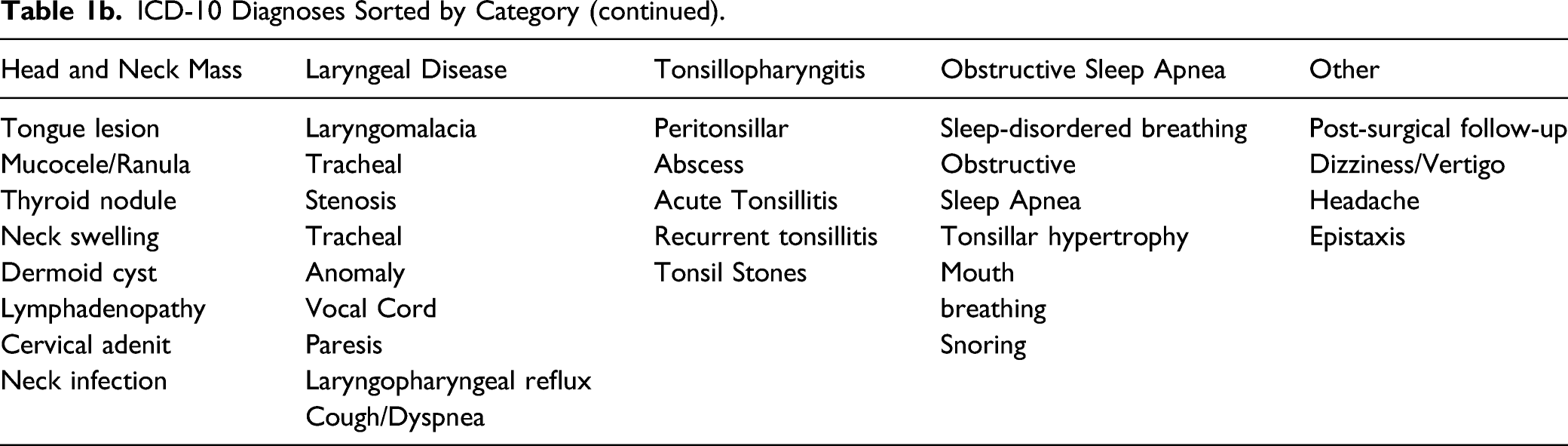
ICD-10 Diagnoses Sorted by Category (continued).
Procedures Performed Sorted by Category. FB, foreign body; EAC, external auditory canal; I&D, incision and drainage.

Results
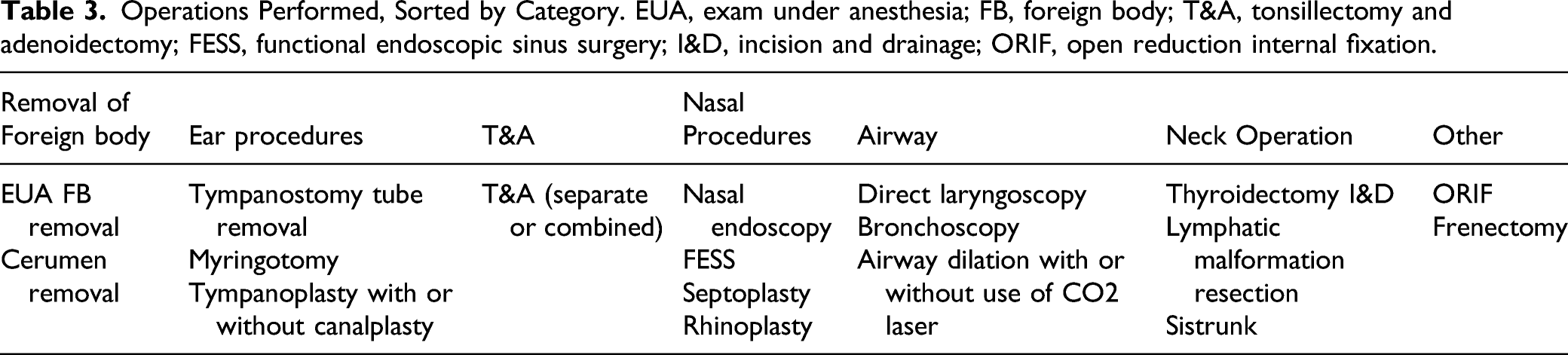
Operations Performed, Sorted by Category. EUA, exam under anesthesia; FB, foreign body; T&A, tonsillectomy and adenoidectomy; FESS, functional endoscopic sinus surgery; I&D, incision and drainage; ORIF, open reduction internal fixation.
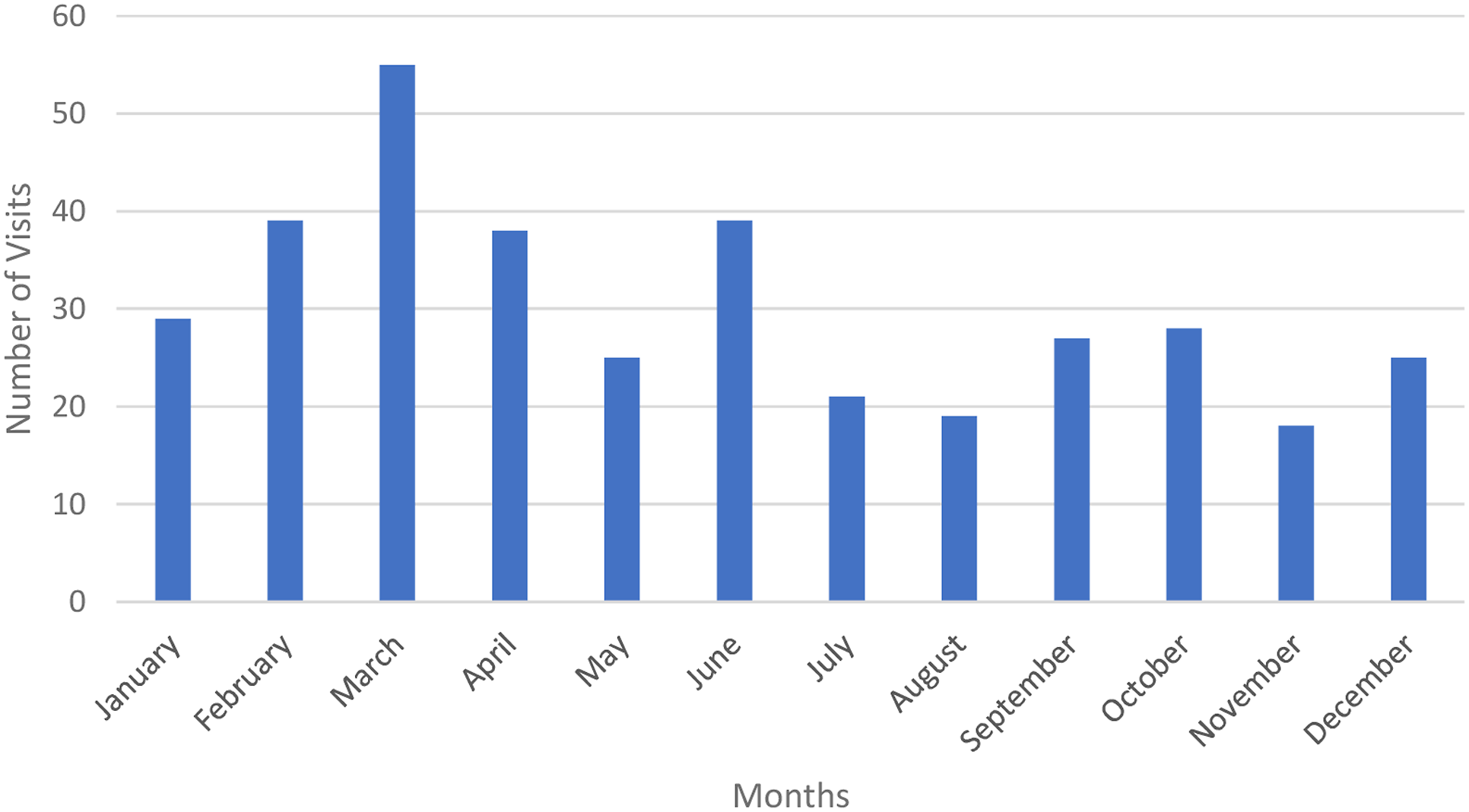
Distribution of same-day visits per months of the year (2016-2018).
Demographic Data of Patients.
Most Common Primary Diagnoses Coded During Same-Day Visits.
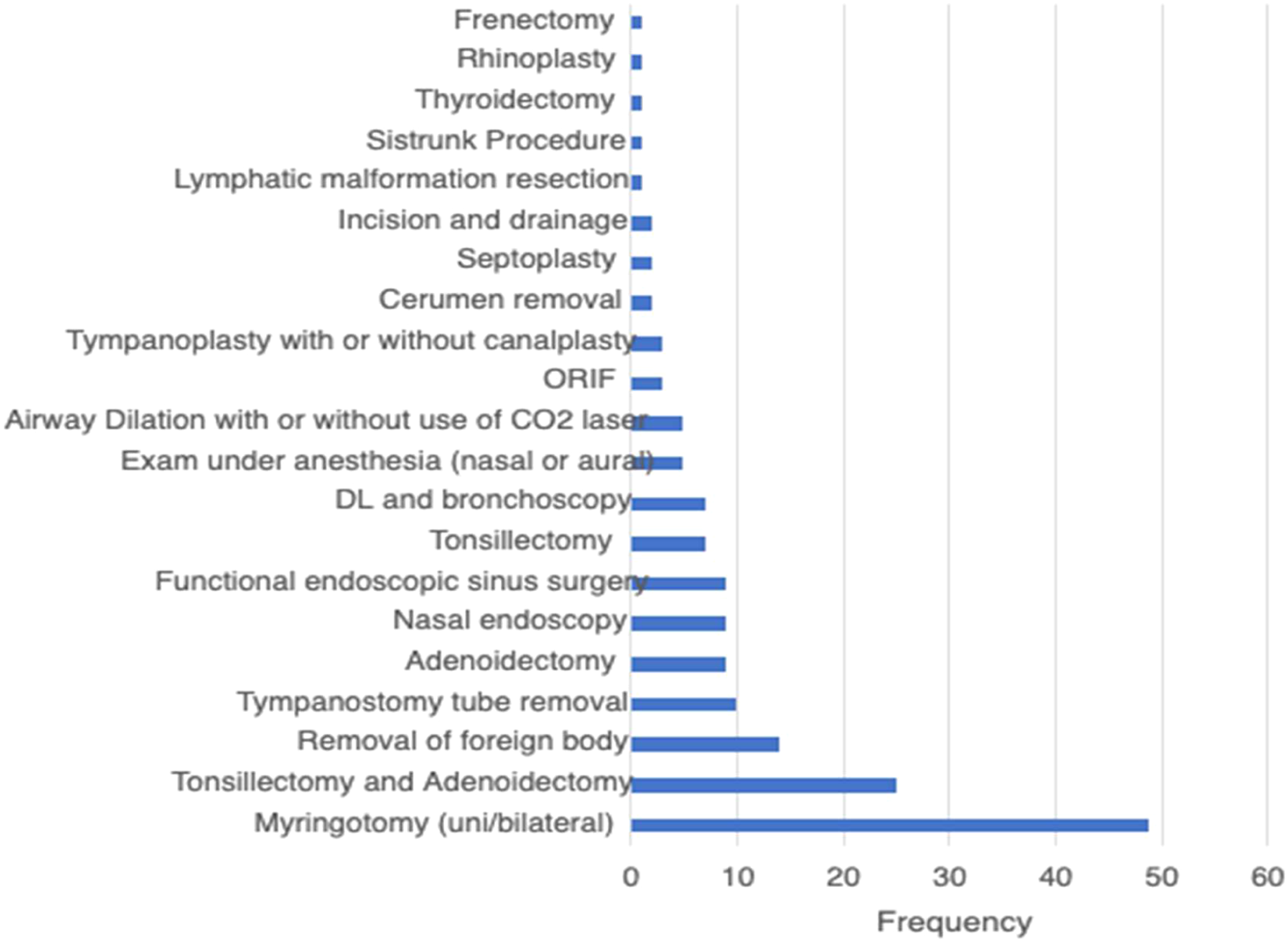
Overall, there were 144 procedures completed on 129 patients. Thirty-eight (38%) percent of the same-day visits were directly associated with a procedure. The most common procedure was audiogram (36.2%) followed by nasal endoscopy (20.8%) (Figure 2). There were 19 foreign body removals attempted in the office, 9 (47.4%) of which were successful. There were 167 operations performed in 139 procedures dates on 119 patients (Figure 3). Of these 119 patients, 57% of visits resulted in a surgery within 30 days, and 91.6% of visits resulted in surgery within 60 days. Of the 202 patients that were referred from other providers, 83 patients (41%) had at least one procedure done, and 84 patients (42%) had at least one operation performed. The most common surgery was bilateral myringotomy with tube placement (29.3%), followed by tonsillectomy and adenoidectomy (15%) and foreign body removal (8.4%). Number of procedures completed as a result of same-day visit. Number of operations completed as a result of same-day visit.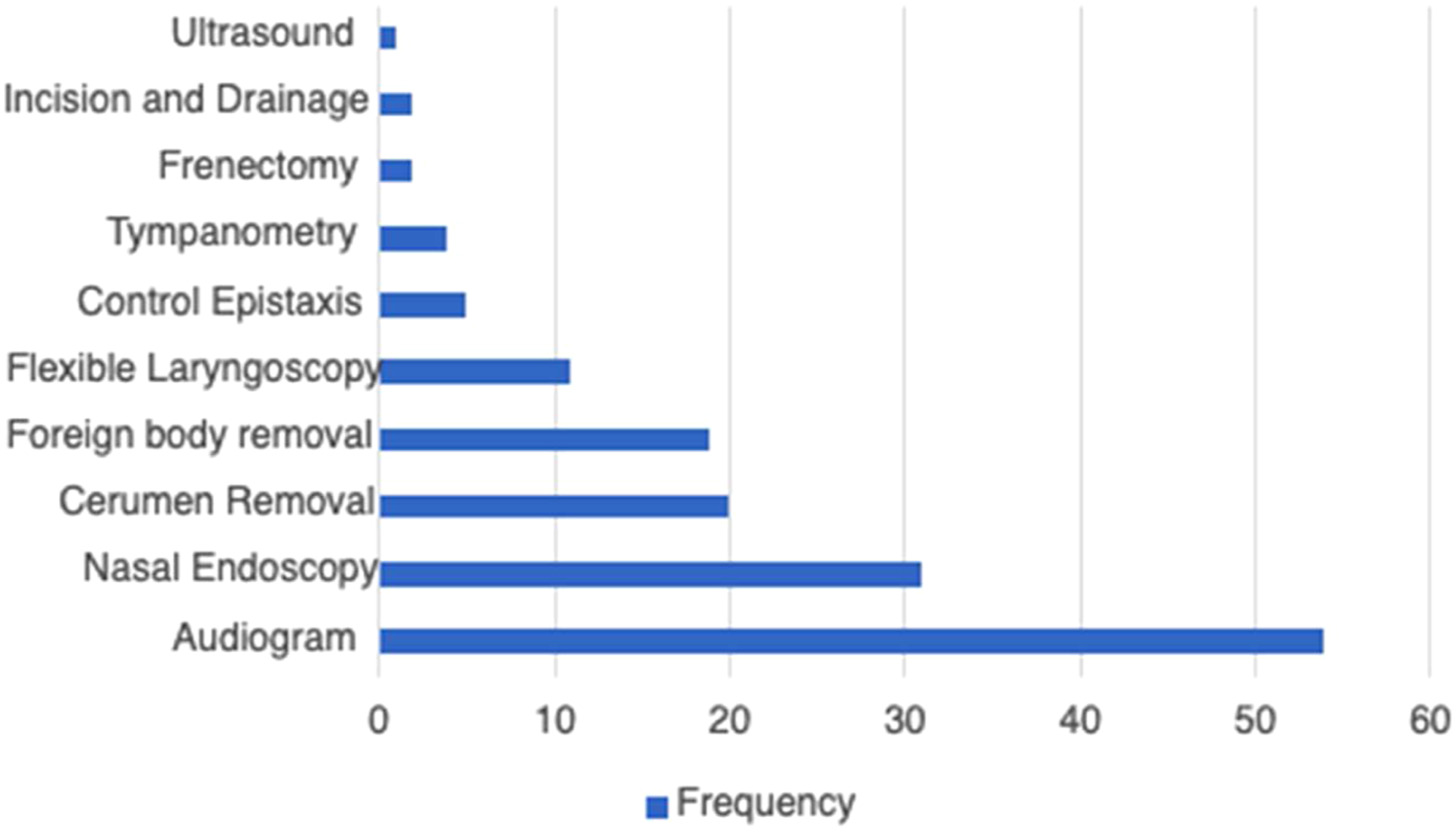
Discussion
Providing a dedicated rapid access or emergency clinic, while shown to be helpful in improving timely patient care, is challenging to manage.6,7 Reserving a few appointment slots, one in the morning and one in the afternoon that the electronic medical record releases the day prior, that are dedicated to same-day scheduling within 24 hours of the patient calling allows for improved rapid access while reducing the potential for overbooking providers. 5 This is the first study which assesses characteristics of otolaryngology same-day appointments for pediatric patients.
Our department was able to see 269 new pediatric patients during same-day visits in a 3-year period. Having same-day appointment scheduling is valuable for pediatric patients as it is often the parent schedule which dictates availability. Providing rapid care can potentially reduce missed school time for the patient and missed workdays for the parent/legal guardian. The vast majority of our patients had only one same-day appointment within a 3-year period and there was only a very small group of people that had between 4-6 same-day appointments. This is likely an indicator that these appointments are being utilized appropriately for same-day care.
The most common months for same-day appointments were February, March, April, and June. The months of February through April having a high rate of same-day appointment usage is consistent with otitis media and rhinosinusitis being the most frequently coded diagnoses.
There is an element of urgent care that was provided to patients for either trauma or foreign bodies. Fifty-four (54) of visits (14.9%) were related to trauma or foreign body, and 4% (29) and 4% (28) of all same-day diagnoses were due to trauma and foreign body, respectively.
The frequency of procedures and operations performed highlights the appropriateness of specialty care that was sought during the same-day appointment. While many patients were able to be medically managed, 39.6% of visits were associated with procedures and 36.9% with operations. Of those visits that resulted in an operation, 91.6% of the surgeries were done within 60 days of the appointment. If the patient needed a procedure or operation performed, it was more likely that they had been referred by another provider. Sixty-four (64%) percent of the patients who had procedures done were referred by another provider, and of the 119 patients that had operations done, 70.5% had a referral from another provider. This may be important for individual practices to consider from a business perspective if they are wishing to incorporate or maintain same-day appointments within their clinical schedules. It may be valuable to consider a scheduling preference from a referring provider or allowing self-referrals.
While the majority of patients were new patients to the practice, 29.2% of same-day scheduling was utilized by established patients and 9.6% by post-op patients. Since this appointment was pre-determined by the template for the providers, this appointment was not necessarily completed by the provider that had seen the patient initially or the surgeon who completed the surgery. This could create a challenge for continuity of care.
This retrospective study does have limitations. The authors categorized the diagnoses, procedures, and operations to summarize the dataset, and in many instances, there were multiple diagnoses coded for a single visit. The primary diagnosis for the visit is subjective to the provider who completed the visit. There is also provider variability amongst clinical assessments and ability or willingness to complete same-day procedures. This study was completed at an academic institution; therefore, implementation in a private practice setting may vary.
Same-day appointment scheduling is a valuable tool in an otolaryngology practice to provide timely care and manage urgent issues. No-show rates in pediatric otolaryngology clinics on average are between 23-33%.4,8 While this study did not evaluate no-show rates in our clinics, there has been a previously demonstrated decrease in the no-show rates of pediatric otolaryngology clinics when appointments are scheduled between 0-7 days compared with those scheduled greater than 7 days after the call to schedule. 4
Further research can be considered on patient satisfaction with same-day appointments and the effect of same-day appointments on no-show clinic appointments.
Footnotes
Acknowledgments
We would like to thank the UNMC Otolaryngology physicians and physician assistances, Kleve Granger MD and Vega Were MD.
Author Contributions
Jenna Berg: data collection, analysis and interpretation of data, manuscript drafting, manuscript critical revising, and final approval. Alexander Tu: data collection, analysis and interpretation of data, manuscript drafting, and final approval. Dwight Jones: conception, design, analysis and interpretation of data, manuscript critical revising, and final approval. Katie Geelan-Hansen: conception, design, analysis and interpretation of data, manuscript drafting, manuscript critical revising, and final approval.
Declaration of Conflicting Interests
The author(s) declared no potential conflicts of interest with respect to the research, authorship, and/or publication of this article.
Funding
The author(s) received no financial support for the research, authorship, and/or publication of this article.
