



Abstract
Sea anemones are marine animals that can produce toxins causing severe angioedema. Swimmers and divers should be aware of sea anemone species that can cause local and systemic toxic reactions and avoid indirect or direct skin contact. High index of suspicion, full laboratory workup, and treatment with steroids and antibiotics are imperative for an uneventful recovery.
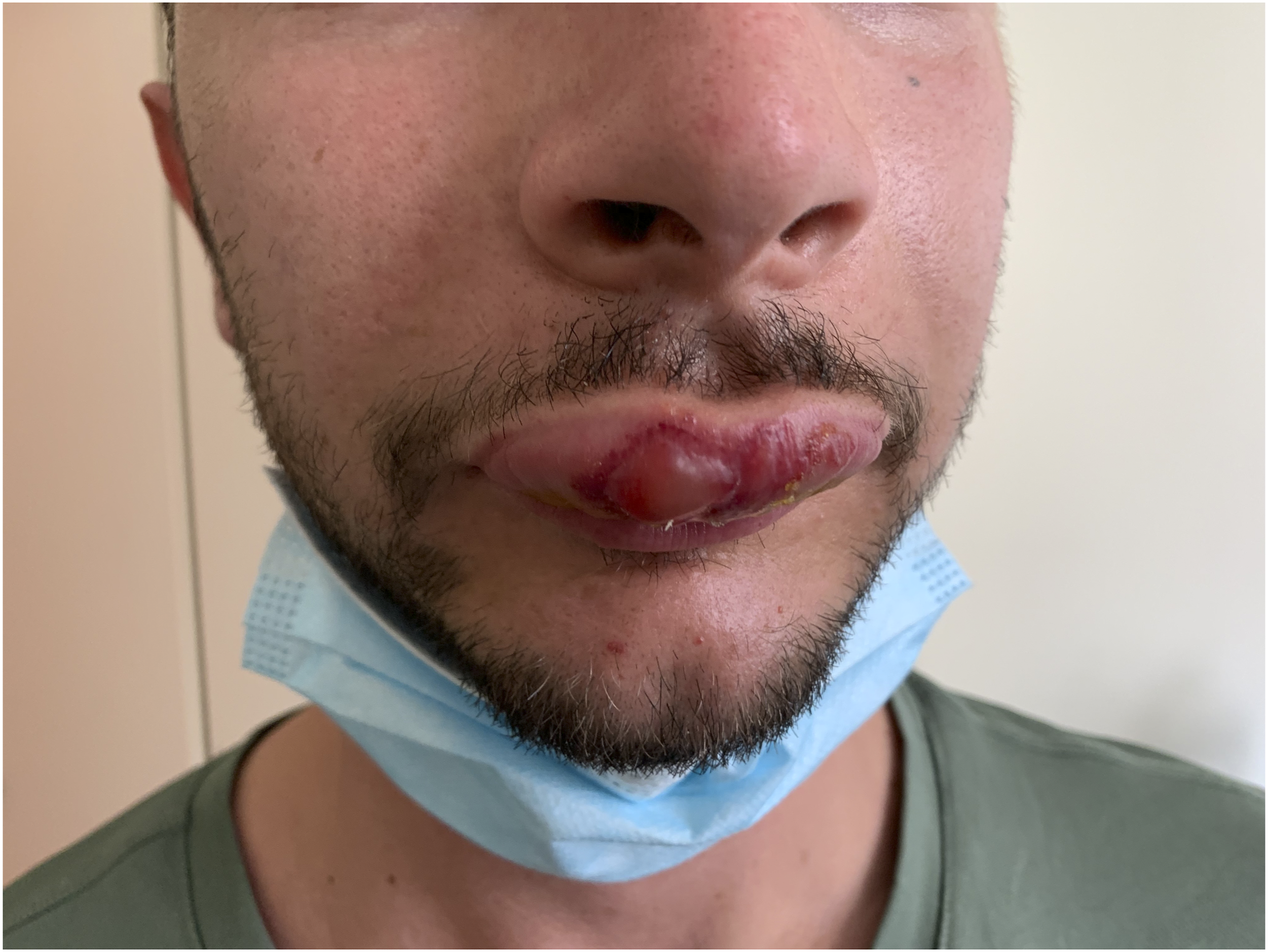
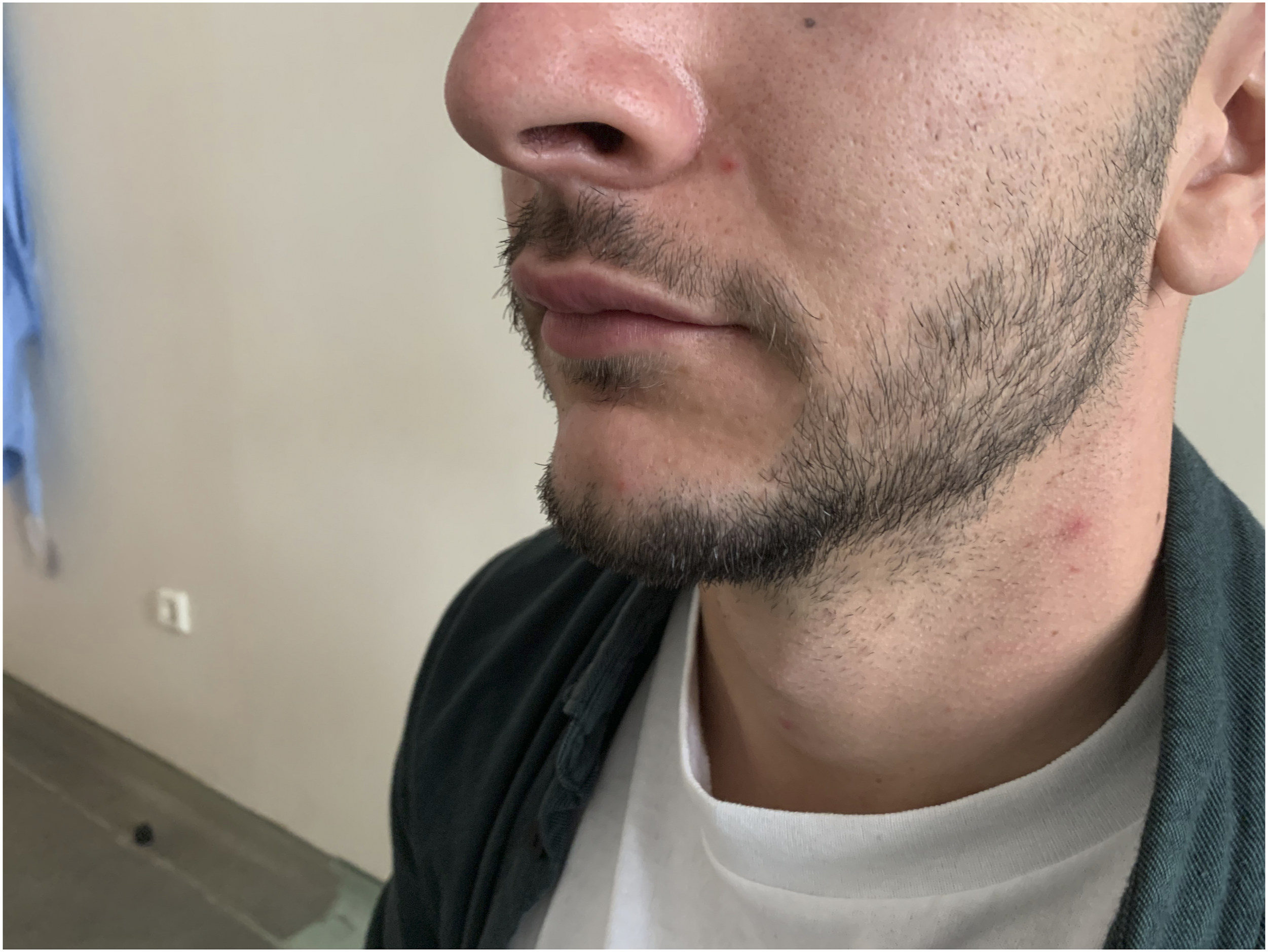
A 27-year-old male patient came to the emergency department of our hospital with severe swelling of his upper lip (Figure 1). The patient saw a sea anemone during scuba diving and touched it with his gloves. After resurfacing, he touched his upper lip with the gloves still on his hands, which precipitated the swelling. The patient denied having allergies or reactions to any substance. On clinical examination, swelling affected only his upper lip, while the rest of the upper airway revealed no signs of edema on endoscopy. Vital signs were normal, and his electrocardiogram was unremarkable. Blood tests showed mild leukocytosis with neutrophilia (13,750 white blood cells/μL), but they were otherwise normal. He initially received intravenous steroids, antihistamines, and oral H2 receptor antagonists, which were continued during his hospitalization. The edema improved, and he was discharged on oral steroids and antihistamines 3 days later (Figure 2). Complete resolution is noted at the 2-month follow-up (Figure 3). The patient with severe swelling on his upper lip. Three days later, the patient’s edema improved. Complete resolution of deem after 2-month follow-up.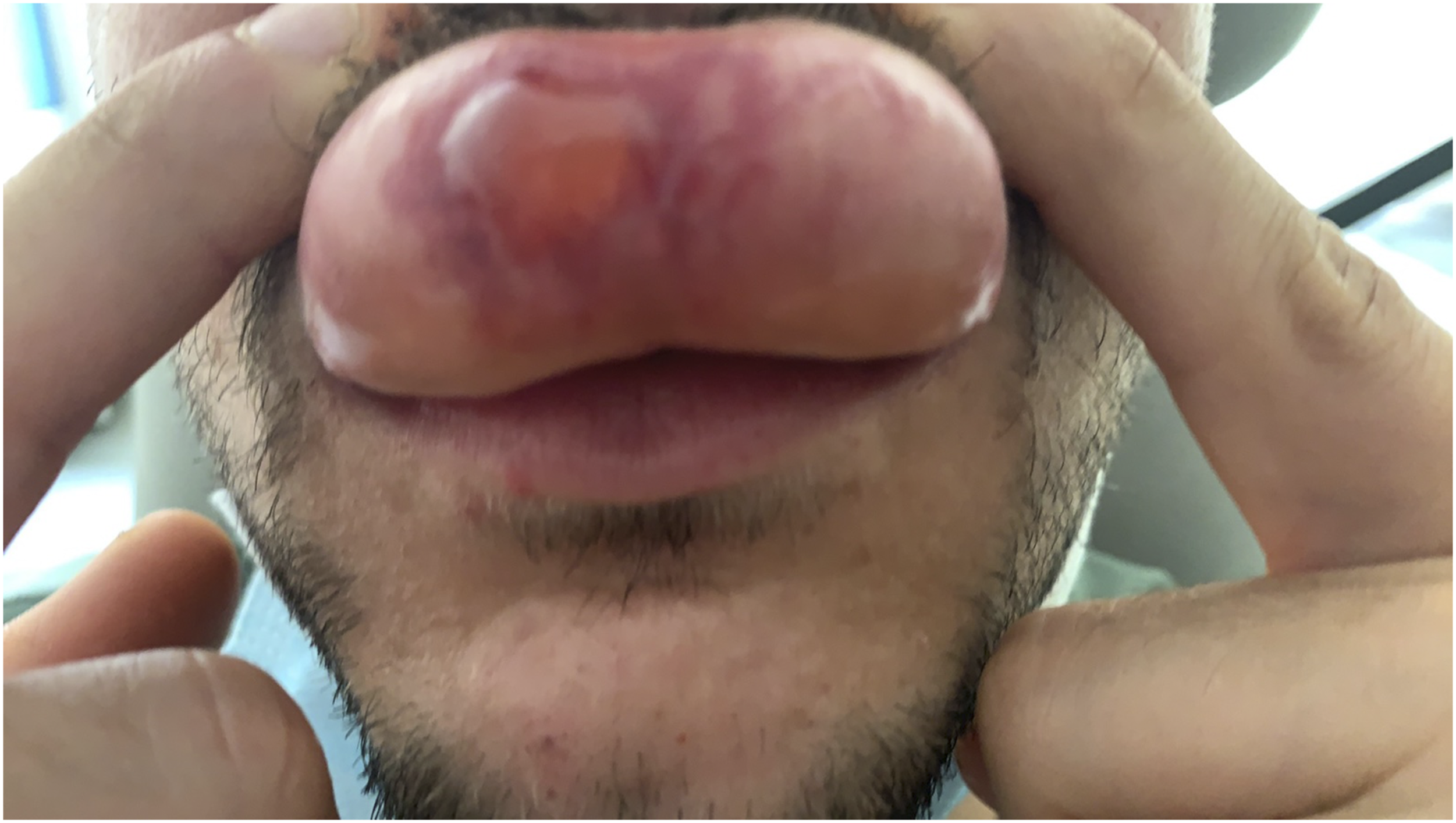
Sea anemones are commonly referred to as “flowers of the sea” due to their unique appearance. There are more than a thousand species of sea anemones, and thirty of them are known to produce toxic proteins. Sea anemones are predatory and possess stinging cells called nematocysts that pierce, immobilize, and then catch their prey using their venom. It has been reported that after direct contact with the human body, they may induce linear lesions, papules, vesicles, bullae, and edema. In addition, systemic symptoms and reactions such as dizziness, nausea and vomiting, somnolence, and muscle pain have been described. 1 Sea anemone sting can lead to acute renal failure.2,3 It is important to note that the symptoms and reactions described above have been reported after direct contact with the sea anemone in contrast to our case with indirect contact.
Angioedema is characterized by episodes of severe, non-pitting submucosal or subcutaneous swelling and can be mediated by bradikinin, leukotrienes, or histamine. In our case, the angioedema could have developed via specific IgE against an 86-kd protein under the influence of a direct cytolytic and/or lymphocyte/monocyte effect of the toxins of sea anemone.3,4 If sea anemone angioedema is left untreated, it may lead to upper-airway obstruction and anaphylactic shock.3-8
Divers and swimmers should be aware of the type of sea anemones prevalent around the area of sea water activities to avoid any contact. If such a contact occurs, people should attend, as soon as possible, the nearest medical facility. Treatment includes high doses of intravenous steroids and antihistamines which are continued orally upon discharge.4-8
Footnotes
Authors’ Note
The authors declare that written informed consent for patient information and images to be published was provided by the patient.
Declaration of conflicting interests
The author(s) declared no potential conflicts of interest with respect to the research, authorship, and/or publication of this article.
Funding
The author(s) received no financial support for the research, authorship, and/or publication of this article.
