



Abstract
There has been a subjective increase in the number of patients presenting for tonsil stones to our pediatric otolaryngology clinic. This may be related to frequent viewing of videos on the social media application, TikTok, pertaining to tonsil stones.
During the Covid-19 pandemic, there has been a marked decrease in outpatient pediatric visits for the treatment of sinusitis, otitis, and acute tonsillitis. 1 This has been attributed to isolation, mask wearing, and improved hand hygiene. Pediatric otolaryngologists have seen a stunning drop in referrals for tympanostomy tube placement and sinus surgery compared to non-Covid years. At the same time, we have noticed a doubling in referrals to our clinic for the complaint of tonsil stones without an obvious reason. For the last 6 months, these patients have been disproportionately female teenagers and very distressed about their condition. Few have had any visible stones. A possible explanation for this mystery came to light when one teen’s mother whispered, “It’s TiKToK.”
TiKToK is a social application that allows users to create short videos about almost anything from social movements to dietary advice. In response to our patient’s mother’s clue, we searched “tonsils stones” in TiKToK and 3 other social media databases. We found a plethora of videos (Figure 1). Most were intraoral “selfies” of teenagers showing large tonsillar concretions or debris-filled tonsillar crypt with do-it-yourself techniques for management. 2,3
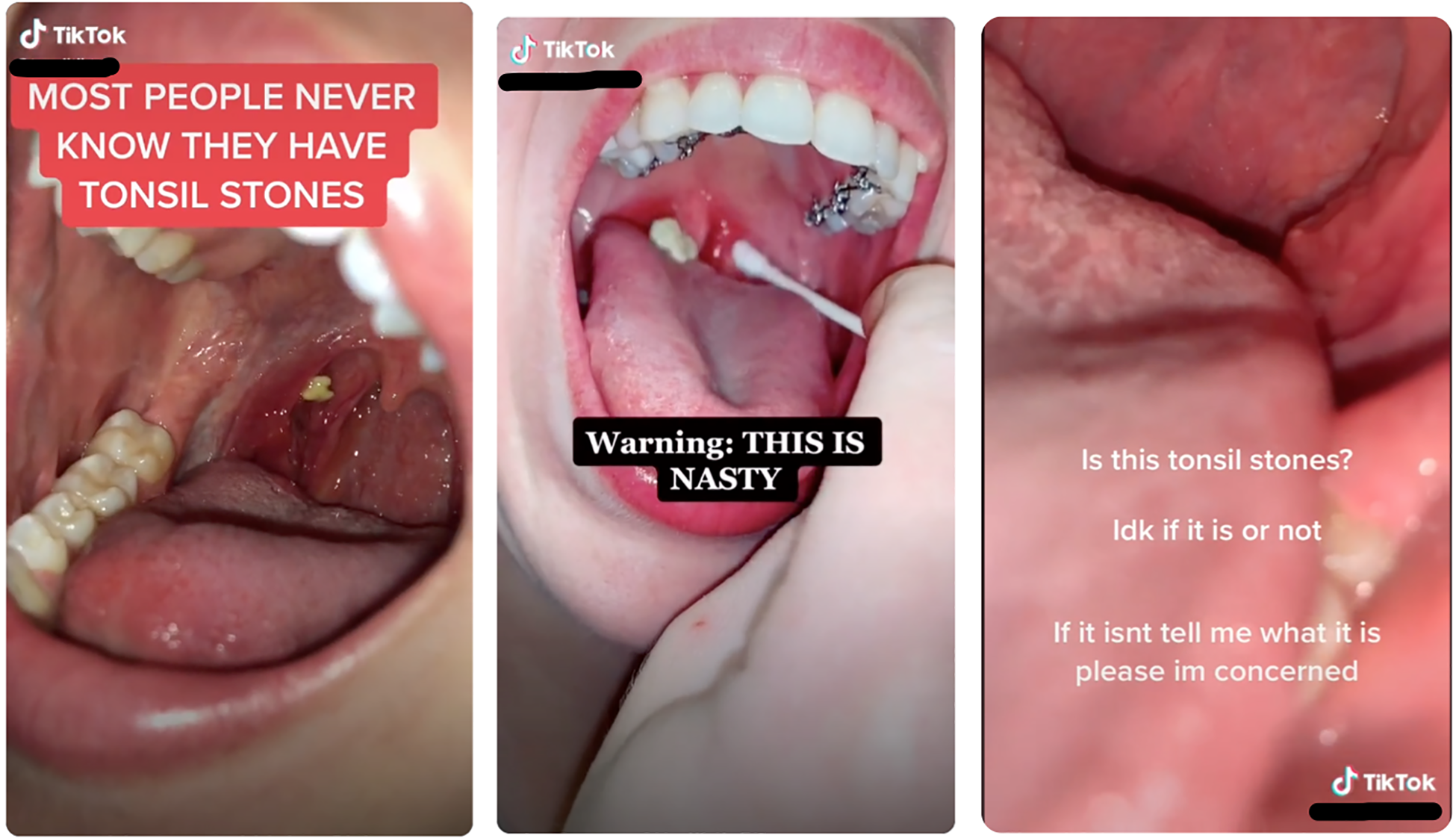
Screenshots of various tonsil stone–related videos on TikTok.
These videos have titles such as “Most People Never Know They Have Tonsil Stones!,” “Tonsil Stone Hacks!,” and “How I Removed my Tonsil Stones at Home.” These media posts, viewed by millions, proclaim that tonsil stones cause persistent throat pain and socially crippling bad breath.
Tonsils stones form when caseous material, composed of squamous debris and oral bacteria, collects in deep tonsillar crypts and is mineralized. When large, they can cause discomfort and have been associated with halitosis. In most cases, they can be managed with local care and rarely require surgery.
Several authors have documented the adverse psychologic effects of personal isolation and protracted exposure to social media during the Covid-19 epidemic. 4 Personal hygiene advice on social media appears to have a strong effect on teenagers. Children trying these untested remedies have suffered significant injuries. 5 In the case of tonsil stones, anxiety-provoking images cause worry and may lead to unnecessary surgery with its attendant risks.
Footnotes
Declaration of Conflicting Interests
The author(s) declared no potential conflicts of interest with respect to the research, authorship, and/or publication of this article.
Funding
The author(s) received no financial support for the research, authorship, and/or publication of this article.
