




Abstract
Introduction:
Dentures are worn by 20% of the United Kingdom population for both physical and psychological symptoms associated with tooth loss. However, significant morbidity and mortality can result if dentures are swallowed or aspirated. This 10-year review investigated the development of complications following denture aspiration or ingestion, and identified key learning points.
Methods:
The Medline database was searched for cases of denture ingestion or aspiration from October 1, 2009, to October 31, 2019. Search terms included “dental prosthesis, denture, dental plate, bridge and false teeth” and “swallow, ingest, eat, aspirate and inhale.” Potential factors influencing the development of complications were assessed (hollow viscus perforation, fistula formation, abscess, bowel obstruction, necrosis, hemorrhage, and airway obstruction). Statistical analysis was performed using χ2 and Pearson correlation tests in R Studio. No ethical approval was required.
Results:
Eighty-five patients were identified from 77 case reports. Fourteen articles were excluded due to insufficient information. Complications were documented in 37.6% (n = 32) of patients with 2 cases resulting in death. Duration of symptoms over 1 day (P = .005) and delayed removal beyond 4 days post-ingestion (P = .017) was significantly associated with increased rates of complications. There was no significant association between complication rate and patient age, denture type, level of impaction, or radiolucency.
Conclusion:
Denture aspiration or ingestion can have serious consequences. Factors impacting complication rate revolve around early recognition and treatment. Clinician awareness of the potential risks of dentures is paramount to early diagnosis. We recommend early intervention to reduce the morbidity associated with this unassuming device.
Introduction
Artificial teeth in the form of crowns, dental implants, or removable dentures are extremely common. The National Dental Survey revealed that 20% of the United Kingdom population wears dentures. 1 This figure increases to 59% in adults aged 65 or older living in supported housing. 2 With an aging population, it is likely this figure will continue to rise, indeed it has been predicted that in the United States denture use will rise from 34 million in 1991 to 38 million in 2020. 3
It is known that tooth loss can affect psychological and physical health by causing difficulties with eating as well as distorting a person’s appearance and speech. 4 Wearing dentures may allow edentulous people to resume their normal diet, improve speech and their facial appearance. 5 Given these benefits dentures have been proven to improve quality of life. 6 Wearing dentures however does carry risk, these risks may be local or systemic. Local risks affect the mouth and include gingival ulceration often caused by poorly fitting dentures 7 or alveolar bone resorption. 3 However, more serious systemic complications may result if the dentures are swallowed or aspirated.
The systemic complications from ingested or aspirated dentures form a spectrum, they may pass innocuously or there may be catastrophic consequences resulting in death. It is well documented that denture ingestion can cause hollow viscus perforation and the sequela of mediastinitis or peritonitis dependent on location of impaction. 8 Denture aspiration may result in acute airway obstruction and respiratory distress. Long-term causes of morbidity can result from fistula formation. 9
The benefits offered by dentures may be transient and there may come a point where the risks of wearing dentures outweigh the benefits. Often this is because of other medical problems that impair consciousness and/or the gag reflex which can allow inadvertent swallowing or aspiration. 10 Such conditions include neuromuscular disorders, Parkinson disease, and stroke. 10 Despite this, there are numerous case reports in the literature documenting cases of ingested and aspirated dentures in otherwise healthy individuals with no comorbidities. 11,12
The variety of dentures available is immense. They can be complete or partial, fixed, or removable and hooked or unhooked. Variety also exists in the materials they are made from; common materials include acrylic, ceramic, porcelain, or metal. The materials they are made from determine whether the denture is radiopaque. Radiolucent dentures if swallowed or aspirated may pose a diagnostic challenge where the patient cannot give a history of swallowed denture, this may result in delayed diagnosis and possibly a higher risk of complications. Likewise, it has been suggested hooked dentures are more likely to become impacted and carry a high risk of hollow viscus perforation. 13 We performed a literature review to identify patient demographics, device, and temporal factors contributing to the development of complications following aspiration or ingestion of dentures.
Patients and Methods
A literature review was performed searching the Medline database for publications over the past 10 years between October 1, 2009, and October 31, 2019, documenting cases of aspirated or ingested dentures. Case reports, case series, letters, and editorials were included that presented at least 1 case of denture ingestion or aspiration. The list of included articles can be found in Supplemental Appendix 1. The search terms dental prosthesis, denture, dental plate, bridge, and false teeth each was used in combination with swallow, ingest, eat, aspirate, and inhale. The search strategy can be found in Supplemental Appendix 2. No ethical approval was required for this study.
Publications were excluded if they did not provide information on individual cases, if they were not written in English, or if they could not be sourced. The full-text articles were screened manually for inclusion. The articles were reviewed by a single reviewer and the data were collated using a data capture spreadsheet, Microsoft Excel 2016. Data were collected to include patient age, gender, cognitive impairment, precipitating event, radiopacity of the denture, if the denture was hooked, plain film X-ray changes, endoscopic removal attempted, success of endoscopic removal attempt, removal method, duration of symptoms, time from ingestion/aspiration to successful removal, and resultant complications.
Both observational and inferential statistical analyses were performed. RStudio was used to perform the inferential statistical analysis using χ2 testing to assess significance, and the Yates correction was used to ensure accurate results. Pearson Product Moment (ρ) correlation coefficient was used to assess correlations (RStudio: Integrated Development for R. RStudio, Inc, Boston, Massachusetts. Available from: https://rstudio.com/products/rstudio/download/). Null and alternative hypotheses are listed in Table 1.
List of Hypotheses Being Tested and Corresponding Statistical Test Used.
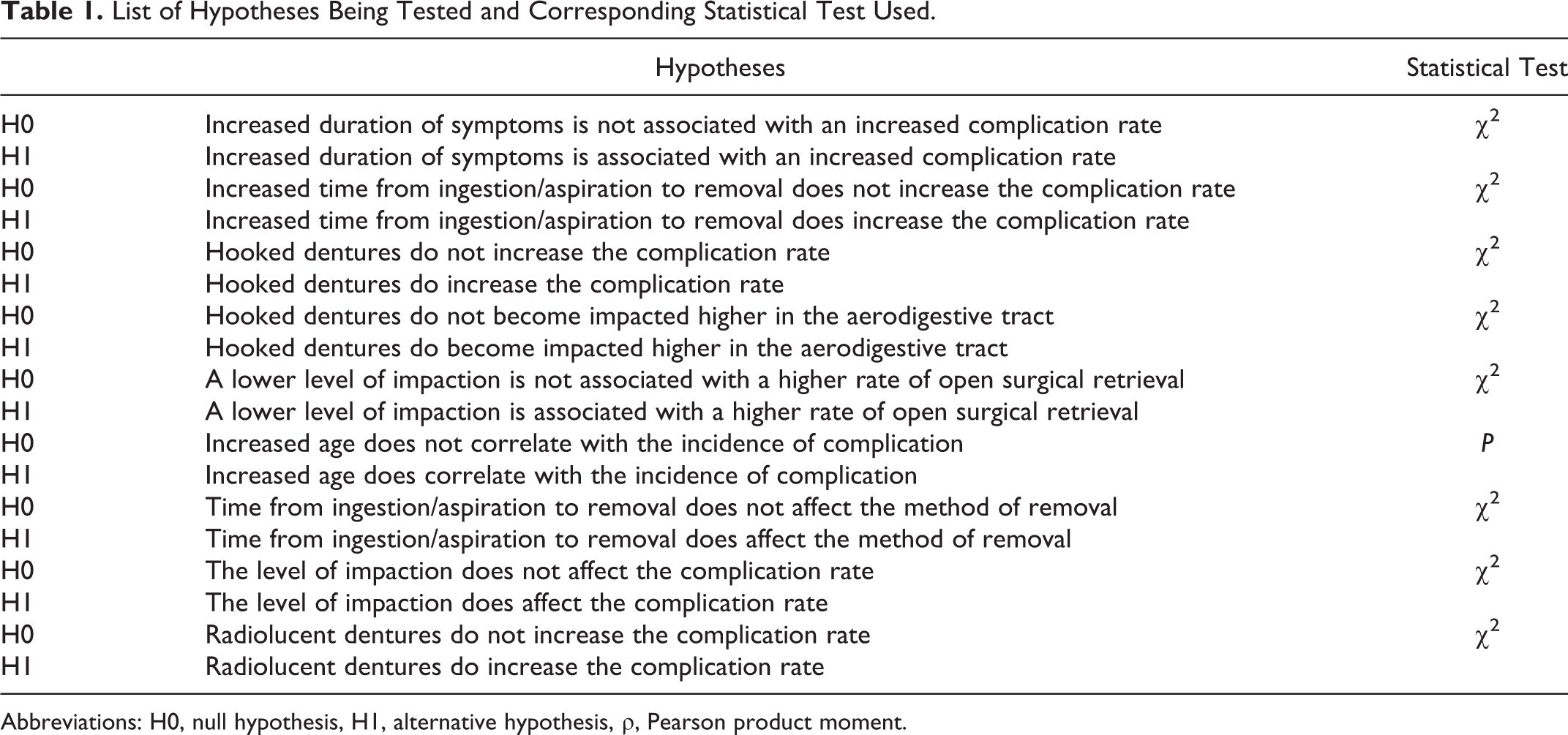
Abbreviations: H0, null hypothesis, H1, alternative hypothesis, ρ, Pearson product moment.
Results
The Medline search was performed between October 1, 2009, and October 31, 2019. Ninety-three articles including case reports, case series, editorials, and review articles were identified on the Medline database. Fifteen articles in total were excluded; the 8 review articles identified did not include detailed information on individual cases, 2 case reports did not provide sufficient case information, 2 articles did not report ingestion or aspiration of a denture, and 3 articles could not be sourced.
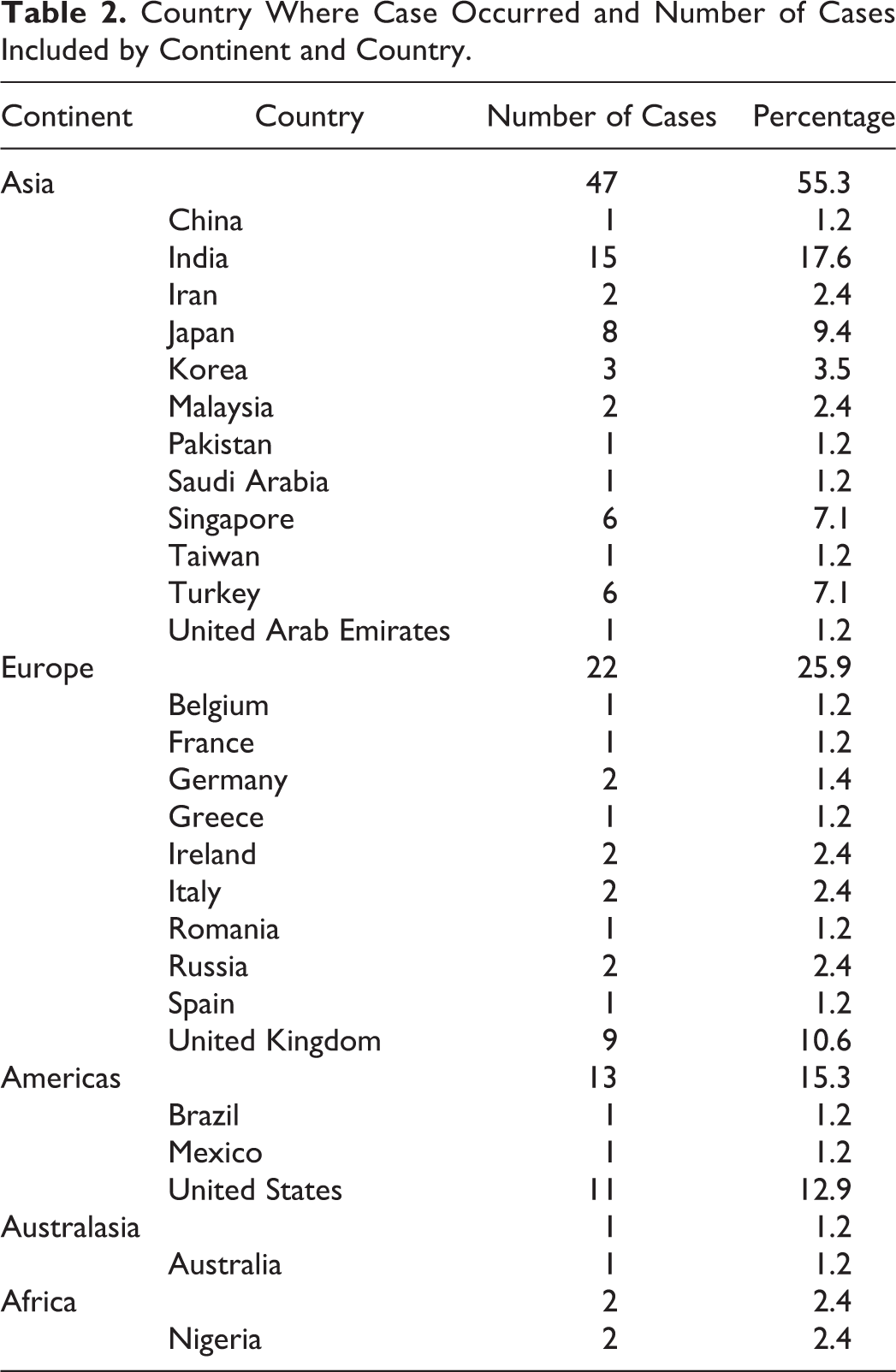
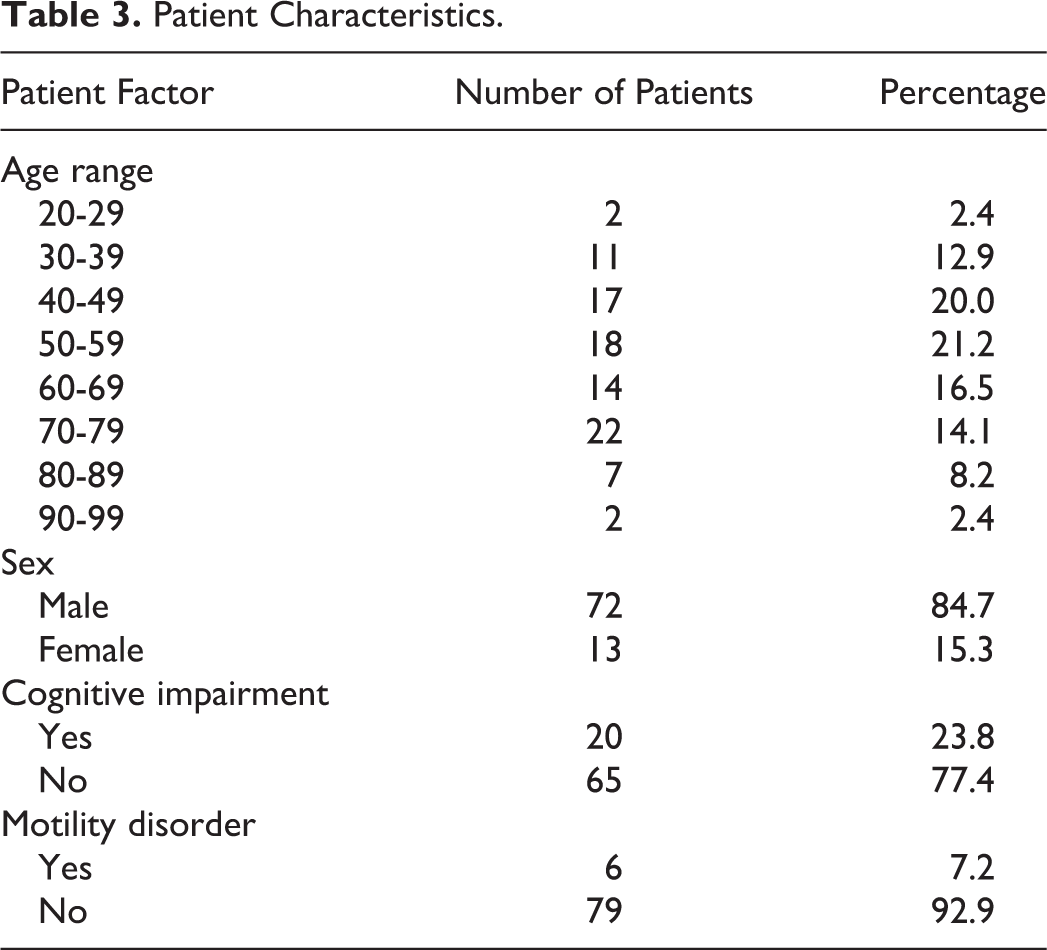
The 78 articles that were included reported on 85 cases of swallowed or aspirated dentures, 2 cases were of complete dentures and 83 were partial dentures. Table 2 shows the countries where the cases occurred and the number of cases from each country. The average patient age was 57 years with a minimum age of 28 years and a maximum age of 90 years; increased age did not confer an increased complication rate (P = .779). The affected patients were predominantly male (84.7%, n = 72; Table 3). The majority (77.4%, n = 65) of patients in the identified cases did not have cognitive impairment at the time of ingestion or aspiration and 7.2% (n = 6) of patients had a documented motility disorder at the time of impaction.
Country Where Case Occurred and Number of Cases Included by Continent and Country.
Patient Characteristics.
Precipitating Events
Often, there was no documented precipitating event (29.4%, n = 25), and 17.7% (n = 15) did not know they had swallowed or aspirated their dentures. Eating was found to be most common precipitating event (15.2%, n = 13), sleeping was the second most common (8.2%, n = 7), and third most common was intubation (7.1%, n = 5). Other less common causes included facial trauma (4.7%), seizures (4.7%), dental procedures (1.2%), acute stroke (1.2%), and coughing (1.2%).
Hooked or Unhooked and Radiolucency
Whether the denture was hooked was not documented in 32 (37.6%) patients. When documented, 50.9% (n = 27) of impacted dentures were hooked and 49.1% (n = 26) were unhooked. In 5 cases, it was not documented and not demonstrated by X-ray image whether the denture was radiopaque. When documented, 72.5% (n = 58) of dentures were radiopaque and 88.9% (n = 64) showed X-ray changes in-keeping with foreign body. χ2 testing showed that hooked dentures are not associated with an increased complication rate (P = .401). Likewise, a χ2 testing revealed radiolucent dentures is not associated with an increased complication rate (P = .359).
Removal Technique
Endoscopic removal was the most commonly undertaken removal technique for impacted dentures with 60.0% procedures attempted; 52.9% (n = 45) of attempts were successful. The second most commonly employed removal method was open surgery with 31.8% (n = 27) successful removals. Laparoscopic surgery was the chosen method in 3 cases, 1 denture was removed from the hypopharynx with a finger and 3 dentures passed spontaneously per rectum with observation. χ2 testing revealed that time from ingestion or aspiration to removal does not affect the method of removal P = .772.
Impaction Site
Most swallowed dentures became impacted in the upper gastrointestinal tract 50.6% (n = 43) with the majority of these being impacted in the esophagus 35.2% (n = 30). The large bowel (14.1%, n = 12) and respiratory tract (14.1%, n = 12) were the second most common sites of impaction with the most common locations being the sigmoid colon (5.88%, n = 5) and the larynx (4.7%, n = 4), respectively. In the esophagus, the average level of impaction was at 23.5 cm (n = 16). χ2 testing showed that the of impaction does not affect the complication rate (P = .652). Hooked dentures do not become impacted higher in the aerodigestive tract P = .0.886. However, a lower site of impaction is associated with a higher rate of open surgical retrieval (P = .036).
Presenting Symptoms, Duration of Symptoms, and Time From Ingestion/Aspiration to Removal
Symptoms were documented in 83 of the 85 cases reviewed. The most common presenting symptom following the ingestion or aspiration of dentures was pain affecting 36.5% (n = 31) of patients. The second most common reason for presentation was patient suspicion of swallowed dentures, but these patients were asymptomatic (32.9%, n = 28). The third most common presentation was dysphagia affecting 31.8% (n = 27) of patients. A full summary of presenting symptoms can be found in Table 4.
Presenting Symptoms and Level of Denture Impaction.
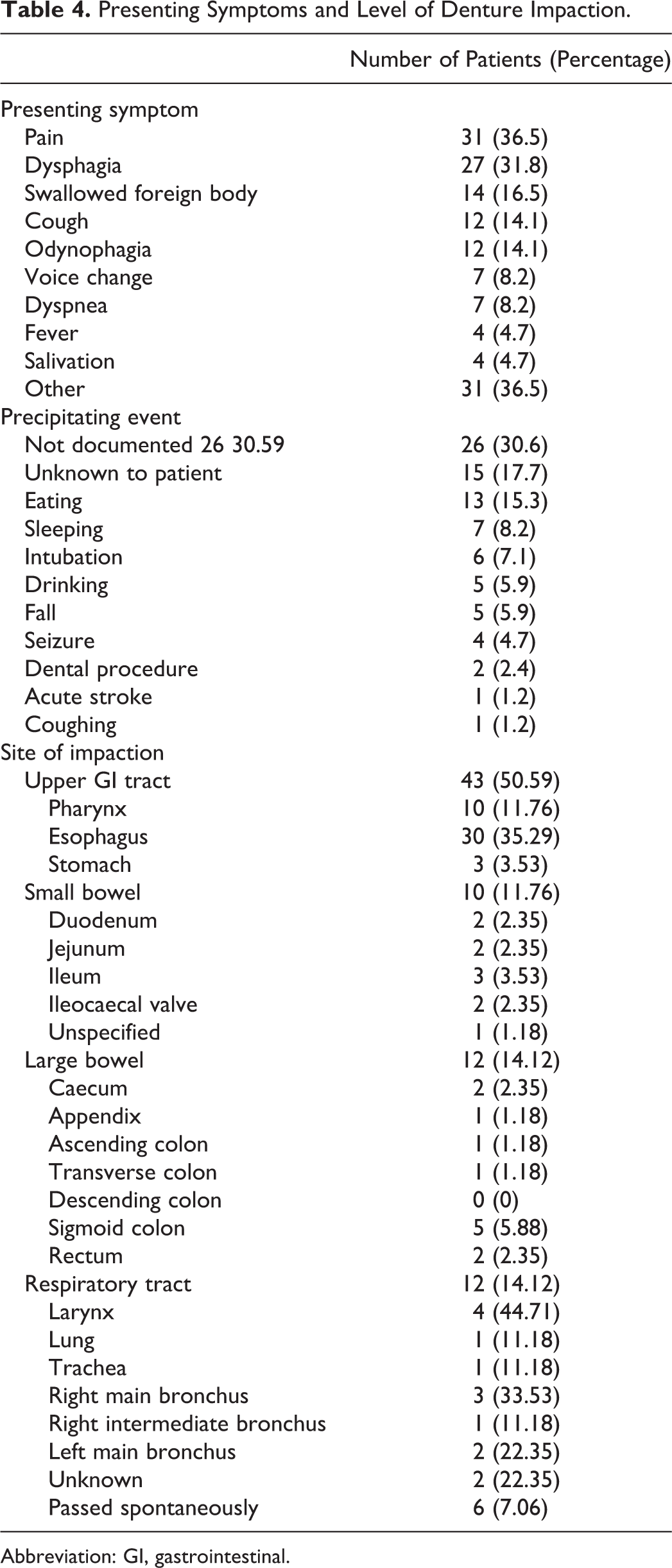
Abbreviation: GI, gastrointestinal.
Symptom duration was documented in 56 (65.9%) cases. Most commonly, patients presented to hospital with symptoms of 1 day or less (46.4%, n = 26), and 76.8% (n = 43) of patients had presented within 7 days of developing symptoms. However, 4 patients presented between 1 and 4 years after first developing symptoms. Time from ingestion or aspiration to removal was documented in 63 (74.1%) cases. Removal was performed on the day of aspiration or ingestion in 18 (28.6%) patients, and removal was performed within the first week of ingestion or aspiration in 41 (65.1%) patients. The longest documented time from ingestion or aspiration to removal was 4 years.
χ2 testing revealed that symptom duration of greater than 1 day was associated with an increased rate of developing complications (P = .005). χ2 testing also revealed that increased time from ingestion or aspiration to removal does increase the complication rate. The P value is significant from days 0 to 4 with P values of .018, .008, .021, .029, and .017, respectively. The inference from this is that impacted dentures should be removed within 4 days of ingestion or aspiration to reduce the complication rate (Figure 1).
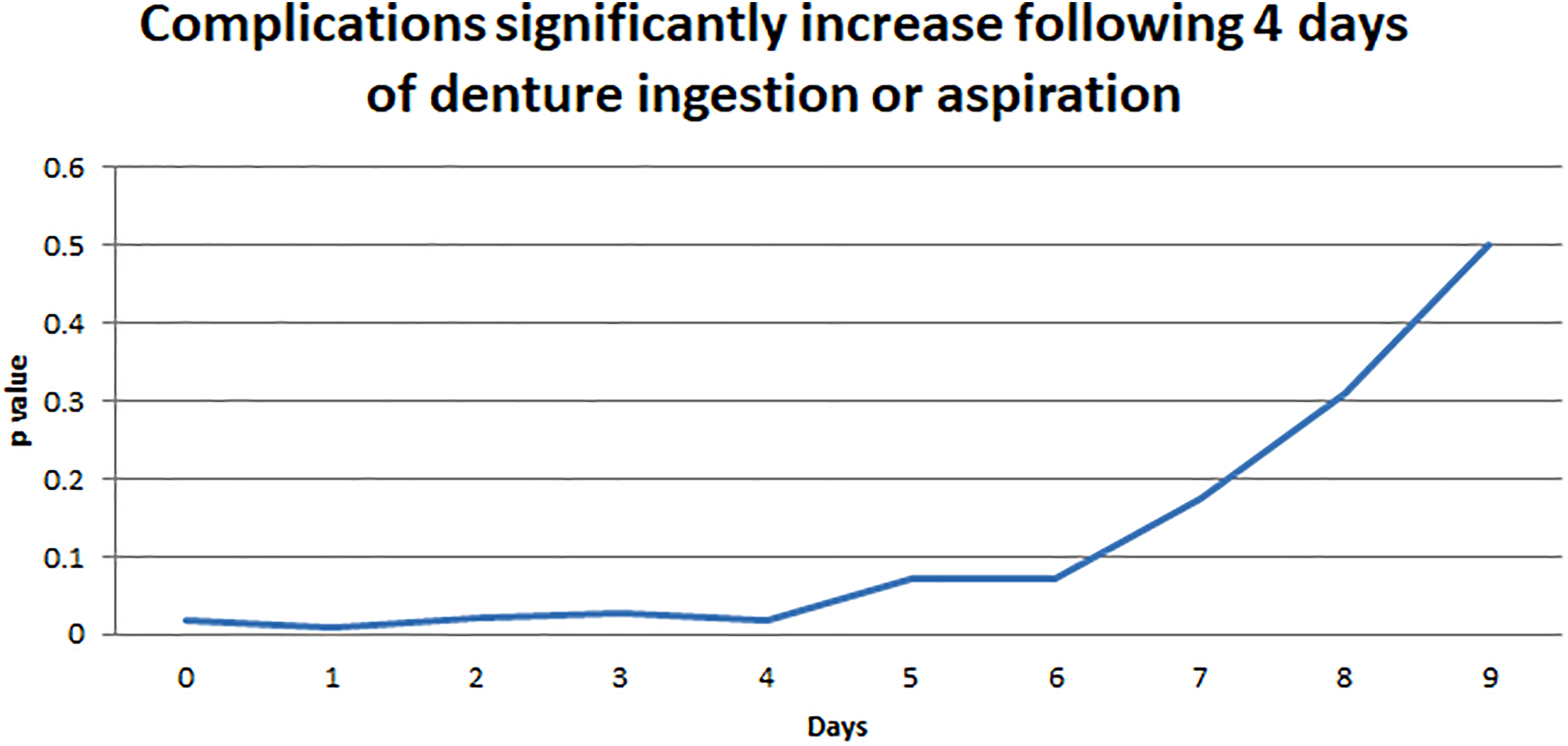
Chart showing that reduced time from denture ingestion 397 to removal significantly reduces the complication rate. Ideally dentures should be removed within 4 days of ingestion or aspiration to reduce the adverse outcome rates.
Complications and Death
Thirty-two (37.6%) patients developed complications related to denture ingestion or aspiration. The most common complication was hollow viscus perforation (50.0%%, n = 16), and the most common site of perforation was the esophagus (n = 8). The second most common complication was fistula formation (21.9%, n = 7). Some patients developed more than one complication. There were 2 deaths in the cases which examined both precipitated by aspiration of dentures; the causes of death were aspiration pneumonia and unspecified pneumonia.
Discussion
A previous literature review found that elderly people, people with cognitive impairment, and people with mental health disorders are more likely to swallow foreign bodies. 14 This was not found to be the case in our review of denture ingestion and aspiration. Instead, we found that almost half the incidences of swallowed dentures occurred in patients aged 40 to 59 (41.2%), with only 10.6% of cases occurring in those aged older than 80 years. Likewise, 23.8% of the cases analyzed occurred in patients with cognitive dysfunction with the vast majority occurring in persons of normal cognition. The average age of patients developing complications was 57 years and only 10% (n = 3) of these had some degree of cognitive impairment.
So the saying goes “prevention is better than cure,” prevention of ingestion and aspiration of dentures will prevent the development of complications. The most common reason for swallowing dentures in this review was eating and drinking combined. It is known that loose fitting dentures pose a risk of ingestion. 15 Although not specifically documented in the analyzed case reports, it would be interesting to know whether the patients’ dentures had loosened before the swallowing or aspiration event. Patients should be advised to eat small mouthfuls and chew slowly when they are initially fitted with dentures. 5 From the reports alone, it is difficult to know whether this advice was given and followed and whether a lack of patient education resulted in the majority of ingestions, perhaps raising the requirement for regular denture follow-up.
Almost 18% of patients were completely unaware, and they had swallowed their denture, 40% of which had cognitive impairment, in this group (n = 8) the average time from ingestion to removal where documented was 610 days. For patients with cognitive impairment known to wear dentures, there should be a low threshold for investigation so that diagnosis and intervention can be made early. One of these patients was symptomatic for 4 years and went on to develop a bronchoesophagealfistula. 9 This is just one example where significant morbidity could have been prevented with a low threshold for investigation at initial presentation.
Six patients swallowed or aspirated their denture during intubation; all of these patients had cognitive impairment. This emphasizes the need for the anesthetist to check patients’ mouths for dental prostheses prior to intubation if they are unable to give this history themselves.
Most (37%) patients presented to the emergency department with pain in association with a swallowed denture. This review found that symptom duration was significantly associated with an increased complication rate. When a foreign body becomes impacted, surrounding edema occurs and this can restrict the blood supply to the mucosa leading to tissue necrosis and subsequent perforation. 16 This process will cause pain and is likely to be the reason that increased duration of symptoms is significantly associated with a higher complication rate.
A recent review by Kent et al, we found no association between hooked dentures and an increased complication rate. 10 All dentures are made of hard materials and inherently have sharp edges being tooth prostheses. Thus, it follows that all dentures may carry the same risk of perforation and having hooked parts may make a negligible difference to the risk. It is known that hooked dentures can prove a challenge to remove as the hooks can become embedded in surrounding mucosa. Our data set was not large enough to statistically examine whether hooked dentures become impacted higher in the aerodigestive tract than nonhooked dentures.
Plain film X-ray is a valuable investigation for the suspicion of foreign body ingestion or aspiration, not just to show radiopaque dentures but also because they can reveal soft tissue changes that confirm the diagnosis. Although 73% of dentures were radiopaque and visible on X-ray, 89% showed X-ray changes in-keeping with foreign body or that prompted further investigation. Hence, the authors recommend that all patients with suspected denture ingestion or aspiration undergo plain film X-ray as a cost-effective primary investigation.
Where attempted endoscopic removal was successful in 71% of cases and increased time from ingestion to removal does not make open surgery more likely, a lower level of impaction is associated with an increased rate of open surgical retrieval. This may be because the bowel is not amenable to rigid endoscopy making endoscopic retrieval more challenging than in the esophagus. The esophagus is the most common location for foreign body impaction, if they reach the stomach 80% to 90% will pass spontaneously. 17 Indeed, the most common location of impaction of dentures was the esophagus comprising 47.1%. Of those that became impacted in the bowel, 59.1% required open surgical removal.
It is recommended by the European Society for Gastrointestinal Endoscopy that sharp foreign bodies impacted in the esophagus should be removed ideally within 2 hours of ingestion but at the latest within 6 hours of ingestion. 18 However, we have shown in this review that the complication rate significantly increased after 4 days. Dentures do constitute sharp foreign bodies, and therefore, these guidelines should be followed where the diagnosis is made promptly. However, in cases where a reliable history is not given and patients require a more extensive work up, we provide evidence that removal within 4 days of ingestion reduces the incidence of complications and thus patient morbidity. Therefore, we advocate prompt removal once the diagnosis has been made rather than allowing the denture the opportunity to pass spontaneously.
There are some limitations to this review, the main one being that only case reports and editorials were included as previous review articles did not provide sufficient information on individual cases. Case reports often constitute rare and unusual cases, and therefore, our data may be skewed to include more complications and greater extremes than seen in practice. Additionally, patients with severe cognitive impairment who have inadvertently swallowed their dentures, but remain asymptomatic, may never present to a health-care professional. Thus, the complication rate in this study may have been overestimated. Nonetheless, we have contributed further data to the literature to guide health-care professionals in the management of this potentially serious presentation.
In summary, this review has shown that patient factors including cognitive dysfunction, age, and motility disorders do not significantly increase the complication rate from swallowing or aspirating dentures. Likewise, device factors do not contribute to the risk of impaction and subsequent complications. It is the temporal factors in the management of ingestion and aspiration of dentures where patient morbidity can be reduced. We provide evidence that increased symptom duration significantly increases the complication rate and that prompt removal within 4 days of the event can reduce the incidence of complications from swallowed and aspirated dentures.
Supplemental Material
Supplemental Material, Included_articles - A 10-Year Review of the Complications Caused by Ingested and Aspirated Dentures
Supplemental Material, Included_articles for A 10-Year Review of the Complications Caused by Ingested and Aspirated Dentures by Jessica Daniels, Babatunde Oremule, William Tsang and Sadie Khwaja in Ear, Nose & Throat Journal
Footnotes
Acknowledgments
Many thanks to Sandra Harrison, our trust librarian for performing the database search and sourcing the articles.
Declaration of Conflicting Interests
The author(s) declared no potential conflicts of interest with respect to the research, authorship, and/or publication of this article.
Funding
The author(s) received no financial support for the research, authorship, and/or publication of this article.

Supplemental Material
Supplemental material for this article is available online.
References
Supplementary Material
Please find the following supplemental material available below.
For Open Access articles published under a Creative Commons License, all supplemental material carries the same license as the article it is associated with.
For non-Open Access articles published, all supplemental material carries a non-exclusive license, and permission requests for re-use of supplemental material or any part of supplemental material shall be sent directly to the copyright owner as specified in the copyright notice associated with the article.
