




Abstract
Background:
In this study, we evaluated how the Merocel and nasal splint packing placed in the nose after septoplasty surgery affects the olfactory and mucociliary functions of the nose in the early period, and compared the 2 packing with each other.
Material and Method:
The study included 60 patients with isolated septal deviation and 30 patients in the control group. The patients were randomly divided into 2 groups. Nasal splint was inserted after septoplasty in group A (n = 30). Merocel was inserted in group B (n = 30). The Sniffin sticks test and saccharin test were applied to the patients before surgery and 15 days after the surgery. The same tests were applied to the control group consisting of 30 patients and the results were compared.
Results:
No complications, such as postoperative bleeding, submucoperichondrial hematoma, or abscess formation, were found in both groups. Mucociliary function was improved after septoplasty, and it was statistically significant, but there was no statistically significant difference between both packing groups. A statistically significant difference was found for the odor test in patients who used nasal splint packing in comparison with patients who used Merocel in the early period.
Conclusion:
The odor test showed significant differences between the 2 groups and this was statistically significant in the early period. Mucociliary function was better after surgery, but there was no statistical difference in the different nasal packing groups.
Introduction
Septoplasty is one of the most commonly performed operations for patients with septal deviation. Insertion of packing after septoplasty is a common practice to prevent stabilization of the postoperative septum, complications such as bleeding, and prevent the formation of structure. 1,2
Nasal packing in the nose contributes to pressure on the cartilage or bone, protects the moist environment to improve physiological processes, acts as a barrier, and initiates physiological hemostatic and restorative processes. 3 Various packing agents have been produced using different materials for this purpose. 4
Patients often report the removal of nasal packing as the most difficult part of the surgical experience after nasal surgery. This has led to a search for a more suitable packing material. 5 Ideally, nasal packing material should support operative structures, effectively prevent bleeding while in the nasal cavity, and be easily removed without pain. 3,6 Therefore, medical companies have manufactured different types of nasal packing materials to relieve both the surgeon and the patient.
Nasal packing may make the patient uncomfortable, but surgeons still recommend using them due to the risk of bleeding. 4 Although there are many studies related to packing types in the literature, there is no definite consensus. Therefore, new studies continue to determine the differences between routinely used packing materials. The aim of this study was to evaluate the mucoclearance values and odor functions of patients with nasal packing used after septoplasty.
Material and Method
This was a prospective clinical study. The research was conducted in a university hospital. The study was approved by the ethics committee (2015/18-03), supported by the scientific research fund (BAP-TTU-2016-72) and carried out in accordance with the principles of the Helsinki Declaration. Sixty patients with septum deviation and 30 control patients were included in the study. Patients with additional nasal diseases or additional diseases that may affect the sense of smell and nasal functions were removed from the group. The patients underwent routine endoscopic examination and preoperative paranasal CT was used to evaluate the presence of other pathologies that would affect the sense of smell. Patients younger than 18 years or older than 45 years were excluded from the study. Sniffin sticks and saccharin test were performed before the operation. Routine septoplasty was performed by the same surgeon. Nasal splint packing was used in 30 of the 60 patients and Merosel packing was used in the remaining 30 patients. The control group was selected from individuals aged 18 to 45 years with no nasal or additional disease. These individuals underwent routine endoscopic nasal examinations, and those with nasal pathology or with additional disease or medications that may affect the sense of smell were excluded from the study.
The Sniffin sticks test (Burghardt, Wedel, Germany) consists of 3 sets and 16 fragrance pens in each set. Odor threshold, odor discrimination, and odor identification functions can be evaluated separately. During these procedures, the patient’s eyes are covered with a mask and odorless gloves are used.
Odor threshold: The lowest concentration value of an odor that a person senses is taken as the threshold value in the odor threshold test. Three perfume pens with 2 solvents and n-butanol odor are used in the test. The test is initiated with the highest concentration of fragrant pencils and maintained until the pen with the lowest concentration is reached. The lowest concentration perceived by the patient is considered to be the peak value. By repeating this process, the lowest values and odor values that cannot be smelt are recorded and then the last 4 thresholds are collected and divided 4.
Odor discrimination: The patient is asked to find different odor by smelling 3 odors. This proceeds for 16 sets. The sum of the correct answers is taken as the odor discrimination score.
Odor identification: 16 items with different odors are presented and the patient is given 4 choices in the odor identification test. The sum of the correct answers is considered the value for odor identification.
The sum of the 3 tests indicates the final odor test result. The normosmia composite score is 30.5 points or more, while hyposmia was from 16.5 and 30.5 points, and functional anosmia was below 16.5 points. The saccharin test placed one-fourth of saccharin in the lower part of the lower concha of the patients, and the taste duration of the patient was accepted as mucociliary activity.
Statistical Analysis
Data were analyzed using SPSS Package Program version 20.0. Frequency, percentage, mean, standard deviation, median, minimum, and maximum values were used in the presentation of descriptive data. The compliance of the variables with normal distribution was examined with the Shapiro-Wilk test based on the number of patients in the groups. When sample size and normal distribution tests were examined, parametric tests were preferred as analysis methods. Paired samples test was used for the comparison of preoperative and postoperative values in terms of packing type. Comparison of odor difference by packing type was performed with the independent samples test. A P value below .05 was considered statistically significant.
Results
The mean age of the whole study group was 28.43 (8.5; median: 24.50, min: 20, max: 54) years. The clinical descriptive findings of the patients in our study are presented in Table 1.
Descriptive Characteristics of the Study Group.
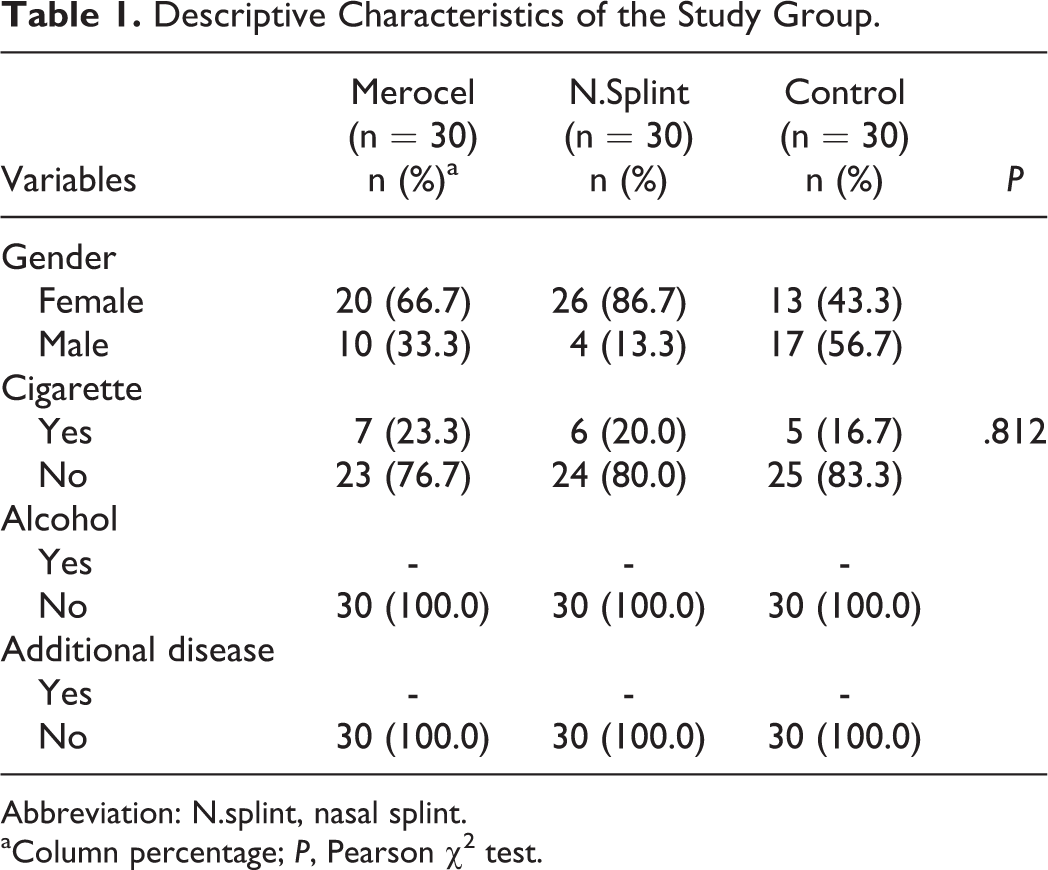
Abbreviation: N.splint, nasal splint.
aColumn percentage; P, Pearson χ2 test.
When the demographic data were analyzed, there was no significant difference between the groups in terms of smoking. The whole study group did not use alcohol and did not have any additional diseases.
Preop and postop comparison results according to the packing type are given in Tables 2 and 3. Statistically significant differences were found between preop and postop values for the saccharin test (Table 2) and odor test in both groups (Table 3). When we examine the results of the odor test in detail, the odor threshold, odor identification, and odor discrimination were significantly better after surgery.
Comparison of Preoperative and Postoperative Values of Patients Who Used Merocel.
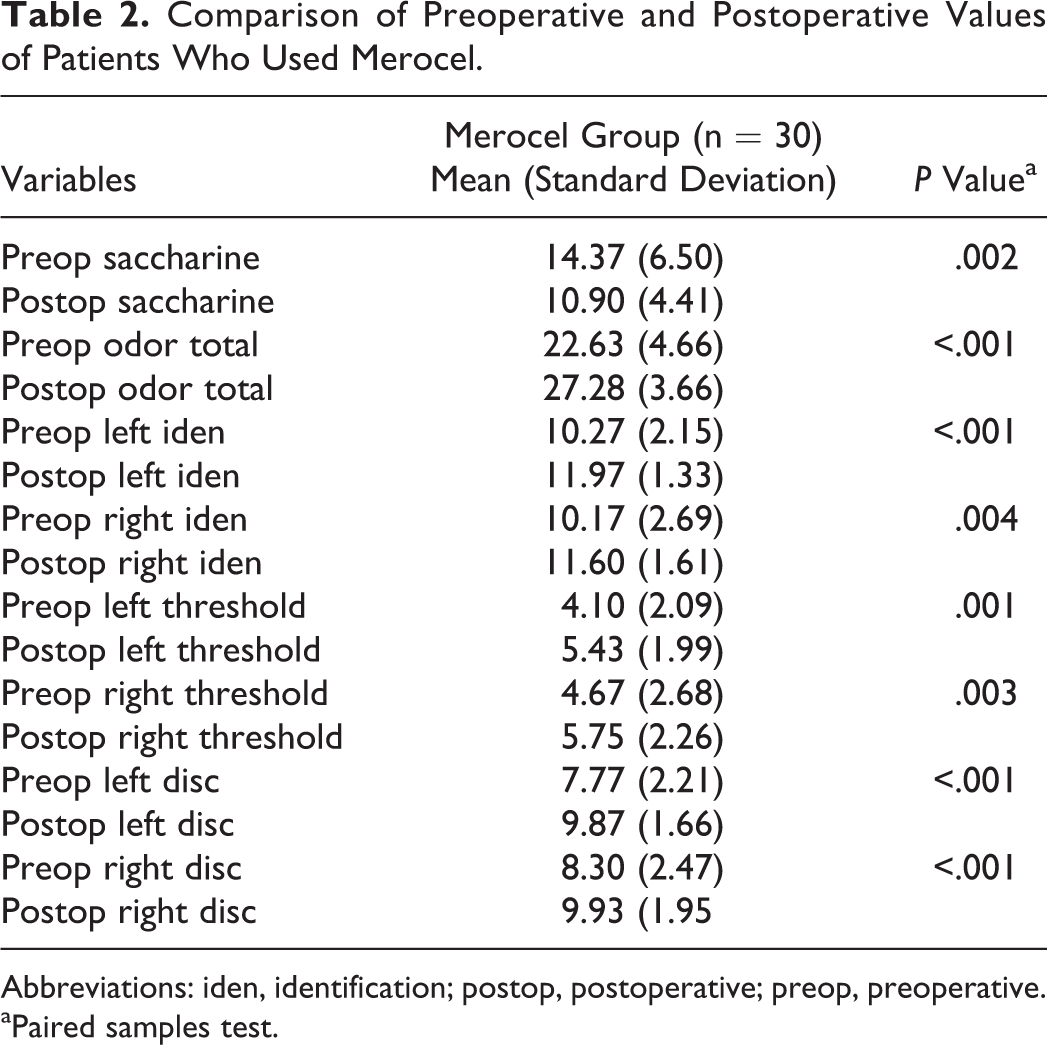
Abbreviation: iden, identification; postop, postoperative; preop, preoperative.
aPaired samples test.
Comparison of Preop and Postop Values of Patients Who Used N.Splint.
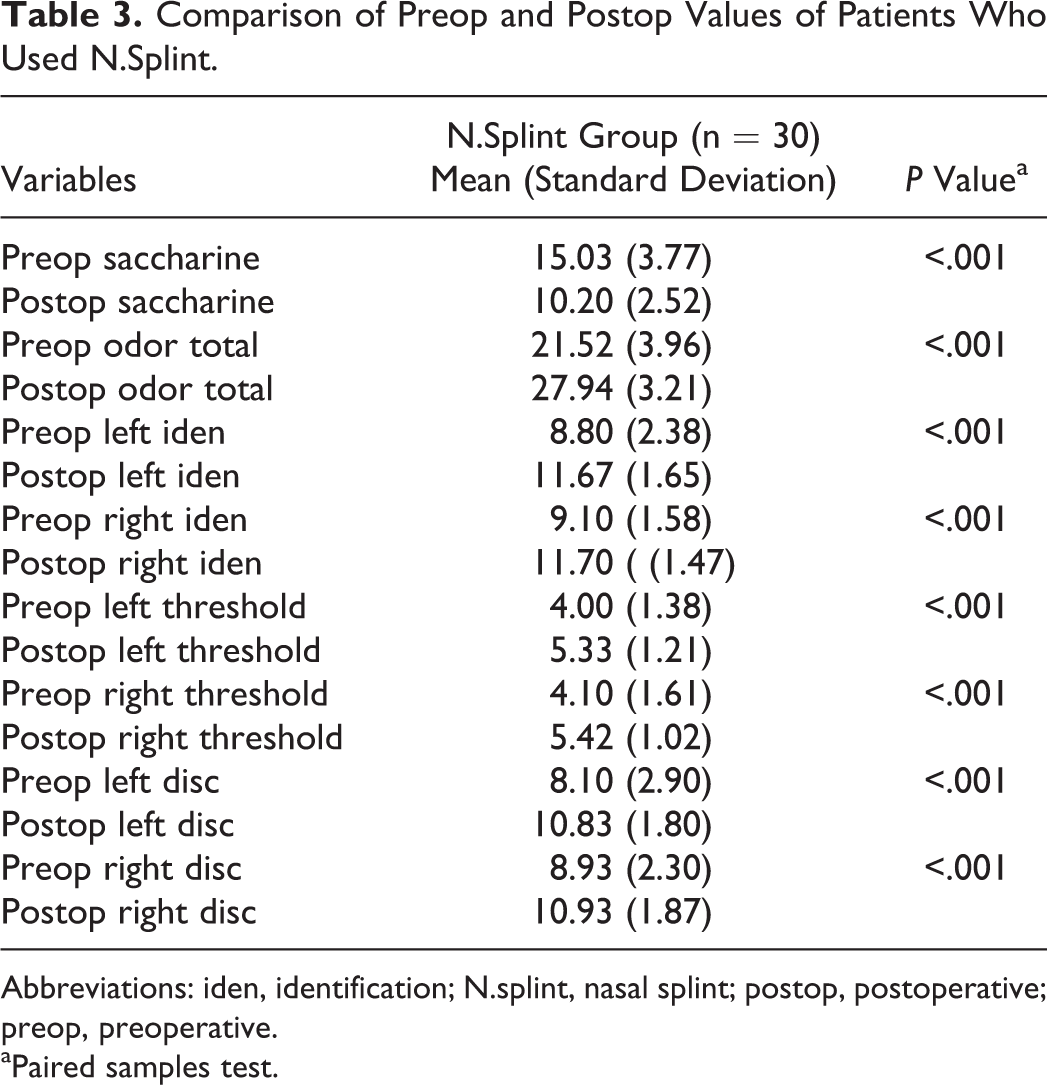
Abbreviation: iden, identification; N.splint, nasal splint; postop, postoperative; preop, preoperative.
aPaired samples test.
The mean odor score of the nasal splint group was found to be statistically significantly higher than the Merocel group when the mean odor difference was examined according to the packing type (6.42 [2.54] vs 4.64 [3.78] P = .036, respectively; Figure 1). In the nasal splint packing group, the value for preop saccharin was significantly higher than the control group (15.03 [3.77] vs 10.07 [1.74], P < .001). Preoperative mean odor value was significantly lower than control (21.52 [3.96] vs 31.20 [2.55], P < .001).
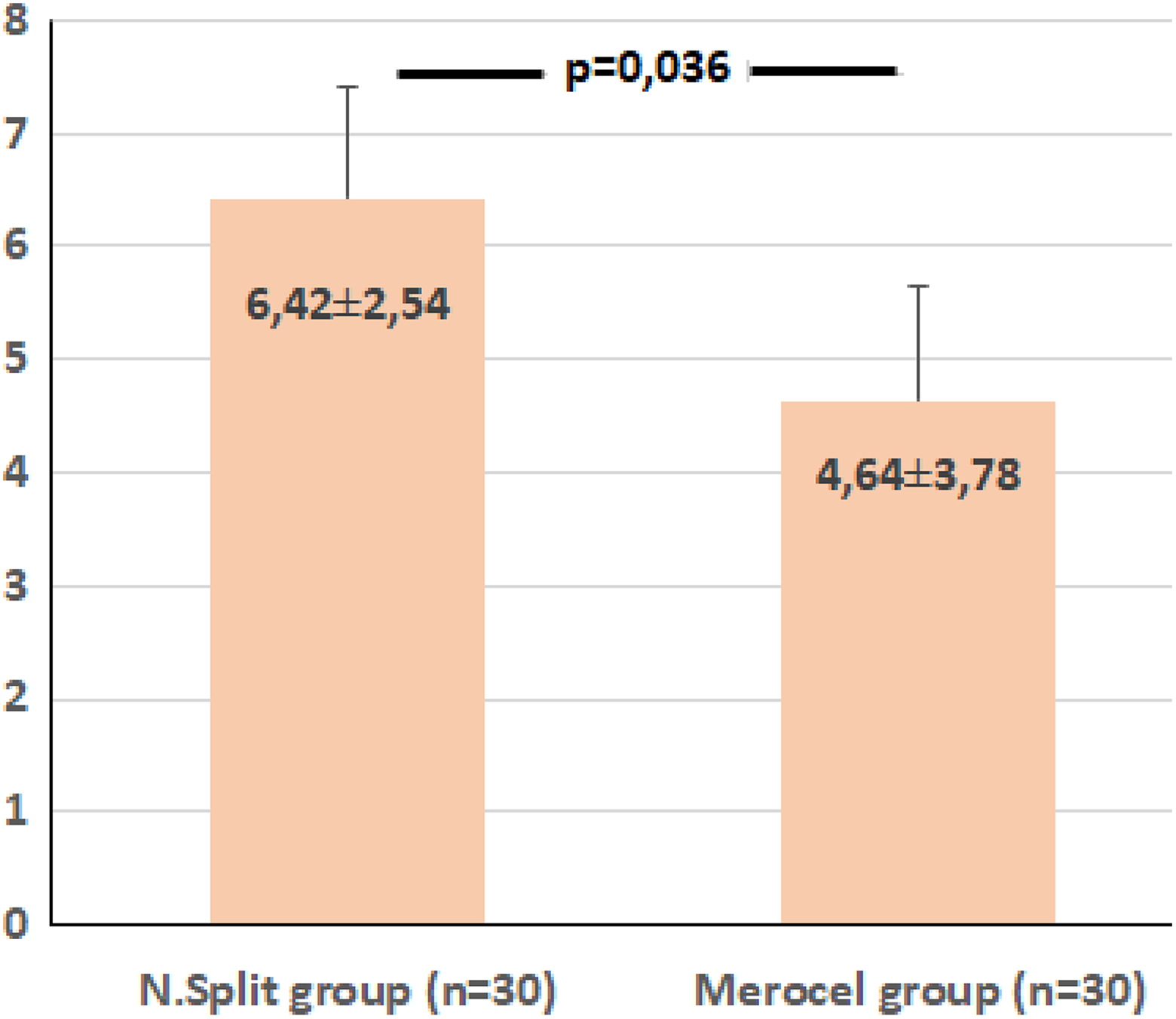
Odor difference according to tampon types.
In the Merocel group, the value for preop saccharin was significantly higher than the control group (14.37 [6.50] vs 10.07 [1.74], P = .001). Preop mean odor value was significantly lower than the control group (22.63 [4.66] vs 31.20 [2.55], P < .001).
When mucociliary activity was compared to the types of packing, it was found that mucociliary activity was better in the early period in the nasal splint group, but there was no statistically significant difference between the 2 groups (Figure 2). In patients who used nasal splint packing, it was determined that the odor functions were better and mucociliary activities were better in the early period than patients who used Merocel packing.
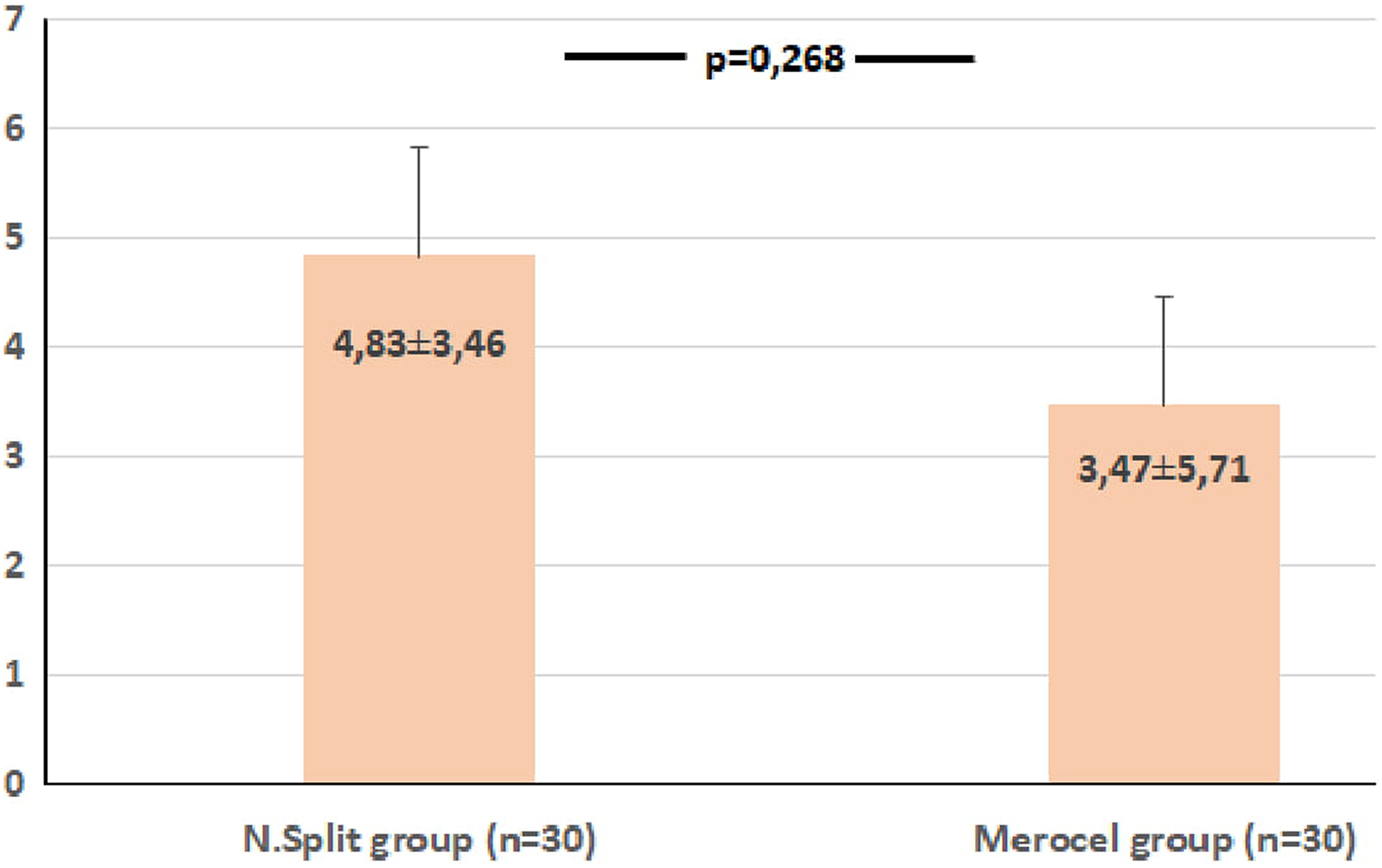
Difference in mucociliary activity by types of tampon.
Discussion
Septoplasty is one of the most frequently performed surgeries in otolaryngology clinics. Packing is placed after surgery in order to stabilize the septum and to prevent bleeding and septal hematoma. There are many types of packing, such as Merocel, rapid rhino, and nasal splint. 7,8 Our clinic also uses Merosel and nasal splint as in many other centers.
The packing is important to achieve the best outcome from treatment and to minimize the anxiety of patient after septoplasty. Nasal packing provides advantages such as hemostasis and may cause significant discomfort while supporting the nasal skeleton. Therefore, the optimal packing should be determined for the patient.
The literature includes variable information about the use of nasal packing in septoplasty. In some studies where different packing materials or only sutures were used, no significant results were obtained in terms of bleeding or septal hematoma formation. 9 –12 On the other hand, there are other studies that emphasize the importance of nasal packing. 6
A study comparing the efficacy of nasal packing after septal or turbinate surgery suggested that paraffin gauze or Telfa results in less discomfort and bleeding compared to Merocel, and that Telfa also does not produce granuloma. 13
Watson et al 14 reported that the insertion of a balloon buffer causes more adhesion and nasal obstruction. Other investigators also suggested that mucosal ischemia leads to dangerous consequences due to excessive pressure exertion of the balloon. 9 Illum et al 15 showed that there was more bleeding after removal of Merosel packing with a ventilation tube.
It was suggested that Merocel packing leads to more discomfort and more bleeding when compared to surgical packing in another publication. 16 As seen in these studies, the packing materials were compared based on the patient’s comfort, level of bleeding, and complications in general.
Recently, packing and transseptal sutures were compared with mucociliary clearance and sensory odor, but no difference was found. 17 In the literature, there is no study comparing the effect of nasal packing type on smell sensation in the early period.
A difference was found between the 2 types of packing especially in the early stages of the tests in our study. In the late period, odor and mucociliary functions of the patients were improved because of the operation; therefore, we think that only the early period is appropriate to evaluate the packing material.
This study was conducted to evaluate the efficiency of the mucociliary activity and odor functions in the early postoperative period based on the packing material type after septoplasty. The olfactory sensations and mucociliary functions were compared 2 weeks later; thus, the nasal functions were examined without the effects of any other factor and only the packing types were compared.
Conclusion
The use of nasal splint packing in patients who underwent septoplasty was found to be better than the early odor and mucociliary functions of the patient. In addition, this study reveals that septoplasty surgery increases odor and ciliary activity of the nose.
Footnotes
Authors’ Note
The authors have obtained permission from the ethics committee of the university.
Declaration of Conflicting Interests
The author(s) declared no potential conflicts of interest with respect to the research, authorship, and/or publication of this article.
Funding
The author(s) disclosed receipt of the following financial support for the research, authorship, and/or publication of this article: Received financial support from BAP (scientific research project) of the university.
