




Abstract
Pneumothorax (PNT) and pneumomediastinum (PMT) induced by foreign body (FB) aspiration in children is a rare but potentially life-threatening event. This situation may not be diagnosed in time due to its rarity and atypical presentation in some cases. Accurate and timely diagnosis is essential in order to provide adequate treatment and avoid long-term morbidity. 1
Case presentation
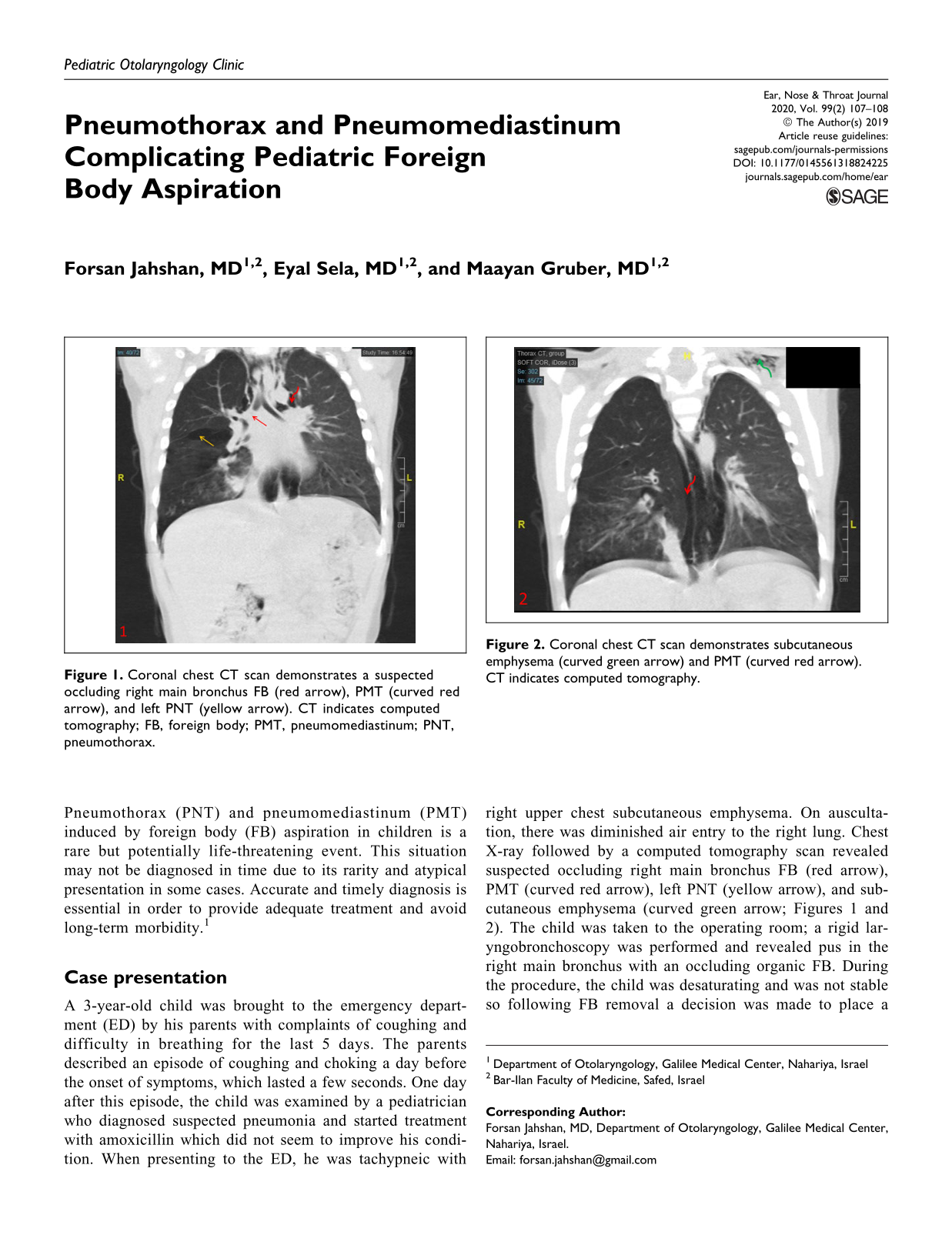
A 3-year-old child was brought to the emergency department (ED) by his parents with complaints of coughing and difficulty in breathing for the last 5 days. The parents described an episode of coughing and choking a day before the onset of symptoms, which lasted a few seconds. One day after this episode, the child was examined by a pediatrician who diagnosed suspected pneumonia and started treatment with amoxicillin which did not seem to improve his condition. When presenting to the ED, he was tachypneic with right upper chest subcutaneous emphysema. On auscultation, there was diminished air entry to the right lung. Chest X-ray followed by a computed tomography scan revealed suspected occluding right main bronchus FB (red arrow), PMT (curved red arrow), left PNT (yellow arrow), and subcutaneous emphysema (curved green arrow; Figures 1 and 2). The child was taken to the operating room; a rigid laryngobronchoscopy was performed and revealed pus in the right main bronchus with an occluding organic FB. During the procedure, the child was desaturating and was not stable so following FB removal a decision was made to place a chest tube and intubate. He was transferred to the pediatric intensive care unit and successfully extubated on the following day. Chest tube was removed 2 days later. A follow-up X-ray was normal. The child was discharged with normal vital signs and free of symptoms.
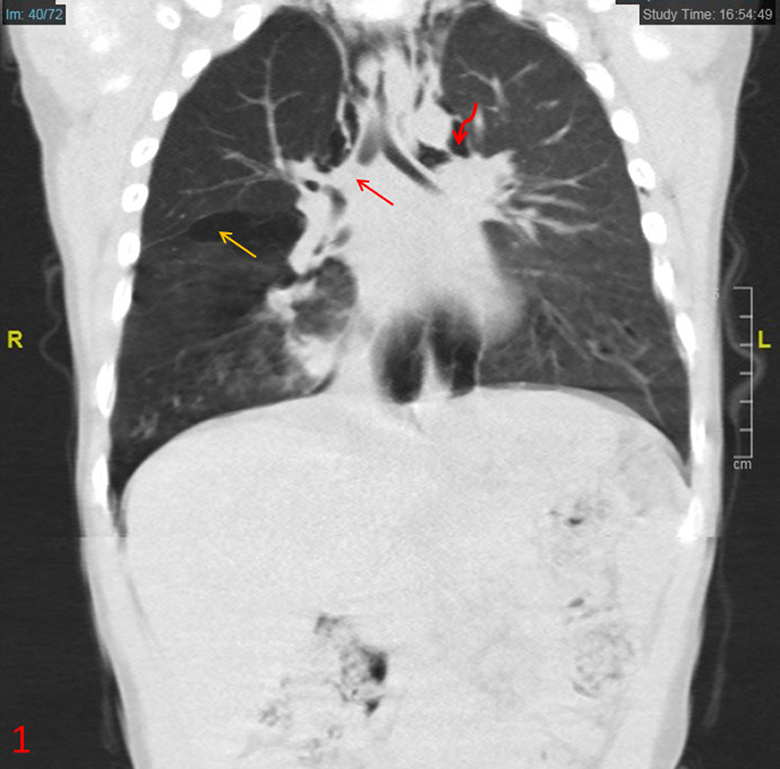
Coronal chest CT scan demonstrates a suspected occluding right main bronchus FB (red arrow), PMT (curved red arrow), and left PNT (yellow arrow). CT indicates computed tomography; FB, foreign body; PMT, pneumomediastinum; PNT, pneumothorax.
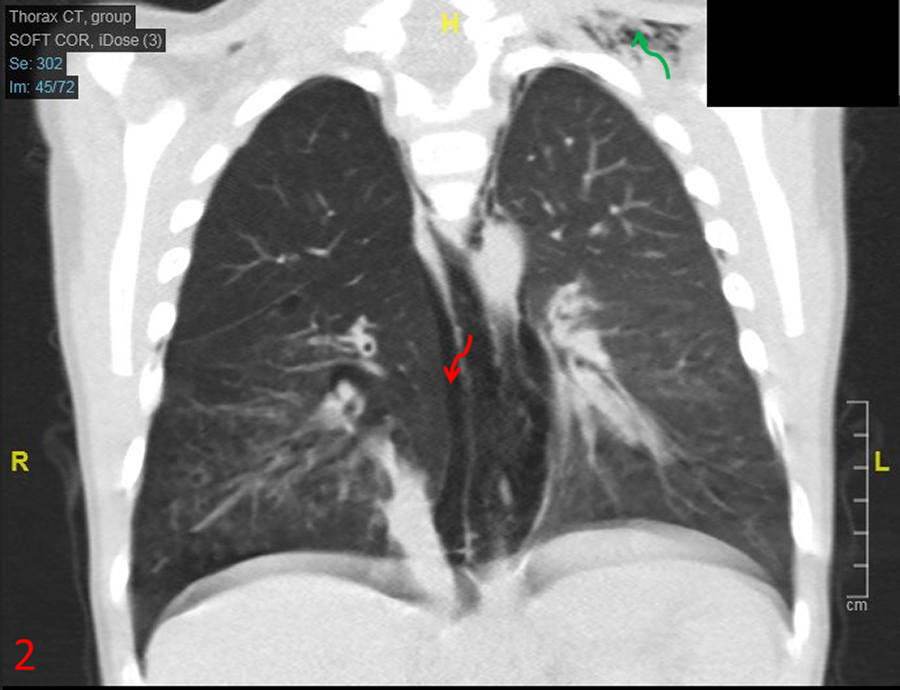
Coronal chest CT scan demonstrates subcutaneous emphysema (curved green arrow) and PMT (curved red arrow). CT indicates computed tomography.