



Abstract

Becoming Ear, Nose & Throat Journal's Rhinoscopic Clinic editor in 1993 is only one of Dr. Eiji Yanagisawa's many accomplishments. He recalled many of the fond memories of his career during a Festschrift held in his honor in May of 2013 by the Connecticut ENT Society. The meeting was organized by his son, Dr. Ken Yanagisawa, and brought together many of his distinguished colleagues and former residents to recognize and honor his 50 years as an academically oriented otolaryngologist in private practice.
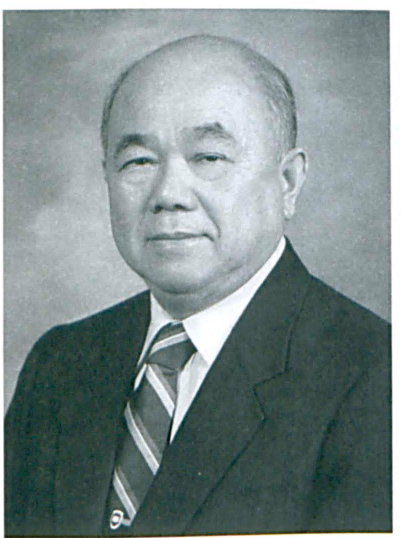
Dr. Yanagisawa was born in 1930 in Yokohama, Japan. After graduating from Nihon University School of Medicine in Tokyo in 1955, he applied for a residency in Otolaryngology at Yale University. He was accepted by the late Dr. John A. Kirchner, the chief of the Section of Otolaryngology, and came to the United States in 1956 on a Fulbright Travel Grant to begin his residency.
After completing his residency in 1959, Dr. Yanagisawa remained at Yale as an instructor of Otolaryngology (1959-1961). He did an internship at Hospital of St. Raphael in New Haven, Connecticut, in 1962. He began his private practice in 1964. He has been a Clinical Professor of Otolaryngology at Yale since 1983.
In the mid-1970s, he established the Woodbridge ENT Studio in the basement of his home, to be used primarily for resident teaching. He encouraged residents to come there and work when off-duty or on weekends. He says, “I enjoy working with residents because they are willing to work and they are a constant source of new ideas.” His love for teaching and his skill as a teacher resulted in his receiving multiple Teacher of the Year awards.
It is no wonder that the Festschrift event's theme was “The Art of Otolaryngology: How Images Enhance Education.” Education and photodocumentation are the hallmarks of Dr. Yanagisawa's distinguished career.
In his half-century as an otolaryngologist, Dr. Yanagisawa, the educator, has trained more than 100 Otolaryngology residents. He has authored or coau-thored more than 358 articles, 80 book chapters, and 4 books. He made 233 presentations, created 77 teaching videos or DVDs, presented 19 scientific exhibits, and developed the American Academy of Otolaryngology–Head and Neck Surgery's (AAO–HNS) ENT Image Viewer and its slide lecture series.
Dr. Yanagisawa, the photographer, first became interested in medical photography during his residency. He was stimulated by the late Dr. John A. Kirchner and Dr. Howard W. Smith, both excellent teachers. In order to obtain ideal ENT images, he experimented with almost all methods of photography, cinematography, and videography. His development of videography/videoendoscopy began in 1975, when he bought a video camera for making family videos. He soon realized he could use it for videography of the larynx. His first success with videoendoscopic documentation was achieved in April of 1977, when he used it to illustrate a case of verrucous carcinoma of the larynx. It was he who coined and popularized the term videolaryngos-copy (1981). He came to be recognized as a pioneer in videography in Otolaryngology.
During the 1980s and 1990s, Dr. Yanagisawa expanded his use of videoendoscopy to include otoscopy, rhinoscopy, nasopharyngoscopy, pharyngoscopy, hypo-pharyngoscopy, and videostroboscopy. He has received many awards for his videographic work, including the Graham Eddy Award for “Videotape Recording of Micro-Laryngeal Surgery” (1980); First Place Award for “Video Laryngoscopy Using a Rigid Telescope and Video Home System (VHS) Color Camera” (1981); and another Graham Eddy Award for “Videography of the Larynx: Fiberscope or Telescope” (1985), all from the Biological Photographic Association. In addition, he received the Silver Medal Award for the videotape “Contribution of Aryepiglottic Constriction to ‘Ringing’ Voice Quality–Videolaryngoscopy with Acoustic Analysis” at the Fourteenth World Congress of Oto-rhinolaryngology and Head and Neck Surgery, Madrid, Spain (1989). He also received the Second Prize Award at the Meeting of the European Rhinologic Society and International Symposium of Infection and Allergy of the Nose (ISIAN) for the videotape “Anatomical Consideration for Powered Dissection of the Paranasal Sinuses,” Vienna, Austria (1998).
Dr. Yanagisawa has been recognized with Lifetime Achievement Awards from the AAO–HNS in 2003 and also from the Politzer Society in 2007. He received Presidential Citations from the American Otological Society in 1995, the AAO–HNS in 1999, the Triologi-cal Society in 2006, and the American Laryngological Association in 2002 and 2011.
Dr. Yanagisawa retired from private practice in January 2013. To honor and forever remember his contribution to the field of Otolaryngology, an endowment fund through Yale University School of Medicine has been created, named Dr. Eiji Yanagisawa Lectureship and Resident Travel Fund. This fund will sponsor the guest lecturer for each year's Resident Research Day and provide travel funds to chief residents for attendance at a major national meeting during their senior year.
A separate fund, entitled The AAO-HNSF Eiji Yanagisawa, MD International Visiting Scholar Endowment, has also been created to honor his commitment to the international mission of the AAO-HNSF, to encourage collaboration and education among Otolaryngologists throughout the world. An international Otolaryngologist will be awarded with participation in the AAO-HNSF Annual Meeting, and a two-week observership at a Center of Excellence in the United States.
A book could be written about Dr. Yanagisawa's 50 years as an otolaryngologist, and in fact he plans to write one. He also will continue serving as one of the editors of ENT Journal's Rhinoscopic Clinic, much to the delight of the journal's publishers and editors. In his retirement, he looks forward to refining and landscaping the Japanese garden at his home.