




Abstract
Public Administration (PA) as an academic discipline has traditionally been anchored in the principles of state-centric governance, national implementation policies, and the management of domestic public affairs. However, the rise of global and transnational governance has significantly reshaped the context in which public administrators operate. This reality has a direct bearing on the corpus of knowledge taught in PA and the teaching thereof. Preparing for new governance realities and their demands necessitates a review of the competencies that prospective civil servants should have to navigate global and transnational affairs. The purpose of this article is to explore the potential influence of global and transnational governance on the corpus of knowledge of PA and its implications for teaching. It comprises an investigation of the dynamic relationship between the changing landscape of global governance structures, the evolving challenges faced by public administrators, and the adaptation of educational curricula and teaching approaches to equip future civil servants with the requisite competencies, skills, and knowledge. The findings made and the recommendations offered underscore the need for a comprehensive and multidisciplinary approach to PA teaching in the era of rapid globalisation.
Keywords
Introduction
The emergence of global and transnational governance against the backdrop of globalisation has led to multinational forms of PA praxis. National state bureaucracies remain foundational, but the functions and style of state institutions have been significantly reshaped by the new and expanding structures created under the influence of accelerating globalisation. The latter has radically shifted the domestic priorities of PA by expanding the locus of action, both above and beyond states. As a result, the boundaries between disciplines and between the public, private and supranational spheres have become increasingly blurred. The PA study field has emerged as a reliable example of the resultant overlapping matrix of study foci. These trends necessitate new scholarly conversations about the content of training programmes and qualifications in PA, since prospective civil servants need to be suitably prepared for the complexities and demands that the global dynamics and transnational engagement bring. In this respect, Moloney and Stone (2019, p.104) aptly point out that ‘…by expanding the analytical, theoretical, conceptual, and even pedagogical approaches to include the kaleidoscope of global governance actors, levels of analysis, sectors, and concepts, not only is [PA] research enhanced and deepened, but our ability to engage this complexity is enhanced’. Coen and Pegram (2015, p.417) furthermore propose that a ‘third generation of global governance research’ is essential. Moreover, Manoharan et al. (2018, p.34) lament the fact that PA graduate programmes ‘do not adequately respond’ to the challenges and opportunities that global governance beget.
Both global and transnational governance could have a significant influence on the practice of national public administration, as well as on the study and teaching of PA as a scholarly domain. However, an analysis of this influence is potentially arduous, given the fact that the discourse concerning issues related to globalisation in general and global and transnational governance in particular reveal a plurality of vantage points. Globalisation, for example, is typified as ‘liquid society’ (Bauman and Haugaard, 2008), ‘multiple modernities’ (Eisenstadt, 2000), ‘glocality’ (Khondker, 2005), ‘global imaginaries’ (Appadurai, 1996), and ‘death worlds’ (Mbembe, 2019). As far as the influence of global and transnational governance on PA is concerned, Moloney and Stone (2019) propose the development of ‘Transnational Administration’ as a new study domain, while Finnemore (2021) considers the lessons that global governance can learn from PA. Bauer et al. (2017), in turn, explore the challenges and lessons to be extracted from ‘international bureaucracy’ for PA research. In addition, Ashley et al. (2020) consider ways in which PA theory should be developed for global governance. However, few studies comprise a consideration of the particular knowledge, skills, and competencies that should be imbedded in under- and postgraduate studies in PA as a result of the multifaceted demands brought about by global and transnational governance. Existing PA programmes are usually domestically focused. The field remains primarily rooted in state-centred civil service bureaucracies, functions, and processes, as well as in domestic laws governing the execution of public policy. Conventionally, the study domain is focused on the hierarchical chains of authority and structures of the state. However, as a review of the publications of the schools represented in the Association of Professional Schools of International Affairs (https://apsia.org) reveals, global and transnational governance introduced notions of ‘polyarchical’ forms of governance, whereby governments interact with international agencies, business, non-governmental organisations, and civil society actors on many fronts. This network form of governance demands a shift from national to supranational PA study content. The geo-political, developing and economic contexts within which these networks operate should, however, be considered. For example, the relative strong economic and political integration of countries in Western Europe may demand greater emphasis on transnational governance competencies in PA curricula than those in developing countries like Africa where the focus on global political alignment and economic integration may be more important.
Following an exploratory literature review and desktop survey, the purpose of this article is to investigate the potential influences of the emergence of global and transnational governance on PA praxis and to propose a competency framework that should become imbedded in formal teaching programmes and qualifications.
The emergence of global and transnational governance
Krauss (2010) and Ferrari and Pagliari (2021) aptly point out that no country is an island. Countries simply cannot afford to become isolated from global affairs and concerns for a myriad of interconnected political, economic, social, and environmental reasons. Political isolationism can, for example, undermine a country’s diplomatic influence and weaken its security posture. Engagement in global affairs enables nations to build alliances, negotiate treaties, and collaborate on security matters (Alam, 2015). Isolationism could lead to diplomatic seclusion and hinder a country’s ability to address security threats collectively. Moreover, economically, countries cannot become isolated from international trade networks, global supply chains, and foreign direct investment opportunities. As such, global engagement has become an essential success factor for the sustainability and prosperity of nations. Engaging with global governance structures can also increase the transparency and accountability of national governments (Wang and Ran, 2023). They might, for example, be required to report on their internal affairs, policies, and progress in meeting international commitments and treaties, which can enhance their domestic legitimacy by demonstrating accountability to their citizens.
The intricate relationship between the strong forces of globalisation and the emergence of global and transnational governance is underscored by scholars such as Baylis and Smith (2014), Ezcurra (2012), Garrad (2018), and Weiss and Wilkinson (2014b). This interconnection accentuates the multifaceted nature of globalisation, which extends beyond economic factors to encompass the political, social, and cultural dimensions. In essence, globalisation has catalysed the emergence of global and transnational governance principles, practices, and mechanisms as a response to the challenges and opportunities presented by an increasingly interconnected world.
Global governance encompasses a diverse array of actors and institutions, including international, regional (e.g., African and European Unions), and the non-governmental organisations and networks of state and non-state actors. These entities facilitate interstate negotiations, set governance norms and standards, and coordinate policies and actions across borders (O’Toole, 2014). They also serve as platforms for diplomatic dialogue, conflict resolution, and collective decision-making (Stone and Ladi, 2015).
Global and transnational governance are closely related concepts but have distinct characteristics, scopes, and functions. Global governance generally refers to the systems, processes, and institutions that facilitate cooperation and decision-making at the global level (Jang et al., 2016). It is intended to address issues that have global implications or require global solutions, such as climate change, global health, international security, and trade (Lesage and Van de Graaf, 2015). The key feature of global governance is that it transcends national borders and involves a collective approach to problem-solving on a global scale. The focus of transnational governance, on the other hand, is on governance structures and mechanisms that operate across borders but do not necessarily cover the entire globe. It encompasses various forms of cooperation and regulation among non-state actors, multinational corporations, and civil society groups, which collaborate on specific issues that span multiple countries (Westerwinter, 2022). Roger and Dauvergne (2016, p.416) maintain that transnational governance often emerges in response to interstate issues such as regional trade, cross-border conflict, labour standards, environmental protection, and joint infrastructure development projects. The coordination of regional programmes and cooperation between countries of the European Union and the Southern Africa Development Community member states serves as an example of transnational governance.
It could be argued that global governance provides a framework for international cooperation, while transnational governance operates across borders, often complementing global efforts and filling gaps in governance (Kim et al., 2014). Both forms of governance are essential in managing complex global issues and promoting cooperation among diverse actors.
Transnational collaborations can take various forms, including international treaties, agreements, and conventions. When states voluntarily enter into international treaties and agreements, they commit to adhering to specific rules and standards. These commitments can limit a state’s ability to act unilaterally and influence its domestic policies and laws (Hickmann and Elsässer, 2020: p.450). While there is no functioning global government in existence, various international organisations and agreements exert influence over state sovereignty. Some of the most prominent organisations in this regard are the following: • The United Nations (UN), with specialised agencies such as the World Health Organisation and the UN Educational, Scientific and Cultural Organisation. • The World Bank, the International Monetary Fund, and World Trade Organisation, which provide technical assistance, funding, and expertise to national governments. • The European Union, which focuses on economic integration, political cooperation, and the promotion of shared values among its member states. • The African Union, which is aimed at the political and socioeconomic integration of the continent, protecting the sovereignty and territorial integrity of member states, promoting African interests, and encouraging international cooperation.
Balancing the interests of member states with the unitary organisation’s objectives can be challenging, leading to disagreements and deadlock. Multilateral organisations might also exert undue pressure on governments for national policy changes by withholding funding and development aid, diplomatically isolating countries, and through economic sanctions. However, in some cases, national governments voluntarily delegate authority to supranational organisations to govern areas such as trade regulations, monetary policy, and environmental standards. This can reduce the absolute authority of individual nation-states in those areas.
It is important to note that the extent to which global and transnational governance mechanisms influence state sovereignty can vary widely. The extent of these effects depends on various factors, including the specific issue area, the willingness of nations to cooperate, and the degree of international engagement by governments (Hale and Held, 2011). Some states voluntarily engage in international cooperation and willingly accept limitations on their sovereignty to achieve common goals, while others might resist such influence and prioritise their national sovereignty above all else. The balance between sovereignty and international cooperation is a complex and ongoing issue in global politics.
The influence of global and transnational governance on the corpus of public administration knowledge
Focusing on the potential influence of global and transnational governance on the expanding body of knowledge of PA as study domain, a key point of departure is that global engagement fosters the exchange of the knowledge and information that shape domestic policies and inform government strategies and programmes. Similarly, from a disciplinary perspective, international collaboration and engagement enrich the ways in which academics view and teach PA content.
The advent of globalisation has engendered a myriad of complex challenges, including transnational policy issues, global governance arrangements, and intergovernmental cooperation. PA scholars have increasingly recognised the need to broaden the scope of their research to encompass these global dimensions (Jeong and Kim, 2019). Topics such as international public management, global policy analysis, and the study of international organisations have become integral to the evolving corpus of PA knowledge (Hou et al., 2011). Furthermore, global and transnational governance challenges often transcend traditional disciplinary boundaries. PA teaching has responded in some ways by adopting a more multidisciplinary and interdisciplinary approach (Van der Waldt, 2014). Incorporating insights from adjacent study domains such as international relations, economics, sociology, politics, and environmental studies has become essential to understanding the intricate web of global governance and its impact on PA practices (Stone and Moloney, 2019).
Current and prospective public administrators are increasingly required to navigate governance networks that include not only national governments, but also non-state actors such as international organisations, NGOs, and multinational corporations (Klijn & Koppenjan, 2012). The study of collaborative and network governance has gained prominence within PA research, reflecting the changing landscape of governance structures (Wang and Ran, 2023). In addition, global and transnational governance challenges demand a nuanced understanding of policy analysis and implementation (Voets et al., 2021). PA learning programmes should, thus, adapt to emphasise the development of skills related to diplomacy, policy implementation assessments, transnational coordination, international relations, and cultural sensitivity.
Senior government officials and, by implication, students of PA require the ability to anticipate international security threats, understand the dynamics of cross-border conflict, and engage in diplomacy to prevent or resolve crises. A well-prepared cadre of officials can, thus, contribute to global stability and peace, safeguarding not only national interests but also international security.
Diplomacy is commonly regarded as a cornerstone of global and transnational governance (Cooper et al., 2008; Legrand and Stone, 2018). Senior officials should, therefore, master the art of negotiation and international protocol to build productive relationships with counterparts from diverse backgrounds (Goritz et al., 2021). Effective diplomacy hinges on the ability to communicate persuasively and build consensus on complex issues. Senior officials should be culturally sensitive and competent, and aware of ethical considerations in international relations. They should also be prepared to address issues related to human rights, social justice, and equality.
A further potential influence of global and transnational governance is the way in which policy learning and innovation in national PA are facilitated. As countries learn from the experiences of others and adopt best practices from around the world, they can improve their own policy and administrative practices (Legrand and Stone, 2021). International organisational and scholarly networks usually serve as valuable platforms for sharing such knowledge and expertise. Policy learning and innovation involve the continuous adaptation and improvement of policies and practices in response to changing circumstances, new information, and evolving challenges. This enables government administrations to continuously improve policies, adapt to new circumstances, and find innovative solutions to pressing problems.
Evidence of the influence of global and transnational governance and the preparation of prospective civil servants can be found in the scope and nature of existing international collaborative efforts in PA. The International Institute of Administrative Sciences, for example, continuously identifies themes through a set of international working groups. These themes cover issues such as international administration and development, administrative reform and modernisation, and PA and democracy. In addition, the International Association of Schools and Institutes of Administration has individual members and more than 170 institutions in 70 countries, plus several international organisations. Furthermore, the mission of the International Public Management Network is to provide a forum for sharing ideas, concepts, and the results of research and practice in the field of public management, and to stimulate critical thinking about alternative approaches to problem solving and decision making in the public sector. Other initiatives to foster international collaboration and engagement in the scholarly domain include the following: • The UN’ comprehensive information network for public administration, known as the UN Public Administration Network • The European Group of Public Administration • Commonwealth Association for Public Administration and Management • The African Civil Services Observatory • The African Training and Research Centre in Administration and Development • The Arab Administration Development Organisation • Caribbean Centre for Development Administration • Eastern Regional Organisation for Public Administration • African Institute for Economic Development and Planning • The Network of Institutes and Schools of Public Administration in Central and Eastern Europe • The European Institute of Public Administration • The Organisation for Economic Cooperation and Development’s Public Management Committee (PUMA)
Further evidence of recognition of the changing nature of PA and the need to suitably prepare civil servants for the dynamics associated with global and transnational governance can be found in the scope, nature, and content of journals and textbooks. Since the mid-1990s, several academic journals have been established, with a focus on global PA and administrative concerns beyond individual states. Examples of these journals are: • Asia Pacific Journal of Public Administration • Global Affairs • Global Constitutionalism • Global Environmental Politics • Global Governance: A Review of Multilateralism and International Organisations • Global Networks and Global Social Policy • Global Policy • International Review of Administrative Sciences
In response to the evolving field, PA educators have to constantly update their curricula and teaching practices. Methodologies such as case-based learning, international field experiences, and simulation exercises have become valuable tools for preparing globally-minded students to tackle global and transnational governance issues effectively. Case-based learning typically involves presenting students with real or simulated scenarios that mimic the challenges they might face in the global arena (Kaur et al., 2020). These cases require students to apply theoretical PA knowledge to practical situations. It promotes critical thinking and problem-solving skills as students analyse complex, multidimensional issues. They are generally expected to consider various perspectives, evaluate evidence, and propose solutions, mirroring the complexities of global governance (Sartania et al., 2022). International field experiences, in turn, provide students with firsthand exposure to global governance challenges by allowing them to work on real-world projects, in internships, or to study in different countries (Lee, 2011). Such exposure usually fosters cultural competence and an understanding of diverse perspectives, which are crucial in navigating the complexities of global and transnational governance, in which diverse cultures, ideologies, and values often intersect (Biasutti et al., 2021). Students can establish valuable international networks and collaborations during these experiences, which can be instrumental in their future careers in public administration. Similarly, simulation exercises create immersive learning environments in which students can experience the intricacies of global governance decision-making without real-world consequences. They can experiment with various policy approaches and strategies, learning from both successes and failures in a safe, controlled setting (Lateef, 2010). These innovative teaching tools and methods have become crucial in preparing students for the challenges of global and transnational governance in a PA study context. They foster practical managerial skills, global perspectives, and adaptability, ensuring that future public administrators are well-equipped to address complex and interconnected issues.
Teaching is further enhanced by means of advances in technology, which facilitates, for example, virtual collaboration among students from different parts of the world through online platforms, video conferencing, and other collaborative tools (Casanova et al., 2011). Technology also widens access to a wealth of global resources, including research papers, reports, and data bases, enabling students to stay informed about global and transnational governance issues and draw from a diverse range of perspectives (Daniela, 2021).
Considering these and other new teaching realities, Fleischer and Reiners (2021) argue that the establishment of international representative consortia is necessary to jointly develop and present PA programmes in global and transnational governance. In turn, Bauer et al. (2018, p.15) maintain that ‘administrative internationalisation receives scant attention’ and that PA scholarship ‘remains a prisoner of the word “state”’. It has, thus, become imperative to adequately prepare current and prospective civil servants for the realities, concerns, and demands emerging from global and transnational governance.
Preparing for global and transnational governance: towards a competency framework for civil servants
Senior civil servants increasingly operate in an era marked by unprecedented global complexities, including climate change, transnational terrorism, and pandemics. As stated above, these challenges transcend national borders and necessitate international cooperation and diplomacy. Therefore, senior public officials must be equipped with a deep understanding of these global issues, their root causes, and their implications to craft effective policies and engage constructively in global forums.
The preparation of senior civil servants for network forms of engagement in global and transnational governance implies that they should acquire the requisite competencies, skills, and knowledge to excel in the international arena. As confirmed by Meerts (2015), suitably skilled civil servants play a pivotal role in safeguarding their nation’s interests in international negotiations and forums. Mastery of international trade, finance, diplomacy, and international law, for example, is crucial for advocating and protecting national interests while fostering collaboration with other countries. Without this expertise, nations could find themselves at a serious disadvantage in the global landscape. It is, thus, essential to design a suitable competency framework to imbed these knowledge demands and skills in the curriculum of PA teaching programmes and qualifications.
A competency framework within the realm of training, development, and skills enhancement for senior civil servants (i.e., public managers) should constitute a structured and comprehensive system that delineates the requisite knowledge, skills, abilities, and behaviours essential for the effective performance of managerial roles within the public sector (Kakemam and Liang, 2023; Virtanen, 2000). Rooted in the principles of human resource management and organisational development, such a framework will offer a systematic approach to talent management and professional growth by aligning individual capabilities with organisational objectives, ultimately fostering the cultivation of a proficient and adaptive public management cadre (Midhat Ali et al., 2021; Rao and Palo, 2009; Rodriguez et al., 2002). The competency framework should transcend a mere list of job-related skills and instead comprise a holistic perspective, encompassing cognitive, technical, interpersonal, and leadership proficiencies (Benayoune, 2017; O’Brien and Robertson, 2009).
Competency frameworks typically consist of several interrelated components. First, they delineate core competencies, which encapsulate the foundational proficiencies requisite for all public managers irrespective of their specific roles or domains (Jolee and Chapman, 2010). Such core competencies might encompass the ability to analyse complex policy issues, communicate effectively, exhibit ethical leadership, and foster collaboration within and across agencies (Rao and Palo, 2009). Additionally, they incorporate role-specific competencies that are tailored to the distinct responsibilities and functions associated with various positions in public management, ranging from budgeting and financial management to programme evaluation and public engagement (Ashkezari and Aeen, 2012). These competencies are attuned to the unique demands and challenges of each managerial role, ensuring that individuals are equipped with the necessary skills to excel in their designated functions. Consequently, a competency framework might serve as basis for the design of programme and qualification curricula (Van der Waldt et al., 2018).
With a competency framework as basis, the curriculum design of formal qualifications and university programmes is a complex and multifaceted process that requires careful consideration of various educational and teaching principles, pedagogical approaches, and societal demands. It represents the intentional and systematic planning of what and how students will learn within a specific academic discipline or field of study (Hrivnak, 2019). At its core, curriculum design is a deliberate and purposeful endeavour in which one seeks to align educational objectives, teaching content, instructional strategies, and assessment methods to facilitate meaningful and transformative learning experiences (Knight, 2001). It transcends mere content delivery, encompassing a holistic approach to shaping the intellectual, ethical, and practical development of the students. To achieve these overarching goals, curriculum designers typically draw from educational theories, philosophies, and empirical research to inform their decisions (O’Meara and Vaidya, 2021).
One fundamental aspect of curriculum design is the establishment of clear and measurable learning outcomes (Knight, 2001). These outcomes indicate what students are expected to know, understand, and be able to do upon completing the programme. They serve as the foundation upon which the entire curriculum is constructed, guiding the selection of appropriate teaching content and the design of instructional activities. Learning outcomes also ensure transparency and accountability in education, allowing for assessment of whether the curriculum is achieving its intended goals (O’Meara and Vaidya, 2021).
The selection and structuring of teaching content within a curriculum are pivotal components of design (Saravanan, 2012). This process involves identifying key concepts, theories, and practices that are foundational to the discipline and determining their logical progression (Mohanasundaram, 2018). The curriculum must strike a balance between breadth and depth, providing students with a comprehensive understanding of the subject matter, while allowing for specialisation and depth of knowledge in specific areas.
Assessment strategies are another essential facet of curriculum design. They must align closely with the intended learning outcomes and provide valid and reliable measures of student achievement (Hrivnak, 2019). According to the Ozan and Kincal (2018), various assessment methods, including formative and summative assessments, should be employed to gauge not only students’ knowledge, but also their ability to apply concepts, think critically, and solve complex problems. In this regard, Midhat Ali et al. (2021, n.p.) propose that a competency framework should make provision for five levels of competencies, namely ‘novice, advanced beginner, competent, proficient, and expert’. These levels should be balanced with the required knowledge, standard of work expected, level of work autonomy, and scope of decision making.
Applied to the context of global and transnational governance, the first level, novice, would imply that individuals are exposed to basic concepts associated with global concerns, diplomacy, and international relations. This level is, thus, primarily concerned with the learning of facts and appropriate knowledge regarding their area of specialisation. This is what would typically constitute the teaching component of the first year of study. At the advanced beginner level of competence, it is expected that individuals start to see common situations in real life and can relate to the experiences when faced with similar situations. In other words, in their second year of study, PA students, as prospective civil servants, should be exposed to real-life global or transnational governance examples and be able to apply suitable knowledge to the interpretation thereof. The third level, competent, implies that individuals should be able to make autonomous decisions given a particular situation. This means that PA students need to be exposed to actual cases of engagement with their counterparts in other countries to establish mutually beneficial outcomes. At the proficient level of competence (typically the teaching content of postgraduate programmes), it should be expected that students build on their knowledge, intuition, and own experiences to analyse situations and determine the most suitable approach for optimal solutions concerning global and/or transnational governance concerns. As experts, they will typically be expected to have a systemic and systems perspective regarding the interwoven nature of multiple factors and variables influencing global and transnational cases. They should also be able to engage multilateral institutions and entities to jointly plan and coordinate resources and efforts.
Methodology
An extensive literature review and desktop analysis of the nature, scope, and implications of global and transnational governance revealed several potential competencies that senior civil servants should possess to navigate supranational dynamics and influences on domestic public administrations. It is argued that these competencies should be embedded in the curricula of under- and postgraduate qualifications in PA.
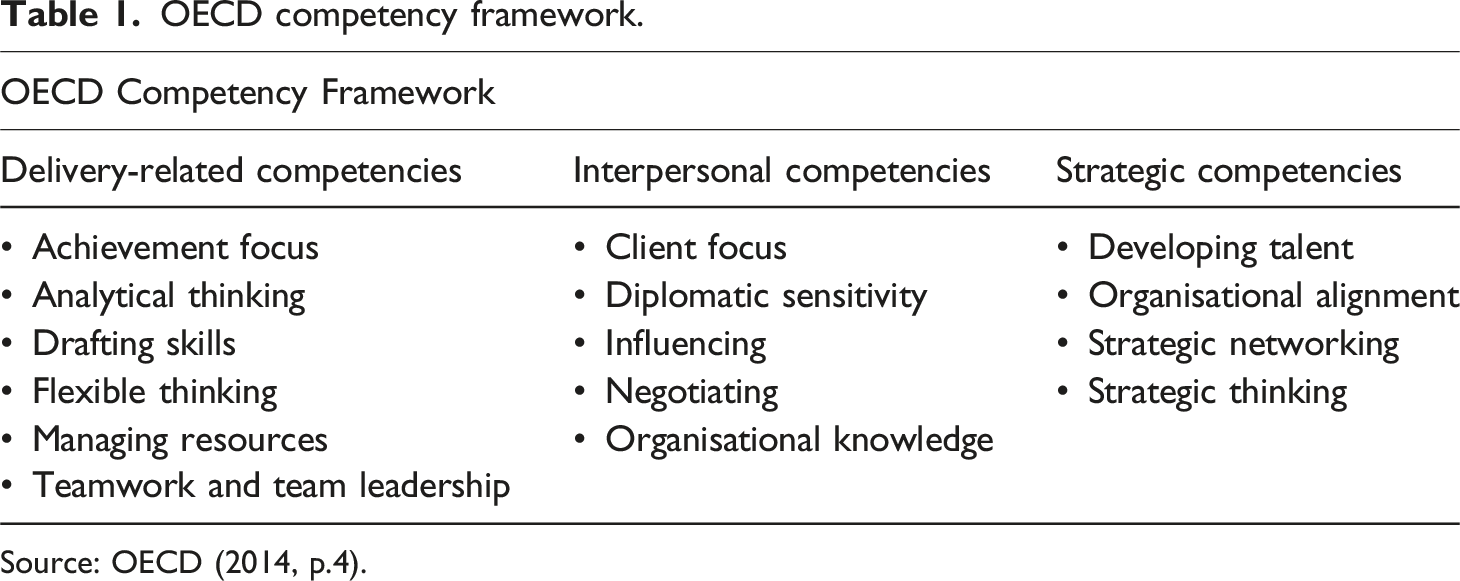
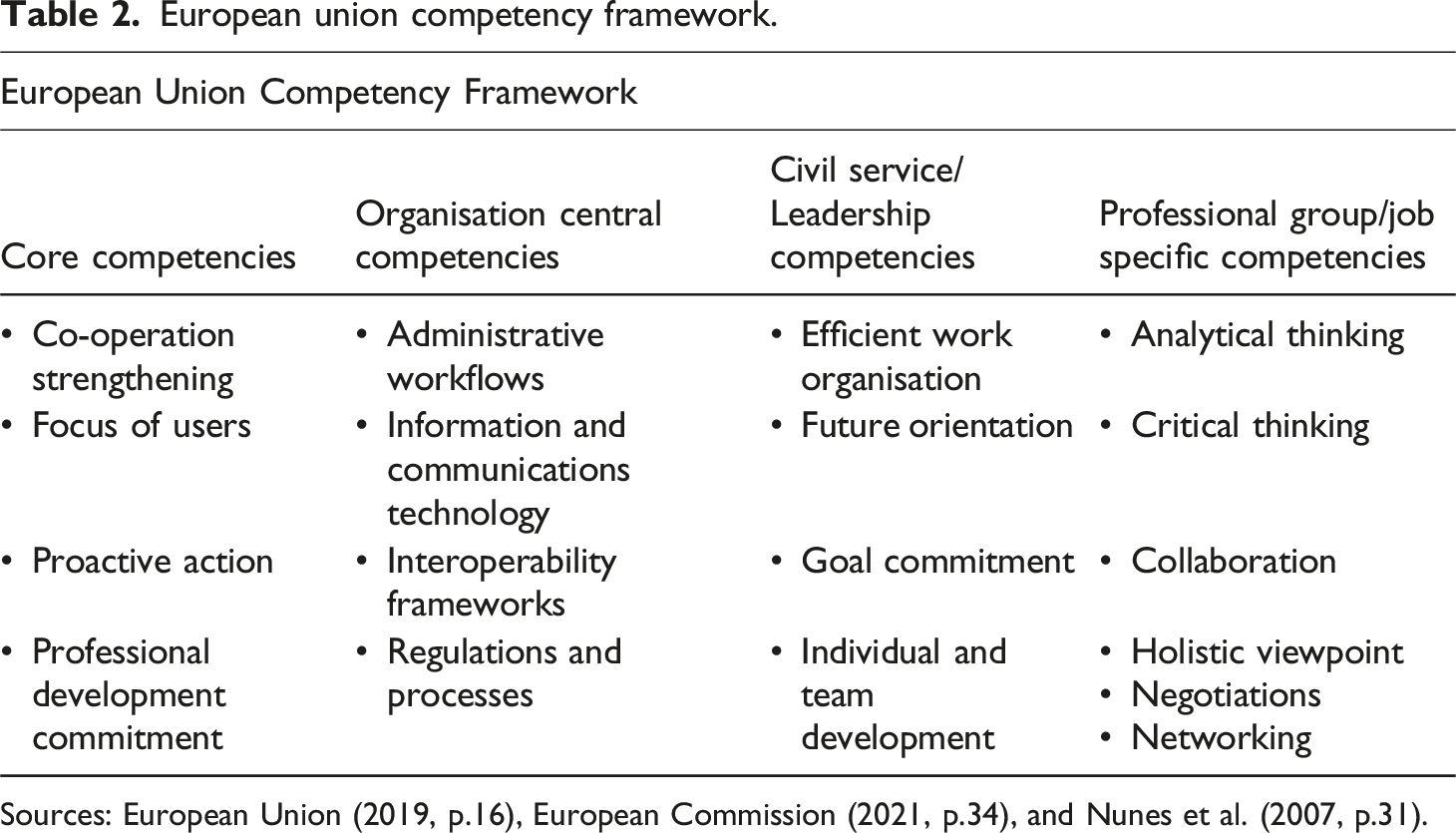
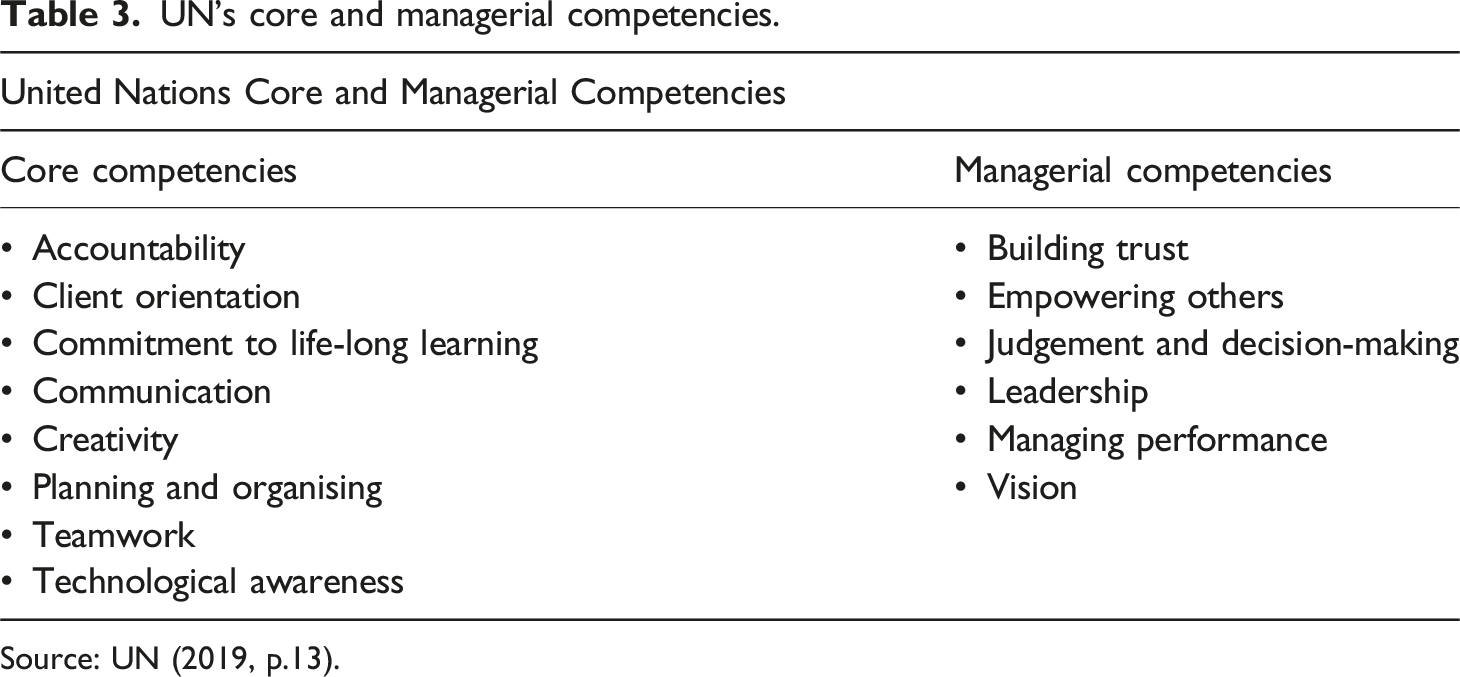
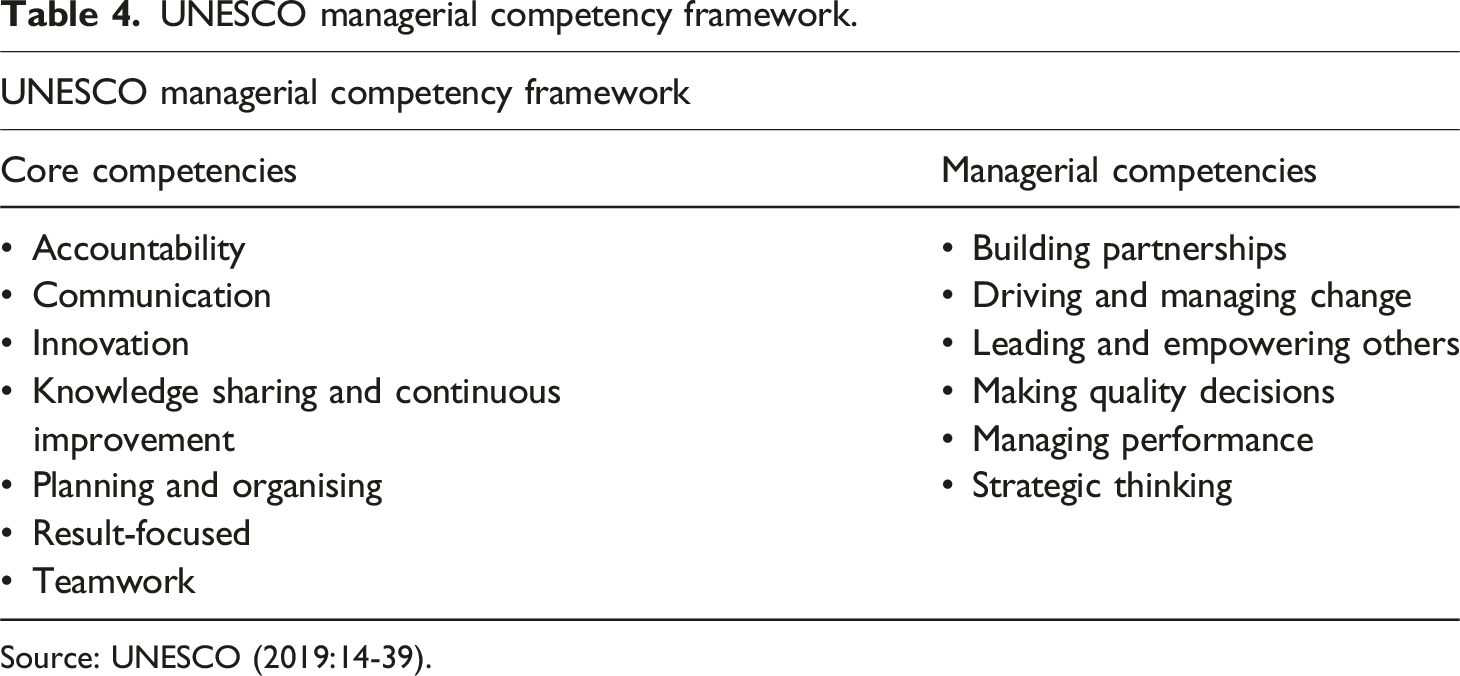
A desktop analysis was undertaken to scrutinise the existing competency frameworks and models pertaining to the generic profile of senior public officials. Core dimensions, elements, and best practices were extracted from these frameworks and models, and then extrapolated to the competencies expected of senior civil servants.
OECD competency framework.
Source: OECD (2014, p.4).
For the purposes of global and transnational governance it could be argued that ‘diplomatic sensitivity, negotiating, strategic networking, and strategic thinking’ are especially critical competencies.
European union competency framework.
Sources: European Union (2019, p.16), European Commission (2021, p.34), and Nunes et al. (2007, p.31).
‘Co-operation strengthening, collaboration, holistic viewpoint, and networking’ can be highlighted as key competencies in the context of global and transnational governance.
As far as the last column (professional group or job specific competencies) is concerned, the European Commission (2021, p.35) makes specific provision for the occupation ‘public administration manager’ and the following two essential occupational skills, in particular, might be relevant for global and transnational governance, namely ‘liaise with politicians’ and ‘maintain relationships with government agencies’.
UN’s core and managerial competencies.
Source: UN (2019, p.13).
UNESCO managerial competency framework.
Source: UNESCO (2019:14-39).
‘Building partnerships’ and ‘strategic thinking’ can be singled out as essential competencies in the context of global and transnational governance.
Although the African Union does not have a generic competency framework for senior public or civil service officials, it developed the ‘African Charter on Values and Principles of Public Service and Administration’ (AU, 2011). Values and principles such as ‘respect for human rights, access to information, efficient and quality service, and preventing and combating corruption’ support the competencies, functioning and behaviour of public officials (AU, 2011, p.11).
SMS competency framework.
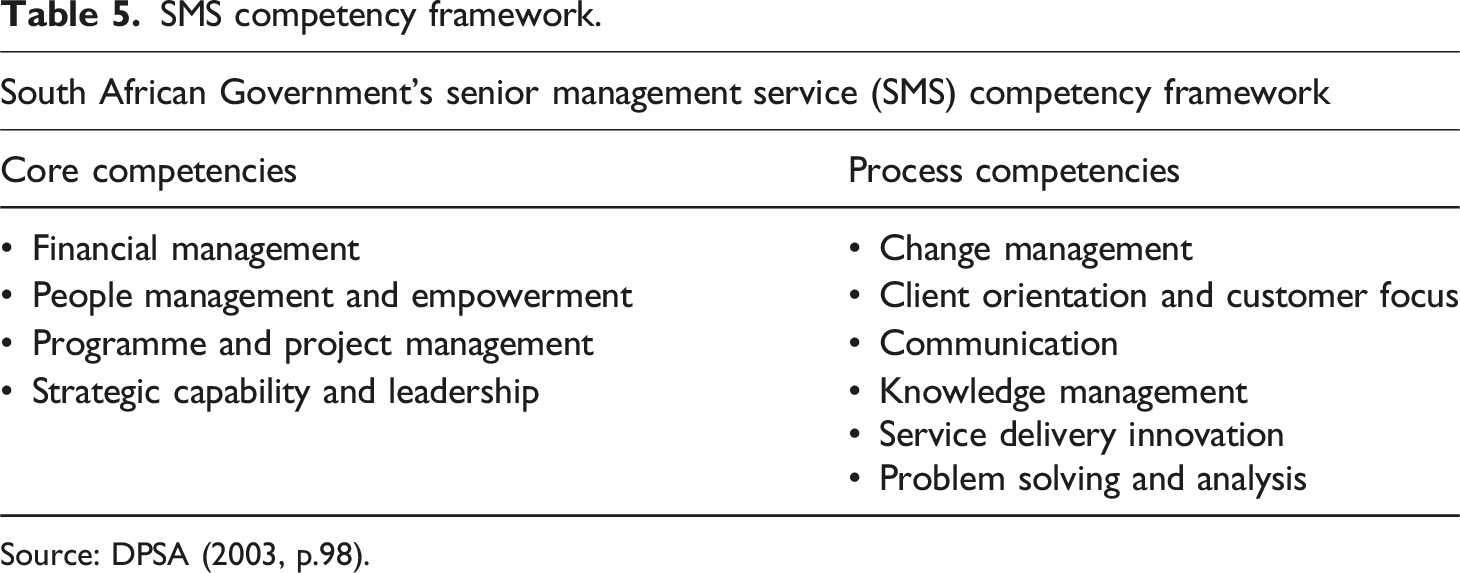
Source: DPSA (2003, p.98).
Combined competency framework for senior civil servants.
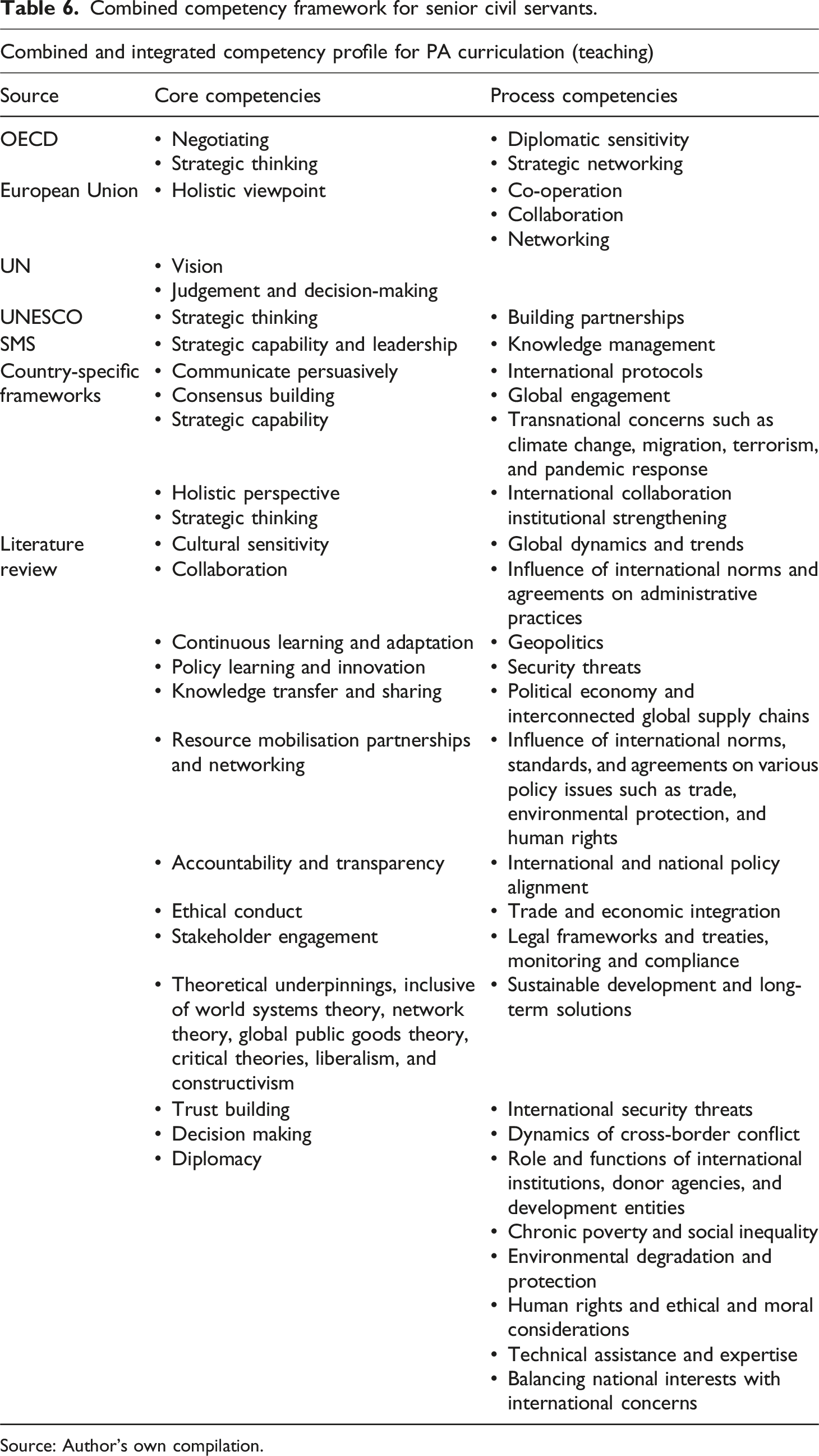
Source: Author’s own compilation.
The core and process competencies indicated above make it evident that the dynamic and broad-ranging aspects associated with global and transnational governance are bigger than a particular discipline. One simply cannot ring-fence it within the confinements of the corpus of knowledge of a particular study domain. Several study domains, such as PA, should contribute their research foci, approaches, principles, and knowledge domains to gain holistic and integrated perspectives.
Recommendations for public administration teaching
The competency domains highlighted above reflect the need to broaden the scope of PA curricula and to adopt innovative teaching methodologies to adequately address the multi- and transdisciplinary nature thereof. The corpus of knowledge of PA should transcend traditional content to incorporate global and regional perspectives. It is, thus, recommended that global and transnational governance become a subfield within PA studies. This recommendation is not novel; it has already been adopted by several universities, including in programmes offered by the J.F. Kennedy School of Government at Harvard University, the Blavatnik School of Government at the University of Oxford, the Graduate School of Public and International Affairs at the University of Pittsburgh, the School of Governance and Public Affairs at XIM University, India, the Australia and New Zealand School of Government (ANZSOG), and the Woodrow Wilson School of Public and International Affairs at Princeton University. These programmes emphasise global collaboration and the sharing of international cases and best practice. In addition, pedagogical concerns associated with global learning outcomes are sufficiently addressed by scholars such as Landorf et al. (2018) and Scheunpflug (2020), albeit not in a PA context.
Adopting the competency framework proposed by Midhat Ali et al. (2021), it is recommended that, in first and second years of undergraduate studies (i.e., novice and advanced beginner), learners should be exposed to the core competencies highlighted in table 6. Teaching should include the theoretical underpinnings of global and transnational governance, such as world systems theory, network theory, global public goods theory, critical theories (e.g., postcolonialism, feminism, and Marxism), liberalism, and constructivism to gain some insight into the interplay between international and domestic administrative systems. In this regard, lecturers should tap into the wealth of information already available in international collaborative networks such as the Public Administration Theory Network (https://www.patheory.net/). Teaching content and methodology should also contain an emphasis on issues such as cultural sensitivity, diplomacy, principles of collaboration and partnerships, and networking and stakeholder engagement.
In the third year of study (i.e., competent), teaching should focus on international protocols and treaties, global engagement, transnational concerns such as climate change, migration, terrorism, and pandemic responses, and international collaboration structures. Teaching approaches should address core competencies such as communication, consensus building, holistic perspectives, and strategic thinking.
In postgraduate PA programmes (i.e., proficient and expert), it is proposed that teaching efforts should focus on analysing the impact of global governance on national public administration, including how international norms and agreements shape administrative practices. This should include global dynamics and trends; geopolitics; the political economy and interconnected global supply chains, trade, and economic integration; legal frameworks and treaties; sustainable development and long-term solutions; and balancing national interests with international concerns.
Finally, suitable teaching modalities should be adopted to facilitate the transfer of relevant global and transnational competencies. This requires a comprehensive approach that combines theoretical underpinnings with practical applications. It also demands international collaboration, the sharing of teaching best practice and competency assessment lessons to be learned, as well as peer review opportunities among universities. Some teaching modalities that may be considered in this regard include simulations, role-playing, guest lecturers, panel discussions, field visits and internships. With simulations, scenarios are created whereby PA students may take on roles of diplomats, negotiators, or policymakers dealing with actual or hypothetical global challenges. Role-play exercises can involve simulations of international conferences, United Nations or European Union sessions, as well as crisis management situations. Universities can invite guest speakers with expertise in global governance, such as diplomats, international organisation representatives, or experts from non-governmental organisations (NGOs) to provide practical insights and share experiences with PA students. Panel discussions with professionals from diverse backgrounds can furthermore showcase the interdisciplinary nature of global and transnational governance. Lecturers may also arrange field visits to international organisations, diplomatic missions, or NGOs involved in global governance. This could provide students with firsthand exposure to the functioning of these entities. Internships or practical placements with organisations engaged in global and transnational governance issues may allow PA students to apply theoretical knowledge in real-world contexts. This could involve analysing international policy frameworks, evaluating the effectiveness of international treaties, or proposing solutions to transnational problems. By combining these teaching modalities, lecturers can equip prospective public administrators with the knowledge, skills, and perspectives required to navigate the complexities of global and transnational governance.
Conclusion
It is evident that global and transnational governance are increasingly exerting a significant influence on the corpus of knowledge within PA and the teaching thereof. This influence is reflected in the expansion of research topics, the adoption of multidisciplinary approaches, and the emphasis on collaborative partnerships and policy analysis. As public administrators continue to grapple with the complexities of global and transnational governance, it is imperative for educators and scholars to remain attuned to these dynamics and ensure that PA curricula and pedagogy evolve to equip future public administrators with the necessary skills and knowledge to thrive in an interconnected world. The intersection of global and transnational governance and PA presents both challenges and opportunities for the study field, underscoring the need for ongoing research and adaptation in the pursuit of effective governance and public service delivery.
Both global and transnational governance has the potential to shape national PA practices by influencing policy alignment, promoting international cooperation, addressing transnational challenges, fostering policy learning, and enhancing administrative capacity. It also contributes to academic discourse by providing a rich field of study within the domain of PA. It is essential to prepare globally-minded graduates for the world of governance, since senior civil servants occupy pivotal roles in the realm of global and transnational governance. The preparation of these officials through the acquisition of skills, knowledge, and expertise is indispensable. It will empower them to navigate the complexities of the global stage, safeguard national interests, promote global stability, and engage effectively with diverse international stakeholders. Such preparation will not only benefit individual officials, but also contribute to the overall capacity of nations to address the pressing challenges of an interconnected world.
Footnotes
Declaration of conflicting interests
The author(s) declared no potential conflicts of interest with respect to the research, authorship, and/or publication of this article.
Funding
The author(s) received no financial support for the research, authorship, and/or publication of this article.
