




Abstract
Public administration education is traditionally known for its emphasis on interaction, discussion and experiential learning, which require effective in-person instructions. With COVID-19 pushing many programmes across the globe to be delivered online rather than in person, how this shift has affected the student experience in public administration programmes has been a pertinent and important consideration. This paper addresses the question through two surveys of 147 students in total, at a graduate-level public policy school in Singapore. Two distinctive waves of data collection allow us to capture a nuanced picture of student perceptions both when online teaching was introduced as an emergency response and when it was planned as a deliberate strategy later on. Our findings suggest that students consistently reported a decline in participation and interaction in an online setting, compared with a face-to-face setting. Our study fills a critical gap in the literature related to online public administration education in Asia, while the immediate constraints it highlights and lessons it offers on maintaining a highly interactive and engaging public administration education are likely to apply for educators elsewhere both during and beyond the COVID-19 era.
Keywords
Introduction
At its core, public administration education (as well as that of related fields of public policy and public management) aims to inculcate and enhance what has been termed ‘policy work’ skills amongst its students (Kohoutek et al., 2018). This is underpinned by a fundamental acknowledgement that the work of a typical public administrator and manager today is seldom restricted to traditional public-sector activities and analytical techniques. Instead, it also involves communication, coordination, negotiation, conflict management, sensitivity to human rights and diversity, and problem-solving techniques (Jreisat, 2011). Exposure to international experiences (Hou et al., 2011) and the incorporation of local knowledge (Veselý, 2020) is considered to be an important component of policy training to acquaint students with diverse perspectives and encourage them to contextualise it in relation to their own experiences. Accordingly, instead of relying solely on the instructor, graduate courses offered in schools of public administration deliberately encourage self-learning with an emphasis on drawing upon the experiences of the learner (Savard et al., 2020). This places at the forefront a highly ‘interactive’ educational model for the discipline that combines pedagogical and andragogical elements in the classroom through methods such as case studies, collaborative group projects, extensive class participation and discussion (White, 2000), in addition to client-based projects (Meltzer, 2013).
All of these teaching elements/pedagogical tools that aim to foster interaction have typically been created, developed and practised in a face-to-face format of a traditional classroom. How, then, does such a classroom fare with a switch to online education? Investigating this question is both imperative and appropriate given the large-scale switch to online education that has occurred worldwide in the wake of the COVID-19 pandemic since the beginning of 2020. On the one hand, the constantly evolving pandemic situation (Akter et al., 2021) and the ensuing uncertainty demand that universities have to be prepared to shift to online education suddenly (see, e.g. Harvard University, 2021). This suggests that lessons learned so far will continue to be relevant for online education in the future. “On the other hand, having experienced the pandemic for over two years presents an opportunity to investigate whether and how the experiences of public administration students varied in relation to online education when it was implemented as an emergency response measure in the initial stages of the pandemic, as compared to when it was introduced later in the pandemic in a planned and calibrated manner.”
Through answering the research questions identified above, this paper joins the literature on online public administration in general and much more recent literature on online public administration education during COVID-19 with the following contributions. First, when scrutinising the impact of online public administration education, many earlier empirical studies tended to focus either on a single course (e.g. Elliott et al., 2021; Ni, 2013) or a specific programme (Ni et al., 2021), which we supplement by adding the latest study across a comprehensive range of public administration programmes offered in a school located in Asia. Second, the research design of our paper (which will be mentioned in the next paragraph and articulated in the Methods section) injects an additional layer of nuance in terms of whether and to what extent perceptions of online public administration education could differ by the way in which it is planned. Third, by conducting the survey in an Asian context, the paper helps fill a critical gap in the literature related to policy administration education in Asia (Ginn and Hammond, 2012; Mukherjee and Maurya, 2022) while making a timely addition to the literature on non-Western public administration more generally (McDonald et al., 2022; Yan et al., 2022). Lastly, on a practical dimension, our findings can help improve existing online education practices in public administration institutions as a response to the ongoing pandemic, and offer continuing guidance on the direction of online education in the post-pandemic era.
Our method of enquiry comprised two temporally separate surveys of altogether 147 students at a public policy school in Singapore. The first survey was administered from July to August 2020 (academic year 2019–2020 in the Singaporean higher education context), a short while after online education was ushered in as an emergency response in the middle of the semester. The second survey was administered from October to November 2020 (academic year 2020–2021) when students had experienced online education for a few months since it was implemented deliberately at the beginning of the new semester. As argued by some scholars, the primary objective of emergency online teaching is to provide temporary access to instruction and material in a quick and reliable manner, without necessarily trying to re-create a robust educational ecosystem. As such, this teaching mode precludes a careful design process (Hodges et al., 2020). In contrast, planned online education allows for the integration of careful and deliberate instructional design, using a systematic development model that can contribute to effective online teaching (Branch and Kopcha, 2014). Therefore, in principle, planned implementation of online education should be able to tide over the issues that an emergency response encounters. Through the two distinctive waves described above, our research design thus enabled us to assess whether and to what extent this had been the case in the Asian context.
For both survey waves, we found that the students reported a lower willingness to participate in class activities; lower levels of interaction with classmates; less effective communication with teachers; and lesser ease in sharing personal experiences or talking about potentially controversial topics. However, the planned implementation of online education, by providing teachers with the time and resources to invest in up-front designing for an online mode of instruction (Gibson and Dunning, 2012), did appear to be more effective in limiting the decline in student participation to some extent.
This paper is organised as follows: in the next section, we review the relevant literature guiding our research. This is followed by the Methods and Findings sections. In the subsequent section, we discuss the implications of our findings, offer policy suggestions, and note the limitations of our research and directions for future research. We end with a Concluding Section.
Public administration education: An overview
Public administration programmes today are known for making concerted efforts to combine theory and practice in a reflective and practical way (Van der Meer and Marks, 2018) by consistently drawing links with the ‘real world’ (Bushouse et al., 2011). This is reflected in the curriculum of public administration programmes which emphasise the theory-practice nexus (Meltzer, 2013), in the teaching pedagogies adopted (Neely et al., 2018) and in the skillsets that are sought to be cultivated amongst the students (Schafer, 2016; Van der Meer and Marks, 2018). Taken together, this results in a teaching environment in which interaction plays a key role (White, 2000) in promoting self-learning and enriching the classroom by drawing on the experiences of the students in conjunction with those of the instructor (Savard et al., 2020). In Figure 1, we present the three pillars that feed into this approach. The three pillars that feed into the character of and manner in which public administration education is commonly imparted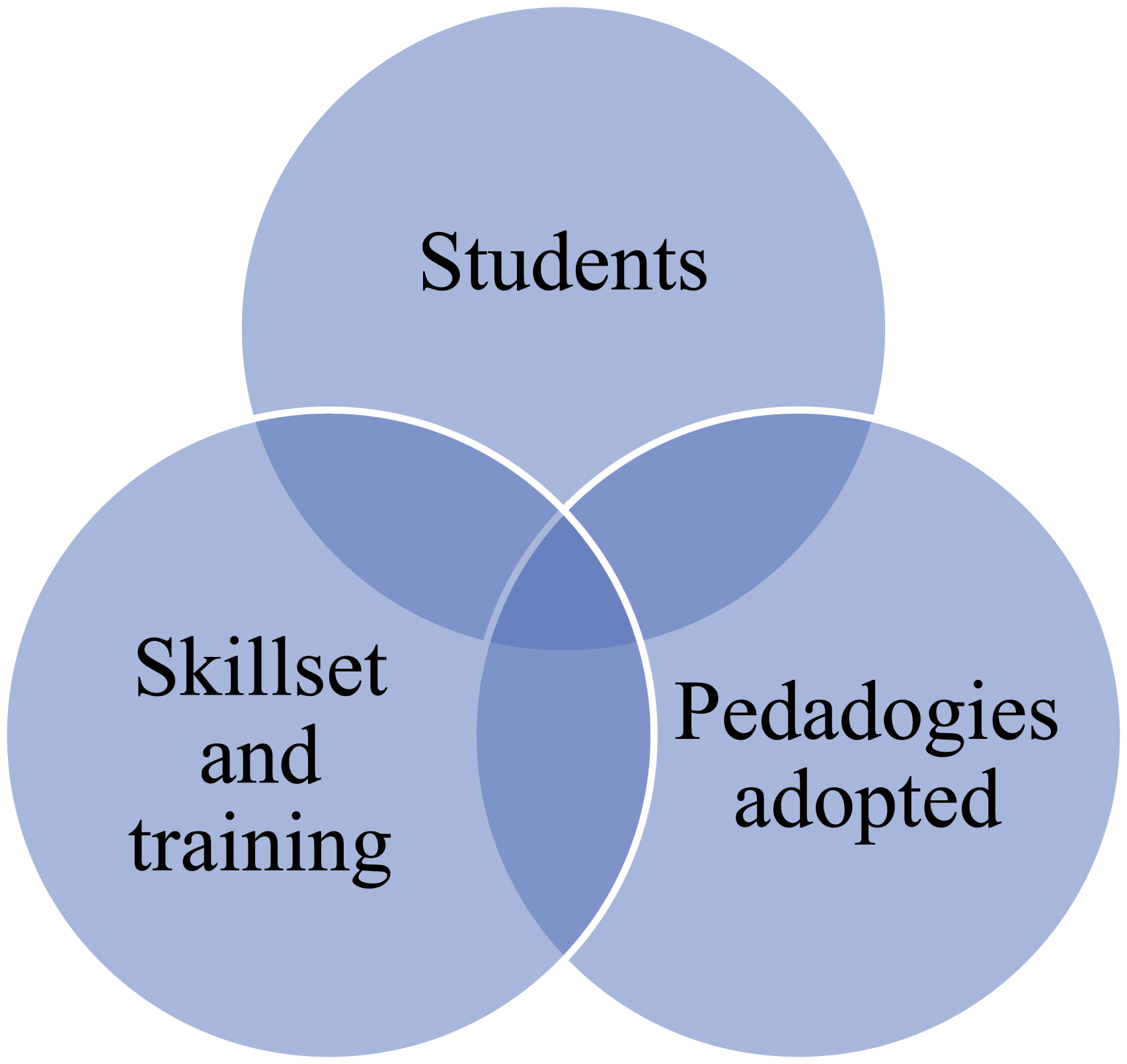
The student body of graduate-level programmes in public administration schools has become increasingly varied and heterogeneous in recent times. Most graduate schools have also been making efforts to build a community of diverse learners in the classroom. An offshoot of this has been the globalisation of curricula and a greater focus on comparative public policy and non-Western public administration (Ongaro, 2021). This simultaneously reflects the desire to expose students to international experiences (Hou et al., 2011), inculcate an appreciation of local knowledge in policy work (Veselý, 2020) and, importantly, help prepare the next generation of policy workers (Manoharan et al., 2018) who are equipped with a heterogenous and varied skillset that extends beyond analytical techniques and encompasses activities involving communication and coordination (Hoppe, 1999).
The last of these intentions is especially pertinent as many students commence graduate-level programmes in public administration schools with prior work experience, particularly in the case of mid-career programmes, and in turn are expected to return or switch to a career in policy work (Van der Meer and Marks, 2013). Thus, the skillset and training that public administration schools seek to impart to students are aimed at equipping them to function more effectively in their professional practice (Schafer, 2016; Van der Meer and Marks, 2018). In addition, a key role—and what some even consider a responsibility of public administration education—is to instil and promote public service value (Rubaii et al., 2019) so as to deal with the ‘wicked' policy problems of today and prevent future crises and atrocities. This often entails discussions about potentially sensitive and controversial topics (ibid).
Programmes generally make substantial efforts to prepare students to address the challenges that they are likely to meet while undertaking policy work, making a special effort to link theory and research with real-life issues and situations (Kearns, 2014). Since working in teams or work units is often a key component of policy work (Infeld and Adams, 2013), public administration programmes usually emphasise group exercises and team projects as a way of cultivating collegial and respectful work styles and behaviour while giving students the opportunity to benefit from each other’s experiences and knowledge (Crosby and Bryson, 2007; Schafer, 2016). Other salient features of public administration programmes, such as capstone projects, internships (Gerlach and Reinagel, 2016) and client-based projects (Meltzer, 2013), help provide students with networking and professional development opportunities (Neely et al., 2018). Social activities also play an important role in these programmes, as they can help create a sense of community among students (Cohen, 2013), which, in turn, helps nurture a strong alumni base.
In managing this nexus between students and desired policy work skillsets and training, teaching pedagogies play a key role. Although each instructor may be motivated by their own distinct teaching philosophy and consequently draw upon multiple and unique interactive methods, certain pedagogies and techniques tend to be more salient in a public administration classroom. Given that policy concepts can often be complex, abstract and contested (Straussman, 2018), active learning pedagogies—wherein students are active in the process of understanding and building knowledge (Leston-Bandeira, 2012)—are considered to be an important component of public administration classrooms. In a similar vein, scholars advocate the use of engaged teaching methods, i.e. innovative teaching techniques that link theory and practice (Bushouse et al., 2011), including the co-production and curriculum co-design that sees students as partners (Elliott et al., 2021).
Some commonly used techniques in public administration classrooms lend themselves well to both of these aspects. For instance, the use of teaching-cases is fairly well-established. According to the results of a survey of faculties in Network of Schools of Public Policy, Affairs, and Administration (NASPAA)-affiliated schools, this is the most commonly employed practice (Neely et al., 2018). Case studies are appreciated for their ability to stimulate student interest and engagement with complex issues (Foster et al., 2010) and for helping link theory and practice better (Fenwick, 2018). The larger approach of problem-based learning, which involves ‘the application of tools to problems of interest so that students are motivated to learn’, also plays a significant role in public administration education (Engbers, 2019: 315). It is sought to be promoted in the classroom by creating a learning environment where students can apply theoretical knowledge and professional skills (Cohen et al., 1995). Outside the classroom, internships and client-based projects as well as service-learning pedagogies offer opportunities for problem-based learning and are commonly incorporated into public administration education (Neely et al., 2018; Wheeland and Palus, 2010; Witesman, 2012). As noted by a study, problem-based learning when implemented in course design for a public administration programme allowed students to deepen their research knowledge of a topic, learn basic analytical techniques and hone their professional communication skills (Sandfort and Gerdes, 2017).
The above description of pedagogies and techniques utilised in the public administration classroom is by no means exhaustive. Instead, it serves to illustrate the point that commonly used pedagogies in public administration education emphasise learner engagement and interaction. However, these have predominantly been practised in a face-to-face setting and the bulk of scholarship related to them presupposes their use in a traditional classroom (see, for instance, Foster et al., 2010; Rubaii, 2016; Schröter and Röber, 2022) whereas their application in an online environment may not be as straightforward. For instance, three frequently used pedagogical approaches—case study teaching, problem-based learning and client-based internships/projects—function with varying levels of ease in an online format.
Case-study discussions, in a traditional face-to-face public administration classroom are typically characterised by a significant back and forth between the instructor and students, and amongst the students with one another. This dynamism is hard to re-create in an online class, where students cannot spontaneously dive into the discussion. There is an inevitable delay as students have to tackle with unmuting themselves, audio/video lags and/or connectivity challenges. Moreover, in an online class the absence of physical cues from body language that play an important role in how students engage with each other, and how the instructor guides the discussion also limit the extent to which the full potential of a case study can be harnessed.
In contrast, the approach of problem-based learning lends itself well to an online setting. An online class offers the chance to leverage on a multitude of platforms to allow students to address the problems presented by the instructor via different means, for example, through the use of virtual learning communities, such as Wikipedia (Brailas et al., 2015; Infeld and Adams, 2013), or through computer simulation-based approaches (Gosen and Washbush, 2004; Humpherys et al., 2022). The adaptability of client-based internships or projects to an online setting, however, presents a mixed picture. It has a lot to do with other factors, such as the nature of the organisation, activities that the student is expected to be involved in and organisational adaptability in moving the internship/project online (Pike, 2017).
To summarise, the three pillars of public administration education—pedagogical tools, skillsets and students—emphasise student participation and engagement. While pedagogical approaches make this possible, it is done with the intent of enhancing the critical skillsets that a policy worker requires such as effective and respectful communication, collaboration and teamwork. Involving students in this way helps incorporate diverse perspectives within the classroom and cultivates social capital between students and the institution.
Bringing together these attributes of public administration education with online education, an increasingly popular mode of teaching and learning both during COVID-19 and—very likely—beyond the pandemic, our research seeks to examine: i) Does the shift to online classes impact students’ participation, interaction and communication? ii) Do experiences of public administration students vary when online education is introduced as an emergency response versus being implemented in a planned manner, and if so, how? The next section briefly explains our method of enquiry.
Methods
To answer our research questions, we undertook two online surveys of full-time students enrolled in graduate-level programmes of a professional public policy school in Singapore. This school is well-suited to help address our largely exploratory enquiries, both due to its comprehensive structure of public administration education programmes and its prompt switch to the online mode of teaching and learning from the beginning of the COVID-19 pandemic. As mentioned earlier and will be elaborated in the next paragraph, the second feature is crucial to enabling us to conduct nuanced investigations of student perceptions under different planning styles of online public administration education.
Surveyed students were enrolled in various programmes including the Master’s in Public Policy, Master’s in Public Administration, Master’s in International Affairs and PhD in Public Policy. The two surveys were identical, their only difference being the time when they were launched and the group of students to whom the questionnaires were shared with. The survey collected demographic information, information about the institutional support, the individual and environmental pre-requisites for online education available to students (for example a stable internet connection, access to a physical space); and asked students about their online learning experiences and perceptions through a set of closed-ended questions. These questions were followed and supplemented by a set of open-ended questions which allowed students to share further thoughts and perceptions.
The first survey was circulated to students from July to August 2020. By then, students had experienced online education as an ‘emergency response’ imposed in mid-March 2020. Most of the students that participated in the survey were part of the graduating class (N = 71). The second survey was administered from October-November 2020, at which point online education had been implemented since the beginning of the new semester in August 2020. Unlike the previous period, during which the shift to online classes happened ‘suddenly’ (that is, without prior notice), the decision to move to an online format in the new semester was made over the summer and communicated to both students and faculty well in advance. Thus, the second wave of the survey targeted students that were experiencing ‘planned’ online education (N = 76). The survey at both time points had a response rate of about 23% of the student population, which is in line with the response rate reported in studies employing web-based surveys (Blumenberg and Barros, 2018; Hardigan et al., 2012).
In order to gauge students’ assessment of their level of engagement during online classes, we focused our attention on four specific items from the closed-ended questions of the survey. All questions were measured on a five-point Likert scale. Students had to choose from a set of responses ranging from ‘much more’ (1) to ‘much less’ (5) for the following questions: Q1. “My willingness and level of participation and engagement in online class activities (discussion, debate, small-group activities, etc.) is __________ when compared with my engagement in traditional classroom instruction.” Q2. “I am able to have __________ interaction with my fellow classmates when compared with traditional classroom situations.” Q3. “I am able to have effective communication with my teachers and seek timely help and feedback __________ when compared with traditional classroom situations.” Q4. “I am able to share my views on potentially controversial topics or my personal experiences _____________________when compared with traditional classroom situations.”
To capture students’ experiences in a more nuanced manner, we further analysed students’ responses to a question related to motivation (similarly measured on a 5-point Likert scale ranging from ‘much higher’ to ‘much less’): Q5. “My motivation to acquire knowledge and skills through online learning is __________ when compared with my motivation in traditional classroom instruction.”
Lastly, we complemented the above analyses with a close examination of the answers that the students provided in the open-ended sections of the survey. We also examined students’ access to environmental and individual pre-requisites for online education, to cross-check whether they influenced the results in any way.
Findings
Sample characteristics of the two survey waves
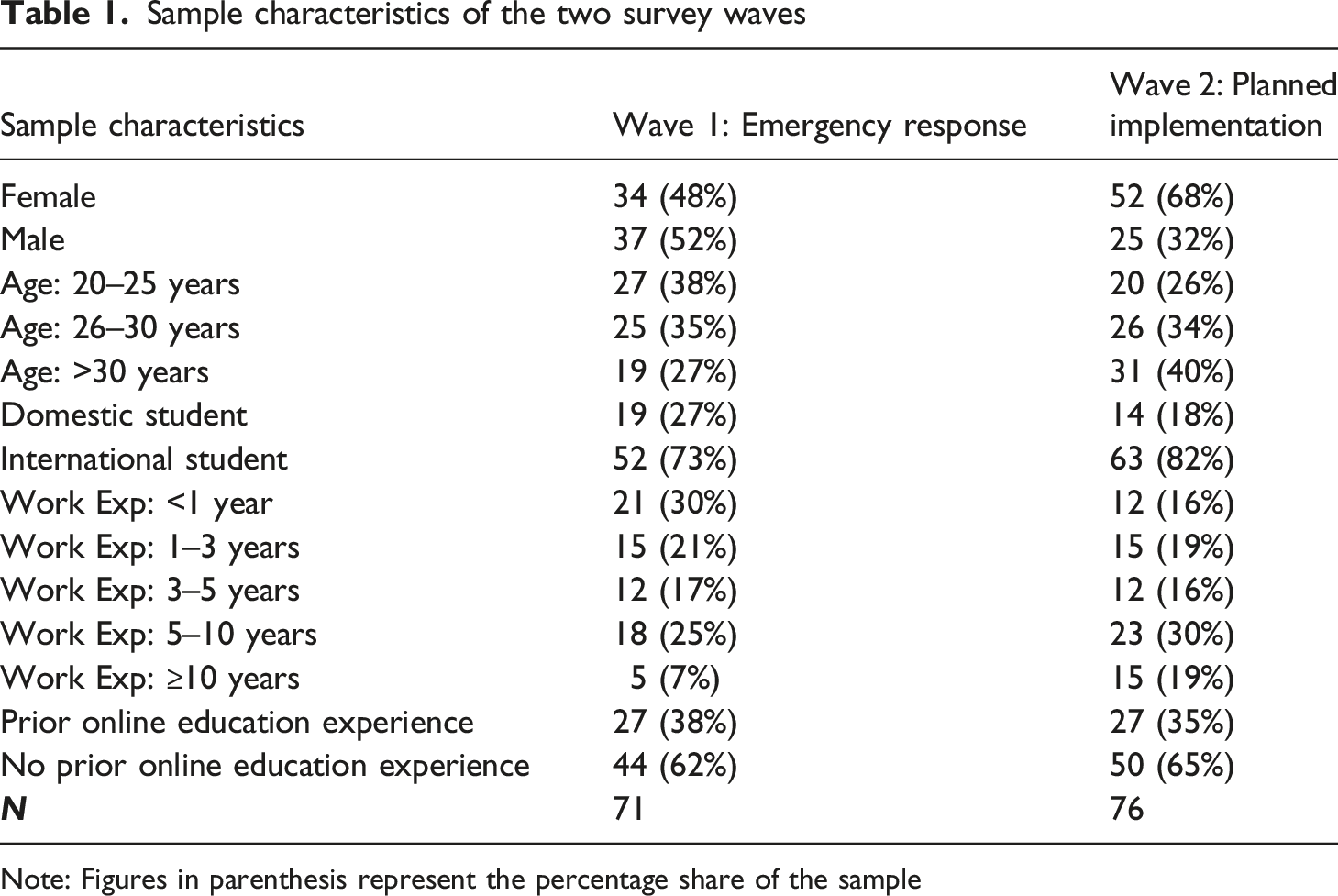
Note: Figures in parenthesis represent the percentage share of the sample
Although the majority of students (in both waves) did not report difficulties in accessing the environmental and individual pre-requisites associated with online education, we conducted a sub-sample analysis by excluding students from the sample who reported difficulties. However, this did not alter our findings, thereby confirming that the findings that we discuss below were not influenced by these factors.
With respect to the questions that directly asked students about their level of engagement in an online class as compared to a traditional classroom setting, students reported: lower willingness to participate and engage in class activities (such as discussions, debates, group activities); lower levels of interaction with classmates; less effective communication with teachers to seek help and feedback; less ease in sharing personal experiences or talking about potentially controversial topics. These results hold for both emergency online education and the later wave of planned implementation (Figure 2), and we did not find statistically significant differences between domestic and international students. The percentage of students expressing lower levels of engagement in different facets of online classes as compared to a traditional classroom setting. Note: The figure shows the percentage of students that answered “slightly less” or “much less” in response to Q1-Q4 of the surveys.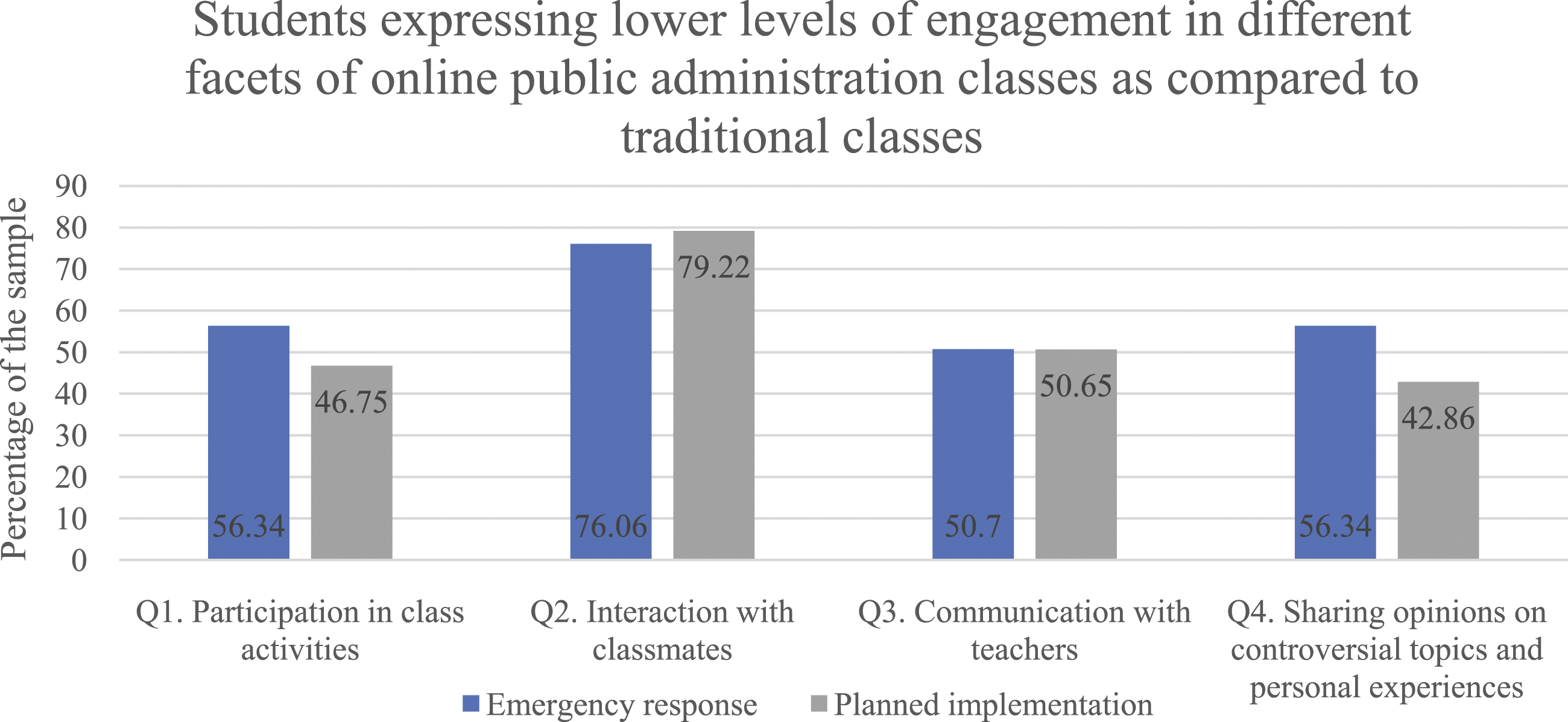
However, there are some additional nuances to our results that are worth discussing. First, nearly half of the students that experienced online classes, whether in emergency mode or planned format, felt that their communication with teachers was less effective in an online classroom as compared to a traditional setting (Q3). The remaining students were mostly neutral (33% of the first wave and 38% of the second wave) and only a small minority felt that communication under online education was more effective (15% of the first wave and 10% of the second wave). This result resonates with our experiences as instructors, where we observed that in a traditional classroom setting, students often approach instructors during breaks or at the end/beginning of the class. The format of a synchronous online class takes away from students these less structured and less formal avenues for interaction with the instructor. The fact that students consistently perceived communication with instructors to be less effective during both rounds of the survey indicates that even during the planned implementation of online education, teachers were not able to devise mechanisms that could substitute for the less formal avenues of communication that students are traditionally used to.
When it came to willingness and participation in class activities (Q1), although students reported lower levels in an online class as compared to a traditional class, with planned implementation of online education the share of students expressing this to be the case decreased (56% in the first wave of the survey versus 47% in the second wave of the survey). This may have been because of the course design during the planned phase that allowed instructors to tailor activities for class participation that were more suitable for an online format. Moreover, as we found in our interactions with colleagues at the surveyed school—by the time of the second wave of the survey, instructors had become better acquainted with online teaching platforms and had the time to explore alternative online teaching tools (for instance collaborative online white-boards, online quizzes and polls). Meanwhile, institutional support in regard to these aspects had also been strengthened, as shown by the greater number of trainings organised and more technical support available.
Similarly, we found that the share of students who expressed apprehensions about sharing their views on potentially sensitive topics or personal experiences (Q4) also decreased for planned online education (56% of the sample during the emergency response period versus 43% of the sample during the phase of planned implementation). Some of this may have been an offshoot of careful course design tailored to an online format which helped lower barriers to participation in general. However, from the open-ended section of the survey, we have reason to believe that online classes (whether in emergency or planned mode) may have erected some obstacles to students freely sharing their views. Students’ responses in this section indicated that some of them felt uncertain about whether an online class constituted a ‘safe space’. They mentioned that the ability to record lectures and the inability to strictly restrict online class access to only students of the class (for instance, “Zoom bombing”, i.e. when unrelated individuals joined Zoom meetings and disrupted proceedings, or if a student turned off their video camera then anyone in their vicinity could potentially be privy to class discussions) made them harbour reservations about freely voicing their opinions on controversial topics and partake in class debates. Moreover, when discussing sensitive topics, body language can provide cues about how others are responding to the discussion. But an online class environment may not be able to provide this important piece of information, thereby preventing students and instructors from being able to appropriately nuance their thoughts in light of the class environment.
On the question related to interactions with fellow classmates (Q2), over three-quarters of the students in both rounds of the survey reported lower levels of such interactions in an online classroom as compared to a traditional classroom (76% of the sample under the emergency response phase and 79% of the sample under the planned implementation phase). The high percentage suggests that even the tailored format of planned online education could not boost student interactions. Lower interaction, in general, was cited as a significant challenge experienced by students with regard to online education. This can be seen clearly in Figure 3, where we present a word cloud of the 100 words most frequently used by students in their answers to an open-ended question which asked them to list the top three challenges they experienced in relation to online education. Word cloud of the 100 words most frequently used by students in both surveys in response to a question asking them to list the top three challenges experienced during online education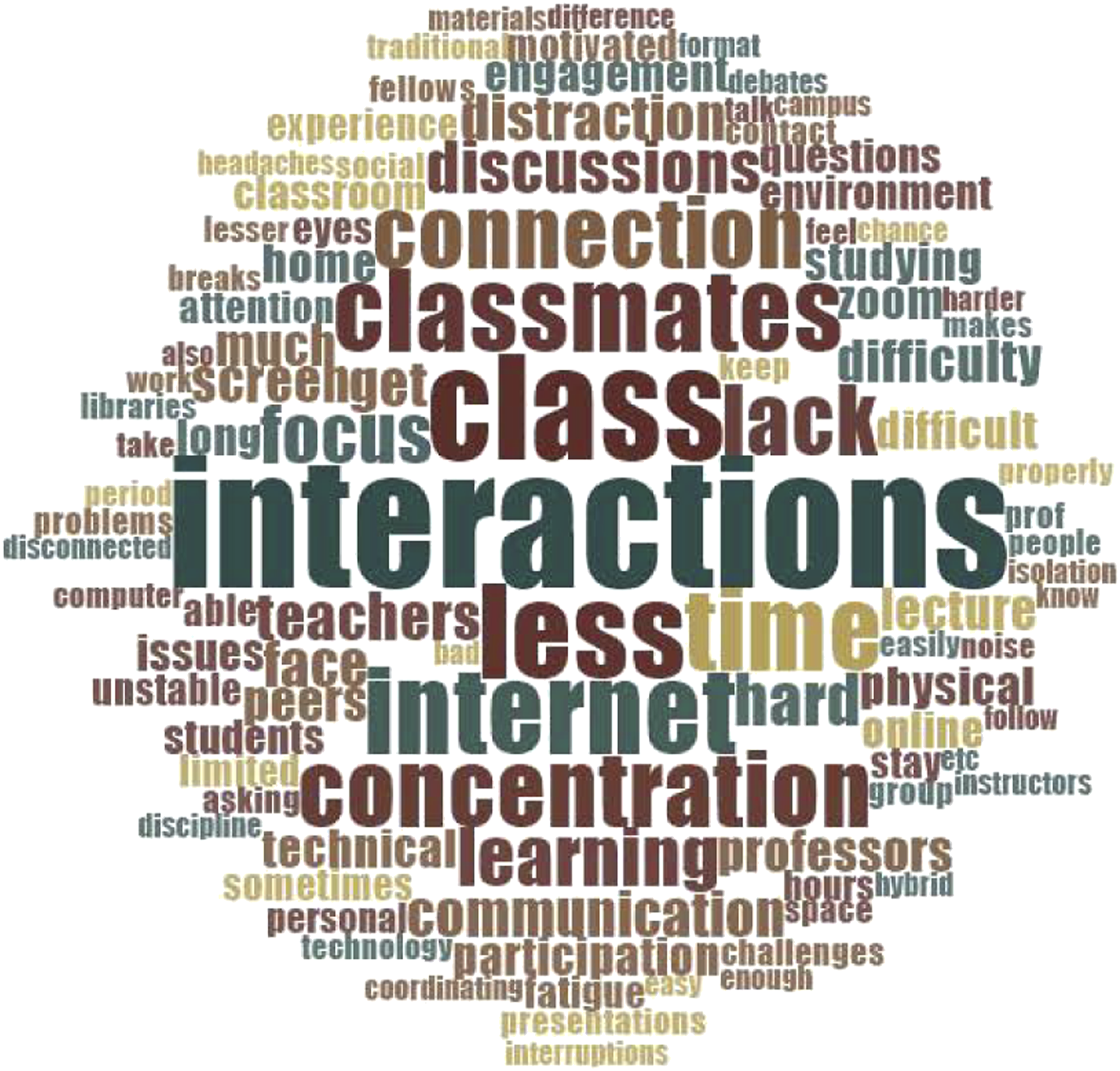
When we examined students’ individual answers to see what specific aspects related to interaction were mentioned by them, five major themes emerged. First, at the very basic level, students felt that online classes gave them fewer opportunities to interact with classmates, especially reducing informal communication and communication with those with whom they would not have ordinarily engaged. Second, according to students, lower levels of interaction detrimentally impacted their ability to make friends and network with their peers. Third, students felt the lack of immediate feedback and emotional responses (since most students remained muted) made the online learning environment less rewarding. They felt that it was also harder to recreate in an online class the energetic dynamics of group discussions and debates which typically characterise in-person classes, thus making them feel less enthused. Fourth, students mentioned the lack of peer learning because of reduced interactions during the online class. Fifth, students consistently mentioned the difficulties in engaging remotely in group work and group projects inside and outside class.
Spearman’s rank-order correlation coefficient for students’ responses in the two surveys
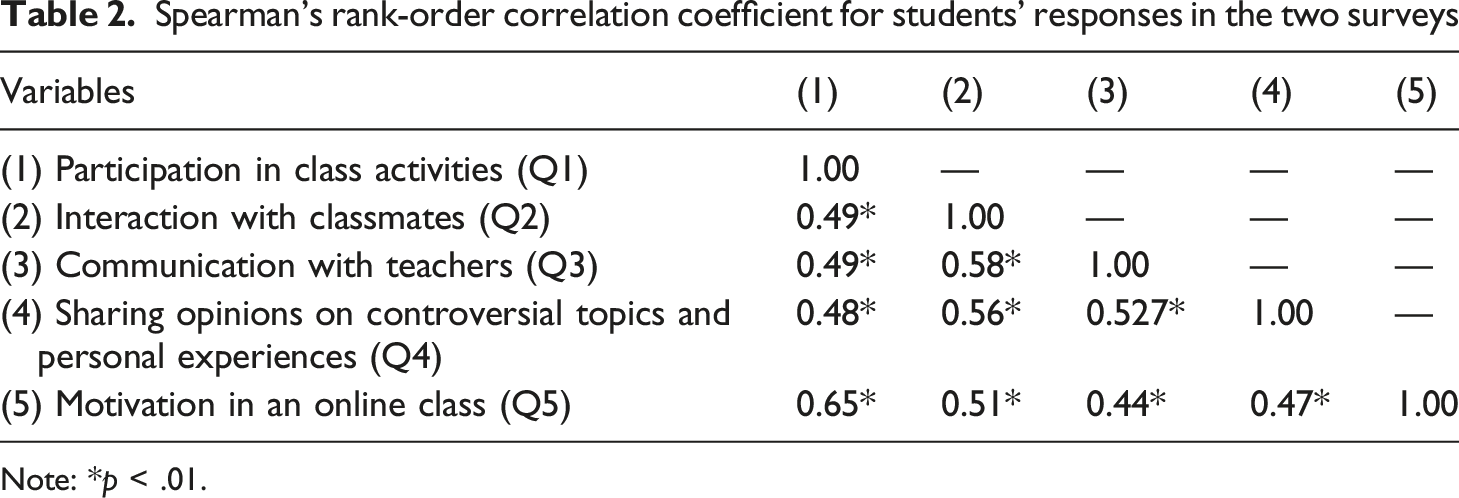
Note: *p < .01.
Discussion
Our findings show that when compared to traditional classroom teaching, students unequivocally reported lower levels of interaction with classmates and teachers, lower levels of participation in class activities, and reduced levels of sharing of personal experiences and views on controversial topics in an online classroom. However, with the planned implementation of online education, the decline in the level of participation (as compared to traditional teaching) was lower. This implies that a well-designed curriculum that is tailored to an online mode of instruction has the potential to lower the participation barrier associated with an online class.
Having said that, we found that the planned implementation of online education cannot counter declines in the remaining facets—interaction with classmates, communication with teachers; and sharing of personal experiences and views on controversial topics. Research on interactions, with respect to distance learning, shows that their meaningful integration can increase the learning outcomes (Bernard et al., 2009).
In the more specific context of public administration education, interaction and communication between students and teachers, with free exchange of ideas, is integral to cultivating the skillsets that public administration programmes seek to impart and the means by which they do so. In other words, they are tied to the three fundamental pillars of public administration education presented earlier: students; skillset and training; and pedagogies adopted. Thus, when students experience declines in engagement in the aforementioned facets, it strikes at the core of the dominant approach of public administration education—of self-directed learning integrating theory with practice—and accordingly, commonly employed pedagogies and techniques adopted in the public administration classroom (e.g. case studies and problem-based learning) would not fare as well. As the variety of perspectives that are brought to the class floor is reduced, peer learning is restricted; difficulties in engaging in debates and group activities constrains the extent to which students can develop negotiation, communication and team-work skills; a reduction in informal communication impedes the networking opportunities for students and impairs the development of a strong sense of community among them, thus ushering in a sort of reinforcing and multiplicative feedback loop.
Moreover, our results suggest that declines in the discussed facets may adversely influence students’ motivation to acquire knowledge and skills during an online class. This is a matter of concern since motivation to learn is considered a crucial factor for success in online teaching and learning (Hartnett, 2016; Lim and Kim, 2003), which also influences the learning behaviour and attitude of students (Hung et al., 2010). Lower levels of interaction, communication and motivation, in turn, would have worrying implications for student engagement in online public administration education, which requires more than passive participation (Elliott et al., 2021).
Although these challenges to the effectiveness of online public administration education have been revealed in the existing literature (e.g. Austin, 2009), the global experience of the past two years would lead us to be cautious in believing that treating the switch to online education as a temporary measure can be the solution. Indeed, the unrelenting uncertainty around the COVID-19 virus, as well as the likelihood of restricted international movement in the next few years, suggests that online education is unlikely to revert back to its lower pre-pandemic levels. Furthermore, many higher education institutions are tapping into online education to realize their purposes such as reducing costs and catering to a broader audience (for example, adult learners) who would not have been able to participate in graduate education in earlier times (Austin, 2009). Accordingly, the solution is more likely to lie in the further tailoring of the pedagogy, and skillset and training pillar of public administration education, to an online format.
With respect to pedagogy, educational technology, i.e. ‘the deliberate use of technological tools to serve formal or informal educational purposes’ (Brailas et al., 2015: 60) is something that can be used more strategically in the public administration classroom. Research shows that student engagement in online classes is more intense when they frequently interact with peers using technologies (Bryan et al., 2018). Gamification (Ofosu-Ampong, 2020) can be used to promote collaboration and communication between students, for instance, an Escape Room based on Microsoft OneNote (see CABS, n.d.). Within online discussion forums, separate threads can be used to create opportunities for students to receive feedback from others with similar interests (Alamri et al., 2020). In order to encourage students to continue to share their views on potentially contentious topics, instructors can utilise fictitious vignettes inspired by real events (Straussman, 2018). During such discussions, ‘recording’ (if it is taking place) may also be paused to allow students to share their views without reservations.
More generally, employing learning analytics in relation to data such as the access logs of online resources and the use of online tools can help instructors understand students better (Bainbridge et al., 2015; Poon, 2019). Instructors can also assess the level of ‘Zoom fatigue’ (fatigue associated with video-conferencing calls) among their students using a scale recently developed by researchers (see Fauville et al., 2021) and structure their classes accordingly. Artificial intelligence (AI) chatbots can also be employed to assist students on their learning journeys.
Outside the classroom, smaller peer groups can be set up to encourage students to meet and share items from the syllabus. Students can be given observational tasks that require them to share their experiences through a non-traditional medium, for instance through a picture or via social media (Eikenberry, 2012), say through a tweet. In this context, tutors (or teaching assistants or graduate student instructors) constitute a valuable and underutilised resource (Brown, 2020). Since they are largely drawn from the student population, tutors may have a better idea of students’ experiences and perception of different pedagogical strategies; and this feedback can be incorporated into curriculum design. It has been found that the thoughtful application of a limited number of tools is considered to be as or more effective than using a wide array of technology in an online setting (Bryan et al., 2018). Finally, tutors can also help create spaces for informal communication for the students, whether online or offline.
With regard to skillsets and training, public administration education needs to contend with the unassailable reality that policy work now and in the future is likely to entail a greater use of technology—such as the use of big data (Mergel, 2016)—and make use of remote work practices. Thus, public administration programmes need to start deliberating on ways to prepare students to succeed in such workplaces and to confront the associated challenges.
In closing, we note some of the limitations of our study and directions for future research. Our study was based on students’ self-reported experiences which may embody individual-level differences in subjective evaluations. As our survey reflected an amalgamation of students’ experiences across different courses of their programme (and not for a specific course), we did not ask about assessment practices as these would have varied by course. We acknowledge this as a limitation of our research, and encourage future research to investigate specifically this aspect to acquire an in-depth understanding of the role that assessment plays in shaping students’ experiences in an online education setting. Moreover, the student population being compared between the two survey waves was not the same. The difficulty of securing the same student population was mainly practical: due to the short duration of graduate programmes (usually a maximum of 2 years) and as the sample from the first wave was largely the graduating class (as mentioned earlier in the Methods section), the majority of those who participated in the first survey had graduated by the time of the second survey. Nevertheless, the unique sample for each wave 1 did enable us to explore how two distinctive groups of graduate students had similar or different perceptions of online education that was being executed in two distinctive modes.
While our focus on students’ experiences and perceptions is both theoretically and practically justified, as elaborated in the second section of the paper, it is important for future research to complement this account with an exploration of how public administration faculty have been impacted by the switch to online education, thereby generating a more comprehensive picture that encompasses both sides of teaching and learning. Further, research on a blended mode of online education may be even more relevant. In addition, our research focused on a public policy school in Singapore. Although the schools’ students included a mix of domestic and international students, the majority of international students were from other countries in the East and South Asia region. It may be insightful to compare in future research whether and to what extent the experiences of Asian public administration students are similar to or distinctive from their counterparts in other geographical regions, as a starting point for investigating how learning styles, culture or political contexts (Farrell et al., 2021) might affect students’ overall experience of online public administration education. Having said that, the lessons learned from the Asian context in our research may already be pertinent and useful to public administration schools in other contexts, insofar as some common challenges to making online education work are concerned.
Conclusion
We reported our findings from two surveys of graduate-level students at a policy school in Singapore when comparatively, they experienced online learning as an emergency response and when it was implemented in a planned manner. In both situations, students reported lower levels of interaction with classmates, less effective communication with teachers, lower levels of participation in class activities, reduced levels of sharing of personal experiences and views on controversial topics in online classes as compared to a traditional face-to-face setting. Although the planned implementation of online education was able to overcome the participation barrier to some extent, based on the remaining facets it could not counter the decline. This is a matter of concern because interaction, communication and the free exchange of ideas, is integral to the dominant pedagogies that public administration education has adopted over the past several decades, and the skillset and training it seeks to impart. Moreover, students’ motivation, in turn, may be detrimentally impacted because of lower levels of engagement.
To overcome these challenges that strike at the fundamental pillars of public administration education, we have suggested a number of strategies that instructors may adopt. Their effectiveness, however, will depend crucially on instructors’ willingness to innovate, experiment and adapt what they teach and how they teach it in response to the changing situation (Schultz, 2013). We highlighted the fact that public administration education needs to continuously pivot towards offering relevant skillsets and training that can cater to the changes in the manner in which policy work will be carried out in the future (Mergel, 2016; Schultz, 2016; Van der Meer and Marks, 2018), i.e. with a greater use of technology and remote working practices.
Online education, while posing challenges, also offers the opportunity to make public administration education more inclusive by catering to students who can only be on campus for a part of the day or part of the year due to familial or other responsibilities (Manoharan et al., 2018). Moreover, combining traditional classes with online education can provide additional opportunities to intensify active learning (Van der Meer and Marks, 2018). However, harnessing the advantages of online education will require the development of an effective model that can offer academically rigorous content while overcoming the barriers that online education poses to a public administration classroom.
Footnotes
Acknowledgements
The authors would like to thank Ian Elliott, Monika Knassmüller and Peter Marks, co-chairs of the Permanent Study Group IX on Teaching Public Administration at the European Group for Public Administration (EGPA), for their helpful and generous feedback to earlier versions of the paper and for awarding it a best paper award at the EGPA Annual Conference in 2021.
Declaration of conflicting interests
The author(s) declare no potential conflicts of interest with respect to the research, authorship, and/or publication of this article.
Funding
The author(s) received no financial support for the research, authorship, and/or publication of this article.
