




Abstract
India's municipal solid waste (MSW) management system is predominantly characterized by unsegregated mixed waste streams, comprising heterogeneous organic and inorganic fractions such as food waste, plastics, and paper. The lack of source-level segregation presents significant challenges for conventional waste treatment pathways and highlights the need for context-specific waste-to-energy (WTE) processes. This study applies a hybrid multi-criteria decision analysis (MCDA) framework, integrating the Fuzzy Analytic Hierarchy Process (FAHP) and the Fuzzy Technique for Order Preference by Similarity to Ideal Solution (FTOPSIS), to systematically evaluate five WTE processes: incineration, anaerobic digestion (AD), pyrolysis, gasification, and hydrothermal liquefaction (HTL). Eighteen evaluation criteria covering elemental, environmental, energy, economic, and socio-economic aspects were identified and weighted using Fuzzy AHP, with environmental impacts emerging as the highest priority (∼34%), followed by elemental and energy recovery efficiency (∼30%), economic feasibility (∼19%), and socio-economic considerations (∼7%). The weighted criteria were then used within the Fuzzy TOPSIS model to rank the technological alternatives. The results indicate that HTL is the most promising WTE process for India's mixed MSW, followed by gasification, pyrolysis, incineration, and AD. The hybrid MCDA framework employed provides a robust and adaptable decision-making process for policymakers and stakeholders to identify optimal WTE process options in regions facing high waste heterogeneity and inadequate waste segregation infrastructure.
Keywords
Introduction
The growing challenge of municipal solid waste (MSW) management, particularly in rapidly urbanizing regions, has intensified the need for sustainable and context-specific solutions. Inefficient waste handling contributes to environmental degradation, resource loss, and significant operational challenges for municipal bodies in India. Energy recovery from waste offers a viable pathway for addressing both waste disposal pressures and the rising demand for alternative energy sources. This study evaluates the suitability of major waste-to-energy (WTE) technologies for mixed MSW within the Indian context, identifying key technological limitations, research gaps, and decision-making challenges that hinder effective implementation.
Global solid waste generation has risen sharply due to population growth, urbanization, and changing consumption patterns. Resource consumption increased from 1.18 billion tonnes in 1970 to 7 billion tonnes in 2020 (Ghosh, 2019), while MSW generation tripled from 0.635 billion tonnes to 2.01 billion tonnes during the same period (Global Waste Statistics, 2022), and is projected to reach 2.3 billion tonnes by 2025 and 3.4 billion tonnes by 2050 (Das et al., 2021). India reflects this trend, driven by rapid urbanization. As per CPCB's 2021–22 report, India generates 170,338 TPD (62.2 million tonnes annually), with Maharashtra (23,531 TPD), Uttar Pradesh (14,710 TPD), and Tamil Nadu (14,586 TPD) producing the highest quantities (CPCB, 2021). Figure 1 presents the state-wise MSW generation across India for the fiscal year 2021–2022. The distribution reveals extreme inter-state variability, with Maharashtra, Uttar Pradesh, and Tamil Nadu generating the highest MSW volumes. Such disparity highlights the need for scalable and adaptable WTE solutions, reinforcing the rationale approach tailored to Indian conditions.

State-wise municipal solid waste (MSW) generation in India for the Fiscal Year 2021–2022.
Global waste generation is driven by rapid population growth—from 5 billion in 1986 to 7.8 billion in 2020, projected to reach 9.7 billion by 2050 (Gu et al., 2021; Mink, 2023), and urbanization, which rose from 0.8 billion in 1950 to 4.4 billion in 2020, reaching 6.7 billion by 2050 (He et al., 2021). Rising consumerism and single-use plastics further intensify MSW generation (Loxton et al., 2020).
The world is simultaneously facing a deepening energy crisis driven by rising consumption and continued dependence on non-renewable resources. Global energy use increased from 8588.9 million tons in 1995 to 13,147.3 Mtoe in 2015, while global energy demand rose from 8795 Mtoe in 1990 to 14,070 Mtoe in 2017 (Ahmad and Zhang, 2020). The surge is most pronounced in rapidly industrializing regions such as Asia, where industrial expansion significantly elevates energy requirements (Kundu, 2020). Urbanization further intensifies demand, with 68% of the global population expected to reside in urban areas by 2050 (Moreno-Monroy et al., 2021). Additionally, digital infrastructure and data centres are contributing to increased electricity consumption (Khalili et al., 2019).
Solid waste processing and management (P&M) involves the collection, transportation, treatment, recycling, and disposal of waste to minimize environmental impact and enhance resource recovery (Singh et al., 2024). Key steps, as illustrated in Figure 2, include segregation, material recovery, recycling, and safe disposal, supported by public awareness and adoption of advanced treatment technologies (Prajapati et al., 2021). However, inadequate or deteriorating P&M systems lead to serious environmental and public-health consequences. A significant mismatch exists between MSW collection and treatment capacities in many regions; in Central and Southern Asia, this gap exceeds 50% (Filho et al., 2022). Despite policy interventions, many cities continue to depend on open dumping, with approximately 40% of global waste still disposed in unmanaged dumpsites—an issue most severe in low- and middle-income urban areas (Siddiqua et al., 2022). Also, the fragmented and multi-step nature of MSW handling shown in Figure 2 underscores why a solution technology selection must integrate collection, segregation, energy recovery, and environmental factors.

Key steps in solid waste management, including waste generation, collection, transportation, segregation, recycling, and disposal.
In India, MSW management reflects the global challenges of rising waste generation and insufficient processing capacity. As reported in the CPCB Annual Report (2020–2021), India achieves a high MSW collection efficiency of 91.8%, yet only 58.5% of the collected waste is treated, with 45.3% of this treated fraction ultimately landfilled. Notably, 40.9% of the total waste generated remains unaccounted for, indicating major operational and infrastructural gaps in waste management systems (CPCB, 2021). State-wise data (Table S1) show that 11 states report 100% collection efficiency, while 13 states fall within 90–100% and eight within 80–90%; Nagaland reports the lowest at ∼50%. Treatment performance is also uneven, only eight states treat more than 85% of collected waste, while another eight treat over 50%, with the remainder largely dumped in open sites. Tamil Nadu, Delhi, and Rajasthan exhibit the highest landfilling proportions within the treated fraction, while West Bengal, Bihar, and Andhra Pradesh show the largest discrepancies between waste generated, collected, and treated. These trends highlight the urgent need for improved treatment infrastructure and sustainable waste-processing pathways to mitigate environmental and public health risks.
Landfills remain a major concern, acting as significant anthropogenic sources of methane, a greenhouse gas with a global warming potential 28–36 times higher than CO2 over 100 years (Zhang et al., 2019). Inadequate disposal of e-waste further introduces hazardous metals and toxins into soil and water systems (Han et al., 2019), while persistent pollutants such as plastics pose long-term ecological threats (Das et al., 2019). Global CO2 emissions reached their highest levels in 2021 despite renewables contributing just over 17% of energy supply (Friedlingstein et al., 2022). Rising GHG emissions and continued fossil-fuel dependence heighten climate risks for South Asia, including glacier melt, sea-level rise, and extreme weather, threatening long-term regional stability and economic growth (Amin et al., 2023), underscoring the need for sustainable WTE solutions.
Renewable energy sources are increasingly important for meeting rising global energy demand while reducing environmental impacts. Biofuels can lower lifecycle GHG emissions and enhance energy security by reducing dependence on imported fossil fuels (Wang et al., 2022; Aguilar-Rivera, 2022). They also support rural livelihoods and align with circular economy principles. As illustrated in Figure 3, mixed solid waste can be converted into heat, power, or high-value energy carriers, improving resource efficiency and reducing disposal burdens (Mujtaba et al., 2023) and MSW can support circular economy principles through energy recovery pathways. This reinforces the need to evaluate WTE technologies not only based on energy output but also environmental footprint and resource recovery potential. Also, it is important to note that, biofuels offered advantages in the context of energy security, their costs outpaced the price increases of gasoline and diesel in numerous nations (Cozzi, 2023).

Circular economy framework for utilizing municipal solid waste (MSW) as an energy resource through energy recovery processes.
According to the World Energy Outlook (2024) and IEA Renewables (2024), renewable energy is expected to supply about 20% of global final energy consumption by 2030, up from 13% in 2023, with the electricity sector increasing from 30% to 46% due to rapid solar PV and wind expansion. Despite this growth, fossil fuels will continue to dominate the global energy mix. Bioenergy remains important, particularly for heat generation, and MSW contributes through its biogenic and non-biogenic fractions in WTE facilities. In Europe, MSW's role in district heating has recently declined due to improved waste segregation and recycling. In India, renewable capacity is projected to expand by ∼350 GW between 2024 and 2030, nearly tripling 2022 levels, with India expected to contribute 60% of the global rise in modern bioenergy consumption by 2030 (World Energy Outlook, 2024; Renewables, 2024). However, MSW based energy currently contributes minimally, underscoring the need for better segregation, enhanced recycling, and reduced landfilling to strengthen waste-derived energy pathways.
The growing complexity of MSW management in India, driven by rapid urbanization, rising consumption, and inconsistent source segregation, has intensified the demand for sustainable and energy efficient waste to energy (WTE) conversion pathways. However, the selection of appropriate WTE technologies for mixed and unsegregated MSW remains a significant challenge owing to the heterogeneous and moisture-rich composition of household waste, limited infrastructure, and diverse socio-environmental constraints. While several studies worldwide have applied Multi Criteria Decision Making (MCDM) approaches such as AHP, TOPSIS, VIKOR, DEMATEL, ANP and hybrid fuzzy models for assessing WTE technologies, most have been conducted in regions with well-segregated waste streams and stable waste characteristics, or have focused on a narrow subset of criteria such as techno-economic performance or pollutant emissions (Ayyildiz and Erdogan, 2024; Hasankhani et al., 2024; Sadat Heydari et al., 2025; Sadhya et al., 2022; Thanh and Thanh, 2022). Furthermore, existing Indian studies primarily evaluate conventional technologies such as incineration or biomethanation based on simplified or pre-treated feedstocks and rely on limited expert inputs, making their findings unsuitable for real mixed MSW and impractical for policy formulation (Rekik et al., 2024; Shard et al., 2024).
These limitations reveal a critical research gap in developing a comprehensive and India-specific decision-support methodology that incorporates stakeholder diversity, extensive evaluation dimensions, and real-world uncertainties. To address this gap, the primary objective of this study is to develop a rigorous, context-sensitive, and reproducible decision-support framework for evaluating five major WTE technologies—incineration, anaerobic digestion (AD), pyrolysis, gasification and hydrothermal liquefaction (HTL)—for treating unsegregated mixed MSW in India. The employed hybrid Multi-Criteria Decision Analysis (H-MCDA) framework integrates the Fuzzy Analytic Hierarchy Process (FAHP) and the Fuzzy Technique for Order Preference by Similarity to Ideal Solution (FTOPSIS), enabling systematic prioritization of alternatives under uncertainty. The technologies are evaluated based on eighteen multidimensional criteria spanning energy and elemental recovery, environmental performance, economic feasibility, and socio-economic considerations, with fuzzy linguistic judgments gathered from 15 experts across regulatory agencies, municipal bodies, industry, academia, and community stakeholders.
The novelty and research contribution of this work lie in its holistic problem framing and practical applicability. While hybrid fuzzy MCDA approaches for evaluating WTE technologies have been previously reported in both Indian and global literature, most existing studies are limited to a narrow set of techno-economic or environmental indicators and often assume relatively homogeneous or pre-segregated waste streams. In contrast, this study advances existing research by employing a comprehensive and heterogeneous criteria framework that integrates elemental recovery, energy performance, environmental footprints, economic feasibility, socio-economic acceptance, and operational constraints to evaluate WTE technologies under real unsegregated Indian MSW conditions.
Additionally, the framework incorporates diverse stakeholder perspectives spanning regulatory agencies, municipal authorities, industry practitioners, academia, and civil society, enabling a realistic representation of decision-making priorities under uncertainty. Rather than proposing a new method, this study demonstrates the extended applicability and robustness of the FAHP–FTOPSIS approach when applied to an expanded, context-specific criteria set, providing policy-relevant insights into the feasibility and prioritization of WTE technologies in India.
Literature review
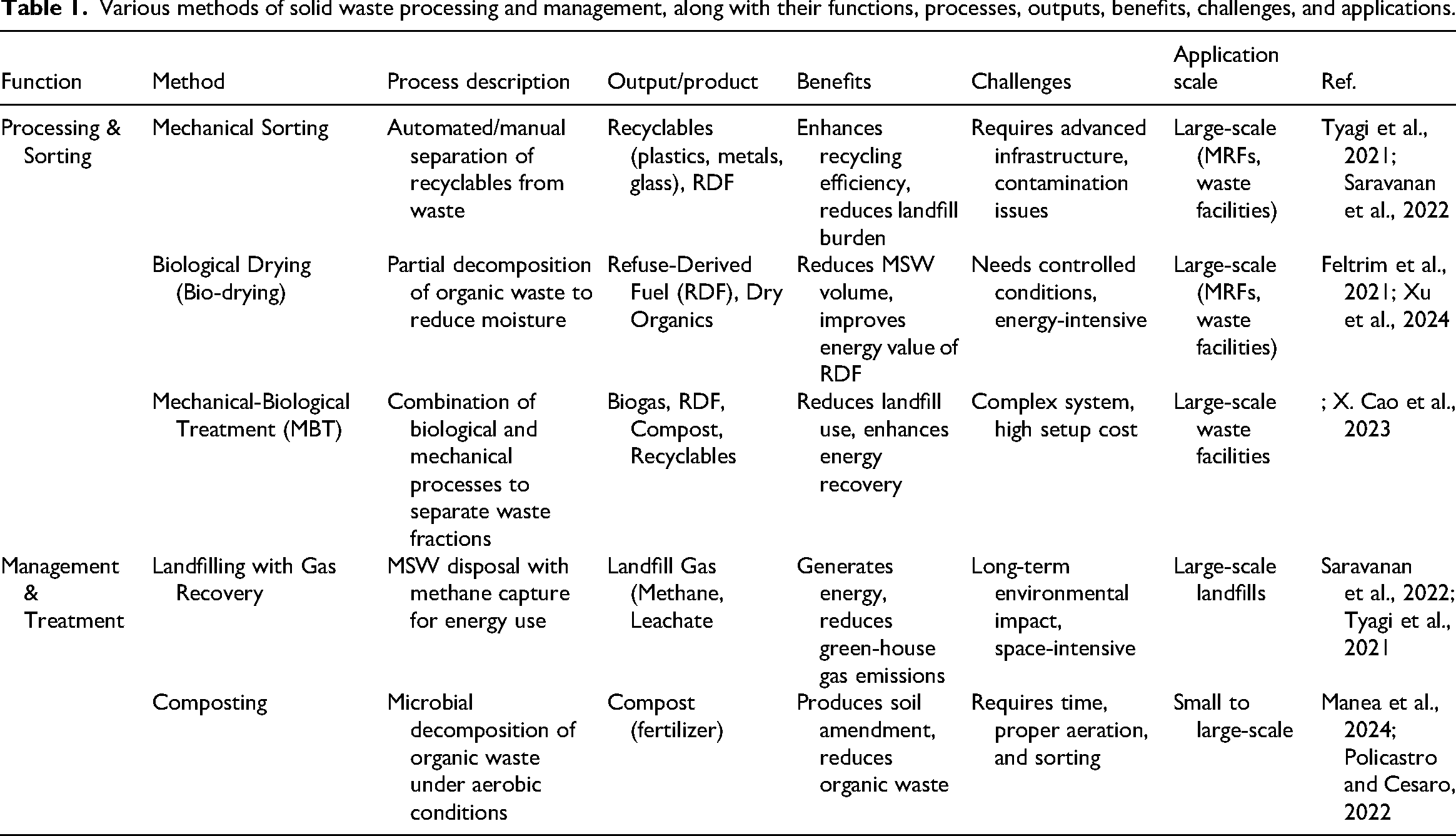
The conversion of waste materials into energy or biofuels presents an eco-friendly solution for waste management and sustainable energy production. Utilizing organic waste sources like agricultural residues, food scraps, and forestry byproducts, these methods reduce landfill burden and promote cleaner waste disposal. Governments worldwide are implementing stringent policies to encourage WTE initiatives, simultaneously lowering waste management costs and providing a low carbon alternative to fossil fuels, thereby accelerating the transition toward a more sustainable energy landscape. Table 1 presents various methods utilized in solid waste P&M, highlighting their functions, processes, outputs, benefits, challenges, and application scales. These methods help in efficiently handling solid waste, reducing landfill dependency, and promoting resource recovery.
Various methods of solid waste processing and management, along with their functions, processes, outputs, benefits, challenges, and applications.
Furthermore, after processing and sorting, waste materials with high calorific value can be directed toward WTE methods such as incineration, gasification, and AD. This approach enhances energy recovery, minimizes environmental pollution, and aligns with sustainability principles by reducing reliance on fossil fuels and lowering greenhouse gas emissions. The global WTE market was estimated to be worth USD 39.53 billion in 2023 and is expected to reach USD 73.28 billion by 2032, growing at a compound yearly growth rate (CAGR) of 7.10% from 2024 to 2032 (Forecasts, 2020).
The projected growth during the forecast period is driven by several key factors, including the promotion of circular economy principles, stricter environmental regulations, the global shift towards renewable energy, advancements in technology for waste sorting, and the continued rise of urbanization, leading to higher waste production. Key trends expected during this period include an increased focus on decentralized WTE systems, stronger collaboration between public and private sectors, technological advancements aimed at improving efficiency and sustainability, a transition towards non-incineration technologies, and strategic investments in research and development in the WTE sector. These trends highlight the industry's evolving strategies and technologies to address environmental challenges and support sustainable energy solutions.
Also, the global WTE sector is classified by waste type into MSW, agricultural waste, and other categories. In 2021, the MSW segment dominated the market, accounting for 65.5% of the total global share. And, in terms of technology, the thermochemical conversion segment led the market in 2021, holding a 71.8% share (Forecasts, 2020). The growing adoption of thermochemical conversion processes, including combustion, HTL, gasification, and pyrolysis is driving the future growth of the WTE market. Figure 4 illustrates various WTE technologies, detailing their reaction temperatures, key chemical reactions involved, and resulting products. These characteristics directly inform the criteria used in our MCDA model, such as energy efficiency, emissions, and product quality. Significant progress has been made in recent years in advancement of technologies related to waste management, and among them, WTE technology is at the forefront as it provides dual benefits of reducing wastes and producing clean energy sustainably. This paper aims to compare the primary WTE technologies with respect to their energy related, environmental, ecological and economical sustainability. As the world transitions toward a circular economy and energy decarbonization, WTE is gaining increasing attention. It aligns with several Sustainable Development Goals (SDGs) and addresses environmental, economic, and social dimensions, making it a key component in sustainable waste management strategies.

Overview of waste to energy (WTE) technologies, highlighting reaction temperatures, key chemical reactions, and generated products.
Conventional WTE technologies
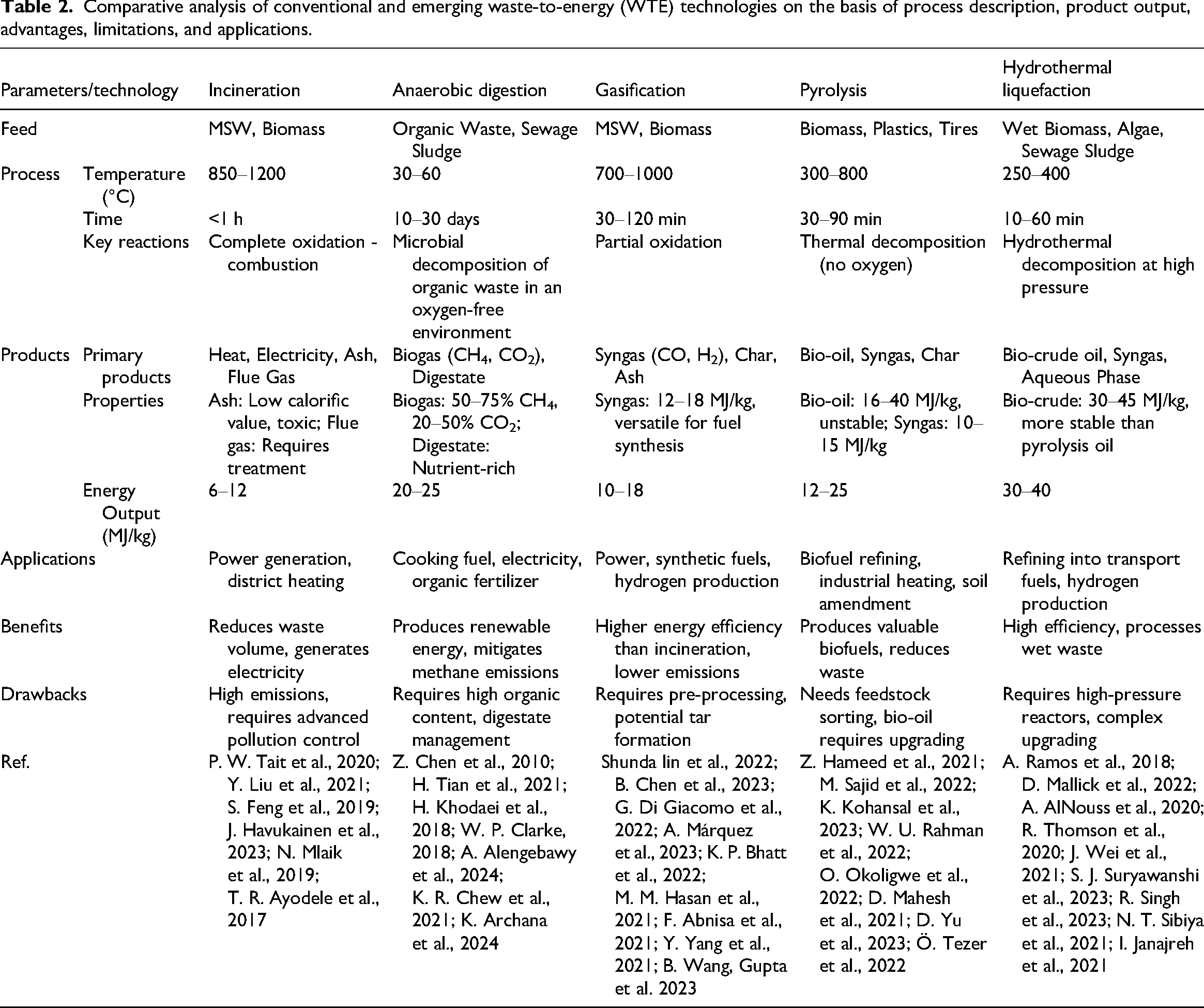
For decades, traditional WTE conversion technologies have been fundamental to sustainable waste management, offering valuable insights into harnessing discarded resources for practical energy generation. Established methods such as incineration, AD, gasification, and pyrolysis have played pivotal roles, each employing distinct mechanisms to extract energy from diverse waste streams. However, conventional processes are increasingly inadequate due to limited environmental compatibility across their lifecycle and constraints within complex production chains. Expanding WTE facilities with combined heat and power (CHP) systems can significantly reduce CO2 emissions by replacing gas-boiler heating with recovered heat, and integrating carbon capture and storage (CCS) offers further reduction potential (Boloy et al., 2021). Table 2 gives an overview of various WTE technologies (both conventional and upcoming) with respect to their process description, product output, advantages, disadvantages and applications.
Comparative analysis of conventional and emerging waste-to-energy (WTE) technologies on the basis of process description, product output, advantages, limitations, and applications.
Combustion/incineration
Incineration is a mature and widely implemented WTE technology that converts solid waste into heat and electricity through controlled high-temperature combustion, significantly reducing waste volume (Tsui and Wong, 2019). Pre-treatment through shredding and sorting is essential to ensure consistent feed quality and reduce emissions in incineration systems. Incinerators operate above 800 °C to generate steam for power production, while advanced flue-gas control systems such as electrostatic precipitators and scrubbers limit air pollution (Liu et al., 2021). Modern WTE plants achieve energy efficiencies of 20–30% (Materazzi et al., 2024), with combined heat and power (CHP) systems reaching up to 60% (Makarichi et al., 2018). Incineration requires homogeneous, low-moisture feedstock and is highly sensitive to waste variability, with moisture levels above 30% reducing energy efficiency and economic viability. Extensive pre-treatment increases system costs, limiting municipal feasibility. Public health concerns related to emissions persist, necessitating stringent control of dioxins, furans, and heavy metals (Tait et al., 2020; Liu et al., 2021).
Anaerobic digestion
AD is a WTE technology for organic wastes that uses oxygen-free microbial processes to convert biodegradable substrates into methane-rich biogas, with process stability strongly dependent on maintaining a resilient and well-balanced anaerobic microbial community (Feng et al., 2019). AD produces biogas containing 50–70% methane, usable for heat or electricity, while offering dual benefits of renewable energy generation and nutrient-rich digestate for fertiliser applications, making it widely applied in MSW and landfill gas-based WTE systems (Ayodele et al., 2017; Chen et al., 2010; Havukainen and Dace, 2023; Huang and Fooladi, 2021). Organic waste is pre-processed before AD, where microbes convert biodegradable matter into methane-rich biogas for heat, power, or upgraded fuel use (Kumar and Samadder, 2020; Tian et al., 2021). AD efficiency depends on organic content, methane yield, and stable operating conditions such as pH and temperature (Zhang et al., 2021). Economic viability requires optimized energy balance across processing stages (Huang and Fooladi, 2021; Khodaei et al., 2018). Although widely applied to manure and sludge, AD faces limitations with heterogeneous MSW due to variability and high solids content (Clarke, 2018; Fan et al., 2018).
Emerging technologies
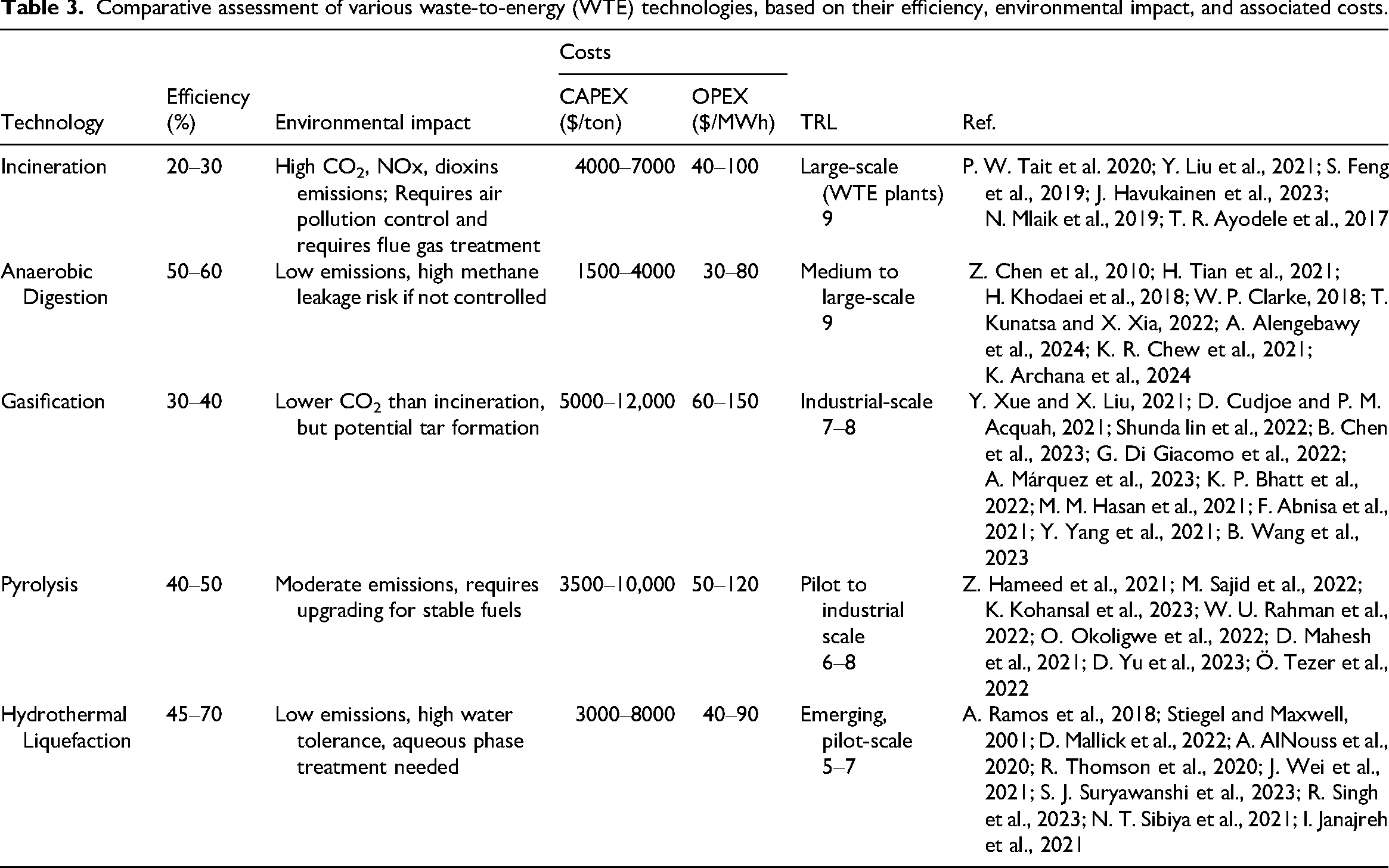
Achieving net-zero emissions and decarbonizing carbon-intensive sectors such as heat, power, aviation, shipping, and heavy transport requires emerging technologies capable of processing complex materials like lignocellulosic biomass and multi-component plastics. Thermochemical pathways are considered the most promising routes for future WTE development (Materazzi et al., 2024). Thus, understanding their principles and current applications is essential to assess recent advancements and the relevance of traditional methods. Table 3 provides a comparative evaluation of WTE technologies, including efficiency, environmental impact, costs, and Technology Readiness Level (TRL) with justification.
Comparative assessment of various waste-to-energy (WTE) technologies, based on their efficiency, environmental impact, and associated costs.
Gasification
Gasification is an advanced thermochemical WTE process that converts waste into syngas rich in H2, CO, and CH4 under high-temperature, low-oxygen conditions (AlNouss et al., 2020; Tezer et al., 2022). It offers efficient chemical energy recovery with applications in power, fuels, and chemicals (Mallick et al., 2022; Ramos et al., 2018). Although adaptable to diverse feedstocks, effective sorting and preparation are essential for stable operation and optimal performance (Singh et al., 2023; Sibiya et al., 2021; Wei et al., 2021). Gasification systems include a gasifier, gas clean-up, and energy recovery units, with performance strongly dependent on gasifier design and operating conditions (Janajreh et al., 2021). Tar formation remains a major challenge, causing syngas contamination and operational instability, necessitating primary and secondary control methods (Ibrahimoglu et al., 2017; Materazzi et al., 2015). Strict syngas quality requirements, high capital costs, and weak waste logistics limit large-scale power generation, though technological advancements could enhance feasibility (Vaish et al., 2019).
Pyrolysis
Pyrolysis is a thermochemical WTE technology that decomposes waste at 400–800°C under oxygen-deficient conditions to produce char, bio-oil, and combustible gas (Wang et al., 2021). The process is classified as slow, fast, or flash based on heating rate and residence time, influencing product distribution (Lu et al., 2020; Sipra et al., 2018). Slow pyrolysis, generally a batch process, emphasizes biochar production at ∼300°C, with heating rates of 0.1–0.8°C/s and long residence times. Fast pyrolysis operates continuously at 400–700°C to maximize bio-oil yield, while flash pyrolysis runs at 700–900°C with heating rates >1000°C/s and residence times <0.5 s for high-quality gas and bio oil (Wang et al., 2021). For solid waste treatment, slow pyrolysis is commonly preferred due to bulky feedstocks and longer retention times, which enhance reaction control and char formation (Cheng et al., 2022; García et al., 1995).
Additives and catalysts enhance pyrolysis by improving reaction pathways and product quality, with acidic catalysts promoting deoxygenation and basic catalysts supporting ketonization reactions (Lee et al., 2020). Reactor selection and pretreatment significantly influence heat transfer, residence time, and product distribution (Bridgwater et al., 1999). However, pyrolysis remains energy intensive and requires emission control and downstream upgrading, with exergy losses and limited feedstock synergy constraining overall efficiency and large-scale MSW applicability (Pawar et al., 2020).
Hydrothermal liquefaction (HTL)
Biomass to liquid fuel conversion employs thermochemical and biochemical routes to produce low-carbon fuels compatible with existing energy infrastructure (Ma et al., 2019). Fast pyrolysis converts low-moisture biomass into bio-oil but yields oxygen-rich, unstable products requiring extensive upgrading, limiting direct fuel applications (Brown, 2019). HTL is an advanced thermochemical pathway that processes wet biomass in subcritical or supercritical water at 250–370 °C and 4–22 MPa, eliminating energy intensive drying (Jindal and Jha, 2016). Near critical water enhances biomass depolymerization and bio-crude formation through hydrolysis and decarboxylation reactions (Fan et al., 2022). HTL can treat diverse feedstocks, producing high-energy-density bio-crude with lower gaseous emissions than combustion or pyrolysis (Elhassan et al., 2023; Sandquist et al., 2019; Wang et al., 2023). However, high operating pressures, reactor costs, bio crude upgrading requirements, and aqueous phase management remain key barriers to large-scale deployment (Kulikova et al., 2023; Leng et al., 2023; Ranganathan, 2023).
Methodology: Multi-criteria decision analysis (MCDA)
Step 1: Problem identification
The decision problem related to the selection and feasibility assessment of WTE technologies for unsegregated Indian MSW is defined (Problem Identification section).
Step 2: Structuring the decision problem for WTE technology evaluation
The decision hierarchy is structured to reflect the multi-criteria nature of WTE technology assessment, incorporating stakeholder perspectives, technology alternatives, and evaluation dimensions (Structuring the Decision Problem for WTE Technology Evaluation section).
Step 3: Stakeholder identification and engagement for criteria definition and prioritization
Relevant stakeholder groups are identified and engaged to support criteria definition, prioritization, and uncertainty representation in the decision-making process (Stakeholder Identification and Engagement for Criteria Definition and Prioritization section).
Step 4: Selection of alternative WTE technologies
Feasible WTE technology alternatives suitable for unsegregated Indian MSW are identified based on literature review and expert inputs (Selection of Alternative WTE technologies section).
Step 5: Establishment of evaluation criteria
A comprehensive set of evaluation criteria is established, encompassing environmental, energy, economic, socio-economic, elemental recovery, and operational feasibility aspects (
Step 6: Developing a decision-making model for WTE technology comparison
An integrated fuzzy multi-criteria decision-making model is developed to enable systematic comparison of selected WTE technologies under uncertainty (
Step 7: Criteria weight derivation using AHP
The relative importance of evaluation criteria is determined using the Analytic Hierarchy Process (AHP) to capture stakeholder preferences and decision priorities (
Step 8: Performance evaluation and ranking of alternatives using fuzzy TOPSIS
The performance of WTE alternatives is evaluated and ranked using the FTOPSIS (
Step 9: Interpretation of results and discussion
The results are analyzed and discussed to derive insights into the feasibility, trade-offs, and policy implications of WTE technologies under Indian MSW conditions (Discussion section).
In multi-criteria decision analysis (MCDA), hybrid algorithms have emerged as powerful tools to address the increasing complexity of real-world decision-making problems that involve multiple conflicting criteria, stakeholder inputs, and varying data types (Mohamed Mouhoumed et al., 2023). A hybrid MCDA approach combines the strengths of two or more analytical methods to enhance the accuracy, robustness, and transparency of the decision-making process (Jeong et al., 2016). For instance, integrating the FAHP with the Technique for Order Preference by Similarity to Ideal Solution (FTOPSIS) allows for a comprehensive framework that incorporates both subjective human judgments and objective performance evaluations (Arslan et al., 2021; Uhde et al., 2015).
FAHP effectively captures uncertainty and imprecision in expert assessments through the use of fuzzy logic, which is especially beneficial when linguistic judgments are involved. It provides a systematic approach to derive criteria weights based on stakeholder preferences (Goyal et al., 2021). TOPSIS, on the other hand, excels in ranking alternatives by identifying the solution that is closest to the ideal and farthest from the worst case (Kukreja et al., 2023). This synergistic integration enhances decision quality and supports more informed, transparent, and defensible choices, particularly in complex domains such as environmental management, infrastructure planning, and WTE selection (Alhassan et al., 2023; Nazim et al., 2022). This hybrid framework is followed in the present study to enhance the effectiveness of the MCDA process. Other notable examples of hybrid MCDA applications include the integration of AHP with VIKOR for disaster risk reduction, and the combination of fuzzy DEMATEL with ANP for analysing interdependent sustainability criteria (İç et al., 2022; Rao, 2021). The MCDA framework for selecting the optimal WTE technology in India is illustrated in Figure 5, highlighting the integration of stakeholder values, contextual constraints, and multi-criteria decision-making processes. The hierarchical structure illustrated in Figure 5 reflects how multi-dimensional criteria are integrated within FAHP for weight derivation and FTOPSIS for ranking. This ensures transparency of the decision-making pathway. The process involves identifying the selection problem, defining alternatives and criteria, developing and validating a decision-support model, and ultimately recommending the most suitable WTE option. Key considerations include environmental, economic, technical, and socio-political factors, with special emphasis on stakeholder engagement, contextual uncertainties, and the heterogeneous nature of Indian MSW, those of which are explained in detail in the following sections.

MCDA framework for the selection and implementation of optimal WTE technology in India.
In this study, the hybrid FAHP—FTOPSIS framework was selected owing to its suitability for addressing uncertainty and ambiguity inherent in expert driven evaluations of complex WTE systems. The FAHP was applied for criteria weighting because it effectively incorporates linguistic pairwise comparisons and allows consistency verification, which is essential when dealing with a large and hierarchical set of evaluation criteria and diverse stakeholder groups. A fuzzy pairwise comparison matrix

The degree of possibility that

The criteria weights
For ranking alternatives, the Fuzzy TOPSIS was chosen due to its ability to measure the relative closeness of each technology to the ideal and non-ideal solutions under fuzzy conditions. A fuzzy decision matrix

The weighted normalized fuzzy matrix is

The distances of each alternative from FPIS and FNIS are given by:

Finally, the relative closeness coefficient (CCi) is computed as:

And alternatives were ranked in descending order of
Problem identification
The initial stage of the MCDA framework involves a comprehensive identification of the decision problem, which in this study pertains to the selection of the most appropriate WTE technology for the treatment of mixed solid waste in India. Besides processing challenges due to its heterogeneous nature, effective management of this waste stream can reduce landfill use, emissions, and improve urban waste systems. The research emphasizes a comprehensive evaluation of disposal methods—environmental, economic, and operational—to guide sustainable practices. It highlights the need to avoid unintended impacts from traditional methods like incineration or landfilling, and supports policy-aligned, scalable solutions. This step establishes the contextual foundation of the analysis by defining the core objective, recognizing operational constraints, and identifying influential external conditions.
Thus, the primary objective or goal is to support a sustainable and efficient solid waste management system that promotes energy recovery, minimizes environmental burdens, and aligns with socio-economic imperatives. This objective is subject to practical constraints such as such as capital investments, technology access, regulatory compliance requirements and public acceptance. In addition, the external environment introduces further complexity through the heterogeneous nature of Indian waste streams, climatic variability and evolving policy frameworks. Key issues include inconsistencies in waste composition, logistical inefficiencies in collection and transportation and the economic and environmental performance of available technologies. Uncertainty further complicates decision making due to fluctuations in feedstock composition, market variability in energy pricing and adaptive performance of technologies under Indian operational conditions. Within this context, fundamental value dimensions are identified, including environmental protection, economic efficiency, energy recovery potential, and societal benefits. These value elements act as guiding principles in the development of decision criteria in subsequent steps.
Thus, by establishing a clearly defined problem framework, delineation of goals, constraints, and contextual parameters, a strong basis for multi-criteria decision analysis was formed, enabling alignment with stakeholder objectives and facilitating the development of a robust and context-sensitive decision support model.
Structuring the decision problem for WTE technology evaluation
The second step of the MCDA framework involves the formal structuring of the decision problem through the identification of relevant stakeholders, the selection of alternative WTE technologies, and the establishment of evaluation criteria. This phase transforms a complex, multifaceted challenge into a structured format suitable for quantitative analysis and systematic comparison.
Stakeholder identification and engagement for criteria definition and prioritization
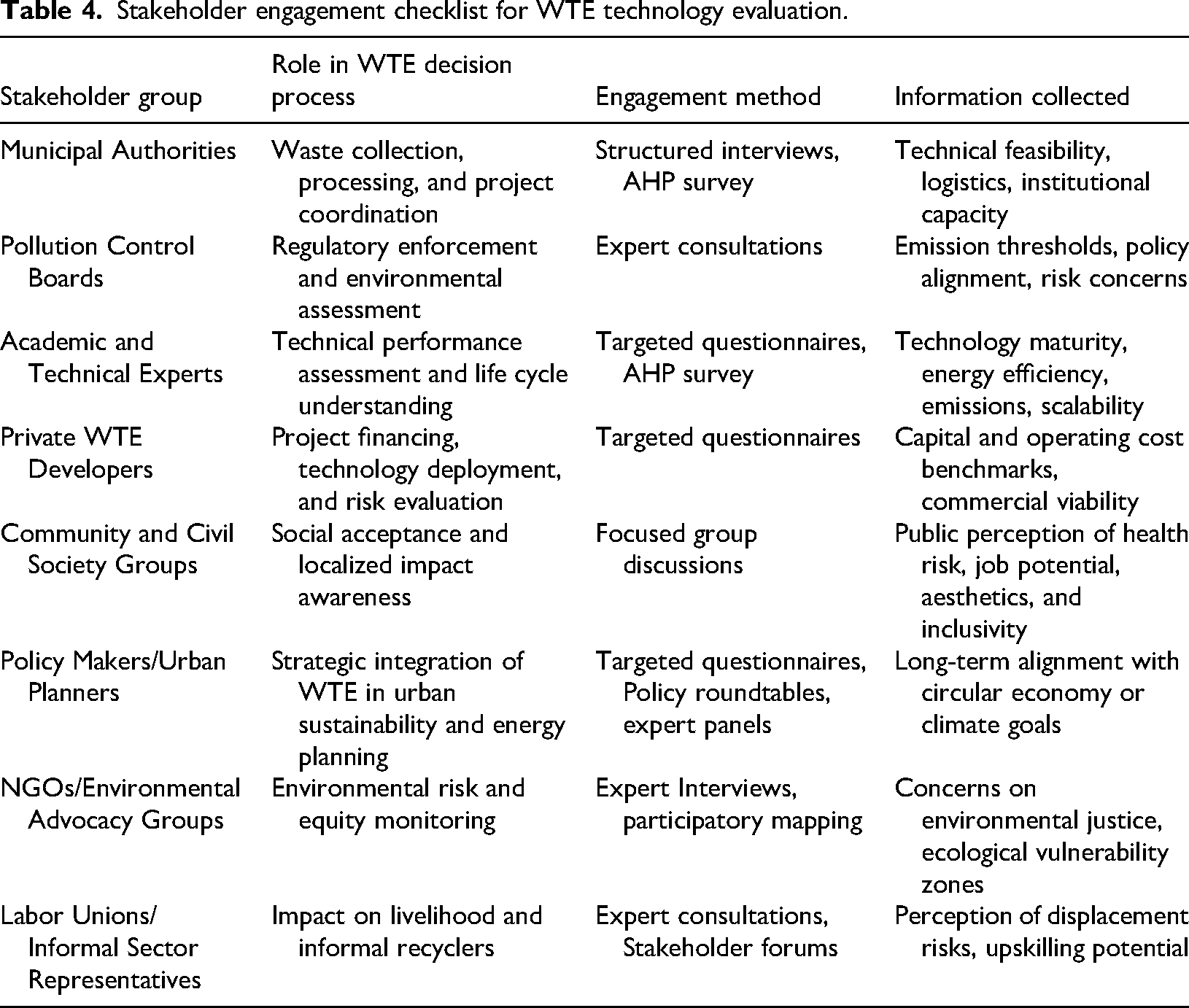
Stakeholder engagement is integral to the development of a robust and context sensitive decision model for WTE technology evaluation. It ensures that the model incorporates diverse perspectives from key actors across the WTE value chain, including government institutions, municipal agencies, private investors, technology developers, academic experts, and civil society representatives. In this study, structured surveys were administered to a panel of fifteen stakeholders comprising municipal waste management officials, environmental regulators from state pollution control boards, WTE technology providers, academic researchers, private sector developers, and representatives from non-governmental organizations involved in urban sanitation and community health. These stakeholders were engaged through a combination of structured interviews, expert consultations, targeted questionnaires, and focused group discussions.
Table 4 presents the Stakeholder Engagement Checklist used to ensure comprehensive and balanced input during the evaluation WTE technologies. Each stakeholder group was aligned with all of the five primary evaluation domains: environmental, economic, energy-related, socio-economic, and elemental considerations. Key contextual constraints such as financial limitations, regulatory demands, and public acceptance were mapped alongside externalities like socio-political influences, waste heterogeneity, and environmental policy structures. Additionally, major uncertainties including feedstock variability and energy market volatility were also factored in. The overarching goal was defined as achieving sustainable and efficient solid waste management. The detailed set of questions administered to stakeholders is provided in a separate supplementary file for reference. Stakeholder participants provided linguistic judgments, guided by a corresponding quantitative scale, to compare the relative importance of sub-criteria within their domain of expertise. These responses were then translated into triangular fuzzy numbers and to construct the fuzzy pairwise comparison matrices for each evaluation domain, forming the foundation for the decision model in the subsequent step. This approach ensured that weighting of criteria captured a balanced and technically informed consensus, grounded in both regulatory realities and socio-environmental priorities relevant to the Indian solid waste context.
Stakeholder engagement checklist for WTE technology evaluation.
Selection of alternative WTE technologies
The selection of alternative WTE technologies is a critical step in optimizing solid waste management systems. In the context of MCDA, this process involves systematically evaluating multiple WTE options against a diverse set of technical, environmental, and socio-economic criteria to identify the most suitable solutions. Figure 6 outlines key alternative WTE technologies and their primary outputs (Malinauskaite et al., 2017). This highlights the diversity in output products (biocrude, syngas, biogas, char), validating the inclusion of product footprint, hydrogen recovery, and energy conversion ratio in our criteria set.

A simplified schematic representation of various WTE technologies along with their primary output.
The five alternative WTE technologies considered are Incineration, AD, Pyrolysis, Gasification, and HTL, which exhibit notable differences in operational efficiency and environmental performance. Incineration, while widely implemented, is associated with high emissions and comparatively lower energy recovery. AD is effective for wet, biodegradable waste streams but offers limited energy yield. Pyrolysis and Gasification demonstrate improved energy conversion and reduced emissions, particularly for dry waste. HTL, however, shows superior performance in processing mixed wet waste with high energy efficiency and lower environmental impact, positioning it as a leading advanced WTE option.
Similarly, it is essential to acknowledge that certain waste disposal techniques involve significant capital and operational costs due to advanced technological requirements and intensive manpower demands. Consequently, not all countries, particularly those with limited financial resources, can afford such processes, especially when they offer minimal returns on investment (Khan and Kabir, 2020). In such contexts, cost effective techniques that balance affordability and performance are often prioritized over expensive methods with marginal efficiency gains (Hoang et al., 2022). Additionally, the energy efficiency of a waste disposal process can be assessed by contrasting the energy consumed during its execution to the energy recovered. Processes with high energy demands may still be deemed suitable if paired with technologies capable of recovering an equivalent or greater proportion of energy. Ultimately, the ideal waste disposal technology must achieve a delicate balance between energy efficiency, economic feasibility, and environmental sustainability. It should ensure effective waste management, minimize adverse environmental impacts, and remain adaptable and viable across diverse socio-economic contexts.
Establishment of evaluation criteria
The next step in the MCDA process involves the establishment of evaluation criteria, which serves as the foundation for comparing alternative WTE technologies. The evaluation criteria were developed through an iterative process involving (i) review of international WTE literature, (ii) alignment with India's Solid Waste Management Rules (2016), and (iii) two rounds of expert consultation to ensure relevance to mixed, unsegregated MSW conditions. The criteria were organized into five dimensions: external, technical, energy, environmental, and economic/socio-economic for a comprehensive and balanced assessment. Data and information, for the calculation of the above index, were obtained from scientific research, review papers, newspaper articles, and reputable institutional publications through the Google search engine. Key parameters were identified through an extensive literature review, ensuring comprehensive coverage of technological, environmental, and economic dimensions, providing a robust framework for multifaceted evaluation, enabling accurate and balanced analysis of processes across critical aspects essential for informed decision making.
This study incorporates a holistic framework encompassing elemental, environmental, energy, economic, socio-economic factors, and additional parameters like collection, storage, transportation, and compositional variability. By offering a nuanced analysis of these dimensions, the study highlights the strengths, weaknesses, and applicability of various WTE techniques. These factors can be broadly categorized into five groups: technical, environmental, energy, economic, and socio-economic factors, along with two additional parameters such as Collection, storage and Transportation and Compositional variability. The list of parameters considered for obtaining the index is detailed in Figure 7. The criteria presented form the basis for constructing FAHP pairwise comparison matrices and subsequent weighting, ensuring comprehensive representation of technical, economic, and environmental factors.

List of parameters considered for calculation of comprehensive index (CI).
Collection, Segregation and Transportation of solid waste are critical steps in waste management, ensuring that waste is efficiently gathered, properly sorted for recycling or disposal, and safely stored and transported to treatment or disposal facilities. The ability of the specific solid waste management practise to handle the above-mentioned processes help minimize environmental impact and enhance the efficiency of waste management systems (Turcott Cervantes et al., 2018).
Compositional variability of solid waste reflects the varied nature of materials discarded, including organic, recyclable, and hazardous components. Understanding this variability is crucial for designing effectively operative waste management strategies that optimize recycling, treatment, and disposal processes. This factor considers the process's capability and efficiency in managing the diverse compositions of solid waste requiring treatment (Adeleke et al., 2021).
Elemental Carbon and Hydrogen recovery from WTE technology is crucial as it transforms waste into valuable carbon-based products, reducing landfill use and promoting resource efficiency. When carbon-rich waste is disposed of via open dumping, it not only represents a lost opportunity for resource recovery but also contributes to environmental pollution and greenhouse gas emissions. Assessing this factor quantitatively illustrates the processes’ effectiveness in reclaiming and recycling carbon that would otherwise be squandered (Wienchol et al., 2020; Wyman, 1994).
Energy-related factors in WTE domain are essential parameters that help in analysing the energy feasibility of a process. Energy recovery measures the amount of usable energy obtained from the primary product as against to the feedstock energy (Siddiqi et al., 2020). The process’ efficacy is indicated by the Energy conversion ratio, which calculates how well waste is converted into energy (Sangeeta et al., 2014). The Net energy ratio, which compares the energy produced to the energy consumed in the process, is a crucial indicator for assessing WTE technology's overall sustainability and energy efficiency (Permpool and Gheewala, 2017).
Environment-related factors can be efficiently represented by Ecological Footprints. Footprint is a metric that quantifies the consumption of natural resources by human activities. The footprint framework offers a versatile and efficient method for representing environmental analyses (Gao et al., 2021). Energy footprint (ENF) can be defined as the total amount of CO2 eq. emitted based on energy usage of different energy carriers for the process of production of one functional unit of alternative energy (Bicer and Dincer, 2018). Emission footprint (EMF) is defined as the total amount of CO2 eq. emitted during the final energy usage of one functional unit of alternative energy (Capaz et al., 2021). Product footprint (PF) encompasses the total waste generated throughout the alternate fuel manufacturing process, quantified in CO2 eq. units. This includes waste in all states (solid, liquid, and gaseous) alongside byproducts from auxiliary processes per functional unit of alternate energy produced. The context allows for straightforward upgrades, promoting sustainability, and also takes into account the by-products of the production process (Chavez-Rodriguez and Nebra, 2010). Carbon footprint (CF) represents the total amount of GHGs and non-GHGs, emitted over the full lifecycle of the process (Mathur et al., 2022). Land footprint (LF) encompasses the amount of productive land (includes requirement and reusability) for the manufacture of one functional unit of alternate energy produced, Land is a rapidly diminishing resource with an insatiable demand. Therefore, it is crucial to minimize the land requirements for any conversion process. Additionally, the recoverability of utilized space must be considered (Banerjee et al., 2020). Water footprint (WF) depicts the consumption of virtual water (direct and indirect) for the production of one functional unit of alternate energy produced (Hogeboom, 2020).
Economic factors including Capital cost and Operating cost, such as financial resources and manpower are crucial for practical establishment of a technology. The cost of a process is a key determinant in the initiation of any industry. Certain processes, despite being environmentally sustainable, may not be economically feasible due to the associated costs (Perčić et al., 2020). Also, the need for skilled labour is another constraint that needs to be considered in calculation of a comprehensive index. This parameter is critical for determining the technical expertise required to operate a process facility. The process's overall cost rises because skilled personnel are more expensive than unskilled workers (Gutiérrez Ortiz, 2020). Therefore, various techniques for managing solid waste were evaluated based on their initial capital investment required, operational and maintenance costs, wherever applicable.
Socio economic factors like which refer to the viability of carrying out solid waste treatment procedures on a smaller scale is known as Localization. This is important because treating garbage at the home or rural level improves the effectiveness of waste disposal and benefits the economy of the region (Pryshliak et al., 2021). These methods can be implemented in small, localized pilot plant setups or within an industrial complex, depending on the requirements. The localization parameter was used to evaluate the feasibility of implementing waste conversion procedures on a rural scale. Additionally, the unexpected effects of processes on their surroundings (both positive and negative) are addressed by the Societal Acceptance parameter. It is necessary to take into account how these processes affect the day-to-day lives of the local population. For instance, a process may cause significant air, water and noise pollution despite its high efficiency. Similarly, a process requiring extensive construction activities can negatively impact society. Thus, societal acceptance is crucial for the practical implementation of new technology, as it plays a key role in its success and sustainability (Pryshliak and Tokarchuk, 2020).
In conclusion, the second step of the MCDA process effectively combines stakeholder identification, selection of alternative WTE technologies, and establishment of evaluation criteria to create a comprehensive and participatory decision-making framework. Engaging relevant stakeholders ensures that the evaluation reflects diverse perspectives and local priorities. The careful selection of WTE alternatives provides a focused set of options for assessment, while the systematic development of criteria enables a structured and balanced comparison. Collectively, these components lay a strong foundation for the subsequent stages of MCDA, supporting the identification of the most suitable and sustainable WTE technology for solid waste management.
Developing a decision-making model for WTE technology comparison
To facilitate a structured and rational comparison of WTE technologies, the Analytic Hierarchy Process (Crisp AHP) was adopted as the decision-making framework, owing to its effectiveness in analysing complex problems involving multiple, and often conflicting, evaluation criteria. AHP enables pairwise comparisons and consistency checks, ensuring reliable prioritization of factors. The derived weightages reflect the relative importance of each criterion, offering valuable insight into the decision drivers. These quantitative weightages support informed selection of optimal WTE technologies aligned with strategic, environmental, and socio-economic objectives. To address inherent uncertainties and subjectivity in expert judgments, a FAHP extension was also considered, enabling more nuanced prioritization through the integration of fuzzy logic with traditional pairwise comparisons.
Following the derivation of normalized weights for each criterion through the FAHP, FTOPSIS to rank the five selected WTE technologies was implemented. The integration of FAHP and Fuzzy TOPSIS forms a hybrid multi criteria decision analysis (H-MCDA) framework, wherein FAHP effectively incorporates expert uncertainty and subjectivity in the weight determination phase, while Fuzzy TOPSIS extends this fuzzy logic into the performance evaluation phase, enabling the ranking of alternatives based on their relative closeness to fuzzy ideal and non-ideal solutions. This hybrid methodology enhances the robustness, transparency, and applicability of the decision model, especially in contexts involving ambiguity, linguistic inputs, and multidimensional stakeholder perspectives. Thus, Fuzzy pairwise comparison matrices were developed using linguistic scales mapped to triangular fuzzy numbers. Each matrix was defuzzified using the centroid method, and AHP consistency ratios (CR < 0.1) were calculated to ensure acceptable consistency. Fuzzy reciprocity and monotonicity checks were also performed to verify that expert judgments satisfied the logical interval constraints of FAHP. For F-TOPSIS, the aggregated fuzzy decision matrix was normalized using min–max normalization for triangular fuzzy numbers. The FPIS and FNIS were then derived for all benefit and cost criteria. Distances of each alternative from FPIS and FNIS were computed using the vertex fuzzy Euclidean distance method, and the CCi for each alternative was calculated to determine the final ranking, where higher CCi values indicate better performance.
The insights collected from Stakeholder Identification and Engagement for Criteria Definition and Prioritization section were instrumental in both the selection and aggregation of evaluation criteria used in the AHP and the subsequent TOPSIS based ranking. Particular attention was given to qualitative and non-quantifiable criteria such as social acceptance, localization, and policy alignment, which are often underrepresented in quantitative analyses but are critical for practical deployment, especially within the Indian urban context. Moreover, stakeholder inputs helped define the linguistic variables and preference scales used in the fuzzy extension of the TOPSIS model, ensuring that subjective assessments, such as community perception, environmental risk tolerance, and regulatory readiness, were systematically captured. This inclusive and iterative engagement process contributes to a decision-making framework that is both technically rigorous and socio-politically grounded.
Results
Criteria weight derivation using AHP
Stakeholder responses were systematically employed to construct the pairwise comparison matrices for both the Crisp and Fuzzy AHP models. The qualitative judgments provided by stakeholders were translated into quantitative values using a standardized linguistic comparison scale, with corresponding numerical values and Triangular Fuzzy Numbers (TFNs) applied for Crisp and Fuzzy AHP, respectively. This approach ensured consistency in interpretation and analysis. The detailed MATLAB comparison matrices, computation outputs, including intermediate steps and consistency checks, are provided in Supplementary File for reference and transparency. These normalized weights derived through FAHP for the selected evaluation criteria reflecting the relative importance of each criterion as determined by expert and stakeholder inputs. Table S2 has portrayed the FAHP Linguistic Scale and Corresponding Saaty and Triangular Fuzzy Numbers (TFNs) for Pairwise Comparisons.
The Crisp AHP and Fuzzy AHP was implemented in MATLAB to calculate the relative weights of each evaluation criterion, and the resulting values are presented in Table 5. These weights, expressed as normalized fuzzy values, represent the aggregated expert judgment under uncertainty and provide a quantitative approximation of stakeholder priorities, effectively capturing the relative importance of each criterion and its perceived influence on the overall decision-making process in WTE technology selection. Standard AHP consistency checks were then applied to the defuzzified matrices: the Consistency Index (CI) and Consistency Ratio (CR) were computed and accepted when CR < 0.10. For the main criteria matrix the computed values were CI = 0.03818 and CR = 0.025624, confirming acceptable consistency (see Supplementary Table S5).
Relative weights of evaluation criteria calculated using crisp AHP and fuzzy AHP methodologies.
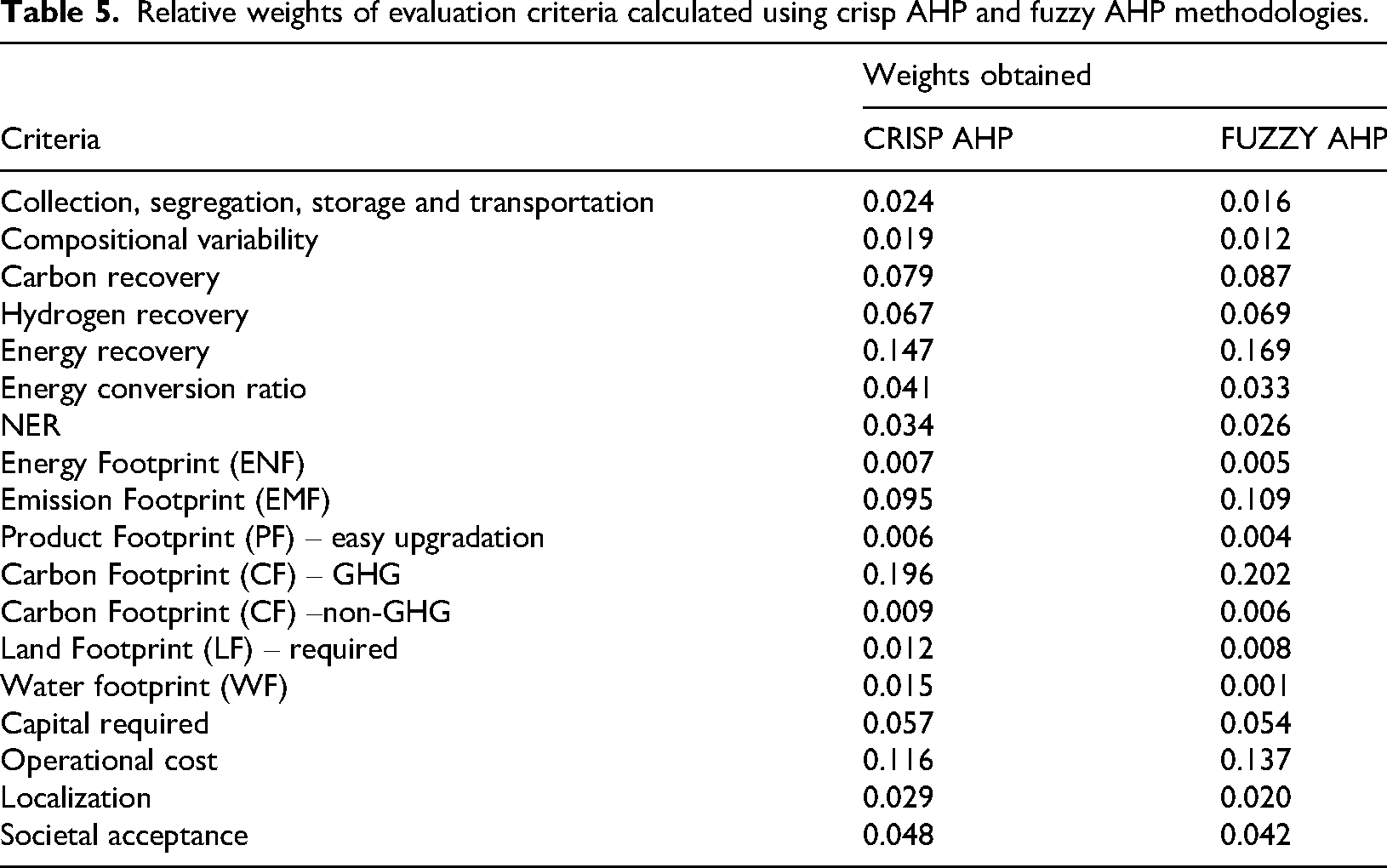
The findings from the AHP analysis presented in Table 5 demonstrate a clear prioritization of environmental factors in the selection of WTE technologies. Environmental criteria, particularly those associated with environmental footprints, such as energy, emissions, carbon (GHG and non-GHG), product upgrade potential, land, and water, constitute the largest share of the total decision weight, accounting for 34.0%. This underscores the significant emphasis placed on environmental sustainability, regulatory alignment, and the minimization of ecological impacts in the decision-making process. Elemental and energy recovery metrics, encompassing carbon, hydrogen, and energy recovery efficiencies, follow closely with contributions of 29.3% under crisp AHP and 32.5% under fuzzy AHP conditions as unveiled from Tables S3 and S4. For full transparency of the FAHP hierarchy, the complete set of main, local, and global weights (for both Crisp AHP and Fuzzy AHP) is provided in Supplementary Table S5. The global weights reported in the main manuscript are those used in the Fuzzy TOPSIS evaluation. When combined, environmental and recovery-related parameters contribute approximately 63.5% and 66% of the total weight under crisp and fuzzy evaluations, respectively. This highlights the pivotal role of a technology's capacity to efficiently extract and convert energy from heterogeneous waste streams in the evaluation framework and context.
Economic considerations, such as, capital and operational expenditures, account for 17.3% and 19.1% of the total weight under crisp and fuzzy AHP, respectively. Although cost remains a relevant factor, it is clearly subordinate to environmental and energy recovery concerns, reflecting a preference for technologies that optimize sustainability performance over short-term financial outlay. Socio-economic factors, including localization and societal acceptance, receive low priority, contributing just 6.7% and 7.2% under crisp and fuzzy analyses, respectively. Interestingly, energy conversion metrics such as Net Energy Recovery (NER) and Energy Conversion Ratio (ECR) exhibit comparable weightings, at 7.5% and 5.9%, indicating that these parameters are similarly regarded as secondary relative to broader environmental and technical considerations. NER and ECR can be significantly enhanced through energy integration measures such as waste heat recovery and cogeneration systems, as well as the adoption of hybrid and integrated WTE configurations. These factors are highly amenable to improvement through system design and operational enhancements, thereby justifying their secondary prioritization in the decision-making framework. Also, a proportional ±10% variation of the FAHP global weights showed that the hybrid FAHP–FTOPSIS model is robust to moderate changes in criteria weights.
Overall, the dominant weighting of environmental and energy-related criteria aligns closely with the objectives of the United Nations Sustainable Development Goals (SDGs), particularly SDG 7 (Affordable and Clean Energy) and SDG 13 (Climate Action). This reflects a strategic orientation toward the adoption of advanced, low emission, high efficiency WTE technologies capable of supporting climate resilience and sustainable urban infrastructure. Thus, the evaluated criteria weights provide a robust system of checks and balances, ensuring a balanced analysis despite variations in the impacts of different processes. The Fuzzy AHP values were chosen and were considered appropriate based on a comprehensive review of all technologies and relevant literature.
Performance evaluation and ranking of alternatives using Fuzzy TOPSIS
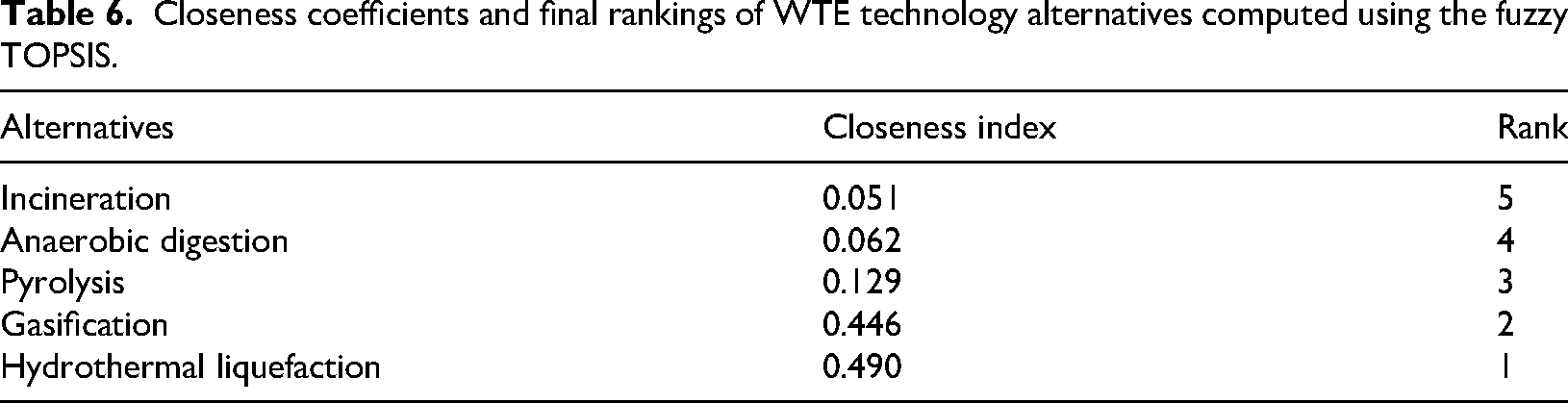
A unified fuzzy decision matrix suitable for Fuzzy TOPSIS analysis was developed by transforming qualitative stakeholder inputs into triangular fuzzy numbers using a standardized linguistic to TFN conversion table. This matrix formed the basis for evaluating and ranking the five alternative WTE technologies. The Fuzzy TOPSIS method was systematically implemented in MATLAB to compute the closeness coefficients of each alternative, and the resulting rankings are presented in Table 6. Detailed MATLAB-based computational procedures are provided in Supplementary File. Also, based on the nature and directional impact of each evaluation criterion, 10 criteria were classified into cost and benefit type for the Fuzzy TOPSIS analysis. Criteria such as Collection, transportation and Storage and Compositional variability, Environmental and Resource Footprints and Costs were treated as cost type, where lower values are preferred, and thus associated with the Fuzzy Negative Ideal Solution (FNIS). In contrast, criteria like Energy and Elemental Recovery and Societal acceptance and Localization were considered benefit type, aligned with the Fuzzy Positive Ideal Solution (FPIS), where higher values are desirable. Table S6 has exhibited the Linguistic Scale and Numerical Equivalents for Fuzzy TOPSIS.
Closeness coefficients and final rankings of WTE technology alternatives computed using the fuzzy TOPSIS.
In addition, Tables S6, S7 and S8 represent the Linguistic Scale and Numerical Equivalents for Crisp and Fuzzy TOPSIS and Decision matrix for each respectively.
It can be seen from Tables 6 and S9 that, HTL emerged as the top-ranked WTE technology in the Fuzzy TOPSIS analysis, with the highest closeness coefficient (0.490), significantly outperforming gasification (0.446), pyrolysis (0.129), AD (0.062) and incineration (0.051). This superior ranking is technically justified by HTL's advanced elemental and energy recovery efficiency, particularly its ability to convert high-moisture organic waste into energy dense bio crude, minimizing the need for energy-intensive drying steps typical of other thermochemical processes. Additionally, HTL exhibits a compact operational footprint, lower air emissions, and potential for carbon sequestration through bio char utilization, making it highly aligned with environmental sustainability goals (Mahadevan et al., 2025). Thus, based on the conducted study, it can be inferred that the management of mixed household waste and its transformation into utilizable energy is critically essential and among the evaluated alternatives, HTL, closely followed by Pyrolysis and Gasification. Notably, all aforementioned technologies are under extensive investigation and are in the early phases of practical deployment (Abnisa et al., 2021; Mishra et al., 2022; Sapariya et al., 2021), although Pyrolysis and Gasification have been implemented on a significant scale with limited success (Ghadge et al., 2022; Vaishnavi et al., 2023b).
Particularly, HTL, the current preferred conversion technology for HHW, is being intensely researched, particularly focusing on process optimization to maximize bio crude yield using hydrothermal solvents and various catalysts (Vaishnavi et al., 2023a; 2024). Additionally, various upgrading processes are being examined for their effectiveness and suitability in converting the resulting bio-crude into usable liquid fuel for transportation and other major applications (Ghadge et al., 2022; Jatoi et al., 2022; SundarRajan et al., 2021). The creation of useful byproducts like fuel and char as well as the possibility of energy recovery are two of these technologies’ noteworthy advantages. However, the substantial energy demands and challenges associated with process localization present significant concerns. One of the primary factors contributing to the inefficacy of the aforementioned nascent technologies, despite their higher energy efficiency and environmental friendliness, is their economic feasibility, which hinders practical deployment.
In contrast, AD needs to be excluded from the analysis due to its inherently poor performance across multiple criteria, including negligible energy recovery, extensive land use and high methane emissions. Also, it scored moderately in environmental terms but is limited by its narrow feedstock flexibility and lower net energy recovery, particularly when handling heterogeneous MSW. Landfilling is among the second least effective solid waste handling and WTE methods. This low rating is due to the fact that many landfills require specific feedstock conditions and lack essential technical capabilities for landfill gas capture, rendering them unsanitary (Mohan and Joseph, 2021; Siddiqua et al., 2022). In the South Asian context, a significant portion of collected solid waste is subjected to open dumping, leading to the release of harmful gases (Aluko et al., 2022; Mohan and Joseph, 2021). Furthermore, incineration, the most widely used WTE process globally, has faced significant criticism due to its environmental drawbacks and feedstock demands (Hoang et al., 2022; Khan et al., 2022). Incineration, while benefiting from established infrastructure and regulatory frameworks, was ranked lowest among the selected alternatives due to its relatively high GHG and non-GHG emissions, limited material recovery and public opposition with regards to air pollution.
In the Indian context, current waste management techniques, such as incineration and landfilling, are exacerbating issues rather than providing solutions. HTL ranked highest primarily because its operating conditions are intrinsically compatible with the heterogeneous and high-moisture composition of Indian MSW. HTL bypasses the energy-intensive drying steps required in pyrolysis and gasification, enabling higher carbon and hydrogen recovery, enhanced energy conversion efficiency, and reduced pre-processing costs. In addition, HTL generates a biocrude with favourable energy density and lower heteroatom content compared to pyro-oil, contributing to superior emission metrics. Gasification ranked second due to its high syngas yield, lower GHG emissions relative to incineration, and better tolerance toward mixed-plastic fractions; however, its performance is limited by the need for cleaner, more uniform feedstocks and its sensitivity to moisture. Pyrolysis performed third, owing to its dependence on low-moisture, well-segregated waste streams and the inferior stability and upgradability of pyro-oil relative to HTL biocrude. The overall ranking therefore reflects a strong alignment between HTL's process fundamentals and the physicochemical characteristics of mixed Indian MSW, as well as its superior environmental and product-quality advantages.
While HTL is identified as the most suitable WTE technology, several practical considerations may influence its large-scale adoption. HTL requires high-pressure reactors, robust materials of construction, and often catalytic enhancement, which collectively increase capital and operational expenditure. Catalyst deactivation, corrosion, and handling of aqueous by-products may impose additional technical challenges. Gasification and pyrolysis, although technically mature, face limitations with heterogeneous and high-moisture Indian MSW, requiring extensive pre-segregation and drying that increase cost and reduce net energy return. Furthermore, the economic feasibility of all three thermochemical routes is sensitive to market demand for syngas, biocrude, and char, as well as regional regulatory frameworks. These constraints indicate that while HTL performs best under the model assumptions and current criteria weights, real world deployment may require complementary policy, infrastructure, and cost-optimization strategies. Therefore, it is imperative that emerging technologies like HTL, pyrolysis, and gasification go through application-based optimization in every parametric dimension and be given priority as substitutes for current methods in upcoming implementations because of their incredibly effective and sustainable qualities. This technology demonstrates immense potential, and when effectively harnessed, it can serve as a transformative solution to address the current waste management and energy crisis challenges.
Discussions
Mixed household waste as HTL feedstock
This study proposes HTL as a promising conversion strategy for processing diverse feedstocks, particularly mixed household waste, into valuable products. Given India's challenges with source segregation, HTL's ability to handle unsegregated waste makes it a viable solution for both current waste management and legacy waste remediation in open dumps, mitigating environmental harm while promoting sustainability. WTE technologies offer dual benefits by addressing disposal challenges and capturing energetic fractions to enhance energy sustainability (Mary Joseph et al., 2020). However, optimal WTE feedstock utilization requires advanced sorting and preprocessing systems, along with public engagement to ensure environmental and health concerns are addressed (Sun et al., 2019). It is essential to comprehend the makeup of solid waste feedstocks for realizing the potential of HTL.
HTL feedstocks span a wide range, including microalgae, macroalgae, lignocellulose, food waste, manure, and sludge, categorized into three main types: aquatic biomass, agricultural and forestry residues, and industrial/household wastes (Dimitriadis and Bezergianni, 2017; Fan et al., 2023; Lu et al., 2022). Materials like municipal sludge, food waste, and tires are significant in the industrial/household category due to their high organic content (Sahoo et al., 2021). Combining different feedstocks, such as algal and lignocellulosic biomass, may optimize the HTL process. Specifically, lignocellulosic biomass is a promising sustainable substitute for fossil fuels, providing a good supply for hydrothermal conversion, which produces chemicals (Beims et al., 2020; Gundupalli et al., 2022; Okolie et al., 2022).
Given the variability in waste composition, adaptable HTL techniques are essential. Optimizing feedstock, temperature, pressure, and residence time is necessary for effective system performance. Understanding waste characteristics such as carbon content, moisture levels, and non-organic elements is crucial for process efficiency. To enhance HTL, pre-treatment strategies focused on energy efficiency and eco-friendly waste management must be developed, positioning HTL as a promising technology for both waste management and environmental sustainability.
Compositional variability of mixed household wastes
Solid waste originates from diverse sources, exhibiting significant physical and chemical variability, necessitating composition analysis for effective WTE utilization. Classified into municipal, industrial, construction, electronic, hazardous, agricultural, and biomedical waste, its heterogeneous nature demands flexible WTE technologies for efficient resource recovery, environmental protection, and cost reduction while minimizing ecological impact (Gautam and Agrawal, 2021; Maalouf and Mavropoulos, 2023).
Organic matter, comprising the largest fraction of solid waste, about 40–70%, depending on location, includes decomposable materials like food and trimmings, offering significant energy potential. This fraction is central to WTE processes, converted into bioenergy via AD or incineration (Maalouf and Mavropoulos, 2023). Paper and cardboard, making up 20–30% of waste, enhance the calorific value of waste streams when not recycled (Silva de Souza Lima Cano et al., 2022). Plastics, though challenging to recycle, are energy-rich and valuable for WTE technologies such as pyrolysis, presenting opportunities for efficient energy recovery and these components underscore the importance of tailored WTE approaches for diverse waste streams (Edjabou et al., 2021). Metals, comprising 5–10% of solid waste, are economically and environmentally valuable for recycling, reducing the need for virgin resource extraction. Advanced sorting facilitates metal recovery. Glass, textiles, and miscellaneous items form the residual waste fraction, contributing to the diversity of solid waste streams (Ganguly and Chakraborty, 2021; Sharma and Jain, 2019).
The composition of solid waste varies significantly due to factors like seasons, weather, population density, urbanization, and socioeconomic influences (Adeleke et al., 2021, 2023). Holidays and festivals typically result in a surge in organic waste generation, whereas urban regions predominantly contribute higher volumes of packaging waste. In contrast, rural areas are characterized by increased production of organic and agricultural residues (Nguyen et al., 2020). Evolving consumer behaviours, technological advancements, and cultural shifts further alter the types and quantities of waste materials. Thus, these variations emphasize the challenge of waste management, necessitating adaptable strategies to address the dynamic nature of waste streams effectively (Boulet et al., 2021). Sophisticated sorting and preprocessing technologies are essential to address the heterogeneity of solid waste for effective WTE integration. A comprehensive understanding of waste composition and variability is crucial for unlocking its energy potential, optimizing recovery processes, and building resilient waste management systems and the development of sustainable WTE solutions within existing frameworks.
Energy recovery potential of mixed household waste
Solid waste holds significant energy recovery potential for WTE processes, influenced by feedstock availability and quality, which affect techno-economic and environmental outcomes. Segregation at source and pre-processing are critical for maximizing efficiency. Stringent regulations and aggressive recycling targets can alter waste stream characteristics, impacting their availability and suitability for WTE (Scarlat et al., 2019). The energy recovery potential is strongly tied to the composition of waste, typically including organic material, paper, plastics, metals, and other items. Mixed MSW streams commonly consist of food, paper, plastic, glass, and metal, emphasizing the need for effective management strategies for optimal energy recovery (Ghosh et al., 2019).
The composition of the solid waste that highly affects its calorific value, indicating that a solid waste sample with a large proportion of organic material holds a higher calorific value, thus iterating the importance of proper sorting and pre-processing technologies (Azam et al., 2020). Basically, calorific value is an indicator of the heat obtained after combustion, and it determines to a greater extent the energy potential available in the solid wastes. The International Energy Agency has given an average calorific value greater than 7.9 MJ/kg waste for effective incineration with energy recovery operation; additionally, the World Bank study recommended that an average calorific value greater than 7.1 MJ/kg waste for effective energy recovery (Amen et al., 2021). This difference in the prerequisite of calorific values of the waste streams can be attributed to the fact that the fraction of paper, plastic, and textile components is large, while the proportion of biodegradable materials is relatively low in the waste streams of developing countries than those in developed nations (Yong et al., 2019).
All WTE practices fundamentally rely on the segregation of waste, as the efficiency, environmental sustainability, and techno-economic feasibility of these processes are directly influenced by the composition and calorific value of the feedstock. Segregation enhances the quality of the feedstock by isolating components suited to specific WTE technologies. For instance, incineration requires a consistent calorific value of 10–12 MJ/kg and is viable for unsegregated solid waste containing significant amounts of plastic, paper, and cardboard (Yaman, 2020).
Emerging technologies such as pyrolysis and gasification also depend on feedstock characteristics. Pyrolysis is optimal for waste streams with refractory organic components like paper and non-biodegradable elements such as plastics, while gasification is similarly suited to these materials. However, the presence of inorganic elements or contaminants like metals and glass can hinder performance. AD, on the parallel side, is more effective when organic waste is separated, as contaminants like plastic, metal, and glass adversely affect its performance. Separate collection of organic waste significantly enhances the energy recovery potential of AD processes (Kumar and Samadder, 2020). Whereas, HTL is particularly promising due to its ability to process high-moisture waste without drying and its avoidance of toxic gas emissions seen in gasification. Effective MSW utilization requires addressing heterogeneity, contaminants, and public concerns, while waste composition, impurity levels, and collection efficiency critically influence WTE process selection to minimize environmental effect and maximize efficiency.
Conclusion and research directions
This study presented a hybrid Fuzzy AHP–Fuzzy TOPSIS MCDA framework to evaluate five major WTE technologies for mixed and unsegregated MSW in India. Through the integration of eighteen evaluation criteria spanning environmental performance, energy and elemental recovery, economic feasibility, and socio-economic considerations, weighted using expert assessments obtained from fifteen stakeholders across regulatory, industrial, academic, and municipal decision-making bodies, the model captured the complex and uncertain real-world conditions associated with WTE planning. The prioritization results from FAHP highlighted environmental sustainability and energy recovery as the most influential decision parameters, reflecting the increasing significance of low-emission and high-efficiency conversion pathways in national waste policy.
The subsequent Fuzzy TOPSIS ranking revealed HTL as the most suitable technology for Indian mixed MSW, followed by gasification and pyrolysis, while AD and incineration ranked lower due to limited energy conversion potential and comparatively higher environmental burdens. HTL's superior performance is attributable to its capability to process high-moisture and compositionally variable feedstocks without the need for energy-intensive drying, yielding high-quality bio-crude with reduced emissions and lower land footprint. These findings provide the first evidence-based justification for the strategic prioritization of HTL within the Indian waste management sector and demonstrate the practical value of hybrid MCDA modelling in supporting technology selection, long-term investment planning, and sustainable implementation pathways.
Overall, this research establishes a robust, reproducible, and context-sensitive decision-support framework capable of guiding policymakers, municipalities, and WTE developers toward scientifically optimized and socially aligned waste processing solutions. Future work will expand the framework to incorporate dynamic economic scenarios, supply-chain uncertainties, techno-economic assessments, and integration of aqueous phase recirculation and catalyst-enabled process enhancements to support industrial-scale deployment and national energy transition goals. Further, the findings of this study offer several policy relevant insights for sustainable WTE planning under conditions of unsegregated MSW. At the national level, the results highlight the need for context-specific technology selection frameworks that go beyond single-criterion assessments and explicitly account for environmental performance, operational feasibility, and stakeholder priorities. Policymakers should prioritize technology portfolios rather than singular solutions, supporting decentralized and feedstock-adaptive WTE systems aligned with local waste characteristics.
From a governance perspective, the study underscores the importance of inclusive stakeholder engagement in infrastructure planning to improve social acceptance and regulatory effectiveness. Incentive mechanisms, such as targeted subsidies and performance-based standards, can support the adoption of technologies that demonstrate balanced environmental and energy outcomes. At the global level, the proposed evaluation framework is transferable to other developing and transitional economies facing similar challenges of heterogeneous waste streams, limited segregation, and resource constraints. By demonstrating the applicability of a comprehensive fuzzy multi-criteria approach, this study contributes to international efforts toward circular economy implementation, climate mitigation, and sustainable urban waste management.
Supplemental Material
sj-docx-1-eea-10.1177_01445987261427122 - Supplemental material for A hybrid fuzzy AHP-TOPSIS multi-criteria-based decision-making for evaluating waste-to-energy processes for mixed municipal solid waste in India
Supplemental material, sj-docx-1-eea-10.1177_01445987261427122 for A hybrid fuzzy AHP-TOPSIS multi-criteria-based decision-making for evaluating waste-to-energy processes for mixed municipal solid waste in India by Vaishnavi Mahadevan, S. Raja, Maher Ali Rusho, Vinoth Kumar Selvaraj, Jeyanthi Subramanian, Shubham Sharma, Krishna Prakash Arunachalam and Krishnaraj Ramaswamy in Energy Exploration & Exploitation
Footnotes
Acknowledgements
This work has received no funding from any of the sources.

Consent to publish
All authors have read and approved this manuscript.
Author contributions
Conceptualization: Vaishnavi Mahadevan, S. Raja, Maher Ali Rusho, Vinoth Kumar Selvaraj, Jeyanthi Subramanian; methodology: Vaishnavi Mahadevan, S. Raja, Maher Ali Rusho, Vinoth Kumar Selvaraj, Jeyanthi Subramanian; formal analysis: Vaishnavi Mahadevan, S. Raja, Maher Ali Rusho, Vinoth Kumar Selvaraj, Jeyanthi Subramanian, Shubham Sharma; investigation, Vaishnavi Mahadevan, S. Raja, Maher Ali Rusho, Vinoth Kumar Selvaraj, Jeyanthi Subramanian; writing‒original draft preparation: Vaishnavi Mahadevan, S. Raja, Maher Ali Rusho, Vinoth Kumar Selvaraj, Jeyanthi Subramanian; writing‒review and editing: Shubham Sharma, Krishnaraj Ramaswamy, Krishna Prakash Arunachalam; Supervision, Krishnaraj Ramaswamy, Krishna Prakash Arunachalam; project administration: Krishnaraj Ramaswamy, Krishna Prakash Arunachalam. All authors have read and agreed to the published version of the manuscript.
Funding
The authors received no financial support for the research, authorship, and/or publication of this article.
Declaration of conflicting interests
The authors declared no potential conflicts of interest with respect to the research, authorship, and/or publication of this article.
Data availability statement
All the characterizations, analysis, testing-related work and testing's have solely been responsible by Vaishnavi Mahadevan, S. Raja, Maher Ali Rusho, Vinoth Kumar Selvaraj, and Jeyanthi Subramanian. All the communications regarding the research ethics and integrity instances must solely be responsible by Vaishnavi Mahadevan, S. Raja, Maher Ali Rusho, Vinoth Kumar Selvaraj, and Jeyanthi Subramanian. Additionally, the raw data can be obtained on request from the corresponding authors, Vaishnavi Mahadevan, S. Raja, Maher Ali Rusho, Vinoth Kumar Selvaraj, and Jeyanthi Subramanian. In addition, the datasets used and/or analysed during the current study are available from the corresponding authors (Vaishnavi Mahadevan, S. Raja, Maher Ali Rusho, Vinoth Kumar Selvaraj, and Jeyanthi Subramanian) on reasonable request.
Supplemental material
Supplemental material for this article is available online.
Abbreviations
References
Supplementary Material
Please find the following supplemental material available below.
For Open Access articles published under a Creative Commons License, all supplemental material carries the same license as the article it is associated with.
For non-Open Access articles published, all supplemental material carries a non-exclusive license, and permission requests for re-use of supplemental material or any part of supplemental material shall be sent directly to the copyright owner as specified in the copyright notice associated with the article.
