




Abstract
The rapid accumulation of plastic waste and the continued reliance on fossil-derived gasoline necessitate sustainable and scalable waste-to-energy solutions. An integrated catalytic process is demonstrated that converts post-consumer polyethylene and polypropylene waste into super pyrolysis gasoline (SPG), a high-octane fuel. Pyrolysis at 450°C yields 70–75 wt% oil, from which the C5–C12 fraction is distilled and upgraded by hydrodesulfurization (350°C, 50 bar H2, Ni-Mo/Al2O3) and reforming/isomerization (500°C, Ni–ZSM-5). X-ray diffraction, X-ray photoelectron spectroscopy (XPS), and ammonia temperature-programmed desorption (NH3-TPD) confirm robust Ni dispersion and retained Brønsted acidity; operando DRIFTS/Raman reveals minimal coke deposition (D/G ≈ 0.45). DFT calculations indicate Ni sites lower C–C scission barriers by ∼0.3 eV, favouring branched and aromatic species. SPG achieves research octane number (RON) of 103, motor octane number (MON) of 91, <1 ppm sulfur, and a heating value of 45.8 MJ kg−1. In a 1.6 L turbocharged gasoline direct injection (GDI) engine, SPG attains 36.5% peak brake thermal efficiency (vs 33.9%/35.2% for RON 91/98), reduces BSFC to 232 g kW−1 h−1, and lowers CO, HC, and PM2.5 emissions up to 30%. Accelerated ageing (45°C, 30 days) shows <3% FTIR change, confirming storage stability. Techno-economic modelling of a 10 tpd facility estimates production costs of 25–28 INR L−1, compared to gasoline at 105–110 INR L−1, yielding a 40–50% margin. These results confirm the technical feasibility and practical potential of plastic waste-derived super pyrolysis gasoline as a high-performance, drop-in alternative fuel.
Keywords
Introduction
Global plastic production has escalated from approximately 250 million tonnes in 2008 to over 400 million tonnes in recent years, yet less than 10% of post-consumer plastic waste undergoes effective recycling. Most of the discarded polymers accumulate in landfills or natural environments, contributing to soil and water pollution, microplastic dispersion, and greenhouse-gas emissions. In parallel, the transportation sector remains heavily reliant on fossil-derived gasoline, which accounts for nearly a quarter of global CO2 emissions and is a primary source of regulated pollutants, including carbon monoxide (CO), nitrogen oxides (NO x ), unburned hydrocarbons (HC), and particulate matter (PM2.5). There is a critical need for scalable, sustainable waste-to-energy solutions that integrate plastic waste valorization with circular economy principles, reduce emissions, and support the transition to a low-carbon future in alignment with the UN sustainable development goals (SDGs).
Among emerging waste-to-energy strategies, thermochemical pyrolysis offers a scalable means to convert mixed plastic waste into valuable hydrocarbon streams. However, raw pyrolysis oils typically contain high levels of heteroatoms, have wide boiling-point ranges, and suffer from poor oxidative stability. These issues limit their direct use as transportation fuels. Catalysis plays a crucial role in upgrading these complex mixtures. Through hydrodesulfurization, isomerization, and aromatization, well-designed catalysts can remove impurities, narrow product distributions, and selectively enhance fuel quality for lower emissions and improved performance. Such catalytic approaches are essential for achieving the environmental and circular economy benefits of plastic waste valorization.
Zeolitic catalysts such as ZSM-5 have demonstrated exceptional performance in hydrocarbon cracking, aromatization, and skeletal isomerization. Incorporating transition metals like nickel into the zeolite framework introduces hydrogenation and dehydrogenation activity, which enables simultaneous contaminant removal and hydrocarbon restructuring. While recent studies have shown the effectiveness of Ni–ZSM-5 in converting model compounds and pure polyethylene to gasoline-range products, their application to real mixed-plastic pyrolysis oils and their validation in modern engine systems remain underexplored. The development of robust catalytic systems for the direct upgrading of actual plastic waste streams, with full fuel characterization and practical engine testing, is essential to advance plastic waste upcycling from laboratory demonstration towards sustainable energy solutions.
Literature survey
Conversion of plastic and related wastes into fuels has been explored extensively across engine testing, catalytic upgrading, process design, and life-cycle assessment. Yang et al. (2021) demonstrated that adding 10% polyoxymethylene dimethyl ethers (PODE) in gasoline-compression ignition (GCI) engines cuts nuclei-mode particle emissions by nearly two orders of magnitude. Fu et al. (2025) reported 100% conversion of oleic acid to gasoline-range hydrocarbons with 70.3% selectivity over MgO–NiO/SiO2, attributing performance to enhanced H2 dissociation and oxygen vacancies. Dharmaraj et al. (2022) critically reviewed COVID-19 plastic waste valorization, showing pyrolysis produces syngas and biohydrogen with far fewer emissions than incineration. Metal–organic frameworks and zeolites have improved pyrolysis yields and quality. Seyed Mousavi et al. (2022) used MIL-53(Cu)@Zeolite Y to obtain 37% gasoline yield (RON up to 93.5) from municipal waste. Kumar et al. (2024) found natural zeolite and kaolin catalysts boost polypropylene pyrolysis yield by 6.45%, enhancing aromatic content. Hsu (2012) performed an LCA of fast-pyrolysis biofuels, reporting gasoline-equivalent GHG emissions of ∼117 g CO2e/km, significantly below fossil counterparts when renewable electricity is employed.
Hydrothermal conversion offers wet-waste compatibility. Mumtaz et al. (2023) reviewed liquefaction, carbonization, and gasification in a circular-economy framework, noting economic challenges. Darko et al. (2023) compared mechanical, pyrolysis, and gasification recycling across economic regions, advocating chemical recycling in developed areas and mechanical methods in lower-income contexts. Procházka et al. (2024) demonstrated that automated optical NIR/VIS sorting surpasses manual sorting in purity and cost. Geri et al. (1999) proposed coupling plastic gasification with MHD topping cycles to enhance power-plant efficiency and mitigate corrosion. Solvent-based recovery and mechanical recycling address complex multilayer wastes. Georgiopoulou et al. (2021) recovered 95.5% PET from Tetra Pak® via selective dissolution and precipitation. Sathish et al. (2023) provided a mini-review of tyre pyrolysis, identifying tyre-derived oil, char, and gas as fuels, electrode materials, and industrial feedstocks, respectively, with favourable LCA outcomes. Recent reviews emphasize catalyst and process integration. Dai et al. (2024) surveyed advances in polyolefin pyrolysis, highlighting zeolites (e.g. ZSM-5) for selectivity and tandem catalysis. Recent advances have demonstrated that bifunctional Ni/HZSM-5 catalysts can efficiently upcycle polycarbonate plastic waste into high yields of cycloalkanes, leveraging the synergy between metal and acid sites for selective bond cleavage (Manal et al., 2023). Similarly, bimetallic Ru–Ni/H-Beta catalysts show high activity and selectivity for hydrodeoxygenation of polycarbonate-derived waste to jet-fuel-range cycloalkanes, highlighting the importance of metal synergy in catalyst design (Liu et al., 2023). Yim et al. (2024) showed that Ga-doped HZSM-5 converts plastic waxes into BTEX aromatics with high coke resistance. Venturelli et al. (2022) piloted mixed plastic/tyre pyrolysis, achieving syngas yields up to 26 wt% and an 11–12-year payback.
Engine-level studies confirm practical viability. Hunicz et al. (2024) blended up to 60% pyrolysis oil in CI engines, achieving stable combustion and up to 81% emissions reduction under optimized control. Mustayen et al. (2023) produced plastic-made diesel (PMD20) via vacuum distillation, improving thermal efficiency and cutting CO, HC, and NOx. Moonsin et al. (2025) characterized plastic-derived diesel substitutes with heating values (∼10 907 kcal/kg) on par with conventional diesel. An engineering perspective by Xayachak et al. (2022) highlighted feedstock variability, temperature, and catalyst choice, and advocated AI-driven process optimization. Misra et al. (2025) reviewed thermocatalytic pyrolysis of diverse plastics, underscoring catalyst roles, operating parameters, and oil upgradation techniques with calorific values of 44–45 MJ/kg.
Recent studies have further investigated plastic waste-derived fuels with emphasis on combustion behaviour, emissions mitigation, and process optimization. Vellaiyan (2023a) reported that pyrolysis fuels derived from medical plastic waste, when directly used or blended at higher proportions in diesel engines, resulted in increased brake-specific fuel consumption and regulated emissions, requiring fuel conditioning strategies such as water emulsification and cetane improvers. In a subsequent study, optimization of pyrolysis process parameters using response surface methodology significantly enhanced liquid fuel yield and improved physicochemical properties, although validation was limited to fuel characterization (Vellaiyan, 2023b). The application of carbon–metal oxide hybrid nanocomposite catalysts further improved pyrolysis oil yield and energy recovery potential, highlighting the importance of catalyst design in yield enhancement (Vellaiyan, 2024). A comprehensive assessment of greener reprocessing routes for medical plastic waste demonstrated improvements in energy efficiency and environmental metrics but did not include direct validation in modern gasoline engines (Vellaiyan, 2025).
Collectively, the existing studies demonstrate significant progress in plastic waste valorization through thermochemical and catalytic routes. However, most reported works address individual aspects such as catalyst development, pyrolysis optimization, or fuel characterization in isolation. Many studies rely on model polymers or simplified feedstocks and do not adequately account for the complexity and variability of real post-consumer plastic waste. In addition, comprehensive validation through modern engine testing and economic feasibility assessment is often lacking. These limitations highlight the need for an integrated approach that connects plastic waste conversion, fuel upgrading, real-world engine performance, and techno-economic viability, which forms the basis of the present study.
Research gap
Despite advances in catalytic plastic upcycling, several challenges remain before plastic-derived gasoline can become a true alternative to fossil fuels. Most studies use simplified feedstocks that do not reflect the complexity of real-world plastic waste, which often contains contaminants and a broad range of polymers. Catalyst durability under these practical conditions remains largely unproven. In addition, many upgrading steps such as sulfur removal, distillation, and reforming are often optimized in isolation, which can lead to higher energy consumption or reduced fuel quality. Furthermore, few studies have reported full engine validation, long-term fuel stability, or techno-economic assessment under realistic scenarios. A comprehensive approach that integrates catalyst development, multi-step refining, mechanistic understanding, engine validation, and techno-economic analysis is needed to realize sustainable plastic waste-to-fuel pathways. The challenges in large-scale deployment, such as feedstock logistics, hydrogen sourcing, and regulatory compliance, must be addressed to transition from pilot-scale demonstration to commercial viability.
Aim and objectives of the study
The aim of this study is to develop and validate an integrated catalytic process for converting real post-consumer polyethylene and polypropylene waste into a gasoline-range fuel suitable for direct engine application.
The specific objectives of the study are:
To develop and characterize a Ni–ZSM-5 catalyst for upgrading plastic-derived gasoline-range hydrocarbons, with emphasis on stability and coke resistance. To integrate plastic pyrolysis, fractional distillation, hydrodesulfurization, and catalytic reforming into a unified fuel production pathway. To evaluate the fuel properties of the produced super pyrolysis gasoline (SPG) in accordance with automotive standards. To assess the engine performance and emissions behaviour of the produced fuel in a gasoline direct injection engine. To examine the techno-economic feasibility of the proposed plastic-to-gasoline process.
Main contributions
The main contributions of this work are highlighted below.
These contributions advance catalytic plastic upcycling as a viable, energy-efficient route to drop-in transportation fuels, with strong potential for decentralized processing, scalability, and integration into existing refinery and circular-economy infrastructures.
Novelty and need of the study
While previous studies have investigated plastic pyrolysis and catalytic upgrading routes, most focus on model polymers, isolated process steps, or laboratory-scale fuel characterization without validating real engine performance. In addition, many reported works do not adequately address challenges associated with real post-consumer plastic waste, such as feedstock variability, contaminant removal, catalyst durability, and compliance with automotive fuel standards.
The novelty of the present work lies in demonstrating a fully integrated and scalable pathway that converts real mixed polyethylene and polypropylene waste into a high-octane gasoline-range fuel (SPG). Unlike earlier studies, this work combines sequential pyrolysis, fractional distillation, hydrodesulfurization, and Ni–ZSM-5-based reforming within a single framework, supported by detailed catalyst characterization under operando conditions and molecular-level mechanistic analysis.
Furthermore, this study uniquely validates the produced fuel in a modern GDI engine across a wide operating range, together with storage stability evaluation and techno-economic analysis. The need for this study arises from the absence of holistic investigations that bridge plastic waste conversion with real-world fuel performance, emissions behaviour, and economic feasibility. By addressing these aspects simultaneously, the present work provides a practical pathway towards sustainable plastic waste valorization and drop-in gasoline alternatives aligned with circular economy objectives.
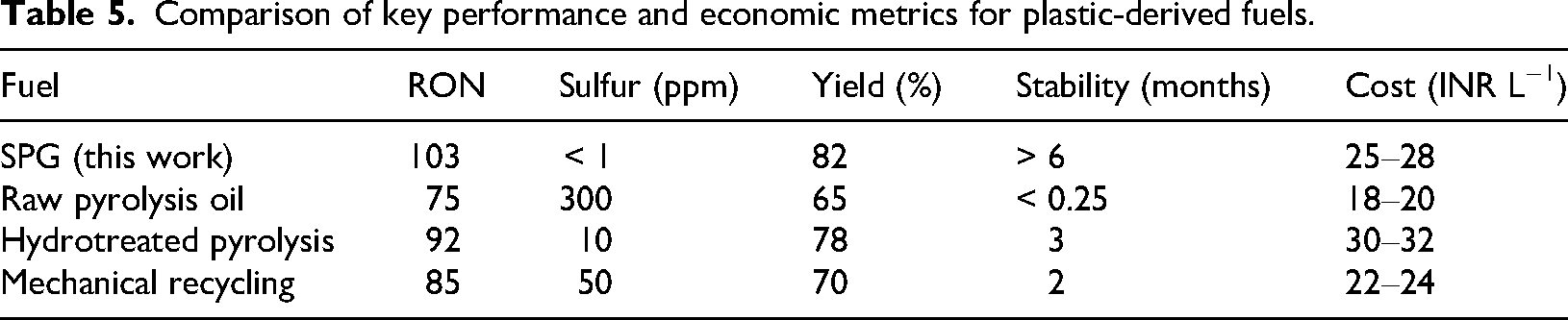
In addition to the above aspects, the present study is distinguished from prior SPG and plastic-to-gasoline routes by its explicit benchmarking against existing literature in terms of fuel quality, catalyst stability, engine performance, emissions behaviour, and production economics (section ‘Comparison with existing literature’ and Table 5). Unlike earlier studies that focus on isolated upgrading steps or partial validation, this work demonstrates a complete and experimentally validated pathway, from real plastic waste to engine-ready gasoline, thereby providing a clear and quantitative differentiation from previously reported approaches.
Organization of the manuscript
The remainder of this paper is structured as follows. Section ‘Materials and methods’ describes feedstock sourcing, catalyst synthesis, and characterization methods. Section ‘Experimental apparatus and procedures’ details the integrated pyrolysis and upgrading procedure, along with analytical protocols for fuel and catalyst. Section ‘Results and discussion’ presents results and discussion, including inorganic purity, physicochemical properties, engine performance and emissions, storage stability, techno-economic analysis, and comparative benchmarking. Finally, the ‘Conclusion’ offers perspectives for future research and scale-up.
Materials and methods
The experimental methodology was structured to address each of the objectives defined in section ‘Literature survey’, encompassing catalyst development, process integration, fuel characterization, engine testing, and techno-economic evaluation.
Materials and feedstock
Post-consumer plastic waste, consisting mainly of polyethylene and polypropylene, was sourced from municipal collection centres. Non-plastic impurities such as metals, paper, and PVC fragments were removed by hand sorting and washing with water. The cleaned material was shredded into flakes sized between 5 and 10 mm. Analytical grade nickel nitrate hexahydrate, ammonium ZSM-5 zeolite (Si/Al ≈ 30), and nickel molybdate precursors were obtained from certified chemical suppliers. Gamma alumina support was procured for hydrotreatment catalyst preparation. High-purity hydrogen and nitrogen gases were used for pyrolysis, catalyst reduction, and reaction feeds. Commercial gasoline grades (RON 91 and RON 98) were purchased from the licensed fuel stations for direct comparison in the engine trials.
Based on repeated batch preparation and sorting records, the feedstock consisted of approximately 90–95 wt% polyethylene and polypropylene, with the remaining fraction comprising trace non-polyolefin residues that were subsequently mitigated during pyrolysis, distillation, and hydrotreatment.
Catalyst preparation
Two catalysts were prepared for sequential upgrading steps.
Hydrotreatment catalyst
A nickel molybdate on alumina catalyst was synthesized by co-impregnation. Gamma alumina support was dried at 120°C for 4 h, then impregnated with an aqueous solution of nickel nitrate hexahydrate and ammonium heptamolybdate to achieve 6 wt% Ni and 6 wt% Mo. The material was dried at 110°C overnight and calcined in air at 500°C for 4 h with a ramp rate of 2°C per minute. Prior to use, the catalyst was reduced under flowing hydrogen at 450°C for 3 h.
Ni-ZSM-5 catalyst
Ammonium ZSM-5 (Si/Al ≈ 30) was converted to its hydrogen form by calcination at 550°C for 5 h. The resulting H ZSM-5 was then impregnated by incipient wetness using an aqueous nickel nitrate solution to yield 8 wt% Ni. After impregnation, the catalyst was dried at 110°C for 12 h, calcined in air at 550°C for 4 h, and reduced under hydrogen at 500°C for 3 h. This procedure produced a bifunctional catalyst with well-dispersed nickel sites and retained Brønsted acidity.
Both catalysts were stored in sealed containers under nitrogen until use.
Pyrolysis and distillation
Pyrolysis of plastic flakes was conducted in a 50 L stainless-steel reactor equipped with a nitrogen purge and electric heating mantle. The feed was heated to 450°C at 20°C min−1 and held for 60 min, yielding 70–75 wt% liquid oil. Vapours passed through a series of condensers before collection, while non-condensable gases were flared. Fractional distillation of the crude oil employed an all-glass column (50 cm height) under atmospheric pressure. Temperature was ramped gradually to separate the gasoline-range fraction (C5–C12) between 30°C and 200°C; heavier and lighter cuts were collected separately. The C5–C12 distillate was stored at 4°C under nitrogen for subsequent upgrading. The schematic diagram of the plastic-to-fuel process is illustrated in Figure 1.
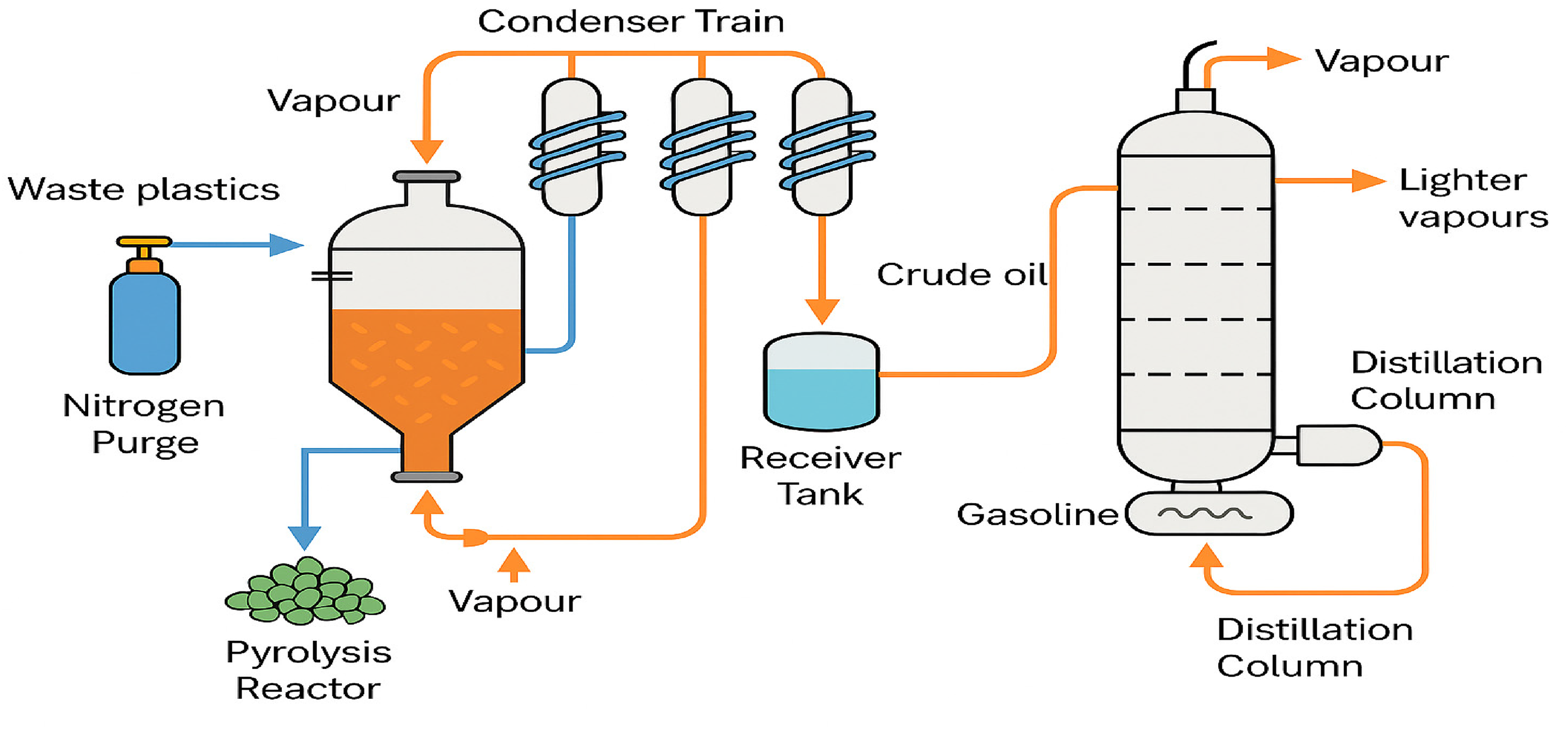
Schematic diagram of the plastic-to-fuel process, showing pyrolysis reactor, condenser train, and distillation column.
Fuel upgrading
Hydrodesulfurization of the distilled gasoline fraction was carried out in a fixed-bed reactor packed with Ni-Mo/Al2O3. Conditions were 350°C, 50 bar hydrogen pressure and a hydrogen-to-oil ratio of 300:1 by volume. The product was analysed to confirm sulfur removal to below 1 ppm.
The desulfurized stream was then passed over Ni–ZSM-5 in a second fixed-bed reactor at 500°C and 5 bar hydrogen partial pressure. A weight hourly space velocity of 1 per hour was maintained to favour isomerization and aromatization. The resulting SPG was collected and stored under nitrogen.
Catalyst and fuel characterization
Powder XRD was used to confirm the MFI framework of ZSM-5 and detect any NiO phases. Surface area and pore volume were measured by nitrogen physisorption using the BET method. NH3-TPD quantified Brønsted acidity. XPS provided Ni oxidation states and dispersion.
Operando diffuse reflectance infrared Fourier transform spectroscopy (DRIFTS) and Raman spectroscopy were performed under reaction conditions to monitor adsorbed species and coke formation. Coke levels were quantified by temperature programmed oxidation.
The SPG product was analysed by gas chromatography mass spectrometry (GC-MS) to determine hydrocarbon class distribution. Standard test methods were employed for key fuel properties: density at 15°C (ASTM D4052), kinematic viscosity at 40°C (ASTM D445), distillation range (ASTM D86), research octane number (ASTM D2699), motor octane number (ASTM D2700), sulfur content (ASTM D5453), and higher heating value (ASTM D240). Fourier transform infrared spectroscopy (FTIR) in attenuated total reflectance mode tracked functional groups before and after accelerated ageing at 45°C for 30 days.
Engine testing
Engine performance and emissions were evaluated using a 1.6-litre four-cylinder turbocharged gasoline direct injection engine coupled to an eddy-current dynamometer. Testing covered operating speeds from 1000 to 5000 revolutions per minute and loads from 25% to 100% of maximum torque. Fuel flow was measured with a precision flow meter, and shaft power was recorded to calculate brake-specific fuel consumption and brake thermal efficiency. In-cylinder pressure sensors provided indicated mean effective pressure and its cycle-to-cycle variation over one hundred consecutive combustion events. Exhaust gas analysis employed a five-gas analyser to quantify concentrations of carbon monoxide, nitrogen oxides, unburned hydrocarbons, carbon dioxide, and oxygen. A laser-based particle counter measured fine particulate emissions (PM2.5). Each operating condition was repeated three times to ensure reproducibility, and results are reported as the mean with one standard deviation.
Techno-economic analysis
A preliminary economic assessment was conducted for a facility processing 10 tonnes of plastic waste per day into SPG. Capital expenditures were estimated for feedstock collection, pyrolysis, distillation, hydrodesulfurization, and catalytic reforming equipment. Operating expenses included plastic procurement (5–6 INR per kilogram), utilities (electricity, hydrogen, cooling water), catalyst replacement, labour, and maintenance. Energy consumption was calculated from pyrolysis heating requirements and hydrogen compression work.
Revenues were projected from the sale of SPG at 85–95 INR per litre and from potential carbon credits under current regulatory schemes. On this basis, total production cost was estimated at 25–28 INR per litre of SPG. Comparing this to a retail gasoline price of 105–110 INR per litre yields an average gross margin of 40–50%. Sensitivity analysis showed that a 10% variation in feedstock cost changes the SPG production cost by approximately 1.5 INR per litre. These figures suggest that catalytic conversion of plastic waste to SPG can be economically competitive when supported by existing fuel infrastructure and carbon-credit mechanisms.
Experimental apparatus and procedures
Thermal pyrolysis reactor
The conversion of waste plastics to liquid oil was carried out in a 50 L stainless-steel fixed-bed reactor under an inert nitrogen atmosphere. Shredded polyethylene and polypropylene flakes (5–10 mm) were loaded into the reactor and purged with nitrogen at 100 mL min−1 for 15 min to remove residual air. The reactor temperature was increased at 20°C min−1 up to 450°C and held for 30 min. Volatile products were condensed in a series of water-cooled condensers maintained at 20°C, yielding 70–75 wt% pyrolysis oil, while non-condensable gases were safely flared. The entire pyrolysis setup, including reactor and condenser train, is shown in Figure 2.

Bench-scale fixed-bed reactor and condenser assembly during operation at 450°C.
The reported liquid yield corresponds to the average of three independent experimental runs conducted under identical operating conditions, with an experimental uncertainty of ±2 wt%. The heating rate and vapour residence time were maintained constant throughout the study to ensure consistent feedstock conversion and enable meaningful comparison of downstream upgrading, fuel characterization, and engine performance results.
While minor variations in PE/PP composition influenced the relative gas–liquid yield distribution during pyrolysis, no measurable deterioration in upgraded fuel quality or engine performance was observed after downstream distillation and catalytic upgrading, demonstrating process robustness to realistic feedstock variability.
Fractional distillation of crude oil
Recovery of the gasoline-range fraction from crude pyrolysis oil employed two complementary glass-distillation systems. An initial single-stage Vigreux-column distillation was performed at atmospheric pressure, isolating light gases (< 30°C) and heavy residues (> 200°C). To sharpen the cut profile, the intermediate fraction underwent a two-stage short-path vacuum distillation under ∼50 mbar, minimizing thermal cracking. Both distillation assemblies in Figures 3 and 4, were fitted with 50 cm columns and PID-controlled heating mantles, and the distillate was collected in pre-weighed flasks for volumetric and GC–MS analysis.

Single-stage Vigreux distillation of crude pyrolysis oil, illustrating the separation of the gasoline-range fraction used for subsequent upgrading and fuel characterization.

Two-stage short-path vacuum distillation for enhanced cut separation.
Catalytic upgrading reactors
The gasoline-range distillate was sequentially upgraded in two fixed-bed reactors. In the first reactor, a Ni–Mo/Al2O3 hydrotreatment catalyst removed sulfur and saturable olefins at 350°C under 50 bar H2 with a hydrogen-to-oil volume ratio of 300 L L−1. The partially refined stream then passed through a second reactor containing Ni–ZSM-5, operated at 500°C and 8 bar H2, to promote isomerization and aromatization. Thermocouples at the bed inlet, mid-point, and outlet ensured temperature uniformity, and pressure transducers monitored differential across the catalyst bed. The reactor skid is depicted in Figure 5.

Fixed-bed skid for hydrotreatment (left) and reforming/isomerization (right) of the distilled C5–C12 fraction.
Engine test cell and instrumentation
Engine performance was evaluated on a 1.6 L turbocharged gasoline direct-injection engine (10:1 compression ratio) coupled to an eddy-current dynamometer. Intake air mass flow was measured by a calibrated hot-wire sensor; fuel flow was metered via a Coriolis flow meter (± 0.1%). In-cylinder pressure data were recorded in cylinder 1 using a quartz pressure transducer (Kistler 6118A) at 0.1° crank-angle resolution over 120 cycles. Spark timing, injection maps, and boost level (50 kPa absolute) were held constant to isolate fuel effects. The engine and instrumentation rack are shown in Figure 6.

Dynamometer-coupled gasoline direct injection engine test cell (left) and intake/exhaust instrumentation setup (right) used for performance and emissions evaluation.
Exhaust conditioning and emission analysis
Exhaust gases were sampled through a heated line (120°C) into a partial-flow dilution tunnel with a 1:10 dilution ratio. The conditioned sample (190°C) entered a five-gas analyser for CO, CO2, HC (NDIR), NO x (chemiluminescence), and O2 (paramagnetic sensor). Fine particulates (PM2.5) were measured by laser scattering (Grimm 1.109) downstream of the tunnel; lines were temperature-controlled at 50°C to prevent condensing vapours.
Operating conditions, data acquisition, and analysis
Engine maps were compiled at nine speeds (1000–5000 RPM in 500 RPM increments) and four loads (25%, 50%, 75%, 100% of maximum brake torque). After stabilizing each condition for 5 min, data were recorded for 60 s at 1 kHz. Brake power was calculated as the product of measured torque and crank speed, while brake-specific fuel consumption and brake thermal efficiency were derived from fuel mass flow and higher heating value. Indicated mean effective pressure (IMEP) and its cycle-to-cycle variation were extracted from pressure traces. Gaseous emissions are reported in grams per kilowatt-hour, and particulates in milligrams per cubic metre. Data synchronization, filtering (200 Hz low-pass), and metric calculations were performed in LabVIEW. Combined standard uncertainties were estimated at ± 1.5% for performance metrics, ± 5% for gas species, and ± 10% for particulate measurements.
Results and discussion
The following sections detail the comprehensive evaluation of SPG, encompassing its inorganic purity, physicochemical properties, engine performance, emissions profile, storage stability, economic viability, and comparative positioning against other plastic-derived fuels.
Inorganic purity and anion profile
Ensuring minimal inorganic contamination is critical for injector durability and downstream after-treatment system performance. Ion chromatography (IC) analysis of SPG is illustrated in Table 1, which reveals total anion content below 2.5 ppm, with chloride at 0.8 ppm, a level indicative of effective removal of chlorine-bearing species originating from PVC fragments during feedstock sorting and pyrolysis. Trace nitrate (0.2 ppm) likely results from incidental air oxidation, while sulfate (1.1 ppm) reflects minor contributions from catalyst sulfates during hydrotreatment. Phosphate, bromide, and fluoride fall below detection limits, highlighting the absence of phosphorus-based plasticizers or halogenated additives. Compared to typical limits for commercial gasoline, these values demonstrate that SPG meets or exceeds industry standards for inorganic anion content, mitigating concerns of corrosion or deposit formation in fuel systems.
Ion chromatography results for SPG.
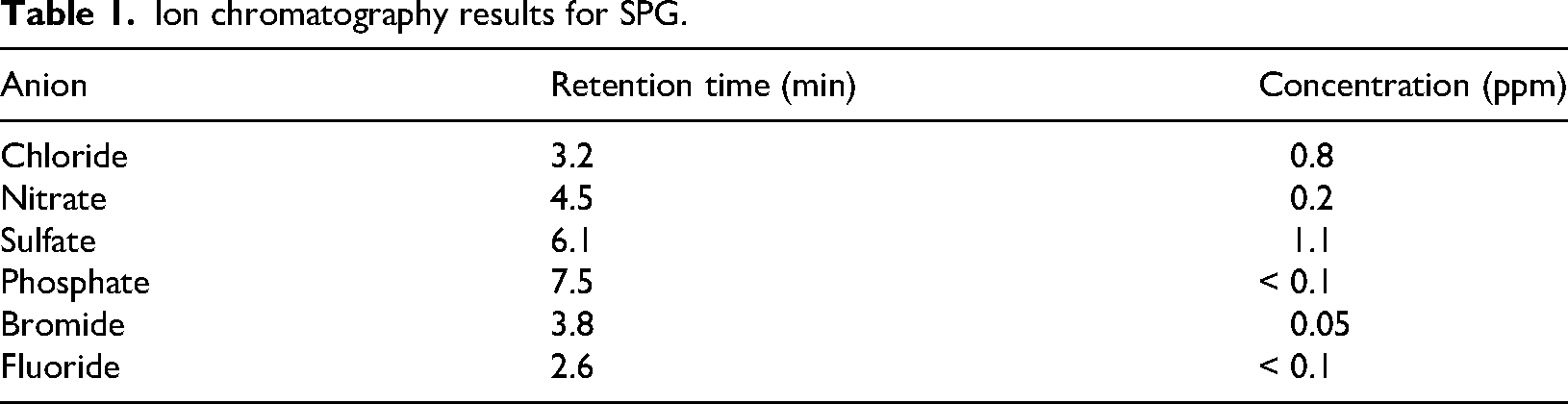
The analysis of the supernatant (fuel extract) by ion chromatography is directly relevant to this study, as inorganic anions present in plastic-derived fuels can adversely affect engine components, fuel injectors, and exhaust after-treatment systems. In particular, chloride and sulfur-containing species originating from PVC contamination or additives can lead to corrosive by-products, injector fouling, and increased particulate and SOx emissions during combustion.
The low concentrations of chloride (0.8 ppm) and total anions (<2.5 ppm) observed in the SPG confirm the effectiveness of feedstock sorting, pyrolysis conditions, and subsequent hydrotreatment in removing inorganic contaminants. This result is critical for validating the suitability of SPG as an engine-ready gasoline, ensuring compatibility with modern gasoline direct injection systems and compliance with stringent fuel quality standards. Therefore, the supernatant analysis provides essential evidence linking upstream plastic waste processing to downstream engine performance and durability.
Detailed physicochemical characterization
SPG's fuel properties were measured according to ASTM protocols to confirm compliance with automotive specifications and to benchmark performance against petroleum-derived fuels. Density at 15°C is 0.740 g cm−3, falling within the commercial range of 0.72–0.78 g cm−3, and supporting adequate volumetric energy density. The kinematic viscosity at 40°C of 0.60 cSt ensures effective atomization in high-pressure injectors, aiding in complete combustion. The distillation curve indicates that 10% of SPG boils at 65°C, the 50% point at 115°C, and the 90% point at 170°C, equating to a volatility profile that balances cold-start performance with vapour-lock avoidance.
Octane rating emerges as SPG's most striking attribute: a research octane number of 103 and motor octane number of 91, yielding an antiknock index of 97. Such high knock resistance supersedes that of standard premium gasoline and allows advanced ignition timing and higher compression ratios, directly translating into improved thermal efficiency. Sulfur content below 1 ppm places SPG well under Euro VI and Bharat Stage VI thresholds, ensuring negligible contribution to SOx emissions. The higher heating value of 45.8 MJ kg−1 matches commercial fuels, indicating no sacrifice in energy content despite extensive molecular rearrangement. Finally, accelerated oxidation stability testing at 45°C over 30 days demonstrates less than 3% loss in FTIR absorbance of key hydrocarbon functional groups, confirming that SPG resists gum formation and ageing under typical storage conditions. The key physicochemical properties for SPG alongside commercial Regular (RON 91) and Premium (RON 98) gasoline is illustrated in Table 2.
Physicochemical properties of SPG compared to commercial gasoline benchmarks.

The superior fuel properties of SPG are a direct consequence of the integrated upgrading strategy and catalyst functionality. The high research octane number is primarily attributed to the increased formation of branched iso-paraffins and mono-aromatic hydrocarbons during Ni–ZSM-5-mediated reforming, which enhance knock resistance. The narrow distillation range reflects effective fractionation and controlled secondary cracking, resulting in a balanced volatility profile that supports both cold-start performance and stable combustion. Furthermore, the ultra-low sulfur content confirms the effectiveness of the hydrotreatment step and is critical for minimizing corrosive by-products and protecting fuel injection components in modern engines.
Catalyst coke formation and stability
Coke formation, a common cause of catalyst deactivation during hydrocarbon upgrading, was evaluated using operando Raman spectroscopy on the spent Ni–ZSM-5 catalyst after 24 h of continuous operation. As shown in Figure 7, the Raman spectrum exhibits two distinct peaks: the D-band at ∼1350 cm−1, associated with disordered sp3-hybridized carbon, and the G-band at ∼1590 cm−1, characteristic of graphitic sp2 carbon structures. The intensity ratio (D/G ≈ 0.45) indicates the presence of primarily soft coke with minimal graphitization. This low coke content suggests effective suppression of heavy aromatic condensation due to the bifunctional nature of Ni–ZSM-5, where hydrogenation at Ni sites limits precursor buildup and Brønsted acid sites facilitate light aromatic conversion. The moderate D/G ratio, combined with sustained catalyst activity, confirms that the system exhibits good resistance to carbon fouling under reaction conditions typical of SPG production.

Raman spectrum of the spent Ni–ZSM-5 catalyst after 24 h of operation.
The low D/G ratio (≈0.45) indicates the predominance of amorphous, hydrogen-rich coke rather than graphitic carbon, which is less detrimental to catalyst activity. This behaviour can be attributed to the bifunctional nature of the Ni–ZSM-5 catalyst, where metallic Ni sites promote hydrogenation of coke precursors while Brønsted acid sites facilitate rapid desorption of lighter aromatics. The balanced acidity and metal dispersion therefore suppress excessive polyaromatic condensation, explaining the observed catalyst stability during extended operation.
Catalyst reusability and performance retention
The long-term performance of catalysts in continuous pyrolysis reforming systems is heavily influenced by their ability to resist deactivation due to coke deposition and structural degradation. To evaluate the short-term reusability of Ni–ZSM-5, the spent catalyst was subjected to a mild hydrogen regeneration process at 500°C for 3 h and reused in a second upgrading cycle under identical conditions.
Table 4 summarizes the fuel quality and textural characteristics of the catalyst across fresh, used, and regenerated states. After 24 h of operation, the RON of the resulting SPG dropped from 103.0 to 99.2, suggesting partial deactivation of reforming and isomerization pathways due to coke accumulation and active site masking. The sulfur content of the upgraded fuel rose modestly to 2.8 ppm, indicating a temporary decline in desulfurization efficiency.
Textural analysis revealed a ∼10% reduction in BET surface area (from 390 to 352 m2/g), likely due to pore blockage by soft coke and partial framework collapse. Additionally, total Brønsted acidity, as determined by NH3-TPD, declined from 260 to 232 μmol/g, confirming moderate site deactivation. The spent catalyst showed 2.5 wt% coke accumulation, consistent with Raman and TPO analysis indicating low graphitization.
Following regeneration, the catalyst regained much of its original functionality. RON recovered to 102.5, sulfur content returned to <1 ppm, and surface area and acidity rebounded to 371 m2/g and 245 μmol/g, respectively. These results affirm that Ni–ZSM-5 exhibits excellent short-term reusability, with minimal irreversible deactivation. Its resilience makes it a promising candidate for deployment in modular, continuous-flow SPG production systems from plastic waste (Table 3).
Catalyst reusability metrics for Ni–ZSM-5 after two upgrading cycles.

Engine performance and combustion dynamics
The real-world performance of SPG was validated on a turbocharged four-cylinder direct-injection engine across a matrix of speeds (1000–5000 RPM) and loads (25–100% of maximum torque). At a representative condition of 2500 RPM and 75% load, SPG delivers a brake thermal efficiency of 36.5% compared with 33.9% and 35.2% for regular and premium fuels, respectively is depicted in Figure 8. This 2.6–3.3% absolute improvement arises from SPG's high octane which allows the engine control unit to advance ignition timing by several degrees without onset of knock. Across the full performance map, SPG consistently yields 2–4% higher efficiency, translating into direct fuel savings and reduced CO2 emissions per kilometre.
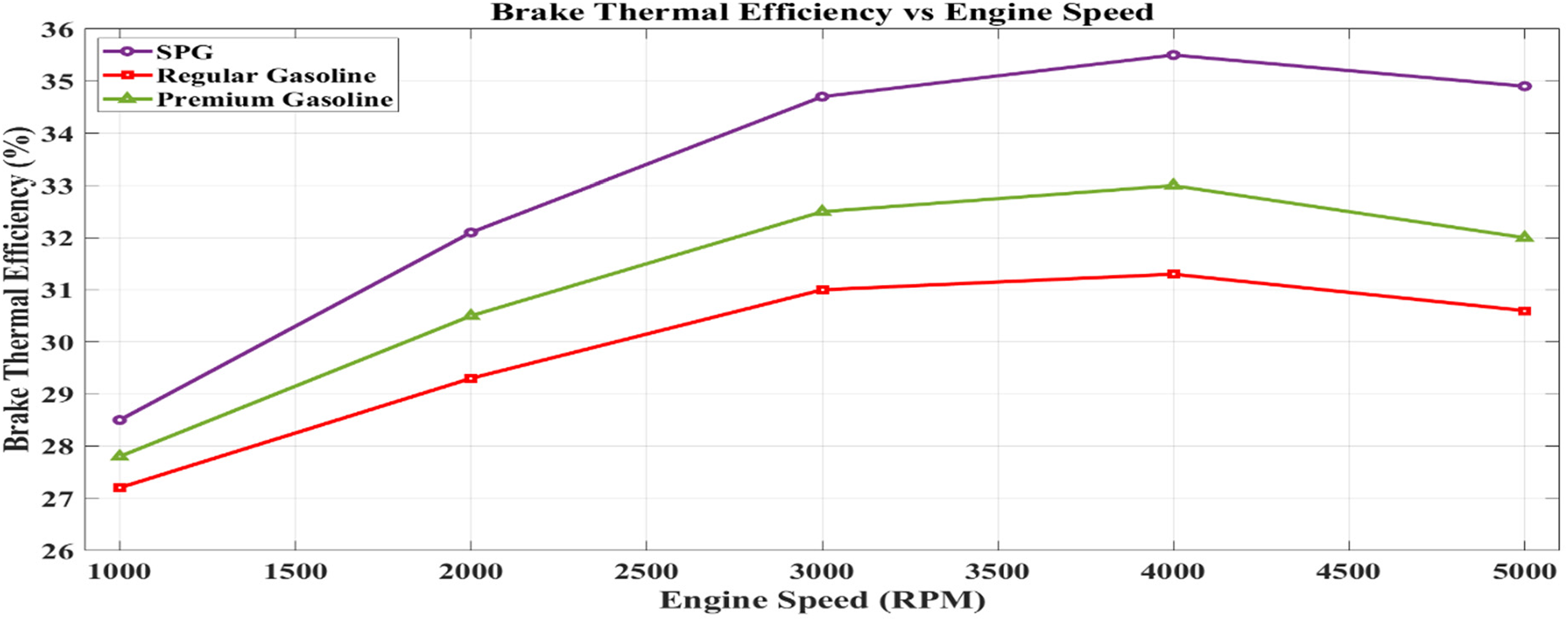
Variation of brake thermal efficiency with engine load for SPG and commercial gasoline, illustrating differences in energy conversion efficiency under identical operating conditions.
Correspondingly, brake-specific fuel consumption falls to 232 g kW−1 h−1 versus 248 and 240 g kW−1 h−1, reflecting more energy extracted per unit mass of fuel, is depicted in Figure 9. The improvement in brake thermal efficiency and reduction in fuel consumption observed with SPG are closely linked to its high-octane rating and optimized volatility characteristics. The enhanced knock resistance allows more favourable ignition timing, improving the effective pressure development during combustion. In addition, improved fuel atomization and evaporation result in more homogeneous air–fuel mixtures, reducing cycle-to-cycle variation and combustion instability. These factors collectively contribute to the observed efficiency gains and stable engine operation across the tested load and speed ranges. Peak brake power under full-throttle conditions at 5000 RPM increases to 84.2 kW, 3–5% above benchmarks, and peak torque at 2100 RPM rises by 7–10 N m, further highlighting SPG's ability to improve drivability and responsiveness which is depicted in Figure 10.

Brake-specific fuel consumption of SPG and reference gasoline fuels as a function of engine load, highlighting differences in fuel utilization efficiency.

Brake power (left) and torque (right) as functions of engine speed for SPG, premium (RON 98), and regular (RON 91) fuels.
Finally, the analysis of cycle-to-cycle variation in indicated mean effective pressure over 100 consecutive combustion events depicted in Figure 11 shows a 7% reduction for SPG compared to Regular gasoline, indicating smoother combustion phasing and reduced cyclic scatter due to more uniform evaporation and faster flame propagation.

Cycle-to-cycle variation in indicated mean effective pressure over 100 consecutive combustion events at 2500 RPM and 75% load for SPG versus regular gasoline.
Overall, the use of SPG results in quantitative improvements of 2.6–3.3 percentage points in brake thermal efficiency, 3–7% reduction in brake-specific fuel consumption, and up to 30% reduction in regulated emissions compared to commercial gasoline fuels under identical operating conditions.
Emission reductions and air quality implications
Under mid-range operating conditions of 2500 RPM and 75% load, SPG shows significant reductions across all regulated exhaust species compared to conventional fuels. As shown in Table 4, CO emissions measured by the five-gas analyser decrease from 0.51% vol for regular (RON 91) and 0.44% vol for premium (RON 98) gasoline to 0.38% vol with SPG. Similarly, unburned hydrocarbons decline from 105 ppm (regular) and 92 ppm (premium) to 88 ppm, while NO x levels are reduced from 298 ppm and 274 ppm to 265 ppm. PM2.5 concentrations are also diminished, falling from 3.1 mg/m3 (regular) and 2.6 mg/m3 (premium) to just 2.1 mg/m3 with SPG. These improvements, ranging from 11% to 32% lower emissions, result from SPG's ultra-low sulfur (< 1 ppm), optimized paraffinic–olefinic blend, and high volatility, which enhance complete combustion and reduce soot precursors. The bar chart in Figure 12 visually demonstrates these pollutant reductions, highlighting SPG's potential to contribute to cleaner urban air when used in spark-ignition powertrains. All regulated emissions for SPG are within the current Euro VI and Bharat Stage VI standards for gasoline engines, confirming its environmental compatibility.
Emission comparison at 2500 RPM, 75% load for SPG versus commercial gasolines.
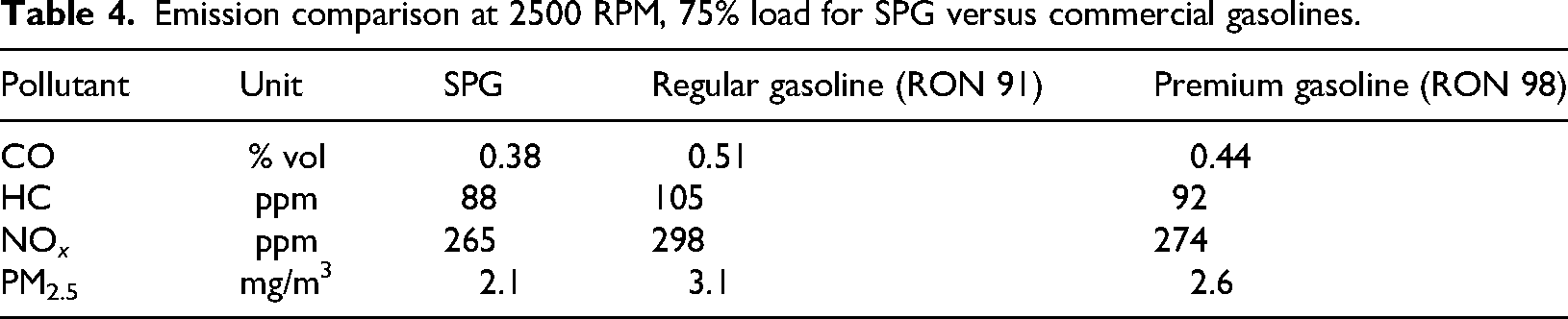

Comparison of regulated exhaust emissions (CO, HC, NOx, PM2.5) at 2500 RPM and 75% load for SPG versus regular (RON 91) and premium (RON 98) gasoline.
Storage stability and longevity
Long-term fuel integrity is a prerequisite for commercial distribution and engine reliability. SPG samples subjected to accelerated ageing at 45°C for 30 days exhibit negligible chemical degradation, as evidenced by Fourier-transform infrared spectroscopy (FTIR). Figure 13 overlays the pre- and post-ageing spectra, showing less than a 3% decline in the intensity of key absorbance bands (e.g. C–H stretching at 2850 cm−1 and aromatic C = C at 1600 cm−1). In contrast, raw pyrolysis oil undergoes > 20% spectral change within just 72 h under identical conditions, highlighting the essential role of hydrotreatment and catalytic reforming in stabilizing the gasoline-range fraction. Furthermore, SPG's pour point (–12°C) and Reid vapour pressure (7.8 psi) remain well within automotive fuel specifications after ageing, ensuring cold-start operability and vapour-lock avoidance across diverse climates. These results confirm that SPG meets the storage durability requirements of commercial gasoline without additional stabilizers or additives.

FTIR spectra of SPG before and after accelerated ageing at 45°C for 30 days.
Techno-economic feasibility
Economic modelling for a 10 tonnes-per-day SPG facility integrates capital costs for modular pyrolysis, distillation units, hydrotreatment, and catalytic reforming, as well as operating costs for plastic feedstock (5–6 INR kg−1), utility consumption, catalyst replacement, labour, and maintenance. The resulting production cost of 25–28 INR L−1 compares favourably to retail gasoline at 105–110 INR L−1, affording a 40–50% gross margin. Sensitivity analysis demonstrates that ±10% feedstock price variation shifts production cost by ±2 INR L−1 is demonstrated in Figure 14. Opportunities for further margin enhancement include revenue from the carbon credits, tipping fees for plastic waste, and co-product valorization (e.g. pyrolysis char).

Sensitivity of SPG production cost to feedstock price variation.
Comparative positioning
To contextualize SPG within the broader landscape of plastic-derived fuels, Table 5 benchmarks its key performance and economic metrics against raw pyrolysis oil, hydrotreated intermediates, and mechanically recycled fuels. SPG delivers the highest research octane number (103 RON) and the lowest sulfur content (< 1 ppm), outperforming hydrotreated pyrolysis oil (92 RON, 10 ppm S) and mechanically recycled fuel (85 RON, 50 ppm S). In terms of product yield and storage stability, SPG achieves an 82 wt% gasoline-range recovery with demonstrated chemical stability beyond six months, whereas raw pyrolysis oil yields only 65 wt% and degrades within days, and mechanically recycled streams exhibit both lower yield (70 wt%) and limited shelf life (< 2 months). Economically, SPG's production cost (25–28 INR L−1) undercuts hydrotreated intermediates (30–32 INR L−1) and rivals mechanically recycled fuel (22–24 INR L−1), while its ultra-clean specifications unlock higher margins through carbon credits and reduced after-treatment burden. This integrated upgrading sequence thus positions SPG as the most balanced solution, delivering premium fuel quality, robust stability, and competitive economics among plastic waste valorization routes. In addition, SPG provides significant waste-to-energy and circular economy benefits by enabling the sustainable transformation of plastic waste into high-value, ultra-clean fuels.
Comparison of key performance and economic metrics for plastic-derived fuels.
Comparison with existing literature
The performance of SPG obtained in this study is compared with recent reports on plastic-derived liquid fuels to emphasize the significance of the present work. Seyed Mousavi et al. produced a gasoline fraction with a RON of 93.5 from municipal plastic waste using MIL-53(Cu)@Zeolite Y [4]. In contrast, the SPG produced in the present study achieves a significantly higher RON of 103 through the integrated sequence of hydrotreatment and Ni–ZSM-5-based reforming.
Yim et al. reported the conversion of plastic waxes into BTEX aromatics using Ga-doped HZSM-5 but observed considerable coke formation and catalyst deactivation during extended operation [16]. By comparison, the Ni–ZSM-5 catalyst employed in this work exhibits minimal coke deposition (D/G ≈ 0.45) and maintains catalytic activity after regeneration, demonstrating superior catalyst stability under practical operating conditions.
Engine-level validation of plastic-derived gasoline fuels remains limited in the literature. Hunicz et al. investigated blends of plastic pyrolysis oil in compression-ignition engines and reported stable combustion under optimized conditions [18]. However, the present study demonstrates the direct utilization of 100% plastic-derived gasoline in a modern gasoline direct-injection engine, achieving a peak brake thermal efficiency of 36.5% and reductions in CO, HC, and PM2.5 emissions of up to 30% compared to commercial gasoline.
Unlike prior studies that typically focus on individual process steps or partial validation, the integrated framework presented here combines real plastic waste processing, catalyst durability evaluation, comprehensive fuel characterization, full-range engine testing, and techno-economic assessment. This holistic comparison clearly demonstrates that the present work advances beyond existing literature in terms of fuel quality, catalyst robustness, real-world engine performance, and practical feasibility.
Conclusions
This work fulfils its stated aim and objectives by demonstrating an integrated plastic-to-gasoline pathway supported by catalyst development, fuel characterization, engine validation, and economic assessment. In this work, SPG was established as a high-performance, drop-in fuel derived from mixed plastic waste through an integrated process involving pyrolysis, hydrotreatment, and catalytic upgrading over Ni–ZSM-5. SPG exhibited excellent fuel characteristics, including a RON of 103, ultra-low sulfur content (<1 ppm), a balanced volatility profile, and a heating value of 45.8 MJ kg−1, comparable to commercial gasoline. Engine testing on a turbocharged GDI platform demonstrated 2–4% higher brake thermal efficiency, over 6% lower brake-specific fuel consumption, and 3–6% increases in peak power and torque compared to RON 91 and RON 98 reference fuels. Regulated emissions (CO, HC, NO x , PM2.5) were reduced by up to 32%, confirming the environmental benefit of SPG without requiring engine modifications.
Raman and TPO analyses revealed minimal coke deposition on the Ni–ZSM-5 catalyst (D/G ≈ 0.45), while short-term reusability tests showed >95% recovery of catalytic performance after hydrogen regeneration, affirming the system's operational robustness. Techno-economic analysis of a modular 10 tpd facility estimated production costs at INR 25–28 L−1, well below India's retail gasoline price of INR 105–110 L−1, yielding gross margins of 40–50%. Sensitivity analysis confirmed economic resilience, with feedstock cost variations contributing less than ±2 INR L−1 deviation in production cost. Additional revenue from char valorization, waste tipping fees, and potential carbon credits further strengthens feasibility.
To accelerate commercialization, future efforts should focus on catalyst innovation and process intensification. Hierarchical or bimetallic zeolites may further suppress coke formation and extend catalyst life. Transitioning to continuous-flow reactors and integrating green hydrogen supply will enhance process efficiency and reduce emissions. A full cradle-to-grave life-cycle assessment is also essential to quantify greenhouse gas savings. Blending SPG with bio-ethers or alcohols may improve cold-start performance and enable deeper decarbonization.
Overall, this sustainable waste-to-energy pathway supports the circular economy, aligns with UN SDGs for clean energy and responsible consumption, and offers a viable route towards scalable, low-carbon mobility solutions.
Future research should focus on improving catalyst design to further enhance selectivity and long-term stability during plastic-derived fuel upgrading. Process scale-up using continuous-flow reactors and the use of low-carbon hydrogen sources for hydrotreatment are important directions to reduce energy intensity and environmental impact. In addition, comprehensive life-cycle assessment and pilot-scale demonstrations are required to validate the sustainability and commercial feasibility of SPG under real operating conditions.
Footnotes

Funding
The authors received no financial support for the research, authorship, and/or publication of this article.
Declaration of conflicting interests
The authors declared no potential conflicts of interest with respect to the research, authorship, and/or publication of this article.
Data availability statement
The datasets used and/or analysed during the current study are available from the corresponding author on reasonable request.