




Abstract
Multi-region integrated multi-energy system (MES) combines electricity, heat, and hydrogen networks to improve energy efficiency and reduce carbon emissions. Planning such interregional systems remains difficult because of nonlinear energy interactions, spatial–temporal coupling, and various regulatory constraints. This paper reviews optimization-based planning methods for multi-region MES and explains how recent studies manage system coordination, uncertainty, and trade-offs among energy carriers. The reviewed literature was selected from major databases—Scopus, Web of Science, and IEEE Xplore—to reflect the development of optimization approaches such as mixed-integer programming (MILP/MINLP), metaheuristic algorithms, model predictive control, and data-driven frameworks. The literature spans from 2009 to 2025, capturing both early foundational studies and the most recent advances in optimization-based MES planning. The analysis summarizes the main progress, technical limitations, and remaining challenges related to policy integration, investment interaction, and regional coordination. The paper concludes that future research should establish scalable optimization methods that link technical design, economic performance, and policy goals in integrated energy planning.
Keywords
Introduction
As climate change intensifies environmental and economic pressures, decarbonization has become a major objective in the energy sector. Renewable energy is regarded as a practical pathway toward this goal, but sources such as solar and wind remain highly dependent on weather conditions, leading to variability and uncertainty in power generation (Liu et al., 2022). These fluctuations create operational and economic challenges that affect grid stability as renewable penetration increases. At the same time, industrialization and continuous growth in energy demand increase the strain on existing supply systems. Traditional fossil fuel-based infrastructures are limited in their ability to balance diverse and dynamic energy demands.
To address these issues, a multi-energy system (MES) integrates electricity, heat, and hydrogen networks for coordinated operation and efficient energy use. It supports flexible conversion among energy carriers, reduces dependence on a single source, and improves overall system stability and efficiency (Kang et al., 2022; Xu et al., 2024).
Figure 1 presents the interaction among these energy systems and depicts interregional exchanges, showing that network design and market coordination are necessary to maintain balance across regions. Effective MES planning requires both individual source analysis and an integrated approach that captures their interdependence. Interregional integration helps reduce supply–demand mismatches and enhances operational stability (Kaushik et al., 2022). This study examines technical and structural challenges in interregional MES development and proposes methods to improve efficiency and stability.
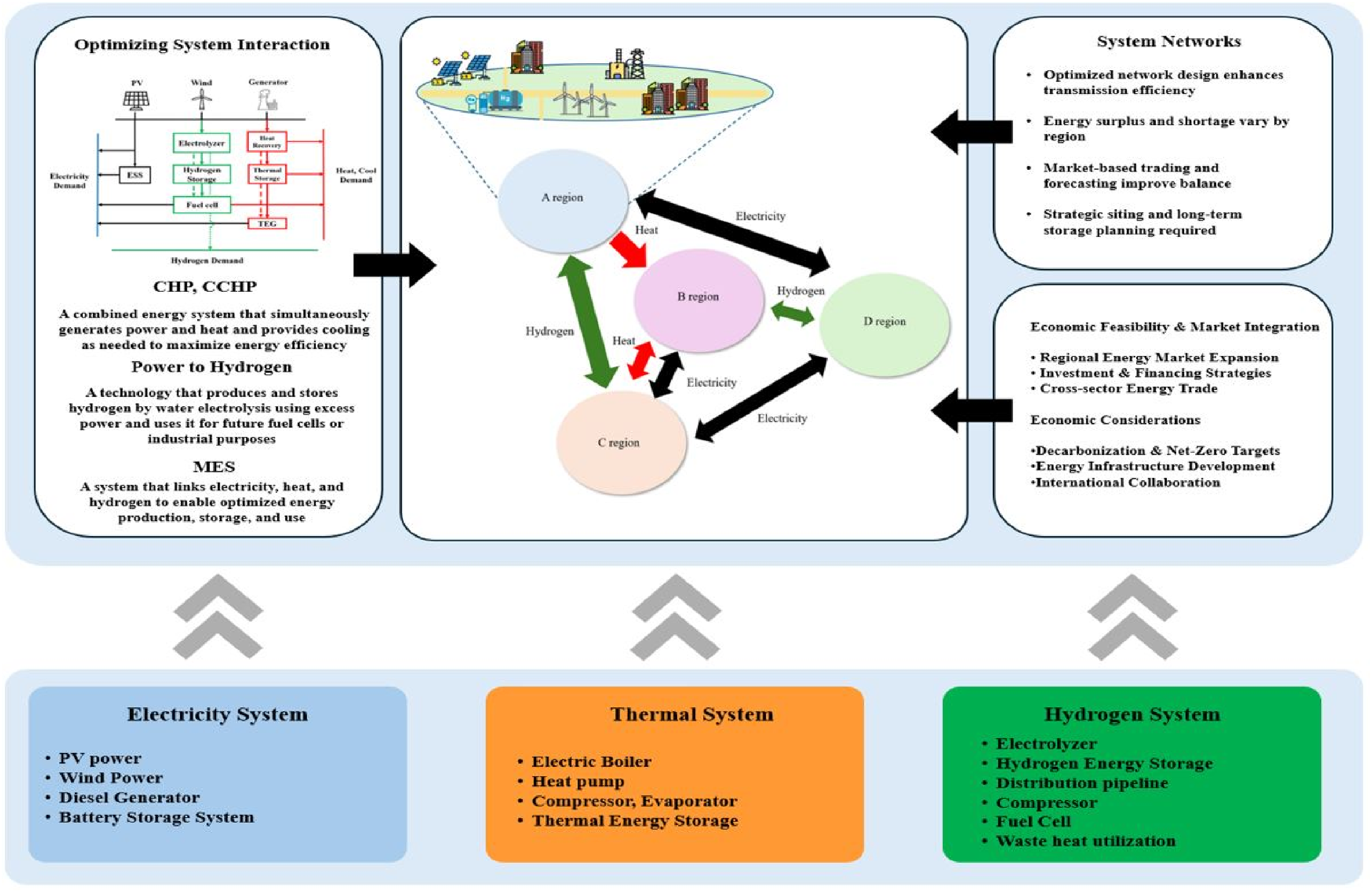
Framework for multi-energy system integration and regional energy sharing.
Figure 2 illustrates the transition from individual energy systems to an integrated MES and its interregional expansion. Traditional single-energy systems operate independently and are optimized for specific resources within each sector (Koirala et al., 2021). This isolated structure limits the ability to manage renewable fluctuations and often results in supply–demand imbalances. To address these challenges, MES integrates electricity, heat, and hydrogen systems to coordinate energy conversion and improve overall utilization. Technologies such as combined heat and power/combined cooling, heating, and power (CHP/CCHP), power-to-hydrogen (P2H), and power-to-gas (P2G) contribute to system stability by utilizing surplus renewable energy and reducing variability (Wang et al., 2023c). The operation and optimization of MES components, however, involve multiple variables and nonlinear interactions. A practical strategy is to optimize each MES regionally and then expand integration across regions to form an interregional MES. As shown in Figure 2, regional MES interconnections enhance grid stability, mitigate renewable generation variability, and lower operational costs. Studies such as Colbertaldo et al. (2023) demonstrate that integrated multi-energy coordination supports system-wide reliability and cost efficiency.
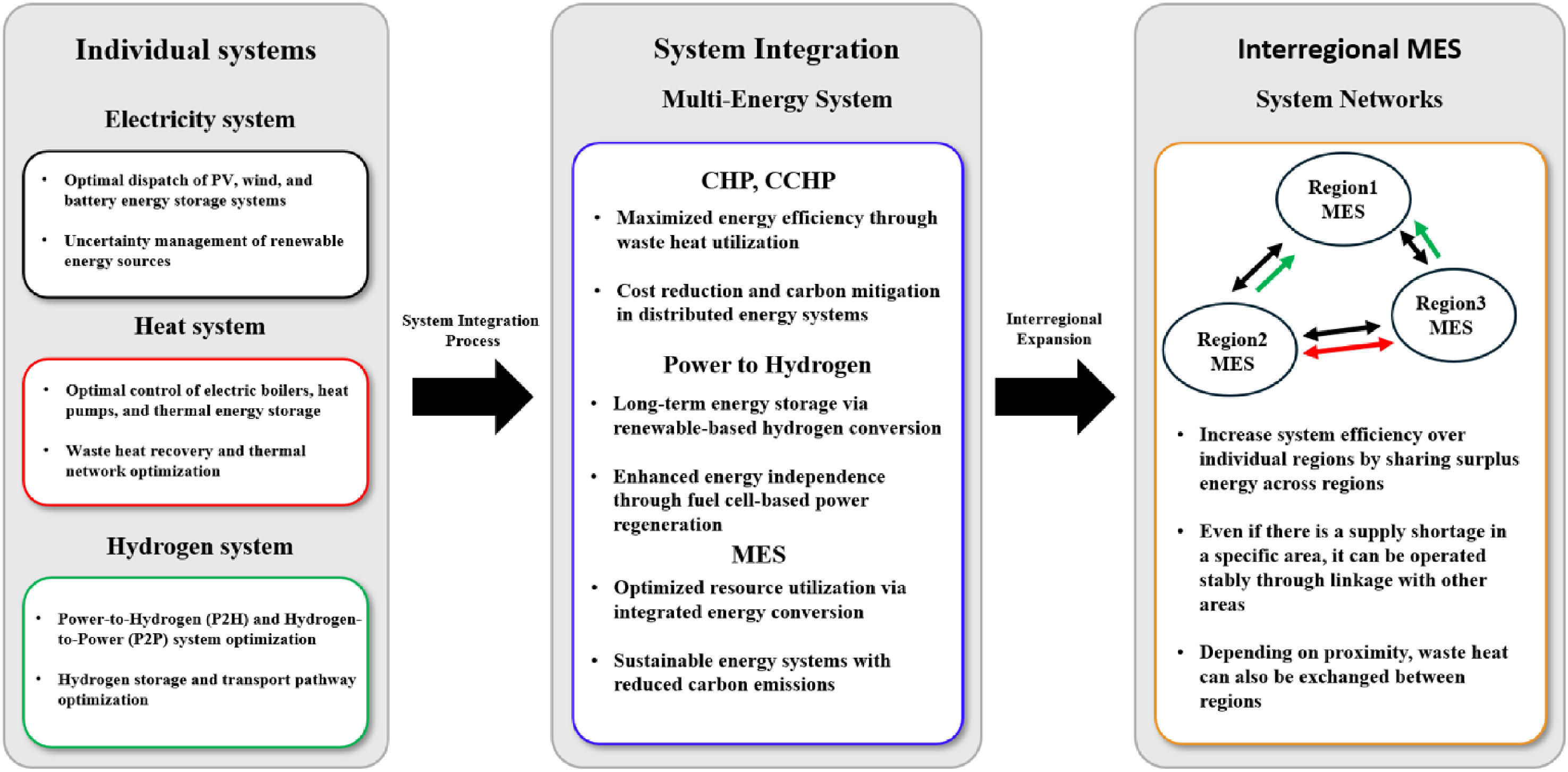
The process of establishing linkages between regions of multi-energy systems.
In power systems, stable operation depends on renewable generation and energy storage systems (ESSs). Research has focused on integrating smart grids and distributed energy resources to improve flexibility and reliability.
In thermal systems, waste heat recovery and thermal energy storage (TES) help manage seasonal load variations and increase efficiency. In hydrogen systems, P2H conversion and storage contribute to carbon reduction and energy balance.
Optimizing these individual systems improves the performance of interregional MESs and forms a foundation for sustainable energy planning.
This study reviews optimization approaches for electricity, heat, and hydrogen systems. Ismail et al. (2014) applied a genetic algorithm (GA) to a hybrid renewable system but did not include battery operation or reliability analysis. El-Bidairi et al. (2018) incorporated battery sizing and operational costs to improve stability, while Barbaro and Castro (2020) used Monte Carlo simulations to account for uncertainty. Jamal et al. (2024) combined GA with rule-based control to enhance cost efficiency and reliability under variable conditions.
Bracco et al. (2013) and Li et al. (2020) analyzed CHP and district energy systems using static or region-specific models. Lv et al. (2025) extended this by integrating robust model predictive control (MPC) with deep learning to improve adaptability and reduce energy consumption in CHP, P2H, and P2G systems.
Kuby et al. (2009) and Lin et al. (2020) optimized hydrogen refueling networks using flow and GIS-based models but did not address long-term planning. Jiao et al. (2013) and Ding et al. (2011) examined hydrogen distribution feasibility through network modeling. Zhou et al. (2024) proposed a cost-minimizing model linking hydrogen sources and transport routes, and Steidl et al. (2024) demonstrated GIS-based multisector integration at the urban scale.
Collectively, these studies show a gradual shift from component-level optimization toward integrated, data-driven frameworks that account for temporal variability, operational uncertainty, and spatial interconnection. Earlier works mainly focused on improving subsystem efficiency within isolated domains, while recent research has emphasized coordination across electricity, heat, and hydrogen sectors. This transition reflects an evolution from deterministic and region-specific modeling to adaptive and predictive optimization strategies capable of supporting large-scale, interregional MES planning.
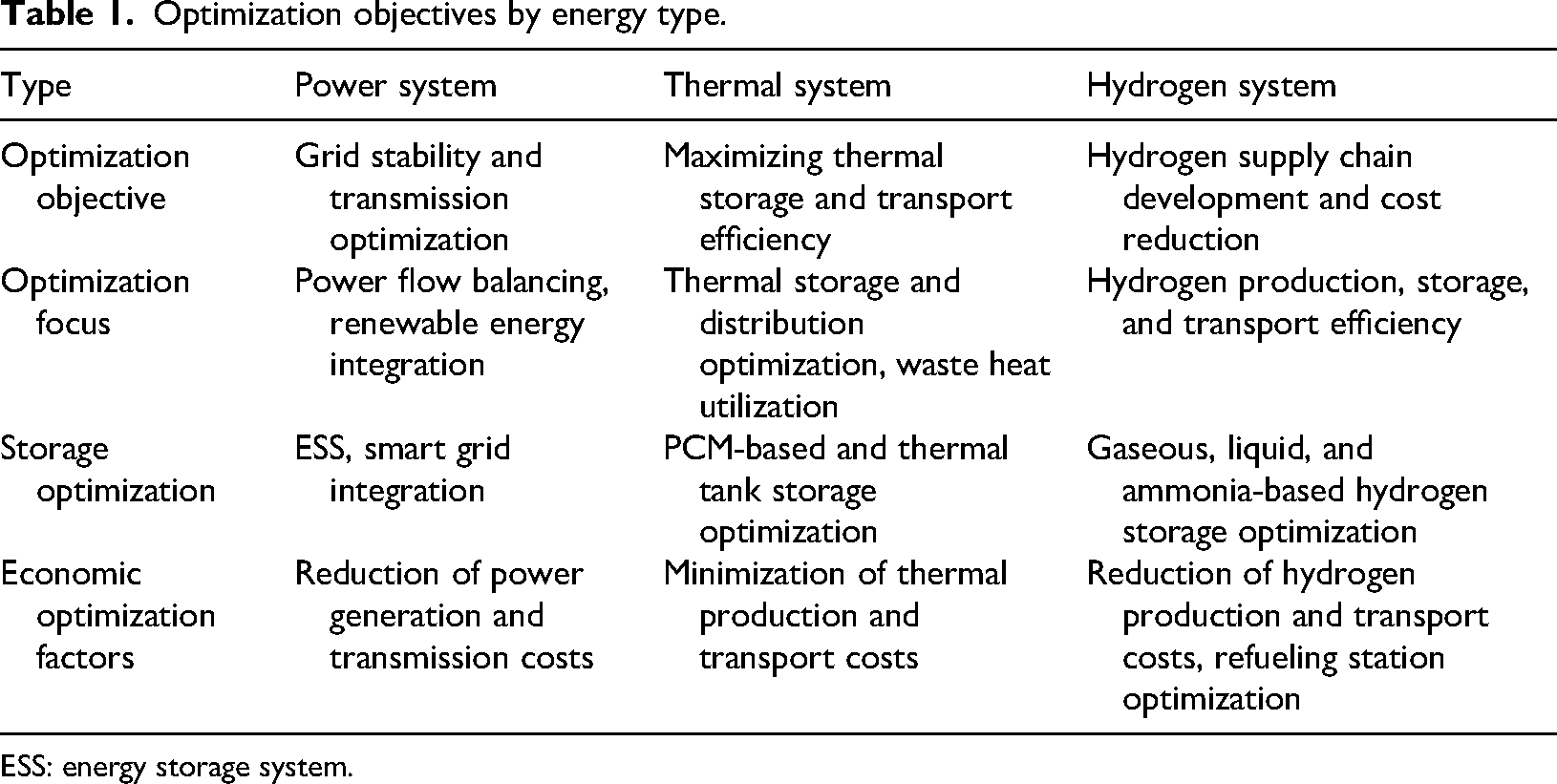
Table 1 summarizes and compares the objectives and primary focus areas for each energy type.
Optimization objectives by energy type.
ESS: energy storage system.
Figure 3 shows the structure of a regional MES integrating power, thermal, and hydrogen networks. The power system includes solar photovoltaic (PV), wind turbines, diesel generators, and battery storage, where the generated electricity is either used directly or converted to hydrogen through P2H electrolysis. The converted hydrogen is stored and distributed for later use in energy balancing and industrial applications.
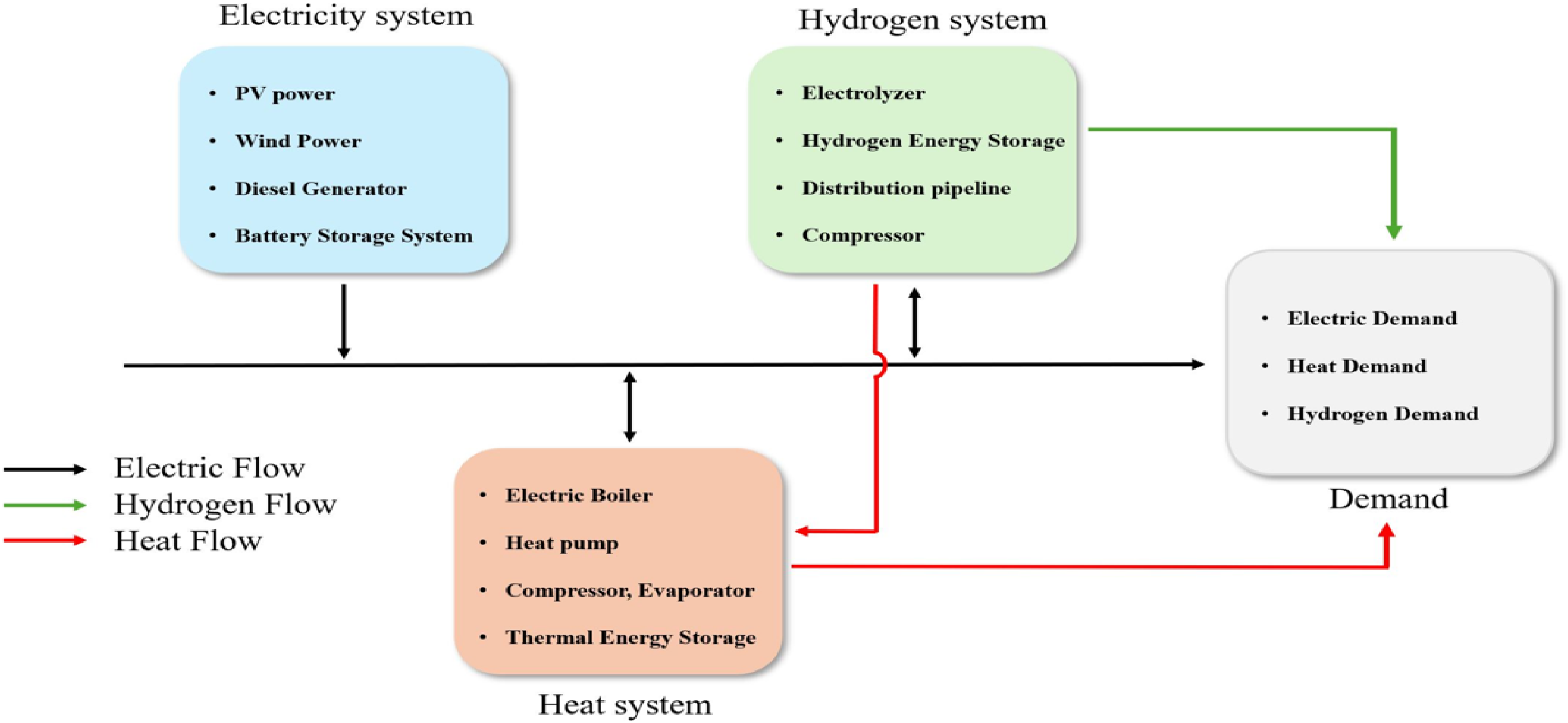
A schematic diagram of a single-region multi-energy system.
The thermal system uses electric boilers, heat pumps, and TES units to recover waste heat and meet heating demand. However, single-region optimization faces difficulties in addressing renewable variability, supply–demand imbalance, and large-scale scalability.
Energy storage technologies have complementary roles: ESS is suitable for short-term balancing, whereas P2H enables long-term storage by converting electricity into hydrogen for later use. A lack of interregional energy-sharing infrastructure further constrains system reliability and flexibility.
Earlier studies primarily optimized independent regional systems, which restricted scalability for integrated, cross-regional planning. Recent research has advanced MES optimization by incorporating interregional coordination of electricity, heat, and hydrogen flows. This integrated approach aims to optimize grid interconnection, thermal network coupling, and hydrogen storage and transport systems to enhance energy efficiency and system resilience.
Figure 4 illustrates the conceptual framework of an interconnected MES. Electricity is transmitted through power lines, hydrogen through pipelines, and heat is mainly utilized within local areas because of transmission losses. Interconnection among regions mitigates renewable generation variability and improves both distribution efficiency and economic feasibility, overcoming the limitations of isolated regional systems and supporting a more stable energy network.
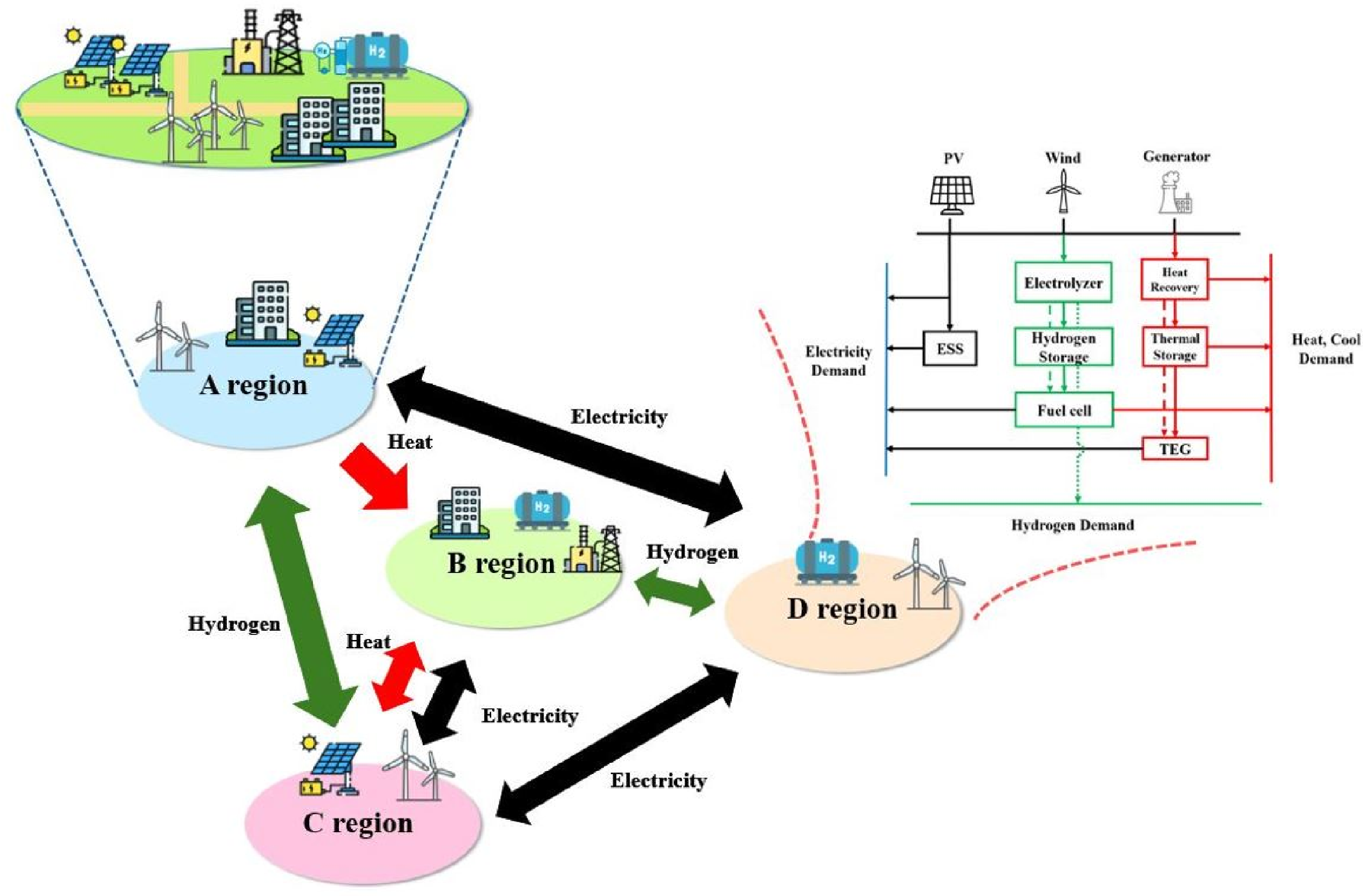
Approximate composition of multi-energy optimization linked between regions.
Interregional MES studies have explored different approaches to address the limitations of single-region optimization. Zheng et al. (2012) developed an interregional power-trading model focused on economic analysis, while Yi et al. (2016) and Wu et al. (2021) considered long-term planning and cross-border grid connections but did not fully reflect real-time operation or technical constraints. Li et al. (2025) added congestion management and security checks to a market-based regional model, showing how interprovincial clearing affects grid stability under complex market structures.
In thermal networks, Tang et al. (2018) introduced interregional coordination to improve efficiency, and Chen et al. (2022) included temperature control, though both were limited to offline frameworks. Deng et al. (2023) advanced this line of research by applying deep reinforcement learning (DRL) and digital-twin modeling to district heating systems, achieving real-time adaptability and fuel-cost reduction beyond traditional optimization.
In hydrogen systems, Cho and Kim (2019) optimized production, storage, and distribution networks as a single framework, while Yang et al. (2025) developed a cross-regional hydrogen supply chain using mixed-integer programming to model hydrogen state transitions and storage flows, achieving both cost reduction and a 26.7% decrease in carbon emissions.
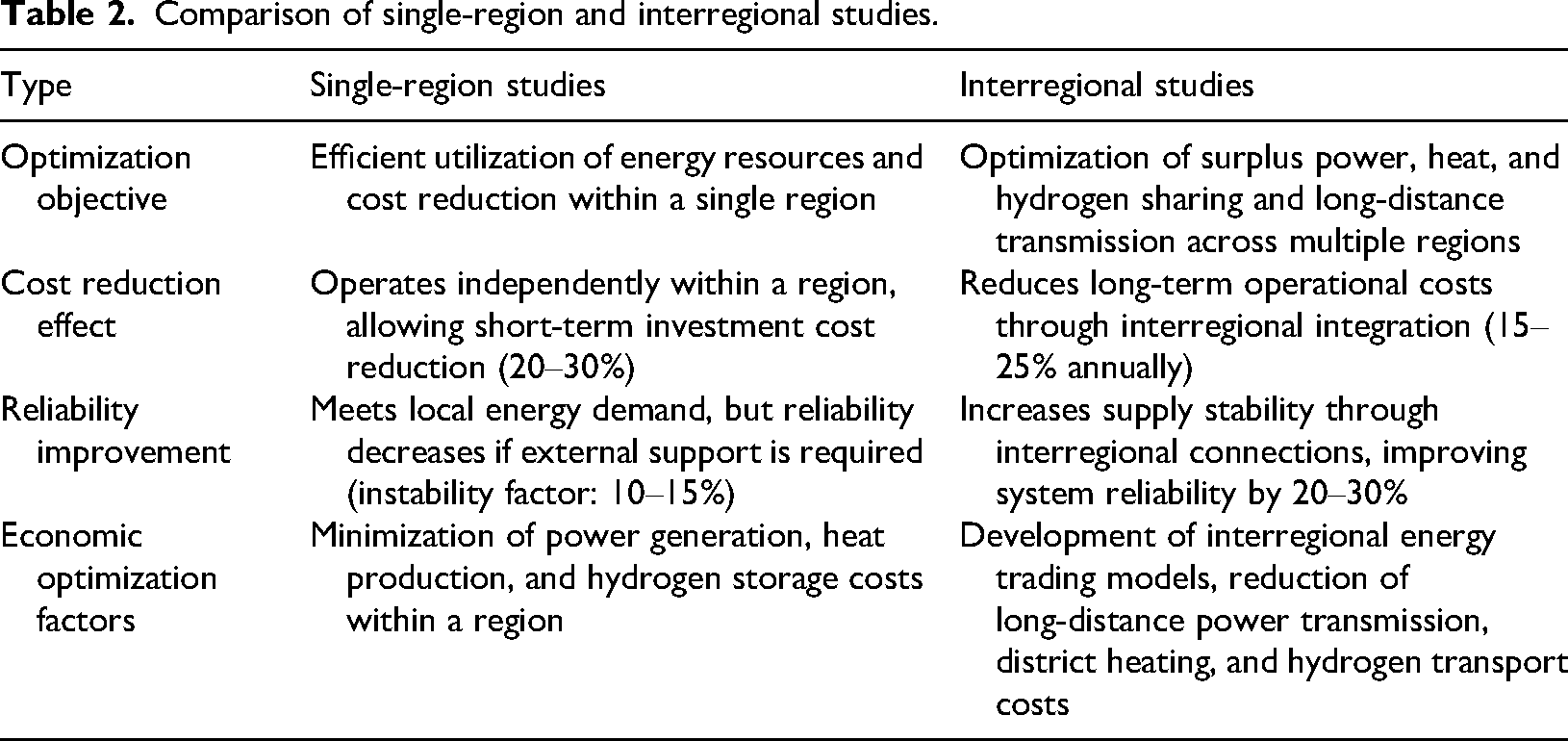
Overall, research has progressed from economic and planning-oriented analyses toward dynamic, data-driven optimization that considers real-time operations and sector interactions. Table 2 compares single-region and interregional approaches, highlighting the need for multi-region integration to enhance energy efficiency and system resilience.
Comparison of single-region and interregional studies.
Unlike previous reviews such as Xu et al. (2024), which focused on district-scale configurations and individual technologies, this study extends the analysis to multi-region energy networks that simultaneously consider electricity, heat, and hydrogen systems. It emphasizes real-time operational optimization under regional interconnection constraints and incorporates both economic feasibility and policy alignment. This cross-regional and cross-sectoral framework offers a system-level perspective on MES optimization that supports decision-making for large-scale decarbonization planning.
The structure of this paper is organized as follows. Methodology Section describes the optimization models and methodological approaches applied to MES. Optimization challenges in multi-energy system Section summarizes studies on individual MES optimization, interregional integration, and economic analysis. Advancement in multi-energy system research Section reviews the development and evolution of MES systems. Conclusion Section concludes the paper and outlines its main implications.
Methodology
MES optimization requires methods that consider interactions between different energy carriers. This section focuses on interregional optimization, comparing optimization techniques and evaluating their advantages, limitations, and applicability. It also defines the mathematical modeling components of MES, including parameters, objective functions, and constraints.
Optimization technique
Optimization methods for MES optimization are broadly categorized into linear and nonlinear approaches. Depending on the problem characteristics, mathematical optimization, AI-based methods, and metaheuristic algorithms are employed. Linear optimization techniques (LP, mixed-integer linear programming (MILP)) are suitable for relatively simple problems, while nonlinear methods (nonlinear programming (NLP), mixed-integer nonlinear programming (MINLP)) are applied to complex system modeling. Additionally, AI and metaheuristic algorithms (e.g. GA, PSO) effectively handle complex optimization problems but often involve high computational costs. The following section compares these optimization techniques and analyzes their applicability for interregional MES integration.
Linear optimization techniques (LP, MILP)
Zhang et al. (2019) optimized energy and power flows in MESs using MILP, achieving fast computation and feasible implementation. However, their model applied a single-objective formulation that excluded cost and environmental considerations. Sun et al. (2022) addressed this limitation by combining MILP with a multi-objective optimization algorithm (NSGA-II) to obtain more balanced operational strategies. Although the hybrid method improved optimization accuracy, its higher computational complexity limited real-time applicability. Overall, MILP-based models provide high computational efficiency, while multi-objective frameworks enhance system realism; the selection between them should be based on problem scale, objective structure, and operational requirements.
Nonlinear optimization techniques (MINLP, NLP)
Imeni et al. (2023) applied MINLP to optimize fuel-cell and energy-conversion systems, demonstrating its effectiveness for highly nonlinear MES problems. However, the increased computational complexity resulted in longer solution times. Wang et al. (2023b) addressed this issue by introducing a multi-objective MINLP framework that considered both integer and continuous variables, achieving greater solution precision but at a higher computational cost. Compared with Imeni et al. (2023), Wang et al. (2023b) offered a more refined optimization structure but required significantly greater processing effort.
In a Danish multi-energy integration project, MINLP-based optimization was successfully used to mitigate renewable variability, demonstrating feasibility in practical applications. Conversely, Marocco et al. (2022) employed NLP for off-grid renewable optimization but struggled to reach a global optimum. Xu et al. (2023) improved the heat-power coupling representation, enhancing realism over Marocco et al. (2022) while increasing computational burden and reducing real-time applicability. Mallégol et al. (2023) further advanced heat-power coupling optimization by introducing physical models that improved practical accuracy but also increased computational demand.
For multi-objective optimization, Wang et al. (2018) applied NSGA-II to optimize carbon emission reduction and resource allocation, effectively handling multiple objectives. However, the expanded search space led to a significant increase in computational complexity. Compared to Wang et al. (2018), Eriksson and Gray (2019) proposed an approach incorporating both environmental and economic factors, offering a more balanced optimization framework but suffering from slower convergence. Sun et al. (2022) improved computational efficiency by combining MILP with GA, outperforming Wang et al. (2018) and Eriksson and Gray (2019) in terms of solution speed and precision. Liu et al. (2021a) further refined optimization performance using NSGA-III, achieving faster convergence than NSGA-II while still facing high computational demands.
For global optimization, Tang et al. (2018) used GA to search for global optima but encountered slow convergence and sensitivity to initial conditions. Compared to Tang et al. (2018), Chen et al. (2021) adapted GA-based optimization for MESs, improving solution reliability. Sun et al. (2022) enhanced GA-based optimization by integrating GA with MILP, leading to higher precision in optimization results. Liu et al. (2021a) attempted to address GA's limitations by implementing NSGA-III, which improved convergence speed compared to traditional GA methods. However, the approach still faced difficulties in ensuring high-quality global solutions, similar to the limitations observed in Tang et al. (2018) and Chen et al. (2021).
Recent optimization studies show a clear shift from deterministic and single-objective models toward hybrid and multi-objective frameworks that integrate mathematical and heuristic methods.
While MILP and MINLP ensure structural accuracy, their scalability decreases with nonlinear or stochastic problems. Hybrid approaches combining MILP with metaheuristic algorithms improve solution realism but increase computational effort. Recently, AI-based and learning-assisted optimization methods, such as reinforcement learning and surrogate modeling, have emerged to enhance adaptability and enable real-time operation in MES management.
Stochastic optimization, game theory, and reinforcement learning
Fu et al. (2024) applied game-theoretic optimization for interregional electricity trading, improving market efficiency but requiring extensive data for real-time operation. Ye et al. (2020) implemented DDPG-based reinforcement learning for real-time control, managing uncertainty effectively but limited by long training and scarce initial data. A U.S. grid study applied DDPG to improve short-term demand forecasting and operational reliability. Ahmadi et al. (2022) adopted stochastic optimization to manage renewable variability through scenario modeling, improving flexibility but increasing simulation time. A German energy-network study confirmed this approach's adaptability by incorporating solar and windpower fluctuations into operational planning.
As optimization frameworks become more sophisticated, computational complexity and real-time implementation remain major challenges. MILP offers fast computation and global optimality but is limited in handling nonlinear interactions. Nonlinear programming (NLP/MINLP) captures system-level dynamics more accurately but requires substantial computation. Genetic and evolutionary algorithms, including GA and NSGA variants, are effective for global searches yet exhibit slow convergence and sensitivity to initial parameters. Game-theoretic and reinforcement learning approaches enable adaptive and market-responsive operation but rely on large datasets and face difficulties in real-time adaptation.
Therefore, selecting an optimization method should depend on the complexity, objective structure, and operational requirements of the MES. Integrating complementary techniques can improve accuracy, scalability, and adaptability. Table 3 summarizes the characteristics and applicability of each optimization method.
Characteristics of optimization methods.
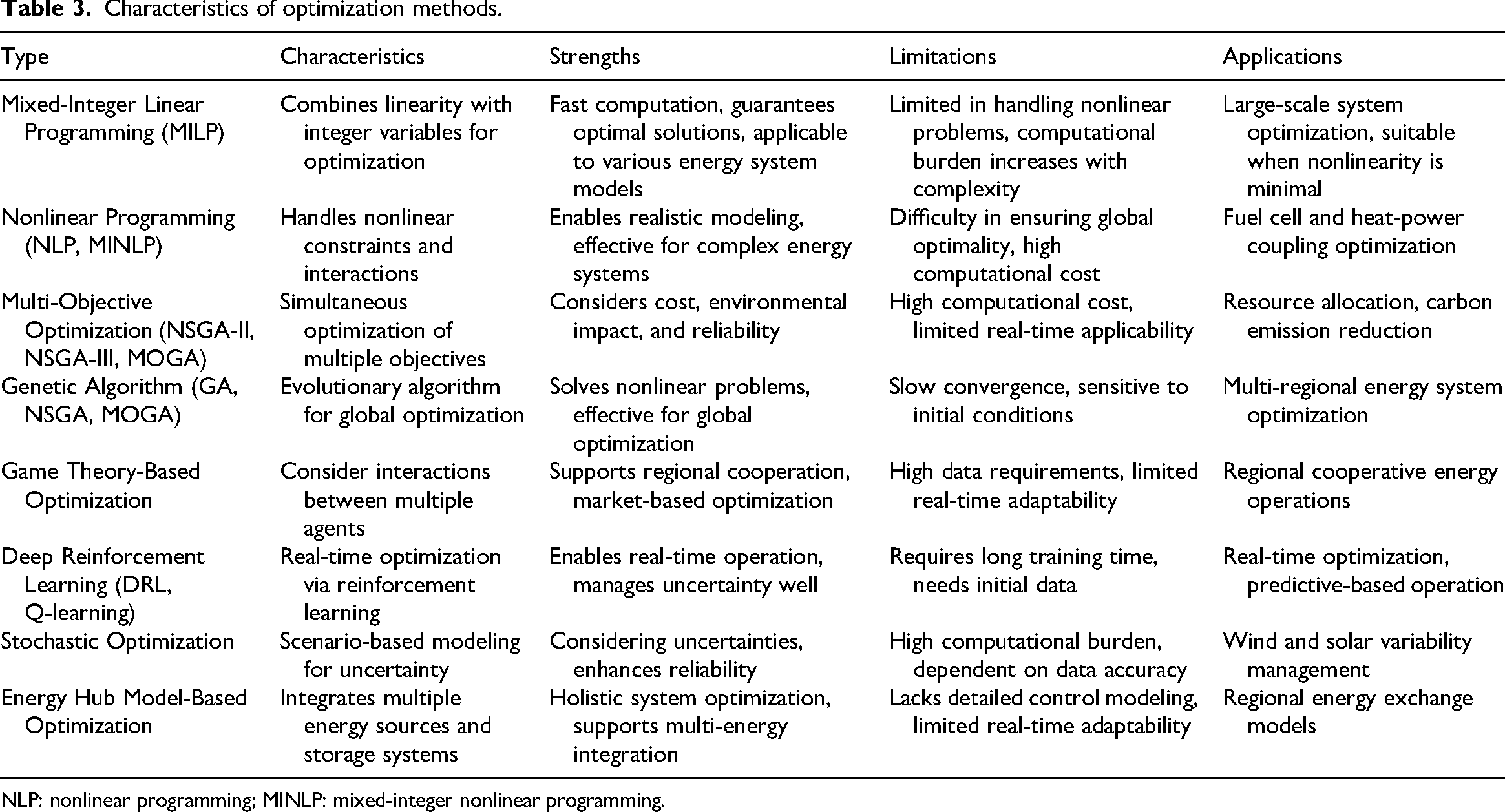
NLP: nonlinear programming; MINLP: mixed-integer nonlinear programming.
System modeling
MES optimization requires mathematical modeling to describe energy interactions and apply optimization methods. This involves defining parameters, objective functions, and constraints.
System parameters
MES models include operational variables for electricity, heat, and hydrogen systems, as well as economic factors such as investment costs, operational expenses, and energy prices. Transmission capacity and hydrogen pipeline capacity are also considered for interregional integration. These parameters are input variables for MES optimization models and are essential for accurately representing energy flows. Table 4 summarizes the main parameters.
Parameters comprising MES.
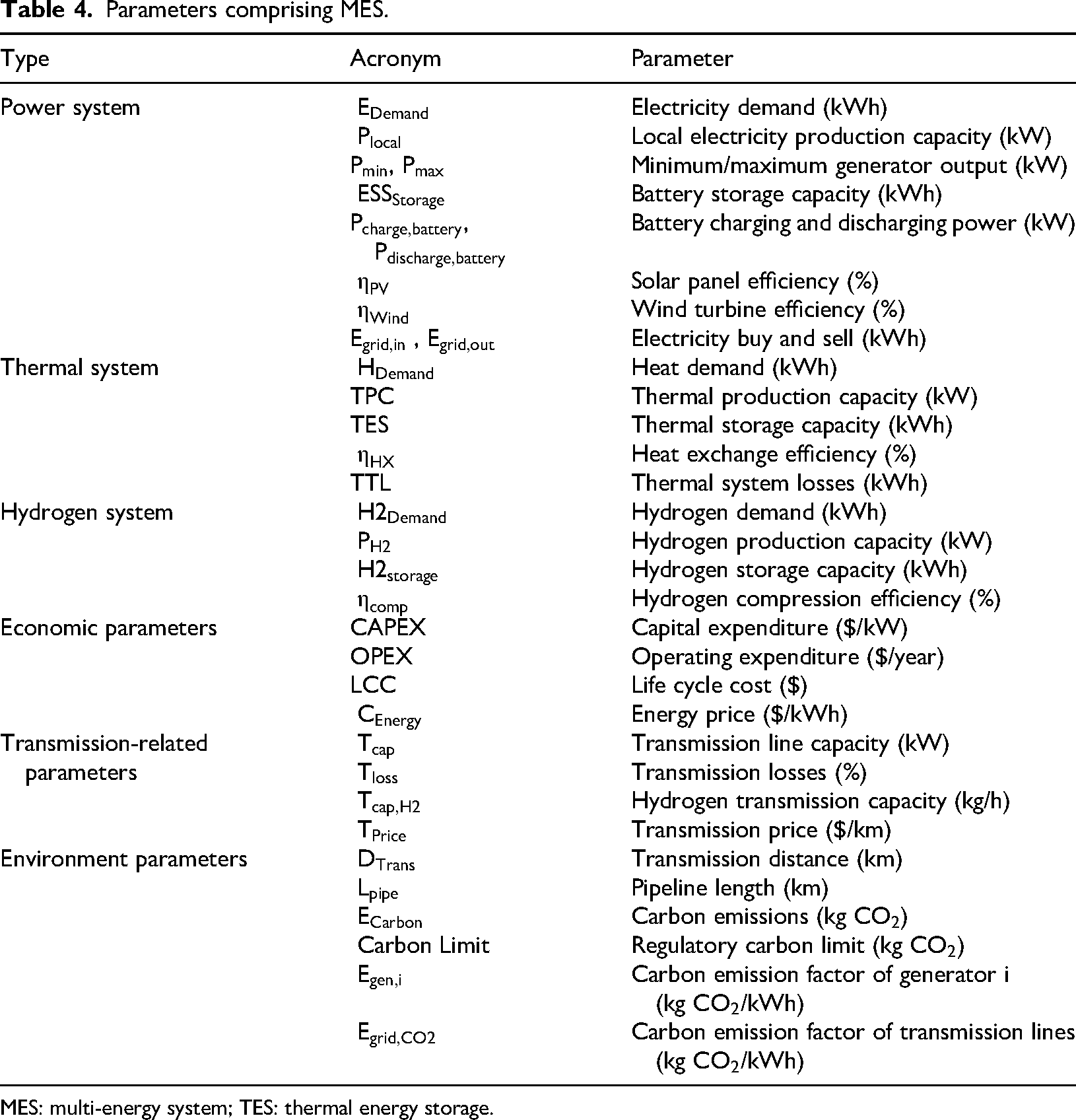
MES: multi-energy system; TES: thermal energy storage.
These parameters serve as input variables in MES optimization models and are essential for accurately representing energy flows in interregional integration.
Objective function
MES optimization aims to reduce costs, lower carbon emissions, and enhance energy reliability.
Equation (1) represents the total system cost (
Equation (2) defines the total carbon emissions (
Equation (3) maximizes self-sufficiency ratio to reduce dependence on external power grids.
These objective functions are designed to balance economic efficiency, environmental sustainability, and system stability in the optimization process.
Constraints
To ensure realistic operation, constraints are imposed on energy balance, generator output limits, conversion efficiency, and carbon emission regulations.
1) Energy Supply-Demand Balance
The total power generation, storage, and imported electricity must equal the total demand and exported power.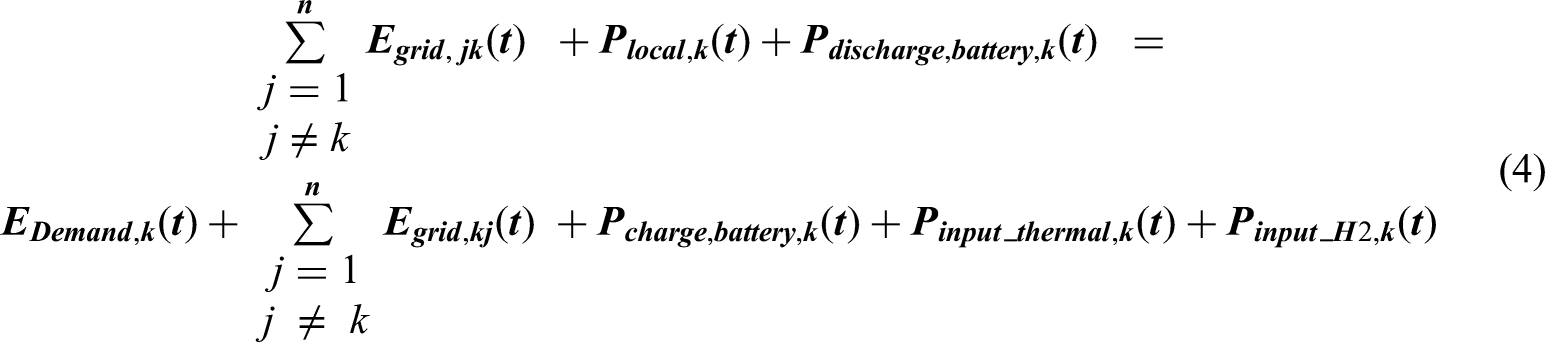
The subscript k indicates that the variable is applied within region k. Among the variables not listed in Table 4 2) Generator Operational Limits

3) Energy Conversion Efficiency Constraints
Electricity-to-heat and electricity-to-hydrogen conversions follow efficiency constraints

Equations (6) and (7) define the energy conversion process, where 4) Carbon Emission Limit
Total carbon emissions must not exceed the legal threshold:
Equation (8) ensures compliance with emission regulations, where Carbon Limit is the maximum allowable emissions.
5) Renewable Energy Share Constraint
A minimum share 
Equation (9) ensures a minimum renewable energy share, where 6) Transmission Line Constraint
The system must operate within the physical transmission limits:
Equation (10) enforces transmission constraints, where 7) Energy Storage Constraint
ESSs must operate within capacity and charge/discharge limits:

Equations (11) and (12) ensure feasible energy storage operation.
These constraints are essential for developing an optimization model that reflects practical operation. However, real-world conditions involve uncertainties, energy demand fluctuations, and renewable energy intermittency. To address these factors, stochastic and robust optimization models are also used.
Optimization challenges in multi-energy system
MESs integrate electricity, heat, and hydrogen for efficient resource utilization. However, optimizing real-time operation, managing uncertainties, and assessing economic feasibility present challenges. This section examines subsystem optimization, interregional integration strategies, and economic analysis.
Figure 5 shows a conceptual diagram of MES optimization in single-region and interregional systems. It outlines subsystem challenges and regional integration strategies.
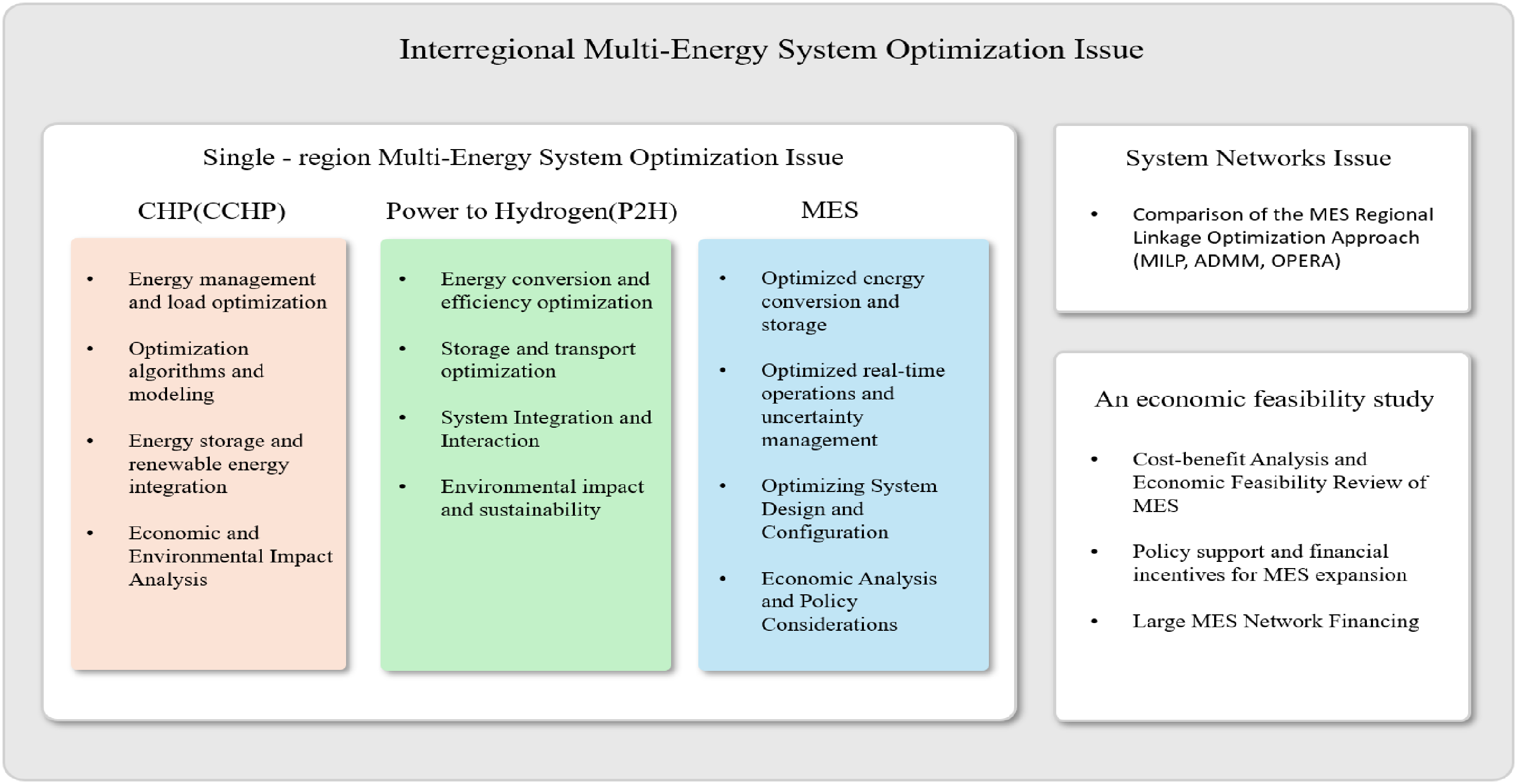
Major optimization issues in MES subsystems. MES: multi-energy system.
Optimization issues in combined heat and power and combined cooling, heating, and power systems
CHP and CCHP systems produce electricity and heat simultaneously, thereby increasing overall energy utilization efficiency. CHP recovers waste heat from electricity generation to satisfy thermal demand, while CCHP extends this concept by using absorption chillers to convert part of the recovered heat into cooling energy.
Figure 6 illustrates the energy flow in CHP and CCHP systems. Fuel powers a generator to produce electricity, and the waste heat from this process is recovered through a heat recovery system. In CCHP systems, the recovered heat drives an absorption chiller to produce cooling energy, enabling tri-generation of electricity, heat, and cooling. These systems are applied across industrial plants, commercial buildings, and residential complexes to improve energy efficiency and reduce carbon emissions. Their integration within MESs supports real-time load balancing and waste-heat utilization, providing a practical path toward distributed low-carbon energy supply.
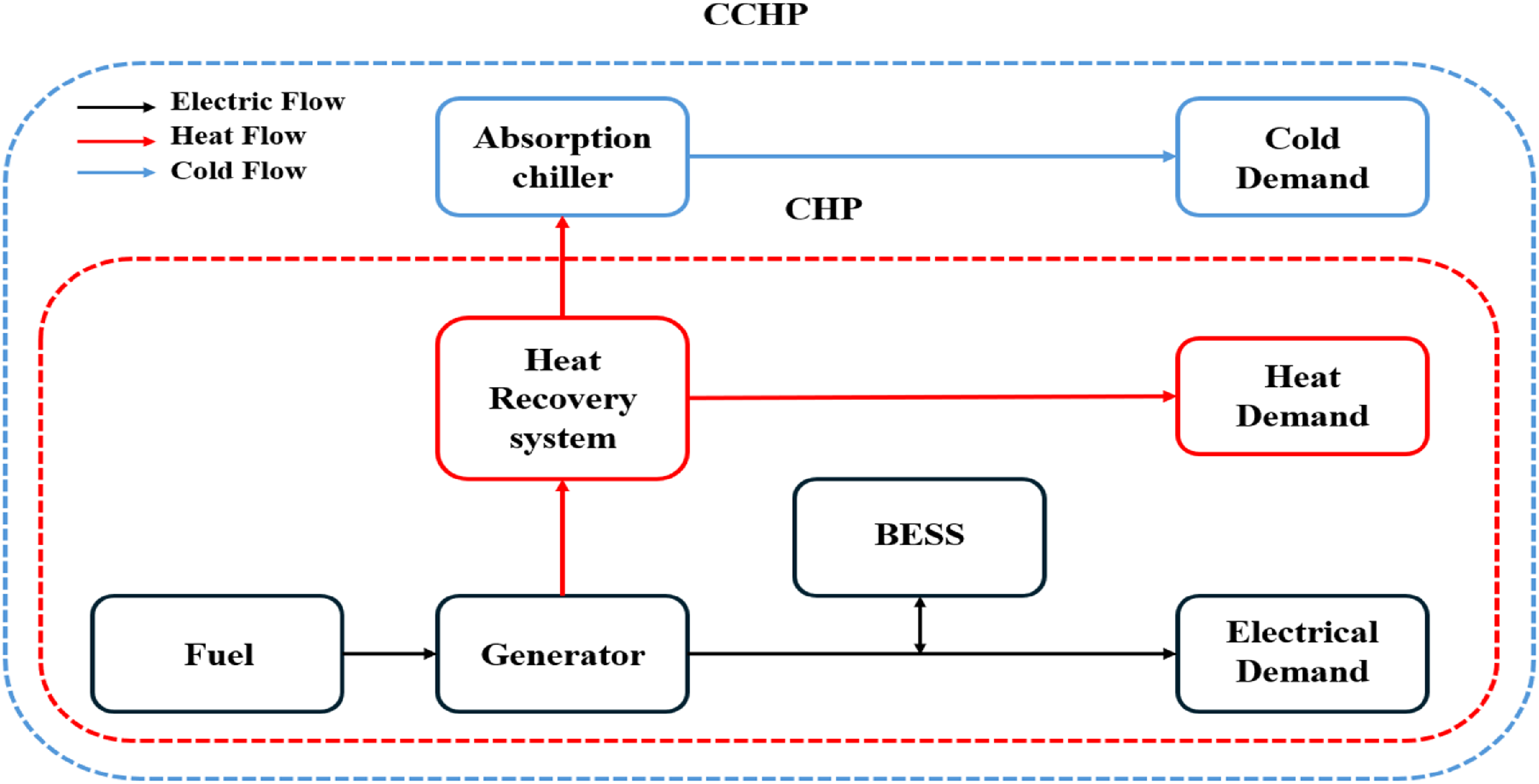
Conceptual diagram of CHP and CCHP systems. CHP: combined heat and power; CCHP: combined cooling, heating, and power.
Energy management and load optimization
Jiang et al. (2016) analyzed how the placement of energy storage units influences the performance and energy savings of CCHP systems. Their work focused on static placement rather than operational optimization. Gong et al. (2020) addressed this limitation by developing a load-scheduling model that adjusted demand dynamically through schedulable loads, improving both economic and environmental outcomes. However, the approach was restricted to a single-region system without considering interregional coordination. Building on this, Zhou et al. (2020) extended the framework to multi-region load optimization and incorporated network constraints, enhancing overall system efficiency. Yet, dynamic operational variables were only partially represented. To overcome these gaps, Sun et al. (2022) proposed a multi-objective optimization model that jointly considered economic feasibility, energy efficiency, and emission reduction—factors often neglected in earlier studies. Using the BCS-GDE algorithm, the model outperformed GA and NSGA-II, achieving cost, primary-energy, and emission reductions of 72%, 73%, and 88%, respectively. Nevertheless, validation was confined to specific building types such as hotels, offices, and residential complexes, indicating the need for further testing under large-scale network conditions.
Optimization algorithms and modeling
Ji et al. (2020) developed an optimization framework for a hybrid ESS to enhance operational flexibility. Liu et al. (2021b) extended this work using MILP to improve optimization precision but encountered limitations in adapting to real-time load variations. Chen et al. (2021) addressed this issue by introducing a power flow coupling model, which improved adaptability under dynamic operating conditions. Sun et al. (2022) further enhanced computational performance by applying the BCS-GDE algorithm, achieving faster convergence and higher solution accuracy. Nan et al. (2024) advanced the framework by integrating the deep neural Gaussian optimization (DNGO) algorithm and incorporating a 4E evaluation—covering energy, exergy, economics, and environmental factors. However, the model was not validated under real-world conditions, indicating the need for further assessment of its practical applicability.
Energy storage and renewable energy integration
Wang et al. (2019) developed an optimization model integrating electricity, heat, and natural gas networks to coordinate complex energy flows. However, their model lacked real-time optimization, limiting flexibility in practical operations. To improve renewable energy utilization, Ji et al. (2020) introduced a new optimization model, but their study did not include a cost analysis, making performance evaluation in terms of cost-effectiveness difficult. Addressing this gap, Zhou et al. (2020) applied P2G technology to enhance renewable energy storage and utilization, mitigating the intermittency issue. However, their model also lacked a detailed economic analysis, limiting its cost-efficiency assessment. Yufeng et al. (2024) proposed a dynamic scheduling method that considers seasonal variations in renewable energy availability, enabling real-time load optimization. Despite this improvement, their study lacked validation using experimental data. Nan et al. (2024) further refined renewable energy optimization by integrating the DNGO algorithm and incorporating a 4E analysis. However, their model was not tested with real-world experimental data, raising concerns about its practical reliability.
Economic feasibility and environmental impact analysis
Sass et al. (2020) addressed this by providing benchmark data for evaluating the economic performance of various CCHP configurations, creating a reference for system comparison. While useful for analysis, their model lacked real-time optimization capability, reducing its relevance for operational decision-making. Zhou et al. (2020) enhanced the framework by integrating a tiered gas tariff into the optimization model to minimize energy costs and reflect price fluctuations. Although this approach identified cost-saving strategies, it did not include long-term price forecasting, reducing adaptability in volatile markets. To overcome these limitations, Nan et al. (2024) adopted a four-dimensional “4E” evaluation framework—covering energy, economy, environment, and efficiency—to promote sustainable operations beyond cost reduction. They also implemented the Developed Northern Goshawk Optimization (DNGO) algorithm, achieving higher economic efficiency than previous models. Despite these advances, their study lacked validation using real operational data, underscoring the need for experimental verification to confirm model robustness in practical applications.
Table 5 summarizes studies on CHP and CCHP system optimization. It highlights the technical challenges addressed in each study and provides an overview of the approaches used to resolve them.
Summary of studies on CHP and CCHP system optimization.
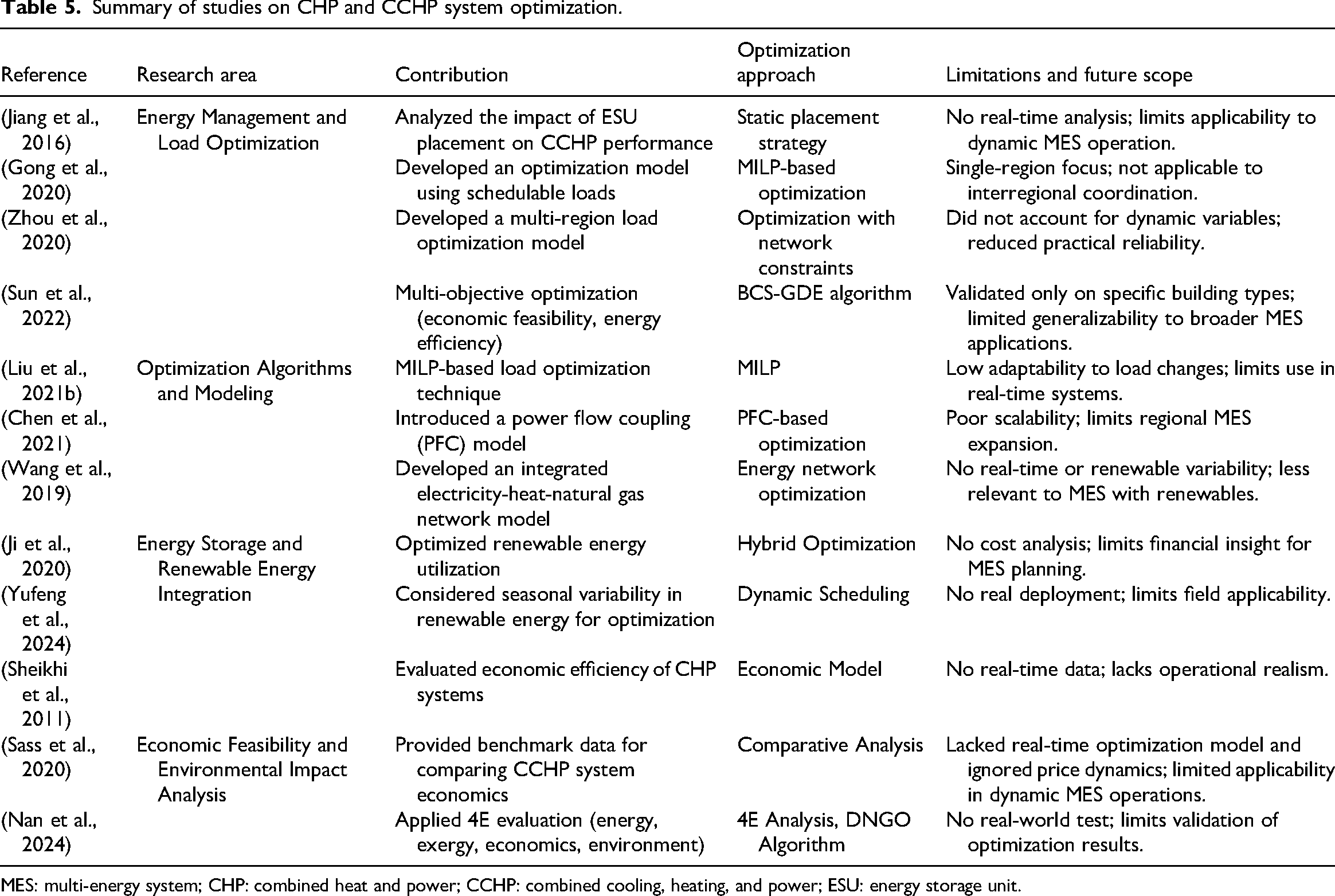
MES: multi-energy system; CHP: combined heat and power; CCHP: combined cooling, heating, and power; ESU: energy storage unit.
Optimization challenges in power-to-hydrogen to power systems
P2H systems convert surplus electricity from renewable sources, such as solar and wind, into hydrogen for storage and later use. This process helps balance power supply, reduce grid stress, and extend renewable energy utilization beyond the electricity sector. Stored hydrogen can be reconverted into electricity through fuel cells or supplied directly to industrial, transportation, and residential applications. During periods of low demand, excess electricity is stored as hydrogen; when demand increases, it is reconverted to electricity or heat as needed. In addition, hydrogen pipeline networks enable direct distribution, supporting flexible energy exchange across multiple regions and sectors.
Figure 7 illustrates the P2H to power system, depicting the conversion, storage, and utilization of hydrogen. Electricity is converted into hydrogen through electrolysis and stored for later use. The stored hydrogen can be reconverted into electricity via fuel cells or directly supplied through pipelines.
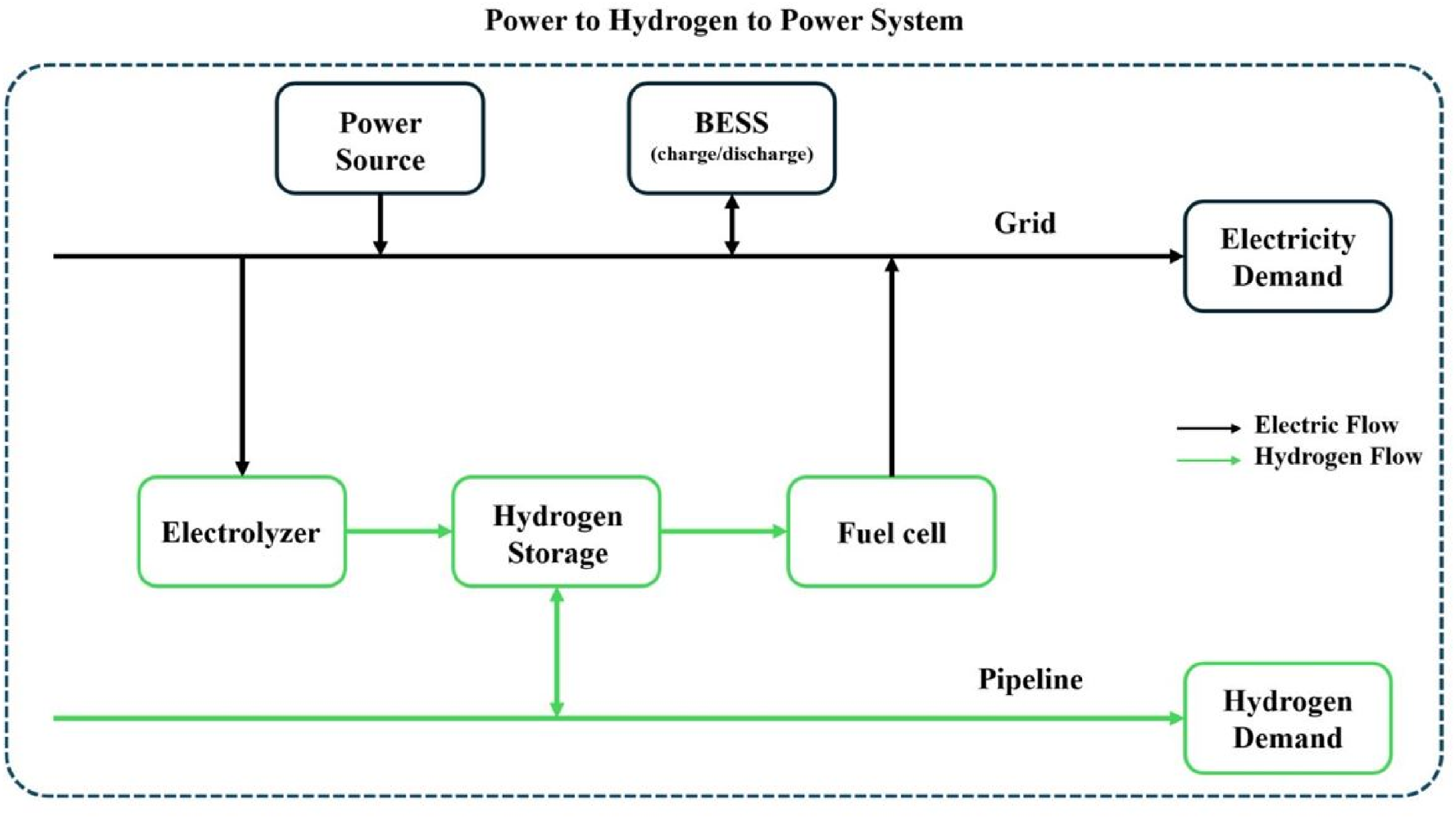
Conceptual diagram of a power to hydrogen to power system.
Energy conversion and efficiency optimization
Wang et al. (2018) analyzed hybrid-energy-system optimization under renewable integration through simulation. Their model was limited to specific climatic conditions, reducing general applicability. Zhang et al. (2019) improved conversion efficiency by combining P2G technology with reversible solid-oxide cells. The approach achieved higher energy-conversion efficiency but required high initial investment, limiting large-scale adoption. Imeni et al. (2023) shifted the focus from conversion to operation by applying a stochastic-optimization framework for hydrogen-based energy hubs. They evaluated economic feasibility and carbon reduction but did not include real-time data or renewable-generation variability. Yan et al. (2023) proposed a bi-level optimization model to reduce costs and improve practicality. Their method enhanced operational efficiency but faced scalability and real-time limitations. Jangir et al. (2024) improved proton-exchange-membrane fuel-cell modeling accuracy using an AI-based MNEARO algorithm. Computation time increased, however, due to model complexity. Aljaidi et al. (2025b) mitigated this issue with a differential-evolution algorithm that reduced computation cost while maintaining accuracy. Validation remained limited to a few fuel-cell configurations, indicating the need for broader testing across technologies.
Storage and transportation optimization
Marocco et al. (2021) evaluated the economic feasibility of battery and hydrogen storage systems, showing that hydrogen storage offers higher efficiency for long-duration applications. Their analysis, however, was limited to small-scale systems. Marocco et al. (2022) extended this work by incorporating environmental sustainability and assessing carbon-emission reduction benefits, but the model did not fully address emergency-power supply requirements. Kwon et al. (2024) shifted the research focus from evaluating individual storage technologies to developing an integrated framework that balances hydrogen and battery storage. This broader approach improved system coordination but lacked comparative validation against conventional storage methods, constraining practical assessment. Akarsu and Genç (2022) applied the HOMER platform to optimize hybrid energy systems, providing useful insights into storage configuration though the analysis was restricted to a single region, limiting scalability. Husarek et al. (2021) expanded the perspective by formulating hydrogen-supply-chain scenarios for Germany in 2050, aligning with national decarbonization goals yet omitting detailed economic evaluation. Jin et al. (2022) optimized electricity and hydrogen deployment in China under carbon-neutrality policies, highlighting policy applicability while remaining confined to a national context. Strömer et al. (2024) advanced this direction by designing hydrogen-infrastructure models that included electrolyzer and pipeline components, emphasizing implementation feasibility rather than solely technical optimization.
System integration and interaction
Li et al. (2018) optimized MESs using a standardized matrix modeling approach. However, the model's complexity made real-time operation challenging. To address this, Kamal et al. (2023) optimized the sizing of solar, hydropower, and hydrogen-based systems while incorporating methods to manage variability. Despite this improvement, their study lacked real-time operational data. Dong et al. (2016) took a more practical approach by determining the optimal size of battery and hydrogen storage-based hybrid systems. They applied an ant colony optimization algorithm, but high initial investment costs remained a limitation. Expanding on this, Qamar et al. (2024) focused on improving power quality in hydrogen-based microgrids—an aspect not covered by Dong et al. (2016). Their findings contributed to grid stability, but scalability for large systems was uncertain. Sanchez et al. (2014) optimized standalone renewable energy systems using a PSO-based approach but did not integrate real-time operational data. Similarly, Dokkar et al. (2013) proposed a GA-based optimization model for PV-hydrogen fuel cell systems yet lacked real-world implementation cases.
Environmental impact and sustainability
Eriksson and Gray (2019) developed a multi-objective optimization model integrating economic, technical, and environmental factors, but their analysis did not include detailed short-term cost assessment. Okundamiya (2021) extended this line of research by evaluating the environmental performance of a HOMER-based solar–fuel-cell–hydrogen storage system, although empirical validation was not performed. While most previous studies focused on operational optimization, Versaci et al. (2024) explored battery sustainability by improving lifespan and recyclability. Their model enhanced charge–discharge cycle stability but requires further verification before commercial deployment. Shifting from environmental to grid-level optimization, Aljaidi et al. (2025a) optimized the placement of flexible AC transmission system devices to increase grid efficiency. However, the absence of real-time operational testing limited assessment of its practical feasibility.
Table 6 summarizes optimization approaches for P2H systems that integrate electricity and hydrogen networks, highlighting the technical challenges and methods proposed in these studies.
Summary of power-to-hydrogen system optimization studies.
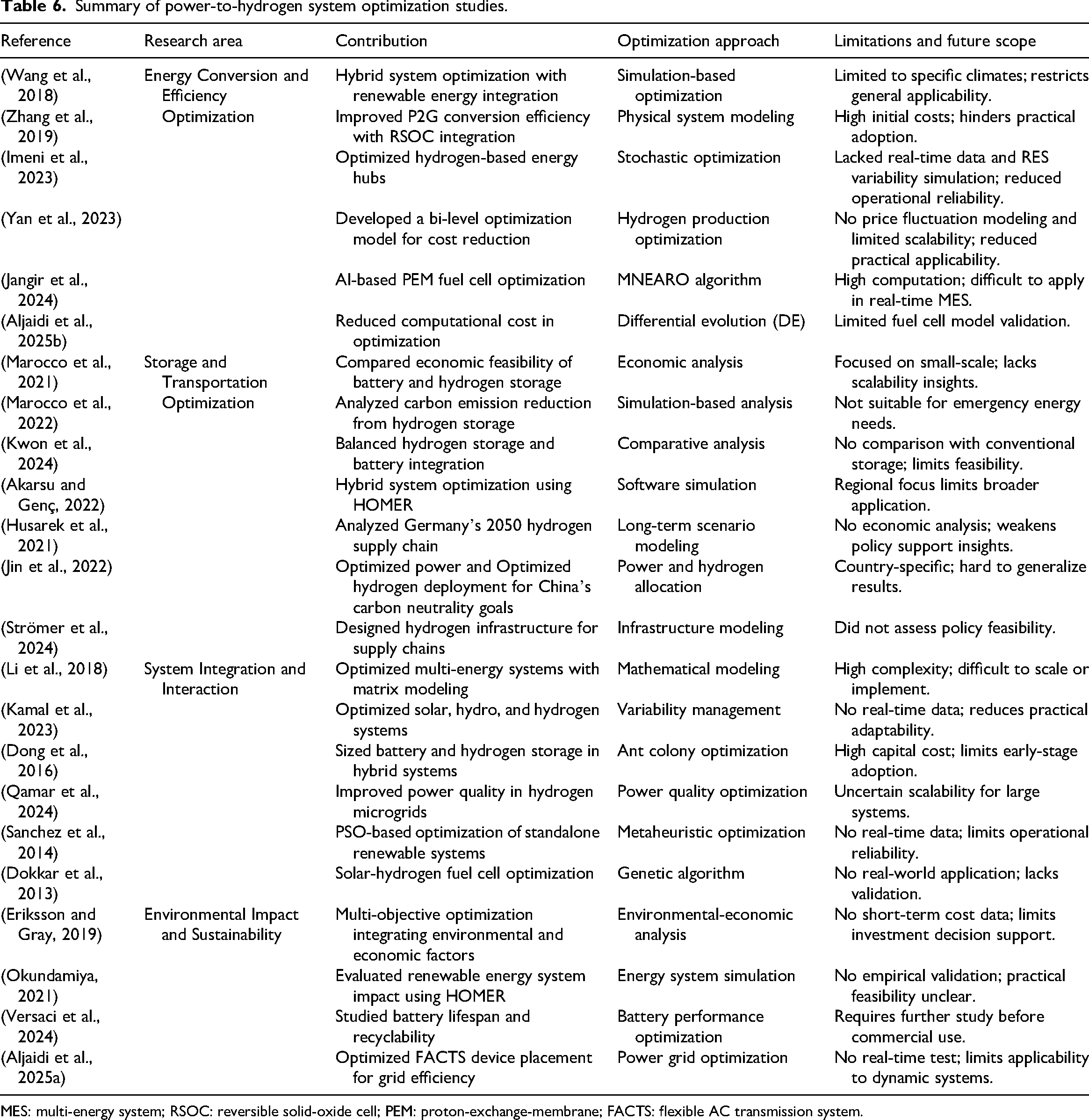
MES: multi-energy system; RSOC: reversible solid-oxide cell; PEM: proton-exchange-membrane; FACTS: flexible AC transmission system.
Optimization challenges in multi-energy systems
CHP, CCHP, and P2H systems integrate electricity with heat or hydrogen, representing simpler forms of MES. However, real MES involve complex interactions among electricity, heat, hydrogen, and cooling, leading to more intricate optimization challenges.
Optimization of energy conversion and storage among electricity, heat, and hydrogen
Qiu et al. (2020) developed a long-term storage model based on underground hydrogen storage (UHS), optimizing seasonal storage and utilization rather than short-term balancing. While the approach captured seasonal variability, it did not incorporate real-time operation, limiting responsiveness to short-term fluctuations. Fu et al. (2020) optimized energy flows in a MES by integrating battery and thermal storage, which enhanced overall efficiency but excluded economic and policy factors, reducing practical applicability. To improve system feasibility, Zhang et al. (2022) proposed a capacity-planning model for wind, solar, battery, and hydrogen technologies. Unlike earlier studies, their framework strengthened the link between renewables and hydrogen storage, though it remained limited to a single region and thus had restricted scalability. Addressing this gap, Wang et al. (2023a) introduced an economic dispatch model incorporating electrolysis-based hydrogen production to balance technical and economic considerations. The model accounted for renewable fluctuations and real-time operation but could not fully eliminate forecasting uncertainty.
Optimization of real-time operation and uncertainty management
In integrated electricity–heat–hydrogen systems, renewable energy variability, market price fluctuations, and demand uncertainty strongly influence real-time operation and economic outcomes. To address these challenges, recent studies have employed probabilistic optimization, MPC, and multi-agent optimization frameworks. Renewable generation variability has been mitigated using Zhu et al. (2020)'s multi-energy coupling approach and Yi et al. (2023)'s hydrogen storage strategy. Zhu et al. (2020) enabled real-time responsiveness but required significant computational resources, whereas Yi et al. (2023) improved long-term operational stability without real-time adaptability. Osorio-Aravena et al. (2023) further applied probabilistic optimization to a multi-node energy system, enhancing uncertainty handling but lacking dynamic supply–demand coordination. Market price fluctuations were addressed through Coelho et al. (2023)'s real-time market optimization and Fu et al. (2024)'s cooperative game-theoretic approach. Coelho et al. (2023) effectively captured short-term price dynamics but increased computational costs, while Fu et al. (2024) balanced regional prices through coordinated trading, though data-sharing requirements limited scalability. Demand uncertainty was analyzed using Mei et al. (2021)'s probabilistic optimization and Ahmadi et al. (2022)'s multi-agent optimization. Mei et al. (2021) effectively modeled stochastic demand scenarios but lacked adaptability for real-time operation, whereas Ahmadi et al. (2022) enabled decentralized real-time control but provided limited economic assessment.
Overall, multi-energy coupling and multi-agent frameworks are effective for real-time coordination, while probabilistic optimization and energy-storage-based strategies are more suitable for maintaining long-term stability.
System design and configuration optimization
The design of integrated electricity, heat, and hydrogen systems can be broadly categorized into local (single-region) and interregional configurations. Early research primarily focused on optimizing local systems, while recent studies have expanded to enhance scalability and flexibility. Olympios et al. (2024) optimized electricity, heating, and hydrogen integration at the building scale, demonstrating practical feasibility for small-scale applications, but the approach was unsuitable for industrial-scale deployment. Erenoğlu (2024) linked energy systems with the transportation sector by optimizing electric and hydrogen vehicle charging stations, improving sectoral coordination yet lacking long-term investment analysis. Bahrami and Rosen (2024) investigated electricity, cooling, and hydrogen production from low-temperature geothermal energy, expanding renewable utilization. However, the absence of policy evaluation limited the applicability of their model for real-world energy planning.
Economic analysis and policy considerations
Teng et al. (2019) analyzed the costs of integrated electricity, heat, and hydrogen systems while incorporating policy considerations. Their work provided useful insights into system economics but lacked direct linkage to real-time operations. Wu et al. (2022) expanded this perspective through long-term cost assessments that clarified the economic contribution of hydrogen; however, policy incentives were not included in the analysis. Mancò et al. (2024) further broadened the discussion by comparing policy frameworks and optimization strategies across multiple energy sectors, identifying how regulatory structures influence system performance. Although their study offered valuable implications, empirical validation of policy effectiveness remains limited and requires additional investigation.
Table 7 summarizes the optimization challenges in MESs integrating electricity, heat, and hydrogen. It outlines the technical issues addressed by each study and presents an overview of the corresponding optimization approaches.
Summary of optimization studies in multi-energy systems.
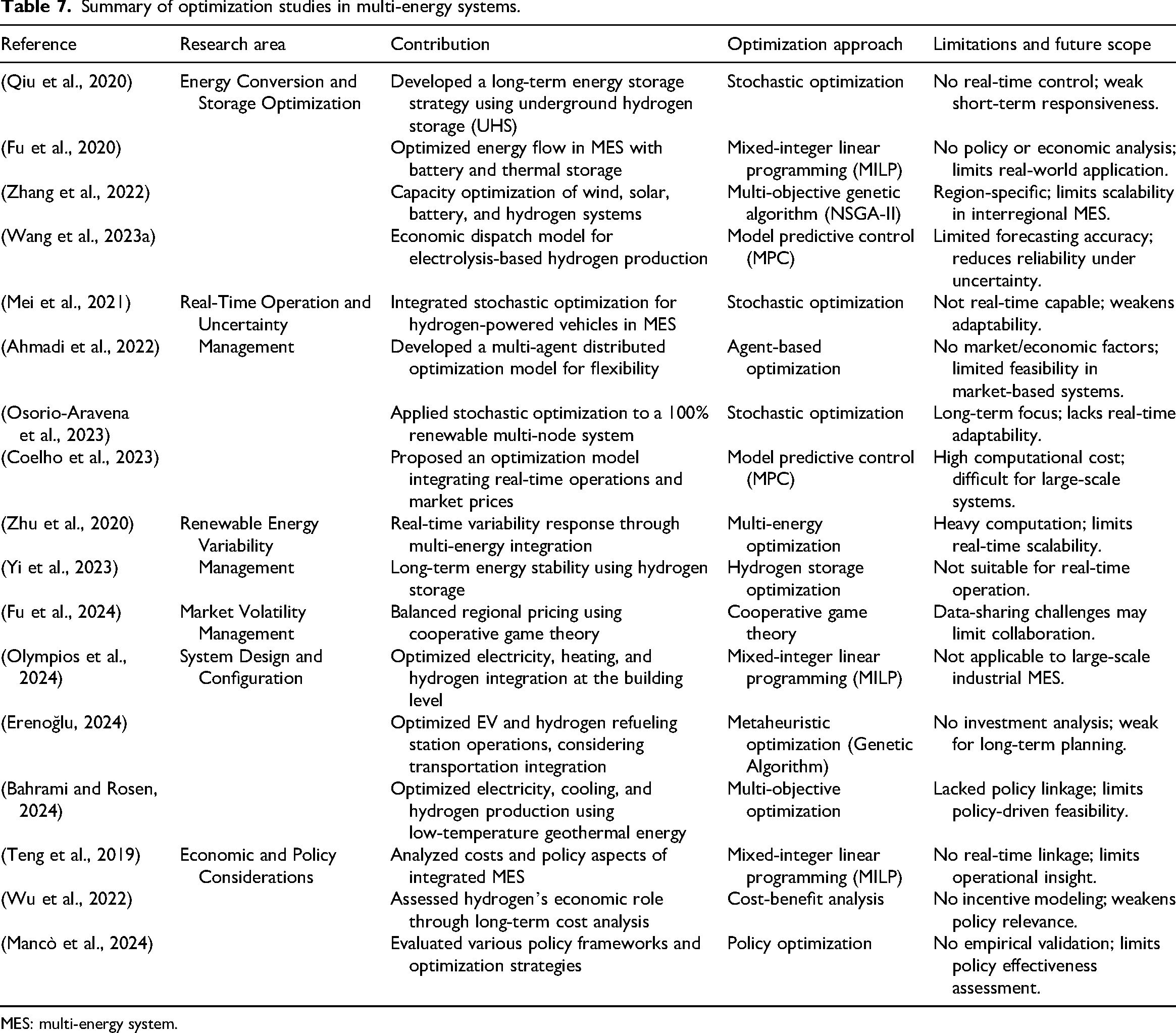
MES: multi-energy system.
Network considerations in interregional multi-energy system integration
Interregional MES integration requires a more complex framework than local MES, as it involves optimizing interconnected networks of electricity, gas, and hydrogen across multiple regions. While local MES focuses on energy flow within a single area, interregional systems must also coordinate energy sharing and network interactions under varying operational and market conditions. Key factors include transmission capacity, network losses, and operating costs. Yi et al. (2023) compared centralized and decentralized optimization methods for interregional MES, showing that centralized control improves coordination, whereas decentralized schemes enhance local flexibility. They also emphasized that electricity and hydrogen can be transmitted efficiently over long distances, while heat remains best utilized locally due to high transmission losses. Elekidis et al. (2018) optimized grid expansion and interregional power trade using an MILP-based model. By including transmission capacity as a constraint, their approach maintained stable power flow while preventing overloads and minimizing energy losses. In contrast, Zhu et al. (2020) developed an alternating direction method of multipliers-based distributed optimization framework for electricity–gas–heat coupling. This decentralized method enabled regions to optimize independently while exchanging limited boundary information, improving resource allocation but increasing computational complexity as network size grew. Sahoo et al. (2022) optimized gas networks within a single region using techno-economic and physical constraints to enhance stability but did not address interregional coordination. Fu et al. (2024) expanded this scope by applying cooperative game theory to model interregional energy coordination, balancing local autonomy with regional collaboration. Their framework demonstrated potential for scalable energy-sharing applications.
Overall, studies such as Sahoo et al. (2022) and Zhu et al. (2020) contribute effective models for local or distributed MES optimization, whereas Elekidis et al. (2018) and Fu et al. (2024) provide practical strategies for large-scale interregional integration
Economic feasibility analysis for optimal multi-energy system operation
MES expansion depends on economic feasibility, policy support, and funding. This section reviews studies by year and evaluates their viability.
Cost-benefit analysis and economic feasibility of multi-energy systems
Salinas-Herrera et al. (2022) evaluated the economic feasibility of MESs integrated with smart grid technologies. Their analysis used return on investment (ROI) and net present value to assess long-term profitability, indicating positive returns within 10 years. However, the omission of levelized cost of energy (LCOE) differences limited the model's regional applicability. Wang et al. (2023d) expanded the analysis by introducing a capacity–energy–information sharing model for optimizing MES operations. The results showed that interregional energy sharing reduced LCOE by more than 15%, though the requirement for high initial investment and technical collaboration affected feasibility. Kneiske (2024) applied Wang et al. (2023d)'s framework to low-voltage distribution networks, comparing economic outcomes in Germany and France. The study found a 15% increase in ROI for Germany, attributed to lower grid-connection costs, whereas France experienced over a 20% rise in initial investment due to higher renewable integration levels. Despite these findings, the analysis did not fully consider the economic impact of cross-border power trading.
Economic analysis and policy considerations
Ramsebner et al. (2021) analyzed how Feed-in Tariff (FIT) and the Emission Trading System (ETS) influence investment decisions in MES. Their findings indicated that FIT could shorten the payback period to 8 years, while a stronger ETS policy could increase the ROI by up to 25%. However, the study did not consider alternative financial mechanisms such as Power Purchase Agreements (PPAs) or green bond financing. Traupmann et al. (2023) expanded this analysis by examining how policy support affects MES investment costs and feasibility. They found that implementing a carbon tax could improve MES economics by 12%, whereas the absence of policy incentives could reduce ROI by 8%. In contrast to previous research focused solely on policy direction, they proposed repurposing coal-fired power plants as MES facilities, though financial models for private investment were not explored. Carmona et al. (2024) further advanced this field by evaluating real-world policy impacts using a solar-based green hydrogen facility in Antofagasta, Chile. Their analysis showed that carbon tax could reduce operating costs by 10%, and FIT adoption could shorten the payback period by approximately 20%. While earlier studies provided conceptual evaluations, this research presented empirical evidence of policy effectiveness. Nevertheless, its focus on a single country limits broader applicability.
Economic analysis and policy considerations
Traupmann et al. (2023) analyzed the financial challenges of expanding MES networks, focusing on the conversion of coal power plants into integrated energy hubs. They proposed policy-based financial mechanisms and public funding models but did not specify strategies for attracting private capital. Li et al. (2023) advanced this work by developing a comprehensive funding framework that quantified financial performance under different investment structures. Their analysis showed that reliance on government subsidies alone extended the payback period to more than 12 years, whereas incorporating PPAs shortened it to 7–9 years. They also identified green bond issuance as a potential tool to support MES development. Compared with Traupmann et al. (2023), Li et al. (2023) offered a more detailed quantitative perspective on private-sector participation and funding mechanisms, although empirical validation of PPAs and green bonds in actual MES projects was not included.
Sustainable MES expansion requires integrated economic assessment, policy coordination, and diversified financing strategies. While existing studies have highlighted these factors, they remain limited by regional scope and a lack of empirical verification. Future research should evaluate real-world MES projects to measure the effectiveness of policy instruments and financial models in accelerating system deployment.
Advancement in multi-energy system research
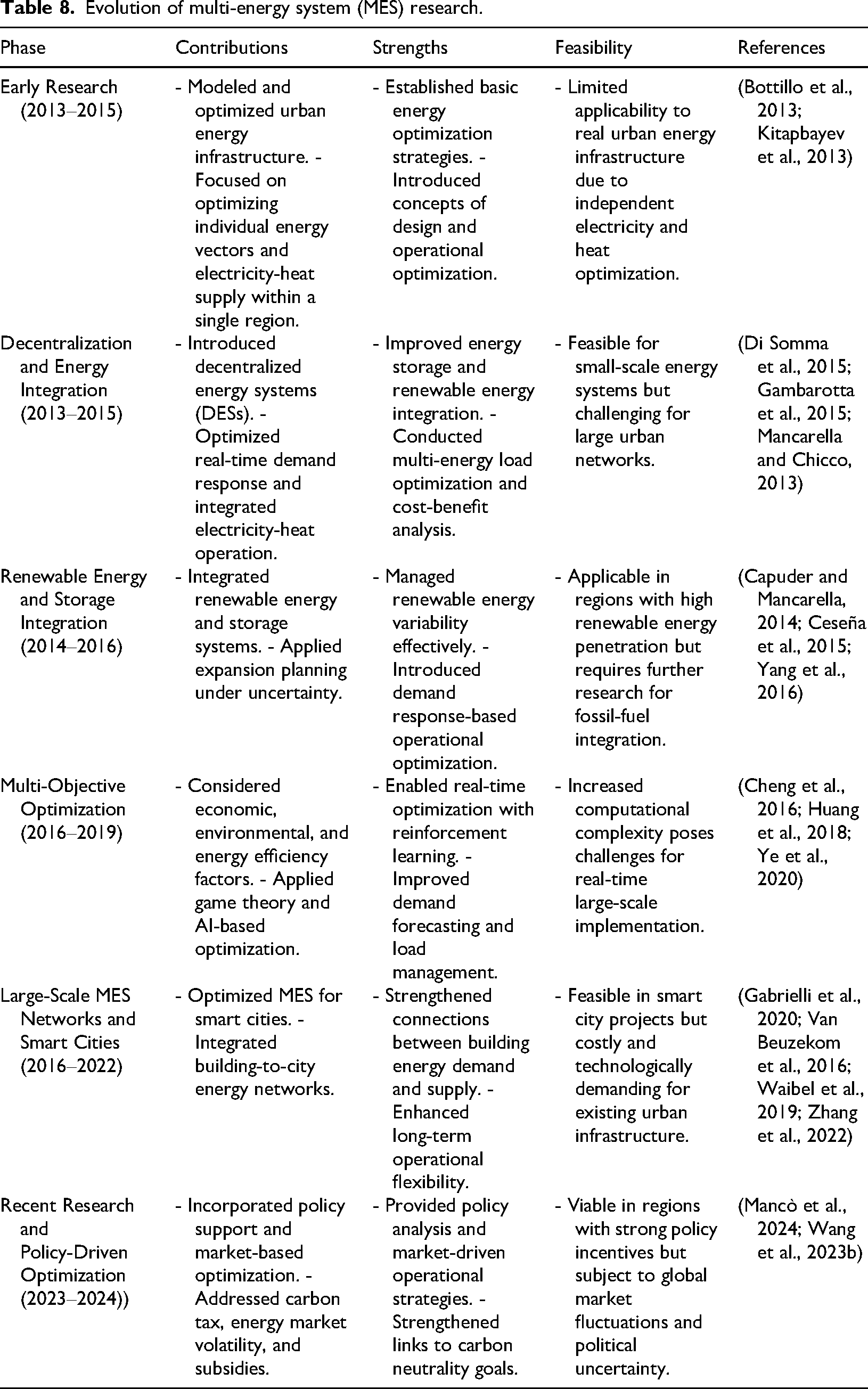
Early research on MESs primarily concentrated on optimizing single energy sources. Over time, the field evolved from isolated system optimization toward decentralized, renewable-integrated, and data-driven frameworks, reflecting a gradual transition from theoretical formulation to practical implementation.
Bottillo et al. (2013) optimized urban energy infrastructure to improve the efficiency of individual sources but did not include integrated electricity–heat operations or real-time responsiveness. Kitapbayev et al. (2013) advanced this by introducing a holistic optimization framework for MES design and operation, improving flexibility and cost efficiency though excluding economic and policy dimensions.
With the emergence of decentralized energy systems, research began to address real-time demand response and integrated electricity–heat operation (Mancarella and Chicco, 2013). However, energy storage and renewable variability were not fully considered. Gambarotta et al. (2015) and Di Somma et al. (2015) filled this gap by incorporating electrical, thermal, and hydrogen-based storage through dynamic programming, although uncertainty modeling remained limited.
Capuder and Mancarella (2014) combined renewable generation with energy storage to improve efficiency but did not fully account for long-term operational flexibility or scalability. Martínez Ceseña et al. (2015) later introduced probabilistic expansion planning under uncertainty, enhancing renewable variability management but still lacking real-time demand response. Yang et al. (2016) addressed this limitation by applying demand-response-based operational optimization, improving flexibility in real-time energy scheduling.
As multi-objective optimization became prominent, studies began integrating economic, environmental, and energy efficiency goals (Cheng et al., 2016). Yet, computational efficiency remained a challenge. Huang et al. (2018) employed game-theoretic optimization to coordinate multiple stakeholders, while Ye et al. (2020) advanced real-time decision-making using DRL, enhancing price response and energy storage scheduling.
Recent research has focused on scaling MES to smart cities and regional networks. Van Beuzekom et al. (2016) developed a real-time balancing strategy for urban MES but did not analyze multi-level integration between buildings and cities. Waibel et al. (2019) extended this by optimizing building- and city-scale interactions, while Gabrielli et al. (2020) incorporated seasonal geothermal storage to strengthen long-term flexibility and decarbonization.
More recent studies emphasize the interplay between technical optimization and policy frameworks. Mancò et al. (2024) reviewed optimization models reflecting carbon taxes, market volatility, and renewable subsidies but did not evaluate how these policies influence operational strategies. Wang et al. (2023b) addressed this through a MILP-based distributed MES model that integrated market mechanisms with policy incentives, demonstrating how policy-aligned optimization can accelerate practical deployment.
Overall, MES research has progressed from subsystem efficiency toward holistic, policy-aware, and adaptive optimization frameworks. This progression indicates a broader shift—from system modeling as an engineering challenge to system coordination as an interdisciplinary problem involving technology, economics, and governance. These developments are summarized in Table 8.
Evolution of multi-energy system (MES) research.
Conclusion
Optimizing interregional MESs requires balancing energy-supply stability, economic feasibility, real-time operability, and policy–market alignment. While earlier studies mainly addressed isolated subsystems or single-region optimization, this review emphasizes the need for integrated planning that reflects the interdependence among electricity, heat, and hydrogen networks. Drawing on prior work, it organizes optimization techniques, energy-integration models, and economic assessments to examine how energy sharing, grid interconnection, and policy incentives shape system resilience and cost efficiency, and it identifies gaps related to operational uncertainty and regulatory constraints. The evidence indicates that successful MES implementation depends on coordinated action between technology and policy. Government instruments (legal and financial) are most effective when accompanied by research practices that integrate technical, operational, and policy perspectives. In practice, planning approaches benefit from reflecting real system interactions and from being supported by quantitative analysis and verified case studies. By synthesizing methodologies and recurring challenges, this review distills a set of linkage principles connecting real-time operation with market and policy mechanisms. Looking ahead, research could develop multi-scale models that relate dynamic price signals, policy-driven dispatch, and investment-risk assessment. Greater attention to dynamic energy-trading mechanisms and uncertainty quantification is likely to enhance MES flexibility and adaptability in evolving energy markets. Beyond summarizing methodological advances, this review consolidates insights from technical and policy perspectives to indicate how integrated approaches can inform practical MES design and policy coordination. The findings offer guidance for policymakers and energy planners seeking to align decarbonization objectives with system reliability and investment feasibility. This synthesis provides a foundation for scalable, resilient, and policy-responsive MES development.
Footnotes
Acknowledgements
This work was supported by the Gwangju. Jeonnam Local Energy Cluster Human Resources Development of the Korea Institute of Energy Technology Evaluation and Planning (KETEP) grant funded by the Korea government Ministry of Trade, Industry and Energy (No. RS-2021-KP002519). This research was supported by Korea Electrotechnology Research Institute (KERI) Primary research program through the National Research Council of Science & Technology (NST) funded by the Ministry of Science and ICT (MSIT) (No. 25A01024).

Author contributions
JK contributed to original draft preparation. TP contributed to review & editing; BJ contributed to review & editing; SH contributed to conceptualization and methodology; DL contributed to conceptualization and formal analysis.
Funding
The authors disclosed receipt of the following financial support for the research, authorship, and/or publication of this article: This work was supported by the Korea Electrotechnology Research Institute, Korea Institute of Energy Technology Evaluation and Planning, (grant number 25A01024, RS2021-KP002519).
Declaration of conflicting interests
The authors declared no potential conflicts of interest with respect to the research, authorship, and/or publication of this article.
Data availability
The data that support the findings of this study are available within the article.