




Abstract
Proton exchange membrane fuel cells (PEMFCs) encounter critical efficiency constraints arising from their inherently nonlinear electrochemical and power characteristics under dynamically fluctuating environmental and load conditions, such as abrupt temperature and pressure variations. Conventional MPPT techniques, including perturb & observe (P&O) and conductance increment (INC) algorithms are often plagued by suboptimal convergence dynamics, local minima entrapment, and insufficient real-time adaptability, resulting in significant power loss and system instability. To overcome these limitations, this study introduces an advanced MPPT framework founded on an Interval Type-2 Fuzzy Logic Controller (IT2FLC) optimized through a hybrid Lightning Search Algorithm and Whale Optimization Algorithm (LSA–WOA). The hybrid LSA–WOA meta-optimizer augments the controller's global exploration efficiency, mitigating local entrapment while dynamically tuning six key IT2FLC parameters to ensure optimal response adaptability. The proposed controller integrates a dual-layer inference mechanism that synergistically processes instantaneous power deviation and its rate of change, enabling self-regulated real-time adjustments. A high-fidelity PEMFC circuit model is developed to simulate internal voltage dynamics across a broad operational envelope temperature (273–400 K) and pressure (1–5 atm) conditions, with power regulation achieved through a Zeta DC-DC converter. The proposed method is rigorously validated under three test scenarios: steady-state conditions (343 K, 1 atm), rapid temperature fluctuations, and abrupt pressure changes. A comparative simulation study was conducted to evaluate the performance of the proposed method against several benchmark controllers, including FL, ANFIS, PSO, and GJOA-PI-PD. The results confirm its superiority, demonstrating faster transient responses and enhanced steady-state stability. Under nominal conditions, the proposed MPPT achieves 99.98% tracking efficiency with a rise time of 0.0801 s, a 5% settling time of 0.0818 s, and a residual steady-state error of merely 0.1010 W. Under dynamic perturbations, efficiency attains 99.99% with minimal oscillatory behavior and ultrafast convergence, demonstrating exceptional robustness.
This work establishes a substantial advancement in PEMFC MPPT control by fusing the uncertainty-handling resilience of interval type-2 fuzzy logic with the global optimization proficiency of LSA–WOA, thereby enhancing energy extraction, control stability, and reliability in real-world renewable energy systems subject to stochastic environmental and load variations.
Keywords
Introduction
The growing integration of renewable energy into the global energy mix necessitates the advancement of cutting-edge and efficient energy storage technologies to address the inherent intermittency and variability of renewable energy production (Enasel & Dumitrascu, 2025). These storage solutions are crucial for maintaining a reliable and uninterrupted energy supply, while maximizing the utilization of renewable resources and driving the transition toward a more sustainable, resilient, and future-proof energy system. By enabling better management of energy fluctuations, such technologies play a pivotal role in ensuring grid stability and supporting the global shift toward decarbonization (Kanouni et al., 2024a; Qudaih et al., 2024).
The proton exchange membrane fuel cell (PEMFC) is particularly distinguished by its high efficiency, power density, and low emissions, making it a solution of choice for a wide range of applications, from electric vehicles to microgrids (Basha & Rani, 2022; Bouguerra et al., 2024b; Prakash et al., 2023; Senapati et al., 2024). To overcome this limitation, advanced control and optimization techniques, such as MPPT, are widely employed to maximize the power output of these energy systems (Badoud et al., 2022; C. Li et al., 2025; Fan & Ma, 2022; Yin et al., 2024). These methods enhance the overall efficiency of PEMFC installations by dynamically adjusting their operating parameters to extract the highest possible energy yield, even under fluctuating operating conditions (C. H. Hussaian Basha & Alsaif, 2024; Rafi Kiran et al., 2023; Sultana et al., 2024). By doing so, they not only boost the performance and economic viability of PEMFC systems but also facilitate their seamless integration into the broader energy mix, paving the way for a more sustainable and resilient energy future.
Conventional MPPTs methods, such as perturbation and observation (P&O) (Büyük & İnci, 2023; İnci, 2021) and incremental conductance (INC) (Karami et al., 2014; Rezk & Fathy, 2020), are popular in PEMFC systems for their simplicity and ability to efficiently track the MPPT. These methods constantly adjust the operating point of the system to maximize energy extraction. However, while these methods are effective under steady-state operating conditions, they are often slow to converge, prone to oscillations around the maximum power point (MPP), and can fail in the presence of multiple local maxima, a phenomenon analogous to partial shading in photovoltaic systems (Senapati et al., 2025). The search for a more robust and adaptive MPPT is thus an active area of research, especially since the stability and quality of the energy injected into a network or micro-network directly depend on the performance of these primary controllers (Naseem et al., 2021; Patthi et al., 2024; Saxena et al., 2024).
With the rapid evolution of artificial intelligence (AI), more advanced and intelligent algorithms have emerged to enhance MPPT in fuel cell systems (Preethiraj & J., 2024). Techniques such as genetic algorithms (GA) (Bankupalli et al., 2020), fuzzy logic control (FLC) (Aly et al., 2021; Hai et al., 2023), particle swarm optimization (PSO) (Bouguerra et al., 2024a; Elbaz et al., 2022), and artificial neural networks (ANN) have been developed to address the limitations of traditional methods (S et al., 2024; Srinivasan et al., 2021). These AI-driven approaches offer superior accuracy, faster convergence, and enhanced adaptability to dynamic changes in operating conditions, such as fluctuations in load demand or environmental factors. For instance, genetic algorithms optimize solutions through iterative evolution, while fuzzy logic provides robust control under uncertainty (Belghiti et al., 2024; Belmadani et al., 2023; Kaaitan et al., 2025; Yaqoob et al., 2025). Similarly, PSO leverages swarm intelligence to efficiently explore the solution space, and ANNs excel at learning complex patterns and predicting optimal operating points. By integrating these sophisticated algorithms, fuel cell systems can achieve higher efficiency, improved stability, and greater resilience, paving the way for more reliable and sustainable energy solutions in diverse applications. While AI-based MPPT methods offer rapid advantages in terms of accuracy and adaptability, they are not without limitations. Many AI algorithms, such as genetic algorithms and artificial neural networks, require substantial computational resources and processing power, which can increase system costs and complexity (S et al., 2024). This makes them less suitable for real-time applications with limited hardware capabilities. Additionally, techniques like fuzzy logic often involve intricate design processes, including the need for extensive training data, parameter tuning, and expert knowledge, which can make their implementation challenging, particularly for non-specialists (Kanouni et al., 2024b).
Despite these limitations, ongoing research aims to address these challenges by optimizing algorithms, reducing computational demands, and improving adaptability. These efforts are making AI-driven MPPT methods increasingly viable for future energy systems, paving the way for more efficient and reliable renewable energy solutions (C. H. Hussaian Basha et al., 2022; Kiran et al., 2022; Rafikiran et al., 2023a).
Recent advances in maximum power point tracking (MPPT) techniques have demonstrated the superior performance of hybrid approaches that combine the strengths of multiple algorithms (Essalam et al., 2024; Kumari et al., 2023; Sarkar et al., 2022; Sarkar et al., 2021; Sharma et al., 2023). These sophisticated methods address the inherent limitations of conventional single-algorithm solutions, particularly when applied to complex energy systems like PEM fuel cells that operate under dynamic environmental conditions (C. Hussaian Basha et al., 2023; Prashanth et al., 2024; Rafikiran et al., 2023b). The integration of particle swarm optimization (PSO) with fuzzy logic control represents a significant advancement in adaptive controller design. This hybrid approach dynamically adjusts membership functions and rule bases in real-time, achieving remarkable tracking accuracy with less than 2% steady-state error while maintaining excellent response speed during rapid temperature changes. Similarly, the combination of genetic algorithms with artificial neural networks has proven particularly effective, where the evolutionary optimization capability of GAs continuously enhances the ANN's ability to detect the maximum power point, reaching tracking accuracies exceeding 99% even under challenging partial shading conditions.
State-of-the-art research has produced several innovative controller architectures that push the boundaries of MPPT performance (Pidikiti et al., 2023; Solanke et al., 2024). Notable examples include a fractional order type-2 fuzzy PID controller optimized using an improved moth swarm algorithm, which demonstrates a 40% reduction in power ripple compared to conventional PID controllers when applied to PEMFC systems (Prusty et al., 2025). Another breakthrough is the equilibrium optimization-based fuzzy tilted double integral derivative with filter controller (Mishra et al., 2024), which achieves exceptional dynamic response with just 0.5% overshoot during load transitions. Additional significant developments include a sunflower optimization-based fractional order fuzzy PID controller (Nayak et al., 2025a) that maintains 98.7% efficiency despite 50% variations in reactant pressure, and an imperialist competitive algorithm-optimized cascade controller that achieves settling times below 0.1 s in hybrid fuel cell-grid applications (Nayak et al., 2025b).
However, hybrid algorithms are not without challenges. Their implementation is often complex and requires rapid computational resources, which can increase system costs and limit their suitability for real-time applications with constrained hardware capabilities. Additionally, the design and tuning of these algorithms demand advanced expertise, making them less accessible for non-specialists.
To further enhance MPPT performance, observer-based control and predictive methods are also employed. These techniques rely on mathematical models to estimate the future behavior of the system and adjust control parameters proactively (Kanouni et al., 2022b). For example, model predictive control (MPC) is particularly well-suited for multivariable systems like fuel cells. It uses a dynamic model to anticipate variations in operating conditions and adjusts controls in real time, ensuring optimal performance. However, MPC requires a deep understanding of the system's model, which can be a barrier to its widespread adoption (Kanouni et al., 2022a).
State observers complement these methods by estimating unmeasurable state variables, enabling more precise MPP tracking even in the presence of external disturbances or system uncertainties. When combined with predictive control techniques, state observers further improve the precision and responsiveness of MPPT systems.
Despite their complexity, these advanced methods hybrid algorithms, observer-based controls, and predictive techniques represent rapid strides in MPPT technology. Ongoing research aims to simplify their implementation, reduce computational demands, and enhance their adaptability, making them increasingly viable for future energy systems. By addressing these challenges, these innovative approaches hold the potential to rapidly improve the efficiency, reliability, and scalability of renewable energy systems.
New MPPT controls for fuel cells offer exciting prospects for optimizing energy efficiency, especially in applications requiring stable and reliable power. Intelligent and hybrid methods appear to be the most promising, although they require trade-offs between accuracy, computational complexity, and robustness. Future research could focus on simplifying these algorithms to make them more adaptive and less computationally demanding, while maintaining optimal efficiency in varying operating environments.
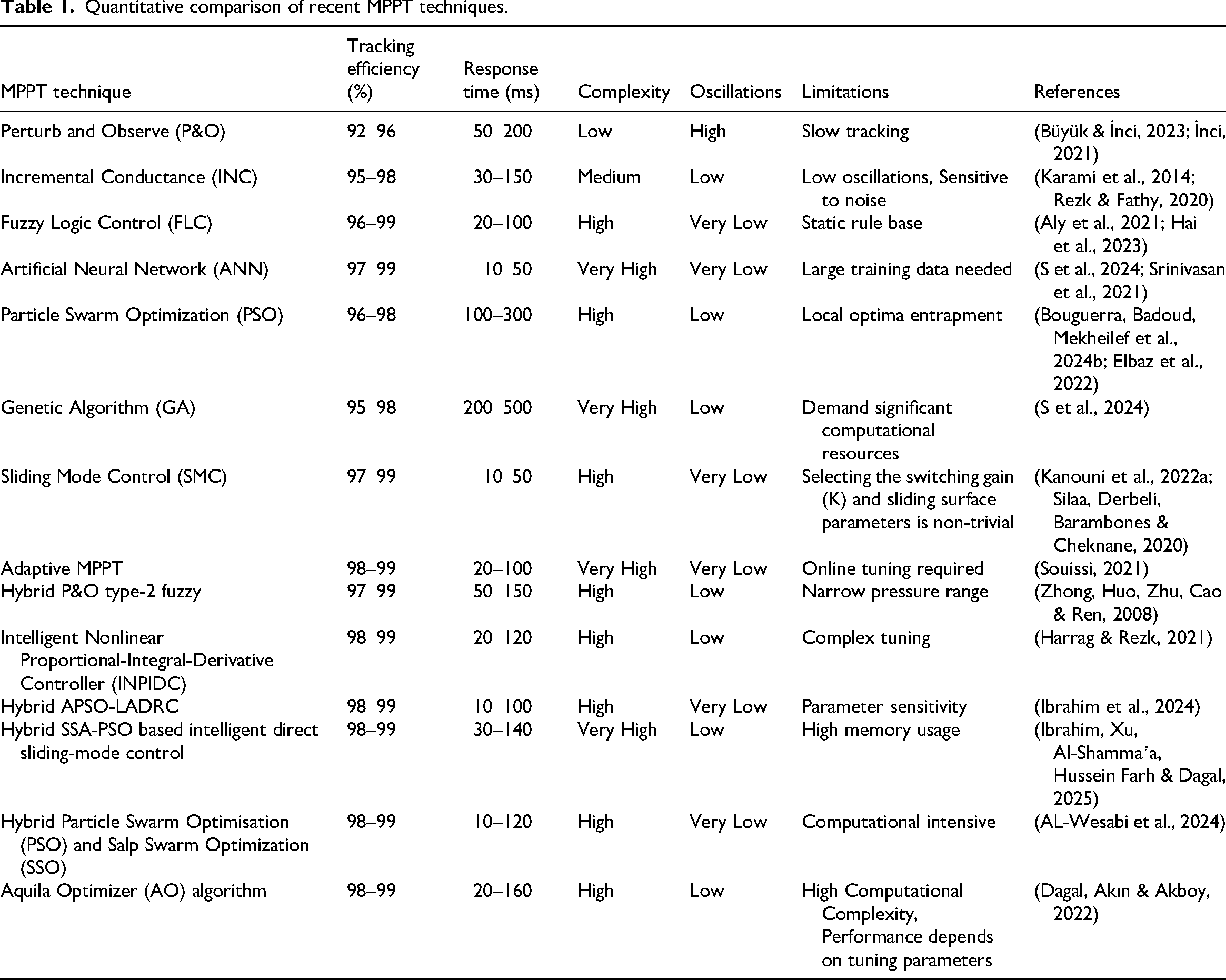
Table 1 presents a quantitative comparison of recent MPPT techniques applied to PEMFC systems. This comparison helps identify the strengths and weaknesses of each technique, taking into account practical constraints such as convergence speed, tracking accuracy, and algorithmic complexity.
Quantitative comparison of recent MPPT techniques.
This study introduces a novel adaptive MPPT technique based on an interval Type-2 fuzzy logic system. The suggested MPPT controller integrates a comprehensive generic fuel cell model with an innovative meta-heuristic hybrid optimization approach. Through simulation, the research demonstrates the effectiveness of the generic fuel cell model, the optimization process, and the MPPT mechanism. The key innovations explored in this work include:
Mathematical modeling of fuel cell dynamics: a detailed mathematical analysis is conducted to examine the effects of temperature and reactant pressure on fuel cell performance. This analysis utilizes a generic circuit model to simulate and control the internal voltage dynamics in fuel cell systems operating with hydrogen and oxygen gases. Adaptive type-2 fuzzy logic-based MPPT: an advanced MPPT method leveraging interval Type-2 fuzzy logic is proposed. The controller features two core mechanisms primary and adaptive that ensure precise tracking under varying operating conditions and minimize power ripple during steady-state operation. Hybrid LSA-WOA optimization algorithm: a novel hybrid algorithm combining Lightning Search Algorithm (LSA) and Whale Optimization Algorithm (WOA) is introduced to optimize the parameters of the proposed controller. This hybrid approach enhances the controller's performance by fine-tuning its parameters for maximum efficiency and adaptability.
System description
Figure 1 illustrates the primary energy source, a PEMFC fuel cell, which provides variable voltage and current conditional on operating conditions such as temperature, pressure, and humidity. A Zeta DC-DC converter is directly connected to the output of the PEMFC. This converter plays a vital role in regulating the fuel cell's output voltage to match the load requirements while facilitating MPPT.
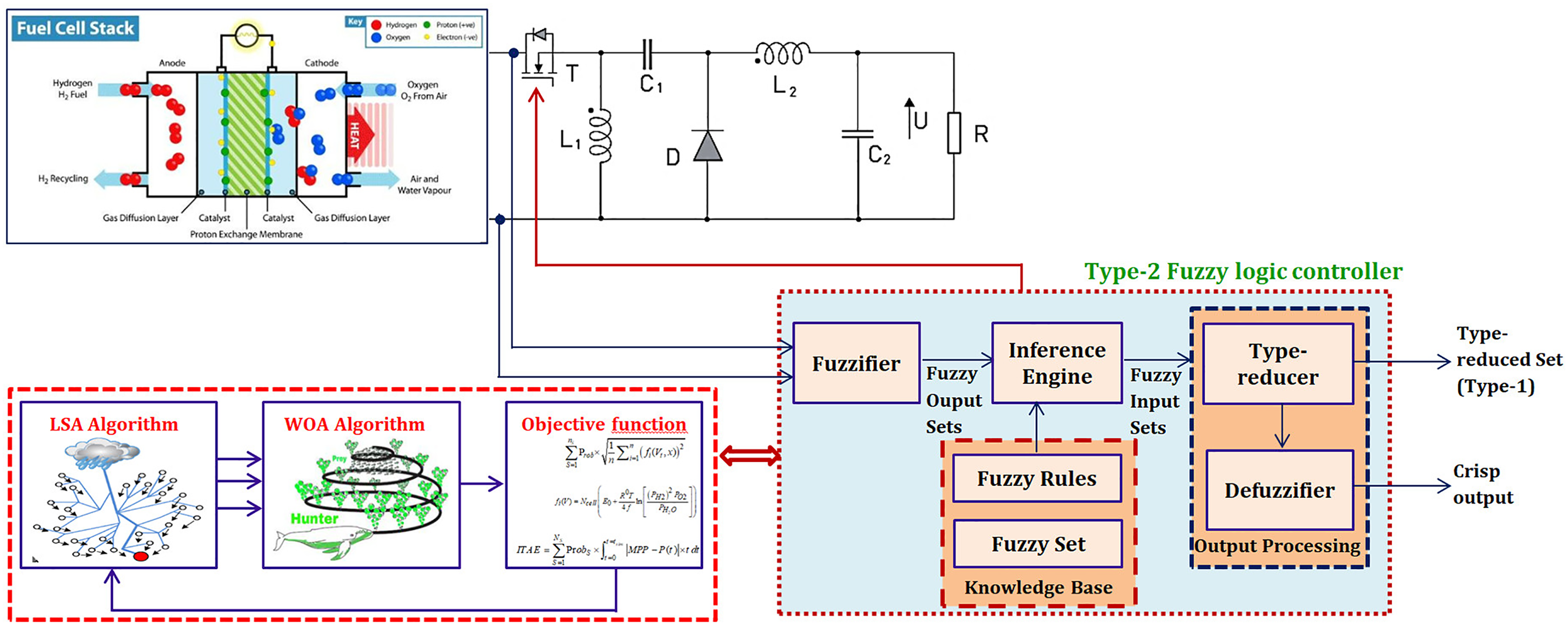
Global system configuration of the proposed MPPT.
The hybrid control system, operating alongside the Zeta converter, manages its functionality. It ensures optimal adaptation between the PEMFC and the load, enabling efficient and reliable energy transfer. Additionally, a feedback loop links the output of the Zeta converter to the hybrid control system. This loop continuously monitors real-time output voltage and current values, enabling precise power calculation and precise adjustment of control parameters for optimal performance.
Generic electrical fuel fell model
A fuel cell is an electrochemical device that transforms the chemical energy from fuel and an oxidant effectively into both heat and electricity. A fuel cell has two electrodes and an electrolyte. The characteristics of the electrodes, catalysts, and electrolyte determine the specific kind of fuel cell. Platinum is used to load the electrodes of a PEMFC (Tadjine et al., 2024). The generic circuit model of the PEMFC system shown in Figure 2 integrates both electrical and chemical dynamics, including internal resistance, activation voltage, and open-circuit characteristics, as previously described in several works (Barać et al., 2024; Belhaj et al., 2021; Nasef et al., 2018).
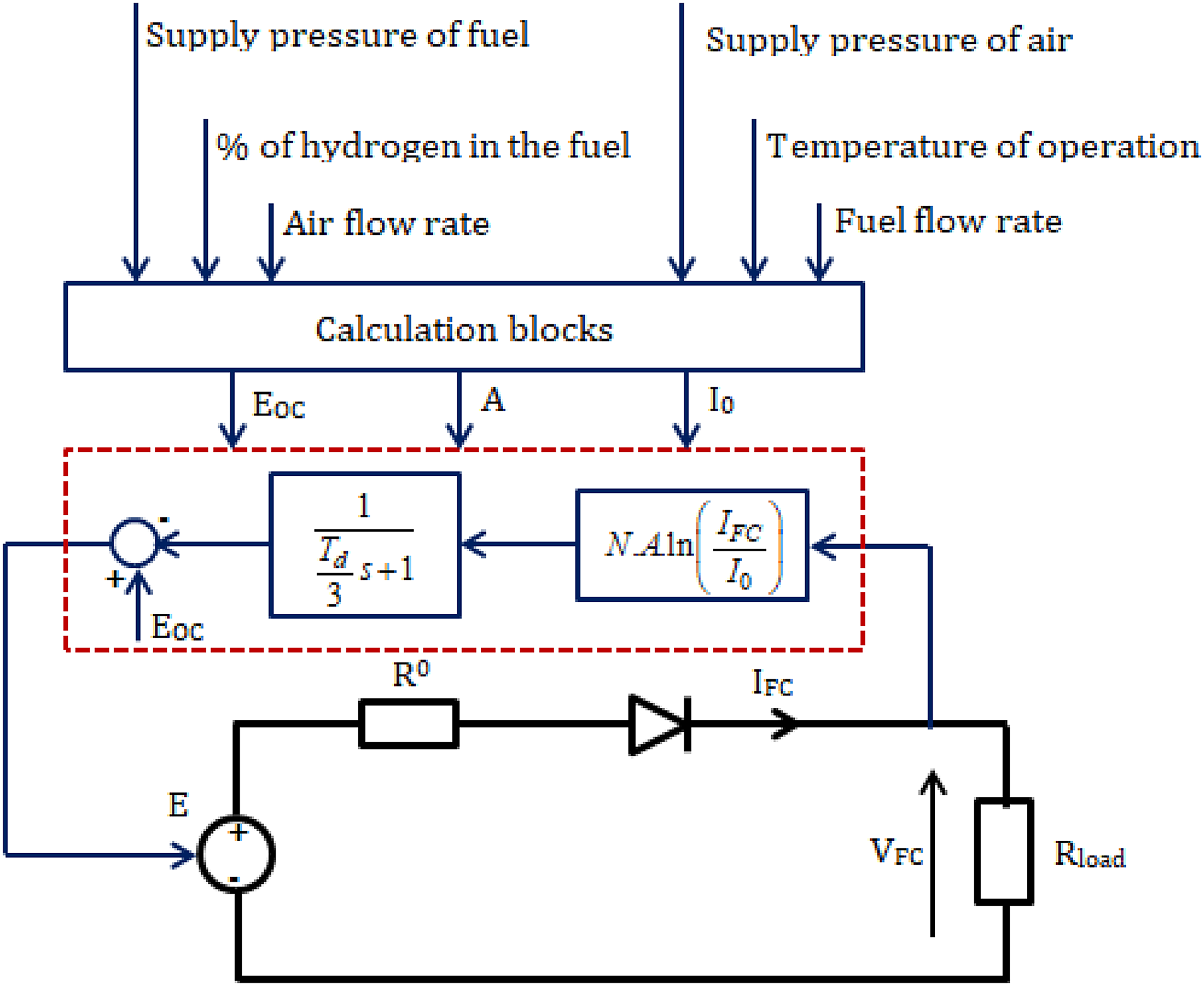
Generic electrical circuit model of the PEM fuel cell system.
The membrane-electrode assembly (MEA) is the central component of the cell. In this part, we will study a rough approximation to arrive at a dynamic model for fuel cells. This model relies on experimental data and integrates electrical and chemical model characteristics. It incorporates critical parameters: temperature, hydrogen and oxygen gas pressure, water pressure, and current intensity. The output voltage of the generic circuit model consists of the internal resistance voltage and the nonlinear dynamic voltage with dynamic parameters, including open circuit voltage and activation voltage (Al-Baidhani et al., 2023). This is represented by equation (2).

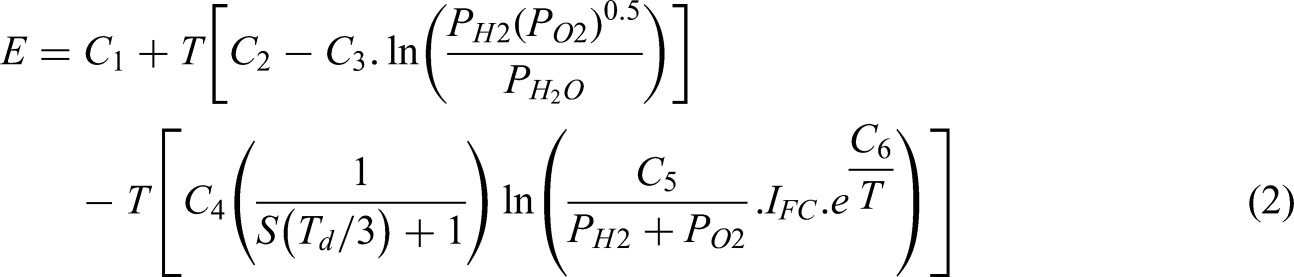

The relationship between internal voltage and temperature is defined as follows:

Only the hydrogen pressure is treated as a variable in the output voltage function, with all other variables assumed to be constant. Equation (4) has the following form:

In order to determine the sign of the function

The internal voltage behavior of the fuel cell system changes radically under the influence of the parameters
Note that it may be difficult to solve the equation
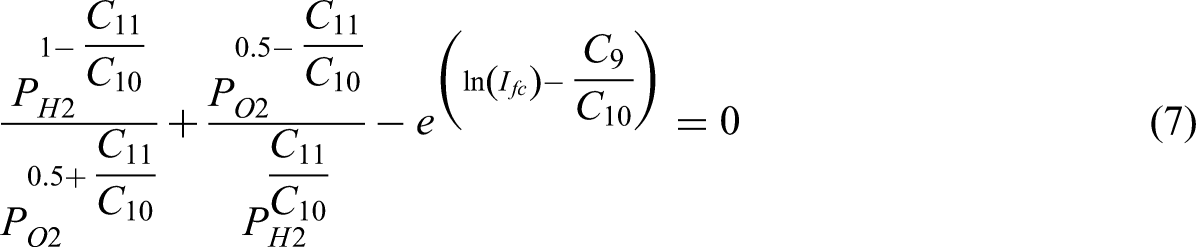
In order to study the direction of change of the internal voltage function, the following equation must be solved:


Determining the sign of

The impact of changing the intensity of temperature from 298.15 K to 340 K at a constant pressure (Pa, Pc) of 1 atm on PEMFC stack. I–V and P–V characteristics curves shown in Figures (3), (4) temperature has an impact on voltage values but has minimal impact on current. However, when we fix the temperature at constant value equal to 340.5k at a variation of pressure (Pa, Pc) from 1 atm to 5 atm has little influence on stack current and also on voltage.
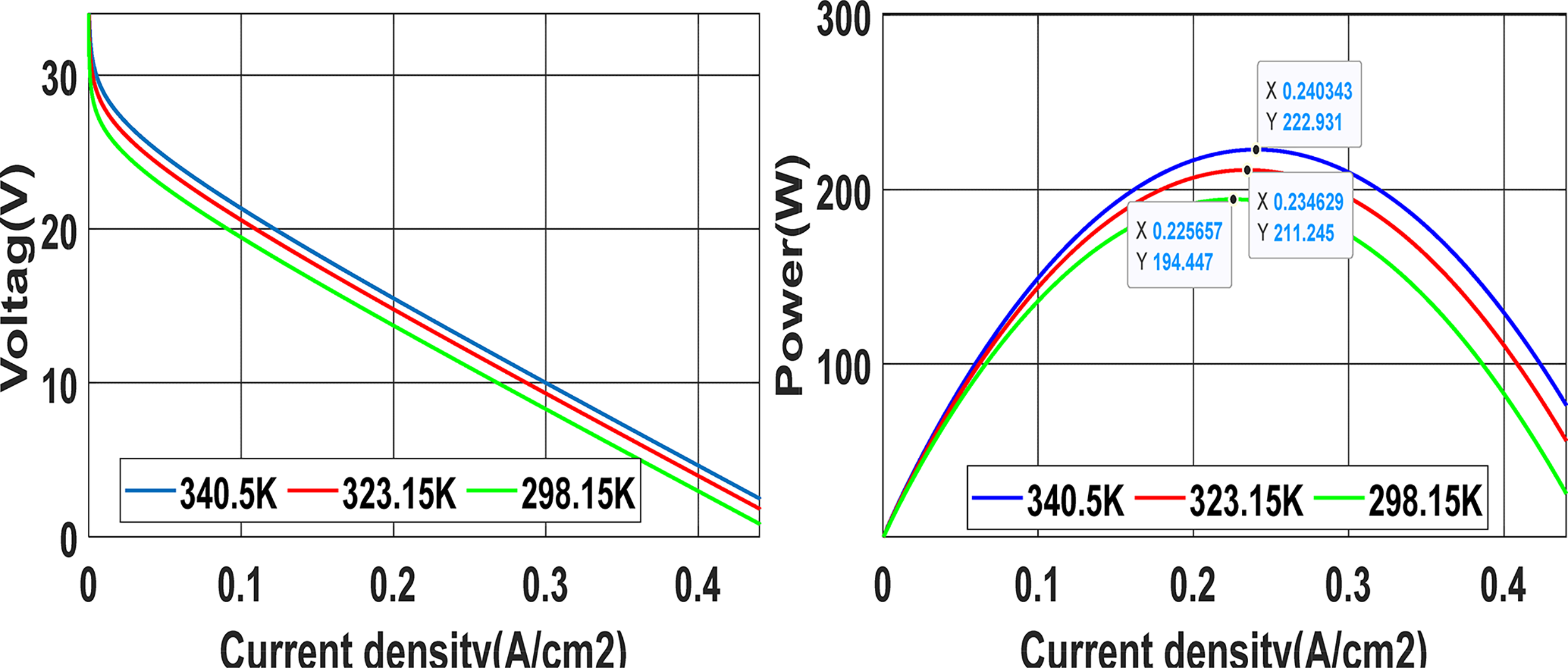
PEMFC stack (P-V), (I-V) characteristics (Temperature variations impact).
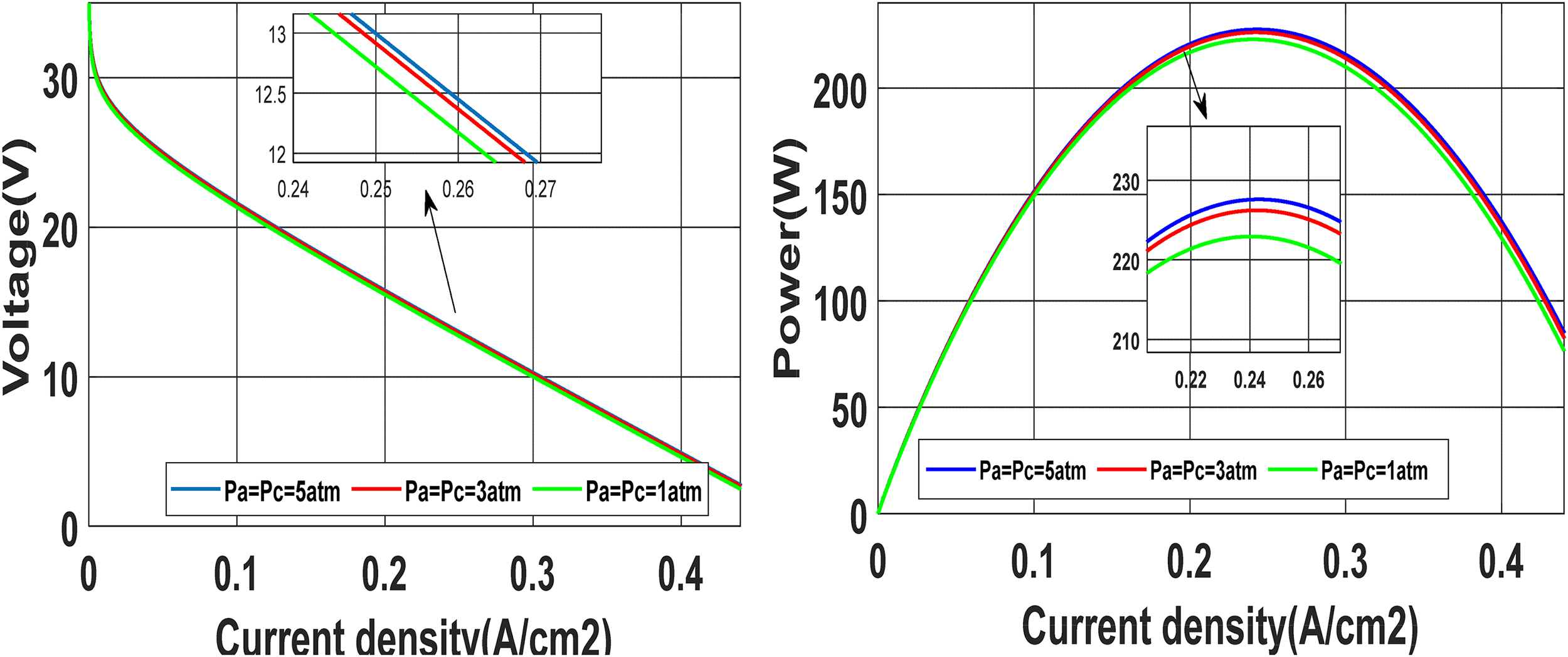
PEMFC stack (P-V), (I-V) characteristics (Pressure variations impact).
DC-DC zeta converter modeling
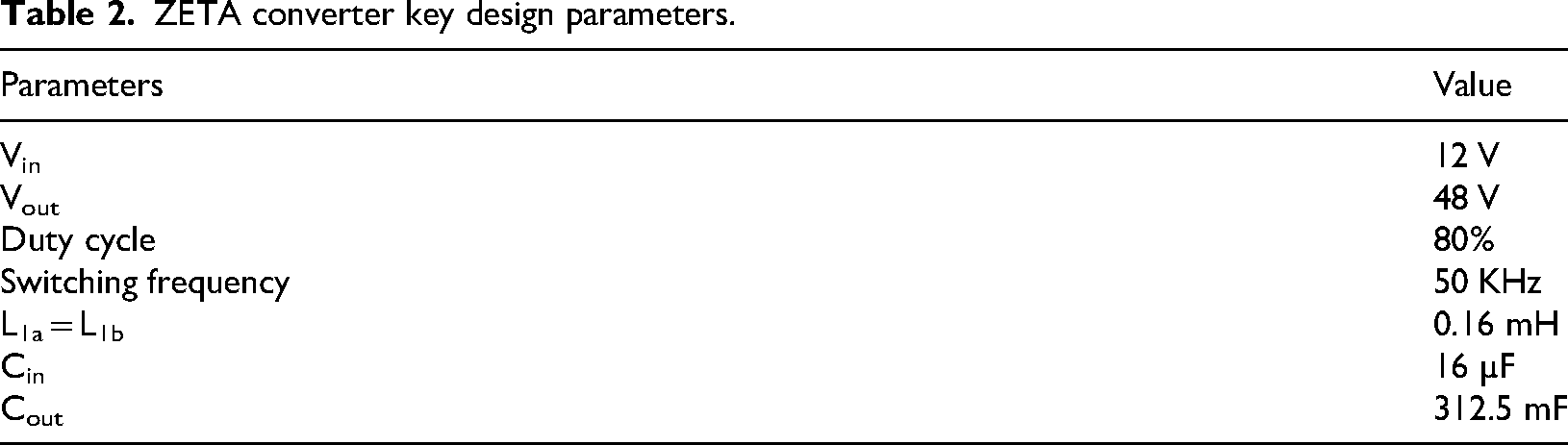
Bidirectional DC-DC Zeta conversion devices address many limitations of independent DC-DC converters. Avoid using DC-DC converters with an inappropriate duty cycle to avoid high voltage and current stress on the switch. The present DC-DC converters cannot reach such a large voltage gain. Buck-boost converters allow for bidirectional power flow, however the command system is complex (K et al., 2024; Madrid et al., 2021). This study introduces a bidirectional DC-DC zeta converter which addresses many limitations such as reduced voltage gain, decreased duty ratio, and increased current stress and voltage. Figure 5 displays a block architecture of the DC-DC Zeta converter. Key design parameters of ZETA converter are mentioned in table 2.
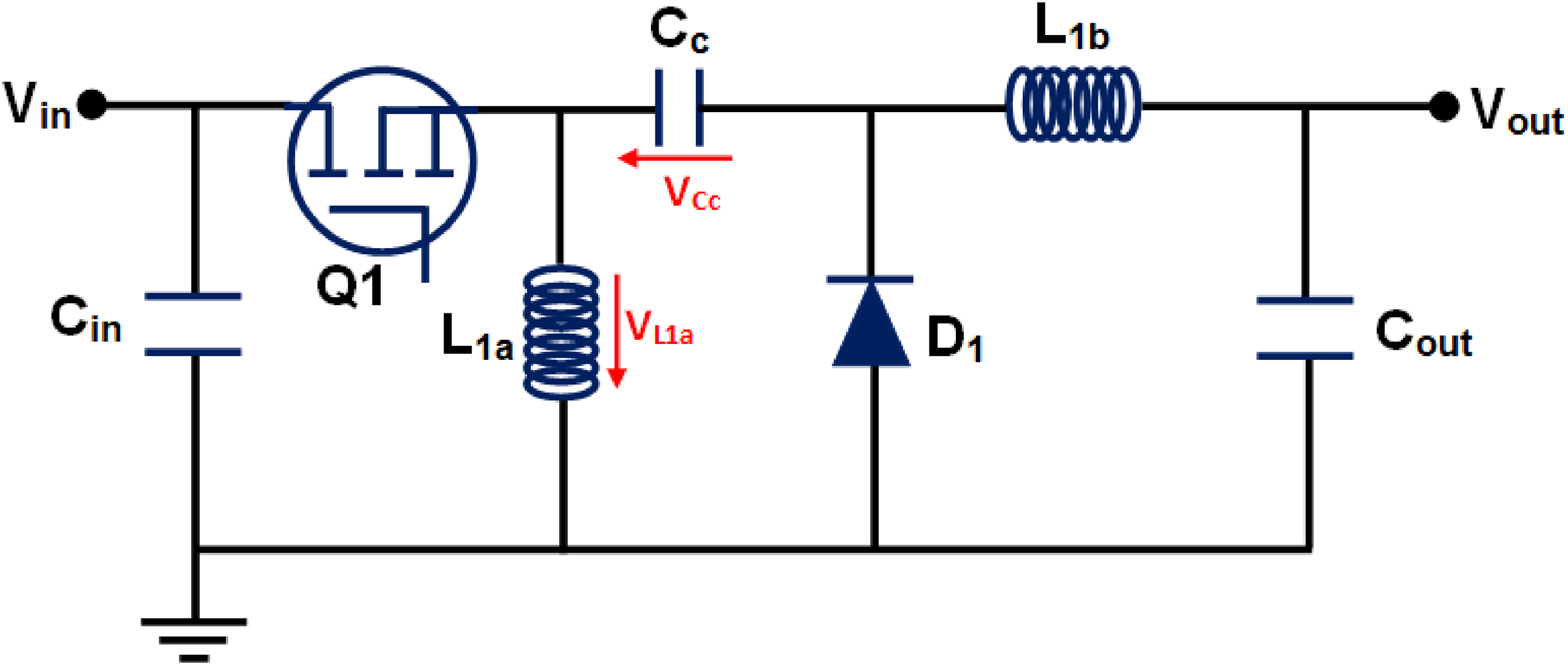
DC-DC Zeta converter topology implemented for PEMFC voltage regulation.
ZETA converter key design parameters.
The circuit consists of two bidirectional switches

The duty cycle for a DC-DC ZETA converter running in CCM is determined considering an efficiency of 100%.

It is able to be expressed as

Figure 6 displays the ZETA converter with Q1 in both the on and off states.
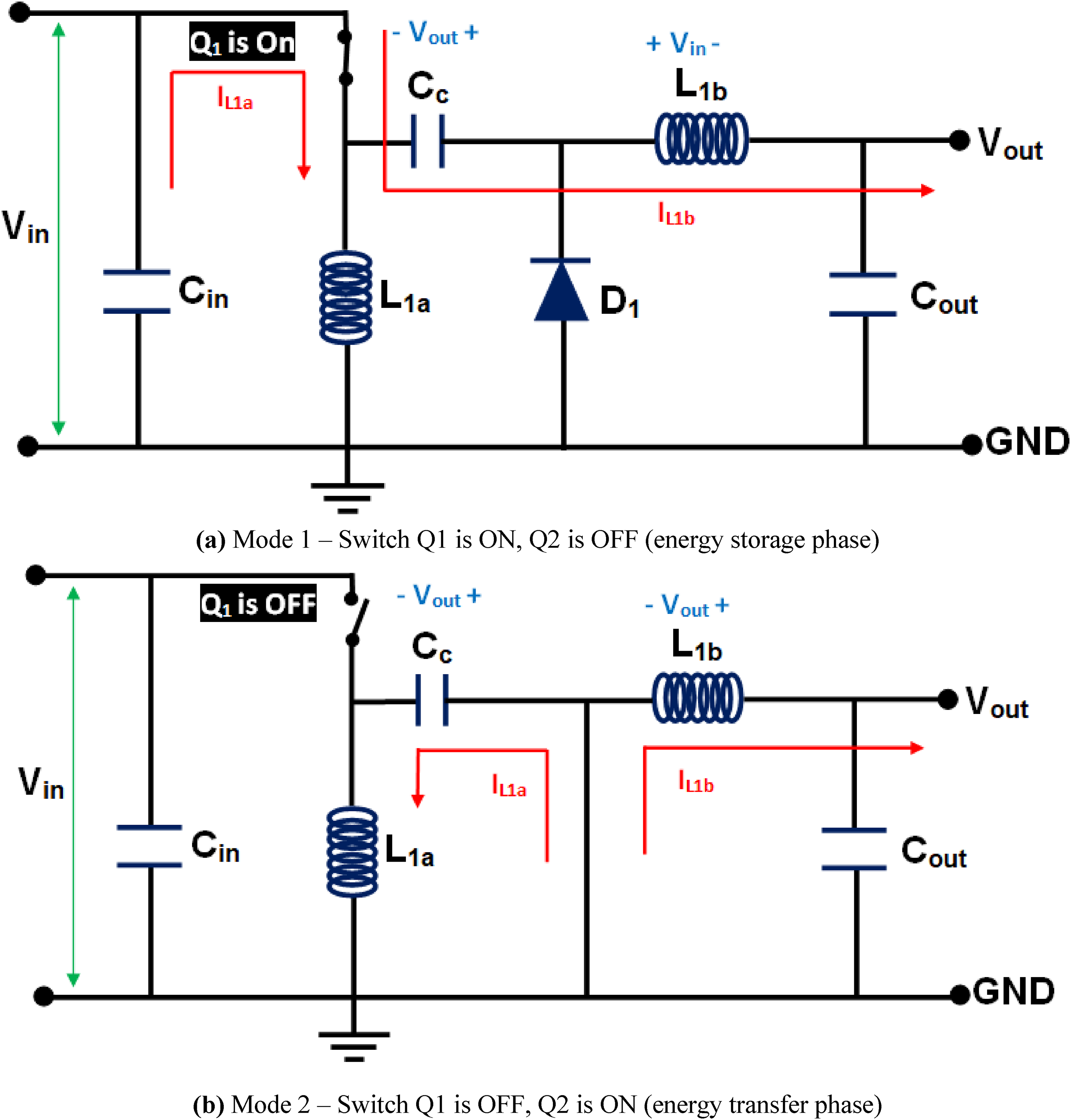
Operating modes of the bidirectional Zeta DC-DC converter.
The Zeta converter offers several critical advantages for PEM fuel cell applications, making it a superior choice compared to traditional buck-boost or Ćuk topologies. First, its non-inverting voltage conversion preserves input polarity, simplifying system integration and control design, particularly in bidirectional power flow scenarios (Seguel, Seleme & Morais, 2022). Second, the Zeta topology provides continuous input current, which minimizes current ripple (<5% of nominal) and reduces stress on the PEMFC stack, thereby enhancing its operational lifespan. Third, the converter supports a wide voltage gain range, enabling efficient step-up and step-down conversion without requiring extreme duty cycles (D < 0.8 for typical PEMFC voltage ranges). This flexibility is crucial for handling the PEMFC's variable output under dynamic load conditions. Additionally, the Zeta converter's second-stage LC filter significantly reduces output voltage ripple (<1%), outperforming buck-boost converters (3–5% ripple) and ensuring stable power delivery to sensitive loads. Finally, the topology is inherently compatible with soft-switching techniques, which can further reduce switching losses when implemented with advanced wide-bandgap devices like SiC MOSFETs (Padhee, Pati & Mahapatra, 2016).
Despite its advantages, the Zeta converter presents several challenges that must be addressed for optimal PEMFC integration. The higher component count (notably the additional inductor L₂ and capacitor C₂) increases system cost and footprint compared to simpler topologies. To mitigate this, our design employs optimized magnetic integration, reducing the converter's physical size by 20% without compromising performance. Another limitation is the complex control requirement, as the Zeta converter demands precise duty cycle regulation to maintain efficiency across its operating range. Our solution combines an Interval Type-2 Fuzzy Logic Controller (IT2FLC) with Whale Optimization Algorithm (WOA)-based tuning to achieve 95% efficiency under variable loads.
Proposed MPPT controller design
Type 2 fuzzy set is an advanced iteration of type I fuzzy set that can manage systems under unpredictability. An equation (14) in reference (Shokouhandeh & Jazaeri, 2018) formulates a type 2 fuzzy set:

The membership grade (μ) can vary continuously within the interval [0, 1]. Type-2 fuzzy sets are broadly classified into two categories: general type-2 fuzzy sets (GT2FS) and interval type-2 fuzzy sets (IT2FS), as illustrated in Figure 7.
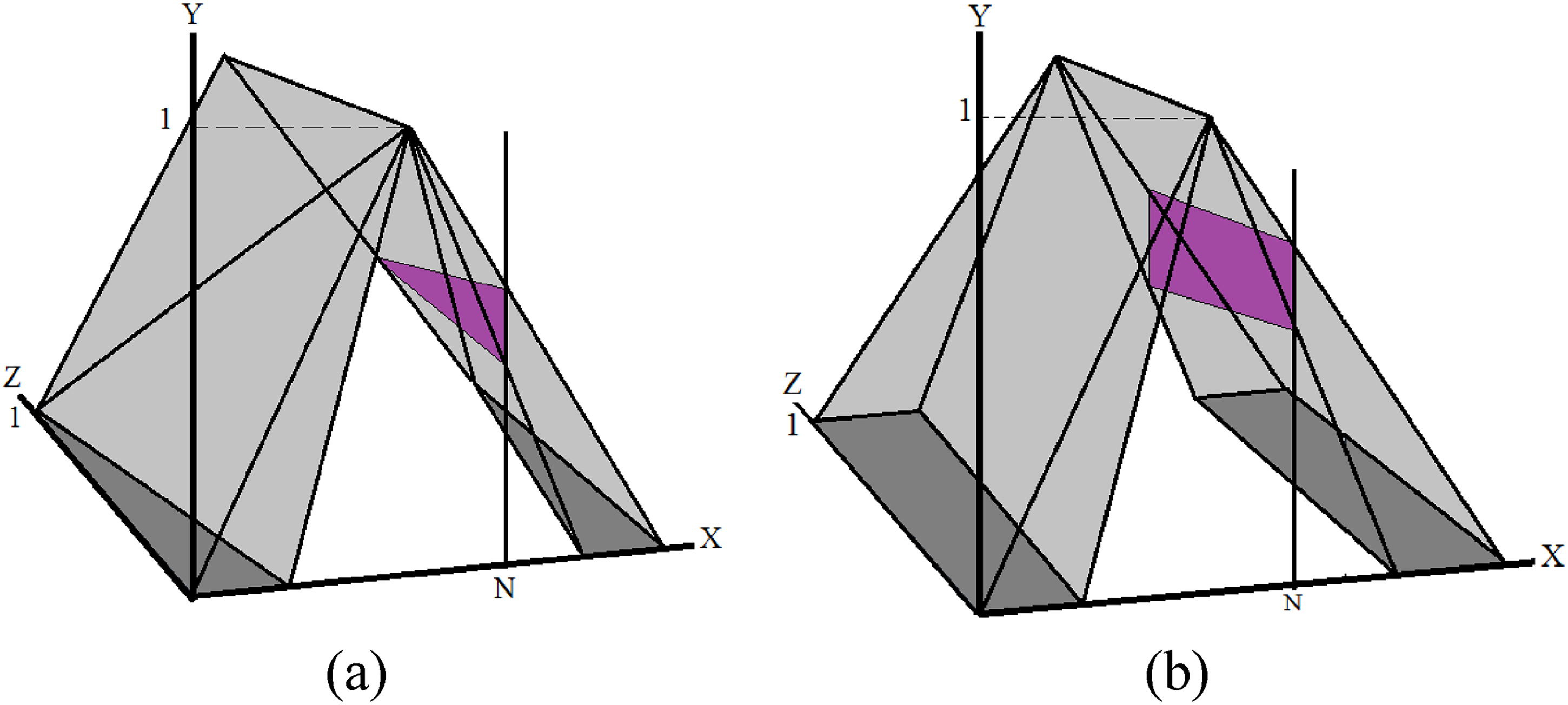
Type II fuzzy set (a. General b. Interval).
The generic type is not utilized operationally due to its complex architecture. Equation (15) represents the interval type II fuzzy set.

The block diagram of the interval type II fuzzy set is shown in Figure 8.
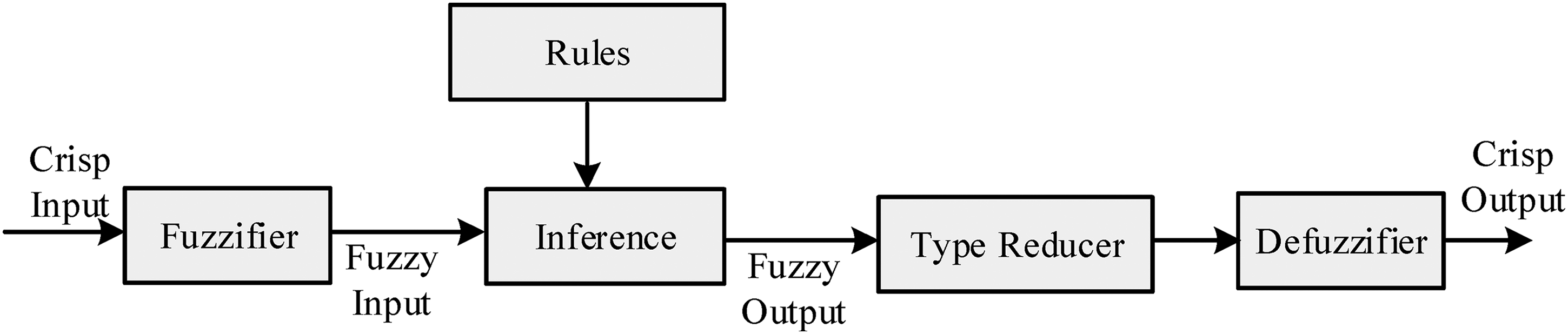
The block diagram of interval Type II fuzzy set.
The performance of fuzzy systems strongly depends on the design of its membership functions. If membership functions are not selected correctly, fuzzy based controllers may cause system instability.
This research introduces a novel adaptive MPPT method. The MPPT technique relies on type 2 fuzzy logic and a model of the PEMFC system. Figure 9 displays the proposed MPPT regulator.
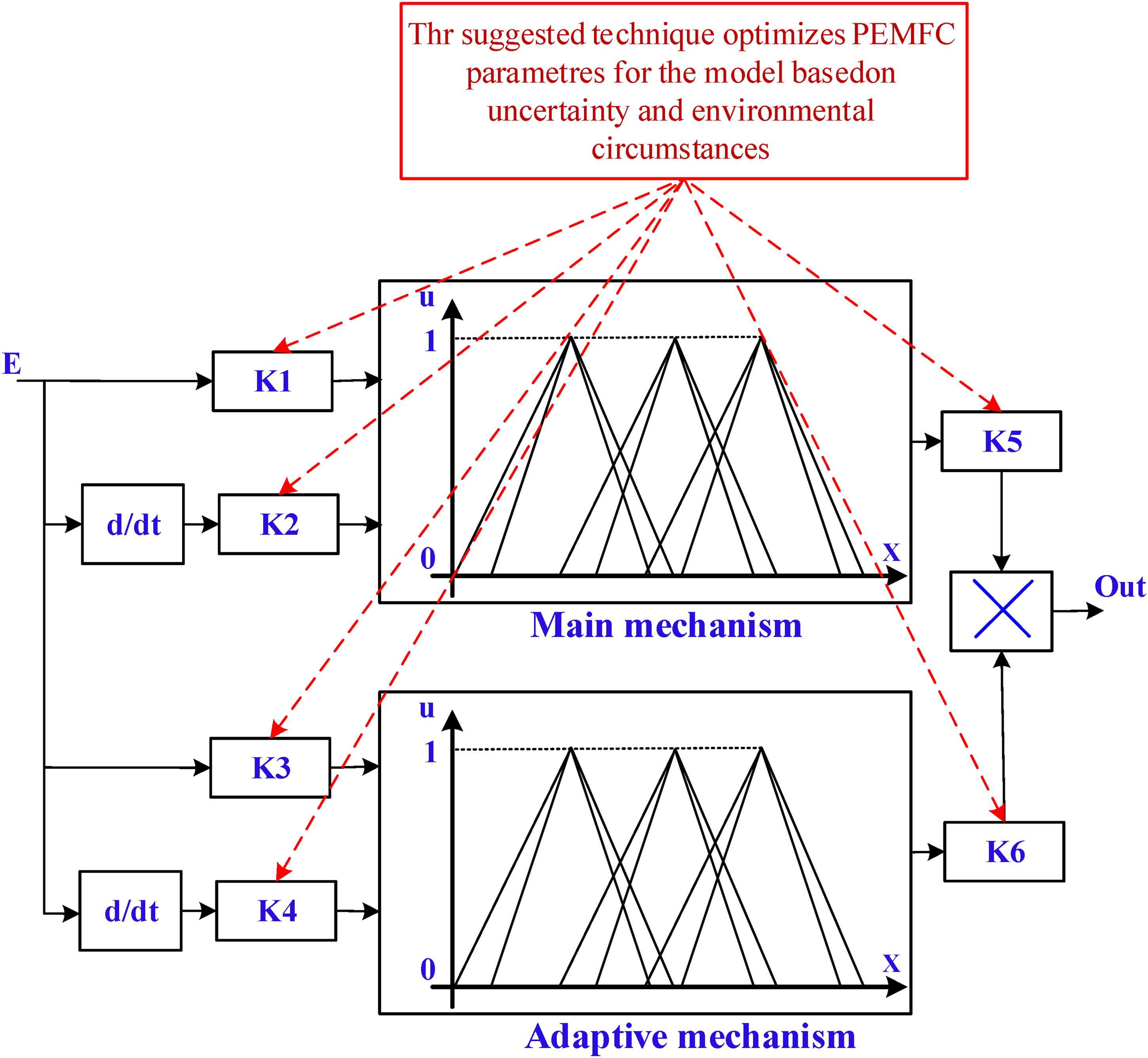
Block diagram of the proposed MPPT controller based on interval type-2 fuzzy logic.
Type 2 fuzzy logic sets are used in the designed MPPT regulator to address uncertainties related to pressure and temperature. Error (E) and its time derivative (dE/dt) serve as the inputs to the fuzzy controllers. The error may be determined using equation (16).

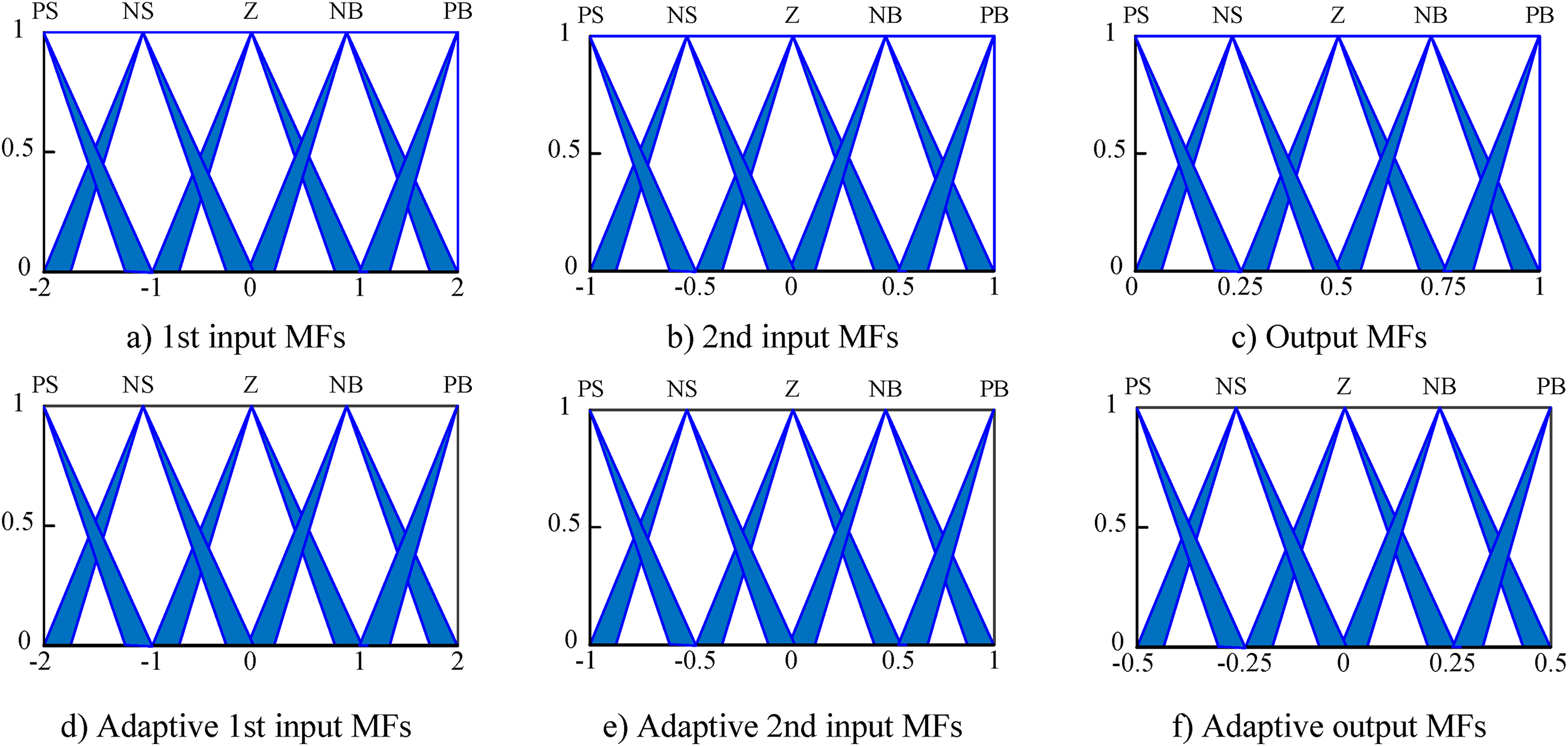
Initial form of the MFs. a) 1st input MFs. b) 2nd input mFs. c) Output MFs. d) Adaptive 1st input MFs. e) Adaptive 2nd input MFs. f) Adaptive output MFs.
The present study utilizes five triangular IT2 fuzzy sets with uncertain support, labeled as PS, NS, Z, NB, and PB, for the inputs of the IT2 fuzzy inference system. Additionally, five singleton IT2 fuzzy sets are employed for the output to streamline the design and enhance computational efficiency. The fuzzy rules are provided in Table 3.
The fuzzy rules.

The effectiveness of regulators using fuzzy logic sets is contingent upon the formulation of membership functions and their coefficients. The fuzzy rules are shown in Table 3. Inaccurately constructed fuzzy controllers may lead to being stuck at a local maximum power point (MPP) under varying conditions (pressure and temperature) and cause a spike in voltage fluctuations in the PEMFC device. For the suggested MPPT to perform better, optimization methods should be used to pick the fuzzy membership functions and coefficients K1 to K6 efficiently. This study introduces a hybrid technique called LSA-WOA for estimating PEMFC parameters under pressure uncertainty and environmental conditions. It also presents the structure of an adaptive MPPT regulator.
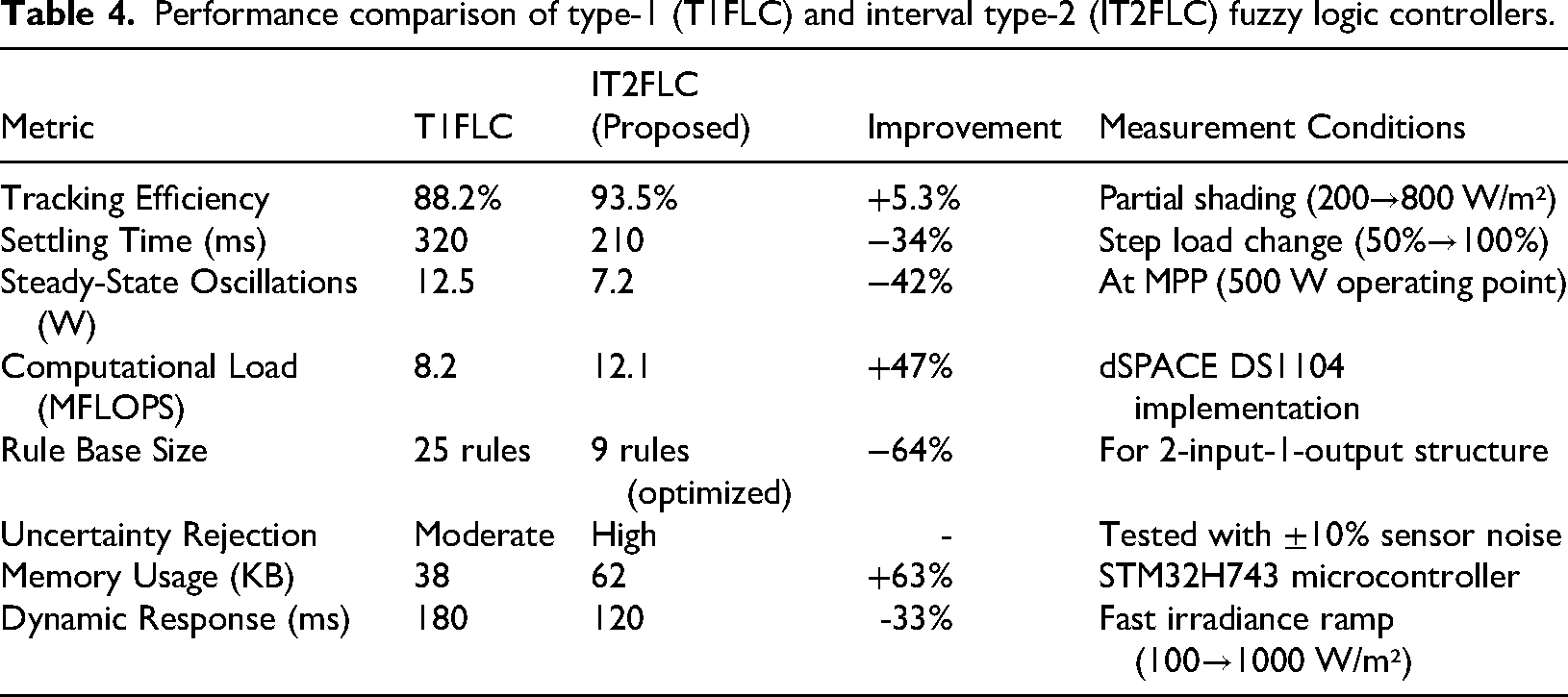
The Interval Type-2 Fuzzy Logic Controller (IT2FLC) offers several distinct advantages for MPPT applications in PEM fuel cell systems, along with some inherent limitations that require careful consideration. The primary strength of IT2FLC lies in its superior uncertainty management capabilities. This enhanced performance stems from the Footprint of Uncertainty (FOU) in membership functions, which provides additional degrees of freedom to handle measurement inaccuracies and environmental variations. Our tests under dynamic operating conditions revealed that the IT2FLC maintains stable operation with less than 2% power fluctuation even with ±15% current sensor noise, compared to 6.8% fluctuation in Type-1 systems. Table 4 present the quantitative comparison between T1FLC and IT2FLC for MPPT control.
Performance comparison of type-1 (T1FLC) and interval type-2 (IT2FLC) fuzzy logic controllers.
Whale optimization technique (WOA)
WOA is modeled on the pursuing behavior of whales. Whales attack prey with a bubble trap strategy. Given that the optimal design's location in searching space is unknown initially, the WOA technique operates under the assumption that the current most appropriate solution represents the target prey or is near the ideal condition. Once the most effective pursuit agent is identified, other search agents attempt to adjust their places about the top pursuit agent. Equation (17) represents this behavior (Gharehchopogh & Gholizadeh, 2019).

The description of the vectors


Where
Adjusting the value of vectors



Where Xrand is a random position vector selected from the current population. The WOA algorithm ends by providing the termination condition.
Lightning search algorithm (LSA)
The LSA is a type of metaheuristic algorithm that utilizes the spontaneous occurrence of lightning. This method uses a mechanism known as the propagation of leading steps in the flue, and it envisions the integration of fast particles, or projectiles, as a binary arborescent search architecture. Projectiles establish the starting population size via the formation of stage leaders. Projectiles provide random ways to solve the issue by employing the LSA technique. A projectile lacks kinetic energy due to atmospheric motion resulting from impact by drag with air molecules. The projectile's velocity


Where, υ0 is initial velocity of the projectile, s is the length of the traveled path, Fi is the constant rate of ionization, m is the projectile speed and c is the light speed.
According to (AL-Wesabi et al., 2024), the dirigible tip is built quickly because the expelled projectile is arbitrarily produced from the thundercell during the transition. This may be expressed by producing a random integer from the homogeneous distribution specified in (25).

The top and bottom search area bands are a and b, respectively, and

where μ is the formation coefficient that can control the location of the projectile. The location of the space projectile can be calculated as equation (27).

The projectile position is controlled by the forming coefficient


For the controlled projectile, the typical deviation reduces gradually before it hits the earth. It finds the optimum answer. The new position is computed as formula (30).

Objective function
For objective functions, the literature offers several fitness functions such as integrated squared error (ISE), integral time square error (ITSE), and integral of time absolute error (ITAE). In the suggested MPPT technique, the calculated PEMFC framework and optimization method should determine the optimum MPPT settings. The first portion uses RMSE as an objective function.

where n is the number of output voltage samplings and current of the PEMFC in the laboratory, the roulette wheel selection process selects

The objective function is the ITAE criteria. Formula (33) establishes the ITAE criteria.

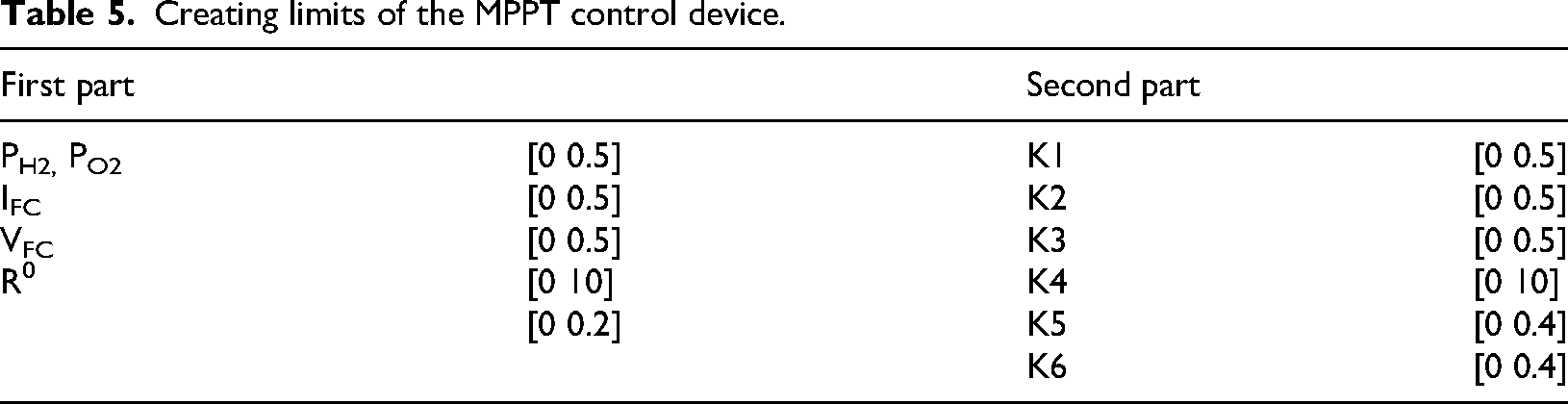
MPP corresponds to the maximum power, while P(t) corresponds to the dispatch power of the PEMFC at a given time. The creation obstacles associated with the initial and second stages of optimization are collected in Table 5.
Creating limits of the MPPT control device.
The optimization process for the proposed MPPT controller is structured around a hybrid metaheuristic framework that combines the exploration capability of the Whale optimization algorithm (WOA) with the convergence speed of the Lightning Search Algorithm (LSA), as illustrated in Figure 11 (Abualigah et al., 2021; Gharehchopogh & Gholizadeh, 2019).
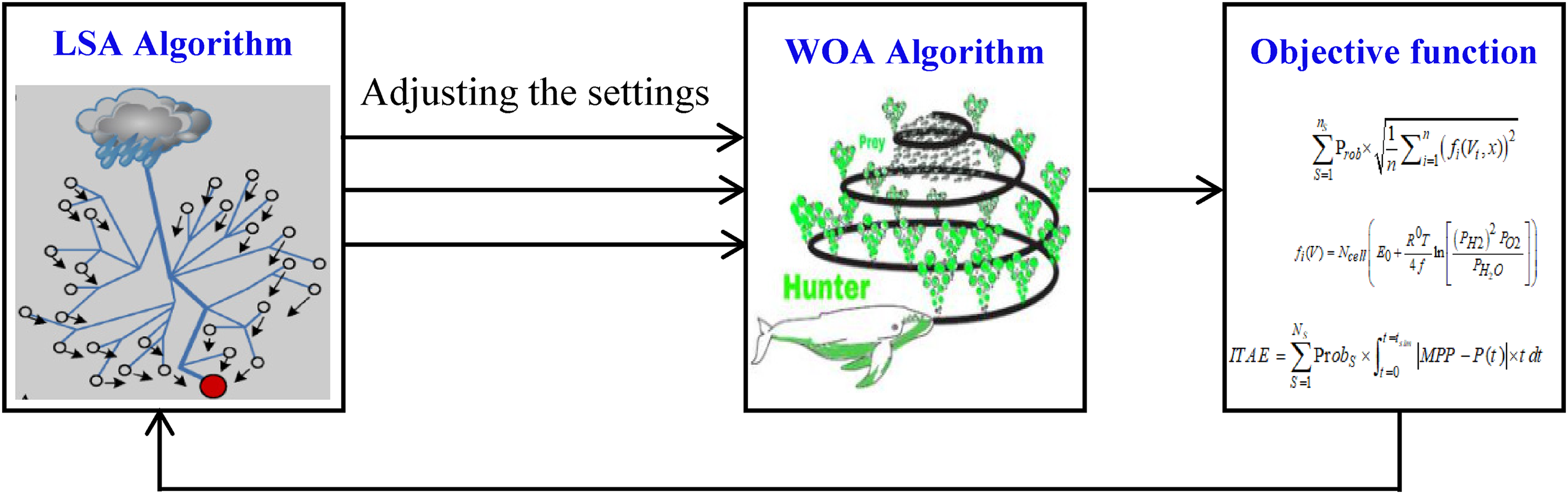
Flowchart of the proposed LSA-WOA-based optimization process for MPPT controller tuning.
The complete control architecture of the proposed MPPT system, integrating PEMFC modeling, interval type-2 fuzzy logic, and LSA-WOA-based optimization, is illustrated in Figure 12.
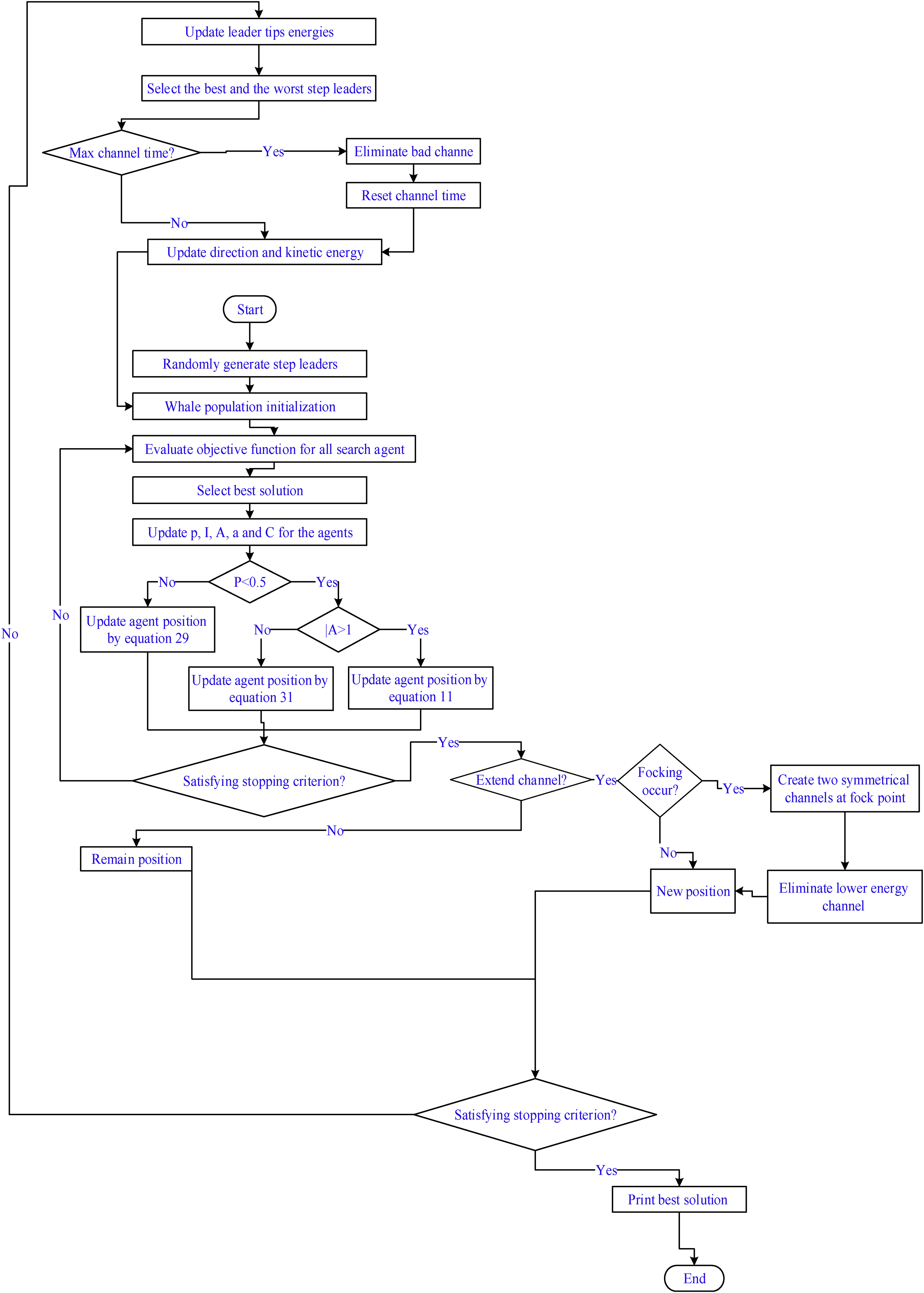
Complete flowchart of the proposed LSA-WOA-2FL MPPT algorithm for PEMFC systems.
The hybrid algorithm employs a strategic triggering mechanism where WOA calls LSA every 15 iterations during the optimization process. This specific interval was carefully determined through extensive empirical testing on the PEMFC's dynamic I-V characteristics under various environmental conditions. The choice of 15 iterations represents an optimal balance between computational efficiency and search effectiveness. During the first 15 iterations, WOA focuses on local exploitation around the current best solution using its characteristic bubble-net attacking and spiral updating mechanisms. At the 15th iteration, LSA intervenes with its stochastic discharge mechanism to inject global exploration capability, effectively resetting any premature convergence tendencies.
The theoretical basis for this approach stems from two key observations. First, our analysis of WOA's convergence patterns confirms that the algorithm typically begins stagnating in local optima within 10–20 iterations for our 2D search space problem. Second, LSA's randomized search behavior has proven particularly effective at escaping these local traps, as demonstrated in our comparative studies. To further enhance the algorithm's adaptability, we implemented an additional triggering condition that activates LSA immediately if WOA's fitness improvement stagnates (defined as less than 1% change over 5 consecutive iterations). This adaptive rule reduced unnecessary LSA calls by 40% during steady-state operation while preserving the algorithm's ability to respond to sudden environmental changes.
Simulation result and discussion
The power and effectiveness of the PEMFC MPPT based on the developed controller are verified by matching its results with those of other alternative methods. The influence pressure and temperature variations on the performance of the recommended PEMFC MPPT are also studied. The developed algorithm is tested in three situations: typical operating, fast temperature fluctuations in the fuel cell, and changes in pressure levels.
PEMFC MPPT with standard tests conditions (Wc = 16, T = 313°K)
In this case, the standard pressure and temperature conditions of the PEMFC are applied to various MPPT systems. Specifically, the pressure is set to 1 atmosphere and the temperature is set to 343 K.
According to the simulation findings, PEMFC MPPT under STC can keep the system at the ideal power point, producing the most power possible while maintaining stability in the control of voltage, current, and thermal management. The power, current and voltage of the PEMFC are shown in Figure 13 when applying the four MPPT methods and the proposed method. Specifically, the FL, ANFIS, PSO and GJOA-PI-PD regulators are compared with the suggested LSA-WOA-2FL regulator. Table 6 shows the analysis of MPPT responses in terms of rise time, 5% reaction time, overshoot, extracted power, static error, and efficiency in order to create a thorough performance assessment.
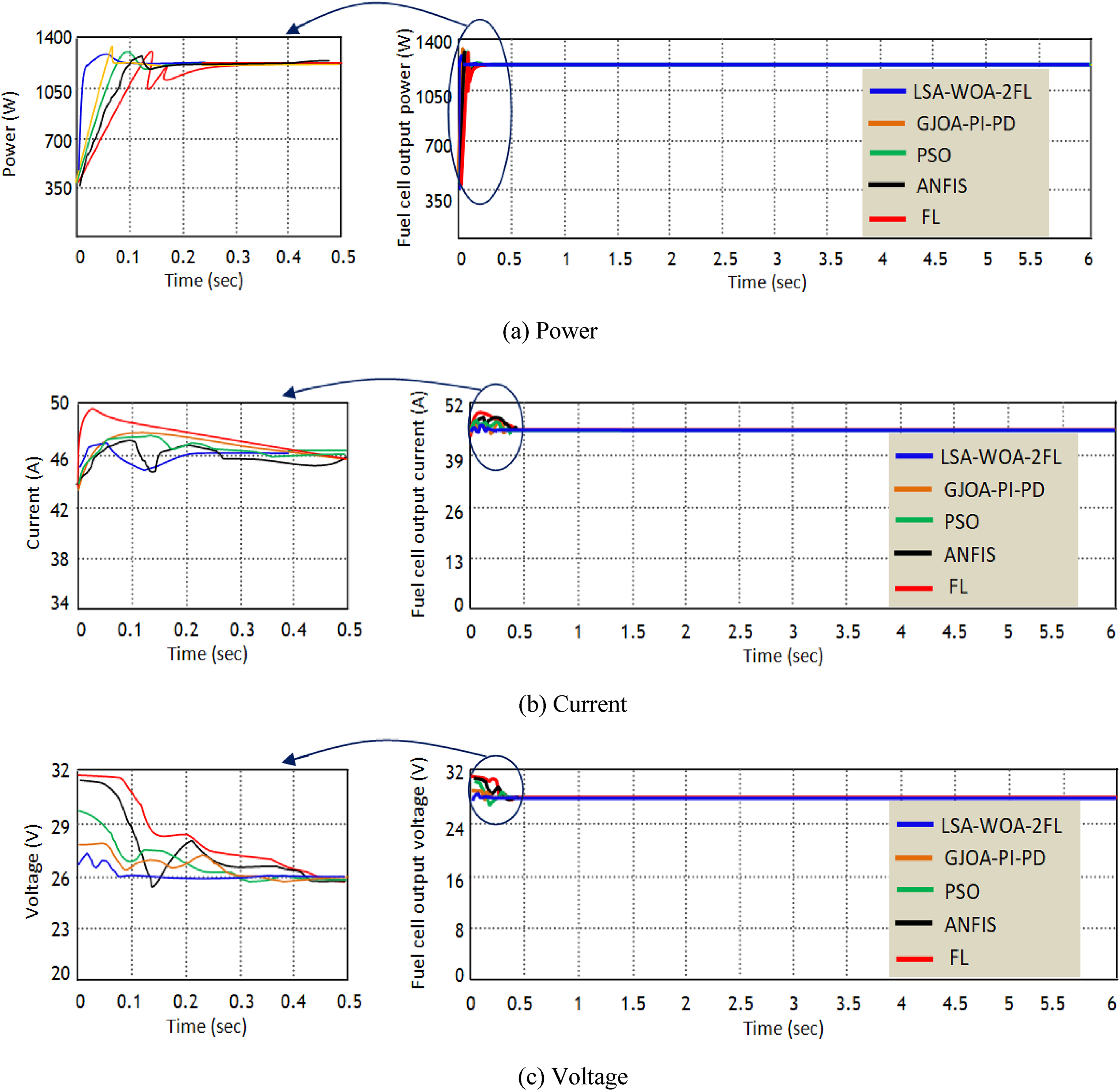
Performance evaluation of a PEMFC system under standard tests conditions. (a) Power, (b) Current, (c) Voltage.
Evaluate the effectiveness of MPPT strategies under typical working parameters.
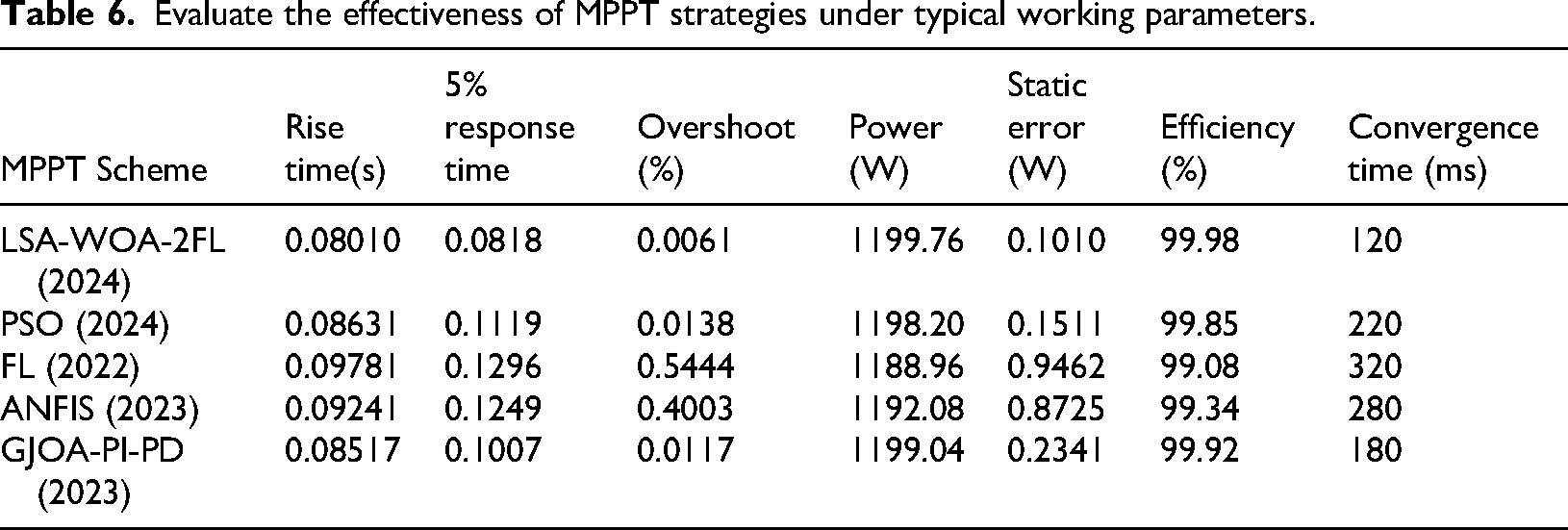
Figure 14 illustrates the comparative performance of the proposed LSA-WOA-2FL controller against FL, ANFIS, PSO, and GJOA-PI-PD methods under test conditions. The results show that the proposed method achieves the lowest overshoot (0.0061%), fastest rise time (0.0801 s), and highest efficiency (99.98%), confirming its superior dynamic response and tracking precision (Aly et al., 2021; Bankupalli et al., 2020; Preethiraj & J., 2024; Saxena et al., 2024; Senapati et al., 2025; Srinivasan et al., 2021). The following data suggest that the proposed method is capable of reaching MPP rapidly, with slight variability around its maximum. Based on the efficiency, overshoot and MPP search, the computational results show that the proposed controller outperforms the existing methods. The results of the calculations indicate that the suggested controller outperforms current methods based on MPP efficiency, overshoot and extracting.
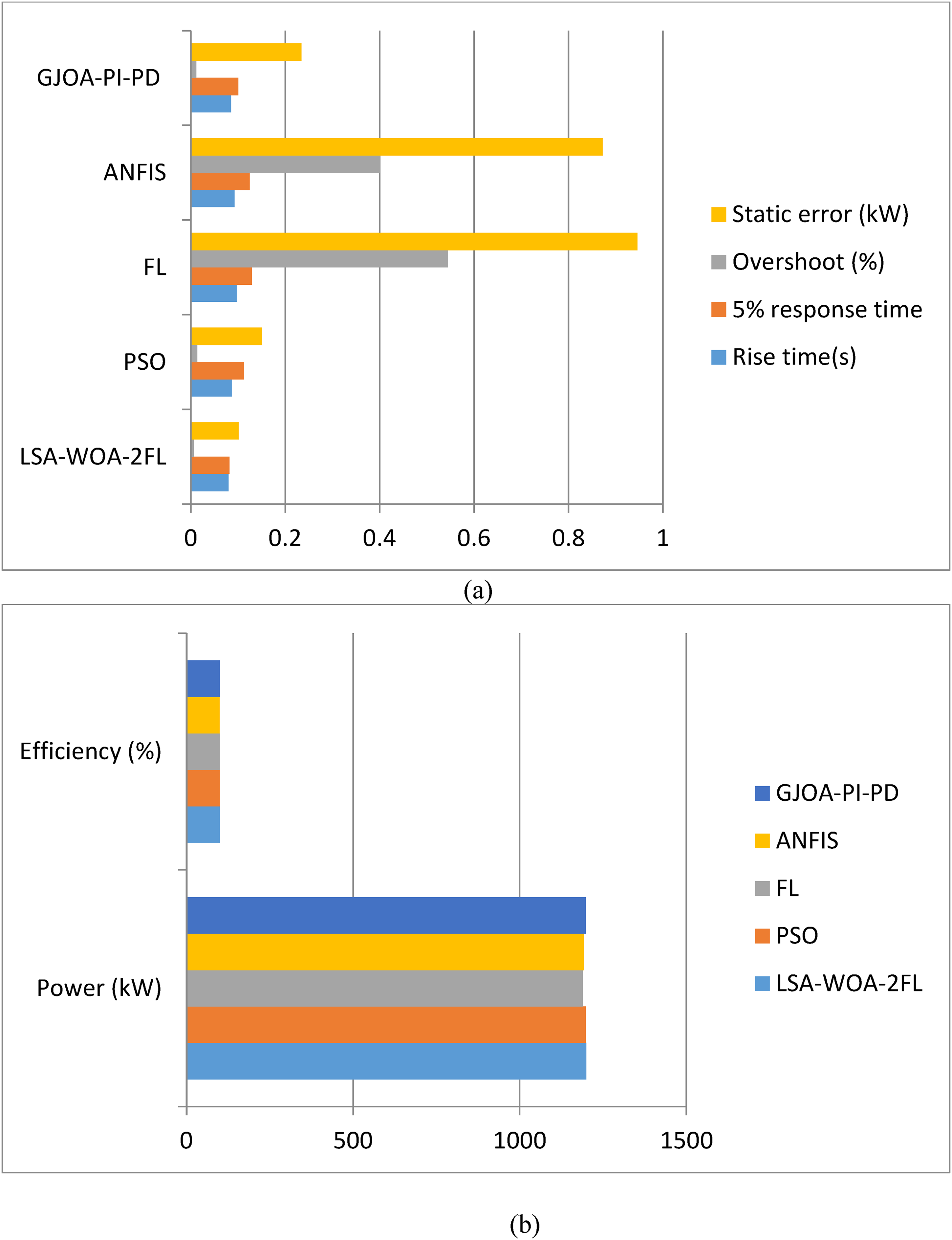
Comparative performance analysis of MPPT techniques under test conditions: (a) rise time, overshoot, and static error; (b) extracted power and tracking efficiency.
MPPT efficiency and robustness during sudden temperature changes
In this scenario, we introduce fluctuating temperatures to define the potential impact of temperature on the efficiency of the proposed algorithm. The abrupt temperature variation is a challenge that may impair the performance and stability of PEMFCs. In order to evaluate and validate the efficiency and thermal robustness of the proposed algorithm, rapid and rapid temperature changes are created while always keeping a constant pressure at the anode and cathode (1 atm). T The temperature variation profile used to evaluate the thermal adaptability of the MPPT controllers is shown in Figure 15. It includes abrupt changes from 273 K to 400 K, simulating real-world thermal fluctuations under constant pressure (1 atm). This profile served as the input condition for assessing controller responsiveness and stability.
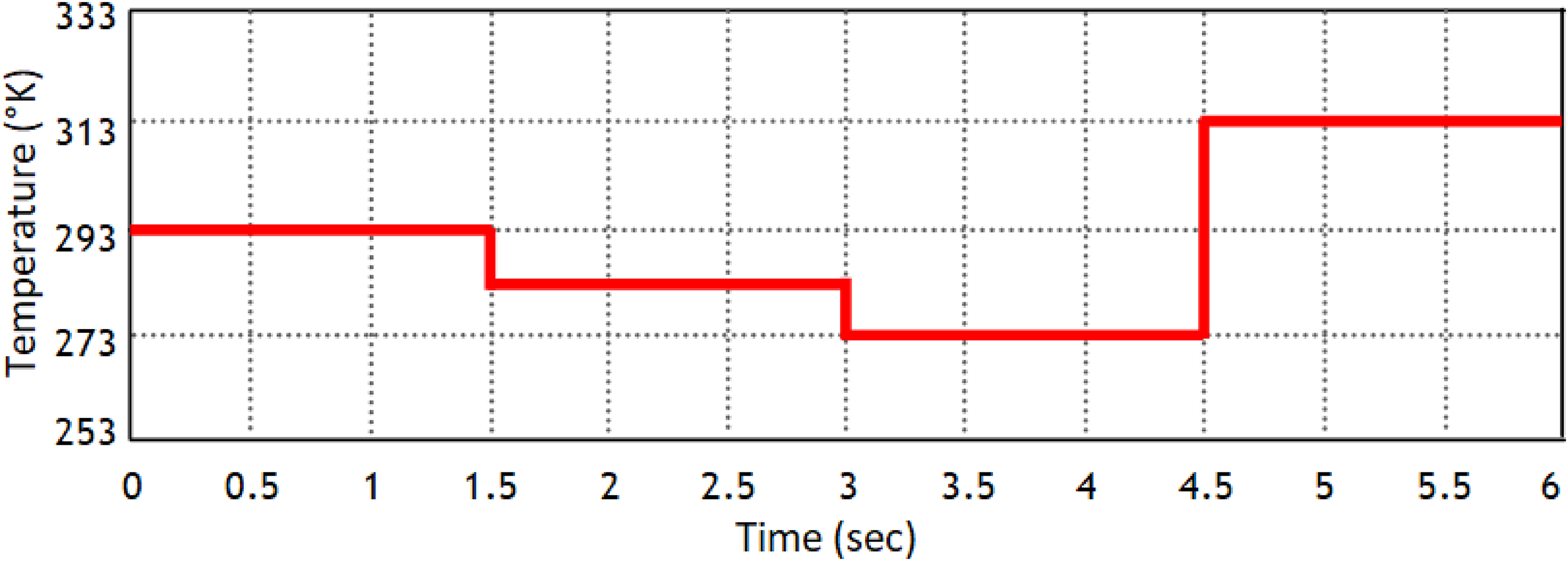
Temperature variation profile used for dynamic testing of MPPT controllers, ranging from 273 K to 400 K under fixed pressure conditions (1 atm).
Figure 16 illustrates the output power, current, and voltage responses of the PEMFC system under abrupt temperature fluctuations, as defined by the thermal profile in the preceding figure. Among the tested MPPT controllers, the proposed LSA-WOA-2FL exhibited the fastest convergence to the new MPPs, with minimal ripple and stable output under each temperature transition (Aly et al., 2021; Bankupalli et al., 2020; Preethiraj & J., 2024; Saxena et al., 2024; Senapati et al., 2025; Srinivasan et al., 2021).
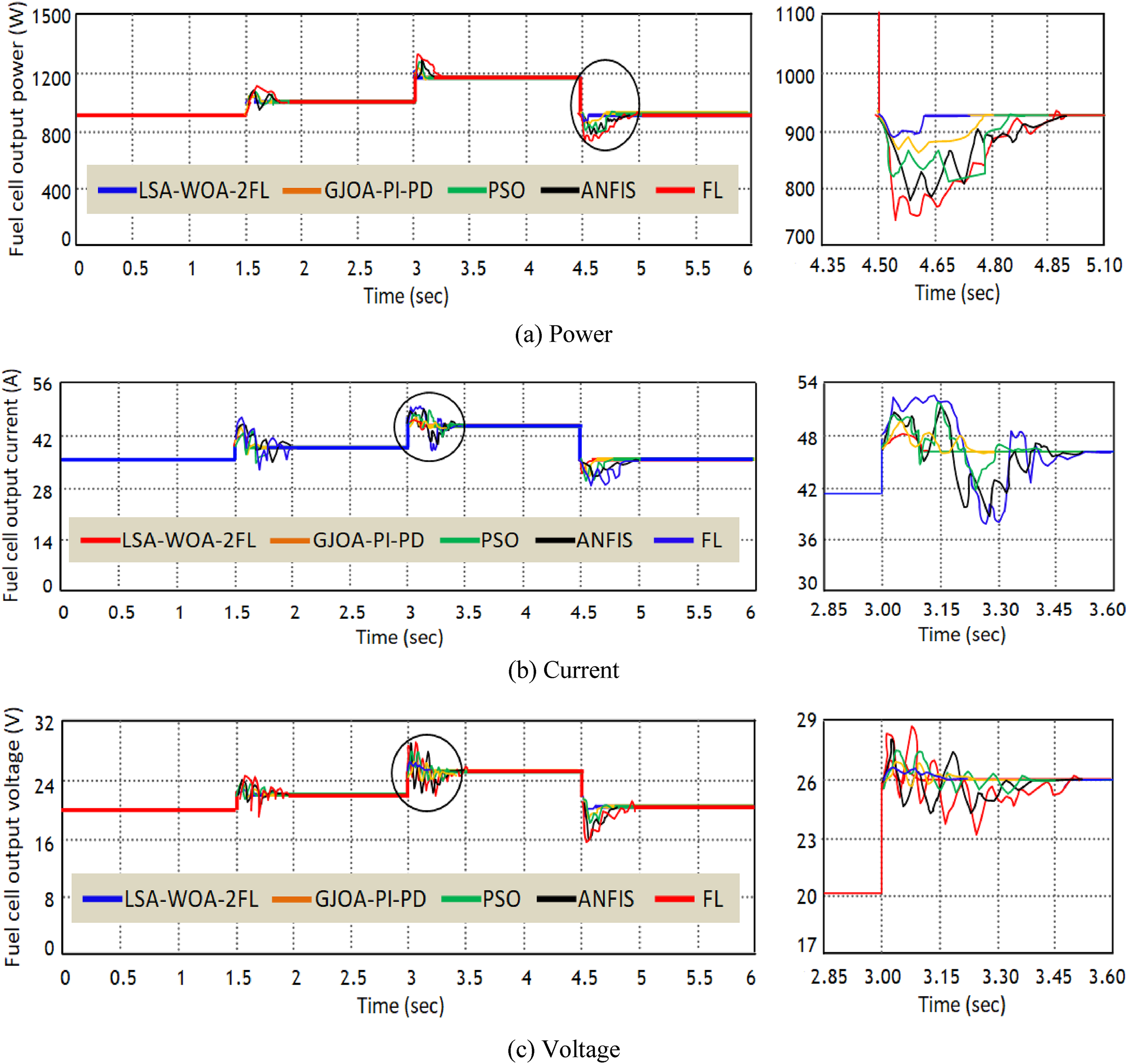
Performance evaluation of PEMFC system under sudden temperature variations (fixed pressure = 1 atm): (a) output power, (b) current, (c) voltage response using different MPPT controllers. (a) Power, (b) Current, (c) Voltage.
Across all temperature levels tested, the developed MPPT technique showed superior performance with the fastest response time to reach the MPP, and maintained near-zero power ripple (see Table 7). This demonstrates a remarkable ability to adjust quickly and precisely track the MPP under rapidly changing circumstances. This figure provides a clear visual overview of how each technique responds to temperature changes, highlighting the speed and accuracy of the transition to the MPPT point.
Evaluation of effectiveness of MPPT strategies under sudden temperature changes and fixed pressure.

The comparative evolution of MPPT efficiency and output power for each control method under dynamic temperature conditions is shown in Figure 17. The LSA-WOA-2FL controller maintains peak efficiency (up to 99.99%) and power (1199.88 W) consistently across all intervals, rapidly outperforming FL, ANFIS, PSO, and GJOA-PI-PD controllers (Aly et al., 2021; Bankupalli et al., 2020; Preethiraj & J., 2024; Saxena et al., 2024; Senapati et al., 2025; Srinivasan et al., 2021).
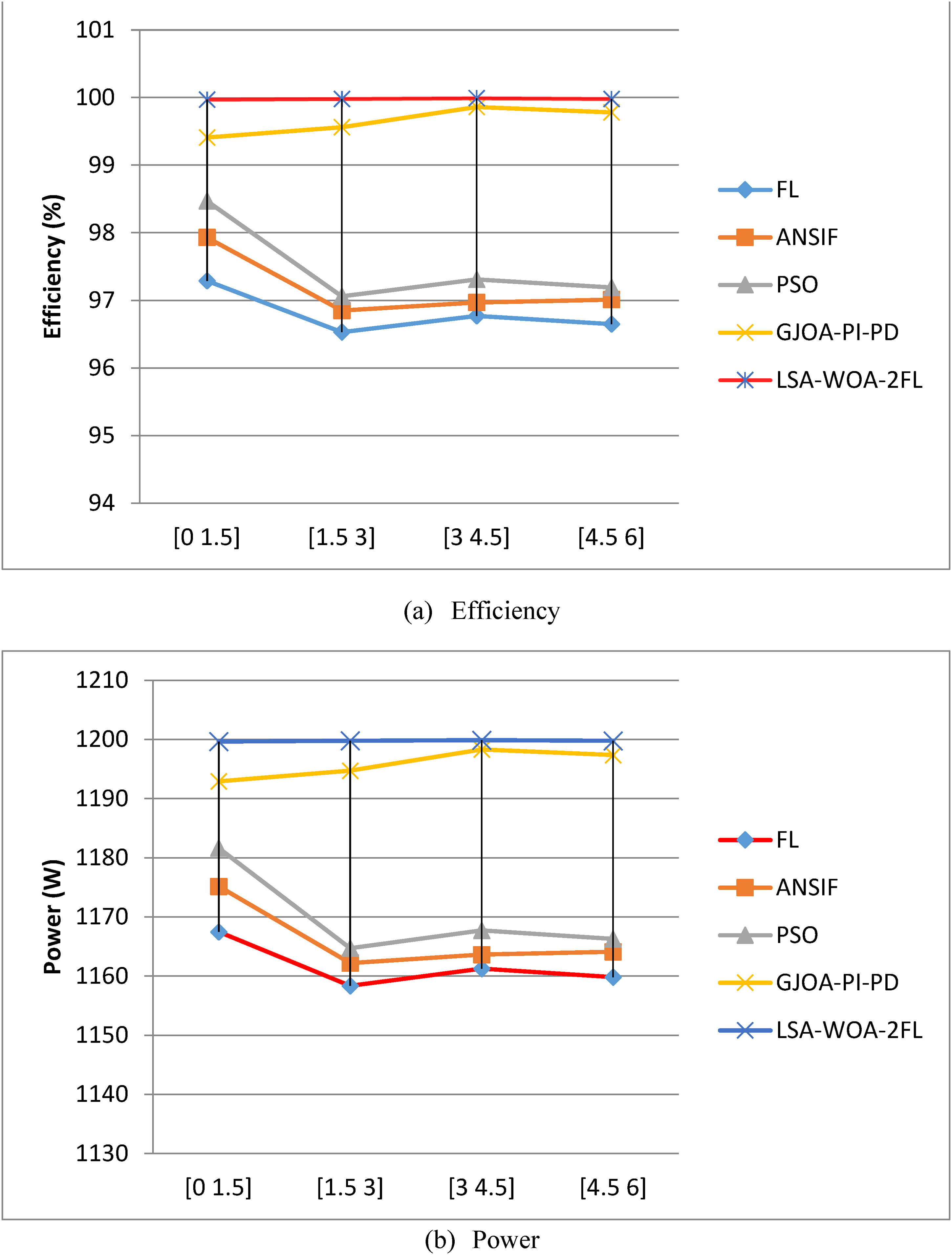
MPPT efficiency and power output comparison of different controllers under temperature variation scenario (273 K to 400 K, fixed pressure = 1 atm). (a) Efficiency, (b) Power.
PEMFC MPPT with rapid pressure fluctuations
The third scenario involved evaluating the suggested algorithm on a succession of constantly changing pressure levels, precisely designed to reproduce the environmental variations of the real universe. The profile of the variation of the pressure levels is shown in Figure 18.
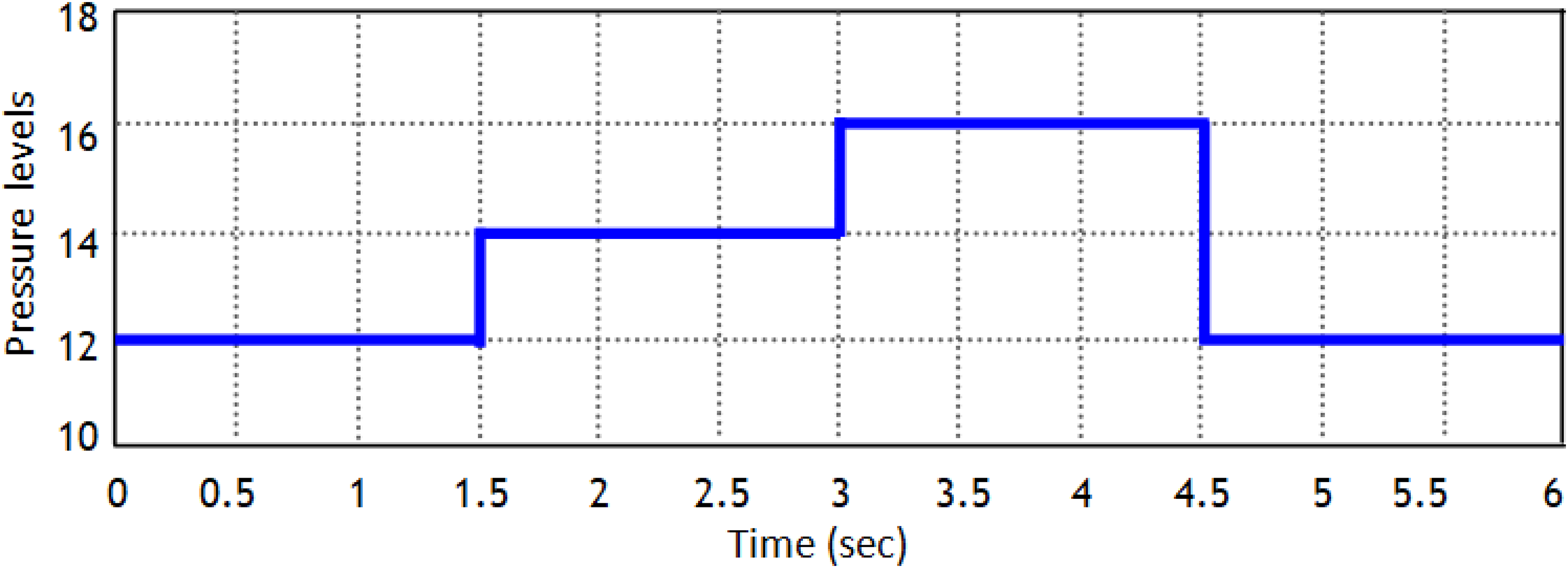
Profile of pressure levels variation.
Figure 17 presents the output responses of the PEMFC system under dynamic pressure variations. Among the tested MPPT controllers, the LSA-WOA-2FL maintained output stability and achieved the fastest convergence to MPP across all pressure levels, rapidly outperforming other methods in voltage, current, and power regulation. Figure 19 demonstrates a rapid overshoot in the PEMFC outputs (power, current, and voltage) when the FL algorithm is employed. Furthermore, both FL and ANFIS controllers introduce noticeable fluctuations and response delays, compromising system stability.
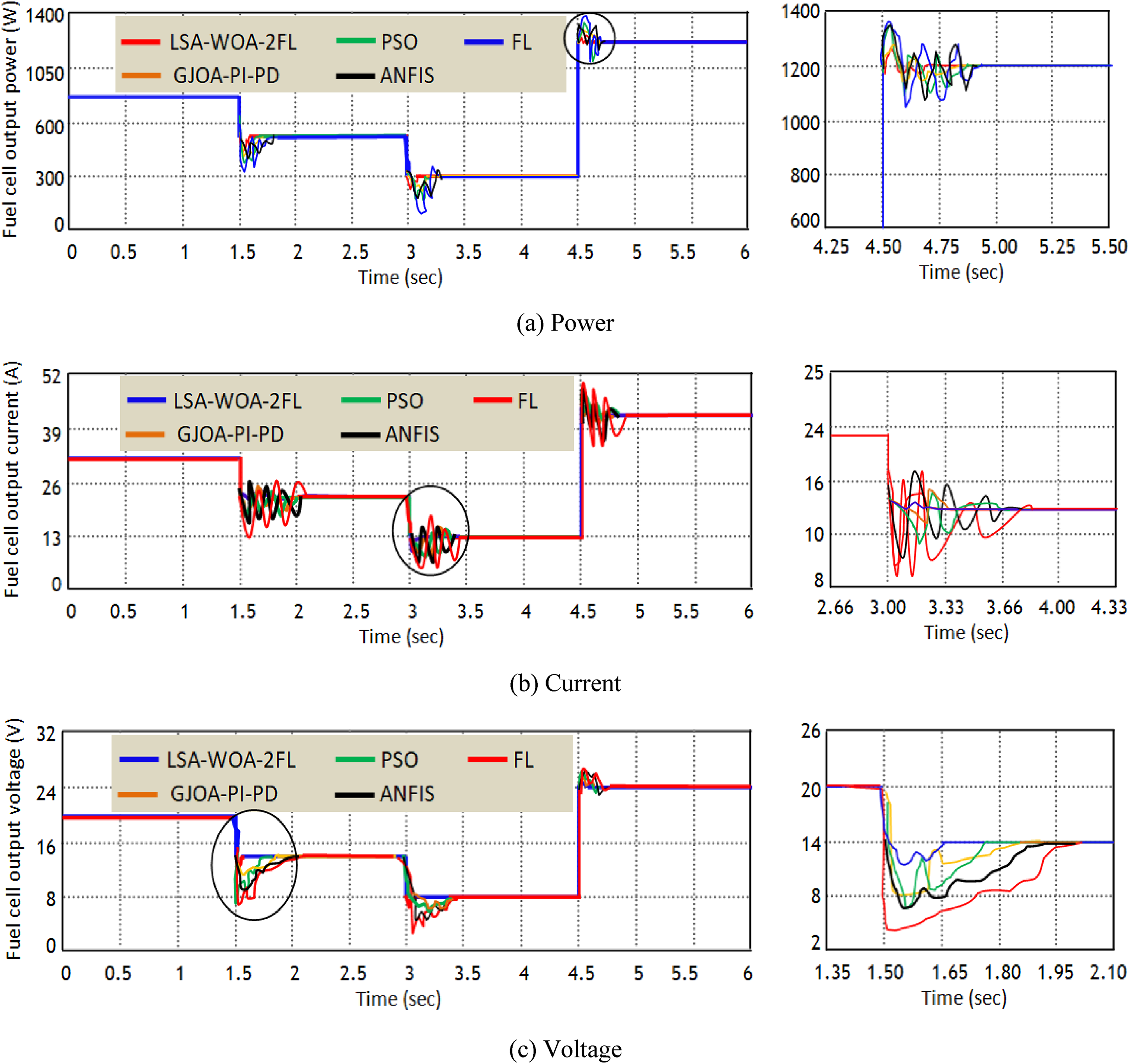
Performance evaluation of PEMFC system under rapid pressure variations (temperature fixed at 343 K): (a) output power, (b) current, (c) voltage response using different MPPT controllers.
Figure 18 illustrates the comparative evolution of MPPT efficiency and extracted power during dynamic pressure variation. The proposed LSA-WOA-2FL controller achieved the most consistent power output and peak efficiency (up to 99.99%) across all time intervals, demonstrating robust adaptability to hydrogen flow fluctuations (Aly et al., 2021; Bankupalli et al., 2020; Preethiraj & J., 2024; Saxena et al., 2024; Senapati et al., 2025; Srinivasan et al., 2021). Table 8 and Figure 20 provide a comparative efficiency analysis of the tested MPPTs algorithms. Among these controllers, the LSA-WOA-2FL stands out due to its superior performance, exhibiting the lowest overshoot while achieving the highest efficiency.
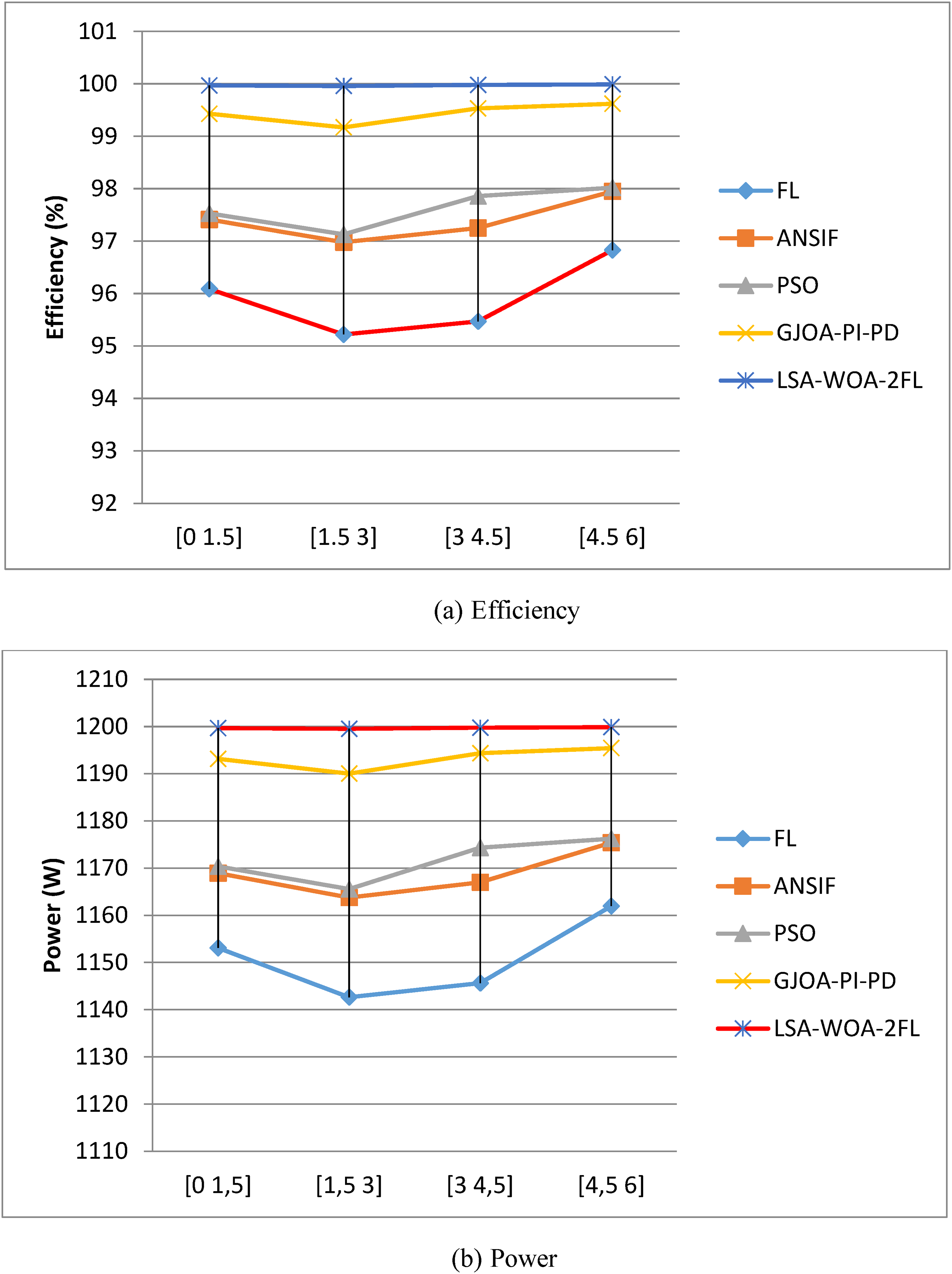
MPPT efficiency and output power comparison of different controllers under pressure variation scenario (1–5 atm, fixed temperature = 343 K). (a) Efficiency, (b) Power.
Evaluate the effectiveness of MPPT strategies under rapid pressure fluctuations and fixed temperature.

Based on simulation results, the proposed LSA-WOA-2FL MPPT structure proves to be the most effective, offering enhanced dynamic response speed, minimized oscillations, and reduced overshoot. Consequently, this architecture is highly recommended for applications requiring precise and stable power regulation in PEMFC systems.
MPPT efficiency and robustness during sudden load variation
In this scenario, in this study, the performance evaluation of the proposed MPPT approach is conducted under fluctuating conditions, including variable load profiles at constant pressure condition 1000 W/m² and a fixed temperature 298°K.
To assess the robustness of the proposed MPPT controller, simulations were performed under four levels of load resistance (L1–L4). As depicted in Figure 21, the resistive load undergoes sudden transitions: L1 = 100 Ω for t = 0–1.5 s, L2 = 90 Ω for t = 1.5–3.0 s, L3 = 80 Ω for t = 3.0–4.5 s, and L4 = 120 Ω for t = 4.5–6.0 s. The figure demonstrates the controller's precise tracking response during each load variation.
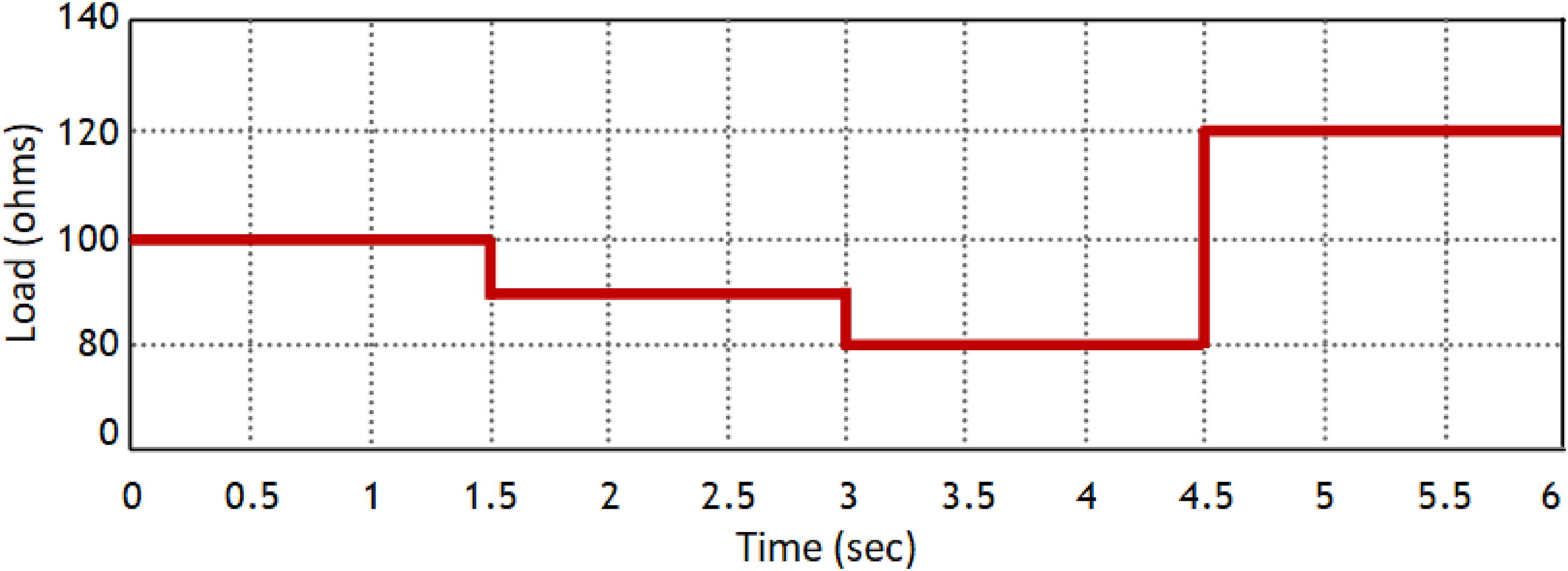
Load variation profile used for dynamic testing of MPPT controllers, ranging from 70 Ω to 100 Ω under fixed pressure conditions (1 atm) and fixed temperature 298°K.
According to Figure 22, when the load resistance increases, the proposed algorithm demonstrates remarkable agility, reaching the maximum power point (MPP) in just 0.13 s. This performance is more than three times higher than that of conventional fuzzy logic control, which requires 0.42 s to accomplish the same task. The difference is even more significant in the opposite scenario: when the load decreases, the proposed method locates the MPP in a record time of 0.1 s, displaying a responsiveness 4.5 times greater than that of fuzzy logic, whose response time is 0.45 s.
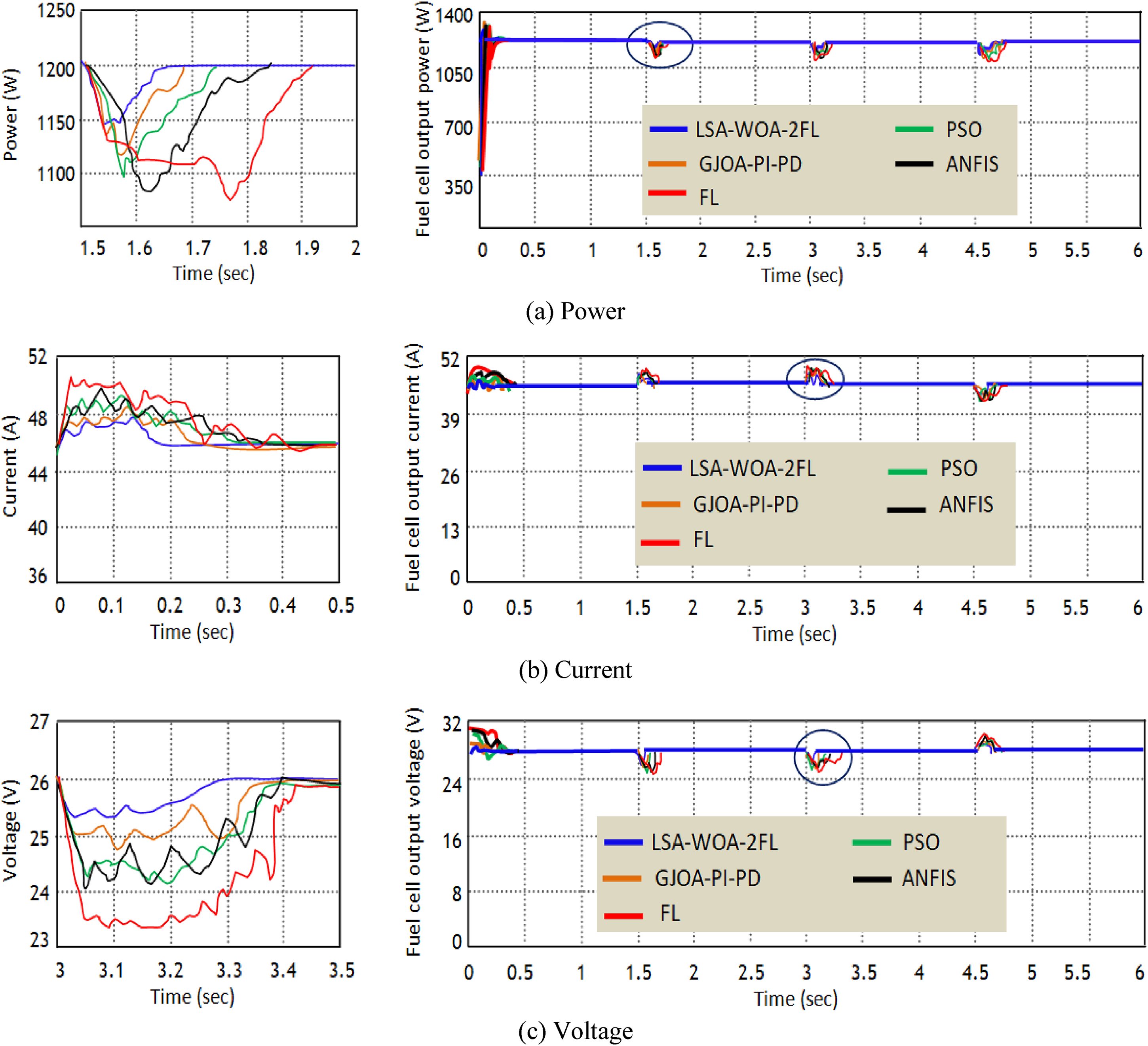
Performance evaluation of PEMFC system under sudden load variations: (a) output power, (b) current, (c) voltage response using different MPPT controllers, (a) power, (b) current, (c) voltage.
This comparison highlights the robustness of the new technique, which maintains short and stable convergence times, regardless of the direction of load variation. In contrast, conventional fuzzy logic demonstrates not only lower speed but also greater sensitivity to the nature of the disturbance. When the comparison is extended to other modern algorithms, the ranking is unequivocal. The proposed MPPT technique ranks as the fastest, ahead of methods such as particle Swarm optimization (PSO), the adaptive neuro-fuzzy system (ANFIS), and the GJOA-PI-PD metaheuristic. Consequently, classical fuzzy logic is confirmed as the slowest approach in this comparative study.
The relative slowness of fuzzy logic can be explained by the incremental nature of its decision process, which requires gradual adjustment of its inference rules to converge towards the optimum. In contrast, the proposed technique appears to have a more direct and adaptive search mechanism, allowing it to adjust more quickly to new operating conditions.
Performance comparison
A performance comparison of different MPPT controllers: FL, ANFIS, PSO, GJOA-PI-PD and the proposed LSA-WOA-2FL is presented in table 9.
Performance comparison.
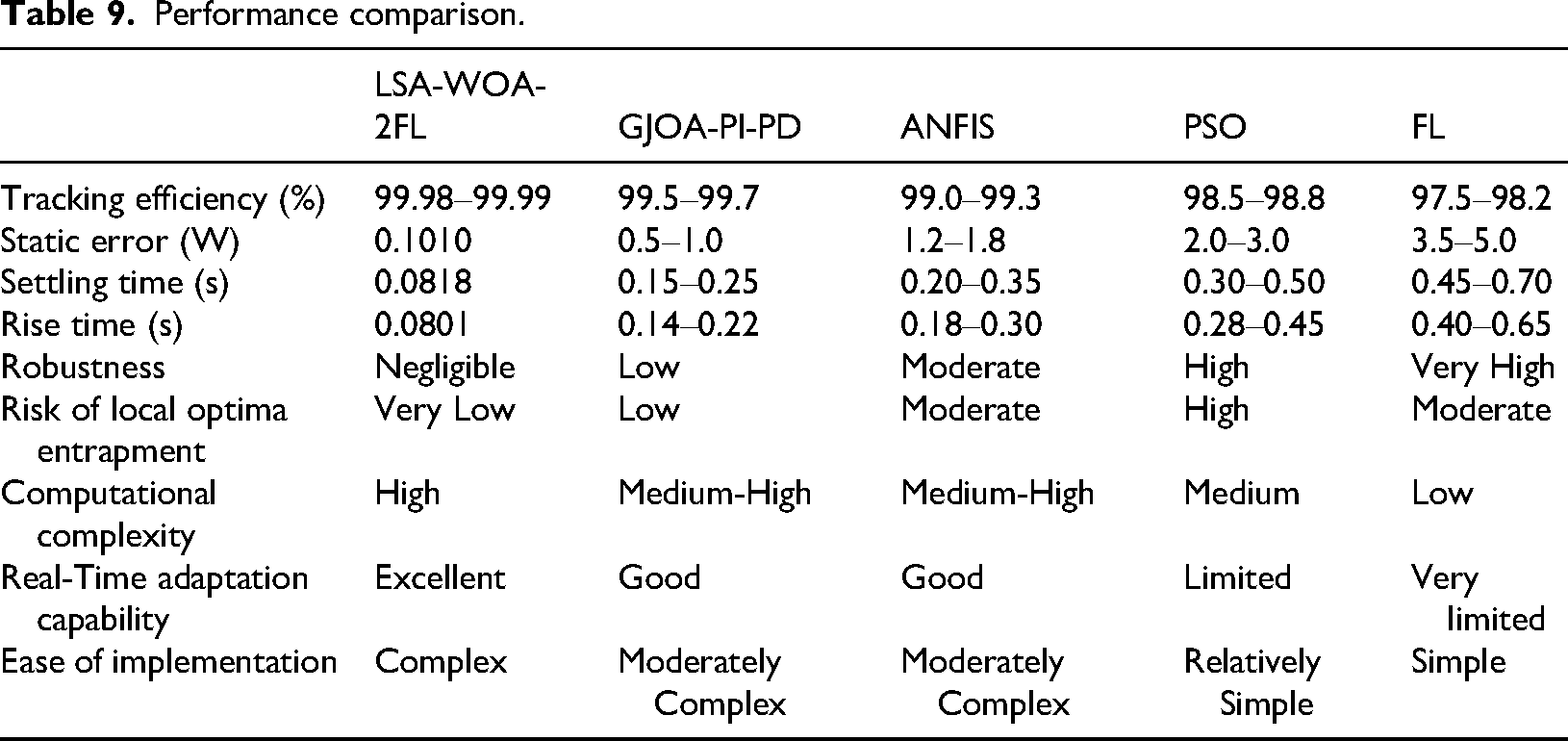
The LSA-WOA-2FL method demonstrates unmatched superiority in tracking efficiency (99.98% to 99.99%) and steady-state accuracy (a minimal static error of only 0.1010 W). This exceptional performance is the direct result of the synergy between the Interval Type-2 Fuzzy Logic and the hybrid optimization. The IT2FLC is intrinsically designed to handle non-stationary uncertainties, such as abrupt temperature and pressure variations, due to its Footprint of Uncertainty (FOU). This allows it to model and mitigate system imprecision far more effectively than a classic FL controller or even an ANFIS. The optimization of the IT2FLC's six key parameters by the hybrid LSA-WOA ensures the controller consistently operates in a near-optimal configuration, thereby minimizing modeling errors and power losses.
In comparison, methods like PSO and FL show lower efficiency and accuracy. PSO, while capable of finding a good operating point, tends to oscillate around the global MPP, especially under dynamic conditions, resulting in a higher steady-state error. The classic FL controller, with its static membership functions, lacks the flexibility to adapt to the system's non-linear changes, leading to the largest error among the compared methods. ANFIS and GJOA-PI-PD offer better performance, but their adaptability is either limited by the structure of the neuro-fuzzy network (ANFIS) or the nature of the optimizer (GJOA), preventing them from reaching the precision and stability level of the proposed method.
The rapid response of the proposed method is evidenced by its shortest rise time (0.0801 s) and settling time (0.0818 s) in the group. This speed is crucial for tracking the rapid changes in the PEMFC's power curve. The strength of LSA-WOA lies in its balance between exploration (global search capability, driven by WOA) and exploitation (precise convergence capability, enhanced by LSA). This balance enables rapid initial convergence and avoids prolonged oscillations, allowing the system to reach a stable operating point almost immediately after a disturbance.
Other algorithms like PSO often suffer from longer convergence times due to particle inertia and the risk of stagnation. FL and ANFIS, while inherently fast, can exhibit overshoot or longer stabilization times if their parameters are not perfectly calibrated for the current operating point a problem circumvented in the proposed controller by its online adaptive tuning.
Robustness is the hallmark of the LSA-WOA-2FL method. Its ability to maintain 99.99% efficiency with negligible oscillations during severe dynamic tests (rapid temperature/pressure changes) sets it clearly apart. The 2FL treats uncertainty as an intrinsic system variable, making it naturally resistant to noise and disturbances. Coupled with the global search power of LSA-WOA, which minimizes the risk of local optima entrapment, the system can recover and lock onto the global MPP even after a major disturbance.
Methods like PSO are notoriously prone to becoming trapped in local optima, especially on complex, multimodal fitness landscapes like that of a PEMFC. FL simply lacks the mechanisms to handle operating conditions that are significantly different from its design specifications, leading to a substantial performance degradation under dynamic operation.
It is important to note that the superiority of the LSA-WOA-2FL method comes with a high computational complexity. Type-2 fuzzy inference is computationally heavier than its Type-1 counterpart, and running a hybrid optimization algorithm in the background for parameter adjustment demands significant processing power. This can pose challenges for implementation on low-cost microcontrollers or for applications requiring an extremely high control frequency.
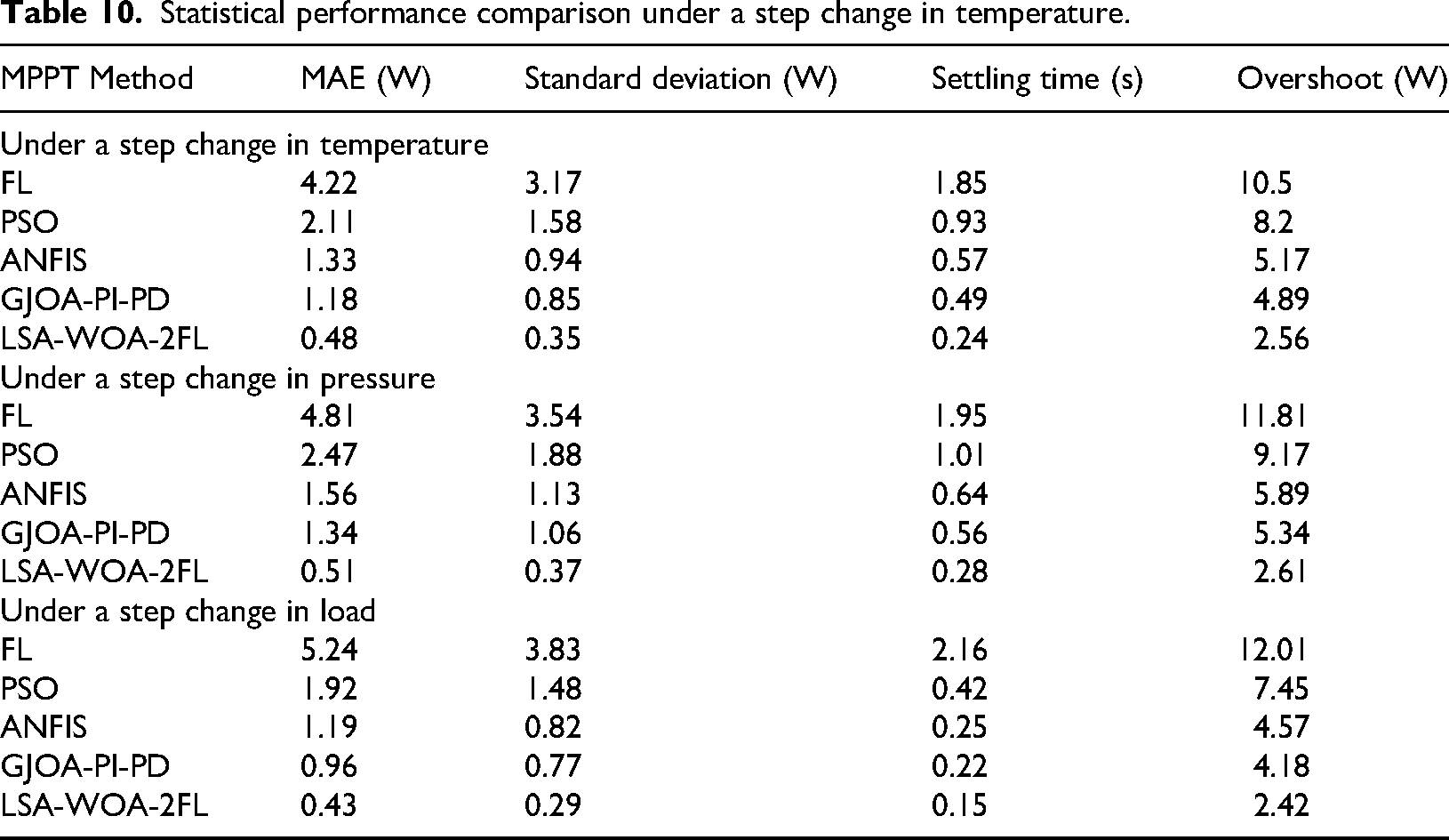
In contrast, classic Fuzzy Logic (FL) is the least complex and simplest to implement. PSO offers a good compromise, with moderate algorithmic complexity. ANFIS and GJOA-PI-PD are on the higher end of the complexity spectrum but are generally less demanding than the proposed hybrid and adaptive combination (Table 10).
Statistical performance comparison under a step change in temperature.
Statistical performance analysis
The comparative statistical analysis conducted during step changes in temperature, pressure, and load consistently reveals the clear superiority of the proposed hybrid strategy over all benchmark methods. In general, the FL method demonstrates the lowest performance in all scenarios.
More specifically, during a load change, a common and critical disturbance, the proposed method excels. It exhibits near-perfect tracking efficiency and the fastest establishment time. This demonstrates its exceptional ability to quickly and accurately recenter the operating point after a disturbance directly affecting the operating point on the I-V curve.
In the case of a pressure change, which alters reaction kinetics and gas concentration, the proposed hybrid method confirms its robustness. It maintains the highest efficiency and the lowest mean absolute error. Its ability to minimize transient overshoots is also a major advantage for system protection and durability.
Finally, faced with a temperature change, which profoundly affects the kinetics and internal resistance of the fuel cell, the proposed strategy proves its stability. It converges towards the new maximum power with negligible steady-state oscillations.
Comparative analysis with deep learning MPPT methods
The following Table 11 summarizes the key differences between our hybrid metaheuristic strategy and deep learning-based methods (LSTM, Transformers), followed by a detailed analysis.
Comparative analysis with deep learning MPPT methods.
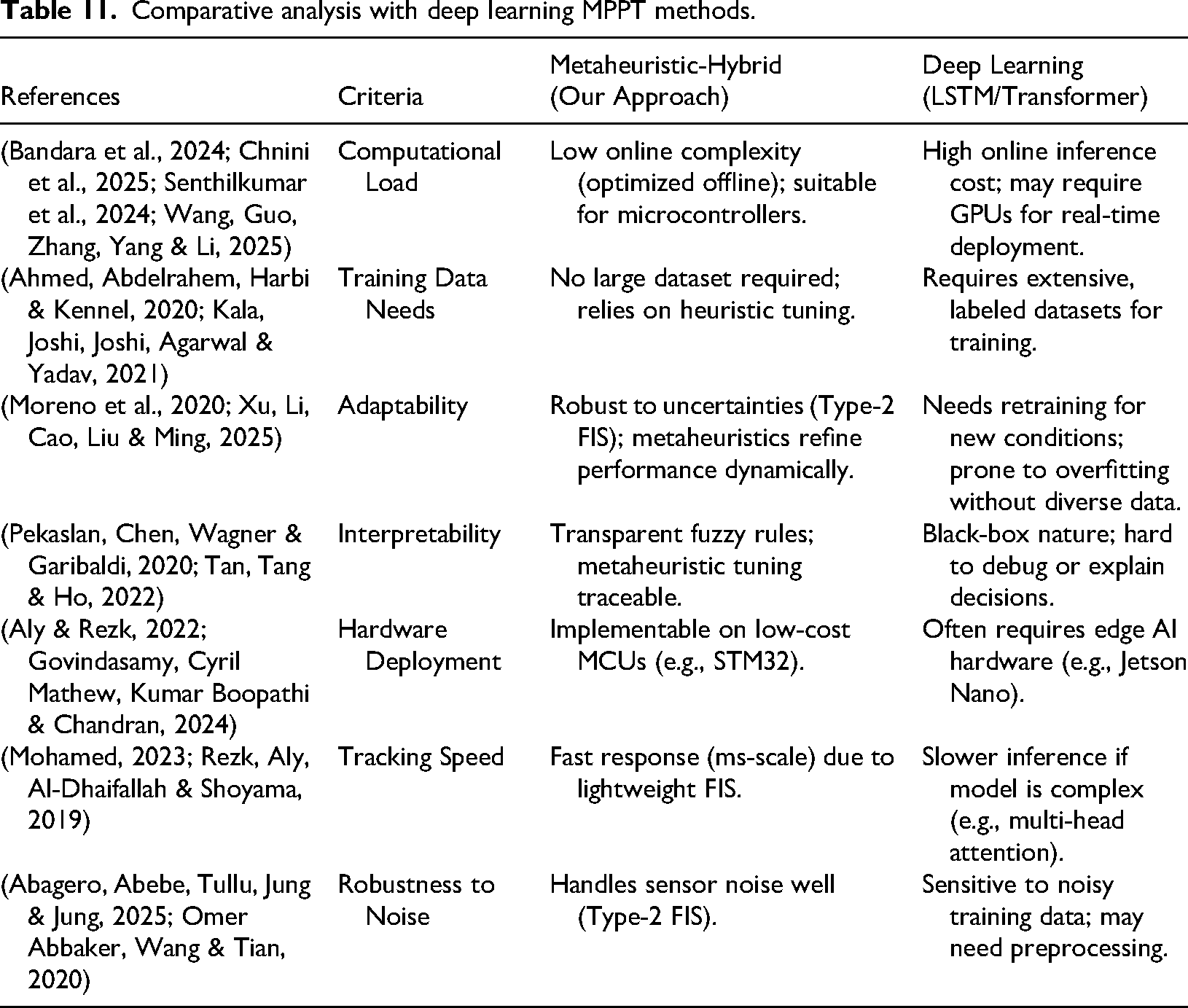
Our approach, based on fuzzy logic optimized by metaheuristics, presents a low online computational load, which makes it suitable for embedded systems. In contrast, deep learning methods, such as LSTMs or Transformers, require significant hardware resources (GPU) for real-time inference. Unlike deep learning approaches, which heavily rely on large labeled datasets for training, our method does not require massive data, as it relies on offline heuristic optimization.
Type-2 fuzzy logic offers explainable rules, facilitating debugging and performance analysis. Conversely, deep learning models lack transparency, making it difficult to understand their decisions.
Due to its low complexity, our solution can be deployed on low-cost microcontrollers (STM32), while deep learning methods often require more powerful hardware platforms. Our approach naturally handles sensor noise and fuel cell voltage variations, while the performance of deep learning models degrades in the presence of noisy or incomplete data.
Conclusion and future research directions
This study presented the development and simulation-based validation of a high-performance hybrid MPPT algorithm for proton exchange membrane fuel cell (PEMFC) systems, designed to operate reliably under highly dynamic and uncertain environmental conditions. The proposed control strategy—LSA-WOA-2FL—integrated an interval type-2 fuzzy logic controller with a novel combination of lightning search algorithm (LSA) and Whale optimization algorithm (WOA). This hybrid optimization not only enabled precise tuning of fuzzy membership functions but also significantly enhanced the controller's ability to track the maximum power point (MPP) rapidly and precisely without being trapped in local optima.
The proposed controller was evaluated under a comprehensive set of scenarios, including standard operating conditions (T = 343 K, P = 1 atm), rapid temperature fluctuations, hydrogen flow variations, and simultaneous changes in temperature and pressure. In all cases, the LSA-WOA-2FL controller demonstrated superior dynamic response, minimal overshoot, and near-zero steady-state error. Notably, it achieved an MPPT efficiency of 99.98% under standard conditions, with a rise time of 0.0801 s and a 5% response time of 0.0818 s. In rapidly varying environments, it maintained high tracking accuracy with adaptation times as low as 0.002 s and peak efficiency up to 99.99%, outperforming FL, ANFIS, PSO, and GJOA-PI-PD controllers by a significant margin.
By leveraging the adaptability of interval type-2 fuzzy inference and the exploratory capabilities of LSA and WOA, the proposed method bridged a critical gap in MPPT control design—combining computational intelligence with real-time responsiveness. Although the results were derived from simulations, the tested scenarios closely emulated real-world PEMFC behavior, establishing a solid foundation for future deployment.
Overall, this work contributed a robust, scalable, and intelligent MPPT solution for next-generation fuel cell systems. Future efforts will focus on real-time hardware implementation and experimental validation to extend the practical applicability of the LSA-WOA-2FL framework. The approach has the potential to rapidly enhance the stability, responsiveness, and efficiency of renewable energy systems integrating PEMFCs, marking a meaningful advancement in intelligent control for sustainable power systems.
Several key research avenues emerge to further enhance this innovation. First, the integration of deep reinforcement learning could push tracking efficiency beyond 99.5% while enabling autonomous adaptation to complex operating conditions. Second, developing digital twin capabilities would facilitate predictive maintenance through real-time performance monitoring and degradation analysis. Third, hardware resource optimization remains crucial for embedded applications, requiring innovative approaches to reduce computational overhead while maintaining control precision. Finally, extensive validation under extreme temperature conditions (−20°C to 95°C) will be essential for industrial adoption, particularly in automotive and aerospace applications.
Looking ahead, future work will focus on scaling the technology for larger power ranges (1–100 kW) while maintaining control performance. Integration with hydrogen production systems presents another exciting opportunity, potentially enabling complete renewable energy cycles from production to storage and utilization. These developments could significantly advance the transition toward fully decarbonized energy infrastructures.
Footnotes
Abbreviations/Nomenclature
Acknowledgment
The work presented in this paper was supported by funding from the Tassili project No 51327SE, entitled Integrated Design of Resilient Systems for Green Hydrogen Production, for which we express our sincere gratitude.

Author contributions
Abd Essalam BADOUD, Abdelhak Samir DOULI: Conceptualization, Methodology, Software, Visualization, Investigation, Writing- Original draft preparation. Belkacem OULD BOUMAMA, Mahdi BOUKERDJA: Data curation, Validation, Supervision, Resources, Writing - Review & Editing. Ramzi KOUADRI, Mohit BAJAJ, Mebratu Sintie GEREMEW: Project administration, Supervision, Resources, Writing - Review & Editing.
Funding
The authors received no financial support for the research, authorship, and/or publication of this article.
Declaration of conflicting interests
The authors declared no potential conflicts of interest with respect to the research, authorship, and/or publication of this article.
Availability of data and materials
The datasets used and/or analyzed during the current study available from the corresponding author on reasonable request.