




Abstract
Based on the verification of the suitability of the pitchblende certified reference material (GBW04420) for uranium mineral dating, this study conducted in-situ micro-area U-Pb dating on sandstone-hosted uranium deposits in the northern Ordos Basin by integrating femtosecond laser ablation inductively coupled plasma mass spectrometry (fs-LA-ICP-MS) and secondary ion mass spectrometry (SIMS). The fs-LA-ICP-MS method enables age determination for uranium minerals larger than 20 μm, while SIMS complements the analysis for micro-minerals ranging from 5 to 20 μm. Thus, this combined approach delivers highly precise and comprehensive age results. The overall dating results reveal four distinct mineralization periods: Late Cretaceous, Eocene-Oligocene, Miocene, and Pliocene. The uranium mineralization demonstrates clear multi-phase characteristics, showing strong correlation with later geological events such as basin reworking. This coherence further validates the reliability of the obtained age data.
Keywords
Introduction
Uranium is a critical strategic energy resource and plays a vital role in ensuring national nuclear energy development and security. In most developed countries, nuclear power accounts for over 20% of total electricity generation, while in China, this figure is less than 5%. The growing demand for nuclear energy underscores the significant societal need for uranium. Currently, China's low-cost uranium resources are insufficient to meet the demands of rapid economic development, making the exploration of uranium resources both urgent and of great importance. Among the four main types of uranium deposits-sandstone-type,volcanic-type, granite-type, and carbonaceous-siliceous-pelitic rock-type-sandstone-type uranium deposits currently rank first in terms of production and significance (IAEA, 2022; Wang et al., 2016; Zhang, 2012). With a series of achievements in the exploration and theoretical research of sandstone-type uranium deposits in northern China, as well as the successful and large-scale application of in situ leaching technology, sandstone-type uranium deposits have become the primary focus of uranium exploration in China.
Over the past two decades, significant progress has been made in scientific research on sandstone-type uranium deposits, particularly in understanding the source conditions, tectonic settings, metallogenic models, ore-controlling factors, epigenetic alterations, and post-mineralization modification characteristics. However, the determination of the metallogenic ages of uranium deposits and the establishment of related metallogenic models remain ongoing areas of research and development. Due to the generally small and indistinct grain sizes of sandstone-type uranium minerals, obtaining precise ages for uranium deposits has remained a key challenge. In earlier studies, the isotope dilution thermal ionization mass spectrometry (ID-TIMS) method was commonly used to conduct U-Pb isotopic testing on whole-rock samples, yielding isochron ages. For example, international studies (Dooley et al., 1974; Ludwig et al., 1987) dated sandstone-type uranium deposits in the Gas Hills and Shirley Basin, concluding that the youngest age of the Shirley Basin deposits was the Late Oligocene (24 ± 3 Ma). In China, this method has also been systematically applied to date uranium deposits in the southern Yili Basin, the southern Turpan-Hami Basin, and the northern Ordos Basin, leading to the recognition of the multi-stage mineralization characteristics of sandstone-type uranium deposits (Xia et al., 2003; Xia and Liu, 2005; Liu et al., 2007a, 2007b; Xiang et al., 2006; Song, 2013; Cun, 2016). Due to the complex metallogenic environment of sandstone-type uranium deposits, uranium ores may undergo post-mineralization alteration and disruption. Although various correction methods can be applied, the overall mineralization process occurs in an open system for U, Th, and Pb. The whole-rock U–Pb isochron method requires that the uranium ores formed simultaneously, Pb isotopes achieved homogenization, and the chemical system remained closed after mineralization. However, actual samples often fail to meet these conditions, leading to significant controversy in the interpretation of whole-rock U–Pb isochron ages (Zhou et al., 2018). Currently, the ID-TIMS method, known for its high precision in the U–Pb dating system, is primarily used for zircon dating. One advantage of this method is that it does not require corresponding standard minerals for correction. However, when directly applied to uranium minerals, it is susceptible to interference from inclusions of other uranium-rich or lead-rich minerals within the uranium minerals. Additionally, due to the multi-stage nature of uranium mineralization, the data obtained may represent mixed ages resulting from the superposition of multiple mineralization events (Liu et al., 2021). Furthermore, the complex and challenging process of separating uranium minerals makes this method unsuitable for dating sandstone-type uranium deposits. If exceptionally pure single grains of uranium minerals can be obtained, the ID-TIMS method can yield highly precise and reliable ages. However, such uranium minerals are rare in nature. If obtained, they could be considered as potential reference materials for dating calibration.
Micro-area in situ dating has become a widely applied method in metallogenic geochronology. This technique offers several advantages, including the elimination of the need for single mineral separation and chemical processing, high spatial resolution (at the micrometer scale), the ability to distinguish minerals from different stages, and the capability to avoid areas affected by later fluid activity. As a result, it can yield ages with greater geological significance (Reed, 1990; Müller, 2003; Pearson et al., 2006). Currently, the most widely used methods for metallogenic geochronology in hydrothermal deposit studies are secondary ion mass spectrometry (SIMS) and laser ablation inductively coupled plasma mass spectrometry (LA-ICP-MS). Additionally, electron probe microanalysis (EPMA) has also been utilized for age determination.
The EPMA method offers several advantages, including time efficiency, low cost, high spatial resolution (approximately 1 μm), no need for reference material correction, and non-destructive analysis. Researchers both domestically and internationally have utilized EPMA for U–Pb geochronological studies of minerals such as monazite, zircon, and xenotime (Suzuki and Adachi, 1991; Xu et al., 2017; Zhang et al., 2016; Zhou et al., 2002). Additionally, a combined approach using EPMA and LA-ICP-MS has been applied to date the Chenjiazhuang pegmatite-type uranium deposit and the Tarangaole sandstone-type uranium deposit in the Ordos Basin (Ye et al., 2019). However, the method has notable limitations, including relatively low precision. A key prerequisite for its application is that the initial common lead content at the time of mineral formation must be negligible, and the system must remain closed after formation. For uranium minerals with high uranium content, there is often a certain degree of radiogenic lead loss. Moreover, since EPMA can only measure total Pb content and cannot distinguish between the three Pb isotopes, its application in uranium mineral dating is limited. This method is particularly unsuitable for dating young samples.
With advancements in analytical techniques, both nanosecond (ns) and femtosecond (fs) laser methods have been explored for LA-ICP-MS dating. It is widely recognized that the femtosecond (fs) laser method offers higher precision. Compared to nanosecond (ns) lasers, femtosecond (fs) lasers exhibit significantly reduced matrix effects during the ablation process (Kimura et al., 2011; Shaheen et al., 2012; Zong et al., 2015). International researchers have conducted exploratory (ns) LA-ICP-MS dating on various uranium deposits. For example, Don Chipley et al. (2007) performed age determinations on uraninite from unconformity-type, granite-type, and carbonaceous-siliceous-pelitic rock-type uranium deposits in northern Australia. In China, (ns) LA-ICP-MS dating has been applied to uraninite from granite-type and pegmatite-type uranium deposits (Zou et al., 2011; Zhang et al., 2019; Huang et al., 2020; Li et al., 2021; Liu et al., 2021). In most cases, the zircon reference material 91500 was used as an external standard for calibration. The (fs) LA-ICP-MS method has been applied to various uranium deposits, including the following: dating the Nalinggou uranium deposit in the Hangjinqi area of the Ordos Basin (Song, 2013); LA-ICP-MS dating of the Qianjiadian uranium deposit (Hao, 2020; Li, 2023); age determination of the Hongqinghe and Ningdong sandstone-type uranium deposits in the Ordos Basin (Xiao et al., 2020a, 2020b); dating uraninite from granite-hosted uranium deposits in Namibia (Zong et al., 2015). In these studies, the uranium reference material GBW04420 was used for U–Pb isotopic ratio calibration. The results are largely consistent with regional tectonic settings or geological events, indicating a reasonable level of reliability.
Compared to the LA-ICP-MS method (which requires grain sizes above 20 μm), SIMS offers higher precision and spatial resolution (above 5 μm). However, its main drawback is the high cost of testing. Researchers both domestically and internationally have conducted valuable exploratory studies using SIMS. For example, Fayek et al. (2002a, 2002b) performed SIMS dating of uraninite from the Cigar Lake unconformity-type uranium deposit in Canada. Similarly, Chen et al. (2019) applied SIMS to date uraninite from the granite-hosted Shazijiang uranium deposit; SIMS has been applied to date sandstone-type uranium deposits in the northern Ordos Basin and the Qianjiadian uranium deposit (Zhang, 2019; Hao, 2020; Li, 2023).
In the aforementioned micro-area in situ isotope dating methods, LA-ICP-MS offers advantages such as in situ analysis, rapid processing, instrument simplicity, and low operational costs. It allows for direct observation of sample morphological features under high-magnification optical microscopy for spot selection. However, compared to SIMS, LA-ICP-MS has limitations, including higher reproducibility errors in U–Pb age data and the inability to correct for common lead. In contrast, SIMS can directly measure Pb/U and Pb/Th ratios, as well as the three Pb isotopes, with detection levels ranging from ppm to ppb. It provides high spatial resolution (capable of analyzing tiny minerals around 5 μm) and high precision, yielding accurate U–Pb and Pb–Pb ages. The main drawback of SIMS, however, is its high testing cost. In previous research, the authors observed significant age variations among different uranium minerals within the same sample or thin section, and even among uranium minerals of different grain sizes within the same thin section (Song, 2013), indicating multi-stage mineralization characteristics. These findings suggest that age differences exist among uranium grains of varying sizes within the same sample or thin section. Therefore, to accurately reflect the multi-stage mineralization process, it is essential to determine the ages of uranium grains of all sizes. By combining the LA-ICP-MS and SIMS methods, it is possible to date uranium minerals across a wide range of grain sizes, thereby providing a comprehensive representation of the mineralization stages. This study follows this technical approach, applying both LA-ICP-MS and SIMS to date sandstone-type uranium deposits in the northern Ordos Basin, achieving satisfactory results.
This study follows the technical approach of combining LA-ICP-MS and SIMS methods to conduct micro-area in situ dating of sandstone-type uranium deposits in the northern Ordos Basin. This method offers high precision and the ability to date uranium minerals of various grain sizes (from larger grains above 20 μm to smaller grains around 5 μm) and across different mineralization stages, making it highly advantageous. Currently, the only point of contention is the choice of reference material for U–Pb isotopic ratio correction when applying this method to uranium mineral dating. In LA-ICP-MS applications, if the test sample and the reference material are not of the same composition, it can significantly affect the accuracy of age determination. This phenomenon, known as the matrix effect, is considered one of the primary factors limiting the precise analysis of elemental concentrations and isotopic ratios using LA-ICP-MS (Sylvester, 2008; Hu et al., 2011; Liu et al., 2013).
Matrix effects and elemental fractionation are major challenges affecting the accuracy and precision of in situ micro-area isotopic and elemental analysis. The selection of appropriate reference materials is a critical factor in addressing these issues. Zong et al. (2015) found that using zircon standards for calibration in fs-LA-ICP-MS dating of uranium minerals resulted in deviations of nearly 20%. Therefore, applying zircon reference materials for fractionation correction in uranium mineral dating is highly unsuitable and significantly impacts the results. Currently, there is no universally accepted uranium reference material available internationally. Internationally, uranium reference materials used in experimental testing are primarily uraninite or pitchblende, with samples often sourced from pegmatite-type and granite-type uranium deposits (Holliger and Cathelineau, 1988; Evins and Fayek, 2001; Chipley et al., 2007; Sharpe and Fayek, 2016). An ideal uranium reference material should exhibit structural and compositional homogeneity, uniform U–Pb age composition, intact grains, and minimal alteration. Additionally, to facilitate widespread academic use, it should be available in sufficient quantities (Li et al., 2010, 2013).
In micro-area in situ dating of sandstone-type uranium deposits in northern China, the authors utilized GBW04420, a uranium reference material jointly developed by the Beijing Research Institute of Uranium Geology and five other institutions. Although Xiao et al. (2020a, 2020b) suggested in Geological Survey and Research that GBW04420 exhibits age heterogeneity at the single-grain and micro-area in situ levels and cautioned against its use as a matrix-matched reference material for fractionation correction, their conclusions were based on inconsistent results from two analyses conducted at the University of Manitoba SIMS Laboratory in Canada. However, the authors of this study have not accessed the original test data, raising questions about the reliability of these claims. Building on previous research and the findings of this study, we present four lines of evidence to demonstrate that the reference material GBW04420 exhibits age homogeneity within error margins across its mineral grains. This supports its suitability as a reference material for micro-area in situ dating of sandstone-type uranium deposits, particularly when using a combined approach of (fs)LA-ICP-MS and SIMS methods, which offers higher precision and more comprehensive data.
Basis for the applicability of reference material GBW04420 to micro-area in situ U–Pb isotope dating in sandstone-hosted uranium deposit
GBW04420: a certified uranium-lead isotopic age reference material jointly developed by six domestic institutions
GBW04420 is a certified pitchblende uranium-lead isotopic age reference material developed under the coordination of the China National Nuclear Corporation (CNNC) by six domestic institutions. These institutions include the Beijing Research Institute of Uranium Geology (lead organization), the Institute of Geology of the Chinese Academy of Sciences, the Institute of Geology of the Chinese Academy of Geological Sciences, the Yichang Institute of Geology and Mineral Resources, the China National Center for Reference Materials, and the Tianjin Institute of Geology and Mineral Resources.
According to the scientific report Pitchblende Uranium-Lead Isotopic Age Reference Material by Zhao et al. (1995), this reference material originated from pitchblende veins within the No. 201 granite-hosted uranium deposit in South China. This deposit is a representative example of granite-type uranium mineralization, supported by extensive geological data and research. The sample underwent crushing, initial sorting, magnetic separation, hand-picking, grinding, and refinement to 300 mesh, followed by homogenization, sealed storage, and packaging. Its purity reached 99.8%.
Homogeneity testing. Homogeneity testing was conducted in compliance with the National Metrological Technical Specifications for Primary Reference Materials (JJG1006-86). Key parameters tested included 207Pb/206Pb (radiogenic), U content, and total Pb content, as these determine the calculated surface age. Statistical analysis of variance (ANOVA) confirmed that the F-values for all parameters were below the critical F-value at the 5% significance level, verifying the material's homogeneity. Collaborative certification analysis. Eighteen randomly selected samples were analyzed in triplicate by participating laboratories using isotope dilution mass spectrometry (ID-TIMS). Results demonstrated that the U and total Pb contents, as well as the Pb207/Pb206 (radiogenic) ratio of GBW04420, met precision requirements when compared to international reference materials (U, Pb) and another national uranium reference material (GBW04223). Statistical tests confirmed a normal distribution of data, and retesting after one year revealed no significant temporal variation in properties, confirming stability (Zhao et al., 1995).
The certified values (95% confidence interval) for the three key parameters are as follows: U content, 69.48 ± 0.34%; total Pb content, 6869 ± 17 ppm; Pb207/Pb206 (radiogenic), 0.04909 ± 0.00004. Using these values, the calculated model age of GBW04420 is 69.8 ± 0.6 Ma [T = (1/λ²³8) ln(1 + Pb²06/U²³8)]. This result aligns with the K–Ar age of illite from the deposit's alteration zone and the ID-TIMS Pb²06/U²³8 age 70.3 ± 0.5 Ma within error margins (Zhao et al., 1995).
Validation of GBW04420 as a reliable uranium mineral dating standard
(a) Zong et al. (2015, Science China): Backscattered electron imaging revealed uniform microstructure in GBW04420, except for minor dark fillings in uranium mineral fractures. Their fs-LA-ICP-MS study highlighted significant differences in Pb/U fractionation between zircon and uranium minerals, underscoring the necessity of matrix-matched standards for accurate in situ U–Pb dating. Using GBW04420 as an external standard, the U–Pb ages of uraninite from two Rössing-type alaskite uranium deposits in Namibia matched ID-TIMS results, validating GBW04420's reliability for in situ microanalysis. (b) Luo et al. (2019a, 2019b, Acta Petrologica Sinica): SIMS analysis with LAMNH as an external standard yielded an average age of 73.3 ± 4.7 Ma for GBW04420, consistent with the TIMS Pb²06/U²³8 age 70.3 ± 0.5 Ma within uncertainties. This further supports the credibility of its certified model age 69.8 ± 0.6 Ma.
Current study: validation of GBW04420 for microscale U–Pb dating
Methodology and result
The sample was prepared as electron probe thin sections100–200 μm thickness for in situ microanalysis. While absolute age determination was secondary (as prior studies established this), the focus was on verifying age homogeneity across mineral grains. Zircon 91500 served as the external standard, and femtosecond laser ablation multi-collector ICP-MS (fs-LA-MC-ICPMS) at Northwest University's State Key Laboratory of Continental Dynamics was employed to minimize matrix effects. Analytical conditions: 3 Hz laser pulse, 3 W average power, 10 μm beam spot. Data processing used IsoplotR.
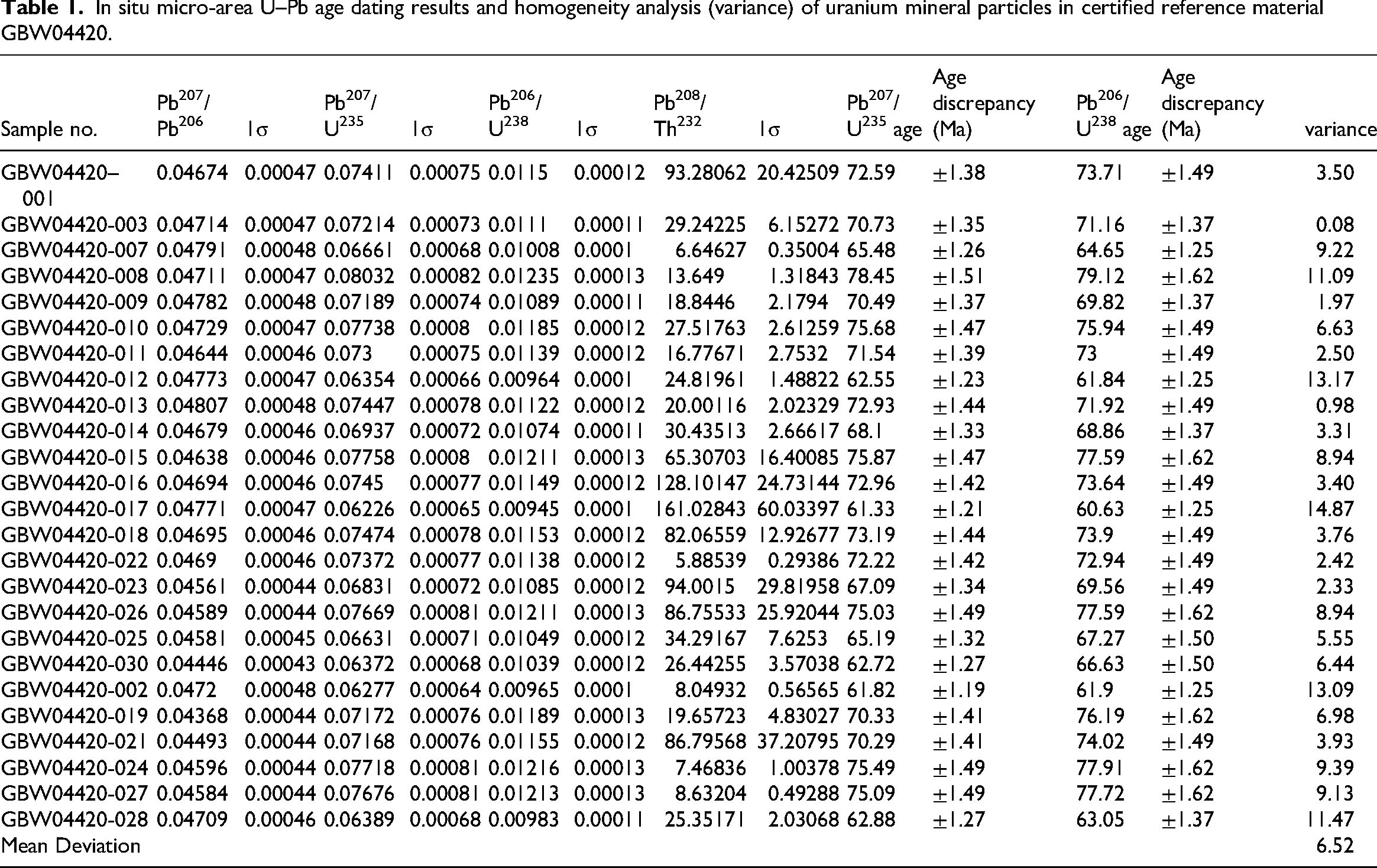
A total of 25 effective data points of uranium mineral (pitchblende) particles were obtained through the test (Table 1). Among them, 19 points have good harmony, and the harmonious age obtained is 69.44 ± 0.14 Ma (Figure 1).
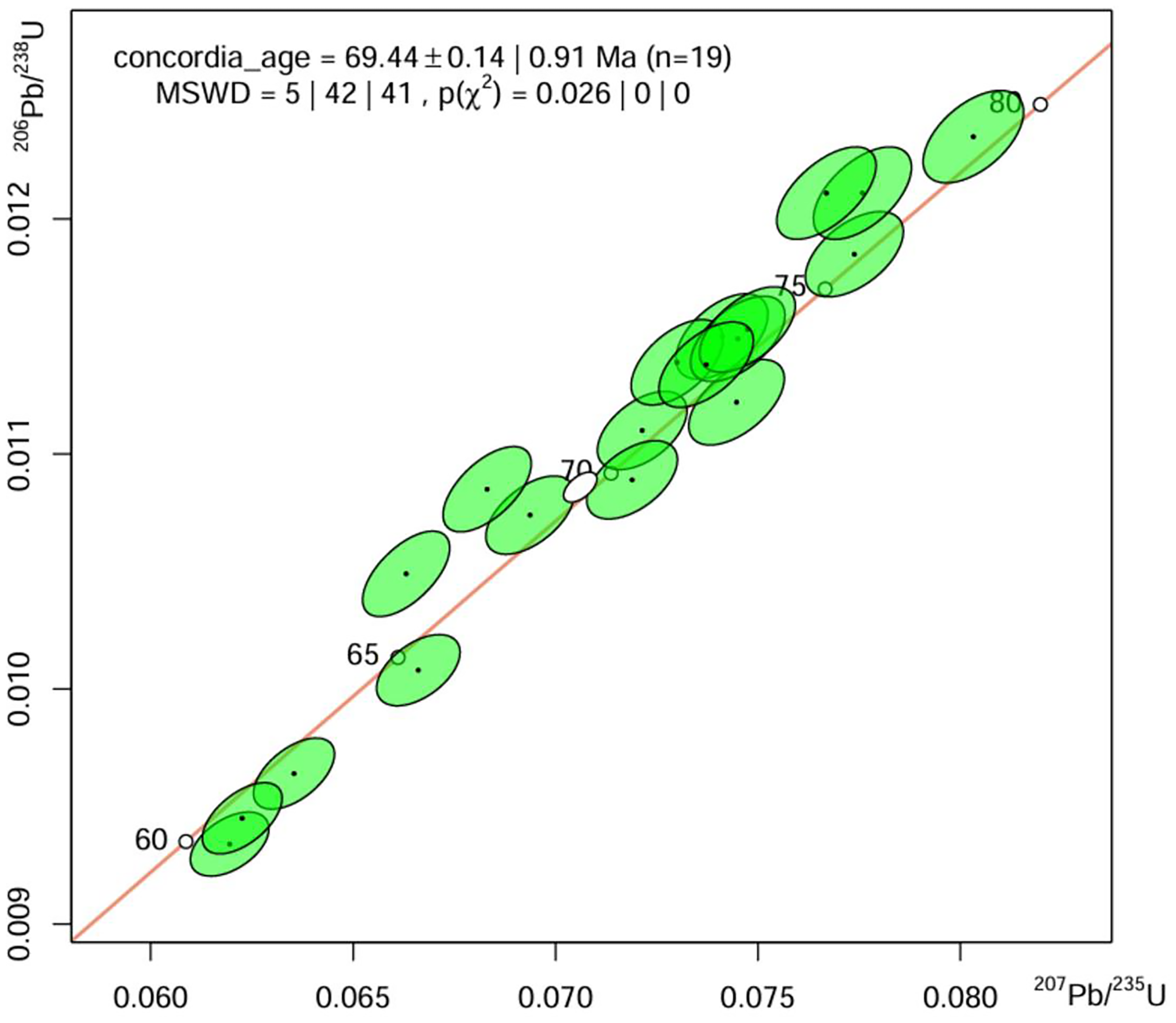
Concordia diagram of uranium mineral grain ages from GBW04420 analyzed by fs-LA-MC-ICP-MS.
In situ micro-area U–Pb age dating results and homogeneity analysis (variance) of uranium mineral particles in certified reference material GBW04420.
Analysis of age uniformity and reasonableness
An analysis of 25 uranium mineral grain spot age data points (Pb²06/U²³8, Table 1) reveals that the variance ranges from a maximum of 14.87% to a minimum of 0.08%, with an average of 6.52%. Only 4 data points (16%) exhibit variances exceeding 11%, while 12 data points (43%) show deviations below 6%. The overall distribution follows a normal pattern (Figure 2). These results indicate good uniformity in the ages of uranium mineral grains for this reference material, supporting the suitability of GBW04420 as a reference standard for in situ microanalysis of U–Pb isotopes in uranium minerals.
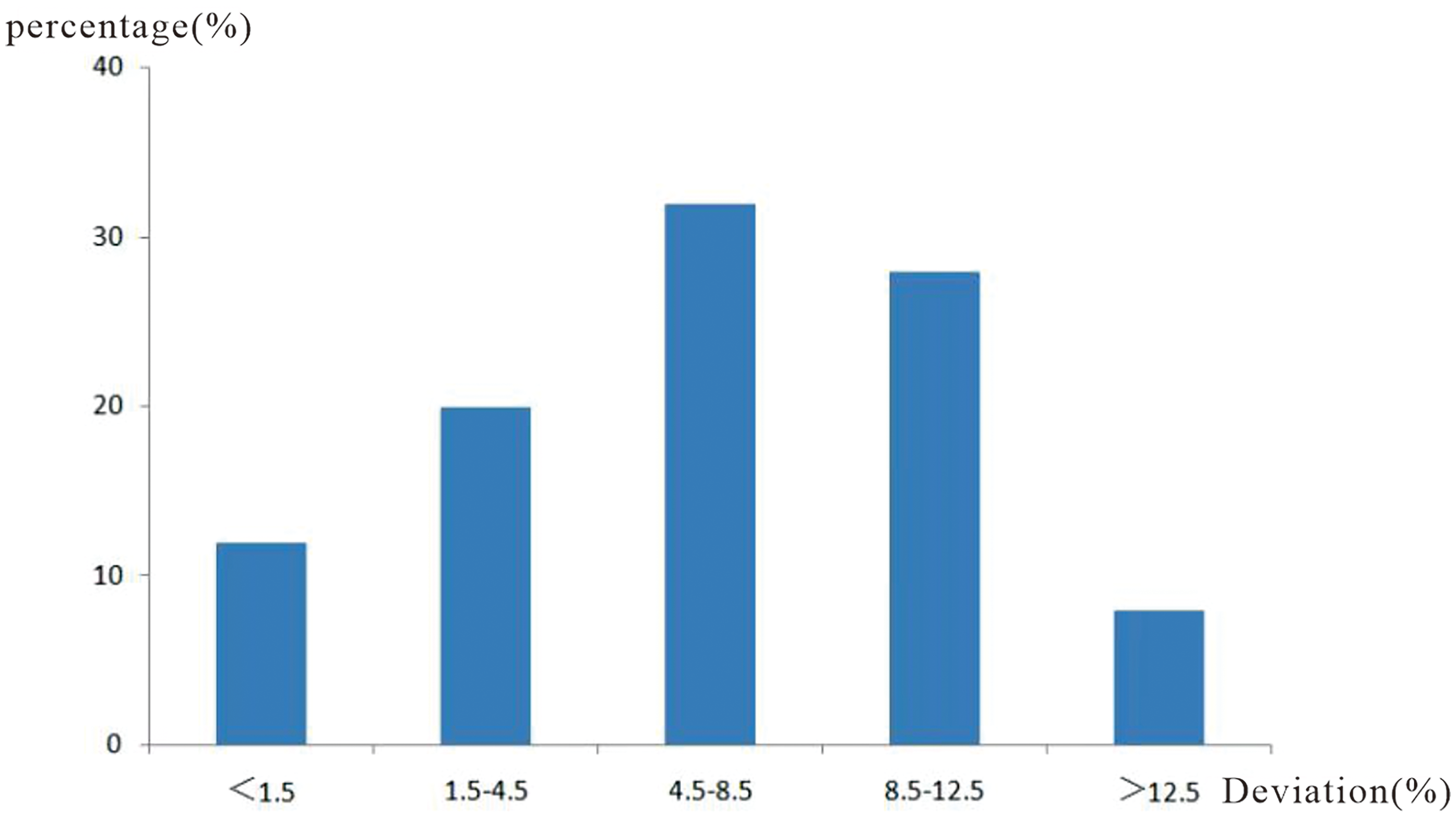
The in situ micro-area ages (Pb206/U238) of each uranium mineral particle in the reference material GBW04420 show a normal distribution.
The average Pb²06/U²³8 age of 69.347 ± 0.28 Ma aligns within error margins with the ID-TIMS age of the same sample (70.3 ± 0.5 Ma), demonstrating that fs-LA-MC-ICPMS achieves acceptable analytical precision. This consistency suggests effective control of matrix effects when using zircon (91500) as an external standard. However, studies (e.g., Zong et al., 2015) report significantly larger errors (up to 17%) when using nanosecond laser ablation (ns-LA-MC-ICPMS), indicating pronounced matrix effects. Therefore, the fs-LA-MC-ICPMS method is recommended for higher precision, regardless of the availability of matrix-matched reference materials.
Geological background
The Ordos Basin is a Meso-Cenozoic inland depression basin and a Mesozoic terrestrial basin formed on top of the Paleozoic marine sedimentary strata of the North China Massif. Overall, it is an asymmetrical syncline trending in the north–south direction, with a steep and narrow western flank and a broad and gentle eastern flank. The tectonic evolution is divided into six stages: the formation of Early Proterozoic basement rock system; the large-scale expansion of Late Proterozoic continental rift; the differential development of Early Paleozoic platforms and troughs; the formation of collision margins of basins from the Late Paleozoic to the Triassic and the birth of Klatun Basin; the formation of inland depression basins in the Mesozoic and the periphery of the faulted basins. The Ordos Basin eventually formed a tectonic pattern of one depression, one slope, two uplifts, and two belts (Tianhuan depression, North Shaanxi slope, Yimeng uplift and Weibei uplift, west margin alluvial tectonic belt and east flexural fold belt). Uranium deposits and mineralization anomalies found in the basin are mainly distributed in the marginal zone, located in the northern, southeastern, and southwestern parts of the basin. The age of mineralization of the main body of sandstone-type uranium mines tends to be coupled with the late modification and uplift period of the basin. Since the Late Cretaceous, the regional sedimentary discontinuities and weathering denudation caused the basin to form the first level of razor flatness in the Paleocene. From the early to mid-Eocene to the end of the Paleocene, the second and third razor planes were formed due to subsidence at the periphery of the basin and strong east–west differential uplift and denudation of the main basin body, respectively, about 2.5 Ma, the Loess Plateau, terraces and the formation of the modern Yellow River drainage system, and all these tectonic periods have played a key role in the formation of the sandstone-type uranium ore. The Middle Jurassic ZhiLuo Formation constitutes the primary reservoir and main ore-bearing horizon for sandstone-type uranium deposits in the Hangjinqi-Daying area of the northern basin. Lithologically, it is dominated by grayish-white to grayish-green medium-coarse and medium-fine-grained feldspathic quartz sandstone and feldspathic lithic sandstone, with ores often containing carbonaceous clasts and pyrite nodules. The study area lies within the Yimeng Uplift tectonic unit in the northern Ordos Basin, characterized by a gently south-dipping slope belt. The structural framework of the Yimeng Uplift promotes the development and stable distribution of sandstone bodies in both the Yan'an and Zhi Luo Formations. Uranium mineralization extends over 100 km along the northwestern margin of the Ordos Basin, where the overburden is thin and predominantly composed of Mesozoic strata. The well-developed, laterally continuous sandstone bodies of the Yan'an and Zhi Luo Formations form the principal uranium mineralization zone in the basin's northern sector. Key structural controls include the southern marginal F1 fault and the Bojianghaizi ring structure, which act as natural conduits for shallow hydrothermal fluids and Paleozoic gas migration, establishing a complete “source-pathway-trap” system. Orebody emplacement is governed by the paleo-interlayer oxidation front within grayish-green sandstone alteration zones. Orebodies exhibit tabular and lenticular geometries, hosted in variably thick sand bodies (tens to hundreds of meters) characterized by low consolidation and high permeability. These reservoir properties enable extensive mineralization, with spatial distribution tightly linked to the interplay of structural architecture and redox boundaries.
Drilling and logging data show that the Zhi Luo Formation in the study area can be divided into three segments, namely the upper, middle, and lower segments.The lower section (J2z1) is further divided into upper (J2z1-2) and lower (J2z1-1) subsections (Figure 3). The upper subsection of the lower section (J2z1-2). As a whole, it belongs to curvilinear fluvial deposition and is dominated by yellow medium and fine sandstones with a typical orthorhombic structure. This is interspersed with thin layers of mudstones, which are the product of microphase deposition of the divergent interbay. The thin sandstones in the upper subsection are the fine-grained deposition of the coast, and a slightly thicker body of sand is the microphase deposition of the dueling fan. The middle section (J2z2) of the Zhi Luo Formation is dominated by red mudstones deposited in the floodplain, and the upper section (J2z3) is dominated by the deposition of the Qu River, and the rock color is mottled. The uranium ore body is located in the transition part of light gray-green sandstone and gray sandstone, and its ore-bearing stratum is mainly in the upper subsection of the lower section of the Zhi Luo Formation (Figure 3).
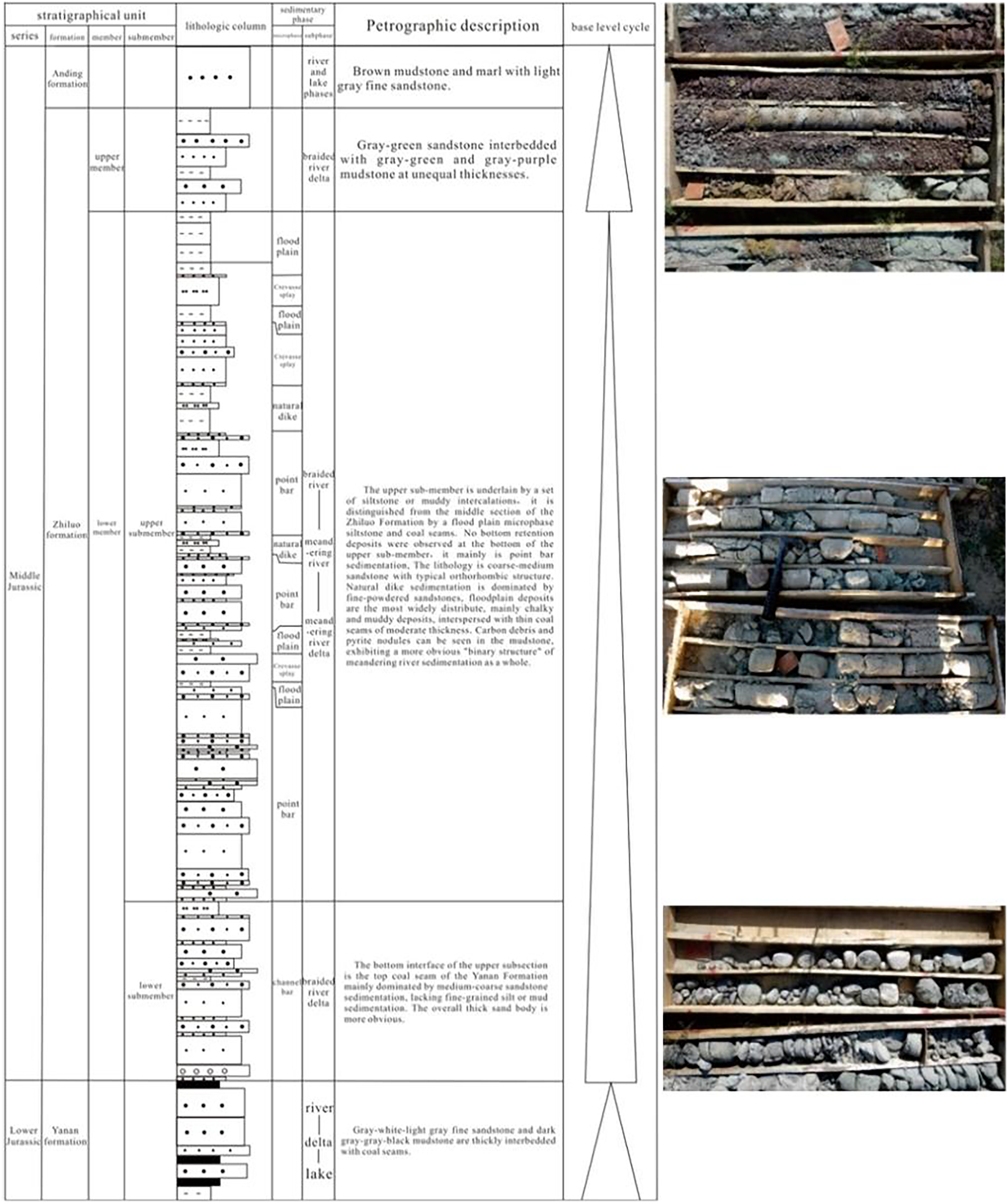
Stratigraphic histogram of the Zhi Luo Formation in the study area.
Sample collection and analytical testing methods
Sample collection
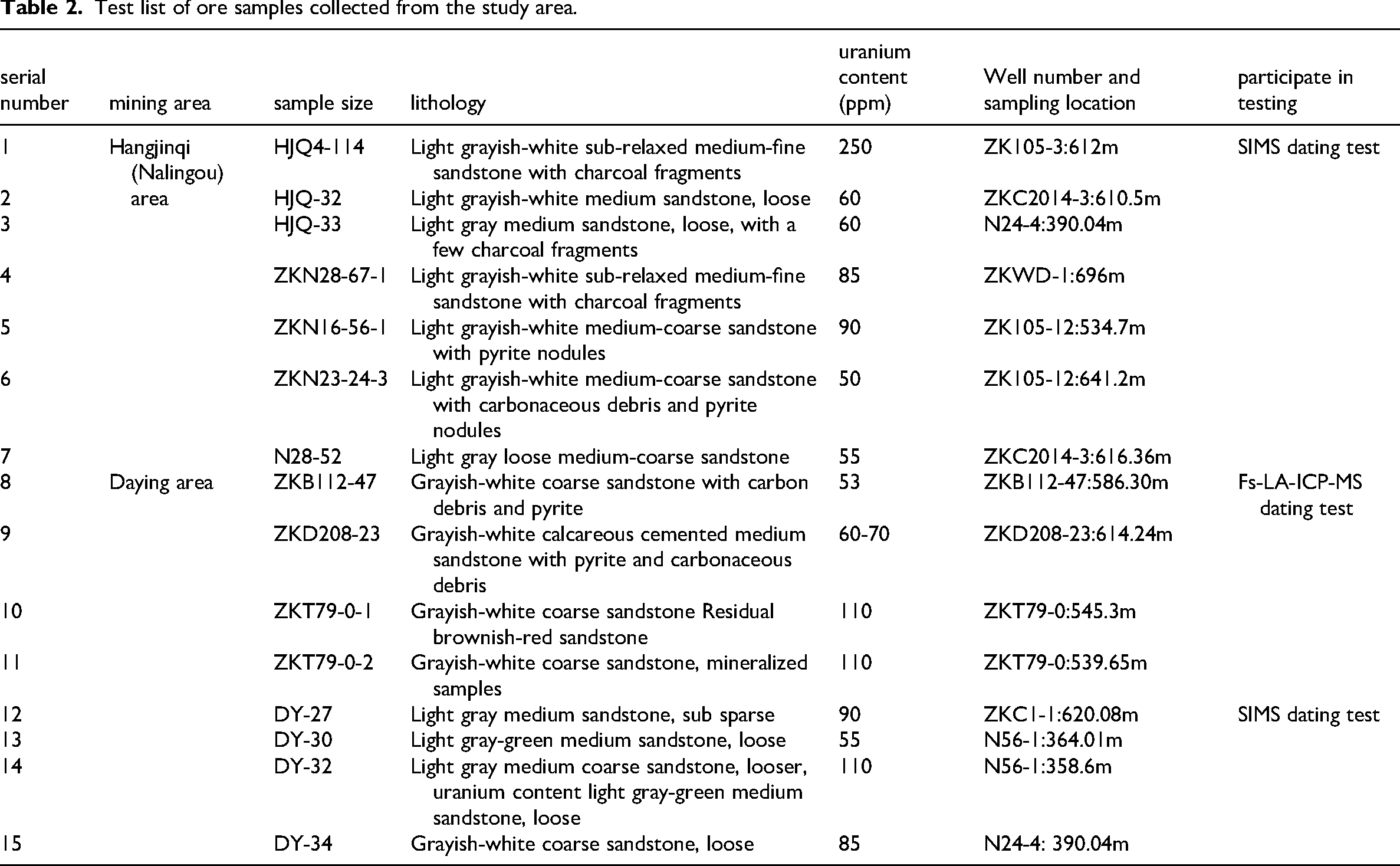
The samples of the northern Ordos Basin were collected from the cores of five mineralized wells in Hangjinqi (Nalinggou) and six mineralized wells in Daying area (Table 2). The samples from the transition area between gray-white sandstone and gray-green sandstone in the lower member of Zhi Luo Formation (J2Z1). The lithology is mainly coarse-grained and medium-fine-grained feldspar quartz sandstone and feldspar lithic sandstone, containing carbonaceous debris and pyrite nodules.
Test list of ore samples collected from the study area.
Identification characteristics in samples
In order to select suitable uranium minerals, and prepare for the next step of dating, the electron probe test and analysis of samples were carried out by EMX-SM7, respectively. The experiment was carried out in the State Key Laboratory of Continental Dynamics of Northwest University. The experimental parameters are as follows: 20 kV voltage, 1 × 10⁻⁸ A current, 1–5 μm range of beam size, 40°detection angle, and 25 °C normal temperature. The humidity is controlled under standard conditions (50%), standard: GB/T 15245-2002 GP/T. Sample treatment before the test requires the use of a JEE 420 T instrument (vacuum 8 × 10⁻² Pa, current 40 mA) to apply a voltage of 500–1000 V between the cathode target made of coated material and the sample. The entire test process took 2 days.
The uranium minerals in the Hangjinqi-Daying ore area are mainly pitchblende and uranite and contain a small amount of titanium-bearing uranium minerals. The morphology of uranium minerals is mostly short columnar, disseminated, and needle-like single particles or aggregates, in which pitchblende sizes are between 5 μm and 300 μm, mostly less than 10 μm, uranite sizes are between 10 μm and 300 μm. Uranium minerals are usually associated with pyrite and organic matter and are more common in fractures of associated minerals (Figures 4 and 5).
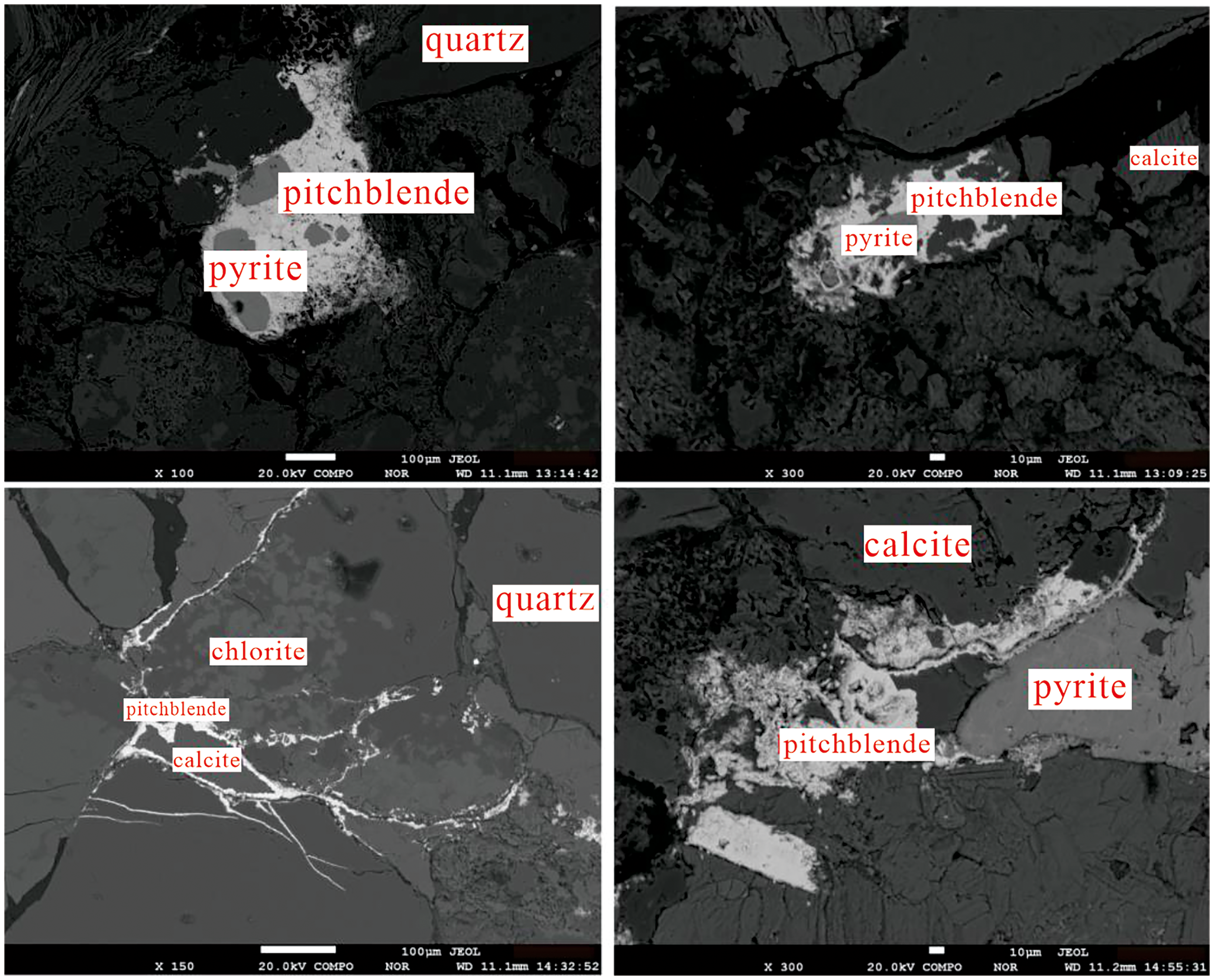
Electron microprobe backscattering image of uranium minerals in ore from the Hangjinqi mine (sample no. HJQ32).
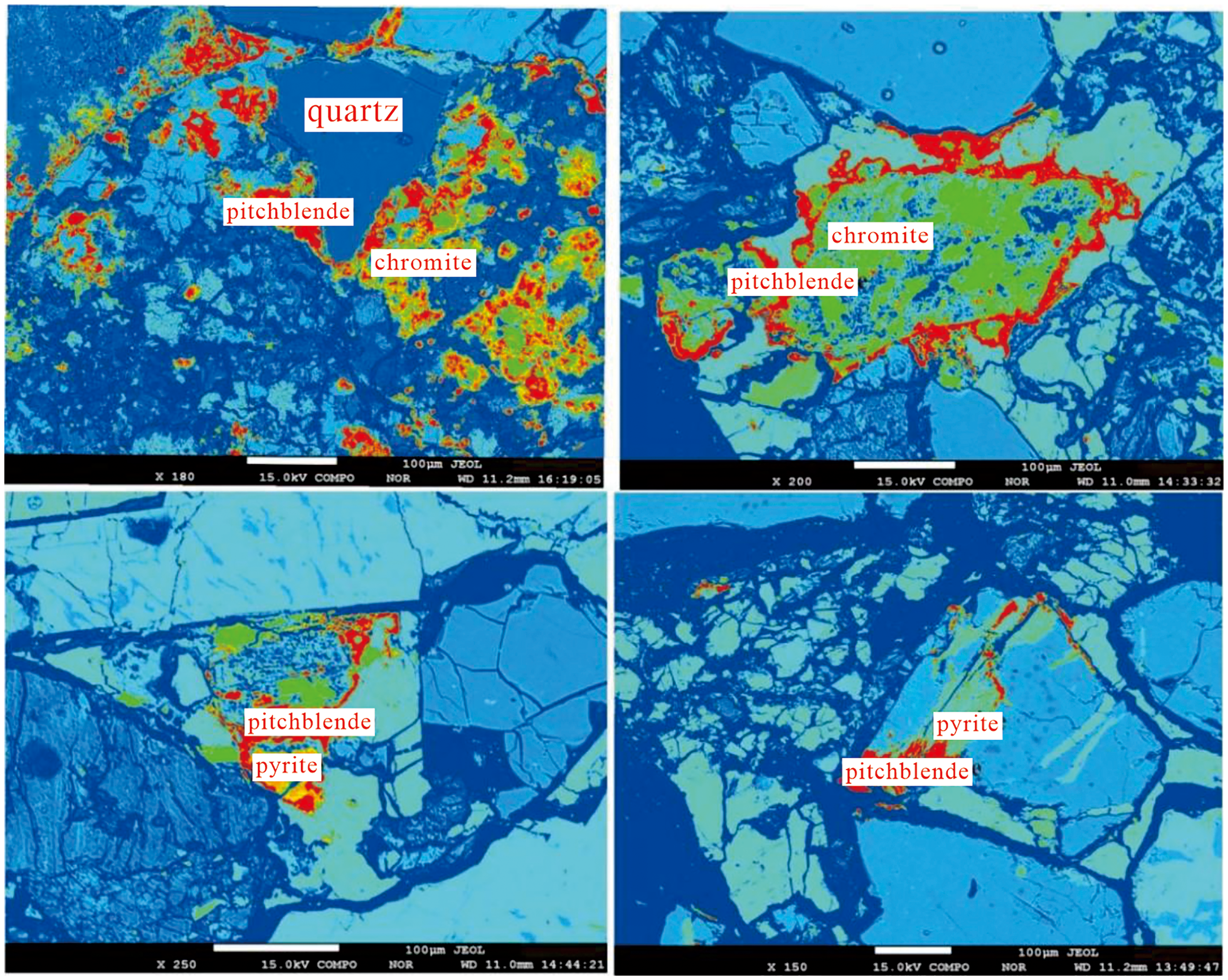
Electron microprobe color backscatter image of uranium minerals in ore from the Daying mine (sample no. ZKB112-47).
The test results show that the particle size of sandstone-type uranium minerals is at the micron level and the crystal shape is variable, which makes it difficult to test their ages, and this is also one of the main reasons why there are fewer studies on the dating of sandstone-type uranium minerals by LA-ICP-MS or SIMS technology. Therefore, this paper combines the two techniques and selects a few particles larger than 20 μm for fs-LA-ICP-MS testing, while particles smaller than 20 μm are tested by SIMS, so as to obtain more comprehensive and accurate age data of the deposit.
Table 3 lists the electron probe microanalysis (EPMA) results of uranium mineral compositions from this age-dating study. The total composition ranges from 80% to 95%, with the remaining portion primarily attributed to water content. Based on the compositional analysis, the uranium mineral identified in this study is uraninite. The uranium minerals are compositionally pure, dominated by UO2 and SiO2, with negligible or minor impurities or other uranium-bearing phases. Trace elements such as Y2O3, Cr2O3, TiO2, and P2O5 are present in low concentrations. Notably, the lead (Pb) content is minimal, with PbO ranging from 0 to 1.59 wt%, mostly below 1 wt%, and an average value also less than 1 wt%. Therefore, the influence of initial/common Pb on uranium mineral dating is negligible. The dating quality is robust, and the data precision is reliable.
Results of electron microprobe compositional analysis of uranium ore from deposits in Hangjinqi—Daying area (wt%).
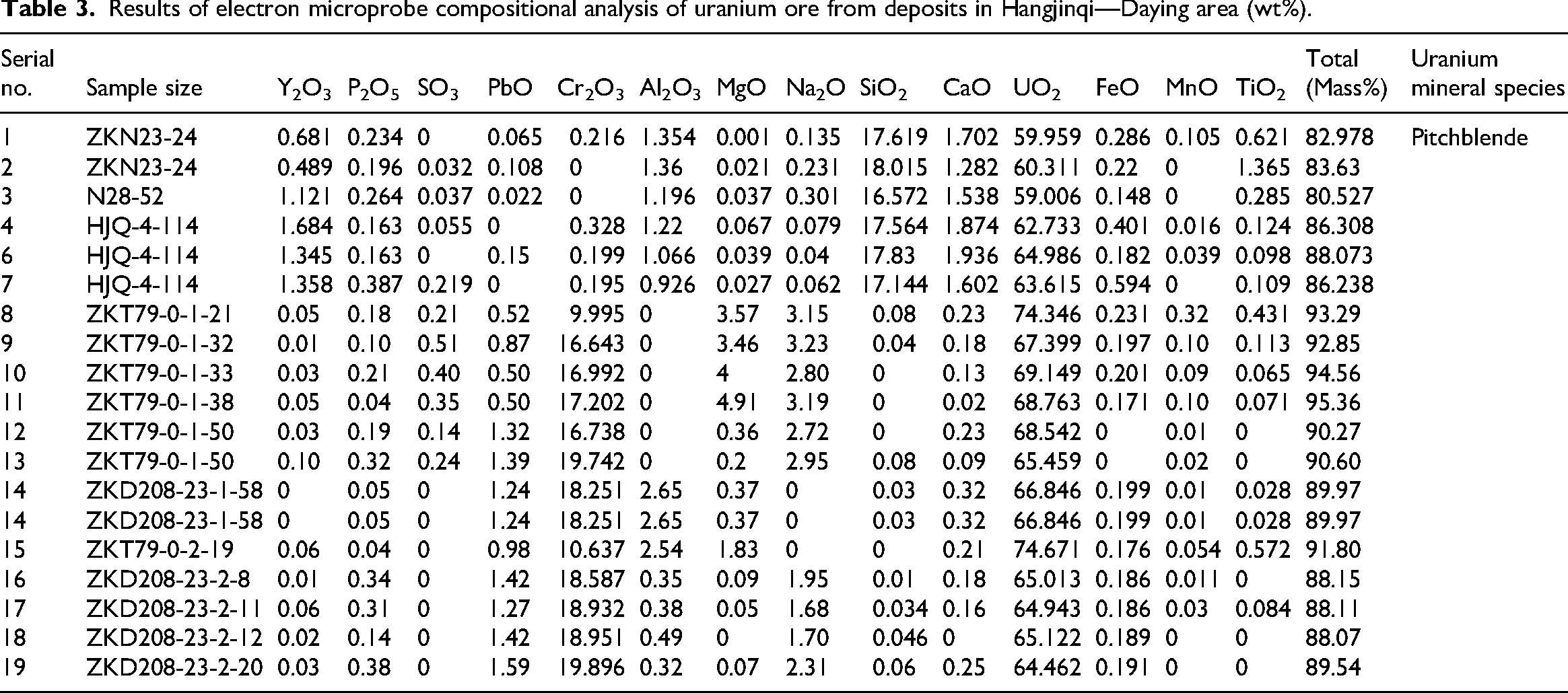
The measured results indicate that the total PbO content is low, allowing the influence of initial/common Pb content and isotopic composition to be negligible during dating. While the amount of radiogenic Pb may affect the results, this is inherent to the methodology: older ages naturally correspond to higher radiogenic Pb concentrations, reflecting differences in mineralization ages. Therefore, the approach of not differentiating between initial and radiogenic Pb in this study has minimal impact on the reliability of the dating results.
Methodology
fs-LA-ICP-MS
The samples were directly ground into thickened probe sheets (to avoid laser denudation and perforation). The thin sheets of samples with uranium content were thickened to 150–200 μm. The sample processing does not need to separate single minerals, reducing chemical pollution. Uranium minerals were selected as the test object that meets the test requirement of uranite and pitchblenite (>20 μm), using pitchblenite (GBW04420) a control sample in prior experiments as the standard material for fs-LA-ICP-MS U–Pb dating.
The NWR UP Femto instrument produced by ESI company was used for the laser denudation system. The Varian820-M quadrupole plasma mass spectrometer (Nu Plasma II Q-ICPMS) produced by the Varian company in the United States was used for isotope analysis. The ICPMS DataCal9.2 software was used to select the blank signal of the sample, debug the sensitivity of the instrument, and calculate the element content, U–Th–Pb isotope ratio, and age during the test (Liu et al., 2010).
Compared to ns-LA-ICP-MS, fs-LA-ICP-MS has a relatively lower thermal effect and particle size effect, and shorter laser pulse width (−130 fs). Its matrix effect and fractionation effect are not obvious, and spatial resolution is higher (µm level). It is more suitable for the adjustment of parameters, which can effectively reduce the difficulty of operation caused by the fluctuation of uranium and lead content. This experiment selects the area of good crystallization for truly realizing the requirements of U and Pb isotope closed system dating, distinguishing and avoiding the cracks, edges, and late fluid alteration interference of minerals in situ. The selection of standard samples effectively reduces the fractionation and matrix effects, so as to obtain more accurate isotope information and age data. Isoplot3.0 (Ludwig et al., 1987) was used to draw the U–Pb age harmonic diagram and calculate the average age weight.
SIMS
The samples were ground with a thickened probe sheet and tested by an electron probe optical microscope. On the basis of electron probe backscattering and secondary electron images, as well as chemical composition testing. Uranium minerals with moderate particle size and no alteration and cracks were selected to ensure that the surface of the samples participating in the test was smooth and regular for excluding impurity interference and improving accuracy. After cleaning and gold-plating, the sample targets were put into the sample room to stand for one night before the machine operation. Avoiding the part with cracks or inclusion, the spot was hit on the least alteration and the most uniform mineral particles.
U–Th–Pb isotope analysis was tested on the SHRIMP-RG ion microprobe at the Australia National University Institute of Earth Sciences. SHRIMP RG uses a specific ion receiver, which makes the test results more accurate. Compared with other ion microprobes, the biggest feature of SHRIMP RG is that it has a high mass resolution while still having high sensitivity (Hou and Li, 2003). In this study, pitchblende GBW04420 was used as the standard sample to correct the U–Pb isotope analysis. In the analysis stage, the standard sample value measured by SIMS was compared with the isotope value obtained by its real TIMS for correction coefficient. Then, the offset correction ratio was used to calculate the U–Pb isotope age, and the results were processed by ISOPLOT software.
In this test, the above two technical means are combined with fs-LA-ICP-MS and SIMS to establish a series of technical methods for the precision date of sandstone-type uranium. LA-ICP-MS is used for particles larger than 20 μm, while SIMS is used for particles smaller than 20 μm and larger than 5 μm, most uranium minerals as such. This combining test method can encompass diverse grain-size fractions and span varied geochronological epochs enabling a more robust determination of uranium mineralization chronology will play an important significance for future research about sandstone-type precision dating.
Test results
Age of uranium deposits in the Daying mining area
The fs-LA-ICP-MS and SIMS age tests were conducted on the Daying uranium deposit, and the mineral composition and category measured by the electron probe of the Daying uranium deposit participating in the tests were almost all pitchblende. Considering the relationship between data harmony and weighted age error, better data was selected for age processing. The ISOPLOT3.0 Tera Wasserburg diagram was used for this data processing.
fs-LA-ICP-MS test results
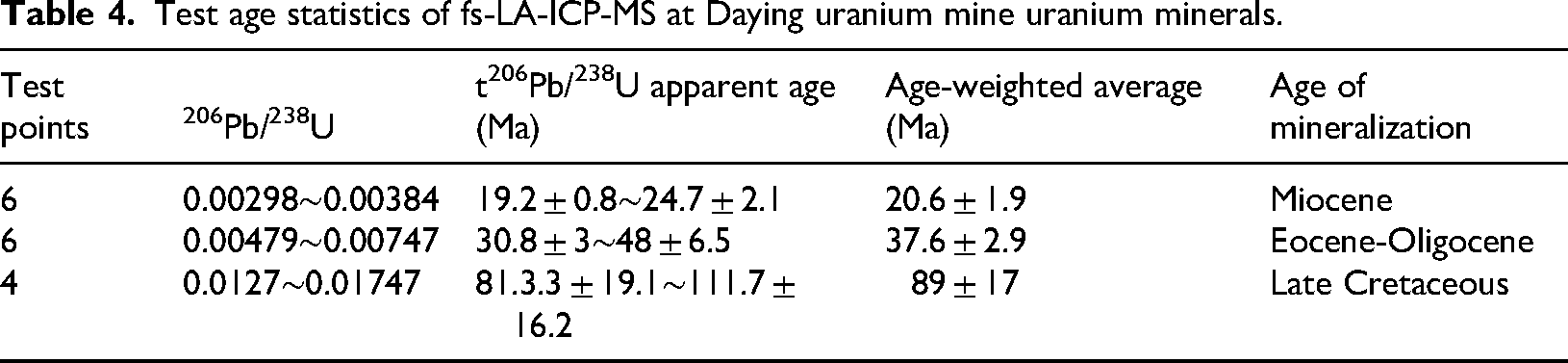
Using fs-LA-ICP-MS to test the size at 20 μm for uranium mineral particles above m, areas with flat surfaces and no cracks or inclusions were selected for dotting (Figure 6). A total of criteria-compliant 16 test points combined according to the data points with good harmony and used to obtain 3 sets of harmonic ages (Table 4). The age data obtained are shown in Table 5.
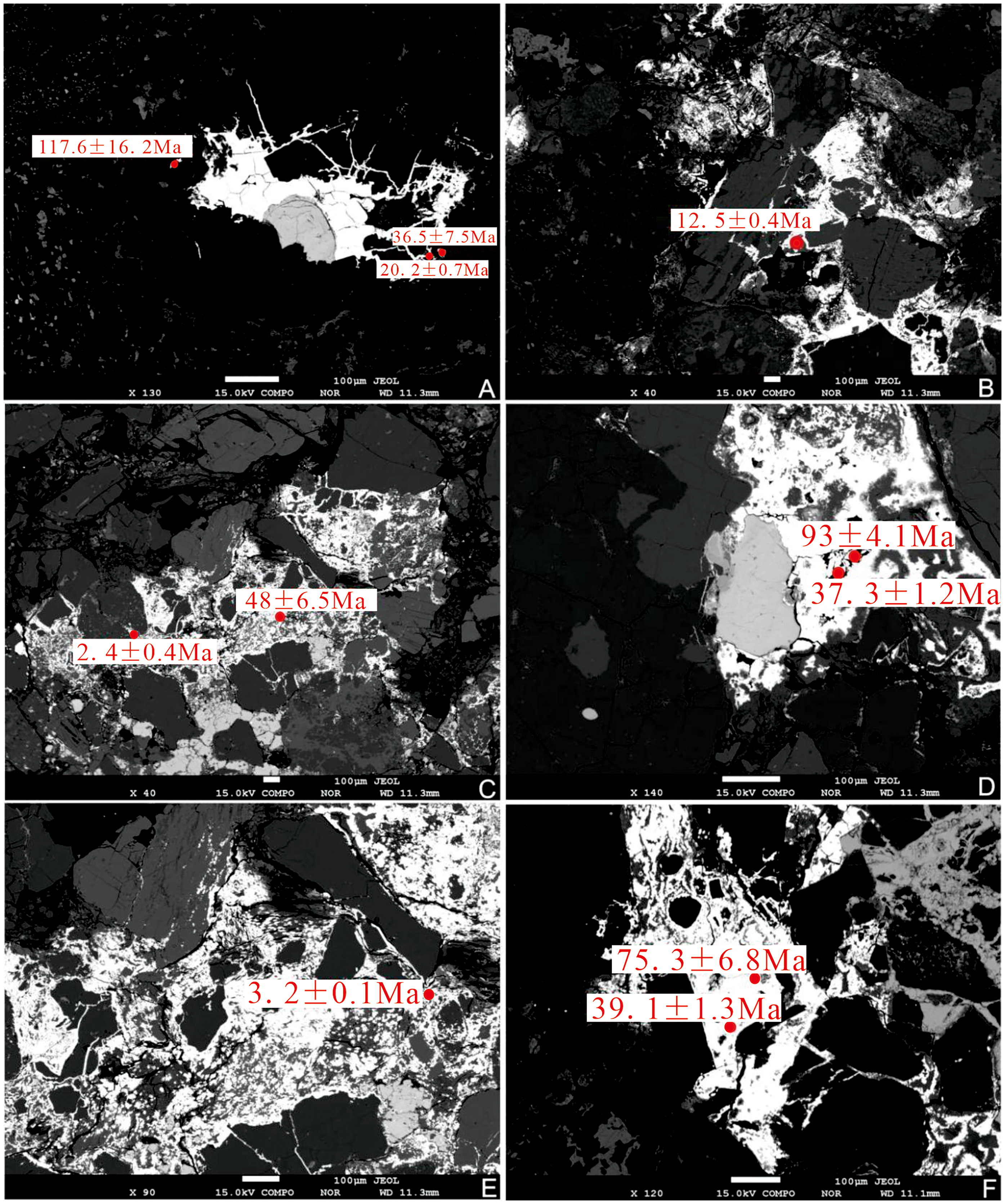
Laser stripping backscattering image and U–Pb isotope age distribution of uranium minerals in Daying uranium mine.
Test age statistics of fs-LA-ICP-MS at Daying uranium mine uranium minerals.
SIMS age statistics for the Daying pitchblende uranium mine.

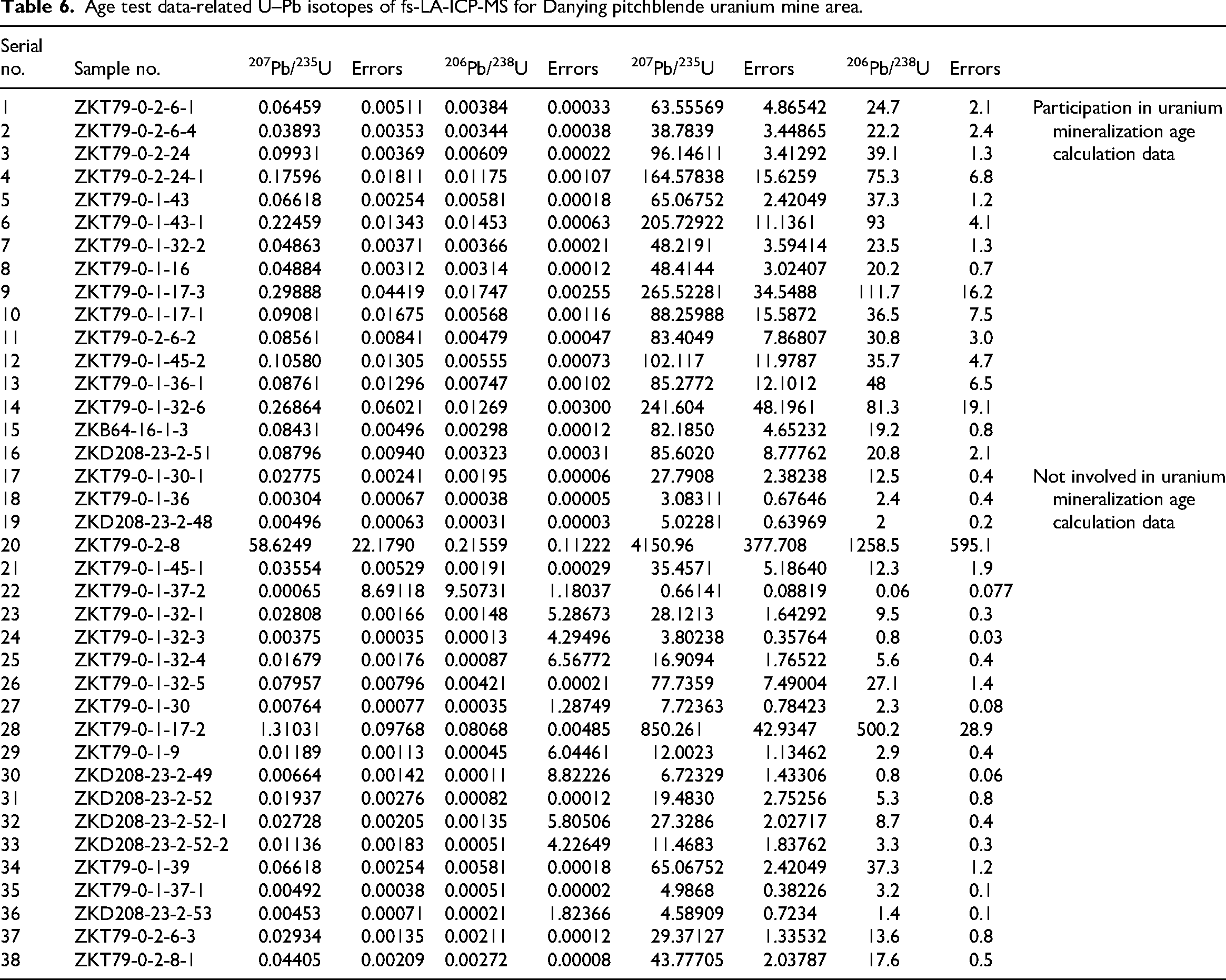
The age data of 6 points shows that the 206Pb/238U ratio of pitchblende is between 0.00031 and 0.00384, and the surface age of 206Pb/238U is between 2 ± 0.2 Ma and 24.7 ± 2.1 Ma, with a weighted average age of 20.6 ± 1.9 Ma, indicating the Miocene mineralization period.
Other age data of 6 points shows that the 206Pb/238U ratio of pitchblende is between 0.00051 and 0.00747, and the surface age of 206Pb/238U is between 3.2 ± 0.1 Ma and 48 ± 6.5 Ma, with a weighted average age of 37.6 ± 2.9 Ma, indicating the Eocene Oligocene mineralization period.
The age data of 4 points shows that the 206Pb/238U ratio of asphalt-bearing minerals ranges from 0.00581 to 0.1747, and the surface age of 206Pb/238U ranges from 37.3 ± 1.2 Ma to 111.7 ± 16.2 Ma. The weighted average age is 89 ± 17 Ma, indicating the Eocene Oligocene mineralization period (Figure 7).
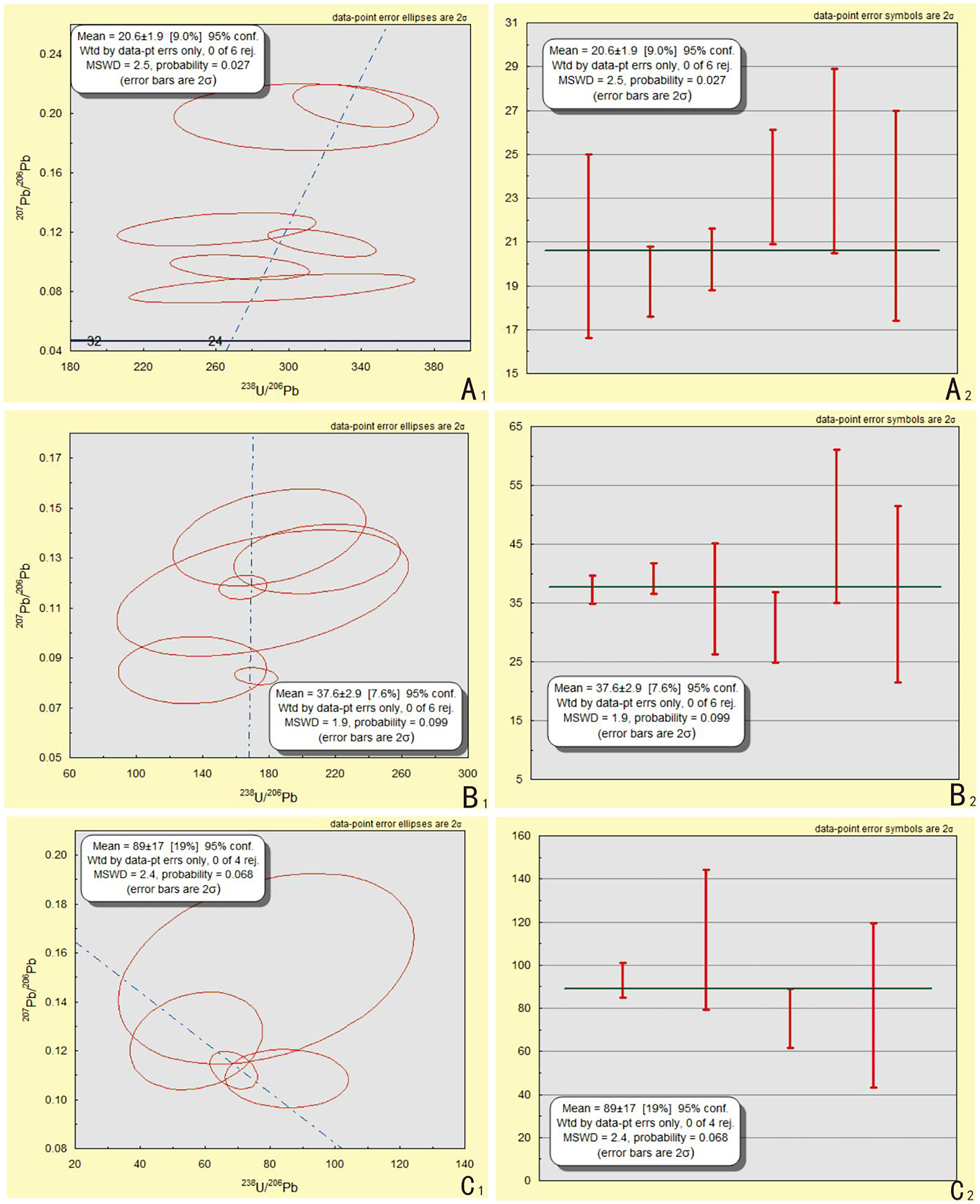
LA-ICP-MS Uranium Mineral U–Pb Age TW Graphic for Daying uranium mine (A1, B1, C1) and weighted average age (A2, B2, C2).
SIMS method test results
Using the SIMS method to test particles at 5–20 μm, compared with the fs-LA-ICP-MS method, the selection range of uranium minerals for dating has been greatly expanded. The selection of testing points for this test is shown in Figure 8, and the age data obtained are shown in Tables 6 and 7. By analyzing the harmony of the entire age point data (Figure 9), the age distribution is within the following two intervals:
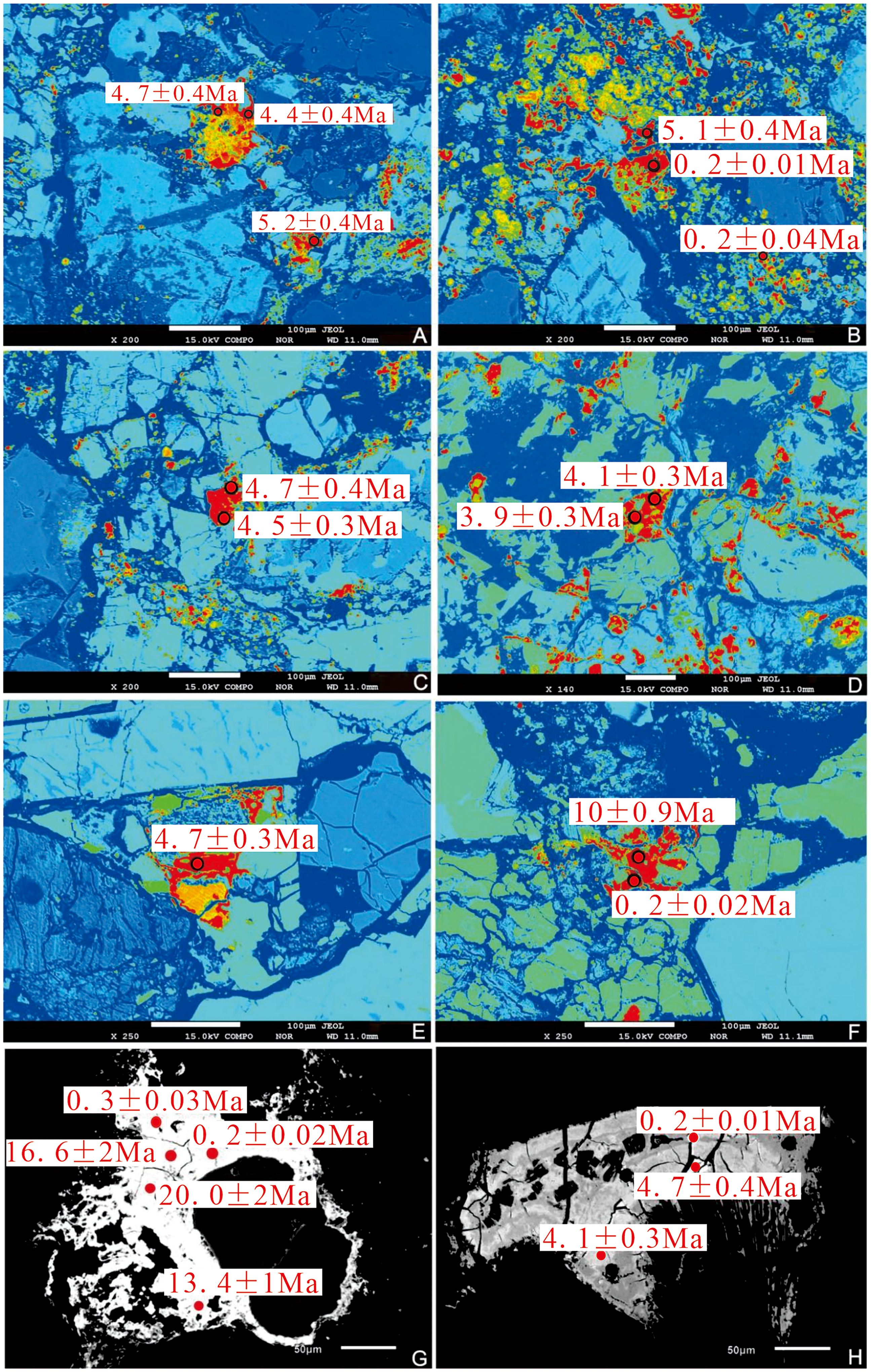
Age distribution of SIMS tests at the Daying uranium mine (color electron microprobe photos A–F, SEM photos G-H).
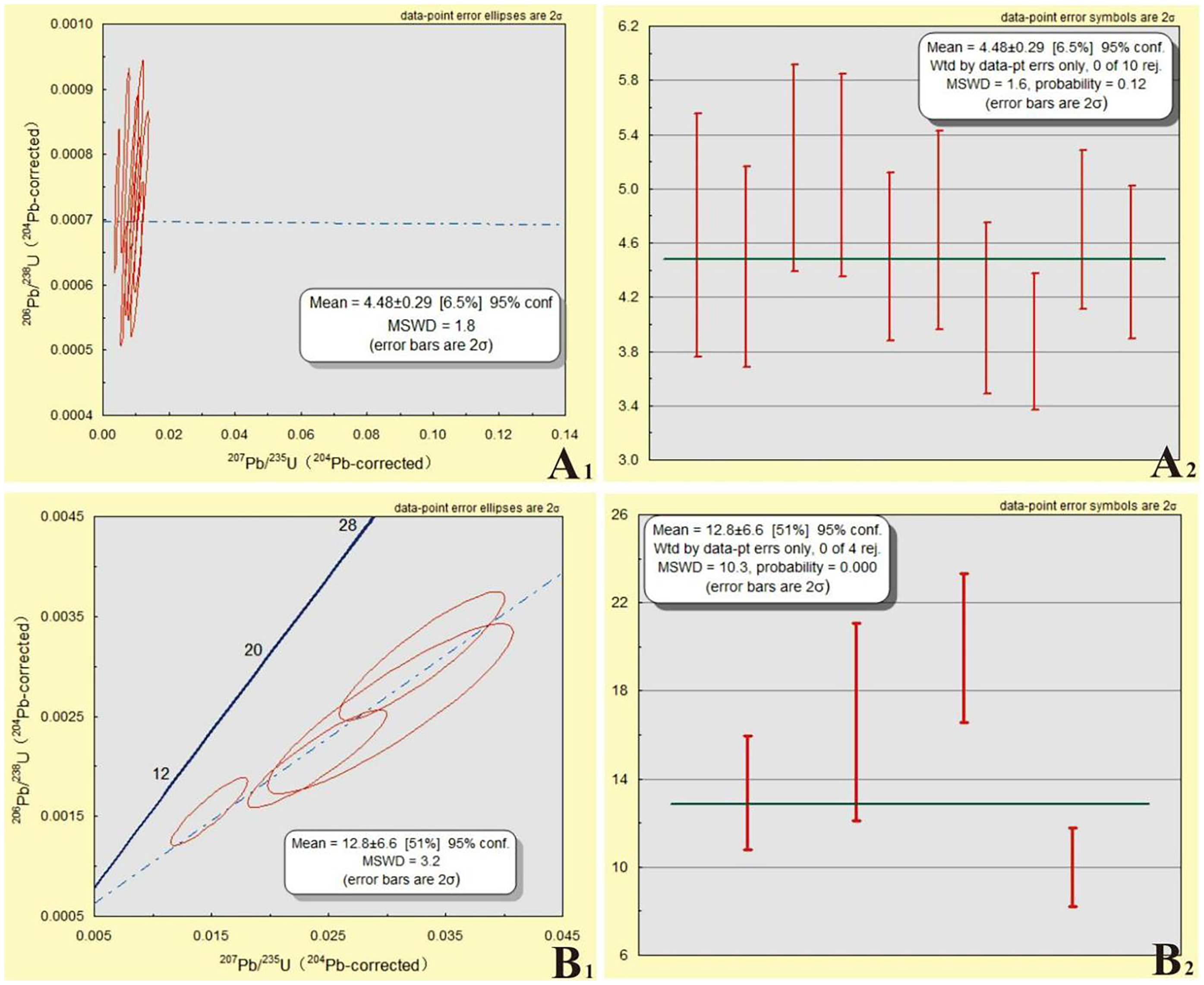
Illustration of U–Pb age TW of SIMS uranium minerals at the Daying uranium mine area (A1, B1) and weighted average age (A2, B2).
Age test data-related U–Pb isotopes of fs-LA-ICP-MS for Danying pitchblende uranium mine area.
The age data of 10 points shows that the 206Pb/238U ratio of pitchblende is between 6.0E−4 and 8.0E−4, and the surface age of 206Pb/238U is between 4.1 ± 0.3 Ma and 5.2 ± 0.4 Ma, with a weighted average age of 4.58 ± 0.46 Ma, indicating a Pleistocene mineralization period.
The age data of 4 points shows that the 206Pb/238U ratio of pitchblende is between 1.6E−3 and 3.1E−3, and the surface age of 206Pb/238U is between 10.0 ± 0.9 Ma and 20.0 ± 2.0 Ma, with a weighted average age of 12.8 ± 6.6 Ma, indicating the Miocene mineralization period.
Uranium deposit age in Hangjinqi mining area
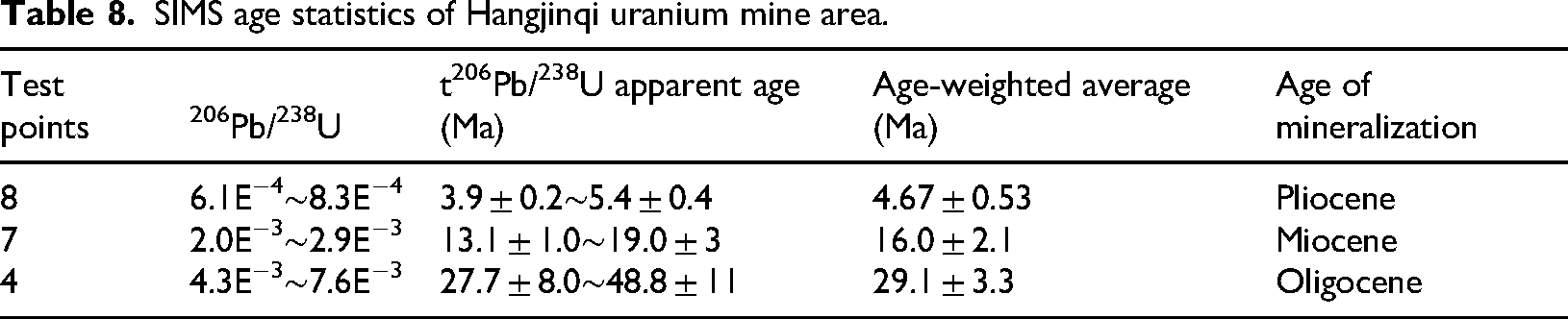
Due to the fact that the particle size of uranium minerals in Hangjinqi Banner is almost always around 20 μm. Below, the SIMS method is directly used for age testing of uranium minerals, and the selection of testing points is shown in Figure 10. The age data obtained are shown in Tables 8 and 9. Through the analysis of the harmony of the entire age point data (Figure 11), the age is mainly distributed in the three constituent mineral age groups. According to the harmony analysis of different data, the age distribution is in the following three intervals:
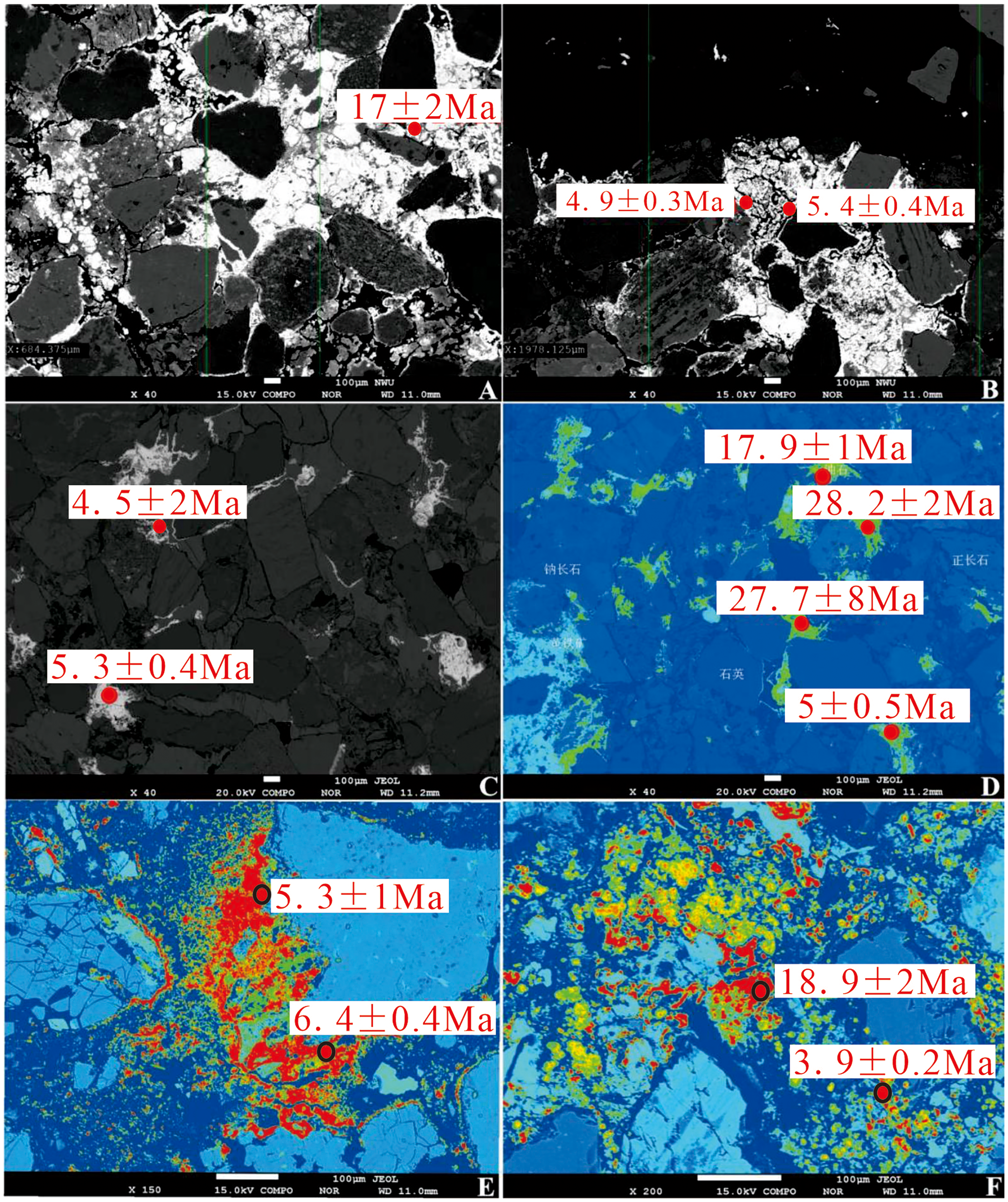
Age distribution of SIMS tests at Hangjinqi uranium mine.
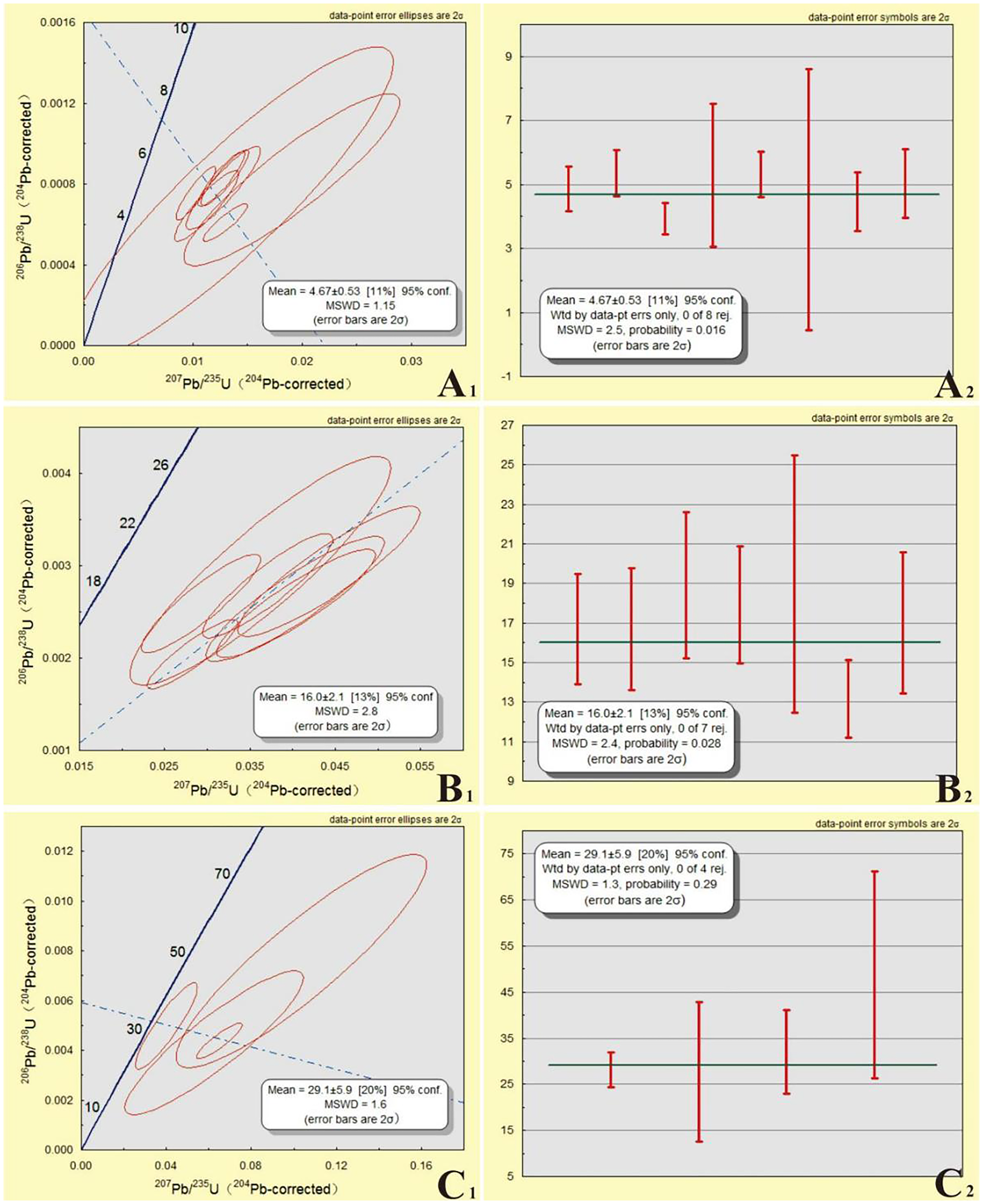
SIMS uranium mineral U–Pb age harmonization plot for Hangjinqi uranium mine (A1, B1, C1) and weighted average age (A2, B2, C2).
SIMS age test data-related U–Pb isotopes for the Daying uranium mine area.
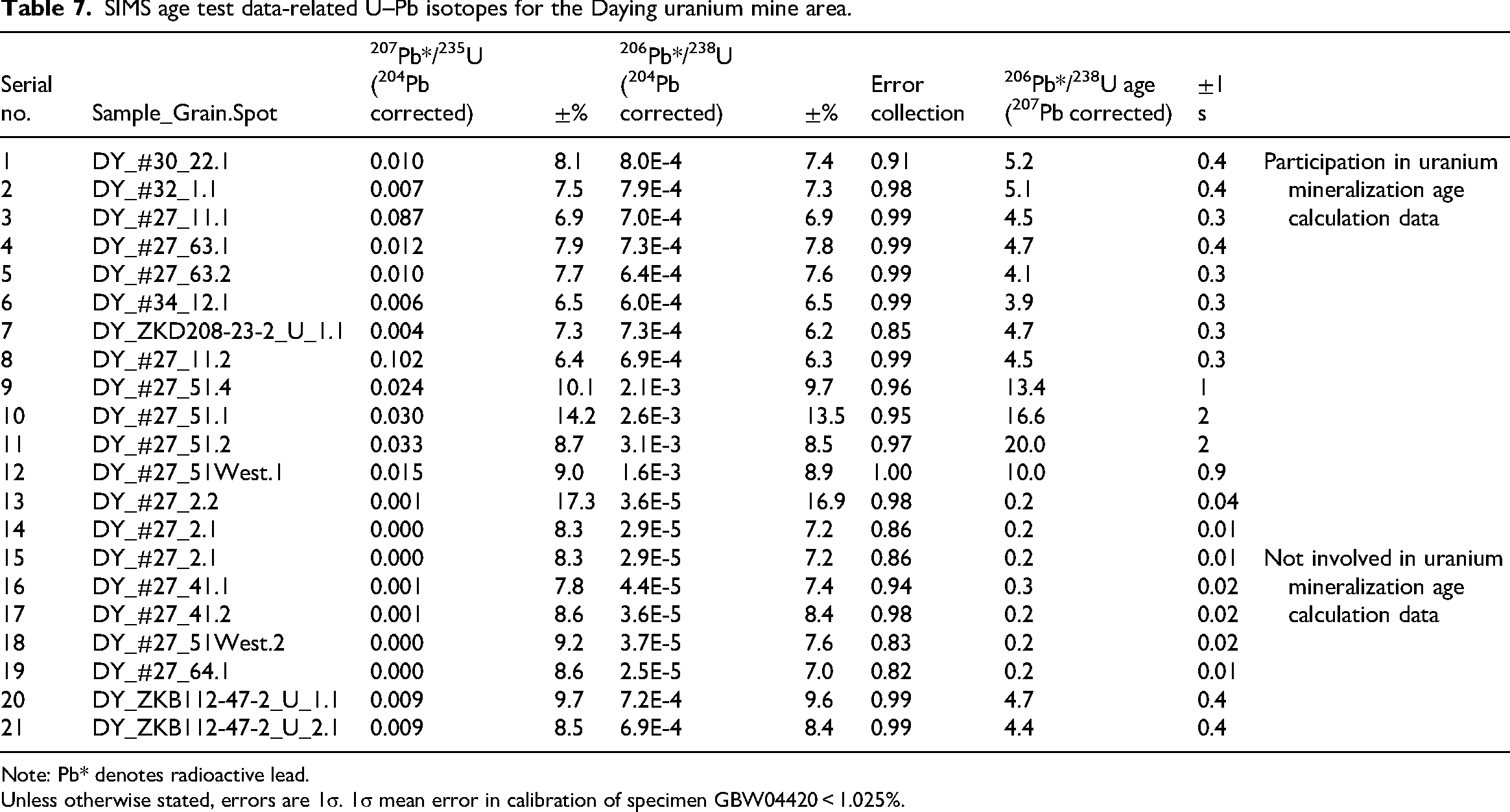
Note: Pb* denotes radioactive lead.
Unless otherwise stated, errors are 1σ. 1σ mean error in calibration of specimen GBW04420 < 1.025%.
SIMS age statistics of Hangjinqi uranium mine area.
SIMS age test data of Hangjinqi uranium mine.
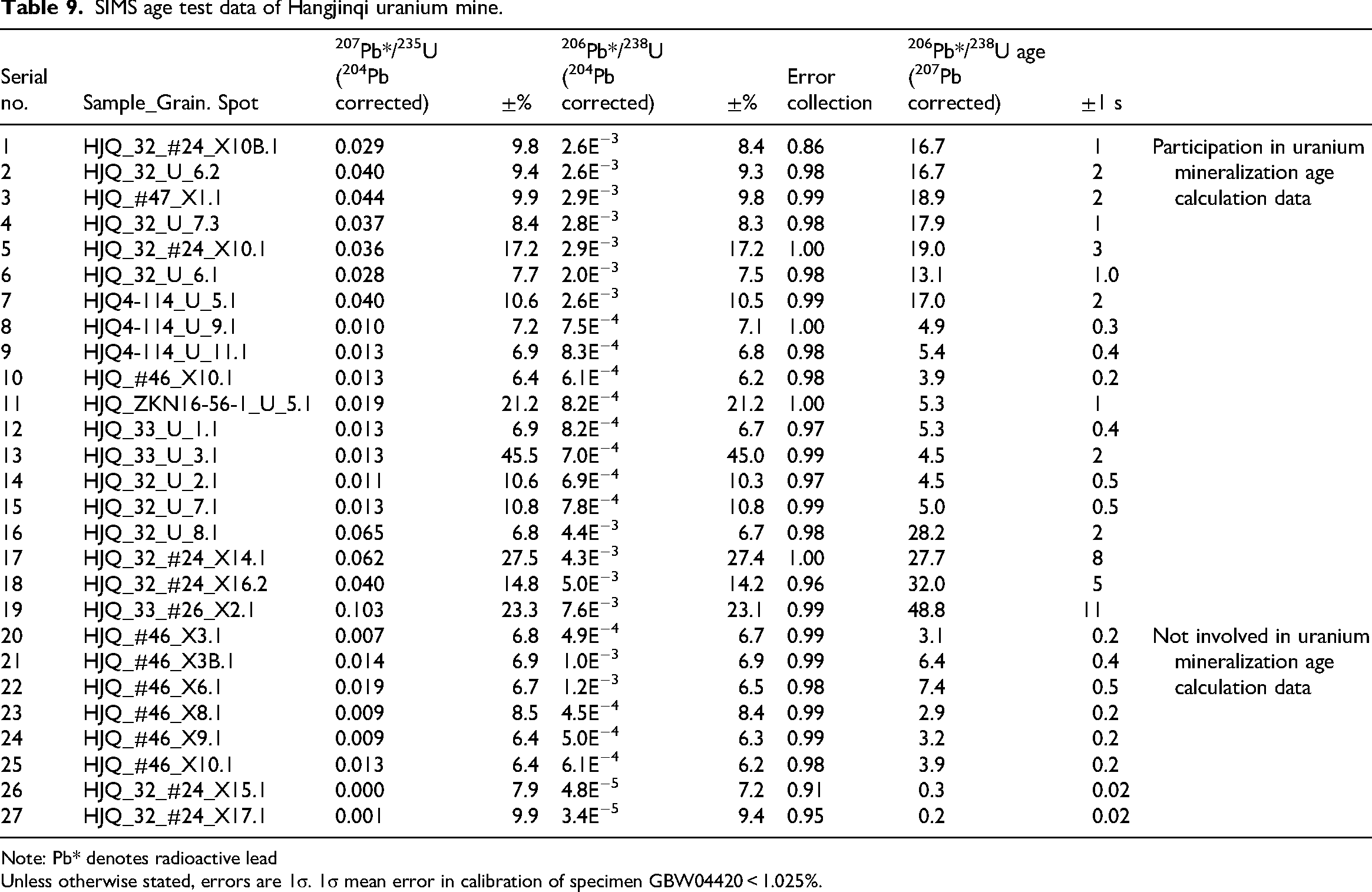
Note: Pb* denotes radioactive lead
Unless otherwise stated, errors are 1σ. 1σ mean error in calibration of specimen GBW04420 < 1.025%.
The age data of 8 points shows that the 206Pb/238U ratio of pitchblende is between 6.1E−4 and 8.3E−4, and the surface age of 206Pb/238U is between 3.2 ± 0.2 Ma and 5.4 ± 0.4 Ma, with a weighted average age of 4.67 ± 0.53 Ma, indicating the Pliocene mineralization period.
The age data of 7 points shows that the 206Pb/238U ratio of pitchblende is 2.0E−3∼2.9E−3, and the surface age of 206Pb/238U is between 13.2 ± 1.0Ma and 19.0 ± 3.0Ma, with a weighted average age of 16.0 ± 2.1Ma, indicating the Miocene mineralization period.
The age data of four points shows that the 206Pb/238U ratio of pitchblende is between 4.3E−3∼7.6E−3, and the surface age of 206Pb/238U is between 37.7 ± 8.0Ma and 48.8 ± 11.0 Ma, with a weighted average age of 29.1 ± 3.3Ma, indicating an Oligocene mineralization period.
Deliberation
Characteristics of multi-stage mineralization of uranium minerals formation
After the age test data of the uranium minerals in the study area were mapped and organized, it was found that there were large differences in the age data obtained from a single particle of the same uranium mineral selected for the test or from uranium mineral particles in different locations within the same micro-area, i.e., in a single particle of the uranium mineral or within the same micro-area, the age data of the Late Cretaceous and the Miocene with different mineralization ages could be obtained at the same time, which indicated that the mineralization was characterized by multiple phases or stages and that the age data were not consistent with the age data obtained from the Late Cretaceous and the Miocene or multi-stage of mineralization.
For example, after the age test data of Daying uranium ore in Ordos Basin were mapped, it was found that the age data of the same single-grain uranium ore at different locations spanned a wide range, such as Figure 8A between 111.7 ± 16.2Ma and 20.0 ± 0.7 Ma, with the difference of the end of Lower Cretaceous∼Middle Miocene, which spanned about 90 Ma; Figure 8B between 48 ± 6.5 Ma and 2.4 ± 0.4 Ma, with the difference of the Eocene∼Pleistocene, spanning about 46 Ma; Figure 8C between 93 ± 4.1 Ma and 37.3 ± 1.2Ma, differing from Early Upper Cretaceous∼Oligocene, spanning about 56 Ma; Figure 8D between 75.3 ± 6.8 Ma and 39.1 ± 1.3Ma, differing from Late Upper Cretaceous∼Eocene, spanning about 36 Ma; Figure 8F between 10 ± 0.9 Ma and 0.2 ± 0.02 Ma, the difference is Miocene∼Middle Pleistocene, spanning about 9 Ma; Figure 8G between 20 ± 2 Ma and 2.4 ± 0.4 Ma, the difference is Miocene∼Middle Pleistocene, spanning about 19 Ma. Uranium minerals in the Hangjinqi mining area are too fine and difficult to distinguish due to the particles, but their age data measured in the same micro-area range spanning the difference is also large, such as Hangjinqi uranium mine test data distribution Figure 10D, the age data range of 28.2 ± 2 Ma∼5 ± 0.5 Ma, respectively, the difference is Oligocene∼Pliocene, the span is about 20 Ma; Figure 10F in the range of 28.2 ± 2 Ma∼5 ± 0.4 Ma, the difference is Miocene∼Middle Pleistocene, the span is about 19 Ma. 2 Ma∼5 ± 0.5 Ma, 48 ± 6.5 Ma∼2.4 ± 0.4 Ma, and 18.9 ± 2 Ma∼3.9 ± 0.2 Ma, spanning about 23 Ma, 42 Ma, and 15 Ma, respectively. It can be seen that the same particles, the age gap can be up to 90 Ma, and the minimum can be up to 15Ma; the Cretaceous began to form the uranium mineral particles until the Miocene can still be seen in the growth; Eocene began to form the uranium mineral particles, until the Pleistocene can still be seen in the growth. When the uranium ore is seen in the ring zone, the data of the inner zone are obviously larger than the data of the outer zone (Figure 8H). In conclusion, it is proved that the formation of the same grain of uranium ore has multi-stage, and the mineralization is the result of the superposition of multiple phases.
The observed age dispersion (up to 90 million years) within a single uranium grain effectively demonstrates the multi-stage mineralization characteristics of sandstone-hosted uranium deposits. This also indicates that uranium minerals underwent continuous growth. However, such growth does not disrupt the original grain structure or the closure of the U–Pb system; instead, it represents successive “welding” of the same uranium mineral phase. Consequently, the integrity of the early U–Pb system remains preserved. The measured Pb isotopic compositions thus independently reflect distinct age systems, ensuring the accuracy of dating results for different mineralization stages.
This interpretation is supported by the following evidence from uraninite and coffinite genesis, as well as differential thermal analysis (Min and Zhang, 1990; Zhang et al., 1995): (a) Uraninite exhibits a distinct endothermic peak at 130–200°C, suggesting that its crystal lattice remains stable below 200°C, with a closure temperature exceeding 200°C. (b) Coffinite shows a prominent endothermic peak at 150°C, indicating a closure temperature range of 150–200°C. Furthermore, extensive fluid inclusion studies in sandstone uranium deposits reveal that most mineralization fluids operated at low to ambient temperatures (<200°C), with rare instances of moderate temperatures (Wu et al., 2007, 2022a, 2022b; Xiao et al., 2004). Therefore, multi-stage uranium mineral growth occurs via “accretion” without disrupting the crystal lattice or U–Pb system integrity. This ensures minimal impact on dating precision.
Characterization of the coupling between late basin remodeling and metallogenic response
Age characteristics
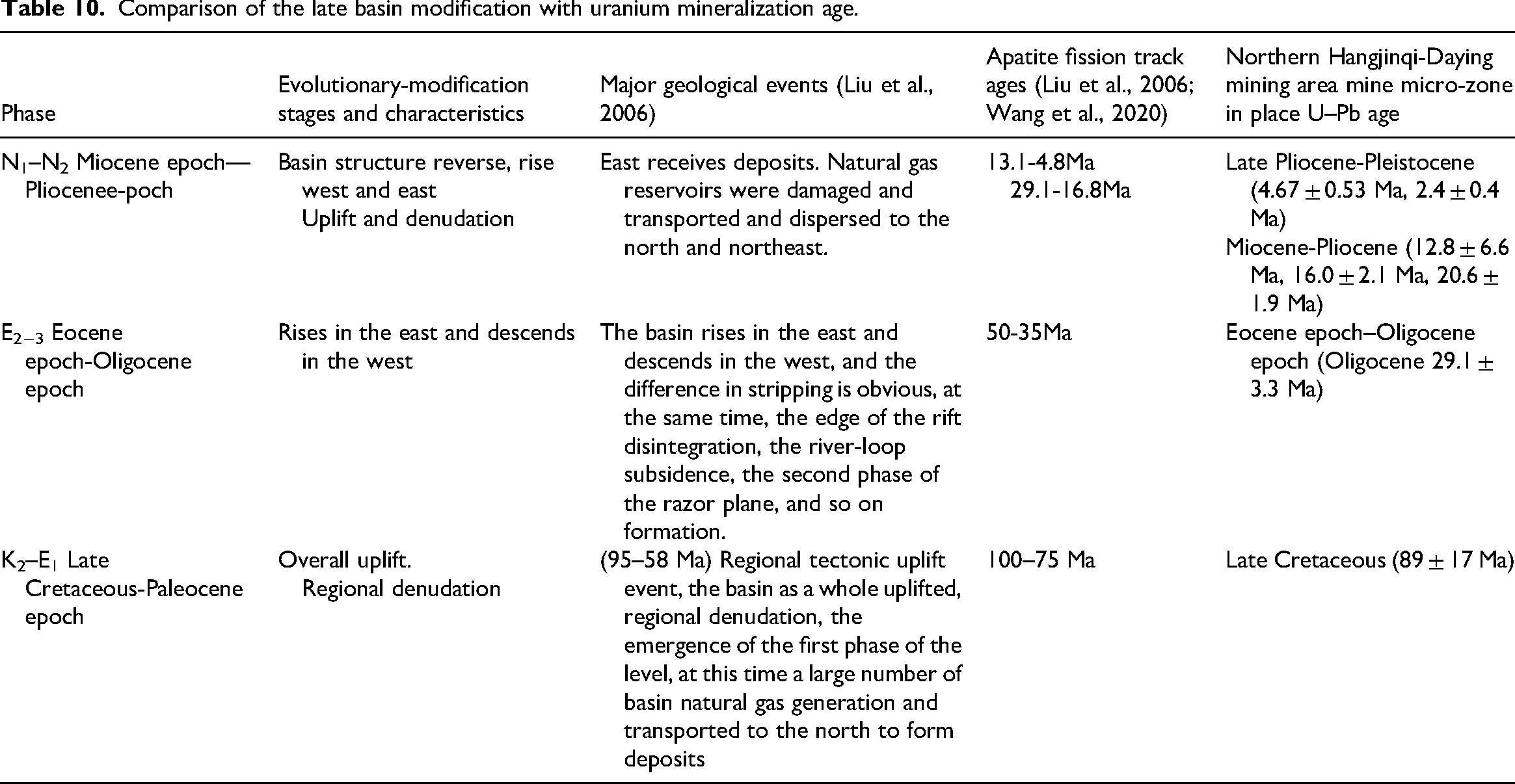
Based on the micro-scale in situ U–Pb ages of the main sandstone-hosted uranium deposits in the northern Ordos Basin, the mineralization stages can be divided as follows (Table 10):
Comparison of the late basin modification with uranium mineralization age.
Late Cretaceous: 89 ± 17 Ma;
Eocene-Oligocene: 37.6 ± 2.9 Ma, 29.1 ± 3.3 Ma;
Miocene: 12.8 ± 6.6 Ma, 16.0 ± 2.1 Ma, 20.6 ± 1.9 Ma;
Pliocene: 4.67 ± 0.53 Ma, 4.58 ± 0.46 Ma.
The uranium mineralization in the northern OrdosBasin exhibits distinct multi-stage characteristics. Statistical analysis of age data (Tables 5, 6, 8) reveals that the majority of ages or uranium mineral grains (about 76%) cluster in the Miocene-Pliocene (N1–N2), followed by the Eocene-Oligocene (E2–E3, ≈17%), and a minor contribution from the Late Cretaceous (K2, about 7%). This indicates that the primary uranium mineralization ages in the northern Ordos Basin are dominated by the Miocene-Pliocene (N), with secondary Eocene-Oligocene (E2–E3) and rare Late Cretaceous (K2) phases.
Post-basin modification and major geological events
According to the dynamic evolution and key geological events during the post-basin modification (Liu et al., 2006; Wang et al., 2020), three critical periods are identified:
Late Cretaceous-Paleocene (K2–E1): Regional uplift and denudation. The interval 95–58 Ma marks a tectonic uplift phase, during which the basin experienced overall uplift, widespread denudation, and the formation of the first-stage planation surface under a hot and arid paleoclimate. Apatite and zircon fission track ages (100–75 Ma) from the Yimeng Uplift area record this uplift event. Concurrently, large-scale methane generation and northward migration provided initial conditions for the formation of the Zhi Luo Formation sandstone-hosted uranium deposits.
Eocene-Oligocene (E2–E3): Differential uplift (east) and subsidence (west) with intense denudation. The period 55–30 Ma was characterized by east–west differential uplift-subsidence, marginal rift disintegration (e.g., Hetao Graben), formation of the second-stage planation surface, and apatite/zircon fission-track ages (50–35 Ma) reflecting uplift-denudation.
Miocene-Pliocene (N1–N2): Development of the third-stage regional planation surface (24–4 Ma), graben unconformities, rift expansion, block uplift, and westward uplift with eastern subsidence (8–5 Ma). Destruction of methane reservoirs and their northeastward migration facilitated large-scale uranium mineralization.
Coupling between post-basin modification and uranium mineralization
A temporal overlap (within error margins) exists between post-basin modification events and uranium mineralization ages, demonstrating their genetic coupling:
The first-stage planation surface (95–58 Ma, K2–E1) correlates with the 89 ± 17Ma mineralization age.
The second-stage planation surface (55–30 Ma, E2–E3) corresponds to ages of 37.6 ± 2.9 Ma and 29.1 ± 3.3 Ma.
The third-stage planation surface (24–4 Ma, N1–N2) aligns with ages of 12.8 ± 6.6 Ma, 16.0 ± 2.1 Ma, 20.6 ± 1.9 Ma, 4.67 ± 0.53 Ma, and 4.58 ± 0.46 Ma.
This indicates that uranium mineralization is not a stochastic process but is closely linked to basin dynamics. Each uplift event likely reactivated oxygen- and uranium-bearing fluids, altered paleoclimatic conditions, and created favorable settings for sandstone-hosted uranium enrichment. Basin-wide uplift exposed uranium-rich basement rocks, enabling groundwater-mediated uranium mobilization and subsequent infiltration into basin-interior interlayer oxidation zones. Concurrently, hydrocarbon migration through microfractures or faults modified redox conditions, broadening early transitional zones and introducing reductants to form superimposed paleo-interlayer oxidation-type uranium deposits. These processes were critical for uranium super-enrichment and large-scale mineralization.
In summary, the formation of sandstone-hosted uranium deposits is fundamentally driven by later-stage groundwater fluid activity. The significant temporal gap between host rock diagenesis and mineralization, as well as the development of groundwater recharge–migration–discharge systems, is closely linked to regional-scale tectonic movements. This causal relationship has been corroborated by multidisciplinary studies (Wu et al., 2004, 2007, 2009, 2022a, 2022b; Xiao et al., 2004). Each tectonic uplift event alters the hydrodynamic regime of groundwater fluids, accelerating or modifying mineralization processes and environmental conditions. Consequently, the coupling between mineralization and tectonic events is not coincidental. Domestic researchers have also extensively investigated this synergistic relationship (Cheng et al., 2019, 2024, 2025a, 2025b). Conversely, the accuracy of experimentally determined mineralization ages can be partially validated through regional tectonic event chronologies.
Conclusions
The GBW04420 can be utilized as a reference material for micro-area in situ U–Pb isotopic dating of uranium minerals. In the investigation of age homogeneity among uranium mineral grains in GBW04420 using fs-LA-MC-ICP MS (femtosecond laser ablation multi-collector inductively coupled plasma mass spectrometry), analysis of Pb²06/U²³8 age data from 25 uranium mineral grains revealed an average age deviation of 6.52% with a normal distribution pattern. This indicates satisfactory age homogeneity across individual mineral grains. Comprehensive evaluation incorporating prior research and development efforts on the GBW04420 uranium reference material confirms its suitability as a certified reference material for micro-area in situ U–Pb isotopic dating of uranium minerals.
By integrating micro-area in situ femtosecond laser ablation inductively coupled plasma mass spectrometry (fs-LA-ICP-MS) and SIMS for U–Pb dating of sandstone-hosted uranium deposits, this study reveals the multi-stage mineralization characteristics and their dynamic coupling with basin evolution. The methodology ensures comprehensive and rational age data acquisition: fs-LA-ICP-MS targets uranium minerals >20 μm in size, while SIMS analyzes micron-scale minerals (5–20 μm). This complementary approach captures both larger and smaller mineral grains, yielding precise and holistic chronological results. Experimental data from the Hangjinqi-Daying uranium district in the northern Ordos Basin identify four distinct mineralization periods: Late Cretaceous, Eocene-Oligocene, Miocene, and Pliocene. These age clusters correlate strongly with post-basin tectonic reworking events: three-stage regional planation surfaces (characterized by contrasting tectonic settings: eastern uplift vs. western depression during Stages 1–2, transitioning to western uplift vs. eastern depression in Stage 3). Basin-scale inversion of the east–west depression-uplift pattern. This temporal-spatial correspondence not only confirms the multi-phase nature of uranium mineralization but also highlights the dynamic interplay between basin structural reorganization and ore-forming processes, validating the robustness of the derived metallogenic ages.
The multi-stage nature of mineralization is not only reflected in the coexistence of distinct uranium mineral grains within the same ore but also in the significant age discrepancies observed across different zones of a single uranium mineral grain. This indicates that even individual grains underwent episodic growth. In this region, uranium minerals exhibit substantial age variations not only between different grains but also within localized areas of a single grain. For instance, age differences within a single grain can range from as large as 90 Ma (maximum) to as small as 15 Ma (minimum). Some uranium mineral grains initiated formation at the end of the Cretaceous and continued growing into the Miocene, while others began during the Eocene and persisted into the Pleistocene. Notably, when zoning is present within uranium minerals, inner zones consistently yield older ages than outer zones. Collectively, these findings underscore the multi-stage mineralization characteristics of sandstone-hosted uranium deposits, where uranium minerals result from either distinct episodic growth phases or multi-phase superimposed processes within the same mineralization event.
Footnotes
Acknowledgments
This research was financially supported by China National Key Research and Development Program (2023YFC2906702), and it is supported by Shaanxi Province Natural Science Basic Research Program (Key) Project (no. 2022JZ-18) and China Nuclear Uranium Co., Ltd “Unveiling and Commanding” Science and Technology Project (grant no. 202302), and Changqing Oilfield Company - “Genesis Study and Mineralization Potential Analysis of BSK1 in Southwestern Ordos Basin” and Changqing Oilfield Company - “BSK1 Exploration Potential Evaluation and Strategic Associated Resource Assessment in Ordos Basin”.

Consent to participate
No conflict of interest exists in the submission of this manuscript, and the manuscript is approved by all authors for publication.
Consent for publication
I would like to declare on behalf of my co-authors that the work described was original research that has not been published previously, and not under consideration for publication elsewhere, in whole or in part.
Funding
The authors disclosed receipt of the following financial support for the research, authorship, and/or publication of this article: This work was supported by the Shaanxi Province Natural Science Basic Research Program (Key) Project, China National Key Research and Development Program, China Nuclear Uranium Co., Ltd “Unveiling and Commanding” Science and Technology Project (grant no. 2022JZ-18, 2023YFC2906702, grant no. 202302), and Changqing Oilfield Company - “Genesis Study and Mineralization Potential Analysis of BSK1 in Southwestern Ordos Basin” and Changqing Oilfield Company - “BSK1 Exploration Potential Evaluation and Strategic Associated Resource Assessment in Ordos Basin”.
Declaration of conflicting interests
The authors declared no potential conflicts of interest with respect to the research, authorship, and/or publication of this article.