




Abstract
In the landscape of transportation electrification, the incorporation of plug-in electric vehicles (PEVs) into distribution systems has emerged as a crucial focal point of research in recent years. With the decline of fossil fuels, the automotive industry is swiftly transitioning from traditional vehicles to electric ones, with PEVs at the forefront of this shift. This transition is accompanied by various strategies aimed at promoting the widespread adoption of electric vehicles across different countries and regions. Forecasts indicate a rapid increase in the number of electric vehicles (EVs) on the roads, excluding two/three wheelers, reaching into the millions in the foreseeable future. However, this surge in EVs brings forth a significant concern: the potential strain on electrical grids. Without proper management, the uncontrolled influx of EVs could result in a sharp rise in load profiles, especially if free charging policies are implemented. Charging behaviors vary widely, from residential setups to public charging stations, each presenting its own set of challenges. While residential charging may seem individually modest, its cumulative impact can overload distribution systems. On the other hand, fast charging at public stations leads to a rapid escalation of power demand, exacerbating the overall load across multiple plug-in points. These trends indicate a substantial increase in electricity demand, potentially reaching thousands of terawatt-hours in the near future. As a result, distribution systems worldwide are facing the imminent threat of congestion due to this exponential growth in EVs. Managing this congestion poses a significant challenge for distribution system operators, who must navigate this landscape while ensuring the integrity of the network. This article undertakes a thorough literature review, exploring various strategies for congestion management in the context of PEV integration. By synthesizing a wealth of research, this review provides researchers with invaluable insights into the key challenges and diverse techniques associated with PEV integration. As transportation electrification continues to reshape our world, this article serves as a comprehensive guide for understanding and addressing the complexities of managing congestion in distribution systems amidst the proliferation of EVs.
Keywords
Introduction
The global rise of electric mobility is rapidly reshaping the transportation landscape (Abdolrasol et al., 2024). Breakthroughs in electric vehicle (EV) technology are driving this transformation, reducing our dependence on fossil fuels and significantly cutting down greenhouse gas (GHG) emissions (Chatuanramtharnghaka et al., 2024; Mishra et al., 2024).
At the core of this revolution are EVs: sleek, streamlined designs housing electric motors with fewer moving parts compared to traditional vehicles. But the innovation does not end there. EVs offer a wide range of battery sizes to meet diverse needs (Vanlalchhuanawmi et al., 2024), all while remaining within an affordable price range. Moreover, the proliferation of fast charging stations signifies a move towards seamless and convenient charging solutions, enhancing the appeal and practicality of EVs (Farooq et al., 2025). This shift not only marks a departure from conventional transportation norms but also points toward a cleaner, more sustainable future for generations to come (Lalngaihawma et al., 2024).
Battery EVs (BEVs), plug-in hybrid EVs (PHEVs), and fuel cell EVs (FCEV) have surged in popularity, thanks to their diverse societal, environmental, and health benefits (Chatterjee et al., 2024; Farooq et al., 2022a; Vankina et al., 2024).
In the sustainable development scenario (SDS), ensuring a balance between electricity demand and generation emerges as a critical task, with the anticipated global electricity demand from EV charging projected to reach 4% by 2030. The diversity of EV types will significantly influence the charging patterns by this time. Passenger-level EVs are expected to account for over 60% of energy consumption by EVs in 2030. The EV load curve will undergo careful management across weekdays, weekends, and holidays, reflecting the varied activities of EV owners (Mishra et al., 2025). Moreover, EV peak demand will be subject to fluctuations driven by factors such as temperature, location-based charging, and seasonal variations. Such variability poses the risk of distribution system (DS) congestion during peak charging hours. However, the implementation of a coordinated strategy for EV charging across different timeframes can mitigate this risk. By synchronizing power generation from renewable energy sources (RESs) with EV parking and charging schedules, controlled EV charging holds promise in alleviating DS congestion (Global EV Outlook 2020, 2020). Integrating RES into the coordinated strategy of EVs further augments the potential for congestion reduction in the DS.
This article undertakes a thorough literature review, exploring various strategies for congestion management in the context of plug-in EV (PEV) integration. By synthesizing a wealth of research, this review provides researchers with invaluable insights into the key challenges and diverse techniques associated with PEV integration. The study also provides insight into grid-to-vehicle (G2V) and vehicle-to-grid (V2G) modes of operation of PEVs and the integration of solar-powered charging-cum parking lot for cost minimization. The strategy is implemented in workplace car park powered by grid and grid-connected photovoltaic (PV) generation located in industrial areas of the IEEE 38-bus radial DS. The results are shown for two case studies with 800 and 500 PEVs connected to a solar-powered charging cum parking lot with 350 and 220 kW ratings. As transportation electrification continues to reshape our world, this article serves as a comprehensive guide for understanding and addressing the complexities of managing congestion in DSs amidst the proliferation of EVs.
Background of congestion management
The monopoly in the vertically integrated utilities of the electricity market has been removed by making it more competitive in the deregulated electricity market. The competitive deregulated electricity market is fragmented into generation companies (GENCO), transmission companies (TRANSCO), and distribution companies (DISCO). However, due to the complexities and larger transaction of electrical power through the power transferring lines, sometimes the lines are not capable enough to transfer the large transaction of power (Das et al., 2022). This results in a congestion scenario in the lines that are connected to the system. Therefore, adequate congestion management tools are utilized to reduce the congestion from the power transferring lines. The system operator (SO) must ensure the smooth flow of power without congestion or any network contingencies (Shahidehpour and Alomoush, 2001).
Congestion management (CM) in transmission systems can be categorized in several ways. According to Pillay et al. (2015) and Kumar et al. (2005), CM in transmission lines has been classified as a cost-based method. Cost-free methods are like the utilization of flexible AC transmission system (FACTS) devices and, the using of tap-changing transformers and phase shifters, and non-cost methods are like rescheduling of generation, load curtailment, and so on. According to Naraina et al. (2020), CM methods are classified from the generation side, transmission side, and end-user side. The generation side CM can be done by integrating distributed generation (DG) or conventional generation re-dispatch. Consequently, the transmission side CM can be solved by different optimization techniques based on optimal power flow, using FACTS devices, and so on. Similarly, end-user CM can be solved by demand response, nodal and zonal pricing, load curtailment, market-based, and so on.
The DS congestion may occur due to the large penetration of EVs, heat pump machines, and so on. The DS CM can be of two types, mainly market-based methods and direct control-based methods. The market-based methods include a distribution capacity market, dynamic tariff, flexible service market, and shadow price. Whereas direct control methods consist of active and reactive power control-based methods and network rearrangement. Distributed energy resources (DERs) like wind power, and PV systems play a vital role in managing congestion in DS. The DSO must ensure proper CM in DS with a large penetration of DER in market-based methods (Huang et al., 2014).
The current global status of EV stock
The congestion in DS is a difficult concern for DSO. Due to the rapid growth of EV penetration around the world, the DS may face severe load growth over a period of time. The rapidly changing reliance of the transportation sector from conventional fossil fuel to electricity-based vehicles may create serious issues for DS. This growth in load due to the EV penetration may result in DS congestion. Globally, about 14 million new EVs were registered in 2023, bringing the total number of vehicles on the road to 40 million. Figure 1 roughly matches the sales projection from the global EV outlook (GEVO-2023) published in 2023. Sales of EVs increased by 3.5 million in 2023 compared to 2022, a 35% annual rise.
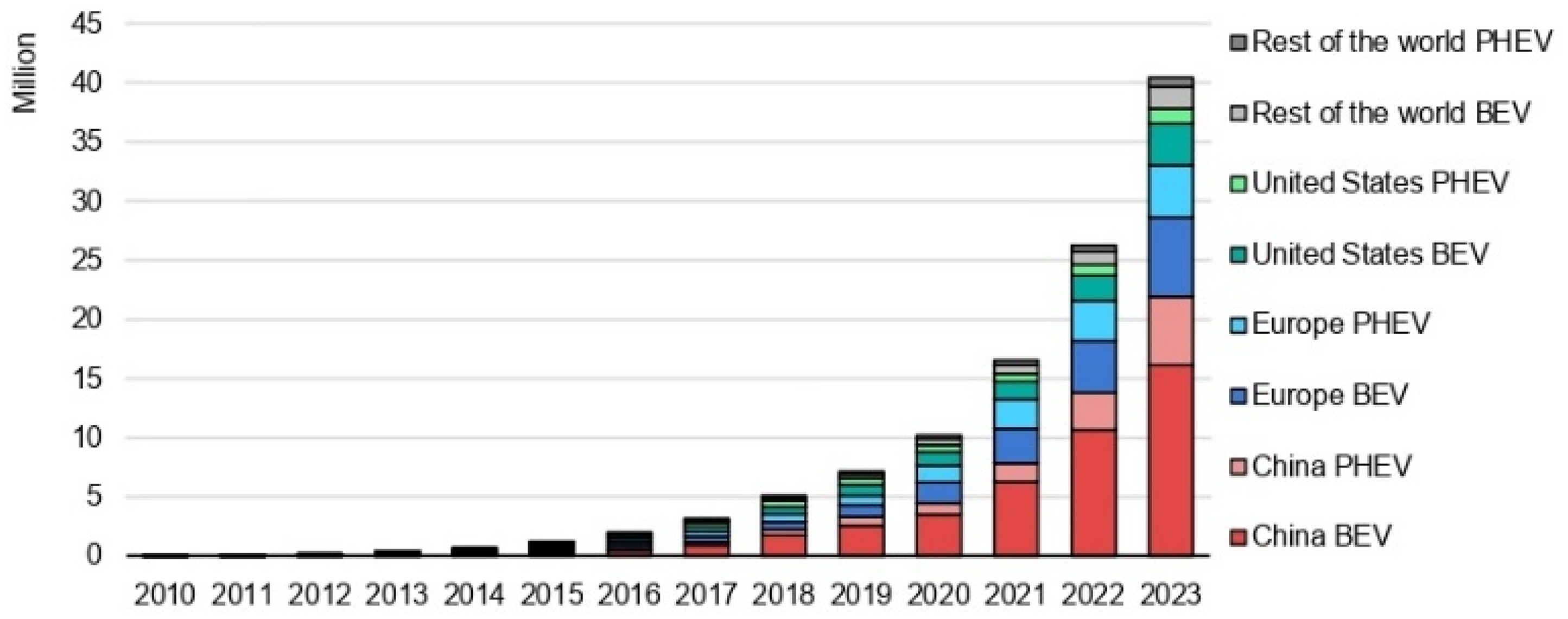
Global electric vehicle (EV) stock, 2010–2023 (Global EV Outlook 2024, 2024).
In the sustainable energy scenario (SDS), the expected global EV stock (excluding two/three wheelers) may reach 245 million in 2030 which may show growth of 36% annually. The scenario of expected global EV stock has been discussed by Global EV Outlook 2020 (2020). The passenger light-duty vehicle (PLDV) sector in both BEV and PHEV shows the highest growth as compared to light commercial vehicles (LCVs) and other EVs in SDS by 2030.
The expected EV demand in SDS may reach almost 1000 TWh as compared to 550 TWh by the stated policies scenario (STEPS) in 2030. The light-duty vehicle (LDV) and two/three-wheeler EVs share the highest percentage of electricity demand together. EVs reduce the consumption of oil by around 0.6 million barrels of oil production per day (mb/d) in 2019 (Global EV Outlook 2020, 2020).
Literature review
Literature survey
Transportation electrification shows huge growth in EV registration, that is, around 70% increase during 2014 and 2015 considering the global sales of more than 550,000 vehicles. The Paris Agreement in December 2015 has decided to reduce GHG emissions due to conventional fossil fuel-based vehicles. Also, in the same Paris agreement, another target to achieve 100 million PEV penetration by 2030 has also been made (Global EV Outlook 2016, 2016). Correspondingly, a lot of challenges and infrastructural problems arise as the EV penetration goes high in DS. The higher EV penetration in DS acts as an additional electrical load on DS during uncoordinated charging. The results are enhancement of peak load demand, and hence, congestion scenario in DS. Hence, DS CM is a deep topic of research since the expected penetration level of PEVs will grow significantly in the coming projected years. The literature survey of PEVs impact on DS congestion management has been distributed in six parts mainly.
Integration of PEVs in the DS
The climate change issues and environmental concerns, requirements of EVs, types and design of EVs, energy security and fossil fuel reserve concerns, and popularity of PEVs, and PHEVs around the world are discussed by Ehsani et al. (2005) and Larminie and Lowry (2003). The DS charging effect of PEVs in G2V has been broadly discussed in some articles. The different generations of progression of interaction between PEVs and the grid have been shown by Tuttle and Baldick (2012). The review of PHEV in the distribution network has been shown by Green et al. (2011). Giant car manufacturers have already started producing PEV from their units (Chevrolet, 2017; New Tesla Model S, 2017; Nissan LEAF Electric Car, 2017). The impact of charging of PEVs at different peak and off-peak hours has been shown and analyzed by Farnandez et al. (2011). The random charging of PEVs in an uncoordinated way increases the load on distribution transformers (DTs) and distribution lines. Therefore, coordinated charging of PHEVs can reduce losses and maximize the load factor of the grid (Clement-Nyns et al., 2010).
The impact on residential transformers due to the charging of PEVs has been shown and analyzed by Razeghi et al. (2014). According to Galus et al. (2010), the operation and planning of power systems by considering the integration of PHEVs have been shown. According to Shafiee et al. (2013), the characteristics of PHEVs have been accurately determined to know the PHEVs impact. Also, the impact of load growth due to the growing penetration of PHEVs has been discussed. According to Heydt (1983), the role of EVs in load management strategy has been discussed. The load factor improvement has been shown by shifting EV charging in the off-load period from the peak load period. The impact of PHEVs on the evaluation of adequacy and reliability using Monte Carlo simulation (MCS) in smart grid has been discussed by Hariri et al. (2021).
The EV charging and RES integration to the grid have been presented by Ferreira et al. (2011). Markov decision process model-based reinforcement learning has been used to make charging strategy of EVs to reduce voltage violation in DS (Ding et al., 2020a). The impact of smart charging on both transmission and distribution networks has been discussed by Crozier et al. (2020). The appropriate way of smart charging strategy may reduce the need for generation expansion in transmission level and may also flatten the load curve in DS. The expansion planning and operation of power systems due to the increase in EV growth have been discussed by Manriquez et al. (2020). The EV charging model considering optimal power flow, EV characteristics, satisfaction level, and cost of power grid using improved particle swarm optimization has been presented by Yang et al. (2014). In terms of fuel economy, PHEVs in the electric range of 10–40 miles perform better by reducing the consumption of gasoline. At the same time, PHEVs could reduce the CO2 emission by 53%–58% (Weiller, 2011).
The algorithm for electric power scheduling and dispatch has been formulated for PEV fleet aggregators by considering real data on the travel patterns of vehicles (Wu et al., 2012). The estimation of distribution algorithm (EDA) has been used for the performance evaluation of PHEVs in the real world considering state-of-charge (SOC) maximization (Su and Chow, 2012). The charging plan control strategy based on different market mechanisms is utilized for the allocation of charging power to EVs. The charging scheme reduces overload on the grid with the help of grid constraints (Sundstrom and Binding, 2010, 2012). The late-night valley of the demand curve can be reduced by charging EVs at that time. This may result in reducing generation costs and improving the utilization of base-load power plants (Collins and Mader, 1983). The charging strategy in a coordinated way can improve system parameters which have been found from the literature survey (Das et al., 2025; Deilami et al., 2011).
The V2G impact is reviewed and presented by Bibak and Tekiner-Mogulkoc (2021), Zheng et al. (2019), and Yilmaz and Krein (2012). The V2G mode and its different concepts are discussed by Kempton and Tomic (2005a, 2005b). According to Kempton and Tomic (2005a), different EVs in the V2G mode are considered to supply power to the electricity markets. Different policy issues of battery, hybrid, and fuel cells for future electric grids are discussed by Letendre and Kempton (2002). The dual use of V2G for regulation and reduction in peak load brings significant profit to the users of PHEVs (White and Zhang, 2011). The V2G algorithm has been developed for EV aggregators to maximize their profits by shaving in peak load and reducing in charging cost of EVs (Ustun et al., 2018).
The operation of EVs in V2G mode reduces both the intermittency of RES and the cost of energy. Also, the charging–discharging cycle of EV batteries has been kept minimum to reduce the degradation of batteries (Mehrjerdi and Rakhshani, 2019). The earning of income by trading electricity due to EV integration in V2G to vehicles, markets, and building modes of operations has been discussed by Gough et al. (2017). The power storage in EVs could be utilized to get benefits like system reliability improvement, and lower cost by considering it as intermittent renewable energy sources (Kempton and Letendre, 1997). The integration of PEVs with the grid has been made by using a distributed resource allocation method for smoothening load profiles and minimizing shifting of load in a fair way of charging PEVs (Tiwari et al., 2020). The V2G frequency regulation services for control strategies of charging are discussed by Han et al. (2010).
Penetration of renewables creates stability and intermittency issues in the power grid (Farooq et al., 2022b; Hussain et al., 2020). While there are different solutions are proposed in the literature (Latif et al., 2021; Ranjan et al., 2021), it is also possible to use the integration of PEVs and distributed generators as a demand response in the system. The alternating direction method of multipliers (ADMM) has been utilized to flatten the demand response and reducing the electricity bill (Tan et al., 2014). The fleet of EVs in the V2G mode for voltage and frequency regulation has been discussed by Amamra and Marco (2019). The integration of vehicles in V2G mode as DERs has further been discussed in some articles. The integration of vehicles in V2G mode as DERs act as controllable loads to flatten system load during off-peak hours and as power sources to provide energy services at other times of the day (Guille and Gross, 2009). The concept of V2G and vehicle-to-home (V2H) for PEVs has been considered by Turker and Bacha (2018). The V2G algorithm named optimal logical control (V2G-OLC) has been utilized to solve the optimization problem (Turker and Bacha, 2018). The energy imbalances of grid-connected microgrids can be managed by designing a feasible and cost-effective energy management strategy using PEVs in V2G mode (Kumar Nunna et al., 2018). The PHEVs in V2G mode can improve system reliability and grid efficiency (Clement-Nyns et al., 2011). Uncoordinated charging of PHEVs results in significant voltage deviation which can later on improved by using PHEVs in V2G mode in a coordinated charging scenario (Clement-Nyns et al., 2011). The achievable power capacity (APC) from V2G services has been calculated in a probabilistic way to contract it further with the grid to maximize the profit of PEV owners (Han et al., 2011). The scheduling of PHEVs in deterministic and probabilistic ways has been considered by Rahman et al. (2020). The load profile also changes significantly when PHEVs in V2G and G2V modes of operation (Rahman et al., 2020). The improved vehicle-for-grid (iV4G) compensates the issues related to power quality such as distortion of current harmonic, and reactive power, and improves power factor as well (Monteiro et al., 2019). The EVs have a significant potential for V2G services. The grid can benefit from EVs in demand-side management (Dallinger et al., 2011).
Renewable energy-powered parking lot
The emergence of solar power-based charging and parking lots reduces the fossil fuel-dependent transportation sector. This transition of the transportation sector helps to reduce GHG emissions. A detailed review of solar power-dependent parking lots and their advantages is addressed by Nunes et al. (2016). The two-layered parking lot recharge scheduling with revenue maximization for EV charging using vehicular mobility or parking pattern has been proposed by Kuran et al. (2015). The charging of PHEVs by PV array in a short-term period is feasible which may reduce burdens like loading and upgradation of costly equipment of the distribution grid (ElNozahy and Salama, 2014). According to Wu et al. (2020), Mohamed et al. (2014), and Jiang and Zhen (2019), a real-time algorithm has been developed to combine EV parking lots with renewable energy sources.
Solar power has been the front-runner of renewable energy resources (Abdolrasol et al., 2022). Consequently, the roof-top solar PV panel integrated with the parking lot can enhance grid capacity which has been found by Chukwu and Mahajan (2014). This integrated system improves grid capability by relieving loads. The grid-connected roof-top mounted PV system-based charging station for EVs has been considered for the energy management system (Turan et al., 2019). The presence of solar power in the charging station reduces both continuous and peak load demand during the charging of EVs. The peak hour load due to the charging of PHEVs can be reduced by integrating PV systems with smart charging stations and grids (Goli and Shireen, 2014). The system consists of a PV system, DC/DC boost converter, DC/DC buck converter, and DC/DC bi-directional converter. The charging of PHEVs in office buildings integrated with PV systems and combined heat and power units has been shown by Van Roy et al. (2014). A large number of EVs can be charged at office buildings with less number of charging spots. The priority-based PHEV charging is gaining popularity in the grid-integrated solar-powered parking lot. The bidirectional converters such as AC–DC and DC–DC allow PHEVs in both V2G and V2V modes (Ma and Mohammed, 2014).
The problem of the parking lot with an EV charging facility has been solved by the game theoretical approach-based method. The factors like SOC, transformer capacity, and price of electricity affect the objective utility function (Zhang and Li, 2016). The behaviors of the PEV parking lot in the market can be done by a two-stage optimization model which also shows PLs profit (Neyestani et al., 2015). The impact of PV-integrated workplace charging facilities on the economics and emission reduction has been presented by Tulpule et al. (2013). The strategy helps to reduce the overall load from the system and increase the penetration level of RES in the transportation and power sectors. The problem of voltage magnitude can be overcome by integrating EV charging stations with energy storage systems (Marra et al., 2013). The profit maximization during the V2G mode of PHEVs and EVs integrated in parking lots while accommodating a large number of vehicles has been shown by Hutson et al. (2008).
The popularity of PV-based charging facilities has grown due to the reduction in PV panels' price and also GHG emissions. The details of PV-based charging and its future aspects and challenges are shown by Bhatti et al. (2016). The charging scheduling of EVs in solar-powered charging lots with a target to maximize profit has been discussed by Zhang and Cai (2018). The profit of parking lot operators has been done by fuzzy-based optimization techniques with an aim to satisfy EV owners' requirements (Faddel et al., 2017). Also, the uncertainties associated with EV are also considered by Faddel et al. (2017). According to Awad et al. (2017), the owner of PEV-parking lots maximizes their profit by supplying the demand for PEVs. The techno-economic evaluation and reduction in emissions have also been shown by Shrivastava et al. (2019).
Charging coordination of PEVs
The charging coordination of PEVs is gaining popularity due to the use of PEVs in both way of charging and discharging. The detailed review of charging–discharging coordination of EVs and PEVs is discussed by Solanke et al. (2020) and Garcia-Villalobos et al. (2014). The coordination of PEV charging–discharging in real-time scenario is discussed by Shaaban et al. (2014) and Hajforoosh et al. (2015). Fuzzy-based PEV charging strategy has been formulated to reduce both cost and losses while maintaining system security, as shown by Masoum et al. (2015). Centralized PEV charging coordination with decentralized PEV discharge has been presented by Jabalameli et al. (2019). The communication requirements for such extended connectivity are discussed by Ustun and Hussain (2019).
The coordination strategy has been made to reduce loading on the transformer and improve the voltage profile. The online coordinated strategy of PEVs using online aggregated particle swarm optimization has been formulated to reduce grid overloading by optimizing battery charge rate (Hajforoosh et al., 2016). Meta-heuristic algorithms are used to formulate PEV charging coordination considering DG units in the system, as shown by Arias et al. (2017). The coordination of EVs considering the V2G strategy has been formulated using different heuristic-based algorithms to reduce cost, and loss and increase EVs profit (Sufyan et al., 2020). Each PEV updates the charging schedule as per the electricity price signal (Ma et al., 2015). The introduction of a phase switcher along with the charger of PEVs helps to decide the proper phase for PEVs connection or disconnection (Kikhavani et al., 2020). The multi-stage coordinated scheduling of EVs in an active distribution network has been shown by Zhu et al. (2018).
The uncoordinated PEV charging leads to a rise in peak-hour demand in the distribution network. The dynamic charging coordination strategy of the PEV fleet in a two-stage process has been discussed by Yi et al. (2020). The decentralized charging coordination strategy for PEVs using the mean-field game approach for exchanging information among the agents has been presented by Tajeddini and Kebriaei (2019). An apartment-level EV charging coordination has been established to reduce peak charging load due to EV penetration and also to reduce the apartment-level charging cost of EVs (Jang et al., 2020). The charging coordination of plug-in electric buses (PEBs) in fast charging stations to optimize the economic benefits has been shown by Chen et al. (2018).
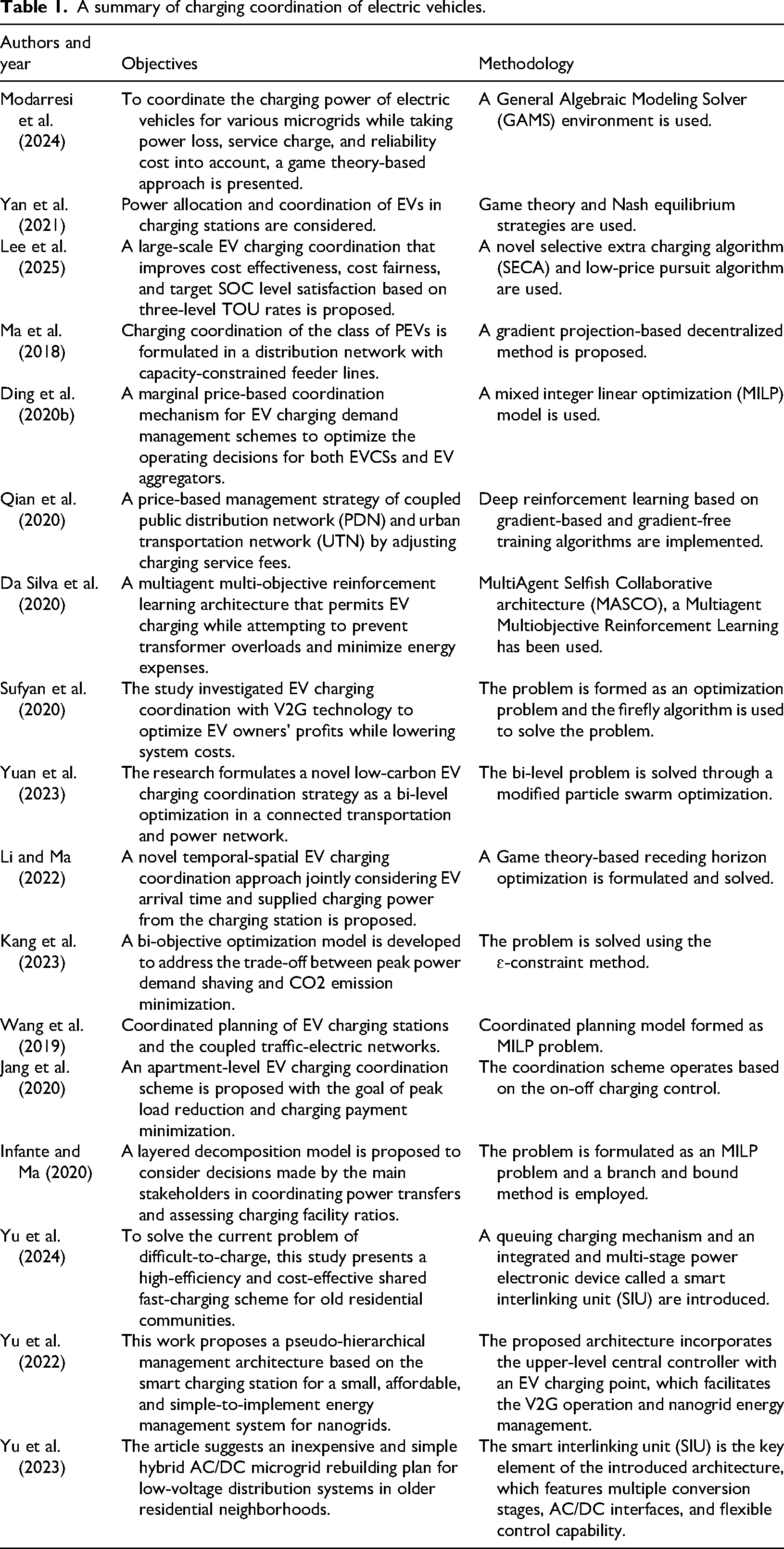
The centralized charging coordination strategy of PEVs for analyzing computational performance along with a reduction in generation cost, load variance, and carbon emission has been presented by Shang et al. (2020). The charging coordination of PEVs using a load-guided strategy for smart buildings has been presented by Yoon and Hwang (2019). The load-guided charging coordination strategy of PEVs helps to reduce the electricity cost of smart buildings. The smart charging–discharging scheduling of EVs for common parking lots of multiple home-based smart households has been presented by Mehrabi and Kim (2018). The coordinated strategy helps the EV owners to maximize their profits and ancillary services to the grid. The charging schedule of EVs has been formulated a day ahead considering electricity price and next day trip schedule of EVs (D’hulst et al., 2015). The approach of EV charging coordination helps to maintain minimum voltage magnitude and reduce the overload of the transformer (Cardona et al., 2018). According to He et al. (2012), global-based and local-based coordinated EV charging reduces charging costs with close performance with each other. A summary of recent published papers on charging coordination of EVs is given in Table 1.
A summary of charging coordination of electric vehicles.
Distribution system CM
Congestion control in DS management using various methods has been documented in some articles. The distribution congestion price (DCP)-based congestion management considering household demand responses has been reported by Liu et al. (2014). Direct load control refers to the controlling of household appliances, whereas, indirect load control motivates consumers to shift their consumption as per price change signal (Haque et al., 2019). The two-level approach for distribution network CM using multi-type DER has been presented by Luo et al. (2020).
The dynamic tariff (DT)-based distribution network congestion control has been presented by Shen et al. (2019) and Huang et al. (2019a, 2019b). Distribution locational marginal pricing-based EV charging has been demonstrated by Li et al. (2014). According to Zhou et al. (2022), a continuous double auction (CDA) mechanism-based peer-to-peer energy trading sequence is suggested to address network congestion brought on by P2P energy trading. A game theoretic approach for solving network congestion can be found by Ul Haq et al. (2022). A real-time congestion management methodology for medium voltage/low voltage (MV/LV) transformers can be found by Haque et al. (2017).
In another way, the CM in the distribution network has been solved by the locational price method, named as dynamic subsidy (DS) method (Huang and Wu, 2018a). The distributed locational marginal pricing (DLMP) concept in the distribution network has been considered for CM (Bai et al., 2018; Huang et al., 2015). The gossip algorithm-based CM by applying decentralized demand management in the distribution grid without local coordination has been formulated by Koukoula and Hatziargyriou (2016). The price-based approaches like nodal and local price mechanisms have been combined together for CM with the objective of maximizing social benefits by maintaining network constraints in the distribution network (Jafarian et al., 2020).
The market-based CM using DT and daily power-based network tariff signals has been constructed by considering flexible and controllable DERs like EVs and HPs (Ghazvini et al., 2019). In DS, a day-ahead two-level optimization model for CM considering DG power uncertainties has been presented by Ni et al. (2017). The effectiveness and integration of variable RES and flexible electrical load demands, such as EV charging, on congestion and its management have been studied by Verzijlbergh et al. (2014). The real-time transactive CM in the DS and flexible demand swapping in the swap market have been introduced by Shen et al. (2020). The transactive way mechanisms allow consumers to consider their willingness to provide flexibility in demand response. According to Huang and Wu (2018b), the CM has been solved by swapping the demand for charging of EV and consumption of EVs. The CM in two-level approaches for DS integrated with flexible building has been presented by Hanif et al. (2017).
A distributed generation in conjunction with commercial cryogenic energy storage (CES) and EVs with the goal of managing congestion while accounting for DLMP is proposed by Noori et al. (2024). The congestion control in a three-level hierarchical and distributed way in the distribution network has been presented by Kulmala et al. (2017). The CM of the distribution grid considering EV fleets charging while reducing charging cost and degradation of battery has been shown by Hosseini et al. (2020). EVs can act as spinning reserves or frequency regulation. Integration of EVs parking lot and capacitor bank in DS helps for CM and reactive power support has been formulated by Sachan and Amini (2020). At the distribution level, DSOs are managing congestion in an effective way (Hadush and Meeus, 2018; Prajapati et al., 2021). According to Hu et al. (2021), a price-based paradigm for incorporating PVs and EVs for high penetration prosumers into the distribution grid is proposed.
Role of PEVs in distribution system CM
The dual-mode operation of PEVs in G2V and V2G makes them quite important in the transportation sector due to environmental benefits and ancillary service providers. The emergence of PEVs plays a key role as an ancillary service in DS due to its capability to provide power back to the system while in V2G mode of operation. The PEV's V2G mode helps to lower the demand for peak load since PEV charging in G2V mode acts as an additional electrical load along with existing electrical load demand in the distribution network. When PEVs are charged in G2V mode, the DS experiences congestion as a result of the increased electrical load. The PEVs or EVs in V2G mode of operation can effectively manage DS congestion (Andersen et al., 2012; Asrari et al., 2020; Hu et al., 2014, 2015; Huang et al., 2019a; Lv et al., 2021; Mehta et al., 2016, 2018; Prakash et al., 2022; Quddus et al., 2019; Zhao et al., 2019). The CM by different approaches based on PEVs charging coordination in DS has been presented by Mehta et al. (2016, 2018). Further, CM in a 38-bus radial distribution network considering machine learning-based PEVs SOC prediction with different case studies have been shown by Deb et al. (2020a, 2020b, 2021a, 2021b).
The problem formulation of CM in DS can be expressed as follows (Deb et al., 2020a):



The goal of the objective function is to reduce the overall cost of operations as given in (1). Equations (2) and (3) display the expenses incurred during the G2V and V2G modes of operation. The total cost is described by the first term in equation (1) and is related to PEV energy in G2V mode minus the total energy provided by SPCPL as given in equation (2). PEV energy cost in V2G mode is described by the second term in (1) and is given by equation (3). Equation (4) displays the SPCPL total power production. A schematic diagram showing a renewable energy parking lot integrated with the grid is shown in Figure 2.
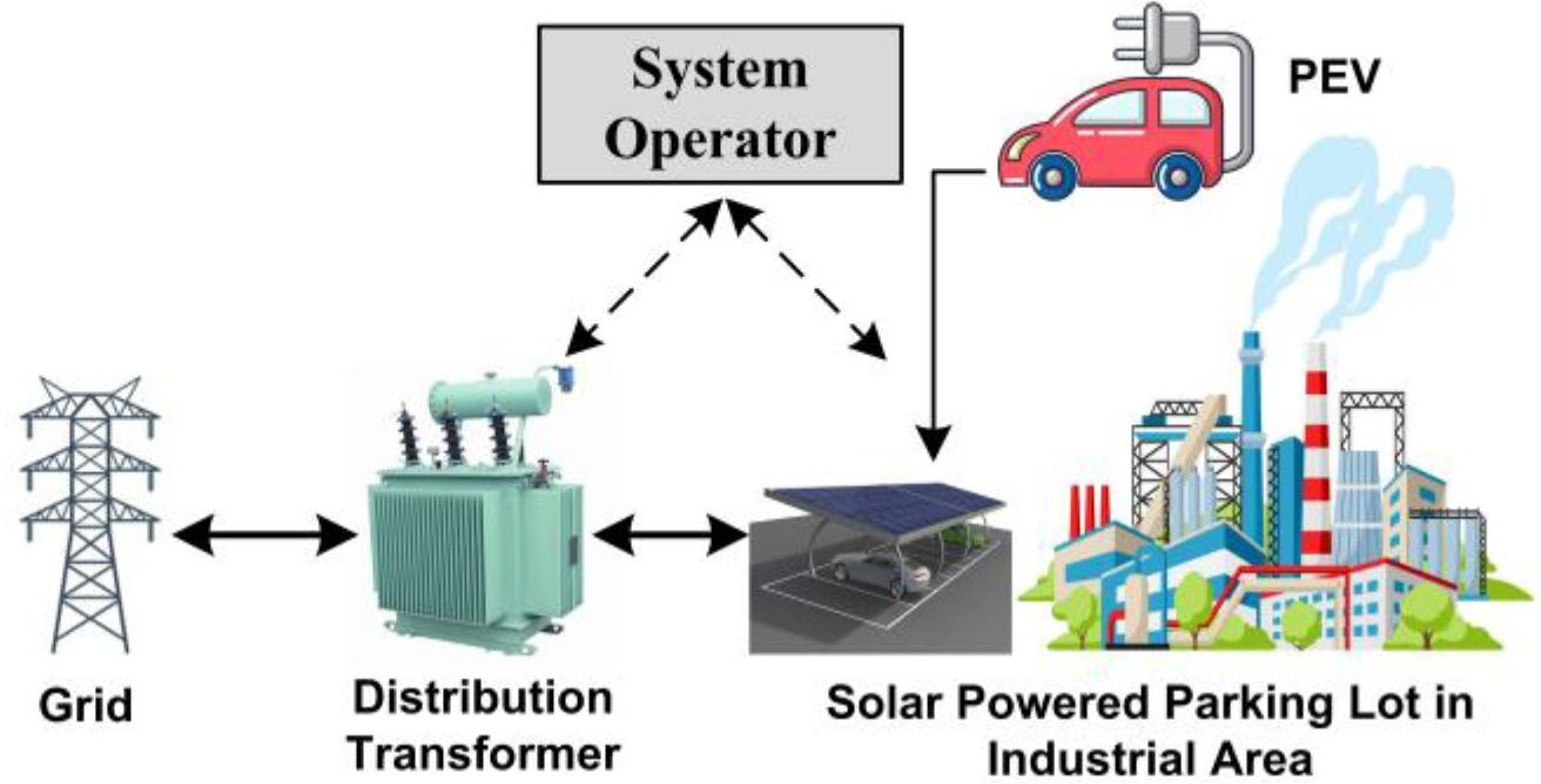
Renewable energy-powered parking lot (Deb et al., 2020b).
Constraints
The maximum power transfer can be exchangeable during V2G and G2V by the following equations:

The G2V/V2G maximum transferable power is shown in the following equations:

The limit on PEV charging can be done by using a variable quantity λ. The PEV's proper coordination strategy can be ensured by quantity λ which helps to decrease distribution line congestion.


The results of CM in 38 bus radial DS integrated with solar-powered parking lot (SPPL) are shown in Figure 2 considering 350 kW SPPL and 800 PEVs. Figure 3 considers 220 kW SPPL and 500 PEVs. The machine learning (XGBoost algorithm) based PEVs SOC has been predicted initially. Based on the predictions, the available, PEVs for G2V and V2G modes are decided. The participation of PEVs along with SPCPL in 38-bus radial distribution networks has been coordinated for the CM in the DS. Figures 4 and 5 demonstrate the effective CM during coordinated operation of PEVs G2V and V2G modes considering both 800 and 500 PEVs in the DS. It can be observed that congestion can be eliminated successfully during coordinated operations, whereas congestion is present during uncoordinated operations.
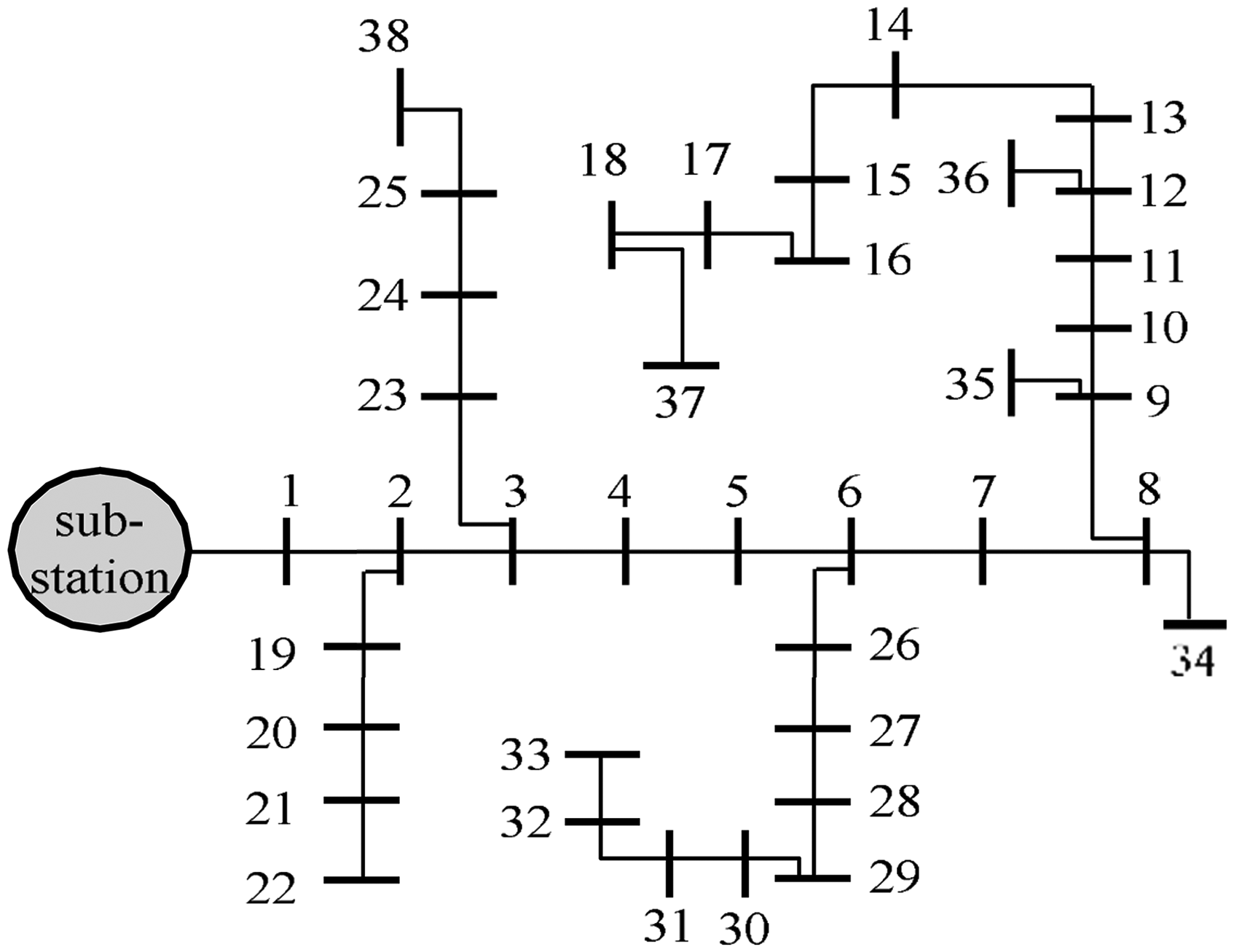
IEEE 38-bus radial distribution network (Chakraborty et al., 2022).
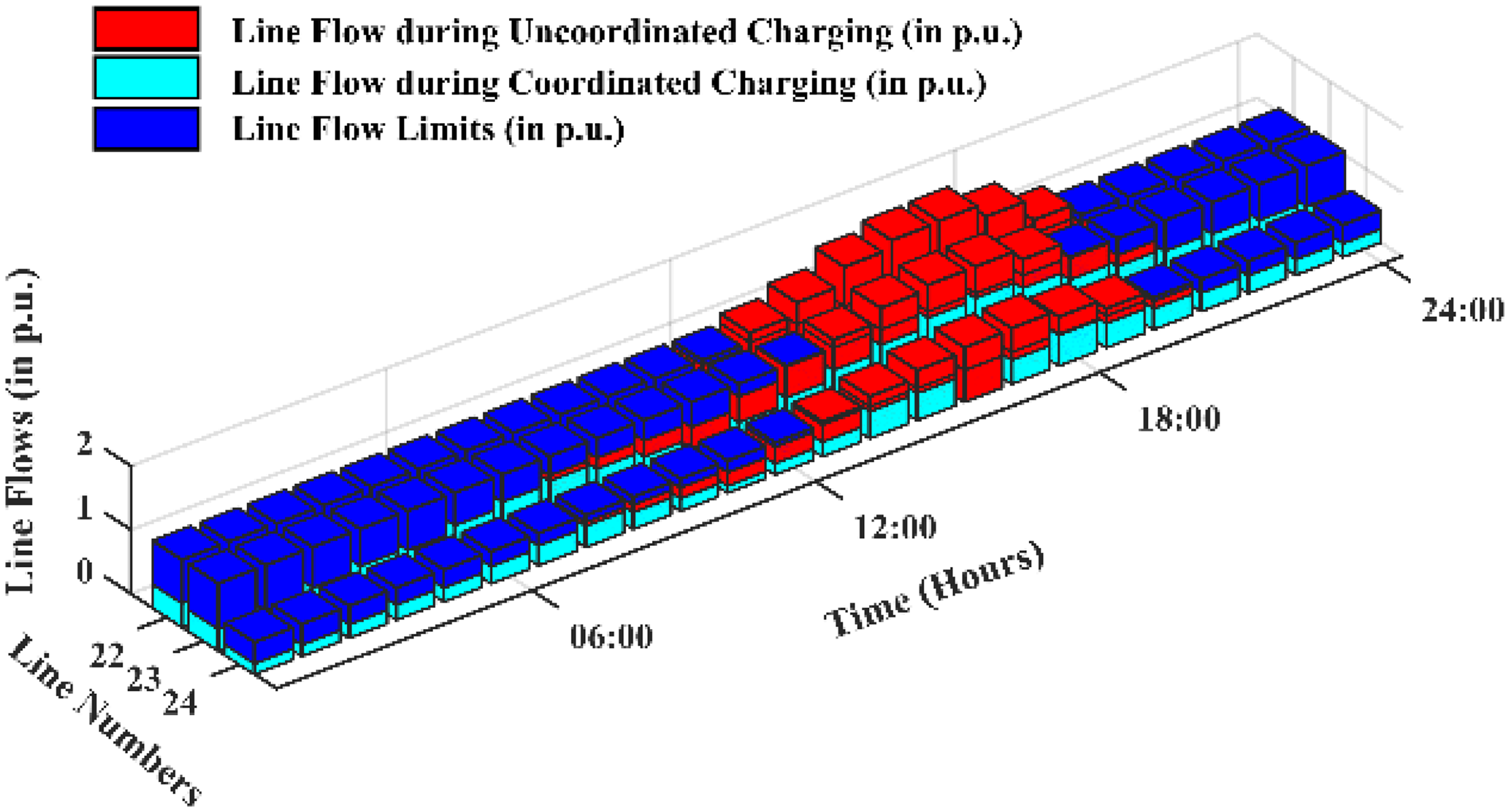
Congestion management with 800 PEVs in coordinated mode considering 350 kW SPPL.
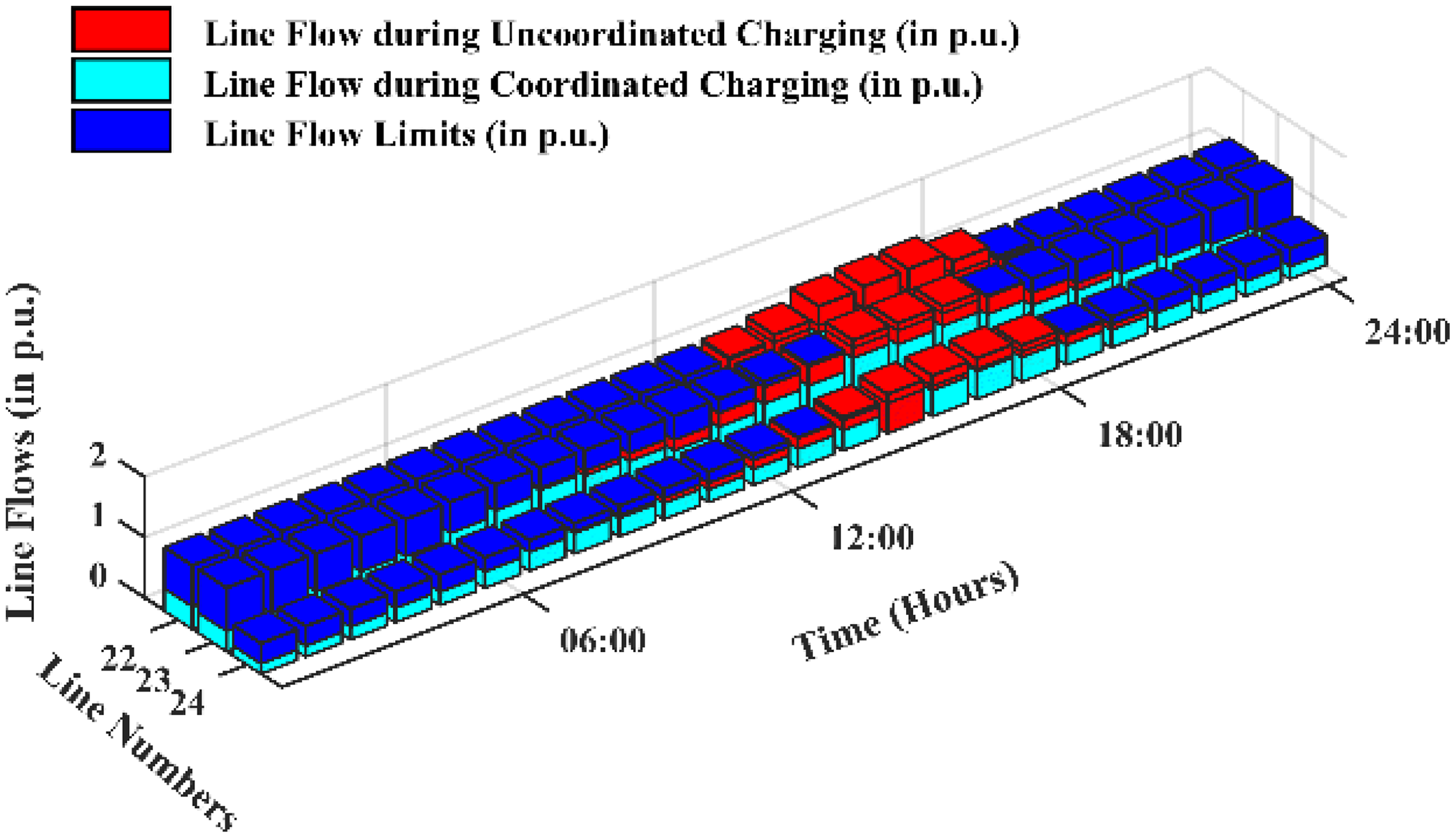
Congestion management with 500 PEVs in coordinated mode considering 220 kW SPPL.
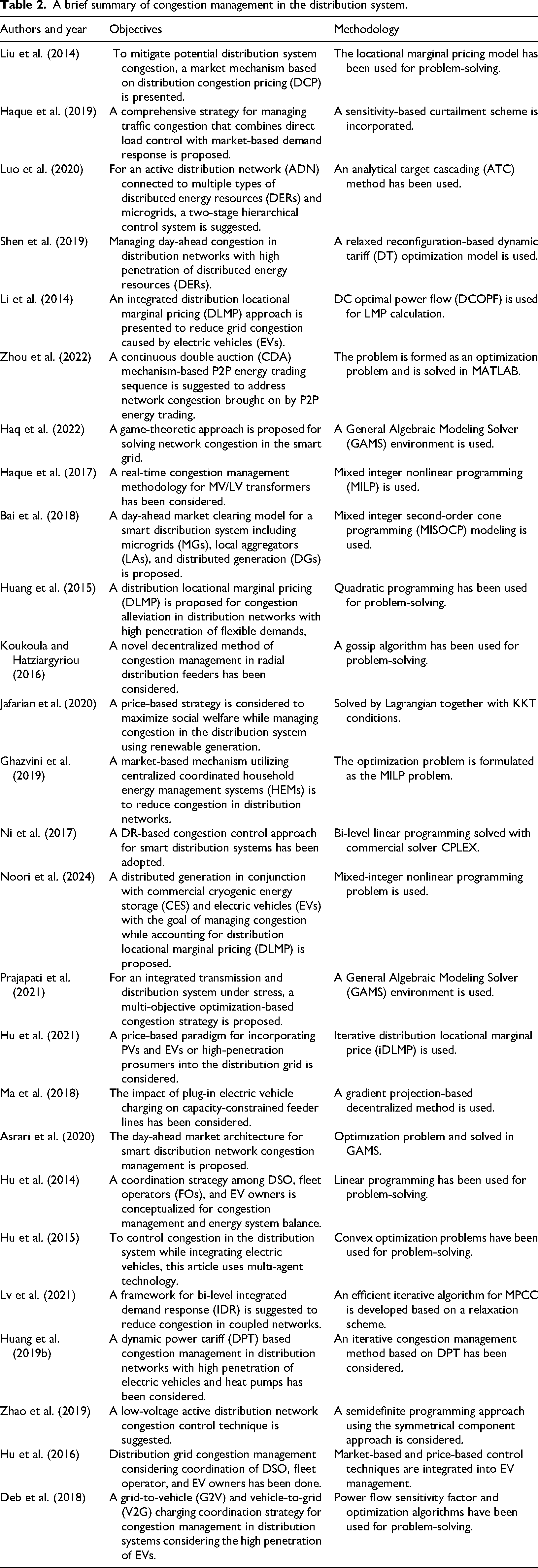
Thus, as the research analysis has shown in the literature survey, PEVs and EVs are essential to a coordinated strategy to reduce congestion in DSs. A summary of the last few years research papers on CM in DS integrated with PEVs is shown in Table 2.
A brief summary of congestion management in the distribution system.
Conclusion
Decades of research into EVs have propelled them into global popularity, positioning them as a cornerstone of modern sustainable societies. The burgeoning future of vehicular technology is already reshaping markets worldwide. Key advancements in EV technology, charging infrastructure, and charging strategies are pivotal for environmental sustainability.
The integration of PEVs into DSs must prioritize smooth charging strategies, accessible charging infrastructure, and benefits for all stakeholders, both technically and financially. However, the rapid penetration of PEVs during charging can significantly impact the overall DS load, potentially leading to congestion scenarios. Therefore, a smart approach to PEV integration is imperative to ensure CM without compromising benefits.
This comprehensive review article meticulously categorizes its literature survey into six distinct parts, each shedding light on crucial aspects of PEVs integration into DSs. Firstly, it delves into PEVs G2V and V2G integration strategies, providing insights into their efficacy and implementation challenges. Secondly, the survey explores the role of renewable energy-powered parking lots in PEV charging strategies, emphasizing their significance in sustainability objectives.
Thirdly, the article examines various charging coordination strategies for PEVs in distribution networks, offering valuable insights into optimizing energy utilization and grid stability. Fourthly, it addresses the management of DS congestion, presenting a thorough literature review of congestion mitigation techniques and their effectiveness.
Fifthly, the review explores the impacts of PEV integration on CM in DSs, highlighting the complex interplay between EV adoption and grid resilience. Lastly, it discusses the utilization of machine learning approaches to predict the SOC of PEVs, offering innovative solutions to enhance charging efficiency and grid management.
Moreover, the review underscores the pivotal role of PV-based parking lots, particularly during G2V charging. Despite the impressive array of CM techniques outlined in the literature, there is a notable focus on DT-based and DS-based CM, often considering integrated distributed energy resources.
In conclusion, this thorough review article provides a comprehensive perspective on the integration of PEVs into DSs for managing congestion. By synthesizing existing knowledge and highlighting future research directions, it equips researchers and stakeholders with valuable insights to navigate the evolving landscape of sustainable transportation.
Footnotes

Consent to publish
All authors agreed to this submission.
Authors contributions
All authors contributed equally to this work.
Funding
The author(s) received no financial support for the research, authorship, and/or publication of this article.
Declaration of conflicting interests
The author(s) declared no potential conflicts of interest with respect to the research, authorship, and/or publication of this article.
Data availability statement
Data sharing not applicable to this article as no datasets were generated or analyzed during the current study.
Code availability
Not applicable.