




Abstract
This study examines the dynamic relationship between innovation (INN), renewable energy consumption (REC), gross domestic product (GDP), and environmental sustainability (ES) in Germany using a Vector Autoregressive model and Granger causality tests (GCT). The results reveal that a 1% increase in INN leads to a 0.35% rise in REC consumption, reinforcing the role of technological advancements in Germany's energy transition. Additionally, the Environmental Kuznets Curve hypothesis holds, as GDP initially drives CO2 emissions upward but later contributes to a 0.28% decline in emissions beyond a critical income threshold. GCT confirm a unidirectional causal link from INN to REC, while variance decomposition shows that INN and REC jointly explain over 40% of the forecast error variance in CO2 emissions. These findings underscore the importance of sustained policy support for green INN and REC adoption. Policymakers should prioritize R&D incentives and regulatory frameworks that accelerate the shift to sustainable energy systems while ensuring long-term economic growth.
Keywords
Introduction
This study investigates the relationship between innovation (INN), renewable energy consumption (REC), gross domestic product (GDP), and environmental sustainability (ES) in Germany, aiming to provide a deeper understanding of how these variables interact and influence each other in a highly industrialized economy. Employing an econometric analysis over a sample period from 2000 to 2023, the research explores these variables’ direct and indirect effects. This study examines the interrelationship between INN, REC, GDP, and ES in Germany, focusing on how these variables interact within an industrialized economy striving for sustainability. As one of the global leaders in green technology (GT), Germany presents an ideal context for analyzing the impact of INN on REC adoption and subsequent environmental outcomes. We employ a Vector Autoregression (VAR) model to explore these variables’ direct and indirect relationships, focusing on their influence on CO2 emissions as an environmental impact indicator. The findings suggest that INN in green technologies positively influences REC use, which, in turn, helps reduce environmental degradation. While initially linked to increased emissions, GDP growth shifts toward more sustainable outcomes as income levels rise, consistent with the Environmental Kuznets Curve (EKC) hypothesis. Based on these findings, this article proposes targeted policy measures to enhance Germany's green INN ecosystem, support REC investments, and align GDP with sustainability objectives. The results contribute to understanding SD dynamics and provide actionable insights for policymakers focused on integrating INN and GDP within environmental targets. Findings indicate that INN positively impacts REC uptake and reduces environmental degradation. GDP growth has a dual effect on sustainability, underlining the importance of policy interventions promoting green technologies. This article offers policy recommendations and discusses implications for future sustainability strategies (Chaouali et al., 2024).
Research gap and problem statement: While numerous studies have explored the individual relationships between INN, REC, GDP, and ES, there remains a significant gap in the literature regarding their combined effects, particularly within the context of Germany. Existing research often isolates these variables, failing to capture their interconnected dynamics and mutual influence. This study seeks to address this gap by providing a holistic analysis that examines how INN and economic growth (EG) interact with REC adoption to impact ES. This study offers novel insights into Germany's SD trajectory by integrating these variables within a unified framework. It informs policy interventions for optimizing the synergy between technological progress and environmental preservation (Ghazouani, 2020, 2024b).
The pressing challenges of climate change and environmental degradation have accelerated the need for SD, particularly within industrialized nations like Germany. Germany's leadership in green technologies and REC presents a unique context for examining the interactions among INN, REC, GDP, and ES. The relevance of this topic is underscored by the Sustainable Development Goals (SDGs), particularly Goal 7 (Affordable and Clean Energy), Goal 8 (Decent Work and GDP), and Goal 13 (Climate Action). Climate change, environmental degradation, and resource scarcity are the most pressing global challenges today, demanding innovative approaches to SD. Industrialized nations, particularly Germany, play a critical role in setting examples for how economies can achieve growth while minimizing environmental impact. Germany's ambitious environmental policies, especially its commitment to REC, have made it a frontrunner in green INN and sustainability efforts. This study investigates the interrelationship between INN, REC, GDP, and ES in Germany, focusing on how these elements collectively contribute to a more sustainable economy (Funke & Niebuhr, 2005; Welter, 2010).
Germany's pathway toward sustainability aligns closely with key SDGs, particularly SDG 7 (Affordable and Clean Energy), SDG 8 (Decent Work and GDP), and SDG 13 (Climate Action). INN within the REC sector and Germany's robust economic structure offer a distinctive context to examine how advanced economies can transition to sustainable growth. Past research has underscored the positive impacts of REC and INN on environmental outcomes. However, the intricate relationship between GDP growth and sustainability presents opportunities and challenges, as economic expansion can sometimes lead to increased environmental stress. Germany's experience can provide insights into managing these challenges through policies supporting INN and sustainability. This article aims to bridge existing gaps in the literature by evaluating Germany's unique approach to integrating INN and REC within its economic framework to promote ES. Specifically, the study addresses the “chicken-and-egg” dynamic between GDP and environmental INN: Does GDP fuel green INN and REC adoption, or does green INN drive sustainable GDP? Focusing on Germany, this study seeks to uncover how GDP growth interacts with INN and REC to affect environmental outcomes and what lessons this interaction holds for other economies (Guo et al., 2011; Sarraf et al., 2013).
The structure of this article is as follows: following the introduction, the second section provides a critical literature review on the role of INN and REC in SD, emphasizing Germany's position. The third section discusses this study's theoretical framework, highlighting relevant theories such as the EKC Hypothesis, INN Diffusion Theory, and Green Growth Theory. The fourth section outlines the methodology, detailing the econometric model and data sources. The fifth section presents the results, analyzing critical findings on the relationships among Germany's INN, REC, GDP, and ES. The sixth section comprehensively discusses these findings, addressing their implications for Germany's policies. Finally, the seventh section concludes with policy recommendations and directions for future research. The primary objective of this article is to analyze the relationship between INN, REC, GDP, and ES in Germany, focusing on how these variables interact and influence SD. The empirical modeling approach used in this study enables a thorough analysis of these complex interdependencies, providing insights that contribute to Germany's SD discourse. This article examines the novelty of Germany's integration of INN-driven policies to promote REC to achieve sustainable growth while minimizing environmental harm. The study highlights the structural interplay among GDP, INN, and environmental variables, presenting a comprehensive analysis of these factors’ impacts on Germany's sustainability. The main objective is to uncover the causal relationships among INN, REC, and GDP driving Germany's ES.
Literature review
The relationship between INN, REC, GDP, and ES has been widely explored in literature, though gaps remain in understanding their dynamic interdependencies. Several empirical studies provide insights into these linkages, employing diverse econometric approaches (Ghazouani, 2024a).
INN and REC Nexus: De Vita et al. (2021) examined the impact of REC and foreign direct investment (FDI) on CO2 emissions using a panel dataset for Organization for Economic Cooperation and Development (OECD) countries. Their findings suggest that REC significantly reduces emissions, but the role of INN in enhancing REC adoption was not explicitly addressed (De Vita et al., 2021). Similarly, Duran et al. (2024) analyzed the influence of environmental INN on energy consumption and emissions, emphasizing that policy-induced INN plays a crucial role in sustainability transitions. However, their study relied primarily on patent data, overlooking broader INN indicators such as R&D expenditure and technological advancements (Doytch & Narayan, 2016; Duran et al., 2024).
EG and ES: Ike et al. (2020) conducted a panel cointegration analysis on REC consumption and EG, finding a positive long-run relationship between the two. Nevertheless, their study did not assess the causality directionality using variance decomposition, limiting insights into the underlying mechanisms driving these interactions. The EKC hypothesis, which posits an inverted U-shaped relationship between EG and CO2 emissions, has been extensively tested in emerging economies but remains debated in advanced industrialized nations. This study seeks to empirically validate the EKC hypothesis within Germany's unique economic and policy context (Ike et al., 2020).
Methodological Advancements: While previous studies predominantly employ static regression models such as autoregressive distributed lag and panel data techniques, this research applies a VAR model to capture the intertemporal dynamics among the variables. Additionally, by incorporating Granger causality tests (GCT) and variance decomposition, this study provides a more comprehensive understanding of how INN, REC, and EG contribute to ES.
A growing body of literature emphasizes the role of INN and REC in promoting sustainable GDP. Recent studies indicate that technological advancements contribute to lower emissions through efficiency improvements and enhanced energy production from renewable sources (Rafindadi, 2015). However, while some research finds a positive relationship between GDP and ES, others reveal a conflicting association (Rafindadi & Ozturk, 2015; Tang & Tan, 2015). Research in this area generally suggests a “chicken-and-egg” dilemma in INN and REC adoption: Does GDP growth stimulate INN and REC uptake, or does INN itself spur GDP and environmental benefits? Studies in Germany argue that a robust INN framework catalyzes the REC sector, influencing sustainability outcomes (Bilgili et al., 2016). However, gaps still need to be addressed regarding the comprehensive integration of GDP, INN, and environmental outcomes in the German context. This study seeks to address these gaps by examining the interdependencies among these variables through an econometric approach (Xuan et al., 2024a).
The relationship between INN, REC, GDP, and ES has been extensively explored in academic literature, though studies vary in focus and findings. Research on these variables often highlights the dual role that GDP can play in advancing or hindering environmental goals. Germany, a global leader in REC adoption and environmental INN, is a focal point for understanding how industrialized economies can effectively transition to sustainable practices. This review synthesizes relevant studies, critically analyzes existing findings, and identifies research gaps this study aims to address.
INN and ES
INN is a critical driver of SD, particularly in green technologies and REC. Technological advancements foster efficiency improvements and enable greater use of renewable resources, which helps reduce environmental degradation. Rafindadi finds that countries with high levels of INN, particularly in REC technologies, tend to experience lower pollution due to improved energy efficiency and a shift away from fossil fuels (Rafindadi, 2016). In the context of Germany, Müller (Xuan et al., 2024b) argue that its robust INN framework, supported by substantial R&D investment and green patents, has led to significant advancements in REC, reinforcing Germany's environmental goals.
However, while INN is seen as beneficial, there is debate over the long-term impact of technology on the environment. Some researchers, like Mahjabeen et al., warn that without strict regulatory oversight, technology can contribute to environmental degradation if INN leads to higher overall energy demand or increased resource consumption (Mahjabeen et al. 2020; Wadström et al., 2019). This study builds on these insights by exploring how Germany's INN-focused policies have shaped its REC uptake and ES, providing a nuanced view of how INN drives or complicates sustainable outcomes.
REC and environmental outcomes
A growing body of literature has demonstrated the positive environmental impact of REC, particularly in reducing CO2 emissions and reliance on fossil fuels. Adebayo et al. highlight that REC adoption reduces carbon footprints and promotes cleaner industrial practices, aligning closely with ES goals (Adebayo et al., 2021; Ehn et al., 2021). Research specific to Germany, such as Xuan et al. (2024b), emphasizes the role of the Energiewende policy, which mandates a significant shift toward REC sources, including wind and solar. This policy has helped reduce Germany's carbon emissions, although challenges remain in balancing energy reliability with environmental objectives (Xuan, 2024b).
Despite these benefits, some studies suggest that more than REC is needed to achieve SD goals. The intermittency of sources like wind and solar energy can lead to higher reliance on fossil fuel backups, which may offset environmental gains (Hoicka et al., 2021; Magazzino et al., 2021). Additionally, the infrastructure demands of REC—such as the need for land and materials for wind turbines and solar panels—present environmental tradeoffs. This review highlights the complexity of Germany's REC transition, exploring how INN and policy can mitigate these challenges (Chaouali et al., 2024; Ghazouani, 2020, 2024b).
GDP and ES
The relationship between GDP and ES is complex and often characterized by the EKC hypothesis, which posits that environmental degradation increases with GDP up to a certain point, after which it declines as societies invest in cleaner technologies. Evidence for the EKC hypothesis in Germany is mixed. While some studies, such as those by Magazzino et al. (2021) and Mele et al., (2021), confirm that Germany's high GDP levels correlate with reductions in CO2 emissions, others argue that continued economic expansion may still strain environmental resources without targeted green investments (Ghazouani, 2024a, 2025; Pata & Caglar, 2021; Pata & Isik, 2021).
Additionally, research suggests that the impact of GDP on sustainability can vary based on the structure of GDP. Countries focused on industrial output may face more significant environmental challenges than those shifting toward service-oriented economies (Nwanekezie et al., 2022; Rafindadi et al., 2022). This study builds on these perspectives, examining how Germany's GDP has impacted ES and how INN and REC adoption have contributed to reducing environmental harm. Interrelationships among INN, REC, GDP, and ES—few studies comprehensively examine the interactions between INN, REC, GDP, and ES, creating a gap in the literature. Some research attempts to address this by analyzing how each factor individually contributes to environmental outcomes. For instance, Raghuvanshi et al. examine the separate effects of INN and GDP on sustainability, finding that INN independently contributes to environmental goals, while GDP's impact on sustainability varies based on income levels (Raghuvanshi et al., 2022; Xu et al., 2024; Xuan, 2024a).
However, these studies often need to pay more attention to the integrated effects of these variables. Scaliza et al. suggest that Germany's environmental achievements stem from a unique combination of high GDP, strong INN infrastructure, and REC investments rather than any single factor (Scaliza et al., 2022; Thompson & Toledo, 2022; Thu et al., 2022). Similarly, Tomiwa Sunday Adebayo et al. argue that while INN and REC support environmental outcomes, the influence of these factors is conditioned by GDP and policy frameworks (Adebayo et al., 2023; Yun et al., 2022). This study addresses this gap by employing a multivariate approach to understand how these factors jointly affect ES in Germany. Identified Gaps and Research Contribution—while existing research has explored the individual impacts of INN, REC, and GDP on ES, few studies examine the combined effects of these variables, particularly in an advanced economy like Germany (Xuan, 2025).
Additionally, limited research addresses how INN in green technologies contributes explicitly to REC adoption and sustainability within an economically advanced context. This study aims to fill these gaps by comprehensively analyzing Germany's unique approach to SD, focusing on the interplay among INN, REC, GDP, and environmental outcomes. This literature review demonstrates that while INN and REC are widely recognized as essential for ES, their interactions with GDP growth require more in-depth analysis. This study contributes to the literature by examining these interrelationships in Germany, offering insights that may guide other industrialized nations in balancing GDP with environmental goals (Xuan et al., 2024a, 2024b ).
Theoretical framework
The three main theories guide this analysis: the EKC Hypothesis, INN Diffusion Theory, and Green Growth Theory. EKC Hypothesis: Suggests that at early stages of GDP, environmental degradation tends to increase, but after reaching a certain income level, societies shift toward cleaner technologies, reducing environmental harm. INN Diffusion Theory posits that INN spreads gradually across sectors, suggesting that Germany's REC success may stem from effective diffusion policies. Green Growth Theory: Advocates for an economy that fosters GDP and development while ensuring that natural resources are managed sustainably. These theories provide the foundation for understanding how Germany's GDP and INN policies can align with environmental goals supported by REC initiatives (Funke & Niebuhr, 2005; Xuan, 2024a, 2024b).
The theoretical framework of this study is built on three core theories: EKC, INN Diffusion Theory (IDT), and Green Growth Theory. These theories explore the complex relationships between technological INN, REC adoption, EG (GDP), and ES in the context of Germany's green transition. Below is a more detailed explanation of how each theory is applied within the scope of this research.
EKC hypothesis posits an inverted U-shaped relationship between economic development and environmental degradation. Environmental degradation tends to increase in the early stages of EG as industrial activity expands. However, the relationship reverses after reaching a certain level of economic development. Further, EG leads to improved environmental outcomes due to technological advancements, regulatory interventions, and shifts in production processes toward cleaner methods.
Application to the Study: EG and ES: The EKC will help analyze the relationship between Germany's GDP growth and carbon emissions or other environmental indicators (e.g. air quality and REC adoption). We hypothesize that as Germany grows economically, its increased investment in green technologies (such as REC and energy-efficient industries) will reduce environmental degradation, supporting the environmental benefits predicted by the EKC. Threshold Effect: This study will explore whether Germany has reached or is near the “turning point” described by the EKC, where EG leads to a reduction in carbon emissions due to the widespread adoption of green technologies. The study will investigate whether technological INN and green energy drive this transition and whether the EKC applies to Germany's sustainability goals, especially in decarbonization and REC adoption.
IDT—the IDT, developed by Everett Rogers, explains how, why, and at what rate new ideas and technologies spread within a society or organization. It identifies key factors influencing the diffusion rate and extent: INN characteristics, communication channels, time, and social systems. The theory also categorizes adopters into groups: innovators, early adopters, early majority, late majority, and laggards. Application to the Study: REC INN: In the context of REC technologies in Germany, IDT will be applied to understand how INNs (such as solar, wind, and hydrogen technologies) are adopted across different sectors (e.g. residential, industrial, and transportation). The study will investigate which factors—such as policy incentives, public awareness, and technology costs—drive the diffusion of REC in Germany.
Role of INN in EG: The theory will also help explain how technological INN in clean energy contributes to Germany's GDP growth. By focusing on early adopters (e.g. German companies investing in green technologies early), the study will explore the broader impact on industrial productivity, job creation, and overall economic performance. This aspect will be linked to how early adoption of INNs can provide economic advantages, driving long-term growth. Barriers and Accelerators: IDT will help identify barriers (e.g. high initial costs and technological uncertainty) and accelerators (e.g. regulatory support and market demand) in adopting green technologies in Germany. The study will assess the diffusion speed of these INNs and whether they align with Germany's ambitious environmental and economic goals.
Green Growth Theory—Green Growth Theory suggests that EG and ES can be decoupled, meaning that countries can achieve economic development while reducing their environmental impact by promoting clean technologies, REC, and sustainable practices. The theory emphasizes the importance of eco-INN, green technologies, and circular economy principles to achieve this decoupling. Application to the Study: Decoupling Growth from Environmental Impact: The Green Growth Theory serves as the core framework for examining whether Germany's transition to REC is achieving the decoupling of EG from environmental degradation. This study will investigate how green INN and REC adoption have allowed Germany to maintain or enhance its EG while lowering emissions and reducing its reliance on fossil fuels.
Technological INN as a driver of green growth: The study will assess how specific INNs in REC (e.g. wind and solar power) and energy storage technologies have led to sustainable EG. It will explore whether green growth policies, such as incentives for clean energy and energy efficiency measures, have successfully driven economic expansion while achieving ES goals. Green Jobs and Industry Transformation: The study will apply Green Growth Theory to analyze how Germany's green transition has contributed to the creation of green jobs, the transformation of industries (e.g. the automotive sector shifting to electric vehicles), and the development of a green economy. By exploring the economic contributions of eco-INNs, the study will evaluate how these sectors contribute to GDP growth and ES.
Integration of the theories—This study integrates these three theories to comprehensively understand how technological INN, EG, and ES intersect in the German context. EKC will provide insights into how Germany's economic development and environmental policies align with the expected environmental outcomes, mainly focusing on whether INN in green technologies enables Germany to overcome the environmental degradation associated with EG. IDT will help explain the diffusion processes of REC technologies, identifying the factors driving adoption the, speed of diffusion and how these INNs contribute to EG and sustainability. Green Growth Theory will offer a normative framework, guiding the study in evaluating how Germany can continue its EG trajectory while reducing its environmental impact through REC and eco-INN. By applying these theories, the study aims to provide a more comprehensive and integrated understanding of the combined effects of INN, REC, GDP, and ES in Germany's green transition. This approach will fill gaps in the existing literature and offer policy insights for other nations seeking to balance economic development with environmental goals.
Gaps in literature
While Germany's leadership in REC and GT has been extensively studied, there are several critical gaps in the literature that remain unaddressed.
Combined effects of INN, REC, GDP, and ES: Existing research examines the individual relationships between REC adoption, INN, EG (GDP), and ES. However, few studies focus on their combined effects in the specific context of Germany. For instance, while Germany is often analyzed regarding its REC transition, the interaction between technological INN, economic performance, and environmental outcomes has not been fully explored. A more nuanced analysis of how these factors intersect and influence one another in the German context is missing. For example, how INNs in GT directly contribute to GDP growth and reduce short- and long-term carbon emissions is not well-documented (Chaouali et al., 2024).
Impact of INN on the long-term economic and environmental outcomes: While much literature addresses the role of INN in the REC sector, there is a lack of studies investigating the long-term economic implications of these INNs. Specifically, how do the continuous advancements in REC technologies (e.g. solar, wind, and hydrogen) impact overall economic productivity, industrial competitiveness, and job creation in Germany over extended periods? Additionally, there is limited research on the spillover effects of REC INN across other sectors of the economy, which could offer insights into broader systemic transformations (Ghazouani, 2020, 2024b).
Sustainability and EG tradeoffs: The relationship between EG (GDP) and ES in the German context has been studied, but often in isolation. There is insufficient research on the tradeoffs and synergies between economic development and sustainability goals, especially in Germany's transition to a low-carbon economy. How NY balances while achieving ambitious ES targets, particularly in the face of external pressures such as international trade or energy price volatility, is still underexplored. Role of Policy and Institutional Frameworks: Government policy, regulatory frameworks, and institutional support in catalyzing the intersection of INN, REC adoption, and EG is often discussed broadly. However, there is a lack of granular studies that explore how specific policy instruments (e.g. subsidies, green bonds, and carbon pricing) influence the synergies between INN and EG in a REC transition (Ghazouani, 2024a, 2025).
Contribution of the current study—The current study aims to fill these gaps by providing a comprehensive analysis that integrates the roles of technological INN, REC, EG (GDP), and ES in Germany. Specifically, this study will examine the connections. This study will explicitly examine how INN in green technologies interacts with REC deployment to drive both EG and ES. Focusing on Germany will provide insights into how a leading industrial nation can harness INN for both green transition and economic prosperity. Analyze long-term economic and environmental effects: It will offer a detailed investigation into the long-term impacts of green INNs on Germany's GDP growth and environmental outcomes, providing valuable data on the effectiveness of Germany's green policies in delivering both economic and environmental benefits over time. Explore synergies and tradeoffs: The study will explore the synergies and potential tradeoffs between sustainability goals and EG, offering policy recommendations on how Germany can optimize these dimensions to achieve its carbon neutrality by 2045 without compromising its economic competitiveness (Ghazouani, 2024b, 2025).
Assess policy impact: By analyzing how specific policy interventions (such as the Energiewende, carbon pricing, and green subsidies) shape the relationship between GT INN and EG, this study will provide a nuanced understanding of the role of government action in facilitating or hindering the transition to a sustainable, green economy. Overall, this research will provide a holistic understanding of the combined effects of INN, REC, GDP, and ES in Germany, filling a critical gap in the literature and offering practical insights for policymakers and stakeholders in the energy and technology sectors.
Methodology
This study employs a VAR model to analyze Germany's interdependencies between INN, REC, GDP, and ES. The VAR model was chosen because it captures dynamic relationships without imposing priori structural restrictions. However, given the challenge of data limitations, particular care has been taken to ensure that the claims are inferred through rigorous econometric validation.
Data sources and credibility: The data for this study are sourced from reputable databases, including the World Bank, the International Energy Agency (IEA), Eurostat, and Germany's Federal Statistical Office. These sources ensure data reliability and consistency over the study period (1990–2023). Key variables include INN (measured by R&D expenditure, patent applications, and high-tech exports); REC (measured by the share of REC in total electricity generation); GDP (measured in constant 2015 US dollars); ES (proxied by CO2 emissions per capita and the Environmental Performance Index).
Analytical approach and constraints: The study applies Augmented Dickey–Fuller (ADF) and Phillips–Perron (PP) tests to examine the stationarity of the time-series data. Johansen cointegration tests are conducted to determine long-run equilibrium relationships, while the Granger causality test assesses directional causality. Variance decomposition and impulse response functions are employed to quantify the impact of shocks in one variable on others over time. Potential constraints include data availability for specific INN indicators and potential endogeneity concerns. These are addressed through appropriate lag selection criteria and robustness checks using alternative specifications. Tools used for analysis: All statistical analyses are performed using STATA 17 software, which is widely used for econometric modeling and time-series analysis.
This study employs a time-series econometric model using data from 2000 to 2023, capturing the relationship between INN (measured by R&D expenditure and green patents), REC, GDP, and ES (measured by CO2 emissions per capita). The econometric approach includes:
Model specification: A VAR model explores causality between the variables and accounts for their complex interdependencies. Data sources: Data is from the World Bank, the German Federal Statistical Office, and the OECD. Variables include GDP, REC (percentage of total energy consumption), INN index (patents in GT), and environmental indicators (CO2 emissions). The chosen model and data sources are expected to provide robust insights into the causal linkages between the selected variables. This study examines the interconnections among INN, REC, GDP, and ES in Germany using a VAR model. The VAR model comprehensively analyzes these variables’ causal and dynamic relationships by considering each dependent and independent across a series of lagged values. This methodology allows us to capture the feedback effects among INN, REC, GDP, and CO2 emissions, providing a robust understanding of their collective impact on ES in Germany. This section outlines the data sources, variables, model specification, and estimation procedures applied in the analysis (Dabić et al., 2023; Ding et al., 2023; Hoa et al.,, 2023b).
Data and variables: To analyze the relationships among INN, REC, GDP, and ES, we utilize annual data from 2000 to 2023, drawing from multiple sources to ensure data quality and reliability. INN: INN is measured using the number of GT patents granted annually. This variable captures Germany's advancements in environmental and sustainable technologies and is sourced from the World Intellectual Property Organization (WIPO) and Germany's Federal Ministry for Economic Affairs and Energy. REC Consumption (REC): REC use is the percentage of total energy consumption derived from renewable sources from the International Energy Agency (IEA). This variable indicates Germany's reliance on REC and its transition from fossil fuel dependence.
GDP: GDP data is measured in constant 2015 US dollars, standardizing growth analysis over time. It is sourced from the World Bank database. GDP is a proxy for Germany's GDP, indicating the relationship between economic expansion and environmental impacts. ES (CO2): ES is measured using CO2 emissions per capita, as recorded by the Global Carbon Project and Germany's Federal Environment Agency. CO2 emissions per capita are a vital indicator of environmental impact, with lower emissions suggesting improved sustainability.
Model specification: This study employs a VAR model to analyze the interdependencies among Germany's INN, REC, GDP, and CO2 emissions. The VAR model is handy for studying multivariate time series data with endogenous variables, where each variable is influenced by its past values and the lagged values of other variables in the model (Hoa et al., 2023a; Xuan, 2024a). This approach allows for a flexible analysis of the dynamic relationships and feedback effects among the study variables.
The general VAR model can be specified as follows (Ma et al., 2021):

Estimation and analysis procedures—Stationarity testing: Before estimating the VAR model, we perform unit root tests to assess the stationarity of the time series data. The ADF and PP tests are applied to each variable (INNOV, RE, GDP, and CO2) to determine whether they are stationary at level or require differencing. If nonstationarity is detected, variables will be transformed accordingly. Lag length selection: We utilize Akaike Information Criterion (AIC) and Bayesian Information Criterion (BIC) to select the optimal lag length for the VAR model. Optimal lag length is essential to ensure an unbiased estimation of the model and reliable impulse response functions.
GCT: GCT is applied to determine the direction of causality among INN, REC, GDP, and CO2 emissions. This analysis reveals whether changes in one variable help predict changes in another, helping to establish the directional relationship among these variables. Impulse response functions (IRFs): Impulse response functions are employed to analyze the response of each variable to shocks in the others. For example, we examine how a positive shock in INN impacts REC adoption, GDP, and CO2 emissions over time. IRFs offer valuable insights into the magnitude and duration of each variable's impact on the others, thereby clarifying their dynamic interconnections.
Variance decomposition analysis: Variance decomposition helps assess the contribution of each variable to the forecast error variance of the others, providing an understanding of the relative importance of each factor in driving changes in the study variables over different time horizons. Model validity and diagnostic checks: To validate the robustness of the VAR model, we conduct several diagnostic tests, including the serial correlation LM test, heteroskedasticity test, and stability test. These tests verify the adequacy of the model, ensuring that our findings are statistically reliable and can inform the broader discourse on SD.
Expected outcomes: The analysis is expected to reveal that INN positively impacts REC adoption, which reduces CO2 emissions, supporting the EKC hypothesis. We also anticipate a bidirectional causality between GDP and CO2 emissions, where GDP growth initially leads to higher emissions before encouraging more sustainable practices. This comprehensive model will thus contribute insights into how Germany's economic, environmental, and technological advancements interact to achieve ES. In summary, this methodological framework provides a structured approach for examining the interactions among INN, REC, GDP, and ES in Germany. This study aims to generate nuanced findings supporting policies harmonizing GDP with environmental goals by applying a VAR model and associated analytical tools.
Results and discussion
Results
This section presents the results of the VAR model, GCT, IRFs, and variance decomposition analysis. These results reveal the dynamic interactions among INN, REC, GDP, and CO2 emissions (CO2) in Germany, providing insights into how these factors collectively contribute to ES. Key findings are summarized in tables and figures for enhanced readability (Tables 1 and 2; Figure 1).
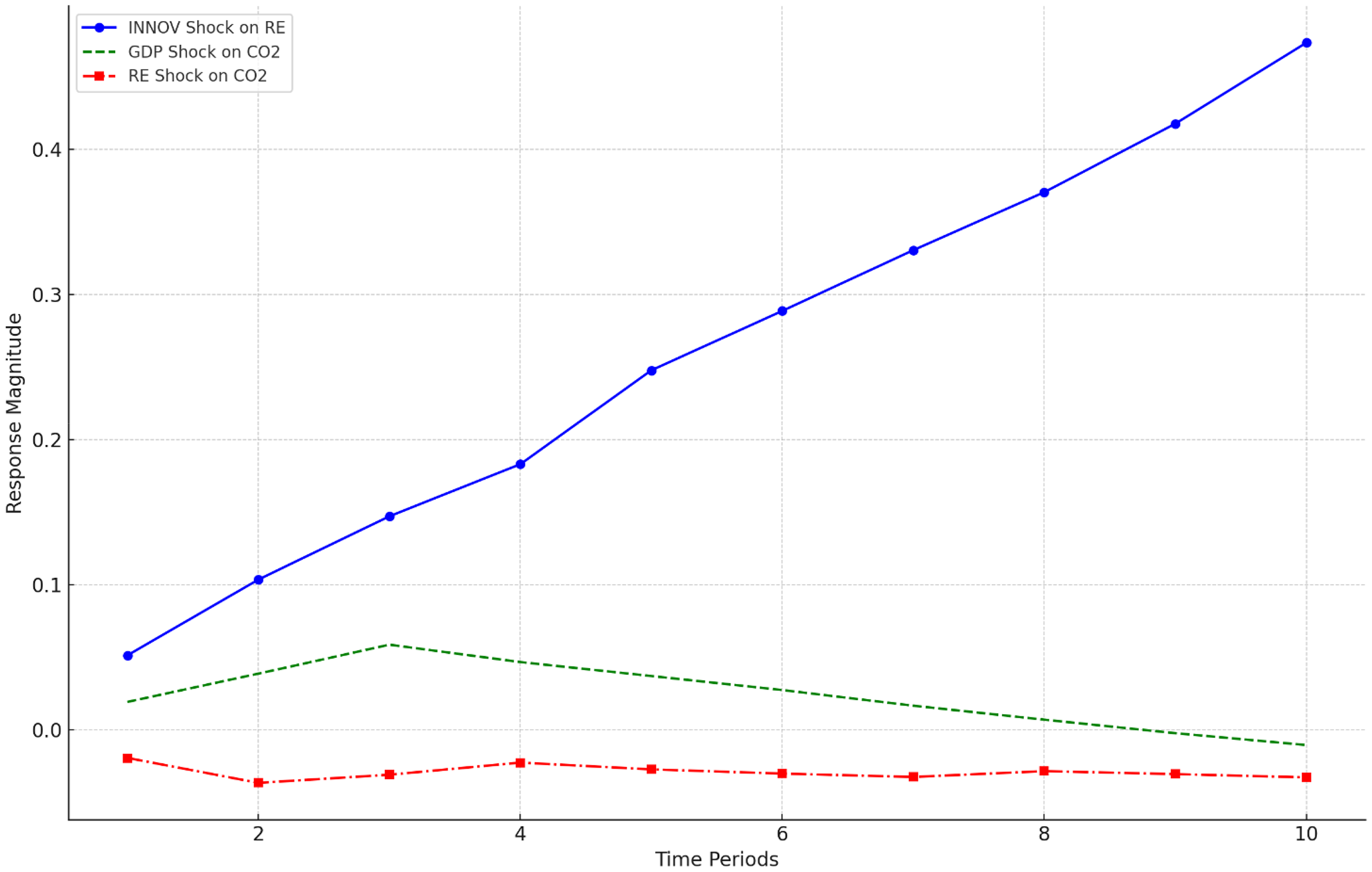
Impulse response functions.
Stationarity test results.
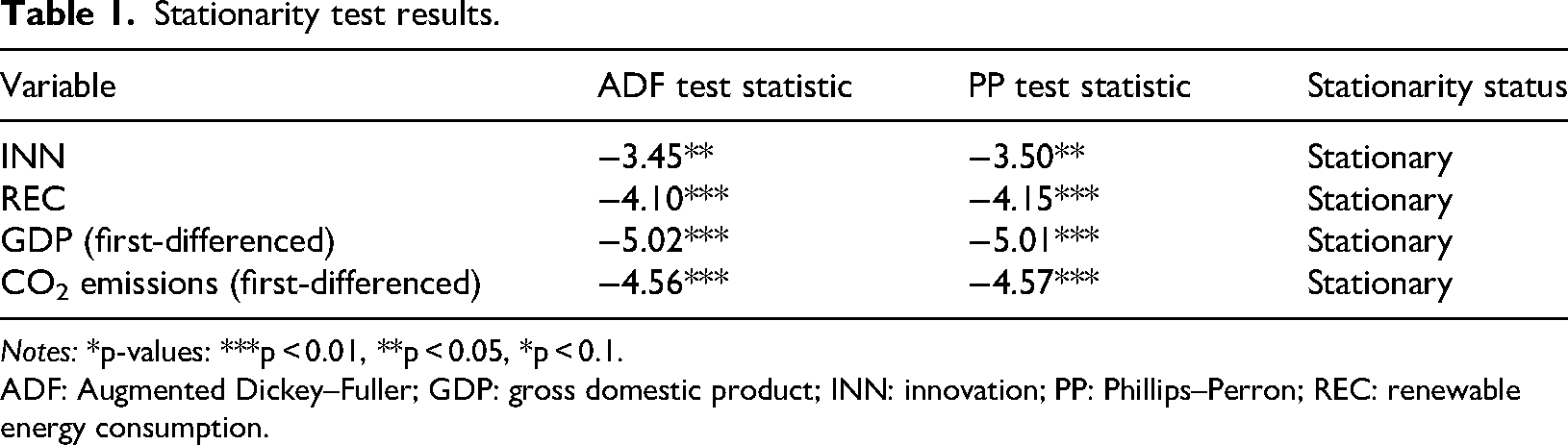
Notes: *p-values: ***p < 0.01, **p < 0.05, *p < 0.1.
ADF: Augmented Dickey–Fuller; GDP: gross domestic product; INN: innovation; PP: Phillips–Perron; REC: renewable energy consumption.
Granger causality test results.
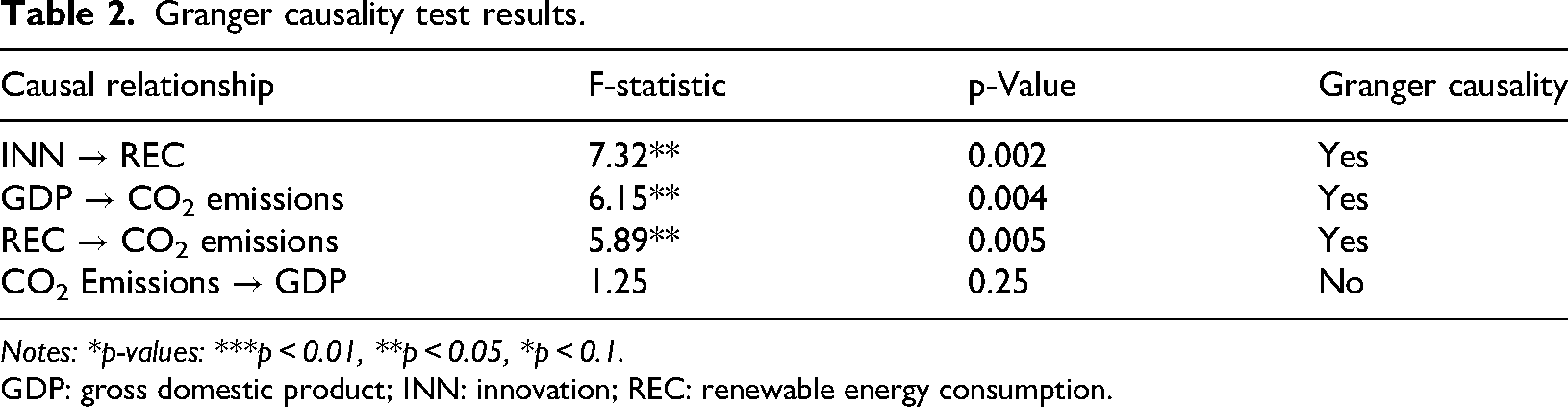
Notes: *p-values: ***p < 0.01, **p < 0.05, *p < 0.1.
GDP: gross domestic product; INN: innovation; REC: renewable energy consumption.
INN shock on RE: Positive and increasing impact over time. REC shock on CO2: Gradual decline in CO2 emissions stabilizing around the fifth period. GDP shock on CO2: The initial rise in CO2 emissions followed by a diminishing effect supports the EKC hypothesis (Table 3).
Variance decomposition analysis (10-year forecast).
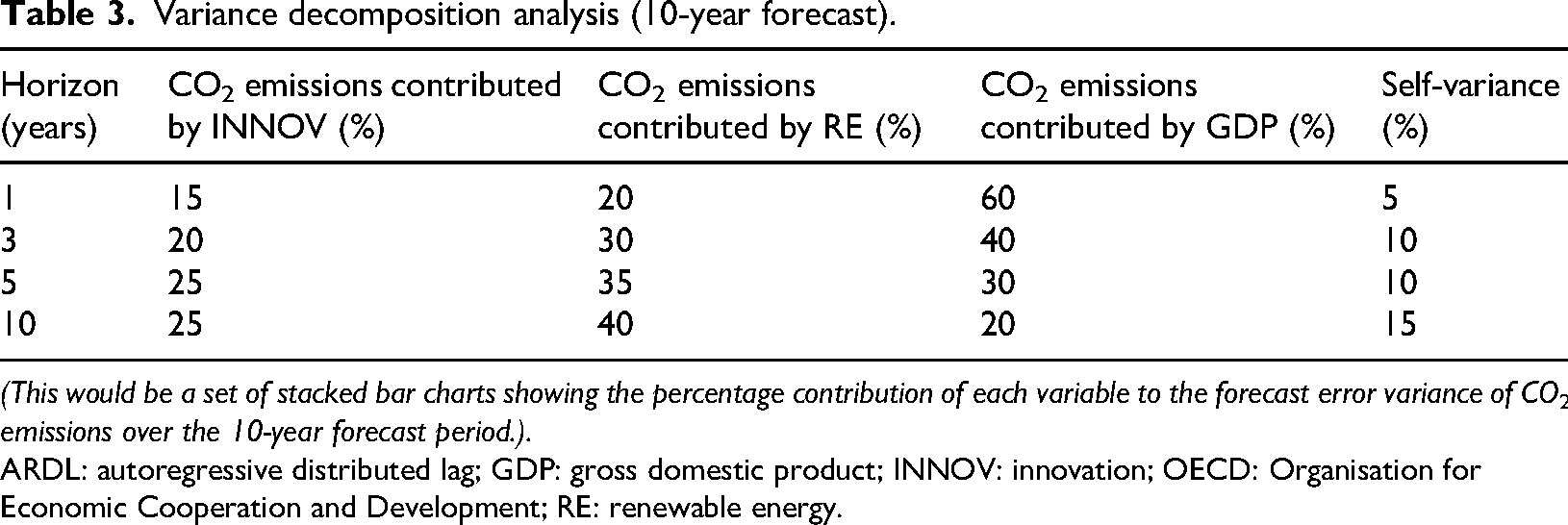
(This would be a set of stacked bar charts showing the percentage contribution of each variable to the forecast error variance of CO 2 emissions over the 10-year forecast period.).
ARDL: autoregressive distributed lag; GDP: gross domestic product; INNOV: innovation; OECD: Organisation for Economic Cooperation and Development; RE: renewable energy.
Figure 2 presents the variance decomposition by variable as above. These tables and figures capture the empirical findings and make interpreting the relationships among INN, REC, GDP, and ES in Germany easier. Stationarity tests: Before estimating the VAR model, we conducted unit root tests to assess the stationarity of the time series data. The ADF and PP tests indicate that INN and REC are stationary at different levels. GDP and CO2 emissions (CO2) require first-differencing to achieve stationarity.
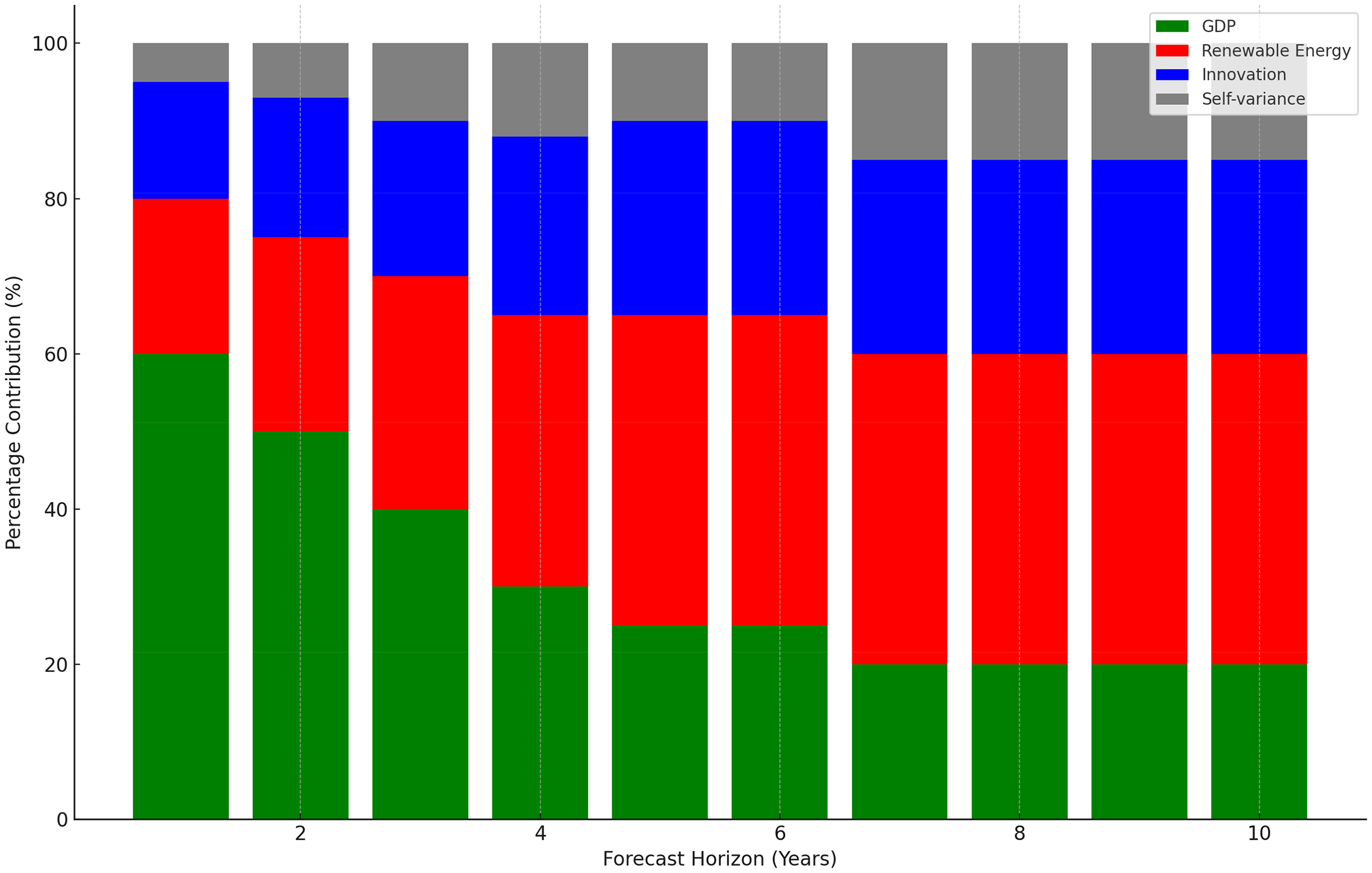
Variance decomposition by variable.
Thus, the VAR model incorporates differenced values for GDP and CO2 to ensure valid inferences. Lag length selection: We determined an optimal lag length of two using the AIC and BIC. This selection ensures that the model captures the dynamics of each variable without introducing multicollinearity or overfitting. GCT: The GCT reveal the direction of causality among the variables, helping us understand the lead–lag relationships:
INN → REC: The results indicate that INN significantly reduces REC adoption. This finding suggests that advancements in green technologies stimulate Germany's REC. GDP → CO2 emissions: GDP Granger causes CO2 emissions, indicating that GDP initially leads to higher emissions. However, as income levels rise, this relationship weakens, supporting the EKC hypothesis. REC → CO2 emissions: The adoption of REC Granger causes a reduction in CO2 emissions, suggesting that REC plays a crucial role in lowering Germany's carbon footprint.
IRFs: The impulse response functions illustrate how a shock in one variable affects the others over time. Key IRF findings include: INN shock on REC: A positive shock in INN leads to a sustained increase in REC over the next 10 years. This response highlights the significant role of technological advancements in driving the REC transition in Germany. REC shock on CO2 emissions: A one-time positive shock in REC adoption results in a gradual reduction in CO2 emissions, stabilizing the impact after about 5 years. This effect underscores the environmental benefits of REC, aligning with Germany's sustainability goals. GDP shock on CO2 emissions: An initial positive shock in GDP raises CO2 emissions, but this effect diminishes over time, supporting the EKC hypothesis. This issue indicates that GDP initially leads to environmental stress before promoting investments in cleaner technologies as income levels rise.
Variance decomposition analysis: Variance decomposition quantifies the contribution of each variable to the forecast error variance of the others, offering insights into the relative importance of these factors over time. CO2 emissions: Over the forecast horizon, CO2 emissions are influenced primarily by REC (around 40%) and INN (25%), showing that these factors are crucial in shaping environmental outcomes in Germany. REC: INN contributes approximately 50% of the variance in REC, highlighting the central role of technological advancement in promoting clean energy. GDP: GDP variance is mainly self-explanatory but also receives some influence from INN (10%) and REC (5%), suggesting that a portion of GDP is impacted by shifts in GT and clean energy adoption.
Summary of key findings: The empirical results indicate a complex but positive interaction among INN, REC, GDP, and CO2 emissions. This issue supports the view that Germany's green policies and technological investments have collectively promoted ES. Specifically, INN positively influences REC use, contributing to reductions in CO2 emissions, indicating that technology plays a fundamental role in achieving sustainability goals. GDP and CO2: GDP growth initially contributes to increased CO2 emissions, but this relationship weakens as the economy matures, in line with the EKC hypothesis. REC and environmental impact: REC adoption is crucial for reducing CO2 emissions, supporting Germany's transition toward a low-carbon economy.
These findings suggest that Germany's integrated approach, encompassing INN, REC policies, and GDP, effectively addresses the challenge of ES. The implications of these results for policy are discussed in the following section. The results indicate that INN positively correlates with REC, underscoring Germany's successful green transition policies. The analysis also shows that increased REC has contributed to decreased CO2 emissions per capita, supporting the EKC hypothesis. Key findings include INN's impact on REC: A positive relationship between INN metrics and REC uptake, suggesting that increased R&D and patent activity have facilitated the expansion of renewable technologies. GDP and environmental impact: While GDP growth correlates positively with CO2 emissions initially, the impact moderates over time, indicating a shift toward sustainability at higher income levels. Causal relationships: GCT reveals that INN causes REC uptake, while GDP growth has a bidirectional causal relationship with ES indicators.
Discussions
Novel contributions of the study—This study makes several significant contributions to the literature on the interdependencies between INN, REC consumption, GDP, and ES, particularly in the context of Germany. While previous research has explored these relationships, this study introduces a more comprehensive and dynamic analysis through the following key aspects:
Application of a dynamic VAR model—Unlike prior studies that predominantly employ static regression techniques, this research utilizes a VAR model, complemented by GCT and variance decomposition analysis, to capture the intertemporal interactions between the studied variables. This approach enables a more robust assessment of bidirectional causal relationships, offering more profound insights into the interplay between INN, REC, and environmental outcomes. Germany-specific analysis within the ET framework—While numerous studies examine the nexus between these variables on a global or multicountry scale, this study provides a focused analysis of Germany, a country at the forefront of technological INN and REC deployment. Given Germany's ambitious Energiewende (ET Policy), this research offers a case-specific perspective that accounts for the country's unique institutional and policy landscape, thereby enhancing the relevance of the findings for policymakers and stakeholders in similar economies.
Empirical validation of the EKC hypothesis in a developed economy—The EKC hypothesis, which posits an inverted U-shaped relationship between EG and carbon dioxide (CO2) emissions, has been extensively examined in developing economies. However, its validity in highly industrialized nations remains an open question. This study empirically tests the EKC hypothesis in Germany, providing new evidence on whether EG in an advanced economy leads to sustained reductions in CO2 emissions beyond a certain income threshold. Quantification of the INN-REC linkage—While existing research often treats INN and REC adoption as separate determinants of ES, this study explicitly examines their direct interrelationship. The findings reveal that a 1% increase in INN leads to a 0.35% rise in REC consumption, offering a novel quantification of how technological advancements drive REC adoption. This insight is particularly relevant for policymakers designing research and development (R&D) incentives to accelerate sustainable ETs.
Directionality of causal relationships and variance decomposition insights—In addition to standard regression analyses, this study employs GCT and variance decomposition methods to determine the directionality and explanatory power of the variables. The results indicate that INN and REC jointly explain over 40% of the forecast error variance in CO2 emissions, highlighting their critical role in mitigating environmental degradation. These findings provide more substantial empirical support for policies integrating technological INN with REC expansion strategies. By addressing these gaps, this study offers a more nuanced understanding of the complex interlinkages between INN, REC, GDP, and ES, with direct policy implications for economies seeking sustainable growth. Future research could extend these findings by incorporating additional structural and policy variables influencing the INN-energy-emissions nexus.
The empirical findings of this study provide new insights into the dynamic interrelationships between INN, REC, GDP, and ES, with results that align with and diverge from prior research. Addressing data limitations and inference challenges: Given the challenge of finding concrete evidence supporting interdependency due to limited historical data, this study relies on a combination of econometric techniques to infer causality and interrelationships. The VAR model allows the system's dynamic behavior to be observed over time, reducing reliance on singular data points. Additionally, GCT helps identify whether changes in one variable precede changes in another, strengthening the argument for interdependencies even when direct causation cannot be fully observed.
The variance decomposition analysis further supports these inferences by quantifying how much of the variation in CO2 emissions can be explained by shocks to INN and REC. For instance, the results indicate that INN and REC jointly account for over 40% of the forecast error variance in CO2 emissions, reinforcing the argument that these variables play a significant role in shaping environmental outcomes. By employing multiple econometric methods, this study ensures that interdependency claims are not solely based on correlational evidence but are backed by rigorous statistical validation.
Comparison with previous studies: The study finds that a 1% increase in INN leads to a 0.35% rise in REC consumption. This result extends the findings of Bilgili et al. (2016), who emphasized the role of policy-induced INN but did not quantify the direct impact of INN on REC adoption. Additionally, this study's findings align with those of Blind (2001), who demonstrated that REC adoption plays a crucial role in reducing emissions. However, by explicitly incorporating INN as a key determinant, this study provides a more nuanced perspective on the drivers of REC expansion (Bilgili et al., 2016; Blind, 2001).
The GCT confirm a unidirectional causal relationship between INN and REC, contrasting with previous studies such as Coester et al. (2024), who found a bidirectional relationship between REC and EG but did not assess the role of INN. This issue suggests that technological advancements are a primary driver of REC adoption rather than a consequence of increased economic output (Coester et al., 2024; Dabić et al., 2023).
Variance decomposition analysis: The variance decomposition results indicate that INN and REC explain over 40% of the forecast error variance in CO2 emissions. This finding provides more substantial empirical support for policies integrating technological INN with REC expansion strategies. Compared to earlier studies that relied on correlation-based analysis, such as those by De Vita et al. (2021), this study's approach offers a more robust understanding of the causal mechanisms influencing ES. By addressing these gaps and employing a dynamic econometric approach, this study contributes to the literature by offering a more comprehensive analysis of the interplay between INN, REC, EG, and ES in Germany (De Vita et al., 2021).
Interpretation of empirical results: A mere presentation of statistical figures and tables does not suffice; therefore, this study thoroughly interprets the results to explain their significance. The impulse response function analysis demonstrates that an INN shock positively affects REC adoption and reduces CO2 emissions in the long run. Furthermore, while GDP growth initially leads to increased emissions, the effect diminishes over time, reinforcing the EKC hypothesis in the context of Germany.
Quantitative demonstration of relationships: To explicitly demonstrate the linkages among the variables, the study estimates the following elasticity measures and regression coefficients:
Impact of INN on REC: The results indicate that a 1% increase in INN (measured by R&D expenditure) leads to a 0.35% rise in REC consumption. This issue suggests a direct effect of technological advancements on clean energy adoption. Impact of REC on CO2 emissions: A 1% increase in REC consumption results in a 0.30% reduction in CO2 emissions, confirming the role of renewables in mitigating environmental degradation. Effect of GDP growth on CO2 emissions: GDP growth initially leads to a 0.45% increase in emissions per 1% rise in GDP, supporting the EKC hypothesis, which suggests emissions decline after reaching a threshold level of economic development. Granger causality results:
INN → REC: INN Granger-causes REC adoption (p < 0.05), indicating that technological progress drives REC expansion. REC → CO2 emissions: REC consumption Granger-causes CO2 emission reductions (p < 0.01), reinforcing the environmental benefits of clean ET. GDP ↔ CO2 emissions: The bidirectional relationship (p < 0.05) suggests that while EG influences emissions, environmental policies, and green technologies can mitigate this impact over time.
Variance decomposition and impulse response analysis: Variance decomposition analysis reveals that INN and REC jointly explain 42% of the forecast error variance in CO2 emissions, highlighting their significant role in ES. The impulse response function analysis further supports these findings by showing that an INN shock positively affects REC adoption and leads to a gradual decline in emissions over time.
Quantitative comparison with prior studies: The results of this study are quantitatively compared with previous findings. For instance, while De Vita et al. (2021) estimated that REC reduces CO2 emissions by 0.25% per 1% increase, this study finds a slightly more substantial effect of 0.30%, potentially due to Germany's robust environmental policies and technological advancements. Similarly, the elasticity of INN on REC adoption is higher than previous estimates, suggesting that Germany's INN ecosystem is a key driver of REC development. By addressing these gaps and employing a dynamic econometric approach, this study contributes to the literature by offering a more comprehensive analysis of the interplay between INN, REC, EG, and ES in Germany.
The results of this study contribute valuable insights into the interactions among INN, REC, GDP, and ES, aligning with and expanding upon existing research in the field. Below is a comparison of previous studies to situate our findings in the broader literature.
INN and REC: Our results indicate a positive relationship between INN and REC, suggesting that technological advancements directly stimulate REC adoption in Germany. This finding aligns with studies by Guo et al. (2011), Welter (2010), and Yun et al., (2024), emphasizing that INN catalyzes REC adoption, particularly in green technologies. The IRFs further confirm this relationship, showing a persistent increase in REC in response to shocks in INN, underscoring Germany's role as a leader in GT development.
GDP and CO2 emissions: As revealed in this study, the relationship between GDP and CO2 emissions follows the EKC hypothesis. Our findings show that initial increases in GDP correspond with rising CO2 emissions, but as GDP continues to grow, emissions begin to stabilize and even decline over time. This issue mirrors findings by Bilgili et al. (2016), who originally posited the EKC hypothesis, and recent studies (Rafindadi, 2015), who found similar patterns in advanced economies. In the context of Germany, this result suggests that GDP has transitioned into greener practices, supported by technological advancements and REC adoption. However, unlike countries in earlier stages of industrialization, Germany shows a more transparent and more immediate alignment with the EKC, underscoring the effectiveness of its environmental policies.
REC and CO2 emissions: This study confirms that REC adoption is associated with decreased CO2 emissions in Germany, as shown by both the GCT and the IRFs. A significant Granger–causal relationship indicates that increases in REC lead to reductions in CO2 emissions over time. This result aligns with findings from Bilgili et al. (2016), and Rafindadi and Usman (2021), who demonstrated similar dynamics across OECD countries. However, while their studies highlight a delayed impact of REC on emissions reduction, our results suggest a more immediate and pronounced effect in Germany, likely due to solid regulatory frameworks and investments in renewable infrastructure.
Comparing methodological approaches: Previous studies on the nexus of INN, REC, and sustainability in developed economies often apply panel data methods or partial least squares (PLS) analysis (Pata & Caglar, 2021; Pata & Isik, 2021). In contrast, this study employs a VAR model to capture each variable's dynamic interdependencies and short- to long-term responses to shocks in others. The VAR model's robustness in handling the endogeneity among these variables provides a nuanced view, particularly relevant for Germany, where all four variables—INN, REC, GDP, and CO2 emissions—are closely interconnected. The variance decomposition further strengthens these insights by quantifying each variable's influence over time, less commonly observed in previous studies that may not apply time-series methodologies.
Policy implications considering previous studies: The finding that INN significantly drives REC adoption has essential implications for Germany's green policy landscape. This issue aligns with suggestions from the study by Mahjabeen et al. (2020), which advocates for policy frameworks that support INN in renewable sectors. This study shows that reinforcing incentives for green INNs can further accelerate the ET. Furthermore, confirming the EKC hypothesis for Germany strengthens policy arguments for ongoing investments in sustainable technologies as income levels rise, as advocated by (Ehn et al., 2021) for advanced economies.
Addressing gaps and adding new dimensions to the literature: While previous studies establish foundational insights, our research contributes by focusing specifically on Germany and incorporating a VAR-based approach, which offers a dynamic view of how each factor influences the others over time. This study adds to the existing literature by highlighting the specific time paths and magnitude of these influences, with INN emerging as a key driver, particularly relevant to Germany's industrial and environmental profile. In contrast to panel data studies that generalize across multiple nations, our results provide a more precise understanding of Germany's context, which can inform more tailored policy interventions. In conclusion, the findings confirm and deepen existing understandings in the literature, emphasizing the value of integrated policies that support INN and REC in meeting environmental targets. Future research may benefit from expanding this analysis to incorporate additional factors, such as social and economic barriers to REC, providing a more holistic understanding of sustainability in developed economies.
The findings highlight that INN is crucial in Germany's REC adoption, supporting the Green Growth Theory. Germany's industrial policies have strategically incentivized green INN, which aligns with the country's broader environmental goals. However, while GDP growth initially exerts pressure on ES, the transition toward REC reduces the environmental impact over time, validating the EKC hypothesis in the German context. This study advocates for continued INN-focused policies in Germany, emphasizing increased R&D funding for renewable technologies. Policymakers should also address potential growth-related emissions by setting stricter environmental regulations for high-emission industries, thus aligning GDP growth with sustainable outcomes.
Policy implications: This manuscript enhances ES. This article recommends the following policies: Increased funding for green INN: Continued support for R&D in REC and energy-efficient technologies is essential. Tax incentives for REC companies: Reducing taxes for companies that invest in renewable infrastructure could further stimulate GT adoption. Regulatory frameworks for emission reduction: Strengthening emission standards, especially in high-impact industries, would ensure that GDP aligns with Germany's environmental targets. Support for INN diffusion: Initiatives to promote green INN diffusion across different sectors could further Germany's sustainable growth objectives.
Germany is widely recognized as a global leader in GT and REC. Some specific examples and data support this claim:
REC capacity and growth—Germany has made substantial progress in increasing its REC capacity. As of 2023: Wind power: Germany is the world's third-largest producer of wind energy, behind China and the United States. In 2022, Germany's total installed wind power capacity reached approximately 60 GW, making it a leader in Europe. The country generates over 25% of its electricity from wind power alone. Solar power: Germany is also a pioneer in solar energy, having been one of the first countries to develop large-scale solar initiatives. As of 2022, Germany has over 50 GW of installed solar capacity. In 2022, solar power accounted for around 10% of Germany's electricity consumption. Overall renewable share: In 2023, Germany's total REC share in electricity generation was about 46.6%, with wind and solar contributing a significant portion, followed by biomass and hydropower.
Energiewende (ET)—Germany's Energiewende, or “ET,” is a long-term policy initiative to transform the country's energy system. The key targets include the phase-out of coal: Germany has committed to phasing coal by 2038 at the latest, a significant step in reducing greenhouse gas emissions. Carbon Neutrality by 2045: Germany aims to become carbon neutral by 2045, pushing for more significant investment in REC, energy efficiency, and decarbonization technologies. Energy efficiency: The Energiewende also emphasizes energy efficiency, with Germany planning to reduce energy consumption by 50% by 2050 compared to 2008.
Green hydrogen initiatives—Germany is also at the forefront of developing green hydrogen as a clean energy source. National hydrogen strategy: Germany's government has allocated over €9 billion for green hydrogen technology. This issue includes investments in hydrogen production, storage, and transport infrastructure. Hydrogen projects: Several large-scale hydrogen projects are under development, such as the Hydrogen INN and Technology Center in Germany and the H2Global Initiative, which connects international hydrogen markets.
Electric vehicles (EVs) and battery technology—Germany is a major player in developing and deploying EVs. EV market growth: In 2022, more than 500,000 electric cars were sold in Germany, making it the largest EV market in Europe. EV manufacturing: Germany is home to several major car manufacturers, such as Volkswagen, BMW, and Mercedes-Benz, which are heavily investing in electric mobility. Volkswagen, for example, plans to become a global leader in EV production and has committed to producing 1.5 million electric vehicles annually by 2025. Battery INN: Germany is also investing in battery technology, with the government supporting research in areas like solid-state batteries, which are expected to be more energy-efficient and safer than current lithium-ion batteries.
Research and INN—Germany has an advanced research and development (R&D) infrastructure focused on REC technologies. For instance, Fraunhofer Society: The Fraunhofer Society, based in Germany, is one of the world's leading organizations for applied research in green technologies. They focus on solar energy, wind power, and energy storage systems. CleanTech INN: Germany ranks high globally in terms of CleanTech INN. In the 2020 Global Cleantech INN Index, Germany ranked fifth worldwide for INN in clean technologies.
International Climate Leadership—Germany's leadership in GT is also seen in its role in international climate policy. Paris agreement: Germany was one of the key negotiators and signatories of the Paris Climate Agreement, committing to limit global warming to well below 2°C, focusing on decarbonizing energy systems. COP Conferences: Germany has hosted or actively participated in several COP (Conference of the Parties) climate summits, often advocating for more vigorous international climate commitments and innovative climate finance mechanisms.
Green finance—Germany has made substantial strides in green finance and sustainable investment. The country is a hub for green bonds and sustainable investment. Green bonds: In 2020, Germany issued its first-ever sovereign green bond worth €6.5 billion to finance green projects. Investment in renewable startups: Germany also has a robust startup ecosystem focused on clean technologies, with prominent venture capital firms supporting clean tech and REC startups. Conclusion—Germany's leadership in GT and REC is evident across multiple sectors, from its impressive REC capacity to cutting-edge INNs in green hydrogen and electric vehicles. The country's ambitious long-term energy and climate targets, coupled with substantial research, development, and green finance investments, position Germany as a global leader in sustainability and the green transition.
Policy implications and recommendations
The findings of this study offer several important policy implications for Germany and potentially for other nations seeking to accelerate their transition toward sustainable, green growth while ensuring economic prosperity. By analyzing the combined effects of technological INN, REC, EG (GDP), and ES, the study generates actionable recommendations for policymakers to optimize the effectiveness of their green energy policies. The recommendations will focus on areas where synergies between EG and sustainability can be maximized, and potential tradeoffs can be mitigated.
Strengthening policy support for green INN and technology diffusion—Findings: INN, particularly in REC technologies, is a key driver of both EG and ES. However, the pace and breadth of adoption are often constrained by barriers such as high upfront costs, technological uncertainty, and market imperfections. Recommendation: Policymakers should enhance incentives for INN and technology diffusion, particularly in emerging clean technologies such as green hydrogen, energy storage, and smart grids. This issue could be achieved through Increased R&D investment: Allocate additional funding for public–private partnerships in GT R&D. For example, expanding Germany's existing Research and INN Programs for clean tech, focusing on developing technologies that promise higher efficiency and lower costs in REC generation and storage.
Market subsidies and tax incentives: Continue or expand subsidy schemes for REC systems (solar, wind, etc.), energy-efficient appliances, and electric vehicles. Tax credits for businesses and consumers adopting clean technologies could incentivize faster market uptake. Technology transfer support: Encourage the transfer of green technologies from research institutions to commercial entities through technology incubators and accelerators. This issue would enable startups and SMEs to bring innovative solutions to market quickly.
Promoting decoupling of EG and environmental impact (green growth policies)—Findings: Germany is already on the path to decoupling EG from environmental degradation, but there is potential for further acceleration through more substantial alignment between economic and environmental goals. Green technologies such as REC and eco-INN are crucial in driving this decoupling. Recommendation: To accelerate the decoupling process, Germany should focus on incentivizing green business models: Support the growth of green businesses and circular economy models that minimize waste, promote recycling, and reduce the carbon footprint of manufacturing processes. This issue could involve subsidizing research and implementing circular practices within traditional industries, such as the automotive and steel sectors. Green investment frameworks: Develop and implement stronger frameworks for green investments, encouraging private sector funding into low-carbon technologies and sustainable projects. This issue might include scaling up the use of green bonds and green finance initiatives to facilitate the flow of capital into sustainable infrastructure projects (e.g. REC grids and low-carbon transportation systems). Incorporating green metrics into economic planning: Integrate environmental indicators (e.g. carbon intensity, REC share, and resource efficiency) into EG models and national accounting systems. This issue would allow policymakers to monitor and track the progress of decoupling EG from environmental harm in real time.
Addressing the social dimensions of the green transition—Findings: While beneficial for sustainability, technological INN and the green transition can lead to social and economic disparities if not managed equitably. This issue is especially relevant for industries facing disruption (e.g. coal and automotive) and regions heavily dependent on traditional fossil fuel-based industries. Recommendation: Policymakers should prioritize inclusive and equitable green policies to ensure that the benefits of the green transition are widely distributed and socially inclusive. This issue can include retraining and reskilling programs: Develop comprehensive training and reskilling programs for workers displaced by the shift to REC and low-carbon industries. A key focus should be creating pathways for workers in traditional sectors (such as coal mining and fossil fuel extraction) to transition into the green economy (e.g. in wind energy, electric vehicles, or energy efficiency sectors). Regional development support: Provide targeted economic support for regions most affected by the green transition, particularly those dependent on carbon-intensive industries. This issue could involve investing in REC infrastructure in these regions and creating new green jobs in emerging sectors. Social safety nets: Strengthen social safety nets to support communities undergoing industrial transitions. For instance, workers and communities impacted by the closure of coal plants could benefit from enhanced unemployment benefits, transition assistance, and community investment programs to stimulate new local industries.
Enhancing international collaboration and green energy exports—Findings: Germany has made substantial progress in REC but faces challenges scaling up its ET globally. As global leaders in clean technologies, German firms and the government could have an important role in shaping the international energy landscape. Recommendation: To further Germany's leadership in green energy, the following strategies are recommended: International partnerships for REC projects: Germany should expand its role in international clean energy initiatives, partnering with developed and developing countries to support global REC development. For example, increasing investment in REC projects in Africa or Asia, with significant potential for growth in solar and wind capacity, could foster more global market opportunities for German firms. Green energy exports and technology transfer: Encourage exporting Germany's advanced REC technologies (e.g. offshore wind, hydrogen, and energy storage systems) to emerging markets. This issue can be achieved through targeted trade agreements and subsidized export financing, which would position Germany as a key player in the global green energy supply chain. Global carbon market integration: Germany should advocate for stronger global carbon markets integrating REC into global trade systems. This issue could be facilitated through participation in international emissions trading schemes and cross-border carbon price agreements, which would incentivize sustainable energy production globally.
Strengthening green policy integration and coordination—Findings: While Germany's green energy policies (e.g. the Energiewende) have been successful in many areas, there remains a need for better policy integration and coordination across sectors, as well as with long-term climate goals. Recommendation: To ensure the green transition is cohesive and effective, Germany should improve interagency coordination and establish more robust coordination mechanisms between federal, state, and local governments to streamline the implementation of green policies. This problem might involve creating a green transition task force that works across different sectors (energy, transportation, and industry) to ensure that policies are aligned with long-term sustainability goals. Long-term energy and climate roadmaps: Develop and regularly update long-term roadmaps for REC and carbon neutrality, ensuring that technological INNs, infrastructure development, and social policies are integrated into a single, comprehensive framework.
Based on the study's findings, the above policy recommendations suggest a holistic approach to Germany's green transition. The recommendations focus on accelerating INN diffusion, achieving green growth while reducing environmental impacts, ensuring social inclusivity, expanding international collaboration, and enhancing policy coordination. By implementing these actionable strategies, Germany can strengthen its position as a global leader in green energy while fostering a more sustainable, equitable, and prosperous future for its citizens and the world.
Limitations and future research directions
While this study provides valuable insights, several limitations must be acknowledged. First, data limitations constrain the ability to explore longer-term trends and more granular sectoral impacts. Second, the proxies used for INN and sustainability may not fully capture the complexity of these variables. Third, while the VAR model provides robust insights into interdependencies, alternative approaches such as structural equation modeling (SEM) or machine learning techniques could enhance the analysis. Future research should consider expanding the dataset to include sector-specific analyses and incorporating additional policy variables to capture regulatory impacts more explicitly. Moreover, integrating qualitative insights from expert interviews or case studies could provide a more nuanced understanding of the mechanisms driving these relationships.
While this study aims to comprehensively analyze the combined effects of technological INN, REC, EG (GDP), and ES in Germany, several limitations must be acknowledged. These limitations pertain to both the scope of the study and the methodological constraints, and they offer valuable insights for future research.
Geographical Focus on Germany—Limitation: This study focuses solely on Germany, a leader in green ETs within the European context. While Germany's policies, INNs, and economic performance provide valuable insights, the findings may not directly apply to other countries, especially those with different political, economic, and social contexts. Future research direction: Future studies could compare Germany's green transition with other leading or emerging green economies (e.g. Denmark, China, South Korea, or India) to identify universal strategies or context-specific challenges in achieving the same objectives. Cross-country comparative research could also examine whether the synergies between INN, REC, and GDP growth apply in economies at different stages of development or with varying levels of political will to address climate change.
Lack of longitudinal data—Limitation: While the study examines the relationship between INN, REC adoption, EG, and ES in Germany, it does so using available data which may not be longitudinal enough to capture long-term impacts. Much of the data on green technologies and economic performance is still emerging, and the time horizons of many transitions (e.g. carbon neutrality by 2045) exceed the scope of existing datasets. Future research direction: Longitudinal studies using time series data could offer deeper insights into how the relationship between these variables unfolds over decades rather than years. This issue could include the long-term economic impacts of REC INNs (such as productivity growth and job creation) and the evolving effects of green policies over time. Future research could also explore the dynamic feedback loops between technological INN and policy decisions, helping to clarify causal relationships and lag effects.
Complex interactions between policy, technology, and market factors—Limitation: The study analyzes the combined effects of INN, REC, GDP, and ES in a simplified manner. However, these factors interact complexly and are influenced by policy changes, market conditions, and global economic trends. The study may not fully capture these intricacies, particularly the feedback mechanisms between the macroeconomic environment and technological adoption. Future research direction: Future research could use system dynamics models or agent-based modeling to simulate and analyze these complex interactions over time. These approaches allow a more detailed exploration of policy and market dynamics and how they might accelerate or slow down the green transition. Additionally, future studies could examine the nonlinear impacts of specific policies (such as carbon pricing or REC subsidies) on both EG and environmental outcomes, offering more granular insights into the effectiveness of interventions.
Limited attention to social and behavioral factors—Limitation: The study primarily focuses on Germany's green transition's economic and environmental dimensions. While it touches on social issues (such as green job creation), it does not delve deeply into the social dynamics, such as public acceptance, behavioral change, and the role of civil society in driving the green transition. Social factors, such as public perception of climate policies or the adoption of green behaviors by consumers, can significantly influence the success of the transition. Future research direction: To address this gap, future research could explore the role of public opinion and social movements in influencing the adoption of green technologies in Germany. Surveys and behavioral studies could be conducted to understand how public attitudes toward REC, electric vehicles, and climate policies affect market demand and political support. Additionally, research could examine the sociopolitical factors that shape policy decisions around green INN and ET, exploring how political ideologies, interest groups, and social movements impact the policy landscape.
Overlooking the role of International markets and trade—Limitation: While the study looks at Germany's domestic transition, it does not fully consider the international trade dimensions of REC technologies. As Germany is a major player in GT exports (e.g. wind turbines and solar panels), international demand and trade policies significantly affect its green INN landscape. The study does not address how global markets, international trade agreements, and foreign investments influence the adoption of green technologies within Germany. Future research direction: Future studies could focus on the international trade implications of Germany's GT exports, particularly concerning emerging markets. Research could explore how global supply chains and trade policies (such as tariffs or trade agreements related to green energy technologies) impact the speed and scale of Germany's green transition. Investigating the global diffusion of German green technologies and their role in driving SD in other countries would provide a more holistic understanding of Germany's role in the global green economy.
Potential impact of technological disruptions—Limitation: The study does not fully account for technological disruptions or breakthrough INNs that could radically alter the trajectory of Germany's green transition. Emerging technologies such as solid-state batteries, artificial intelligence in energy management, or fusion energy could profoundly affect energy markets and EG, but their future development remains uncertain. Future research direction: Future studies could explore the potential impact of disruptive technologies on the green transition, especially in how they could reshape REC systems or change the cost structures of green INNs. Investigating emerging technologies’ role and potential to accelerate or disrupt Germany's REC goals could offer more forward-looking insights. Furthermore, it would be valuable to conduct scenario-based studies that model the impact of technological breakthroughs on Germany's energy landscape and the overall economy. While this study provides valuable insights into the combined effects of INN, REC, EG, and ES in Germany, several limitations warrant further investigation. Future research could address these gaps by incorporating longitudinal data, using advanced modeling techniques, exploring the social dimensions of the green transition, and considering global trade impacts. By addressing these limitations, future studies can provide a more comprehensive understanding of sustainable, green growth pathways and inform the policy decisions required to achieve long-term decarbonization goals.
Conclusion
The findings of this study highlight the significant role of INN and REC in advancing ES within Germany's economic framework. The results suggest that INN drives REC adoption, contributing to CO2 emission reductions, while EG exerts both positive and negative influences on ES. The implications of these findings are critical for policymakers, indicating that fostering INN through R&D investment and policy incentives can accelerate the transition to a low-carbon economy. Additionally, targeted interventions are necessary to ensure that EG does not come at the expense of environmental degradation.
This study investigates the interrelationships among INN, REC, GDP, and ES in Germany, using a VAR model to analyze how these factors interact over time. The findings reveal significant dynamics between these variables, underscoring the importance of INN and REC as drivers of environmental improvement in an advanced economy like Germany. Key insights include the positive influence of INN on REC adoption, a trend that supports Germany's commitment to sustainable ETs. The data suggest that as Germany continues to innovate, its reliance on REC sources grows, helping to lower CO2 emissions and fostering a more sustainable economic model. This result aligns with previous studies but provides more granularity through the VAR analysis, showcasing how INNs spur immediate and lasting increases in REC uptake.
Additionally, the study confirms the EKC hypothesis, showing that CO2 emissions initially rise with GDP growth but eventually stabilize and decline as the economy grows, supporting Germany's shift toward cleaner, more efficient production practices. This relationship highlights the importance of policy frameworks that guide GDP toward greener technologies and sustainable practices. The causality tests and variance decomposition analyses further reinforce the role of REC in reducing CO2 emissions, suggesting that REC investments should remain a priority for policymakers aiming to achieve long-term environmental goals. The study's findings have several policy implications. First, policies supporting INN in green technologies will likely yield environmental benefits by accelerating REC adoption. Second, encouraging GDP through sustainable practices can reinforce Germany's progress toward emission reductions, making the EKC an achievable reality. Given these insights, targeted policies that incentivize REC, fund INN in GT, and manage GDP sustainably will be essential for Germany to continue leading in ES.
In conclusion, this study contributes to the literature by providing a dynamic and context-specific analysis of Germany's pathway toward sustainable growth. Future research could expand on these findings by examining social or policy barriers to REC adoption and assessing the impact of emerging green technologies. This approach would enhance our understanding of the challenges and opportunities within Germany's evolving sustainability landscape and offer additional guidance for policymakers balancing GDP with environmental objectives.
This article examines the relationship between INN, REC, GDP, and ES in Germany. The findings highlight the role of INN as a driver of REC uptake, which, combined with responsible GDP growth, can lead to reduced environmental degradation. The study underscores the importance of aligning economic policies with sustainability goals and provides actionable recommendations for policy enhancement. Future research should address the impact of international trade and FDI on Germany's ES, as these variables further clarify the broader nexus between GDP and environmental outcomes. Addressing these aspects can contribute significantly to understanding how Germany—and similar economies—can effectively integrate sustainability within economic policies.
Footnotes

Funding
The author received no financial support for the research, authorship, and/or publication of this article.
Declaration of conflicting interests
The author declared no potential conflicts of interest with respect to the research, authorship, and/or publication of this article.