




Abstract
The ability to treat saltwater to make it suitable for human consumption has long been sought by mankind. More than three-quarters of the earth's surface is covered with saltwater. Although this water is important for some forms of transportation and fishing, it contains too much salt to sustain human life or agricultural activities. One way to desalinate water is to use solar energy-based technologies. One of these technologies is the use of a solar device to evaporate and condense water, along with the generation of electricity through a transparent photovoltaic panel, providing freshwater. The current work focused on developing a simple solar still with low-cost materials that can be built by anyone, anywhere. In addition, the study presented three-dimensional multiphase CFD models for a single-slope solar still. Computational modeling using ANSYS 15 enables precise simulation and optimization of this integrated solar system, maximizing its overall efficiency and output. This dual-purpose solar energy utilization offers a pathway to provide both clean water and electricity to communities in remote or resource-constrained regions, thereby enhancing their quality of life and promoting sustainable practices. Simulation results indicate that increasing the saline water temperature from 60°C to 70°C results in a 67% increase in water production at a wind speed of 3 m/s. A further increase in temperature from 80°C to 90°C leads to a 141% increase in water production under the same wind conditions.
Introduction
The growing requirement for human energy stems from several factors, leading to increased demand across various sectors: Population Growth, Economic Development, Technological Advancements, and Improved Living Standards (Rajhi et al., 2024). This growing demand presents challenges, as it can lead to increased greenhouse gas emissions, resource depletion, and environmental degradation if not addressed with renewable energy solutions (Li et al., 2024; Yang et al., 2024). Renewable energy sources are energy sources that are naturally replenished, such as sunlight, wind (Li et al., 2023), rain, tides, and geothermal heat (Wang et al., 2023). They are considered sustainable and have a lower environmental impact compared to fossil fuels (Jichao et al., 2024; Yi et al., 2025). Harnessing the power of solar energy presents a transformative opportunity to address two fundamental human needs (Chen et al., 2023; Zheng et al., 2024): clean electrical energy and freshwater. As the world increasingly faces the challenges of climate change and water scarcity, the importance of leveraging solar technology for sustainable solutions becomes more apparent (Abed et al., 2022; Anazi et al. 2023). This article explores how properly utilizing solar energy can meet these basic needs, offering insights into the potential benefits, innovative technologies, and key considerations in achieving clean energy and freshwater through solar solutions. Solar energy stands out as particularly popular because it is cost-effective to convert into electricity and is widely available on a daily basis. As a result, there have been numerous studies on solar energy, which is used as a clean source of power to generate electricity and desalinate salt water.
A study was conducted by researchers to assess the effectiveness of various solar devices (Anazi et al., 2023). Rahbar and Esfahani (2013) analyzed the efficiency of a basic inclined solar water desalination device using both theoretical and numerical methods.
Studies found that numerical simulations and experimental results showed similar trends in water production rates and convective heat transfer coefficients. El-Agouz et al. (2015) studied an inclined solar water desalination machine and found that its efficiency improved when water mass decreased and wind speed increased. Rahbar et al. (2015) calculated water efficiency and convective heat transfer coefficients in a stationary tubular solar device. They reported that as the glass temperature increased by 5°C, the efficiency decreased by 200%. Rashidi et al. (2018) numerically to modeling of wo-phase solar water desalination device. They used Al2O3 nanofluid and water to increase productivity rate. The results showed that by increasing the volume fraction of nanoparticles from 0% to 5%, the productivity increased by 18%. The thermoelectric cooling system was used in the research of Hemmat and Taghrai (Esfe and Toghraie, 2022). The amount of water production increased between 15% and 62% by coupling the thermoelectric cooling system to the solar desalination device. They conducted another study for solar desalination in Khuzestan province and concluded that Ramhormoz, Dehdz, and Izeh are the best points for exploitation according to wind speed.
Adibi et al. (Toosi et al., 2021) introduced a new solar water desalination device design that consists of steps incorporating a phase shifter material. The new step design with stearic acid phase shifter material increased the amount of produced water by 43% compared to the no-slope design. In their numerical solution, Saleem et al. (2021) utilized RT42 phase shifter material to enhance the production rate of fresh water. Raihananda et al. (2021) presented a floating model of a solar water desalination device that was completely made of simple locally available materials. They also proposed the mathematical model of the design, and the results of the mathematical and experimental models were in good agreement. Nian et al. (2021) utilized phase shifter materials to enhance water production, leading to a 28% increase. Shoeibi et al. (2021) used nanofluid to cool the distillation glass and also to heat the salt water for better evaporation. Simultaneous bilateral use of nanoparticles was a smart idea that increased water production between 4% and 11%. Moreover, thermoelectricity was used in their experimental work, and compared with a mathematical model. Some researchers to improve the performance of the solar water desalination device used vertical plates in the device to change the geometry of the system.
Serradj et al. (2021) conducted experiments and numerical analysis to study how well a solar water desalination device with a deflector blade for fluid flow performs. They reported, choosing the right height and placement of the blade cause an increase of about 20% of sweet water; also, using of a blade with semitransparent materials and a low thermal conductivity coefficient is suggested for preventing heat loss in the system. Other researchers used different blades inside solar devices for enhancing productivity. Rashidi et al. (2016) utilized the blade to enhance the average Nusselt number, resulting in improved system efficiency. They optimized the size and location of the blade. El-Sebaii et al. (2015) investigated the effect of blade configuration on the efficiency of a single-tank solar water desalination device. The study revealed that the solar efficiency of the finned plate improves as the blade height increases, but decreases as the number and thickness of the blade increase. Rajaseenivasan and Srithar (2016) conducted an experiment using circular and square blades in a desalination device tank.
Research found that cloth-covered blades had higher productivity compared to other types of blades. Both circular and square blades performed equally well. Other researchers have also used optimization techniques in various solar stations. Mashaly et al. (2015) utilized an artificial neural network (ANN) to optimize the performance of a solar station. The results indicated that the ANN model accurately predicted the performance of the desalination device with minimal error. El-Maghlany (2015) optimized the geometry of the solar desalination device with two inclined surfaces to absorb maximum solar energy.
Limited studies have been conducted with similar performance has been carried out regarding the combination of solar panels with a solar water desalination device, mainly solar panels have been used for preheating of salt water. An example of this work is related to the work of Sahota and Tiwari (2017). They use nanofluid water-CuO observed higher productivity compared to water nanofluids along with Al2O3 and TiO2. Rizwan et al. (2014) conducted an analytical study on a solar desalination device that had solar collectors fitted with parabolic reflectors. They used the spiral heat exchanger equipped with carbon nanoparticle to increase the productivity rate. The results showed that the use of nanoparticles increased the productivity rate from 28/1% to 65/7%. Afshari (2024) used solar panels for electricity generation and preheating of salt water entrance to the tank of the solar desalination device.
The results showed that the fresh water production capacity of the hybrid solar desalination device with solar panels is 12.2 L/m and the independent solar desalination device is 3.35L/m. Although these types of designs have good performance, they also require a lot of space. In the above studies, the solar panels were used in the vicinity of the solar desalination device, which requires a larger space. In other researches, to solve the above limitation, the module or solar panel has been coupled with the solar water softener. Seifi et al. (2024) studied thermo-economic performance and modeling of a parabolic solar collector with phase change material in the receiver tube in a solar desalination. Mariraja et al. (2024) studied a solar desalination system performance with graphene and graphitic carbon nanopaint-coated solar absorbers. The packing factor, which represents the density of solar cells in the solar module, as the main parameter for production control of electricity or more water was considered.
Energy deficiency and freshwater limitation are significant obstacles to sustainable societal development. The photovoltaic (PV)–thermal hybrid system presents a viable approach by capturing solar energy for both electricity and water generation. Nevertheless, current systems experience relatively low performance due to underutilization of the solar spectrum. According to earlier research, there has been insufficient assessment of a solar desalination unit integrated with a semitransparent solar module. Furthermore, there has been no numerical analysis of semitransparent PV panels combined with a solar water desalination system. In this study, we introduce an innovative PV–thermal hybrid system that integrates semitransparent solar cells with multistage interfacial desalination, capable of concurrently generating freshwater and energy, thereby achieving record-high system efficiency. To comprehend the underlying mechanisms and further offer optimized solutions, we established a theoretical model to examine the impacts of solar radiation, the number of stages, air gap thickness, and internal connectivity coefficient on system performance, while proposing strategies to improve electric-thermal efficiency simultaneously. This research seeks to develop a model that merges these two solar technologies and evaluate its performance under different conditions. The simulation was performed using ANSYS Fluent 15.
Design of a solar-still system
The diagram in Figure 1 displays the two-dimensional geometry of the issue, including dimensions, size, and boundary conditions. It shows two monocrystalline solar cells with 20% efficiency and a size of 125 mm in a semitransparent solar module. The geometric dimensions and optical properties of the semitransparent solar module can be found in Table 1 (Duan, 2021; Maadi et al., 2019). The simplifying assumptions are based on the applied boundary conditions:
The side walls of the solar water desalination device are insulated to maintain temperature. The lower part of the device, where salt water is located, remains at a constant temperature. The side walls of the solar module are opaque and adiabatic to prevent heat loss. The issue is resolved in a stable manner. The fluid flow is slow and incompressible.
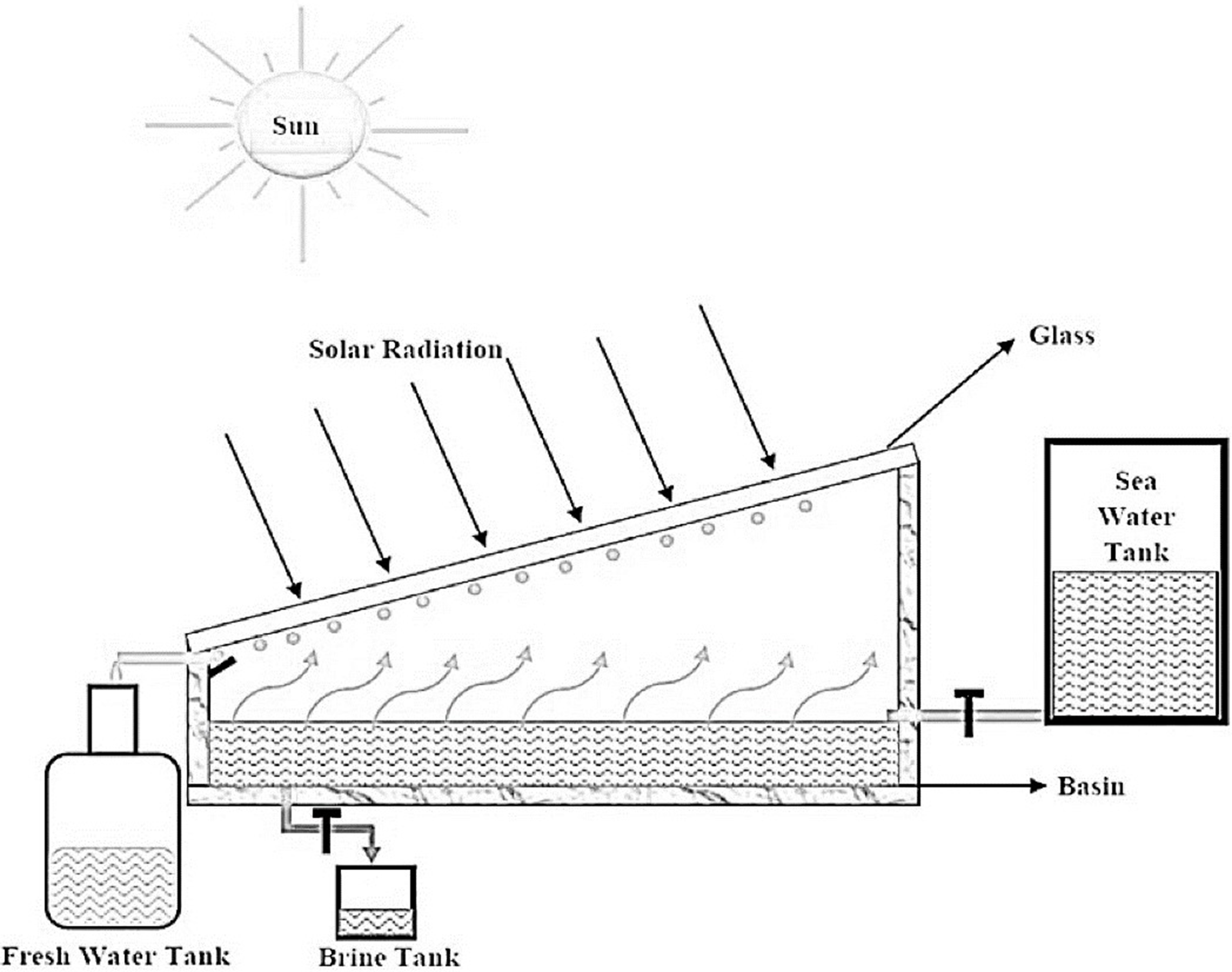
Illustration of a basic solar-still system (Kapoor et al., 2023).
Optical and thermophysical properties of translucent solar module (Duan, 2021; Maadi et al., 2019).

The solar-still system uses solar radiation to heat the saltwater in the basin. The water evaporates and condenses on the glass cover, collecting as freshwater and flowing into the freshwater tank. The concentrated brine collects in the brine tank. This illustration showcases the process of solar-powered desalination. Referring to Matai et al. (Jamali Shakarab et al., 2025), the efficiency of single crystal solar cell is obtained from the following relationship:
Depending on operational parameters like solar radiation intensity and water temperature, boundary conditions can be classified based on the assumptions that have been made.
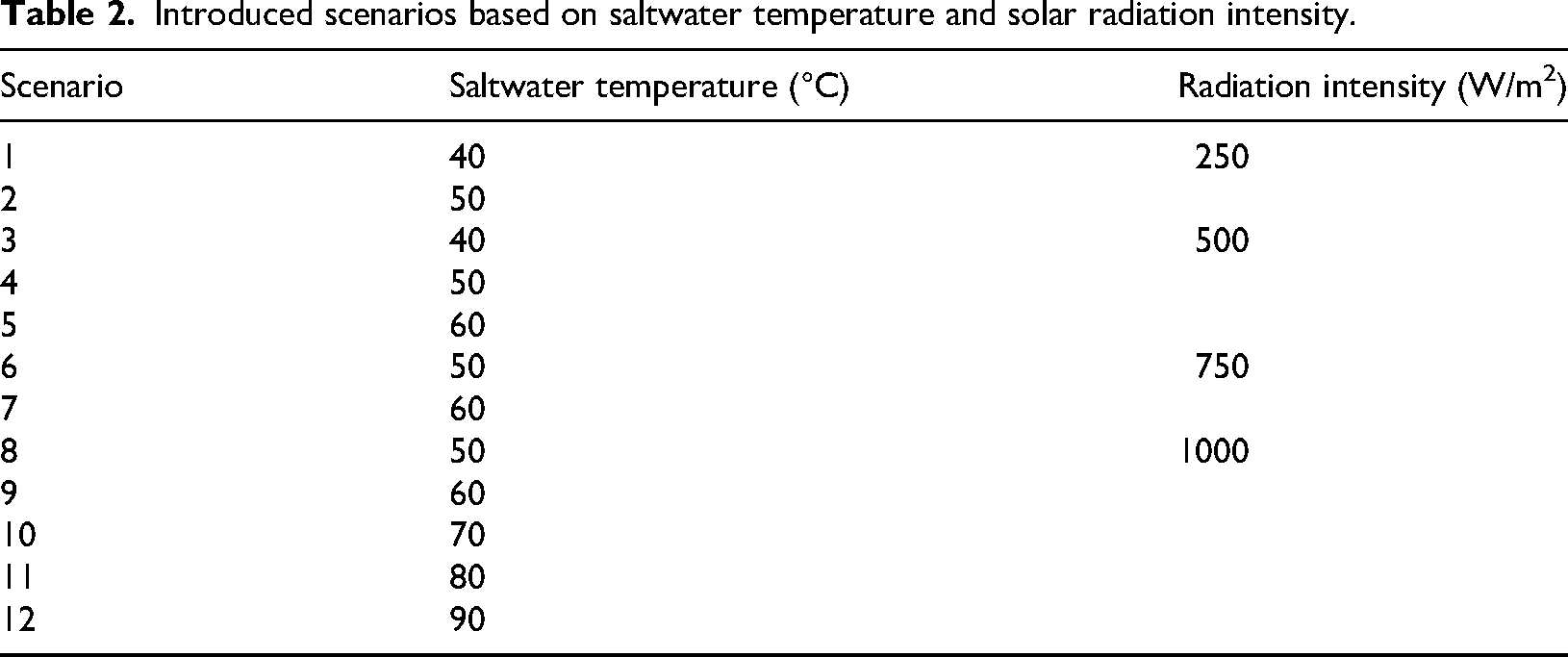
Solar radiation intensity is typically between 250 and 1000 (W/m2), while salt water temperature ranges from 40 to 80°C. The radiation intensity is categorized into four modes: 250, 500, 750, and 1000 (W/m2). Similarly, salt water temperature is measured at 40, 50, 60, 70, and 80°C.
There are 10 different boundary conditions summarized in Table 2. The logic used in the scenarios is comparing the glass temperature to the water temperature. If the glass temperature exceeds the water temperature, solar desalination is not feasible. Therefore, unsuitable case scenarios were not included after simulation and processing. It is important to mention that there are 10 scenarios for different boundary conditions for both systems.
Introduced scenarios based on saltwater temperature and solar radiation intensity.
Solar desalination was applied with and without translucent PV module and the above two systems were compared and discussed.
Mathematical modeling
The governing equations of the problem include continuity, momentum, energy, radiation (DO), and concentration. All symbols used in the equations have been introduced in the appendix.
Continuity equation:
The momentum equation in the x-direction:
The momentum equation in the y-direction:
Energy equation:
There is a spring term in the energy equation, which is determined by simultaneously solving the radiation equation (DO). In the radiation model (DO), Radiation intensity is assumed to be a function of location and direction.
By solving the above equation and determining the radiation intensity, the spring term is obtained.

The concentration equation is also determined from the following equation:
The empirical equations governing the problem to determine the evaporative heat transfer coefficient include the following:
In which (Li et al., 2024)



Also, the amount of fresh water obtained is equal to (Didi et al., 2024)
In which,
The properties of humid air, which is a function of the average temperature, are calculated from Table 5 in the appendix (Dwivedi and Tiwari, 2009). Since Dunkel's model has a 30% error in estimating the evaporative heat transfer coefficient, Shawaqfeh and Farid (1995) presented another empirical relationship based on the Chilton–Colburn equation:
In which,
The displacement heat transfer coefficient is calculated by equation (19):
The average Nusselt number and freshwater production rate obtained from numerical calculations are calculated from the following relationships:

Energy equations in different layers of translucent solar module is as follows:
Absorption coefficient (a) is obtained from the following equation:
By placing the absorption coefficient in equation (6), the radiation intensity can be obtained and then inserted as a spring term in equation (22). “i” representing the different layers of cell in equation (22), for parameter, “y,” the numbers 1 and 0 respectively, is the solar cell parameter and other layers are assigned. From equation 24, “
Finally, the heat transfer coefficient is a function of wind speed, it is obtained from the following relationship (Emam and Ahmed, 2018).
The boundary conditions of the problem are as follows:
In the distillation glass section:
In the salt water section:
The solar desalination device has side walls:
Geometry development and mesh generation
This simplification allowed for faster computational simulations and analysis of the solar still's performance, without compromising the accuracy of the results. By using ANSYS Space Claim Software to create a simplified geometry, researchers were able to focus on key areas of interest within the solar still design, such as heat transfer and fluid flow, while reducing computational costs. This approach not only saved time and resources during the virtual prototyping process but also provided valuable insights into optimizing the solar still's efficiency and productivity. Overall, the use of advanced modeling tools like ANSYS Space Claim Software has proven to be essential in advancing research and development in sustainable water desalination technologies. Figure 2 shows the geometry created.
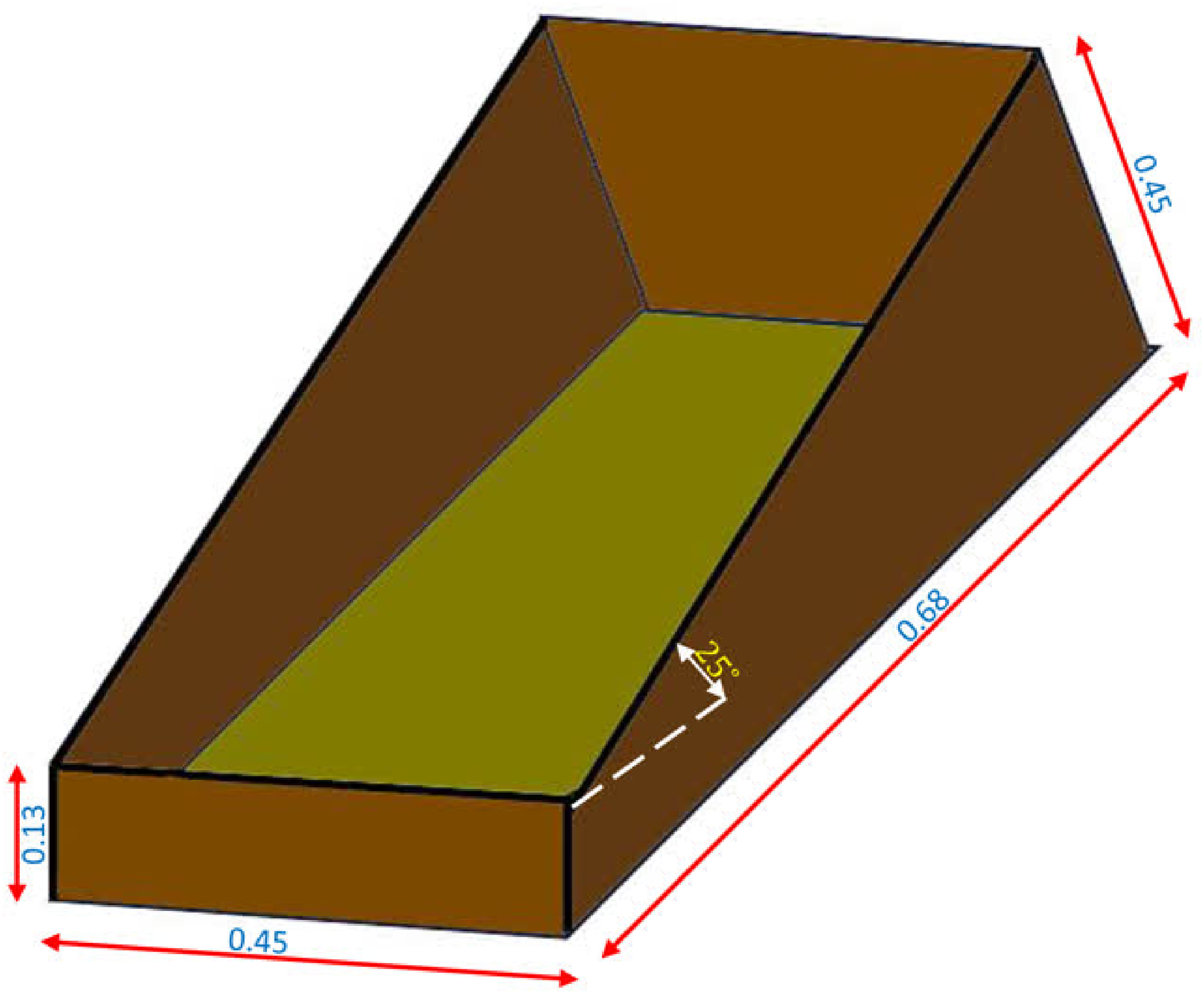
The geometry of the virtual model of the solar still.
The meshing process was performed using ANSYS Meshing Tools software. Initially, a fully hexahedral mesh was generated owing to its fast convergence and easy adaptation in considerably simple geometries; however, in the present case, the inclination of the glass generated distorted elements near the gutter when it came to a mesh essentially represented by hexahedral elements. Thus, the model was divided into three parts: the lower part that will have standing water and the solar still body was initially represented by hexahedral elements, and the rest of the geometry was represented by tetrahedral elements to better capture the effects of the model with a smaller mesh resource, given that the tetrahedral mesh has an easier time working with more complex and nonrectilinear geometries. To create a transition between the elements, the Share topology feature was used to connect the different bodies of the geometry, which is crucial for generating a conformal mesh, preserving the connection of the nodes between the elements. To evaluate the mesh quality, the “Orthogonal Quality” method was used, which is calculated by considering the vector normal to each face of the tetrahedron. The cosines between faces were calculated by defining the orthogonality of the mesh. It considers the vectors normal (Ai) to the element face, vectors between the centroids of the cell and midpoint of the faces (fi), vectors between adjacent cell centroids (Ci), and vectors between the centroids of the face and medians (ei).
Using this method, a mesh is considered to be of good quality when its quality value is close to 1. The average mesh quality of the solar still computational domain was 0.89, which was classified as very good quality. A mesh independence study was performed to analyze the mesh density and error associated with the discretization process. Three grids of different densities (coarse, medium, and fine) were generated, and the amounts of water produced were compared. Table 3 presents the results and error associated with each mesh. Therefore, with a small difference between the fine and medium grids, grid independence was achieved, and grid 2 could be used for the numerical simulation. Figure 3 shows the generated mesh.
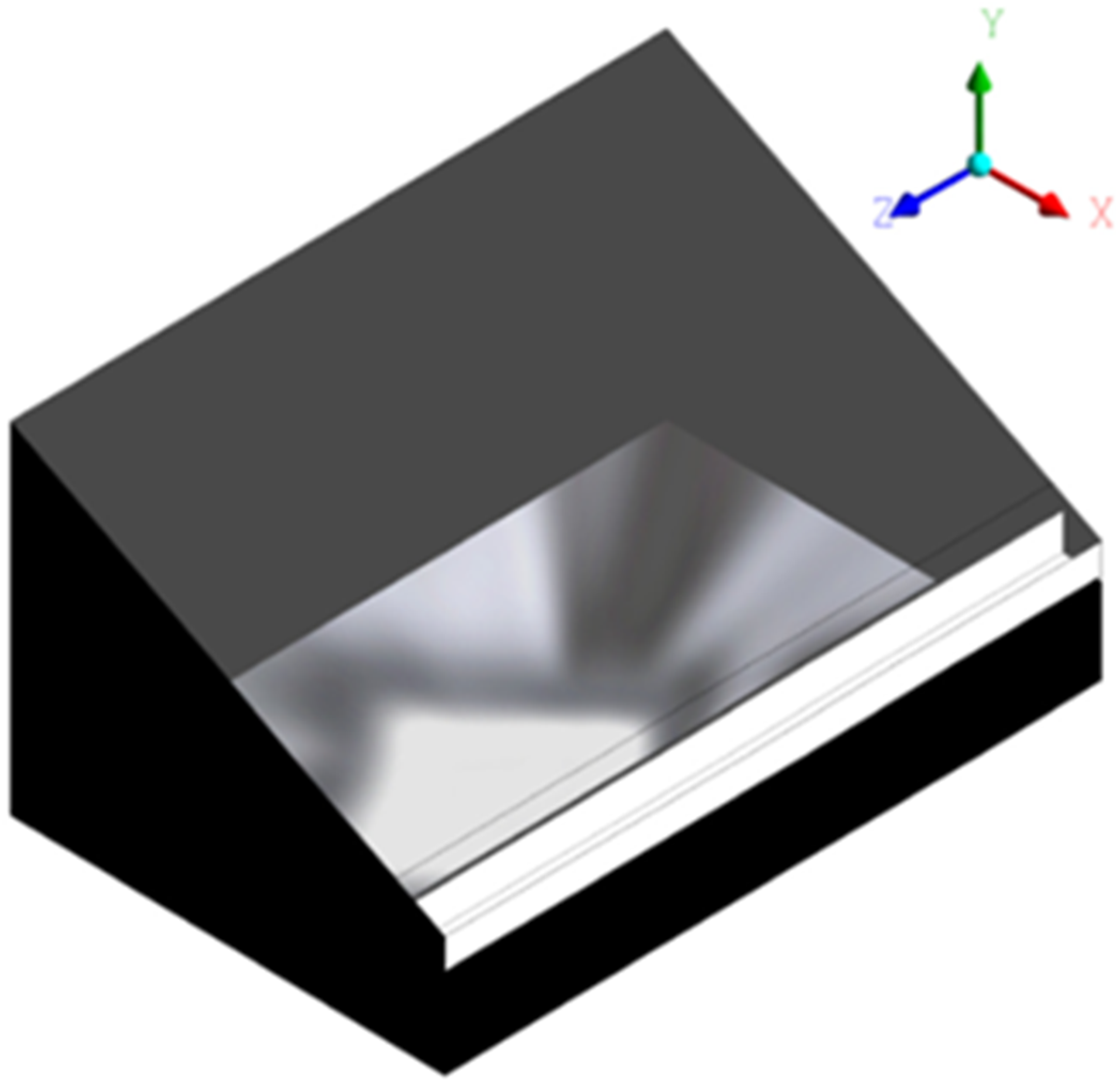
New horizontal geometry model.
Grid independence test.

Boundary conditions
Owing to the complexity of the simulation, computational resources, and simplification, when building the CFD simulation model, some assumptions have to be considered, as follows:
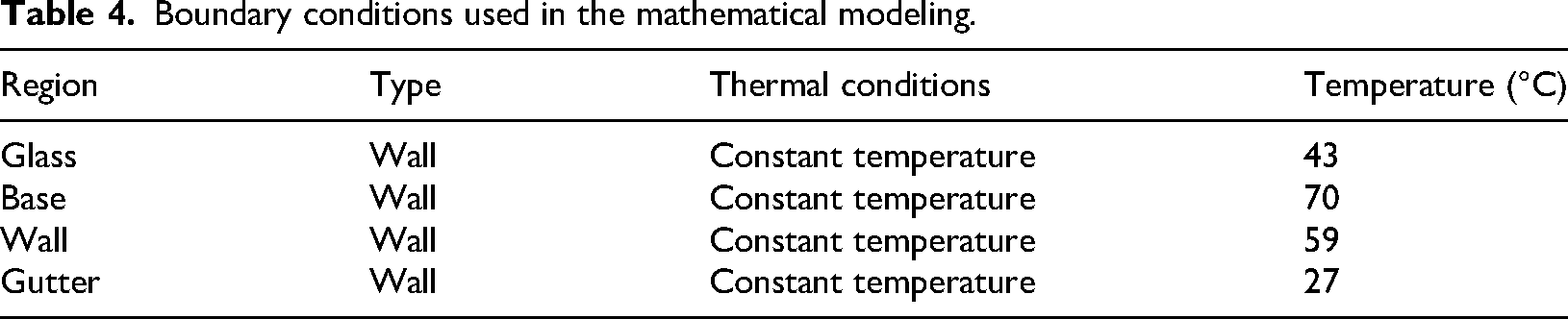
There is no thermal source inside the solar still. The effect of the wind speed was neglected, and only free convection was considered. No leakage occurred in this system. In addition, the bottom and side walls of the distiller were maintained at a constant temperature. The water level inside the basin was kept constant. Because the temperature variation was low, fluid properties such as density, thermal conductivity, specific heat, and viscosity were considered as piecewise linear profiles with temperature, while the physical properties of the walls were considered constant. Evaporation and condensation occur mainly by temperature and not pressure. The saturation temperature was set as a constant, with the first water production value of 53°C as a reference. Table 4 lists the boundary conditions for the mathematical modeling.
Boundary conditions used in the mathematical modeling.
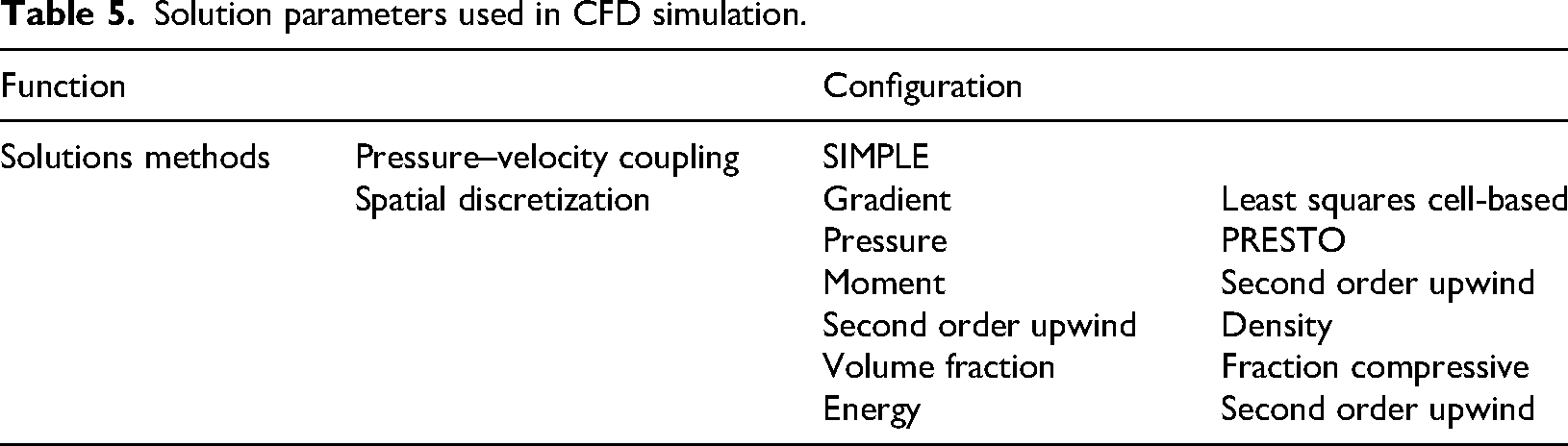
The solution parameters used, that is, the methods selected for the pressure–velocity coupling, are listed in Table 5. To achieve convergence, the residuals were monitored for the X, Y, and Z velocities, continuity, energy, turbulent kinetic energy (k), and the kinetic energy dissipation rate (ε). The convergence criterion for the energy equation was 10−6. The convergence criterion for all other variables was taken as 10−3.
Solution parameters used in CFD simulation.
Results and discussion
Validation
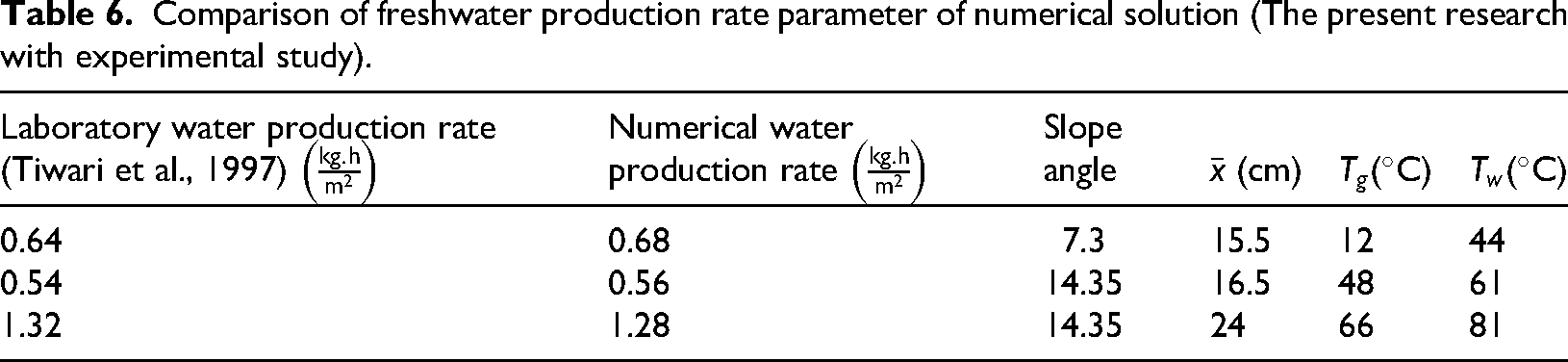
Two-dimensional simulations of the solar desalination device with a ramp were conducted using ANSYS Fluent 15. The SIMPLE algorithm was employed to couple the pressure and velocity equations. Spatial discretization of the momentum, species, energy, and radiation equations was achieved using the first-order upwind scheme. The PRESTO scheme was utilized for pressure discretization. The freshwater production rate, calculated using equation (21), served as a parameter for validating the simulation results. To ensure the stability of the simulation conditions and to validate the model, experimental data from Tiwari et al. (1997) were used for comparison. In their study (Tiwari et al., 1997), a solar water desalination device was tested under constant saltwater temperatures of 46°C, 63°C, and 83°C, and distillation glass temperatures of 10°C, 46°C, and 63°C, respectively.
To maintain a constant temperature of 46°C in the distillation glass containing saltwater, a layer of ice was applied to the top of the glass, keeping the temperature at 10°C. The freshwater production rate derived from the simulation was then compared with the experimental results of Tiwari et al. (1997) to assess the validity of the numerical solution. A summary of the comparison between the numerical solution obtained in the present study and the experimental results from Tiwari et al. (1997) is presented in Table 6.
Comparison of freshwater production rate parameter of numerical solution (The present research with experimental study).
Comparison of coupled solar desalination device with independent solar desalination device
To evaluate the benefits of the integrated system, a simulation of a solar desalination device without a translucent PV module was conducted for comparison. The difference in water efficiency between a stand-alone solar desalination device and a desalination device coupled with translucent PV can be seen in Figure 4. The primary parameter used to compare the two systems was the rate of freshwater production. For the solar device without the translucent PV module, the net surface area of the saltwater exposed to solar radiation was calculated as the area of the glass layer minus the area covered by the solar cells. Complete absorption of solar radiation by the cells was assumed, effectively shielding the saltwater beneath them.
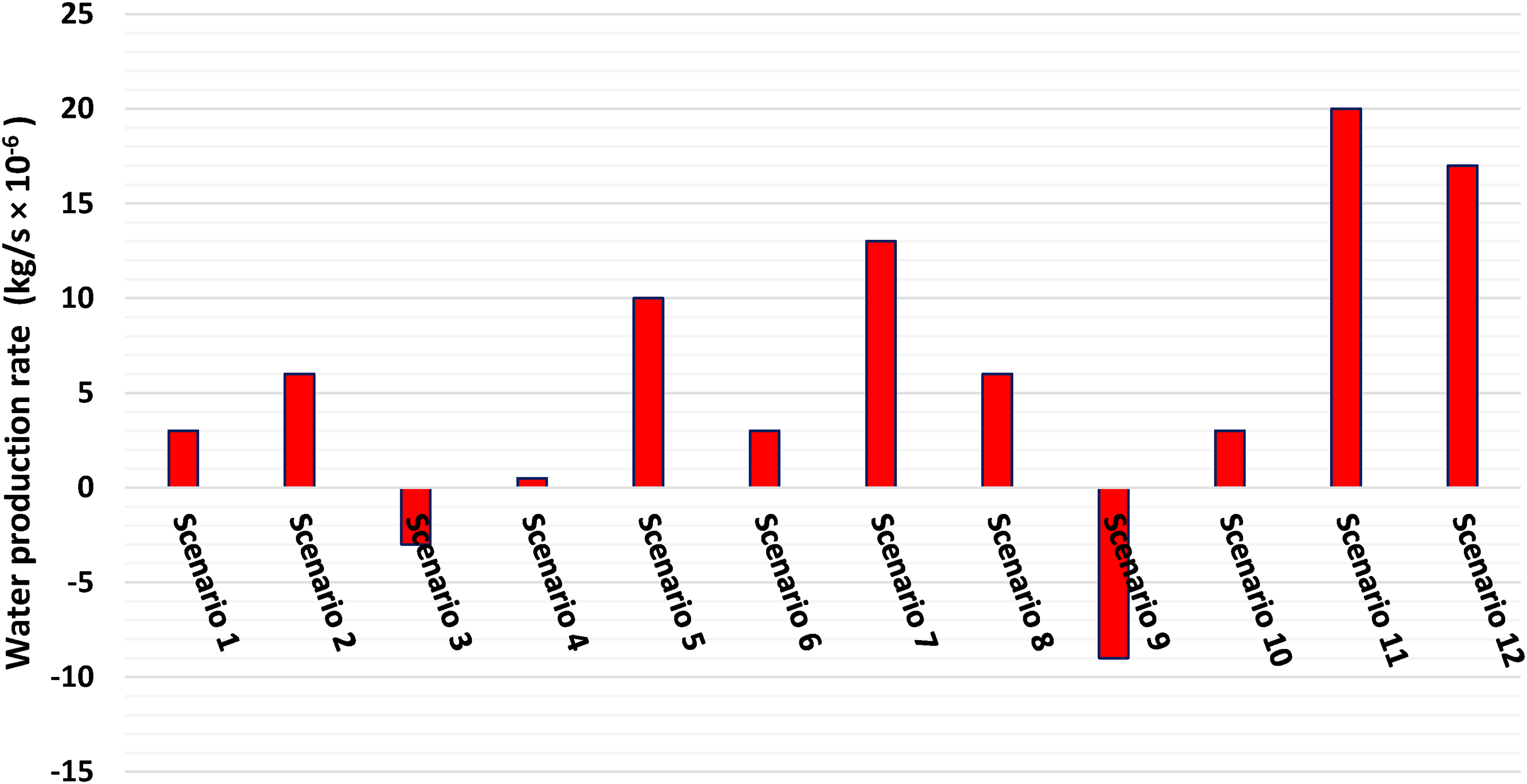
Water production for different scenarios.
Figure 4 shows the effect of salt water temperature and solar radiation intensity on water production. Solar water desalination works by heating salt water to produce fresh water. The amount of fresh water produced is more reliant on the water's temperature than on solar radiation strength. Increasing the temperature of salt water from 40°C to 50°C with solar radiation of 250 W/m2, results in an increase in water production of 3 × 10⁻⁶ (kg/s). From the graph, it can be seen that the maximum amount of freshwater production in scenario 11 is 20 × 10−6 (kg/s), in which the temperature of the saltwater is 80°C and the solar radiation intensity is 1000 W/m2. Therefore, starting with a higher water temperature is important to maintain effective desalination. Cold saline water in strong sunlight can heat the glass quickly, reducing the distillation rate.
The efficiency and electrical power output of the coupled system in different scenarios
The integrated system's electrical power output and water efficiency were calculated for all cases and are displayed in Figure 5. The graph shows that as the temperature of the salt water increases at the same solar intensity, the output power slightly decreases. This is because the hotter water causes the air inside the solar device to become warmer, leading to lower efficiency in the solar cells and a decrease in output power. It can also be noted that the output electric power is directly related to the intensity of the sun.
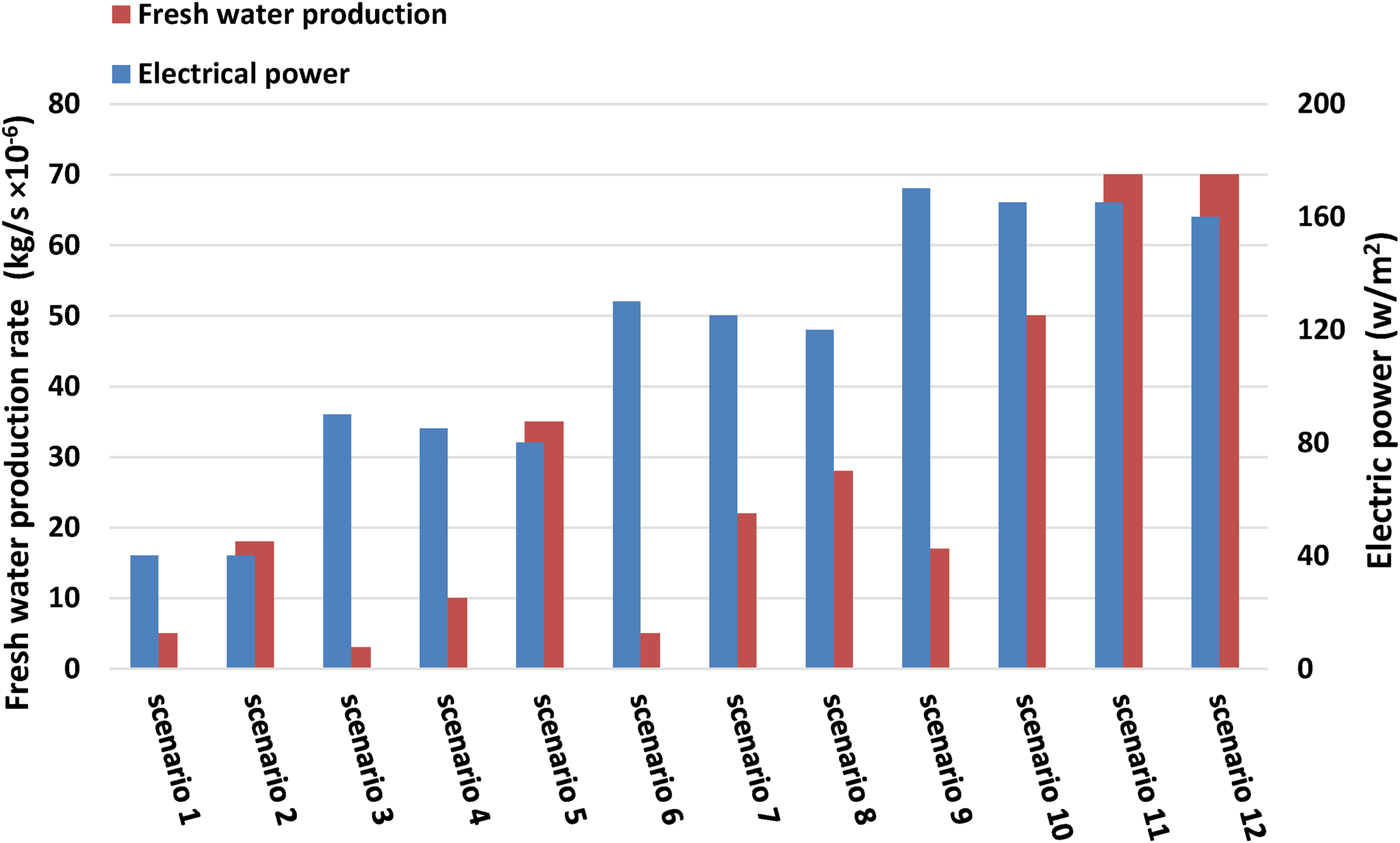
Output electric power and water production rate for different scenarios.
Solar water desalination works by heating salt water to produce fresh water. The amount of fresh water produced is more reliant on the water's temperature than on solar radiation strength. Raising water temperature from 40°C to 50°C can increase fresh water production by 245%. However, if the water temperature remains constant, higher solar intensity can lower water output. Therefore, starting with a higher water temperature is important to maintain effective desalination. Cold saline water in strong sunlight can heat the glass quickly, reducing the distillation rate.
In cases 2 and 4, the salt water temperature is steady at 50°C, but solar radiation differs. When solar radiation increases from 250 to 500 W/m2, productivity drops by about 32%. Comparing cases 4 and 6, with radiation intensities of 500 and 750 W/m2, productivity falls by around 60%. The salt water temperature remains constant, but the higher radiation in case 6 raises the temperature in the distillation glass, leading to lower fresh water production. Therefore, it's important to raise the salt water temperature and keep high radiation levels for the solar desalination system to work effectively.
Translucent solar module efficiency in different scenarios
The effectiveness of two systems for generating freshwater was tested under different radiation levels (750, 500, 250, and 1000 W/m2), as shown in Figure 6. Generally, the integrated system surpassed the standalone solar device in freshwater production, except in cases 3 and 8. In those cases, the standalone system had a much larger temperature difference, leading to higher freshwater output. It is recommended to increase the saltwater temperature in the integrated system, possibly using phase-change materials or solar collectors, to improve its performance.
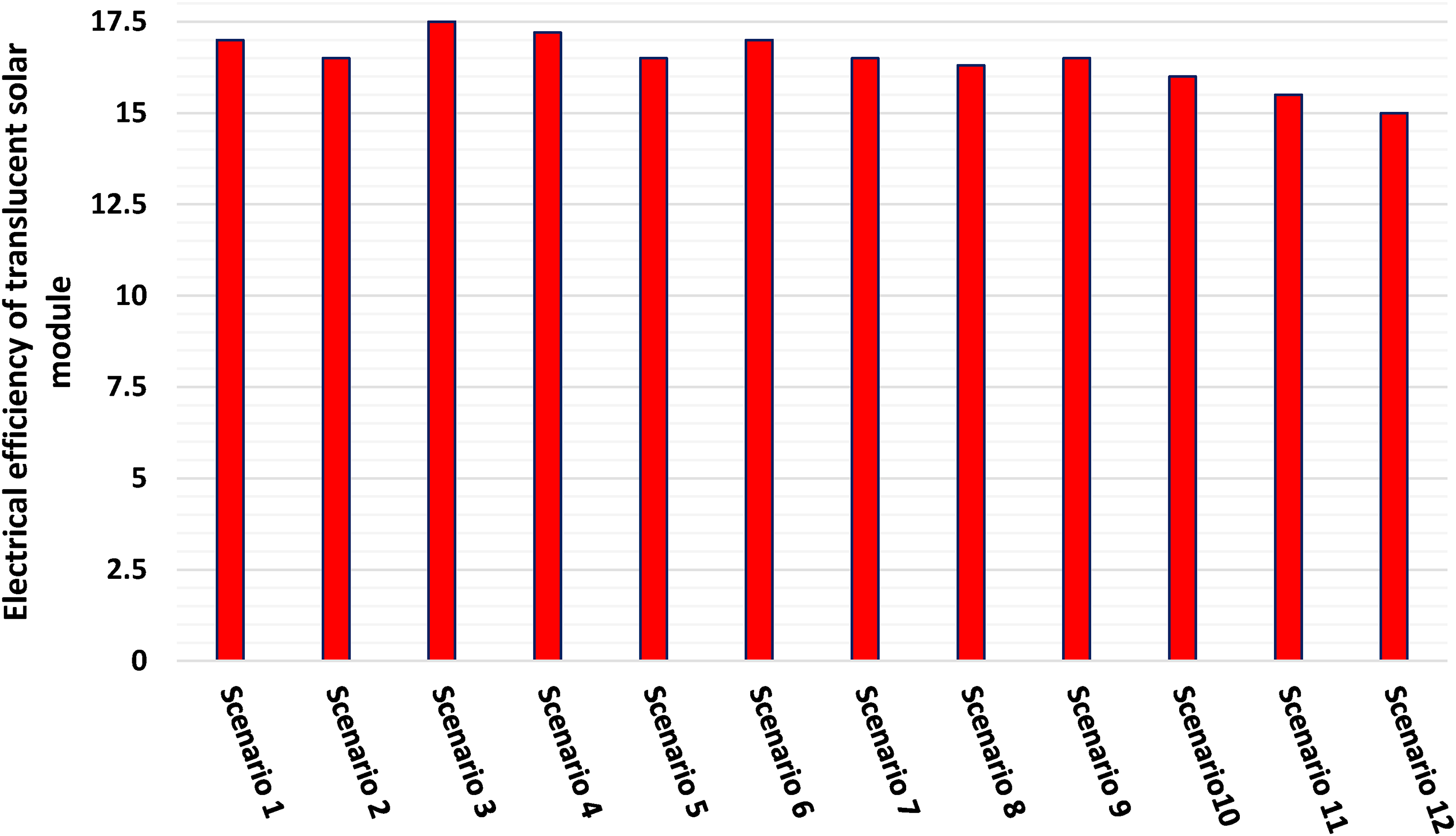
Translucent solar module efficiency in different scenarios.
The electrical efficiency of the see-through solar module across ten scenarios is illustrated in Figure 6. From Figure 6, it is evident that with a constant level of radiation intensity, the performance of the semitransparent solar module diminishes as the temperature of the salt water rises. In other words, for every 10°C increase in salt water temperature, the efficiency of the module decreases by approximately 0.3%. Additionally, it can be inferred from the subsequent figure that the efficiency values of the module in all scenarios fall within the range of 15–17.5%.
The effect of wind speed on the performance of the coupled solar device
The influence of wind speed and water temperature on the output of fresh water from a solar water desalination system linked to a semitransparent solar module is shown in Figure 7. As the wind speed rises and the temperature of the module's distillation glass roof falls, the yield of fresh water increases significantly. Moreover, when the temperature of the salt water elevates, the output of fresh water also rises considerably. It should be noted that the output of fresh water grows by an average of 51% between 50 and 60°C, 67% between 60 and 70°C, and 105% between 70 and 80°C and by141% between 80 and 90°C. This suggests that at higher temperatures of salt water, an increase in wind speed has a more pronounced effect on the volume of fresh water produced by the solar water desalination unit.
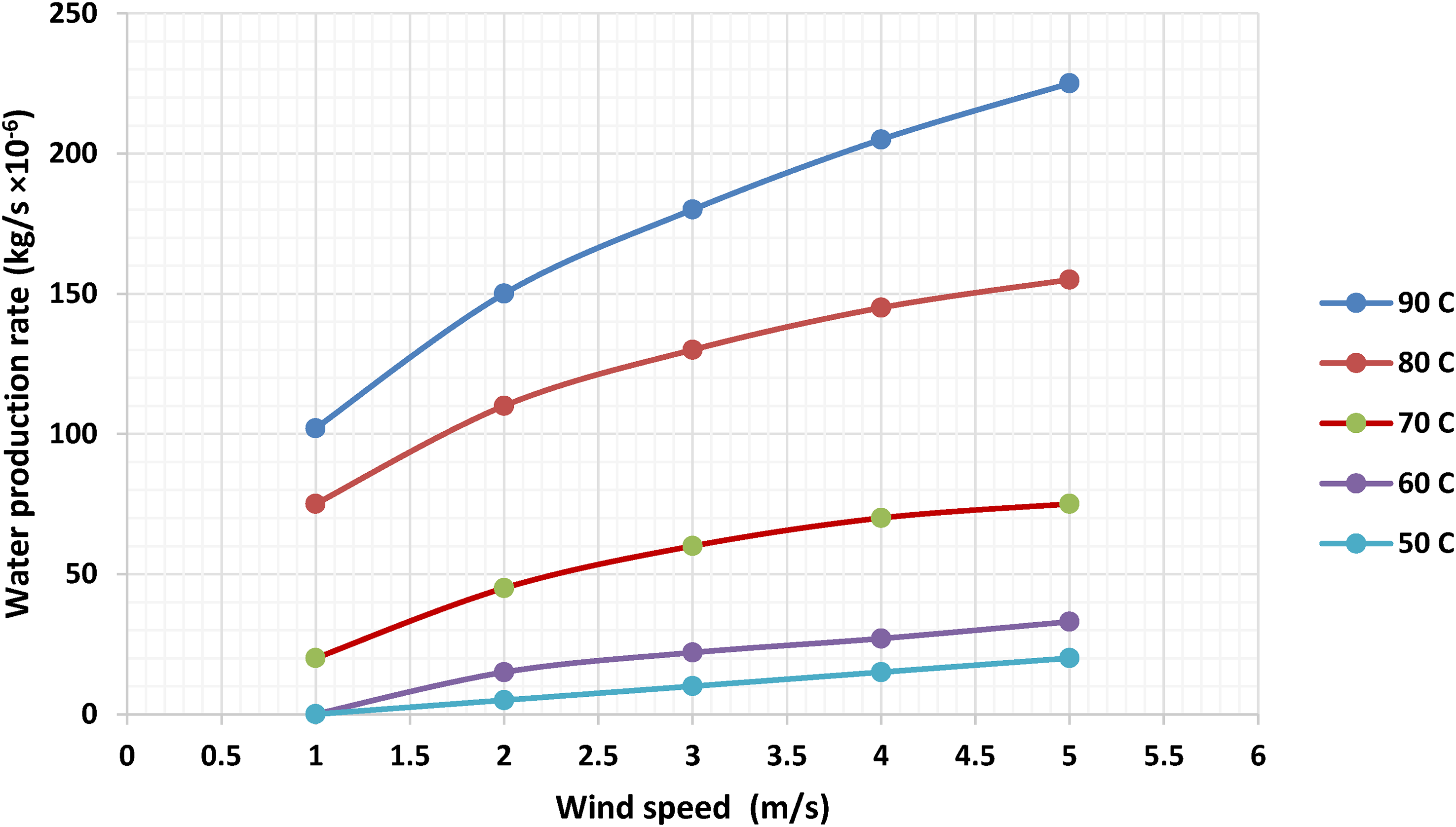
The effect of wind speed on the amount of fresh water production.
For a better understanding of the phenomena that occur in the coupled solar device in steady flow mode for different wind speeds, the temperature contours of the system in question with salt water temperature 70°C are shown in Figure 8. As the wind speed increases, the translucent solar module is cooled and the amount of water vapor distillation in the distillation glass increases. There are two hotter areas in the area related to the semi-transparent solar module, which correspond to the parts where the solar cell with high absorption coefficient is located. In every five contours shown that there are four vortex areas that are created under the influence of evaporation and distillation. To determine the rotation direction of these vortexes, it is necessary to draw their flow lines, which is shown in Figure 9. The direction of rotation of adjacent vortices is opposite. The number of created vortices indicates the rate of evaporative heat transfer.
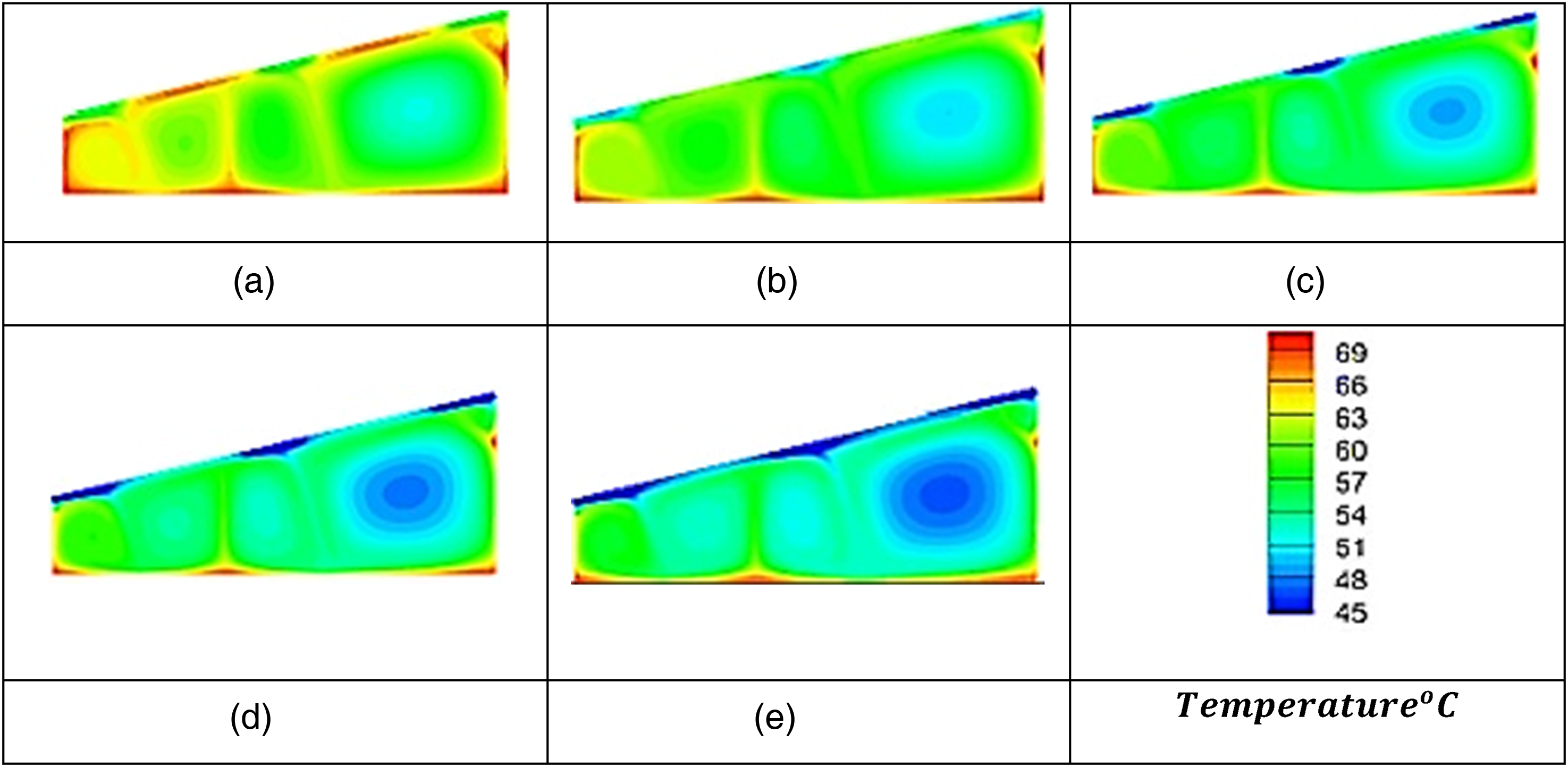
Temperature contour of the coupled solar system in different wind speeds.
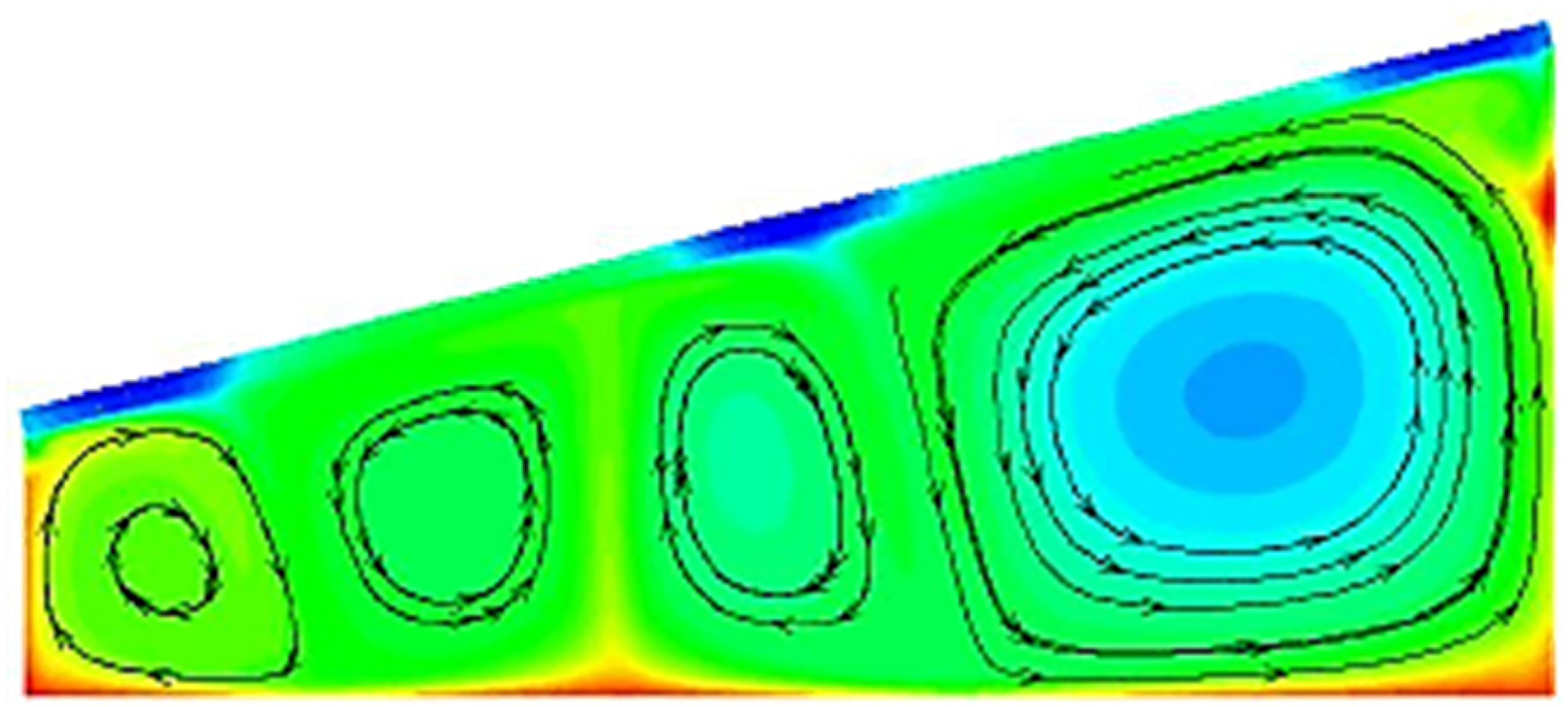
The temperature contour of the coupled solar system along with the flow lines.
Having more vortexes in a solar desalination device leads to a higher rate of fresh water production. The temperature contours indicate a significant gradient near the glass or water surface due to the distillation or evaporation process. These changes are also noticeable near two adjacent vortices, which are caused by the visible velocity gradient. This velocity gradient also affects the temperature curves. The number and direction of rotation of the vortexes, influenced by the aspect ratio of the solar device, play a crucial role in the speed of heat and mass transfer. Therefore, increasing the number of vortexes by adding vertical blades to the system can enhance the amount of fresh water produced.
As wind speed increases, both the amount of fresh water produced and the output power of the system increase due to the cooling of the semitransparent solar module. Figure 10 illustrates the impact of wind speed and salt water temperature on output electrical power. Figure 10 shows the results obtained for the electrical power of the water that exited the desalter for different wind speeds. It should be noted that the output of electrical energy produced decreases on average by 5% between 50 and 60°C, by 3% between 60 and 70°C, by 2.5% between 70 and 80°C, and by 1% between 80 and 90°C. Conversely, increasing the wind speed from 1 m/s to 5 m/s results in an average increase of 15 W/m2 in electrical power. This indicates that at higher brine temperatures, increasing wind speed has a more pronounced effect on the electrical energy generated by the solar water desalination unit.
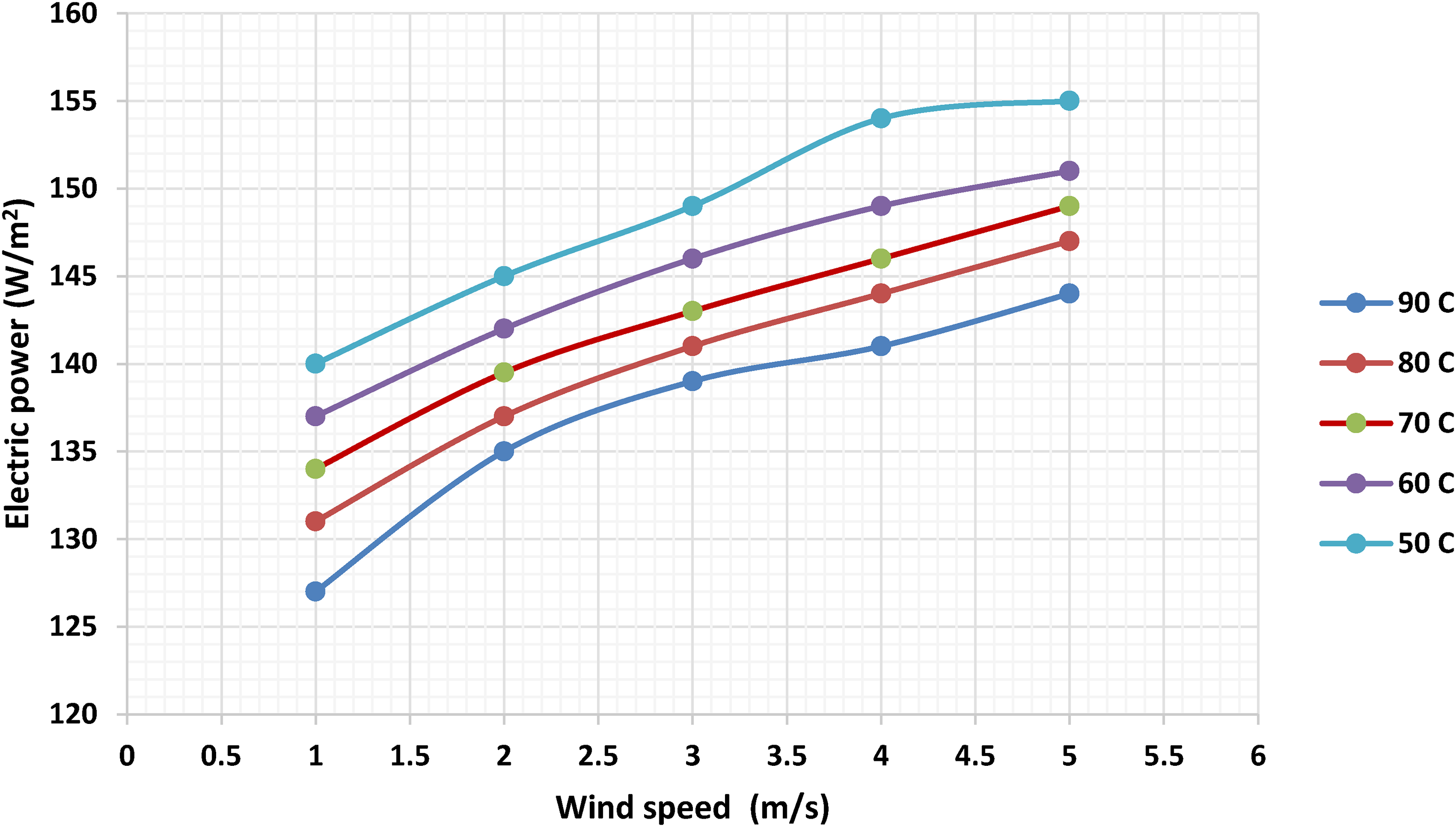
Output electrical power per unit area at different temperatures of salt water and different wind speeds.
Conclusion
This study tested the performance of two solar desalination systems and a semitransparent solar module when combined. The current work focused on developing a simple solar still with low-cost materials that can be built by anyone, anywhere. In addition, the study presented three-dimensional multiphase CFD models for a single-slope solar still. The testing was done through numerical simulation at various wind speeds and salt water temperatures. The developed model can predict the results for any solar still without experimental data, using only local solar radiation, water flow, and equipment geometry data. The results indicated that the combined solar system, which is efficient and compact, could be a new design suitable for residential or commercial use. Second, the coupled solar system will produce more fresh water and provide more electrical power as the wind speed increases, because the solar module will be cooler and more efficient as the wind speed increases. Thirdly, raising the temperature of salt water leads to a notable increase in fresh water production, with minimal impact on electricity generation due to system temperature rise. The results show that as the temperature of the salt water increases, the electrical efficiency of the system decreases, but the amount of freshwater produced increases. The solar radiation increases from 250 to 500 W/m2, the productivity decreases by approximately 32%. Furthermore, when comparing cases 4 and 6 with solar radiation levels of 500 and 750 W/m2, the productivity decreases by about 60%. The simulation results show that computational fluid dynamics is an important tool for improving the performance of the equipment. It is recommended to consider it for future work:
Using dynamic programming method for modeling double slope solar Multiobjective optimization design of double slope solar.
Footnotes
Declaration of conflicting interests
The authors declared no potential conflicts of interest with respect to the research, authorship, and/or publication of this article.
Funding
The authors received no financial support for the research, authorship, and/or publication of this article.
