




Abstract
The Moesian platform has been extensively studied both from the tectonic point of view and from the perspective of its sedimentary bed which is rich in hydrocarbon resources. Extensive research has shown that the Moesian platform consists of Paleozoic sedimentary formations having their accouchement in four cycles, which according to in the Ordovician, Silurian, lower Devonian (dark and leaden argillites), upper Devonian (bituminous dolomites with pyritization) and mid-Triassic (muschelkalk) period, the oil and gas genesis took place. Moreover, such resources have been traced in rocks of all ages, including in the ones from the fourth sedimentation cycle. The present paper offers insight into the lithology and petrographical features of the Sarmatian stage since there is a lack of detailed petrographic published data regarding this topic. The study highlights the lithology, offering detailed petrographical features for the Sarmatian on a petroliferous structure located in the eastern part of the platform. Fossil and palynological correlations have been employed by numerous authors, resulting in a lack of focus on lithological correspondence, which is mainly due to the absence of scarce presence of available data on the Sarmatian. We therefore hold firm belief that our study could help develop future links and serve as a knowledge database.
Keywords
Introduction
Petrographic studies play a key role in understanding the transformations of the earth's crust as well as its evolution, with implications in many areas of study, from paleoenvironmental research to understanding, managing and exploitation of natural resources (Juravle, 2015). Among the most important aspects, we would like to highlight the reconstitution of geological evolution and features, interaction with the environment, climate change and climate evolution (Mândruț, 2013), however, a particularly interesting aspect is sustainable use and management of natural resources (Pomerol et al., 2011). A general overview of the Sarmatian in Romania, which belongs to the Miocene, displays a multitude of features that reveal a complex geological evolution: sedimentary facies comprised of clastic and biogenic facies and polymictic micro-conglomerates to volcanic fragments, which could indicate a possible closeness to such an ancient zone (Amadori et al., 2012; Anastasiu et al., 2009; Jipa and Olariu, 2009). Paleoenvironmental studies suggest deltaic systems that shift from marine to freshwater (Palcu et al., 2015; Briceag et al., 2018) corroborated with tectonic influences against the background of Carpathian orogenesis (Anastasiu, 2016).
The Romanian portion of the Moesian platform has long been studied, numerous research topics covering a wide range of fields such as lithology, paleontology, palynology, mineralogy, etc. which have been conducted on the sedimentary cover, specifically Paleozoic and Mesozoic eras, leaving a lack of focus on the Tertiary era. The latter abounds in seismic studies, both new and old, that fail to provide sufficient insight into lithostratigraphy, being thus important yet irrelevant to the topic of our paper. Consequently, we will mention the main aspects referring to the Moesian platform next to the most descriptive and elucidating studies performed on the sedimentary couverture.
Caragele structure is geographically located south-east of Buzau (Mândruț, 2021) and belongs to the Moesian platform. Of all the aspects, four ample sedimentation cycles are specific: (i) middle-Cambrian – upper carboniferous, (ii) upper-Permian – Triassic, (iii) middle Jurassic (Liasic) – Cretaceous and (iv) middle-Miocene (Badenian) – Pleistocene (Ionesi, 1994; Mutihac et al., 2007; Paraschiv, 1979).
Tectonically, the Moesian platform is an important unit that extends into the southern part of Romania and north of Bulgaria. It is limited by a series of major faults such as Pericarpathian and Trotus to the north, Timok to the west, Peceneaga – Camena to the north-east, and in the south by the Prebalkan fault. North of the Danube River it is split into East and West Moesia by the Intramoesian Fault where both entities present specific properties of the crust and lithostratigraphic couverture (Fielitz and Seghedi, 2005; Săndulescu, 1974; Sandulescu, 1984; Sandulescu and Visarion, 1988; Seghedi et al., 2005; Tărăpoancă et al., 2003; Visarion et al., 1988; Zagorchev 2009). In order to frame the Moesian Platform more clearly, a sketch is presented in Figure 1.
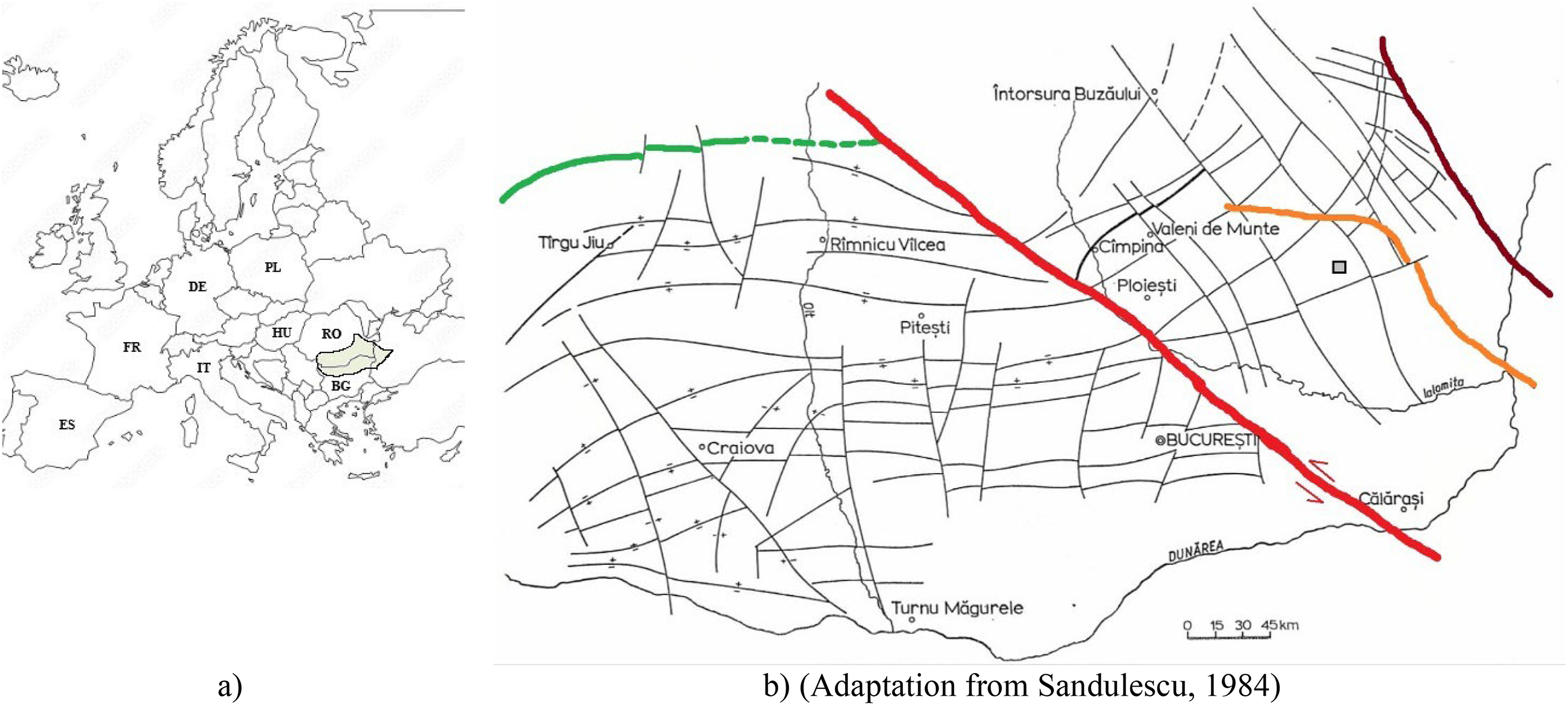
Location of the Moesian Platform in Europe (a) and most significant faults – (green line) Cernei Fault, (brown line) Peceneaga – Camena fault (orange line) Palazu Fault, (red line) Intramoesian Fault. Other elements on the map signify (single circle) City name, (double circle) Capital City, (Dunărea) Danube River, (square) Relative position of the sampling location (b).
Mutihac and Ionesi (1973) and Mutihac (1990) stated the source rock for accumulation is represented by the Carpathian orogen which has an upward course and, consequently having induced these molasses deposit characteristics. They are predominantly marl with subordinate intercalations of clay, sands and glauconite sandstones with local evaporates. According to the same authors, the Sarmatian throughout the moesic platform is known only by drilling, deposits show very variable thicknesses, three subdivisions of the Sarmatian are present in the center and western part and only in isolated areas, such as the north-eastern side, organogenic limestones have been observed. Anastasiu (1988), Filipescu (2002), Grasu (1997), Grasu et al. (2002) and Mutihac and Mutihac (2010) supported a transgressive nature with a maximum extent in the Eosarmatian when the entire platform was flooded, stratigraphic sequence debuting with alternating sand-sandstone and claystone, whereas to the extremity a reef facies is met. The stratigraphic sequence is shown in Figure 2. Oncescu (1965) highlights the fact that the structure is a well-defined Sarmatian, displaying solely isolated gaps whereas the inferior and middle parts are missing. According to his research, the surface consists of a thick layer, predominantly marl, present toward the northern part and a thin layer towards the southern part which is made up of sands and sandstones deposited in shallow waters. Furthermore, local variations have been proven to cause both transitions from sandstone and sand to marl in the upper part and increasing sand percentile towards the southern part. Posea (2002), Olaru et al. (2004) and Juravle (2009) supported the idea that in this last sedimentation cycle, waters have penetrated the Moesian platform from the north, where the molasses basin was located, and have also advanced south insinuating on the palaeovalleys that crisscrossed the land. In effect to this, Juravle argues that the Sarmatian is well represented on all its substages (Buglovian, Volhinian, Basarabian and Chersonian) being made up of clays, silts, and sands with intercalations of sandstone, limestone and oolitic limestones, (Ioniță-Badea et al., 2020) suggesting 11.6–5.3 Ma. Upon contact with the orogen fluvial-deltaic deposits have accumulated on account of the terrigenous material.
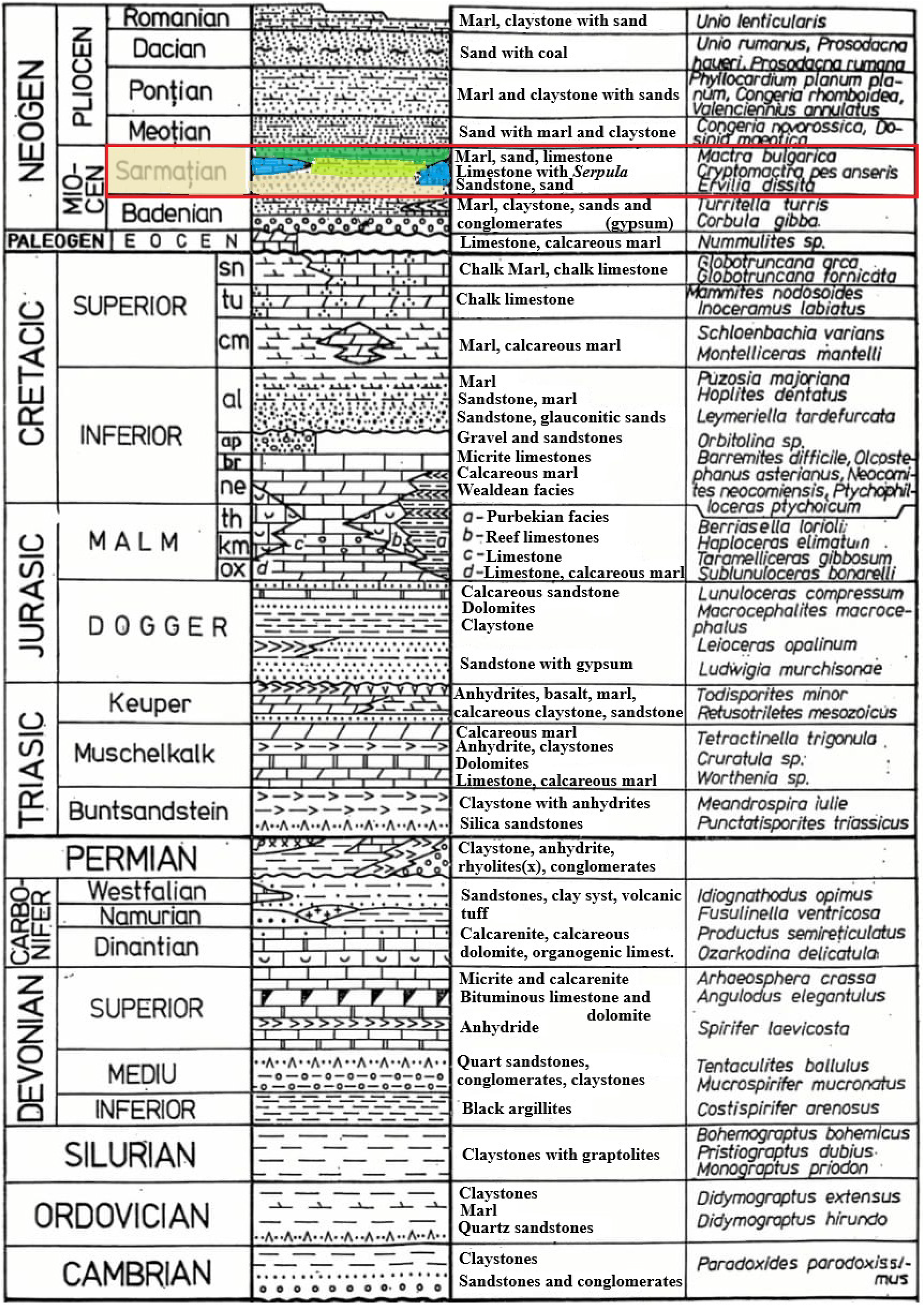
Drill Core Columnar highlighting the Stratigraphic Sequence in the Moesian Platform (adaptation from Mutihac, 1990) (beige) – Sandstone and sand, (light green) Limestone with Serpulla, (dark green) Marl and sand (blue) Limestone with Serpula.
Sedimentary studies were conducted a long time ago and have not yet been updated. Correlations between the layers have been made almost exclusively based on plants and fauna alongside palynological and foraminifer similarities, as numerous sources have been pointed out for the Paleozoic and Mesozoic Eras. From the first two categories, we mention the studies of Grigoras (1956), Iordan (1981, 1984, 1985, 1987, 1990, 1992, 1999) and Murgeanu and Spasov (1968), and from the latter two we highlight the studies of Beju (1972), Nastaseanu and Paraschiv (1973), Paraschiv (1972, 1974, 1975) and Paraschiv et al. (1973). For the Moesian Platform, region with a little emphasis on the eastern side, where our study is conducted, lithostratigraphic and facies in-depth looks are presented by Iordan (1985, 1987, 1988, 1990, 1992). Our approach uses rock samples obtained from drill cuttings and tries to petrographically characterize as profound as possible the mineral composition and distribution of the Sarmatian interval on Caragele structure (Beca and Prodan, 1983; Beca and Visotki 1968).
One aspect on which all the mentioned authors agreed is that the Sarmatian has three subdivisions in the western and central parts (where the thicknesses are of the order of hundreds of meters) and in the part eastern is found only one geological age.
Studying drill cuttings is usually undergone during drilling using stereomicroscopes and, sometimes, pocket magnifiers or even under the naked eye. It is more than obvious that these approaches provide little to no petrographic information whatsoever for the vast majority of sedimentary rocks, especially for the fine-grained ones, meaning clay to fine arenitic particles. For a detailed study, the cuttings that result are separated and converted into thin sections. Having these thin sections optic microscopic study can be performed with polarizing microscopes and thus obtaining detailed petrographic information. In order to obtain such thin sections from drill cuttings a process that implies resin embedment is applied. Then the specimens are clipped into thin slices which are then attached to a glass slide for microscopy and thinned accordingly. In the case of polarizing petrographic microscope screening of drill cuttings, lithology is obtained for the drilled intervals and basic knowledge is established regarding the detailed petrographic features of the rocks as well as clast origins such as petrographic varieties, rock textures, and some compositional features. For example, in some clays, the mineral types cannot always be established although some clay minerals such as chlorites or illites can be identified using optical microscopes.
The observed fragments in the thin sections resulting from drill cuttings may originate from the target interval as well as (in a smaller amount) from previously drilled intervals/stratigraphic intervals. This category beholds fragments detached accidentally from the upper levels and fragments that are the so-called re-circulated which could not be retained properly by the sieves. The latter could tangle the interpretations if they are not identified as foreign to the studied interval. In such thin sections, alongside the corresponding clasts which can be characterized as lithoclasts, detached fragments from other drilled intervals occur and cannot be respectively assigned. In this category, mono-mineral fragments are indicated, such as granoclasts, isolated authigenic mineral fragments, traces of organic matter and bioclasts. With the exception where such fragments can be identified accordingly in certain types of lithoclasts, their root is difficult to assign and could easily fall within the contaminant particles of the sample spectrum. By and large, for detailed petrographical analysis carried out on drill cuttings, optic microscopy remains the handiest method. Electron microscopy emphasizes specific details at a very small scale in regard to pore structure and morphology moreover clay mineral arrangement and layout but is by far costly and requires difficult maintenance.
The main focus of the article is to perform petrographic analyses on rock samples cored from the Sarmatian on the Caragele structure (located in Buzau County) which has not been studied in this detail, moreover, such analysis does not exist for the entire eastern part of the Moesian platform. Many hydrocarbon deposits are present and have been long exploited (Anastasiu, 2016), but they are most common on the western side and situated in formations belonging to the Mesozoic Era, and some smaller reservoirs being present in the centre, situated in both Mesozoic and Tertiary formations whereas gas reservoirs have been found on the eastern side which present a high potential. Our thin sections study revealed in-depth petrographic information that denotes a heterogeneous build, with fragments that were intruders from adjacent formations and multiple crystals most likely of magmatic and volcanic belonging, which could be used to correlate the surrounding layers and to better identify possible collectors as soon as more wells will be drilled and more samples will be cored.
Materials and experimental methods
Drill cuttings were obtained from the drilling site which originated from the Sarmatian corresponding to a depth between 1990 and 2000 m. Bag probes were filled by the operator gradually while the drill string was crossing the mentioned interval. Considering this aspect, the samples given can be considered representative.
The rock fragments were cleaned with distilled water and put on sieves for granulometric sorting. Two dimensions were used, 0.08 and 0.063 mm, which are according to the Udden-Wentworth scale for classifying detrital rocks (Udden, 1914; Wentworth, 1922).
Samples were then heated in the drying cabinet to 50 °C and sent to a specific laboratory for embedding. Through this process, eight epoxy resins for embedding and impregnation of materialographic specimens have been obtained. From each such block were obtained thin sections by cutting the pads and thinning them according to the usual method of thin section manufacturing.
Thin sections resulted and were analysed in the petrology laboratory of the Geological and Reservoir Engineering of the Petroleum-Gas University of Ploieşti using a research petrographic microscope Steindorff Polarizing having attached a digital photo camera for microscopy.
Microscopic study results
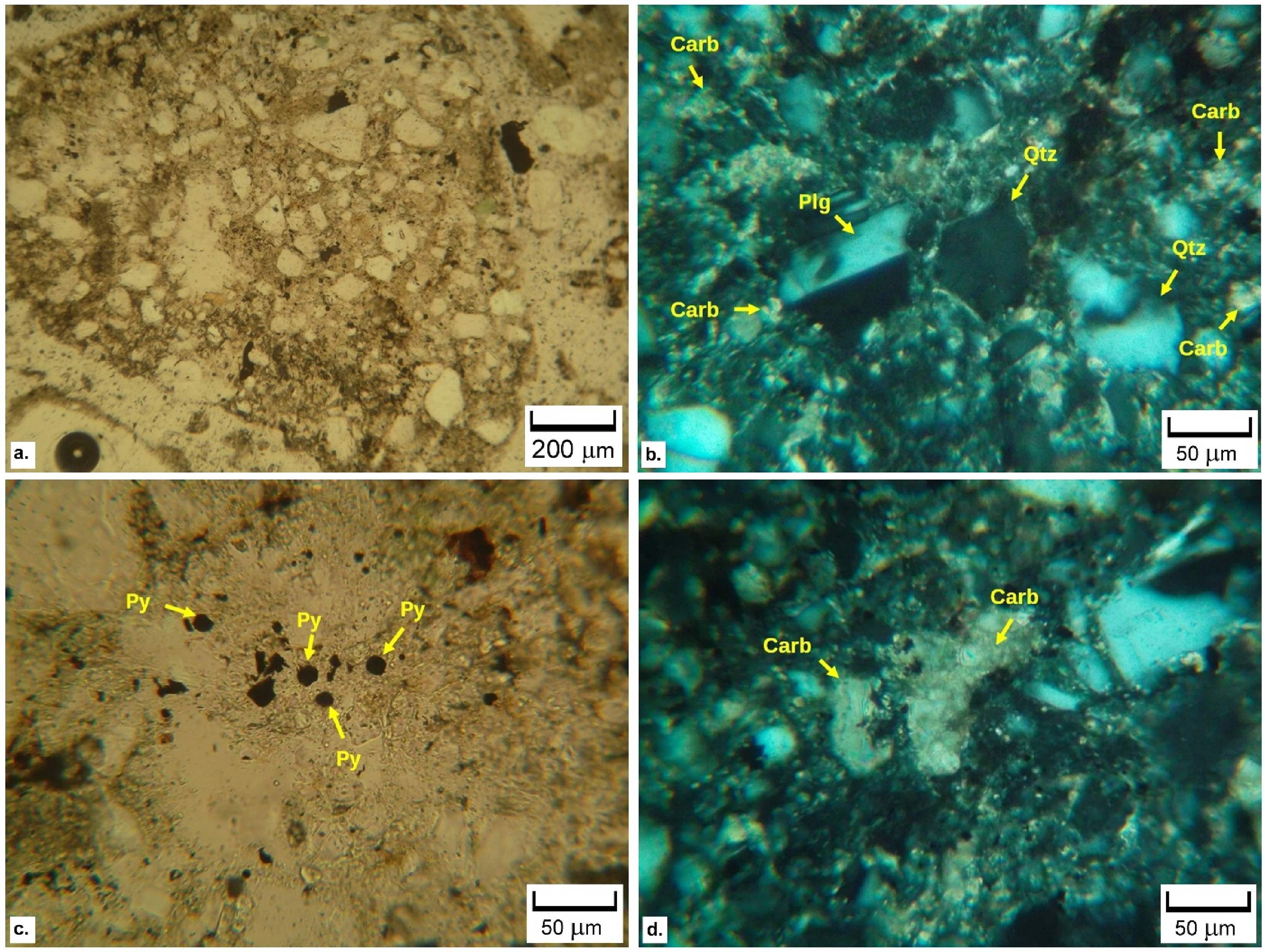
All fragment types were subjected to analysis. All the compositional and textural details have been established. Representative images were obtained to justify the lithological aspect. The overall microscopic aspect of the fragments is presented in Plate 1a and b. We have divided the fragments found in our thin sections into two categories: (I) fragments which can be described as lithoclasts and (II) fragments which do not belong to lithoclasts.
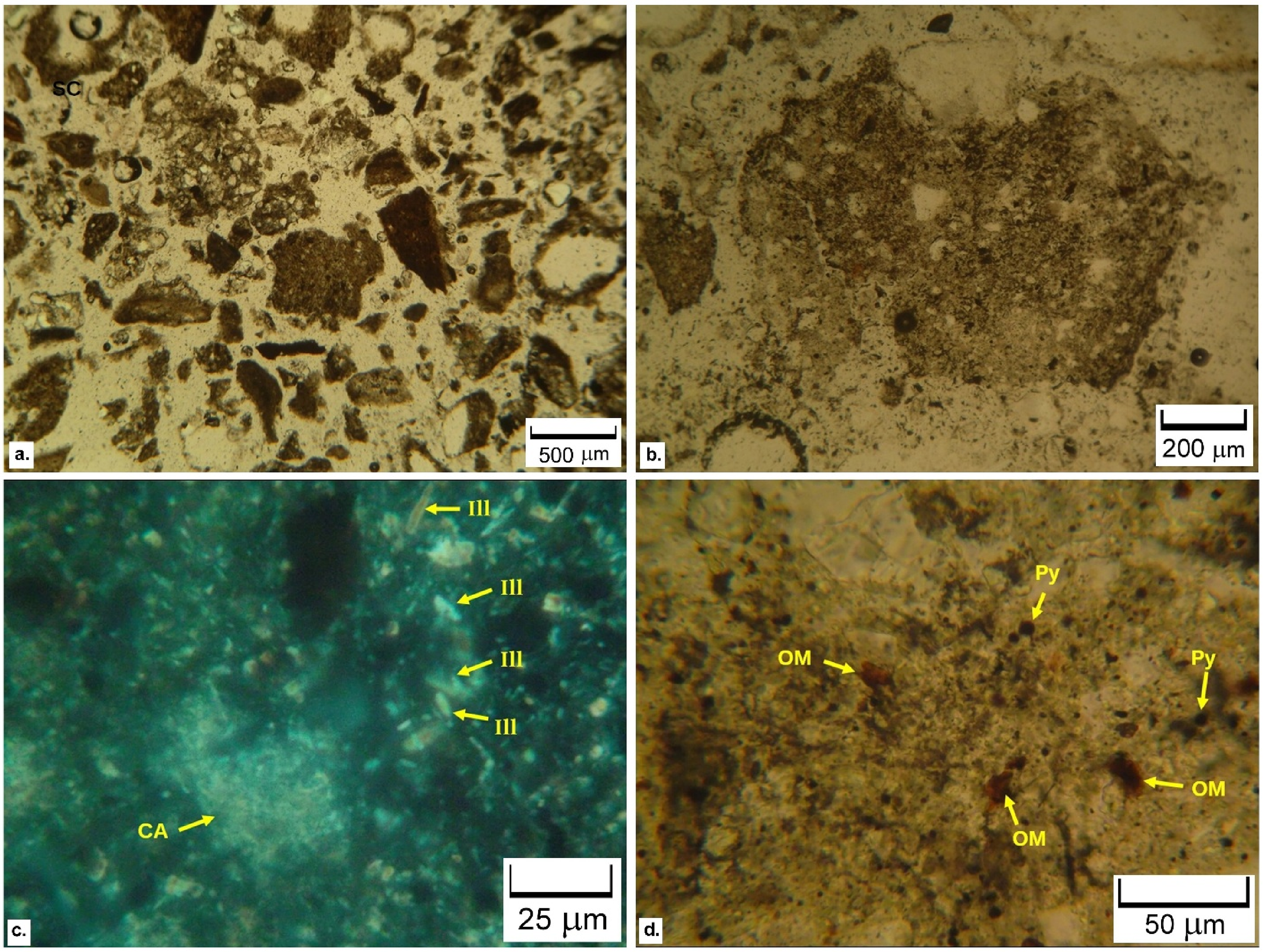
(a) Overall microscopic aspect of the fragments that make up the sample: fragments are embedded in epoxy resin (NII, 40 ×). (b) The overall picture of a carbonated clay fragment holding rare siliciclastic arenites and silts or feldspar (NII, 100 ×). (c) Petrographic high magnification image of a carbonate clay fragment with rare quart and feldspar granoclasts: distinct clay aggregate (CA) and Illite crystals (Ill) (N+, 1000 ×). (d) Petrographic high magnification image of a carbonate clay fragment with rare quart and feldspar granoclasts; organic matter particles (OM) and spherical opaque particles of pyrite (Py) are also found in these fragments (NII, 600 ×).
The former will be presented first in their study revealing the most information on the Sarmatian. Most of the fragments are artificial and were formed concomitant with the drilling process. (i.e. they are cuttings). However, as we will show, it is not certain that all these fragments were formed during drilling. We further classify them into frequent and rare fragments, mentioning that the former ones make up 90% of the whole probe.
Fragments that can be described as lithoclasts. Eight categories of such fragments are mentioned; they are grouped in descending order of volume proportions, the frequent fragments are described as (Ia) calcareous claystone with rare siltic and arenitic siliciclasts, (Ib) fine greywackes, (Ic) calcareous smectitic claystone without quartz and feldspar granoclasts (Id) Marls and further, in descending order of the volume proportions the rare fragments are described as (Ie) Fine sandstones with carbonate cement (Type 3 rock fragments), (If) Illitic shales (Type 6 rock fragments), (Ig) Organic rich claystone (Type 7 rock fragments) and (Ih) Other rare fragments.
Ia calcareous claystone with rare siltic and arenitic siliciclasts, seen in Plate 1c, have a dominant matrix (>80% vol.) comprised of multiple components: clay minerals (smectites and illites) (Plate 1c), micrite carbonate particles, organic matter particles and rare opaque particles (Plate 1d) (mostly diagenetic pyrite). This matrix beholds coarser arenitic and silt siliciclasts: mainly quart granoclasts (Plate 2a) and subalternate polygranular quart clasts (Plate 2c) or quart and feldspar, shale litoclasts (Plate 2c) and distinct clay aggregates having silt sizes (Plates 1c and 2b). Advanced degrees of fragmentation make some of the smallest such fragments contain one or more arenitic/silt granoclasts. Plate 2d depicts such a fragment which includes a sole apatite granoclast. Ib fine greywackes, without utilizing the polarizing microscope, these fragments can be rather described as mudstones. The greywackes are made up of fine arenitic clasts with predominantly angular and subangular shapes and a matrix mainly comprised of clay minerals and fine carbonate particles as shown in Plate 3a. These rocks were described as ‘fine’ because the majority of the arenitic clasts are fine or very fine according to the granulometric scale, having dimensions < 0.25 mm. For a better clarification of the dimensions, we refer to Figure 3 which represents an adaptation of the Udden-Wentworth scale and completed with data from Folk (1966). Arenitic clasts are both silicate granoclasts (quart, potassium and plagiocalse feldspar and endogenous chlorite presented in Plates 3bc and 4ab) as well as carbonate (mono- and polygranular as shown in Plate 3d). To these, there are present in smaller proportions calcareous-clayey arenitic clasts (Plate 4b) and opaque particles (especially pyrite, Plate 3c). The matrix contains both clay minerals from the smectite group as well as clay-type chlorite and illite. The textural aspect of this matrix suggests that advanced disintegration of the clay-carbonate clasts occurred, at least in part (Plate 4b). These clay-carbonate clasts present a fine marl-like aspect. Minor petrographic components are represented by glauconite and organic matter, the latter being present in the form of semitransparent siltic particles (Plate 4a). Ic calcareous smectite claystones without quartz and feldspar granoclasts are somewhat homogenous and lack quart and feldspar siliciclasts as shown in Plate 4c. The microscopic study at high magnification degrees reveals they are mostly made up of minerals belonging to the smectite group; microcrystalline carbonate is present up to 15%–25% as shown in Plate 4d. Also, there are present rare opaque particles and semitransparent organic matter particles (Plate 5a). Id Marls, presented in Plate 5b, can be mistaken for calcareous smectite claystone devoid of feldspar and quart granoclasts at reduced magnification degrees. The percentage of carbonate is greater in these rocks (30%–40%) (Plate 5c). The predominant clay mineral belongs to the smectite group lacking noticeable habitus through optic microscopy. Illite crystals are found to be subordinate, <10% of the total volume. Ie fine sandstones with carbonate cement are made up of arenitic siliciclasts, almost exclusively quart granoclasts having angular and subangular shapes as presented in Plates 5d and 6a), and sparitic carbonate cement (Plate 6b) that locally presents a poikilotopic character (Plate 6b). Other particles found totally subordinate within these sandstones are glauconite microaggregates (Plate 6c) and diagenetic pyrite microaggregates (Plate 6b). If Shale fragments presented in Plate 6d are composed mainly of illite crystals having obvious preferential orientation (Plate 7a). Illite is the predominant clay mineral, while quart and feldspar siliciclasts are very scarce. However, organic matter and autigen pyrite are also present (Plate 7b). These rock fragments appear to be fossil-bearing. These rocks typically contain spherical silica shells with an apparent diameter of 40–50 μm (Plate 7c) whose walls seem thick and cryptocrystalline. Ig organic-rich claystones. Such fragments were rarely encountered. Organic matter is impregnated and semitransparent from an optical standpoint (Plate 7d). The presence of these organic substances makes the structure of the clay difficult to discern even at high magnification degrees. Ih other rare fragments. In the last category, we have included some particular fragments. They are composed of plagiclase feldspar, some of them having zoned structures. Only two such type fragments have been found in all of the thin sections. To one of these two fragments, there is attached a portion of a former clay matrix as presented in Plate 8a. Fragments that do not belong to lithoclasts. The most common fragments not described as lithoclasts are:
Quart and feldspar granoclasts – these clasts have apparent larger dimensions than those found in the already described lithoclasts (apparent size ranging from 0.1 to 0.25 mm) (Plate 8b). Some of the quartz present cracks formed under mechanical strain in the process of drilling (Plate 8c). Carbonate bioclasts have difficulty to specify origin: In some of them, a particular structure is noted consisting of several groups of fibrous crystals with different orientations (Plate 8d).
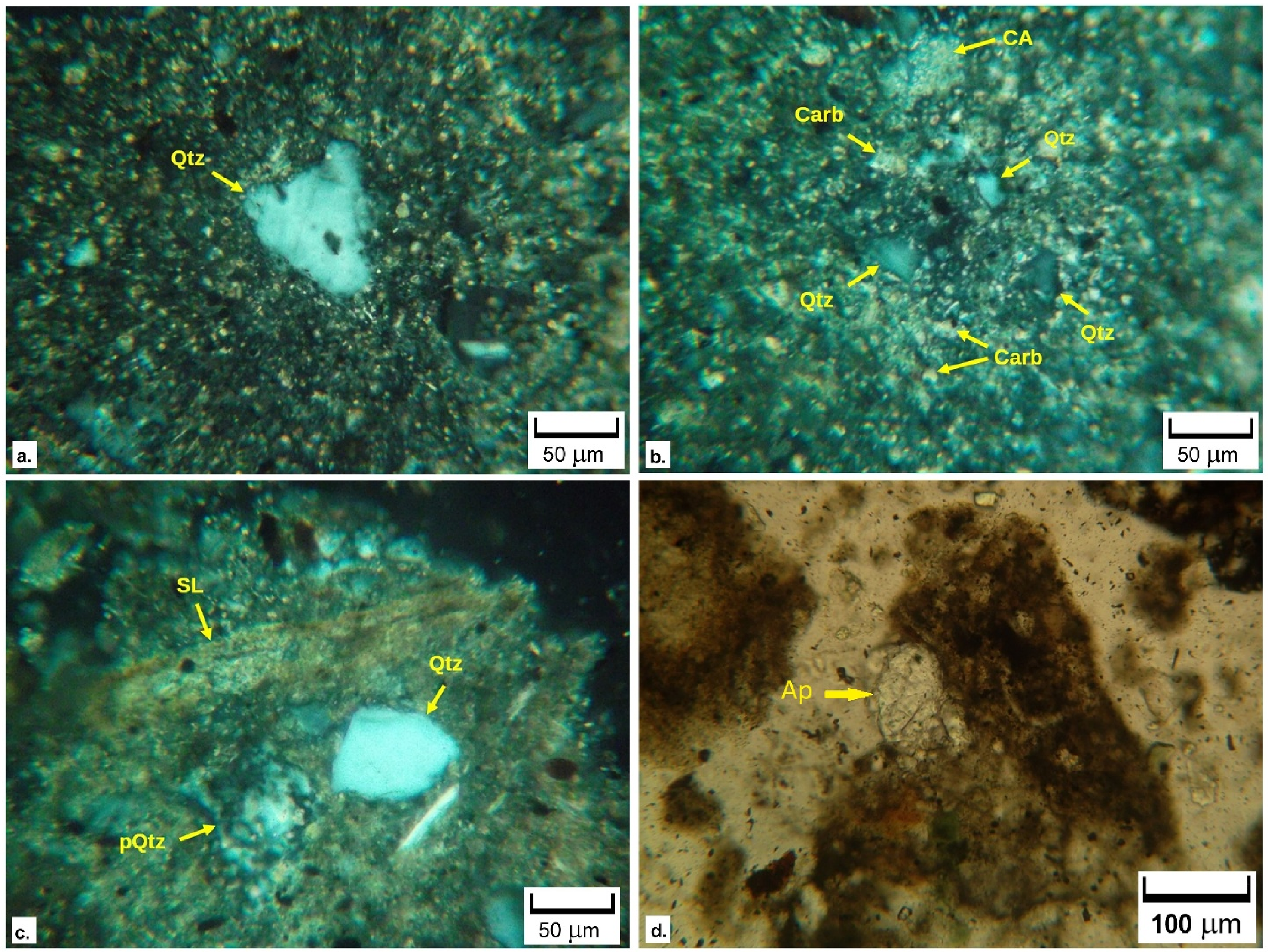
(a) Petrographic high magnification image of a carbonate clay fragment with rare quart and feldspar granoclasts: quart arenitic granoclast with subangular shape (N+, 400 ×). (b) Petrographic high magnification image of a carbonate clay fragment with rare quart and feldspar granoclasts: quart siltic granoclast (Qtz), clay aggregate (CA) and monocrystalline silt carbonate particles (Carb) (N+, 400 ×). (c) Petrographic high magnification image of a carbonate clay fragment: shale integrated lithoclast in this rock type (SL), polygranular quart arenitic siliciclast (pQtz) with post-cinematic recrystallization structure, quart arenitic granoclast with subangular shape (Qtz) (N+, 400 ×). (d) High magnification image of a calcareous-clayey clast partially engulfing an apatite granoclast (Ap) (NII, 250 ×).
(a) Overall microscopic image of a greywake-type fragment (NII, 100 ×). (b) Petrographic high magnification image of a greywake-type fragment: plagioclase feldspar arenitic granoclasts (Plg) and quart (Qtz); rock matrix is likewise rich in fine carbonate silt fragments (Carb) (N+, 400 ×). (c) Petrographic high magnification image of a greywake-type fragment: authigenic pyrite crystals and aggregates (Py) (NII, 400 ×). (d) Petrographic high magnification image of a greywacke-type fragment: carbonate arenitic clasts (Carb) (N+, 400 ×).
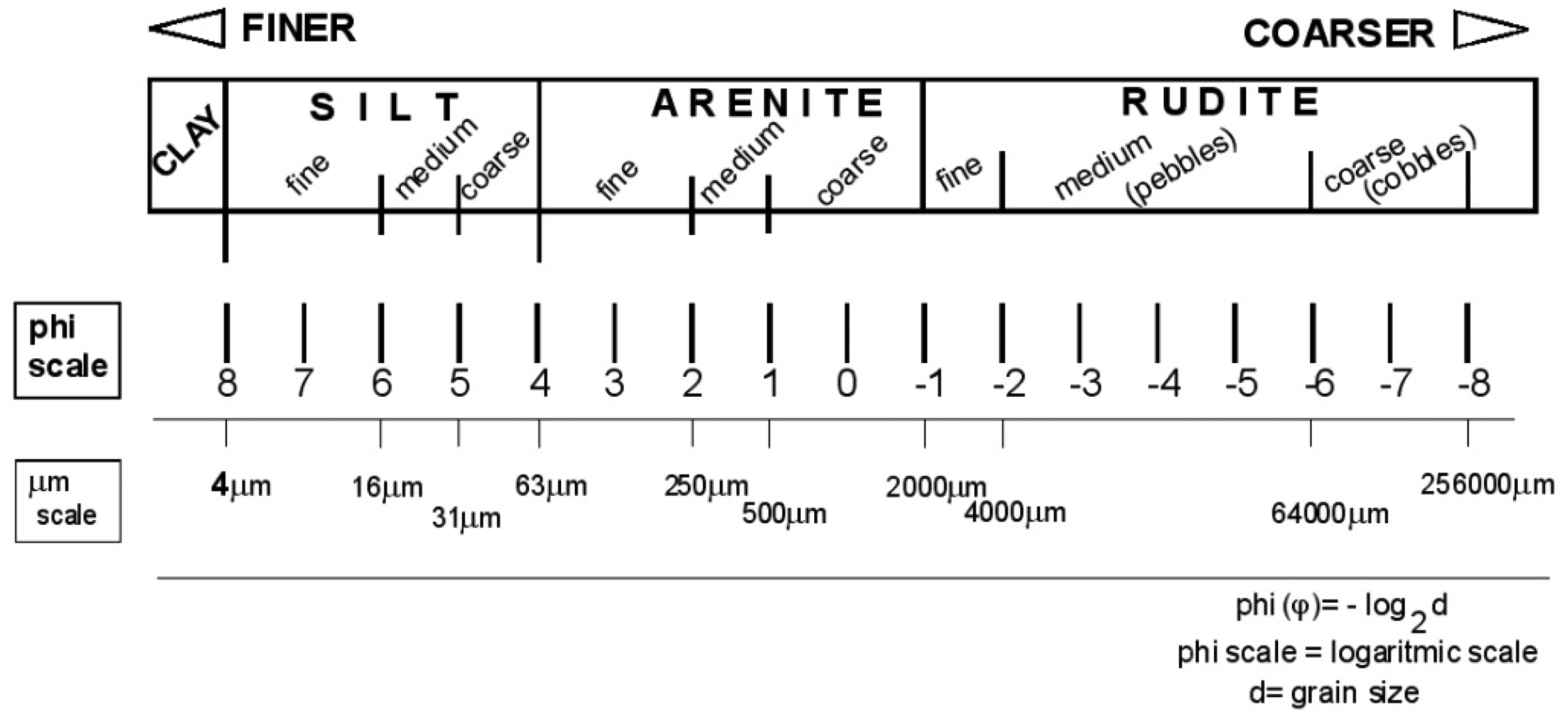
Simplified (Udden, 1914; Wentworth, 1922) scale with completed data from Folk (1966).
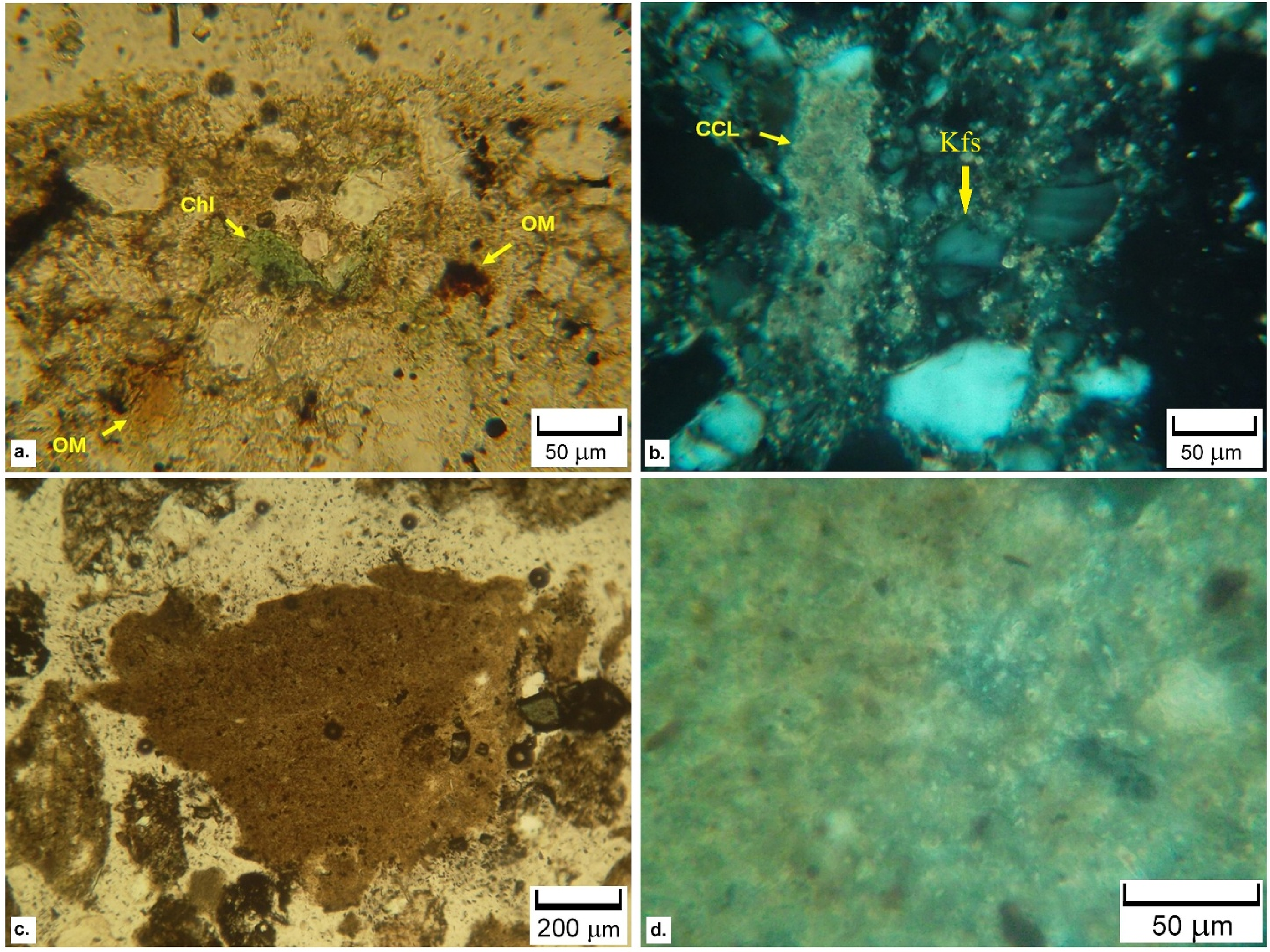
(a) Petrographic high magnification image of a greywake-type fragment: deformed chlorite granoclast (Chl) and semi-transparent organic matter (OM) (NII, 400 ×). (b) Petrographic high magnification image of a greywake-type fragment: carbonate-clayey lithoclast, marly (CCL) and microcline granoclast (Kfs) (N+, 400 ×). (c) Calcareous smectite claystone fragment devoid of quart and feldspar granoclasts (NII, 100 ×). (d) Petrographic high magnification image of a calcareous smectite claystone fragment. The structure is relatively homogenous. A high proportion of clay minerals is noted from the smectite group along with the presence of subordinate very fine carbonate (independent particles and aggregates) along with rare opaque particles (N+, 630 ×).
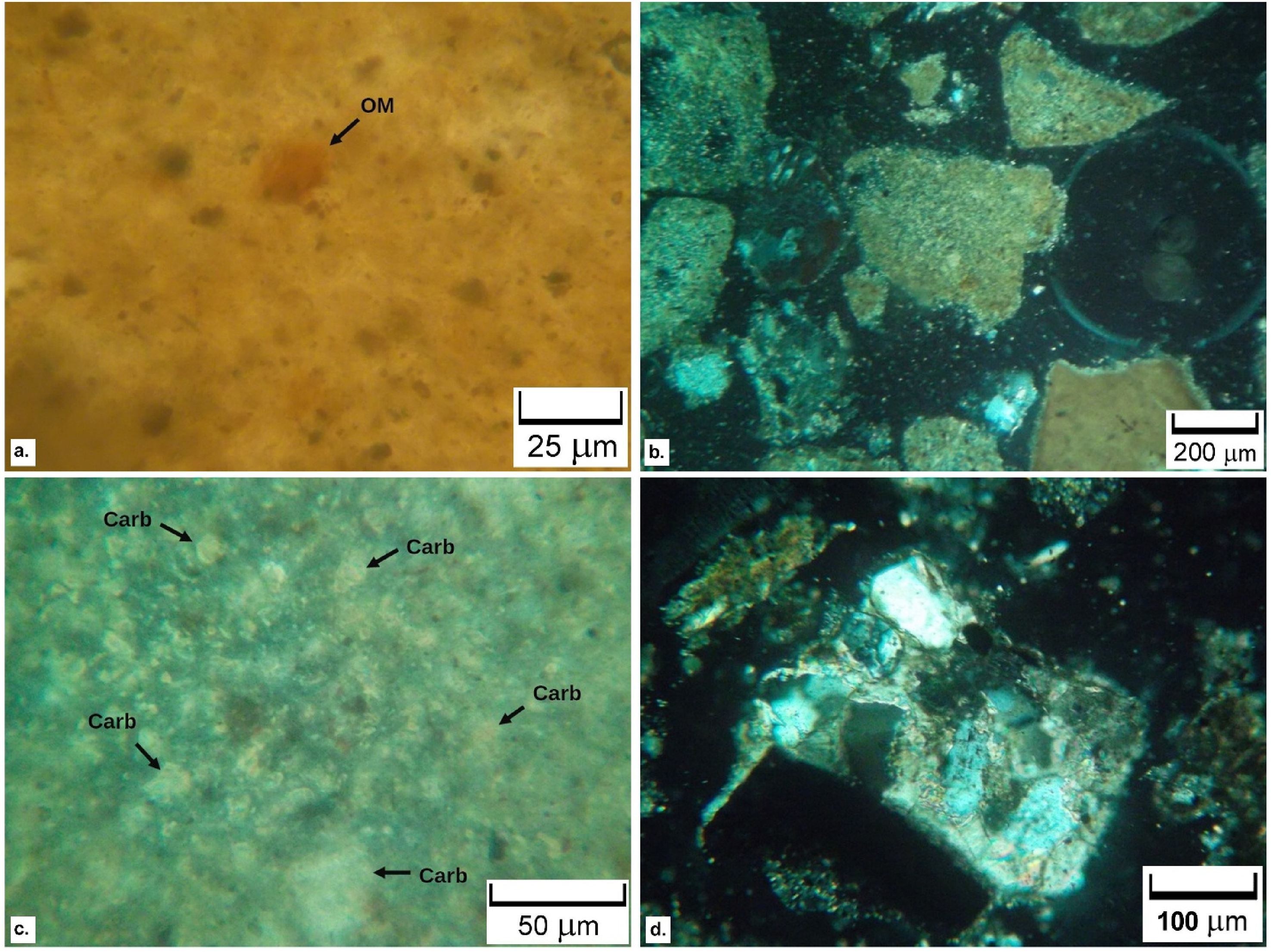
(a) Petrographic high magnification image of a homogenous clay fragment: semitransparent organic matter particles (OM) (NII, 1000 ×). (b) Marl fragment: somewhat homogenous morphology due to lack of silt or arenite granoclasts; the abundance of fine silt and carbonate particles stands out (N +, 100 ×). (c) Petrographic high magnification image of marl: high occurrence of fine carbonate silt granulation is observed (Carb) (∼30%–40%) (N +, 630 ×). (d) High magnification image of a fine sandstone fragment with carbonate binder (N+, 250 ×).
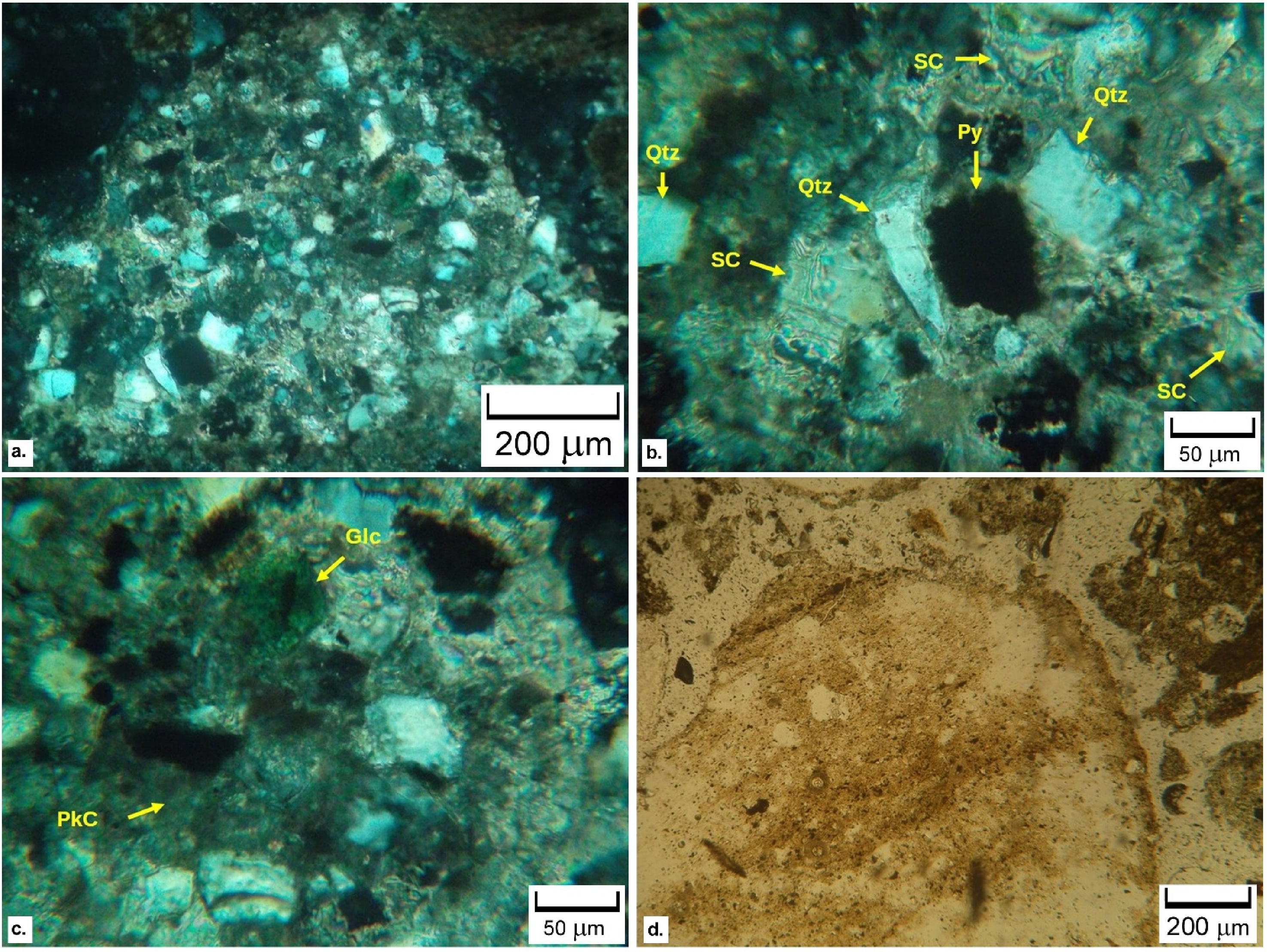
(a) Overall image of a fine sandstone fragment with carbonate binder (N+, 100 ×). (b) High magnification image of a sandstone fragment with carbonate binder: quart angular clasts (Qtz), pyrite aggregates (Py), spiritic carbonate binder (SC) (N +, 400 ×). (c) High magnification of poikilotopic carbonate cement (PkC) and glauconite microaggregates (Glc) (N+, 400 ×). (d) Shale fragment: these rock fragments generally lack quart and feldspar siliclasts (NII 100 ×).
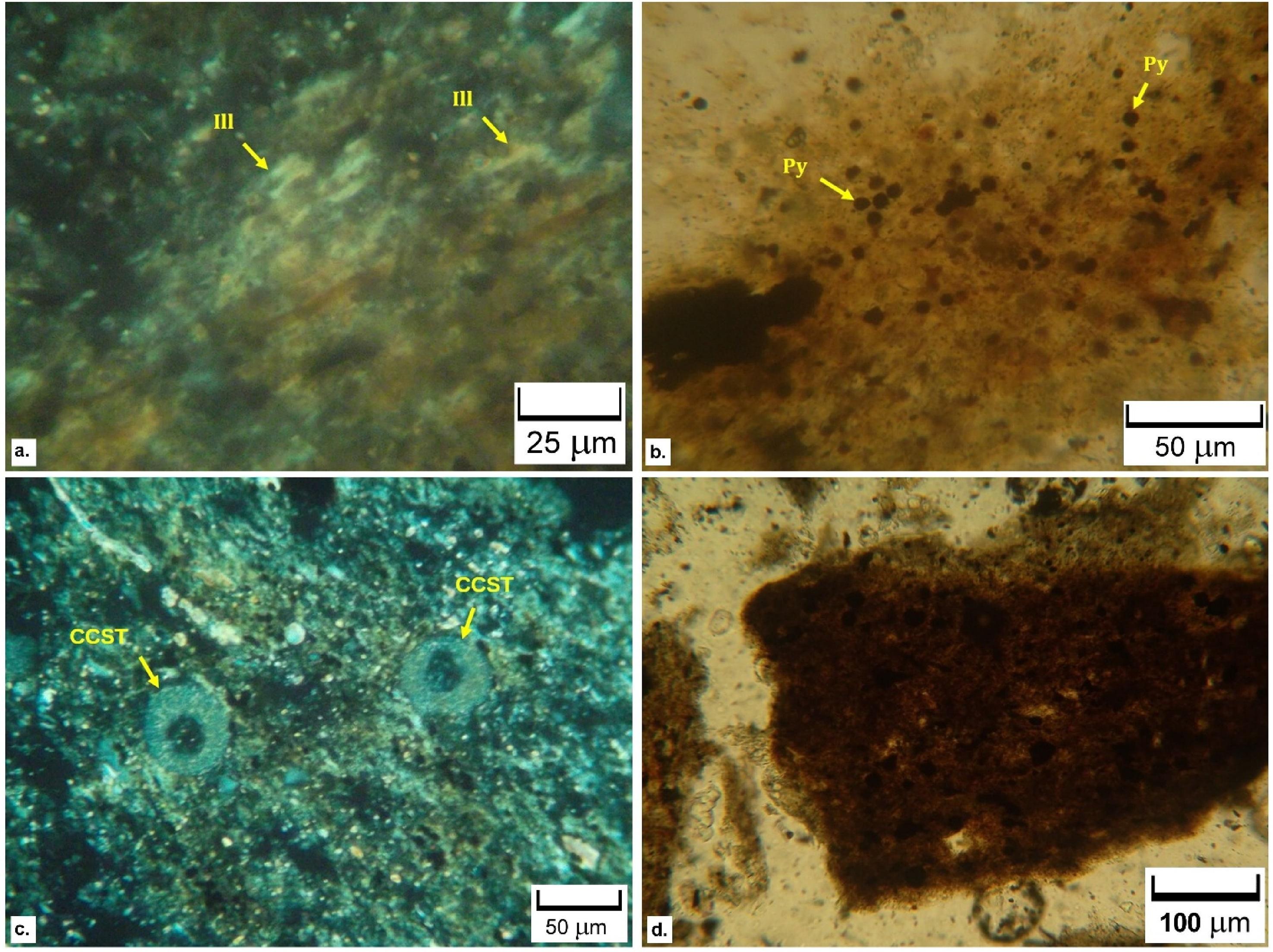
(a) Petrographic high magnification image of a shale fragment: shale structure is characterized by parallel arrangement of illite crystals (III) (N +, 1000 ×). (b) Petrographic high magnification image of a shale fragment: high occurrence of spherical and opaque diagenetic pyrite fragments (Py) (NII, 630 ×). (c) Petrographic high magnification image of a shale fragment: cryptocrystalline spherical silica shells (CCST) (N +, 400 ×). (d) High magnification image of a clay clast impregnated with organic matter (reduced occurrence) (NII, 250 ×).
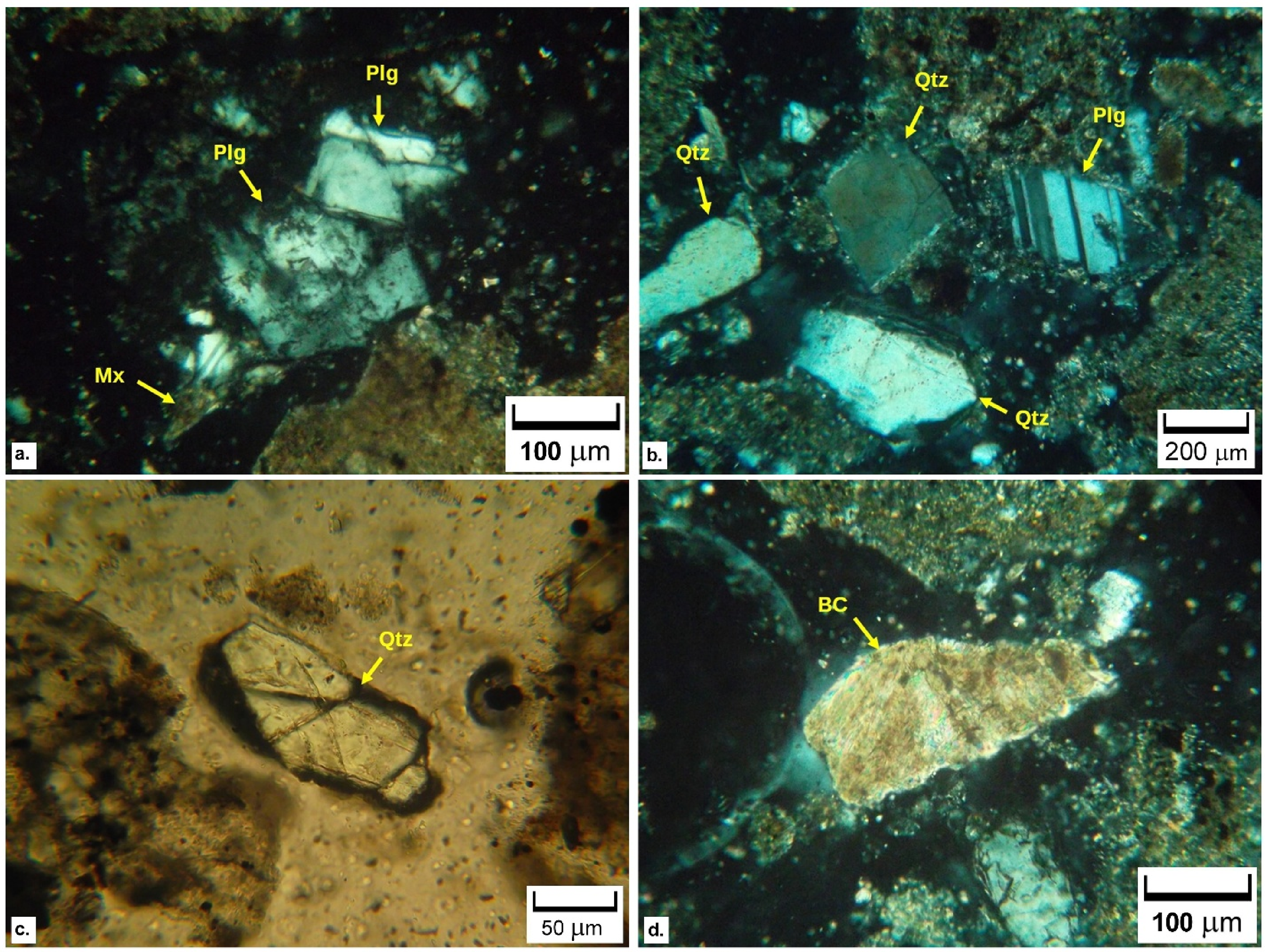
(a) High magnification image of a multi-crystalline fragment made up of plagioclase feldspar (Plg) having a former clay matrix attached (Mx); (N+, 250 ×). (b) Quart and plagioclase feldspar arenitic and angular clasts found in sieve samples separately from the rock fragments(N+, 100 ×). (c) High magnification image of a quart clast (Qtz) with internal cracks from the drilling process embedded together with rock fragments (NII, 400 ×). (d) High magnification image of a carbonate bioclast (CB) – with unknown origin (N +, 250 ×).
Discussion
In our laboratory techniques, we do a certain degree of polishing that is not similar to ore microscopy but is sufficient to help us in making the correct observations in reflected light microscopy. In many diagenetic reducing sedimentary environments, pyrite occurs in the form of globular microaggregates that reveal golden hues in reflected light and thus, cannot be mistaken for other minerals, such as magnetite, or other opaque entities. However, we are not ruling out the possibility that these opaque fragments are detrital and not autigen. However, we argue that most of these globular particles are diagenetic pyrite, which correlates with the preservation of this sedimentary environment and organic matter particles. Detrital particles are more evenly disseminated as opposed to diagenetic pyrite, which is found more localized (grouped). In establishing the different mineral types, classic methods of microscopy have been employed, out of which we point out, but not limit ourselves to, the first order of birefringence colours, polysynthetic twins for feldspars and similarity of illite to metamorphic sericite (birefringence at crossed-polars).
Considering the nature of the most common fragments that can be described as lithoclasts it can be said that the dominant lithological types are the calcareous claystones with rare siltic and arenitic siliciclasts, the fine greywackes, the calcareous smectitic claystones without quartz and feldspar granoclasts and the marls. However, given that the matrices of carbonate clays and greywackes are petrographically similar (especially regarding the presence and nature of fine granular carbonate as well as organic matter particles) together with the fact that variable proportions of arenitic granoclasts are found both in greywacke as well as in carbonate clays, leads us to believe that for the studied interval the sedimentary matter which makes up the matrices of both rock types and has an identic origin. On the basis of sedimentation involving this kind of carbonate-clay matter, fluctuations of arenite silicate granoclasts have occurred in the sedimentary basin, especially quartz and feldspar. If this intake was higher, greywacke rocks were formed. It is most likely that between such layers there are graded passes associated with different accumulation conditions. As there are similarities regarding the matrices of the two rocks mentioned above there are similarities also in terms of the composition of the calcareous smectitic claystones without quartz and feldspar granoclasts and the marls. As for these two rocks, the mineralogical components are about the same having only different proportions. What is more remarkable is the variation in carbonate content that dictates the transition from calcareous clay towards marl. When the carbonate intake was higher, the marl precursor sediment was generated. It is noted that over the studied interval there was no sediment deposition to be devoid of carbonate.
As regards carbonated binder sandstone fragments, given the rarity of these fragments and their sometimes-rounded forms, it is unlikely that the range studied contained strata or even laminates of such rocks. The cement of these fragments is a basal type rather than a pore type. These kinds of fragments are tougher and harder to disaggregate compared to clay fragments or to sedimentary rocks with clay matrix. It is unlikely that these fragments were rounded during circulation through the drilling fluid, so they are more likely lithoclasts that had rounded shapes at the time of deposition. They come from relatively thin strata or laminates rich in coarser arenitic material (sand type) but are not necessarily part of the studied interval and could rather be detached from the upper formations traversed by the drill bit.
Shale fragments are rare, have rounded shapes and have been encountered before as small lithoclasts in calcareous claystones with rare siltic and arenitic siliciclasts fragments. Thus, we appreciate that in the studied interval there are no strata or laminae from such rocks. The geological bodies that supplied the sedimentary matter for the earlier-mentioned calcareous clays of these rocks were in the source area. Being clayey rocks, shale fragments can be rounded during movement through the drilling fluid, but in general, their disaggregation occurs less likely than in other rock types. Silica shells found in independent shale fragments have not occurred in the small lithoclasts included in calcareous clays, but given the dimensions and the fact that they are still rare as lithoclasts, the probability of finding them is very small. We appreciate that these lithoclasts of shales derive from other strata or laminae with coarser sedimentary material (arenitic) and which are also not necessarily part of the interval studied.
Claystone clasts rich in organic matter are also too rare to come from strata or laminae present in the studied interval. Most likely they are derived from laminae or small areas with high transparent organic matter content of the claystones described at points 1 and 3.
The most interesting fragments found in this study are the fragments made up of multiple plagioclase feldspar crystals, some of them having zoned structures. The fact that one of these fragments presented a portion of the matrix attached (Plate 7c) reveals that they derive from a sedimentary rock having a matrix-supported type structure. It is unlikely that the clay-like part of the matrix has been so locally attached to this fragment in the drill fluid circulation process. These fragments are either greywacke type with coarser granulation than the ones presented at point 2, or fragments from a calcareous clay which accidentally included lithoclasts (less likely). Considering the zonalities of plagioclase crystals, these in turn are most likely derived from a hypoabyssal magmatic rock or less likely from a glomeroporphyric volcanic rock. Considering only the plagioclase crystals, they constitute endogenous lithoclasts with one of two possible origins previously presented.
Independent quart and feldspar granoclasts like the ones presented in Plate 7d, having most of the dimensions larger than those found trapped in the rocks described at points 1 and 2 are unlikely to have resulted from disaggregation in the drilling operations. They derive either from thin arenitic unconsolidated laminae or strata (sand type) or from arenitic strata found at the upper levels. In this latter case, there are fragments of contamination that have been detached all the way from the superior intervals as the studied interval was crossed by the drill bit and the drilling fluid.
Numerous carbonate bioclasts have been studied in the thin sections available and at all were found in angular forms. So, they almost certainly were fragmented in the drilling process. They either resulted from the breaking of some bigger bioclasts included in fine granulation rocks (such as the mentioned clay stones or marls) or like independent granoclasts of quartz and feldspar are contamination fragments from the upper intervals.
Conclusions
The Sarmatian from the Caragele structure that has undergone our thin sections study presents a heterogeneous makeup, being identified with four dominant lithological types: two types of calcareous claystones: the first with rare siltic and arenitic siliciclasts and the second without quartz and feldspar granoclasts with smectites present, fine greywakes and marls – presenting non-recurrent graded passes that point out different sedimentation conditions occurred.
We also found similarities for the rock matrixes as well as for the composition of calcareous smectitic claystone without quart-feldspar granoclasts and marls. The fragments of sandstones that present carbonate cement do not belong to the studied layer having been broken off the superior formations when the drill bit traversed these.
The encountered rare shale fragments with rounded shapes as lithoclasts in calcareous claystones with rare siltic and arenitic siliciclasts lead us to believe that in our target interval, there are no such laminae. Moreover, silica shells found in other independent fragments that have not occurred in these lithoclasts determine us to believe a different origin, more likely from the superior formations.
Multiple plagioclase feldspar crystals, some presenting zoned structures, are the most intriguing factor for our study. Given their construction, these are most probably derived from hypoabyssal magmatic rock or from a glomeroporphyric volcanic rock. Although there is the possibility of calcareous clays to include these as lithoclasts, we do not sustain this idea. The independent quart and feldspar granoclasts could represent contamination fragments from superior formations.
Carbonate bioclasts have also been observed, all of them presenting angular shapes. Fragmentation while drilling of these is obvious, their origin being either in some larger broke-off bioclasts included in fine granulation rocks of, likewise from the upper intervals.
Geophysical prospecting, followed by exploration well drillings uncovered new gas fields in the Eastern Moesian platform, thus extensive research taking place. Exploration that followed was conducted at a variable rate, with both positive and negative findings, focus relying on improving the already known reservoirs located in different geological settings and areas. The Caragele structure shows great potential, with such types of analyses unfortunately being non-existent. We believe our study could help future researchers in establishing lithological matches and outline possible gas reservoirs from the region. For the formation that we have characterized by analyzing drill cuttings, we suggest that in the future, as an ideal addition, conducting detailed studies on side cores and correlating the obtained results with borehole geophysics. We consider that a comprehensive petrographic characterization is made on microscopic bases, and we do not exclude but rather propose to use the obtained data not only in stratigraphic correlation but also in the calibration of measuring devices.
