




Abstract
This study presents a comprehensive analysis of an organic Rankine cycle (ORC) integrated with a hybrid solar-geothermal energy system. The research aims to evaluate the thermodynamic performance and exergy efficiency of the hybrid system and compare it with a standalone solar ORC. The problem is approached by analyzing exergy destruction within key components, using the entropy method, and evaluating the impact of different working fluids. For the standalone solar ORC with a 1 MW turbine, the turbine and condenser were identified as the main sources of exergy destruction, contributing 40% and 25%, respectively. In the hybrid solar-geothermal ORC, the solar collectors were the dominant source of exergy destruction, contributing 58%, while the turbine's share was reduced to 10%. The use of R245fa improved the overall efficiency by up to 3%. A validated Simulink model was developed, confirming the reliability of the simulation results. The findings highlight the potential of hybrid systems in improving energy efficiency for small- to medium-scale combined heat and power applications, with future work focusing on optimizing operational parameters and exploring additional working fluids.
Keywords
Introduction
Organic Rankine cycle (ORC) plays a fundamental role in the realm of energy production. Nowadays, significant increases in industrialization and growth in population with limited fossil fuel have made the quest for renewable energy sources (RESs) one of the most important challenges should be addressed (Amin et al., 2015; Khanlari and Alhuyi Nazari, 2022). Solar and geothermal energy are a proper example of the most common RESs utilized, due to their abundance and availability. Solar energy can be harvested directly by PV cells or indirectly through solar thermal collectors. However, one of the challenges encountered the solar energy is a fluctuation of solar radiation caused by factors such as day–night cycles, clouds, dust, and fog (Alizadeh et al., 2020; Klein et al., 2015; Singh et al., 2018; Stark et al., 2015). Coupled with geothermal energy, a hybrid solar-geothermal system can cover the gap of solo solar system (Alghamdi et al., 2023). Solar thermal energy can be harvested by using solar radiation collectors such as heliostat collector which concentrates the sun beam to its focal point and rising the heat content of the working fluid (Su et al., 2023). On the other side, geothermal energy is a permanent source of energy which can be a practical solution (El Haj Assad et al., 2021). In the case of the absence of solar energy, particularly for solo solar systems, storage energy systems might be needed (Rajhi et al., 2024). Sensible heat, latent heat, and reversible thermochemical reactions are good solutions for this purpose (Das et al., 2021; Kalaiselvam and Parameshwaran, 2014).
ORC is a Rankine vapor cycle with organic working fluid such as refrigerants and hydrocarbons, instead of steam (Zhang et al., 2023). ORC could be a proper option to produce electricity using low or medium heat recourse, leveraging the low boiling point and high vapor pressure of organic fluids (Haghighi et al., 2021; Morozova et al., 2022). For this purpose, Khaled et al. (2024) investigated a 1 MW CSP-Fossil hybrid power plant, focusing on the performance of different ORC configurations using toluene and cyclohexane as working fluids. Their analysis identified the recuperated ORC with cyclohexane as the most efficient and cost-effective design. The system achieved a 44% renewable energy share, with a solar multiple of 1.7 and 12-h thermal storage, enhancing daily power generation by 4–5 h. The hybridization with fossil fuels improved the capacity utilization factor, ensuring reliability during low solar availability. This study highlights strategies for balancing efficiency, flexibility, and cost in CSP system design, aligning with our research objectives on sustainable energy solutions. In another study, Ghasemi et al. (2014) compared a hybrid solar-geothermal system versus a standalone geothermal and solar systems; and they observed that the hybrid system enhanced the exergy efficiency difference up to 3.4%. Ayub et al. (2015) integrated a solar-geothermal system with an ORC and concluded that the levelized electricity cost was decreased by 2% for the hybrid compared to a standalone geothermal system.
Tovar et al. (2024) analyzed hybrid power systems using solar energy as a thermal source, comparing Brayton sCO2/DORC and sCO2/KC configurations. Their results showed superior exergetic performance for the DORC system (24%) with toluene, cyclohexane, and acetone as working fluids, while the KC system using ammonia was less polluting. Life cycle analysis revealed the CSP tower and construction materials as major contributors to emissions. This study highlights the importance of thermodynamic optimization and environmental assessments, aligning with our focus on enhancing renewable energy systems’ sustainability. Also, Turja et al. (2023) examined the thermodynamic optimization of combined power cycles incorporating supercritical CO2 (sCO2) and bottoming cycles like transcritical CO2 (TCO2) and ORC for waste heat recovery (WHR). Their analysis demonstrated enhanced thermal and exergy efficiency through configurations like recompression, partial cooling, and main compression intercooling, with the partial cooling cycle showing the highest net power output. The study highlights the efficiency gains of up to 2.5% with optimized intermediate pressure and operating conditions, advancing the utilization of WHR for clean power generation. These insights align with our focus on improving renewable energy systems’ efficiency and sustainability.
As mentioned, ORC operates on the same principles as Rankine Vapor Cycle. Therefore, almost all enhancement processes for the conventional Rankine cycle can be applied to ORC, such as regeneration (Haghighi et al., 2021, Javanshir et al., 2017). Furthermore, ORC has some advantages over conventional Rankine cycle, including ability to operate at low temperatures, low operation, and maintenance cost, lack of water needed, more compact size, faster rotational speed, quiet operation, and less time-dependent domain (reaching steady state quickly) (Darvish et al., 2015, Markides, 2015). Additionally, ORC can be combined with other cycles, primarily the bottoming Brayton cycle to increase power production and overall efficiency (Pantaleo et al., 2020). Due to the fact that organic fluids have lower specific heat than water, making them suitable alternatives for operation conditions with low grade of heat sources (Kang, 2012). To optimize working fluids of ORC, the organic fluids should have a small specific volume, high evaporation pressure, and low condensation temperature which means high latent heat (Desai and Bandyopadhyay, 2016).
While solar energy could be essential yet fluctuating, geothermal energy has little effect than solar, but it guarantees permanent operation of the system. For this purpose, a combined cooling and power system presents a good example to produce both cooling effect and electricity. Some researchers showed that the exergy efficiency of a combined system reached up to 29.95% as well as the total unit cost is around 129.7 $/GJ (Alirahmi and Assareh, 2020). In terms of economic analysis, it is more feasible to produce electricity from low or medium heat content sources using ORC (Tchanche et al., 2009). Thus, ORC is a proper choice for power generation with medium to small amounts of solar, geothermal, and industrial waste heat energy (Mirzaei et al., 2018, Stijepovic et al., 2017). For instance, Akbari et al. (2024) conducted a 3E analysis (energy, exergy, and exergoeconomic) of a dual-pressure ORC system utilizing binary zeotropic mixtures for geothermal power generation. Their optimization, based on a multi-objective genetic algorithm and LINMAP decision-making, identified the R123/C2Butene (96.89/3.11) mixture as optimal, achieving a low-cost rate of $88.07/hr alongside a high exergy efficiency of 64.07%. The study highlights the importance of balancing efficiency and cost in system design, providing valuable insights into cost-effective operation. This aligns with our focus on economic optimization of renewable energy systems. In addition, Baccioli et al. (2017) integrated ORC with compound parabolic solar collectors, and proved that the higher concentration ratio, the higher power production. According to Desai and Bandyopadhyay (2016), it can be concluded that the efficiency and cost of the power are mainly dependent on the working fluid of the cycle.
While prior studies have extensively analyzed ORC systems utilizing solar or geothermal energy independently, research on hybrid solar-geothermal systems remains limited. Existing studies often lack a comprehensive comparison of such hybrid configurations with standalone systems, particularly in terms of exergy distribution and thermodynamic performance. Moreover, the impact of diverse working fluids on the efficiency and exergy behavior of hybrid systems has not been thoroughly investigated, leaving a significant gap in understanding how fluid selection can optimize these systems. Furthermore, most research to date has focused on ORC systems solely for electricity generation, neglecting their potential for dual applications such as heating and cooling. This narrow focus overlooks opportunities to enhance the versatility and economic feasibility of ORC technology. Additionally, integrated solar-geothermal systems offer unique synergies by combining high-temperature solar input with stable geothermal energy, yet their thermodynamic modeling and performance optimization remain underexplored.
This study addresses these gaps by conducting a detailed thermodynamic assessment of a hybrid solar-geothermal ORC system and comparing its performance to standalone solar ORC configurations. The analysis evaluates the influence of various working fluids on system efficiency and exergy destruction while optimizing system components and operating conditions. By leveraging the complementary characteristics of solar and geothermal energy, this research explores their combined potential for multi-functional applications, including power generation and thermal uses. The findings aim to contribute to the development of advanced thermodynamic models, enhancing the design and applicability of hybrid renewable energy systems.
Methodology
System overview
Figure 1 illustrates a simple ORC model integrated with a solar-geothermal system. In general, the hybrid ORC consists of two main circuits: Renewable energy heating circuit and organic fluid circuit, including solar collectors, geothermal heat exchangers, evaporator, condenser, and working fluid pump. Regarding the heating circuit, water heats up through passing the evacuated tube solar collectors (ETCs). However, when water temperature T5 reduced below the required temperature, due to sun beam's fluctuation, the geothermal unit make it up to sustain warm water in steady state.
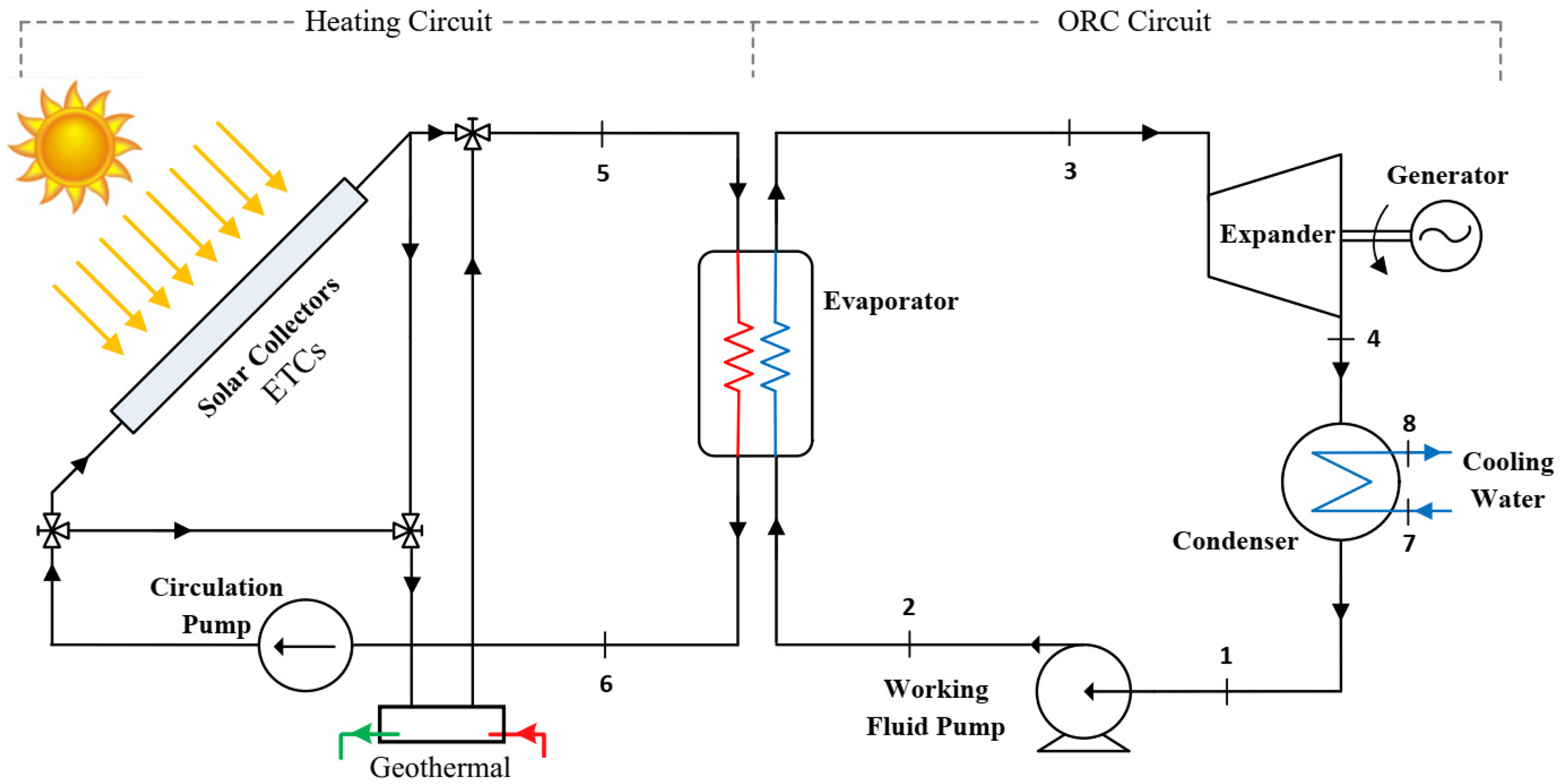
Schematic diagram of the solar-geothermal driven organic Rankine cycle (ORC) used in the current study.
In contrast, the working fluid pump increases the pressure of the organic fluid to the evaporator pressure (process 1–2). As the fluid passes through the evaporator, it picks up thermal energy from the water steam till it reaches saturated temperature and totally vaporizes (process 2–3). The high-temperature, high-pressure vapor is passed into expander coupled with a generator to produce electrical power (process 3–4). When the expanded fluid reaches the expander outlet, it is sent via condenser (process 4–1), dissipating excess heat into the cooling water heat exchanger (process 7–8).
Thermodynamics modeling
The thermodynamic modeling for this study is based on several key assumptions to simplify the analysis. First, the turbine and pump are assumed to operate with ideal isentropic efficiency, indicating that they undergo adiabatic processes with no entropy generation, thereby neglecting real-world inefficiencies. Second, the cooling water in the condenser is assumed to be a saturated liquid, which facilitates phase-change calculations and allows for the use of specific thermodynamic properties without accounting for variations in liquid state. Third, heat losses and pressure drop throughout the system are disregarded, implying thermal isolation and uniform pressure across components. Fourth, chemical exergy terms are excluded from the balance equations, meaning only physical energy forms (such as kinetic, potential, and thermal energy) are considered, while chemical potential energy is ignored. Additionally, all processes are assumed to be in steady-state conditions, with system properties remaining constant over time, which simplifies the governing equations.
Under these assumptions, the thermodynamic modeling involves two primary equations. The mass balance equation 1 ensures that the mass flow rate entering the system equals the mass flow rate exiting it, adhering to the principle of mass conservation. Meanwhile, the first law of thermodynamics, or energy balance equation 2, accounts for energy inputs and outputs, incorporating work, heat transfer, and the enthalpies of incoming and outgoing mass flows to maintain energy conservation within the system. These assumptions and equations provide a simplified framework for evaluating the system's performance, allowing for efficient calculations and insights under idealized conditions.


Pump model
The power required for the fluid pump involves the inclusion of two efficiencies for the mechanical and electrical parts and it is calculated as follows:

Evaporator model
Heat transfer rate from the water to the working fluid in the evaporator is given by


Turbine model
The cycle work is generally derived from the Turbine or expander unit. The following equation expresses the turbine work.

Condenser model
The exhaust vapor at the expander exit is directed to the condenser, which is converted to liquid by rejecting its heat through the cooling water. The condenser heat transfer rate can be expressed as follows:

The minimal temperature differential between the cold fluid and working fluid streams, known as the pinch point, and it can be calculated in the condenser using the following formula:

Solar collector model
Due to their outstanding efficiency and cheap cost, ETCs are widely used for solar radiation collection since they don't need expensive tracking systems. Compared to flat plat collectors, this design can collect solar energy at greater temperatures while maintaining better efficiency. Expressed as a percentage, the total solar energy obtainable at the solar collector may be calculated as follows:


The constants for the solar collector efficiency equation.

Geothermal model
The overall heat absorbed by the heat exchanger before the solar collector (heat transfer fluid [HTF]) in the solar collector and geothermal heat exchanger could be found by:
Overall model of the system
The net output power generated by the hybrid ORC system is calculated as follows:

Simulink model
The Simulink model was designed and developed to study the effect of different parameters on the overall efficiency of the ORC hybrid power plant. The main components of the model are shown in Figure 2.
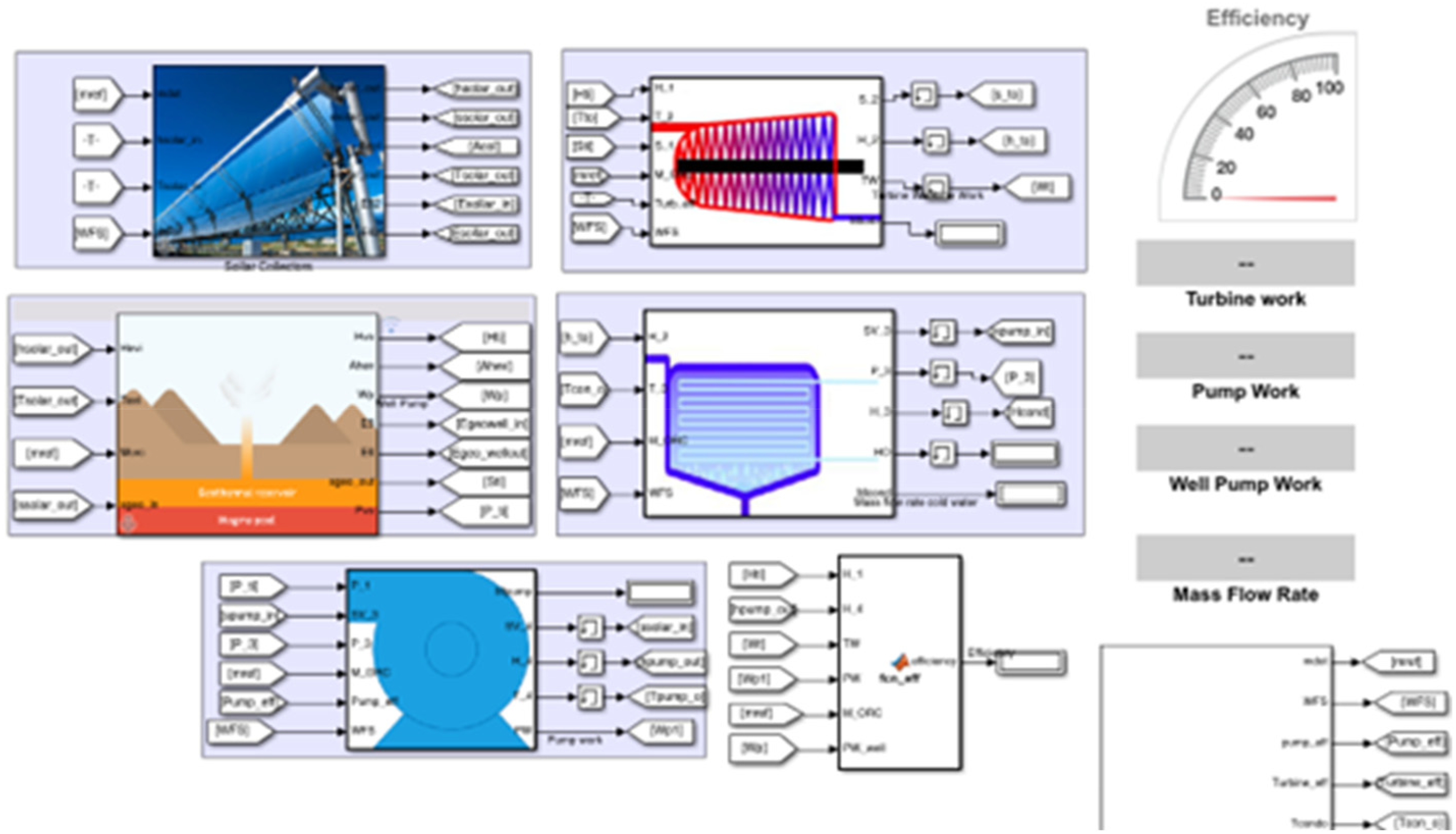
Main blocks of the hybrid organic Rankine cycle (ORC) within simulink model.
Solar system Simulink model
Figure 3 shows a Solar system block which is one of the main components of the Simulink Model.
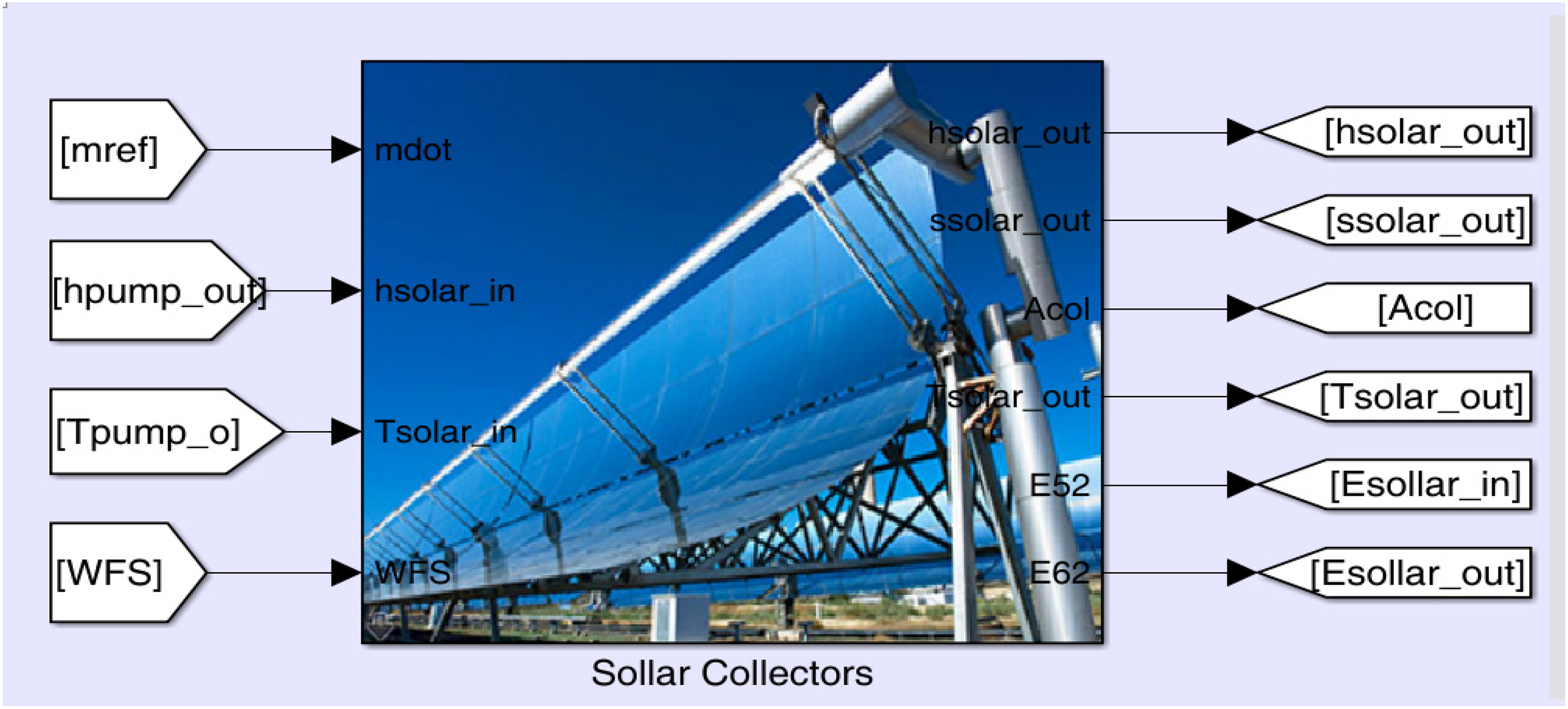
Solar System and heat exchanger block within simulink model.
WFS represents the working fluid code, and mref indicates its mass rate. The block outputs include the working fluid's enthalpy and entropy, exit temperature, and total surface area of solar collectors which is crucial for economic assessment. All parameters needed for the solar system are shown in Figure 4.
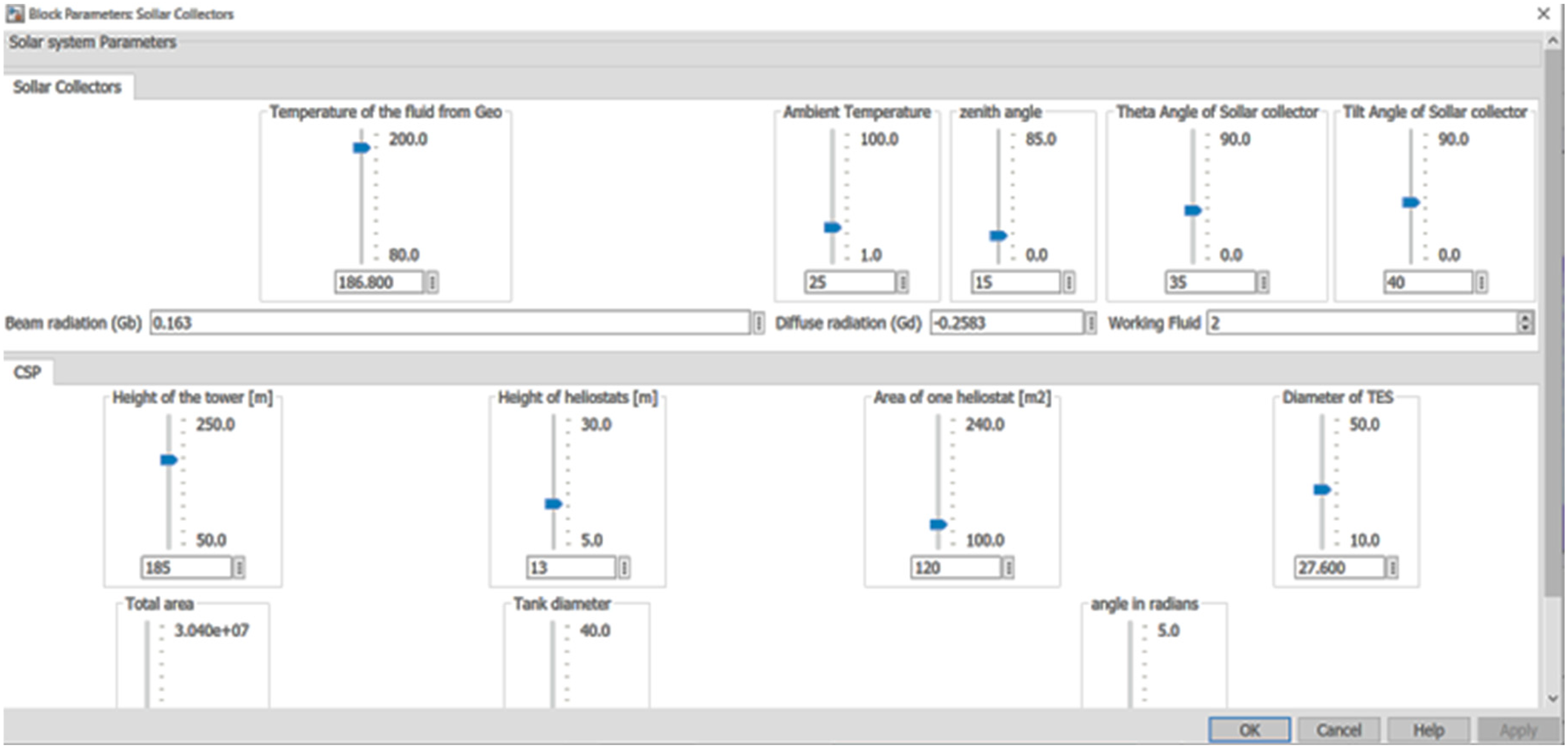
Different parameters defined in the organic Rankine cycle (ORC) hybrid system block.
Geothermal block
The geothermal system shown in Figure 5 has five input ports, including mass flow rate and working fluid type, enthalpy of the working fluid, temperature of the fluid at the outlet of solar system, and entropy of the fluid at the inlet of geothermal heat exchanger. The geothermal subsystem was also defined with the mask parameter definition, as shown in Figure 6.
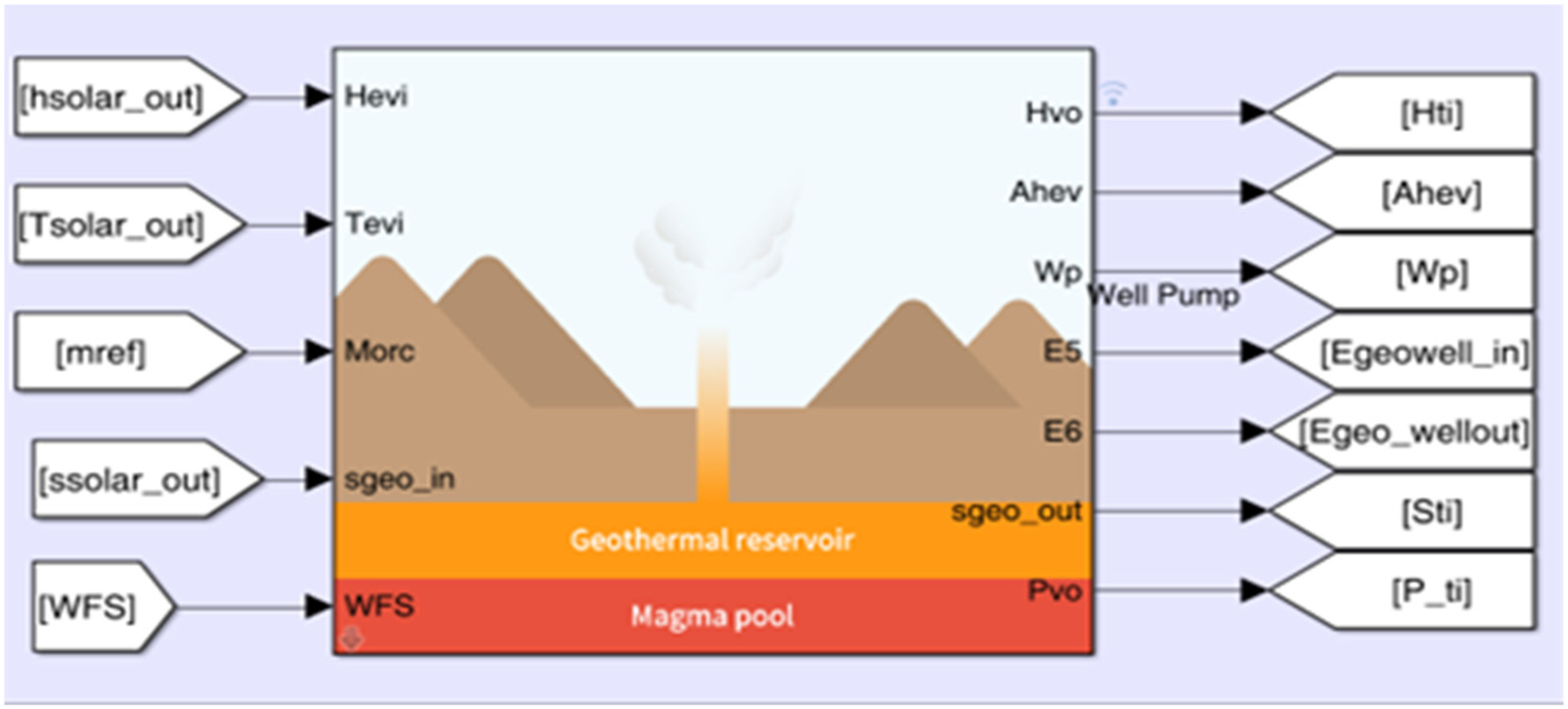
Geothermal subsystem block used in the simulink model.
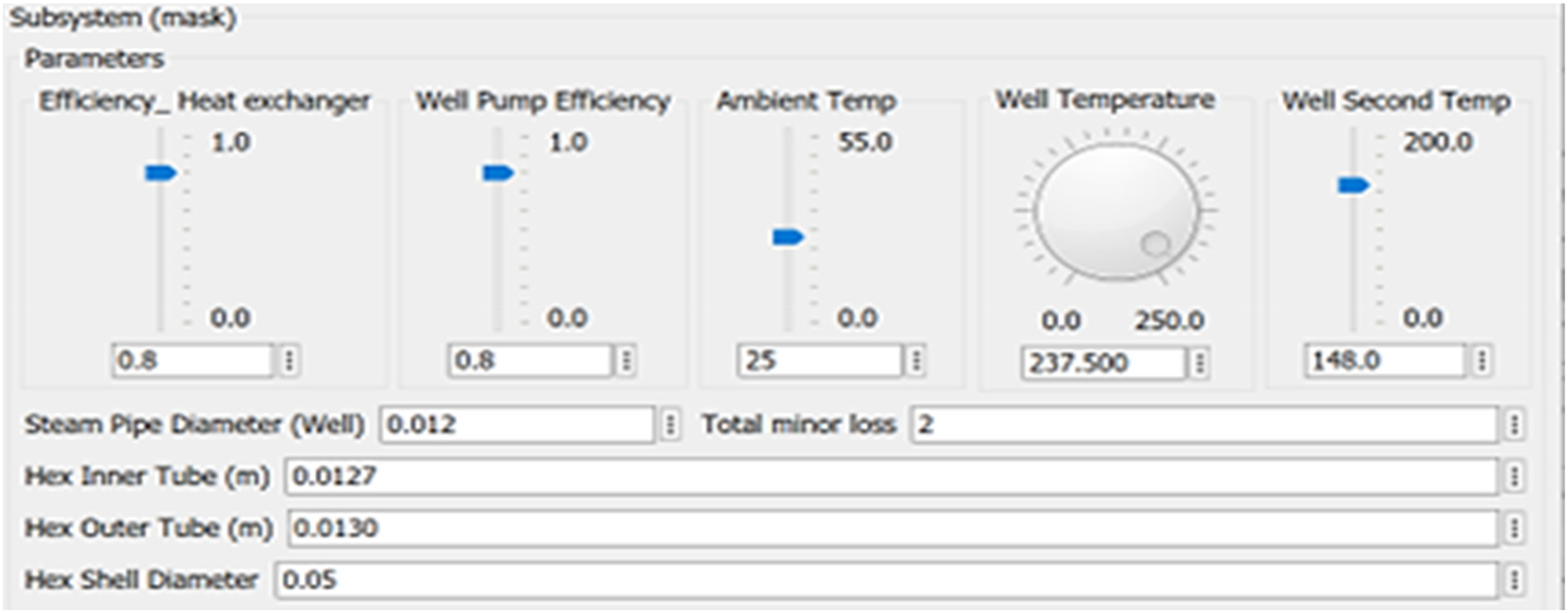
Geothermal subsytem unit mask with defined parameters.
Turbine, condenser, and pump
Turbine, condenser, and pump are essential for every ORC, which are implemented as function blocks and are linked via Simulink ports as illustrated in Figures, 7–10.
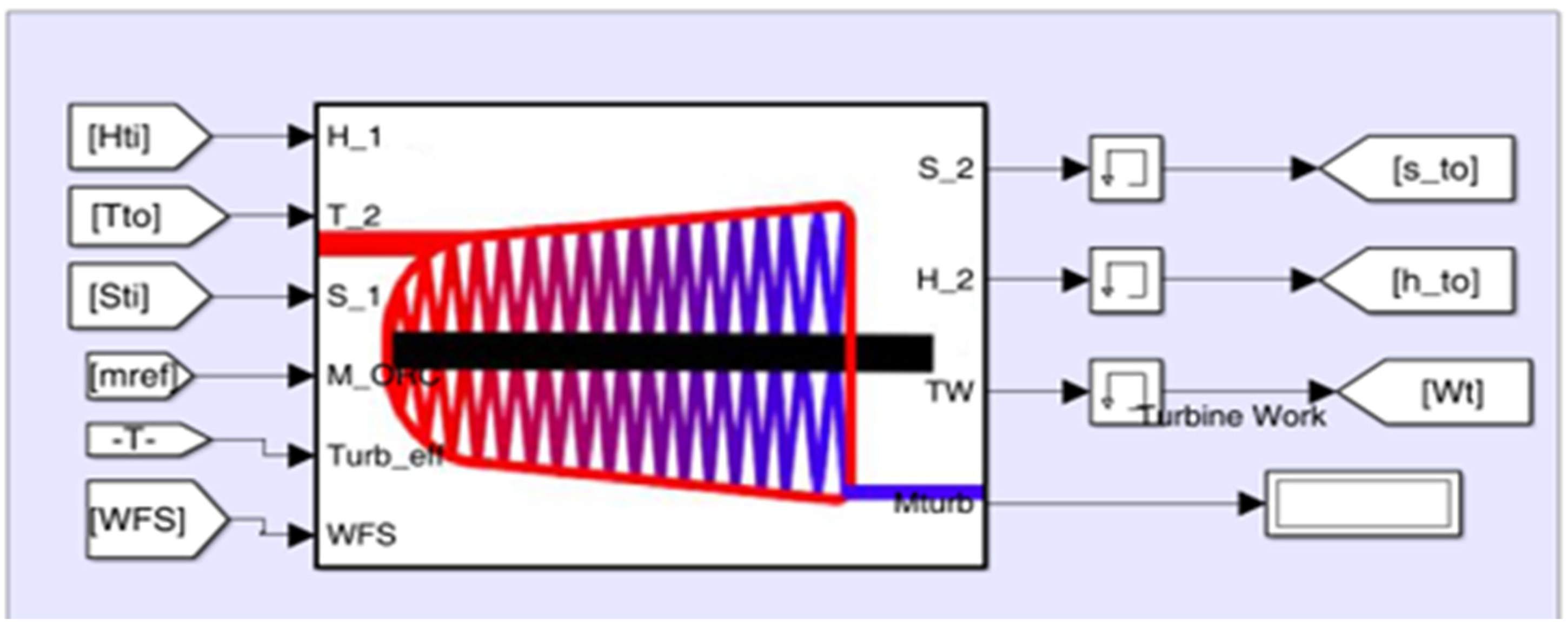
Turbine/expander block defined in the organic Rankine cycle (ORC) hybrid system.
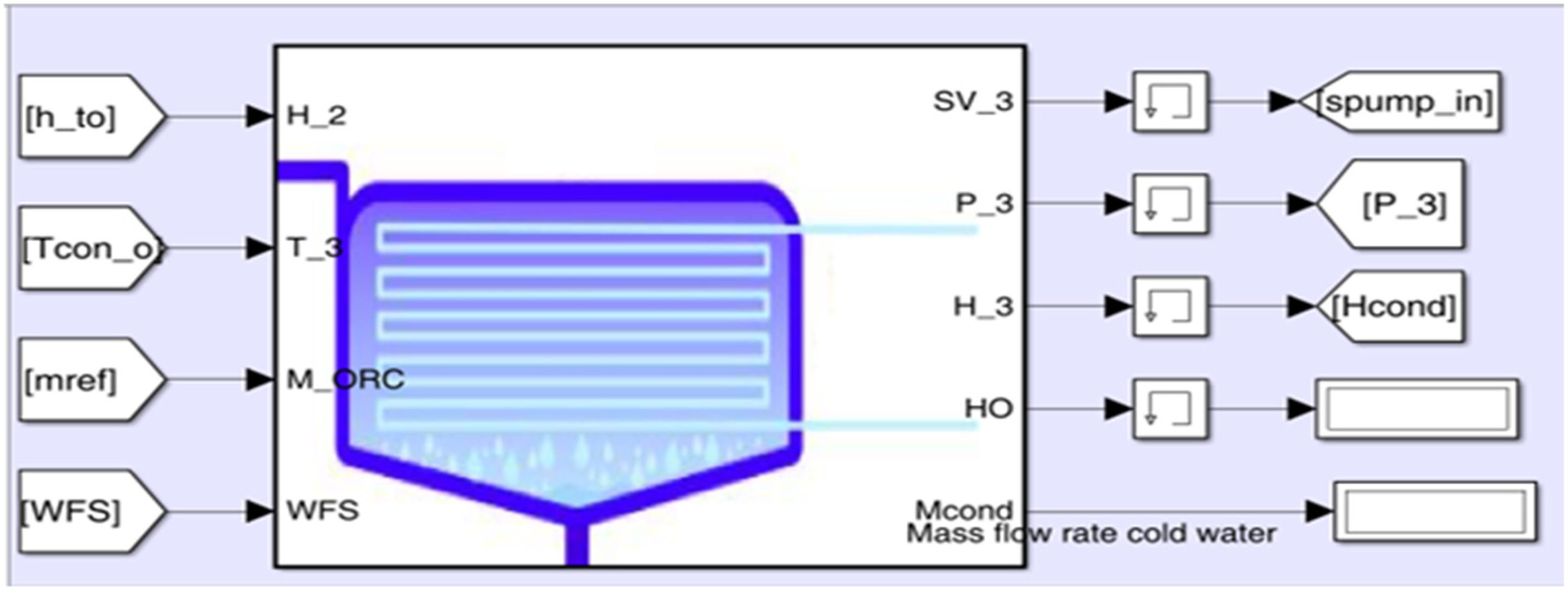
Condenser unit block defined in the organic Rankine cycle (ORC) hybrid system.
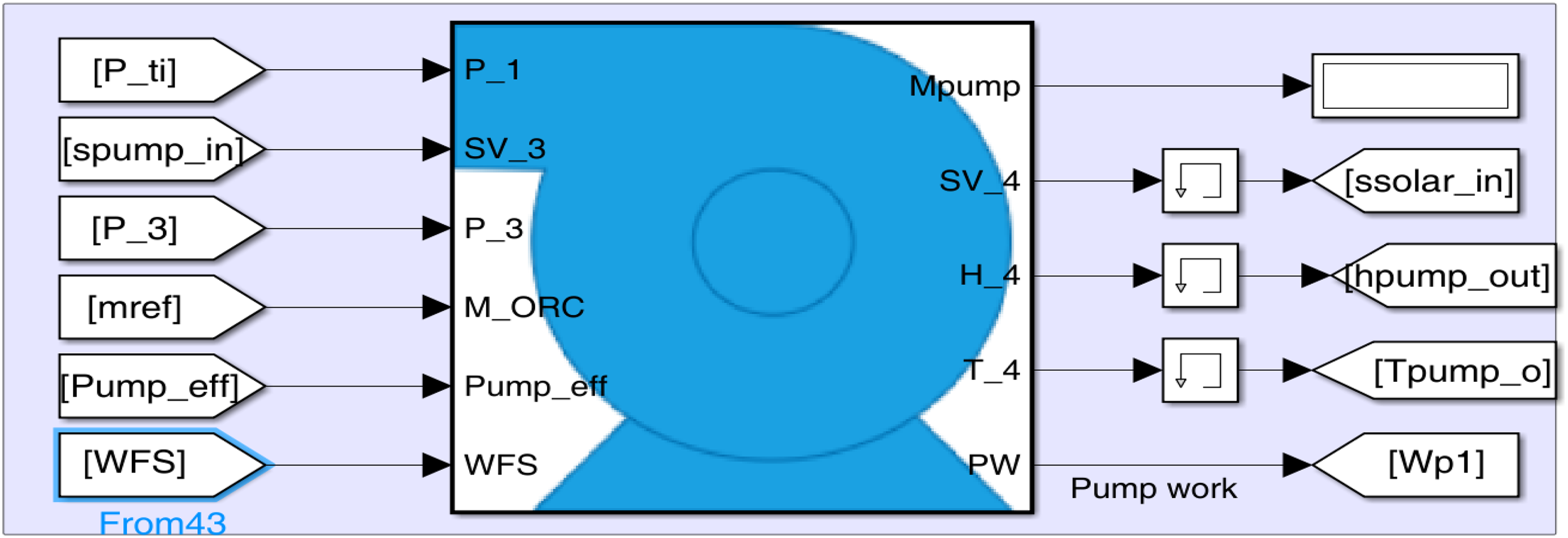
Organic Rankine cycle (ORC) cycle pump unit defined in the ORC hybrid system.
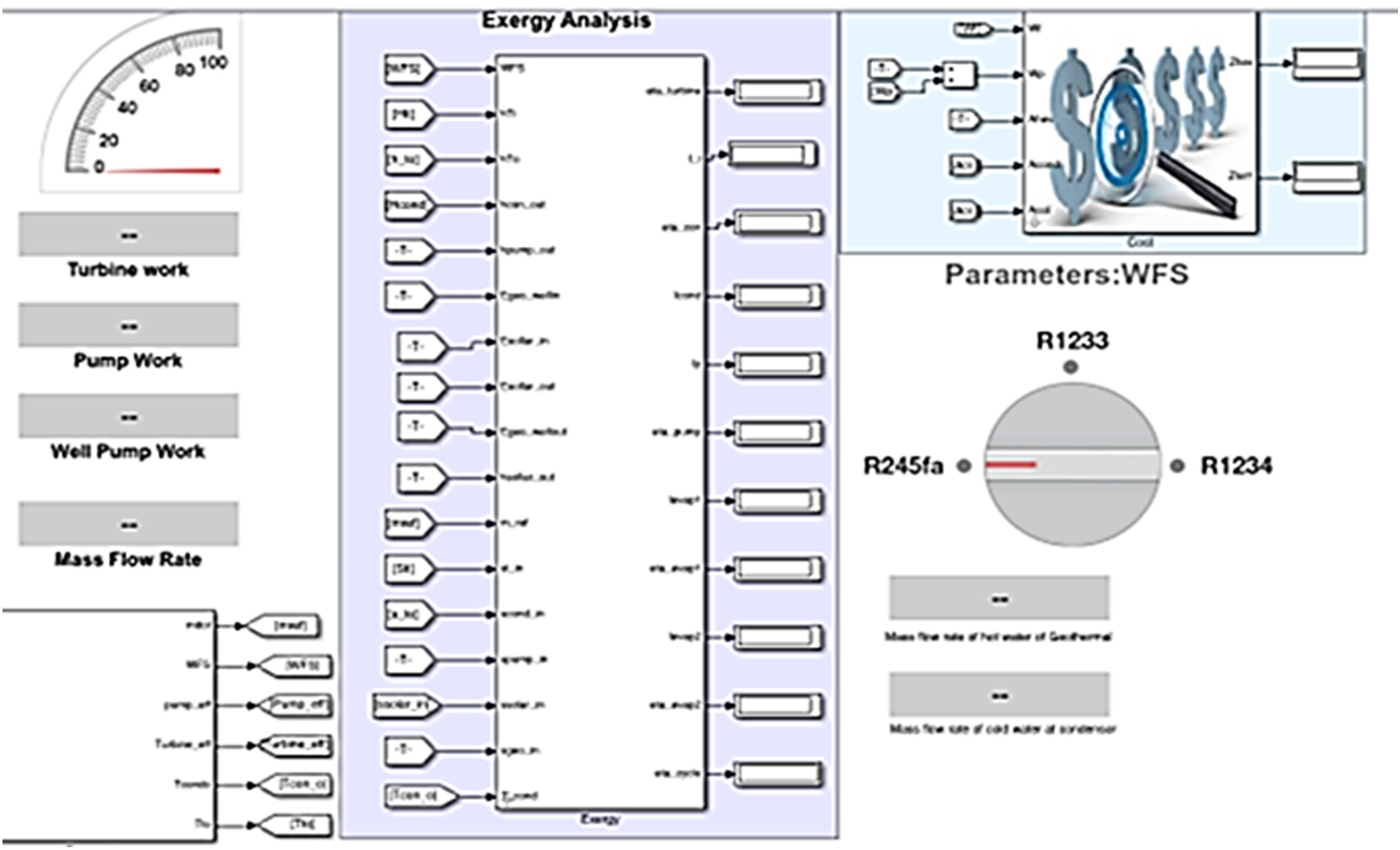
Simulink model including the exergy analysis block defined in the organic Rankine cycle (ORC) hybrid system.
Exergy analysis
By using pinch point temperature difference in the evaporator, this section focuses on exergy analysis of the cycle components as shown in Figure 10.
The specific energy can be estimated by the equation below:
And the exergy of each stage could be found by multiplication of the mass flow rate and the specific exergy calculated by the equation below.














Working fluid selection
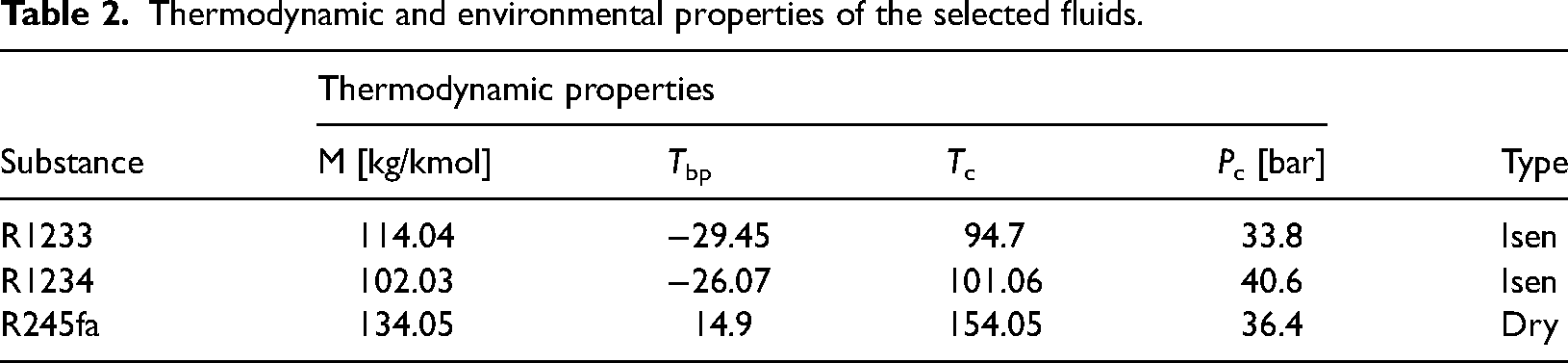
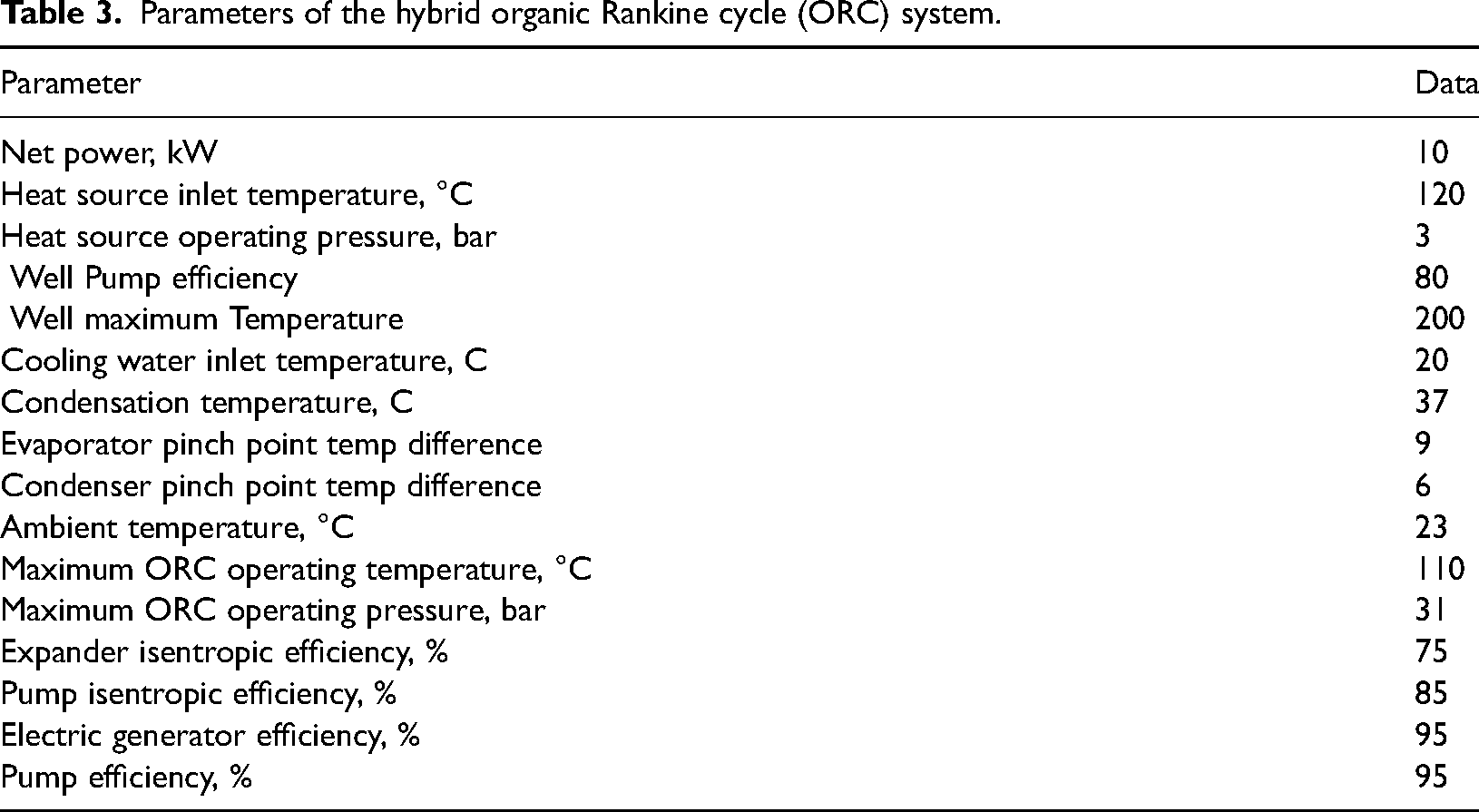
In hybrid solar-geothermal ORC systems, the working fluid must efficiently operate across varying temperature conditions. The fluctuating solar input requires a fluid with good thermal stability, while the geothermal source provides a stable baseline. For example, R245fa performs well at moderate temperatures and lower pressures, making it suitable for balanced hybrid operation. In contrast, R1233zd(E) and R1234ze(E) require higher pressures and are more effective when solar input dominates. Selecting the appropriate fluid ensures smooth thermal transitions and enhances overall system efficiency. In this study, three working fluids, shown in Table 2 are evaluated at a consistent net output power of 10 KW using identical operation conditions shown in Table 3. The vapor enters the expander as saturated vapor and leaves it with a quality of 0.95. The value of global solar irradiation is currently fixed at 800 W/m2.
Thermodynamic and environmental properties of the selected fluids.
Parameters of the hybrid organic Rankine cycle (ORC) system.
The optimal working fluid for a hybrid PRC can be considered based on various characteristics. Factors including overall system efficiency, PRC efficiency, back work ratio (BWR) efficiency, VFR efficiency, ETC area requirements, and heat transfer capacity 
Results and discussion
Effect of working fluid
Figures, 11–15 compare three working fluids for various properties. Figure 11 illustrates the relationship between ORC efficiency and system efficiency and the evaporation pressure. R245fa requires lower operation pressure than R1234 and R1233. Moreover, R245fa satisfies the highest overall efficiency at 6.75%.
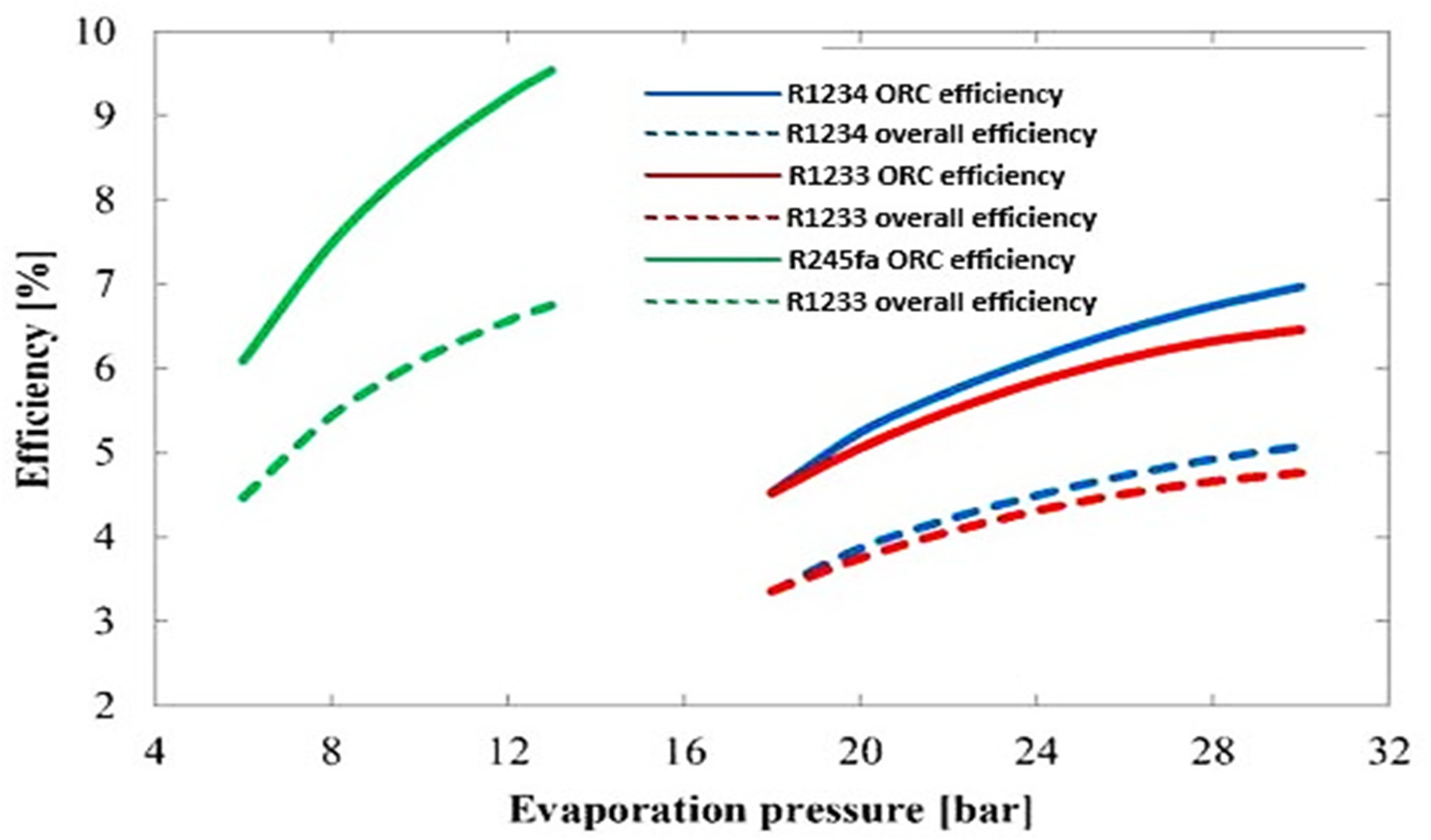
Organic Rankine cycle (ORC) efficiency and overall efficiency versus evaporation pressure.
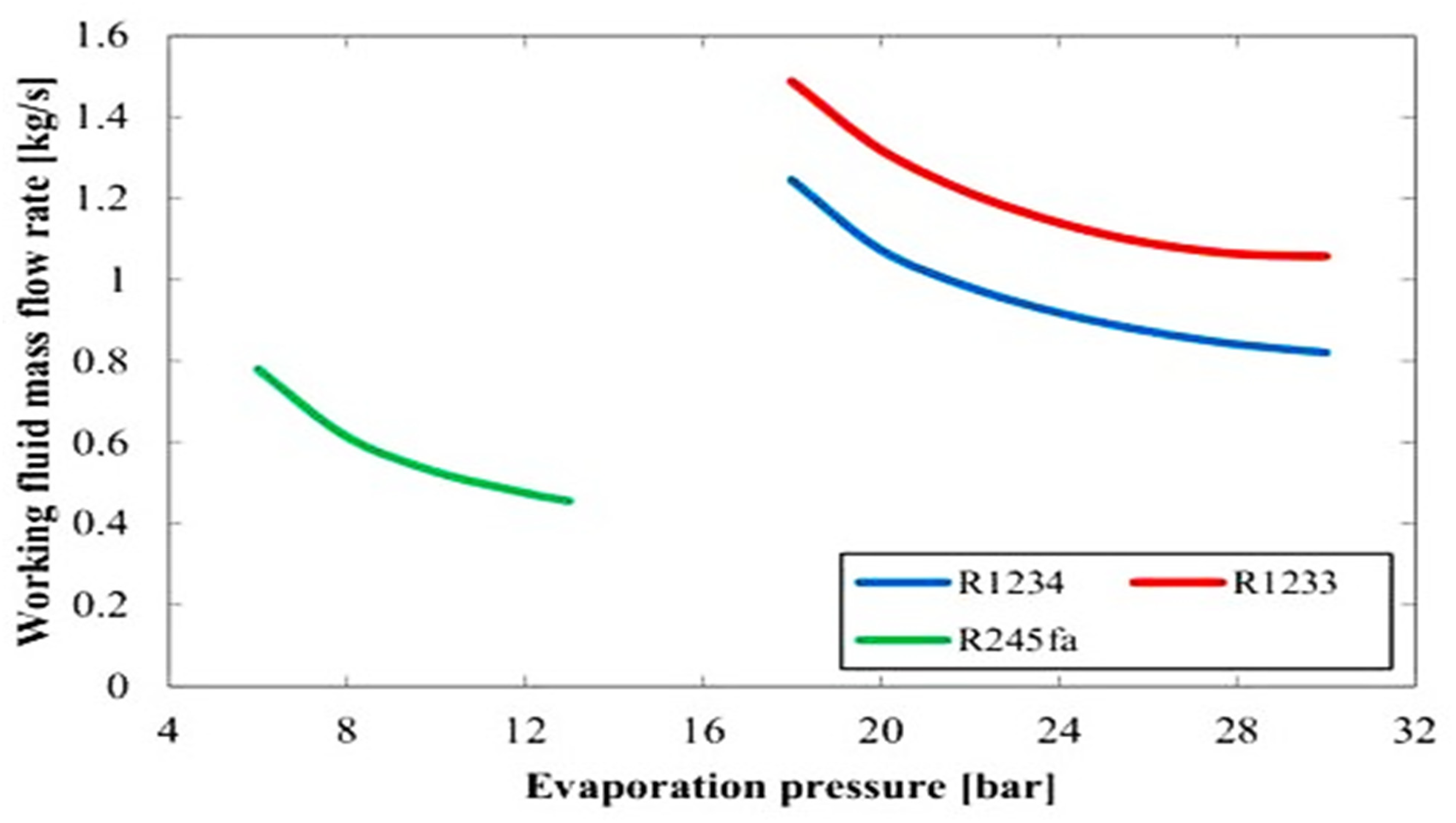
Working fluid mass flow rate with evaporation pressure.
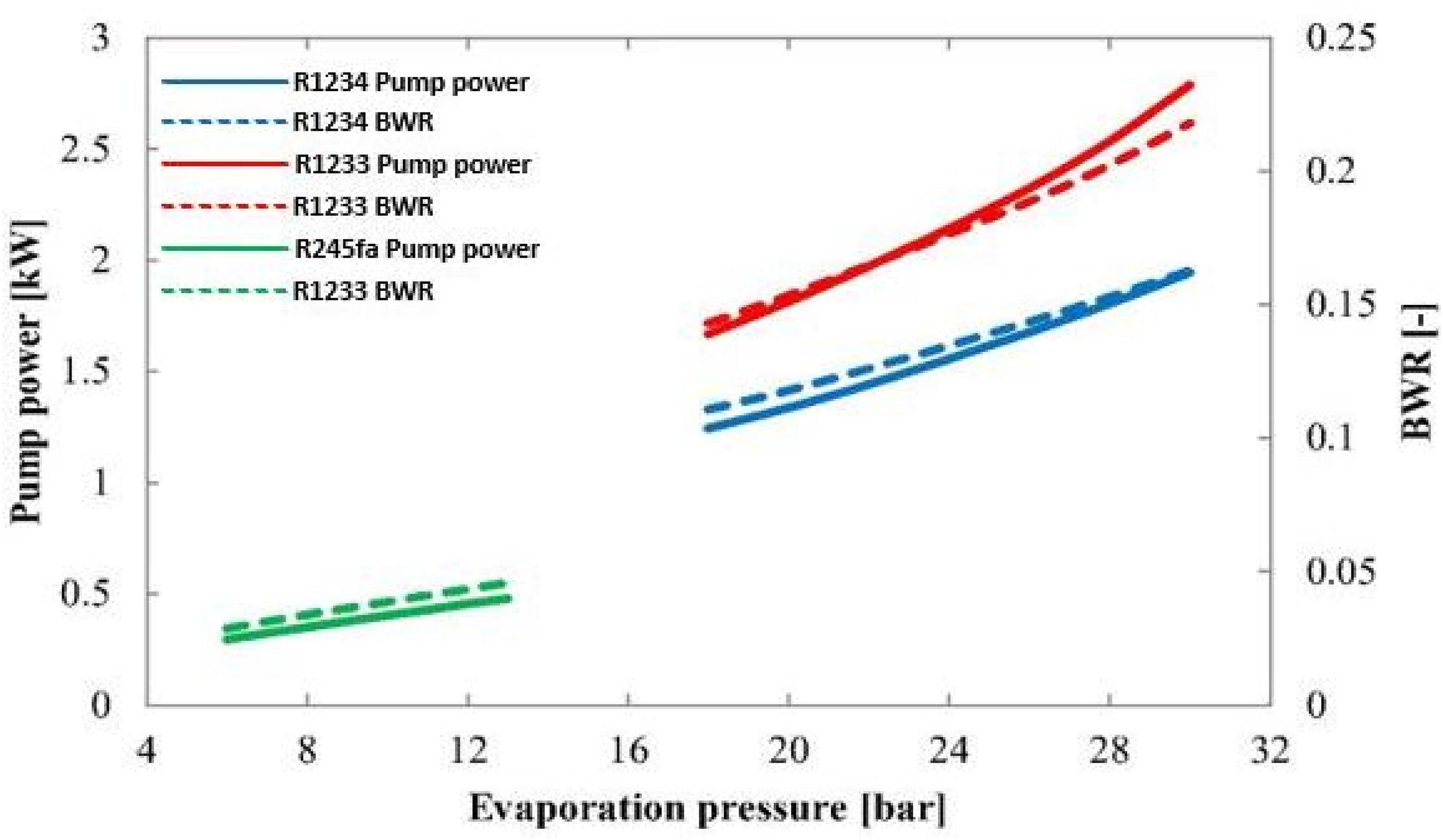
Pump power (solid line) and back work ratio (BWR) (dashed line)versus evaporation pressure.
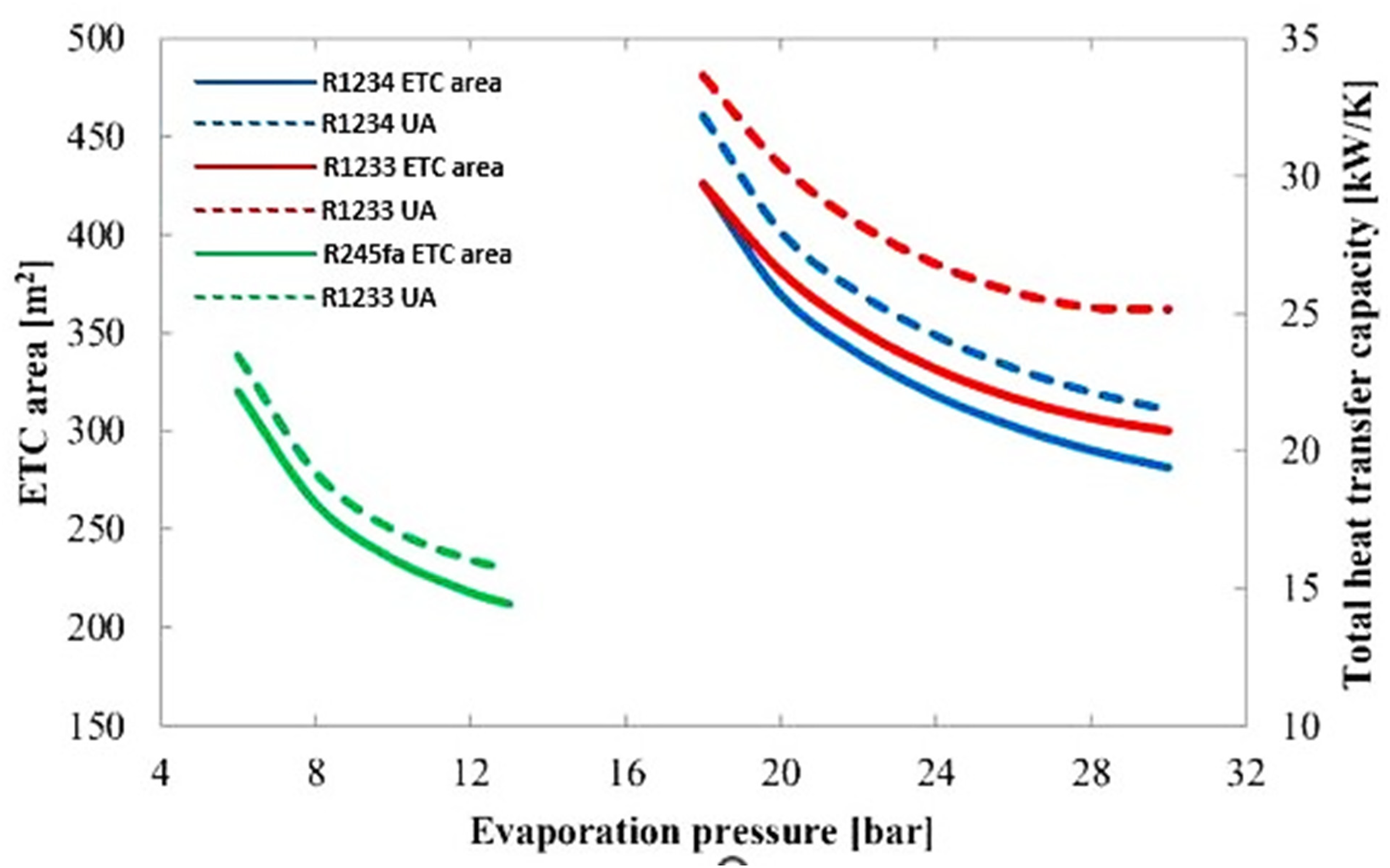
Evacuated tube solar collector (ETC) area (solid line) and ua (dashed line) versus evaporation pressure.
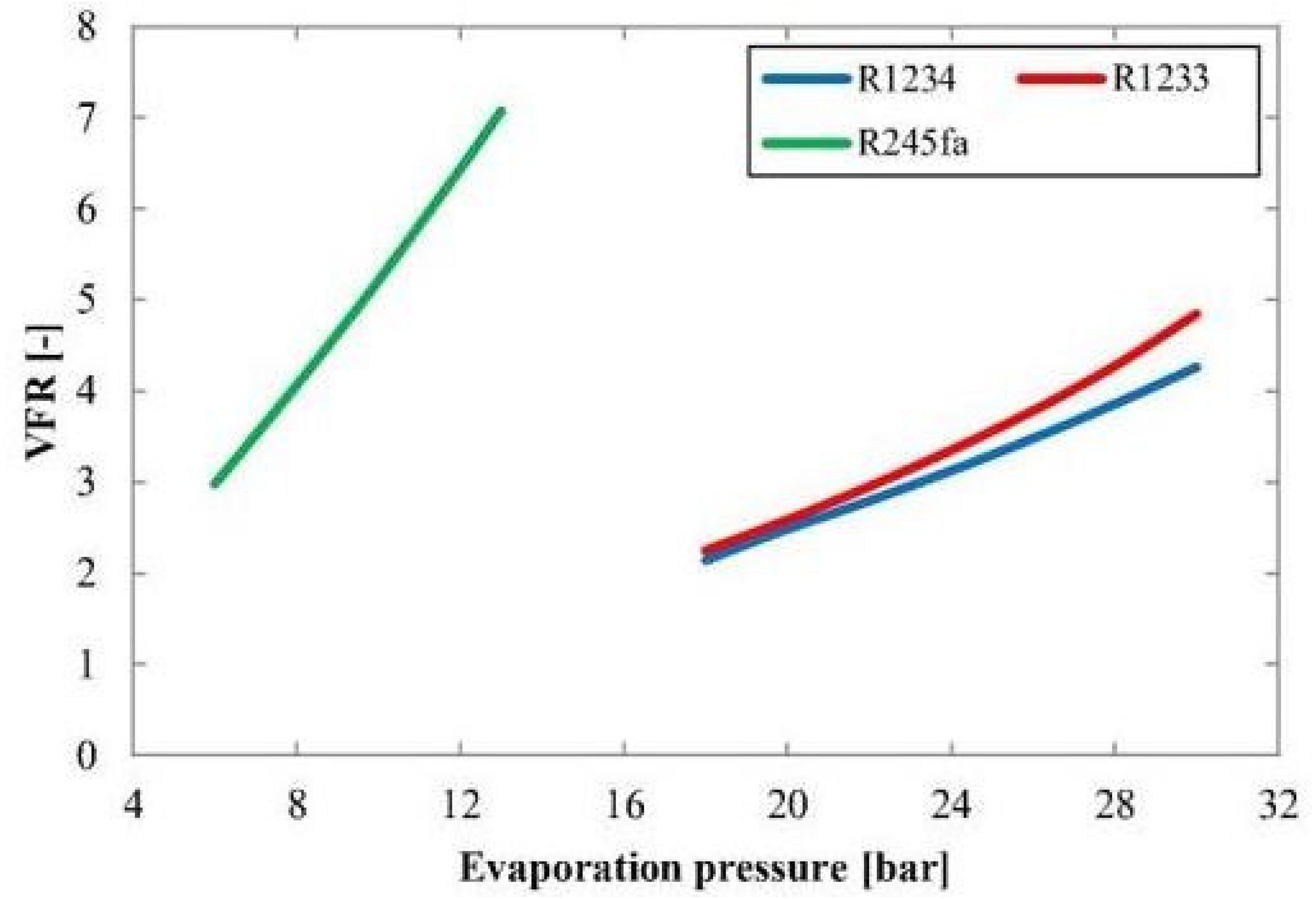
Variation of VFR with evaporation pressure.
Figure 12 illustrates the relationship between evaporation pressure and the mass flow rate of the working fluids. The higher the evaporation pressure, the lower the mass flow rate. When increasing evaporation pressure, the turbine's enthalpy differences increase also, causing the mass flow rate to decrease to guarantee constant output power. It can be observed that another advantage of R245fa is that it needs a lower mass flow rate than other working fluids.
Regarding the pump power consumption and BWR, Figure 13 illustrates that using R1233 results in significantly higher BWR values. Thus, the pump power for R 1233 can reach up to 22% of the expander power output, which reduces the system efficiency. In contrast, R245fa requires much lower pump power and BWR.
Figure 14 shows that the increasing evaporation pressure leads to a reduction in both the ETC area and UA. For R245fa, the ORC needs 213.6 m2 of collector to generate 10 KW. The lower the UA values, the smaller the ETC area needed, and consequently, the lower the equipment cost.
Figure 15 shows that lower ratio values lead to a more compact expander and higher isentropic efficiency. Turbine efficiency, that is more than 80%, requires a ratio value less than 50. The figure indicates that as evaporation pressure increases, so does the volume flow rate. All fluids have a VFR below 7, allowing for efficiencies above 80%. Notably, R1234 satisfies the lowest VFR at 4.28, corresponding to optimal system performance, resulting in a smaller turbine size and higher efficiency.
It can be concluded that R245fa demonstrates better thermodynamic performance than R1233, making it the most cost-effective choice. On the other hand, R1234 stands out as the most compact and efficient expander, due to its lower VFR. Thus, further analysis will focus on R245fa and R1234.
Performance of hybrid ORC
For the purposes of studying the effect of solar energy on ORC, different solar irradiation levels are simulated for both working fluids R245fa and R1234. R245fa appears to be more efficient (10.16%) compared to R1234 (7.56%). At a solar irradiation of 600 W/m2, Figures, 16–18 indicate that the ETC outlet temperature rises, reaching 120 °C with a 100% solar contribution. However, the higher the solar contribution, the lower the ETC efficiency. By using R1234 instead of R245fa results in a low ETC mean temperature, thereby improving ETC efficiency. The ETC system achieves a maximum temperature of 120 °C under peak solar conditions. The total heat added to the system is approximately 800 W/m2, with 65% supplied by the solar collectors and 35% provided by the geothermal source.
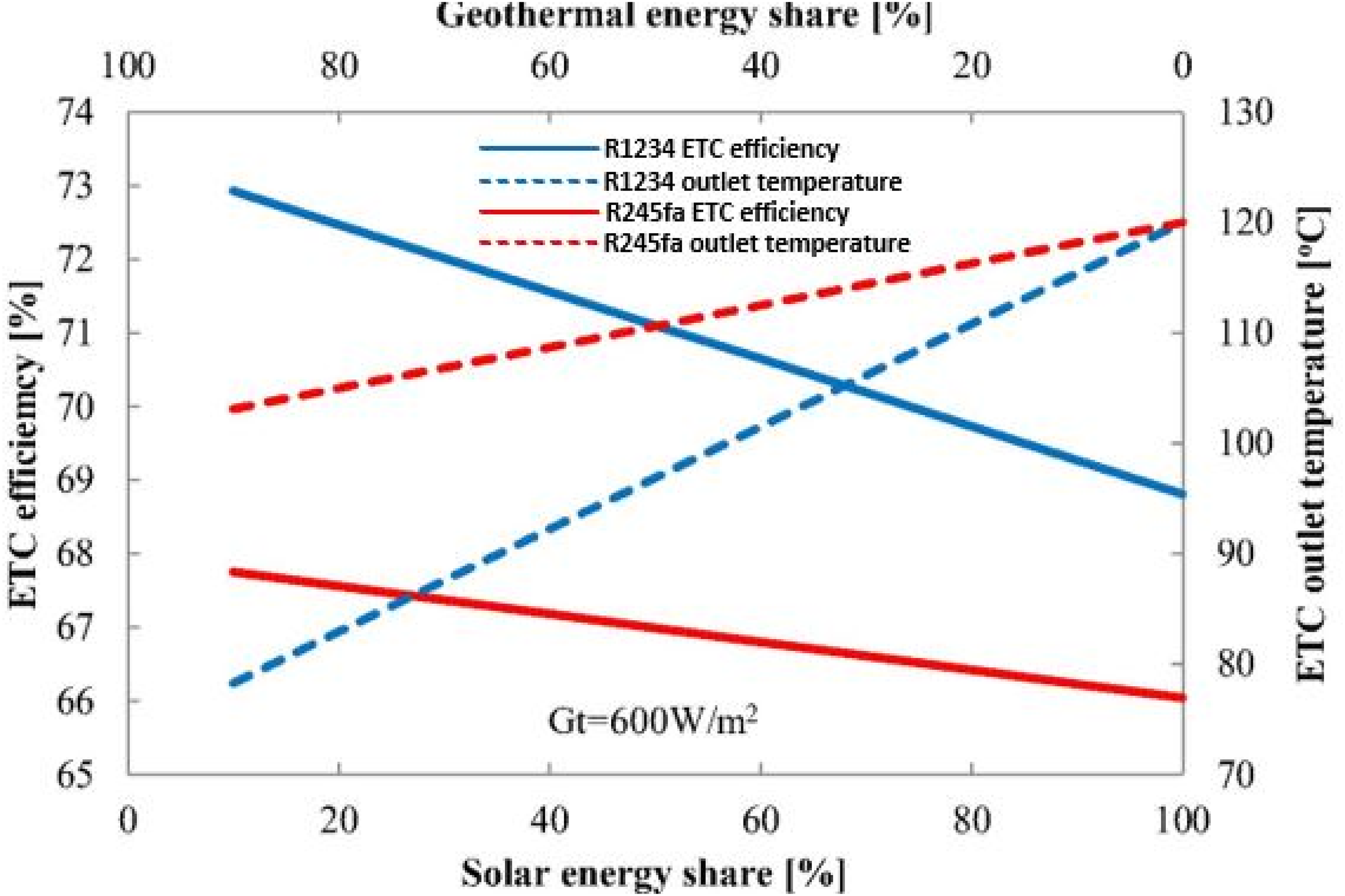
Evacuated tube solar collector (ETC)'s efficiency (solid line) and outlet temperature (dashed line) change at Gt = 600 W/m2.
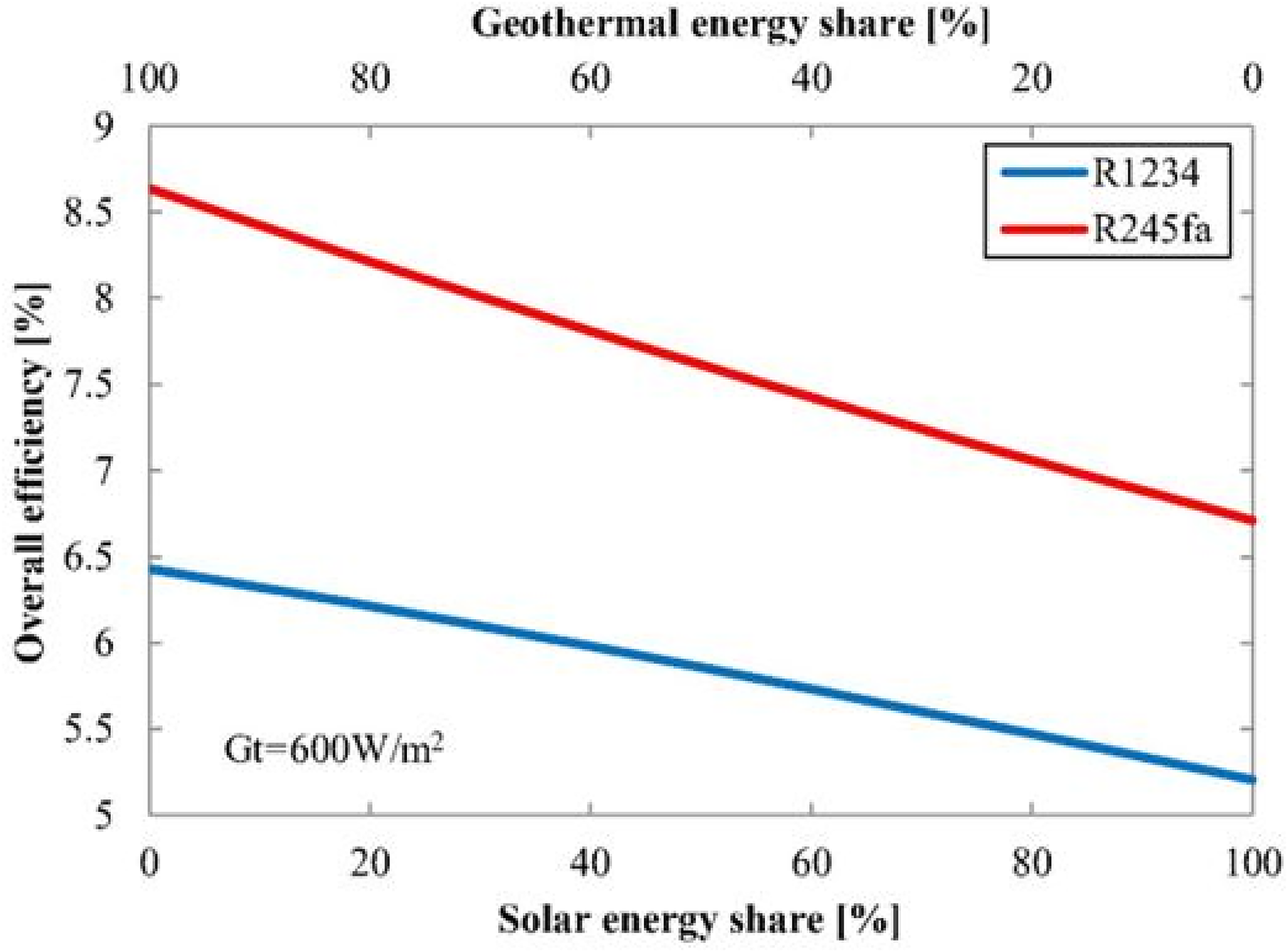
Overall efficiency as a function of solar and geothermal share at Gt = 600 W/m2.
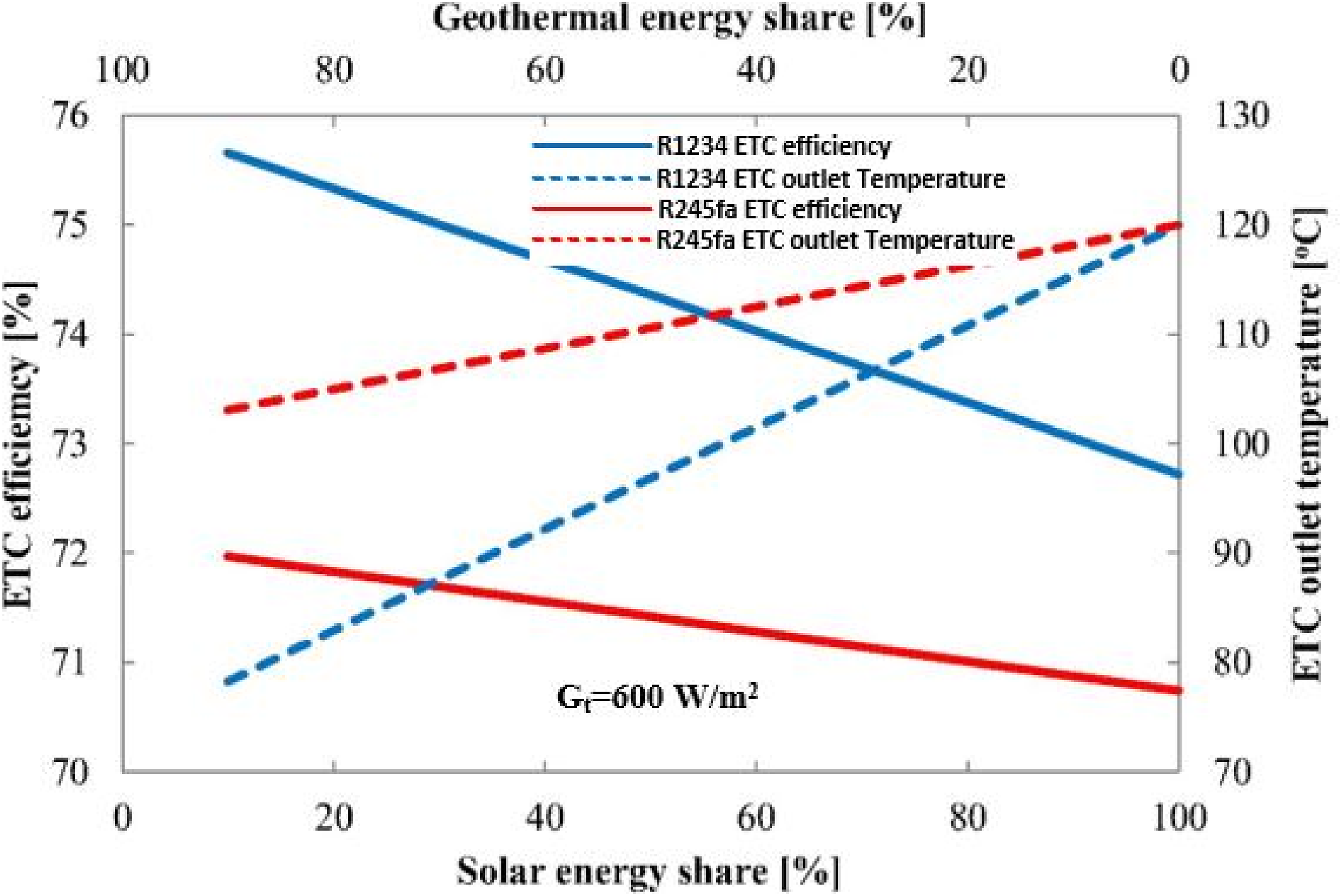
Efficiency with the solar and geothermal energy share at Gt = 600 W/m2.
In terms of overall efficiency, it reduced from 8.64% to 6.72% by using R245fa when increasing the solar share from 0% to 100%, and from 6.44% to 5.23% by using R1234. Concluded that the geothermal system is more efficient than ETC.
At 800 W/m2 of solar irradiation, both the ETC efficiency and output temperature exhibit similar patterns as they do at 600 W/m2 as shown in Figure 19. However, the higher the solar irradiation, the higher the ETC efficiency. Furthermore, ETC efficiency is more sensitive to the solar share when using R1234 compared to R245fa. As solar share increases from 10% to 100%, ETC efficiency declines by 4% with R1234, while it declines by 1.8% with R245fa.
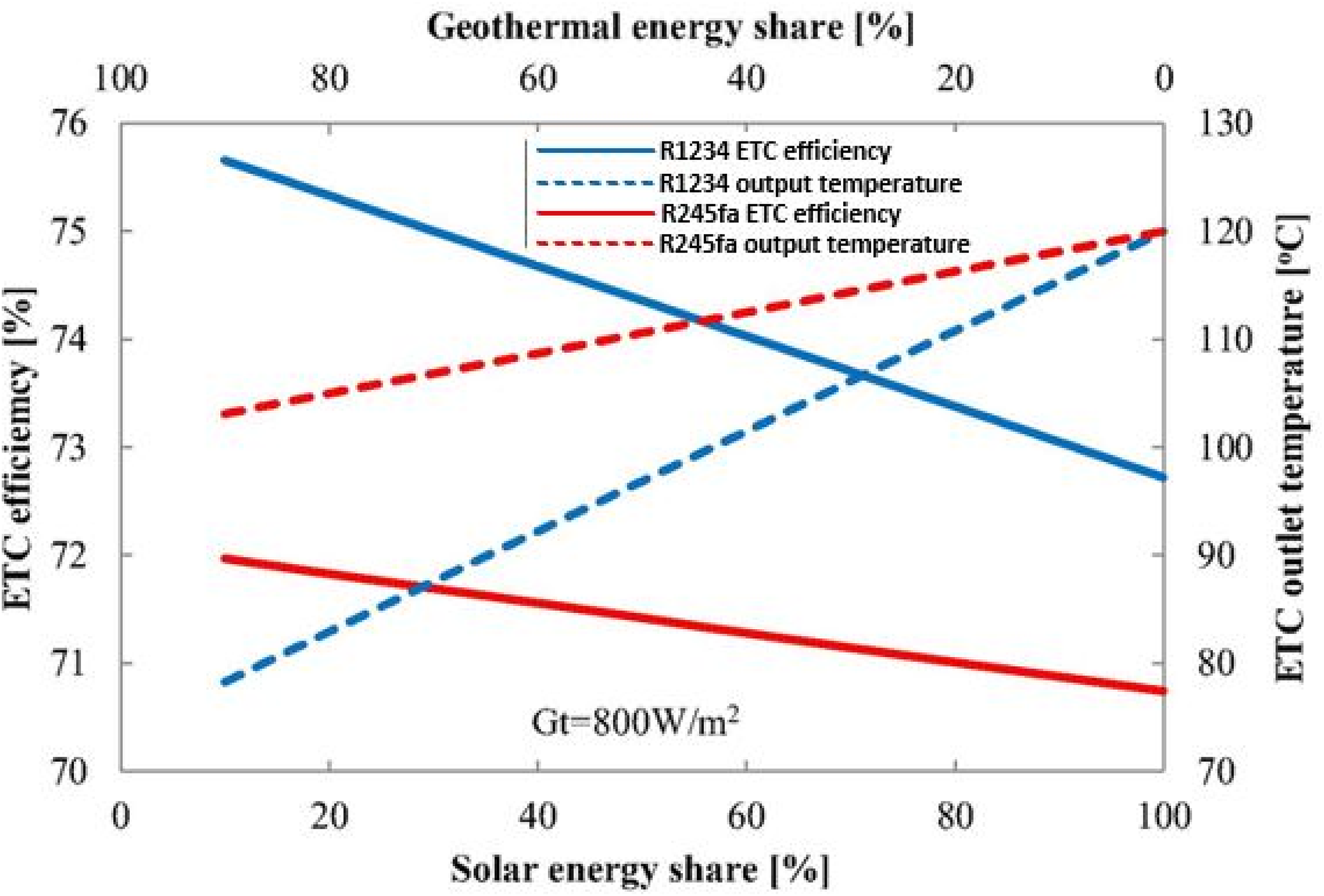
Solar and geothermal energy shares, and the evacuated tube solar collector (ETC)'s efficiency (solid line) and output temperature (dashed line).
Figure 20 illustrates that a 33% decrease in ETC area could be allowable when rising solar irradiation from 600 to 800 W/m2 with a scenario of 50% solar irradiation sharing. Figure 21 shows that the more solar sharing, the lower the overall efficiency.
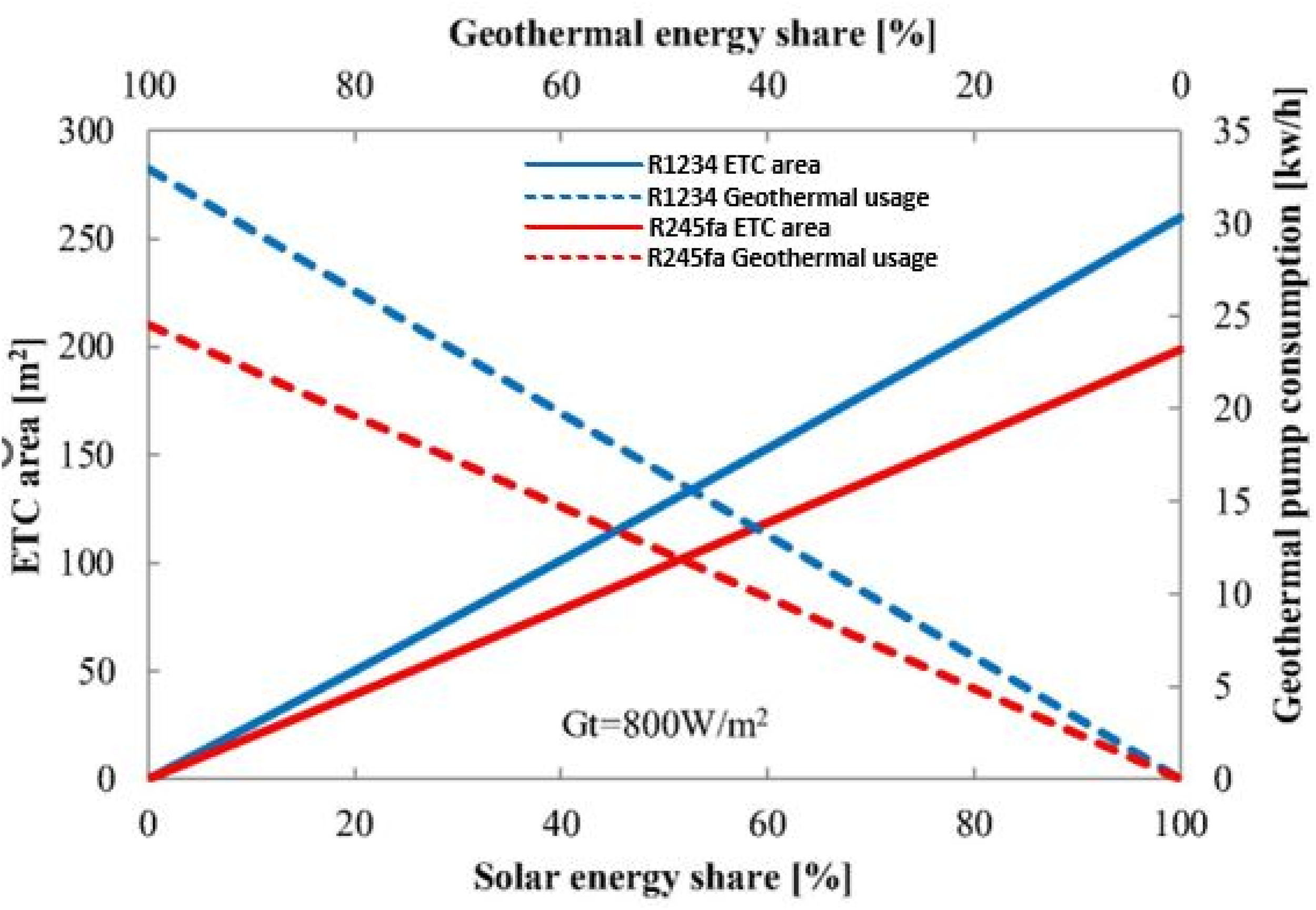
Solar and geothermal energy shares on the evacuated tube solar collector (ETC) area (solid line) and geothermal usage (dashed line).
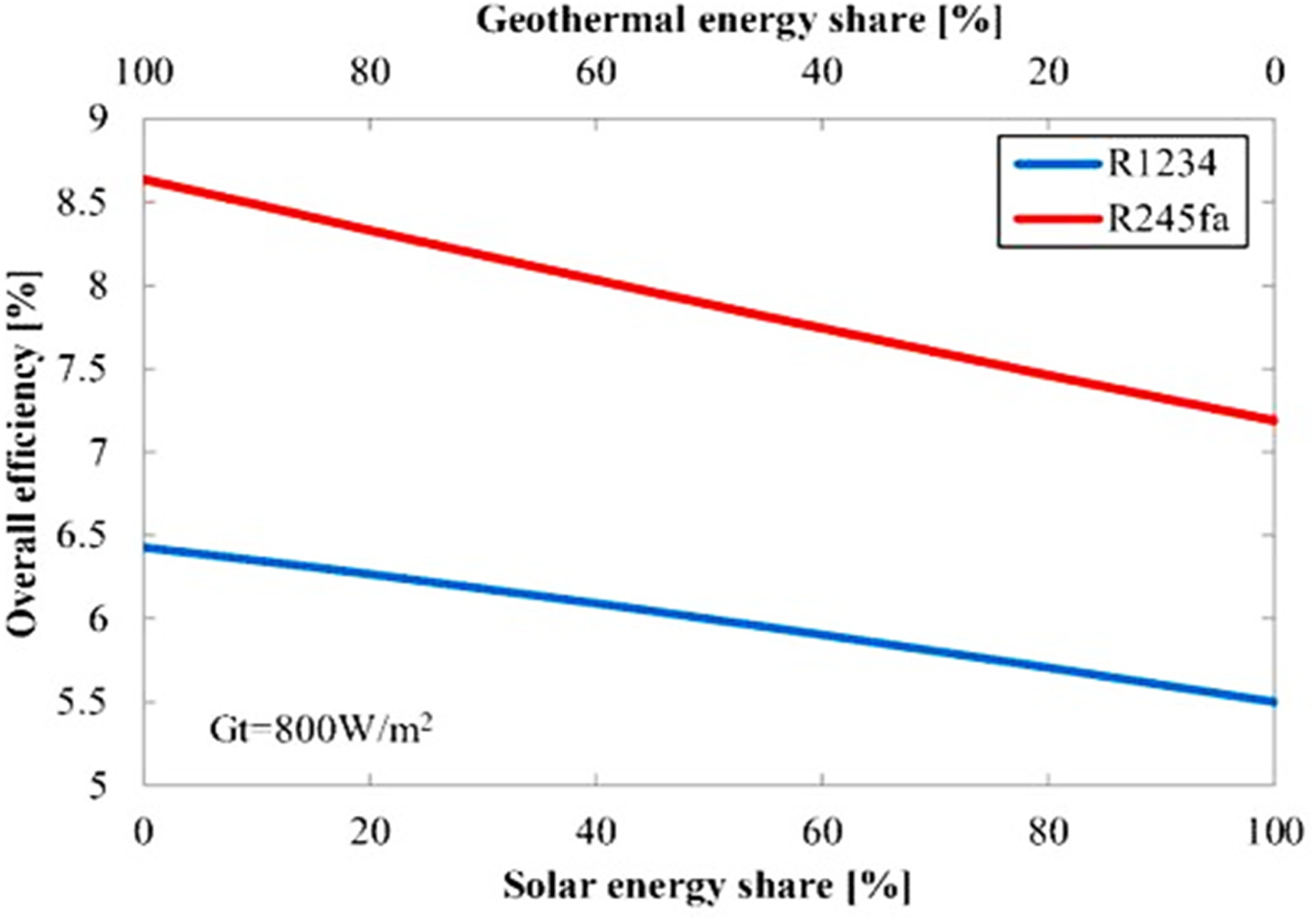
Solar and geothermal energy use impacts the total efficiency at Gt = 800 W/m2.
Parametric analysis
Isentropic efficiency of the pump and expander, evaporation pressure of evaporator and condenser, condensation temperature, and pinch point temperature differences are considered in this section.
Evaporation pressure
Based on Figure 22, higher evaporation pressure enhances efficiency by lowering the heat required. R245fa appears to be better efficient than R1234, with maximum efficiency of 7.21%, approximately 30.8% higher. Additionally, R245fa operates at lower evaporation pressure (12.8 bar) compared to R1234 (30 bar).
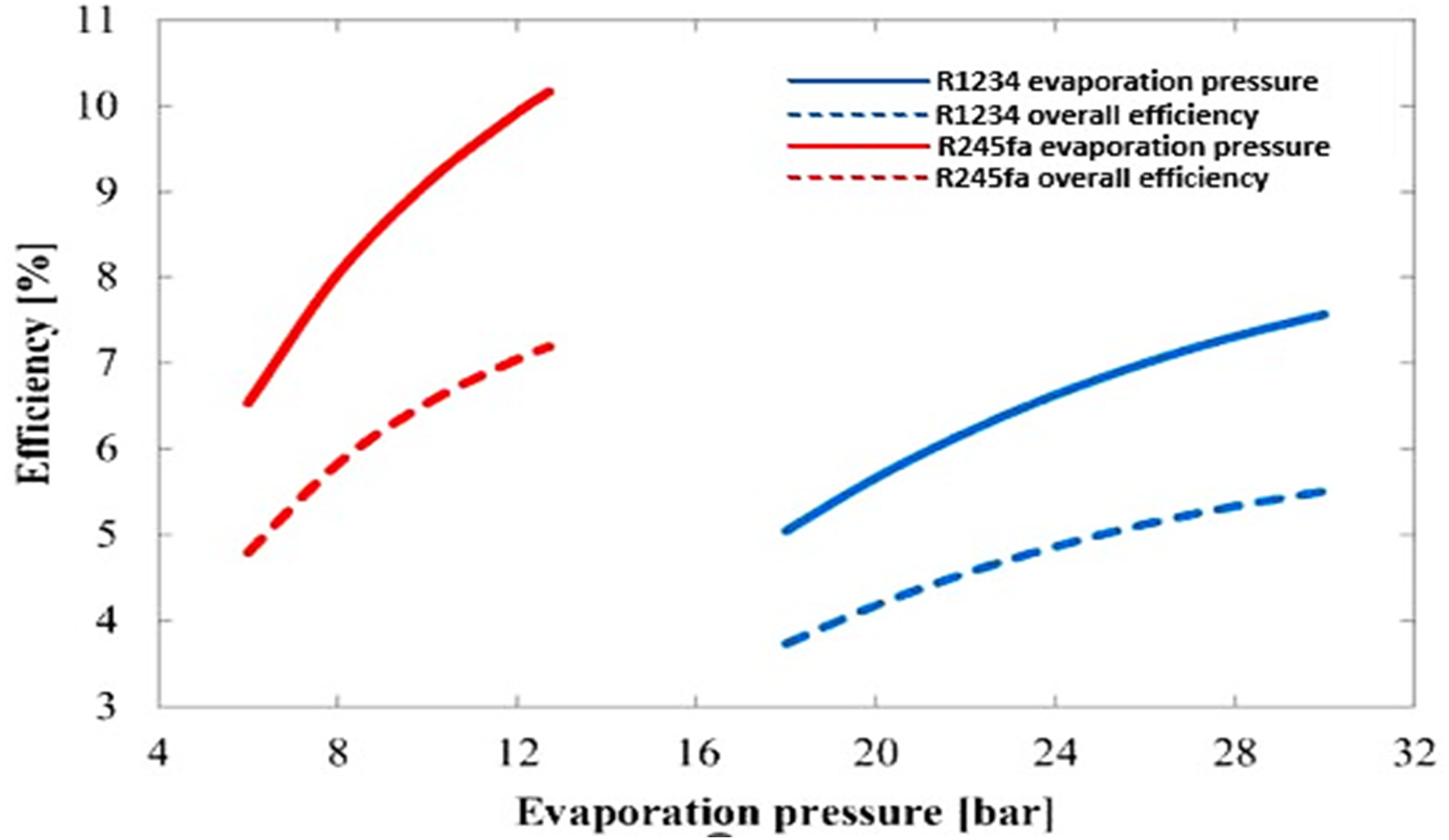
Evaporation pressure impact on the organic Rankine cycle (ORC) (solid) and overall efficiency (dashed).
Figure 23 shows that as evaporation pressure increases, the mass flow rate decreases, due to a significant enthalpy drop across the turbine to guarantee constant power output. For R245fa, the HTF mass flow rate increases notably with rising evaporation pressure, while for R11234, it remains constant.
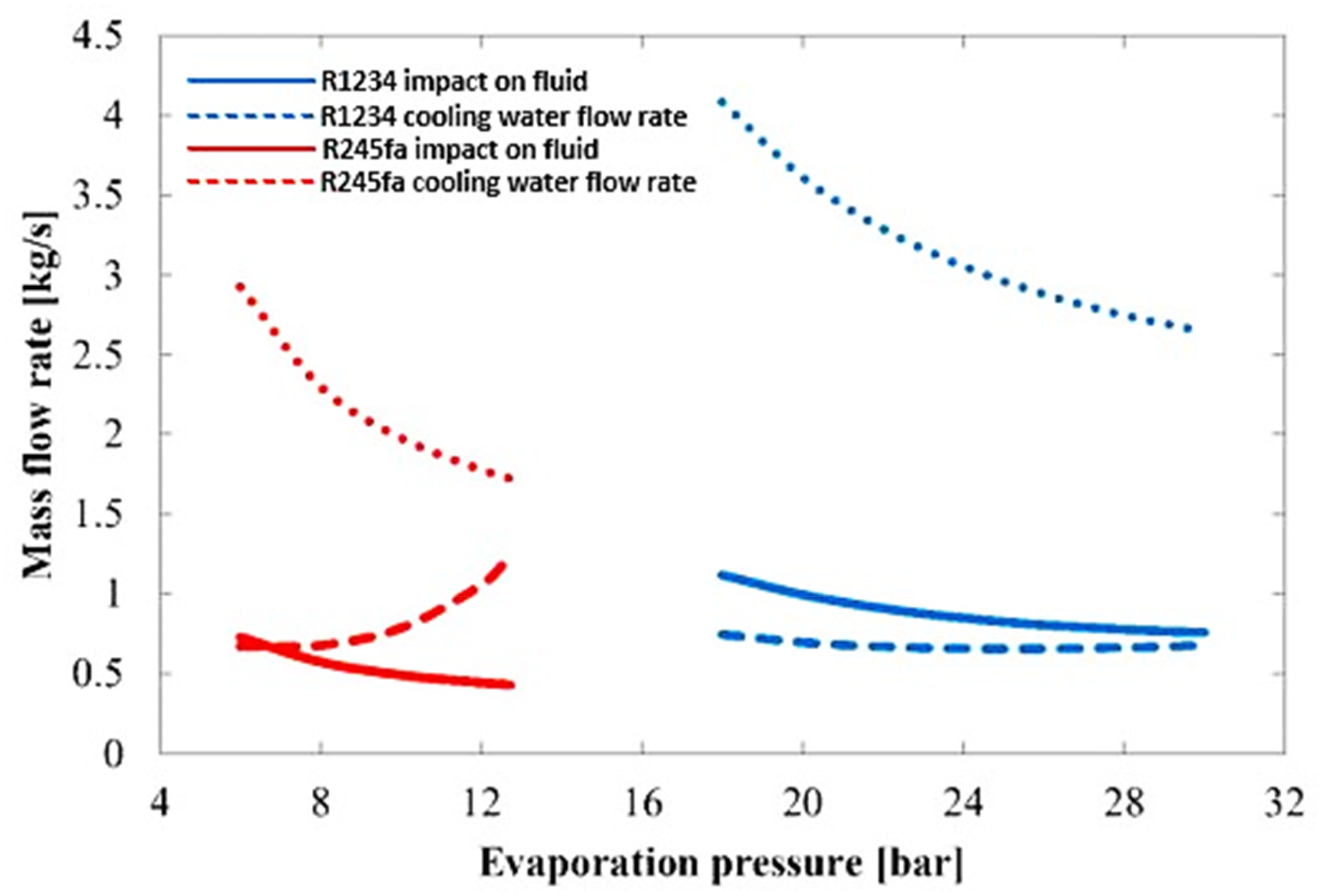
Evaporation pressure impact on the fluid (solid), heat transfer fluid (HTF) (dashed), and cooling water (dotted) flow rates.
Figure 24 shows that the higher the evaporation pressure, the lower the heat needed, which means the smaller the ETC area, but also the lower the ETC efficiency. For both fluids, the ETC area is 1987.7 m2 for a 10 KW net power output, offering a 24.5% area reduction.
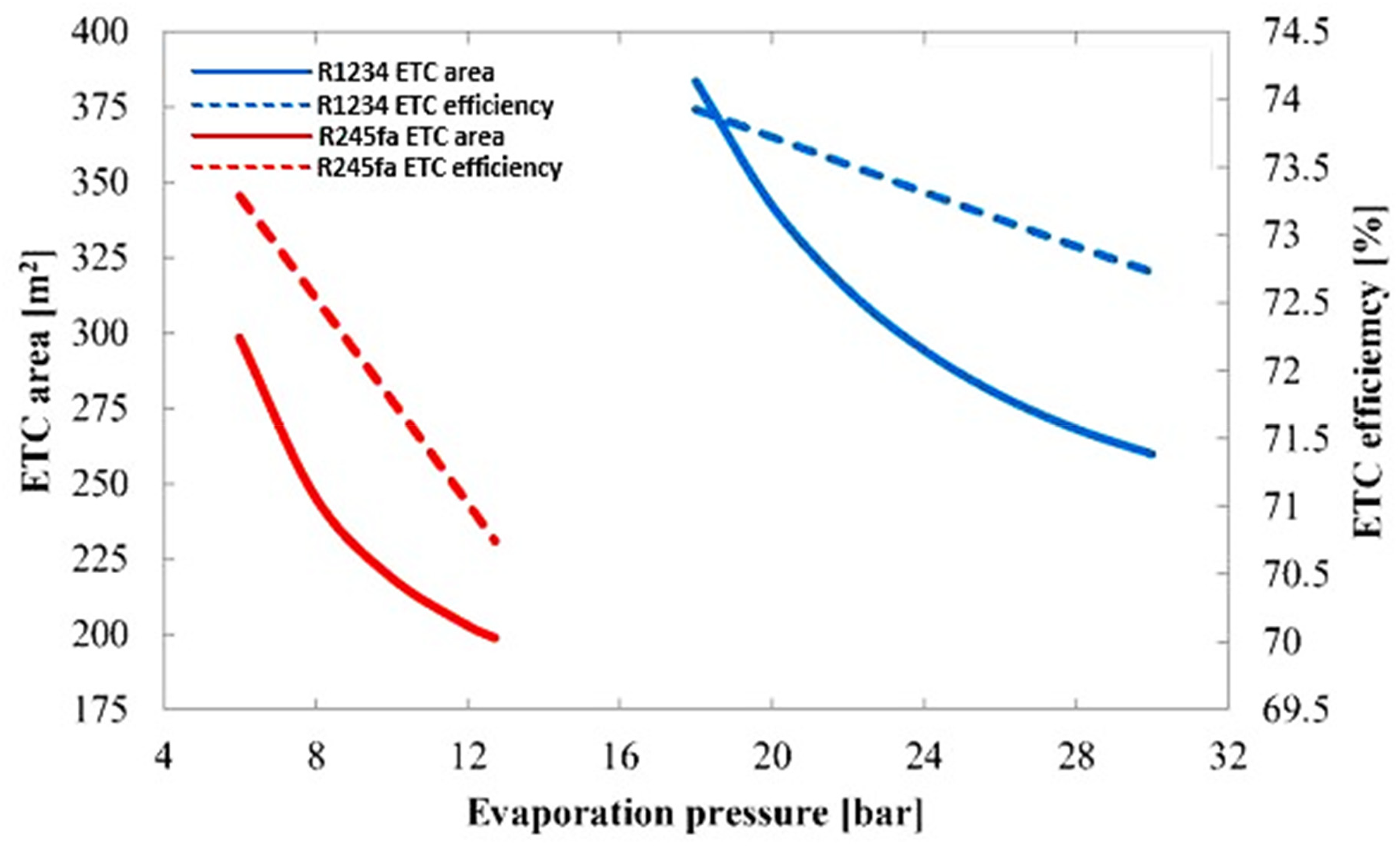
Evaporation pressure impact on the evacuated tube solar collector (ETC) area (solid) and efficiency (dashed).
Figure 25 shows that as evaporation pressure increases, the regions for both fluids must be decreased. Hence, using R245fa results in smaller evaporator and condenser regions due to less heat requirement. For the same net output power, R245fa requires evaporator and condenser areas of 2.93 and 4.23 m2, respectively, compared to 4.36 and 5.62 m2 for R1234.
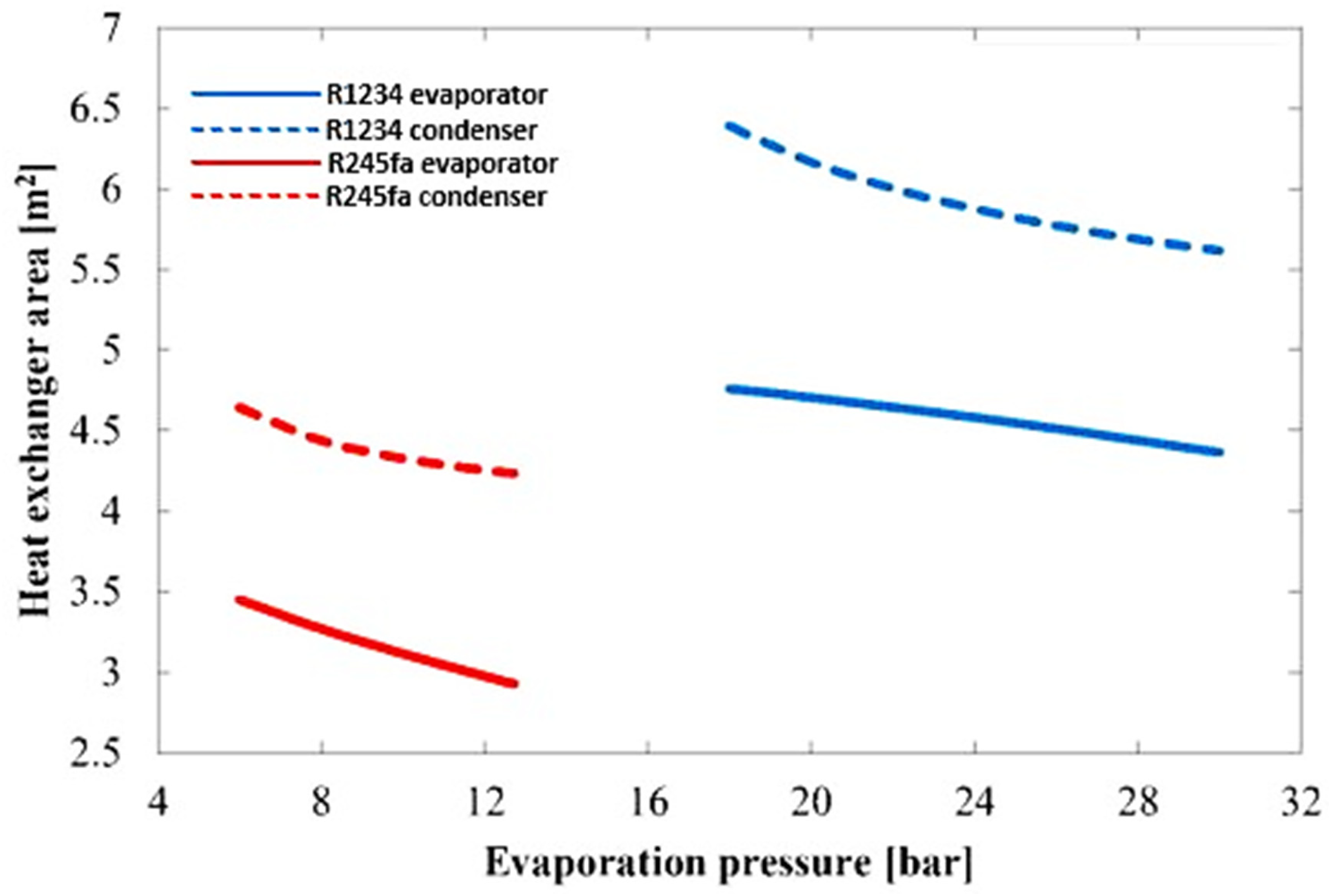
Evaporation pressure impact on the evaporator (solid) and condenser area (dashed).
Condensation temperature
Figure 26 shows that the higher the condensation temperature, the lower the efficiency. When condensation temperature has lowered from 40 to 30 °C, the overall efficiency rose by 22.3% for R1234 and 15% for R245fa. However, R245fa has higher ORC efficiency and total efficiency (7.70%) compared to R1234 (6.06%).
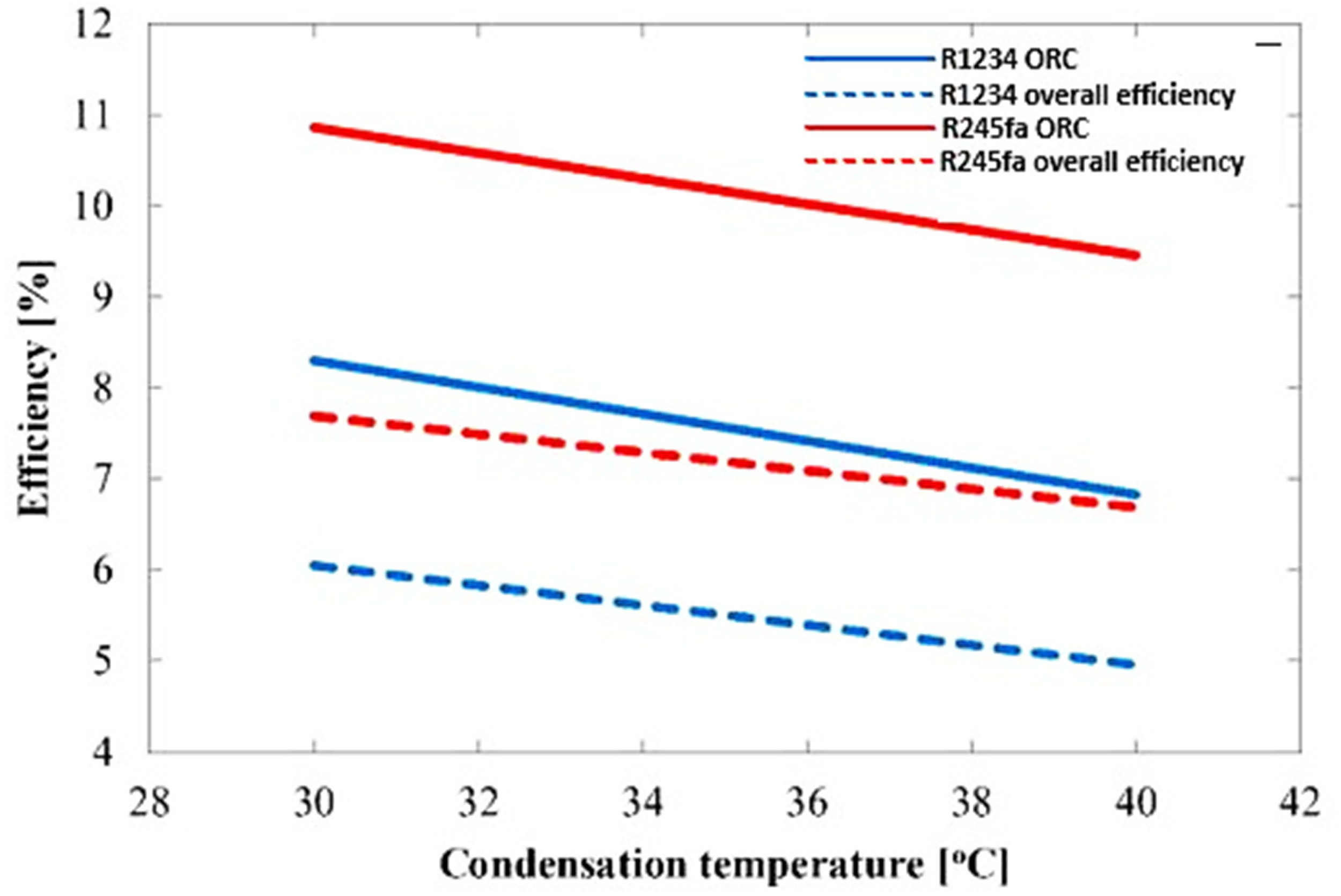
Condensation temperature impact on the organic Rankine cycle (ORC) (solid) and overall efficiency (dashed).
Figure 27 shows that the higher the condensation temperature, the lower the enthalpy differences in the expander, which means that the increase in mass flow rate in expander as also occurs in HTF.
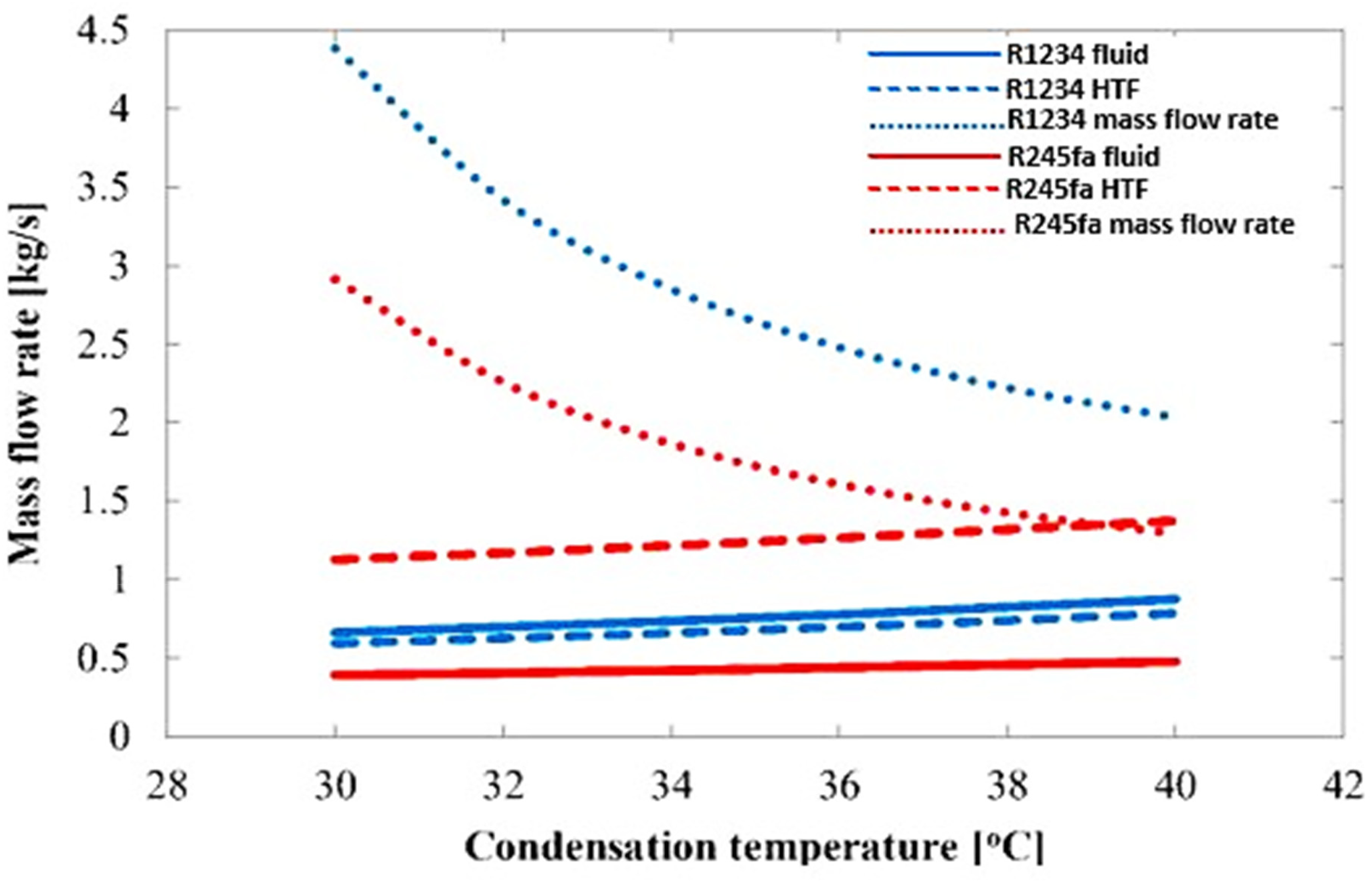
Condensation temperature impact on the fluid (solid line), heat transfer fluid (HTF) (dashed), and cooling water (dotted) mass flow rate in the case with evaporator pressure of 30 bar.
Figure 28 shows that as the condensation temperature increases, the needed ETC area expands as well as its efficiency slightly decreases. For both R1234 and R245fa, reducing the condensation temperature from 40to 30 °C decreases the required ETC area by 19% and 14%, respectively. At 30 °C, the ORC needs 214.7 m2 with R245fa, compared to 288.5 m2 with R1234.
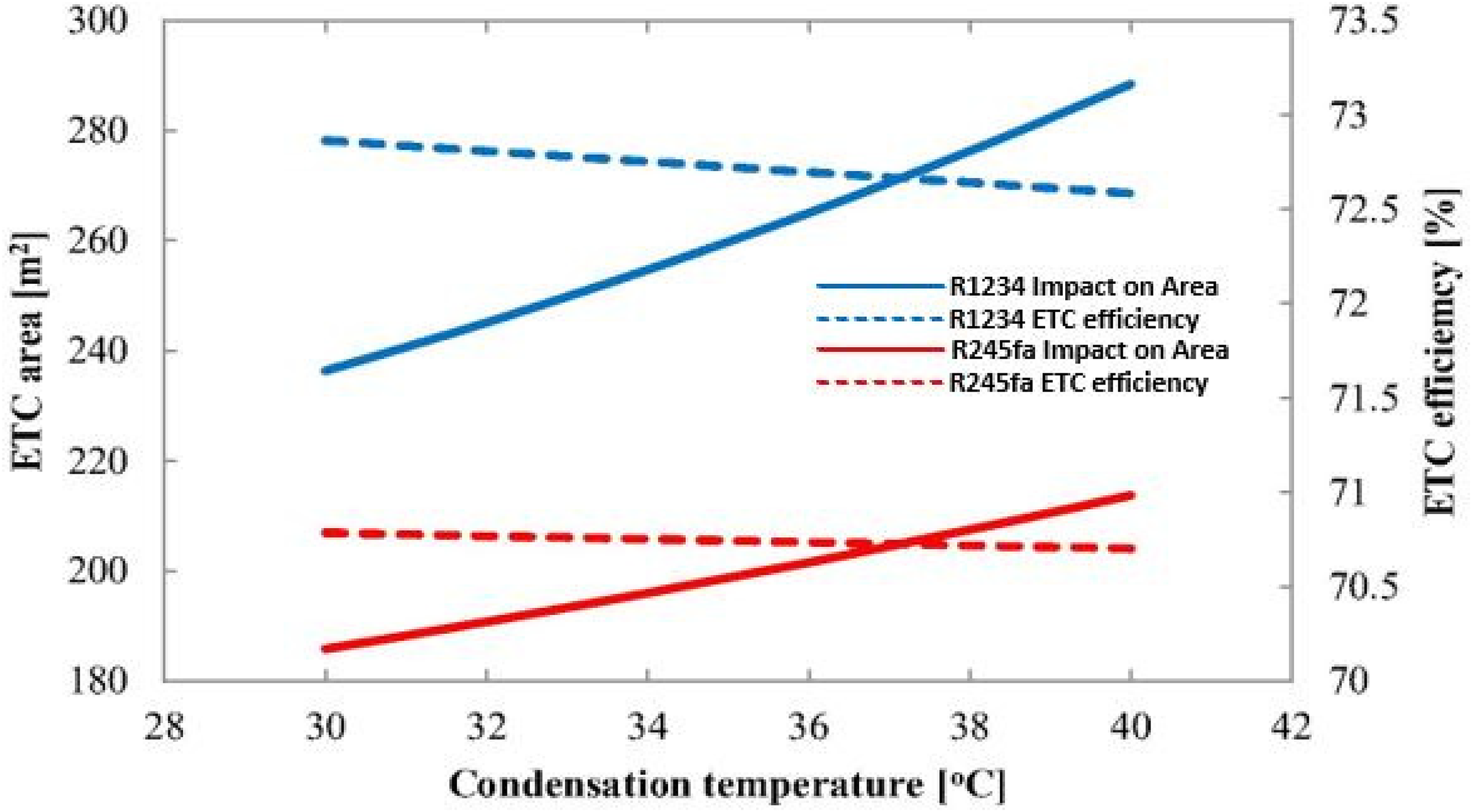
Condensation temp impact on the area (solid), evacuated tube solar collector (ETC) efficiency (dashed).
The condenser area is more affected by the condensation temperature than the evaporator area for both fluids, as mentioned in Figure 29. Using R1234 at 40 °C requires a 14.2% larger condenser area compared to R245fa at 30 °C. For R245fa, the required areas of 2.88 and 3.86 m2, for evaporator and condenser, respectively. While for R1234 the required areas are 4.30 and 5.20 m2, respectively.
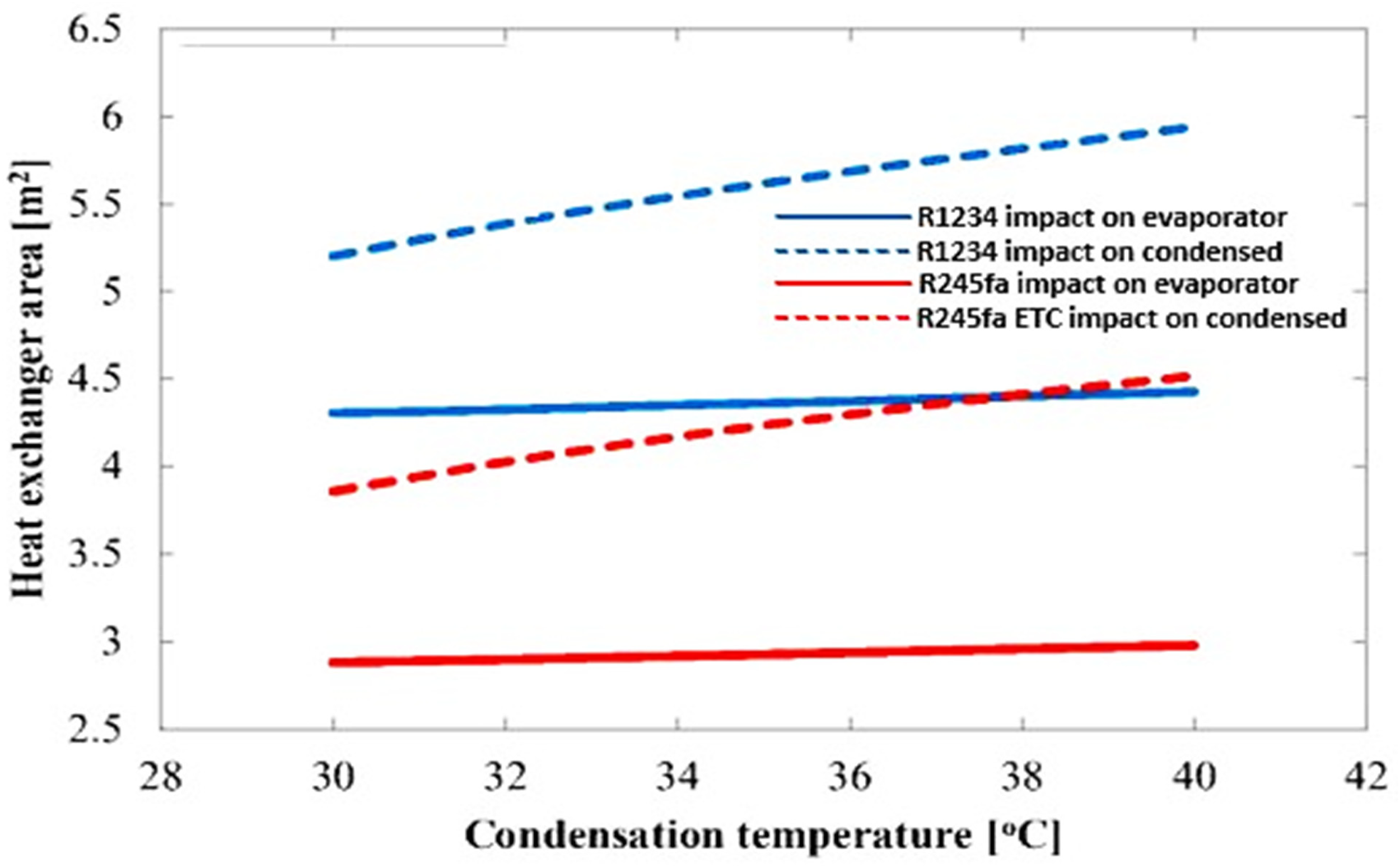
Condensation temperature impact on the evaporator (solid) and condenser area (dashed).
Turbine isentropic efficiency impact
Figure 30 shows that enhancing turbine's isentropic efficiency enhances both ORC and total efficiency for each fluid. In total, 17% rising in total efficiency with R1234 compared to 14.9% with R245fa when isentropic efficiency increases from 70% to 80%.
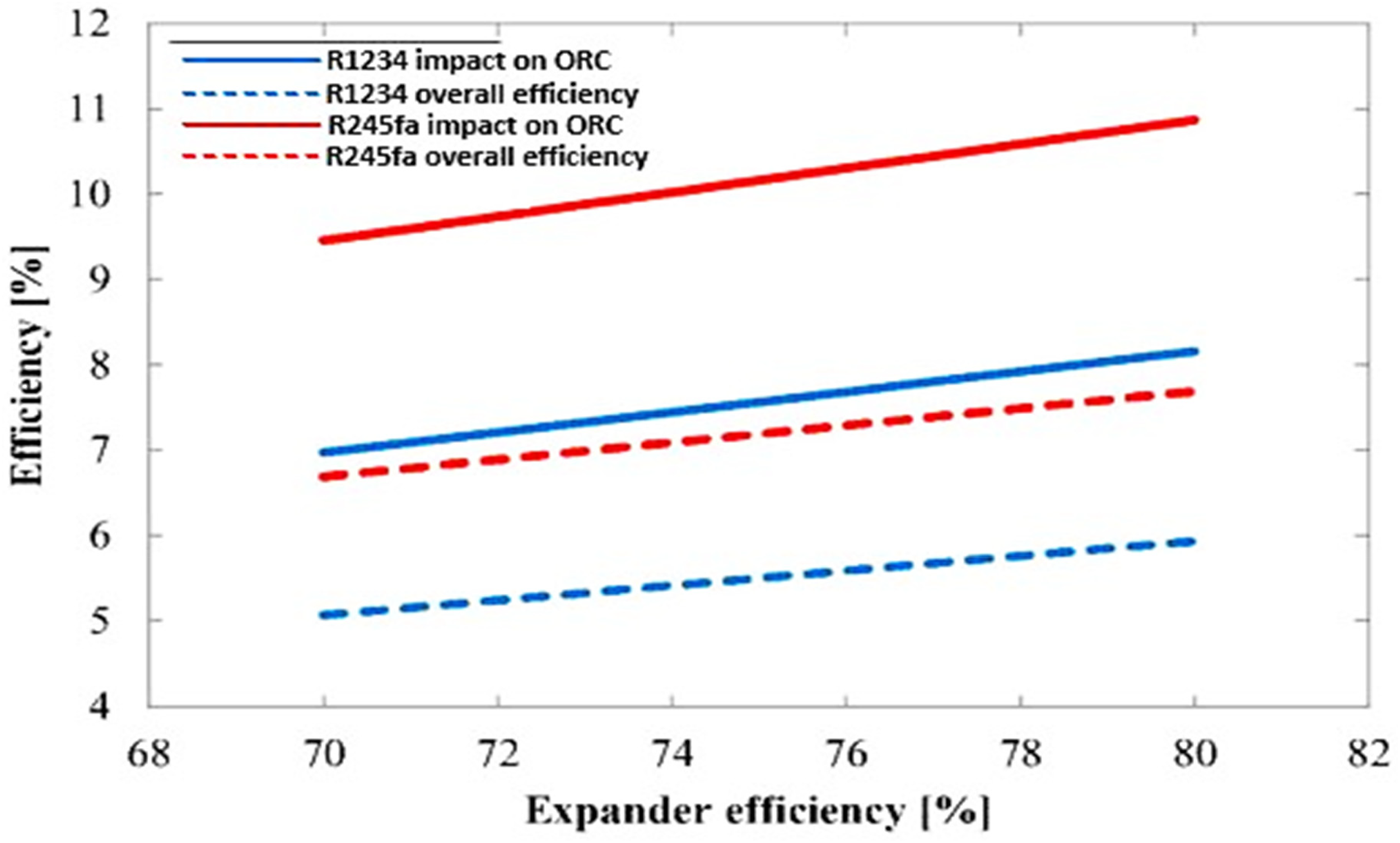
Turbine isentropic efficiency impact on the organic Rankine cycle (ORC) (solid) and overall efficiency (dashed).
The higher the isentropic efficiency, the little bit lower the mass flow rate, due to the increase in enthalpy difference via the turbine as mentioned in Figure 31. This also leads to a reduction of mass flow rate into both HTF and cooking system, as the heat input via evaporator and the heat rejected via condenser reduce for a given the same net power output.
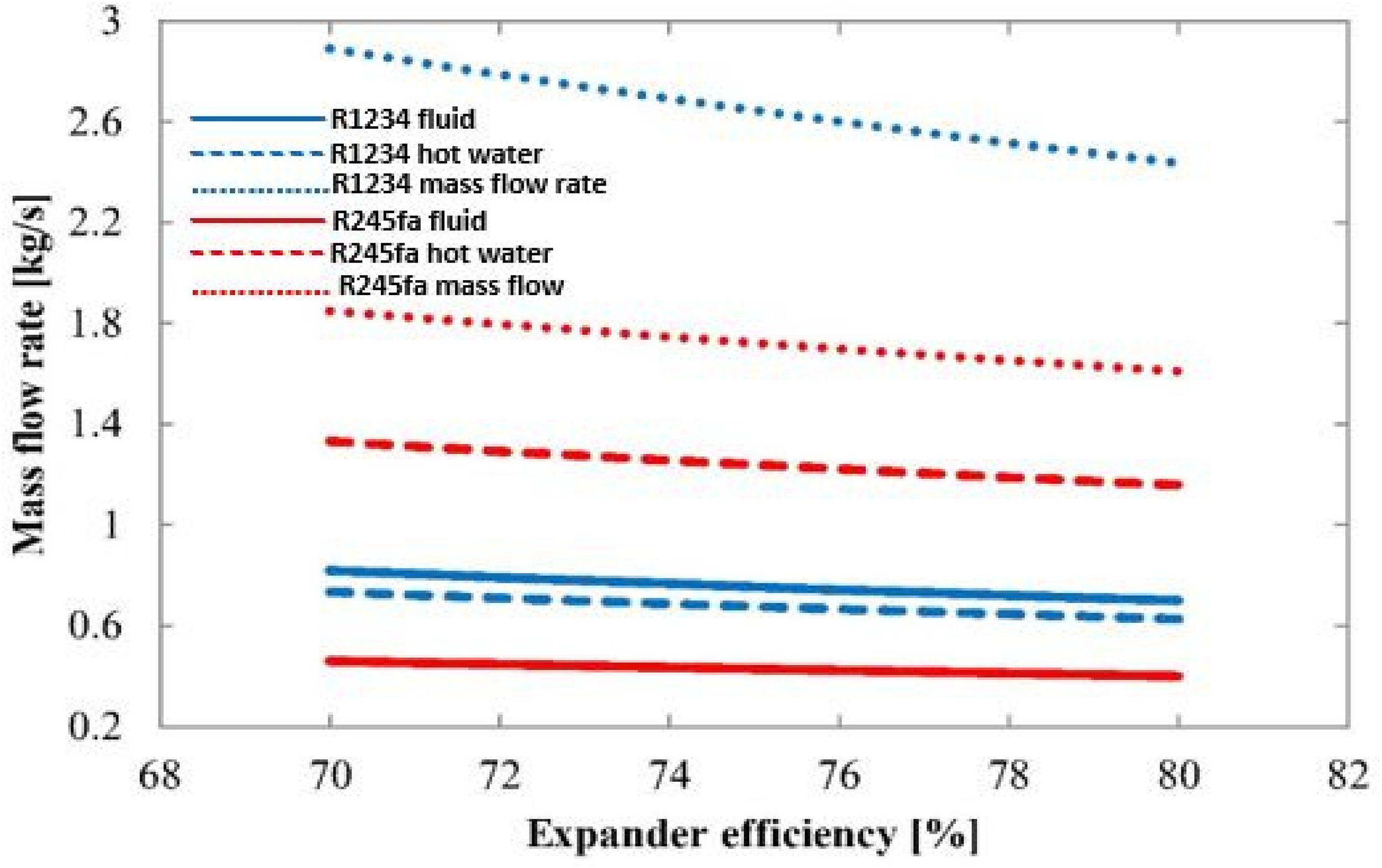
Turbine isentropic efficiency impact on the fluid (solid) and hot water (dashed) cold water mass flow rate (dotted).
Figure 32 illustrates that as turbine isentropic efficiency improves, the ETC area decreases. Particularly, increasing from 70% to 80% causes a 14.6% reduction for R1234 and a 13% reduction for R245fa. Moreover, higher isentropic efficiency increases the ORC efficiency and reduces heat input for the same net power output, thus reducing the ETC area. Also, Figure 33 shows that smaller sized for both evaporator and condenser might need as a result in increase of isentropic efficiency. Every 10% increase in efficiency results in a reduction in evaporator size by 3.8% for R1234 and 3.3% for R245fa, while the condenser size decreases by 4.7% for R1234 and 5.1% for R245fa.
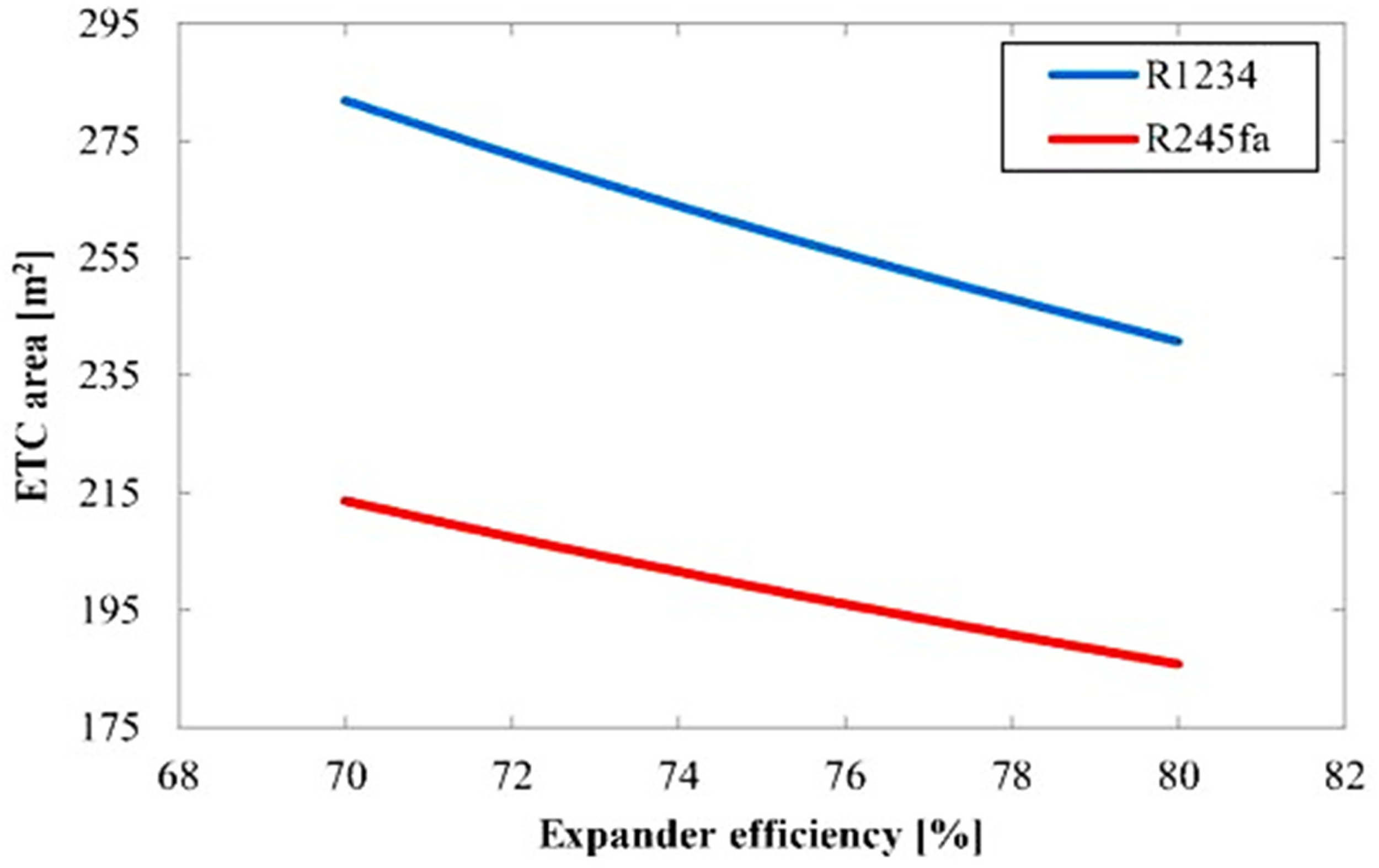
Turbine isentropic efficiency impact on evacuated tube solar collector (ETC) area.
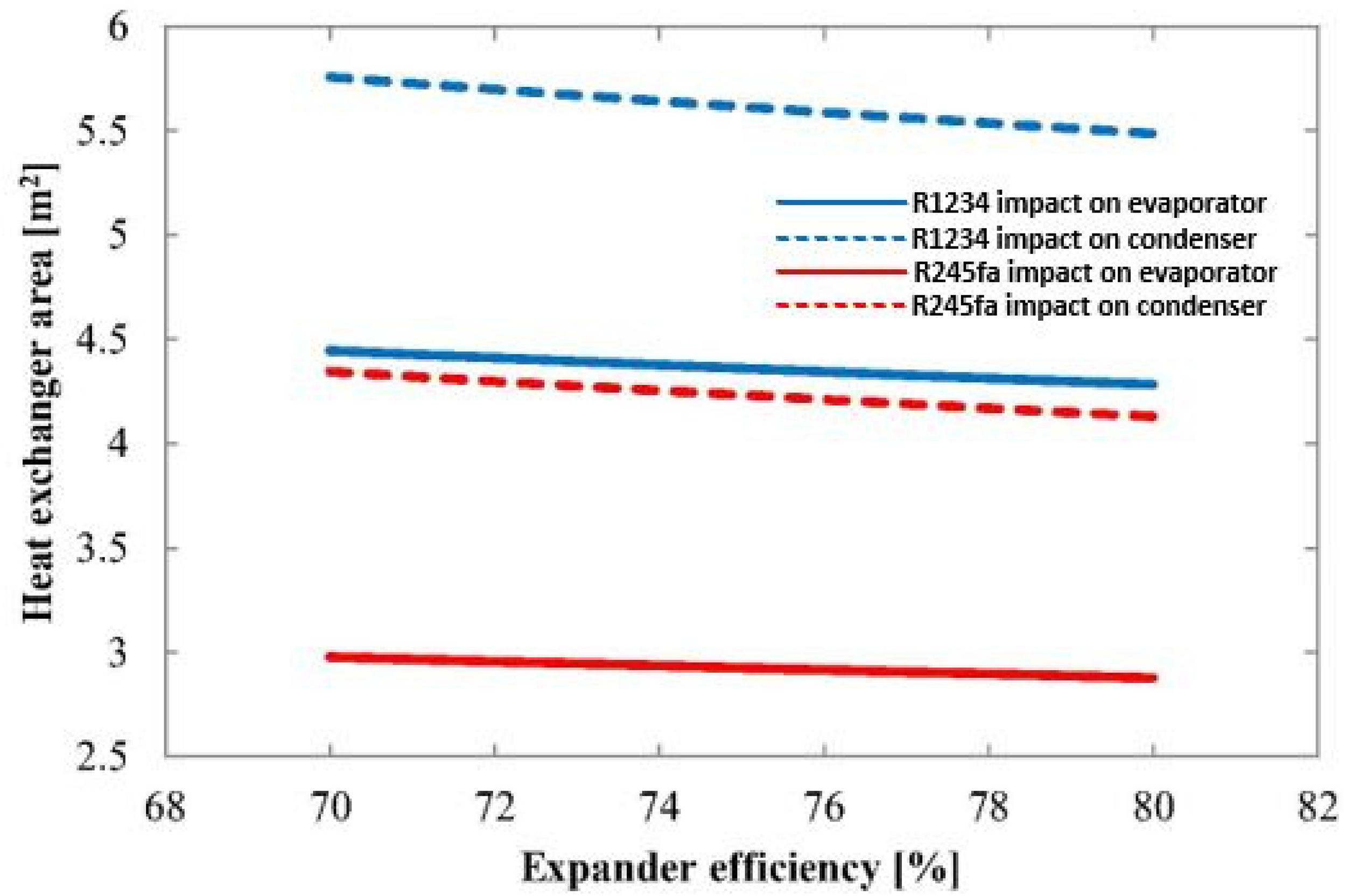
Turbine isentropic efficiency impact on the evaporator (solid) and condenser area(dashed).
Pump isentropic efficiency impact
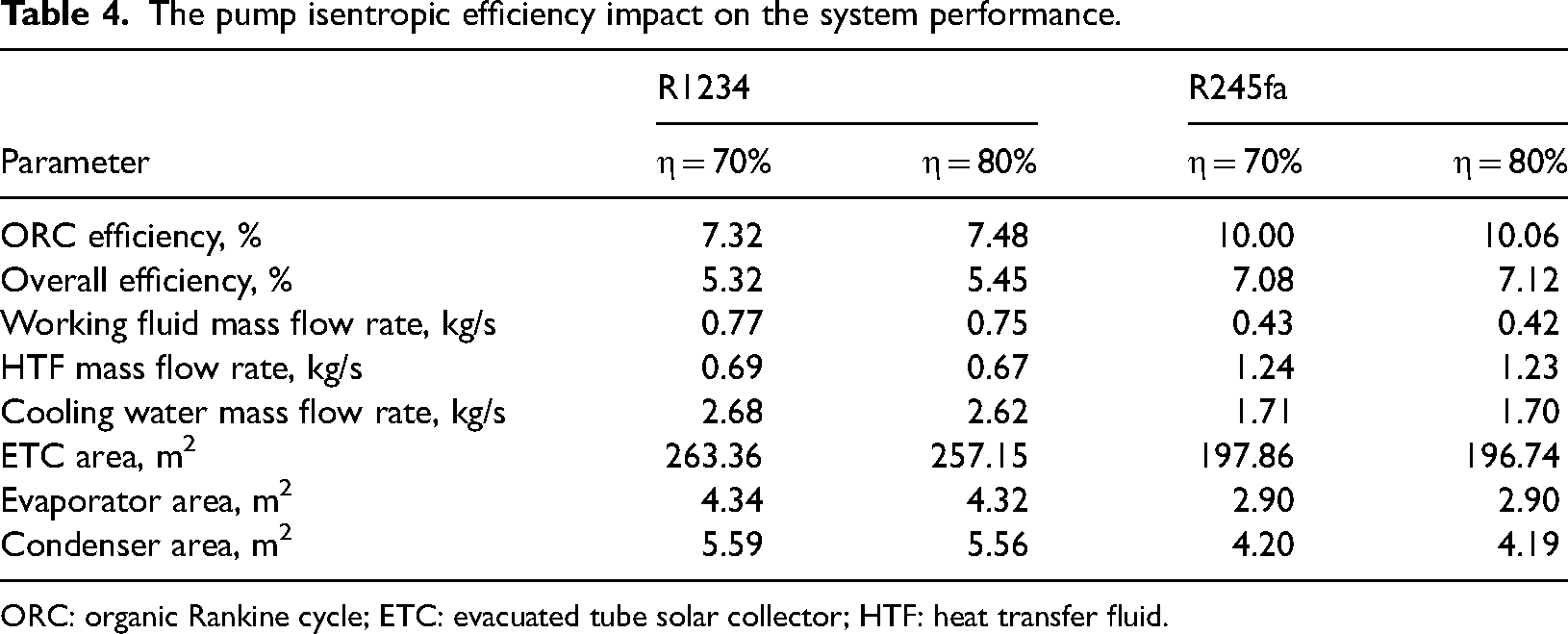
Table 4 compares the performance of two working fluids, R1234 and R245fa, at different pump isentropic efficiencies (70% and 80%). Key performance indicators, such as ORC efficiency, overall efficiency, and mass flow rates, are presented along with component areas required for heat exchange. For both fluids, increasing the pump's isentropic efficiency from 70% to 80% results in slight improvements in ORC and overall efficiencies. For R1234, the ORC efficiency rises from 7.32% to 7.48%, while for R245fa, it increases from 10.00% to 10.06%. This indicates that R245fa generally offers better performance than R1234, with higher ORC and overall efficiencies, regardless of the pump efficiency. Additionally, the working fluid mass flow rate and HTF mass flow rate decrease slightly with increased efficiency, implying reduced fluid circulation demand. In terms of heat exchange components, the areas required for the evaporator (ETC area), evaporator area, and condenser area vary slightly across the different scenarios. Notably, R1234 requires a larger ETC and condenser area compared to R245fa, suggesting that the selection of working fluid impacts the system design in terms of heat exchanger size. This difference is likely due to the thermal properties of each fluid, which affect heat transfer performance and the size of components needed to achieve efficient operation.
The pump isentropic efficiency impact on the system performance.
ORC: organic Rankine cycle; ETC: evacuated tube solar collector; HTF: heat transfer fluid.
Exergy analysis
Table 5 provides a comparative analysis of three working fluids (R1233, R1234, and R245fa) in terms of their thermal and exergy efficiencies. R245fa exhibits the highest thermal efficiency at 7.2%, followed by R1234 at 5.5% and R1233 at 5.41%. This ranking is consistent with the ORC efficiencies observed in Table 5, reinforcing that R245fa is a more efficient working fluid in terms of energy utilization. In terms of exergy efficiency, which measures the system's ability to convert available energy into useful work while accounting for irreversibilities, R245fa again outperforms the other fluids with an exergy efficiency of 11.32%. R1234 follows with 9.61%, and R1233 has the lowest exergy efficiency at 5.89%. This indicates that R245fa not only provides better thermal efficiency but also maximizes the available energy potential more effectively, making it the preferred choice among the working fluids analyzed. The nearly equivalent thermal and exergy efficiencies of R1233 can be attributed to its favorable thermodynamic properties, which result in minimal irreversibilities within the cycle. R1233 has a relatively high critical temperature and a favorable specific heat ratio, allowing it to undergo expansion and heat transfer processes with lower exergy destruction. Additionally, the system's operating conditions, particularly the evaporation and condensation pressures, contribute to a well-matched heat addition and rejection process, reducing entropy generation. Consequently, the exergy efficiency closely aligns with the thermal efficiency, as the useful energy conversion is maximized with minimal losses.
Exergy analysis efficiency and thermal efficiency results.

Results validation
Table 6 provides a quantitative comparison of thermal and exergy efficiencies for R245fa and R1234 under subcritical conditions, referencing studies (Braimakis et al., 2015, Bu et al., 2013, Freeman et al., 2015). The observed thermal efficiency for R245fa in this study was 7.1%, closely aligning with the 7.2% reported by Bu et al. (2013) under similar conditions, indicating reliability of the model. Additionally, the exergy efficiency of 11.3% for R245fa corresponds well with findings in the work of Braimakis et al. (2015), which reported an efficiency of 11.0%, with a deviation of less than 3%. A sensitivity analysis on cooling water temperature was performed, as identified in the work of Bu et al. (2013) as a significant factor for efficiency improvement. The findings confirmed that a 5 °C reduction in cooling water temperature enhances ORC efficiency by approximately 1.5%, consistent with the trend observed in the work of Bu et al. (2013).
Comparison of key performance metrics with literature.
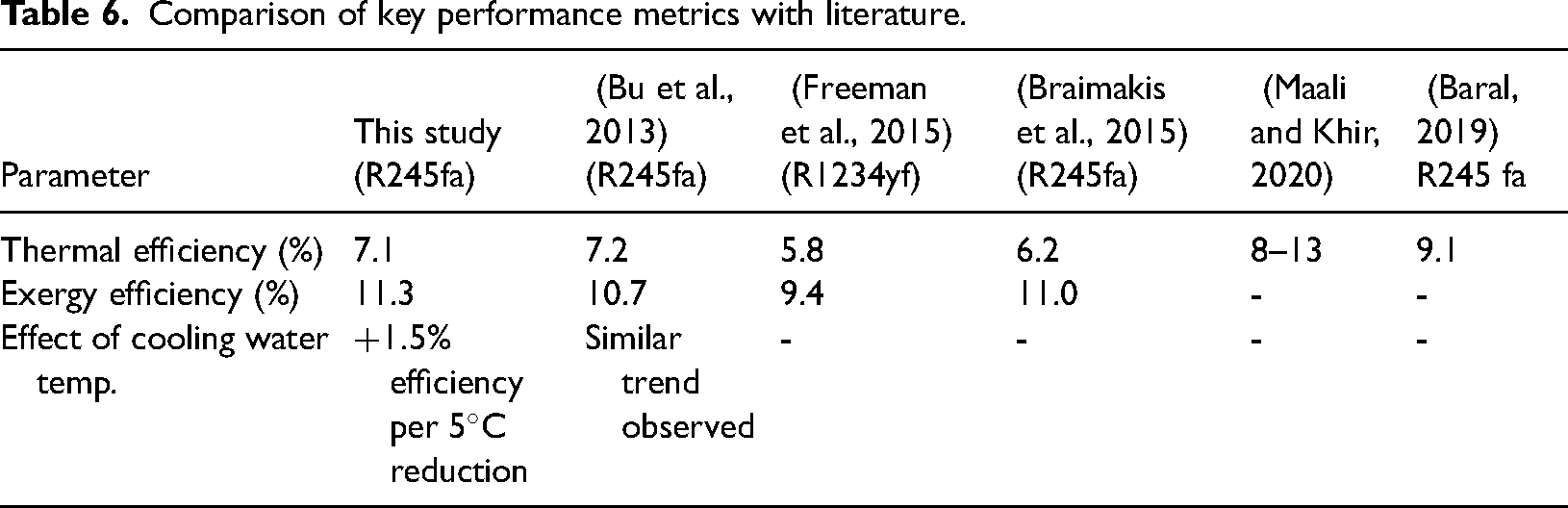
Statistical analysis using a two-sample t-test showed no significant difference between the results and those in the work of Braimakis et al. (2015) (p > 0.05), suggesting that any variations are within the range of expected experimental and modeling variability. It is noted that idealized assumptions, such as disregarding pressure drops, were employed in the current model, which may account for slight discrepancies with experimental findings in the work of Freeman et al. (2015). Future work could incorporate more detailed pressure drop modeling for closer alignment with real-world conditions.
Conclusions
This study evaluates the thermodynamic performance of a hybrid solar-geothermal ORC. The results indicate that increasing evaporation pressure leads to significant improvements in ORC efficiency. The thermal efficiency of R245fa reached 7.2%, while R1234 achieved 5.5%. Corresponding exergy efficiencies were 11.32% for R245fa and 9.61% for R1234. A higher evaporation pressure also reduced the mass flow rate, with R245fa's mass flow rate decreasing by approximately 10% as evaporation pressure increased. The efficiency of the ETC decreased as the proportion of solar energy increased, with a 4% drop in efficiency when solar energy contribution rose from 40% to 60%. Furthermore, optimizing the turbine's isentropic efficiency improved both ORC and total system efficiencies by 5%. This study demonstrates the potential of hybrid solar-geothermal ORC systems for small- to medium-scale combined heat and power applications. Future work will focus on the optimization of operational parameters, further analysis of the effect of working fluid selection, and the development of strategies for improved integration of solar and geothermal resources.
Footnotes
Nomenclature
Declaration of conflicting interests
The authors declared no potential conflicts of interest with respect to the research, authorship, and/or publication of this article.
Funding
The authors received no financial support for the research, authorship, and/or publication of this article.
