




Abstract
The increasing disturbances in power system networks present significant challenges to electrical power engineers, often leading to a loss of synchronism in grid-tied generators. It is important to ensure voltage, angle, and frequency stability in power system for efficient grid operation and a sustainable power supply. This paper investigates transient stability enhancement in multi-generator system using an artificial neural network (ANN)-based control technique. The conventional high-voltage direct current (HVDC) systems are based on a fixed proportional integral controller parameters to function efficiently, but the proposed ANN-based technique dynamically adjusts the thyristor firing angle in real-time to improve system stability. This intelligent control mechanism enhances transient stability by optimizing power system responses based on real-time operational data. The effectiveness of the proposed method is tested on a real 330-kV, 40-bus Nigeria transmission network, modeled in Power System Analysis Toolbox. The Newton–Raphson power flow method is employed to determine the base-case characteristics of the network. To achieve stable system operation, the voltage magnitude of a transmission system must fall within the statutory limit of 0.95–1.05 per unit (pu). However, power flow studies indicate a significant low-voltage profile of 0.70 pu on the network. Implementing the ANN-based HVDC system, three-phase faults are cleared within 2 ms, demonstrating a significant improvement compared to the 3-ms critical clearing time achieved using conventional method. Additionally, the ANN-based controller enhances voltage stability, achieving a minimum voltage magnitude of 0.98 pu, representing a 27.8% improvement over the conventional approach. The results confirm that the proposed ANN-based HVDC system offers superior transient stability performance by dynamically adjusting the system response, ensuring better fault ride-through capability and improved voltage profile. The findings highlight the potential of ANN-based controllers in improving transient stability in modern power systems.
Keywords
Introduction
The rising daily energy demand, driven by population growth, development, and industrialization, has posed severe challenges to the dynamic stability of power systems. If not adequately managed, this increased demand could compromise system security, lead to power shortages, and even cause system collapse. Electrical engineers often use transient stability analysis to assess a network's equilibrium performance of generators and its compatibility with fault (Ayodele et al., 2016). For power system devices and components to function reliably, equilibrium must be maintained under normal operating conditions and restored after any disturbances. Instability in power system is caused by transient signals, which result from sudden changes in voltage and current magnitudes. The Nigeria power system has experienced frequent power outages due to deficiencies in the three sections of power system and inadequate maintenance practices. These issues have led to temporary instability in the transmission network, causing high energy costs, poor electricity quality, increased living expenses, blackouts, and power failures. Transient stability is referred to the ability of a power system to return to steady-state operation after a fault occurs. The major factor in evaluating transient stability is the critical clearing time (CCT); this entails the maximum time fault can occur in the network before the generator loses synchronism (Sharma and Hooda, 2012). To achieve system stability during fault, the fault clearing time (FCT) must be in the same magnitude or greater than the CCT. A system's resilience is largely determined by its ability to respond to faults, with a higher CCT value indicating greater stability and reliability as stated in the work done by Karthikeyan and Dhal (2015). Currently, power systems have faced various challenges, including low-voltage profiles, equipment overloading, voltage instability, significant power losses, long-distance power transmission, high power demand, and poor equipment coordination. The challenges or issues posed by large disturbances on grid must be addressed in other to enhance the reliability and performance of the system (Eseosa and Odiase, 2012; Omorogiuwa and Onahaebi, 2015). These problems arise from inadequate transmission system and an aging power network under stress, which could lead to a complete blackout (Oluseyi et al., 2017). In interconnected networks, small-disturbance stability is crucial due to the constant fluctuations in load. However, instability in modern power systems is often linked to insufficient damping torque. The recurring, nonperiodic instability observed in contemporary systems can be mitigated using voltage regulators.
Several methods have been proposed for enhancing transient stability in power systems: flexible alternating current transmission systems (FACTS), high-voltage direct current (HVDC) method, Fuzzy logic method, among others. By implementing these methods, power system engineers can enhance the system's responsiveness, reduce power losses, and maintain stability and reliability according to Sagar et al. (2016). It has been noted that FACTS devices have the capacity to improve the reliability and performance of a high-voltage transmission network (Nelson et al., 1997). Therefore, the incorporation of HVDC technology into power transmission networks has provided several benefits, including increased power transfer capabilities, improved system stability, and significantly reduced power losses. HVDC systems experience fewer resistive losses compared to traditional AC systems due to their operation at high voltages (Borazjani et al., 2015). Power system analysis, which includes rotor angle stability, transient stability, voltage stability, and fault clearance, is critical for maintaining stability. In power systems, there should be equal frequency and phase angle in transmission lines for optimal generator connectivity. However, with the inclusion of an HVDC link, synchronization and frequency control issues are eliminated, making HVDC a more befitting technology for frequency conversions. These constraints have paved the way for major research in the area of power system stability improvement with much focus on voltage profile enhancements.
Review of related literature
An extensive review of relevant literature was conducted in this paper to gain a comprehensive understanding of strategies for improving transient stability in transmission networks. The dynamics of transient angle stability in interconnected AC power systems utilizing voltage source converter (VSC)-based generations has been conducted in (Xue et al., 2023). Their work proposed a control method of VSC that will enhance the synchronous generators. This approach was demonstrated on a PSACD for electromagnetic transient analysis, and it was applied to two area interconnected systems with four synchronous generators. However, the proposed approach did not incorporate HVDC technology or an intelligent control strategy, such as artificial neural network (ANN), in the VSC, as explored in this paper. In another study, Umeozulu et al. (2022) studied the enhancement of transient stability in the Nigerian transmission grid by implementing unified power flow converter technology. The technique significantly improved transient stability through an eigenvalue-based approach that identified weak buses. However, the research did not thoroughly explore the use of HVDC and ANN for automatic fault detection and the enhancement of critical clearance time (CCT). Meanwhile, Alayande et al. (2021) studied the use of FACTS controllers in the transient stability improvement of a transmission network. It introduces a multi-unified power flow controller (UPFC) at the bus with the lowest eigenvalue to improve the transient stability of power systems during critical outages. The method is validated using the standard IEEE 5-bus network and the Nigeria 28-bus grid, demonstrating an improvement in system stability with the use of the FACTS device. An investigation into the dynamic stability and performance of the Koka-Dire Eastern region power system in Ethiopia is discussed (Adama et al., 2021). Their research explored the influence of various controllers, including thyristor-controlled series capacitor (TCSC) and UPFC, on several aspects of the power system network. These aspects included voltage profile, power losses, small-signal stability, and transient stability. The technique is simulated in MATLAB, where the rotor angle and frequency performance were analyzed both with and without the integration of FACTS devices to compare system performance. The results indicate significant improvements in frequency, voltage stability, and line losses. Furthermore, the study highlighted that the UPFC outperformed the TCSC in terms of enhancing the dynamic performance and stability of the Eastern Regional power network in Ethiopia. However, this study also had limitations, particularly concerning the implementation of FACTS devices as opposed to the use of HVDC and ANN technologies, which could have further advanced the regional network's development in those specific areas. It is suggested that instability can occur due to the continuous increase in angular swings of certain generators, which may lead to a loss of synchronism with other generators (Sagar et al., 2016). Therefore, rotor angle stability primarily addresses the issues arising from electromechanical oscillations within power system networks. External disturbances can disrupt the system's equilibrium, causing one or more machines to deviate from synchronism, leading to rotor angle instability. The topic of rotor angle stability, along with voltage stability, has been explored in the context of the growing integration of renewable energy sources, as discussed by the authors in their publication (Barua et al., 2023). Their work examines the power system in Bangladesh with a focus on the western part of their grid. Emphasis was made on the need for FACTS and other devices for power system stability improvement.
HVDC technology has become a crucial tool in modern power systems, particularly in enhancing transient stability. It offers several advantages over traditional alternating current (AC) systems, particularly in terms of controllability, efficiency, and stability, making them an effective solution for improving transient stability in power systems (Bian and Xu, 2016; Flourentzou et al., 2009; Liu et al., 2015). However, HVDC-dominated systems face challenges, including stability problems that occur when HVDC loss synchronism with the grid during a fault and synchronization issues during the interaction of HVDC dynamics with other devices. For the first issue, HVDC relies on its control strategies, rather than mechanical features like synchronous generators, to synchronize with the grid. This has led to the concept of grid-synchronization stability, as stated in Ma et al. (2018) and Shair et al. (2021). The use of vector current control (VCC) in HVDC systems based on phase-locked loops (PLLs) has received significant attention in numerous research. The VCC is a key component of the grid-following (GFL) control family, and the dynamics of the PLL and external power are closely tied to its grid-synchronization stability. They are prone to transient instability under deep grid voltage sags when connected to weak AC grids. The transient stability margin of GFL-VSCs can also be influenced by the inner current loop dynamics as opined (Chen et al., 2020; He et al., 2020; Hu et al., 2019; Huang et al., 2022; Liu, 2021; Wang, 2022; Wu and Wang, 2020; Zhao et al., 2021). An ANN-based approach has been implemented to control the variable frequency of a transformer, achieving significant improvements by damping generator oscillations and reducing the amplitude of damped oscillations (Sheikh and Bakhsh, 2023). However, the comparison did not demonstrate the application of this approach in a multi-generator system to validate its effectiveness. Similarly, Yousaf et al. (2024) proposed a novel technique that integrates Bayesian optimization and ANN for fault detection in direct current (DC) grids. While their method aims to enhance fault detection in HVDC-connected grids, its impact on connected generators and overall system stability was not explored. Additionally, a physics-informed neural network voltage source HVDC impedance model has been proposed as a reliable tool for grid stability estimation. This approach utilizes mathematical equations to estimate fault occurrences in the grid but does not provide a remedial strategy for system recovery after a fault (Chang et al., 2024). This paper has relied on existing literature on transient stability improvement by improving the CCT achieved in the previous research. A machine learning-based method, specifically an ANN-based intelligent controller, has been introduced to improve the transient stability of a multi-generator network. The ANN-based HVDC model is implemented on the Nigerian 330-kV transmission network with the goal of enhancing voltage stability during the occurrence of a three-phase fault. The impact assessment of this fault on the voltage profile was accessed and improved using the proposed system. A comparative performance was conducted between the conventional proportional integral (PI)-controlled HVDC system and ANN-based HVDC system application on the test case network. There is limited research in this area of study, and this forms the novelty of this paper and contributes to the knowledge of power system improvement.
Key contributions
In this paper, the use of machine learning technique for power system improvement is explored. This is demonstrated with the introduction of an ANN-based HVDC system for transient stability improvement of a transmission system. The application of this technique significantly reduces FCT from 3 ms achieved using the conventional PI-based HVDC system to 2 ms. It employs an ANN-based control technique instead of the conventional PI controller in the HVDC system to enhance the transient stability of a multi-generator power system. The HVDC system's response time under a three-phase fault is enhanced and it improves the CCT. Furthermore, the voltage profile is improved from 0.80 pu, as observed in conventional systems, to 0.98 pu. The results obtained show a significant breakthrough in voltage stability, particularly for complex multi-generator networks such as the 40-bus, 330-kV Nigeria transmission system. Finally, the proposed technique reduces system power losses, leading to cost savings for both utilities and consumers.
Materials and methods
The Power System Analysis Toolbox (PSAT) software in MATLAB is used to design the single-line diagram of a 40-bus, 330-kV Nigeria transmission network, as depicted in Figure 1. The most recent transmission network data obtained from the National Control Centre of the Transmission Company of Nigeria located in Oshogbo, as detailed in (Ugwuanyi et al., 2022), is used for analysis. These data are instrumental in performing power flow studies, eigenvalue analysis, and dynamic studies of the network to identify critical buses and weak transmission lines during fault conditions. The flowchart illustrating the process of this analysis is shown in Figure 2. The selected 40-bus network includes 11 generators and 29 load buses, with 52 transmission lines across the six geopolitical zones in Nigeria. The NR load flow method has been employed to analyze this network, allowing for the determination of base-case bus voltages and phase angles. The objective is to determine the bus voltages that meet the specified power injections or extractions at each bus. The key equations in this power flow analysis are based on the mismatch between the scheduled and calculated active and reactive power at each bus. All the analyses conducted in this research are based on the per unit (pu) system. The base apparent power Sbase for the Nigerian grid is 100 MVA, while the base voltage Vbase is 330 kV.
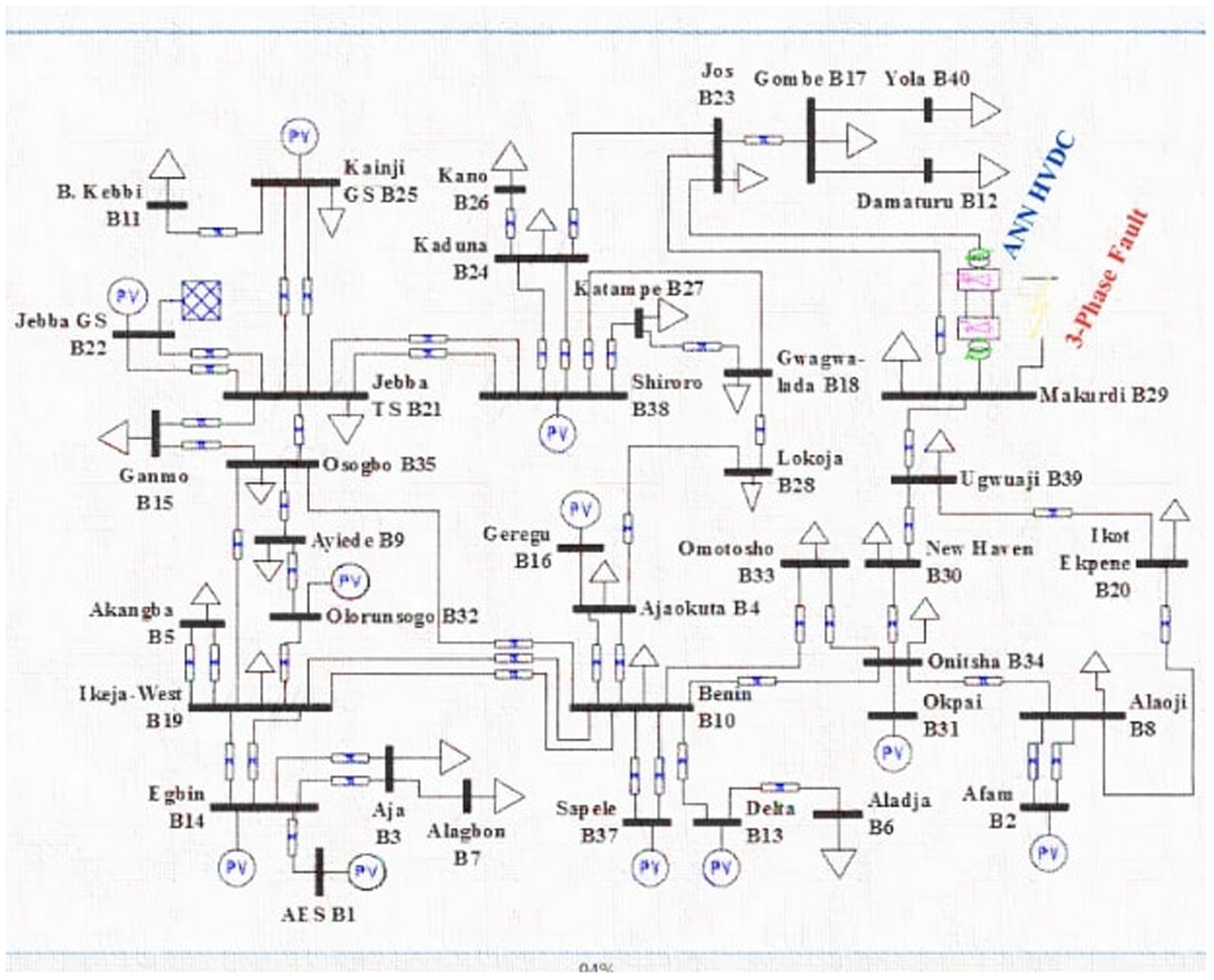
The single line diagram of the Nigeria 40 bus network modeled on PSAT.
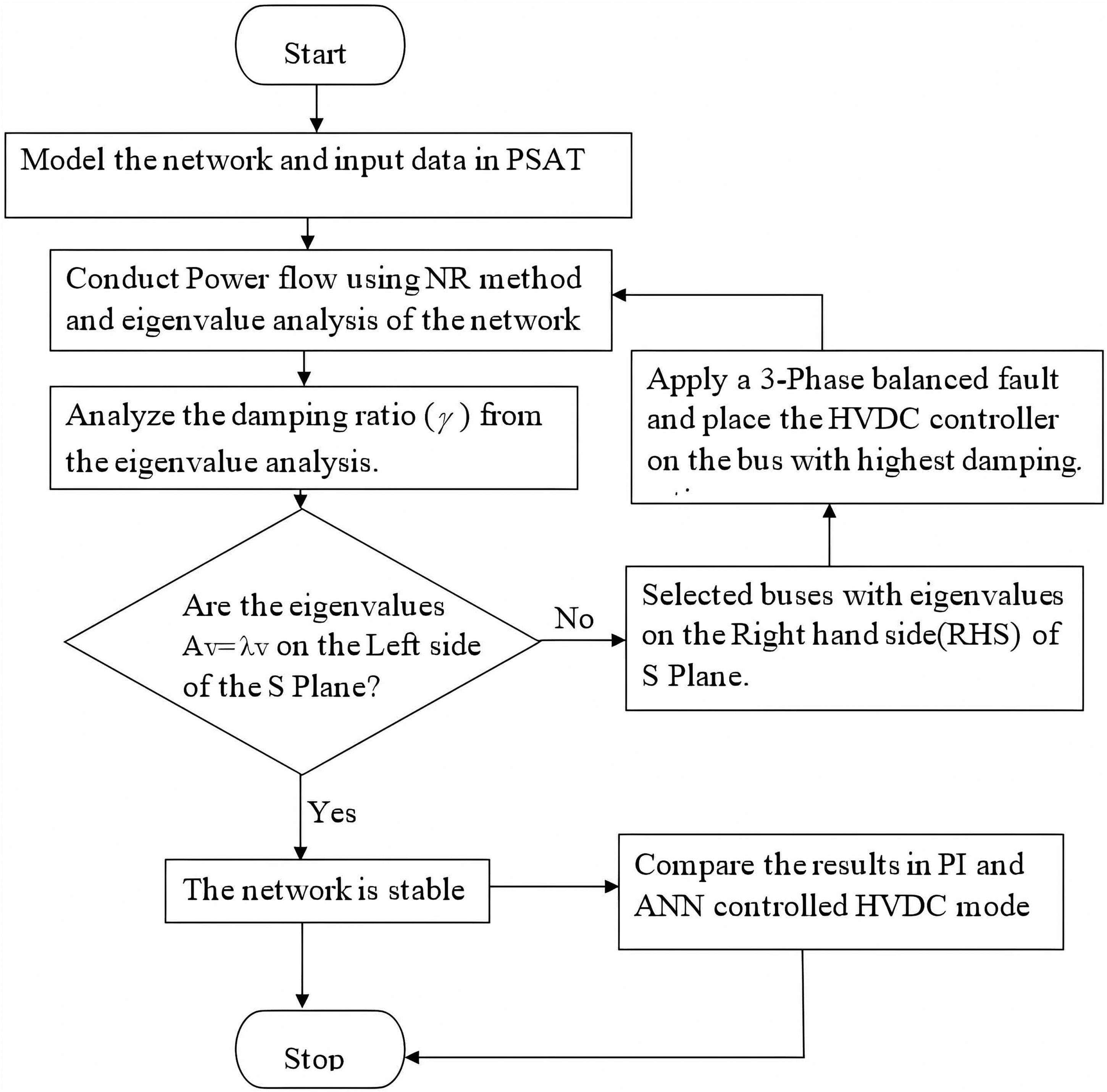
The flow chart for the ANN based HVDC transient stability improvement.
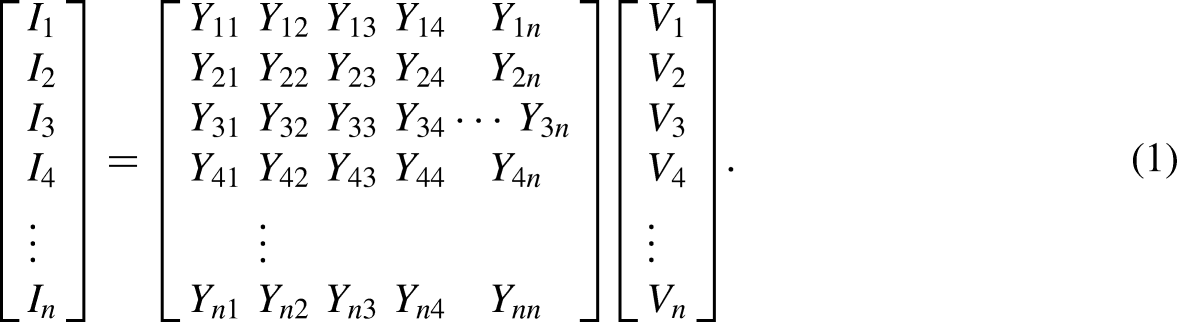
The nodal admittance matrix of the network is given as follows:





The voltage source-controlled HVDC model of a transmission system
The HVDC system is basically modeled with different power electronics components, with transistors as the main component of its operation. It uses an insulated gate bipolar transistor (IGBT) because of the good features of dual operation of bipolar transistors and metal oxide semiconductor field effect transistors. The IGBT is used as switches due to the high switching frequency, high input impedance, lower on-state voltage drop, and high turn-off time. It also has strong controllability and quality output voltage magnitude and phase angle. The topology of a voltage source-controlled HVDC for a transmission system is shown in Figure 3. The rectifier and inverter sections are connected back to back using a DC cable to enable fault elimination as shown in Figure 4. In transient stability analysis, it is essential to conduct AC power flow studies to determine the system's conditions or state prior to the occurrence of a disturbance.
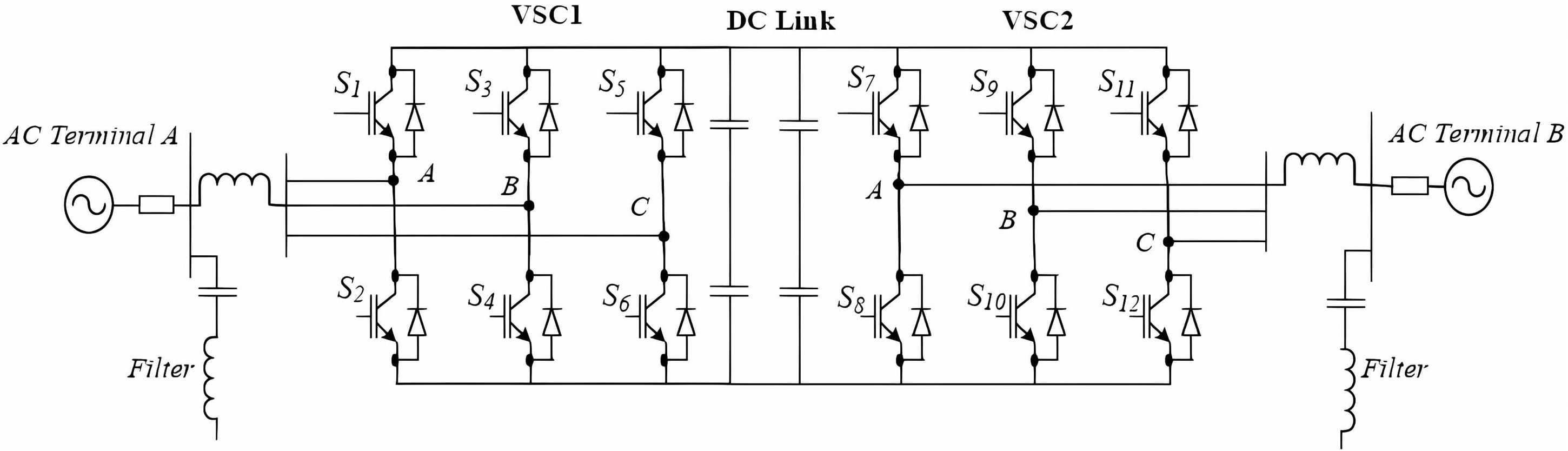
Topology of a two voltage source-controlled HVDC transmission system (Yousaf et al., 2024).
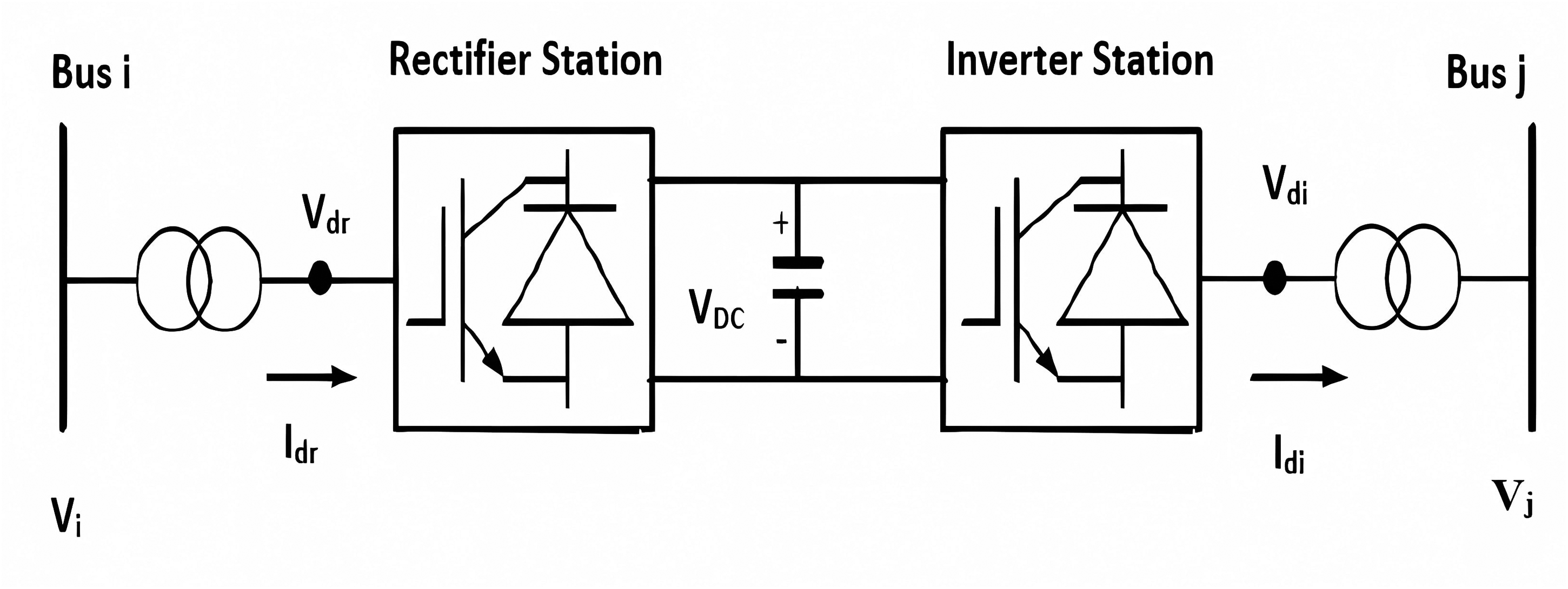
Two terminal model of an ANN-based HVDC system.
The two voltage sources at rectifier and inverter sections can be represented as follows:












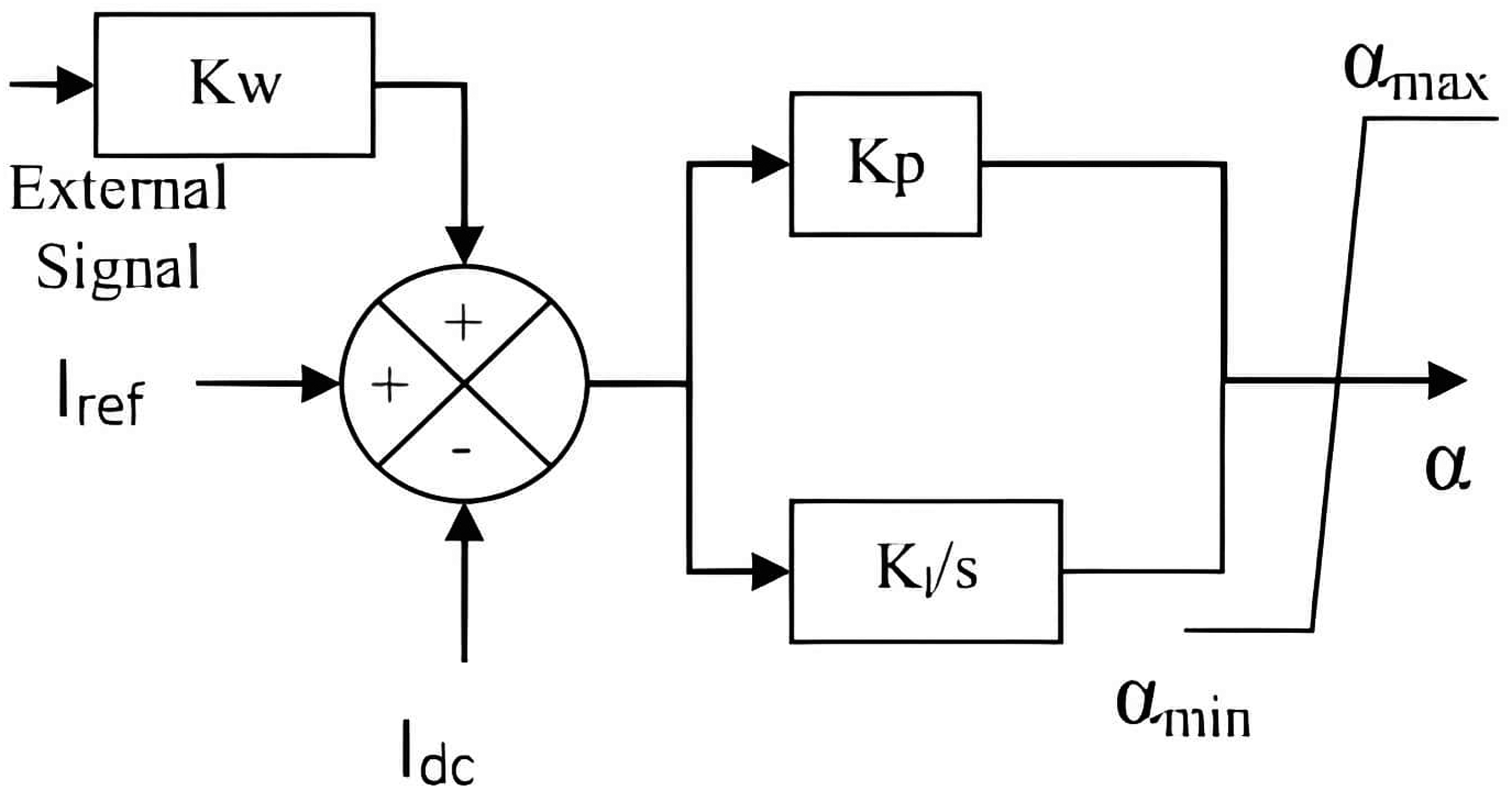
The block diagram of current controller.
where
Topology of ANN controller for HVDC system application
The ANN controller has some basic components such as neurons, layers, weights, and biases. Each neuron receives input, processes it using an activation function, and produces an output. The input layer receives the external inputs (sensor data, system states, etc.). The hidden layers that are the intermediate layers is where the actual processing happens. Each hidden layer can have multiple neurons, and the number of hidden layers defines the depth of the network. The output layer that is the final layer produces the control signal to be applied to the system. As illustrated in Figure 6, the system compares the reference current Iref with the measured DC current Idc to determine the appropriate control action. The difference between these currents serves as the basis for adjusting the converter's operation. This adjustment is implemented through the modulation of the thyristor firing angle. By carefully controlling the firing angle of the thyristors, the converter can regulate the output current to closely match the desired reference value, ensuring optimal performance of the power conversion process. This process is critical in maintaining the stability and efficiency of the system, as the precise firing angle dictates the timing of the thyristor conduction and, consequently, the amount of power delivered to the load. The block diagram of an ANN-based HVDC system is illustrated in Figure 7. In this system, the PI controller operates in parallel with an ANN controller, which has two adjustable weights, w1 and w2. The speed of the controller is influenced by two factors: the learning rate and the change in momentum. The reference current
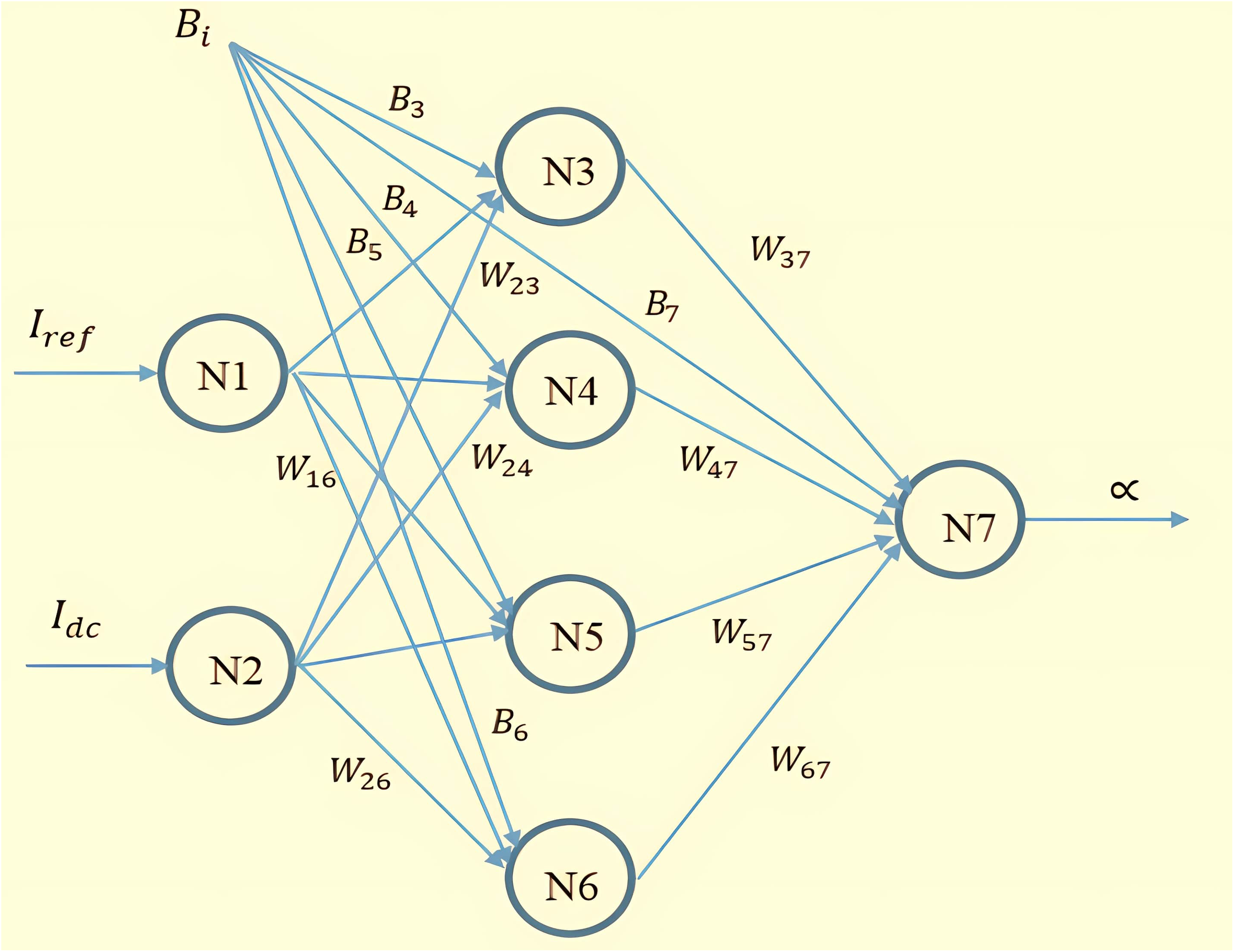
The artificial neural network Gaussian basis function.
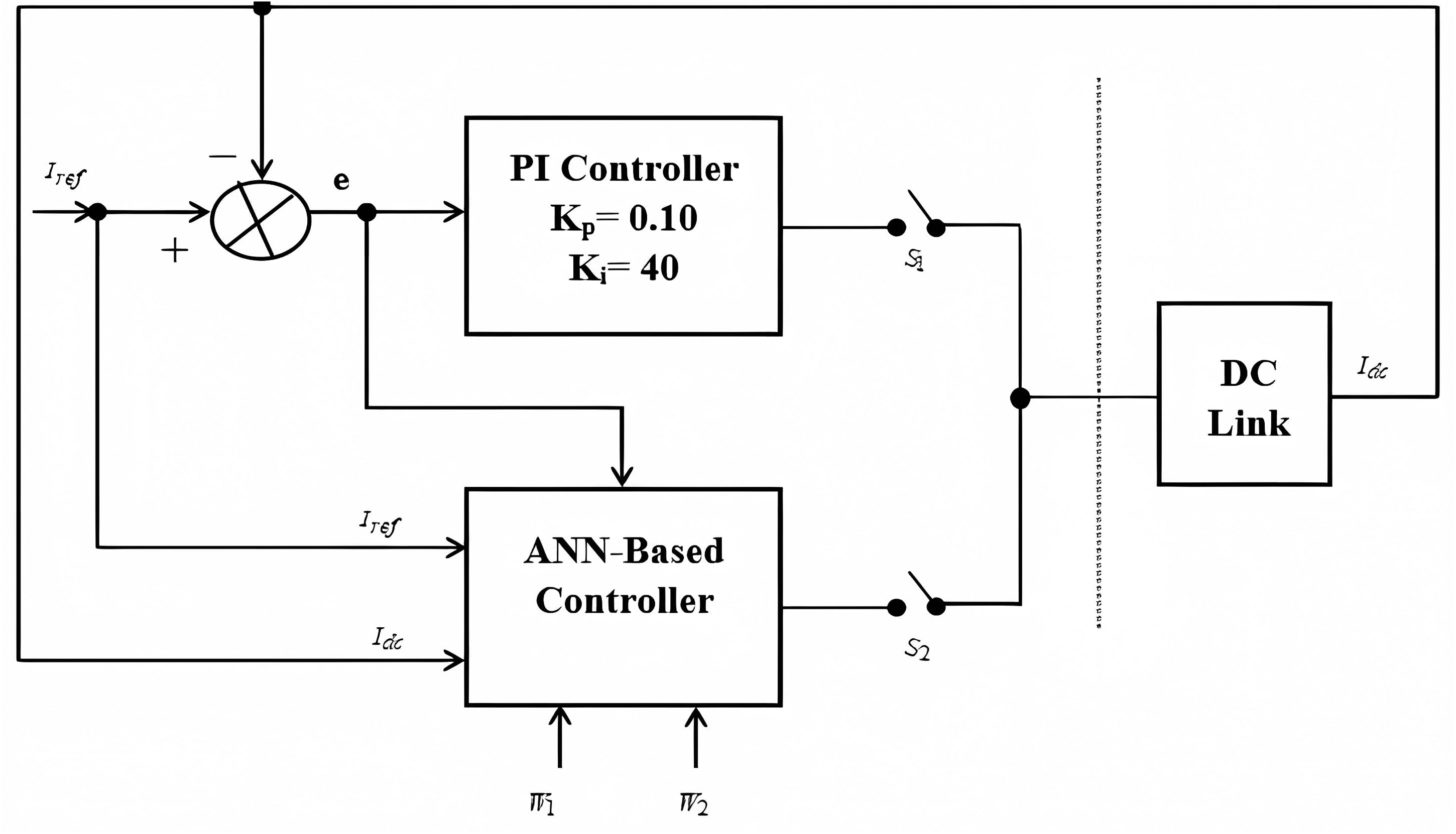
The block diagram of an ANN-based HVDC system.
The ANN structure and layer configuration
This system takes two inputs, reference current


In the output layer, a sigmoid activation function is applied to constrain the firing angle α between 0° and 180°, as represented in equation (21):


Results and discussion
The test case transmission network is used to conduct the load flow studies and voltage profile of the network shows a significant reduction in voltage magnitude at Akangba, Alagbon, Gombe, Gwagwalada, Kano, Olorunsogo, Omotosho, and Onitsha buses with voltage magnitudes of 0.8024, 0.8242, 0.7457, 0.7973, 0.8678, 0.8267, 0.7638, and 0.7732 pu. Their voltage magnitudes are below the statutory values of ±5% for the Nigerian transmission network, and this forms the critical buses in the network as shown in Figure 8.
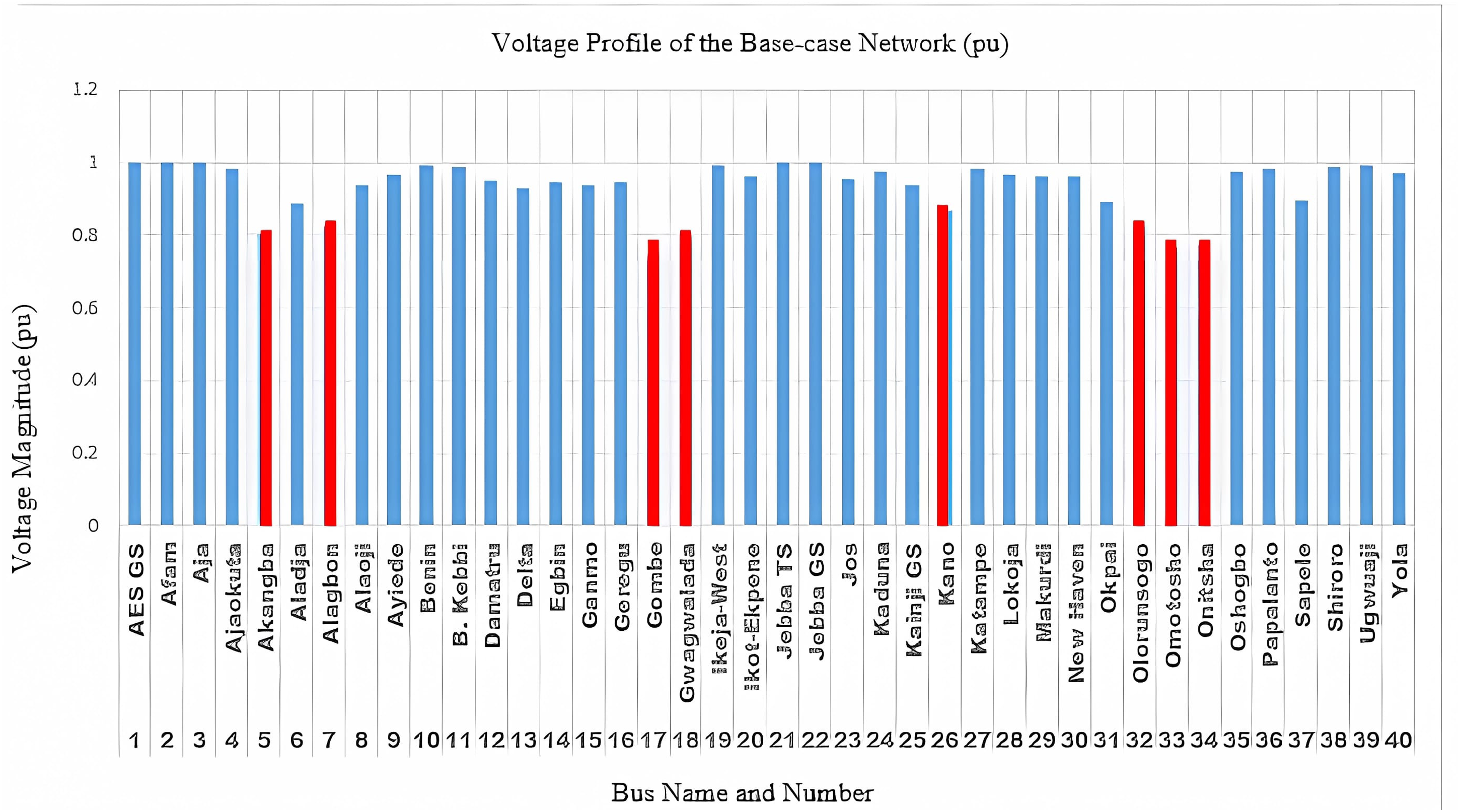
The voltage profile for the base-case load flow studies of the network.
Transient stability assessment of the test network at occurrence of a three-phase fault
The transient behavior of the Nigeria transmission network has been analyzed, and it is evident from the eigenvalue analysis that Makurdi (29) and Benin (10) buses are the most critical buses in the network. Therefore, they are the network's most vulnerable and unstable buses and have become the point of transient stability improvement. When a balanced three-phase fault is applied in one of the two buses, the dynamics of the generators were obtained for during-fault and post-fault responses using numerical solver ode45 in MATLAB/PSAT. This solver is used to solve the large m-number of swing equations for each generator connected to the network. The conventional PI-based HVDC system is installed along the Makurdi-Jos transmission lines due to its high positive eigenvalue and lowest damping ratio of Makurdi bus. The power flow studies are performed on the network when subjected to balanced three phases at Bus 29. The load demand at this bus is held at a constant value. This analysis is performed to ascertain the network's stability requirements and margins and identify the areas that require transient stability improvement. When the three-phase fault is applied at 1 s, the circuit breakers installed at both ends of the bus opened the faulted line and cleared the fault at a CCT of 3 ms without tripping the generators. It can be seen that Bus 5 (Akangba), 7 (Alagbon), 14 (Egbin), 26 (Kano), and 13 (Delta) voltage magnitudes whose voltages were violated due to the fault now have their voltage profile with the acceptable voltage limit. This is because of the injection of reactive power into the network by the HVDC. The network's voltage profile is compared with the base case as shown in Figure 9.
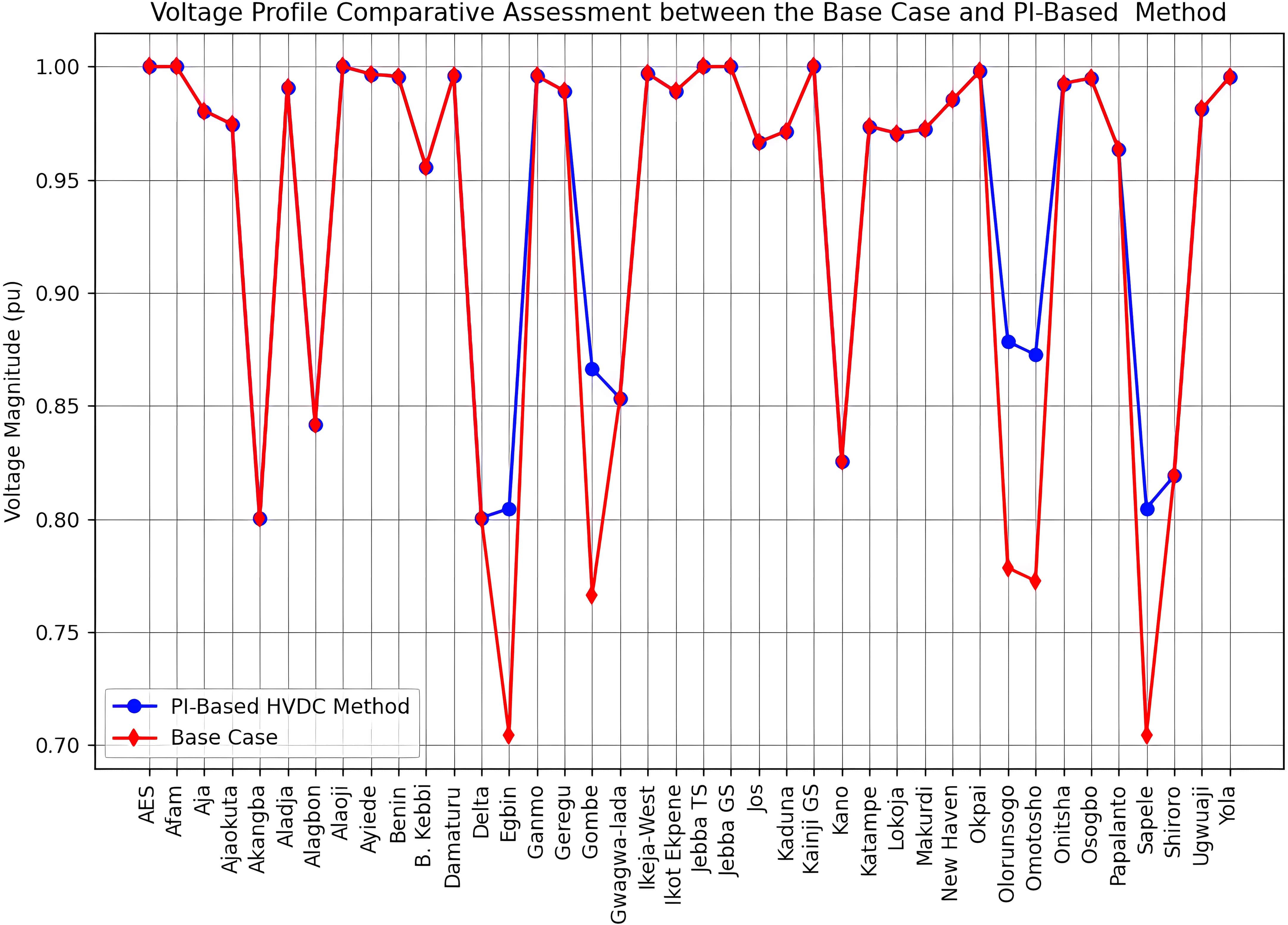
The voltage profile comparison between the base-case and the PI-controlled HVDC systems application.
Transient stability improvement using ANN controller-based HVDC system
The HVDC system is being controlled with the current gain of the trained parameters instead of the conventional PI controller. To validate this, the convergence of the trained parameters was evaluated using the MSE as the loss function. The training was conducted over 40 epochs, with model parameters updated using the Adam optimizer to ensure fast convergence and an efficient learning process. To assess the accuracy of the training, the loss curves for both the training and validation datasets are provided in Figure 10. These curves illustrate the behavior of MSE over epochs and its stability. A steady decrease in the loss function indicates successful convergence of the ANN model.
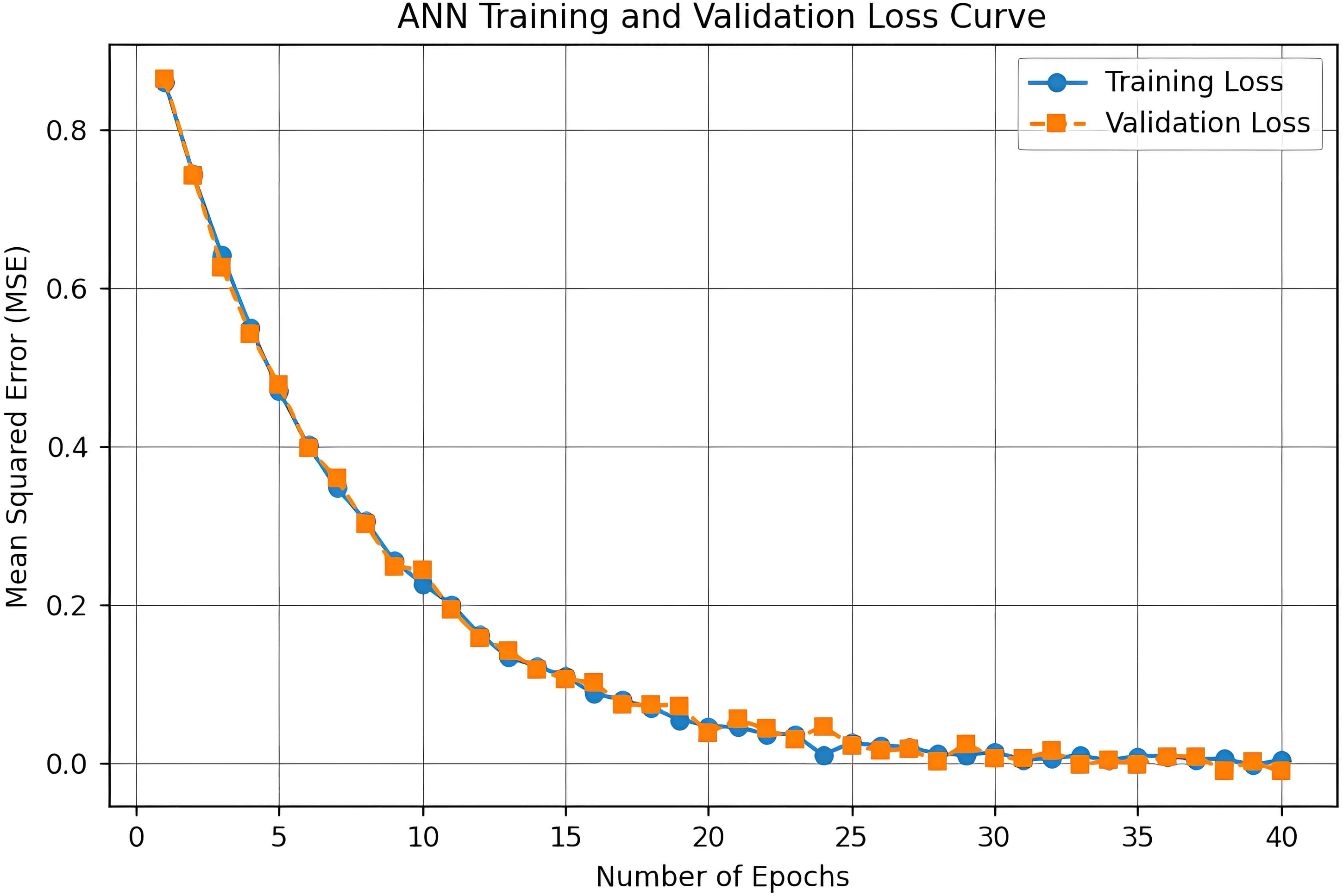
The loss curve of the proposed ANN model.
The performance capability of both the PI- and ANN-based controllers in this paper needs to be compared. In this location, the ANN-based controller is connected along the line with the occurrence of a three-phase fault, and the Makurdi-Jos line is removed, thereby creating an unstable network. However, the three-phase fault is cleared using the circuit breakers by removing the affected line. The generator's frequency and rotor dynamics have a CCT of 2 ms. Figure 11 shows a comparative performance analysis between the conventional and the ANN controlled HVDC systems with regard to the voltage stability improvement.
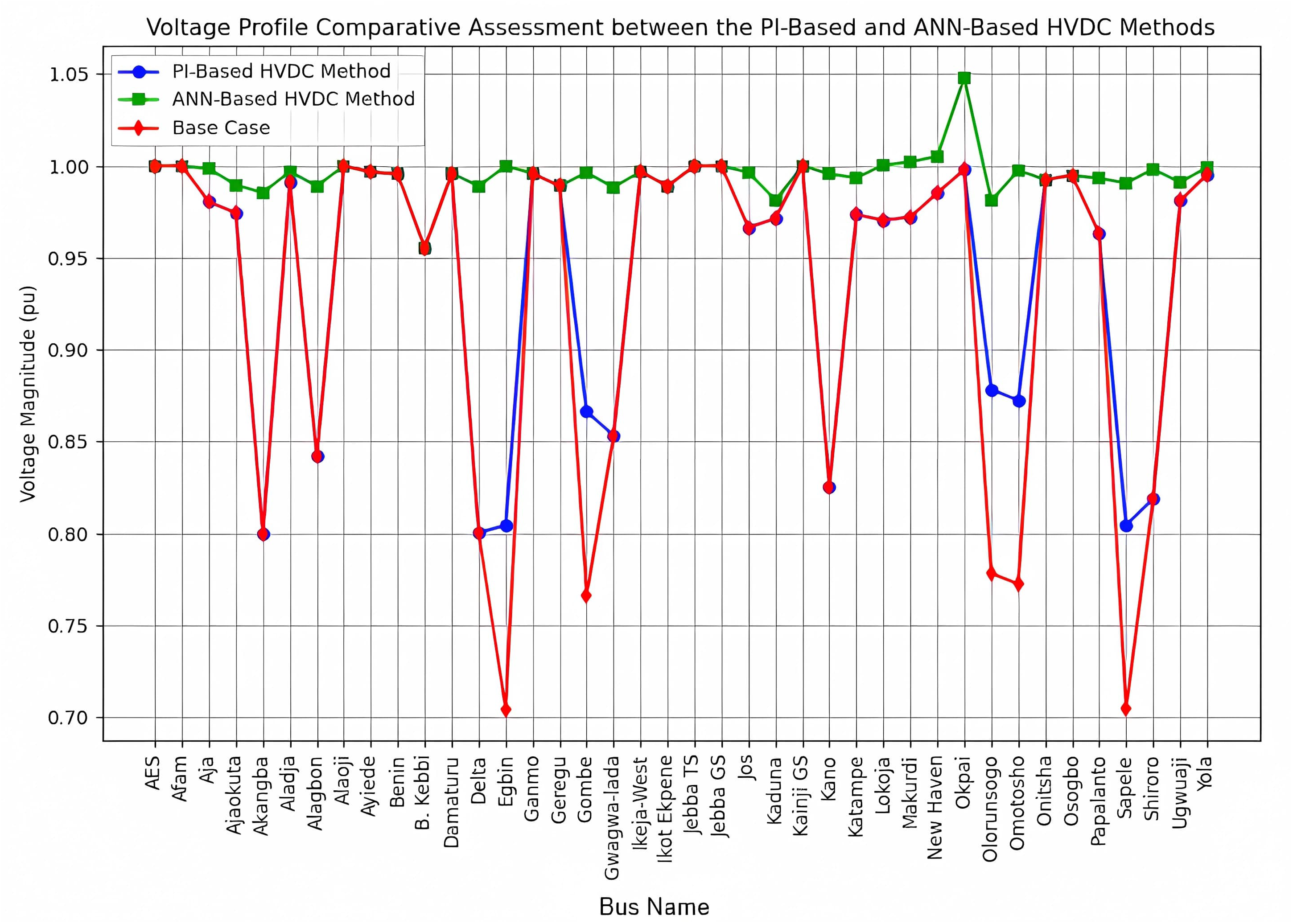
The comparative performance of the base-case, PI-, and ANN-based HVDC system.
The application of the ANN-based HVDC improved the low-voltage magnitudes obtained using the conventional approach to 0.999541, 0.999541, 1.001000, 0.999887, 0.989031, 0.997546, and 1.000000 pu, respectively. The application of this intelligent HVDC system increased the injection of adequate reactive power into the network. This demonstrates the effectiveness of the intelligent approach in improving voltage stability.
Conclusion and recommendations
This paper introduces an intelligent method to enhance the transient stability of Nigeria 330-kV transmission network with an emphasis on voltage stability. An ANN-based HVDC system is implemented along the 330-kV transmission line to address three-phase faults at the most critically affected buses, aiming to improve transient stability. The HVDC system's DC current was trained using the ANN toolbox in Python, with the dataset having minimal error used to tune the HVDC controller instead of the traditional PI controller. The HVDC system features an ANN controller operating alongside the PI controller to restore synchronism among multiple generators during faults. The base-case analysis shows that the Nigeria 330-kV transmission network is on the verge of collapse. This is evident when a balanced three-phase fault occurs on Makurdi and Benin buses; the generators connected in these buses lose synchronism without the ability to restore at any given time. This made the Makurdi-Jos line very vulnerable and has been identified as the critical line. The network voltage profile improved with the minimum voltage amplitude recorded in the network is 0.989 pu. This solidifies the application of the proposed method for transient stability improvement of the multi-generator power system. It is recommended in this paper to investigate hybrid control systems that combine ANNs with other advanced control techniques, such as fuzzy logic or genetic algorithms, to further enhance the stability and efficiency of power transmission networks. Conducting real-time implementation and testing of ANN-controlled HVDC systems in a live power grid environment would provide practical insights and validate the theoretical models.
Supplemental Material
sj-docx-1-eea-10.1177_01445987251327693 - Supplemental material for Transient stability improvement of a transmission system through the application of an artificial neural network-based high-voltage direct current system
Supplemental material, sj-docx-1-eea-10.1177_01445987251327693 for Transient stability improvement of a transmission system through the application of an artificial neural network-based high-voltage direct current system by Chibuike Peter Ohanu, Uche C Ogbuefi and Emenike Ejiogu in Energy Exploration & Exploitation
Footnotes
Acknowledgements
The authors wish to express their profound gratitude to the Africa Centre of Excellence for Sustainable Power and Energy Development (ACE-SPED), University of Nigeria, Nsukka, for providing the necessary facilities to complete this research.
Declaration of conflicting interests
The author(s) declared no potential conflicts of interest with respect to the research, authorship, and/or publication of this article.
Funding
The author(s) received no financial support for the research, authorship, and/or publication of this article.

Supplementary material
Supplemental material for this article is available online.
References
Supplementary Material
Please find the following supplemental material available below.
For Open Access articles published under a Creative Commons License, all supplemental material carries the same license as the article it is associated with.
For non-Open Access articles published, all supplemental material carries a non-exclusive license, and permission requests for re-use of supplemental material or any part of supplemental material shall be sent directly to the copyright owner as specified in the copyright notice associated with the article.
