




Abstract
Green mining is of great significance for the sustainable development of mines. However, the current green mine evaluation index system proposed in China is complex, and the intrinsic logical relationships between the indicators are not yet clear. To address this issue, this article conducts an in-depth analysis and study of the green mine evaluation index system. First, 16 indicators directly related to mining activities were selected. Then, using data mining technology based on the Apriori algorithm, the actual data of 30 open-pit mines were analyzed, and 7 effective association rules among the green mining indicators of open-pit mines were extracted. The results show that the association rule composed of ecological function requirements, mining technology, and advanced technology and equipment has the highest confidence level, with a confidence of 100% and a support of 68%. Advanced technology and equipment are identified as a key indicator for achieving green mining, playing a role in all 7 association rules. The remaining six effective association rules further emphasize the importance of the compatibility between different mining processes in achieving green mining goals, indicating that green mining is a complex system engineering requiring comprehensive decision making. The effective association rules proposed in this article provide a theoretical basis for mining enterprises to formulate more scientific work plans and thereby achieve green development goals.
Introduction
Mineral resources are a crucial material foundation for human survival. Over the past few decades, the exploitation and utilization of mineral resources have significantly increased with the growth of the global population and the acceleration of industrialization (Fu et al., 2021). However, traditional mining methods have caused severe environmental damage and pollution, becoming a pressing global issue (Mencho, 2022; Zhang et al., 2022). As environmental awareness has grown, traditional mining methods characterized by high intensity, high pollution, and high energy consumption can no longer meet the needs of modern society for sustainable development (Pan et al., 2019; Wang and Song, 2014). Therefore, the sustainable development of mineral resources has become a consensus in the global mining industry (Chen et al., 2022; Li et al., 2023; Qin and Wang, 2022; Wang et al., 2022).
Many countries are promoting the sustainable development of mineral resources through legislation. The US mining laws emphasize the protection of land, air, and water from damage during mining development and require land reclamation after mine closure (United States Mining Laws, 1877). Some state laws also require mining projects to develop comprehensive closure and reclamation plans before starting and provide financial guarantees. In Australia, environmental legislation at the state and territorial levels typically requires environmental approval for mining activities, covering exploration, construction, development, operation, closure, and rehabilitation (Brooks, 2010). Mining enterprises must develop closure and environmental protection plans in accordance with laws and regulations and establish a “mine closure fund.” Mining companies, following state government-approved environmental impact assessments, conduct ecological restoration of mined areas while continuing mining operations. In the United Kingdom, the licensing system regulates the development of mineral resources, with environmental supervision shared between government departments and production enterprises (Huang et al., 2013). In Canada, mine rehabilitation is integrated into the entire mining cycle, from exploration to postmining ecological restoration, all of which must adhere to environmental protection standards and requirements (Zheng et al., 2021).
Many scholars internationally have studied the issue of sustainable development in the mining industry from various perspectives. Nabiollah explored how sustainable development concepts are applied during the design phase of open-pit mines (Adibi et al., 2015). Erica examined tailings ponds as an example, investigating ways to conduct mining development that mitigates and restores environmental impacts, thereby protecting local residents’ livelihoods (Erica, 2016). Mohammad researched the optimization of ore cutting patterns to reduce costs, energy consumption, and water usage, aiming to enhance sustainable management in mineral resource extraction (Jalalian et al., 2021). Jitendra studied methods for rehabilitating degraded mining land and the sustainable management of ecosystem restoration after mining (Ahirwal and Pandey, 2020).
China also places great importance on the sustainable development of mineral resources and defines the implementation of cleaner, more sustainable methods to reduce environmental impact during development as “green mine construction” (Luo et al., 2021; Peng et al., 2021; Zhang et al., 2017). Chinese scholars have conducted extensive research on green mine evaluation. Zhou constructed a green mine evaluation model considering safety, efficiency, and environmental factors, and proposed a calculation method for green grades (Zhou et al., 2020). Huang proposed a Green Development Index for China's mining industry, establishing an evaluation system from the perspectives of resource conservation, environmental friendliness, structural optimization, and strengthened management (Huang and Yue, 2021). Qian proposed a scientific framework based on green mining, safe mining, efficient mining, economic mining, and energy-saving low-carbon mining (Qian and Xu, 2011). Zhao explored evaluation methods for green mining in metal mines and identified five methods suitable for green mining evaluation in metal mines (Zhao et al., 2020). Liao developed a green index evaluation system for large open-pit coal mines and used the analytic hierarchy process (AHP) and comprehensive fuzzy mathematics evaluation method to evaluate the system (Haibin, 2017). Song used a constructed mathematical model to quantify and scientifically weight the selected basic indicators, providing a “greenness” index value for open-pit coal mines (Song et al., 2017). Unlike previous research, this study emphasizes identifying the critical indicators for green mine construction. A comparison of the research content in this article with that of previous studies is provided in Table 1.
Comparative analysis of research content.
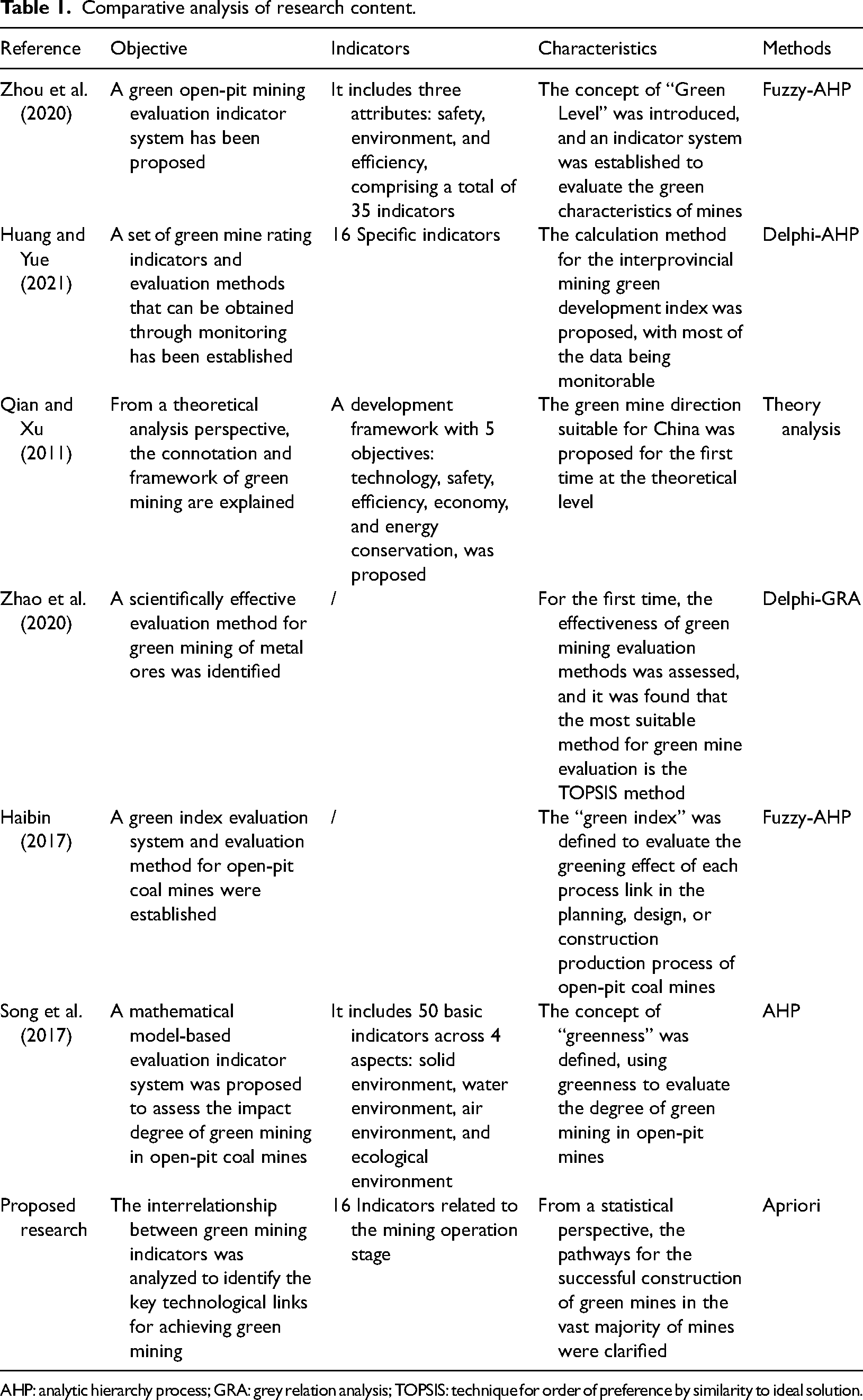
AHP: analytic hierarchy process; GRA: grey relation analysis; TOPSIS: technique for order of preference by similarity to ideal solution.
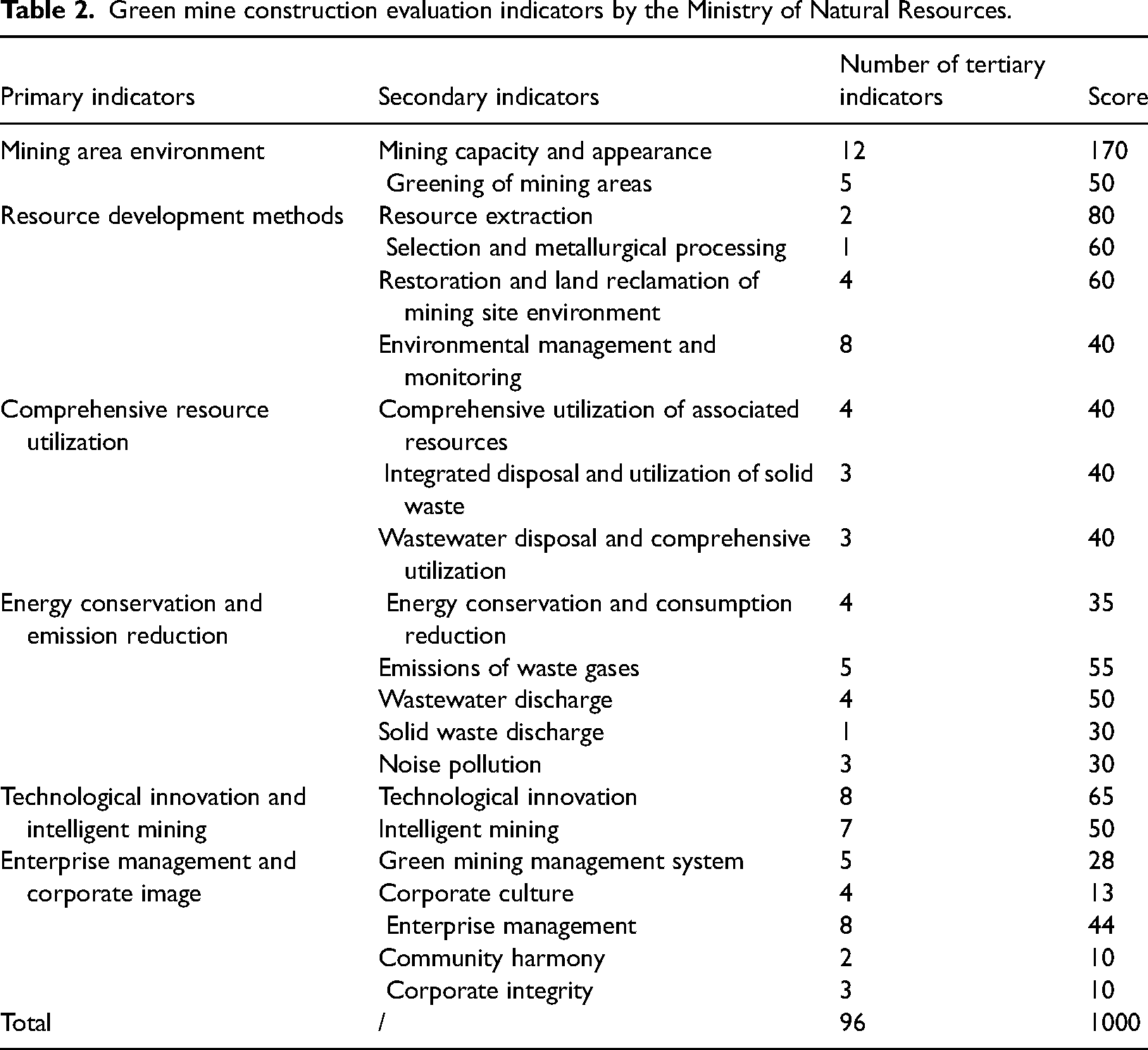
It can be seen that previous research has focused on how to select appropriate indicators and use suitable methods to assess whether a mine meets green mining standards. This is because, prior to 2020, there was no official standard in China to guide green mine construction, leading to significant variation in the indicators chosen and methods used by different scholars. It was not until 2020 that China's Ministry of Natural Resources released the “Green Mine Evaluation Indicators,” providing an official reference for the construction and selection of green mining enterprises in China. However, the current challenge is that the green mine evaluation index system contains as many as 96 indicators, and the internal relationships between these indicators are not yet clear. If mining enterprises equally focus on all indicators during the green mine construction process, it will significantly reduce work efficiency. Therefore, identifying key indicators is crucial, as it helps enterprises to more effectively carry out green mine construction.
The Green Mine Evaluation Indicators cover a wide range of aspects, including mining and mineral processing operations, as well as mining area environmental construction, corporate management, and corporate culture development. To address this comprehensively, it is necessary to conduct research at multiple levels. This article focuses specifically on the most critical aspect of green mine construction-mining operations. Firstly, indicators related to mining operations were selected from the “Green Mine Evaluation Indicators.” Subsequently, 30 mining enterprises that have obtained green titles were selected as the research objects, and data mining techniques were used to analyze the inherent correlation between indicators, thereby determining the key directions for achieving green mining construction in the mining operation process.
Selection of green mine indicators
Classification of green mine evaluation indicators
In the “Green Mine Evaluation Indicators” released by the Ministry of Natural Resources in 2020, an evaluation index system for green mine construction was established, encompassing six aspects: “Mine Environment,” “Resource Development Methods,” “Comprehensive Utilization of Resources,” “Energy Conservation and Emission Reduction,” “Scientific and Technological Innovation and Intelligent Mines,” and “Enterprise Management and Corporate Image.” The specific indicators and their respective scores are shown in Table 2.
Green mine construction evaluation indicators by the Ministry of Natural Resources.
From the perspective of specific content and practical application, the green mine evaluation indicators can be roughly divided into the following categories: “Construction Indicators,” “Application Indicators,” and “Management Indicators” (Huang et al., 2020; Wang et al., 2023).
Construction indicators
“Construction Indicators” refer to indicators that can be completed in a one-time manner during the creation phase of a green mine. These indicators usually remain relatively “static” after being established, with minimal changes and low maintenance costs. Their direct impact on production is also limited, such as the greening of the mine area and safety slogans at the mine. These indicators are primarily measured by their presence or absence—if present, they score points; if absent, they do not. Therefore, achieving these indicators is relatively easy, and they have a minimal impact on the overall mining process.
When determining the construction indicators, the judgment method used is as follows:
This indicator is primarily evaluated by “yes or no.” Once this indicator is completed, it generally will not change. This indicator requires the evaluator to use their own knowledge and experience, and different evaluators may have significantly different results.
Application indicators
“Application Indicators” refer to indicators that have a substantial impact on the production process. These indicators are characterized by significant “dynamic” changes, which, if they occur, may greatly affect production. Application indicators typically involve equipment, production processes, and mine restoration and rehabilitation, with considerable differences in costs and benefits. In the evaluation of these indicators, the standard usually hinges on whether they are “effective.” Achieving high standards for application indicators can be challenging, but they significantly influence mining processes and are key elements in the construction of green mines.
When determining the application-type indicators, the judgment method used is as follows:
This indicator can be evaluated using quantitative methods. This indicator can only be improved through technological transformation. This indicator can have a substantial impact on the production process.
Management indicators
“Management Indicators” refer to long-term soft indicators related to corporate institution building and cultural development. These indicators generally do not exist in a tangible form and have a more indirect impact on production, requiring “long-term” maintenance to be effective. Examples include talent development, corporate culture, and management systems. As evaluation indicators, management indicators are often difficult to quantify and rely more on the subjective experience of the evaluator, which may lead to variability in assessment. The actual impact of these indicators on the environment is often challenging to clearly evaluate.
When determining the management indicators, the judgment method used is as follows:
This indicator is primarily reflected in the management of personnel, culture, and systems. This indicator's effectiveness is mainly demonstrated through the preparation of documentation and materials. The main purpose of this indicator is to enhance the company's soft power.
Based on the above standards, the classification of the “Green Mine Evaluation Indicators” is shown in Figure 1.
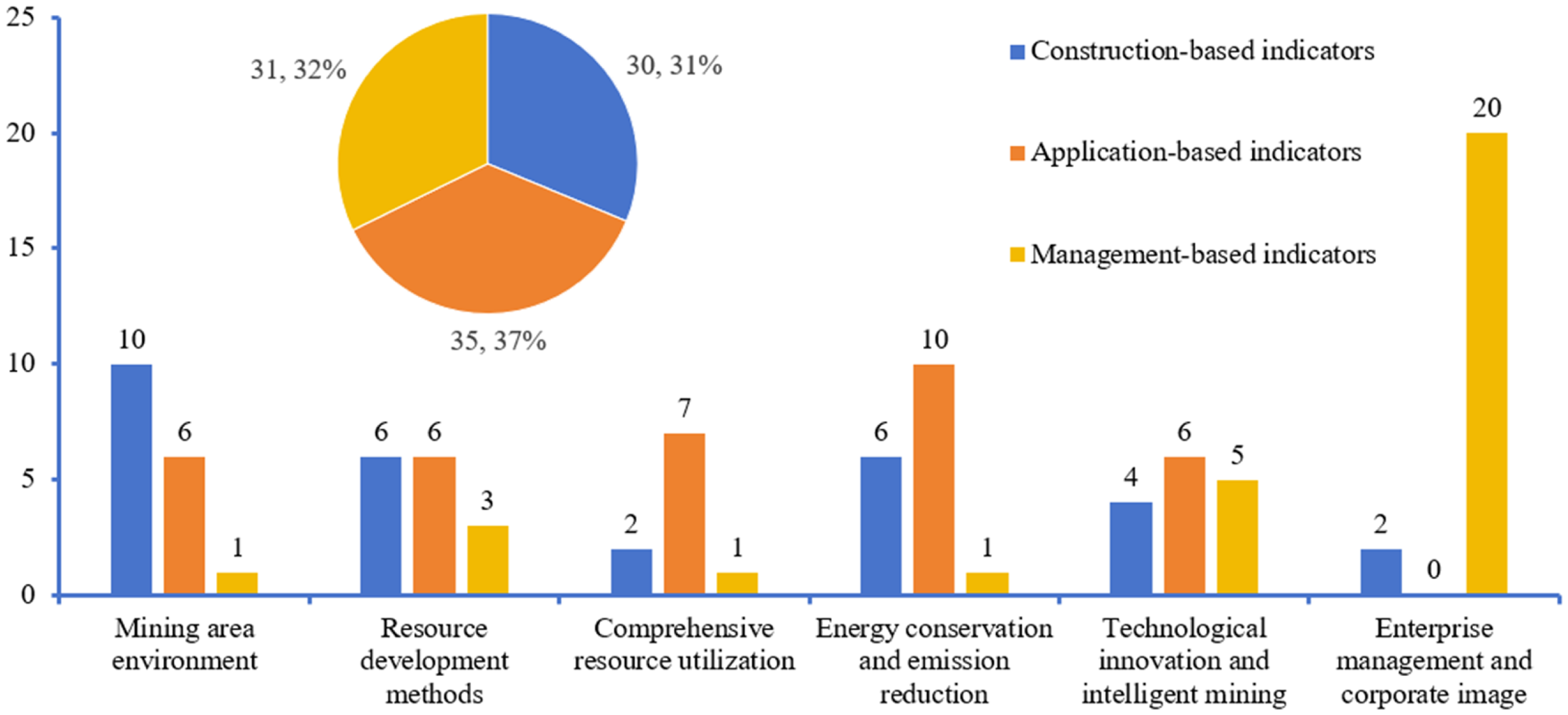
Classification of green mine evaluation indicators.
Analysis of green mine evaluation indicators
As shown in Figure 1, among the 96 indicators, the proportions of “Construction Indicators,” “Application Indicators,” and “Management Indicators” are 31%, 37%, and 32%, respectively, with the differences in proportion being relatively small. However, there are certain differences in the proportion of these three categories within different primary indicators.
In the Mine Environment category, “Construction Indicators” are the most prevalent, accounting for 59% of the total, while “Management Indicators” are the least common, at 6%. This indicates that most of the indicators related to the mine environment are one-time tasks completed during the creation phase and can generally be evaluated based on their presence or absence.
For Comprehensive Utilization of Resources and Energy Conservation and Emission Reduction, “Application Indicators” make up the majority, accounting for about 60%, while the combined proportion of “Construction Indicators” and “Management Indicators” is around 30%. This suggests that these two primary indicators are widely accepted within the industry and can achieve good results using existing mature technologies and solutions.
In the Scientific and Technological Innovation and Intelligent Mines category, “Application Indicators” are the most common, accounting for 40%, followed by “Management Indicators” and “Construction Indicators,” which account for 27% and 33%, respectively. However, the overall difference among the three categories is not significant, indicating that the indicators related to technological innovation and intelligent mines require a combined effort in creation, operation, and long-term maintenance.
For Resource Development Methods, “Application Indicators” and “Construction Indicators” are equal in number, each accounting for 40%, indicating that this category focuses equally on construction and application.
In the Enterprise Management and Corporate Image category, “Management Indicators” account for as much as 91%, with “Construction Indicators” making up the remaining 9%. There are no “Application Indicators” in this category, highlighting the focus on establishing long-term mechanisms and systems for green mining.
Selection of green mining evaluation indicators
From the above analysis, it can be seen that the “Green Mine Evaluation Indicators” cover various aspects of green mine construction, production, and management. Since mining activities are a production process with distinct procedural and dynamic characteristics, it is more appropriate to use “Application Indicators” to analyze whether mining activities are sustainable and meet the requirements for “green mining.” Among the six primary categories of the “Green Mine Evaluation Indicators,” Mine Environment and Enterprise Management and Corporate Image are not related to mining activities. This is particularly true for Enterprise Management and Corporate Image, which do not include “Application Indicators” and are therefore excluded from this analysis.
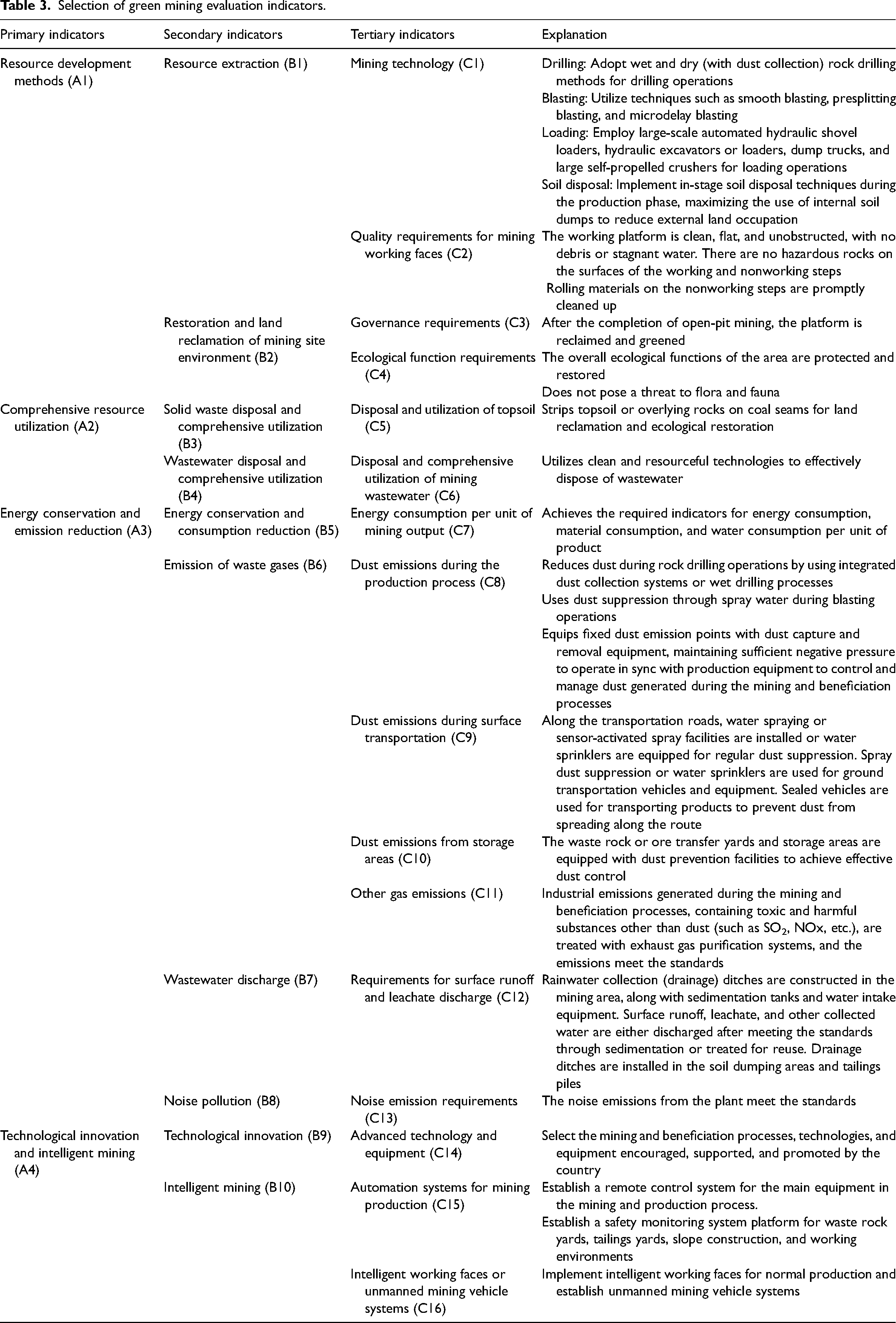
Next, among the four primary categories of Resource Development Methods, Comprehensive Utilization of Resources, Energy Conservation and Emission Reduction, and Scientific and Technological Innovation and Intelligent Mines, there are a total of 35 “Application Indicators.” However, some of these indicators are unrelated to mining activities, such as ore dressing and domestic sewage disposal. After excluding these irrelevant indicators, a total of 16 indicators related to mining activities were selected from the “Green Mine Evaluation Indicators.” These indicators and their explanations are presented in Table 3.
Selection of green mining evaluation indicators.
Correlation analysis method
Data mining
The purpose of data mining is to uncover valuable patterns and relationships hidden within large datasets, thereby gaining insights into data correlations (Biao, 2023; Wang et al., 2024; Wu et al., 2021; Xu et al., 2022). Association rules are an important research direction in the field of data mining. Association rules describe the correlation between items, reflecting the degree of closeness within a set of items. These correlations are unknown and cannot be obtained through database statistical methods or logical operations. Due to the simplicity, ease of interpretation, and effectiveness in uncovering important relationships between data, association rules have become one of the most significant and mature research topics in data mining.
Algorithm selection
Common association rule algorithms include Apriori, FP-Growth, and ECLAT, which are often applied in scenarios such as market analysis and system decision making. In previous research, these algorithms have been frequently used, such as employing FP-Growth to analyze consumer shopping patterns and using the ECLAT method to extract fault status information of retired mechanical products []. Additionally, some scholars have conducted comparative studies on the performance of these algorithms []. The results indicate that although there are differences in computation time among the algorithms, the association rule mining results show little variation when the data sample size is relatively small. The Apriori algorithm has a very intuitive logic, relying on straightforward candidate generation and pruning strategies, making it easy to understand and implement. For small to medium-sized problems or datasets with relatively few frequent itemsets, Apriori may be more suitable. Given that the dataset in this study is not large (30 samples and 16 indicators), Apriori was chosen as the method for association rule mining.
Apriori algorithm
The Apriori algorithm is a commonly used method for correlation analysis (Fa et al., 2021; Hong et al., 2020; Zhang and Zhang, 2023). It extracts association rules from large datasets by mining frequent itemsets. The main idea is to generate candidate sets through connection, calculate their support, and then perform pruning based on the support to generate frequent itemsets. These are then compared with the minimum confidence level to generate strong association rules, which represent the correlation between events.
The calculation method for support is as follows:
This formula expresses the probability that events A and B occur simultaneously in the dataset.
The calculation method for confidence is as follows:
This formula expresses the probability that event B occurs given that event A has occurred in the dataset.
Here, the minimum support is used during the process of generating frequent itemsets from candidate sets to measure the importance of the itemset. The minimum confidence is used when generating strong association rules to measure the reliability of the association rule. If an association rule satisfies both
In the Apriori algorithm, the following steps are taken to find strong association rules:
Step 1: Scan all events to form the first candidate itemset C1 and calculate the support for each item. Step 2: Compare the support of each itemset in C1 with the minimum support. Itemsets with support below or equal to the threshold are removed, resulting in the first frequent itemset, denoted as L1. Step 3: Connect L1 with itself to generate the second candidate itemset C2 and calculate the support for each candidate itemset. Those that meet the minimum support form the second frequent itemset, denoted as L2. Step 4: Connect L2 with itself to generate the third candidate itemset C3 and calculate the support for each candidate itemset. Those that meet the minimum support form the third frequent itemset, denoted as L3. Step 5: Repeat the above process iteratively until no further frequent itemsets can be generated after generating frequent itemset Lk. Step 6: Compare the frequent itemsets L1∼Lk with the minimum confidence. The frequent itemsets that meet the preset minimum confidence threshold are the strong association rules discovered.
Mining green mining correlations
The association rule mining for green mining in this study is primarily based on the evaluation results of 30 open-pit green mines in China selected from 2020 to 2024 as the foundational data. To ensure the representativeness of the data samples, the 30 samples were selected from 12 different provinces in China, covering various mineral types such as copper, lead, and zinc.
The association rule mining for green mining primarily includes the following steps:
Step 1: Obtain indicator scores from the green mine evaluation reports and remove indicators unrelated to green mining. Retain the indicators and data in Table 3 as the original data for correlation mining. Step 2: Preprocess the data. The preprocessing method is: if a sample receives full marks for an indicator, it is assigned a value of 1; if the indicator is deducted points, it is assigned a value of 0. Step 3: Input the preprocessed samples into the Apriori algorithm model, set the minimum support and minimum confidence, and obtain the correlations for green mining. Step 4: Analyze the reasonableness of the correlations, then adjust the support and confidence levels until the discovered rules meet the conditions and have practical significance. Output the association rule results.
The entire analysis process is illustrated in Figure 2.
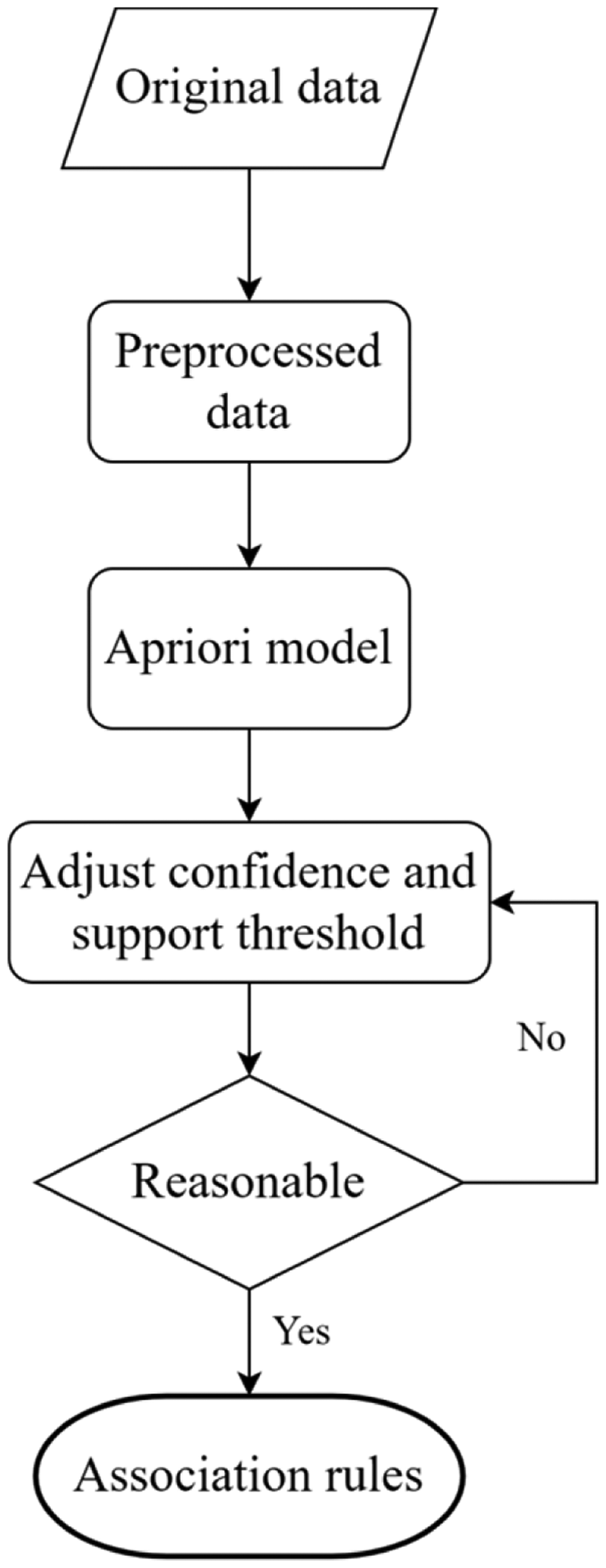
Apriori algorithm analysis process.
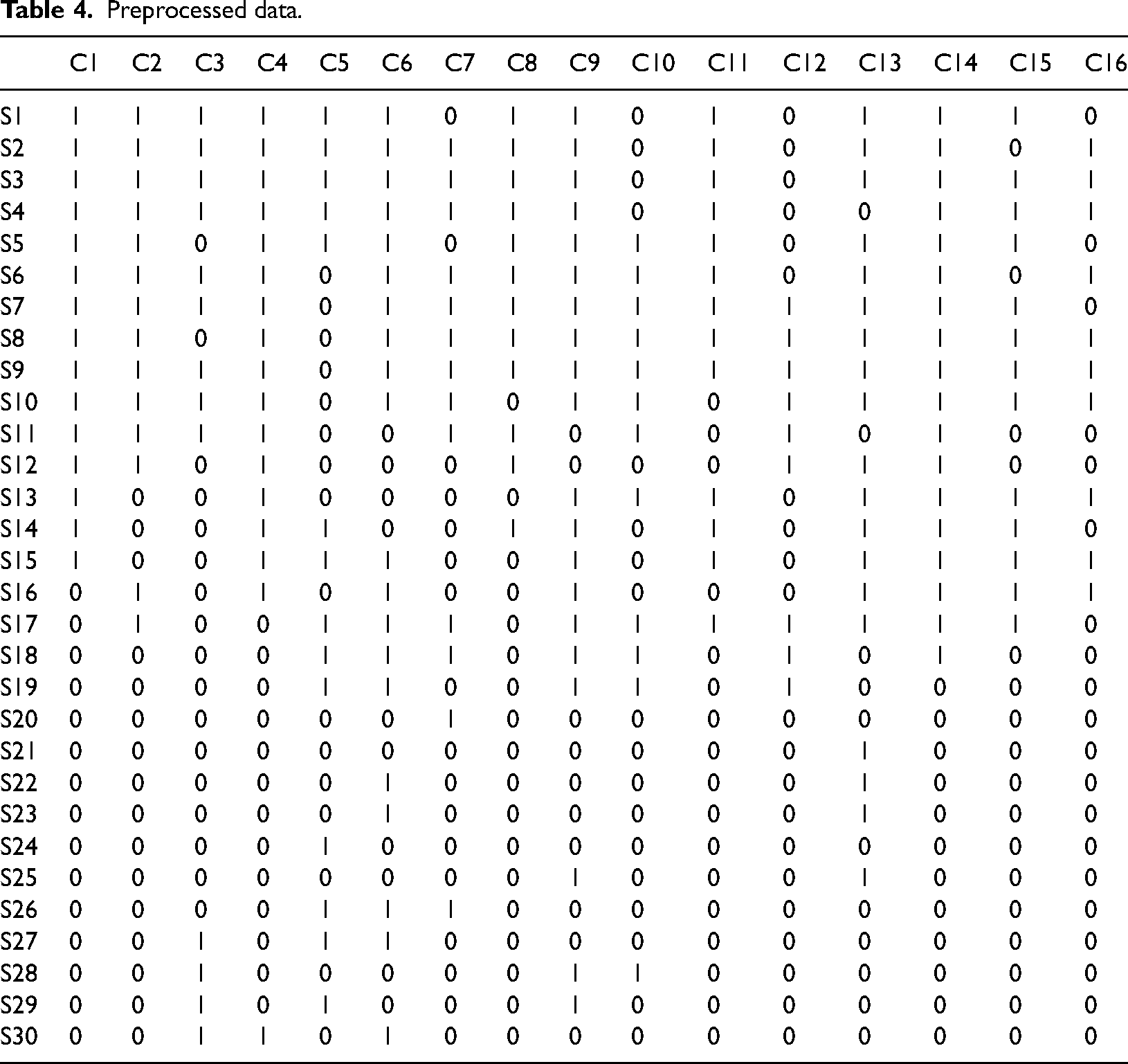
After data preprocessing of the green mine evaluation results from the 30 open-pit mines, the results are shown in Table 4. In Table 4, S1 through S30 represent the samples of the open-pit mines, while C1 through C16 are the green mining indicators relevant to Table 4.
Preprocessed data.
The Apriori algorithm requires setting support and confidence levels for the matrix calculations. When the support and confidence levels are set too low, the criteria for generating association rules are more relaxed, resulting in an excessive number of rules, including potential false associations. Conversely, when support and confidence levels are set too high, the criteria become stricter, leading to fewer rules and potentially missing some of the associations between indicators. Therefore, it is necessary to set appropriate levels for support and confidence.
To determine the appropriate support and confidence levels for this study, an experiment was designed using the Latin hypercube sampling (LHS) method. Five intervals were defined within the reasonable variation range for each factor, and two random data points were sampled within each interval, generating a total of 10 sets of randomly combined test points. The number of rules generated for each combination was observed, as shown in Table 5.
Number of rules generated under different support and confidence levels.
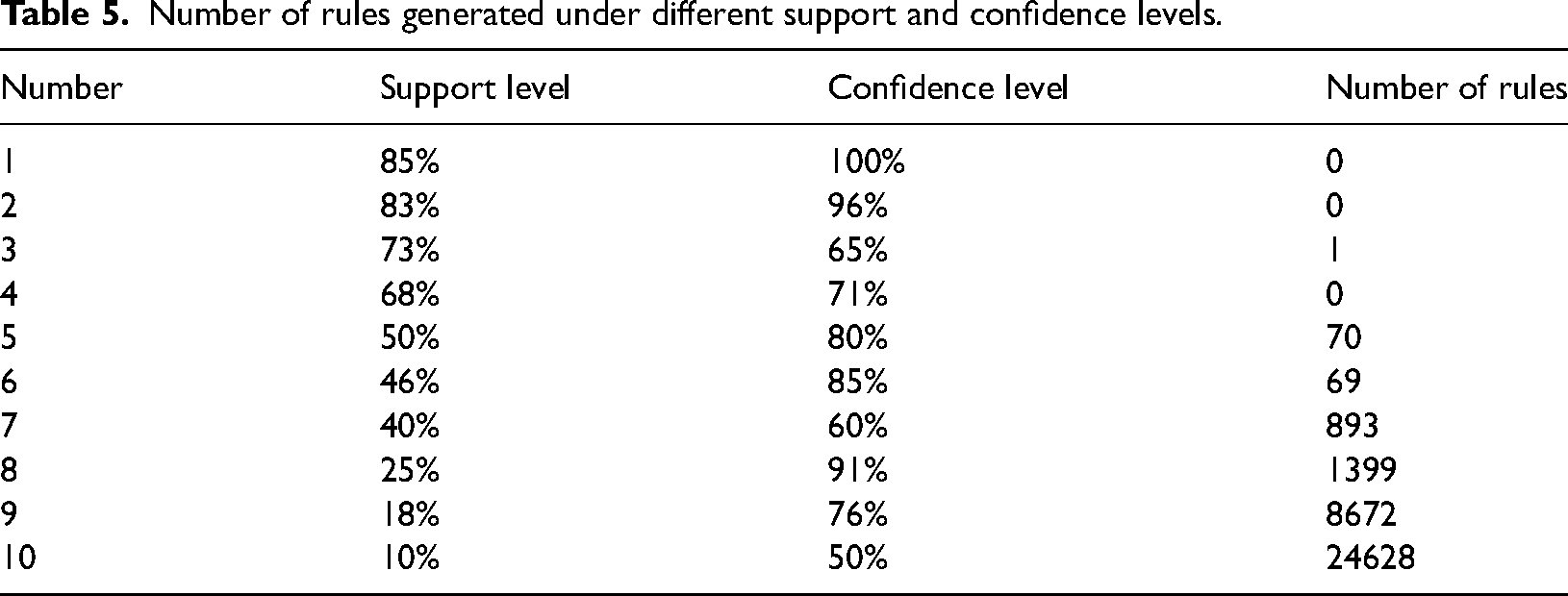
From the results of the number of rules, it can be seen that samples 1–4, due to the high support and confidence thresholds, generated very few association rules and could not be analyzed. Samples 5 and 6 generated 70 and 69 rules, respectively, which are more suitable for analysis, as the number of rules is relatively close and most of the generated rules are the same. When the support is below 40% and the confidence is below 80%, the number of rules increases significantly, even exceeding the total sample size, indicating the generation of a large number of irrelevant rules. Therefore, after comprehensive consideration, we set the support level to 50% and the confidence level to 80%, as we believe the results obtained under these settings are more reasonable.
In this calculation, the support was set at 50% and the confidence at 80%. A total of 70 rules were generated, some of which were duplicate rules, such as C4-C1, C14-C1, C14-C1-C4, and C4-C1-C14. All four rules had a support of 50% and a confidence of 100%, but since the indicators are mutually included in the antecedents, these rules reflect the same pattern. Therefore, the rules generated by the Apriori calculation need to be filtered. After filtering, seven valid strong association rules were obtained, as shown in Table 6.
Association rules for green mining in open-pit mines.
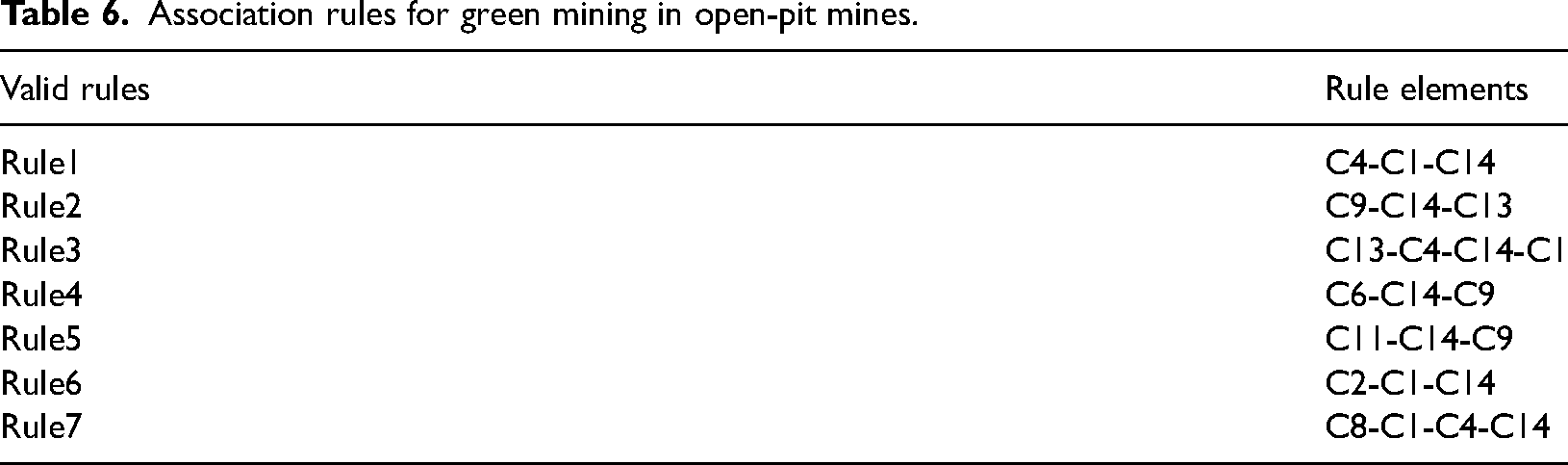
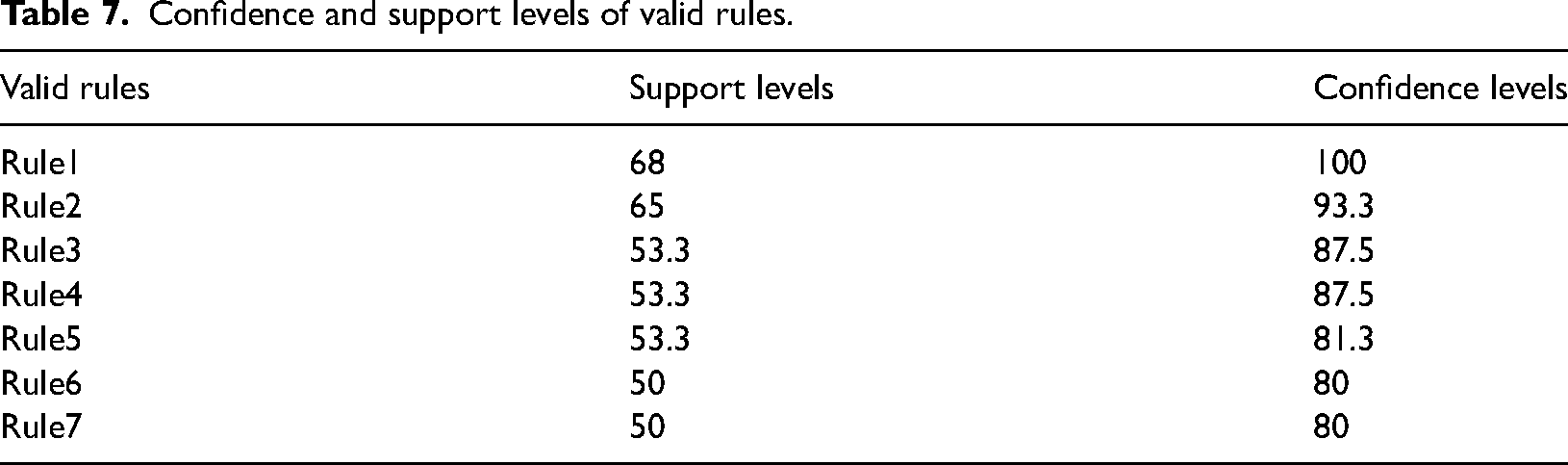
Among the extracted association rules, rule 1 has a confidence of 100% and a support of 68%, demonstrating extremely high credibility and wide applicability. Rule 2 also has a confidence of 93.3% and a support of 65%, indicating high reliability. Table 7 shows the support and confidence information for seven of the association rules.
Confidence and support levels of valid rules.
Results analysis
C4-C1-C14
The rule “C4-C1-C14” represents a strong association between ecological function requirements, mining technology, and advanced technological equipment. This rule indicates that using more advanced mining technologies and equipment can effectively reduce the impact on the ecological environment, helping the mining area to restore its original ecological functions more quickly. Surveys of the samples showed that mines using advanced blasting technologies such as microdifferential blasting, contour blasting, and presplit blasting caused less environmental damage during extraction and showed better ecological restoration outcomes in the mining area. Particularly near the boundaries of open-pit areas, using presplit blasting and controlled blasting methods resulted in smaller blast impact areas, preventing large-scale animal migration. This rule has a confidence level of 100%, indicating it is a highly significant pattern.
C9-C14-C13
The rule “C9-C14-C13” signifies a strong association between ground transportation dust emissions, noise emissions, and advanced technological equipment. This rule suggests that when advanced technological equipment is employed, both ground transportation dust and noise emissions are effectively reduced. Similar factors have been considered in other studies. Here, advanced technological equipment typically refers to more advanced loading and transportation equipment, as these operations often generate significant dust, especially road dust from vehicles moving within the mining area, which contributes substantially to the total dust emissions in the mining area. In sample surveys, it was found that some open-pit mines meeting this rule used conveyor belts for ore transportation and added dust covers, effectively reducing both transportation dust and noise. This rule also has a confidence level of 93.7%, highlighting its importance in achieving green objectives.
C13-C4-C14-C1
The rule “C13-C4-C14-C1” indicates a strong association between noise levels, advanced technological equipment, mining technology, and ecological function requirements. This rule suggests that mines with better noise control generally adopt advanced mining technologies and equipment, which also contributes to better ecological function restoration. Noise in mining operations mainly originates from blasting, drilling, crushing, and transportation processes. Blasting can generate a large amount of noise instantly, while transportation generates continuous noise. If blasting is not well controlled, it can produce large boulders requiring further crushing, which also generates noise. Therefore, controlling the amount of explosives used in blasting, reducing the percentage of large boulders, and lowering transportation intensity are effective ways to control noise in the mining area. Noise can impact the ecological environment by startling animals and causing migrations, leading to changes in ecological functions. Thus, effective noise control in the mining area also promotes ecological function restoration.
C6-C14-C9
The rule “C6-C14-C9” shows a strong association between the treatment and comprehensive utilization of mining wastewater, dust emissions during ground transportation, and advanced technology and equipment. This rule suggests that when ground transportation dust is minimal and advanced technological equipment is used, the disposal of mining wastewater is more effective. Observations show that mining wastewater is generally used to suppress dust during drilling and transportation processes. When companies adopt advanced drilling and transportation technologies, dust production is effectively reduced, leading to less wastewater generation and better wastewater treatment outcomes.
C11-C14-C9
The rule “C11-C14-C9” demonstrates a strong association between other exhaust emissions, dust emissions during ground transportation, and advanced technological equipment. This rule suggests that when advanced technological equipment is used, ground transportation dust and exhaust emissions are significantly reduced. Sample surveys revealed that when mines used new energy mining trucks or more advanced blasting technologies, the amount of exhaust gases in the mining area was significantly reduced. New energy vehicles do not consume fuel, so there are no NO, CO, and other exhaust gases produced by fuel combustion. Optimizing explosive formulations and improving explosive quality helps ensure a complete reaction during explosions, reducing the production of harmful gases.
C2-C1-C14
The rule “C2-C1-C14” represents a strong association between mining technology, work surface quality, and advanced technological equipment. This rule suggests that when more advanced mining technologies and equipment are used, the work surface tends to be smoother, with fewer loose rocks and more stable slopes. Surveys found that open-pit mines meeting this rule generally used advanced technologies such as microdifferential blasting and presplit blasting for blasting operations. For drilling, they mainly used rotary drill rigs, which are highly efficient and produce high-quality boreholes, thereby improving the quality of blasting. The combination of advanced blasting technology and drilling equipment enhances the smoothness of work surfaces and the stability of slopes, effectively raising the overall safety level of mining operations.
C8-C1-C4-C14
The rule “C8-C1-C4-C14” indicates a strong association between dust in the production process, mining technology, ecological functions, and advanced technology and equipment. This rule suggests that when advanced mining technologies and equipment are used, dust generated during the production process is effectively controlled. Surveys found that many companies use dust suppression equipment or wet drilling during drilling and spray water mist on the work surface before blasting to reduce dust concentration. Some companies have also developed proprietary dust suppression techniques during blasting. In the blasting process, if the blasted fragments are too large, it is not conducive to crushing; if the fragments are too small, a large amount of dust will be generated. Some mining companies control the blasting technology to keep the size of blasted rocks within an appropriate range, ensuring production efficiency while also controlling dust.
Discussion
Key points of green mining
In the correlation analysis, nine indicators appeared in seven association rules. The frequency of these nine indicators is shown in Figure 3.
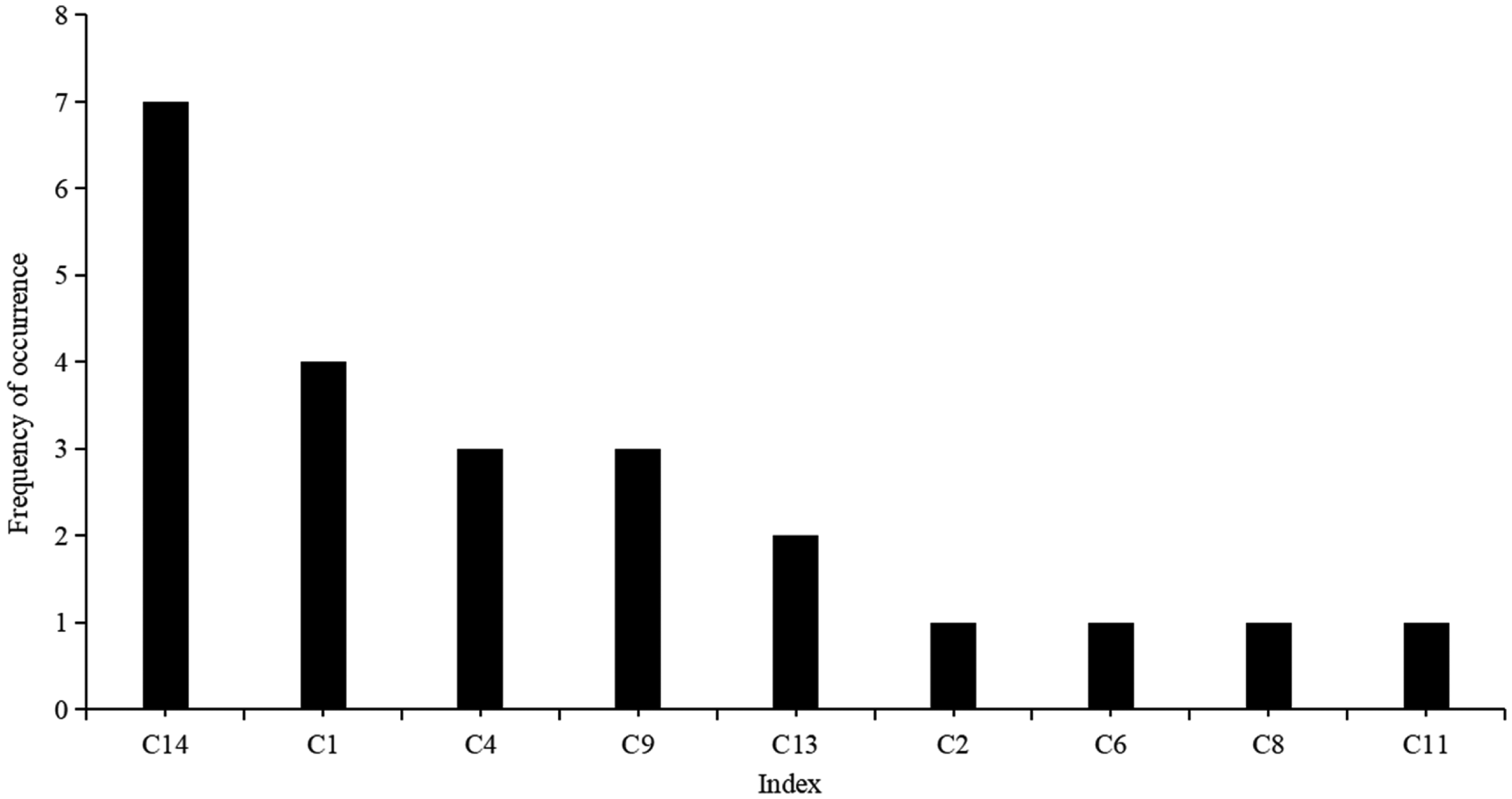
Frequency of indicators in association rules.
In the seven association rules, the indicator C14 (advanced technology and equipment) appeared in all of them. This indicates that China's metal and nonmetal open-pit mines generally place a high emphasis on the application of new technologies and equipment. Correspondingly, these new technologies and equipment have had a positive impact on the achievement of green mining goals.
Mining technology (C1), ecological restoration (C4), and ground transportation dust (C9) also appeared with high frequency. Among them, mining technology is the most important factor in achieving green objectives. This is because the essence of green mining is to maximize the extraction and utilization of mineral resources using safe and efficient methods while minimizing the impact on the ecological environment. Whether the mining technology is advanced directly determines whether the resource development is efficient and safe, and whether it is environmentally friendly.
Overall, the various processes in open-pit mining are highly interrelated. A reasonable mining process is the most critical factor for open-pit mining enterprises to achieve green objectives. Sustainable development of mining activities requires not only that individual processes (such as drilling, blasting, loading, and transportation) are environmentally friendly, but also that these processes are compatible with each other. Therefore, mining enterprises need to conduct in-depth research and make comprehensive decisions.
Economic benefits of green mining
Economic benefits should be one of the key areas of focus during the implementation of green mining. While collecting the original data from 30 green mine samples, we also found that some mines provided cost statistics for the investment in new technologies, processes, and equipment. For example, Mine S1 recorded the blasting cost per ton of ore before and after using presplitting blasting. As shown in Table 8.
Blasting cost analysis.
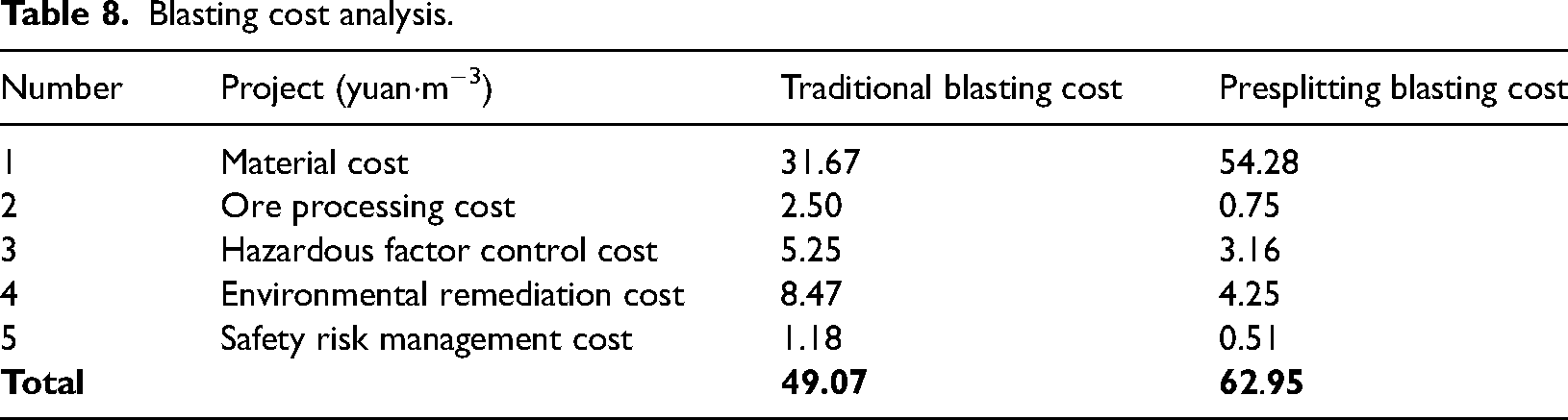
Material cost refers to the expenditure on basic materials such as drilling construction and explosives. Since presplitting blasting involves more precise drilling and higher-cost blasting materials, the overall cost of presplitting blasting is higher than traditional blasting. Ore processing cost refers to the cost of crushing irregular fragments generated by blasting. Presplitting blasting uses more precise drilling, resulting in more uniform rock fragmentation, which reduces the ore processing cost. Hazardous factor control cost refers to the expenditure on reducing the noise, vibration, dust, and toxic gases produced by blasting. Since presplitting blasting generates fewer hazardous factors, the hazardous factor control cost is lower. Environmental remediation cost refers to the cost of repairing and mitigating environmental damage caused by blasting. Presplitting blasting causes less damage to the surrounding environment, so the environmental remediation cost is lower. Safety risk management cost mainly refers to the management costs required to control blasting risks. Since presplitting blasting has lower safety risks, the management cost is reduced.
Comparing the two methods, although presplitting blasting has lower costs in four of the five considered factors compared to traditional blasting, its material cost is significantly higher than that of traditional blasting. Therefore, the overall cost of presplitting blasting is higher than that of traditional blasting.
However, compared to traditional blasting, presplitting blasting offers some advantages. Firstly, presplitting blasting causes less disturbance to the slope, allows for a steeper slope angle, and results in more mined ore. According to technical performance evaluations, before using presplitting blasting, the average slope angle was 48 degrees, but after using presplitting blasting, the slope angle increased to 52 degrees. To analyze the economic benefits of using presplitting blasting, we established a model, as shown in Figure 4.
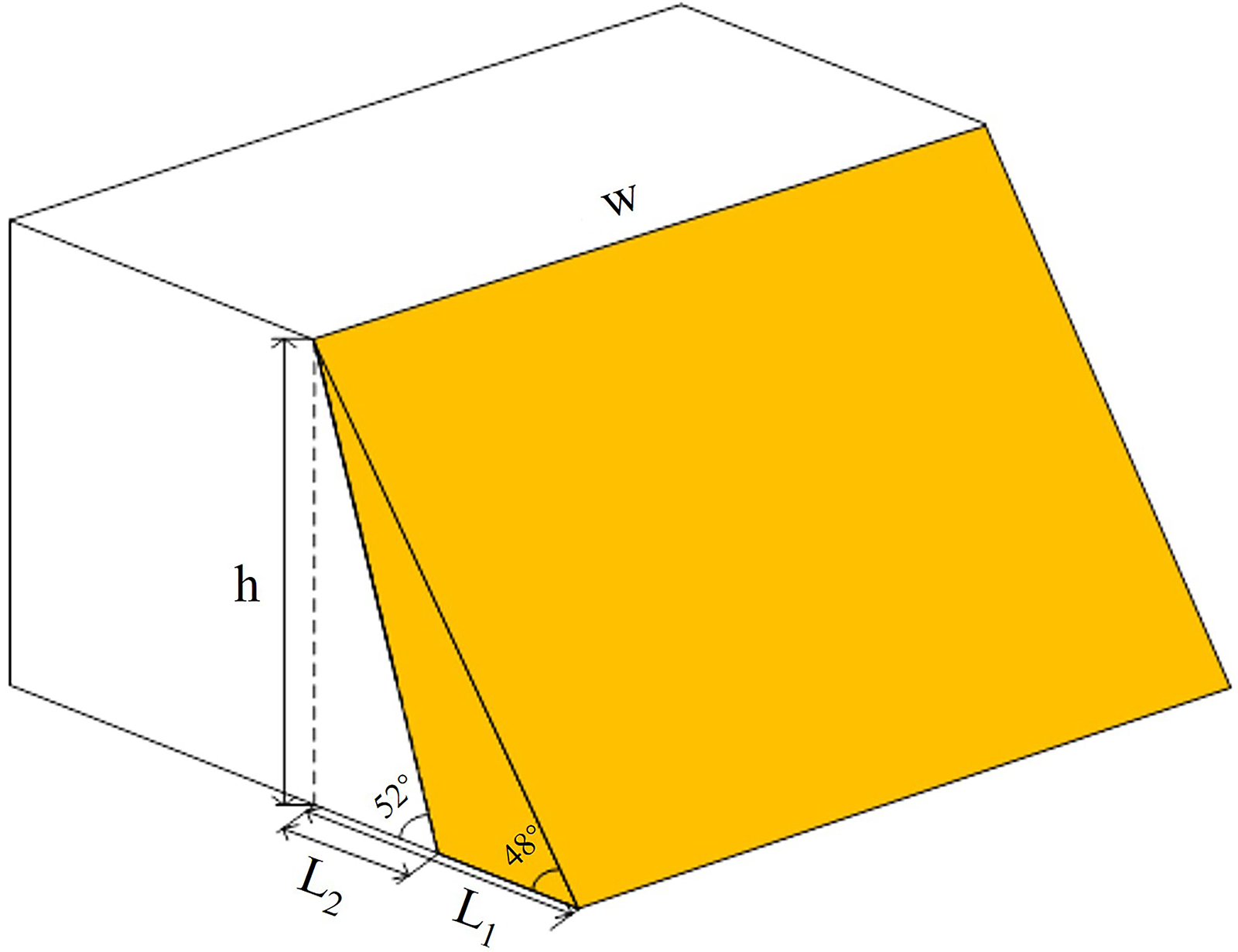
Comparison and analysis model of blasting effects.
To simplify the calculation, we will use a right triangle model to approximate the slope of the mine steps, as shown in Figure 1. The slope of each step can be considered as the mined portion along the hypotenuse of the triangle. When the slope angle increases, it can be imagined as shortening the hypotenuse of these right triangles. Therefore, for each step, the additional mining volume can be expressed by formula (5-1):
In the formula,
The step height of Mine S1 is 10 m. According to the calculation result from formula (1), an additional 5.96m3 of ore will be extracted per meter along the slope top line. The benefit analysis, considering the costs of the two blasting methods and the price of the raw ore, is shown in Figure 5.
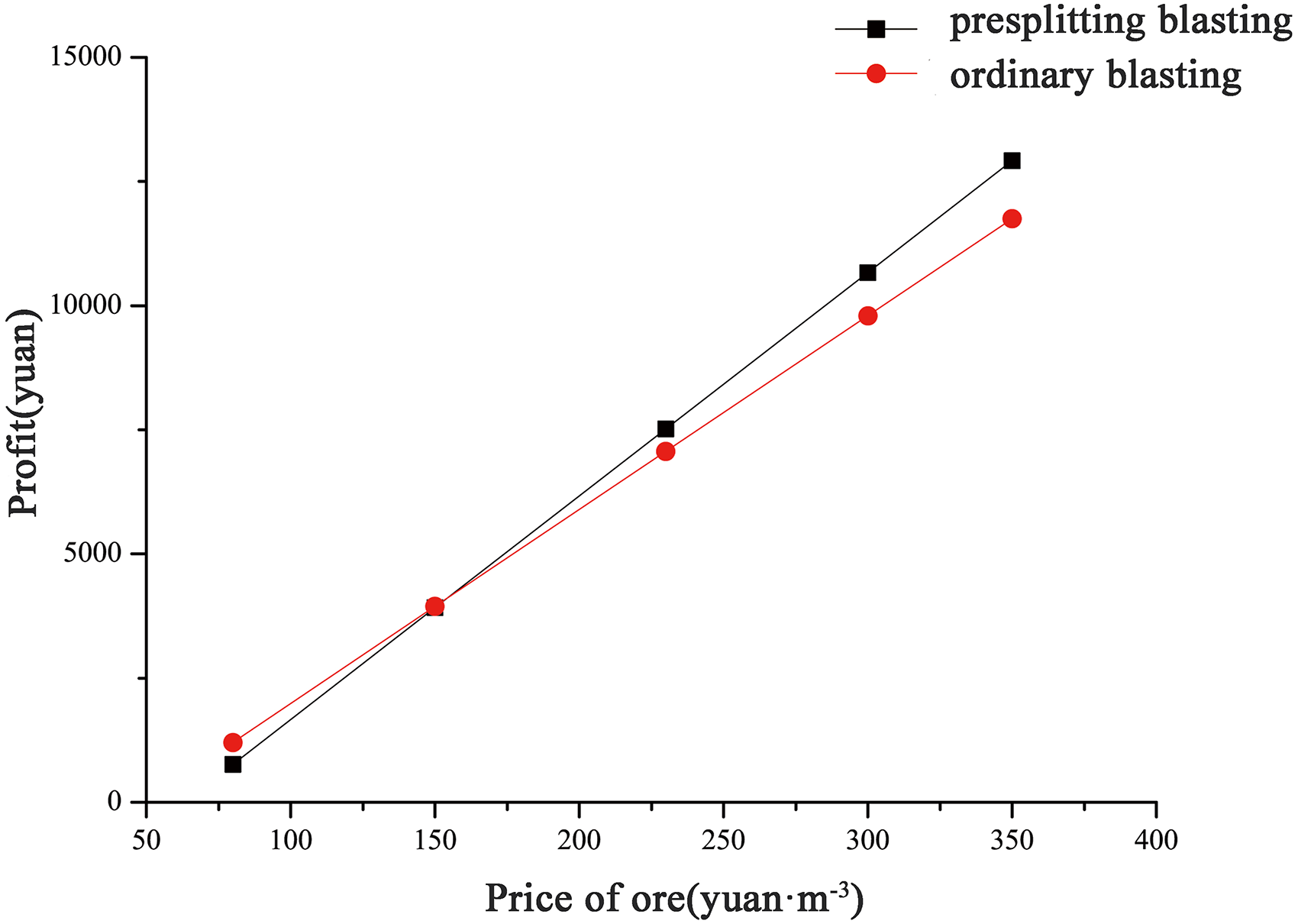
Profit comparison between presplitting blasting and conventional blasting.
According to the results in Figure 5, when the price of raw ore is low, conventional blasting offers higher profits. However, as the price of raw ore increases, the profit from presplitting blasting will surpass that of conventional blasting. When mineral product prices are high, if the production scale is further expanded, the increased ore volume will also rise, and the benefits brought by the new technology will become more apparent.
From the analysis above, it can be seen that the application of presplitting blasting technology may increase direct costs, but when considering market factors, scale factors, efficiency, environmental protection, and other aspects, the benefits of presplitting blasting could be higher and may bring additional, difficult-to-quantify benefits (such as increased community satisfaction and improved employee safety). This indicates that presplitting blasting technology can not only improve the quality of open-pit mine blasting but also have a positive economic impact.
In fact, presplitting blasting technology fundamentally improves the resource recovery rate, which aligns with the requirements of sustainable development.
Policy outlook for green mining
From the results of the technical analysis, it can be seen that current efforts in green mining primarily focus on improvements in mining technologies (C1), ecological restoration (C4), and advanced technological equipment (C14). In fact, this has been the policy guidance direction in China's mining industry in recent years. The “14th Five-Year” safety production plan for mines in China clearly defines the intelligent transformation of the mining industry as a major direction for future development. At the same time, sustainable development has always been a key focus of the Chinese government. Therefore, new technologies and equipment that can increase production capacity while being low in pollution and environmental damage will be one of the directions for future mining industry technology policies. For example, the development of new energy mining trucks, long-distance belt conveyor transportation, and low-toxicity, low-energy explosives have already provided significant support in reducing greenhouse gas emissions and limiting toxic waste discharge. In the future, with the development of green mining technologies, government regulators may also establish higher environmental standards for mines or use incentives such as subsidies and tax breaks to encourage enterprises to adopt these new technologies, promoting sustainable mining practices and technological innovation.
Theoretical and practical significance
This study reveals that current efforts in green mining by enterprises primarily focus on updating mining technologies, strengthening ecological restoration, and adopting advanced technological equipment. From an economic perspective, the study concludes that rationally matching production scale with market conditions is a fundamental requirement for building green mines. These conclusions provide valuable insights for helping other enterprises build green mines more efficiently. Additionally, the research indicates that the future policy direction for China's mining industry is to further encourage the construction and development of intelligent technologies and equipment in large-scale mines.
Conclusion
This study systematically investigated the associations between green mining indicators in open-pit mines using data mining techniques, analyzing the key tasks required to achieve green mining goals under current conditions. The key findings and conclusions are as follows:
Using 30 open-pit mines as samples, 16 green mining-related indicators were selected, and seven effective association rules were identified. Among these, mining technology (C1), ecological function requirements (C4), and advanced technology and equipment (C14) had the highest confidence and support levels. This indicates that advanced mining technology and equipment minimize the environmental impact of mining activities, facilitating quicker restoration of the mining area's original ecological functions. Therefore, this association rule is a crucial link in achieving green mining objectives for open-pit mines. The indicator of advanced technology and equipment (C14) appeared in all the association rules, indicating its importance as a key factor in achieving green mining. This also reflects the high emphasis placed by China's mining industry on the adoption of advanced technologies and equipment. Based on sample data, these new technologies and equipment have indeed positively contributed to the achievement of green mining goals. Comprehensive analysis of the association rules reveals that a reasonable mining process is the most critical factor for open-pit mining enterprises to achieve green objectives. Mining enterprises must consider their own circumstances, carefully evaluate the compatibility between individual processes, and then decide on a green mining process combination suitable for the enterprise.
The association rules identified in this study can assist mining enterprises in developing scientific work plans to better achieve green mining objectives.
Research prospects
Research limitations
The data samples used in this study are all derived from mines in China, and no broader global sample data was found. This is because the “Green Mine Evaluation Criteria” was issued by Chinese government authorities, and only Chinese mining companies use this standard for green mine construction. In our investigation, we did not find any mines outside of China that rely on this standard for green mine development. We attempted to apply this standard to evaluate an open-pit copper mine located in Kyrgyzstan, but found that due to differences in policies, economics, and development plans, the mine did not meet the green mine standards required by the “Green Mine Evaluation Criteria.” This is also the reason why mines outside of China were not used as samples in this study.
Suggestions
The conclusions of this study suggest that mining companies should pay more attention to the application of new mining processes, technologies, and equipment, as this will make it easier for them to achieve the goal of green mining. Considering the investment costs of some new processes, technologies, and equipment, as well as market factors, increasing the production scale of mines can lead to higher profits and is more in line with China's mining industry policies. In the future, Chinese government agencies may place greater emphasis on the integration of intelligent technologies and green mining practices.
Future work
The next research direction is to conduct long-term observational studies on the deeper environmental and economic impacts of green mining technologies. Additionally, the research will focus on establishing a comprehensive safety and environmental monitoring system, as well as utilizing production cost, benefit accounting, and artificial intelligence methods to evaluate the overall value of green mining technologies. The goal is to build a management model that can guide mining companies in the construction of green mines.
Footnotes
Declaration of conflicting interests
The authors declare that they have no known competing financial interests or personal relationships that could have appeared to influence the work reported in this paper.
Funding
The authors disclosed receipt of the following financial support for the research, authorship, and/or publication of this article: This work was supported by the Green mining mode and engineering demonstration of open-pit mines in cold and ecologically fragile areas (grant number 2022YFC2903905).
