




Abstract
In this study, we propose a modified model predictive control (MPC) strategy for managing the thermal load in buildings, aimed at creating a fine-tuned balance between indoor thermal comfort and electricity cost reduction. Here, the multi-zone building’s state-space model is employed to dynamically manage energy consumption while preserving occupant comfort. The key contributions of this work include the development of a novel economic MPC strategy tailored for multi-zone heating, ventilation, and air conditioning (HVAC) systems, integrating thermal energy storage to optimise energy usage and occupant comfort. Additionally, we introduce an enhanced multi-objective optimisation framework that transforms the conflicting objectives of energy efficiency and occupant comfort into a single-objective problem for improved computational efficiency. The control strategy also incorporates dynamic electricity pricing, enabling cost-effective operation by shifting energy consumption to lower-cost periods. The proposed control method reduces fluctuations in indoor air temperature, extending the operational life of HVAC system actuators. Beyond reducing costs and consumption, this approach alleviates energy production strain and peak demand on the smart grid. The optimisation process incorporates user-defined temperature preferences for each zone, ensuring tailored comfort conditions. Simulation results show that this method maintains indoor air temperature within the desired comfort range, outperforming traditional methods prone to fluctuations. Furthermore, the proposed MPC strategy effectively shifts the peak load to periods of lower electricity prices, achieving an 18.58% reduction in overall energy costs.
Keywords
Introduction
Electricity generation from renewable sources will increase remarkably (Mendoza-Serrano and Chmielewski, 2014). Electric power generation from wind energy rose from 0.84% in 2010 to 7.24% in 2016 globally (Gnatowska and Moryń-Kucharczyk, 2019). Though solar energy has a small share of the energy market, it is anticipated to grow significantly in the future. The reduced capital costs, tax incentives, and increased fossil fuel prices are the most important factors that encourage investors to invest in renewable energy (van der Hoeven, 2012; Fitzpatrick et al., 2020; Benti et al., 2023). Unlike gas, water, or other substances, electricity must be used right after generation and cannot be stored. Typically, electrical power generation should meet consumer demand. Power shortage happens when supply cannot respond to demand. We can avoid power shortages by shifting peak loads to the cheapest periods by managing electric power.
Investing in additional energy production or strengthening transmission lines does not seem reasonable because this energy decline occurs for 1% of the year’s total duration (Avci et al., 2013). Smart grid technology has recently been proposed as one of the solutions to cope with this problem (Heinen et al., 2011; Razmara et al., 2018; Shao et al., 2010; Tanaka et al., 2011). Electricity prices are expected to be at their highest values when power demand peaks often coincide with peak cooling requirements (Yau and Rismanchi, 2012). Under this concept, consumers can expect higher prices when power consumption is high. Therefore, time-of-use (TOU) pricing or real-time pricing (RTP) is introduced to balance the supply and demand and decline peak energy consumption (Panda et al., 2023; Walawalkar et al., 2010).
Commercial and residential buildings consume more than 40% of the total energy in most countries, and heating, ventilation, and air conditioning (HVAC) systems typically include more than 50% of the building energy consumption. The simplest and most effective way to reduce HVAC energy consumption is to improve their control strategies without replacing existing equipment, which is often a slow process with considerable infrastructure investments (Dawson-Haggerty et al., 2010). According to a recent study, energy savings up to 45% can be obtained by optimal HVAC system control (Zavala et al., 2011). Thus, optimal control of the HVAC system is capable of decreasing a considerable amount of energy consumption worldwide (Lee et al., 2015). The HVAC cooling cost is caused by the chiller unit’s power consumption (Wang and Cui, 2005). Indoor temperature control of a building aims to maintain acceptable thermal comfort for the residents and spend the minimum possible energy to control the temperature (Clausen et al., 2021). These are conflicting goals in most operating conditions, which require some optimisation methods to find appropriate solutions over time (Ferreira et al., 2012). Therefore, as a demand response (DR), the optimal control of a building’s HVAC system may lead to energy cost reduction in buildings, stabilisation of power grid, and smart grid promotion (Lee et al., 2015). During the past few years, a large number of research studies have been conducted on both HVAC systems control and thermal comfort management. Bermejo et al. used artificial intelligence tools to develop interesting approaches (Bermejo et al., 2012) to turn the HVAC systems on during low price times of electricity. The approach may have a negative effect on the thermal comfort if these systems began too late or inversely impact the consumption of energy if triggering occurs too soon. According to Zavala et al. (2011), some new HVAC control approaches are described. The optimal profiles are computed using these approaches, while the overall energy costs subject to the DR signal (dynamic electricity price) are minimised (Zavala et al., 2011).
To address global energy challenges, it is essential to shift energy consumption from peak to off-peak periods and develop mechanisms that can achieve this effectively. Thermal energy storage (TES) units, which store energy through phase changes – such as chilled water, ice, or phase change materials – are key components of such systems. Energy is stored in TES during periods of low demand and cost and is released when electricity prices peak. By integrating TES with HVAC systems and leveraging an efficient control method, energy consumption can be optimised, leading to both reduced operational costs and a lower carbon footprint, thus contributing to climate change mitigation efforts (Odoi-Yorke et al., 2023; Han Du and Li, 2023).
However, conventional control methods struggle to balance energy demand with efficiency, and often fail to maintain building occupants’ comfort while minimising financial costs. Several control methods for TES have been explored in the literature. For instance, Cheng et al. (2023) presented a simulation environment for ice storage control, while Lee et al. (2020) proposed strategies for improving the TES performance. These studies compare the effectiveness of TES optimisation techniques against standard approaches.
Model predictive control (MPC), a well-established optimisation-based control technique, is particularly suited for this challenge. MPC solves control problems by considering system dynamics and constraints on inputs and states. It has been successfully applied in industrial processes (Kargar et al., 2014), and more recently, in building energy management (Hu and You, 2023; Hua et al., 2024). For example, Henze et al. (2004) and Lee et al. (2020) applied MPC for thermal control in office buildings with chillers and TES systems, demonstrating improved energy efficiency. Additionally, multi-objective optimisation approaches for MPC, as explored by Hua et al. (2024) and Du et al. (2022), further enhance its potential.
In the Opti-Control-II project, MPC was implemented for 7 months in a fully occupied Swiss office building. The results showed that MPC could effectively balance energy consumption and occupant comfort, outperforming industry-standard control strategies (Sturzenegger et al., 2016). Similarly, when formulated as a linear programming problem with an economic objective function, MPC has consistently delivered cost savings and optimised temperature control in buildings (Ma et al., 2011).
Economic MPC (EMPC) has been effectively used in HVAC systems to reduce operational costs by optimising energy consumption based on real-time data (Faulwasser et al., 2018; Ellis et al., 2017). This article presents an improved EMPC framework, integrating a novel objective function for multi-zone HVAC systems with TES, enhancing both energy efficiency and occupant comfort.
The main contributions of this article are:
Development of a novel EMPC strategy tailored for multi-zone HVAC systems, incorporating TES to optimise energy usage and occupant comfort. Introduction of an enhanced multi-objective optimisation framework, transforming conflicting objectives (energy efficiency vs. occupant comfort) into a single-objective problem for improved computational efficiency. Integration of dynamic electricity pricing into the control strategy, enabling cost-effective operation by dynamically shifting energy consumption. Demonstrating the applicability of the proposed method in a real-world setting by simulating and analysing its performance under various operational scenarios.
The remainder of this article is structured as follows: An introduction to the proposed MPC is provided in the ‘Modified control approach’ section. Then, in the ‘Multi-zone building model’ section, the multi-zone building’s state-space model is described. In the ‘Disturbance model’ section, a model is introduced for the disturbance signal. In the end, the simulation results are expressed in the ‘Simulation’ section.
Modified control approach
In this section, we introduce the proposed MPC method, which is a modification of the traditional EMPC. In comparison to the traditional model predictive approach, the proposed MPC approach considers a new energy cost term.
In model-based predictive controls (MBPCs), the model is used to obtain predictions of the controlled variables. In general, the discrete-time MPC formulation is defined as follows:

In the proposed EMPC method,
Moreover,




In traditional EMPC, the objective function focuses solely on economic optimisation. The cost function in this approach consists of only the economic term, meaning only the first term of the cost function in equation (6), that is,
The proposed EMPC framework extends this traditional approach by incorporating a multi-objective optimisation problem that simultaneously addresses conflicting objectives. Specifically, we introduce a new term into the cost function of (6) that accounts for the occupants’ comfort, defined as the difference between the actual temperature

The proposed EMPC may consume slightly more energy overall because it places a high priority on maintaining the indoor temperature close to the desired set point, thus making the HVAC system more responsive to temperature deviations. However, this approach significantly enhances occupant comfort, which is a key consideration in building energy management. An additional advantage of our proposed method is its flexibility; by adjusting the weight matrix related to temperature in the objective function, we can fine-tune the balance between energy consumption and comfort. For instance, if the priority is to minimise energy use, the weight matrix related to comfort can be set to zero, reverting to a traditional MPC strategy. This flexibility allows building operators to customise the control strategy based on current needs and conditions, showcasing the versatility and robustness of our proposed method. This integrated approach ensures a more user-centric control, directly addressing the comfort-optimisation trade-off.
Furthermore, this methodology readily incorporates dynamic electricity pricing and weather forecasts, allowing the system to respond adaptively to changing conditions. By leveraging TES as part of the control strategy, the proposed EMPC method effectively shifts peak load to off-peak periods, resulting in reduced energy consumption, decreased operational and maintenance costs, and enhanced operational flexibility, thereby contributing to the conservation of fossil fuels (Simmini, 2014).
Multi-zone building model
In order to use the MPC formulation, the thermal model of the building is needed. Figure 1 shows the thermal exchanges between the building, TES, and chiller for each zone.
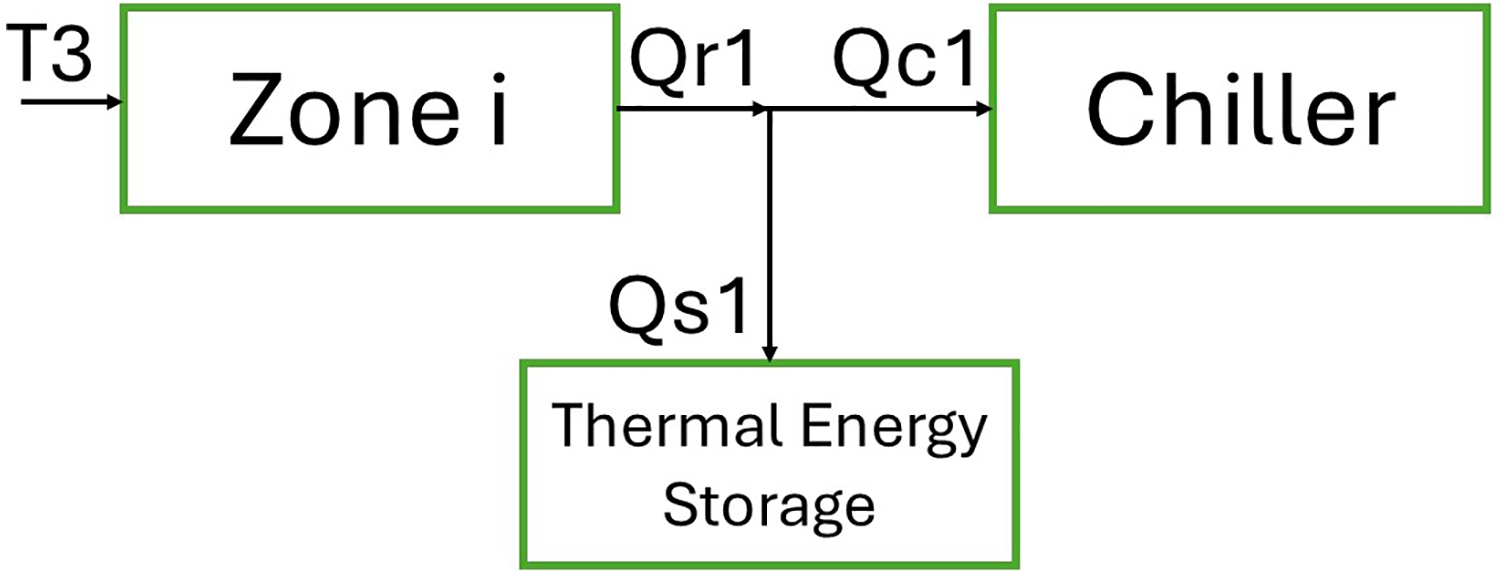
Thermal interaction in zones of building with thermal energy storage (TES).
In this figure,
The building model considered in this study is a multi-zone (five zones) model which is an expanded form of modeling used by Mendoza-Serrano and Chmielewski (2014). Desired temperatures in each zone can be set by the user independent of other zones. Interior walls, ceilings and floors are assumed to be divided into three sub-layers and made from the same material. Outside walls are in contact with outside air with a temperature of
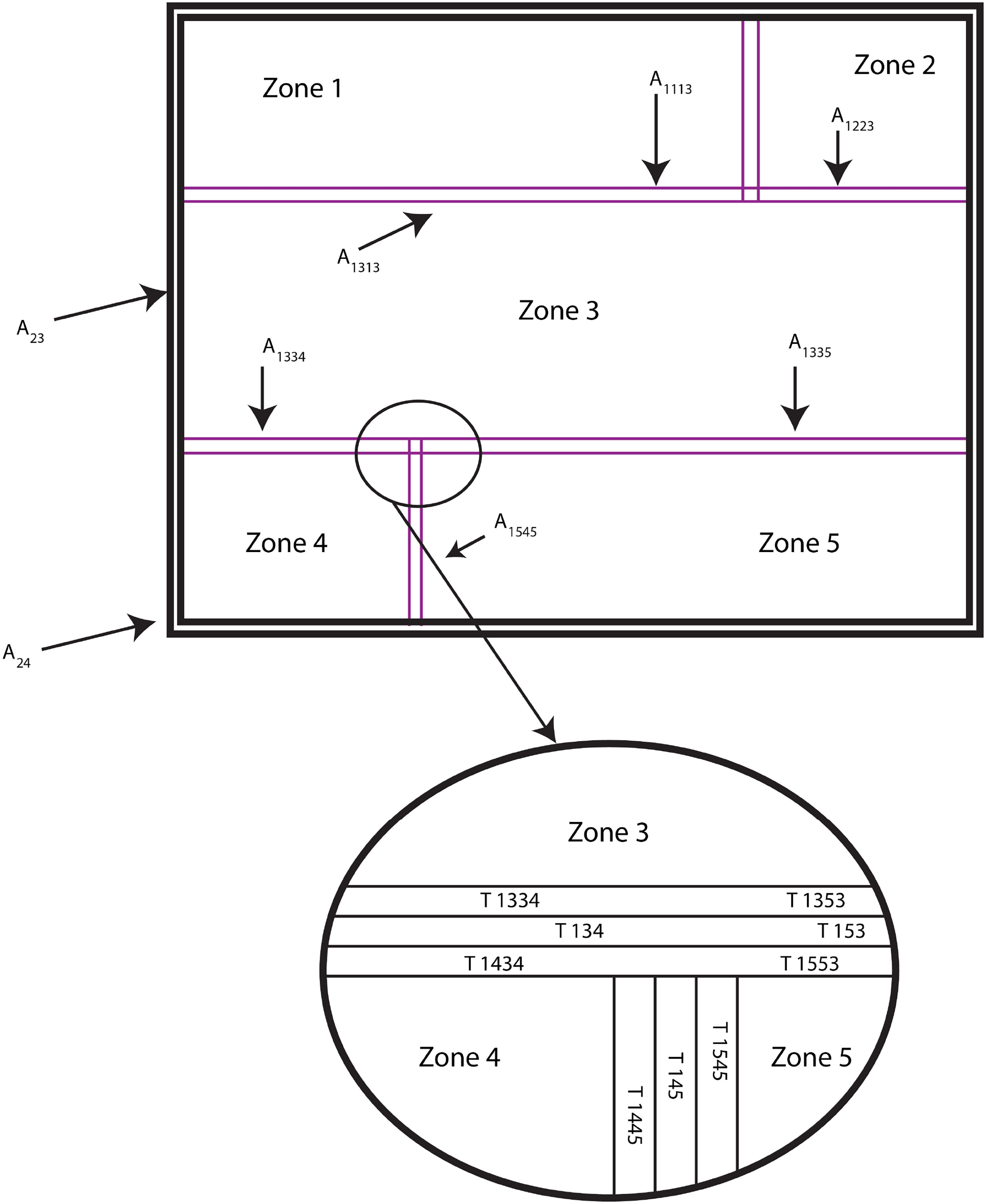
Inner walls sub-layers and the manner of signifying walls and sub-layers.
The temperature of the outer walls is named
The inside air temperature of each zone is defined by
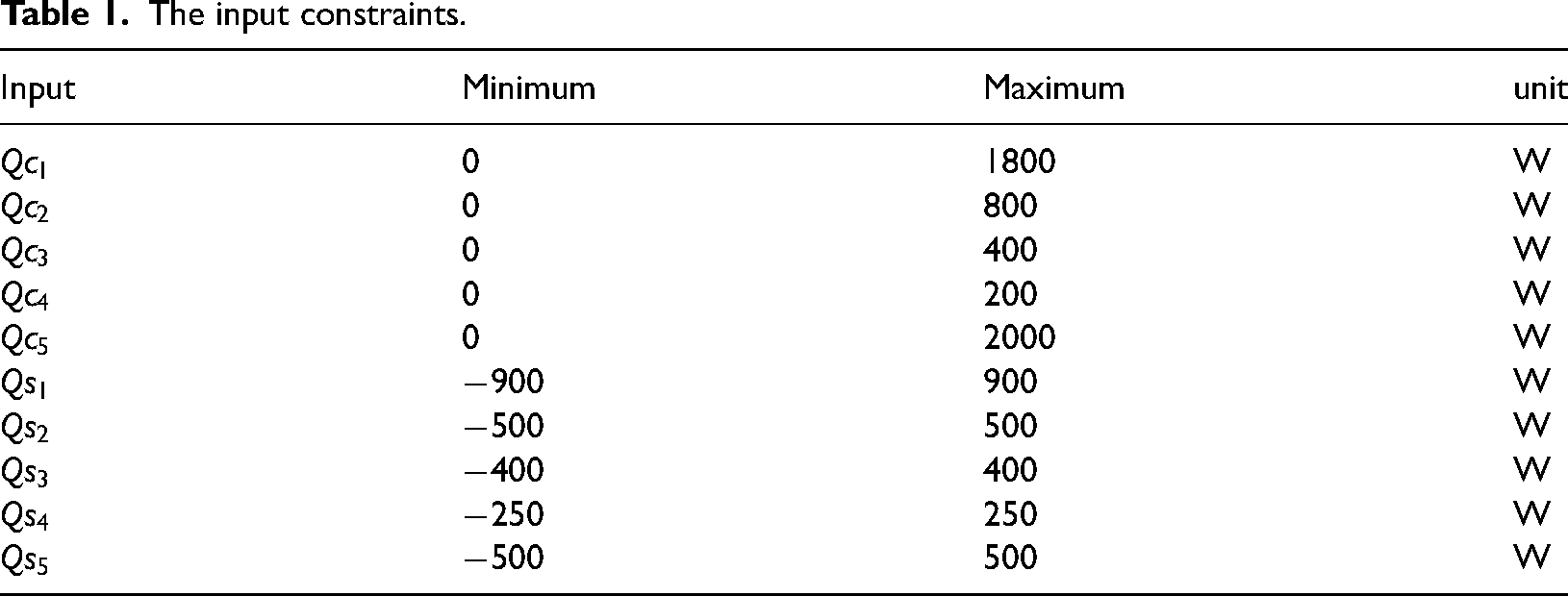
The vectors






The input constraints.
State constraints and desired temperatures.
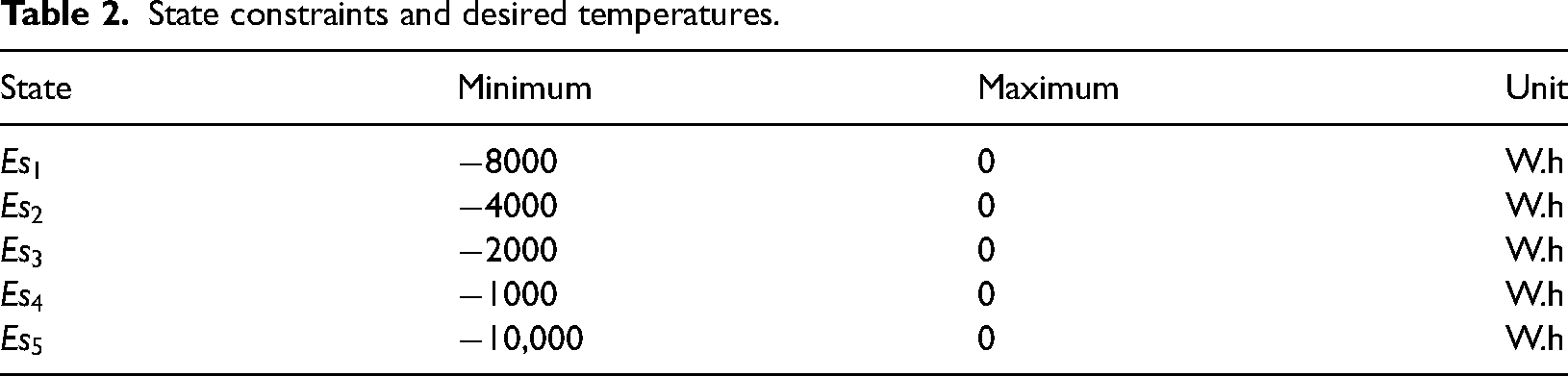
Desired temperature for five zones is considered to be:
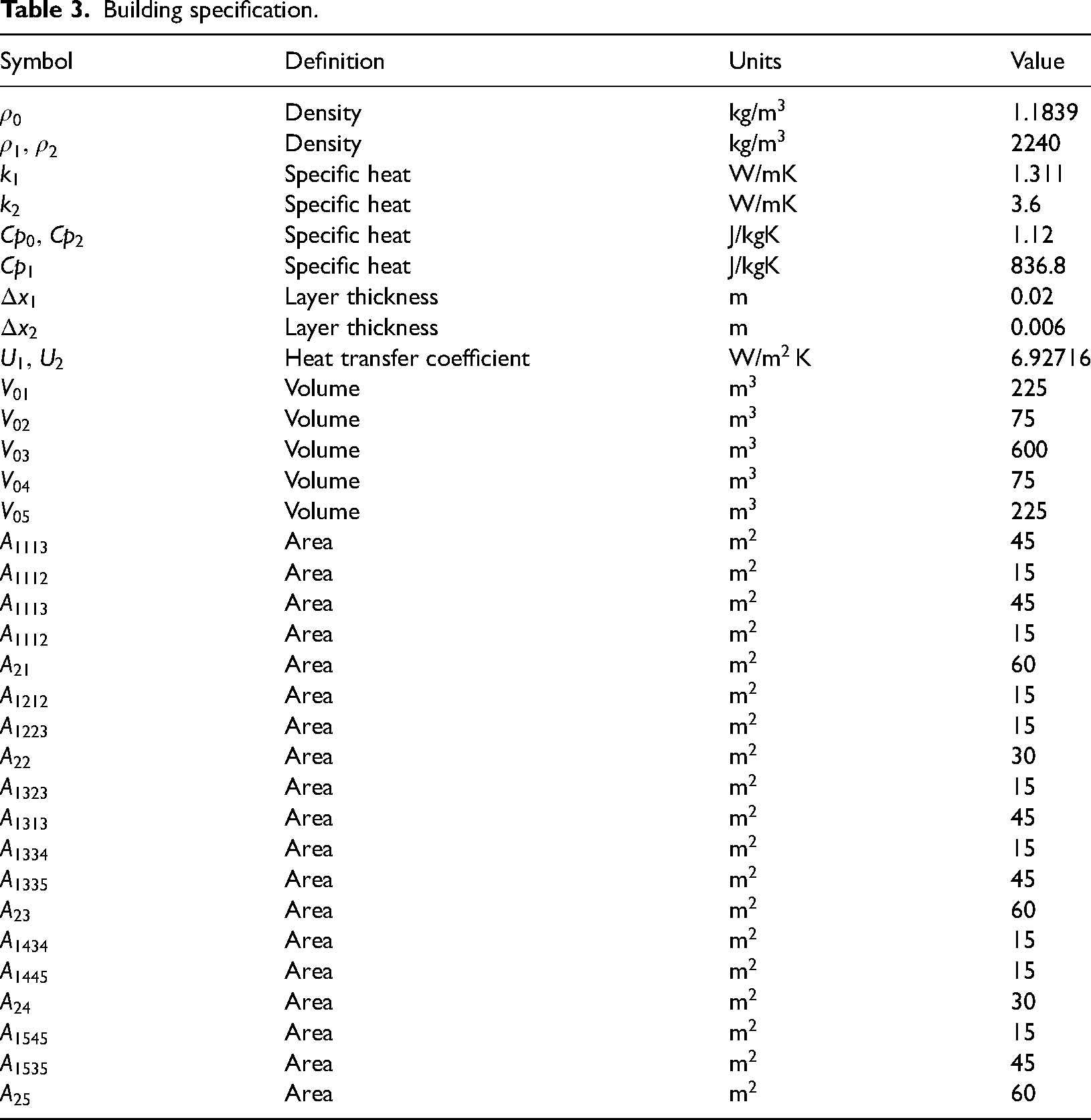
Thermal and mechanical parameters of the building are expressed in Table 3. There is a total value for variables 


Building specification.
Disturbance model
The outside temperature,
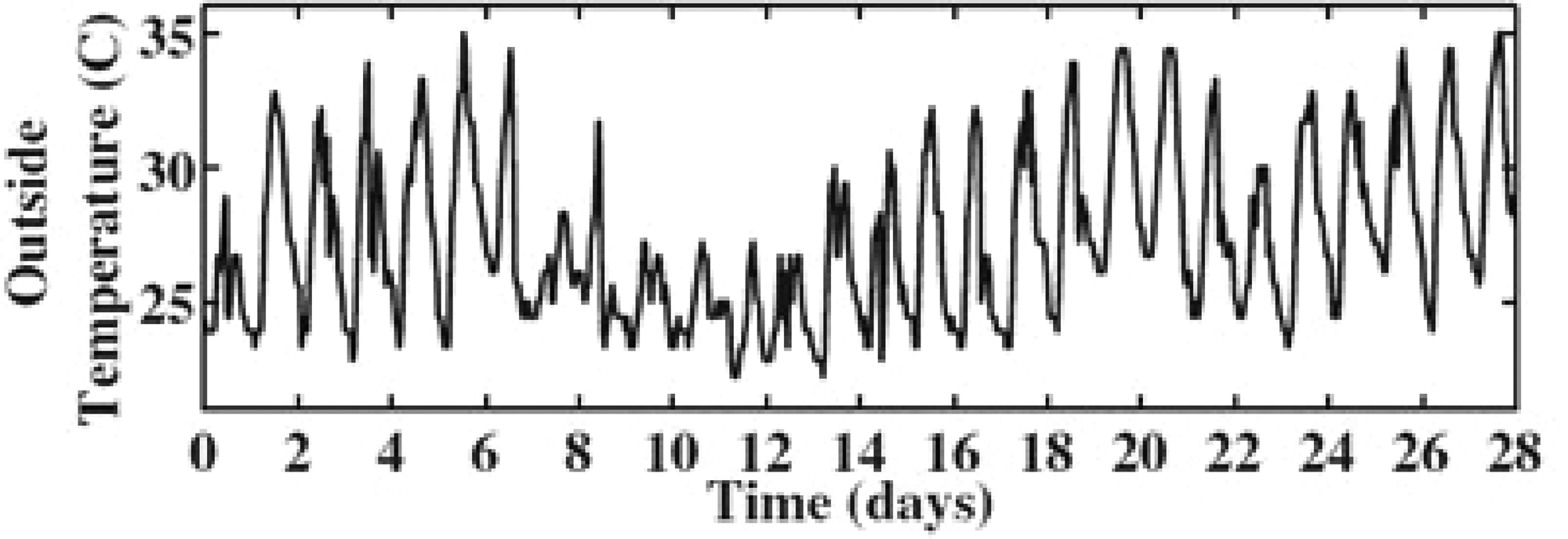
Historic data for outside temperature
Due to the nature of these disturbances, a zero-mean white noise is considered as input and historic data for these disturbances are considered as output. The ARMA model (auto regressive moving average) is used to estimate the future disturbances (Chujai et al., 2013; Deb et al., 2017). The ARMA model is defined as follows:



Simulation
In this section, first, the temperature of a single-zone controlled by traditional EMPC and the proposed MPC is compared. Then, we use the proposed MPC approach to control the multi-zone model.
A comparison between traditional EMPC and the proposed MPC for single-zone building
In traditional EMPC, the temperature is defined as a constrained variable. In this case, the optimisation problem tries to keep the temperature at its maximum value to reduce chiller energy consumption in the summer. This causes fluctuations in the building’s temperature. The temperature is kept at its highest value, but at some hours the temperature is dropped, that causes the building’s temperature to be inappropriate. Moreover, it causes the actuators to quickly change and may cause damage to the actuators during operation. To prevent this from happening, the proposed EMPC approach is introduced. In this method, the temperature is considered as a term in the cost function of the optimisation problem. So, in addition to lowering energy consumption, the optimiser maintains the building’s temperature in the user-selected domain which is more appropriate . The simulation was performed for traditional EMPC and the proposed EMPC approach. In Figure 4, the dashed line shows the temperature of zone 1 for traditional EMPC and the solid line shows that for the proposed EMPC.The figure reveals that fluctuations in outdoor temperature directly impact indoor temperature control. For example, around hour 35, the traditional EMPC (dashed line) exhibits larger fluctuations in indoor temperature, with a slight delay due to the building’s thermal inertia. This occurs because traditional EMPC prioritises minimising energy costs, often resulting in less active temperature regulation when electricity prices are high. In contrast, the proposed MPC more effectively adapts to these variations, maintaining a consistent indoor temperature and demonstrating its advantage in handling fluctuating outdoor conditions.
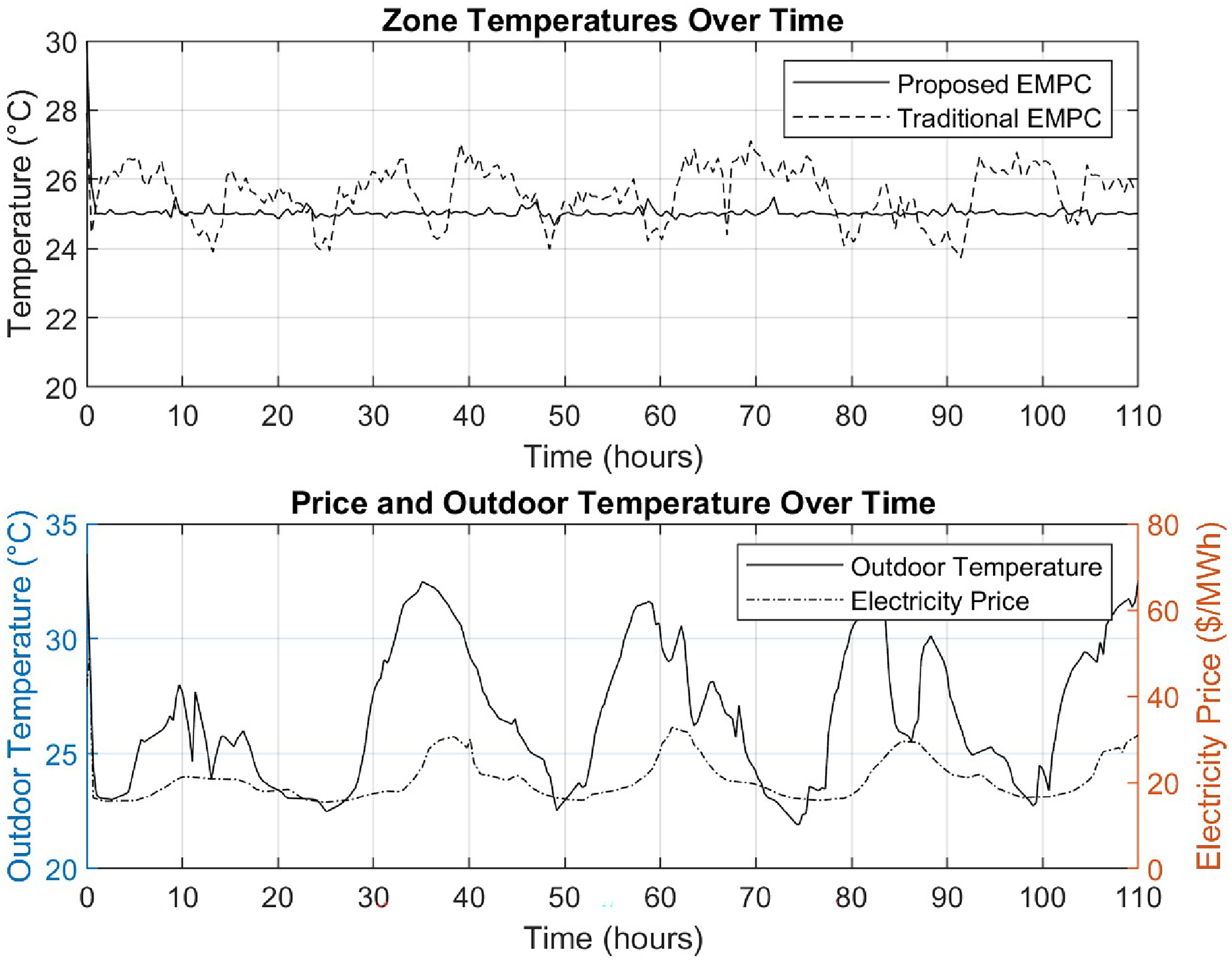
Temperature of zone 1 for traditional economic model predictive control (EMPC) (dashed line) and building’s temperature for the proposed EMPC (solid line).
Multi-zone proposed MPC
Consider the multi-zone model, which is described in the ‘Multi-zone building model’ section. The desired temperature values for each zone are [21°C, 22°C, 23°C, 23°C, 20°C]. The results revealed the control strategy’s effectiveness in maintaining the desired temperatures across different zones, despite the varying outdoor temperatures and electricity prices shown in the lower panel. Moreover, by maintaining the inside temperature of each zone at the desired value, the proposed MPC approach leads to more thermal comfort for residents compared to the traditional EMPC. The state constraints are displayed in Table 2.
The heat flow entering into the chiller (
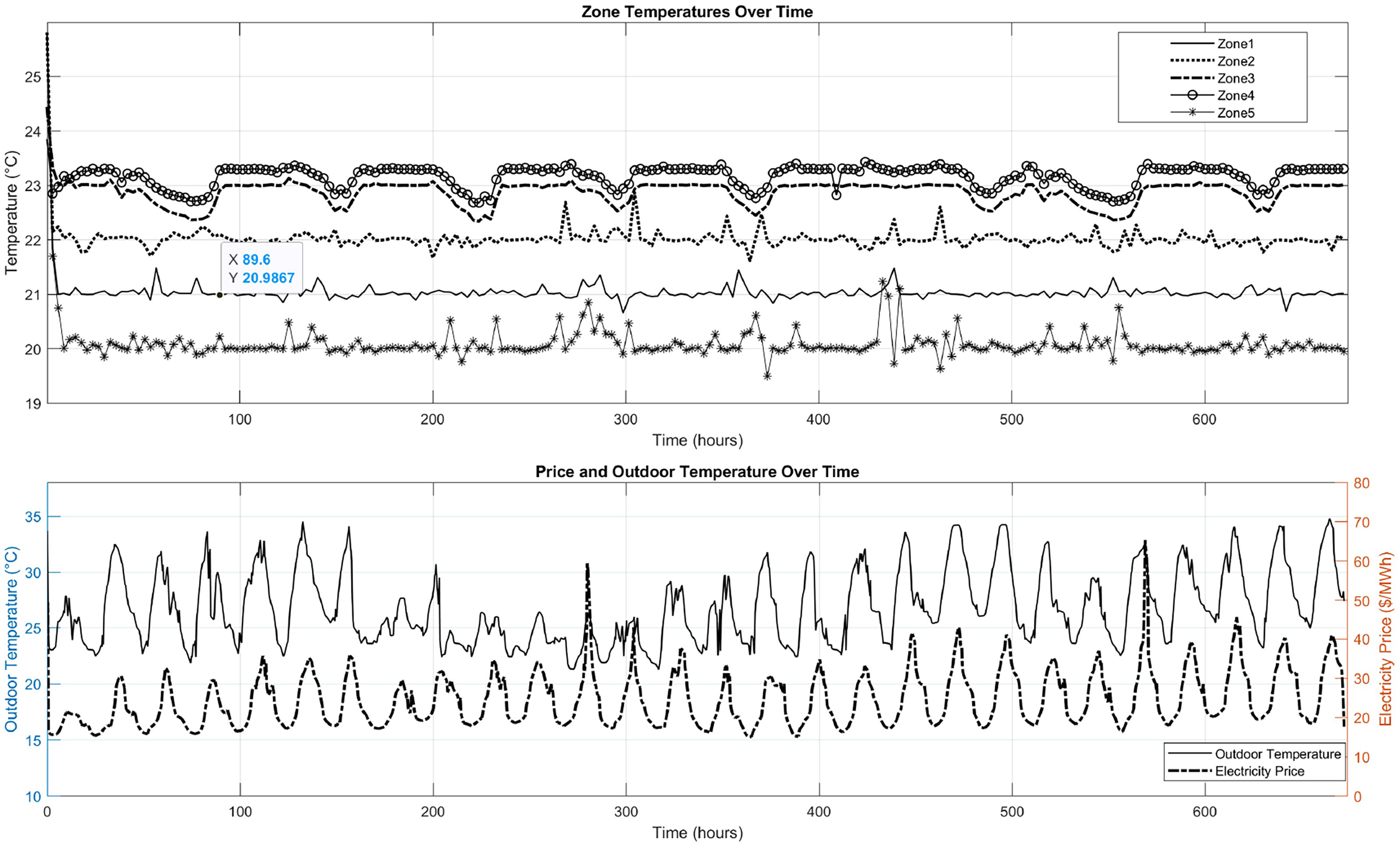
Inside temperature simulation of zone 1 with the desired value of 21°C.
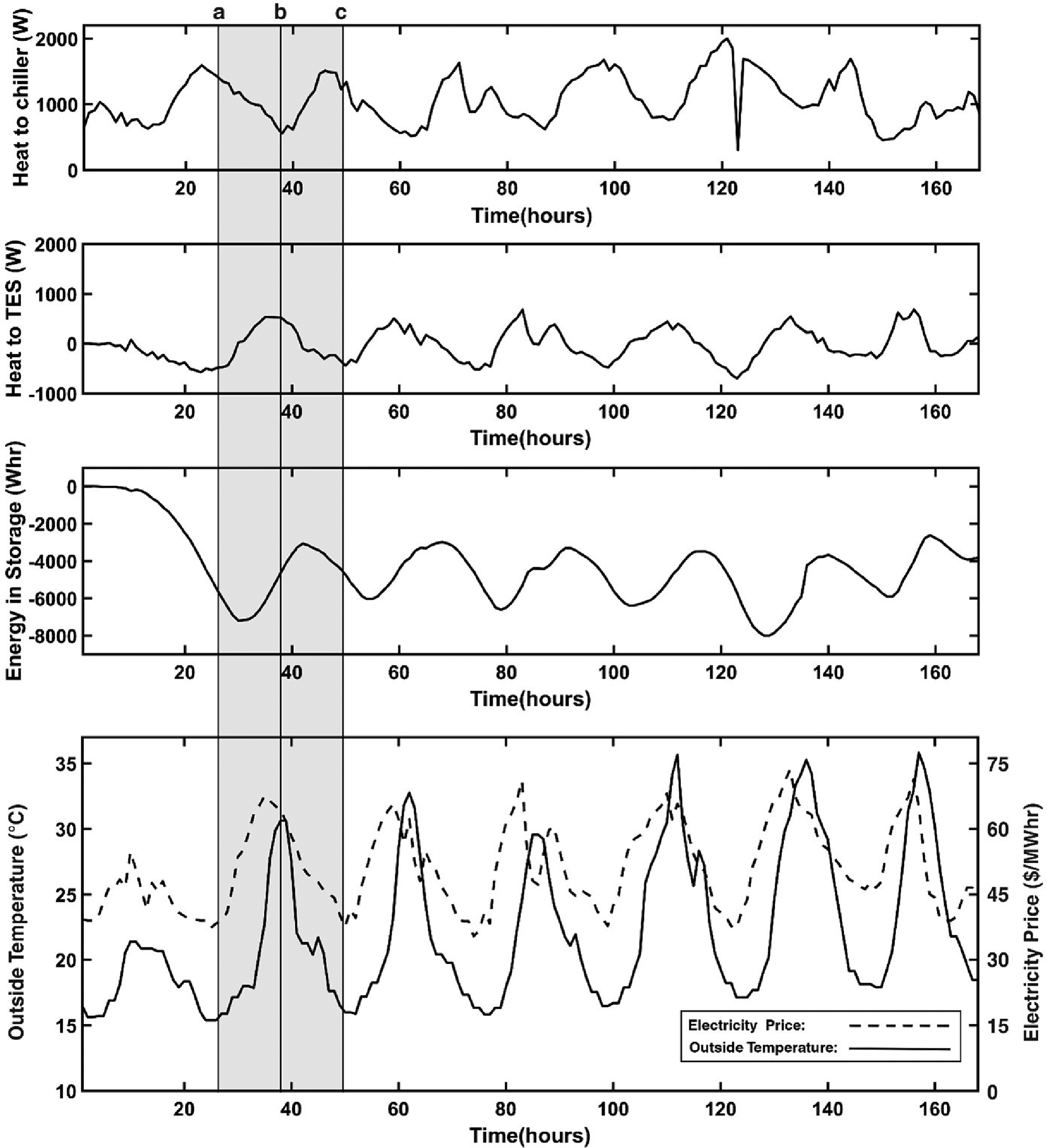
Heat transfer between building, chiller, and thermal energy storage (TES) due to the energy price and outside temperature for zone 1.
As shown in the top plot of Figure 6, the chiller works with low power during high-energy cost and demand hours, for example, at the time
All simulations are repeated in the absence of TES and illustrated in Figure 7. In this mode, the chiller should be turned on in hours with high temperature, and accordingly, high energy cost (at the time a to b) and turned off in low-temperature moments (at the time b to c). Therefore, energy cost reduction and demand response cannot happen properly. Figure 7 illustrates heat flow to the chiller in the absence of TES and the use of TES condition. As can be seen, during the time interval 
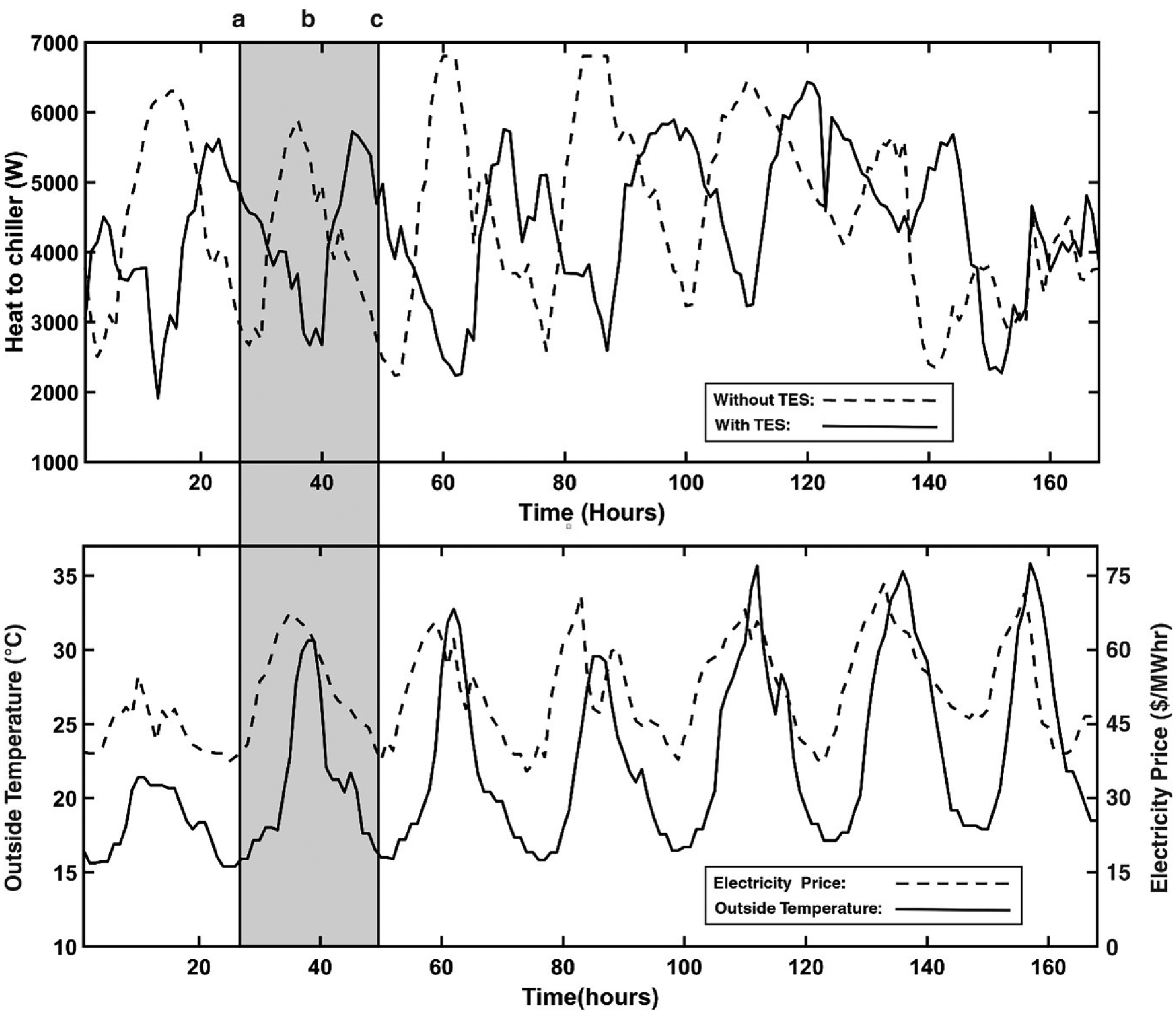
Heat to chiller without thermal energy storage (TES) (dashed line) compared to TES (solid line) condition.
In our case, the initial energy cost without TES is $27.45, and the reduced energy cost with TES is $22.35. Substituting these values into equation (20) gives as follows:
In addition to reducing energy consumption, the comfort of the inhabitants is preserved without oscillation (Figure 5), and the building temperature is kept at the desired value by the user. Each zone is capable of setting the desired temperature independent of other zones, and the useful life of the actuators is expanded. These are the important results and advantages of the proposed method.
Conclusion
This research aimed to optimise both cost and electrical energy consumption in building HVAC systems using a modified model-based predictive control approach. Initially, the dynamic heat exchange of the multi-zone building was calculated by considering outside temperature as a disturbance. Historical data were then utilised to develop forecasting models for these variables, enhancing the control accuracy. It is assumed that the HVAC system is only capable of producing cold load (chiller), and the optimal temperature for each zone of the building is customisable by the user.
Methodology
The proposed method presented a multi-objective optimisation problem which includes two terms in the objective function:
The first term is used to minimise the cost of electric energy. The second term is to penalise the difference between obtained and desired temperatures.
Results
The results show that the temperature equilibrium of all areas was maintained quite well and accurately. Inside air temperature was kept in a pleasant mood without fluctuations, which is more suitable in comparison to fluctuations in the traditional EMPC method. Decreased fluctuation leads to an increase in the useful life of the actuator and creates a balance in the energy grid.
By integrating the TES unit as an energy-saving system and the proposed MPC as the control approach, the peak load was shifted to the cheapest price periods while greenhouse gas emissions were reduced. The simulations show that the proposed method reduces energy consumption by 19%. Future research should look into how this approach might be scaled up to larger building complexes and integrated with developing renewable energy technologies to improve its contribution to climate change mitigation.
Footnotes
Declaration of conflicting interests
The author(s) declared no potential conflicts of interest with respect to the research, authorship, and/or publication of this article.
Funding
The author(s) received no financial support for the research, authorship, and/or publication of this article.

Appendix
The overall formulation for the dynamic of the internal layer temperature of the inner walls can be stated as follows:
The overall formulation for the dynamic of the outer layer temperature of the inner walls can be stated as follows: