




Abstract
To solve the contradiction between the discovery of natural gas field in the deep water area of Qiongdongnan Basin under the background of low organic matter abundance of Paleogene (Oligocene) source rocks and the current recognition of higher plants as the main source material, selects four exploration wells in the study area for the first time with the help of “mild” maceration kerogen identification technology and scanning electron microscopy observation, and finds that the source materials are mainly marine macrobenthic red algae with high abundance rather than the before thought higher plants. The marine macrobenthic red algae have the characteristics of early oil generation and late gas generation, especially in the high to over mature stage, which has a good gas prospect. It is the first time to find the source rocks with carpospores and the disk-shaped hard pads as the main source materials in China and abroad, which indicates that macrobenthic red algae are a kind of source materials that should not be ignored, which provides a possible explanation for the formation of large gas fields in the deep water area of Qiongdongnan Basin under the background of low organic matter abundance of source rocks.
Keywords
Introduction
The deep water area of the Qiongdongnan Basin, where large-meddle sized gas fields such as SS17-2 have been discovered, is a hot area for offshore oil and gas exploration in China (Gan et al., 2019; Huang et al., 2014). However, there has been a long-standing puzzle in the study of its source rocks. Namely, it is generally believed that the source rocks of Paleogene Oligocene Yacheng and Lingshui Formations have low organic matter abundance (TOC values of 0.4% to 1.2%) (Huang et al., 2012), which seems to be inconsistent with the view that only high-quality source rocks can form large-meddle sized gas fields (Feng et al., 2011; Hou et al., 2008; Lu et al., 2012; Zhang et al., 2017). The statistics of conventional kerogen macerals show that the gray amorphous solid (mainly derived from geological polymers transformed from biopolymers of phytoplankton and some humic matter) and vitrinite + inertinite of Yacheng Formation constitute 30% to 80% and 20% to 50% of total kerogen macerals, respectively (Huang et al., 2002). It can be seen that the source of organic matter is characterized by dual source inputs, that is, terrestrial higher plants and phytoplankton (Tissot and Welte, 1978).
Different from the traditional kerogen treatment by hydrofluoric acid, in order to ensure that the hydrocarbon-generating bio-precursors are not destroyed during the sample preparation, so that they are easy to be accurately identified, this work uses a “mild” treatment technology of kerogen. This is also the key to gaining new understandings in this work. At the same time, in order to better understand the structure and hydrocarbon-generating capacity of bio-precursors in kerogen, scanning electron microscopy (SEM) and hydrocarbon-generating thermal simulation in gold tubes were carried out. We used a “mild” treatment technology of kerogen to deal with kerogen of Oligocene source rocks in the deep water area, and observed the hydrocarbon-generating bio-precursors under the microscope, with a view to provide a more reasonable explanation of how can large gas fields form even under the background of low organic matter abundance in the study area.
Geological background
Located in the northwestern part of the South China Sea, the Qiongdongnan Basin is a Cenozoic extensional basin on the continental shelf in the northern South China Sea. The deep water area of the Qiongdongnan Basin (about 50,000 km2) refers to the area of the basin with a water depth greater than 300 m, mainly consisting of Ledong Sag, Lingshui Sag, Beijiao Sag, Songnan Sag, Baodao Sag, Changchang Sag, Lingnan Low Uplift, and Songnan Low Uplift (Figure 1).
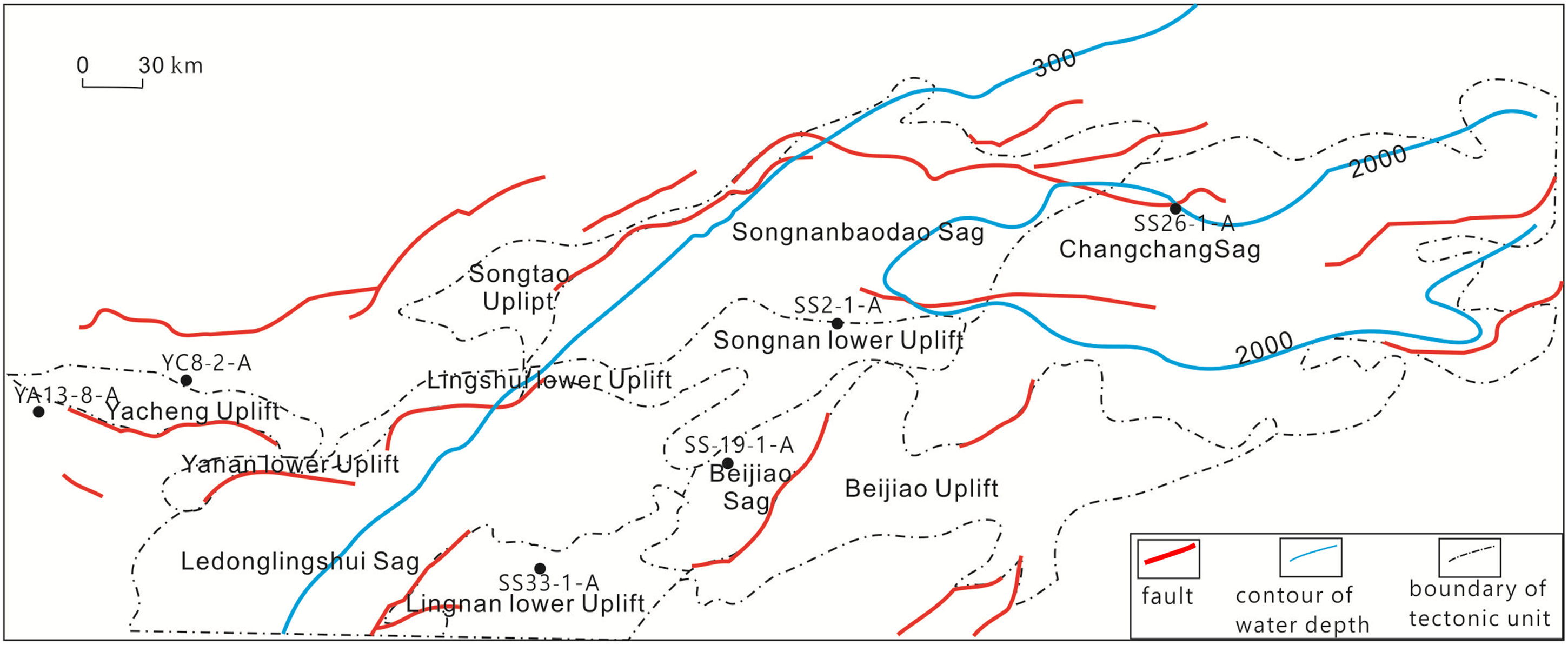
Sedimentary facies, gas fields and sampling well map of Yacheng Formation in Qiongdongnan Basin.
Affected by the rapid subsidence of the Neogene to Quaternary, the marine source rocks of the Paleogene Oligocene Yacheng Formation in the deep water area of the Ledong and Lingshui Sags of the Central Depression Zone continued to bury deeply and rapidly, with a burial depth of nearly 10,000 m. This has contributed to the high to over mature source rocks as a whole, resulting in marine source rocks in the stage of enormous gas generation (Ro ≥ 1.3%) being distributed in a large area. In contrast, in the deep water area of the Changchang and Baodao Sags, due to the slow sedimentation rate and small thickness after the Miocene, the marine source rocks of the Yacheng Formation have a relatively small burial depth, with the overall burial depth less than 5000 m, and only the local deep burial depth reaches 6000 m, resulting in the relatively limited distribution of marine source rocks that have reached the stage of enormous gas generation (Ro ≥ 1.3%) (Gan et al., 2019). The thermal evolution of these source rocks has a good correspondence with the currently discovered petroleum exploration in the SS17-2 gas well.
Sedimentary facies studies show that the Paleogene and Eocene sedimentary environments in the Qiongdongnan Basin are dominated by rifted lake basins. During the Oligocene period, the sedimentary environment gradually transformed from the lake basin to the bay and shallow marine facies. Among them, the early Yacheng Formation was dominated by the transition facies and the shore-shallow marine facies, and the latter was dominated by shallow marine facies (Feng et al., 2011; Gan et al., 2019; Huang et al., 2014).
Samples and methods
Samples
The selection of samples
The samples were mainly taken from 4 wells including well SS33-1-A in Lingnan Low Uplift, well SS26-1-A in Changchang Sag, SS2-1-A in Songnan Low Uplift, and well SS19-1-A in Beijiao Sag, deep water area of the Qiongdongnan Basin. There are 21 samples of cuttings in the Oligocene Lingshui and Yacheng Formations. The sedimentary environments of the mudstone samples are shallow marine and shore-shallow marine facies (Figure 1).
In order to compare with the shallow water area, samples were also taken from the coals and mudstones of the Jingyacheng Formation in wells YC13-8-A and YC8-2-A with the sedimentary environment of delta plain facies in the shallow water area.
Decontamination treatment
Because the above wells used oil-based drilling fluids and the rock samples were all contaminated with oil, the contamination of the samples was first treated. The samples were washed repeatedly with dichloromethane first, and then cold-extracted with chloroform bitumen “A” for 24 h to ensure that the samples used for analysis were free of contamination. The experiment was completed in the laboratory of CNOOC Nanhai West Corporation.
Kerogen treatment of rock samples (HCl-HF leaching)
After putting the crushed rock sample into the acid container, 6 mol/L hydrochloric was added acid to the container and then the supernatant was removing by centrifuge repeatedly. Then, added 6 mol/L hydrochloric acid and 40% hydrofluoric acid, and centrifuged to remove the supernatant to obtain kerogen. After putting the obtained kerogen and heavy liquid with a relative density of 2.0 to 2.1 in a 50 mL centrifuge tube, treated it with an ultrasonic cleaner, and then centrifuged for 20 min. After layering, removed the kerogen, and froze and dried it.
Identification of kerogen thin section: after adding a little nitric acid to the kerogen sample to peel off the carbides, it was made into thin section and observed under microscope. It was completed at the Department of Earth Science and Engineering, Nanjing University.
Scanning electron microscopy
The research through scanning electron microscopy used the high vacuum scanning mode of Quanta 200 environmental scanning electron microscope (ESEM) to observe the structural characteristics of kerogen. Quanta 200 ESEM has a resolution of 3 nm and a magnification of 100,000 to 500,000 times. It was completed at the Wuxi Petroleum Geology Research Institute of Sinopec Petroleum Exploration and Development Research Institute.
TOC, Rock-Eval and kerogen macerals analysis
LECO CS230 carbon sulfur analyzer was used for TOC, Rock-Eval analysis. The test temperature was 22 °C, the relative humidity was 46%, the test condition was 0.27 MPa carrier gas, the oxygen purity was 99.5%, the combustion gas flow rate was 2L/min, and the analysis gas flow rate was 0.5L/min. Ro test, Zeiss Axio Scop.A1 (3356010045) and J&M MSP 200 (39487) scanning electron microscopes were used to observe the structural characteristics of kerogen.
Hydrocarbon-generating thermal simulation in gold tubes
The simulation experiment used thermal simulation in gold tubes with a constant heating rate of 20 °C/h. The samples were selected from the kerogen containing high-abundance benthic red algae. The constant pressure was maintained at 50 MPa during the experiment, and the maximum temperature of the experiment could reach 600 °C. After heating up to a predetermined temperature, the small gold tube was taken out to measure the production of oil and gas at each temperature point, and reflectivity values at the corresponding temperature points were calculated based on the Easy Ro% formula. It was completed at the Guangzhou Institute of Geochemistry, Chinese Academy of Sciences.
Results
Characteristics of macrobenthic red algae (including SEM and kerogen)
SEM was used to scan the hydrocarbon-generating bio-precursors in the above kerogen samples, and carpospores and coid crusts were further observed from a stereoscopic perspective. For E3l3 and E3y1 of well SS26-1-A, SEM photos can clearly show the carpospores, pyrite-containing carpospores, and tetraspores in E3l3 samples, also show distinct three-dimensional shape of coid crusts including spherical, ellipsoidal, pyritization coid crusts in E3l3 and E3y1 samples (Figure 2). The distribution of the three-dimensional morphology of benthic red algae more clearly proves the correctness of the identification of macrobenthic red algae in Oligocene marine source rocks of the deep water area.
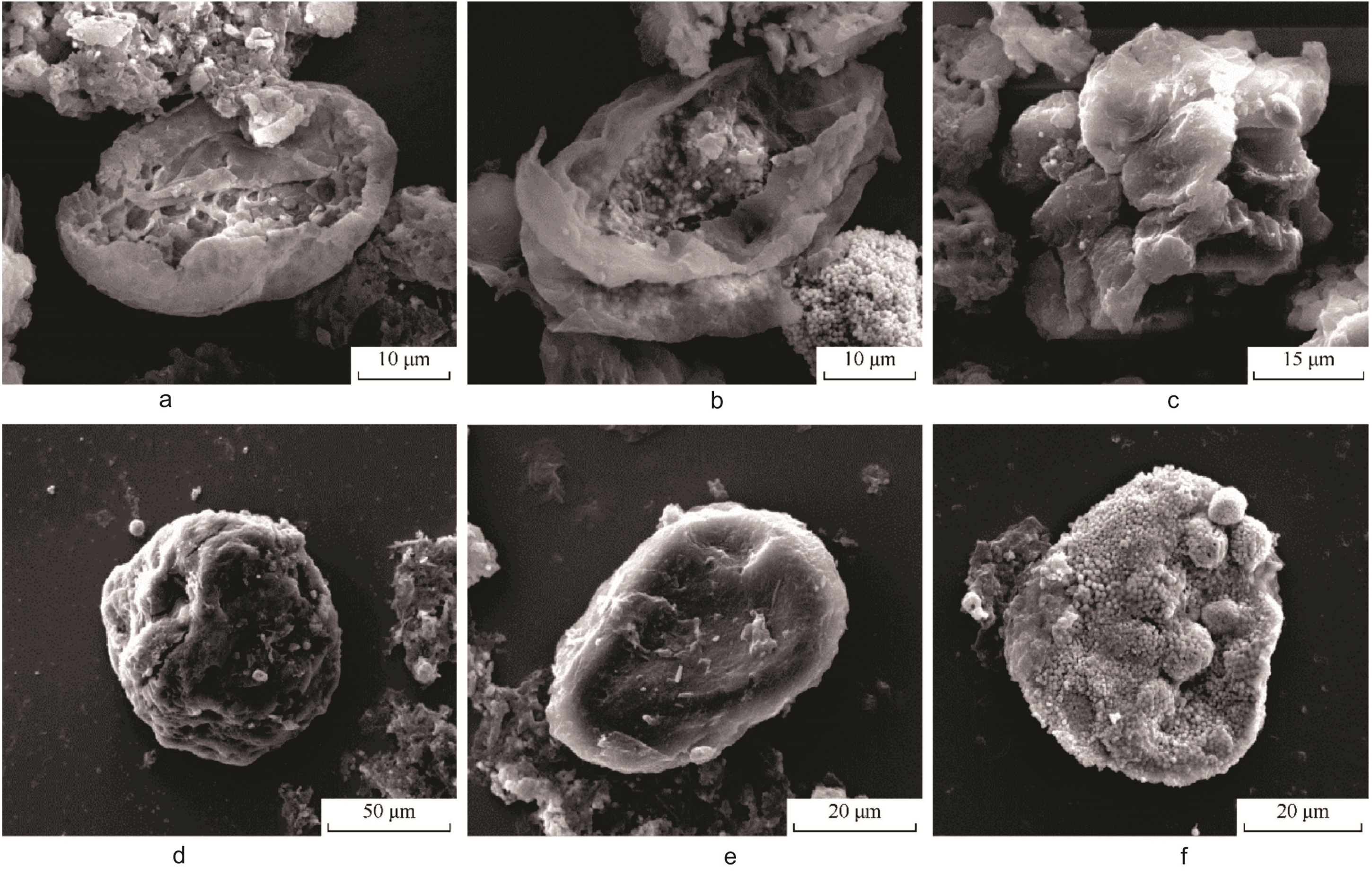
Typical reproductive organs of macrobenthic red algae in kerogen thin section of Oligocene mudstones in deep water area of Qiongdongnan Basin under the SEM (red algae-dominated deep marine facies). (a) well SS26-1-A, E3l3, the carpospore; (b) well SS26-1-A, E3l3, the carpospore that contains pyrites; (c) well SS26-1-A, E3l3, tetraspores; (d) well SS26-1-A, E3y1, the coid crust (globular); (e) well SS26-1-A, E3y1, the coid crust (ellipsoidal); (f) well SS26-1-A, E3y1, the coid crust (pyritization).
The identification results of conventional kerogen macerals show that the inertinite and the vitrinite dominate in the macerals of Yacheng Formation in the deep water area, and the sum of them is mainly 65% to 80%. The content of the exinite (cutinite + chitin + sporopollen) is relatively low, usually 7.6% to 25.5%, and the amorphous organic matter derived from aquatic plants is poor, reflecting that the hydrocarbon-generating bio-precursors are mainly terrestrial higher plants.By applying the HCl-HF leaching technique to the rock samples of the above 4 wells, kerogen was obtained and made into thin sections. Through microscopic observation and identification of hydrocarbon-generating bio-precursors, it was found that samples generally contained reproductive organs of benthic red alga, and their content was very rich benthic red algae accounting for 84% to 98% (Table 1).
Geochemical analysis data of samples.
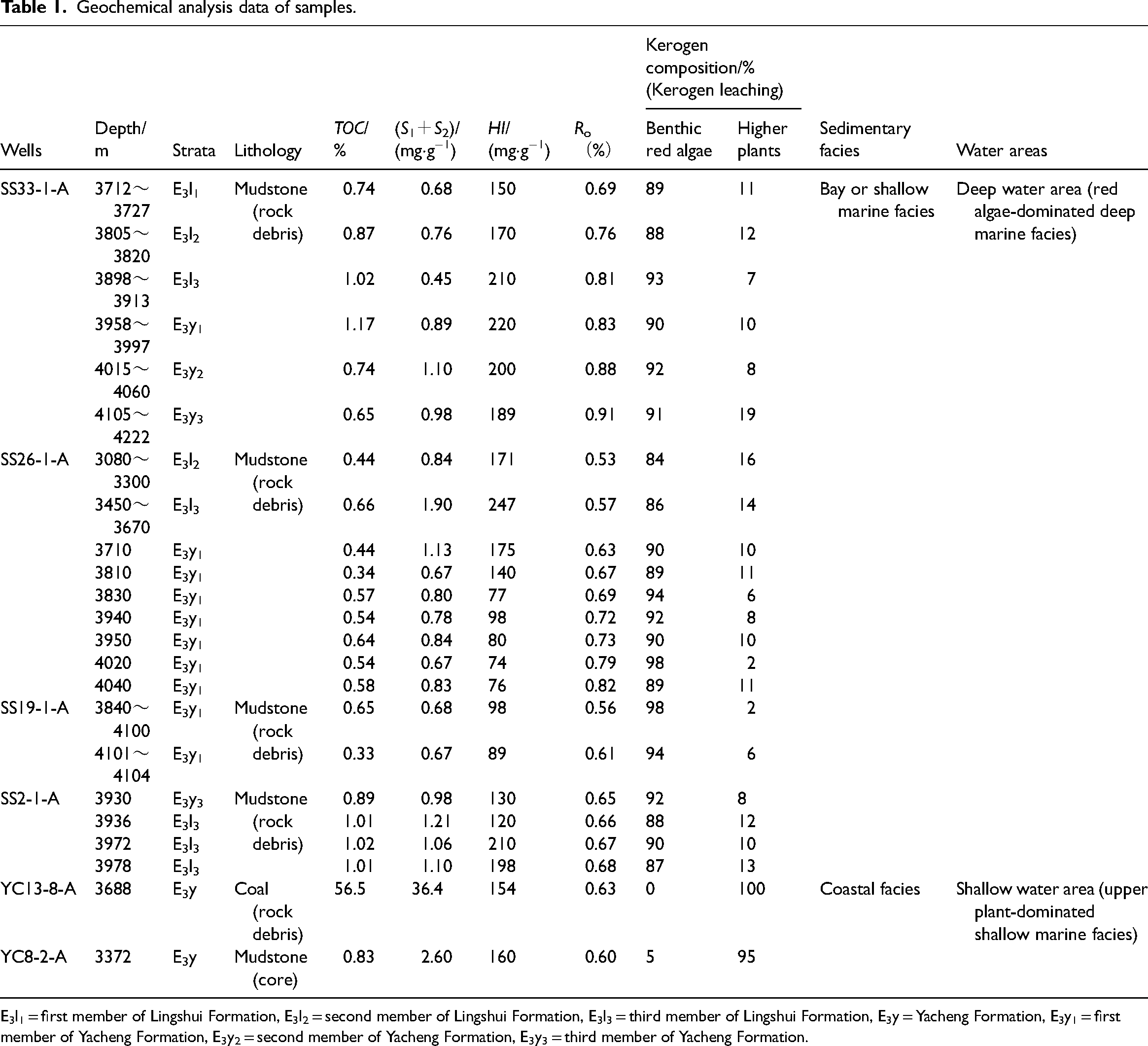
E3l1 = first member of Lingshui Formation, E3l2 = second member of Lingshui Formation, E3l3 = third member of Lingshui Formation, E3y = Yacheng Formation, E3y1 = first member of Yacheng Formation, E3y2 = second member of Yacheng Formation, E3y3 = third member of Yacheng Formation.
From the characteristics of structure morphology, it is mainly the fossils formed by the disc-shaped hard mat or coid crusts formed by the carpospore germination of red algae (Jiang, 2011) (Figure 3). Among them, the E3l1, E3y2 and E3y3 samples of well SS33-1-A mainly develop coid crusts. For well SS26-1-A, carpospores and coid crusts develop in the E3l2, while carpospores and algae vegetative parts develop in the E3l3, and coid crusts and sporophytes develop in the lower and upper parts of E3y1, respectively. The algae vegetative parts develop in E3l3 of well SS2-1-A and E3y1 of well SS19-1-A. The overall feature is that marine organisms are abundant but the types are monotonous, and the Yacheng Formation is especially rich in organic matter.
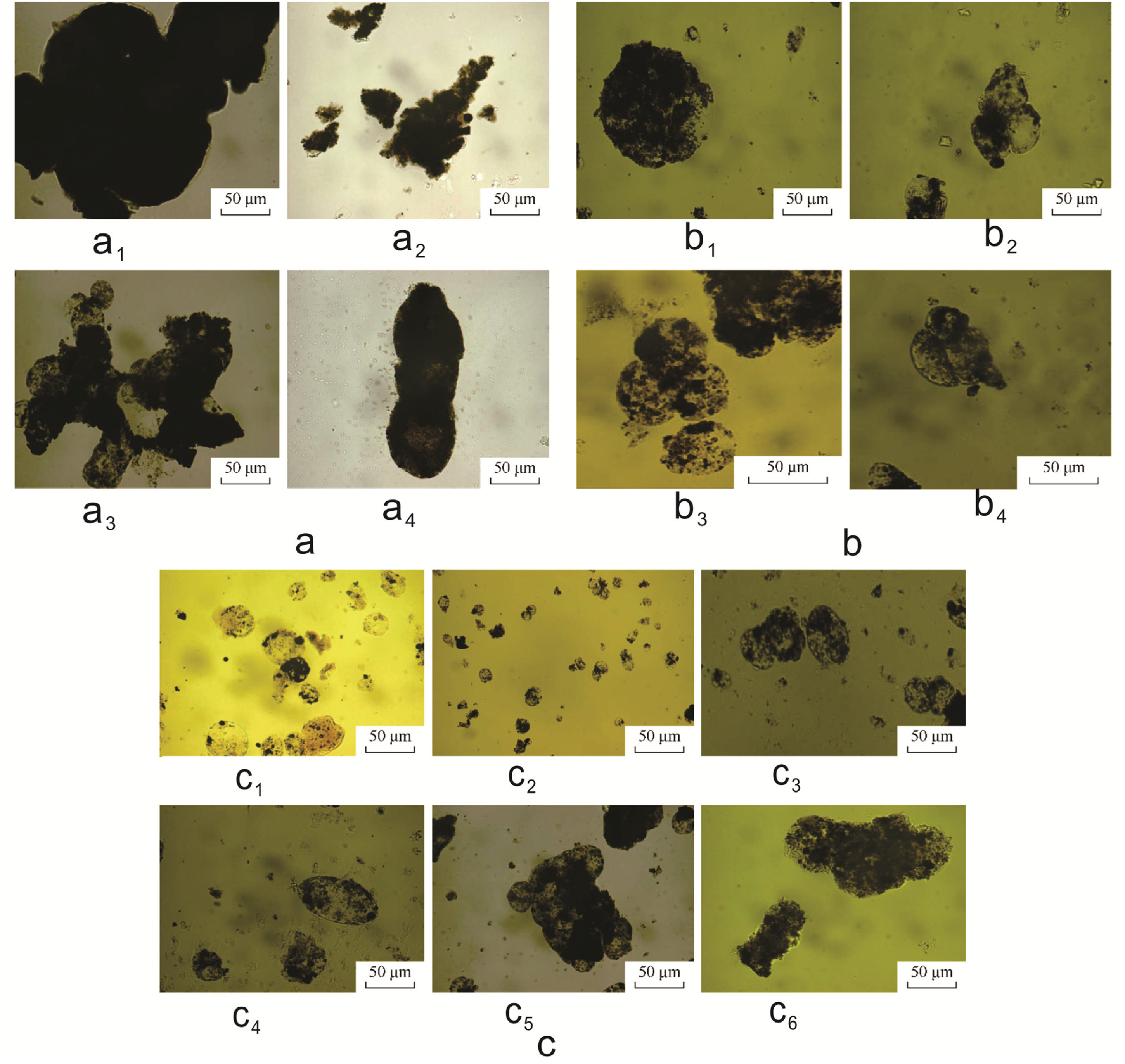
Typical fossils of macrobenthic red algae in kerogen of Oligocene mudstones in deep water area of Qiongdongnan Basin under the microscope (red algae-dominated deep marine facies). (a) coid crusts, (a1) well SS19-1-A, Yacheng Formation, 4101 m, black, but we can see the structure of coid crusts; (a2) well SS33-1-A, Lingshui Formation, 3805 m, the coid crust generates the seedling; (a3) well SS26-1-A, Yacheng Formation, 3950 m, the fusion and transformation of carpospores to coid crusts; (a4) well SS33-1-A, Yacheng Formation, 4105 m, the coid crust begins to germinate the filament; (b) tetraspores, (b1) well SS26-1-A, Lingshui Formation, 3450 m, huge tetraspores; (b2) well SS26-1-A, Lingshui Formation, 3670 m, huge tetraspores; (b3) well SS26-1-A,Yacheng Formation, 3720 m, spores at the tetrad stage; (b4) well SS26-1-A,Yacheng Formation, 3810 m, spores at the tetrad stage; (c) carpospores, (c1) well SS26-1-A, Lingshui Formation, 3080 m; (c2) well SS26-1-A, Lingshui Formation, 3450 m; (c3) well SS26-1-A,Yacheng Formation, 3170 m, spores fusion and division development; (c4) well SS26-1-A,Yacheng Formation, 3720 m, mineral crystals growing on carpospores; (c5) well SS26-1-A,Yacheng Formation, 4020 m, fusion and germination of carpospores; (c6) well SS26-1-A,Yacheng Formation, 4105 m, fusion and germination of carpospores.
The coal sample of Yacheng Formation of well YC13-8-A and the mudstone sample of Yacheng Formation of well YC8-2-A in the shallow water area were identified (Table 1). As a result, it was found that the bio-precursors of the source rocks in the above two wells were significantly different from those found in shallow marine mudstones in the deep water area. The bio-precursors of coal-baring source rocks are mainly the leaves of trees (Figure 4), and the content of higher plants reaches 95% with no macrobenthic red algae or any wood fragments (Table 1). This shows that the hydrocarbon-generating bio-precursors of coal-baring and shallow marine source rocks in the Qiongdongnan Basin are mainly terrestrial higher plants and macrobenthic red algae, respectively.
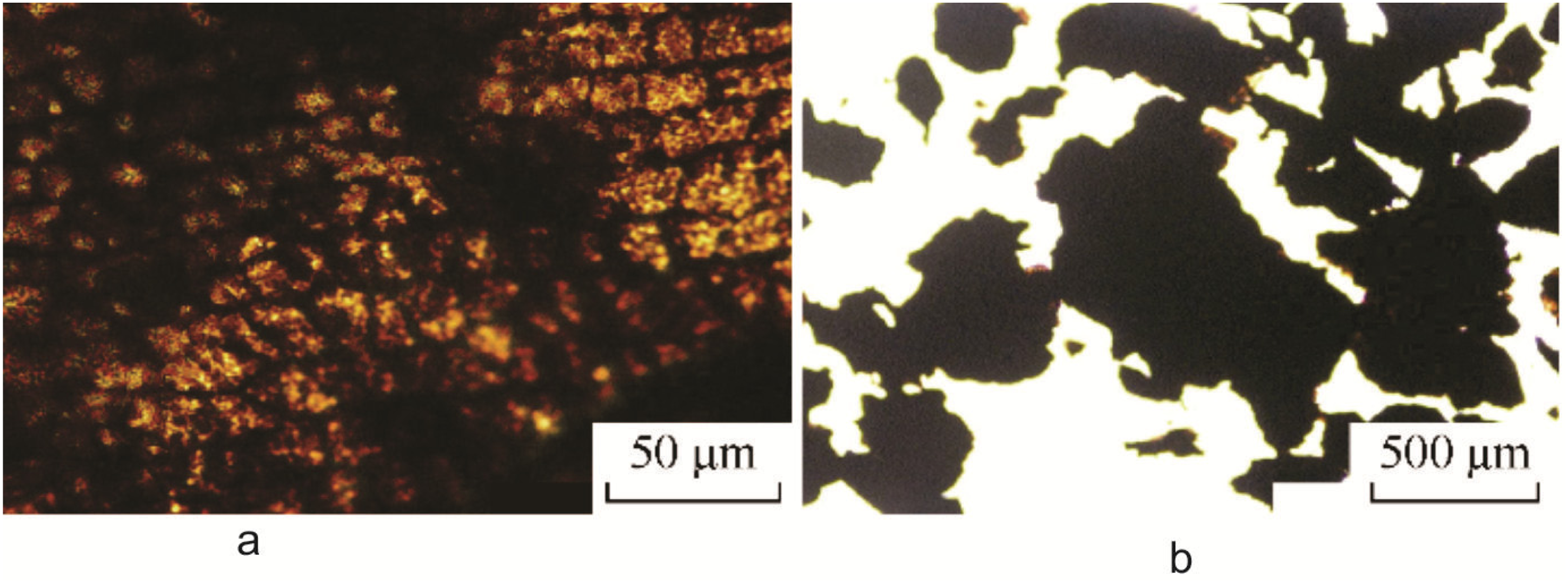
Kerogen thin sections of Oligocene coal-baring mudstones from well YC13-8-A in shallow water area of Qiongdongnan Basin under the microscope (upper plant-dominated shallow marine facies). (a) The fossil of plant foliage (transmission light); (b) enlarged kerogen thin section (dominated by inertinite).
Geochemical characteristics of original rock samples
The Rock Even analysis results show that the organic matter abundance of shallow marine mudstones in the deep water area of Qiongdongnan Basin is generally low (in addition to the low abundance of the original source rock itself, the treatment of oil washing may also cause a decrease in the abundance of organic matter), and the type of organic matter reflected by pyrolysis is mainly type Ⅲ. Specifically, the total abundance of organic carbon (TOC), the hydrocarbon-generating potential (S1 + S2), and the hydrogen index (HI) are mainly 0.34% to 1.17%, 0.74 to 1.9 mg/g, and 74 to 247 mg/g, respectively. The measured thermal maturity (Ro) of mudstones is 0.50% to 0.97%, belonging to the samples from early mature to mature hydrocarbon-generating stage.
Biomarker compounds were analyzed for coal-baring and shallow marine source rocks (Figure 5). GC-MS results show that there are two main distribution patterns of biomarkers in the Oligocene shallow marine source rocks in the deep water area of the Qiongdongnan Basin (Figure 6). One is a typical distribution pattern of marine mudstones (Fu et al., 2010), which is basically free of biomarkers of terrestrial high plants such as bicadinanes (W, T) (T/C30-Hopane ratio of 0.15 to 0.21), low content of oleananes (OL) (OL/C30-Hopane ratio of only 0.12), low Pr/Ph ratio (about 1.0), “V"-shaped distribution of C27, C28 and C29 steranes. The typical representative well of this distribution pattern is LS33-1 -Well A and well YC26-1-A. Typical wells of this distribution pattern are wells LS33-1-A and YC26-1-A. Another distribution pattern belongs to the transitional marine source rocks. This type of source rocks contains a high amount of oleananes (OL/C30-Hopane ratio of 0.5 to 2.8), a moderate content of bis-juniperane (W, T) (T/C30-Hopane ratio of 0.15 to 1.0), much lower than that of coal-bearing source rocks (T/C30-Hopane ratio of 2.19 to 16.82; Pr/Ph ratio of 5.98 to 6.89 (Huang et al., 2012)), Pr/Ph ratio of 1.0 to 3.0, and “V"-shaped distribution of C27, C28 and C29 steranes (Figure 5). Source rocks with these characteristics are generally visible in the deep water area, such as the mudstones of Yacheng Formation, well SS19-1-A.
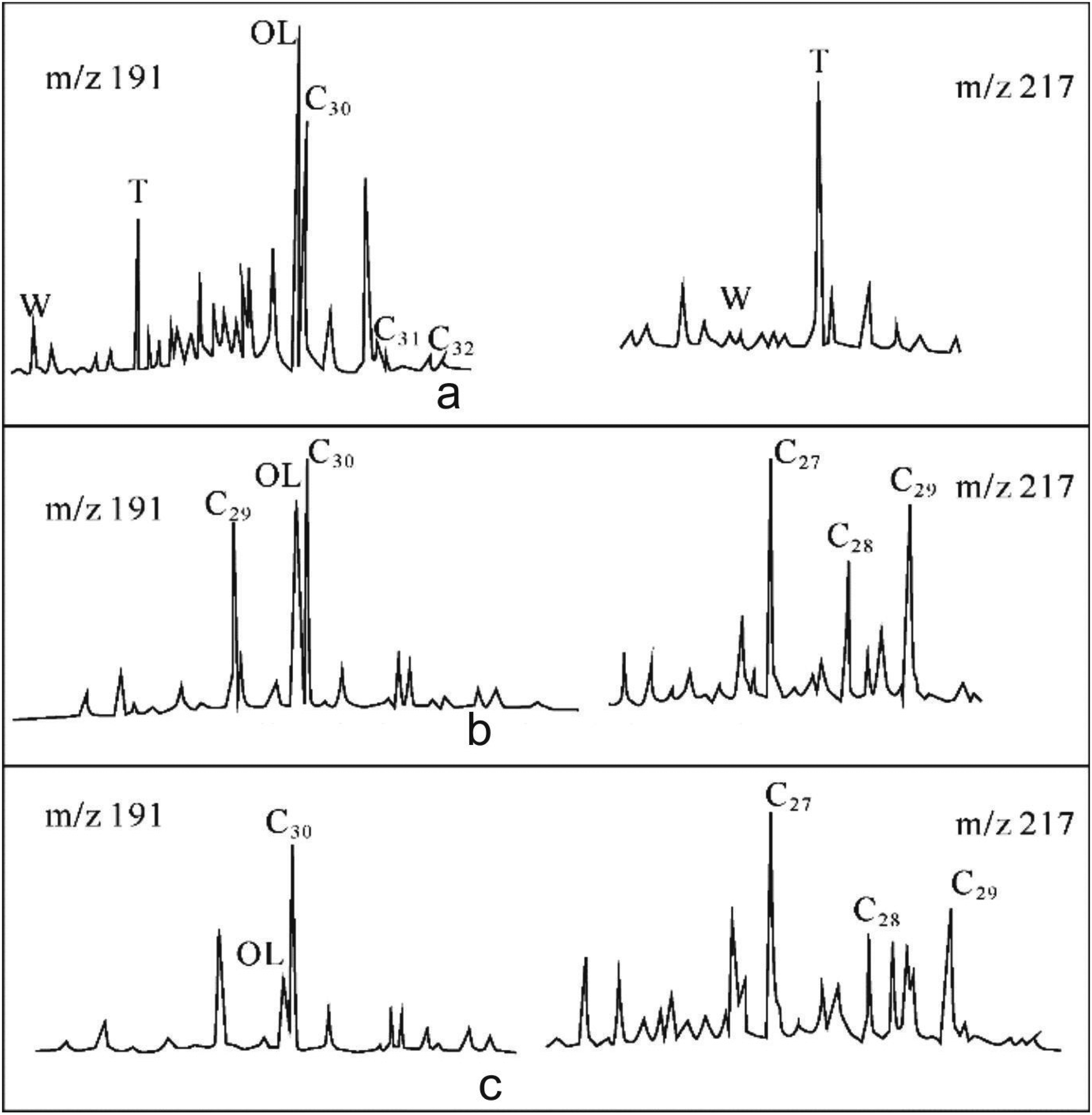
Comparison of the biomarker characteristics of source rocks in the deep and shallow water areas of the Qiongdongnan Basin. (a) well YA13-1-2, Yacheng Formation, charcoal mudstone, TOC > 2% (upper plant-dominated shallow marine facies); (b) well SS19-1-A, Yacheng Formation, transitional shallow marine mudstone, TOC = 1%; (c) well SS33-1-A, Yacheng Formation, shallow marine mudstone, TOC = 0.85% (red algae-dominated deep marine facies).
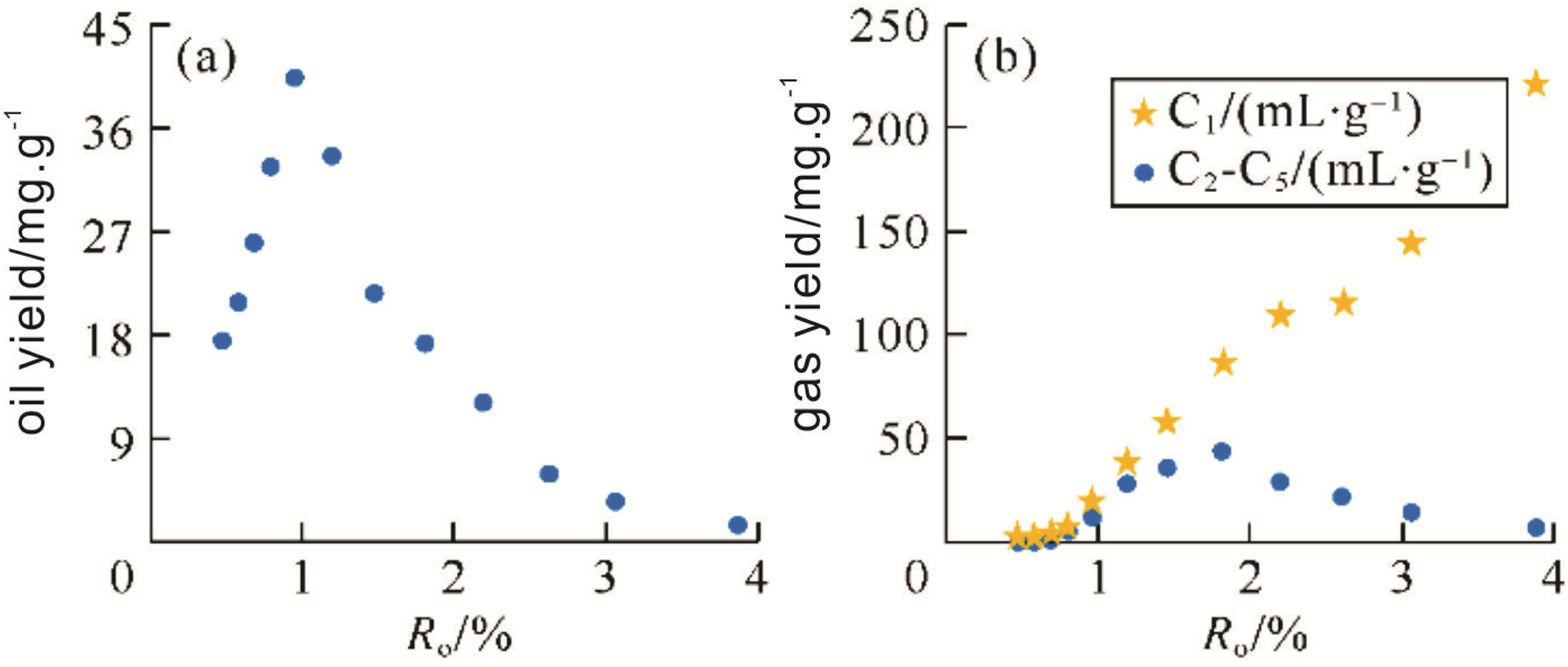
Relationship between the hydrocarbon-generation amount of kerogen and Ro of Yacheng Formation mudstone in Well SS26-1-A (red algae-dominated deep marine facies). (a) oil yield versus Ro; (b) gas yield versus Ro.
In short, from shallow to deep water areas, the distribution characteristics of biomarkers in source rocks are mainly manifested in significantly decreasing trend of terrestrial higher plants derived biomarkers such as bicadinanes (W, T) and oleananes (OL) (Figure 5). This trend reveals that there is a significant difference between the bio-precursors of the source rocks from the shallow water area dominated by delta-plain sediments (mainly terrestrial higher plants) and the deep water area dominated by shallow marine sediments (mainly marine macrobenthic red algae). Obviously, this understanding is consistent with the observation results based on kerogens under the microscope.
Thermal simulation in gold tubes
The Yacheng mudstones of well SS26-1-A (3830 m to 3940 m) were selected to carry out hydrocarbon- generating simulation in gold tubes after obtaining kerogen processed by the above method. The TOC, Ro, and red algae content of the experimental sample are 0.59%, 0.68%, and 98%, respectively. It belongs to highly red algae-rich source rock and has good representation (Table 1).
Figure 6 shows the relationship between the hydrocarbon-generation amount of this sample at 50 MP and the experimental easy Ro%. The results show that the bio-organic matters in kerogen have different product characteristics at different stages of thermal evolution. With the increase of thermal maturity, the proportion of gaseous hydrocarbons gradually increases, and there are two peaks of oil and gas production. In the early to high mature stage (Ro = 0.5% to 1.0%), the produced hydrocarbon is dominated by oil. When the Ro value is 1.0%, the maximum oil production is not high, only 40 mL/g, far lower than that of lacustrine algae, planktonic algae (Liu et al., 2016) and humic-type Enping source rocks with higher content of exinites (Li et al., 2010), indicating its relatively poor oil-generating potential. In the high to over mature stage (1.0% to 3.8%), gas generation is dominant. Especially after the Ro value is greater than 1.8%, the proportion of C2-C5 heavy hydrocarbons of hydrocarbon gas decreases rapidly, and the amount of gas generation increases significantly. When the Ro value is 3.8%, the production of methane is the largest, reaching 240 mL/g, which is similar to the hydrocarbon-generating process and the amount of generated gas (280 mL/g) of the Yacheng mudstone from well YC8-2-A in the shallow water area of the Qiongdongnan Basin simulated by the same experimental method and condition. It can be seen that the gas generating ability of source rocks with abundant benthic red algae in the deep water area is similar to that of source rocks with abundant terrestrial high plants in the shallow water area, but their bio-precursors are completely different.
Source of oil and gas in the deep water area
So far, the SS17-2 and SS25-1 gas reservoirs have been found in the deep water area of the Qiongdongnan Basin (Figure 1). The gas source research believed that oil and gas mainly originated from the coal-bearing and marine source rocks of the Yacheng Formation in the deep water area (Gan et al., 2019; Huang et al., 2012, 2014). However, we believe that the above-mentioned oil and gas are mainly derived from the shallow marine source rocks in the deep water area, because of the large differences between “
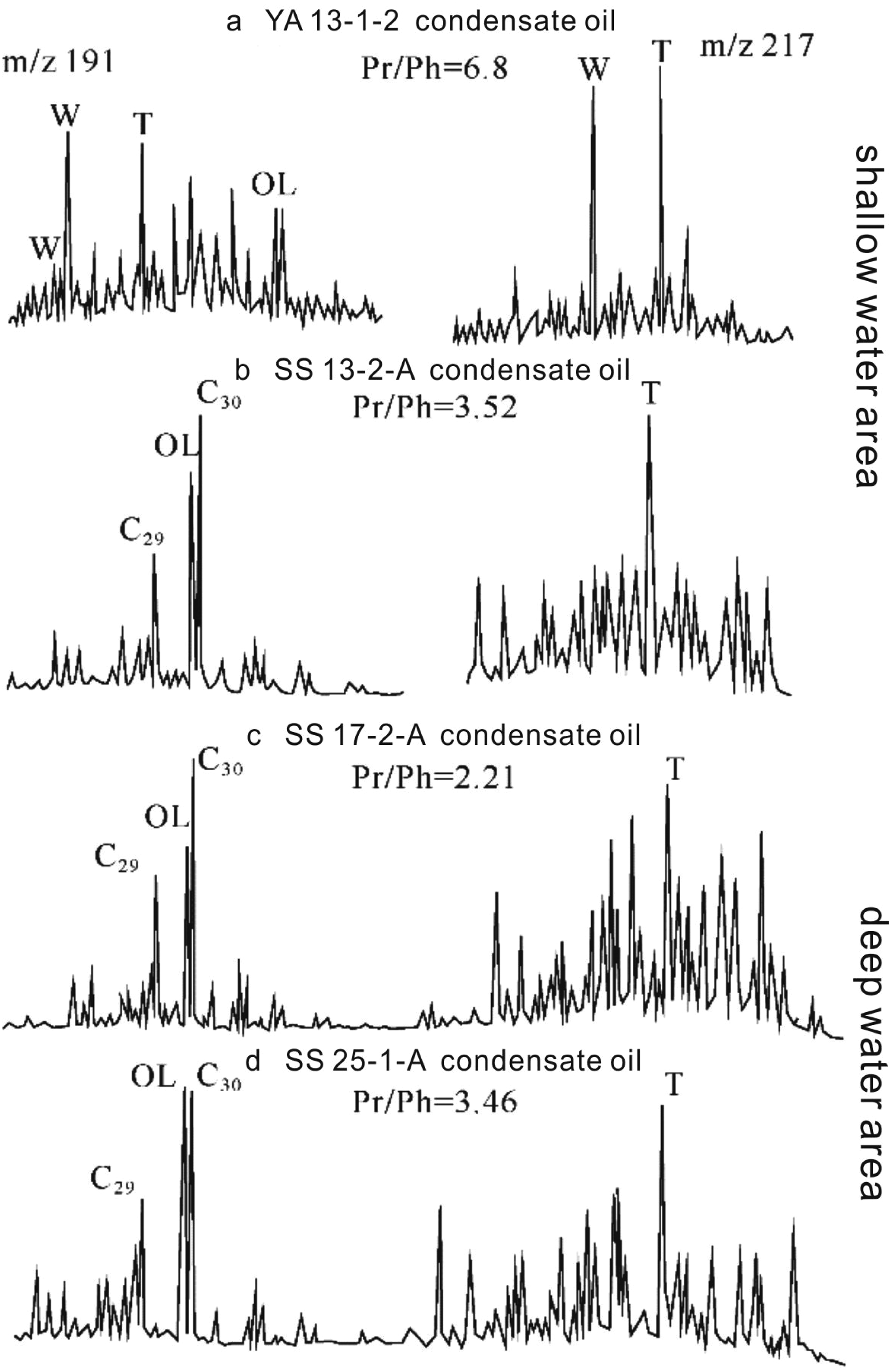
Comparison of biomarkers between condensate oil in shallow water and deep water areas in Qiongdongnan Basin. (a) Well YA13-1-2 condensate oil; (b) well YA13-2-A condensate oil source from upper plant-dominated shallow marine facies; (c)well YA17-2-A condensate oil; (d) well SS25-1-Acondensate oil source from red algae-dominated deep marine facies.
Discussion
According to previous researches (Bian et al., 2003, 2005; Cao et al., 2009; Cui et al., 2000; Guan et al., 2006; Ji and Xu, 2007; Liang et al., 2004; Wang et al., 2001; Zhang and Liang, 2004; Zhang et al., 2006, 2007; Zhao et al., 2000), the thallus, cystocarp, tetraspore of red algae have been found in marine source rocks, but the carpospores of red algae and the coid crusts from their germination have not been found. The study found that the content of carpospores in the sample is very high, and the content of carpospores and coid crusts may exceed 84% (Table 1). The rest are algae leaves, and basically no fossils of higher plants are seen, which is obviously different from the before understandings in the study area (Gan et al., 2019; Huang et al., 2012, 2014). This kind of source rocks mainly composed of carpospores and coid crusts as hydrocarbon-generating bio-precursors is the first discovery in the northern South China Sea. The discovery of these fossils is of great scientific significance for the re-understanding and studying the composition of bio-precursors, hydrocarbon-generating potential, and marine sedimentary environments of the Paleogene and Neogene marine source rocks in the South China Sea.
Development environment of source rocks in the deep water area
It is well known that common benthic macroalgae include green algae, brown algae and red algae, such as nori (red algae), kelp (brown algae), Enteromorpha (green algae), and so on. Among them, mainly living in the ocean, the fossils of brown algae and red algae are iconic of marine sedimentary environments (Guan et al., 2006). Under normal circumstances, green algae are distributed in the uppermost layer of the ocean with a water depth of 5 to 6 m; brown algae are distributed in the middle layer of the ocean with a water depth of 30 to 60 m; red algae contain a lot of phycoerythrin, and the effective light of photosynthesis is blue-green light, so it can be distributed in deep seawater. If the seawater has good light transmittance, they can grow even in water with a depth of 200 m (Zhang et al., 2007). The benthic macroalgae can withstand long-distance transportation. Seagrass leaves have been found at a depth of 8000 m, and the macroalgae are not easily engulfed by other organisms and are not easily damaged by storms (Bian et al., 2005). It can be seen that the benthic macroalgae have the characteristics of being easy to be transported and not perishable, so they are relatively easily transported to the deep water area to be deposited and become hydrocarbon-generating bio-precursors.
Carpospores and coid crusts were found in the Lingshui and Yacheng Formations in the deep water area of the Qiongdongnan Basin, which indicates the abundant marine red algae (Guan et al., 2006; Zhang and Liang, 2004). The discovery of high-abundance red algae fossils in source rocks is sufficient to prove that the sedimentary environment of source rocks in the deep water area is marine condition. Because the fossils seen under the microscope are well preserved, the hydrodynamic conditions of their development environment may not be strong, and the possibility of shallow marine bay environment is more reasonable.
Relationship between hydrocarbon-generating bio-precursors and abundance of organic matter
The geochemical analyses of the source rocks in the Qiongdongnan Basin are shown in Table 2. Drilling cores in the shallow water area revealed that the average TOC of the coals of Oligocene Yacheng Formation coal-bearing source rocks is 55.4%, and the average hydrocarbon generation potential (S1 + S2) is 93.47 mg/g. The average TOC and S1 + S2 of charcoal mudstones are 18.39% and 55.7 mg/g, respectively. The average TOC and S1 + S2 of coal-bearing mudstones are 1.24% and 2.41 mg/g, respectively, which has a good gas-generating potential, which is consistent with the discovery results of YC13-1 natural gas. In contrast, the Oligocene Yacheng Formation revealed by drilling cores in the deep water area of the Qiongdongnan Basin are both shallow sea and coastal mudstones, with the main distribution of TOC ranging from 0.5% to 1.2% (mean = 0.78%), and with average S1 + S2 is 1.47 mg/g, mainly belonging to medium quality source rocks (Gan et al., 2019; Huang et al., 2012, 2014).
Organic matter abundance of source rocks of Oligocene Yacheng Formation.
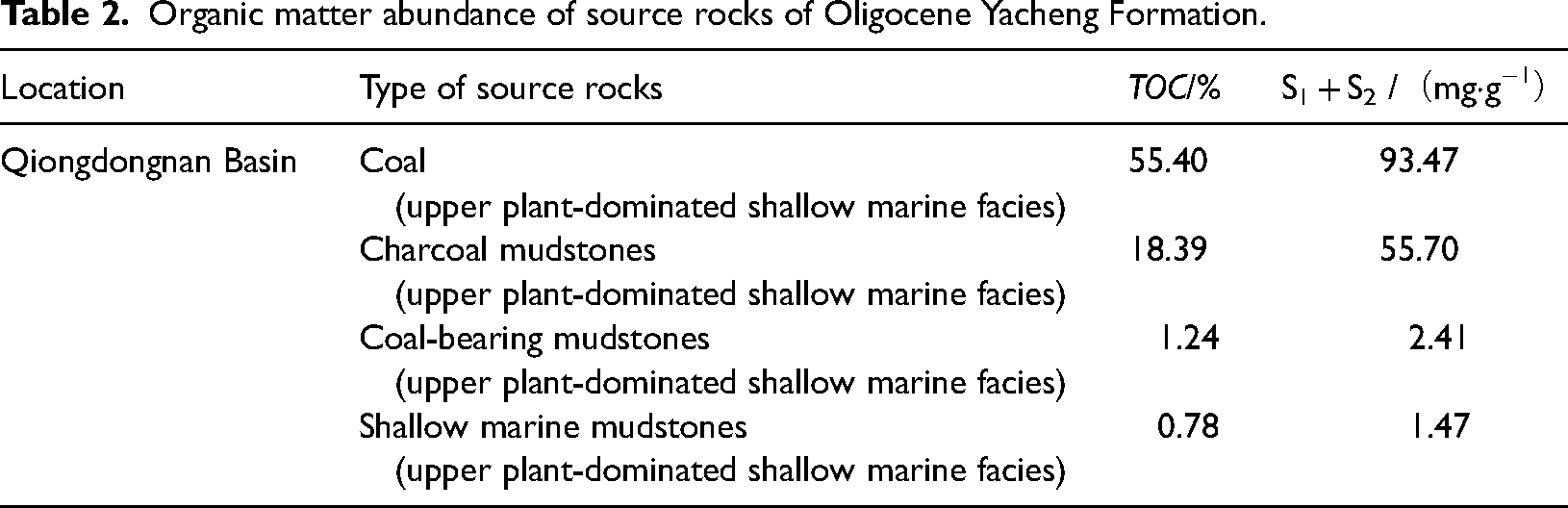
We believe that the variation of organic matter abundance of these source rocks is controlled by the influence of the sedimentary environment and the source of organic matter, and the characteristics of the source rocks developed in different facies change greatly. The shallow water area is located in the river-delta development area, and deposit from coastal plain facies and partly from marine mudstones. As higher plants grow and prosper, terrestrial higher plants are the main hydrocarbon-generating bio-precursors of the source rocks, so there is a positive correlation between organic carbon abundance and inputs of terrestrial higher plants (oleanane/C30-hopane and C27/C29-sterane; Figure 8) (Peters et al., 2018). That is, the source rocks with high contents of terrestrial high plants have higher TOC, otherwise the TOC is low.
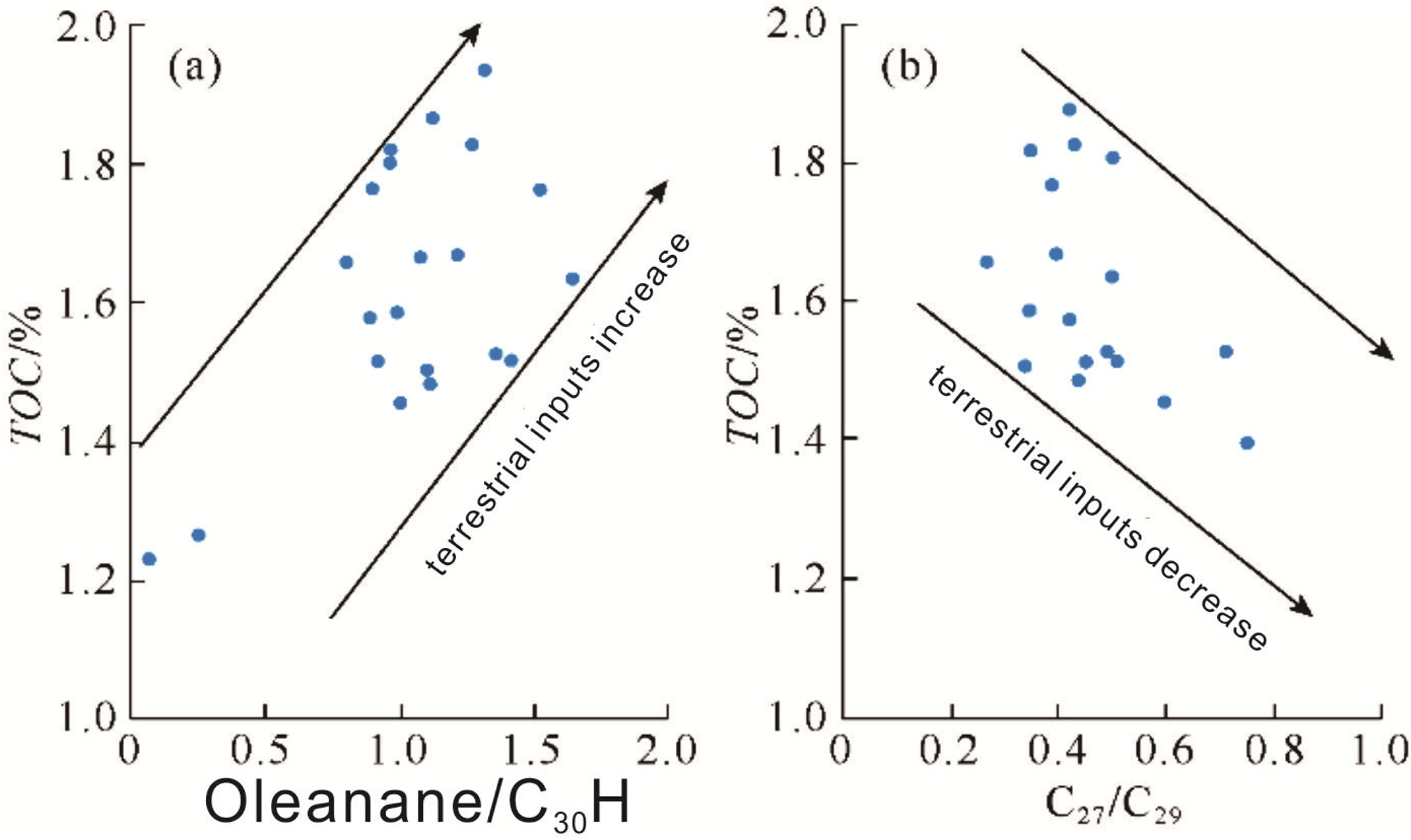
Correlation between TOC and some biomarkers in Oligocene source rocks.
Compared with coastal plains, deep-water area mainly develops shallow sea and coastal source rocks, with hydrocarbon-generating bio-precursors mainly derived from marine benthic red algae and terrestrial higher plants and generally low organic matter abundance (Table 1). In term of the reasons, firstly, from the delta and coastal plain facies in the shallow water area to the shallow marine facies in the deep water area, terrestrial higher plants may suffer strong oxidative degradation and partial loss due to long-distance transportation, and their contribution gradually decreases, resulting in the reduced organic carbon content of source rocks in the deep water area. Secondly, although the contribution of marine algae in the deep water area increased, it was mainly benthic macroalgae rather than marine planktonic algae with higher organic matter abundance, and the found benthic macroalgae were mainly reproductive parts of red algae rather than vegetative parts of benthic macroalgae (the stem and leaf).
There are large areas of semi-closed Oligocene semi-closed source rocks in the central depression zone of the deep water area of the Qiongdongnan Basin, including Ledong, Lingshui, Songnan, Baodao, Changchang and Beijiao Sags. The source rocks of the Yacheng Formation in the deep water area of the Central Depression are usually buried at 5000 to 7000 m, with a geothermal gradient of 3.9 to 4.0 °C/100 m, and a high degree of thermal evolution. Despite the low TOC of shallow marine source rocks (0.5% to 1.2%), the presence of a large amount of macrobenthic red algae as hydrocarbon-generating bio-precursors in the source rocks greatly enhances the source rocks’ ability to generate hydrocarbons. In addition, the shallow marine source rocks in the deep water area are widely distributed and great in scale, and are fully capable of compensating for the low organic matter abundance of the source rocks. The results of hydrocarbon-generating thermal simulation have confirmed this understanding.
Additionally, it should be noted that when we processed the kerogen sample, about 50% of the samples were completely dissolved after acid treatment, indicating that the sample is rich in calcium that may have a certain dilution effect on organic carbon. This is consistent with previous studies that the reduction of the input of terrestrial materials and the weakened dilution effect of detrital materials on calcium carbonate caused deep water sediments with high content of calcium carbonate and low organic carbon abundance (Cai et al., 2012). All in all, the low organic matter abundance of marine source rocks in the deep water area of the Qiongdongnan Basin may be affected by multiple factors, and it cannot truly reflect the organic matter abundance of current source rocks.
Hydrocarbon-generating capacity of benthic macroalgae
The traditional view is that the hydrocarbon-generating bio-precursors of the source rocks mainly come from zooplankton, phytoplankton, higher plants and bacteria. In comparison, benthic macroalgae are considered to have little contribution to hydrocarbon generation due to their low proportion in the marine primary productivity, which is not enough to be the main bio-precursors of source rocks (Tissot and Welte, 1978). However, since the 1990s, especially in many basins, such as the Tarim, Qiangtang and Ordos basins, and the examples of benthic macroalgae in the Xiahuayuan area of Zhangjiakou, Hebei (Bian et al., 2003, 2005; Cao et al., 2009; Cui et al., 2000; Guan et al., 2006; Ji and Xu, 2007; Liang et al., 2004; Wang et al., 2001; Zhang and Liang, 2004; Zhang et al., 2006, 2007; Zhao et al., 2000), benthic macroalgae as the fifth type of bio-precursors have gradually received attention from the petroleum geologists.
The comparison of hydrocarbon-generating thermal simulations between modern sedimentary planktonic and benthic algae proves that macrobenthic algae have the ability to generate hydrocarbons, but their generation potential of oil and gas is lower than that of planktonic algae, and the oil can be produced at a low maturity stage. Special emphasis is given to the gas yields in high and over-mature stage reaching 320 mL/g, which has a good potential of gas generation (Jiang et al., 2009; Meng et al., 2008). This result is basically the same as the simulative result of geological samples with high contents of benthic red algae in this article, which undoubtedly provides another example for the benthic macroalgae to be an important type of hydrocarbon-generating bio-precursors.
The main components of kerogen observed under the microscope here can be divided into two categories, one is rich fragments of benthic macroalgae, and the other is carpospores and coid crusts. Carpospores are common reproductive cells of red algae, and they are yellow under the light-transmitting microscope, belonging to hydrogen-rich components. Therefore, carpospores may be the main oil bio-precursors, while macroscopic algal debris and coid crusts (black) exist in the form of vitrinite, which may be mainly gas bio-precursors.
In particular, the kerogen observed under the microscope are black particles in this study, covered with carbides (need nitric acid to remove the carbides), which is obviously different from the kerogen samples of Neoproterozoic Xiamaling Formation in the Xiahuayuan, Hebei (all are yellow) (Zhang et al., 2007). This shows that the benthic red algae in this area may be affected by thermal oxidation (not well-preserved original red algae), so the simulated hydrocarbon yields are not high.
Discussion on research methodology of hydrocarbon-generating bio-precursors
As mentioned earlier, the composition characteristics of the hydrocarbon-generating bio-precursors of the source rocks are essential for the evaluation of the source rocks, but the results may be different due to different pre-treatment methods for the different research contents. Research methods of organic petrology are mainly based on morphological identification, resulting in uncertainties, and geochemical methods also have the interpretation ambiguity. Furthermore, due to different emphasis, different methods may observe different bio-precursors. For example, the commonly used kerogen and sporopollen-algae methods may falsely classify benthic macroalgae as carbonaceous wood or acritarch when the fossil treatment is not thorough and the carbonized part is not stripped. And the conventional kerogen classification is put forward under the premise that there is no concept of benthic macroalgae. Obviously, it may be difficult to find marine benthic macroalgae using conventional methods of source rock evaluation. Therefore, for marine source rocks, especially Chinese Cenozoic marine source rocks, the application of treatment technology named “kerogen leaching” should be strengthened to study the composition and the comprehensive evaluation of source rocks.
Conclusions
It is found for the first time in the Oligocene shallow marine source rocks in the deep water area of the Qiongdongnan Basin that the hydrocarbon-generating bio-precursors are mainly macrobenthic red algae. The fossil contents of red algae carpospores and coid crusts formed by germination of carpospores are quite rich, which can account for more than 84% of the samples of kerogen thin sections. Macrobenthic red algae have the characteristics of oil generation in the early stage and gas generation in the late stage, and better potential of gas generation especially in the high to over-mature stages. Benthic macroalgae are an important kind of bio-precursors, which provides a solid material basis for the gas source in the deep water area and is the main contributor to the SS17-2 gas field.
The knowledge of the discovery of macrobenthic red algae in the source rocks in the deep water area of the Qiongdongnan Basin is expected to help rethink and understand the composition of bio-precursors, hydrocarbon-generating potential and marine sedimentary environments of the Paleogene marine source rocks in the basins of the South China Sea.
