




Abstract
Introduction
Nanofluids have gained a lot of attention from researchers, engineers, and scientists today because of their excellent thermal transport properties. As a result, these fluids are widely employed to complete industrial processes in many sectors. The thermal management of advanced electronic equipment is frequently hampered by increasing heat generation or reducing the available surface area for heat dissipation. In this context, nanofluid plays a crucial role in resolving these challenges. Choi and Eastman (1995) was the first to develop the term “nanofluid.” Nanofluid has a wide range of uses, including nuclear power, aerospace engineering, heat transfer, solar power, and biological applications. The application of nanotechnology has increased the efficiency of these systems significantly (Farooq et al., 2021). A nanofluid can be transformed into a hybrid nanofluid by dispersing two or more nanoparticles in composite or mixture form.
To improve engineering heat transfer characteristics, hybrid nanofluids are designed using a small amount of nanoparticles. Because of its wide range of applications, the study of pseudo-plasticity has received a lot of interest. For instance, Akbar et al. (Noreen et al., 2012) investigated peristaltic phenomena in a horizontal channel using a pseudo-plastic model. They discovered that the pseudo-plastic model has a lower velocity than the Newtonian model. Over a vertical sheet, Si et al. (2017) investigated the pseudo-plastic model's flow. In their investigation, Khan et al. (Hashim et al., 2020) examined the movement of heat and mass in an unstable Williamson material toward a stretched, heated sheet, only using the Buongiorno Model. Once the model equations were transformed, the ODEs were solved using MATLAB's shooting technique. Research by Prasad et al. (2018) examined the production of heat as a viscous nanofluid passed through a porous stretched sheet.
As the Dufour parameter increased, the thermal profile shifted. Nazir et al. (2021) conducted a thorough comparison of hybrid and Carreau-Yasuda nanoparticles in ethylene glycol base fluid. Solute particle reactions to physical variables, numerical velocities, and thermal energies were investigated using the advanced finite element method. The nonaligned flow of Jeffry nanofluids and heat transport on a stretched surface were computed by Acharya (2022a) using OHAM.
The most exciting area of study in launch vehicle technology is cooling liquid rocket engines. In the LRE heating process, combustible agents, oxidizers, and fuel are utilized, and hot air from the nozzle provides thrust. At this point, the temperature within the chamber, like in the nozzle's case, reaches its maximum. To keep the compartment's wall from collapsing, it is vital to have an effective cooling system at the neck of the compartment. Regenerative cooling has also been the subject of many publications, with computational fluid dynamics being a common consideration. Furthermore, numerous types of regenerative cooling studies have been done in an attempt (Acharya, 2024a; Acharya, 2024b; Ullah et al., 2023a; Wakif et al., 2024b). Regenerative cooling refers to the structural layout in which a portion or all of the propellant is transported through tubes, channels, or to cool the engine inside a jacket encircling the combustion chamber, nozzle. This is efficient because of the oxidizer or, on occasion, the fuel which acts as a superior coolant.
The heated propellant is either injected into the combustion chamber or delivered to a gas generator separate from the combustion chamber. Copper oxide is used as a catalyst in rocket fuel to speed up the combustion process. Wakif et al. (2024a) provided a model for modeling the thermo physical characteristics ratio of a nanofluid flow containing CuO for application in thermal systems. Titanium dioxide (TiO2) has no odor and absorbs a lot of water. Its major function in liquid form is to add whiteness and opacity to a variety of surfaces. As a bleaching and soothing agent, titanium dioxide is used in porcelain enamels to give them brightness, acid resistance, as well as hardness. Because TiO2 can break H2O into H2 and O2 when exposed to light in nanostructures and thin films, it can be utilized in the production of energy. The hydrogen that was collected could be used as a source of energy.
Entropy production is used in commercial, mechanical, biological, and technical advancements to highlight the performance of diverse thermal systems. In a thermo-dynamical system, entropy creation can reduce the system's efficiency. Bejan (1996) developed a mathematical equation to reduce engineering system entropy. Ayadi et al. (2024) studied entropy-rate convection over two elliptical cylinders. The papers (Acharya, 2022b; Ullah et al., 2022a, 2022b, 2023b) revealed new information regarding convective entropy, non-Newtonian fluid squeezed flow, thermophysical variables affecting micro-scale entropy, and vertical plate entropy production. Ferrofluid was used to study rocket engine entropy (Alharbi et al., 2022). Alghamdi et al. (2024) examined to the convective and slip motion entropy and heat transport in Newtonian and non-Newtonian liquids. Erbay et al. (2003) examined fluid-regulating factor entropy on two comparable plates.
It is essential to design effective structural equipment with good heat transport characteristics and low entropy because of the enormous amount of heat produced to get the greatest energy. The entropy and temperature-orienting characteristics of the liquid propellant have been demonstrated in the literature. We transform the first equations into an ODE without dimensions. Graphs help to illustrate the effects of flow parameters.
The purpose of this effort is to collect parametric data that will assist engineers in regulating the components of the system in order to reduce the amount of entropy present and to promote heat transfer. According to a survey of the relevant literature, there has been no investigation into the heat transmission in nanofluids under varied form effects over a bidirectional stretchy sheet. As a result, the analysis is carried out in order to meet this research gap. Following the formulation of the nanofluid model by the utilization of similarity transformations, the model is subsequently numerically handled. Last but not least, the impact of a number of plugging parameters on the temperature and velocity of nanofluids is investigated and discussed. Because of this, we are confident that the mathematical and graphical illustration that we have created will offer a unique perspective in the realm of modern technology.
Description of the model
Consider two horizontal plates separated by
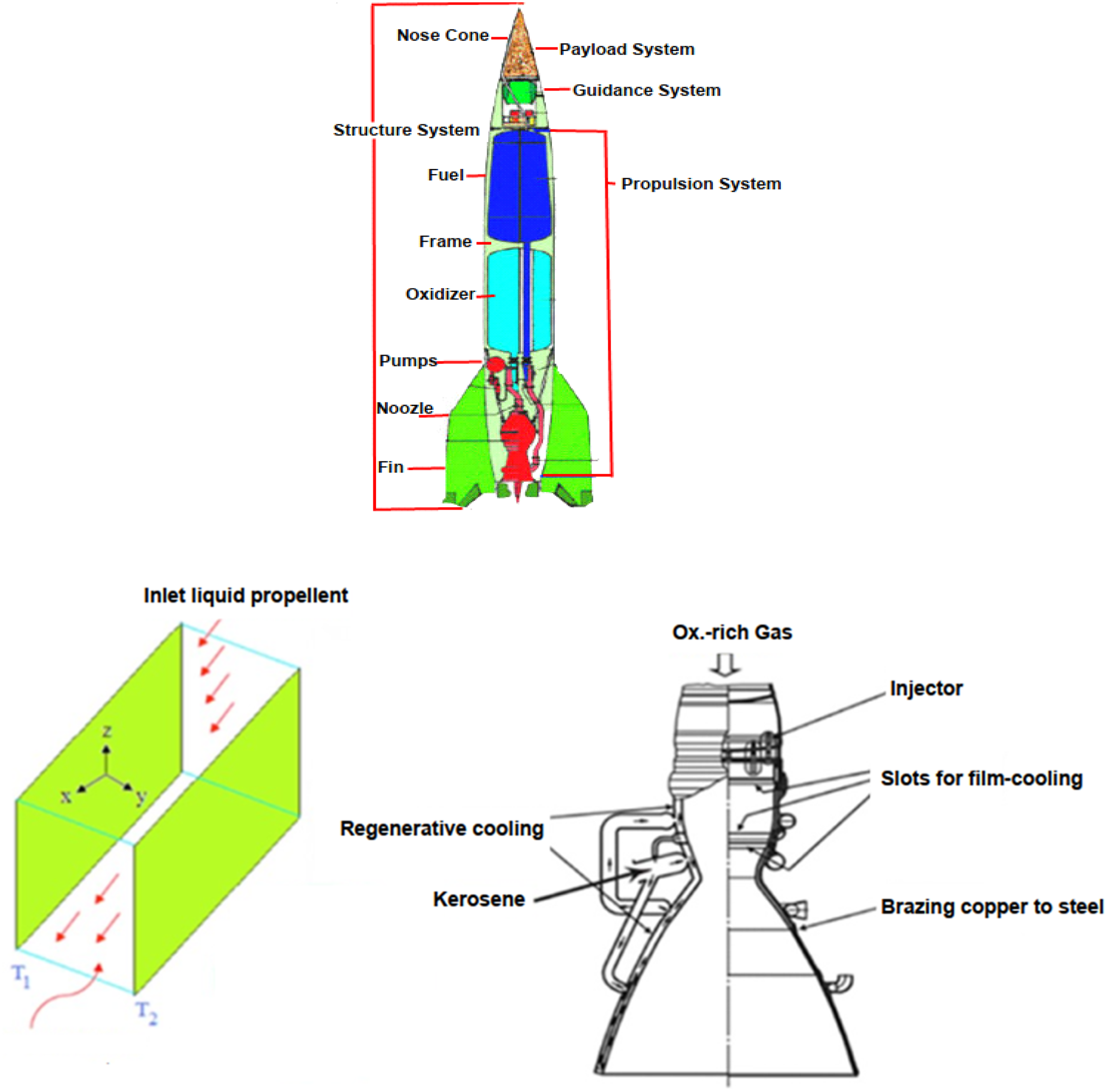
Physical model of the problem.
In light of the limitations listed in Acharya (2022c) and El Harfouf et al. (2024) above, the governing flow equations are




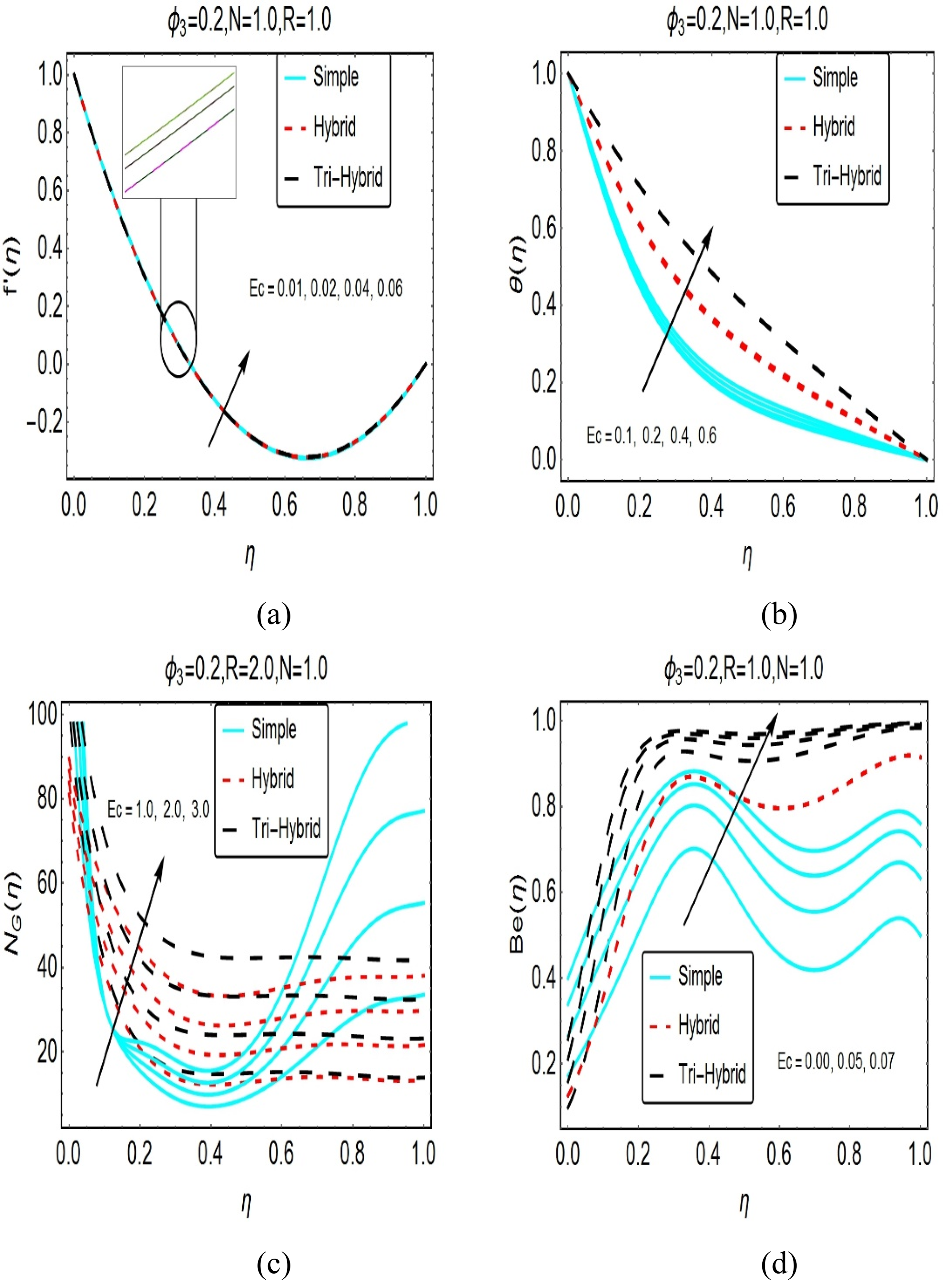
Influence of Ec parameter on (a)
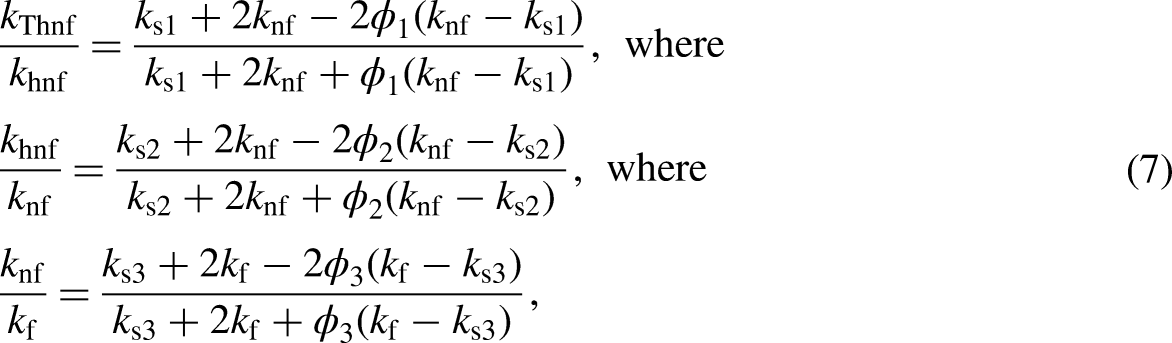
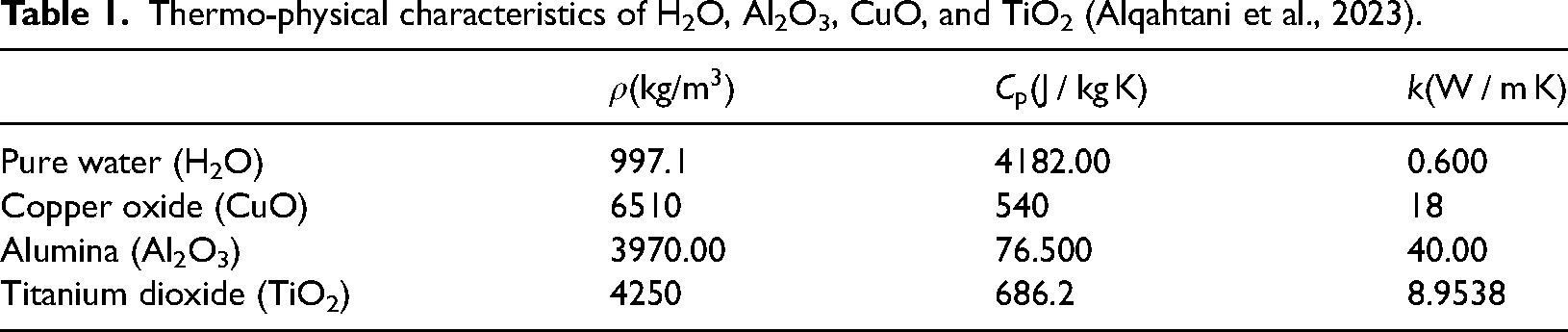
Thermal physical properties
The tri-hybrid nanofluid density


Boundary conditions are established as follows via the plates:





Entropy generation
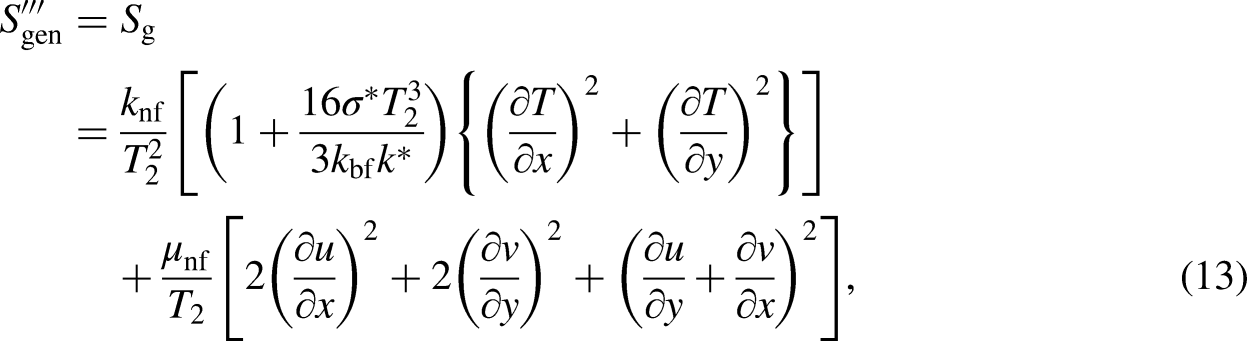
The following is an expression for entropy production in nanofluid flow (Butt and Ali, 2015):

Bejan number
The Bejan number, defined as the ratio of entropy due to thermal transport to total entropy creation, is calculated as follows:


Nusselt number
The following is an expression for the Nusselt number in nanofluid below:


Numerical solution
A numerical method is used to determine the mathematical expression for unstable flows as they are described by equations (10) and (11). Putting the associative equation into a solvable problem the starting value problem is the next step. To this end, we have created a recovery process. The Runge–Kutta approach is then used to solve the problem numerically.




Thermo-physical characteristics of H2O, Al2O3, CuO, and TiO2 (Alqahtani et al., 2023).
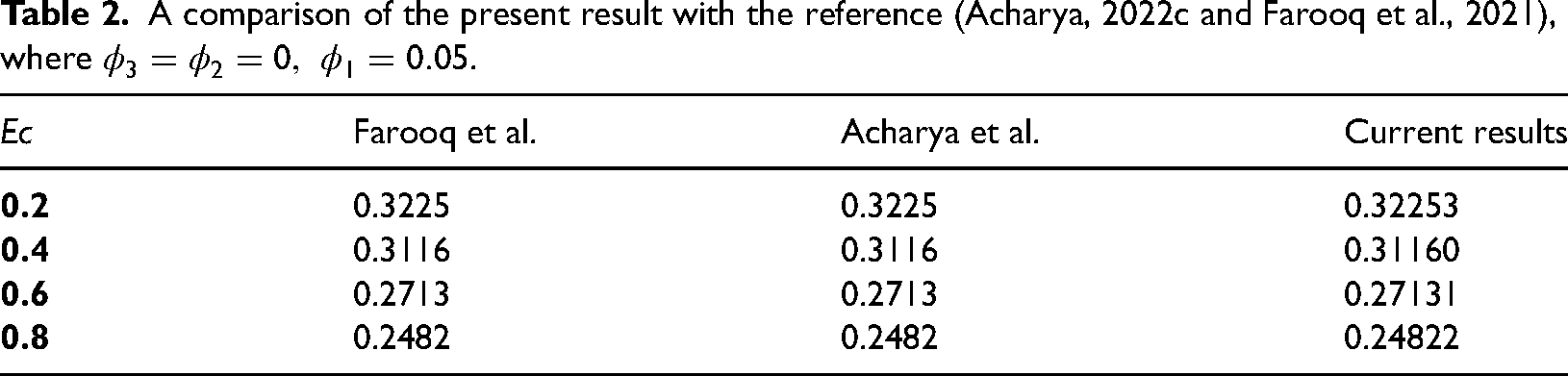
A comparison of the present result with the reference (Acharya, 2022c and Farooq et al., 2021), where
Mathematical analysis
For differential values of physical parameters
Interpretations of the results
This part gives the parametric study of entropy generation and thermal transport in the cooling channel of a liquid rocket engine. We have trust in the results, which show a high degree of agreement, to keep utilizing the present code. We numerically solve the dimensionless nonlinear ODEs (10) and (11) under boundary condition (12) for certain values of the radiation parameter (N), viscosity parameter R, Ecret number parameter Ec, and volume fraction
Consequence of Eckert number
The velocity and temperature of a fluid increase with the rise in the Eckert number (Ec), as illustrated in Figure 2(a) and (b). The Eckert number, Ec, is defined as the ratio of the flow's kinetic energy to the differences in enthalpy across the boundary layer. This parameter is crucial for understanding the transformation of kinetic energy into internal energy, which occurs through viscous dissipation where viscous forces within the fluid convert kinetic energy into heat.
As a result of this conversion, the thermal profile (denoted as θ) is augmented due to the heat generated by viscous dissipation. A significant Eckert number often leads to the cooling of channel walls or enhances heat transfer from the pipe walls to the fluid, as kinetic energy from the fluid is converted into heat which then flows to the walls.
Figure 2(c) illustrates the effect of the Eckert number on the entropy gradient (NG) within a certain range (0 ≤ η ≤ 0.2), showing a decrease in entropy. Additionally, the Bejan number, which quantifies the irreversibility due to heat transfer versus fluid friction, is observed to increase with the Eckert number, as shown in Figure 2(d). This indicates that as Ec increases, the overall entropy of the system also increases, but the ratio of irreversibility due to heat transfer decreases compared to that due to fluid friction. Figure 2(c) and (d) displays these effects respectively. However, the influence of the Eckert number diminishes at distances further from the plate, indicating that the effects are localized near the surface of the plate.
Consequence of radiation parameter
The impact of radiation parameter is illustrated through Figure 3. It is noticed that the velocity profile and fluid's temperature rises as a result of N, as seen in Figure 3(a) and (b). Physically, an increase in N releases heat energy from the flow zone, causing temperature to rise. As a result, the thickness of the thermal boundary layer improves.
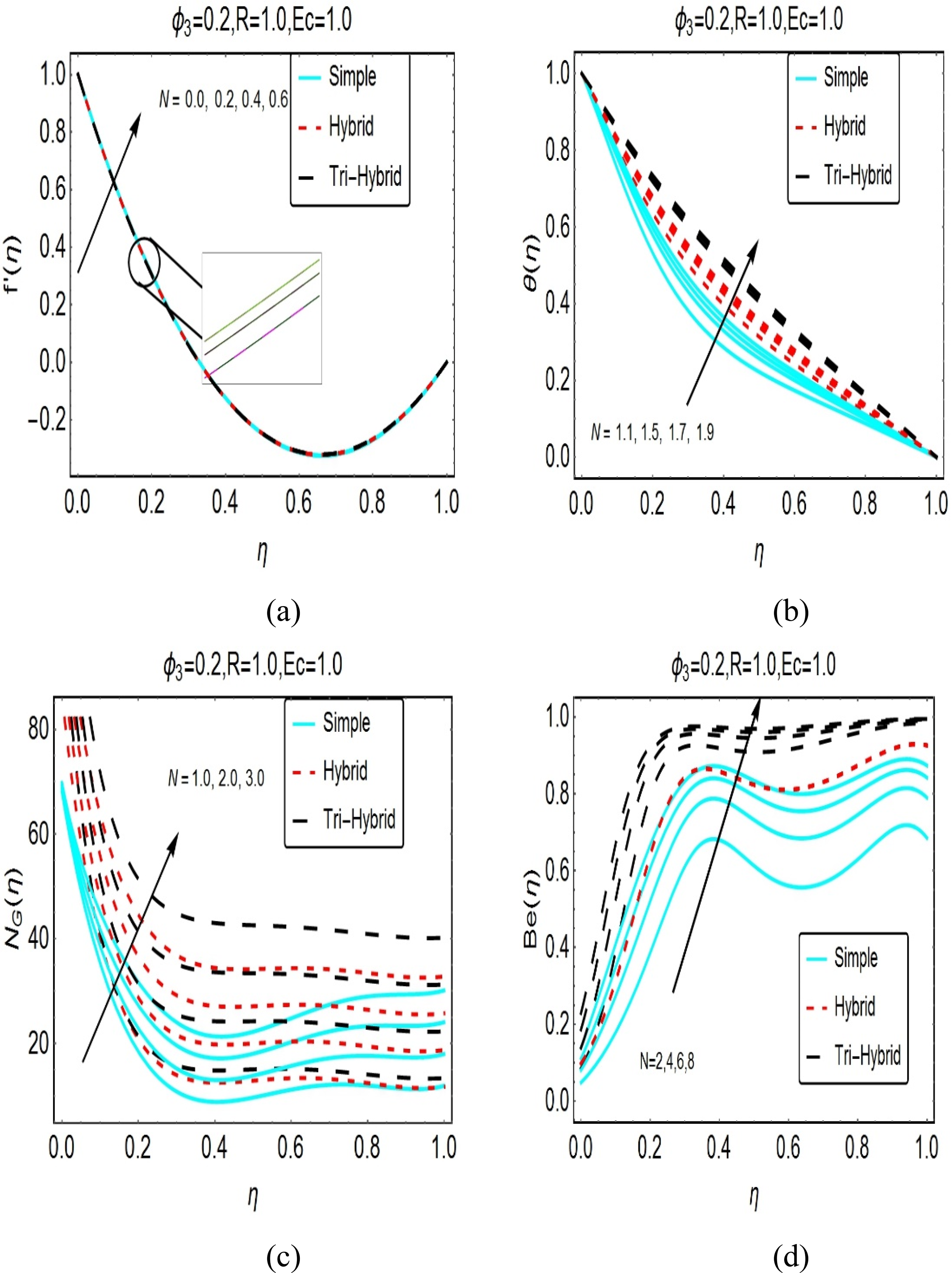
Influence of N parameter on (a)
The effect of N on NG is depicted in Figure 3(c). It is observed that within
Consequence of volume fraction
In Figure 4(a), f'(η) represents the gradient of the velocity profile in the boundary layer of the fluid. The parameter ϕ, often used to denote particle volume fraction or another relevant property in the context of nanofluids, is shown to have a positive correlation with the velocity gradient. This indicates that as ϕ increases, the momentum of the fluid also increases. As more nanoparticles are introduced, the fluid's viscosity or density may increase, which might increase momentum transmission within the fluid. Figure 4(b) shows the temperature of the nanofluid rising with ϸ. The higher thermal conductivity of nanofluids brought about by the presence of nanoparticles can be blamed for this temperature increase. Usually having greater thermal conductivities than the underlying fluid (such as water or oil), nanoparticles dispersed throughout the fluid improve the thermal conductivity overall. Thus, a greater temperature profile inside the fluid results from the nanofluid's ability to transmit and disperse heat more effectively for a given heat input.
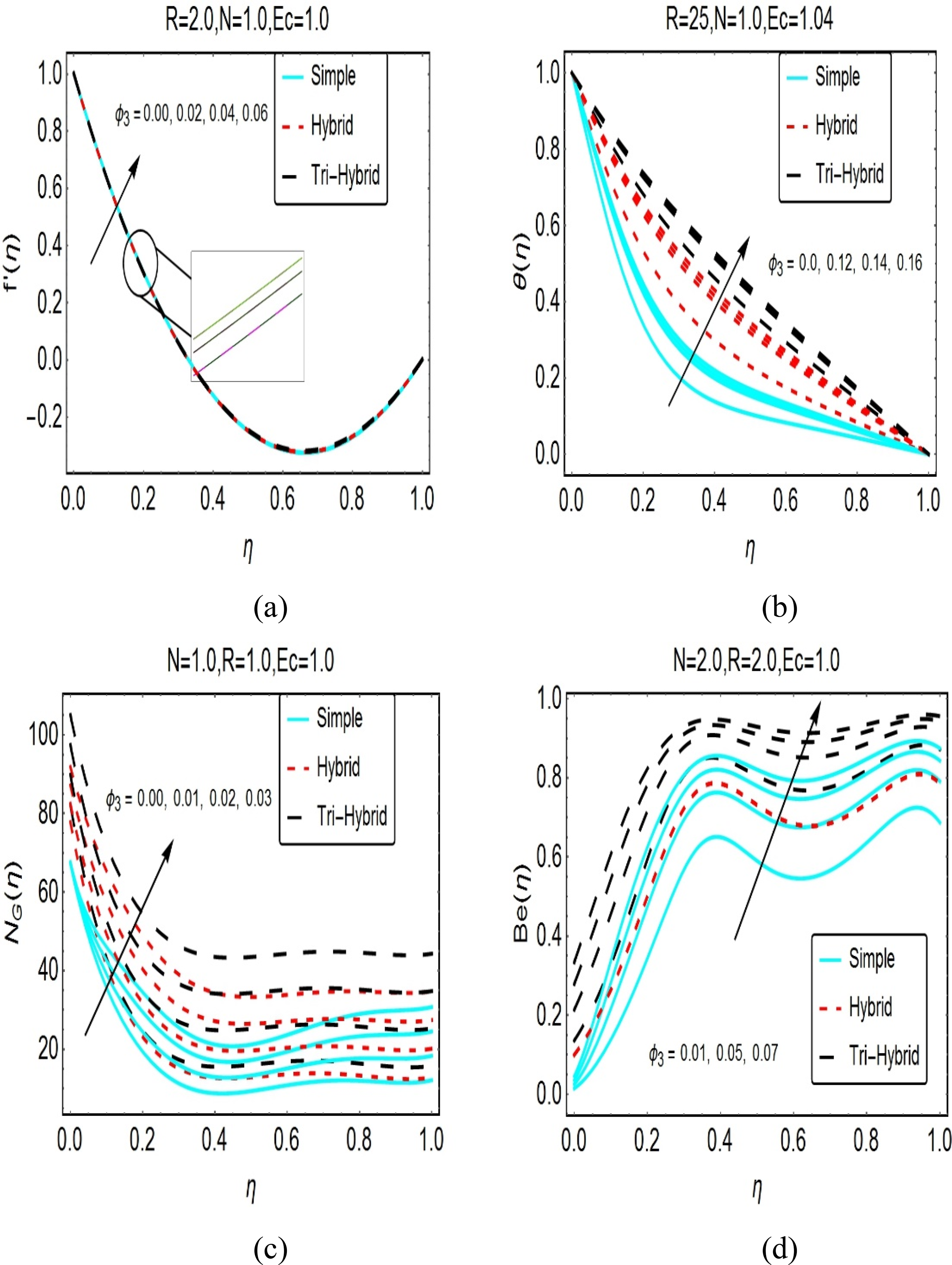
Influence of
Thermal conductivity is affected by ϕ increases, but so is the thickness of the thermal boundary layer. The thermal boundary layer the layer of fluid in which temperature varies dramatically from the wall to the bulk fluid thickens as the nanofluids' capacity to conduct heat does. Determining the pace at which heat moves from the fluid to the surroundings or vice versa depends critically on its thickness. Under different ϕ circumstances, the behavior of the nanofluid is probably described by particular dimensionless numbers or parameters, NG (η) and Be (η). Examples of this could be entropy generation (NG) and another particular energy or mass transfer parameter (Be). These parameters are shown by Figure 4(c) and (d) to be influenced by variations in ϕ in a similar way to other parameters like Ec (Eckert number, representing viscous dissipation) and N (perhaps a value like the Nusselt number, reflecting convective heat transfer). Through changes in physical characteristics like viscosity and thermal conductivity, the presence of nanoparticles influences these dimensionless values.
One finds that regular fluids have a larger maximum entropy than nanofluids. This implies that nanofluids may have more or less ordered molecular mobility because of the nanoparticles even with their improved heat transmission properties. Entropy generation can be decreased by this sequence, which is frequently linked to energy losses and inefficiency in thermodynamic systems. This arrangement reduces it. Nanoparticles significantly reduce NG (η), suggesting they may reduce entropy formation during fluid flow. Nanoparticles may be causing more uniform temperature gradients or better momentum and heat transfer. Adding nanoparticles to a fluid (represented by ϕ) significantly improves its physical and thermodynamic properties, affecting velocity profiles and entropy generation. This has significant implications for industrial and engineering applications that prioritize heat and mass transfer efficiency.
Consequence of viscosity parameter R
The velocity graph is addressed in Figure 5(a). It is observed that velocity profile enhanced due to R. The temperature curve for R is shown in Figure 5(b).
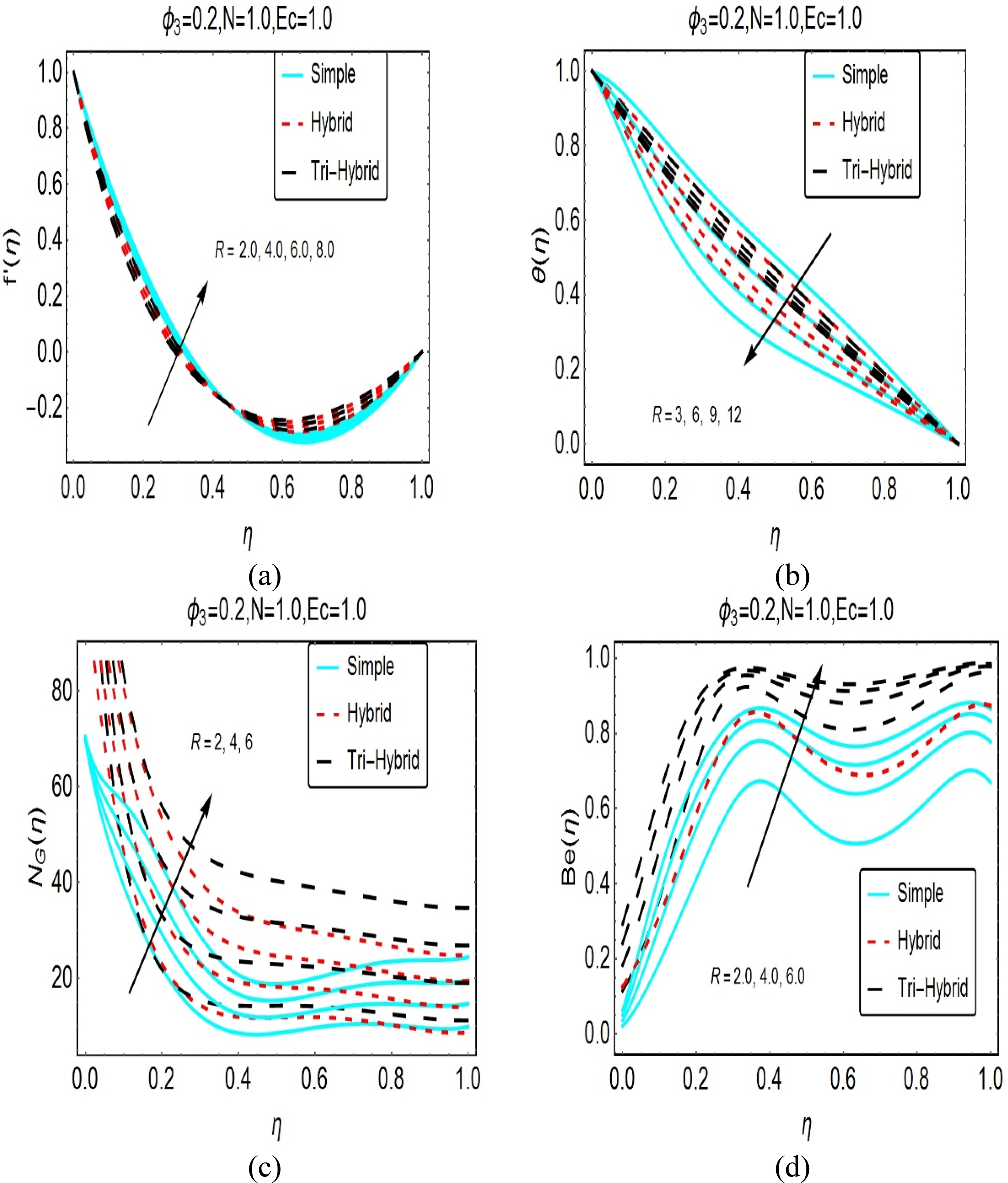
Influence of R parameter on (a)
Within the flow regime, the effect sounds great. Entropy generation intensifies with R, as shown in Figure 5(c) The curve acts as a rising curve near the plate, i.e.
Nusselt number
Let us examine the particular interactions and consequences of these parameters in the context of heat transfer involving nanoparticles in order to supplement the explanation of the effect of different parameters on the Nusselt number as shown in the graphs from Figure 6(a) to (c):
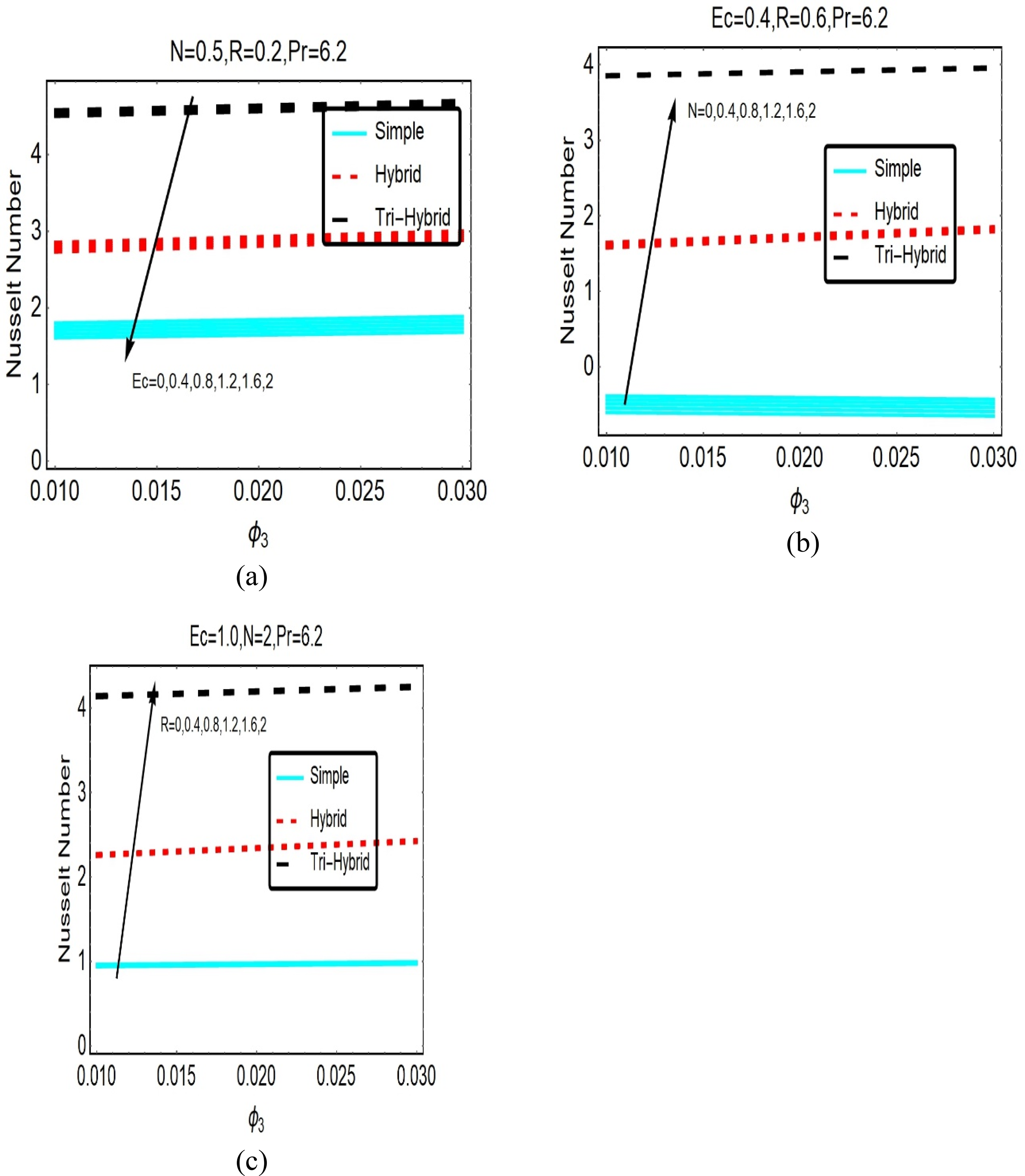
Influence of (a)
The Eckert number (Ec)
Dimensionless in nature, the Eckert number measures the enthalpy difference resulting from a temperature differential to the kinetic energy in the flow. It gauges the fluid's viscous dissipation. The Nusselt number in the graphs falls with increasing Eckert number. This tendency implies that increased viscous dissipation raises fluid temperature, which reduces the total temperature difference between the fluid and the boundary surface. The efficiency of convective heat transport is therefore decreased.
Radiation parameter (N)
Besides conduction and convection, the radiation parameter in this context probably refers to the impact of thermal radiation as a mechanism of heat transmission. An increase in this value indicates more intensive radiative heat transfer. The figures show that a larger radiation parameter increases the Nusselt number, suggesting that radiative heat transfer is important in raising the total rate of heat transfer from the nanoparticles to the surroundings. This might be very important in high-temperature applications where radiation takes over as the primary heat transfer mechanism.
The charts use the independent variable (x-axis) as nanoparticle volume fraction. The thermal conductivity and viscosity of a fluid can be greatly influenced by its volume fraction of nanoparticles. Generally, introducing nanoparticles raises the thermal conductivity of the fluid, which can improve the convective heat transfer coefficient and maybe raise the Nusselt number. The way this parameter relates to the Eckert, radiation, and viscosity factors to establish the general heat transport properties will determine the particular patterns in the graphs.
It is necessary to examine the empirical facts as shown in the graphs together with the theoretical foundation of heat transport boosted by nanoparticles to fully comprehend these interactions. Such data is crucial for applications in engineering fields where precise control over heat transfer is necessary, such as in cooling systems for electronic devices or thermal management systems in aerospace applications.
Table 2 compares the results achieved with the R-K-4 method with those attained with other shooting techniques. There is no difficulty in combining the two choices.
Conclusions
The features of heat transmission and entropy production in a liquid rocket engine nozzle are presented in this work. The leading equations were decoded using the RK-4 method with a shooting approach. A parametric investigation has been initiated to determine the impact of flow variables on the flow profile. The graphs that are required have been plotted.
From the current study, the following particular observations are drawn:
For the parameter N, For N, The parameter R causes non-dimensional entropy generation to enhance, but the rest of the parameters have the reverse effect. Ternary hybrid nanoparticles have a crucial role in the generation of thermal energy, as opposed to hybrid nanoparticles and nanostructures. For the generation of temperature gradients and surface forces, ternary hybrid nanomaterial's are more accurately described than nanoparticles. For N, Ec, Dual features have been found for every parameter in each profile of For N, Ec,
Footnotes
Acknowledgments
The study was funded by Researchers Supporting Project number (RSPD2024R749), King Saud University, Riyadh, Saudi Arabia.
Data availability
The data and material used and/or analyzed during this study are available from the corresponding author upon reasonable request.
Declaration of conflicting interests
The authors declared no potential conflicts of interest with respect to the research, authorship, and/or publication of this article.
Funding
The author(s) disclosed receipt of the following financial support for the research, authorship, and/or publication of this article: The study was funded by Researchers Supporting Project number (RSPD2024R749), King Saud University, Riyadh, Saudi Arabia.
