




Abstract
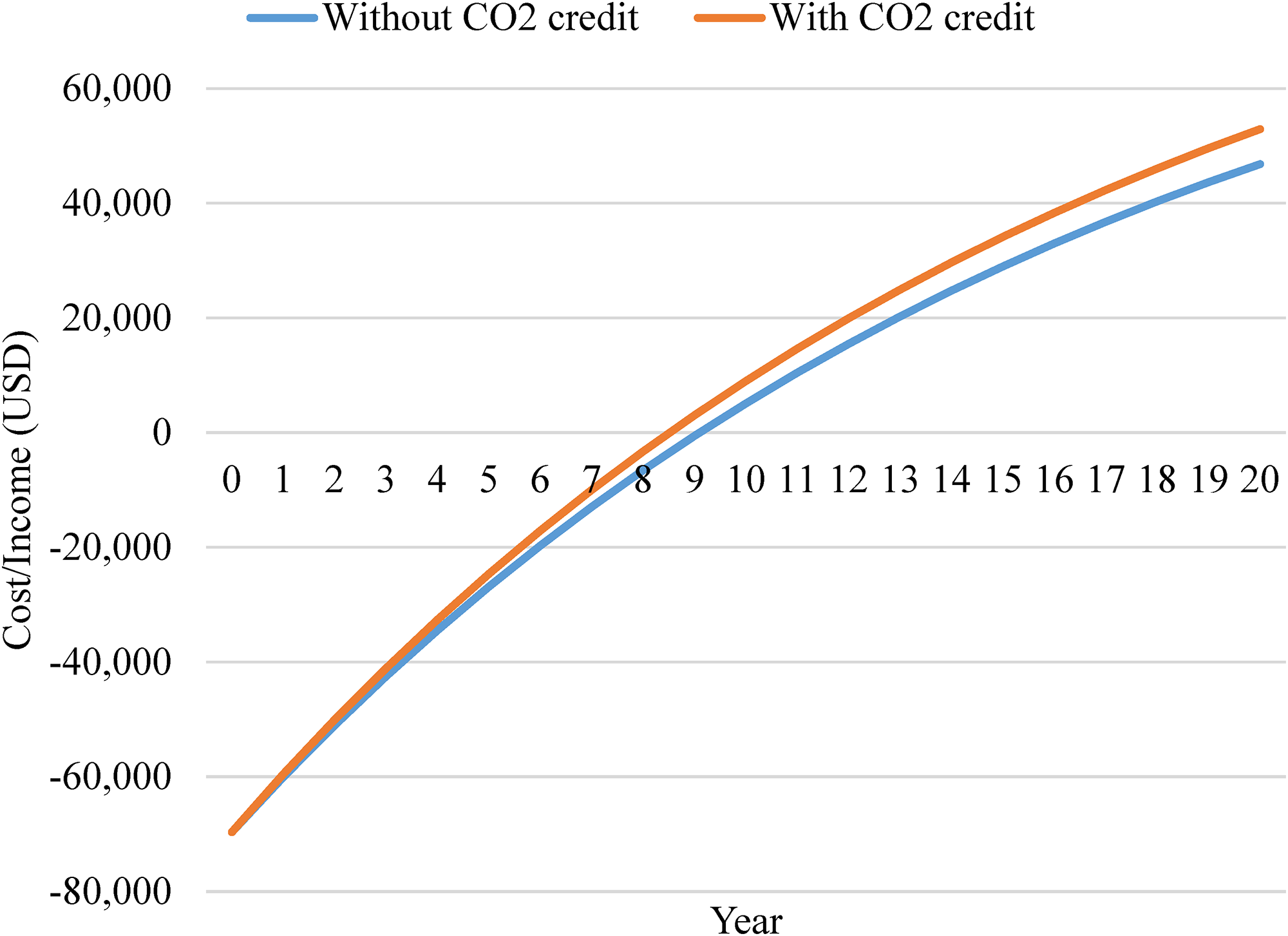
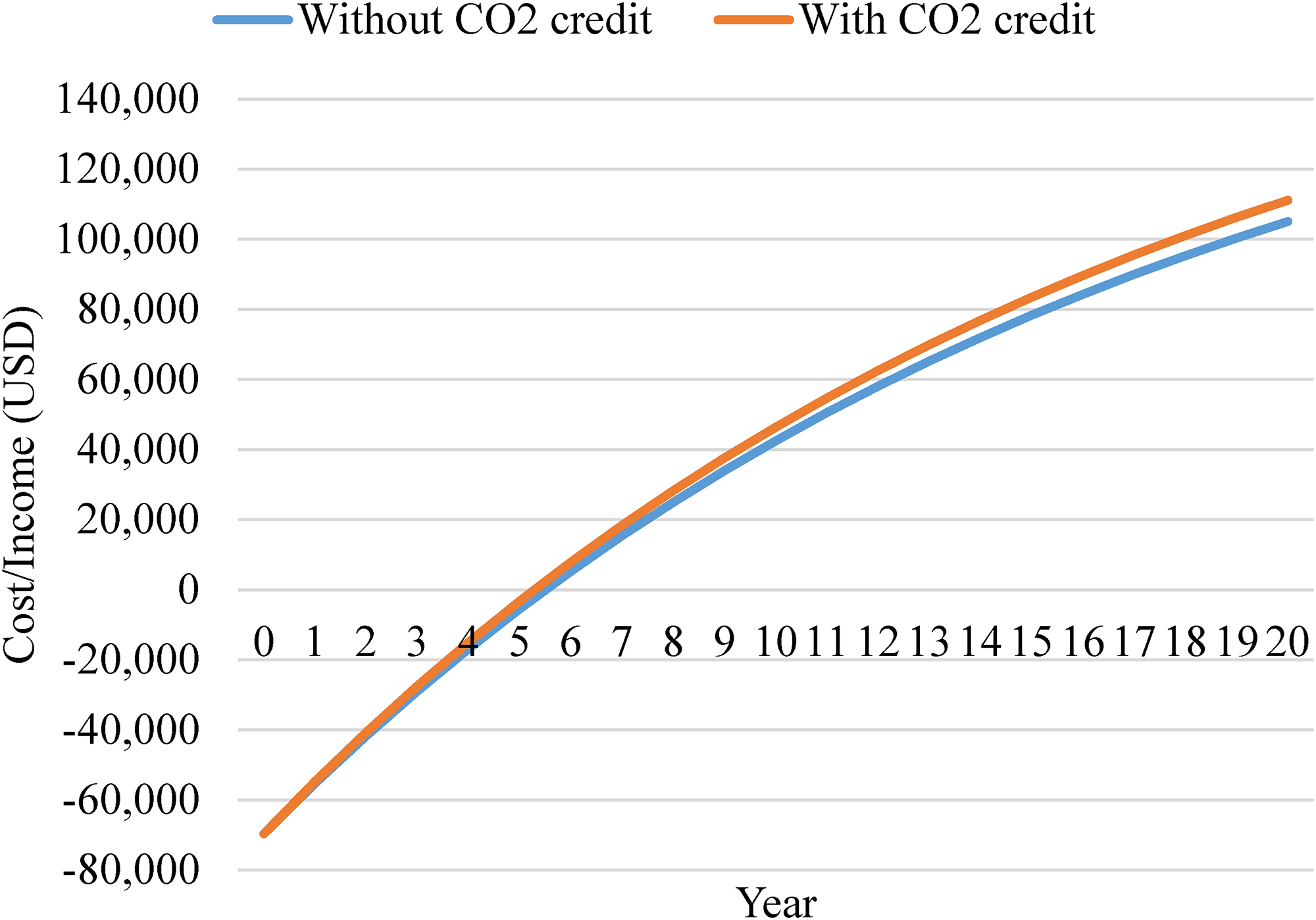
In rural areas, diesel generators are prevalent due to their lower initial cost, despite inefficiencies and carbon emissions. Transitioning to PV/Battery/Diesel systems offers a solution by reducing costs and emissions. However, the high upfront expenses present a significant barrier, particularly for rural communities, necessitating external financial support. This study evaluates the benefits of adopting a PV/Battery/Diesel hybrid system over traditional diesel generators in a rural community with 25 customers and a daily demand of 50 kWh. The proposed system includes a 12 kWp photovoltaic array and a 48 kWh battery bank, simulated using Hybrid Optimization of Multiple Energy Resources (HOMER) software. Results indicate a 91% renewable fraction and a cost of energy of 0.279 USD/kWh, substantially lower than the 1.05 USD/kWh of diesel-only systems, with CO2 savings of 25 t per year. The paper advocates for a case study approach to green mechanism, urging energy and environmental companies to invest in these systems. By replacing diesel generators with hybrid PV/Diesel/Battery systems, companies can offer electricity at a reduced cost, driving adoption. Selling carbon credits from emission savings can generate additional income, leveraging CO2 tax incentives. Under scenarios where investors cover 50% of diesel costs, selling electricity yields 9581 USD annually, and selling CO2 credits generates 500 USD annually. This leads to a payback period of 9.83 years without CO2 credits and 9.18 years with CO2 credits, totaling 46,848 USD without CO2 credits and 52,927 USD with CO2 credits over the project's lifespan. Meanwhile, adjusting electricity pricing to 75% of diesel costs, this increases annual income from electricity sales to 14,372 USD. This reduces the payback period to 5.89 years without CO2 credits and 5.66 years with CO2 credits, totaling 105,094 USD without CO2 credits and 111,174 USD with CO2 credits at the end of the project.
Keywords
Introduction
Electricity is crucial for improving living standards because it powers essential facilities like schools and healthcare centers (Suresh et al., 2020). However, many remote communities lack electricity, depriving them of these vital services and hindering their social development. Meanwhile, the International Energy Agency (IEA) considers small-scale isolated off-grid electrical systems as highly viable solutions (Aberilla et al., 2020). Nevertheless, many remote communities often rely on diesel generators to meet their electricity needs because these systems appear cheaper initially compared to other electricity sources (López-Castrillón et al., 2021). However, the running cost of diesel generators is dominant and deserves consideration more than investment costs. Meanwhile, inefficient operation, which commonly occurs in diesel systems at low load factors, results in high fuel consumption. This inefficiency leads to increased operating costs and higher pollution levels (Mustayen et al., 2022). Therefore, despite the initial investment seeming low, the ongoing expenses and environmental impact of diesel generators are considerable (Babajide and Brito, 2021). Meanwhile, renewable energy systems present a promising option due to their low operational costs and environmentally friendly nature (Guo et al., 2018). In recent years, there has been a dramatic fall in the cost of solar PV panels due to increased production and research into more efficient and cost-effective options, making PV a potential energy source that is both environmentally benign and cost-effective. However, PV power output is variable and limited to 8–10 h each day, unable to meet all customer load requirements on a 24-h basis, with peak generation occurring when residential load demand is low (Zhang et al., 2018). Integrating batteries into renewable energy systems enhances reliability but increases initial investment costs, emphasizing the importance of optimal design to ensure resource utilization efficiency while reducing expenses (Andreolli et al., 2022; Cai et al., 2020). The variability of solar radiation between seasons necessitates careful consideration in the sizing of PV systems. With higher solar radiation in summer compared to winter, meeting demand during winter requires an oversized PV system, thereby increasing costs significantly. To address this challenge, hybrid systems are proposed, integrating a PV system sized around average solar radiation to cover demand for the majority of months, excluding winter. Additionally, diesel generators are included to supplement energy during winter when solar radiation is minimal. This approach enhances reliability during periods of low radiation, thereby balancing initial investment and ongoing costs (Fodhil et al., 2019).
Related studies
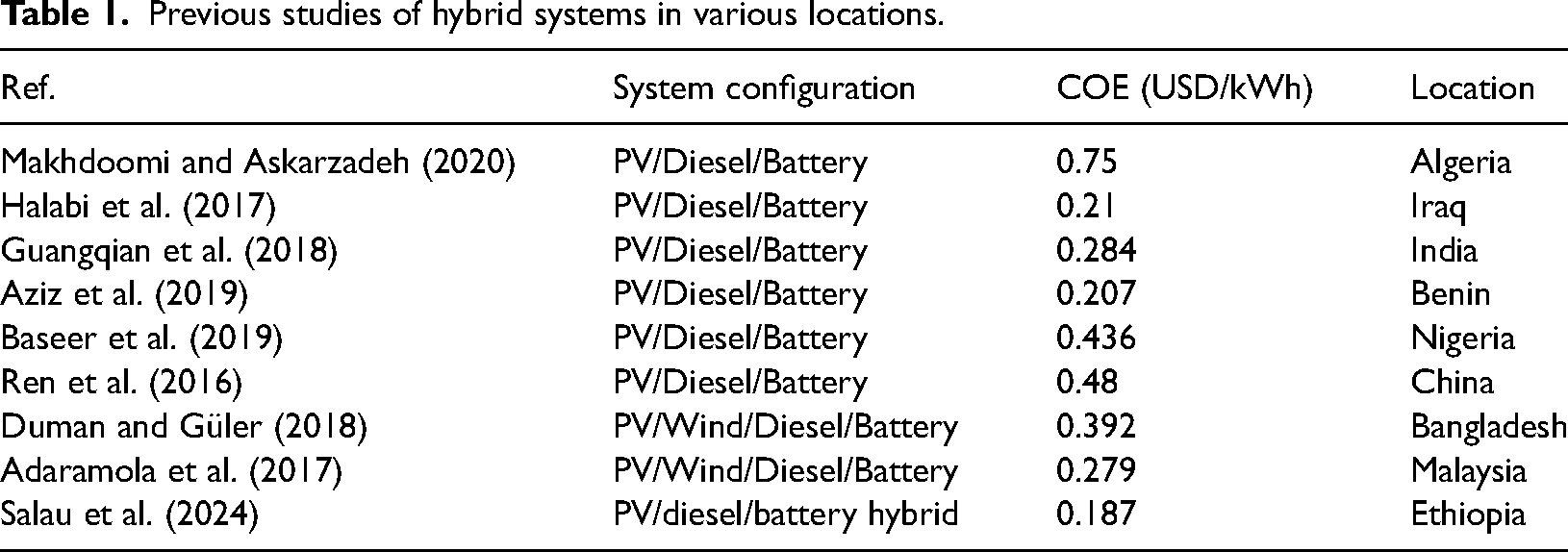
Transitioning to related research, Kazem et al. (2016) explore the technical and economic feasibility of various configurations of a PV/wind/diesel/battery hybrid system, revealing its potential to achieve a substantial 75% reduction in energy costs compared to diesel power systems. Lozano et al. (2019) deliver a techno-economic assessment of PV/diesel hybrid and standalone solar PV power systems for Gilutongan Island, showcasing the PV/diesel hybrid system's substantial decrease in cost of energy (COE) and favorable payback period. Hessami et al. (2011) conduct a techno-economic analysis of hybrid wind energy systems, indicating their superiority over diesel generators in remote areas. Mamaghani et al. (2016) perform a techno-economic analysis of an isolated grid PV/wind/battery/diesel hybrid energy system, revealing it as the best choice for a specific case study in Colombia with a COE of 0.473 USD/kWh. Gabra et al. (2019) assess the economic feasibility of an isolated PV/wind/diesel energy system for rural electrification in Africa, suggesting diesel/PV hybrid systems as the most economically viable solutions. El-Tous et al. (2012) conducted a study on the optimal sizing a PV/wind hybrid system in Jordan, concluding that the hybrid system with renewable fraction with 82%, and the lowest LCOE, 0.053 USD/kWh. Additionally, further studies are summarized in Table 1, highlighting various locations. However, these studies do not discuss the opportunity for energy service companies to invest in such systems to encourage rural communities and investors towards sustainable solutions.
Previous studies of hybrid systems in various locations.
Research significance
While previous studies confirm the feasibility of hybrid systems, they often overlook the crucial aspect of financing the transition from diesel to hybrid systems. This oversight is significant because the high initial costs associated with the transition often discourage rural communities from making this transition, as they focus mainly on the initial cost without considering the long-term benefits. Meanwhile, transition financing involves offering investment options that can be adopted by energy companies or industries. These options must take into account the interests of both local residents and investing entities, while also prioritizing environmental sustainability. Therefore, the primary aim of this research is to explore the potential for green mechanism in rural electrification, wherein companies facilitate the investment needed to replace diesel generators with more sustainable, economically viable, and environmentally friendly energy systems. By exploring this opportunity, policymakers and businesses can develop strategies that promote social development in rural areas.
Research structure
The structure of this paper commences with the introduction section, followed by the mathematical models of hybrid systems encompassing PV, battery, and diesel models, alongside economical models. Section “Case study description” includes the case study description with resource and load assessment. In Section “Hybrid system sizing,” the paper presents system sizing of hybrid system components. Section “Simulation results of HOMER software” covers simulation using HOMER, presenting comparisons between hybrid systems and diesel-only systems in terms of economic, operational, and environmental factors. Section “Green mechanism” discusses green mechanisms, including the requirements for energy dispensers and a feasibility analysis of energy companies investing in hybrid systems to replace diesel systems, considering different scenarios for returns from customers. Finally, section “Conclusion” provides concluding remarks on the research.
Research methodology
To successfully carry out the analysis, the methodology involves several steps outlined in Figure 1 and detailed in the following points:
Literature review: Begin by reviewing previous studies to identify the problem statement and establish the context for the research. Resource assessment and load assessment: Conduct a thorough assessment of available resources, focusing on solar radiation and temperature data for the case study location. Estimate the daily load requirements of the location and present this information in the form of a detailed load profile. System component sizing: Determine the appropriate sizes for all system components, including PV panels, battery storage, converters, and the diesel generator, based on the load profile and resource assessment. Simulation and evaluation: Utilize HOMER software to simulate the hybrid system. Economic and operational evaluations: Include metrics such as net present cost (NPC) and COE. Green mechanisms: Propose options for financing the hybrid system, emphasizing energy management strategies to optimize consumption. These mechanisms ensure sufficient revenue to repay the initial investment, achieve financial goals, and earn CO2 credits.
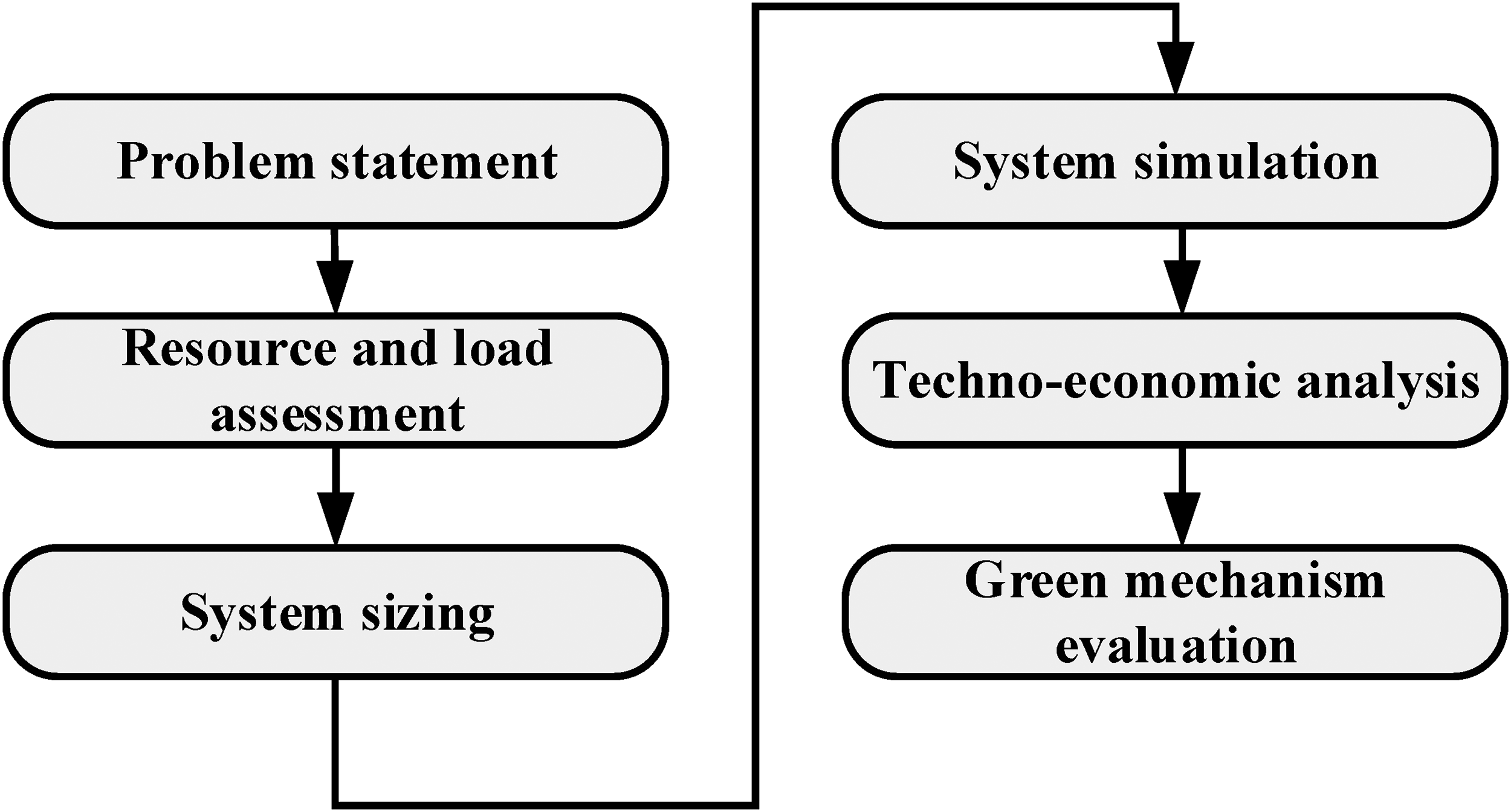
Schematic for the research methodology.
Mathematical modeling and tools
This section outlines the mathematical models for both the hybrid system components and diesel systems. This will help in understanding the simulation results and making the analyses in the following sections more comprehensive.
PV power model
The power output of photovoltaic panels can be calculated in equation (1) (Omar and Mahmoud, 2019a). It is important to highlight that the power generated by PV panels is directly proportional to the incident solar radiation and inversely proportional to the temperature of the PV cells (Omar, 2020).

Battery energy model
Variability in solar energy production, stemming from changing levels of solar radiation, alongside the variability in energy consumption, underscores the critical role of battery storage systems in optimizing the utility of solar power. Specifically, during times when solar power generation exceeds consumption, the excess energy can be stored in batteries for later use. This ensures a continuous energy supply in case low solar generation cannot meet the load demand. The processes of battery charging and energy release are governed by mathematical models described in equations (3) to (6).



The battery state of charge (SOC) and depth of discharge (DOD) are essential parameters used to monitor the energy content within the battery. SOC indicates the current energy level relative to the battery's rated capacity, ranging from 0% when fully depleted to 100% when fully charged. Conversely, DOD measures the extent to which the battery's energy has been utilized, ranging from 0% (fully charged) to 100% (fully depleted). Therefore, SOC and DOD are complementary metrics that provide insights into the operational status and performance of the battery system; both are presented in equations (7) and (8) (Omar and Hamdan, 2024).

Diesel generator model
The standby diesel generator enhances the reliability of the electrical source, particularly when the PV system and battery cannot meet the load power. This scenario often occurs when the PV generated power is insufficient compared to the load power, and the battery SOC reaches its minimum value. In such instances, the diesel generator is activated to fulfill the load requirement while simultaneously charging the battery system. The electrical output power of generator is described by (9). The fuel consumption of the generator can be calculated based on its power fuel curve as shown in Figure 2, which specifies the rate of fuel consumption at different power levels. Each generator has its own unique set of parameters that define its power fuel curve. By considering the generator's output power, we can utilize the corresponding parameters from its power fuel curve to determine the fuel consumption as in (10).

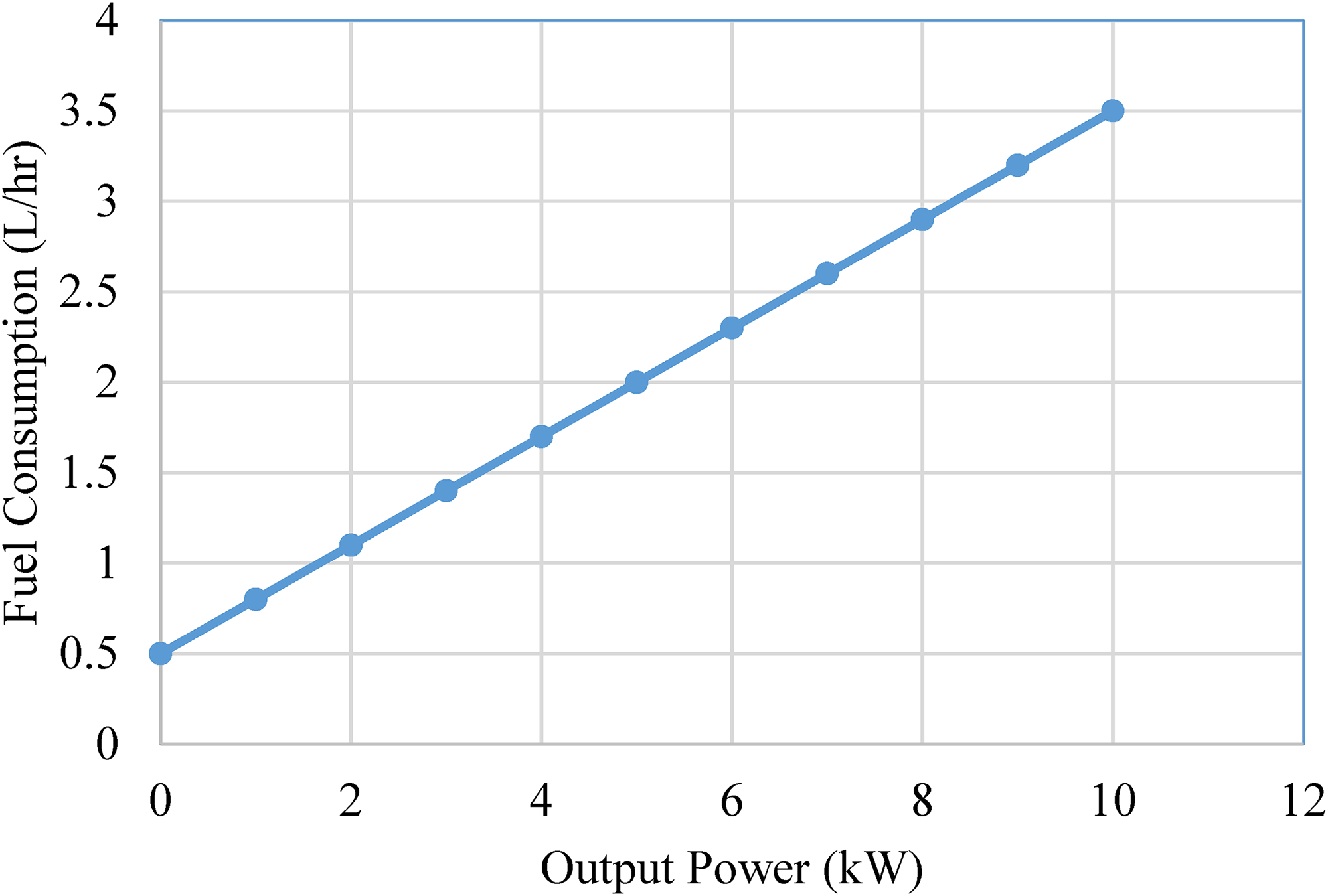
Diesel generator fuel curve.
The efficiency curve shown in Figure 3 of the generator is derived from the fuel curve because the input fuel can be converted to kWh based on the calorific value of diesel fuel, with each liter converting to 10 kWh. For example, if the output supplied full load power is 10 kW for one hour (10 kWh), the generator consumes 3.5 l of diesel, equivalent to 35 kWh. Therefore, the efficiency of the diesel generator at full rated power is 28.5%.
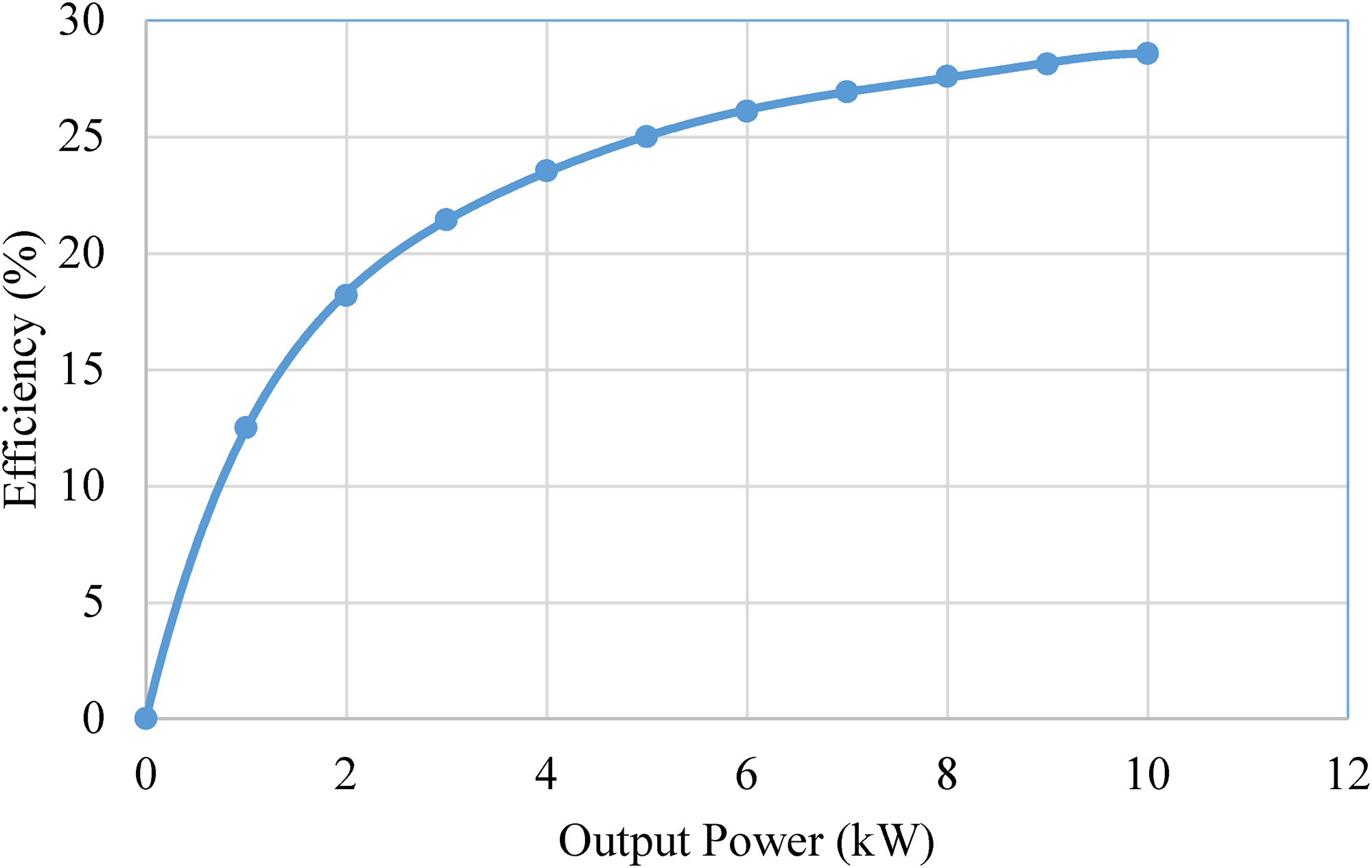
Diesel generator efficiency curve.
Controller for dispatch strategy
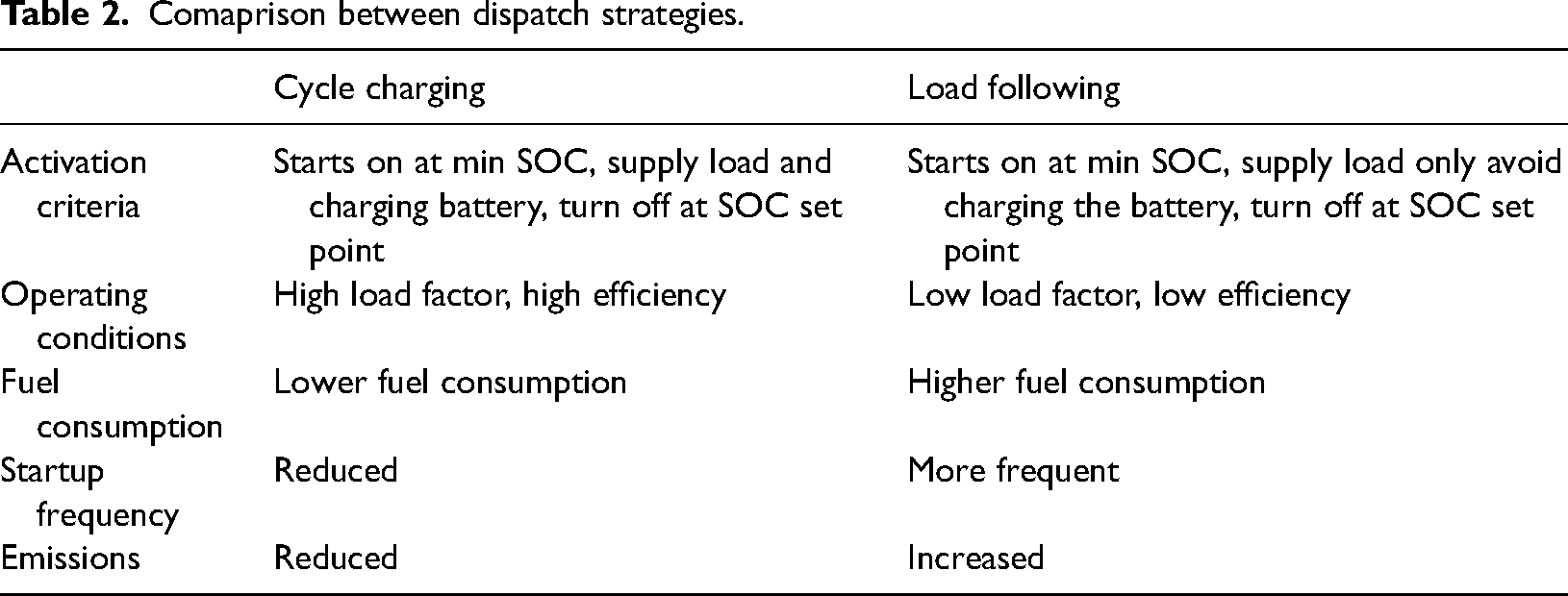
The dispatch strategy plays a crucial role for diesel generator operation within a hybrid system, governing its activation and deactivation, and profoundly impacting operational costs, mainly fuel consumption and emissions. Two primary strategies are commonly employed: load following and cycle charging (Table 2).
Comaprison between dispatch strategies.
Economic factors
The economic feasibility of PV/battery/diesel hybrid system depends on careful consideration and optimization of key economic factors like annual cost (AC), NPC, COE, and dynamic payback period (DPP).
The net present cost
It represents an important economic indicator to compare the proposed electrical systems with the aim of covering the electrical load. A system with minimal NPC is the most feasible option. NPC includes costs associated with the cost of system components that include photovoltaics, batteries, and diesel generators. In addition, it includes operational expenses such as the cost of fuel, maintenance costs, and the cost of replacing components whose service life ends before the proposed project period. At project initiation (t = 0), NPC entails sum of all present costs, incorporating a discount factor (DF) to adjust for future costs. The salvage value (SV) accounts for anticipated asset income upon project completion, with the DF fluctuating over time (t) and being determined by equations (12) to (14) (Omar, 2023).


Annual cost
The AC can be calculated using equation (15), which involves converting of the NPC into an AC by multiplying the NPC by the capital recovery factor (CRF), as calculated according to equation (16) (Omar, 2023).

Cost of energy
The COE is a crucial economic measure that determines the expense per unit of generated energy (USD/kWh). It is calculated by dividing the AC, as shown in equation (15), by the energy consumed by the load, as described in equation (17) (Omar and Mahmoud, 2018).
Dynamic payback period
The DPP is an important metric for project evaluation. It measures how long it takes for an investment to pay for itself through savings or revenue. This can be calculated as shown in equation (18) (Omar and Mahmoud, 2018).
Environment factor
The Kyoto Protocol, adopted in 1997, mandates reductions in greenhouse gas emissions for developed countries, with a strong emphasis on controlling emissions. Certified Emission Reductions (CERs) verify these reductions under the Clean Development Mechanism (CDM). In the context of a PV/Diesel/Battery system, this setup can reduce CO2 emissions compared to using a Diesel-only system. The saved CO2 emissions can be exchanged in industries subject to CO2 taxes to calculate earned carbon credits (ECC), which can be determined using equation (19).
Case study description
This case study explores the design and sizing of a hybrid photovoltaic (PV) diesel system for a rural community in the West Bank. The primary objective is to develop a reliable and sustainable energy solution tailored to the specific needs and conditions of the area. This introduction provides an overview of the site specifications, solar resources, and load assessment, which are critical components in the planning and implementation of the hybrid energy system.
Site description and resources
The considered rural area in West Bank-Palestine is located at site 32°19.2′N, 35°23.2′E. The required information for simulating the PV/Diesel/battery system includes solar radiation and temperature, as they affect the performance of PV output.
Solar energy and temperature
The Palestinian region is characterized by substantial solar irradiance, with an average daily solar energy incidence of 5.2 kWh/m² and approximately 3000 h of sunshine annually. Representative data on monthly solar radiation averages for the northern territories of the West Bank, as illustrated in Figure 4, mirrors the solar conditions prevalent across the entire territory of Palestine. Notably, the period extending from March to October exhibits a pronounced solar energy average of 7.79 kWh/m² per day, in contrast to the November to February interval, where the average declines to 2.94 kWh/m² per day. The solar radiation intensifies notably during May, June, and July, consistently surpassing 7 kWh/m² per day. These empirical values compellingly advocate for the strategic implementation of solar energy solutions in Palestine, thereby enhancing the nation's energy autonomy and advancing environmental sustainability. In addition to its abundant solar resources, the Northern West Bank region is characterized by warm and clear summers, which significantly influence the efficiency of solar energy systems. The annual daily average temperatures range between 11 °C and 28 °C, as depicted in Figure 4. A four-month warm period from May to October sees daily high temperatures consistently above 22 °C, culminating in August as the region's warmest month with average highs surpassing 28 °C. Conversely, the cooler season spans three months from December to February, with average daily highs not exceeding 13 °C. January is notably the coldest month, with value amounts to 11 °C of average temperature. The interplay between solar irradiance and temperature underscores the feasibility and potential efficiency of solar energy solutions in the region.
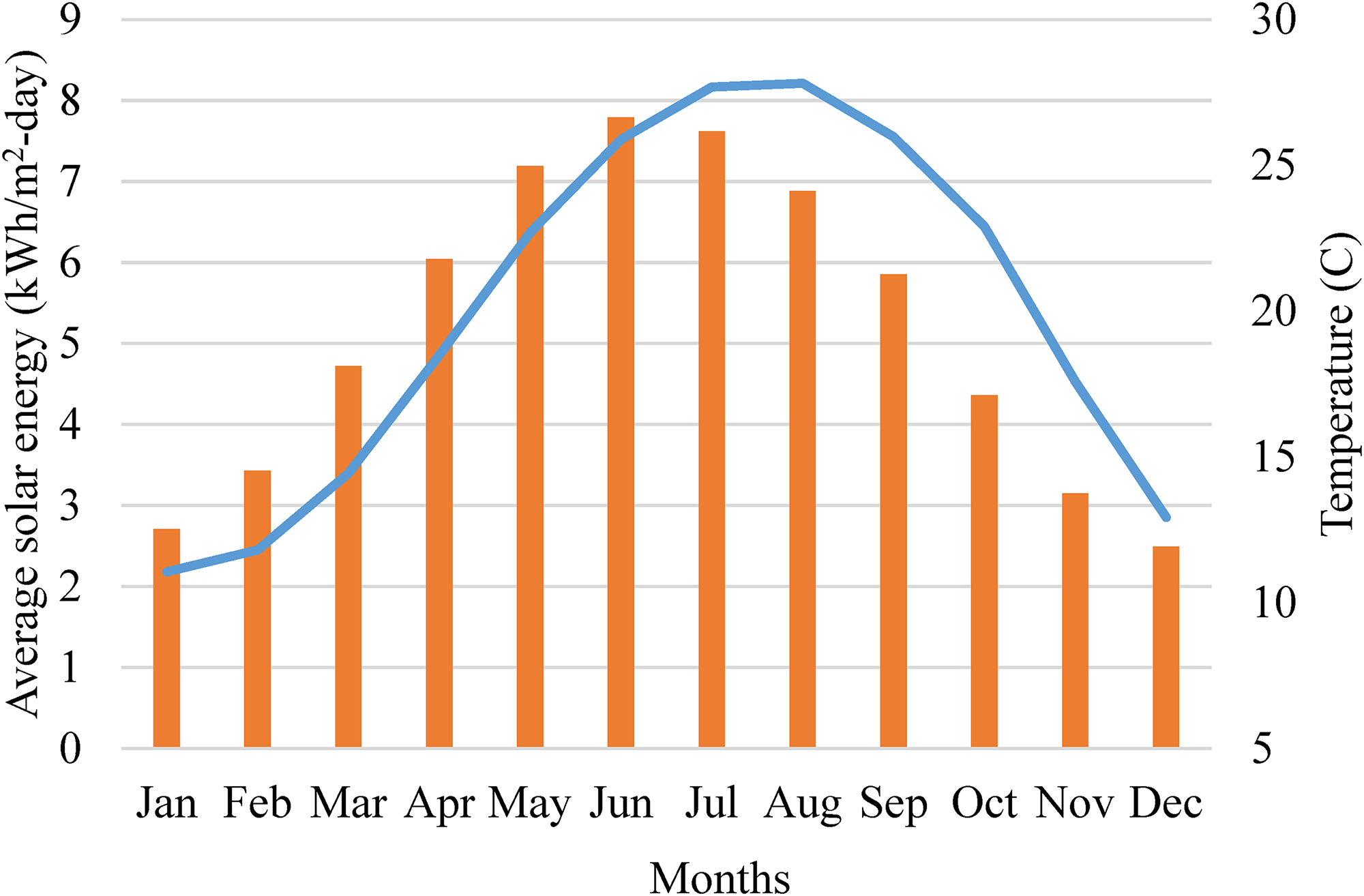
Monthly solar energy and temperature.
Load assessment
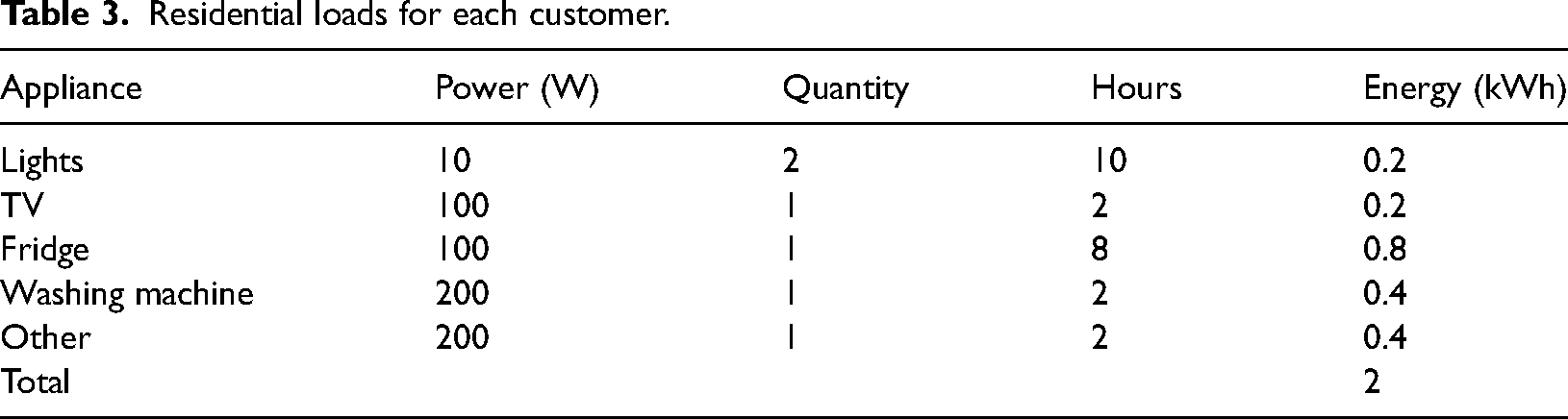
The isolated community consists of 25 houses; each house can consume 2 kWh by appliances as listed in Table 3, each appliance consumes certain power for certain amount of period.
Residential loads for each customer.
The daily load curve of the community plays a pivotal role in simulating the hybrid power system. The load profile is intricately shaped by the operational patterns of various appliances and consumer behaviors prevalent within the community. Common household appliances such as refrigerators, washing machines, as well as the utilization of televisions and lighting, significantly contribute to this load profile. The estimated load profile of the community, indicating a total daily energy consumption of 50 kWh/day, is depicted in Figure 5.
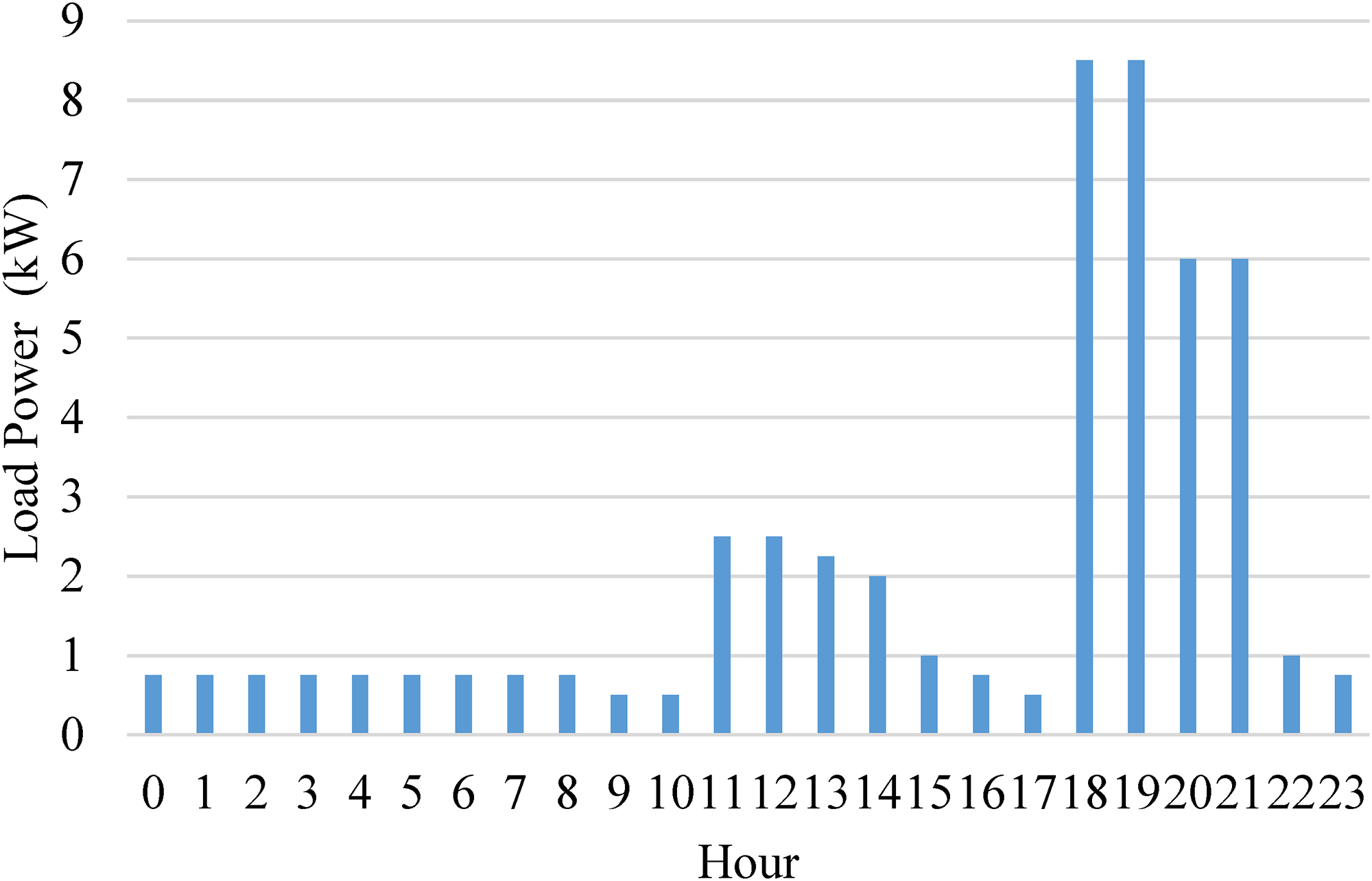
Typical daily load profile.
Hybrid system sizing
Sizing of PV array
The calculation of PV rated power, as described in Equation (20), is proportional to daily energy demand and inversely proportional to peak sunshine hours (PSH) (Ramli et al., 2015). Therefore, in the case of low PSH, higher PV power is required to supply the same energy demand. This calculated rated power is designed to generate power for a 24-h energy demand. Since PV power is only available during sunlight hours, this necessitates the use of batteries to store energy and provide power when PV output cannot meet the load demand. A safety factor is required to cover ohmic and mismatch losses in the PV system.
By substituting Ed = 50 kWh/day, PSH = 5.2 h/day, ηconv = 95%, S.F = 20%.
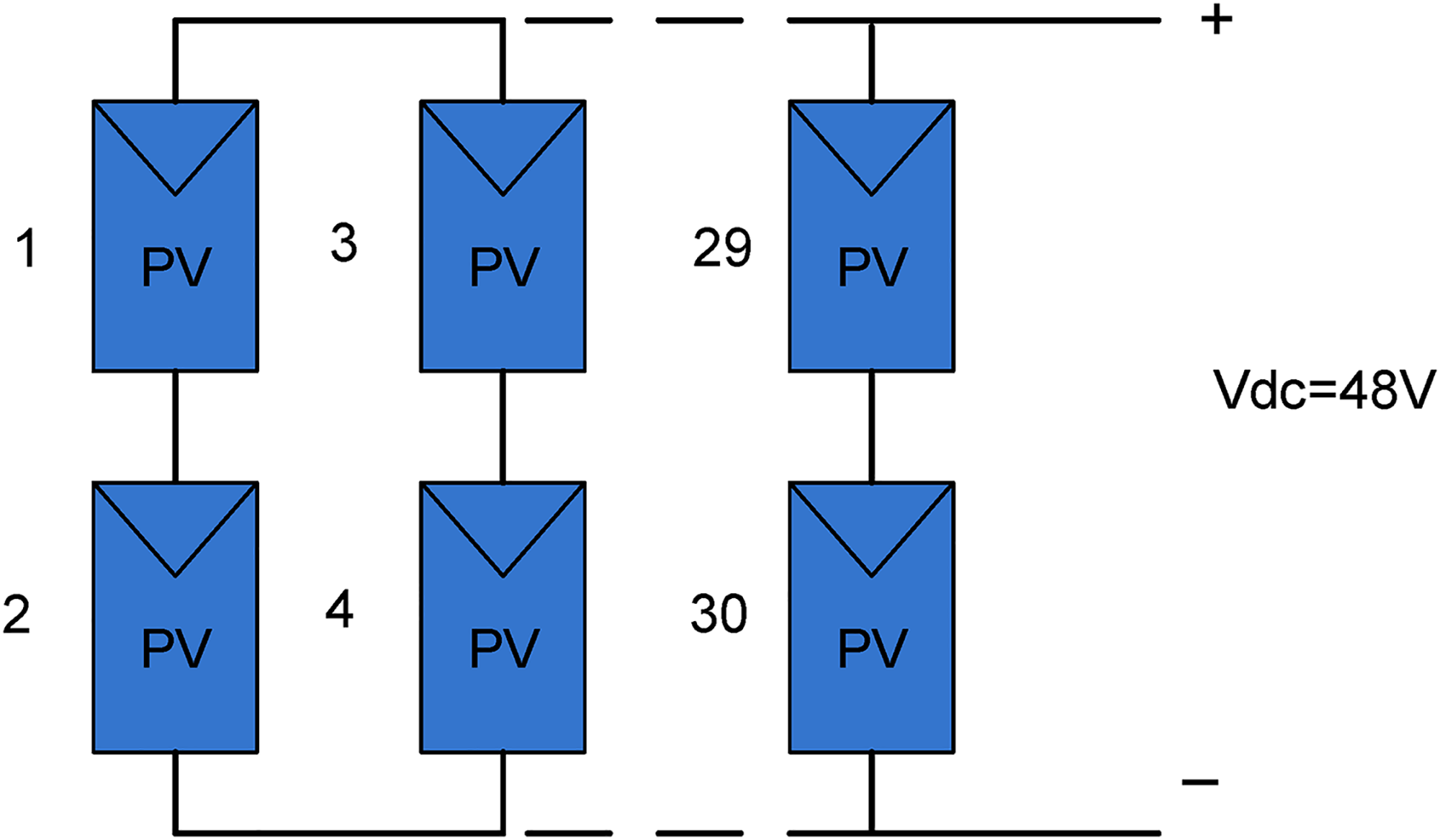
The PV generator configuration.
Inverters with high power ratings are typically provided by companies with multiple inputs. For example, if an inverter has three inputs, it is possible to distribute five strings per input. This configuration reduces the impact of shading, enhances reliability, and improves efficiency on the DC side.
Battery sizing
The ampere-hour (Ah) capacity of the batteries CAh is obtained as in equation (21) (Akinsipe et al., 2021):
Considering practical and realistic values for these parameters represented in: AD = 1.5 days, DOD = 0.8 and ηAh = 0.95, as well as VB = 48 V; the ampere hour capacity is obtained as:
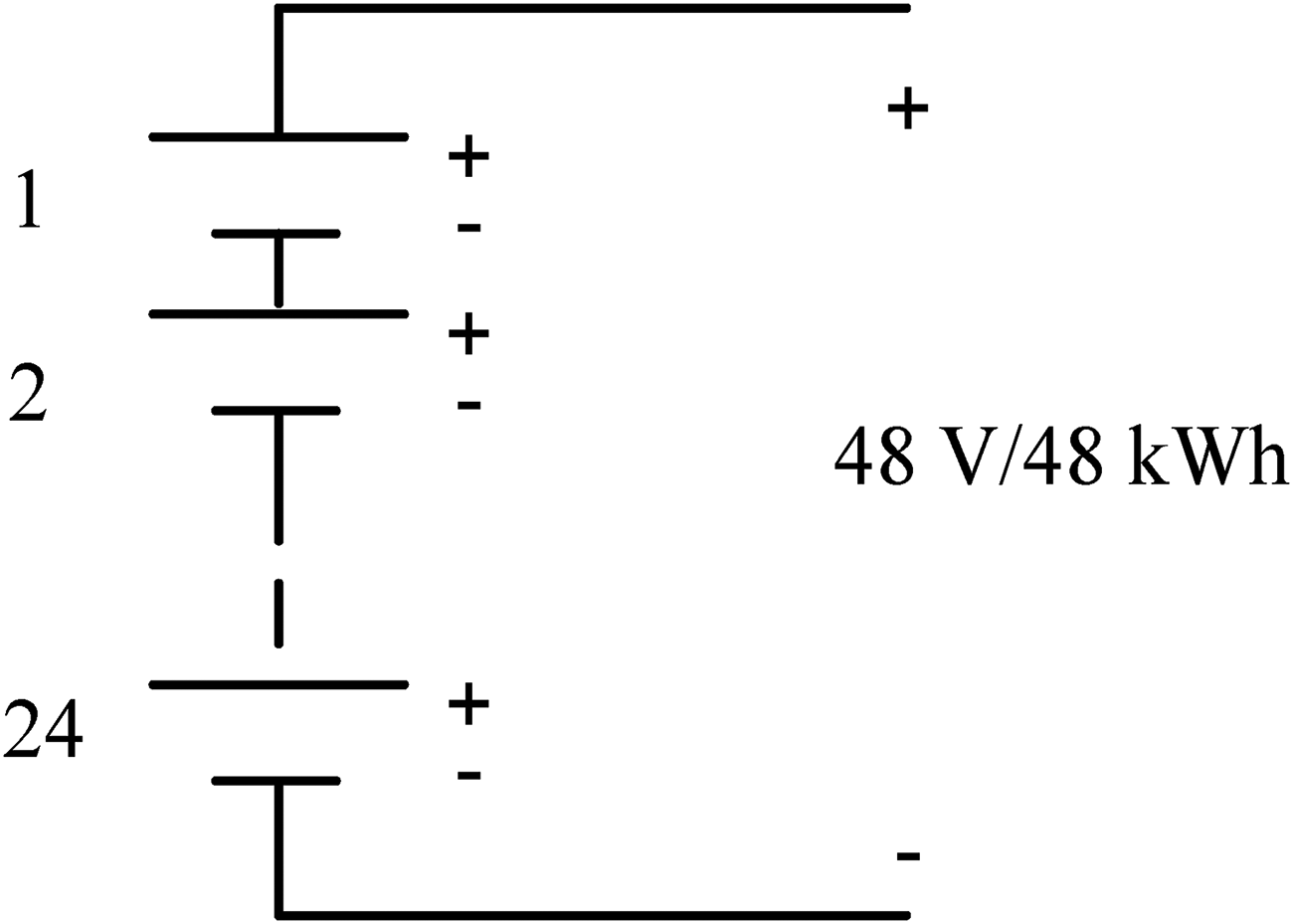
The storage battery block.
Diesel generator and power converter selection
When designing the PV-diesel-battery system shown in Figure 5, the peak demand is 8.5 kW. Therefore, a 10 kVA generator is chosen to meet this peak demand effectively, ensuring it can handle the system's maximum load requirements. Additionally, a 10 kW converter is selected to handle potential power surges in demand. This higher-capacity converter allows the system to manage temporary load fluctuations without affecting its overall performance or stability.
Simulation results of HOMER software
The Homer software is extensively used for simulating PV hybrid systems. It is employed to simulate both diesel generator systems and hybrid PV/Diesel/ Battery systems. The software runs simulations over a full year to account the seasonal variations in resources that impact power generation from renewable energy sources.
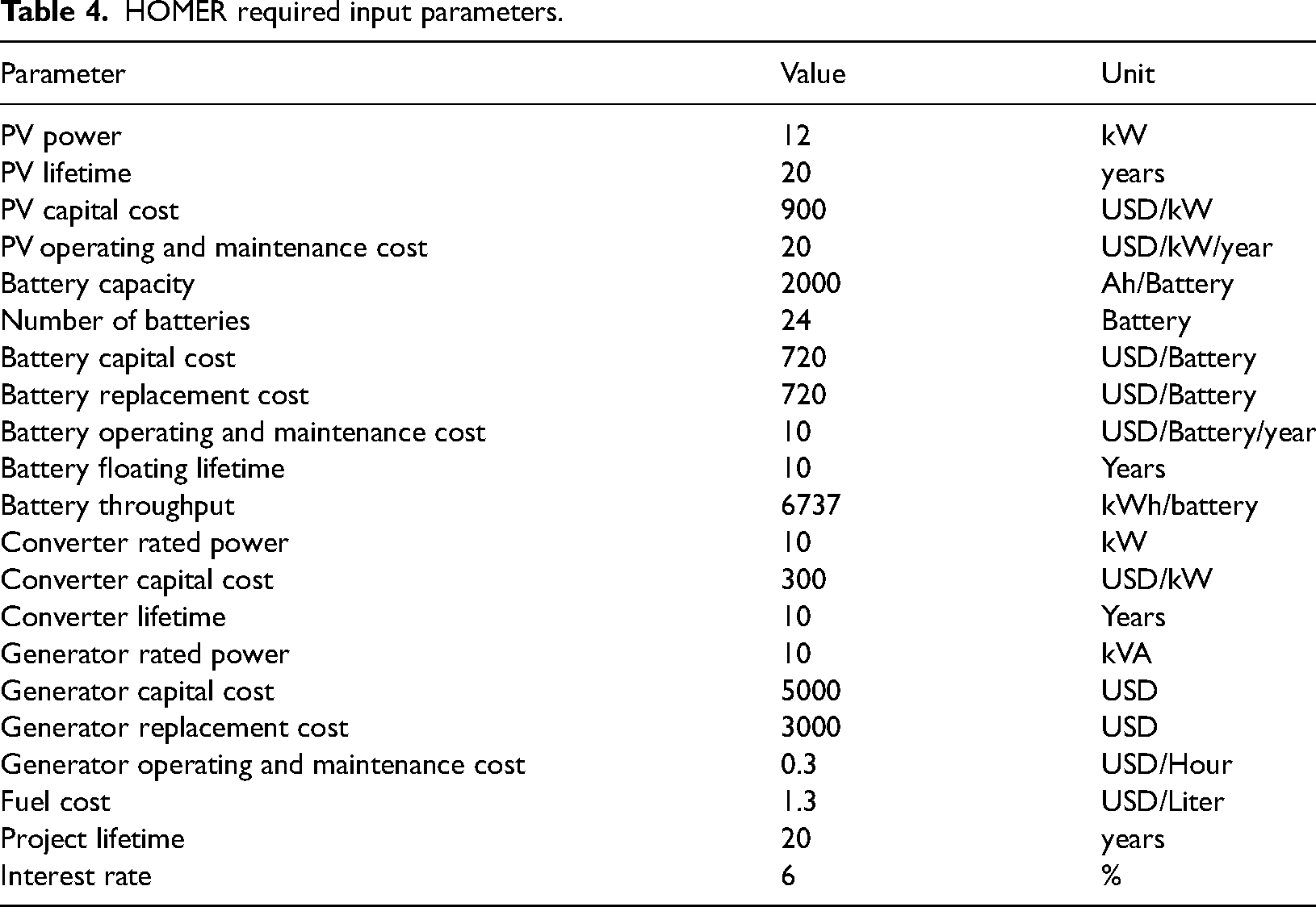
Homer software input parameters
The required parameters to simulate the system using HOMER software include solar radiation and temperature profiles for a full year, as well as daily load curves spanning 24 h. Moreover, comprehensive data regarding the system's initial and running costs, replacement costs, maintenance expenses of individual components, component lifetimes, fuel costs, and prevailing economic interest rates are required. Additionally, operational dispatch strategies are considered to optimize system performance as shown in Table 4.
HOMER required input parameters.
Economic results
Table 5 provides a detailed cost comparison between a diesel system and a PV/Diesel/battery hybrid system. The data indicates a significant financial advantage of the hybrid system over the traditional diesel system. The NPC of the hybrid system is USD 69,642, whereas the diesel system's NPC is substantially higher at USD 261,713. Meanwhile, the AC for the hybrid system is USD 5088, significantly lower than the USD 19,123 for the diesel system. Nevertheless, the most striking difference is in the COE, with the hybrid system at USD 0.279 per kWh compared to USD 1.05 per kWh for the diesel system. Therefore, the PV/Diesel/battery hybrid system demonstrates not only superior cost-efficiency but also enhanced sustainability and reduced operational costs, making it a compelling choice for energy generation.
Summary of economic results.

Figure 8 provides a NPC comparison between a diesel-only system and a PV/Diesel hybrid system. The numbers indicate a significant financial advantage of the hybrid system over the traditional diesel system. The capital and replacement costs for the hybrid system are slightly higher at USD 48,887 compared to USD 42,112 for the diesel-only system. Meanwhile, the running costs for the hybrid system are substantially lower, amounting to USD 20,755, whereas the diesel-only system incurs USD 219,600 in running costs. Nevertheless, the total cost for the hybrid system is USD 69,642, significantly lower than the USD 261,713 for the diesel-only system. Therefore, the PV/Diesel hybrid system demonstrates not only superior cost-efficiency but also enhanced sustainability and reduced operational costs, making it a compelling choice for energy generation.
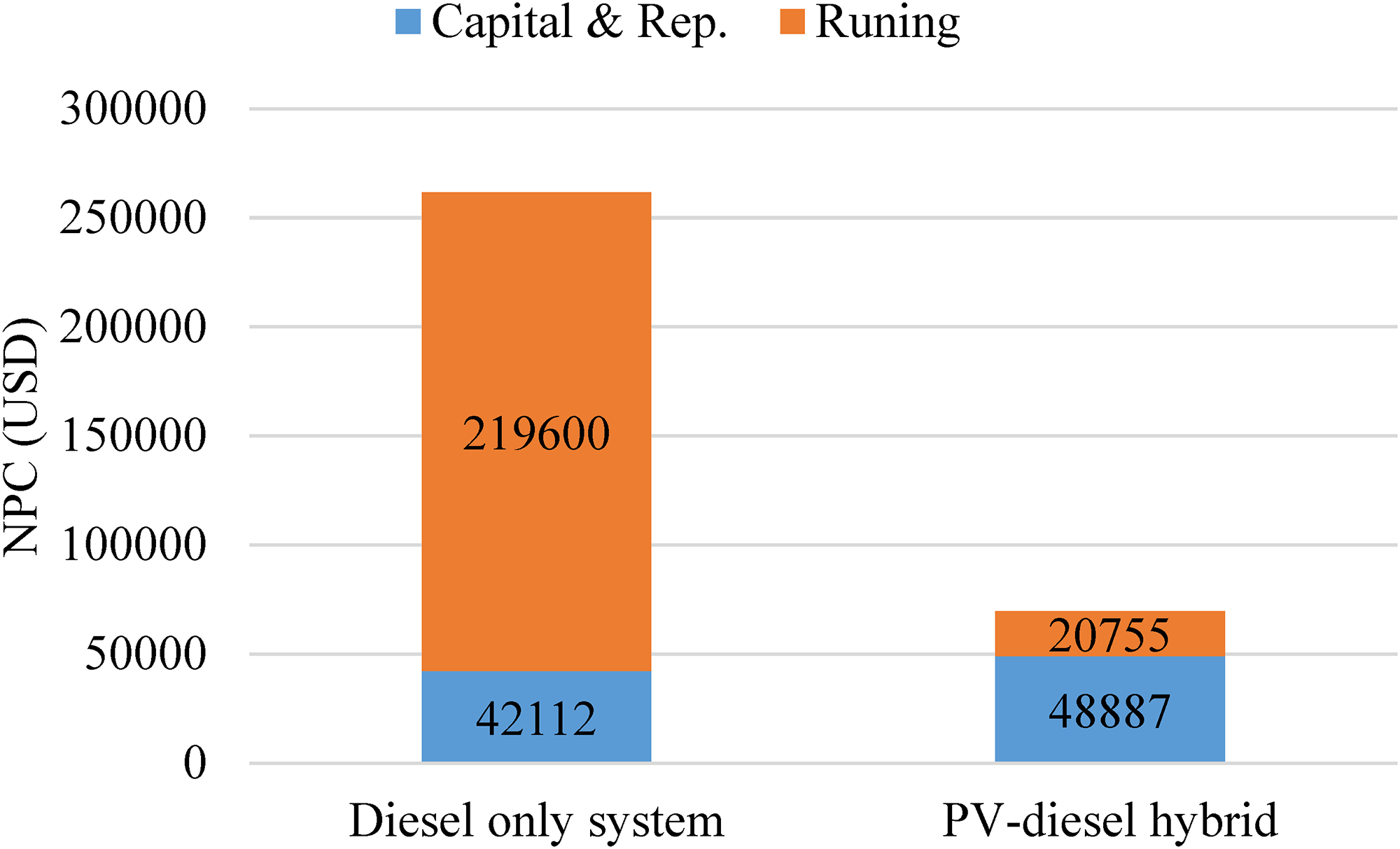
NPC for diesel-only and hybrid systems.
The NPC of the diesel-only system totals USD 261,713, broken down into three main components: Capital & Replacement cost (Capital and Rep), Operations & Maintenance cost (O&M), and Fuel costs.
As shown in Figure 9, the Capital & Replacement costs amount to USD 42,112, representing approximately 16.1% of the total NPC, covering the initial investment and replacements. Operations & Maintenance costs are USD 35,965, constituting about 13.7% of the NPC, including regular upkeep and maintenance expenses. The largest portion is the Fuel costs, totaling USD 183,636, which make up roughly 70.2% of the NPC, reflecting the ongoing expenses for fuel consumption. This breakdown emphasizes the significant financial burden posed by fuel costs compared to other components.
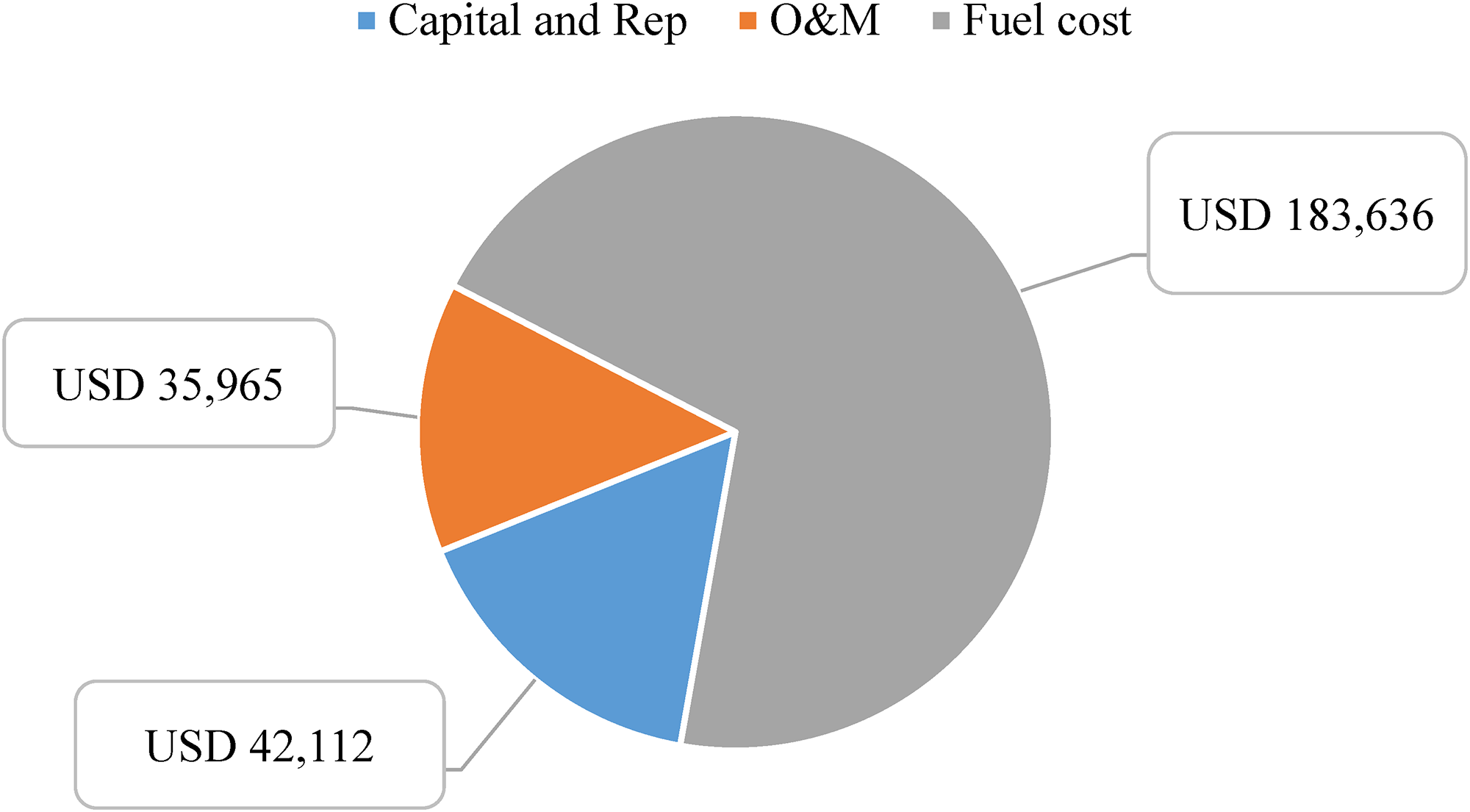
Breakdown of NPC for diesel-only system.
The NPC of the PV-battery-diesel hybrid system totals USD 69,641, divided into four main components: PV (Photovoltaic), Diesel Generator, Battery, and Converter. As shown in Figure 10, the PV component costs USD14,084, which accounts for approximately 20.2% of the total NPC, covering the cost of the solar panels. The Diesel Generator costs USD18,283, representing about 26.3% of the NPC, which includes the expenses for the generator. The battery is the largest cost component at USD 32,232, making up roughly 46.3% of the total NPC, reflecting the investment in energy storage. Finally, the converter costs USD F5,042, which is about 7.2% of the NPC, covering the cost of converting energy between AC and DC forms. This breakdown highlights the significant investment in batteries within the hybrid system, emphasizing the role of energy storage in maintaining system efficiency and reliability.
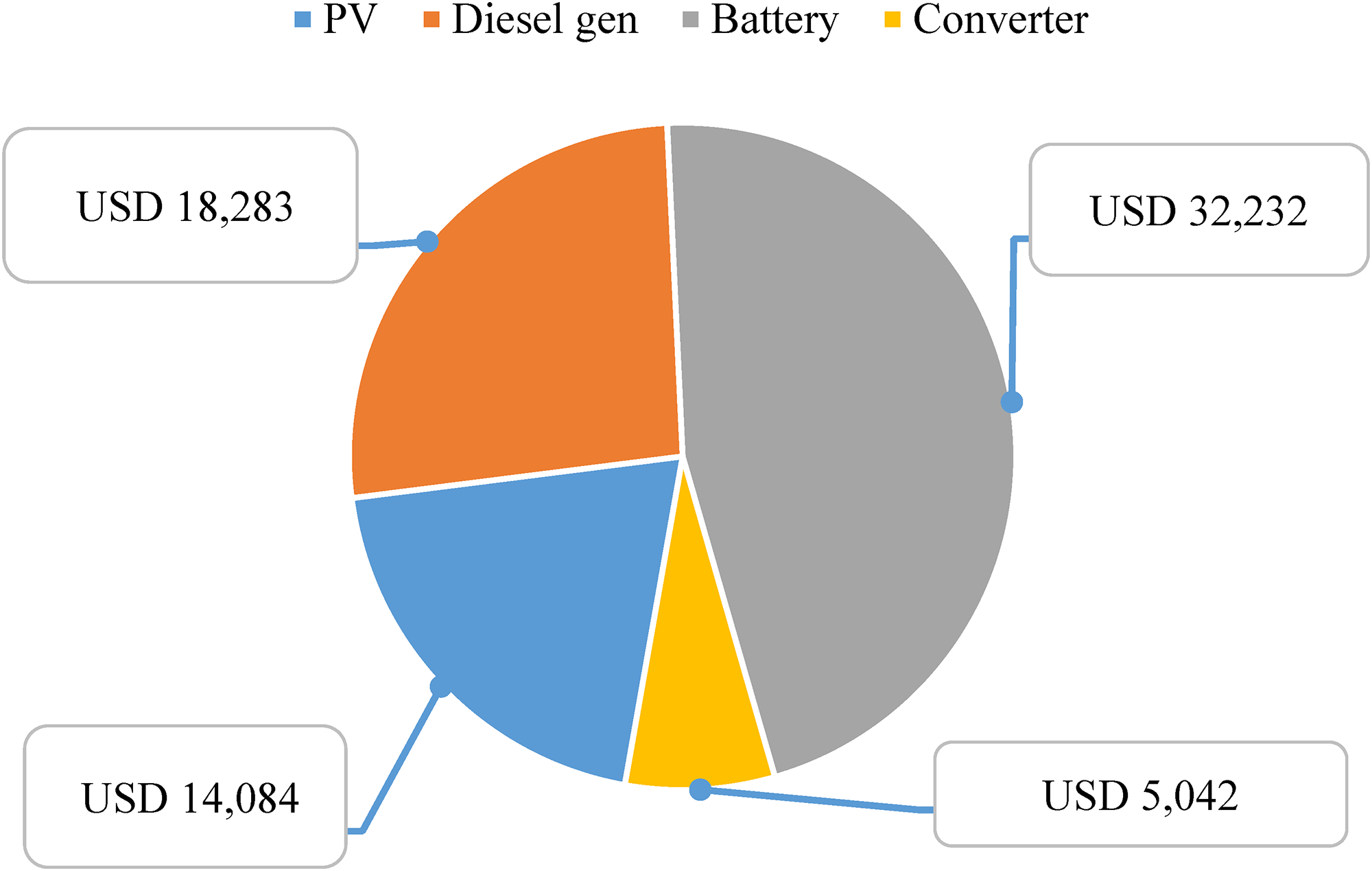
Breakdown of NPC for the hybrid system.
Sensitivity analysis
The sensitivity analysis highlights the significant impact of component cost variations on the COE, NPC, and other economic factors of the hybrid system. However, COE is considered only for sensitivity analysis as it reflects the same results for other factors, given that all economic factors are interconnected. Figure 10 shows that the battery affects the overall cost of the hybrid system more than the diesel system. The battery represents 47% of the system cost, while the generator represents 26%. Figure 11 shows the impact of variation in battery cost and diesel fuel cost. It is worth noting that the COE decreases and increases depending on whether both costs or one of the costs decreases. Nevertheless, due to the higher contribution of battery cost to the system cost, the COE is more affected by an increase in battery cost than in diesel cost. For instance, increasing the battery cost to 150% of the original cost results in a COE of 0.337 USD/kWh. However, keeping the battery cost at the original value and increasing the diesel fuel cost to 150% of the original cost results in a COE of 0.305 USD/kWh. This is clear from the slope of the curves: COE_B, which represents COE with battery cost variation, has a steeper slope than COE_D, which represents COE with diesel fuel cost variation.
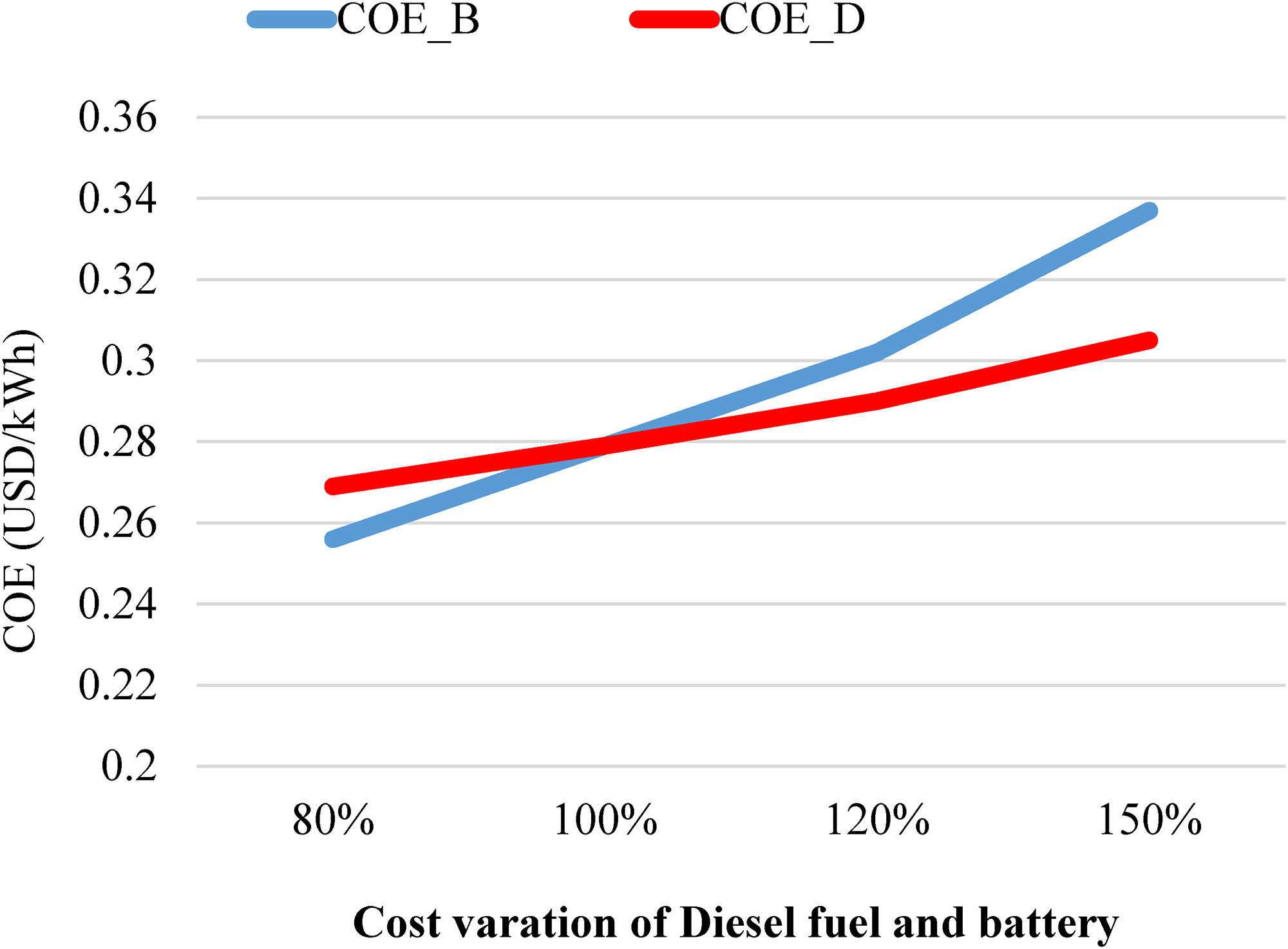
Impact of battery and diesel fuel cost variations on COE.
Operating evaluation of diesel-only system
The performance of a diesel generator is critically dependent on the load factor, defined as the ratio of output power to rated power. When the output power significantly deviates from the rated power, it results in a low load factor and consequently inefficient operation. The output power of a diesel generator varies throughout the day based on customer behavior, as depicted in the daily load curve in Figure 5.
To address peak demand, the diesel generator is selected with a rated power sufficient to cover these peaks, allowing it to operate at a lower power output during off-peak times. Nevertheless, the maximum efficiency of the diesel generator, as shown in Figure 6, is only 28.5%. Figure 12 illustrates the frequency distribution of diesel generator efficiency normalized over its maximum efficiency, revealing that the generator operates with less than 50% of its maximum efficiency for 66% of the time. This suboptimal performance leads to high fuel consumption and increased pollutant emissions.
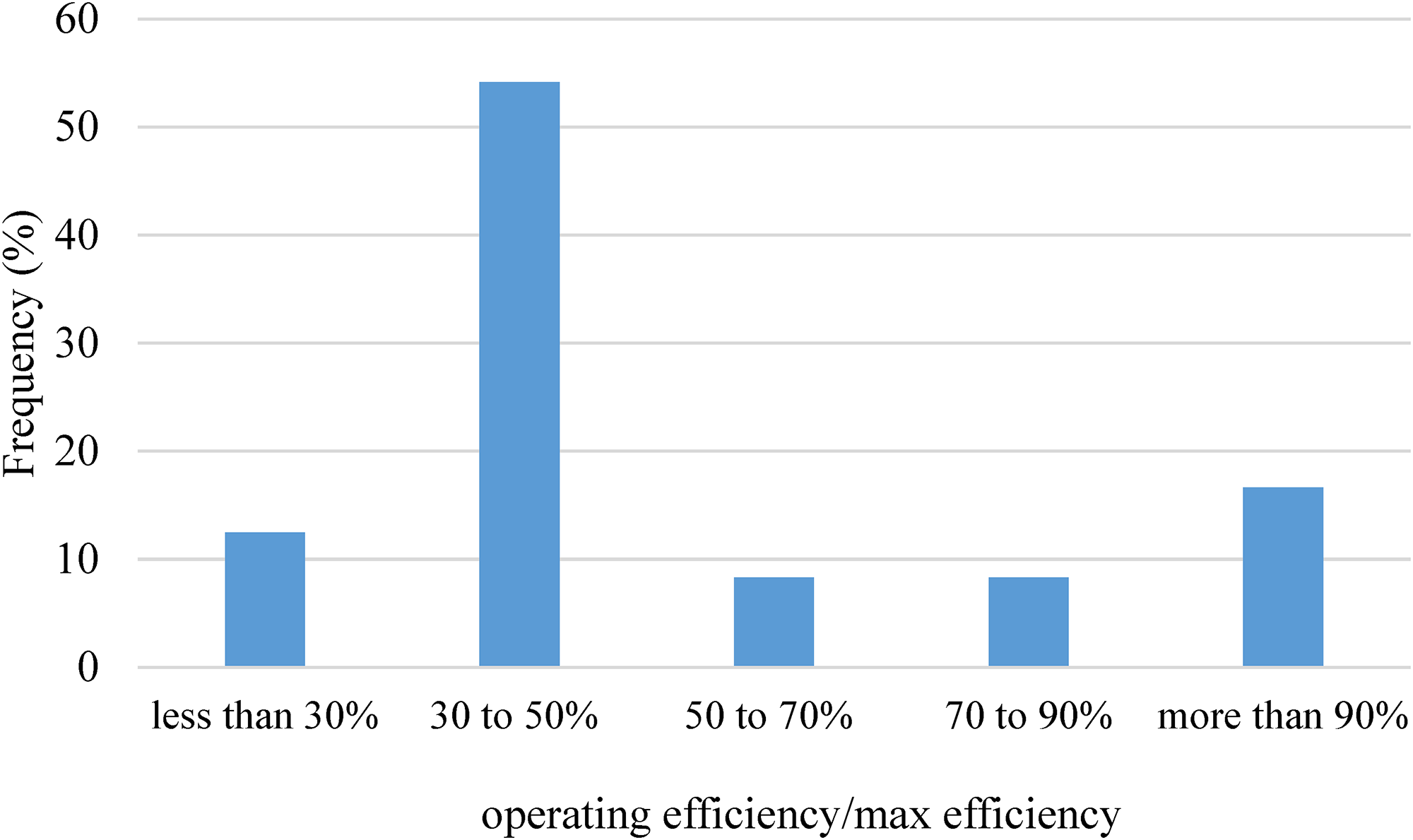
Efficiency of diesel generator in diesel-only system.
For instance, the generator supplies 18,250 kWh annually and consumes 10,322 l of fuel, resulting in 27,869 kg of CO2 emissions. This corresponds to 1.52 kg of CO2 per kWh delivered by the diesel generator. However, if the generator operated at maximum efficiency, fuel consumption would be reduced to 6403.5 l, producing 17,289.4 kg of CO2, or 0.94 kg of CO2 per kWh. This represents a 38.2% reduction compared to the previous low-efficiency value.
Therefore, this inefficiency explains the increased COE, as detailed in the previous section, when compared to a hybrid system. The findings underscore the importance of optimizing diesel generator operations and considering hybrid systems to improve overall efficiency, reduce fuel consumption, and lower CO2 emissions.
Operating evaluation of hybrid system
The hybrid system consists of various components such as PV, battery, and diesel generator. To evaluate the overall system performance, it is important to check the performance of each individual component.
Output generated energy
The total energy generated from the PV hybrid system to cover the load demand is produced by both the PV modules and the diesel generator. Figure 13 shows the monthly energy generated. Meanwhile, the PV modules are considered the main supply, and the diesel generator supplies energy only when necessary. This is why the diesel generator operates primarily during the winter months when there is insufficient solar radiation. On the other hand, from April to September, the PV modules cover the entire demand, and the diesel generator works for only a few hours. The total annual energy generated is 22,450 kWh/year, with 20,433 kWh/year generated by the PV modules and 2017 kWh/year by the diesel generator. This represents 91% and 9%, respectively, making the renewable fraction 91%.
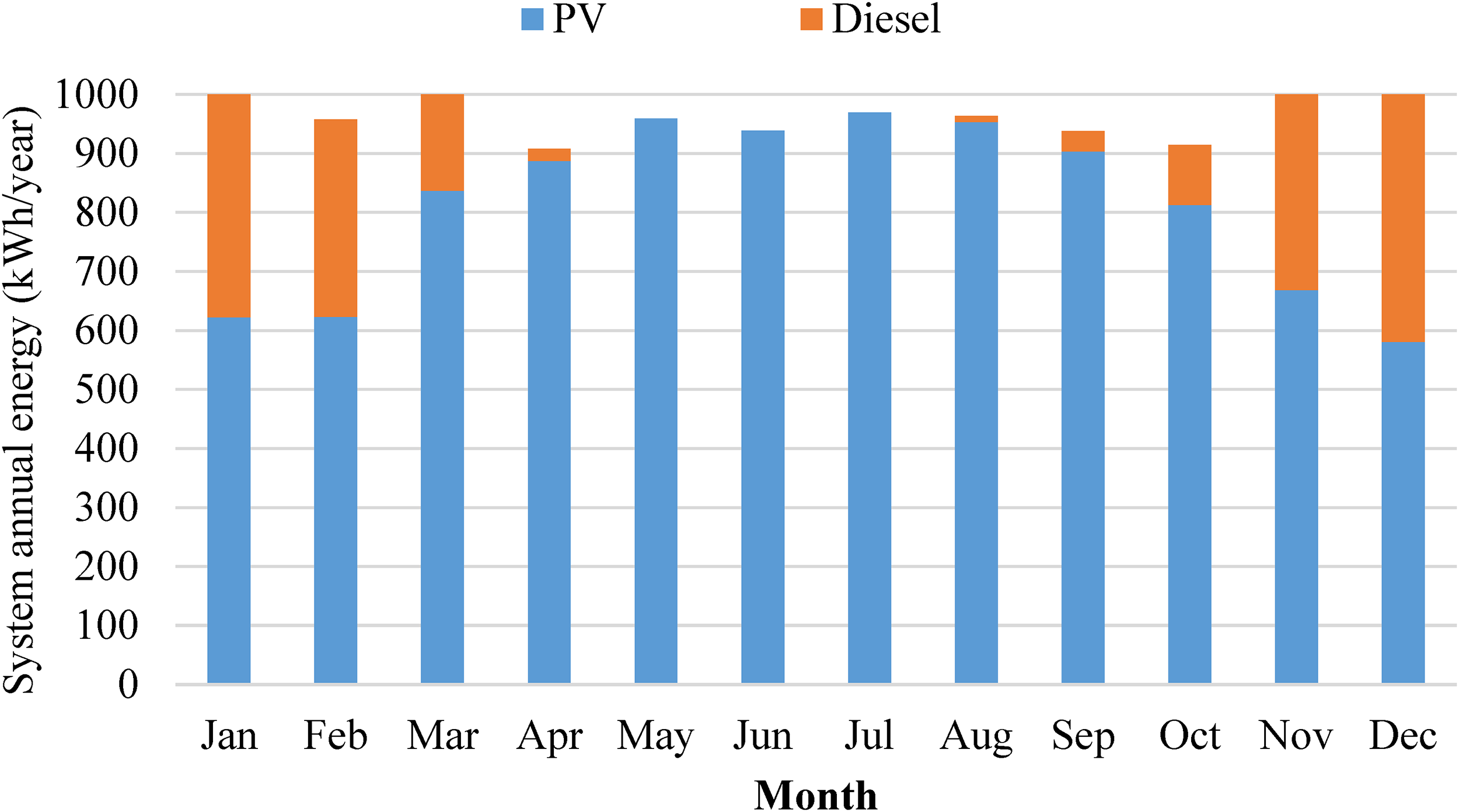
Generated energy in hybrid system.
Battery system SOC
The SOC values illustrated for each month in Figure 14 which indicates the battery performance over time. Meanwhile, the highest average daily maximum SOC is observed in July at 97.86%, suggesting high solar radiation conditions. Nevertheless, the lowest average daily minimum SOC occurs in December at 21.18%, highlighting the need for diesel generator during winter. Therefore, the data underscores the importance of a balanced energy system to ensure consistent power availability throughout the year. These values show a clear seasonal trend, with higher SOC levels during summer months and lower levels in winter, emphasizing the variability in renewable energy production.
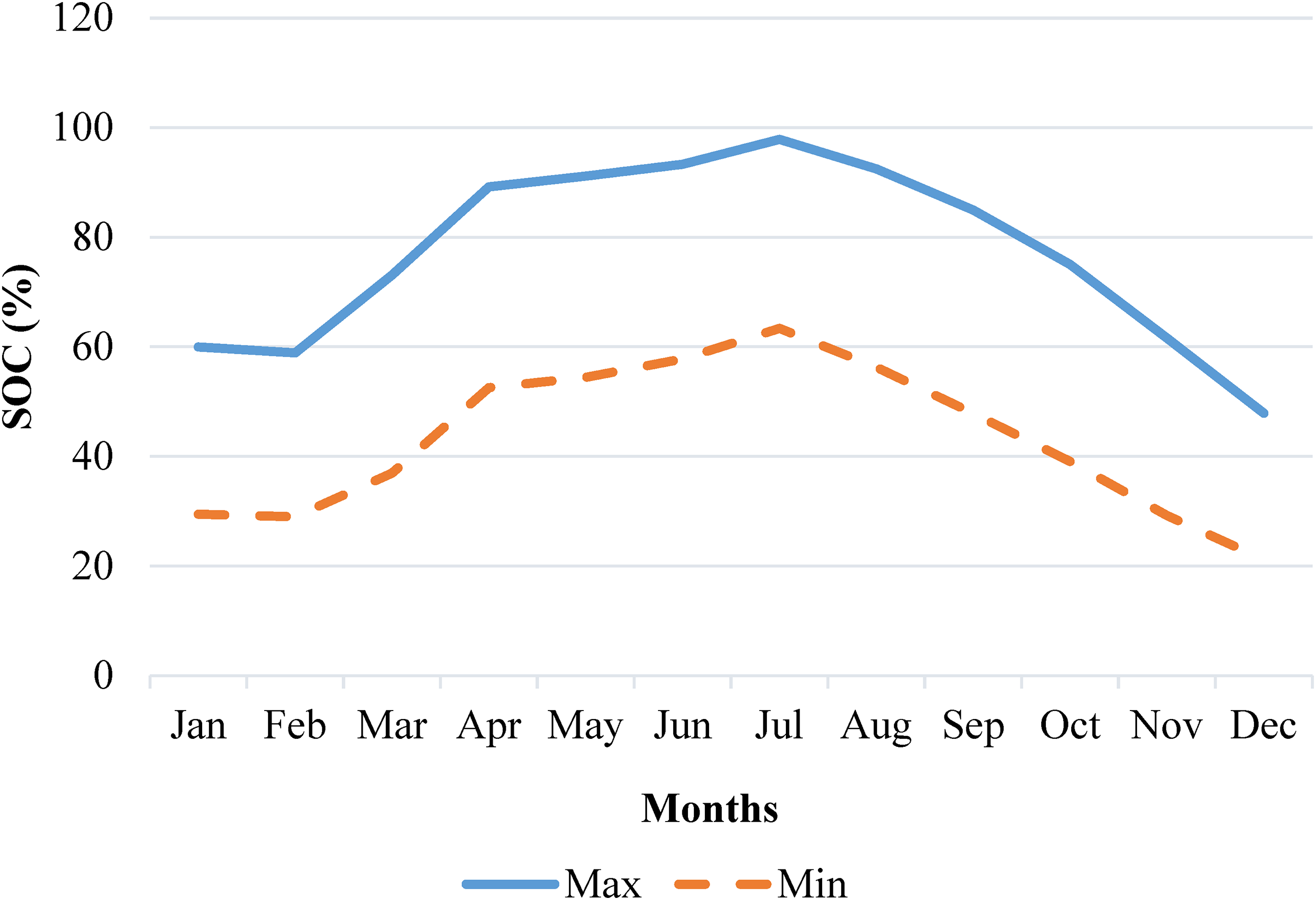
SOC of battery in hybrid system.
Battery system cycling
The assumed floating lifetime is 10 years. However, the battery lifetime, determined by considering both floating and cycling operations (Zhao et al., 2024), governs the service life of the battery. The throughput for one battery is assumed to be 6737 kWh, and for 24 batteries, the total throughput reaches 161,698 kWh. The simulated annual throughput of 13,881 kWh/year, the cycling lifetime of the battery system is projected at 11.6 years. This close alignment between floating and cycling lifetimes ensures that battery cycling agrees with floating life. The convergence of floating and cycling lifetimes in a battery system signifies an optimal balance between idle and active usage. When these lifetimes closely match, it indicates that the batteries are being utilized in a manner that neither underutilizes their capacity nor overburdens their cycling capabilities.
Diesel generator in hybrid system
The operation of a diesel generator in a hybrid system is governed by the dispatch strategy, which uses cycle charging. In this case, the generator operates only when the SOC is low, and when it is running, it charges the battery to a specified set point. This strategy reduces the number of starts, thereby reducing fuel consumption and emissions. Meanwhile, in Figure 15, it is worth noting that the diesel generator consumes more fuel in winter due to lower PV energy availability. On the other hand, there is no diesel fuel consumption in months with high solar radiation, as the PV system covers the entire demand.
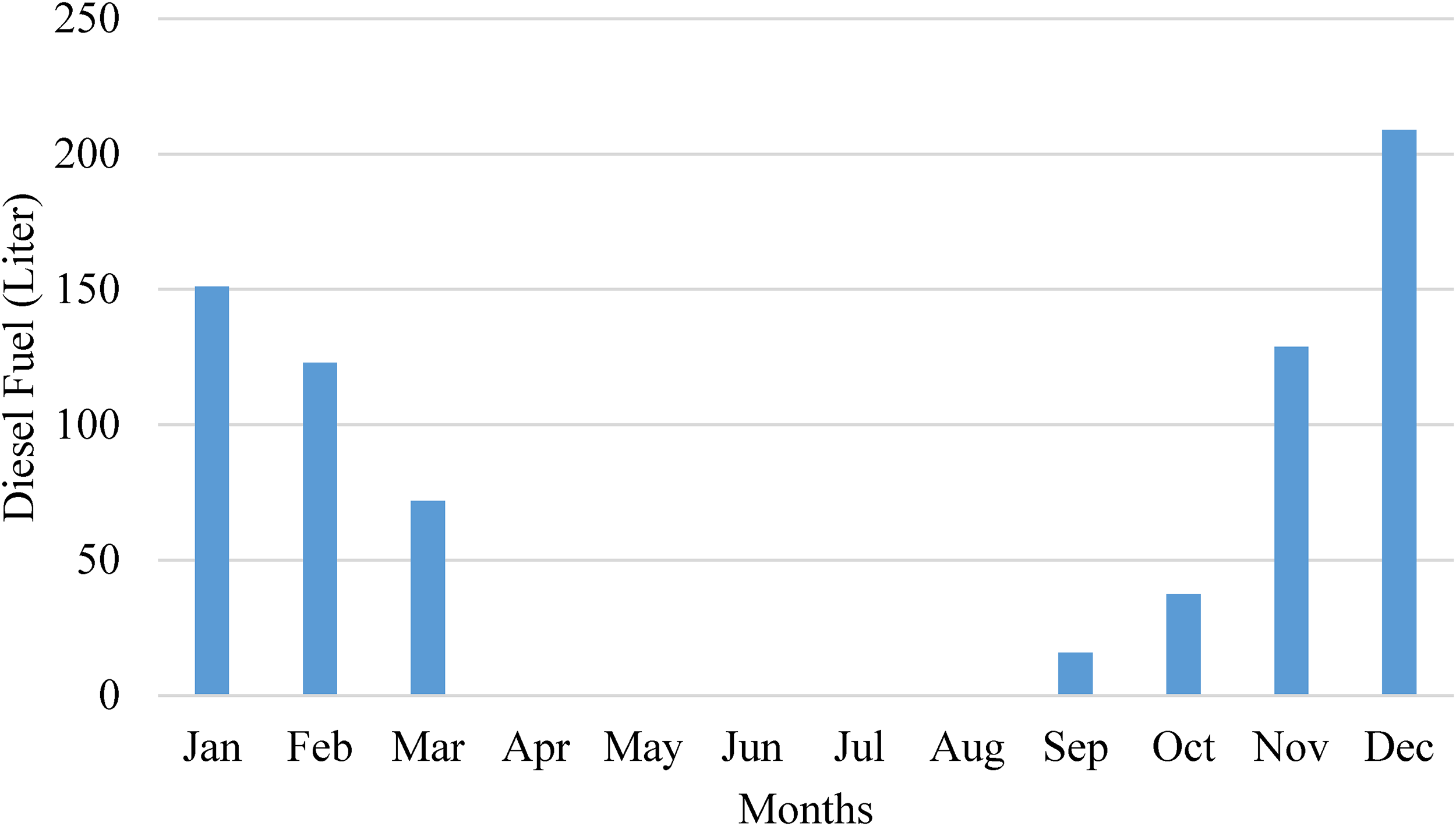
Fuel consumption of diesel generator in hybrid system.
The fuel energy input can be calculated by converting the diesel fuel consumption into energy by multiplying the fuel amount by the calorific value of diesel, which is 10 kWh per liter. The efficiency is determined by dividing the output by the input. In Figure 16, the efficiency is 27.5% for all months except from April to August, when the diesel generator is not operational. This efficiency represents 96% of the maximum efficiency mentioned in Figure 3. Thanks to cycle charging where the diesel generator operates at a high capacity factor, enhancing its performance and efficiency.
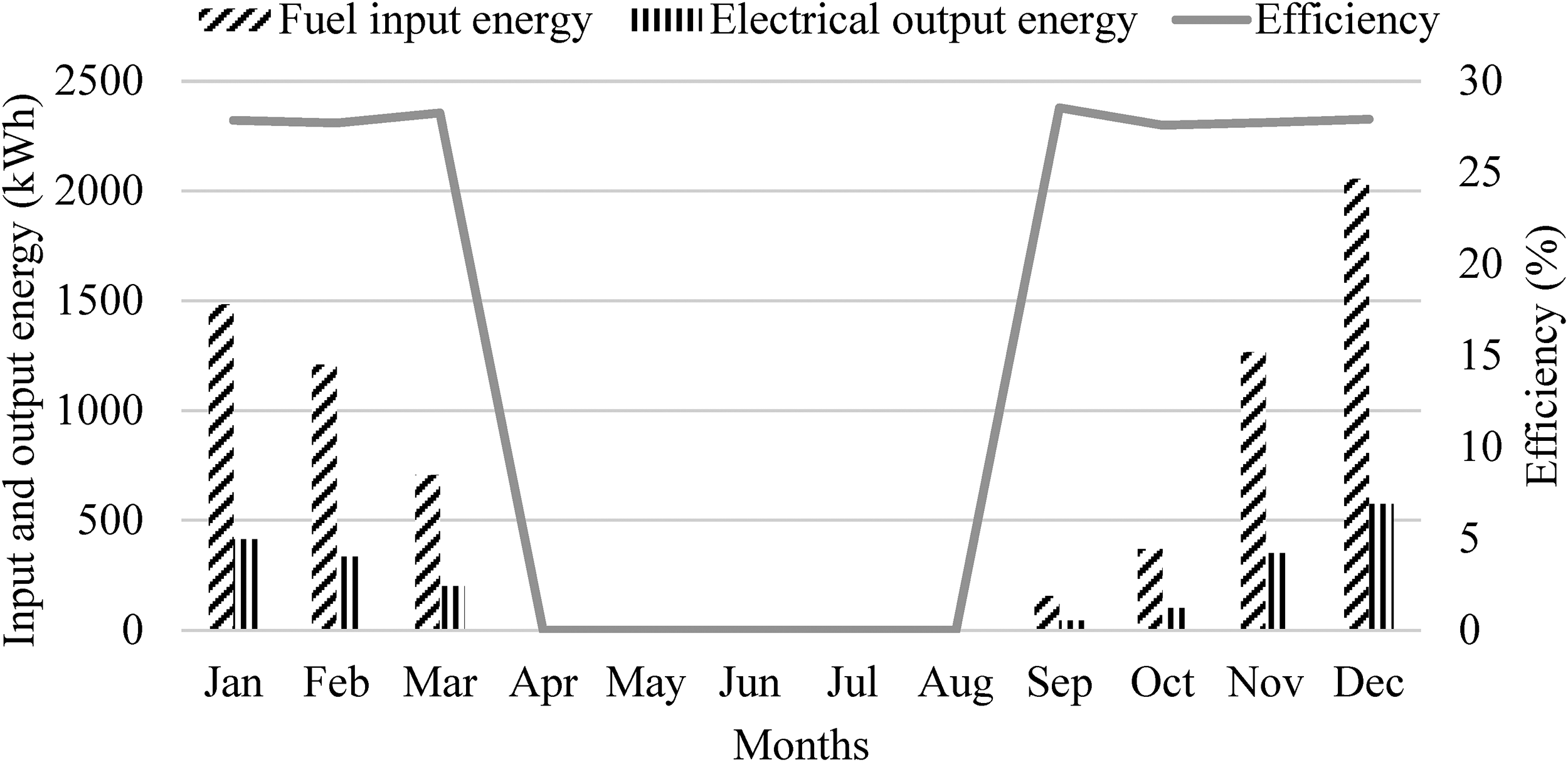
Efficiency of diesel generators in hybrid systems.
The emissions from the diesel generator are lower than those from diesel-only systems, not only due to reduced fuel consumption but also because of the high-efficiency operation of the diesel generator. For instance, in a hybrid system, the diesel generator consumes 337 l annually, producing 1989 kg of CO2 and generating 2017 kWh per year, which corresponds to 0.98 kg/kWh. This number, compared to the previously calculated 1.52 kg/kWh in a diesel-only system, confirms that the efficient operation of the diesel generator in a hybrid system results in fewer emissions. In contrast, diesel generators in standalone diesel systems operate at a low load factor, leading to inefficient performance and higher emissions.
Green mechanism
The implementation of a green mechanism to replace diesel generators as the primary power source in rural areas, particularly those operating inefficiently and emitting high levels of greenhouse gases, involves integrating renewable energy systems. This transition not only reduces the COE but also mitigates emissions. However, it necessitates a substantial initial investment, which can be addressed through investment from stakeholders or by leveraging emissions-related regulations, particularly in countries where industries may seek to invest in such systems to offset their emissions. To facilitate this process, it is essential to simulate the systems and determine key parameters, followed by a comprehensive techno-economic evaluation, additionally, investigating various scenarios.
Adding energy dispensers
As the energy generated by PV and stored energy is limited, and since the system is sized to cover a daily demand of 50 kWh (2 kWh for each of the 25 users), it is crucial to install energy dispensers to limit the energy for each user to 2 kWh per day. Therefore, the system requires the installation of an energy dispenser for each user to allocate a consumption quota for each customer. It is worth mentioning that in a PV-diesel-battery system, the energy dispenser tariff is a fixed cost by subscription to cover the high initial investment and provide predictable revenue for maintenance and operations. In a diesel-only system, the tariff is charged by kWh to align with the variable costs of fuel consumption and ensure customers pay based on their usage. This difference exists because the subscription model supports renewable adoption and risk management, while the kWh-based tariff suits the variable nature of diesel fuel costs.
Green mechanism options
As mentioned previously, finding an entity that invests in renewable energy systems can significantly enhance sustainability in providing electrical energy. These systems require substantial investment, which can be covered by energy service companies and industries that comply with environmental laws and pay for carbon emissions.
Energy service companies invest in and pay to integrate PV, battery, and converter systems into hybrid systems. In return, they collect monthly subscription fees from users. These fees are attractive to users as they are lower than the costs associated with diesel systems. Meanwhile, these companies can also benefit from selling carbon savings to factories and industries that need to meet environmental regulations.
The estimated annual COE generated from diesel-only system amounts can be calculated as follows:

Scenario-1
For a hybrid system, the investment NPC amounts to 69,642 USD. In return, the annual income is estimated to be 50% of the diesel system's cost, 50% of 19,162.5, it results in 9581.25 USD annually. This equates to a monthly fixed tariff of 32 USD for each customer. Additionally, earn carbon credits (ECC) can be calculated by equation (19), where the net gas mitigation (NGM) is 25 t of CO2 per year. This can be sold to industries at a price of 20 USD per ton (PCC). This yields annual ECC of 500 USD. Thus, the total annual income amounts to 10,081 USD, making the simple payback period 6.9 years. By the end of the project, the total income will be 140,965 USD as shown in Figure 17.
Cummulative annual cash flow of senario-1.
Senario-2
In case the ESCO takes payment from customers at 75% of their annual diesel expected payment, this corresponds to an annual income of 14,372 USD. This equates to a monthly fixed tariff of 48 USD for each customer. Additionally, with an ECC of 500 USD, this brings the total annual income to 14,872 USD. This results in a decreased simple payback period to 4.68 years, with the total project income estimated at 227,786 USD, as illustrated in Figure 18.
Cummulative annual cash flow of senario-2.
Conclusion
The adoption of PV/Battery/Diesel hybrid systems in rural areas presents a promising solution to mitigate the challenges posed by diesel generators, which are prevalent despite their inefficiency and carbon emissions. This study focused on a rural community with specific energy needs, demonstrating that a hybrid system can significantly reduce both energy costs and CO2 emissions compared to traditional diesel-only setups. The simulation results, showing a 91% renewable fraction and a COE at 0.279 USD/kWh, underscore the economic and environmental advantages of such systems. Moreover, while the initial investment costs remain substantial, advocating for a case study approach to green transition highlights the potential for energy and environmental companies to play a pivotal role through strategic investments. By leveraging incentives such as selling electricity at competitive rates below diesel prices and capitalizing on carbon credit sales, substantial financial benefits can be realized. This dual-income strategy not only enhances economic viability but also accelerates the transition towards sustainable energy solutions. These findings support the feasibility of PV/Battery/Diesel hybrid systems as a viable alternative to diesel generators in rural communities. By addressing cost barriers and leveraging environmental incentives, these systems can pave the way for long-term sustainability, offering both economic returns and environmental benefits.
Further research directions
This study focuses on the CO2 savings of a PV/Battery/Diesel hybrid system. Nevertheless, future work will assess reductions in other pollutants like nitrogen oxides (NOx) and sulfur oxides (SOx), important for environmental and health impacts. It will also explore noise pollution reduction, especially in rural areas. Additionally, the study will examine the environmental impacts of battery and PV panel production, including resource extraction, manufacturing emissions, and end-of-life management, to provide a comprehensive view of the hybrid system's environmental footprint.
Footnotes
Declaration of conflicting interests
The author declared no potential conflicts of interest with respect to the research, authorship, and/or publication of this article.
Funding
The author received no financial support for the research, authorship, and/or publication of this article.
