




Abstract
Introduction
In everyday life, situations occur where we must deal with both time-dependent and time-independent flows called steady and unsteady flows, respectively. These include curved stretching surface flow on a curved sheet (Elcock, 2007). Due to applications of manufacturing and infrastructure systems, this sort of flow has attracted significant interest. Such techniques include plastic melting, extraction processes, heat belt processes, roll spinning, etc. Stretching and shrinking rates influence the final product formed during these processes. Examples of stretching surfaces include glass fiber production, plastic sheet extrusion, crystal rising, heat rolling, wire drawing, etc. Bai et al. (2008) examined the stretching flow induced by a sheet. After the pioneering works in the area, different researchers tried to come up with solutions regarding the flows over-stretching surfaces by incorporating the slip effects on the flow field. To study how applied and generated forces affect flow. Ullah et al. (2021) investigated the influence of heat radiation on the flow of viscous fluid subjected to stretching. Khan et al. (2021) looked into how heat moves during melting by looking at the flow of a magnetic nanofluid over a stretched layer and considering emission and second-order sliding effects.
Cross-diffusion gradients (Soret and Dufour effects) perform an essential role in binary alloy solidification, migration of groundwater pollutants, oil reservoirs, and separation of gases from a mixture. Diffusion of the matter is referred to as Soret effects due to temperature gradients, and heat diffusion is called Dufour effect due to concertation gradients. Ullah et al. (2021) examined how Soret and heat source affect unstable free radiative magneto hydrodynamic (MHD) convection flow in a layer of infinite thickness that moves rapidly. Khan et al. (2022b) examined Soret and Dufour effects on mass transmission, heat, and mass convection in a porous medium with a constant temperature and concentration wall. They studied a deliberately slanted plate.
Researchers are going to show that these effects have interesting and useful effects on business and technology. When looking at real-world applications, you need to think about two things: heat transmission and mass transfer. It is possible to do things like control the amount of heat used to remove fluids, keep conductors safe by writing on materials that may create heat in the system, and make rain and storms happen by letting water evaporate from ponds and lakes. If you want to include cross-diffusion differences in the processes of heat and mass movement, you might need to do a full system analysis. The cross-diffusion gradients are a good example of how gases in the atmosphere and processes in factories can combine in a bad way. Ullah et al. (2023a) investigated heat transfer in a variety of convective boundary layers flowing over a vertically stretched layer under Soret and Dufour conditions. A porous surface is filled with a material that has both viscous and elastic properties.
The study investigates how factors influence temperature, velocity, and concentration. Our work investigates how non-Newtonian micropolar fluids affect viscous fluid expansion on curved surfaces. We also wish to study how the nondimensional radius of curvature affects strain, amplitude, and microrotation speed. Due to their widespread usage in industry and technology, Newtonian fluids are of interest to scientists and engineers. Commonly used substances include oil, water, ethylene glycol, and other fluids that exhibit Newtonian behavior. We use the renowned Navier-Stokes equation to explain the dynamics of Newtonian fluid motion. The literature includes significant scholarly works on this topic. Rehman et al. (2022) analyzed the phenomenon of slip flow in viscous fluids and its impact on heat and mass transfer. Prakasha et al. (2023) analytically addressed the problem of turbulent MHD fluid flow between parallel plates that are in motion. Murshed et al. (2011) conducted a study to investigate the flow of MHD stamps at homogenous, heterogeneous, and slip rates. Yu et al. (2012) demonstrated the movement of the boundary layer and heat transfer of copper-water nanofluid across porous surfaces. Dey et al. (2022) documented the occurrence of magnetic dipole effects in the flow of thick Ferro fluid–fluid by radiative stretching.
Magnetic flow fields find applications in several sectors, such as engineering, the polymer industry, physics, chemistry, and metallurgy. In such applications, optimal magnetic field strength and direction govern fluid behavior. The presence of a magnetic field alters the characteristics of heat transfer by redistributing the many physiological fluid systems, including blood-pumping machines and building lighting, which often use the MHD float as a sealing material. Reddy et al. (2020) investigated the behavior of a non-Newtonian fluid transitioning from a state of no movement to abrupt rest. Khan et al. (2022a, 2022b) conducted a study on the generation of entropy in MHD nanofluids on a curved, stretched surface while also considering the shape. Nayak et al. (2022) conducted a study on the effects of a magnetic field on two-phase models of nanofluid.
Kumar et al. (2018a, 2018b) and Machrafi et al. (2016) studied flow dynamics within and outside a stretched tube. Sen et al. (2022) studied a three-dimensional axisymmetric stretching surface using flow analysis. Madhesh and Kalaiselvam (2014) studied a micropolar fluid's expanded surface. Naik et al. (2023) applied this approach to a substance-passing sheet. Kumar et al. (2018a, 2018b) reviewed micro continuous fluid mechanics, which has several physiological fluid flow applications. The discussion focuses on the theory and application of micropolar fluids, as presented by Ullah et al. (2022) and Ullah et al. (2023a, 2023b). In their study, Alharbi et al. (2022) investigated the transfer of heat to a micropolar fluid by suctioning and blowing on a nonisothermal stretching plate. Kumar et al. (2017) examined the influence of surface conditions.
The work's fundamental objective is to use computational tools to analyze the flow behavior of a micropolar fluid over a deformed circular surface. One approach to facilitate the transformation of partial differential equations into ordinary differential equations is to use a similarity transformation. We integrate these interrelated equations by using Runge-Kutta computation in the shooting process. We determine the nondimensional curvature radius functions, which encompass liquid velocity, microrotation velocity, and compression factor, and present them as fascinating physical variables. The presence of a curved extended board, as opposed to a flat extending sheet, clearly indicates the importance of the pressure in the border layer. This is due to the board's curved shape.
Description and problem
Consider two-dimensional flow with constant density viscous fluid coiled in a circular shape with radius R, shown in Figure 1. Viscous fluid incompressible flow is considered in two dimensions. The sheet is along the s direction where r is orthogonal to s.
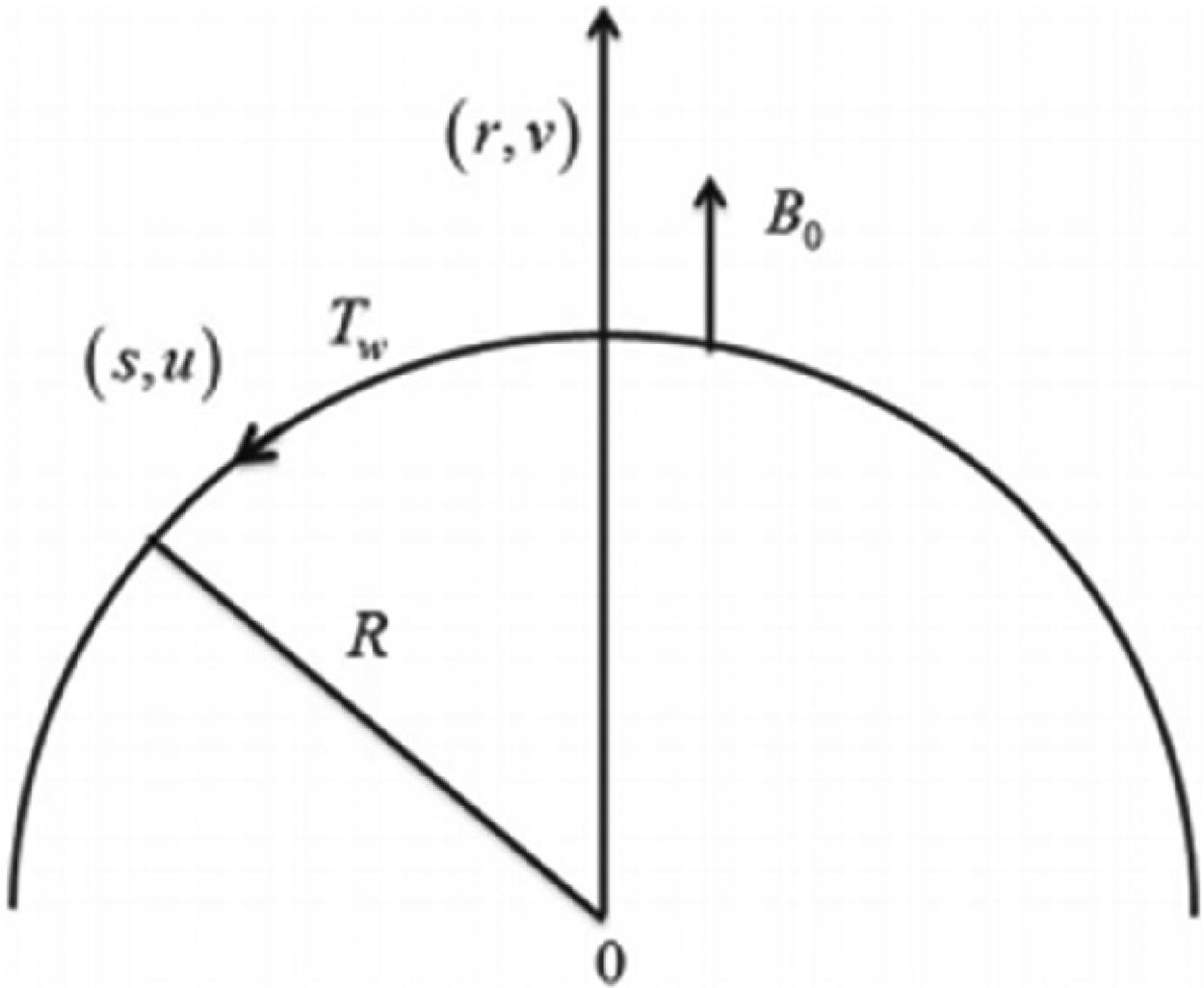
Geometry of the problem.
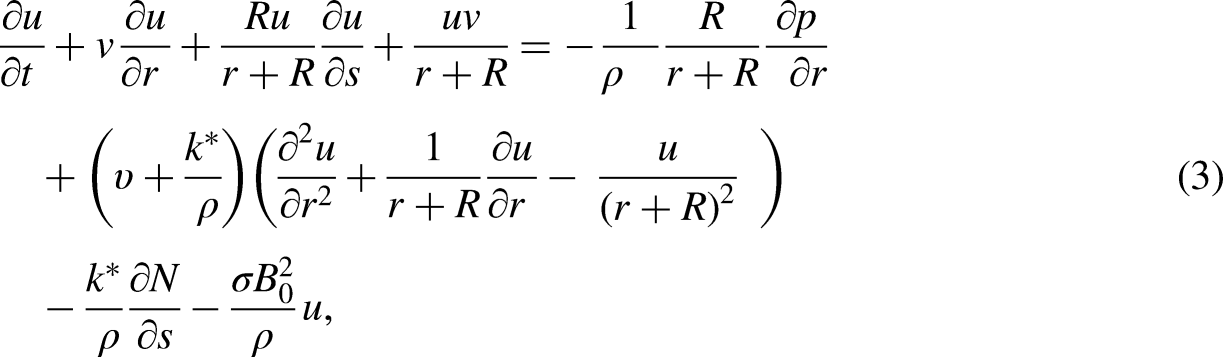
In curved geometry, the equations that govern a micropolar fluid's flow are incompressible and constant. The following is one possible way to express these equations (Dharmaiah et al., 2022; Dhruvathara et al., 2023):








We present the subsequent transformations of similarity.


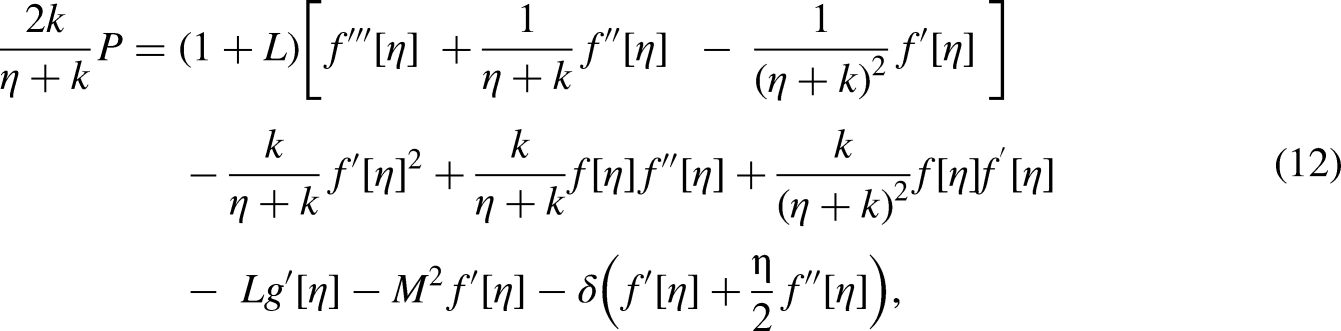
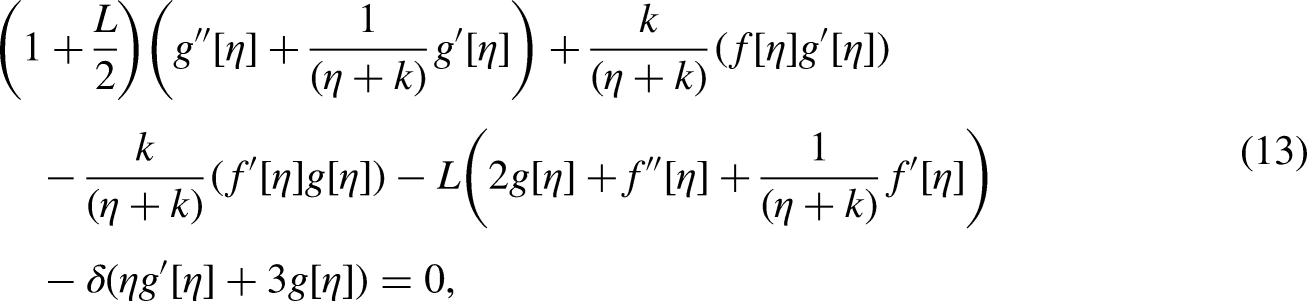


Numerical solution
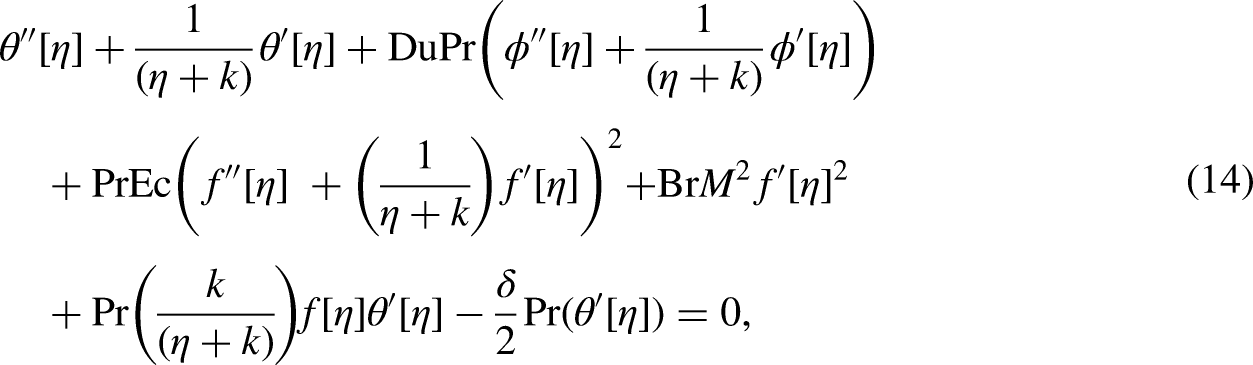
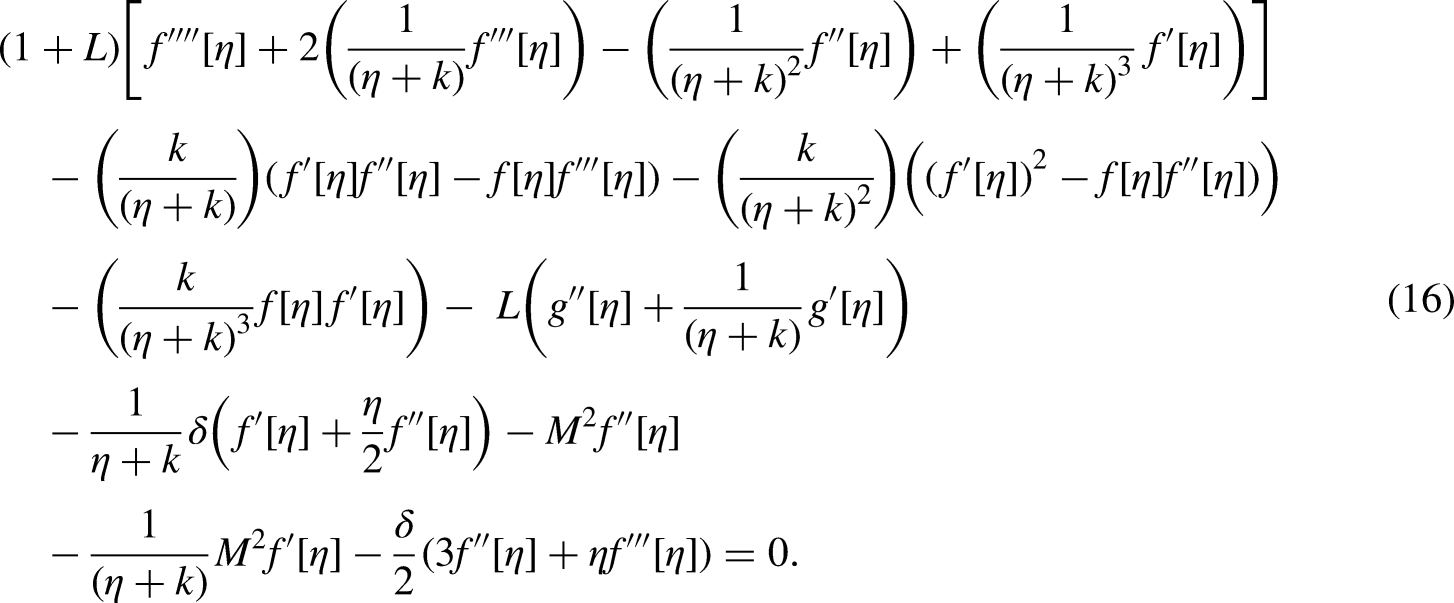
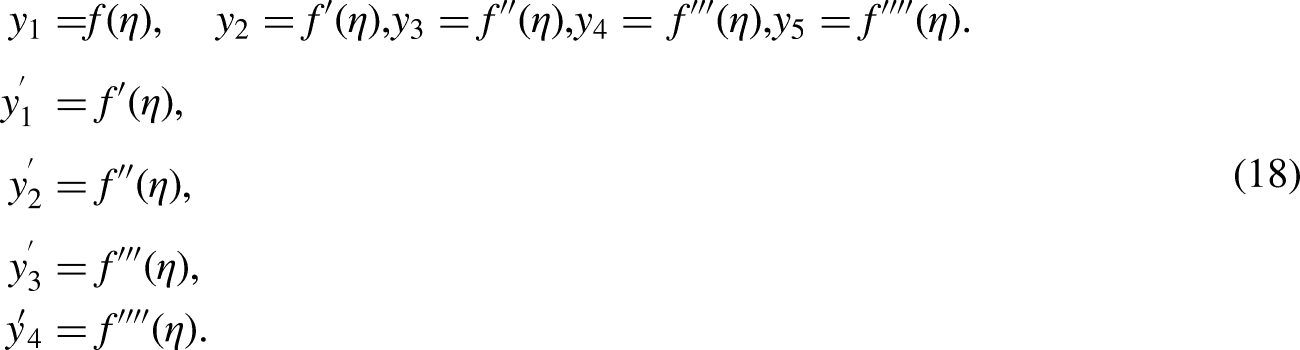
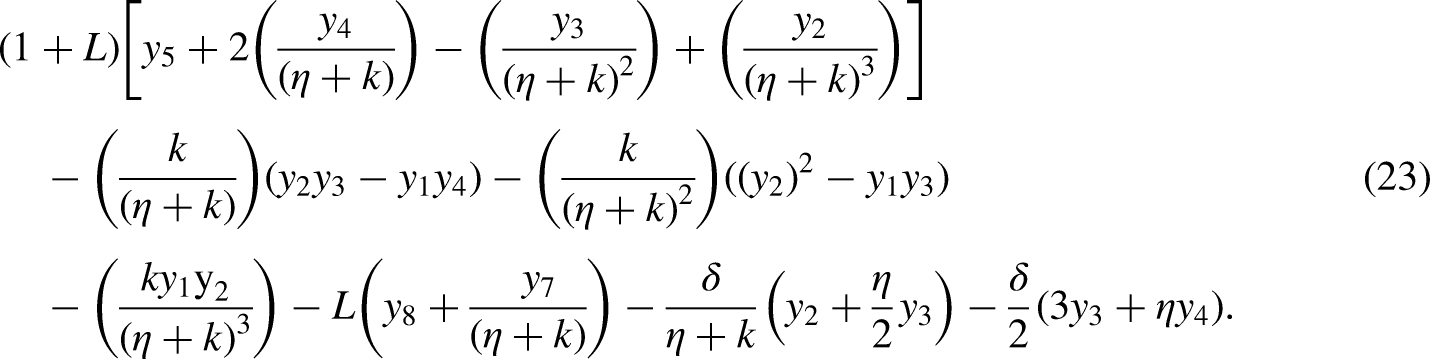
We solve equations (14)–(16) numerically to simulate turbulent flows. We will next solve the associative equation's initial value problem. To accomplish this, we have developed a recuperation procedure. Next, we employ the Runge-Kutta method, a numerical calculation technique, to solve the problem.









Results and discussion
Velocity field
Figure 2 shows that when the nondimensional curvature radius goes down, the thickness of the border layer and the horizontal speed both go up. Despite this, when n = 0.5, the speed significantly increases. As shown in Figure 3, the vortex component's viscosity influences the horizontal velocity component
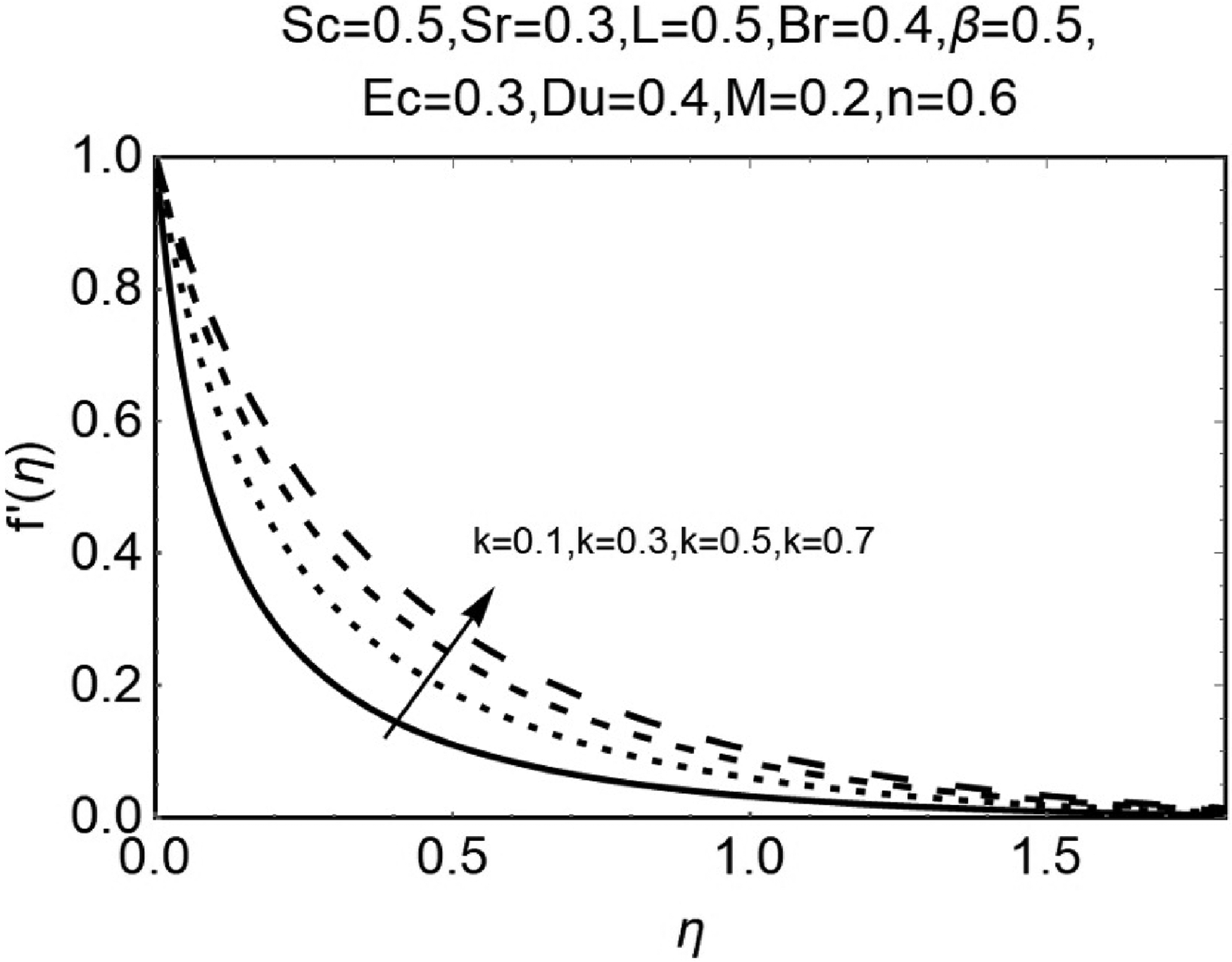
Horizontal velocity component profile at k.
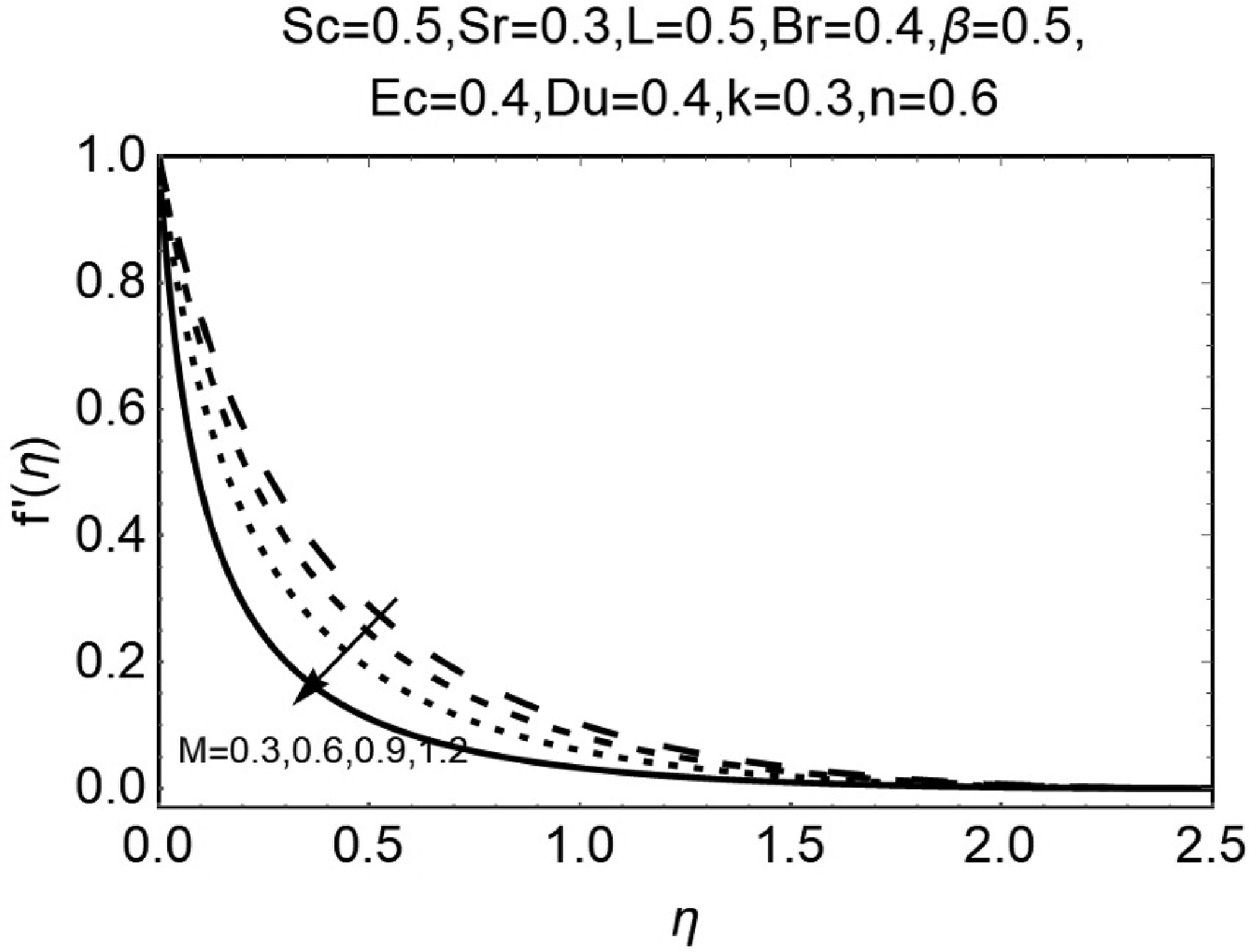
Horizontal velocity component profile at M.
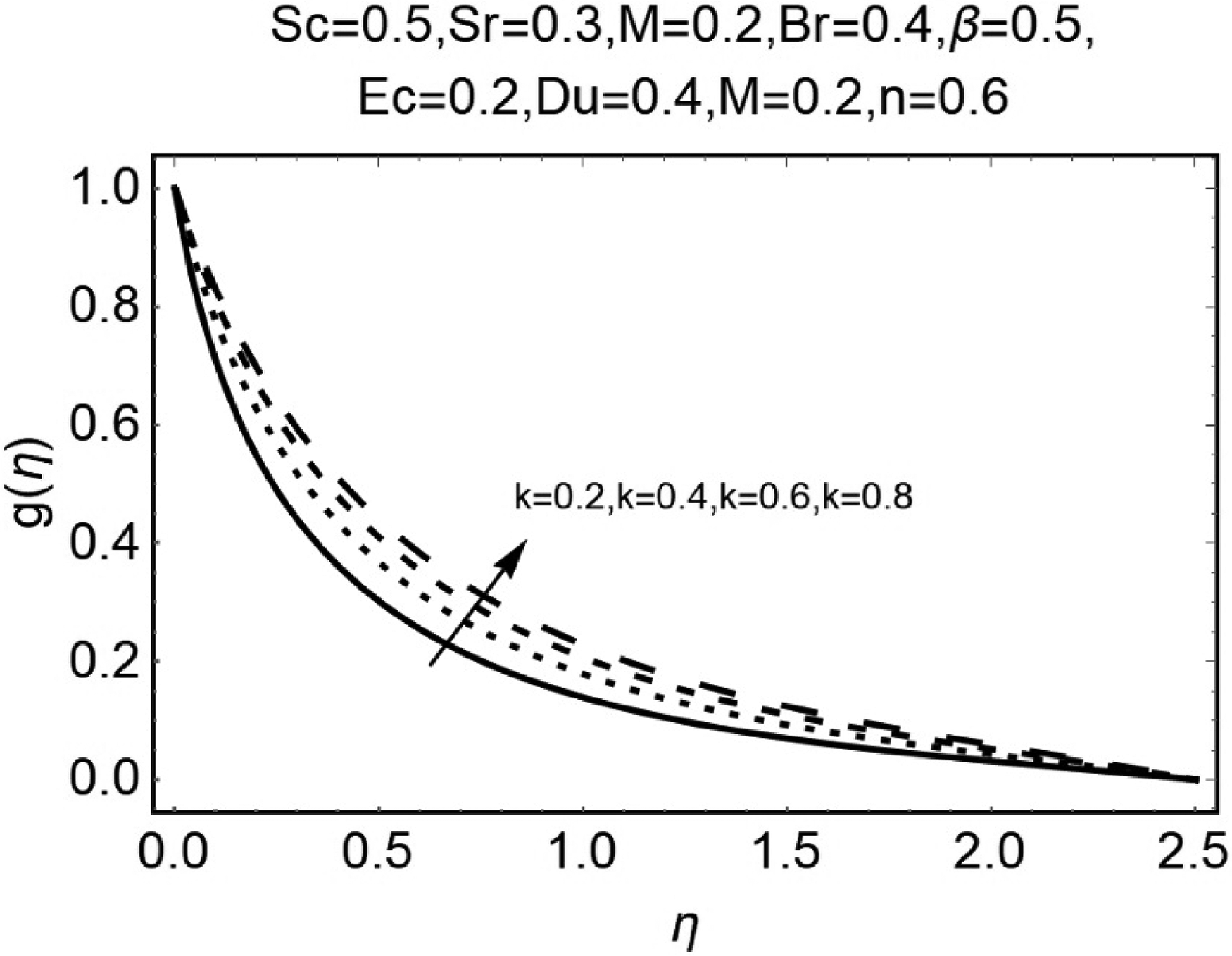
The k-microrotation velocity profile.
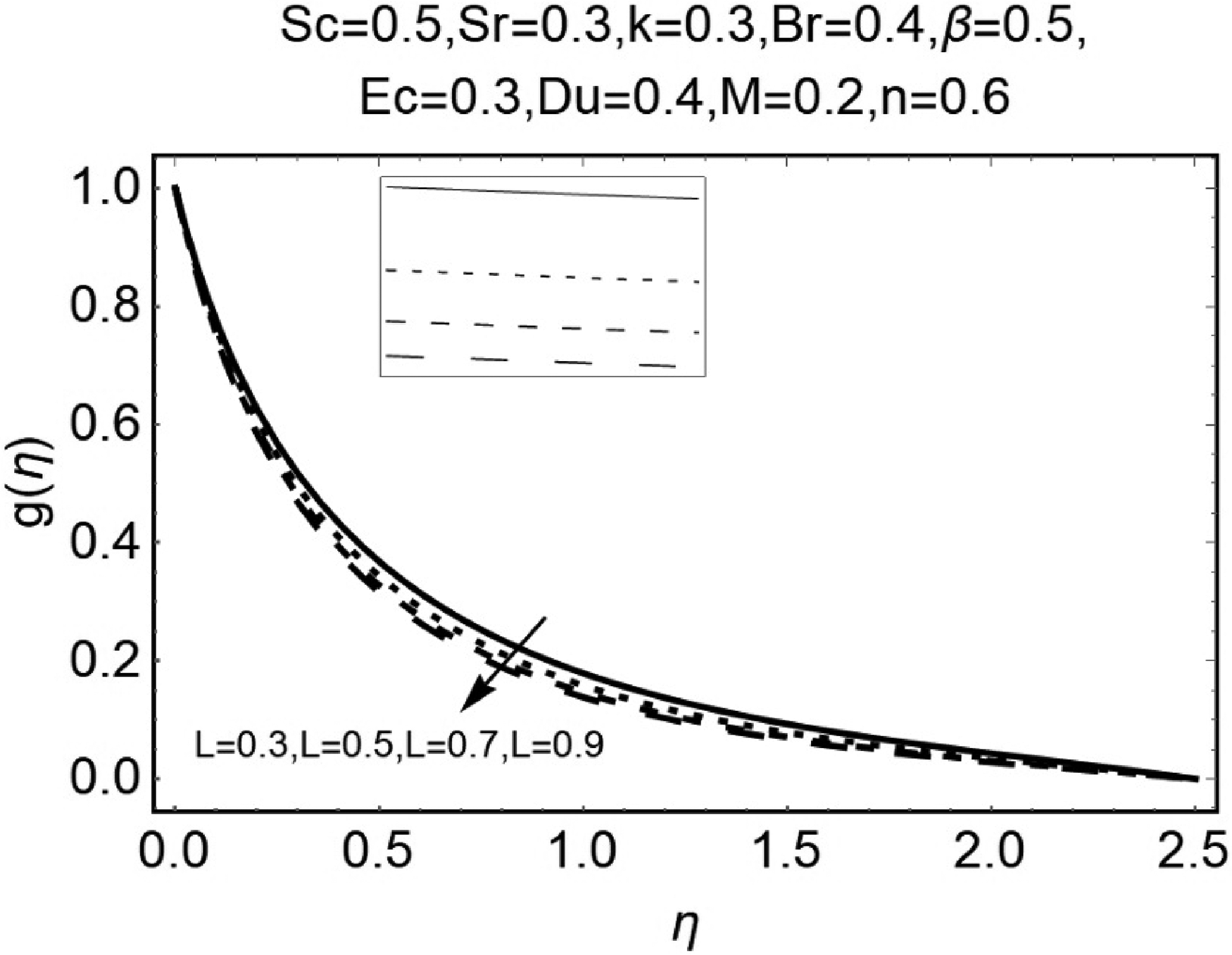
The L-microrotation velocity profile.
Temperature profile
Figure 6 clearly shows a pattern of temperature increases occurring in tandem with concentration increases. As the value of k increases, the sheet's radius also increases. Figure 7 demonstrates that an increase in M leads to a corresponding increase in the resistance forces. The temperature rises due to the equipment generating a substantial amount of heat. Figure 8 illustrates the fluctuating value of θ (η) as it increases. As a result of thermal diffusion, the temperature rises in tandem with the increase in Du. Figure 9 shows the temperature profile after adding Ec. As the Ec values grow, the fluid particles come into contact with each other more frequently, resulting in a higher generation of heat energy and ultimately leading to an increase in the value of θ (η).
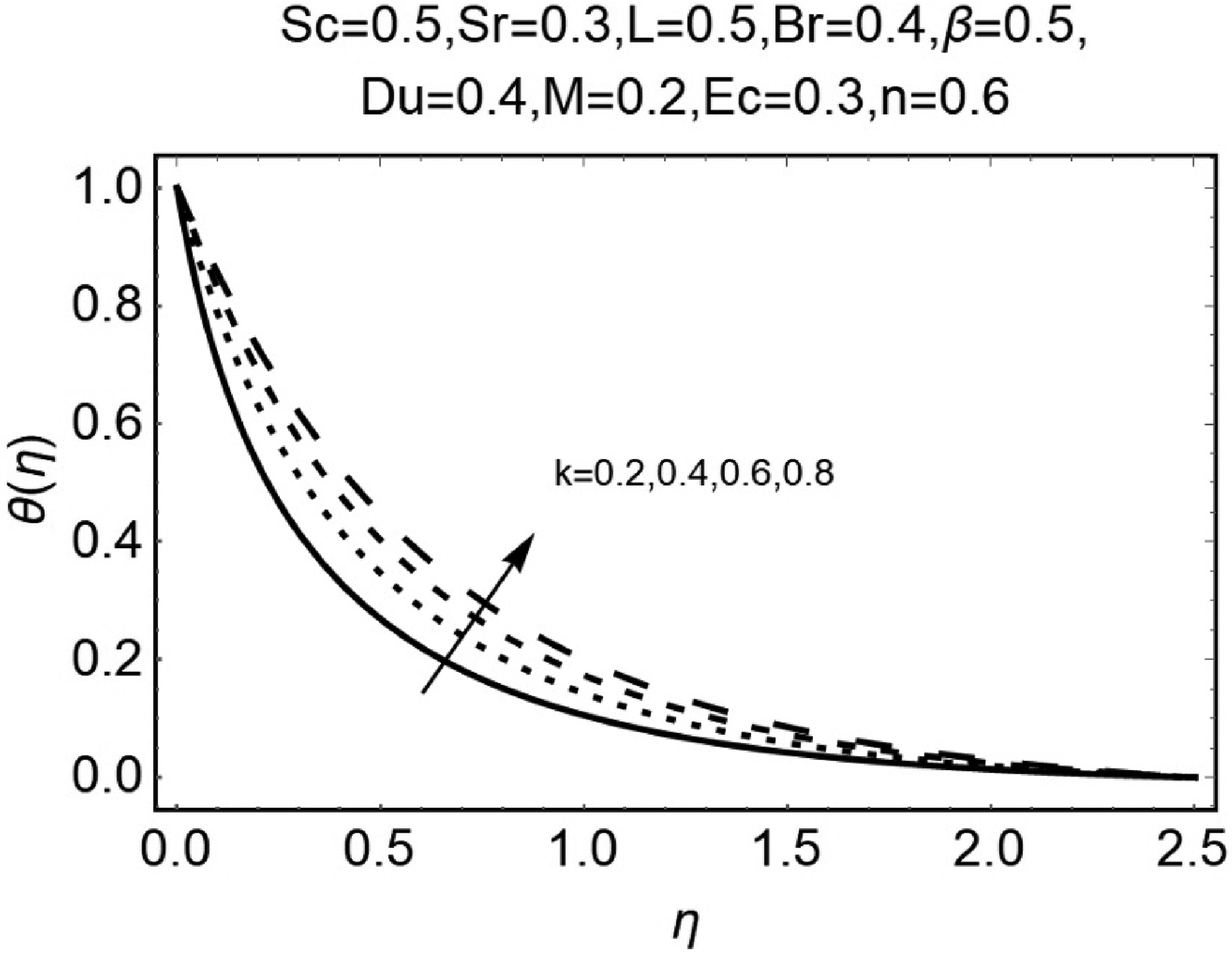
The reduction in θ (η) as a function of k.
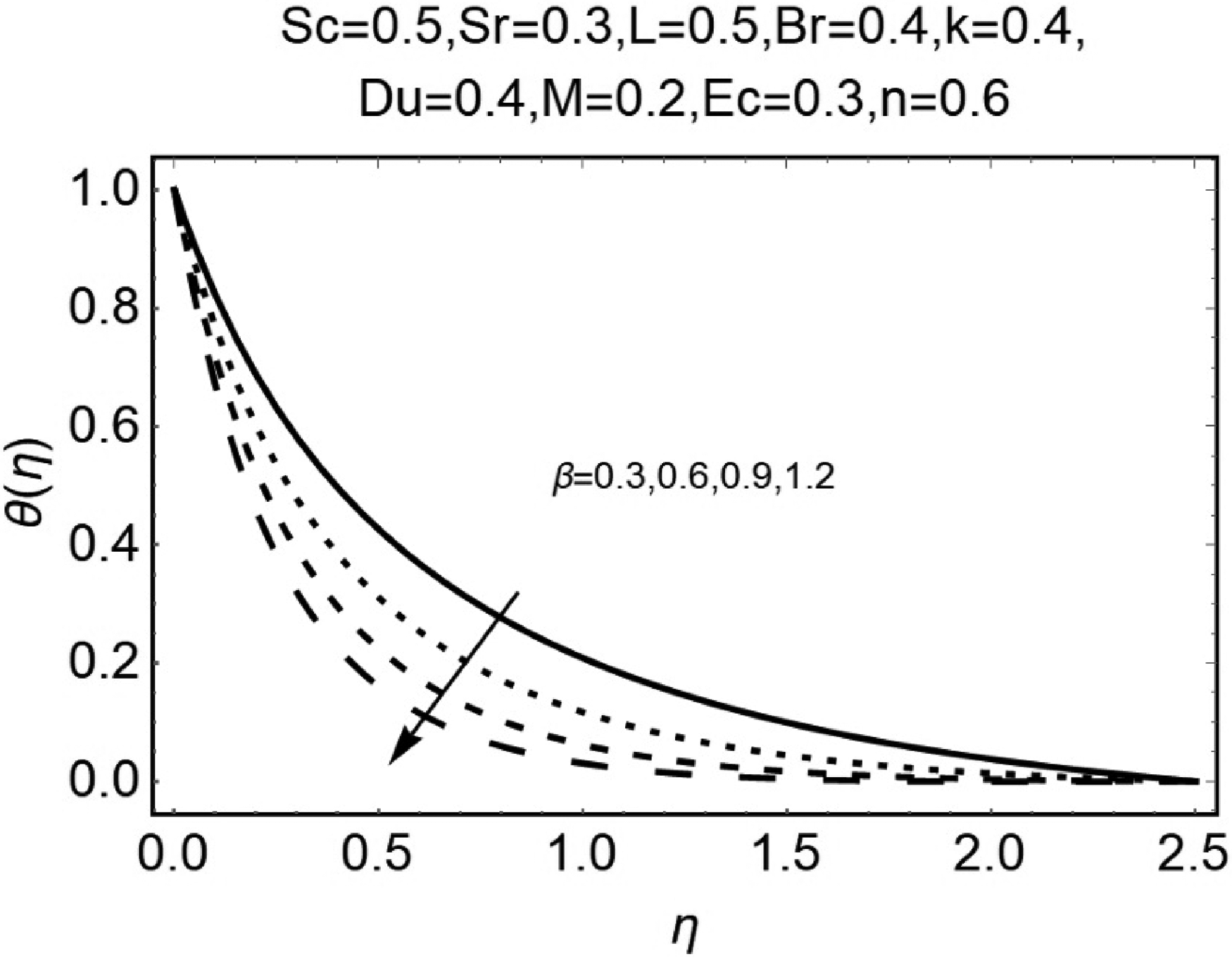
The reduction in θ (η) as a function of
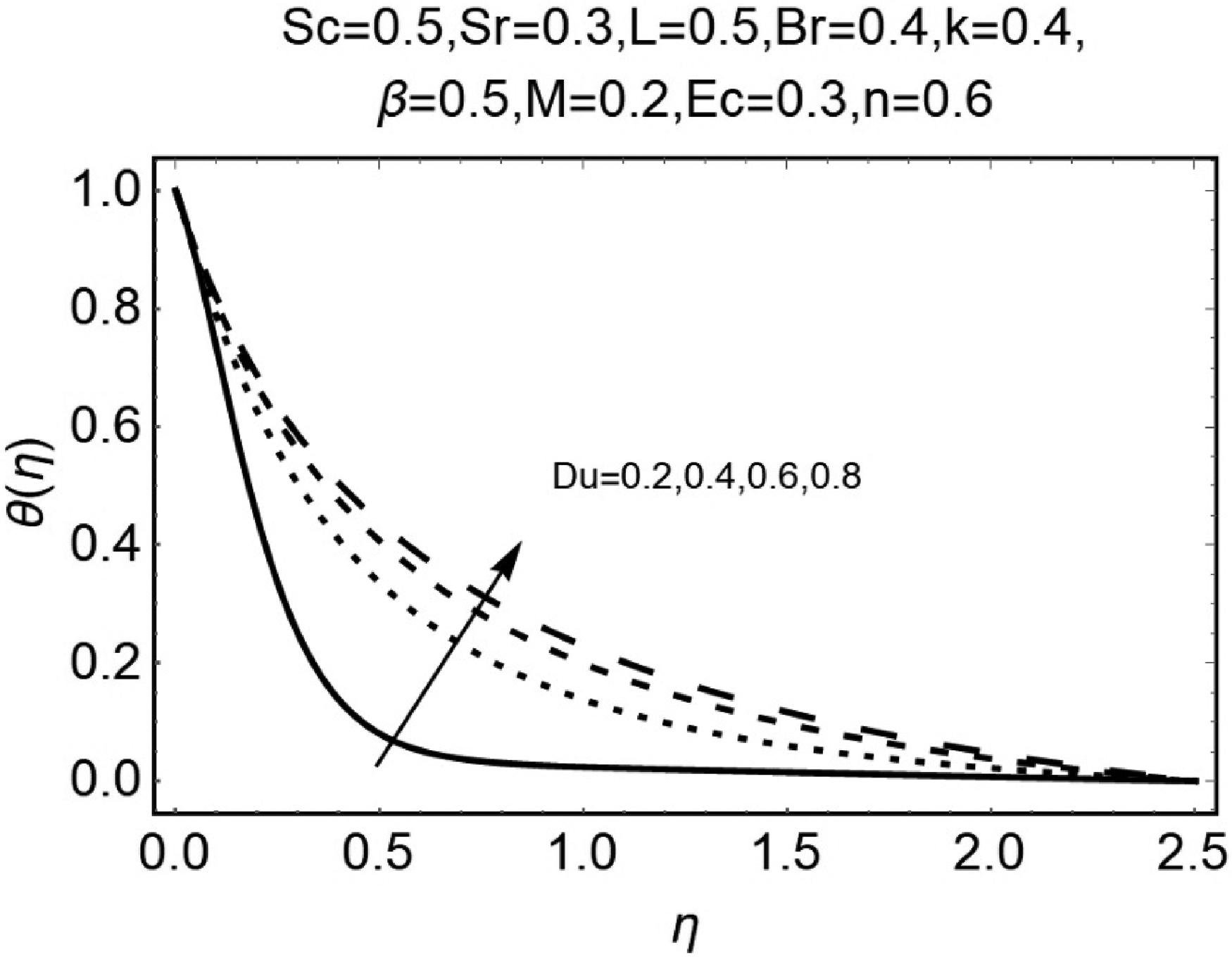
The reduction in θ (η) as a function of Du.
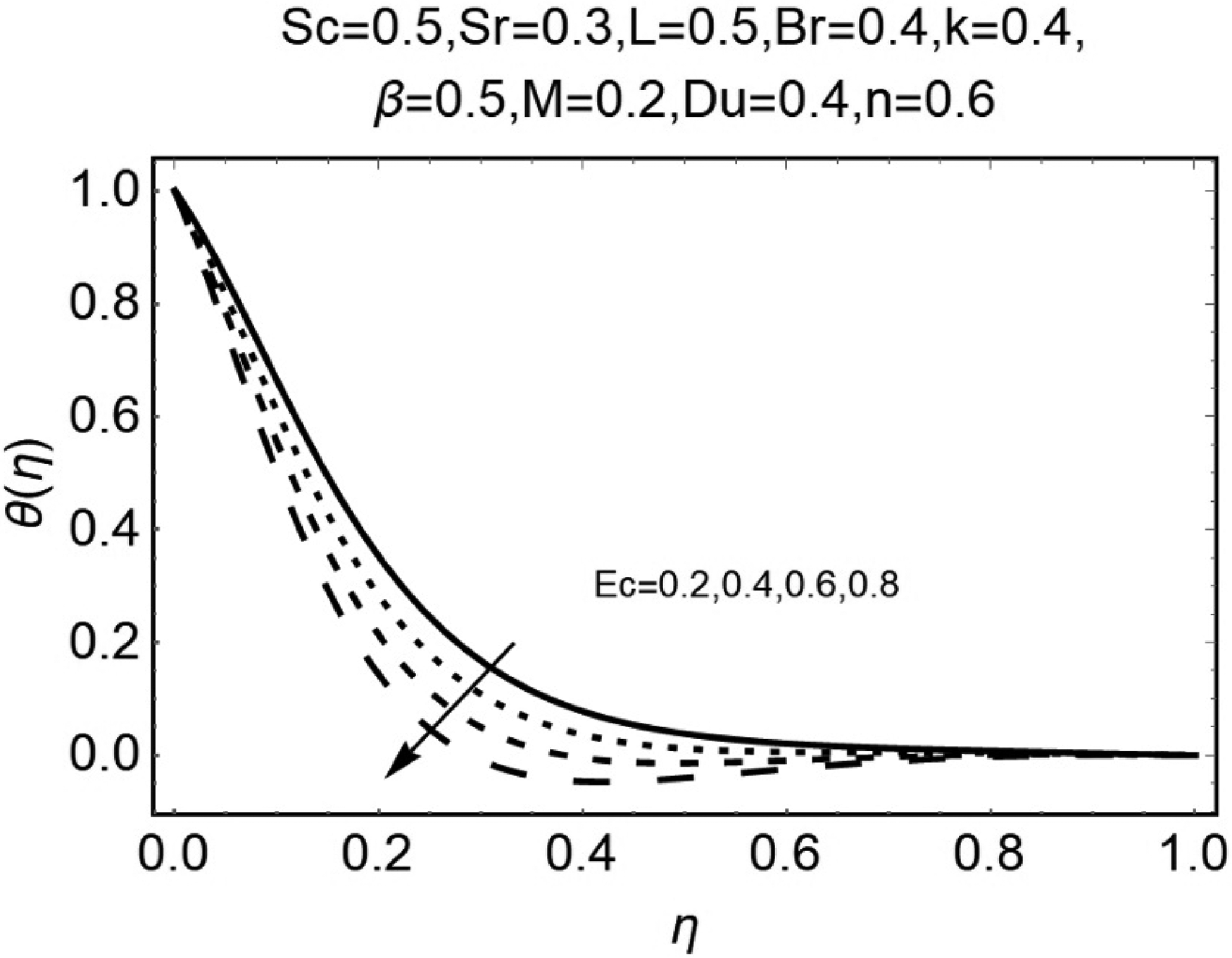
The reduction in θ (η) as a function of Ec.
Concentration profile
Figure 10 allows us to observe the impact of the curvature parameter on the concentration profile, represented by the symbol ϕ (η). When the parameter's curvature increases, the concentration also increases because the viscosity decreases. As shown in Figure 11, Sr is responsible for raising the function ϕ (η). An elevation in the Sr concentration induces a concomitant increase in the viscosity of the fluid, resulting in a corresponding decrease in fluid flow and an escalation in the fluid concentration. The impact of Sc on the value of ϕ (η) is illustrated in Figure 12. A reduction in the Schmidt number signifies a decline in the concentration of the fluid. This is because momentum diffusion is far more evident than mass diffusion.
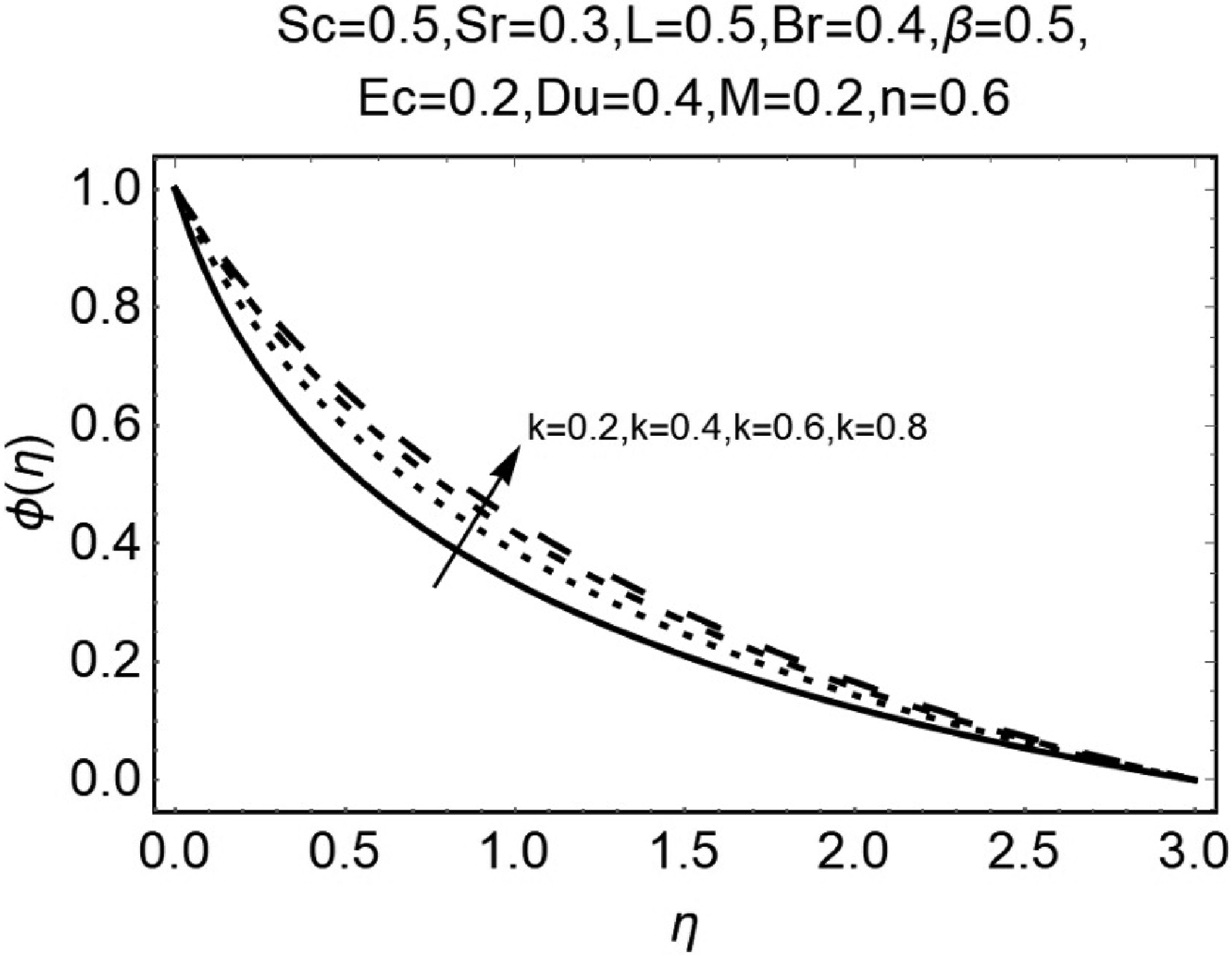
The impact of the variable k on the function ϕ(η).
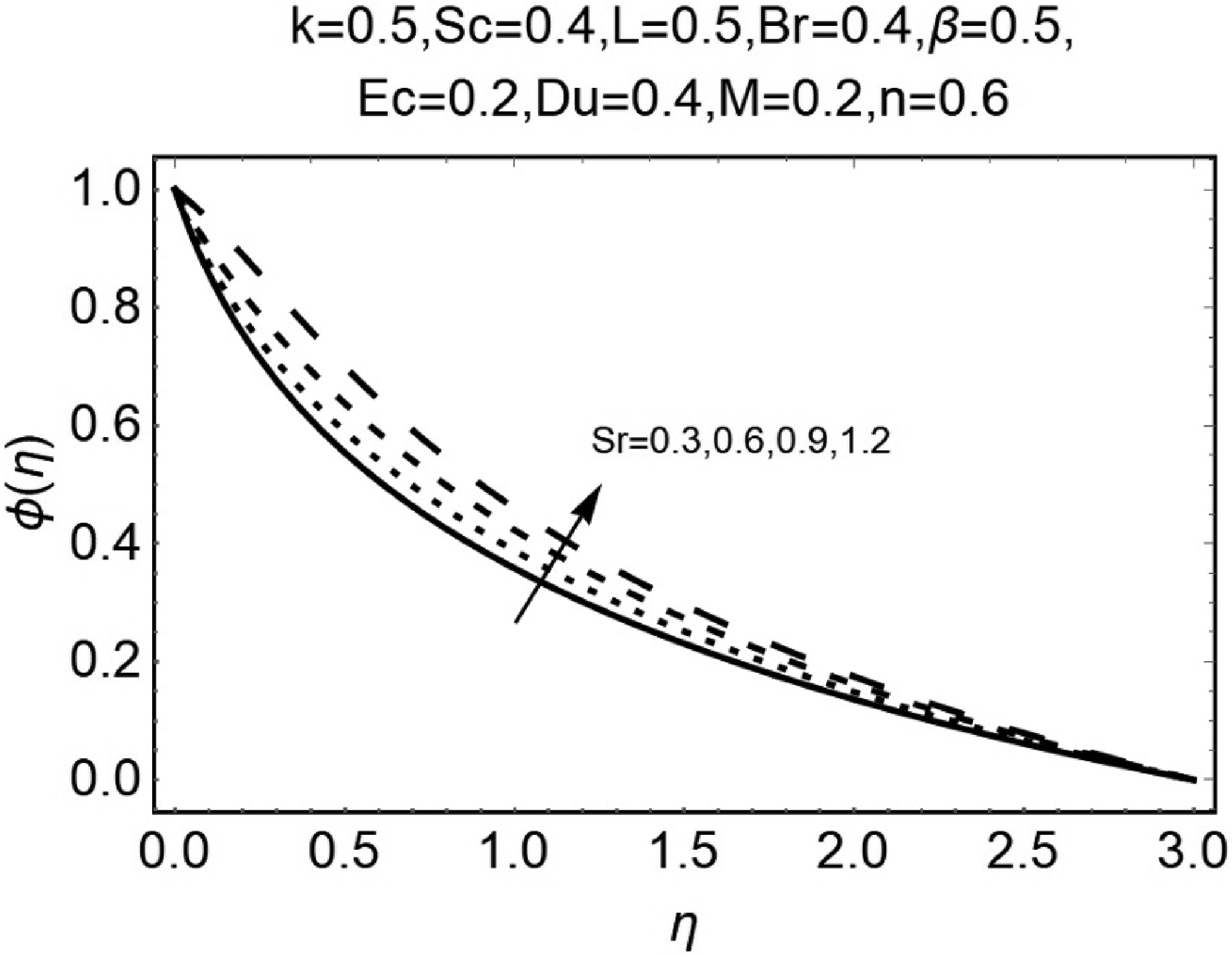
The impact of the variable Sr on the function ϕ(η).
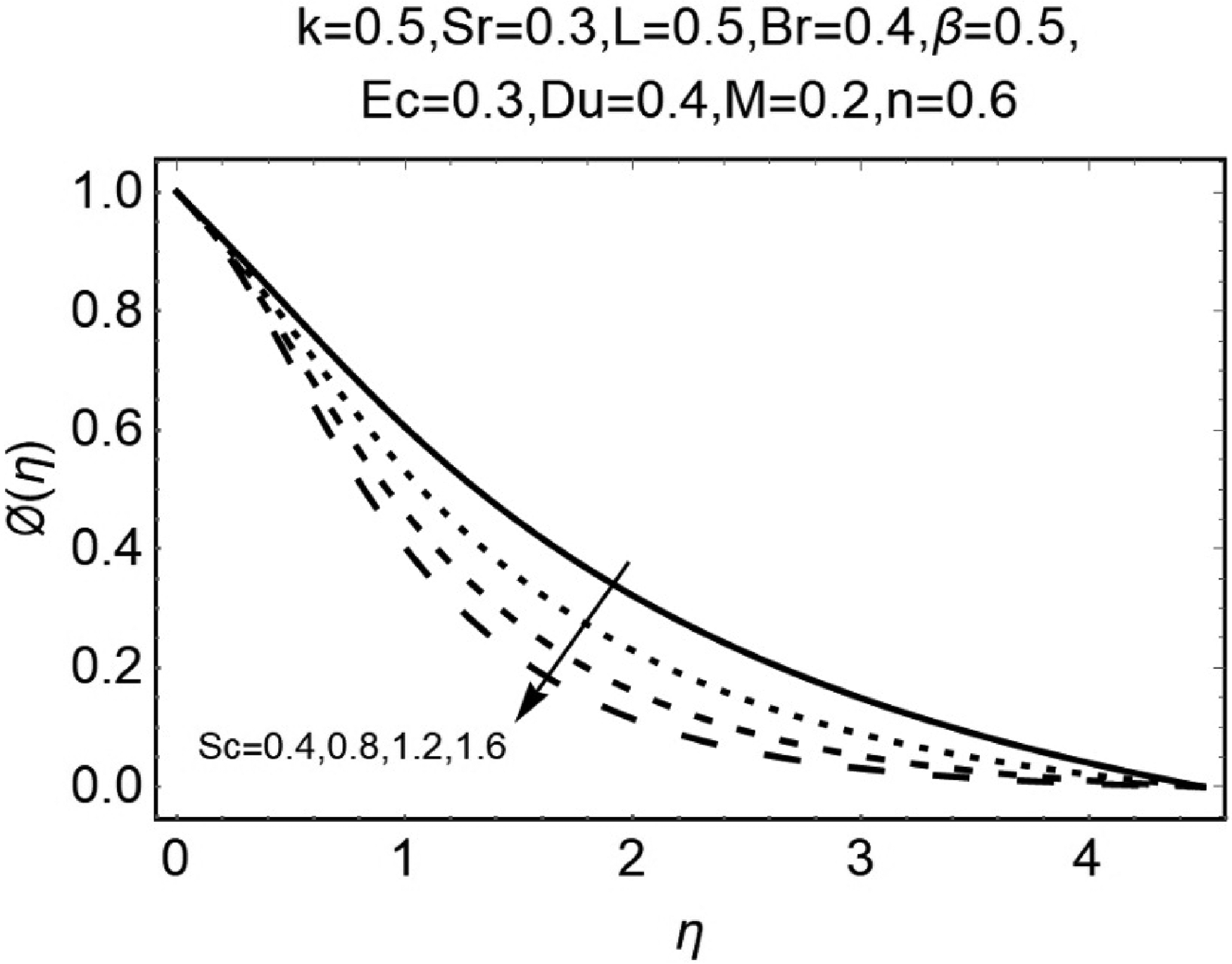
The impact of the variable Sc on the function ϕ(η).
Engineering quantities
As shown in Figures 13–17, we did a full analysis of how changing values affected the local Nusselt numbers, skin frictions, and Sherwood numbers in the last part. This part goes into great detail about the changes that were made to the integrated setups. Figure 13 shows how the skin friction coefficient changes up to M, showing how the different values of k are different. In the following list, you will find several additional values of k that exhibit this variation. Changing the value of k from its current state unavoidably leads to an increase in the absolute value of the skin friction coefficient. This leads to a significant increase in the skin friction coefficient. Figure 14 provides a visual representation of the link that exists between the two variables, as well as the changing value of the local Nusselt number. We establish the validity of this variation across a wide range of k values. This graph makes it abundantly clear that the Nusselt number increases in proportion to the growth of both the k and M factors. We anticipate a relatively straightforward procedure to resolve this situation. Figure 15 illustrates the relationship between oscillation and the magnitude of the local Nusselt number, taking into account a variety of k-values. We can view this association as a predictor of either positive or negative outcomes. This graphic illustrates a correlation between increasing the absolute values of the Nusselt number and enhancing the curvature parameters k and w. The data in this picture illustrates the link. Figure 16 presents the effect of Du on the Sherwood numbers, which is a result of the interaction between Pr and these values. At this location, mass surface fluxes dropped while Du values increased. By showing the whole number, Figure 17 illustrates the effect of Sr on the Sherwood number calculation. Based on this discovery, it appears that the mechanism produces less Sherwood as the concentration of Sc increases.
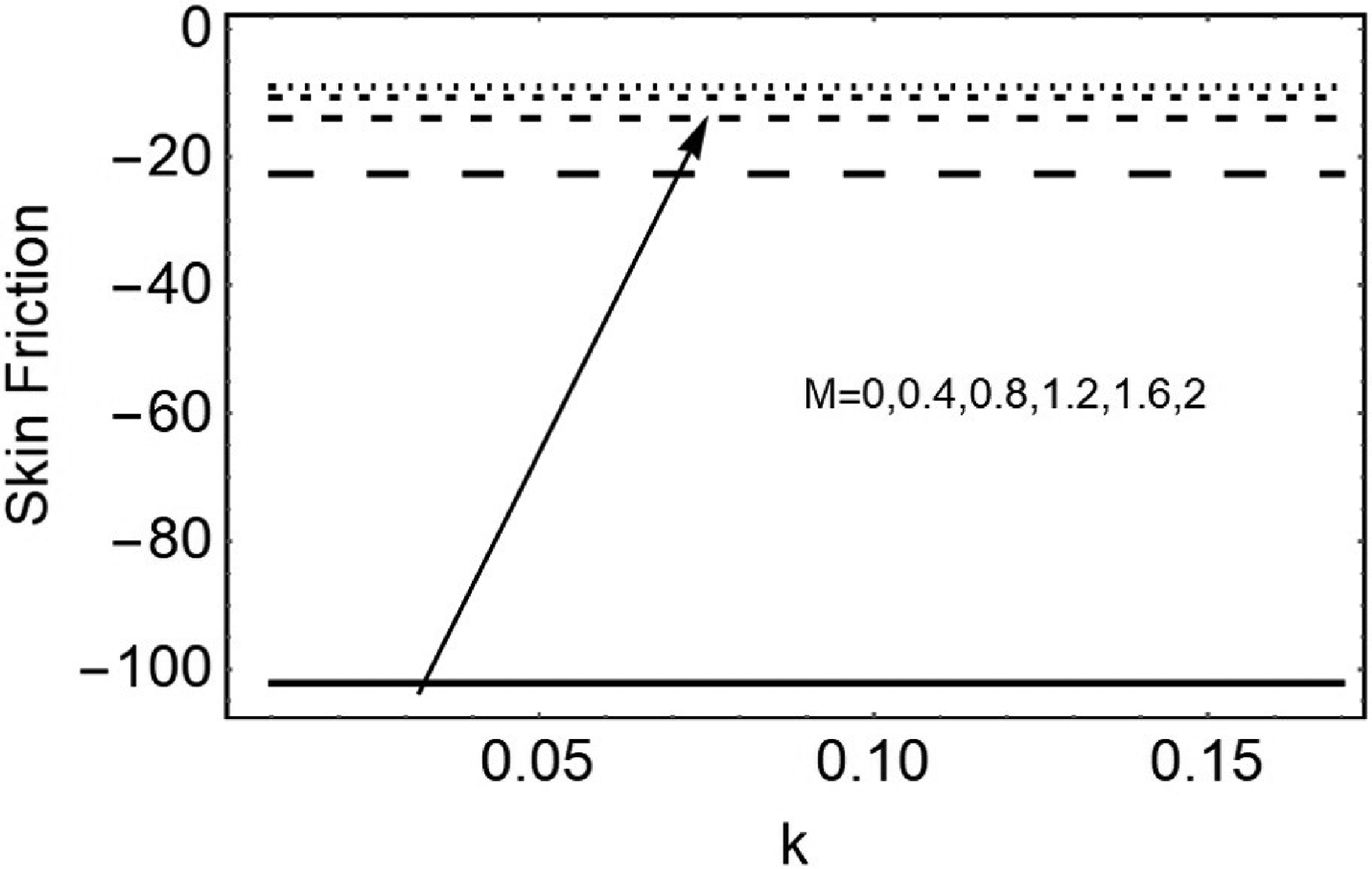
Influence of k and M on
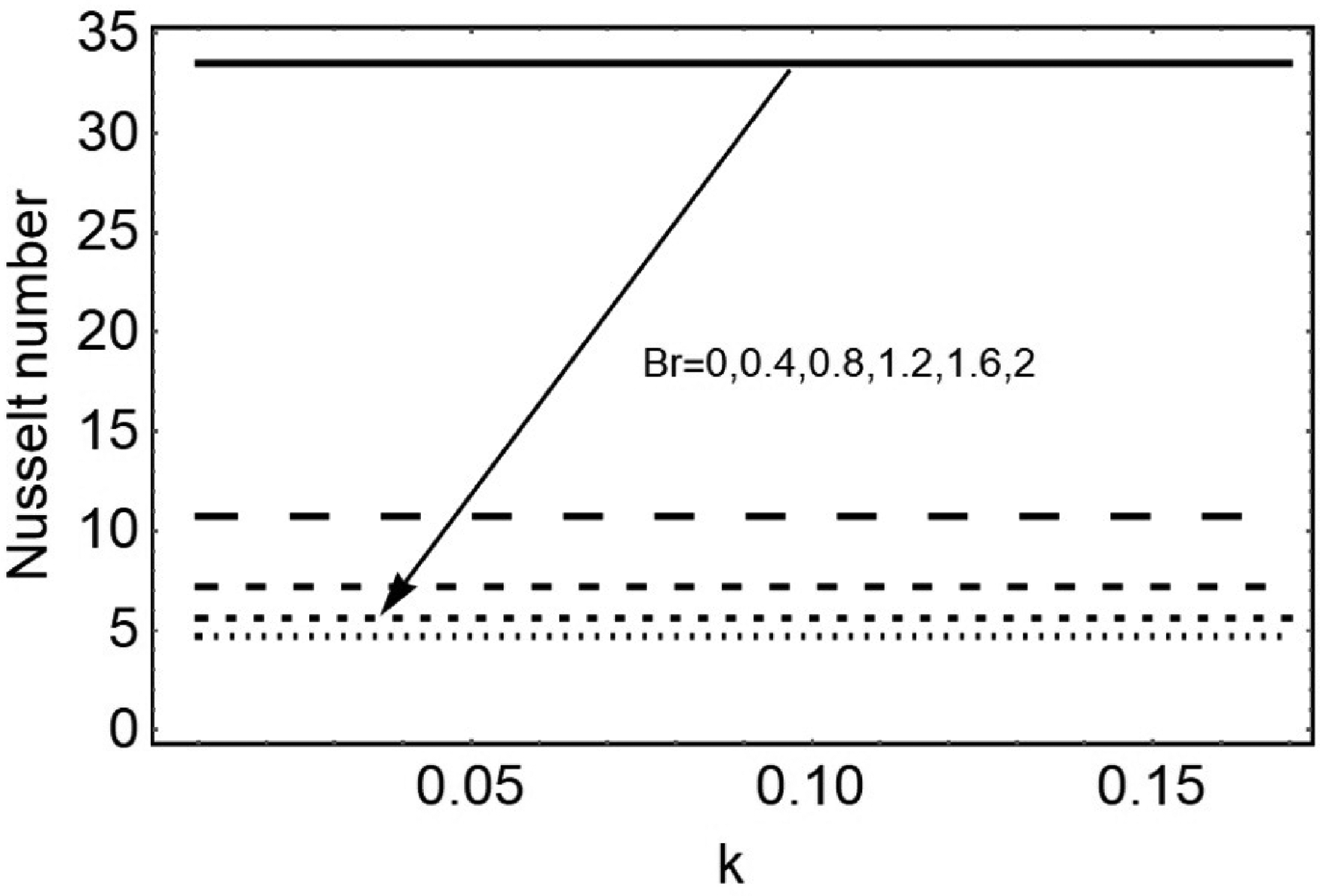
Influence of Br and k on
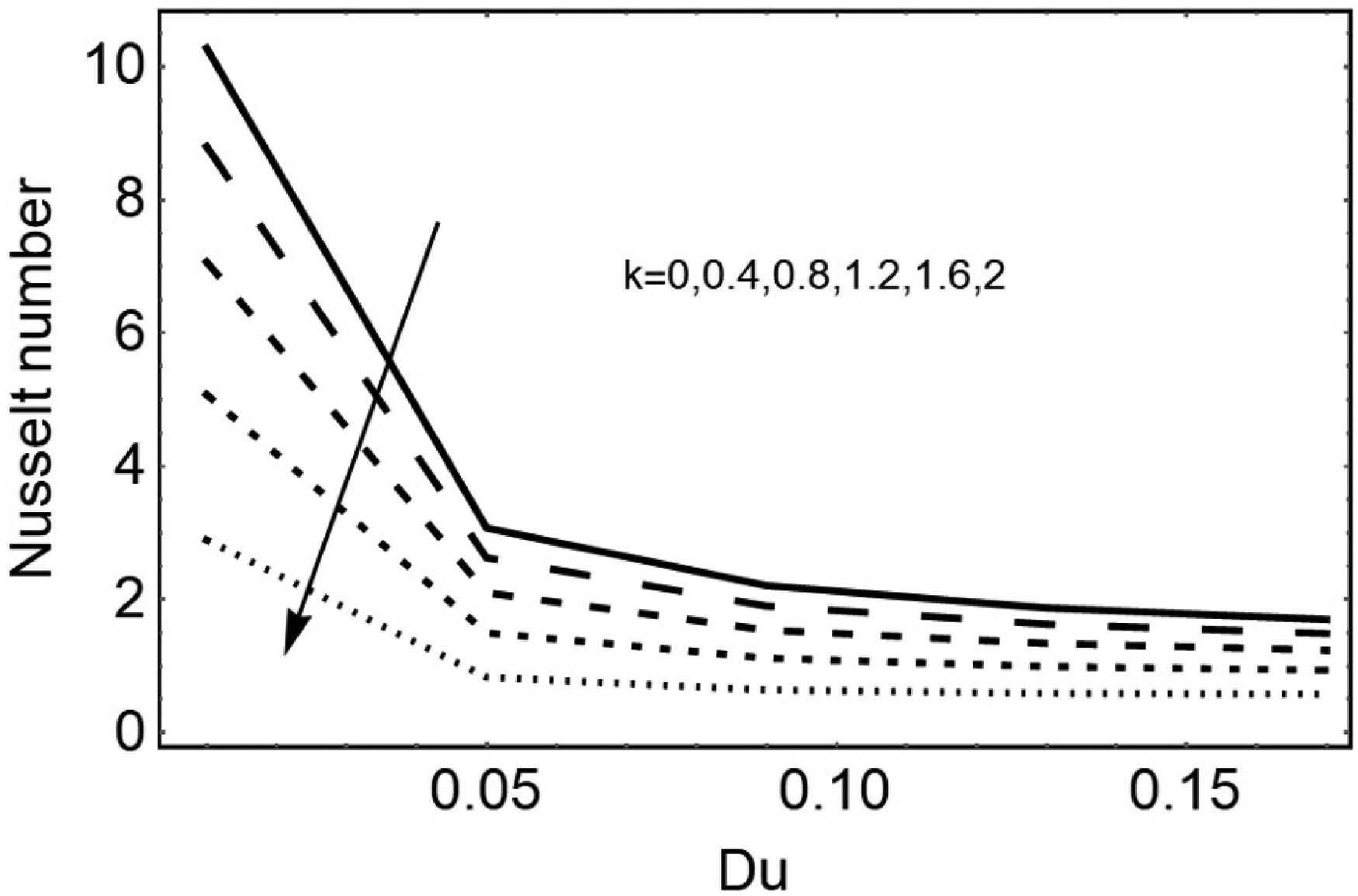
Influence of k and Du on
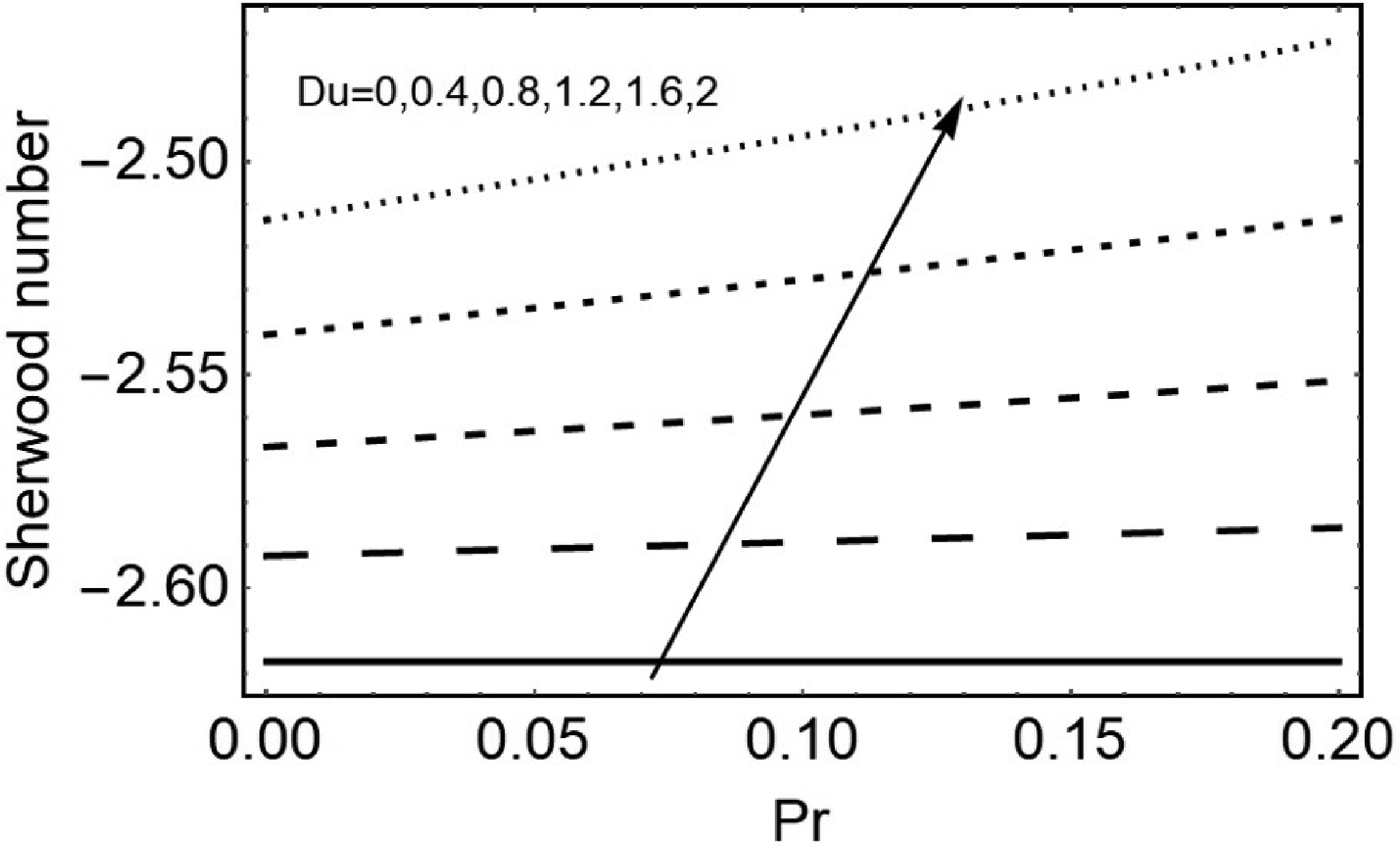
Influence of Du and Pr on
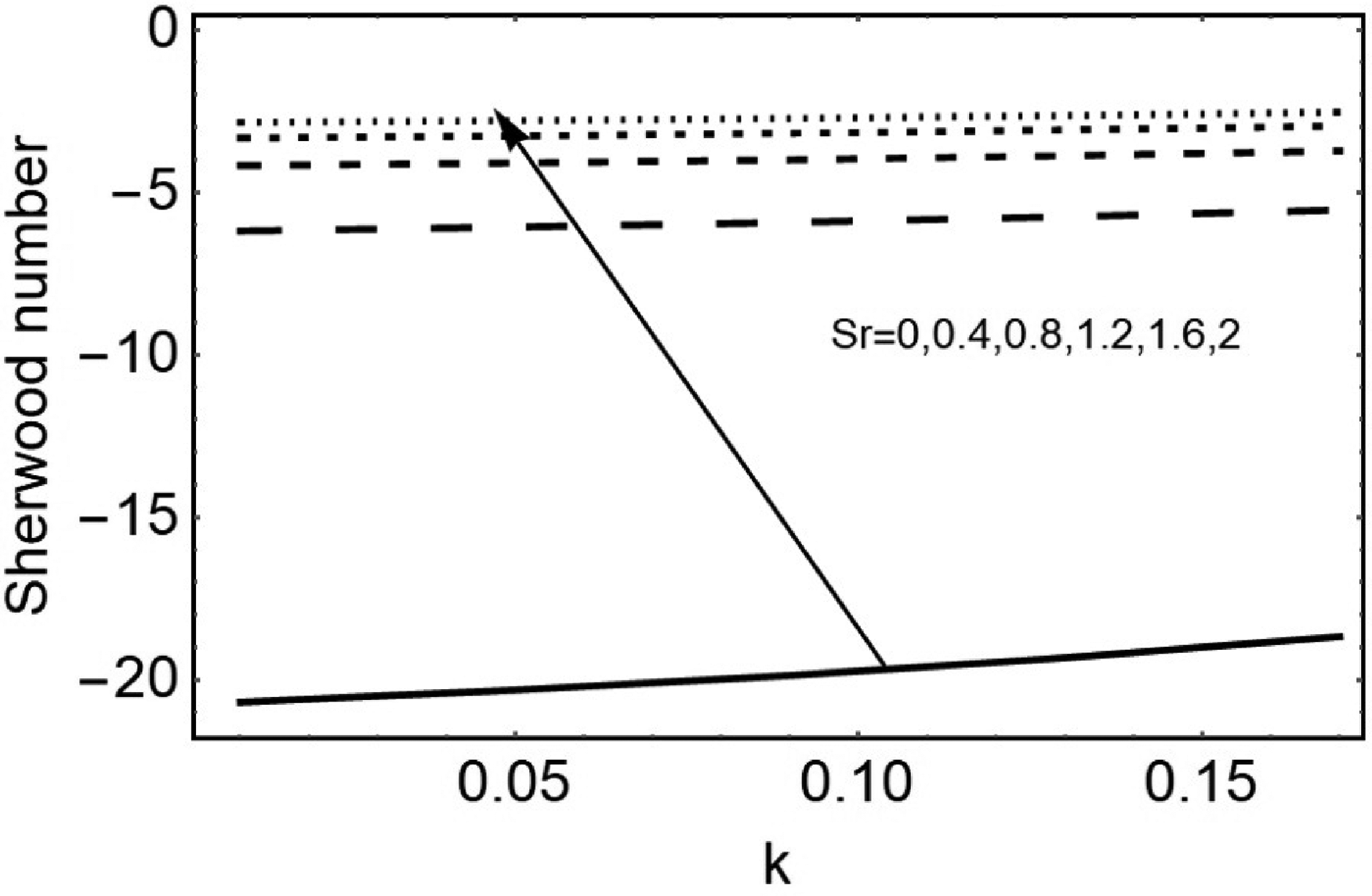
Influence of Sr and k on
Conclusion
The results of Soret and Dufour numbers caused by an unsteady curved stretching layer on MHD viscous fluid flow are analyzed here. In addition, the heat characteristics are changed by the inclusion of Joule heating. The consequences below are sketched out:
The increase of curvatures leads to an increase in profiles on velocity. With the increment of Du, the fluid temperature increases while it decreases when Sr is elevated. For an increase in M, temperature, and concentration increase. Du has a subjectively limited effect on concentration compared to Sr. When k rises, the surface drag force decreases. The effect of the curvature parameter k on the concentration profile The flow properties in a micropolar fluid have been technically obtained due to an unsteady stretching curved layer. In the instance of a curved sheet, it is additionally seen that boundary layer thickness raises contrasted with a smooth one. Moreover, the drag power on the curved surface is even not exactly those on the level surface as the fluid flow. There will be an increase in the amount of skin friction on the wall in k and M. The Nusselt number brings about a reduction in the rise function for the curvature parameter. In every scenario, the numerical values of Sherwood can raise the Dufour parameter functions. The Dufour effects have the highest mass transfer rate values across the board in all of the relevant conditions.
Footnotes
Data availability
No data was used in the presented work.
Declaration of conflicting interests
The authors declared no potential conflicts of interest with respect to the research, authorship, and/or publication of this article.
Funding
The authors disclosed receipt of the following financial support for the research, authorship, and/or publication of this article: The study was funded by Researchers Supporting Project number (RSPD2024R749), King Saud University, Riyadh, Saudi Arabia.
