




Abstract
To clarify the activity patterns and source characteristics of coal mining–induced microseismicity, this study analyzed the spatial distribution characteristics of microseismic events in the Datong coal mining area based on records from the regional digital seismic network. We conducted a detailed characterization of the depth distribution characteristics of microseismic events using the double-difference localization method. Additionally, the source parameters, including corner frequency (fc), source rupture radius (r), seismic moment (M0), source radiated energy (Es), and stress drop (Δσ), were calculated for 136 mine-induced earthquakes with magnitudes ranging from ML1.3 to ML3.2. The results show that ML ≥ 2.0 mining-induced seismic events occur mainly within numerous microfractures in the Datong mining area. The depth of the seismic sources in the mining area is concentrated at 200∼500 m, with significant north–south differences and a close correlation with the mining depth. The displacement spectra of microseismic sources show agreement with the Brune source model
Keywords
Introduction
Coal mining–induced seismicity, also known as mine-induced earthquakes, refers to the rock mass vibrations caused by uneven energy accumulation within coal and rock formations during mining activities. These vibrations occur when the energy reaches its bearing limit and is suddenly released (Dou, 2014; Qi et al., 2003). In recent years, as shallow coal mine resources have gradually depleted, the depth and intensity of coal mining have increased, resulting in significant changes in the physical and mechanical properties of coal and rock formations, as well as the stress environment. These changes have produced a larger disturbance range and load on the overlying strata and more frequent mine-induced seismic activity, threatening safe, and efficient coal mining. Currently, the mechanism and characteristics of mine-induced seismicity are not well understood, and research on the laws of mining seismic activity and source characteristics from the perspective of seismic sources is needed. This research has theoretical and practical significance for predicting destructive mine-induced seismic disasters and ensuring safe and efficient coal mining.
The formation and rupture process of destructive mining-induced seismic events is complex. However, these events are typically accompanied by a series of small-magnitude microseismic activities (Jiang et al., 2006; Li, 2015; Wang et al., 2014). Studies have shown that microseismic events are not randomly distributed in space but are closely related to stress changes induced by mining activities. These changes can lead to fracturing or sliding along preexisting fractures in intact rock masses, resulting in deformation and microfracturing in coal and rock masses with concentrated stress (McKinnon, 2006). Therefore, by detecting microseismic events in mining areas and analyzing their spatial distribution characteristics, especially the precise spatial locations of high-accuracy microseismic events, it is possible to identify areas of stress concentration, providing a scientific basis for implementing preventive measures in mines. Currently, the double-difference location method can obtain high-precision, seismic location results and has been successfully applied in precise microseismic localization in mines. For example, Zhang et al. (2021) employed this method to precisely locate microseismic events in the mining area of the Fushun coal mine in Liaoning, China. The results showed that the microseismic events exhibited a band-like distribution along the near strike-slip direction, and the microseismic sequence showed signs of migrating deeper over time, indicating fault activation. Additionally, Kong et al. (2023) conducted precise localization of this microseismic sequence using a dense seismic array, and the results showed that the microseismic events were concentrated near the faults in the mining area, closely related to mining activities.
In recent years, with the continuous densification of regional digital seismic networks and the upgrading of microseismic monitoring systems in mining areas, some researchers have attempted to introduce the source spectrum theory of natural earthquakes to the study of mining-induced earthquakes. The accurate calculation of seismic source parameters can provide a comprehensive and systematic assessment of the range and stress state of mining-induced earthquakes, which provides a reference basis for the assessment of mining seismic hazards. For example, Tang et al. (2011) investigated the apparent stress and deformation parameters of seismic events induced by deep well mining in the Donggua Mountain copper mine and found good consistency between mining seismic activity and mining activities. Chen (2019) solved the seismic source mechanical parameters of mining-induced earthquakes based on the Brune circular disk model, and the study showed a distinct logarithmic relationship among the radiated energy, stress drop, and seismic moment of mining-induced earthquakes. The source radius can characterize the macroscopic scale of the fracture of the mining-induced coal-rock mass. Chen et al. (2021a, 2021b) analyzed the source parameters of multiple mining-induced earthquakes and found significant differences in the rupture scales and mechanisms of microseismic events in mining areas compared to natural earthquakes. Cao et al. (2022) noted that the seismic source parameters and rupture mechanisms of mining-induced earthquakes are related to geological structures, source locations, and stress environments. Different types of rupture events exhibit significant differences in radiated energy, source radius, stress drop, and apparent volume. The seismic source parameters of mining-induced earthquakes can provide a basis for the identification and prediction of strong mining-induced seismic events.
The activity patterns and source characteristics of induced earthquakes vary under different mining conditions and stress environments. Although some beneficial research progress has been made to better understand the characteristics of coal mining–induced seismic activity and source parameters in China, research on this topic in the Shanxi region is lacking. The Datong mining area in Shanxi Province is an important production base for high-quality thermal coal in China, with a long history of mining. In recent years, as the depth and intensity of mining in the area have increased, mining-induced seismic activity has become more frequent. According to the monitoring results of the Shanxi Seismic Network, thousands of ML ≥ 0.0 mining-induced earthquakes are recorded in the Datong mining area every year, providing natural experimental data for exploring mining-induced seismicity. To analyze the activity patterns and source properties of induced microseismic events in the Datong coal mining area, this study used the double-difference location method for precise relocation and the ω2 source model to calculate source parameters, such as corner frequency (fc), source rupture radius (r), seismic moment (M0), radiated energy (Es), and stress drop (Δσ), for earthquakes of different sizes. This approach will deepen our understanding of the source generation, occurrence, and rupture processes and is important for mine safety, disaster investigation, and other purposes.
Geological conditions and mining overview
The Datong mining area is located on the northern edge of the basin-Shanxi rift zone, adjacent to the Yinshan uplift belt to the north, the Lvliang mountain structural belt to the west, and bounded by the Kouquan-Emaokou fault to the southeast and the Hongtao mountain anticline to the south (Guo et al., 2015; Yuan et al., 2011). Figure 1 shows that the mining area is an asymmetric syncline structure with a north‒northeast axis, with the syncline axis offset to the east, trending north‒northeast at 30°–50°, and the syncline axis forming a reverse “S” and “S” shape. The lowest elevation is located in the central part of the Tongxin coalfield and Yungang Grottoes area. The main coal-bearing strata in the Datong mining area are the Jurassic and Carboniferous-Permian coal seams (Figure 1). It is a typical dual-series coal-bearing basin (Xi and Zhao, 2011; Yuan et al., 2011). The area of the Carboniferous-Permian coalfield is approximately 1739 km2, and the area of the Jurassic coalfield is approximately 772 km2, with an overlapping area that reaches 684 km2 (Guo et al., 2015; Yu, 2015). The geological structure of the Datong mining area is significantly controlled by the Kouquan-Emaokou fault, and the movement and mechanical mechanism of the Kouquan fault affect the overlying rock movement and stress distribution in the Datong mining area (Yu, 2015).
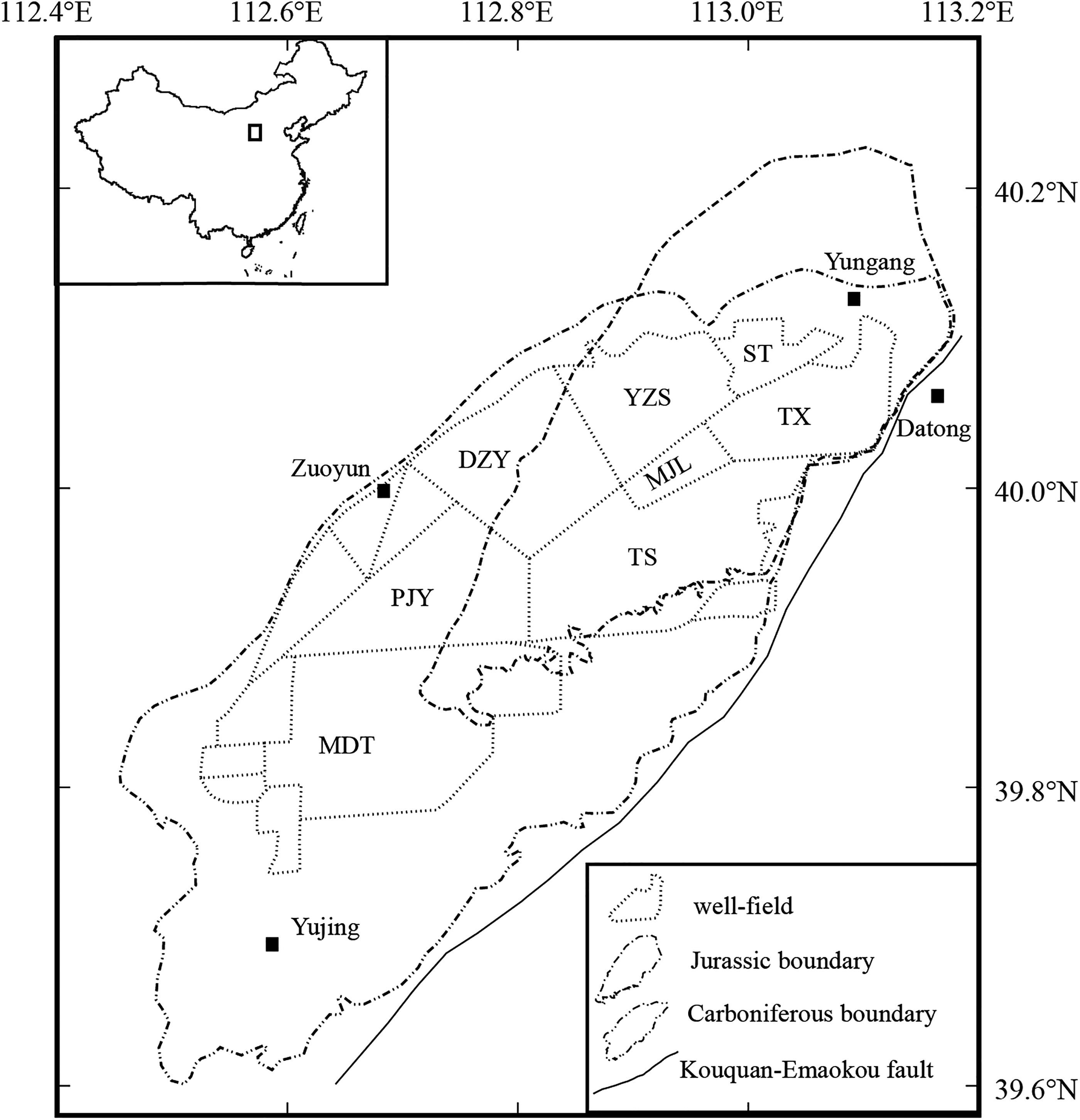
Structural map of the Datong coal mining area and its surroundings (Guo et al., 2015).
Currently, the shallow Jurassic coal seams in the Datong mining area are becoming depleted, and the deep Carboniferous-Permian ultrathick coal seams are the main mining seams, with mining depths concentrated at 300–500 m (Zhu, 2018). Due to the relatively deep burial depth of the mining seams and the complex occurrence conditions of coal and rock, as the mining depth increases, the self-weight stress and horizontal stress of the coal and rock mass increase, and the accumulated elastic energy in the coal and rock mass increases, causing frequent rock bursts, dynamic ground pressure, and mining-induced seismicity (Yu et al., 2014; Zhu, 2018). According to the monitoring results of the Shanxi Seismic Network, mining-induced seismicity in coal mines is concentrated in the northern part of the Datong mining area, where the main mining fields include Tongxin (TX), Tashan (TS), Sitai (ST), Yanzishan (YZS), Majiling (MJL), Dongzhouyao (DZY), and Panjiayao (PJY).
Analysis of mining-induced seismic activity
Data selection
The waveform of mining-induced seismic events in coal mines, similar to natural tectonic earthquakes, exhibits distinct P and S waves. By analyzing the arrival times and amplitudes of P-wave and S-wave phases recorded by different seismographs, mining-induced seismic events can be picked and located. To clarify the characteristics and patterns of mining-induced seismic activity in the Datong mining area, this study utilized continuous waveform data from the Datong seismic network from January 2021 to June 2022. A total of 3521 microseismic events were picked using seismic event phase analysis software, with magnitudes ranging from ML0.0 to ML3.2. Figure 2 shows that there is a significant difference in the number of microseismic events among different magnitude ranges. The proportion of ML ≥ 1.0 events is relatively large in the research data. By calculating the minimum complete magnitude (Wiemer and Wyss, 2000) of these microseismic events, the results show that the picked microseismic events have a magnitude of Mc = ML1.0. This implies that the seismic records with ML ≥ 1.0 in the Datong mining area are essentially complete, based on the existing seismic monitoring network. Therefore, the study on seismic activity in the Datong mining area primarily focuses on ML ≥ 1.0 mining-induced seismic events.
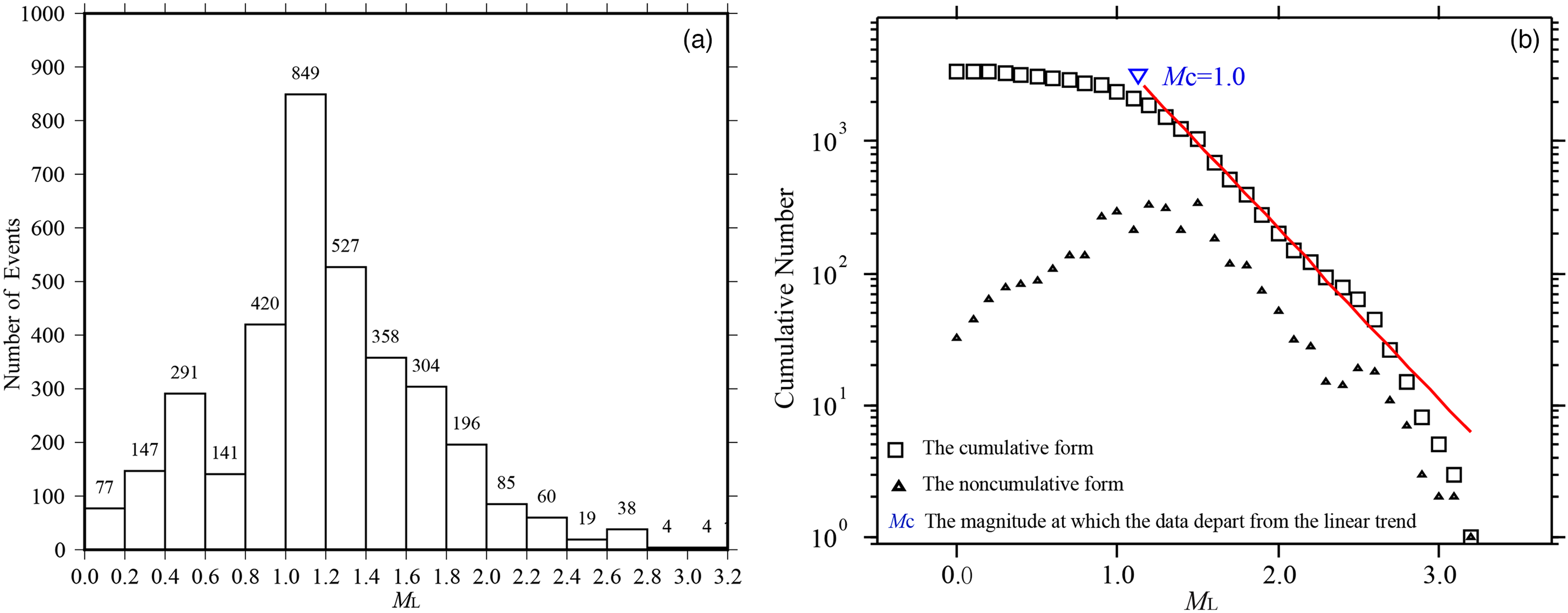
Histograms of duration magnitudes (a) and frequency magnitude distribution (b) of mining-induced seismic events.
Characteristics of seismic spatial activity
The spatial and temporal distribution characteristics of microseismic events with ML ≥ 1.0 were analyzed. The results indicate that the coal mining–induced mine tremors in the Datong mining area are concentrated in the northern part of the area. To further understand the spatial distribution of different magnitudes of mine tremors, this study compared and analyzed the spatial distribution of mine tremors in different magnitude ranges (Figure 3). The number of microseismic events with ML < 2.0 is significantly higher than that of larger mine earthquakes with ML ≥ 2.0, and their distribution is more extensive, covering the northern region of the Datong mining area. Mining-induced earthquakes in the Tashan (TS), Dongzhouyao (DZY), Majiling (MJL), Yanzishan (YZS), Sitai (ST), and Tongxin (TX) mining fields are the most frequent. The ML ≥ 2.0 mine earthquakes are located mainly in the microseismic positions of ML1.0–1.9, and they generally do not extend beyond the source area range of microfracture events.
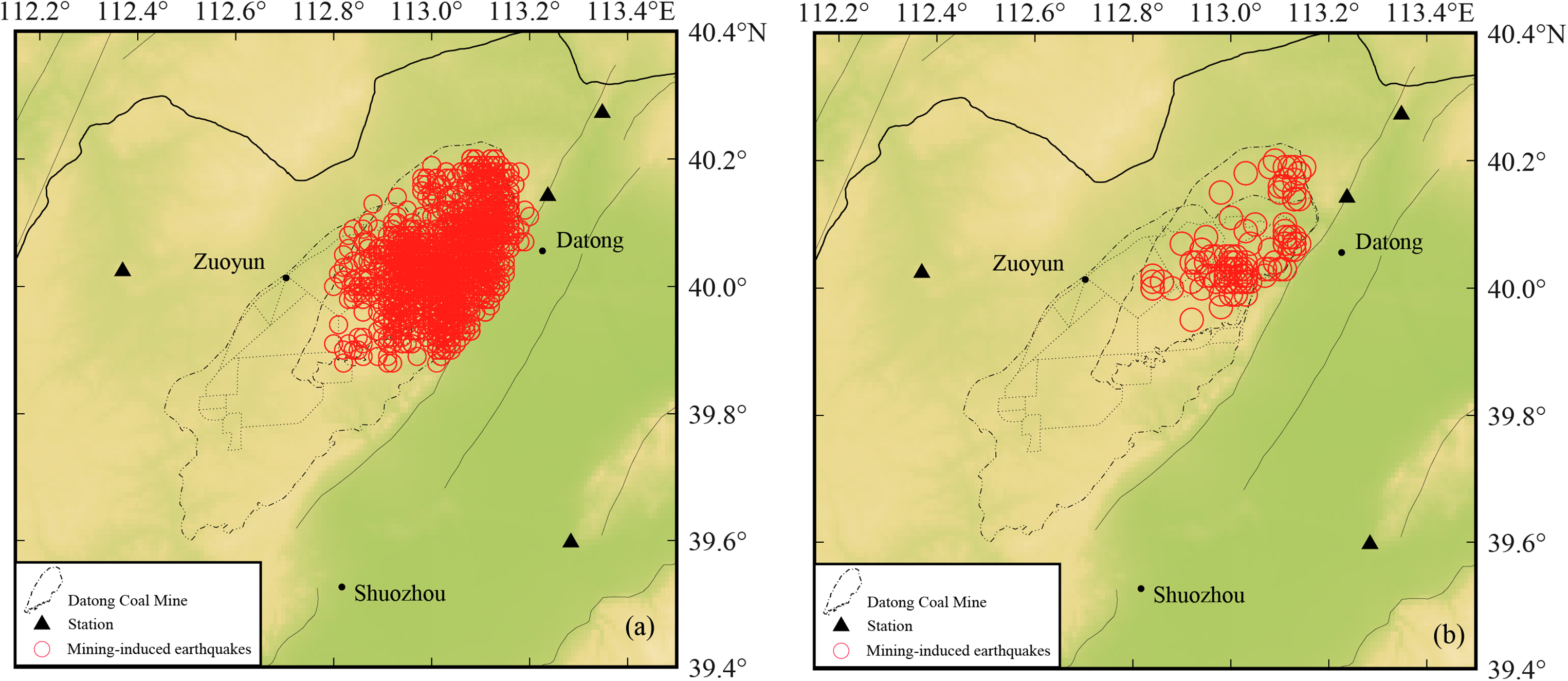
Spatial distribution map of mining-induced seismic events of different magnitudes in the Datong mining area: (a) ML1.0–1.9 and (b) ML2.0–3.1.
Analysis of the microseismic spatial distribution based on double-difference relocation
The shallow depth and larger positioning error caused by coal mining–induced earthquakes pose challenges in studying the distribution characteristics of seismic source depths in mining-induced earthquakes. The double-difference relocation method (Waldhauser and Ellsworth, 2000) is a relative relocation method that inverts the relative positions of each earthquake in a cluster relative to the centroid of the cluster. This method can effectively reduce errors caused by crustal structures, and its relocation results are more accurate than those of traditional methods. The relative position characteristics provided by double-difference relocation can adequately describe the distribution characteristics of seismic sources and have played an important role in the relocations of mine-induced seismicity and earthquake sequences (Chen et al., 2021a; Kong et al., 2023; Li et al., 2022; Zhang et al., 2021). To better analyze the spatial distribution characteristics of microseismicity in mining areas, this study utilizes the double-difference relocation method for precise relocation.
In the process of seismic relocation, the more stations are involved, the more accurate the seismic relocation. Therefore, among the 3521 identified microseismic events, 1166 events recorded by 5 or more stations were selected for precise relocation, resulting in a final set of 680 precise relocation results.
Figure 4 shows the spatial distribution map and focal depth of different profile directions after precise location, mine-induced seismicity. The main areas of mine-induced seismicity are the Tashan (TS), Tongxin (TX), and Yanzishan (YZS) mining areas in Datong. The depths of the seismic sources are primarily between 200 and 500 m, with the northeastern part of the seismic source area being slightly shallower than the southwestern part, with a distribution mostly between 200 and 300 m. The occurrence of mine-induced earthquakes is closely related to the mining depth. Seismic activity is less likely to occur at depths within 200 m during mining operations. This finding may be attributed to the lower levels of self-weight stress and tectonic stress in the shallow rock mass, resulting in insufficient stress and strain accumulation to trigger mine-induced earthquakes. However, as the mining depth increases, the frequency and energy of mine-induced earthquakes increase due to the combined effects of self-weight stress and tectonic stress. Additionally, previous studies (Guo et al., 2015) have shown that the burial depth of coal seams in the mining area exhibits a SW deep and NE shallow pattern, with thicker seams in the Tashan, Tongxin, and Yanzishan mining fields gradually thinning toward the NE, showing significant north‒south differences. The consistency between the hypocenter depth and the depth distribution of coal seams in the mining area also indirectly confirms the accuracy of the double-difference location results.
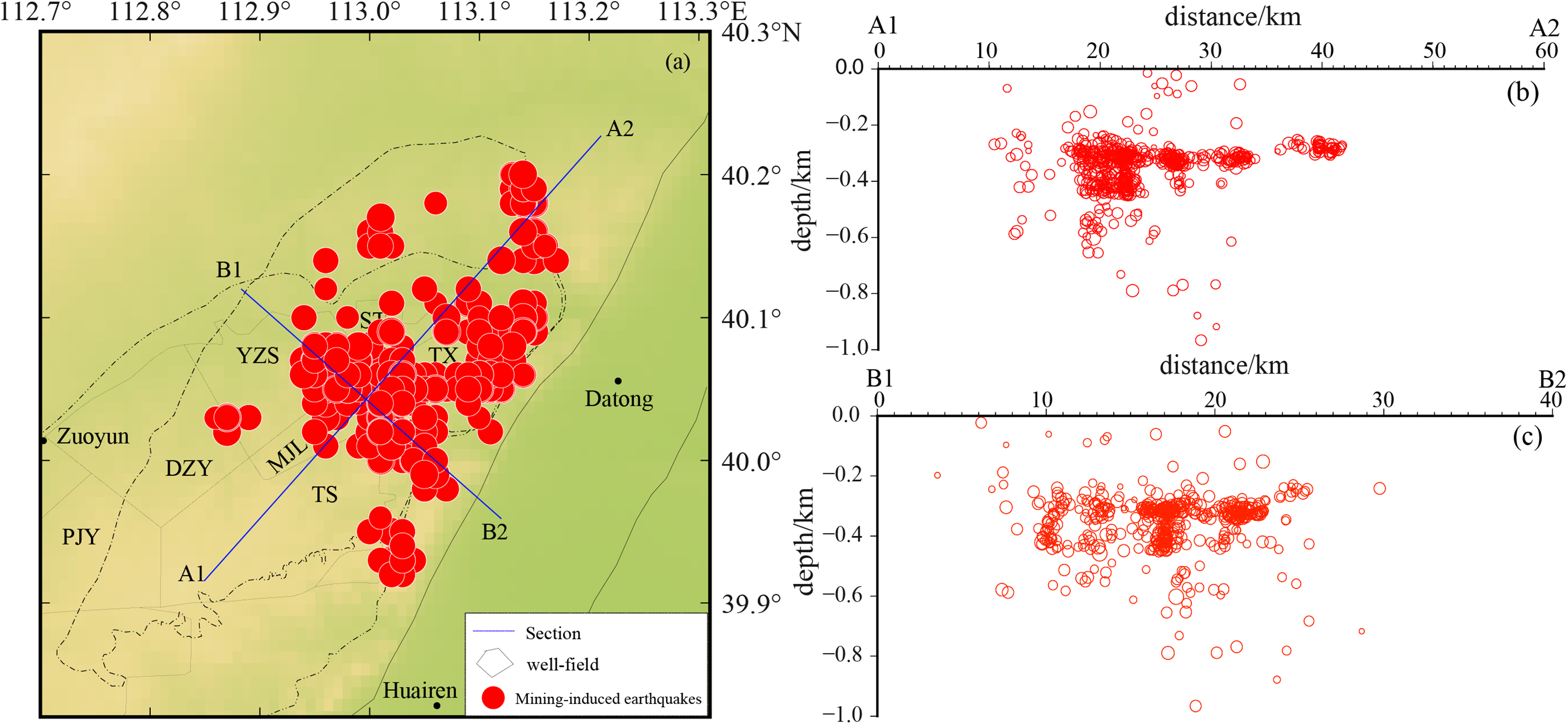
Distribution of epicenter and focal depth of different profile directions after precise location. (a) Map of the epicenter distribution, (b) Focal depth of A1–A2 profile directions, and (c) Focal depth of B1–B2 profile directions.
Calculation and analysis of source parameters
Method for calculating the source parameters
Numerous studies have shown that source spectrum theory is also applicable to mining-induced earthquakes. In particular, the Brune model (1970), which is a simple source model based on circular dislocations, can be employed to interpret mining-induced seismic spectra and calculate source mechanical parameters (Chen et al., 2021a, 2021b; Mendecki, 1997; Oye et al., 2005). The Brune circular disc model exhibits ω−2 attenuation in frequency, belonging to the ω−2 mode. The source spectrum is represented by equation (1):

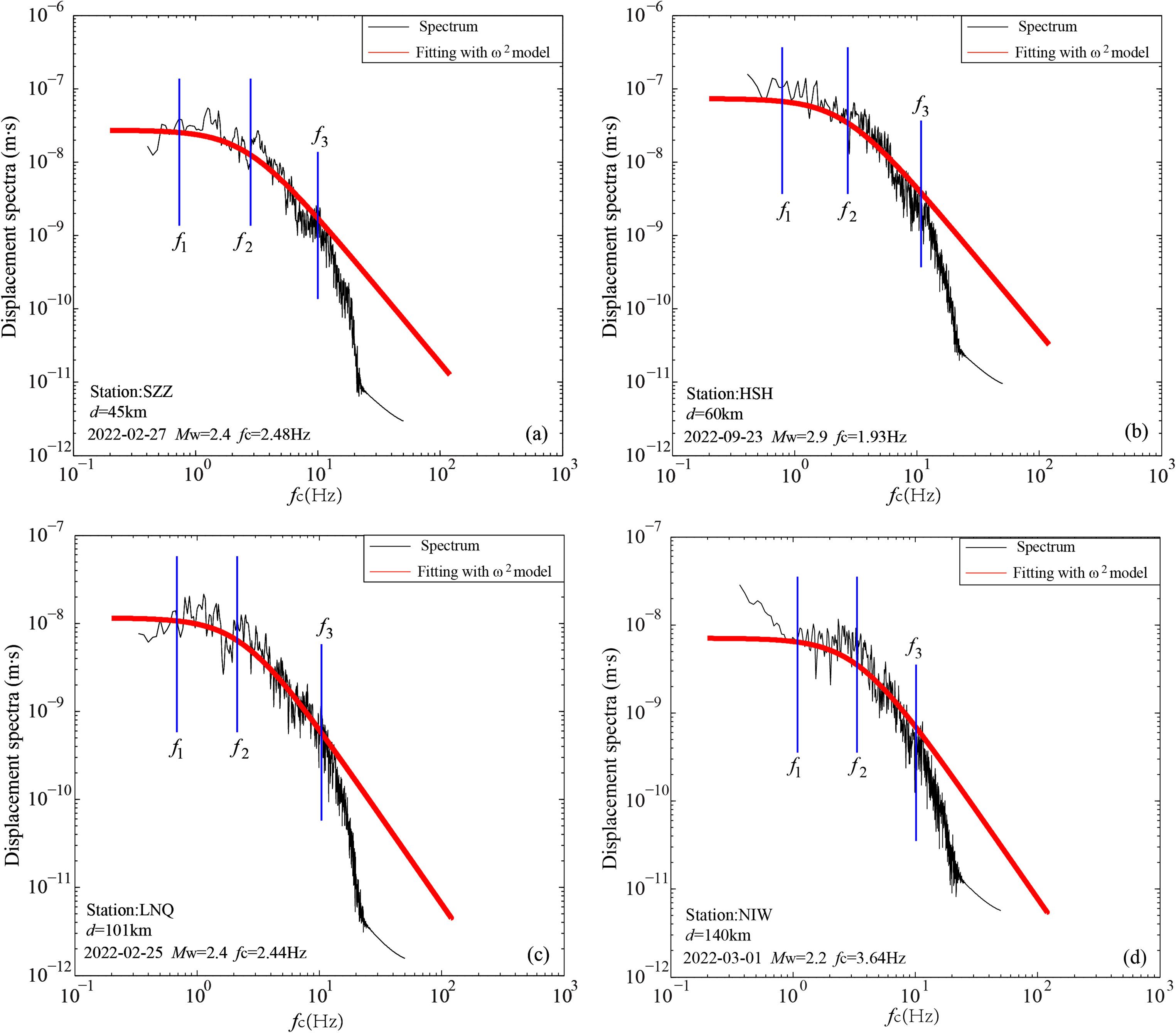
Source spectra of different mining-induced earthquakes recorded by different stations.
The seismic moment M0 is a physical quantity that describes the strength of an earthquake source. M0 is calculated based on the force-couple model at the seismic source using the following equation:

In the case of mining-induced earthquakes, the seismic waves propagate mainly in the shallow, sparse medium of the Earth's surface. The main components of the Datong mining area and its surrounding shallow medium are mudstone and sandstone. ρ is set to 2.5 g/cm3, the S-wave v is set to 1.6 km/s (Zhu, 2018), and the radiation pattern coefficient for SH waves is set to 0.63 (Aki and Richards, 1980).
The seismic energy Es is obtained by integrating the square of the velocity spectrum (Andrews, 1986) as follows:

Based on the Brune model, the calculation of the induced mining seismic rupture radius r is presented as follows:

After a mine earthquake, the rupture of the coal-rock medium will cause changes in the stress levels in the corresponding area. The stress drop is used to measure the decrease in stress levels in the source area before and after the rupture. The stress drop Δσ is calculated as follows:


Analysis of the source parameters
With the continuous densification of regional digital seismic stations and the establishment of small networks in mining areas, microseismic events with ML ≥ −1.0 can be detected by seismic network instruments in the Datong mining area. Due to the limitations of mining area site conditions, most mining-induced seismic waveforms have low signal-to-noise ratios. To obtain reliable calculations of the source parameters, 136 high signal-to-noise ratio, mining-induced seismic events with magnitudes ranging from ML1.3 to ML3.3 were selected as research data. Different source parameters (Table 1) were calculated for different magnitudes, including seismic moment M0, radiated energy Es, source radius r, and stress drop
Source parameters in the Datong coal mining area.
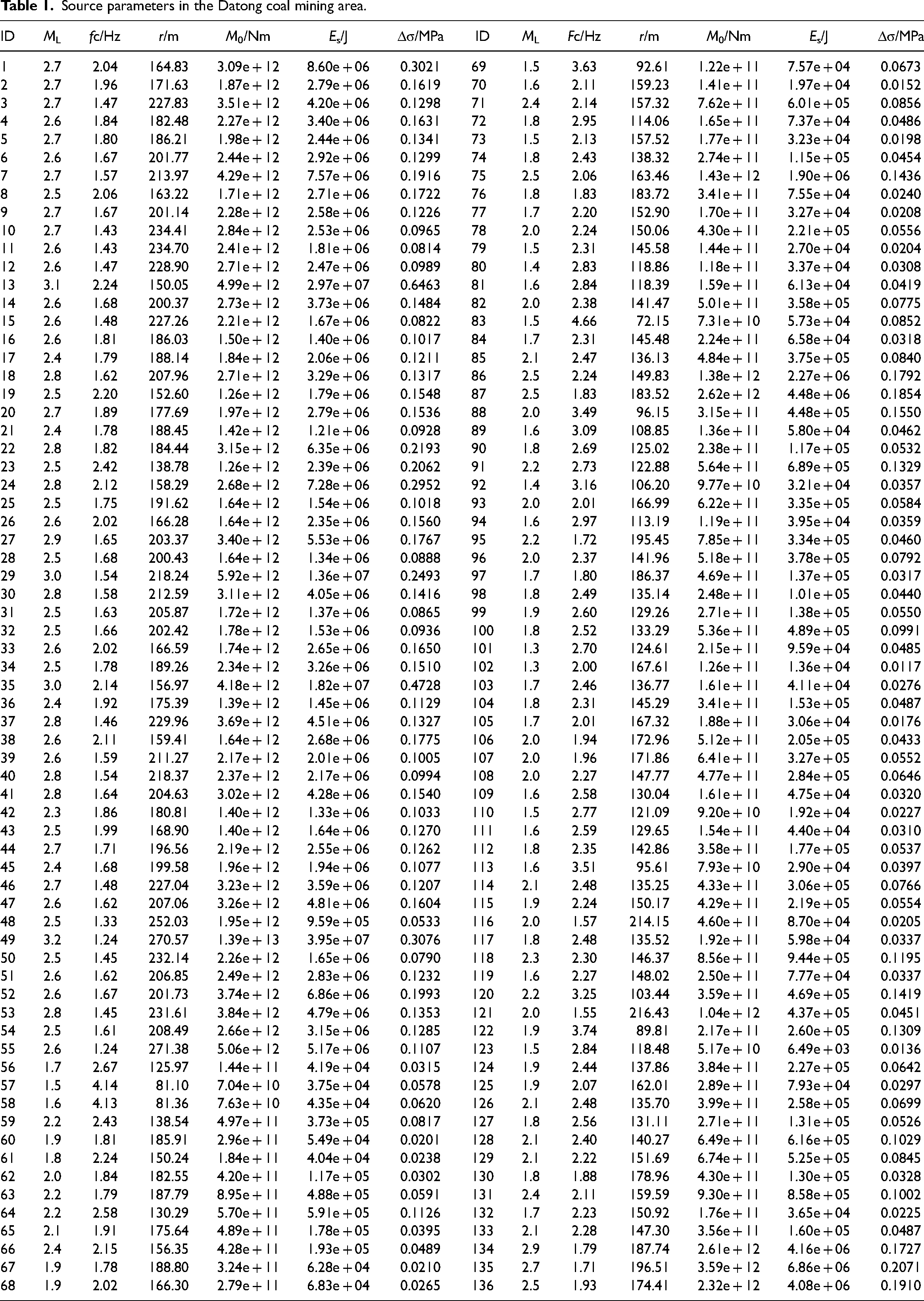
M0 is determined by the amplitude of the zero-frequency component of the seismic waves, which reflects the size of the rupture at the seismic source. Es can also describe the strength of the source rupture, which represents the source rupture intensity from different angles. The calculated seismic source parameters for mining-induced earthquakes in the Datong coal mining area show that M0 values range from 7.31e + 10 to 1.39e + 13 Nm and that Es ranges from 6.49e + 3 to 3.95e + 7 J. When the radiated seismic energy and seismic moment increase, the source rupture strength also increase.
The corner frequency fc reflects the distribution characteristics of seismic wave energy. The smaller the earthquake is, the larger fc, indicating a richer high-frequency component in the wave. In this study, fc ranges from 1.23 to 4.66 Hz, which is significantly lower than the natural tectonic seismic levels of the same magnitude (Allmann and Shearer, 2009; Chen et al., 2019; Zhao et al., 2011), demonstrating a distinct difference from natural earthquakes.
The seismic source rupture radius r is a physical quantity that describes the scale of the rupture surface generated by the seismic source rupture, reflecting the disturbance scale of the coal-rock mass in coal mining. In this study, the calculated rupture radius r values range from 72 to 271 m. This finding is consistent with the results of other studies on the calculation of the coal mine microseismic rupture scale (Chen et al., 2019, 2021a, 2021b; Wu et al., 2023).
For mining-induced earthquakes, the stress drop Δσ describes the degree of stress adjustment or release of the coal-rock mass before and after rupture and can be used to estimate the stress level at the rupture site of the seismic source. Table 1 shows that the Δσ caused by mining-induced seismicity is generally low, with values distributed mainly between 0.01 and 0.66 MPa. A comparison of the research results of different mining-induced earthquakes in different regions and types of mines reveals significant differences in stress drop levels. The results obtained in this study are more consistent with the microseismic activity stress drop levels of a gold mine in South Africa, the Rudna copper mine in Poland, and the Qianqiu coal mine in China, showing relatively low stress levels (Chen et al., 2021a; Domanski and Gibowicz, 2008; Richardson et al., 2005), which may reflect that mining-induced seismic events during coal mining may be triggered under relatively low environmental stress conditions.
Relationship between source parameters and seismic moment scaling
Investigating the source parameters of small to moderate earthquakes is important to understand the differences in dynamic rupture behavior and to elucidate their scaling relationships. To systematically explore the relationship between various source parameters and seismic moment scaling in the Datong mining area, the study analyzed the relationships between the corner frequency fc, source rupture radius r, stress drop Δσ, radiated seismic energy Es, and the earthquake moment magnitude M0 (Figure 6).
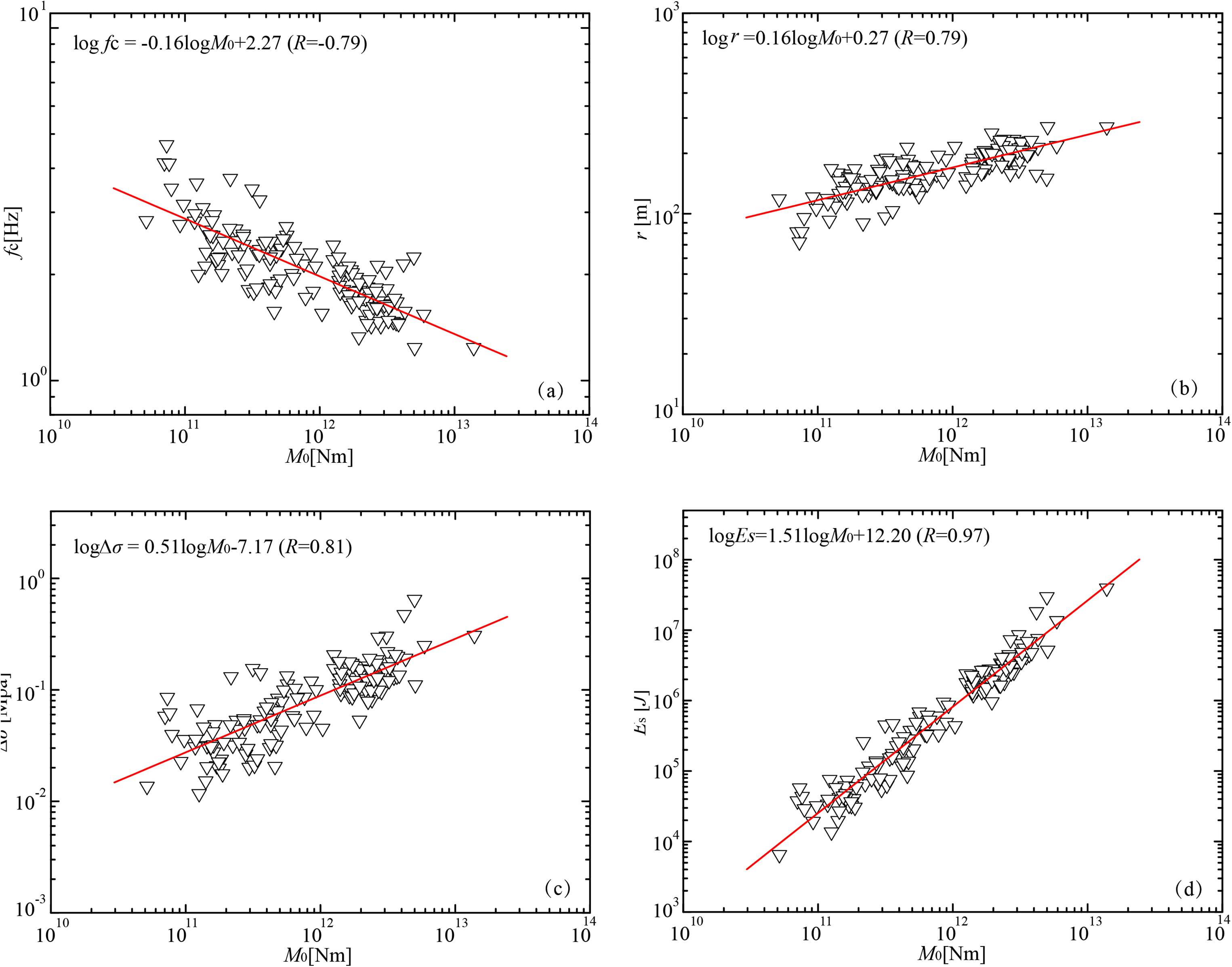
Relationship between the corner frequency fc, source radius r, stress drop Δσ, and seismic energy Es and the seismic moment M0. (a) Relationship between fc and M0, (b) Relationship between r and M0, (c) Relationship between Δσ and M0, and (d) Relationship between Es and M0.
Figure 5 shows that there is a distinct dependence between fc and M0 in the microseismic events in the Datong mining area. Specifically, fc decreases with increasing M0. By fitting the double logarithmic relationship between fc and M0 using the least squares method, a fitted relationship is obtained:
According to equation (4), r is negatively correlated with fc. Because the results of this study show a strong negative correlation between fc and M0, it can be inferred that there is a positive correlation between r and M0. The actual calculation results confirm this conclusion, indicating that r increases with increasing M0 (Figure 6), with a fitted relationship of
According to equation (5), we estimated the stress drop level of the microseismic events in the Datong coal mining area. The fitted relationship is
The scaling relationship between Es and M0 is often applied to understand the physical process of earthquake rupture. According to the results of this study, there is a strong correlation between Es and M0 (Figure 6). As M0 increases, Es also increases, and the fitted relationship is
Discussion
Based on the seismic source parameters in the Datong mining area and their relationship with M0, the corner frequency fc decreases with increasing M0, while the source parameters r, Δσ, and Es show an increasing trend with increasing M0, similar to the scaling relationships of seismic source parameters of comparable tectonic earthquakes. Although induced earthquakes during mining operations have significant differences in source mechanisms compared to tectonic earthquakes (Chen, 2019; Mcgarr et al., 2013; Yang et al., 2018), the induced seismic source parameters in mining activities have the same physical significance as natural earthquakes in representing the rupture strength of the source and the stress level in the source region.
The analysis of the corner frequency and stress drop results shows that the corner frequency and stress drop of mining-induced earthquakes in the Datong mining area are significantly lower than those of tectonic earthquakes of the same magnitude. Recent studies on coal mining-induced mine earthquakes have also confirmed this conclusion (Chen, 2019; Chen et al., 2021a, 2021b; Wu et al., 2023; Zhou et al., 2020), indicating that the rupture scale and form of mining-induced earthquakes in Datong coal mines are different from those of natural earthquakes. This finding is attributed mainly to the artificial alteration of the originally stable geological structure and stress environment during coal mining. The physical and mechanical properties of the coal seam and surrounding rock mass have changed, manifested mainly as weakened rock mass strength and reduced elastic modulus. This is the main reason for the decrease in corner frequency, which has been confirmed by laboratory research results and numerical simulations (Cook, 1963; McGarr, 1971, 2012; McGarr et al., 1975, 2013). Additionally, considering the shallow depth of the seismic source and the propagation of seismic waves mainly in the shallow subsurface sparse medium, high-frequency components are absorbed by the path medium, which may also explain the low level of corner frequency. Furthermore, compared to natural tectonic earthquakes, the rupture scale of mine tremors is relatively small. The occurrence of mine earthquakes is generally accompanied by roadway excavation or working face mining, which will cause deformation and microfractures in the stress-concentrated coal-rock mass and its vicinity, namely, microseismic events. These microseismic events will intensify the dynamic instability of rock masses that are originally in a high-stress state. With the continuous progress of coal mining operations, larger-magnitude mine earthquakes occur in a multicoupling environment of rock mass self-weight and mining-induced stress disturbance. This finding may also explain the occurrence of mine tremors in a lower stress environment.
There are differences in the source parameters of induced earthquakes under different mining conditions and stress environments. To better understand the rupture strength and magnitude of mining-induced seismicity and to determine the seismic wave properties and source characteristics of such induced earthquakes, it is necessary to establish more analysis and research on the source parameters of mine microseismicity and their scaling relationships to systematically understand the process and laws of seismic source generation, occurrence, and rupture in mining-induced seismicity.
Conclusion
Based on the analysis of seismic activity characteristics, it is suggested that ML < 2.0 microseismic events are distributed throughout the Datong mining area and that ML ≥ 2.0 mining-induced seismic events occur mainly within numerous microfractures. After precise double-difference location, the microseismic dense areas in the Datong mining area are distributed mainly in the TS, TX, and YZS coalfields. The seismic source depths of the TS and YZS coalfields are relatively deep and concentrated at depths of 200–500 m, while the TX coalfield has shallower seismic source depths and are concentrated at depths of 200–300 m. There is a significant difference in seismic source depths, which is closely related to the mining depth of the mining area.
The displacement spectrum of seismic sources in the Datong coal mine follows the ω2 decay pattern, which is consistent with the ω2 decay pattern of the Brune model. Using the ω2 model, the source parameters of microearthquakes with magnitudes ranging from 1.3 ≤ ML ≤ 3.2 are estimated. The corner frequency fc values range mainly from 1.23 to 4.66 Hz, the rupture radius r values range mainly from 72 to 271 m, and the stress drop Δσ values range mainly from 0.01 to 0.66 MPa. The seismic moment M0 values estimated from the zero-frequency limit range from 7.31e + 10 to 1.39e + 13 Nm, and the radiated seismic energy Es values range from 7.34e + 4 to 7.07e + 8 J.
As M0 gradually increases, the source parameters r, Δσ, and Es tend to increase, while fc tends to decrease. The scaling relationships between mining-induced earthquakes in the Datong coal mine and natural tectonic earthquakes show similar characteristics. Although these source parameters represent the rupture strength and stress level of the source region differently than natural tectonic earthquakes, their physical meanings are the same.
Mining-induced earthquakes in Datong have a lower corner frequency and stress drop. This finding is attributed mainly to changes in the physical and mechanical properties of the coal-rock mass during mining, such as weakening of the rock strength and reduction of the elastic modulus, which are the main reasons for the decrease in corner frequency. The shallow depth of the seismic source causes high-frequency components of the seismic waves to be absorbed by the shallow surface sparse medium, resulting in a lower corner frequency. In addition, during the mining process, tunnel excavation or working face excavation will induce microfractures in the stress-concentrated coal-rock mass and its vicinity. These microseismic events will exacerbate the dynamic instability of the rock mass that is already under high-stress conditions. As mining operations continue, large-magnitude, mining-induced seismic events occur under relatively low stress conditions in a multicoupled environment involving the self-weight of the rock mass and mining-induced stress disturbances.
Footnotes
Acknowledgements
This research was supported by Spark Program of Earthquake Sciences of China Earthquake Administration (Grant No. XH210402Y), Shanxi Natural Science Foundation, China (Grant No. 201901D211549), Hebei Provincial Key Research Projects, China (Grant No. 21374104D), Science Research Project of Hebei Education Department, China (Grant No. ZD2021309), Hebei Natural Science Foundation, China (Grant No. E2020402075). The authors would like to express our sincere gratitude to Professor Xuezhong Chen and Associate Professor Yane Li from the Institute of Geophysics, China Earthquake Administration, for providing the seismic source parameter calculation program. The authors also acknowledge the use of GMT software for generating some of the figures. The authors are grateful to the anonymous reviewers for their constructive feedback and suggestions.
Declaration of conflicting interests
The author(s) declared no potential conflicts of interest with respect to the research, authorship, and/or publication of this article.
Funding
The author(s) disclosed receipt of the following financial support for the research, authorship, and/or publication of this article: This work was supported by Spark Program of Earthquake Sciences of China Earthquake Administration (Grant No. XH210402Y), Shanxi Natural Science Foundation, China (Grant No. 201901D211549), Hebei Provincial Key Research Projects, China (Grant No. 21374104D), Science Research Project of Hebei Education Department, China (Grant No. ZD2021309), and Hebei Natural Science Foundation, China (Grant No. E2020402075).
