




Abstract
Pyrolysis of solid fuels such as coal, peat and biomass enables conversion into solid and liquid products, with noncondensable gas being a by-product. The present study evaluates conversion characteristics of Brazilian coal, peat and biomass samples using vacuum pyrolysis techniques. Feedstock and their respective solid residues (chars) and pyrolytic liquids obtained under vacuum pyrolysis conditions were characterized by proximate and ultimate analyses, gross calorific value, petrographic analyses, reactivity to CO2, Raman spectroscopy and organic geochemical methods (extraction, liquid chromatography). Chemical and physical properties in the feedstock samples and solid residues are highly variable. In the coals mean vitrinite reflectances ranged from 0.44% to 1.18% Rrandom indicating a rank range from subbituminous to high volatile/medium volatile bituminous coal. Reflectance measurements obtained from vitrinoid particles identified in solid residues from coal, peat and biomass varied from 2.10% to 10.64% Rrandom. Analyses of the liquid products indicate a tendency of the aliphatic fraction to increase in most of the samples during the pyrolysis process, as well as the predominant formation of polar compounds in the condensable liquids. The results of this study suggest that among the coal samples investigated major conversion to liquids and gases (29.7%–33.2%) occurs in the high volatile bituminous coals from Santa Catarina, whereas in the biomass samples Mamona (Castor Beans), wood chips (Eucalyptus), wooden bars (pinus) and signal grass have all conversion rates > 60%. The conversion rates for the peat samples varied between 32.5 and 46.6%. Reflectance values determined on vitrinoid biomass chars indicate a potential use in soil amendment.
Introduction
Conversion of solid fuels by pyrolysis
Pyrolysis of solid fuels such as coal, peat and biomass is one of the principal conversion technologies for the generation of solid and liquid products (Hebert et al., 1987; Kalkreuth et al., 1986a, 1986b, 1989a, 1989b, 1993; Pakdel et al., 1999; Roy et al., 1985, 1993, 1998). Noncondensable gas is a secondary product.
While in the early studies cited above emphasis was given to the characterization of feedstock and conversion yields, more recent studies included the detailed characterization of bio-oil obtained from woody biomass (Garcia-Perez et al. (2007) and bio-char (Lee et al., 2013). Other studies investigated the role of co-pyrolysis using biomass/coal mixtures (Gouws et al., 2021; Pan et al., 1996; Park et al., 2017), and coal/biomass co-combustion (Sahu et al., 2014).
The potential use of bio-char in the amendment of soils has also been studied (Kamali et al., 2022; Petersen et al., 2022), since bio-char is considered to improve the quality of soils through reduced leaching of nitrogen into groundwater, increased cation exchange resulting in improved fertility, increased water retention, increased number of beneficial soil microbes.
Operating power plants using pyrolysis techniques
The Pyrocycling™ process developed by Pyrovac Inc. in Quebec, Canada uses a well stirred biomass reactor indirectly heated with molten salts (www.pyrovac.com). Feedstock throughput varies between 500 kg/h (Corigin Solutions Inc) and 1500 kg/h (Elkem Biocarbon). The plant operated by Corigin in Merced, California (www.corigin.co) converts almond shells in bio - char, bio-oils and a pyroligneous liquid used as a biostimulant to grow crops. The Elkem plant in Saguenay, Canada, converts resinous wood into bio-carbon to replace fossil coal in the manufacture of ferrosilicon (Villeneuve, 2021).
Bench scale vacuum pyrolysis unit at UFRGS
The data presented here come from an installed bench-scale vacuum pyrolysis unit at the Instituto de Geociencias, UFRGS, Brazil. The equipment was manufactured by Pyrovac Inc, Canada. Preliminary results were presented at the 5th Brazilian Coal Conference in Criciuma, Brazil (Kalkreuth et al., 2017; Ruaro Peralba et al., 2017).
Objectives of the present study
The overall objective of the present study is to determine the conversion characteristics of selected Brazilian coal, peat and biomass samples, as well as to test blends of peat/coal and coal/biomass samples, and to determine the properties of the solid residues and organic liquids derived from the experiments.
Until now six representative coal samples were tested. They were collected from open and underground mines in the states of Rio Grande do Sul, Santa Catarina and Paraná. The ten biomass samples tested so far include some of the more common biomass types grown in Brazil, namely sugar cane, eucalyptus tree, signal grass and rice husks. The two peat samples tested were collected by shallow drilling from a peat deposit at Águas Claras, RS. The coal, biomass and peat feedstocks as well as their respective residues (chars) were analyzed by a number of chemical and physical parameter such as proximate and ultimate analyses, gross calorific values, vitrinite reflectance, degree of reactivity to CO2 and Raman Spectroscopy. Geochemical analytical techniques included solvent extraction and liquid chromatography).
Vacuum pyrolysis experiments
The experimental setup is shown in Figure 1.
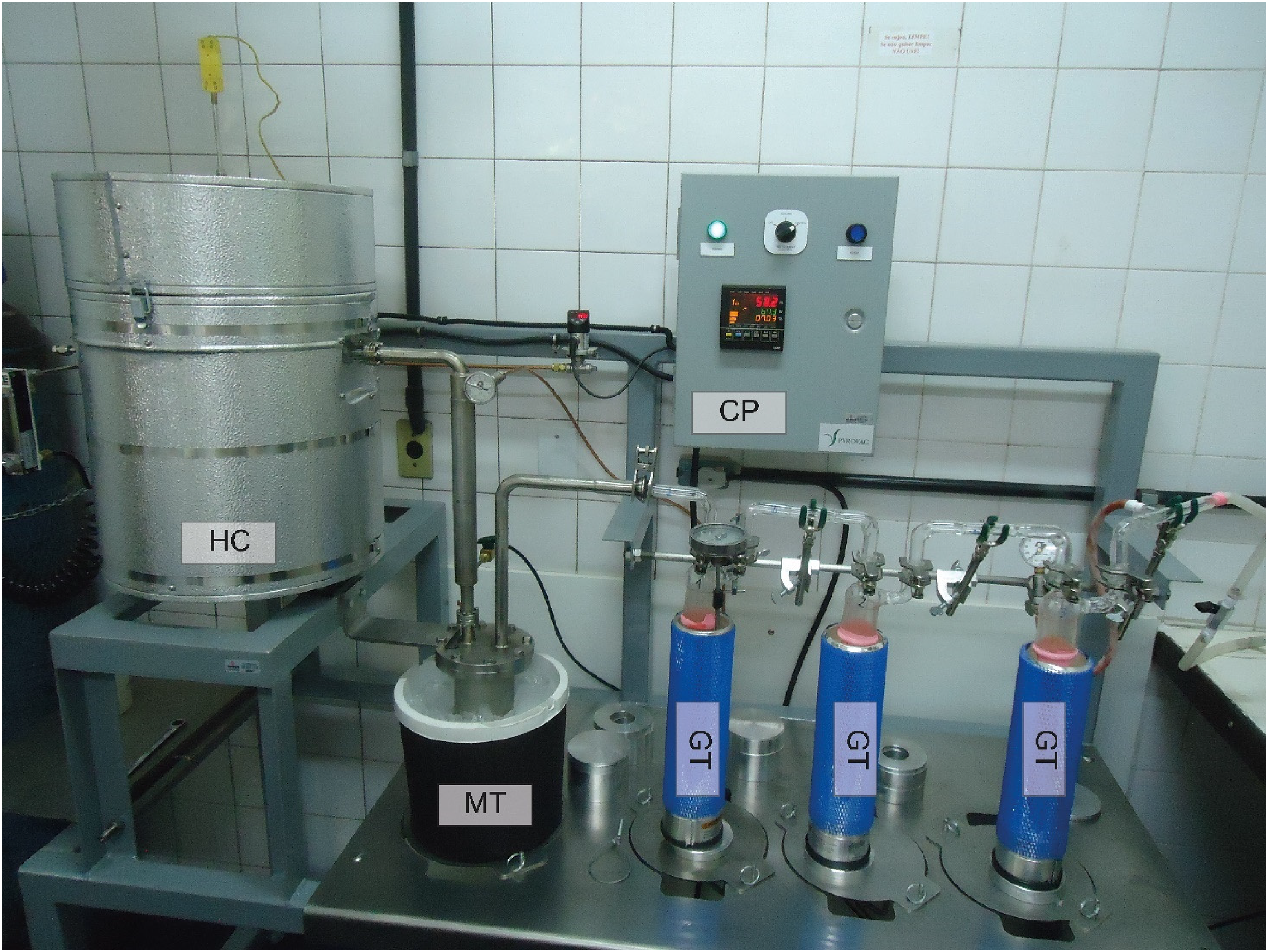
Experimental setup of the vacuum pyrolysis experiments, showing heating chamber (HC) to the left, one metallic trap (MT) and 3 glass traps (GT) in the front and the control panel (CP) to the back.
The unit has a maximum capacity for testing 400–500 g of sample material, heated to a maximum of 550°C (Figure 2) at a heating rate of 10°C/min and a total pressure regime of < 1.0 kPa. The sample was kept at maximum temperature for 2 h (Figure 2).
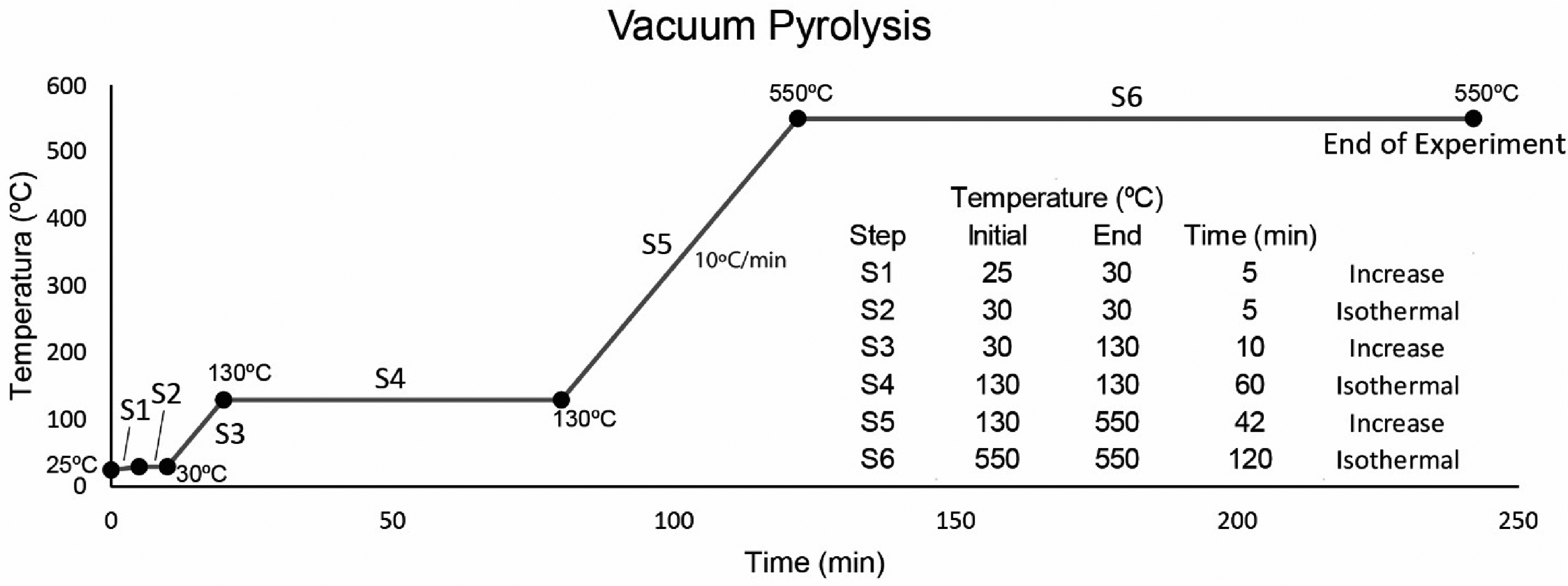
Temperature/Time regime used for the vacuum pyrolyses experiments.
The liquid products were condensed during the experiments in four traps connected in series (Figure 1), applying cooling temperatures of 0°C (metallic trap) and −74°C for the three remaining glass traps. The condensed liquid products were removed from the four traps applying dichloromethane and were combined to yield one sample per experiment. The solid residue (char) was removed from the reactor after cooling down the pyrolysis unit to room temperature.
An image of a biomass sample prior and after vacuum pyrolysis along with the derived liquid products is given in Figure 3.
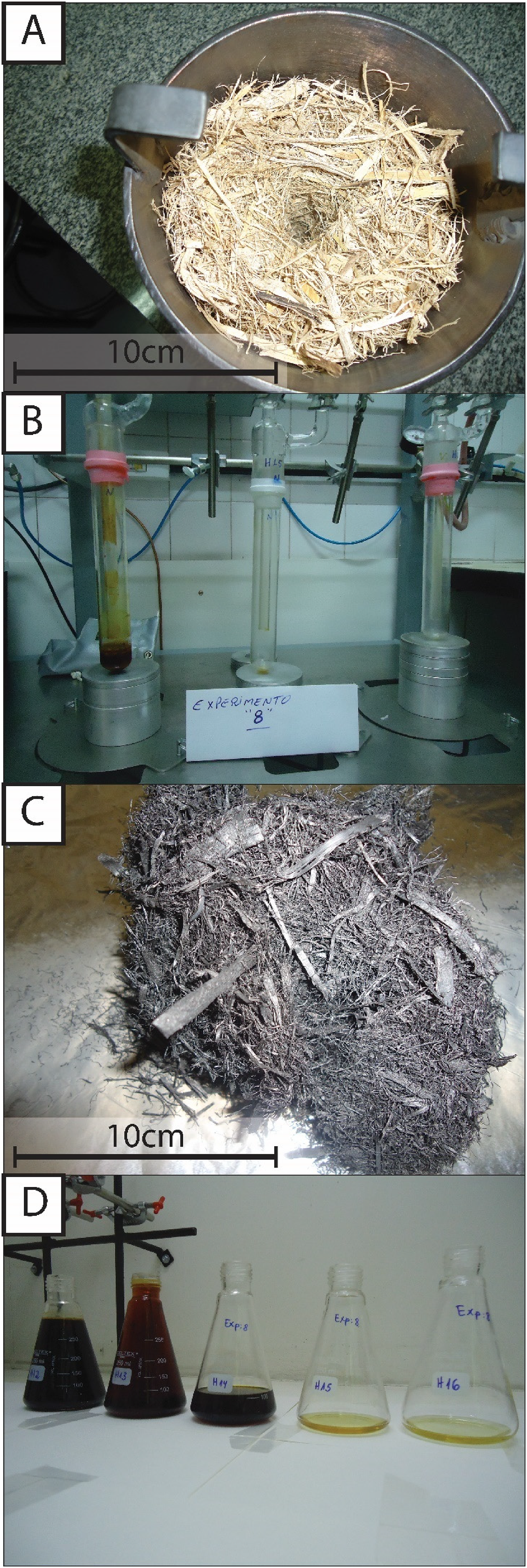
Images from experiment 8: (a) Sample of sugar cane bagasse prior to vacuum pyrolysis; (b) “traps” with condensed liquid products; (c) solid residue (char) derived from sugar cane bagasse; (d) image of liquid products removed from the traps by a mixture of dichloromethane and methanol.
Analytical methods
Proximate and ultimate analyses, gross calorific value, petrographic analyses
Ash yields, moisture, volatile matter and fixed carbon contents were determined by proximate analysis following ASTM Standard D3172 (1991a). C, H, N and S contents were determined by ultimate analysis following ASTM Standard D3176 (1991b) and Gross Calorific values were determined following ASTM standard test method 2015-91 (1991c). Vitrinite Reflectance Measurements and Maceral Analyses on coal samples were carried out according standardized procedures (Bustin et al., 1989). Reflectances of coal, biomass and peat residues were obtained from Rrandom measurements on vitrinoid particles of high reflectance (Bustin et al., 1989).
Reactivity to CO2
Reactivity of the feedstock and solid residue was isothermally measured in a thermobalance at 1000°C under CO2 after heating the samples in a N2 flow (100 mL/min) and applying a 20°C/min heating rate). The mean reaction rate was calculated using the expression RCO2 = 1/%in (d%/dt), with %in being the initial percentage of sample and d%/dt the derivative of instantaneous sample percentage.
Raman spectroscopy
Micro-Raman spectroscopy was performed using a 50× objective to focus a 632.8 nm laser on a 2 µm spot on the surface of the powdered and compacted sample. Laser power was reduced to avoid sample damage. Acquisition time was adapted to the response to laser excitation, in order to keep the intensity within the counting limits of the LN-cooled CCD-strip. The spectra were fitted with a polynomial baseline and two Lorentzian peaks (Schmidt et al., 2017), one for the graphite peak (G-peak) at approximately 1580 cm−1, and the other related to the disorder in the carbon structure (D-peak) at approximately 1340 cm−1.
Liquids
Bench extraction experiments were carried out on original coal, peat and biomass samples and their respective liquids derived from the pyrolysis experiments using Soxtec equipment as described below.
Soxhlet extraction experiments
Coal, biomass and peat original samples (dried at 40°C and sieved to 4.76 mm particle size) were extracted (20 g) in a Soxtec™ 2050 Foss Analyser, in cartridges pre-extracted with a mixture of dichloromethane (DCM)/methanol (Met) (pesticide degree) 93/7% v/v for a period of 4 h. The extracts obtained were concentrated in a rotary evaporator and reserved for future treatment and analysis.
Analyses of obtained extracts
Extracts resulting from Soxtec™ and condensed liquids from vacuum pyrolysis were submitted to elemental sulfur removal (only when needed) and liquid preparative chromatography, so as to obtain pure compound fractions.
Elemental sulfur removal
The elemental sulfur removal was carried out in an activated copper column [∼5 g of copper washed with concentrated HCl (3×), acetone (3×) and DCM (3×) in a glass column of 1.5 internal diameter]. The sample, added to the top of the activated copper column was eluted with pesticide grade DCM and the sulfur free extract concentrated in rotary evaporator (∼1.0 mL) for posterior preparative liquid chromatography.
Liquid preparative chromatography
The liquid preparative chromatography was carried out in a 1.0 cm internal diameter silica/alumina glass column [1.5 g silica, (70-230 mesh, Merck), 3.0 g neutral alumina (Fluka) pre-activated at 200°C for 3 h and 400°C overnight respectively, and 0.5 g of sodium sulfate. The sample, added to the column top was eluted with a sequence of solvents (20 mL of n-hexane, 20 mL of a mixture n-hexane/toluene 3:2 v/v and 20 mL of a mixture toluene/methanol 3:2 v/v) to obtain pure fractions of aliphatic hydrocarbons, aromatic hydrocarbons and polar compounds (NSO), respectively.
Results and discussion
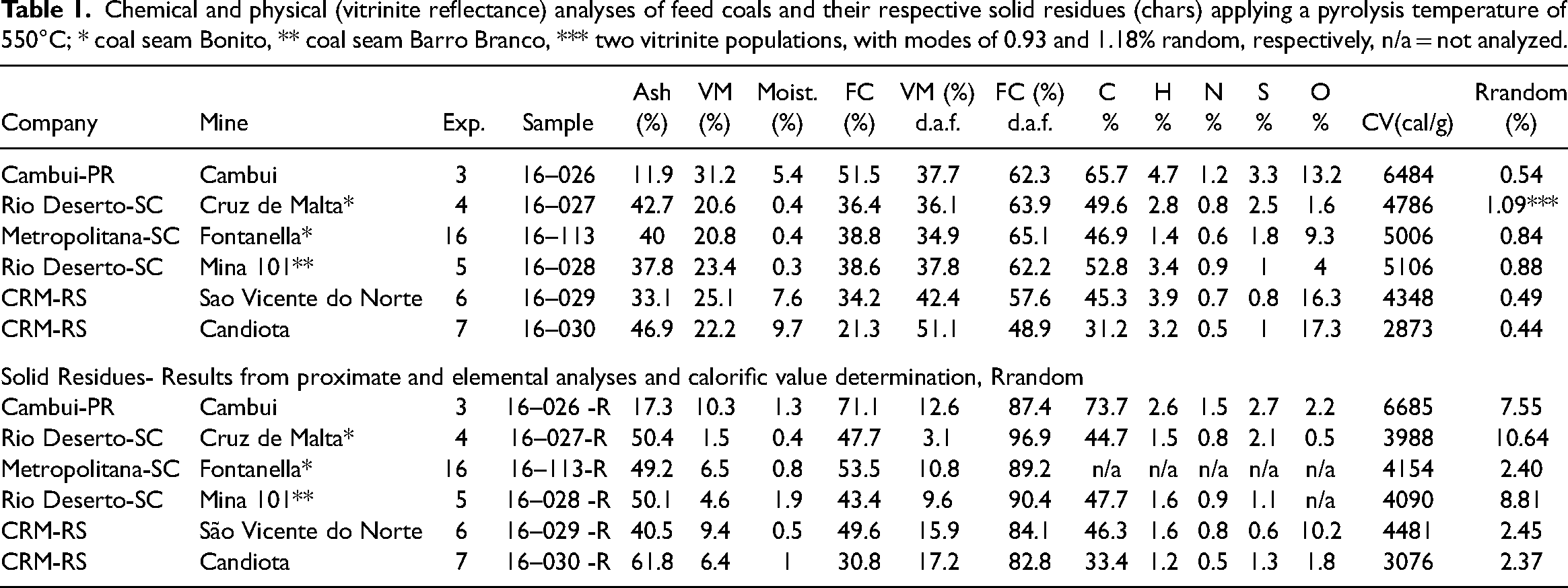
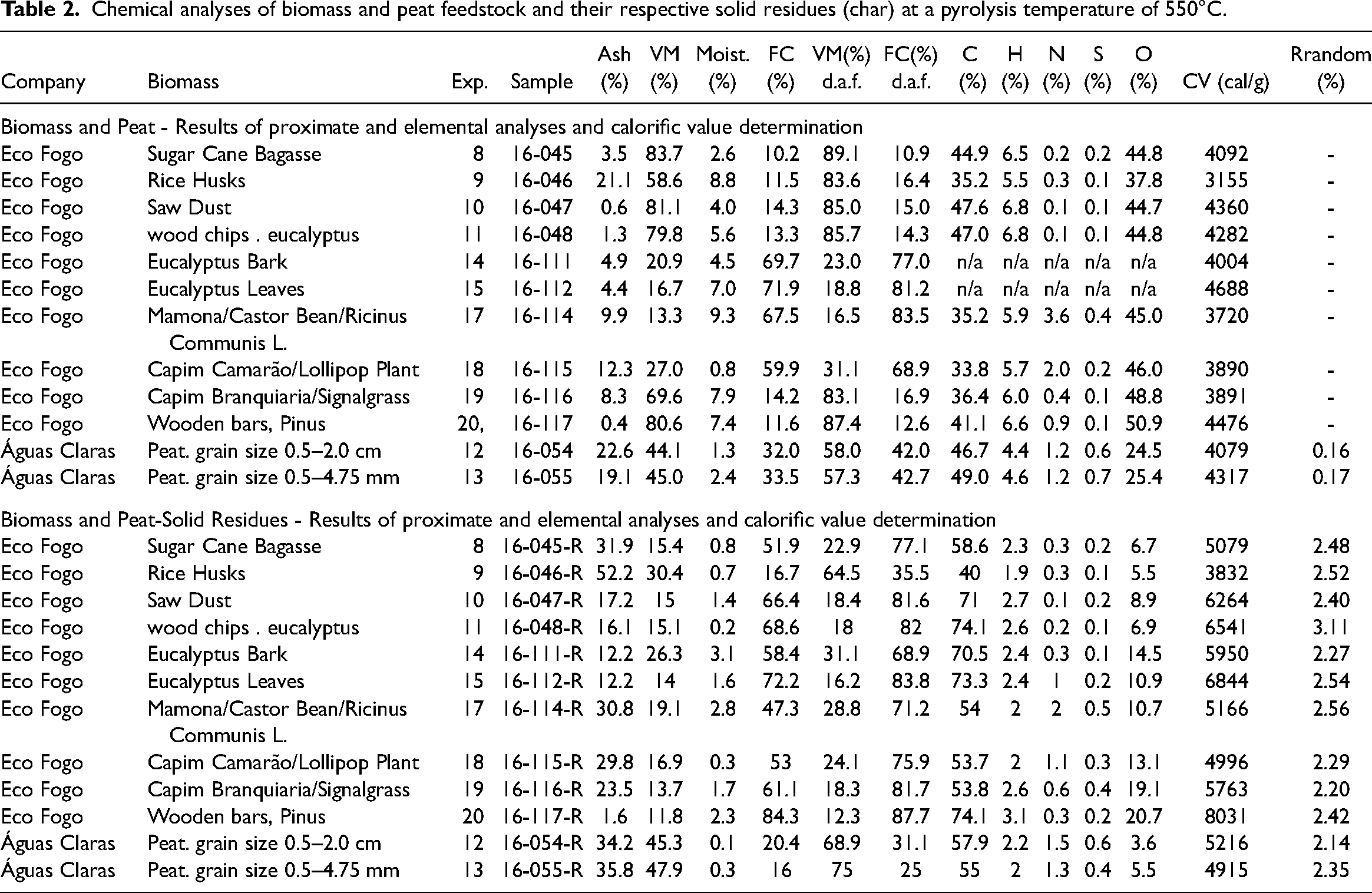
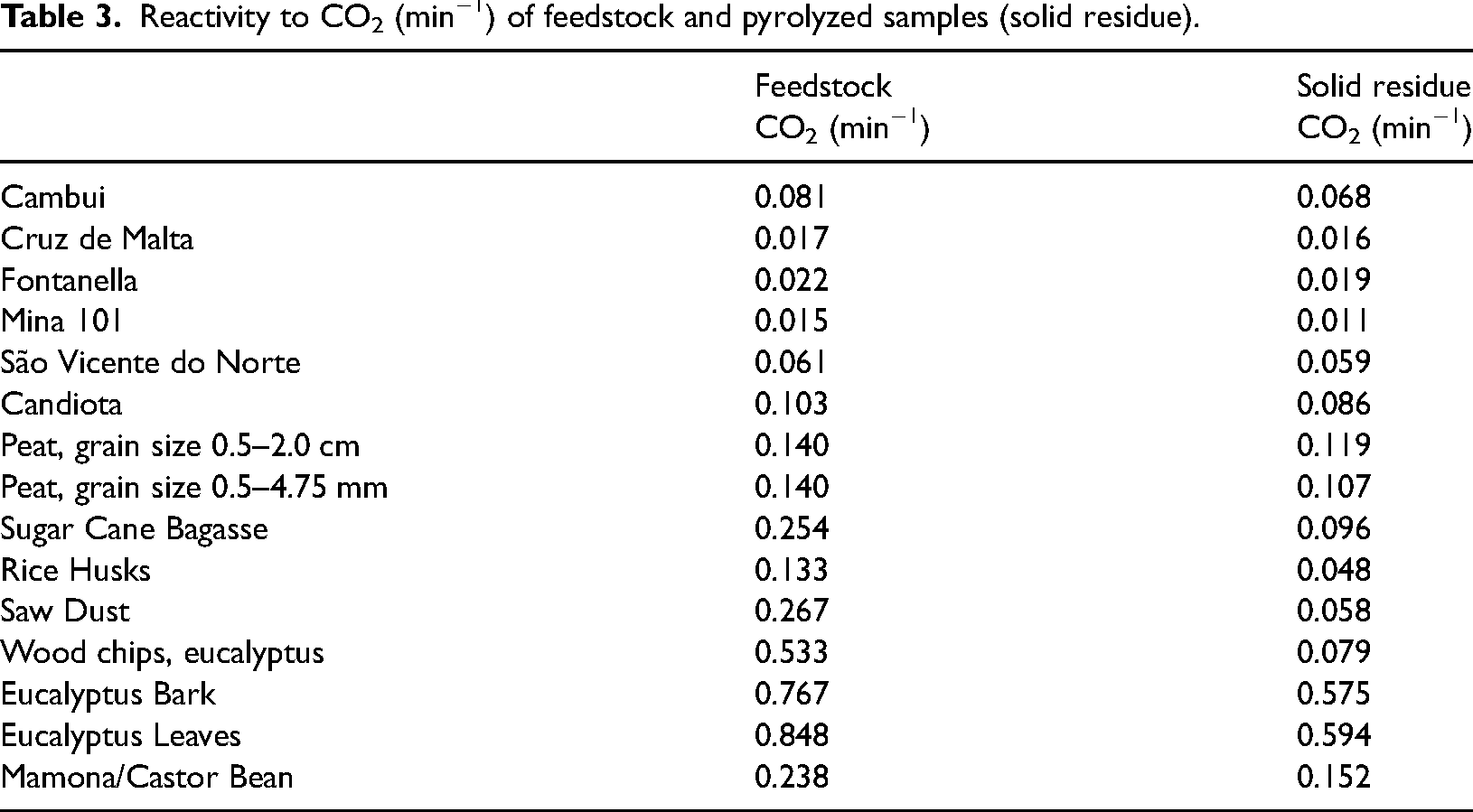
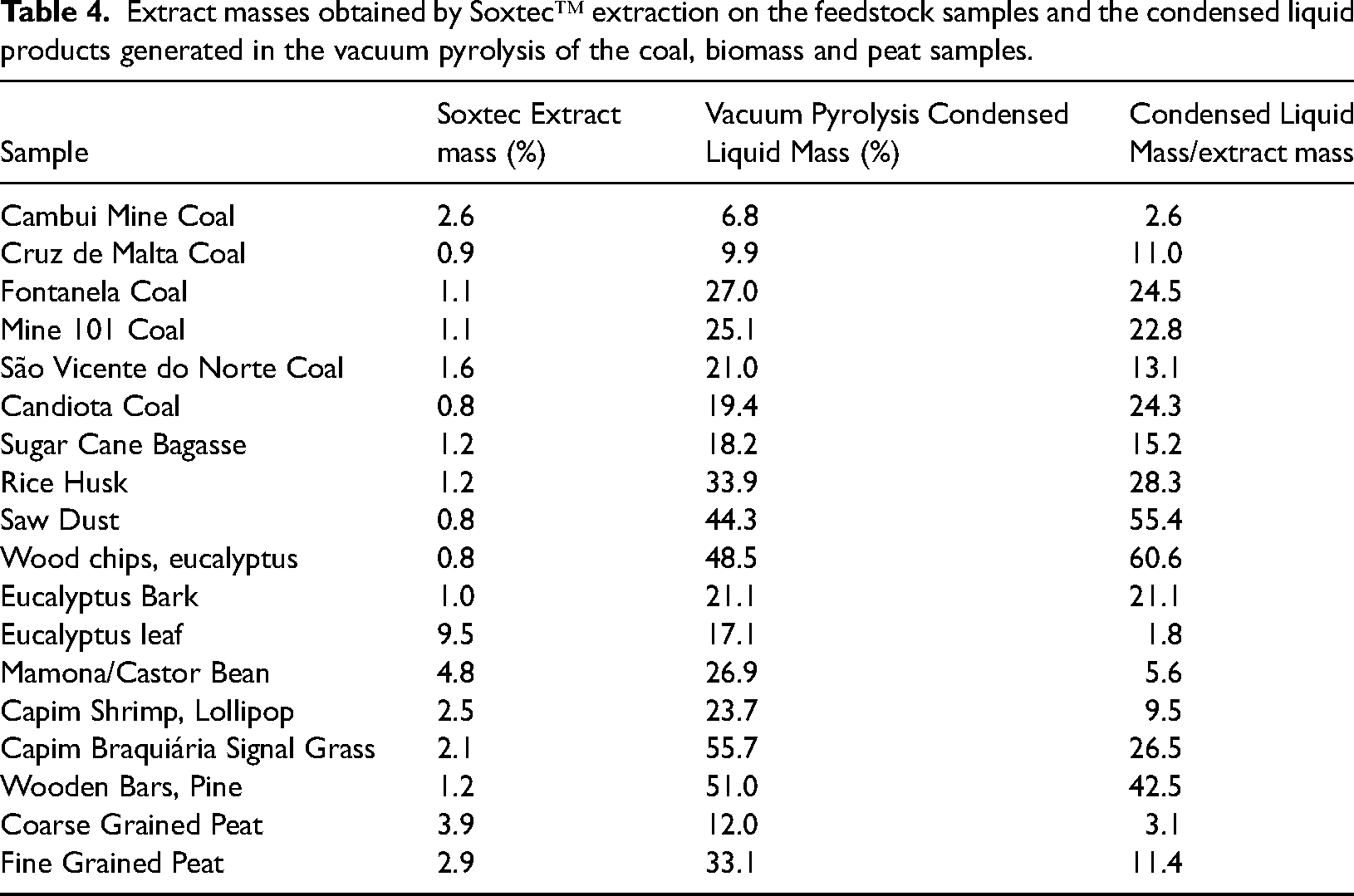
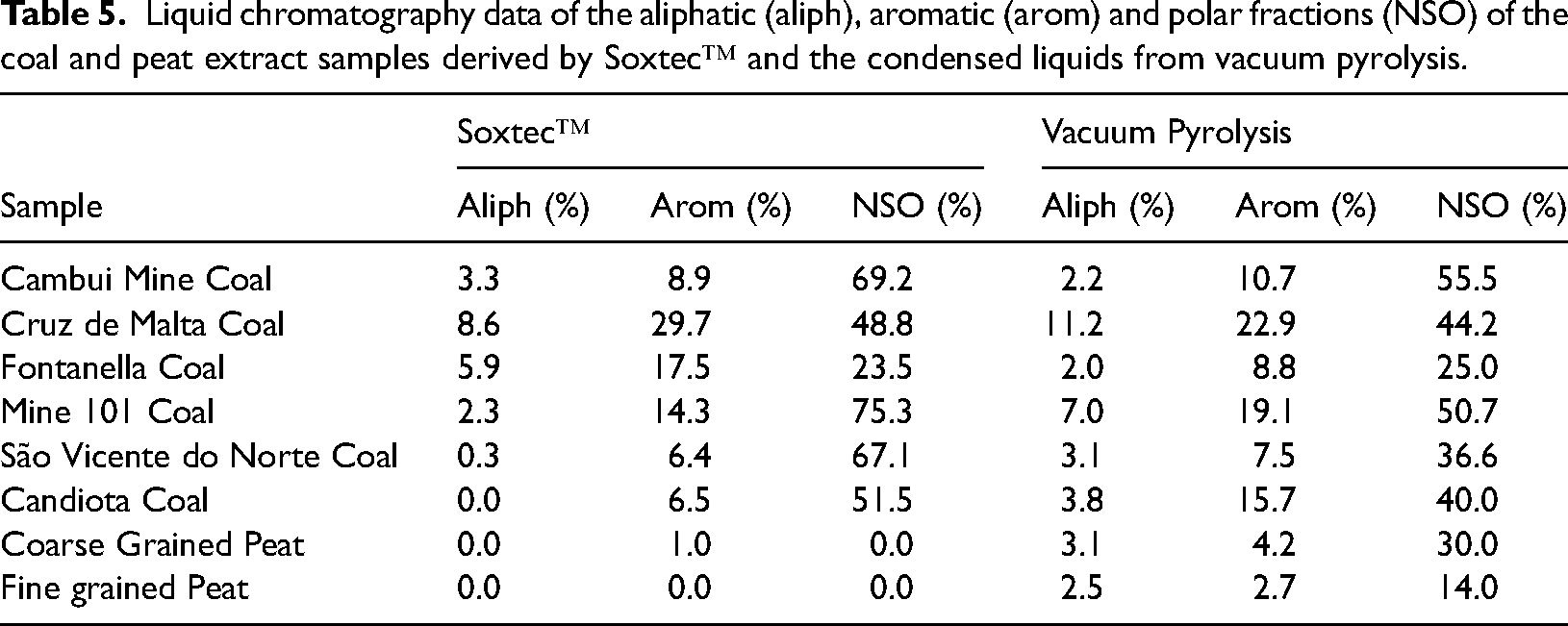
Results from petrographical and chemical analyses of feedstock and solid residues (chars) are summarized in Tables 1, 2 and 3, whereas Tables 4, 5 and 6 summarize the results for liquid analyses.
Chemical and physical (vitrinite reflectance) analyses of feed coals and their respective solid residues (chars) applying a pyrolysis temperature of 550°C; * coal seam Bonito, ** coal seam Barro Branco, *** two vitrinite populations, with modes of 0.93 and 1.18% random, respectively, n/a = not analyzed.
Chemical analyses of biomass and peat feedstock and their respective solid residues (char) at a pyrolysis temperature of 550°C.
Reactivity to CO2 (min−1) of feedstock and pyrolyzed samples (solid residue).
Extract masses obtained by Soxtec™ extraction on the feedstock samples and the condensed liquid products generated in the vacuum pyrolysis of the coal, biomass and peat samples.
Liquid chromatography data of the aliphatic (aliph), aromatic (arom) and polar fractions (NSO) of the coal and peat extract samples derived by Soxtec™ and the condensed liquids from vacuum pyrolysis.
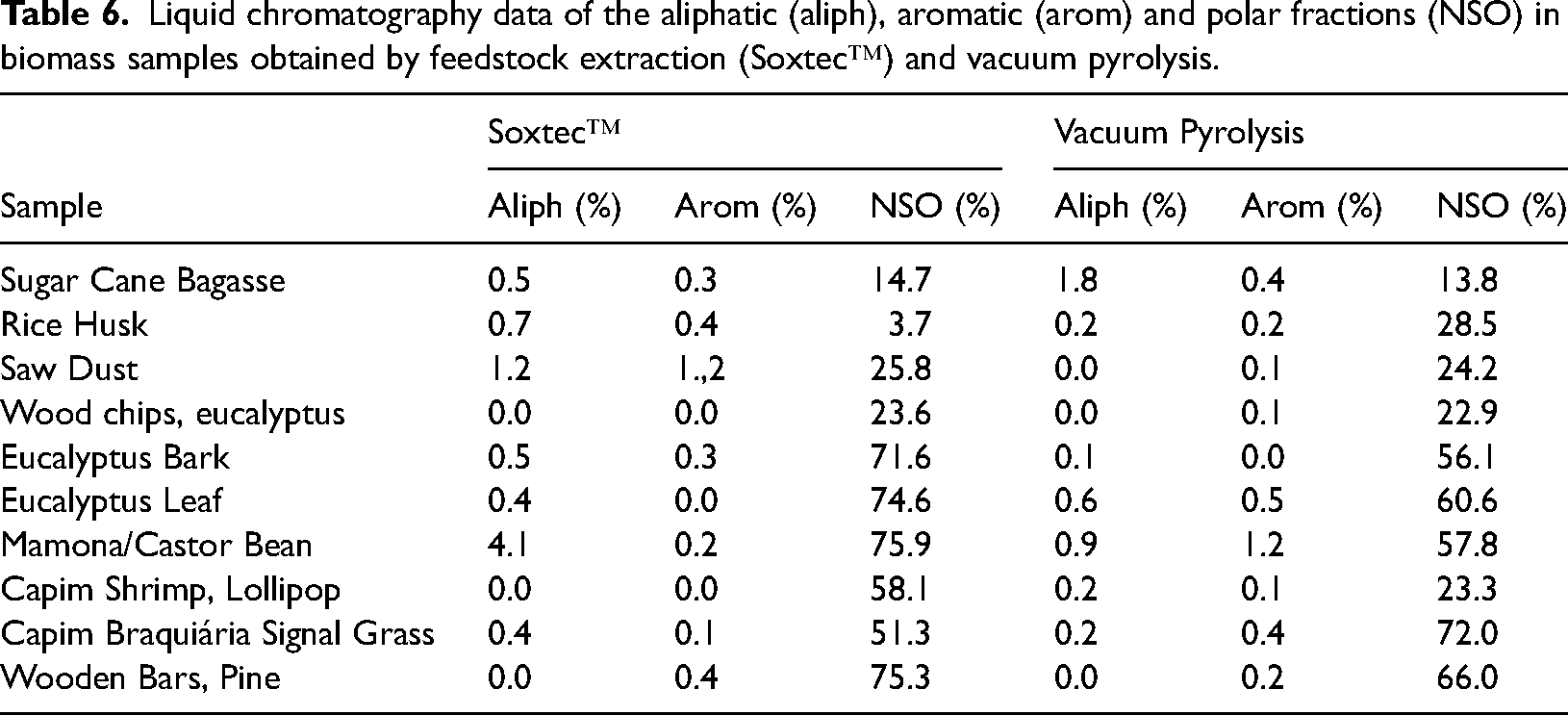
Liquid chromatography data of the aliphatic (aliph), aromatic (arom) and polar fractions (NSO) in biomass samples obtained by feedstock extraction (Soxtec™) and vacuum pyrolysis.
Characterization of coal feedstock and their solid residues (chars)
Analyses of feed coals (Table 1) show a rank ranging from subbituminous to high volatile A bituminous (Ro between 0.44% and 0.88%) except for one sample, which has been partially altered by contact with a volcanic intrusion and shows a bimodal distribution of vitrinite reflectance (Rrandom 0.93 and 1.18%). Ash yields in the coals range between 11.9 and 46 wt.% (Table 1), and gross calorific values range between 2873 and 6484 cal/g.
Results from maceral analyses indicate the predominance of macerals of the vitrinite group (Figure 4), with values > 60 Vol% in the samples from Rio Grande do Sul, followed by inertinite macerals ranging from 20.3 to 47.1 Vol%. Liptinite group macerals occur in less quantities ranging from 2.0 to 18.4 Vol% (Figure 4).
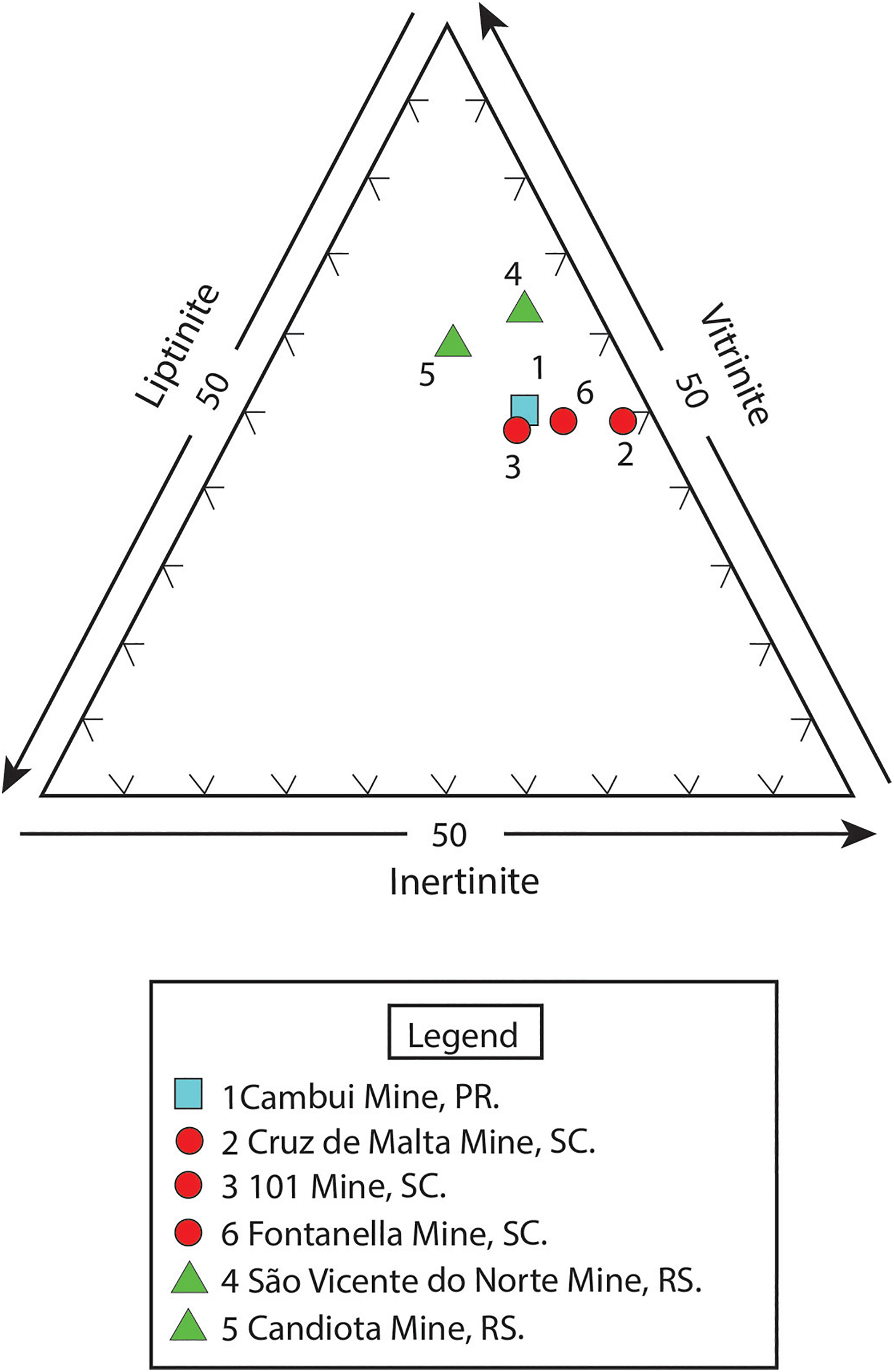
Ternary diagram showing maceral group distribution in the coals (mineral matter free basis).
The solid residues (chars) derived from the coals are characterized by a relative increase of ash yields (17.3–61.8 wt.%), when compared to the feedstock (Table 1) and the high vitrinite reflectances (2.37–10.64% Rrandom) are an indication of severe thermal alteration of the organic matter during the pyrolysis experiments. The lowest increase in reflectance values was determined in the solid residues derived from a subbituminous coal at Candiota, with a mean reflectance value of 2.37% Rrandom (Figure 5(c)), whereas reflectances for the solid residues derived from the bituminous coal samples show a significant increase in reflectance values (Figure 5(a) and (b)).
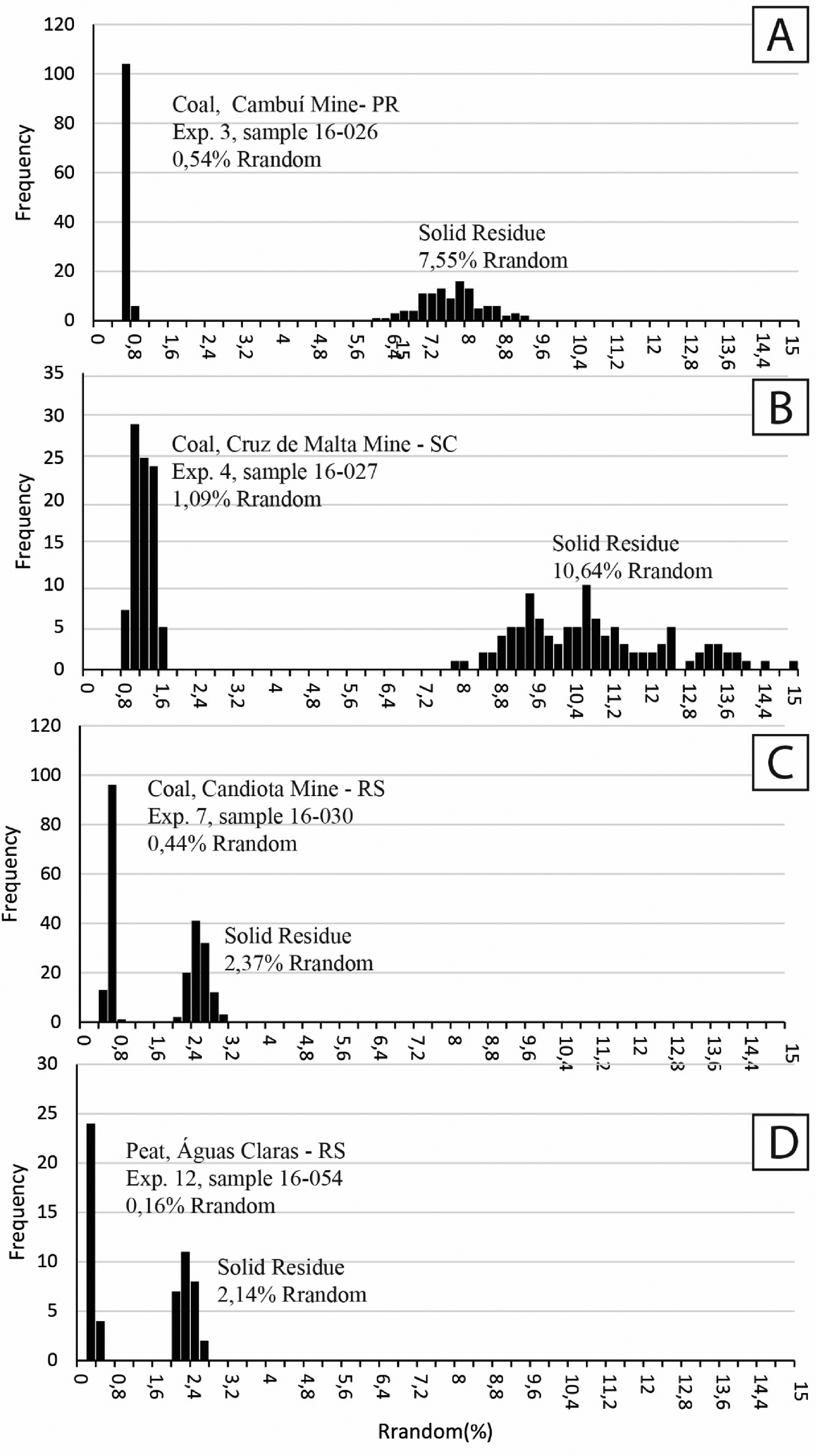
Diagram showing relationship between vitrinite reflectances of feedstock and reflectances obtained from their respective solid residues: A and B = bituminous coal, C = subbituminous coal, D = peat.
The reflectances reported in the present study for the solid residue confirm earlier vacuum pyrolysis experimentation on Canadian coals by Roy et al. (1993, 1998), using a similar time/temperature range.
Characterization of biomass feedstock and solid residues (chars)
Analyses of biomass and their respective solid residues (chars) indicate relatively low ash yields (0.6–12.3 wt.%) in the feedstock (Table 2) except for the rice husk sample having an ash yield of 21.1 wt.%, whereas gross calorific values range from 3155 to 4688 cal/g.
Analyses of the biomass solid residues (chars) show a significant increase in ash yields (1.6–52.2 wt.%) and gross calorific values (3832–8031 cal/g), when compared to the feedstock (Table 2). Results from optical analysis (Table 2), based on measurements taken on homogeneous high reflecting particles indicate a range from 2.20 to 3.11% Rrandom, with the majority of solid residues occurring in the range from 2.00% to 2.50% Rrandom (60%). Samples tested from eucalyptus included wood ships, bark, and leaves (Table 2), yielding the highest reflectance of 3.11% Rrandom for the wood chip solid residue. Reflectances measured on solid wood residues derived from vacuum pyrolysis experiments were reported in an earlier study on aspen poplar from Canada (Kalkreuth et al., 1986b). The values are slightly lower as the reported values in the present study, which might be explained by the slightly lower temperature ranges used (530 vs 560°C).
Characterization of peat feedstock and solid residues (chars)
The feedstock peat samples exhibit ash yields of 19.1%–22.6 wt.% (Table 2) and a range of calorific values between 4079 and 4317 cal/g, whereas the solid residues (chars) ash yields vary between 34.2 and 35.8 wt.% (Table 2) and gross calorific values show an increase to 4915 and 5216 cal/g. Reflectances on huminite encountered in the feedstock gave mean values of 0.16 and 0.17 Rrandom (Table 2), whereas measured high reflecting particles in the peat solid residues had mean values of 2.14 and 2.35% Rrandom, respectively (Table 2). Figure 5(d) indicate that the reflectance values for solid residues derived from peat have actually the lowest distribution for the samples analyzed in the present study (Figure 5(d)) and increase significantly in the bituminous coals (Figure 5(a) and (b)).
Reactivity to CO2
The reactivity to CO2 of feedstock and solid residue (chars) is shown in Table 3. Both coals and their pyrolyzed solid residues were the least reactive materials with reactivities ranging from 0.017 to 0.103 min−1 for the former and between 0.011 and 0.086 min−1 for the latter. The results of reactivity to CO2 of the feedstock coals were inversely proportional to their vitrinite reflectance, which means that coals of higher reflectance showed lower reactivity. Additionally, the reactivity to CO2 practically did not change before and after vacuum pyrolysis.
Peat samples had intermediate reactivity values compared to coals and biomasses showing 0.140 min−1 for the feedstock specimens and 0.107–0.119 min−1 for the pyrolyzed one. The feedstock biomasses were the most reactive materials with Eucalyptus leaves being the most reactive sample (0.848 min−1) and rice rusks the least reactive biomass (0.133 min−1). The CO2 reactivity of biomasses substantially decreased in the solid residues compared to the original feedstock, but still remained quite high for some samples, such as Eucalyptus bark and leaves (Table 3).
Raman spectroscopy
The samples were measured before and after vacuum pyrolysis. Representative micro-Raman spectra of biomass (sugar cane bagasse), peat (Águas Claras) and coal (Seam Barro Branco, Mine 101, Rio Deserto) are shown in Figure 6.
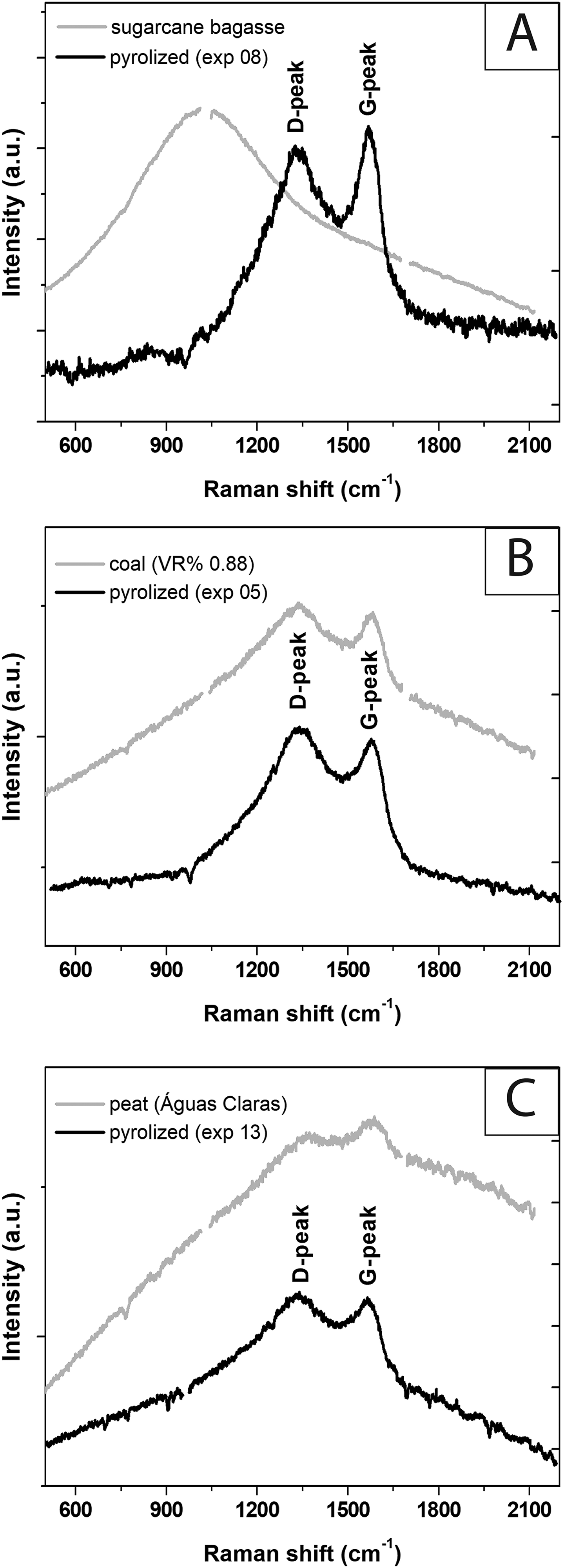
Raman spectra of samples before (gray line) and after pyrolysis: (black line). a) biomass (sugar cane bagasse); b) peat (huminite reflectance: 0.17% Rrandom); c) coal (Vitrinite reflectance: 0.88% Rrandom).
The spectrum of the sugarcane biomass feedstock (Figure 6(a)) shows only strong fluorescence, with an intensity approximately a thousand times stronger than the Raman signal of the pyrolyzed material. After pyrolysis distinct Raman peaks can be discriminated, that are related to in plane vibrations of the graphite sheets (G-peak) and to the disorder in the structure when compared to crystalline graphite (D-peak). The peat feedstock shows slight Raman bands over an intense background (Figure 6(b)) whereas after pyrolysis the G- and D-peaks are much more prominent. The coal feedstock and its pyrolyzed residue (Figure 6(c)) show almost no changes in the G- and D-peaks, indicating little change in the carbon structure. However, the reduction of background indicates loss in hydrocarbons, which present high fluorescence and therefore high background.
Liquids
Extract masses from Soxtec™ and condensable liquid products from vacuum pyrolysis
Table 4 shows the extract masses of original samples obtained by Soxtec™ and vacuum pyrolysis condensable liquid products. According to Table 4 the masses generated by vacuum pyrolysis were significantly higher than those obtained by Soxtec™ extraction. This result was expected taking into account that vacuum pyrolysis is a process involving transformation of organic matter and consequently higher formation of liquid products, while Soxtec™ removes only the solvent soluble organic fraction present in the original matrix.
Hydrocarbon fractions derived from liquid chromatography of coal and peat feedstock and their respective liquid products derived from vacuum pyrolysis experiments
Table 5 shows the liquid chromatography data of the aliphatic (Aliph), aromatic (Arom) and polar fractions (NSO) for the coal and peat extract samples by Soxtec™ and condensed liquids from vacuum pyrolysis.
Analyzing the data in Table 5, it can be verified that for condensed liquid vacuum pyrolysis fractions, for peat samples and for most of the coal samples, the aliphatic fraction increased when compared to the respective extract obtained from the original raw material samples. The maximum values of the aliphatic fraction occurred during vacuum pyrolysis of Santa Catarina coal. Percentage values of aliphatic fractions were 11.2% for Cruz de Malta coal and 7% for Mine 101 coal, values far greater than those of the aliphatic fractions of corresponding bitumen: 8.6% and 2.3% respectively (Table 5). Liquid samples derived from peat showed significant increase in the saturated fraction (3.1% for coarse grain and 2.5% for fine grain), when compared to the bitumen samples. As far as the polar fraction is concerned very high values are encountered in all bitumen samples as well as in condensable liquids (Table 5), except in Fontanella coal and the peat samples, indicating that the majority of the studied samples is characterized by relatively low yields in aliphatic compounds.
Hydrocarbon fractions derived from liquid chromatography of biomass and their respective liquid products derived from vacuum pyrolysis experiments
Table 6 shows data for liquid chromatography of extracts from Soxtec™ and liquid products from vacuum pyrolysis obtained from biomass samples. In biomass samples the aliphatic fraction is relatively enriched in the extract obtained from the raw material, with a maximum value in Castor (4%). In condensed liquids, the aliphatic fraction has its maximum in the sugar cane bagasse sample (1.8%).
The data in Tables 5 and 6 indicate that the polar fraction is predominant in all samples and that the sum of the percentages of the hydrocarbon fractions does not add up to 100%. This can be explained by the occurrence of compounds that might be adsorbed in the column, not being eluted by the employed solvents, indicating a formation of highly polar liquids.
Conversion
Gas volume generated
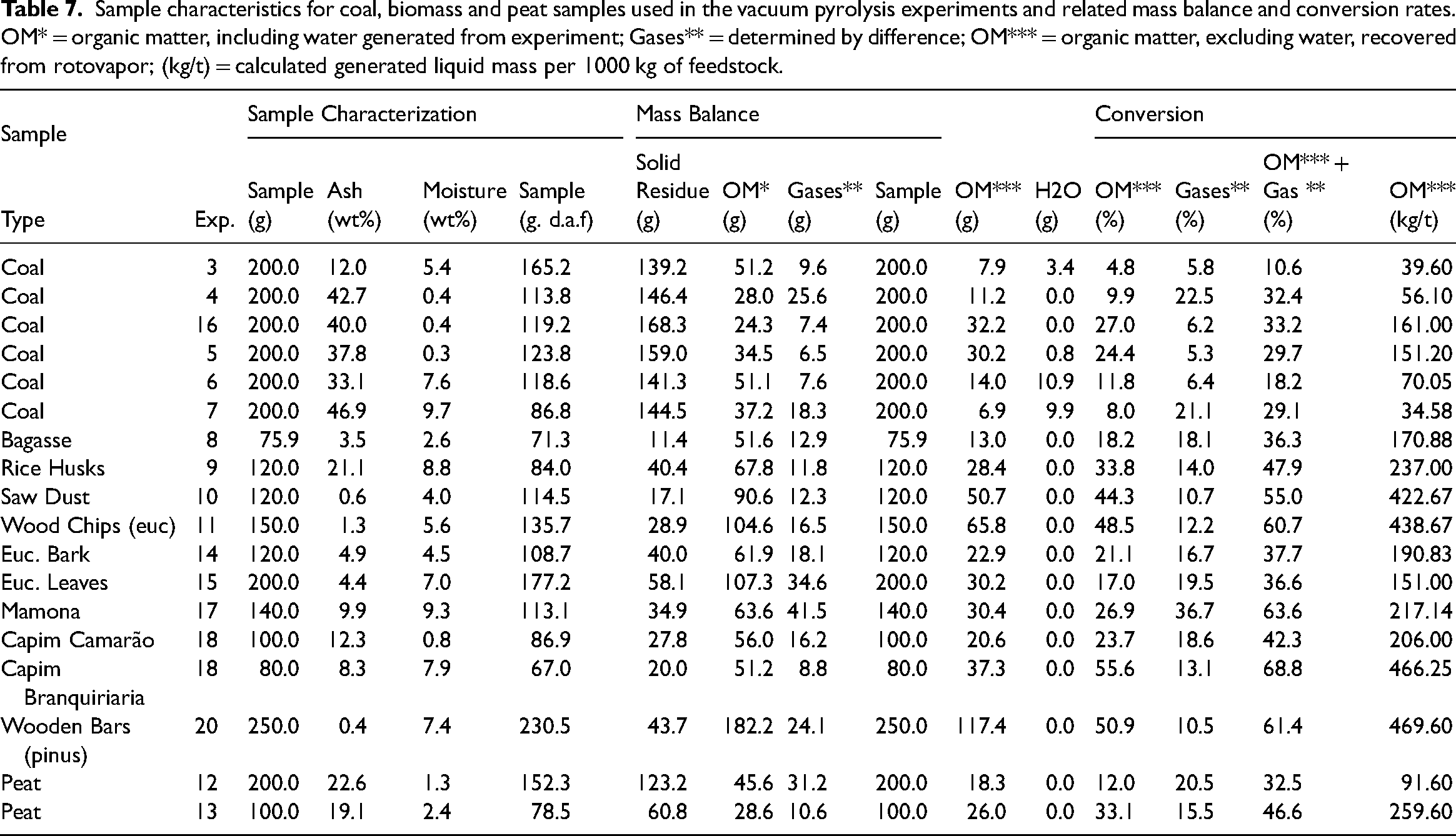
The gas volume generated during the pyrolysis experiment was estimated from mass balance (Table 7), subtracting the sum of solid residue (char) and trapped organic matter and water mass from the mass of feedstock used in the experiment.
Sample characteristics for coal, biomass and peat samples used in the vacuum pyrolysis experiments and related mass balance and conversion rates. OM* = organic matter, including water generated from experiment; Gases** = determined by difference; OM*** = organic matter, excluding water, recovered from rotovapor; (kg/t) = calculated generated liquid mass per 1000 kg of feedstock.
Conversion to liquids
The results of this study suggest (Table 7) that among the coal samples investigated major conversion to liquids and gases (29.7%–33.2%) occurs in the high volatile bituminous coals from Santa Catarina, whereas in the biomass samples Mamona (Castor Beans), wood ships (Eucalyptus), wooden bars (pinus) and signal grass have all conversion rates > 60% (Table 7). The conversion rates for the peat samples varied between 32.5% and 46.6% (Table 7).
Evaluation of the potential use of the solid residues (biochars) generated from Brazilian biomass via the vacuum pyrolysis process
The potential use of biochar is commonly considered as a) to substitute partially the use of fossil solid fuel (coal) in Power Plants, a process known as co- firing and other applications such as the use in greenhouses and industrial boilers; and b) for the amendment of soils (Kamali et al., 2022). In soils the addition of biochar serves to enhance the quality of the soil by a number of properties (www.biochar-international.org, 2023) that include reduced leaching of nitrogen into groundwater, increased cation exchange resulting in improved fertility, increased water retention, increased number of beneficial soil microbes, reduced emissions of nitrous oxides, soil retention of nutrients. The carbon in the biochars is resistant to degradation and may hold the carbon for almost infinite time. It has been suggested therefore that the sequestering of carbon in soil has the potential to contribute to combat the global climate change.
Carbon stability of biomass chars was recently discussed by Petersen et al. (2022), based on pyrolysis temperature intervals of 500°C, 700°C, and 900°C applied to biomass samples from the Makong Delta, Vietnam. Highest stability was suggested for samples derived from the 700°C and 900°C experiments, corresponding to a mean reflectance of 4.35% Rrandom from the 700°C and a range from 4.80% to 5.76% Rrandom in chars from the 900°C experiments. Lowest stability was suggested for the chars from the 500°C temperature pyrolysis runs, with a mean reflectance value of 2.33% Rrandom.
The biomass char reflectances derived from the Brazilian biomass types studied range from 2.20% to 3.11% Rrandom (mean value 2.48% Rrandom), applying 550°C maximum pyrolysis temperature and 2 h residence time. The results are in fact comparable to studies discussed by www.biochar-international.org, Biochar use in soils, last accessed in August 29, 2023, suggesting to test in future experiments to increase the stability of the Brazilien biomass samples by slightly increasing pyrolysis peak temperature, and/or residence time and to study the effect of variations in heating rates on the properties of the biochars (Kamali et al., 2022).
Conclusions
Coals – feedstock and their solid residues (chars)
Based on vitrinite reflectances a rank range from subbituminous to high volatile bituminous A was established for the coals, except for one sample, showing secondary thermal alteration caused by contact to a volcanic intrusion. The ash yields range from 11.9 to 46.9 wt.%, with calorific values ranging from 2873 to 6484 cal/g. Petrographically the coals are characterized by the predominance of vitrinite macerals.
The solid residues show a consistent increase in ash yields when compared to feedstock and calorific values of the chars range between 3076 and 6685 cal/g.
Biomass – feedstock and their solid residues (chars)
The biomass samples show in general ash yields < 10 wt.%, except for the rice husk and Lollipop plant samples, with calorific values between 3155 cal/g (rice husk) and 4688 cal/g (eucalyptus leaves). The respective solid residues show a relative increase in ash yields, fixed carbon (d.a.f. Basis), and organic carbon as determined by elemental analysis along with a significant increase in calorific values 3832 to 8031 cal/g, whereas volatile matter contents (d.a.f. basis) decrease substantially. Optical analyses carried out on the solid (vitrinoid) residues indicated a mean reflectance value of 2.48% Rrandom suggesting a potential for use in soil amendment, such as improvement of fertility and water retention.
Peat – feedstock and their solid residues (char)
The peat samples show ash yields between 19.1 and 22.6 wt.%, with calorific values between 4079 and 4317 cal/g. Their respective solid residues are characterized by an increase in ash (34.2 and 35.8 wt.%, respectively) and calorific values between 4915 and 5216 cal/g.
Reactivity to CO2
Reactivity studies indicate that the reactivity to CO2 was practically unchanged in the feed coals and their respective solid residues. In the coals, the level of reactivity to CO2 was found to be inversely proportional to their vitrinite reflectance.
In contrast, the pyrolyzed biomass samples (solid residues) showed significant lower reactivity compared to the initial samples. Within the biomass types analyzed Eucalyptus leaves were found to be the most reactive material (0.848 min−1), whereas rice rusks were determined as the least reactive biomass (0.133 min−1).
Raman spectroscopy
The Raman results are consistent with the data obtained from chemical analyses and show a trend of higher graphitization of the carbon structures after vacuum pyrolysis.
Liquid products
Vacuum pyrolysis preliminary data indicate a tendency of the aliphatic fraction to increase in most of the samples during the pyrolysis process, as well as the predominant formation of polar compounds in the condensable liquids.
Conversion
Conversion rates for gaseous and liquid products were found to be highest in the high volatile bituminous coals from Santa Catarina (29.7%–33.2%), whereas highest conversion rates (> 60%) for the biomass samples were determined for Mamona, wood chips (Eucalyptus), wooden bars (Pinus) and signal grass. The conversion rates for the peat samples varied between 32.5% and 46.6%.
Highlights
Bench scale vacuum experiments on Brazilian coal, peat and biomass samples; Maximum temperature applied was 550°C with 2 h exposed to maximum temperature; Pressure during experiment < 1.0 kPa;
Generated liquids show predominance of polar fractions (NSO) over aromatic and aliphatic components; Solid residues (chars) show an increase in calorific values and carbon contents, whereas volatile matter decrease;
Reflectances obtained from vitrinoid particles encountered in the chars suggest a potential use in soil amendment;
Highest conversion rates (> 60%) were determined in some of the biomass samples (Mamona, wood chips from eucalyptus trees, wooden bars from pinus, and signal grass; For the coal samples highest conversion rates (29.7% to 33.2%) were found in the high volatile bituminous coals from Santa Catarina; The peat samples showed conversion rates ranging from 32.5% to 46.6%.
Footnotes
Acknowledgements
The study received financial support from the Brazilian Research Foundation, CNPq Process 406724/2013-0. The senior author acknowledges CNPq financial support in form of a research grant (CNPq 302234/2018-7). R. Lourenzi took part in the vacuum pyrolyses experiments and his assistance is greatly appreciated. The authors are grateful to the mining companies Cambui, PR, Rio Deserto, SC, Metropolitana, SC and CRM, RS for supplying coal samples for this study. The biomass samples, except for the sugar cane sample, were received from Eco Fogo, Viamão, RS and the authors are thankful for their contribution. The sugar cane sample was provided by Glencane Bioernergia, SP and their cooperation in this study is appreciated.
Declaration of conflicting interests
The authors declared no potential conflicts of interest with respect to the research, authorship, and/or publication of this article.
Funding
The study received financial support from the Brazilian Research Foundation, CNPq Process 406724/2013-0. The senior author acknowledges CNPq financial support in form of a research grant (CNPq 302234/2018-7).
