




Abstract
The present work experimentally evaluated the performance of a solar collector comprised evacuated tube heat pipe (ETHP) coupled with a compound parabolic concentrator at different tilt angles. Therefore, experiments have been conducted in the climate conditions of Tamil Nadu (77.07° E,11.04° N), India, from April 15, 2019, to May 20, 2019. The objective of the work is to explore the effect of a tilting angle on the performance of an evacuated tube solar collector with a thermosyphon attached to the compound parabolic concentrator. The CPC is designed with an aperture width of 343 mm, concentration ratio of 2.32, and aperture angle of 25.4°, improving the solar collector efficiency with the help of MATLAB Programming, which gets Coordinate points based on these coordinate points. CPC Profile is fabricated. The Thermosyphon heat pipe is constructed with a Copper tube having a 19 mm diameter with 40% Acetone charged. The experiments were conducted by varying the tilting angles of the solar collector at 15°, 30°, 45°, and 60° horizontal. The heat resistance and instantaneous efficiency of the solar collector are studied in this study. The result reveals a minimum thermal resistance of 0.02 kW−1, and a maximum efficiency of 78% was recorded at a 45° tilting angle.
Introduction
In the present decade, renewable energy utilization has increased worldwide due to the exhaustion of conservative fuels and their non-polluting nature (Patel et al. 2018). Further, renewable energy is abundantly available, cost-free, environmentally, and human-friendly (Mevada et al. 2020). Solar thermal energy harvesting is the most cost-effective option among all renewable energy systems. Depending on the temperature application, many types of solar collectors are employed. Low-temperature applications use flat plate collectors because it is essential to concentrate the solar radiation to address medium-temperature applications or those operating in the temperature range between 100°C and 250°C. There are several ways to focus solar radiation, including Fresnel lenses, central receivers, fixed reflector-moving reflectors, compound parabolic concentrators, parabolic trough concentrators, fixed reflector-moving receivers, and more (S.P.Sukhatame, 2006).
Renewable energy is harvested from various sources such as wind, solar, hydro, ocean, etc. Among those energy sources, solar energy has become widespread because of its high potential to meet the current energy demand. Solar energy can be harvested by photovoltaic and photo-thermal means (Xia E et al., 2020). The photovoltaic system converts solar radiation into electrical energy, whereas the photo-thermal system converts solar radiation into heat energy. The photo-thermal system has been used in industries and household heating, which can be directly used for heating. Two photo-thermal solar collectors are commonly used for low-medium temperature range heating applications (Essa MA et al., 2020). The evacuated tube solar collector outperforms the flat plate solar collector regarding thermal efficiency and heat loss. This presence of a vacuum in between the outer glass and absorber tube (Geete A. et al., 2019).
The introduction of heat pipes in ETSC can further increase the efficiency even at low incident angles of solar rays. The fluid-filled inside the heat tube is the influential parameter for the heat pipe's performance. Many researchers evaluated different available fluids, refrigerants, and nanoparticle-suspended fluids on the ETSC performance. Selvakumar et al. (2014) studied the performance of ETSC with therminol D-12 as a working fluid and found that the highest temperature reached by water was 68°C even at lower solar radiation. Introducing a parabolic trough raises the thermal efficiency of the collector by 32%. Chopra et al. (2020) studied the performance improvement of heat pipe evacuated tube solar collectors with SA-67 phase change material and without phase change material in the heat pipe. Using PCM in heat pipe increases the effectiveness of solar collectors up to 87%, whereas heat pipe without PCM yields an efficiency of 55%.
Furthermore, an ETHP system conveys usable heat more effectively. The vacuum seal significantly decreases losses in these evacuated tube systems. Solar radiation's diffuse and beam components are transformed into usable heat (Nchelatebenkwetta et al., 2012).
Kabeel et al. (2017) manufactured ETSC with glass and coaxial heat pipe to study the collector's performance with variable fluid in a particular filling ratio of the heat pipe. The R22 and R134a refrigerants were used in heat pipes with 30% and 50% filling ratios. The variation in thermal efficiency between the two refrigerants was observed to be 6.2%. Harikrishanan and Kotebavi (2016) tested the solar heat pipe using methanol, acetone, and water-working fluids. The efficiency of solar heat pipes with acetone as a working fluid is higher than methanol and water. Abokersh et al. (2017) utilized paraffin wax as a phase change material in an evacuated tube solar collector to improve the solar collector's thermal efficiency.
Many researchers trailed in the study to enhance the features of solar collectors by using nanoparticles suspended in the working fluid. Eidan et al. (2018) analyzed the heat transfer characteristics of evacuated tube solar collectors with Al2O3 and CuO/acetone nanofluid. The result revealed that the thermal performance of solar collectors was significantly improved with Alumina nanofluid. The maximum efficiency of 74% was obtained for solar collectors with Al2O3/acetone nanofluid. Sarafraz and Safaei (2019) reported the experimental result of a performance evacuated tube solar collector with a graphene-methanol nanofluid as a working fluid. The graphene nanoparticles enhance the thermal conductivity of methanol by about 19%, and the maximum thermal efficiency achieved was 95%.
The introduction of solar concentrators significantly increases the performance and efficiency of solar collectors because more solar radiation is concentrated on the absorber. These non-imaging concentrators can reflect all radiation incidents on the aperture to the receiver throughout a range of incidence angles that fall within the concentrators’ acceptance angle. Combination Parabolic Concentrators are specialized solar collectors that are made to resemble two intersecting parabolas. It is regarded as one of the collectors with the greatest concentrating ratio imaginable. It belongs to the category of non-imaging. Because of its huge aperture area, only periodic tracking is necessary (Duffie et al., 2006).
Chamsa-ard et al. (2014) developed and constructed a system to test the heat pipe evacuated tube's thermal efficiency. The device can create hot water continuously to follow the sun in time. That is one benefit of it. Additionally, they must examine the solar collector's thermal efficiency to ensure its effectiveness. For the end consumers, it is essential. They built and tested a mathematical model and discovered that the system's thermal efficiency is equivalent to 78%, and the CPC produced energy on average per month. All year long is equal to 286.16 kWh, or 3433.87 kWh annually.
The thermal performance of the solar collector from the following compound parabolic concentrator is compared by Yuehong Su et al. (2012). They are dielectric solid CPC, mirror CPC, and lens-walled CPC. The specular coating on the rear of the CPC with lens walls is present. The results of an optical analysis software simulation show that the lens-walled CPC can perform at a level that is around 80% that of a solid CPC and 20–30% bigger than a mirror CPC.
To forecast the thermal behaviour of a double tank integrated collector within a compound parabolic concentrator, Kessentini and Bouden (2013) utilized a numerical computation approach (numerical code) (CPC). The experimental equipment was set up outside to evaluate and verify the accuracy of numerical computations.
The experiment is conducted on a novel form of an evacuated tube solar heater with a streamlined CPC by Pin-Yang Wang et al. (2014). They attempt to model and evaluate this apparatus's functionality, including a solar evacuated tube collector and high-temperature air heaters with a streamlined U-type tube heat exchanger. The primary use for collecting equipment is to provide air with a moderate temperature of 150–200°C for industrial activity. The experimental findings demonstrate that the current heater has excellent solar ray collecting capabilities. This system's output air temperature may even exceed 200°C when there is a reasonably high airflow rate, particularly in winter. The experiment's simulation findings may be used in engineering.
Xu et al. (2017) developed a novel device with a pulsating heat pipe integrated with a solar collector. The addition of CPC in solar collectors shows promising improvement in efficiency. Deng and Chen (2020) developed ETSC with CPC integrated with building structure and studied its performance. The CPC structure integration increases the solar collector's optical and thermal efficiency to 72.2% and 55.4%, respectively.
Kabeel et al. (2015) developed a model for analyzing the evacuated tube solar collector's performance at different inclination angles, Azimuth angles, spacing, and mass flow rates of the solar collector. The result revealed that the solar collector facing south with tilting angles of 10°, 30° , and 45°, utilizes more solar energy throughout the year. Li et al. (2019) reported that the tilting angle of a heat pipe solar collector is an essential factor that decides the orientation and the fraction of solar radiation falling. The effect of tilt angle on temperature along the axial length in the heat pipe was studied, and it was found that a heat pipe with a 50 tilt angle possesses a lower temperature gradient throughout the heat pipe. Nitsas and Koronaki (2018) developed a mathematical model for analyzing the performance of an evacuated tube solar collector and experimentally validated it. The effect of various parameters on thermal efficiency was studied, and it was found that working fluid inlet temperature was affected most, which has a negative trend with efficiency, followed by mass flow rate and solar irradiance, which has a positive trend with efficiency. Sadegi et al. (2020) investigated the variation in solar irradiance while changing in latitude and longitude. They found that higher latitude regions receive more solar radiation, and latitude does not affect it. It also reported that storage tank geometry affects the solar collector performance, finding that a vertical square tank gains more heat than a cylindrical tank. Sarafraz et al. (2019) optimized various parameters such as the filling ratio of working fluid in a heat pipe, the tilting angle of the heat pipe, and the dispersion mass fraction of carbon nanotube in working fluid to get higher efficiency from ETSC with thermosyphon heat pipe. The optimum filling ratio and tilting angle were 0.6° and 55°, respectively. Patel et al. (2020) had carried out the performance analysis of triple basin solar still with evacuated heat pipes collector and storage materials and corrugated sheets.
The primary objectives of the performance analysis of evacuated tubes with thermosyphon heat pipe solar collector integrated with a compound parabolic concentrator (CPC) under different operating conditions are to assess the overall energy efficiency of the integrated system in converting solar radiation into usable thermal energy. This involves analyzing the heat transfer process within the thermosyphon heat pipes and the energy concentration capabilities of the compound parabolic concentrator. To investigate how the system performs under various operating conditions, including changes in solar irradiance, ambient temperature, wind speed, and fluid properties. This will help understand the system's robustness and identify optimal performance conditions. To compare the performance of the integrated system with existing solar collector configurations, such as standard evacuated tubes without CPCs or heat pipes. This comparison can highlight the advantages and improvements brought by integrating these technologies. To develop models or correlations that can predict the heat output of the integrated system based on the prevailing environmental conditions. This can be useful for system sizing and performance prediction in different geographical locations.
Based on the literature study, most researchers have shown interest in analyzing the effect of different working fluids, such as refrigerants, distilled water, and nanofluids, on heat pipe-operated solar collector performance. Few researchers have shown interest in Optimizing the parameters of solar collectors. Some researchers focused on the effect of integrating solar concentrators, mass flow rate, climatic conditions, and geographical location on solar collector efficiency. A few studies report the development of a tilting angle on the performance of ETSC with a thermosyphon heat pipe integrated with a compound parabolic concentrator. Hence, the current experiment is focused on the effect of the tilting angle of the solar collector.
It is concluded from the literature survey that the performance analysis of evacuated tubes with thermosyphon heat pipe solar collector integrated with a compound parabolic concentrator under different operating conditions aims to comprehensively evaluate the system's efficiency and behaviour across various scenarios, contributing valuable insights to the field of solar thermal energy utilization. Additionally, a comprehensive performance analysis of evacuated tubes with thermosyphon heat pipe solar collectors integrated with CPC under different operating conditions advances the state-of-the-art. It provides practical insights for industry, policymakers, and researchers. It pushes the boundaries of solar thermal technologies, driving them closer to mainstream adoption.
Proposed methodology
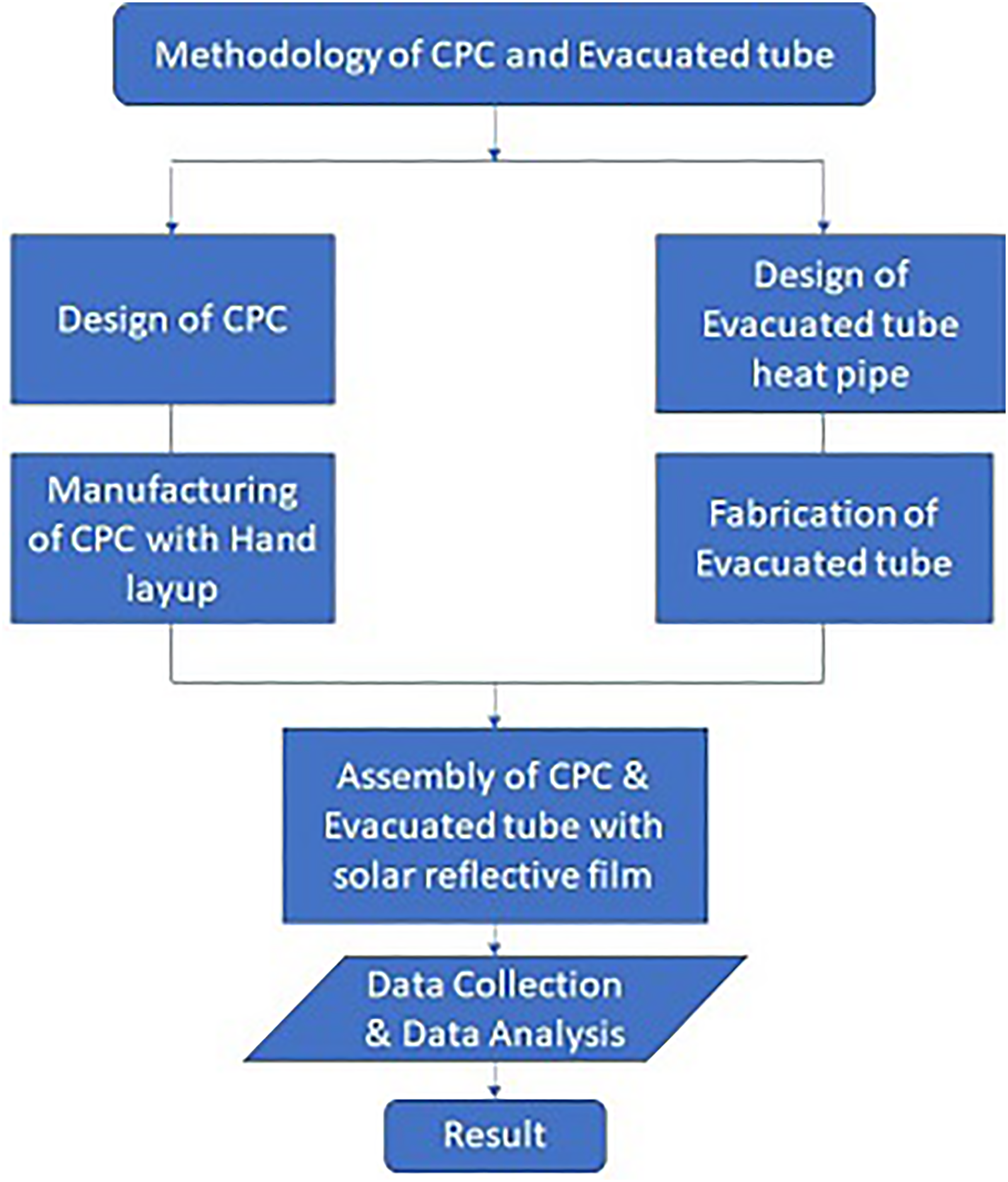
Most of the radiation incident on flat plate solar reflectors reflected the surroundings without falling on the absorber surface, resulting in loss of useful energy. This problem can be solved by introducing a Compound Parabolic Concentrator (CPC) behind the collector. The proposed methodology of this work is shown in Figure 1.
Proposed methodology.
Design of compound parabolic concentrator
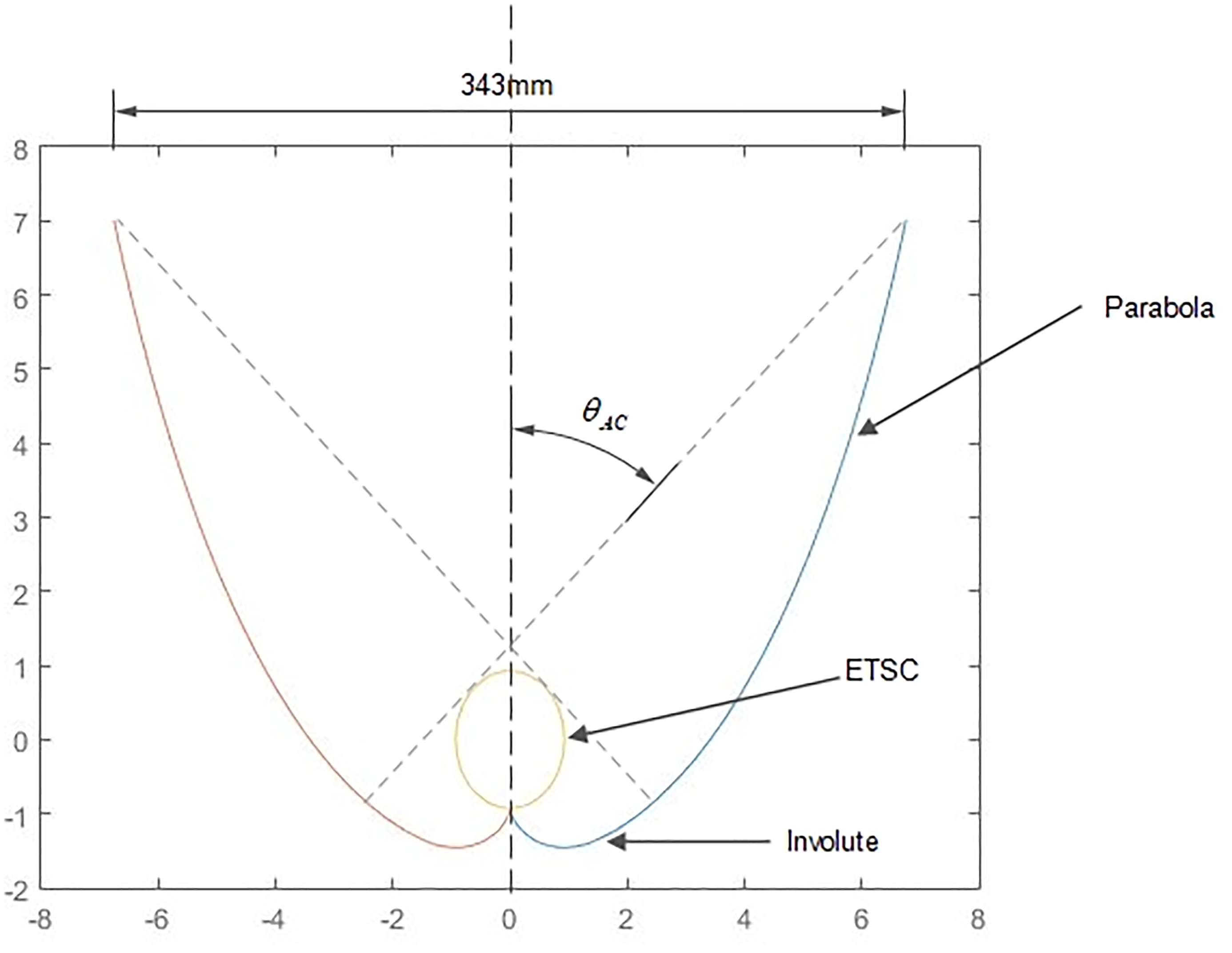
The CPC profile has been generated by intersecting two parabolas compounded with involute at the bottom for better ray tracing.
The involute profile of CPC is represented by equation (1)

The profile of the parabola is represented by equation (2)




The average heat flux in the evaporator section of the evacuated tube solar absorber is calculated using equation (6).

The CPC profile has been drawn in MATLAB software for better accuracy using Equations (1) to (6). With the help of MATLAB Codings, Equations (1) to (6) were used to create the CPC Profile in MATLAB (Xu et al., 2017). The CPC was designed with an aperture width of 343 mm, a concentration ratio of 2.32, and an aperture angle of 25.4°. After getting the CPC profile in MATLAB, the coordinates of each point on the CPC profile were imported into Solid Works software for 3D modelling. Figure 2 shows the developed profile of CPC. After completing the design of CPC, it was manufactured using plywood according to the dimensions. The length of the CPC manufacture was 1.5 m with 0.96m2 total surface area for solar energy collection. The undercut was provided inside of CPC for fastening reflective material. The reflective material used in this work was the aluminium foil of thickness 3 µm with a reflectivity of 0.9.
Profile of CPC.
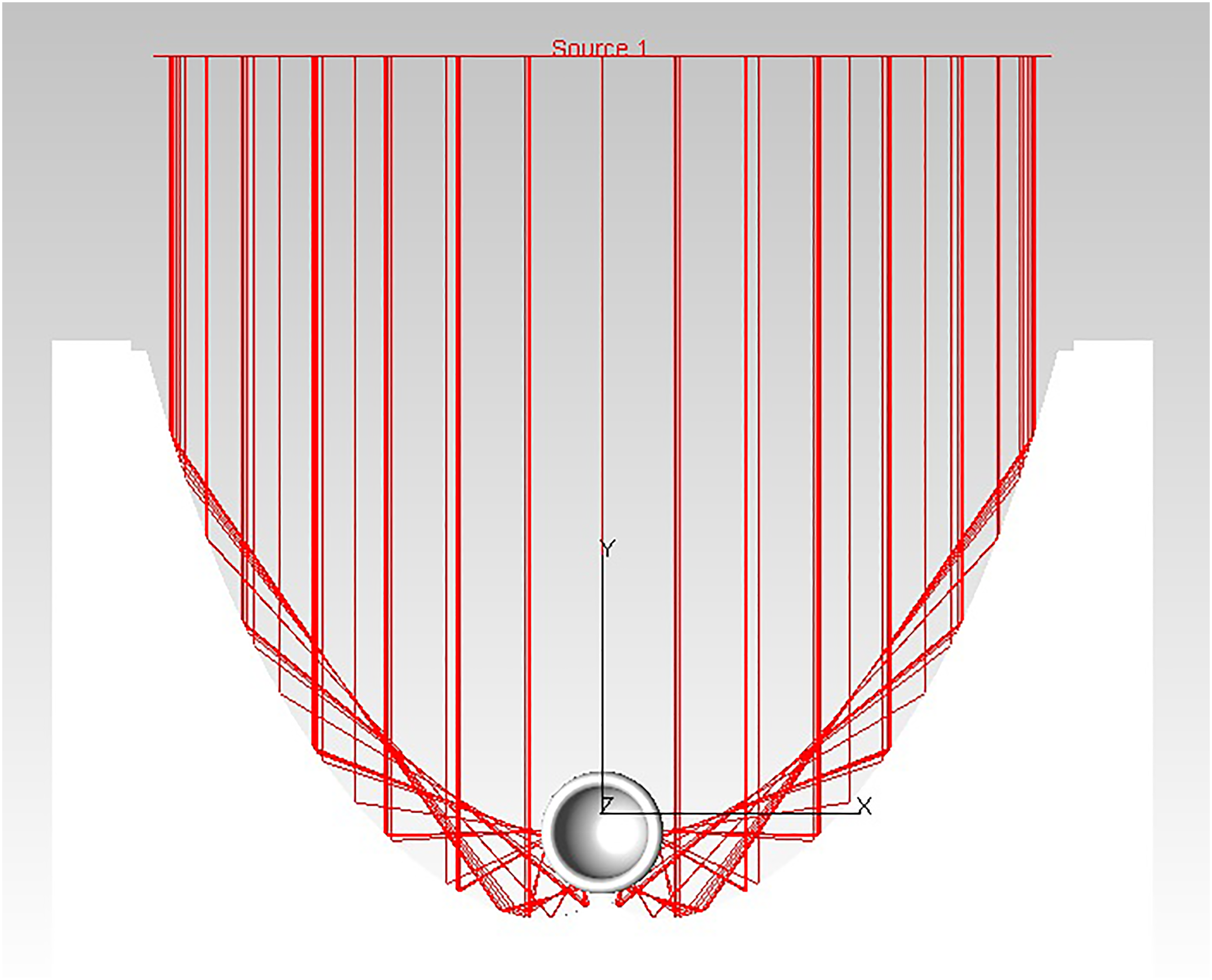
The analysis of ray traces is inevitable while designing the CPC. The CPC should be designed so that all the light rays falling over the CPC distract back to the collector. Figure 3 shows the reflected light ray path from CPC. The CPC ray tracing was done by using Tracepro software. The CPC reflects all the incident light rays onto the absorber tube. The angle of reflected rays in a flat reflector is the same as that of the incident angle of light rays, whereas the CPC reflector focuses all the incident light rays onto a single line. The placement of the absorber tube on the CPC's focus line will drastically increase the system's efficiency.
Analysis of reflected rays on CPC.
Development of ETHP
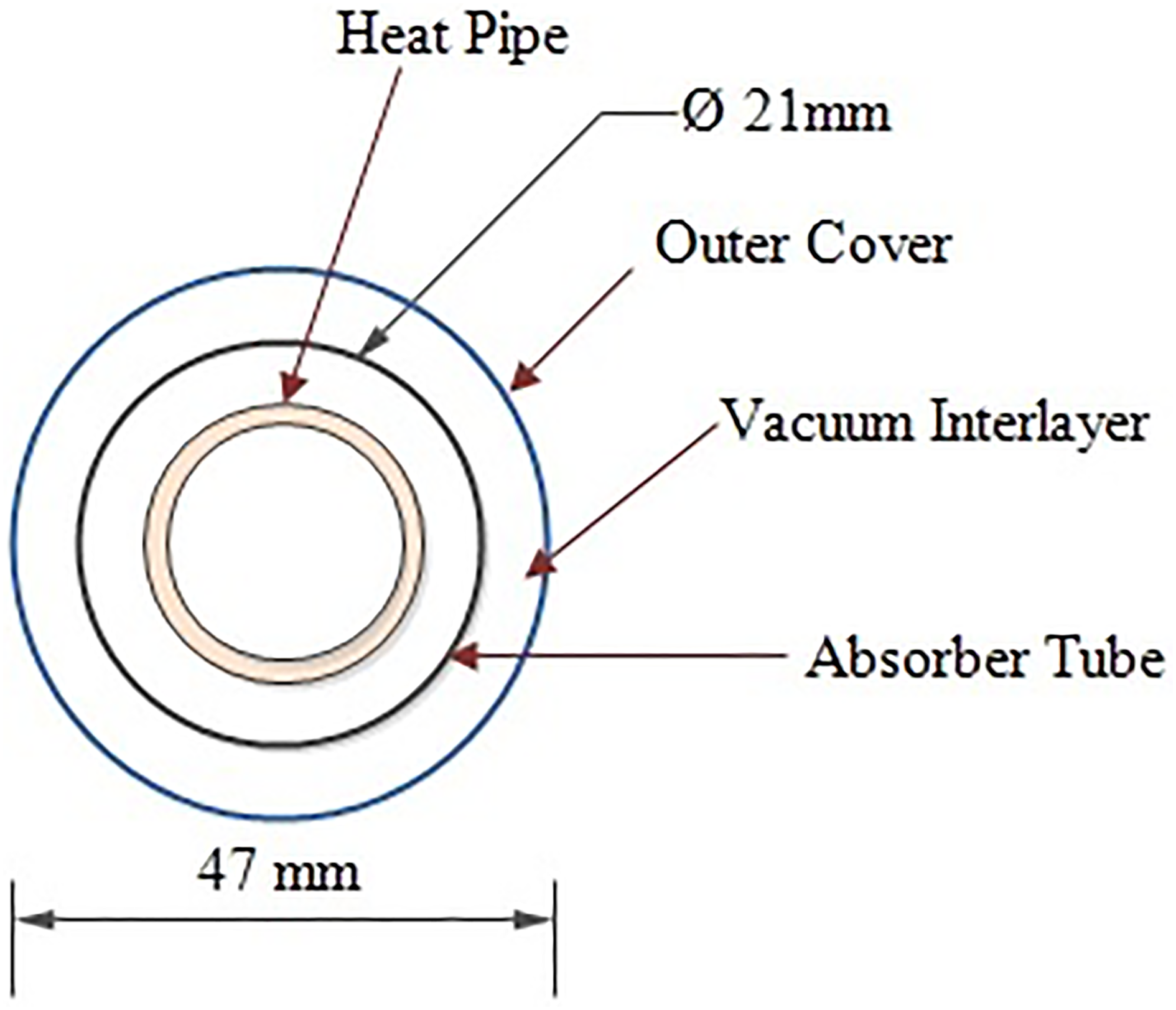
The cross-section of the evacuated tube solar absorber is shown in Figure 4. The evacuated tube solar collectors have two concentric tubes made with borosilicate glass. The diameter of the outer tube was 47 mm, and the diameter of the inner tube was 21 mm. The receiver tube consists of an evacuated tube that contains a thermosyphon heat pipe. The thermosyphon heat pipe is placed inside the evacuated tube. The thermosyphon heat pipe's specifications are chosen based on evacuated tube specifications (Vijayakumar et al., 2019). The thermosyphon heat pipe used in this experiment was manufactured using copper with a diameter of 19 mm and length of 1400 mm. Initially, the vacuum was created inside the copper tube using a vacuum pump up to 5 Pa. After creating a vacuum, acetone was injected into the tube as a working fluid. The volume of acetone injected was 40% of the total volume of the copper tube to achieve a 40% fill ratio.
Cross section of an evacuated tube heat pipe.
Experimental setup
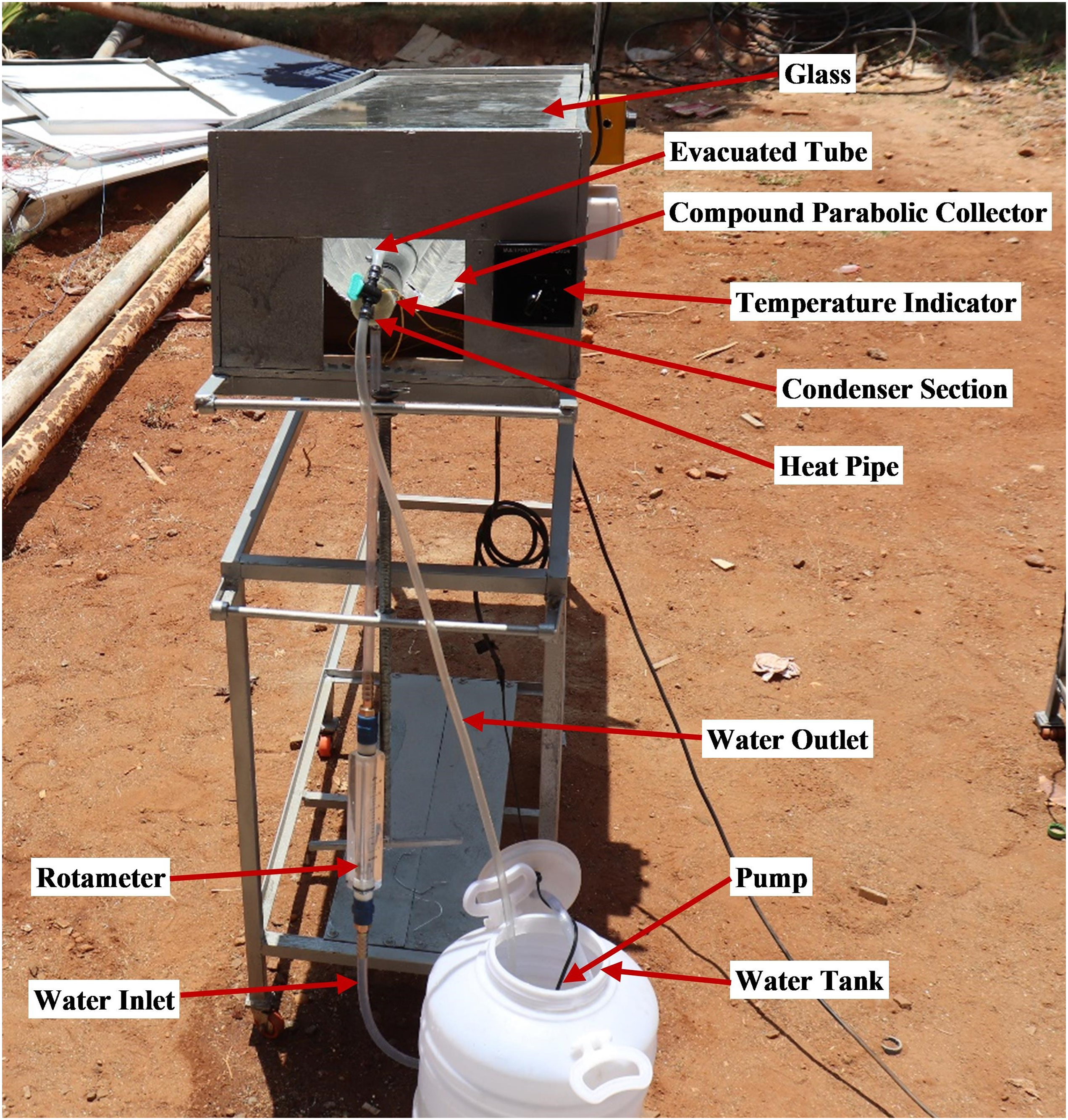
The Photograph of the experimental facility for evaluating the performance of solar collectors with CPC at various tilting angles is illustrated in Figure 5. The experimental setup consists of a CPC apparatus with an evacuated tube placed at the focal point of the CPC, a circulating water system, and data data-collecting system. The circulating water system collects heat from the evacuated tube consisting of a water storage tank, a pump to circulate water, a flow control valve to regulate the flow rate, and a temperature sensor for measuring the inlet and outlet of water. This experimental test rig uses the evacuated tube with a thermosyphon heat pipe as an absorber. The heat pipe is partially evacuated, and the working fluid is partially filled inside the heat pipe. The Thermosyphon heat pipe is placed inside the evacuated tube, which has two portions: the evaporator and condenser sections. The circulating water system collects heat from the condenser portion of the thermosyphon heat pipe, which is placed inside the evacuated tube. The evacuated tube with CPC is installed to face the south direction for a better collection of solar rays and to change the collector's tilt angle.
Photograph of the experimental setup.
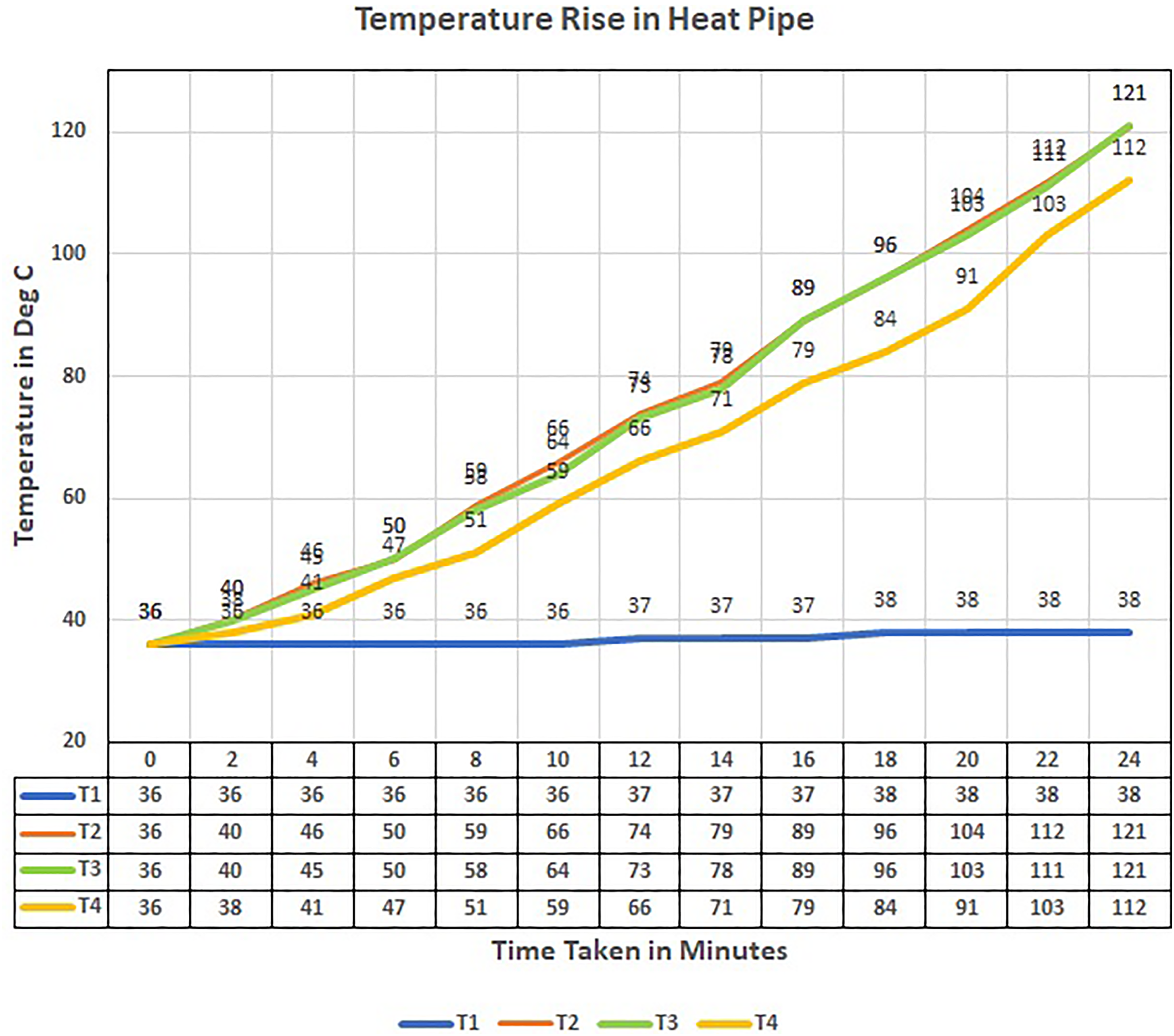
The data collection system collects solar radiation and temperature data from various points in evacuated tubes. The incident solar radiation was measured using a solar radiant pyranometer SP-1300 installed at the top of the solar collector. Six K-type thermocouples were placed in the experimental system named from T1 to T6, and the thermocouples were calibrated to get error-free data from the system. Three thermocouples were placed on the evacuated tube at the bottom T1, middle T2, and top T3 portions to visualize temperature distribution in the evacuated tube. Two thermocouples were placed at inlet T4 and outlet T5 of the water collecting system, which collects heat energy from an evacuated tube. A K–type thermocouple T6 is employed in the system to measure the atmospheric temperature.
Experimental procedure
All the experiments were conducted at Irugur in Coimbatore (77.070E,11.040N). The ANSI/ASHRAE, 2003 ISO Standard, 1994, and European Standard, 2001 are the three standards most frequently used for steady-state testing of glazed solar thermal collectors (section 6.1). The three Standards mandate a collector time constant test, an instantaneous thermal efficiency test, and an incident angle modifier test. These standards will produce collector performance metrics that can be utilized for long-term estimation despite slight differences in their requirements.
The peak sunshine timing for the location is between 8.00 AM to 5.00 PM, so all the experimental trials are conducted in the same period and duration of April 15, 2019, to May 20, 2019. The inclination angle of the solar collector was fixed at 15°, and the mass flow rate of water collecting heat from the evacuated tube was set to 0.025 kg s−1. Then, the temperature at various sections of a thermosyphon heat pipe and inlet-outlet water temperature were recorded. The temperature rise in the heat pipe is shown in Figure 6. If the temperature of the heat pipe gets raised, the efficiency of the proposed system is also increased. The inclination angle of the solar collector was changed, and the same experimental procedure was followed.
Temperature rise in heat pipe.
Data reduction
The heat from the solar energy would have to pass through the glass walls of the evacuated tube and vacuum interlayer in a radial direction. The glass wall and vacuum layer offer resistance to the flow of heat, which is essential to calculate. The thermal resistance Rt of the system is calculated using equation (7).






Measurement of uncertainty.

Result and discussion
The following section discusses the effect of inclination angle on thermal characteristics and instantaneous efficiency of ETSC integrated with the compound parabolic concentrator. The inclination angle was changed at 15°, 30°, 45°, and 60°, and experiments were conducted during the period April 15, 2019, to May 20, 2019.
The Performance analysis of evacuated tubes integrated with thermosyphon heat pipe solar collectors and compound parabolic concentrators (CPCs) is discussed and compared to findings from related research.
Other research on comparable systems, especially those without CPC integration, often reports efficiencies ranging from 60% to 70%. The study revealed an average efficiency of 78% across a variety of sun incidence angles and operational conditions. The performance improvement of our system is probably due to the installation of a CPC, which focuses sunlight onto the evacuated tube over a wide range of incidence angles. When the operating angle was adjusted to match the typical solar incidence angle of the particular geographic region, efficiency peaked. This is consistent with earlier publications emphasizing the importance of maximizing the tilt angle with local solar angles.
While the CPC can sustain high efficiencies over a wider range of solar incidence angles, not all studies consider its adaptability and wide acceptance angle. A consistent temperature distribution along the evacuated tube indicated efficient heat transfer and little loss. Temperature gradients along the tube are frequently visible in non-integrated systems or those without a functional heat pipe mechanism. Our findings show superiority in terms of even heat absorption and transfer.
Our system performed well and was resilient even under a variety of environmental circumstances, in part because of the CPC's capacity to concentrate dispersed sunlight. According to certain research, performance declines occur in cloudy weather or during particular periods of the day. The consistent performance of our system highlights the advantages of integrating an evacuated tube system with a CPC. The system did well, but there were a few reflecting and very modest convective losses. Similar losses are frequently reported in the literature, highlighting the difficulty of reducing these inefficiencies everywhere. However, our system suffers from fewer losses, highlighting the gains accomplished.
Compared to similar systems described in the literature, the integrated design of the evacuated tubes with thermosyphon heat pipe solar collectors and a CPC demonstrated improved performance under varied operating situations. The study highlights the effectiveness of this integrated strategy and establishes a standard for upcoming designs and solar thermal system improvements.
Thermal resistance of the solar collector
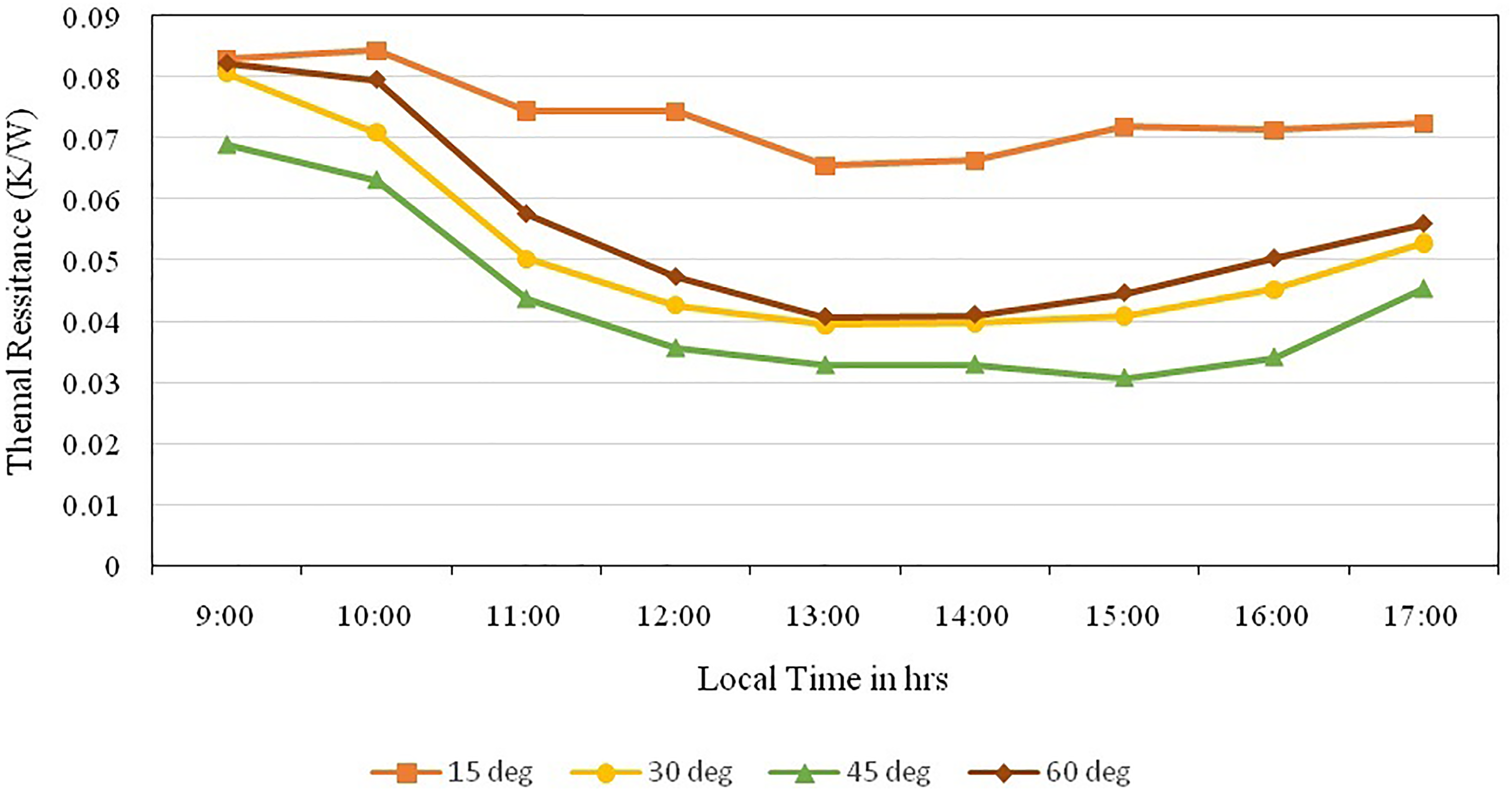
The investigation of thermal resistance is a vital factor for the solar collector, representing the dry-out condition that occurs with increasing heat. Figure 7 illustrates the variation of thermal resistance depending on local time and the effect of inclination angle on thermal resistance. It is observed that, for all tilting angles of solar collectors, the thermal resistance gradually decreases with an increase in solar time. A lesser value of thermal resistance was observed between the time 11:00 h to 15:00 h. Afterwards, it gradually increases. The intensity of solar radiation on solar collectors is recorded to be higher in the time mentioned above period. The higher solar power increases the heat input to the heat pipe.
Effect of tilting angle on the thermal resistance of an evacuated tube solar collector.
Further, the higher value of solar radiation intensity also increases the environment's ambient temperature. Ambient temperature highly influences the heat energy losses from the solar collector to the atmosphere. The higher the ambient temperature, the lesser the heat loss is from the solar collector to the environment. The heat transfer considered as a loss will be increased between the evaporator and condenser region (Wang et al., 2014). Figure 7 depicts that the solar collector's tilting angle has a magnificent cause on the thermal resistance. The increase in the tilting angle of the solar collector from 15° to 45° gradually decreases thermal resistance to some extent.
Further, increasing the tilting angle to 60° increases the thermal resistance. The finding is similar to the result obtained by (Jahanbakhsh et al., 2015). Thermal resistance is higher at a 15° tilting angle compared to others. The higher thermal resistance may be because the nanofluid in the heat pipe covers some parts of the evaporator section, which may not transfer to the condenser section (Eidan et al., 2018).
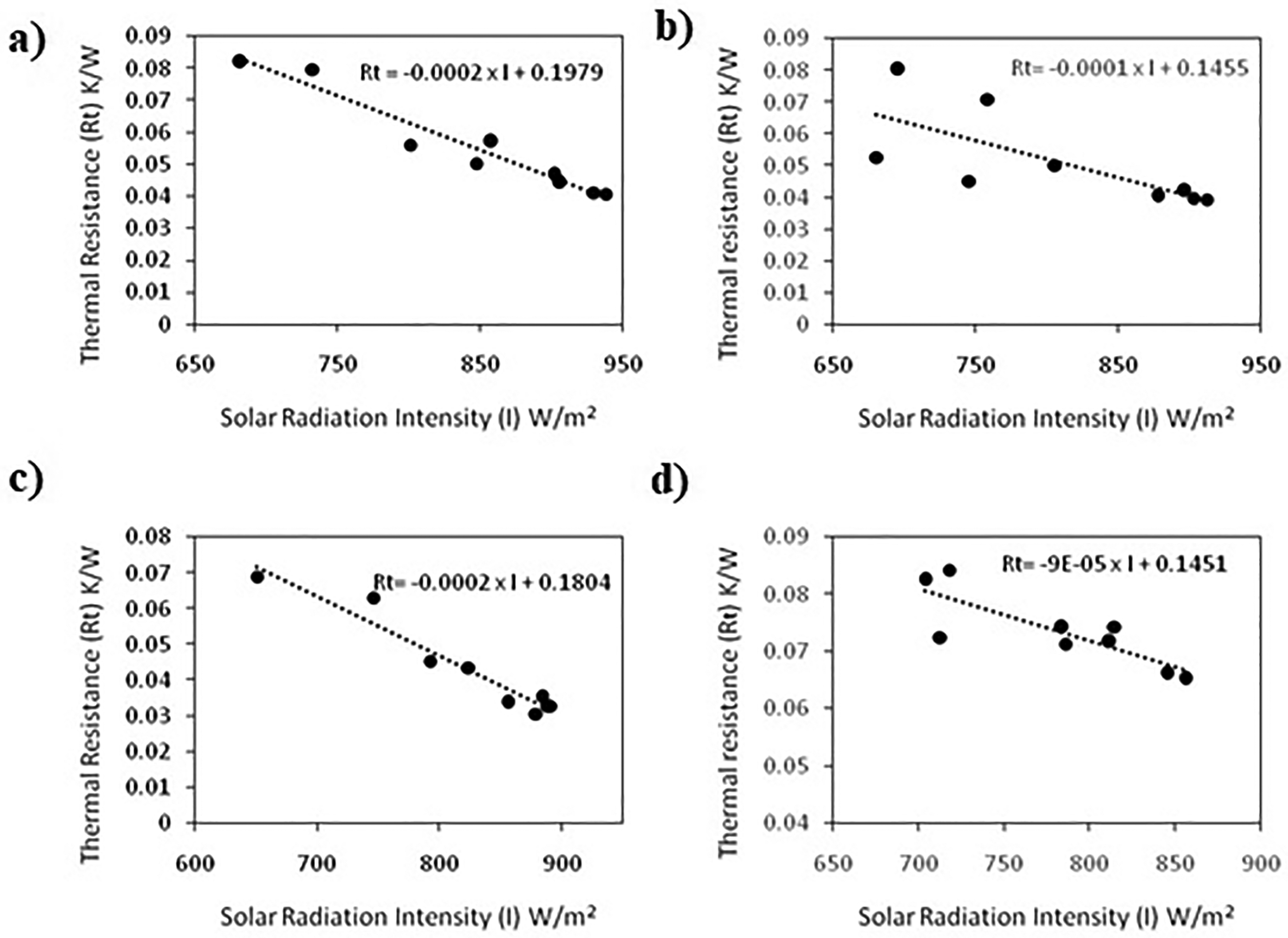
Figure 8 a-d shows the relationship between solar radiation intensity and the ETSC's thermal resistance at different tilting angles. The thermal resistance was found to be lower between the hours of 11:00 and 15:00. After that, it gradually got higher. Analysis of the thermal resistance concerning solar radiation intensity was done between 11:00 and 15:00 h. The thermal resistance of solar collectors possesses a negative trend with solar radiation intensity. Increasing solar radiation results in increased heat input to the solar collector. The minimum thermal resistance observed was 0.02 KW−1 at a 45° tilting angle. Hence, the current study proposes an evacuated tube solar collector that is orienting 45° horizontally and will have a lower thermal resistance.
Result of solar radiation intensity on thermal resistance at a) 15° b) 30° c) 45° & d) 60° tilting angle.
Thermal efficiency of the modified system
The performance of the evacuated tube solar collector is assessed by calculating instantaneous thermal efficiency. The variation of instantaneous thermal efficiency for solar time at various tilting angles is depicted in Figure 9. Due to decreased solar energy and the surrounding temperature, efficiency is lower early in the day. The thermal efficiency of the present work is compared with Li et al. (2013) investigated performance testing that combines a compound parabolic concentrator (CPC) with evacuated tubes in a U shape operating between 80 °C and 250 °C. Calculating and interpreting the experimental data, they conclude that the deep compound parabolic concentrator must change its angle several times throughout the day to gather more sunlight. The shallow one, however, also has to alter the angle every year to get the optimum thermal efficiency. The deep one has a thermal efficiency that is 40% greater than the shallow one under the ideal angle, approaching 46%. The efficiency of the present solar collector reaches 50% around 11:00 AM for all tilting angles. The major parameters that control the solar collector's thermal efficiency are solar radiation intensity, ambient temperature, thermal resistance of heat pipe, CPC design, and reflective material property on CPC.
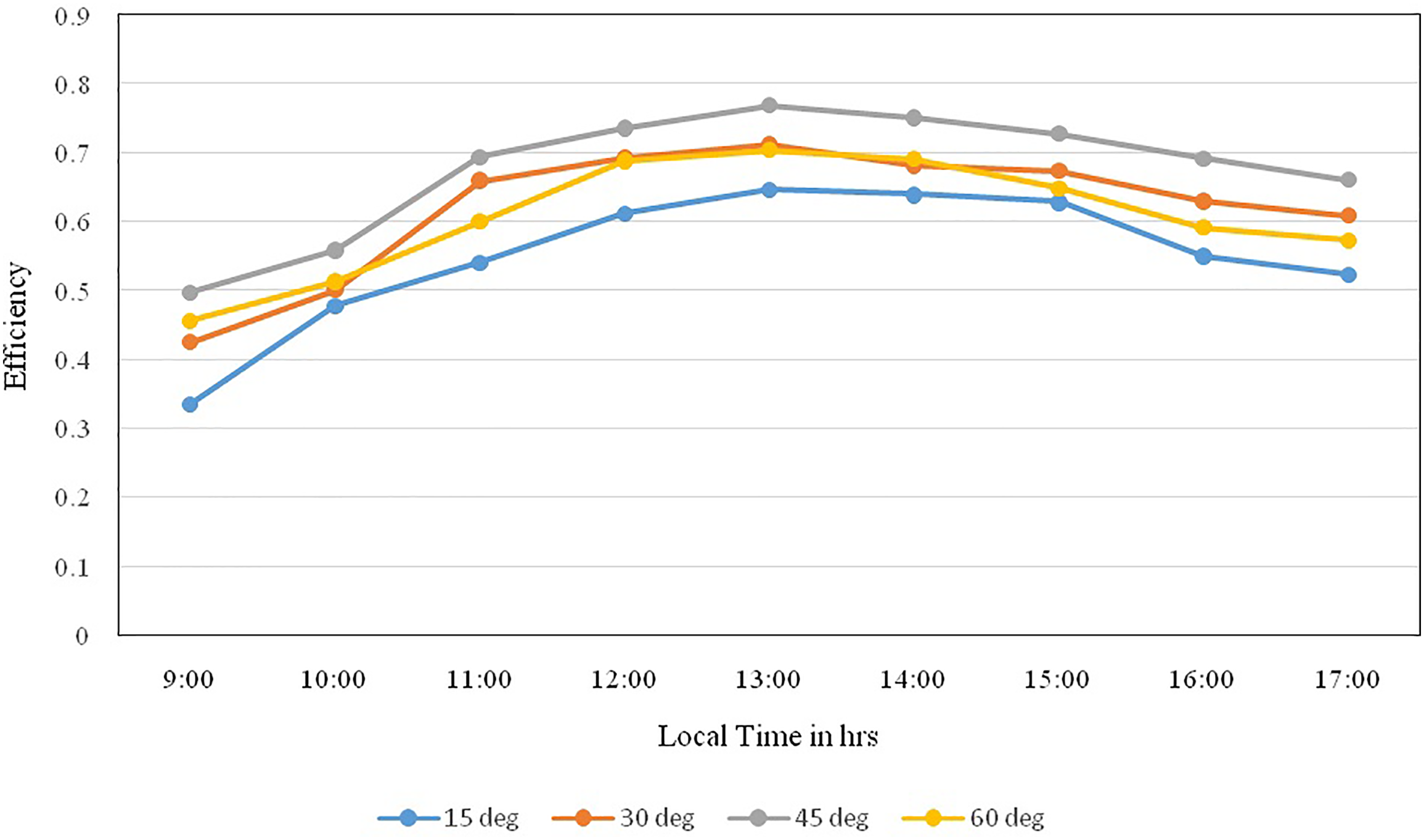
Result on the effect of inclination angle on the instantaneous efficiency.
Figure 10 a-d shows the influence of evacuated heat pipe thermal resistance on the solar collector's instantaneous efficiency at all tilting angles. As the thermal resistance of an evacuated heat pipe increases, the efficiency of the solar collector drops. The maximum efficiency of the solar collector obtained was 78%, and the corresponding thermal resistance of the heat pipe was 0.02 KW−1. When the thermal resistance was increased to 0.08 KW−1, the efficiency of the solar collector decreased below 50%.
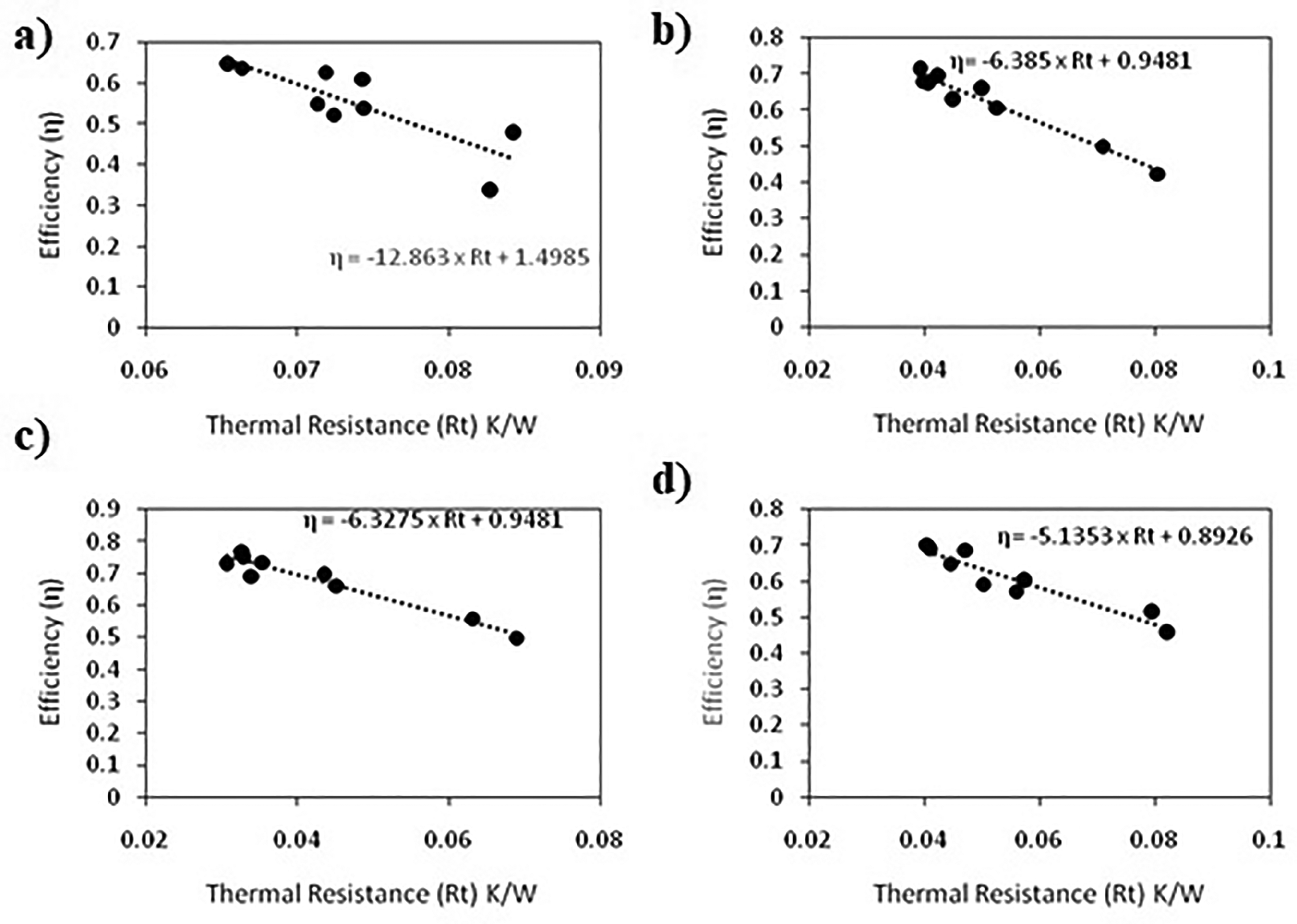
Effect of thermal resistance on instantaneous efficiency at a) 15° b) 30° c) 45° & d) 60° tilting angle.
It has been observed that maximum efficiency was achieved at the 45° tilt angle of the solar collector. The increment and decrement from this angle reduce collector efficiency. The collector receives less solar radiation at greater tilt angles because the CPC's cast shadow blocks the sun's direct descents (Nchelatebenkwetta et al., 2012). The evacuated heat pipe's thermal resistance is higher at lower tilting angles. An enormous thermal resistance decreases the efficiency of the solar collector. The CPC's operating angles can significantly enhance energy capture efficiency by maximizing the solar radiation concentration in the evacuated tube and minimizing reflective and other losses.
Conclusion
The current experimental work investigates the effect of the tilting angle of ETSC with thermosyphon heat pipe on thermal resistance and efficiency. The conclusions that are arrived at through this study are as follows,
Compound parabolic concentrator coordinate points were produced using MATLAB based on the specifications of an evacuated tube thermosyphon heat pipe and then imported into Solidworks for 3D modelling. The CPC was constructed using plywood following the dimensions after being designed. Inside of CPC, an undercut was made to allow for the attachment of reflective material. The reflective material utilized in this experiment was 3 mm thick, 0.9 reflectivity aluminium foil. The efficiency maximizes when the incident rays angle 90° with the tube. The Edge principle is used in compound parabolic concentrators to operate. In other words, whatever light strikes the CPC will always point directly at the absorber. Angles of 15, 30, 45, and 60 degrees are employed to obtain the optimum tilting angle. The experimental investigation of solar collectors at various tilting angles showed that the solar collector's thermal resistance and instantaneous efficiency are significantly affected by tilting angle. The optimum tilting angle of the solar collector found in this study is 45°, at minimum thermal resistance and maximum instantaneous efficiency of 0.02kW−1 and 78%, respectively. The solar collector oriented at a lesser inclination angle of 15° possesses a higher thermal resistance of 0.065kW−1 and a lower instantaneous efficiency of 64% due to the lesser thermosyphon effect of the working fluid. Due to the compound parabolic concentrator's shading effect, increasing the tilting angle of a solar collector beyond the ideal angle of 45° decreases efficiency and raises thermal resistance.
Future scope
To improve the efficiency of the solar collector, a compound parabolic concentrator with an evacuated tube thermosyphon heat pipe and acetone as the working fluid was investigated. With more solar radiation, the application might be expanded to household steam generation. Research producing steam for home uses may be possible.
Several CPC Profiles can be evaluated and compared with the proposed system to get a suitable shape for more useful solar radiation.
In the future, the performance of the solar collector may be enhanced by using various absorber tube shapes.
The CPC can employ high reflective sheets to effectively collect solar radiation for the absorber.
Thermosyphon heat pipes can use nanofluids to increase heat transfer in the condenser portion.
The thermal performance of the heat pipe in solar collectors is significantly affected by the wick-structured heat pipe. With wicked heat pipes, further studies may be conducted.
The performance of heat pipes can be compared using various optimization techniques.
Solar tracking and pumping systems assisted by photovoltaic panels can be added to encourage the use of renewable energy sources by reducing the need for conventional power sources.
Footnotes
Author note
Mohd. Asif Shah full affiliation:
Division of Research and Development, Lovely Professional University, Phagwara, Punjab, 144001, India.
Research Fellow, INTI International University, Persiaran Perdana BBN Putra, 71800, Nilai, Negeri Sembilan, Malaysia.
Adjunct Faulty, Islamic University Centre for Scientific Research, Islamic University, Najaf, 54001, Iraq.
Acknowledgements
The authors extend their appreciation to the Researchers Supporting Project number (RSPD2023R999), King Saud University, Riyadh, Saudi Arabia.
Declaration of conflicting interests
The authors declared no potential conflicts of interest with respect to the research, authorship, and/or publication of this article.
Funding
The authors received no financial support for the research, authorship, and/or publication of this article.
