




Abstract
Resource-based cities often face land scarcity during their developmental and expansionary phases. However, repurposing the goaf sites of suburban coal mines has been recognized as an effective strategy for alleviating this issue, particularly pertinent for suburban coal mines using strip mining techniques to protect ground-level structures. Old strip mining goaf is easily influenced by disturbance and leads to secondary surface deformation, which will threaten the construction above old strip mining goaf. Therefore, it is essential to provide a basis and reference for decision-makers regarding surface residual subsidence for strip mining. In the paper, based on the morphology and structure of the old strip mining goaf before the surface residual subsidence, the reason and mechanism of the residual subsidence of old strip mining goaf are studied. The results show that the main reasons for the “activation” of old strip mining goaf are the re-compaction of the under-compacted part of the fractured rock mass in the caving zone, the stripping and yielding of coal pillar under the action of groundwater erosion, weathering, and the collapse of residual voids. Based on the above analysis, a prediction model of the surface residual subsidence of the old strip mining goaf is proposed, which takes into account the compaction of the under-compacted area, the collapse of the residual voids, and the stripping and yielding of the coal pillar. The proposed method is implemented to evaluate the stability of a city viaduct goaf. Our research outcomes bear valuable theoretical and practical implications for site stability assessments of old strip mining goafs and the sustainable repurposing of land resources in suburban resource-based cities.
Introduction
Coal mining provides imperative energy support for world economic development, especially for resource-based cities with abundant coal. Coal-resource-based cities have obtained great development opportunities, and the urban area is constantly expanding. For example, in the process of transformation and upgrading of the Ruhr region in Germany, new scientific research institutes and industrial parks have been built, and transportation infrastructure has been improved (Arora and Schroeder, 2022; Goess et al., 2016). During the process of transformation and upgrading in Xuzhou City, China, suburban land has been consistently repurposed, resulting in a 0.4 times expansion of the urban area over the course of ten years (China, 2010, 2020). However, with the continuous development of coal resources, a large number of mined areas have been left behind, creating large areas of coal mining subsidence, resulting in a more severe shortage of land for urban construction. In general, in coal-rich countries, the contradiction between building land for coal-based cities and land for coal mines is prominent.
If the old goaf in the suburbs can be “reused” (Chen et al., 2022; Dudek et al., 2022; Modeste et al., 2021; Srivastava et al., 2020; Wojtecki et al., 2021), the problem of construction land shortage will be effectively alleviated. In the past, suburban coal mines mostly used strip mining to control surface subsidence and protect surface buildings (structures). However, the old goaf formed by this method is easily disturbed and induces residual subsidence (Guo et al., 2019; Vervoort, 2016; Yin et al., 2022), which threats to the construction and utilization of the goaf site. In order to rationally utilize the goaf site and ensure the safety of the overlying buildings (structures), it is very important to accurately predict the surface residual subsidence of old strip mining goaf.
There is no method to predict surface residual subsidence of old strip mining goaf. Some scholars have studied the prediction method of surface residual subsidence during longwall mining. Donnelly, Teng, et al. predicted the residual subsidence caused by the longwall mining (Bai et al., 2022; Donnelly et al., 2008; Guo et al., 2002). Cui et al. proposed a model for calculating subsidence coefficients for surface residuals and quantified annual residuals, cumulative residuals and future potential cumulative residuals for a given geological mining condition (Cui et al., 2020). The above approach reflects the feature of small surface residual subsidence, but cannot explain the mechanism of surface residuals subsidence. Therefore, Wang, Zhang, et al. studied the reasons for the “activation” of the old goaf, and proposed an estimation model for the void space and a calculation model for the equivalent mining height of the under-compacted area (Wang et al., 2011; Zhang et al., 2016). SALAMON, MERWE et al. studied the stability of coal pillars in South Africa and found that the size of coal pillars gradually decreased over time (Salamon et al., 1998; van der Merwe et al., 1993; Van der Merwe, 2003). ESTERHUIZEN et al. showed that under the long-term action of stress, the outer wall of the pillar might gradually peel away (Esterhuizen et al., 2011). Wang, et al. used a nonlinear prediction system, neural network and other methods to predict residual subsidence (Li et al., 2022; Wang and Deng, 2010; Wang and Deng, 2012; Wang et al., 2022). The advantage of this method is that it does not need to take into account the predisposing factors of residual subsidence, but it may lead to errors in the prediction results due to parameter and sample selection. The above research results of surface residual subsidence prediction methods provide an essential reference for the construction of surface residual subsidence models of strip mining.
In this paper, the mechanism of surface residual subsidence of strip mining is studied through theoretical analysis methods. A prediction method of residual subsidence in strip mining that takes into account the compaction of under-compacted areas, the collapse of residual voids, and coal pillar yielding and stripping is established based on the superposition principle of the probability integral method (PIM). Then, the method is applied to evaluate the stability of a viaduct over an old strip mining goaf. The research results have significant theoretical value and practical significance for the stability evaluation of the strip mining goaf site.
Mechanism analysis of surface residual subsidence of strip mining
After strip mining, the initial stress balance of the overlying strata above the goaf is broken and the rock layer is deformed and shifted. The secondary stress balance is established and the overlying strata tend to stabilize due to the synergistic effect of the overlying strata and the strip coal pillars. With the passage of time, under the action of groundwater erosion, weathering and other factors, the strength of the rock mass gradually weakens, the coal pillar will peel and yield, the residual voids on both sides of the goaf collapses, the under-compacted area is compacted and so on, which develop to the surface and cause residual subsidence. The mechanism of surface residual subsidence from strip mining is as follows:
As is shown in Figure 1(a) Part I, the roof is broken into smaller rock mass and scattered in the goaf after caving. The stress of the overlying stratum acts upon the scattered rock mass in the goaf, and the overlying strata are in a stable state under the support of the strip coal pillars and the fractured rock mass. As time went on, the strength of the coal pillars and fragments of rock gradually decreased due to external factors such as weathering. It is difficult to maintain the stability of the overlying strata. Under the effort of overlying strata stress, the gaps between the fragments in the under-compacted area are gradually compacted (Blachowski et al., 2018; Tajdus et al., 2021). This action is transmitted to the surface, causing surface residual subsidence. As is shown in Figure 1(a) Part Ⅱ, on both sides of the goaf, one end of the roof is fixed in the rock stratum, which is not easy to collapse, and residual voids are formed on both sides of the goaf. Under the effect of overlying strata stress, some fractured rock mass in the under-compacted area will be squeezed into the residual voids, the lump coal produced by the stripping of the coal pillar will be scattered into the voids and the overlying rock strata will collapse and gradually compress (Zhang et al., 2016), leading to the movement and deformation of the rock strata. Considering the periodic caving characteristics of the roof along the strike direction and the influence of the bulk rock mass on the accumulation of inclined residual voids is difficult to quantify, in order to simplify the calculation difficulty, only the influence of the residual voids in the strike direction on the residual subsidence of the strip mining surface is considered. As is shown in Figure 2(b) Part Ⅲ, after strip mining, partial overlying strata stress above the goaf and the overlying strata stress above coal pillar will act on the coal pillar, the stress on the coal pillar will increase. With the continuous action of groundwater and weathering, the inter-particle connections of the coal pillars are disrupted and the inter-particle connections are weakened. The core stress area of the coal pillar gradually shrinks from both sides to the center, resulting in coal pillar stripping and yielding. Due to the weakening of the support effect of the coal pillar on the overlying strata, the strata move and deform again (Engelbrecht et al., 2017; Taylor et al., 2000), which induces surface residual subsidence.
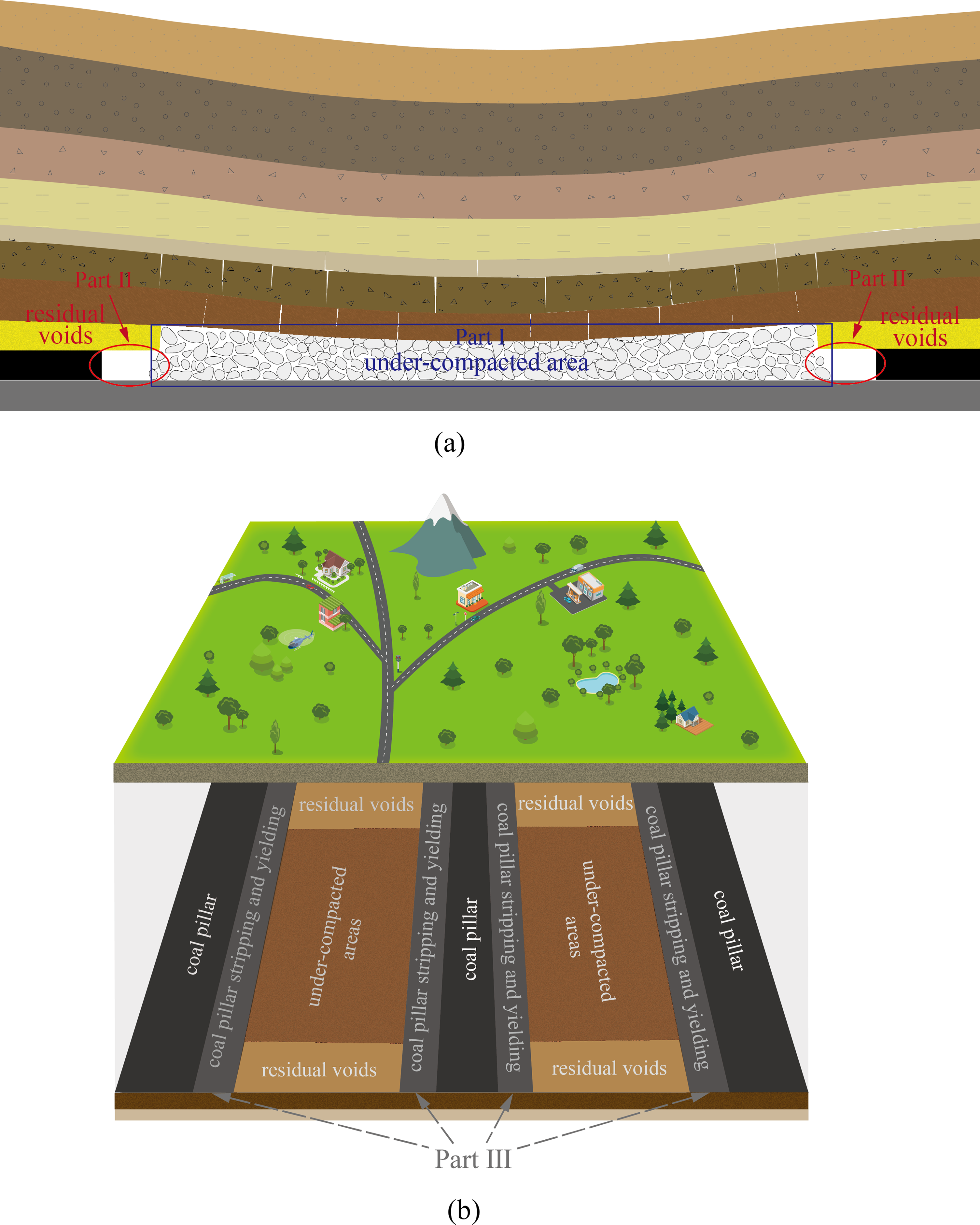
Schematic diagram of the mechanism of surface residual subsidence in strip mining. (a) Sectional diagram of the mechanism of surface residual subsidence of strip mining; (b) Top view of the mechanism of surface residual subsidence of strip mining.
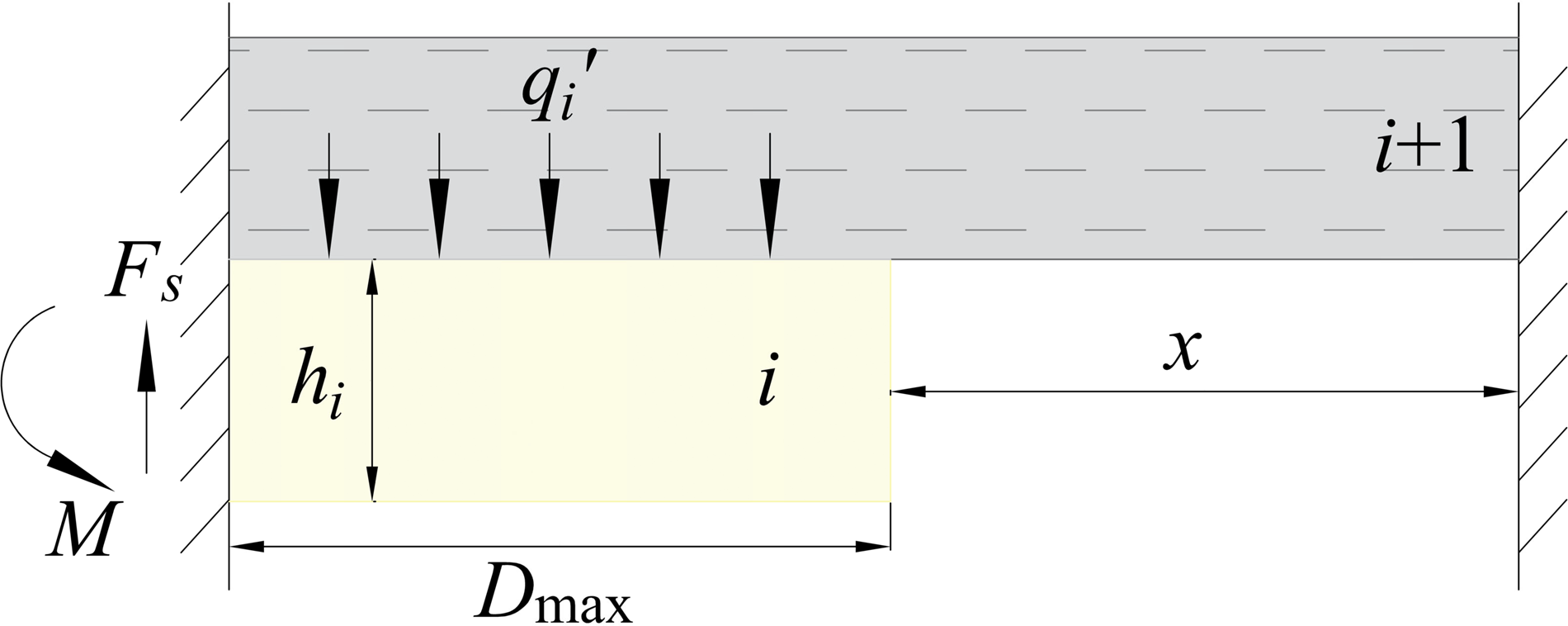
The mechanics model of cantilever beam.
Prediction method of surface residual subsidence of strip mining
Under the action of additional external loads and other factors in the old goaf, the under-compacted area will be re-compacted, the residual voids on both sides of the gob will collapse, and the coal pillar will strip and yield. This phenomenon leads to the gradual reduction of underground compressible space, causing overlying strata movement and deformation that propagates toward the ground and induces residual subsidence. In this section, a prediction method for surface residual subsidence of strip mining will be established based on the mechanism of residual subsidence and PIM.
Calculation model of compression in the under-compacted area
After mining, the immediate roof behind the working surface collapsed and formed a large number of fractured rock mass scattered into the goaf. Due to the gaps between the fractured rock mass, the mining space after coal mining is compensated to a certain extent. Although the overlying strata are stable after reaching the secondary stress equilibrium, the surface has not yet reached the maximum subsidence value. Under the influence of overlying strata stress, groundwater erosion, weathering, and other factors, the strength of the fractured rock masses in the goaf gradually decays, and the gaps between the fractured rock masses gradually compact. The overlying strata will move again, resulting in residual subsidence.
The height of the caving zone depends on the mining thickness of coal seam and bulking coefficient of overlying strata. When the roof strata are weak, the height of caving zone is 2 ∼ 4 times the mining thickness. The approximate estimation formula for caving zone height is

Where
Assuming that gaps come from the fractured rock mass, the compression of the fractured rock mass mainly occurs in the caving zone, and the calculation formula for the final compression of the fragmented rock mass in the goaf is deduced (Deng et al., 2012):

Where
Residual voids length calculation model
With the advancement of the strip working face, the overlying strata will suspend. However, because of the low support effect of the roof on the overlying strata, and the high strength of the roof rock mass, the strata will collapse somewhere in the goaf. Supported by the coal wall, one end of the un-collapsed roof is fixed in the rock mass and the other end is in a cantilevered state, which can be regarded as a cantilever beam, as shown in Figure 2. Supported by the cantilever beam, the overlying strata do not collapse, and residual voids are formed in the goaf below. Its length is the maximum overhang length of the strata (Guo et al., 2018).

Where
Calculation model of coal pillar stripping and yield width
Under the action of overlying rock strata, groundwater, weathering, etc., the strength of the strip coal pillar gradually weakens, and the coal pillar will strip and yield, causing the “activation” of the old goaf. To ensure the safety and stability of the project, the coal pillar stripping and yield widths are treated as spatial expansions of the induced residual subsidence.
Yang Yu et al. (2018, 2017) established a non-uniform exfoliation model of coal pillar based on the progressive exfoliation behavior of coal pillar and the stacking characteristics of exfoliated bodies. Assume that one side of the pillar is stripped into a quarter ellipse, as shown in Figure 3, with the long and short half-axes of the ellipse being the height of the pillar and the maximum stripping depth, respectively.
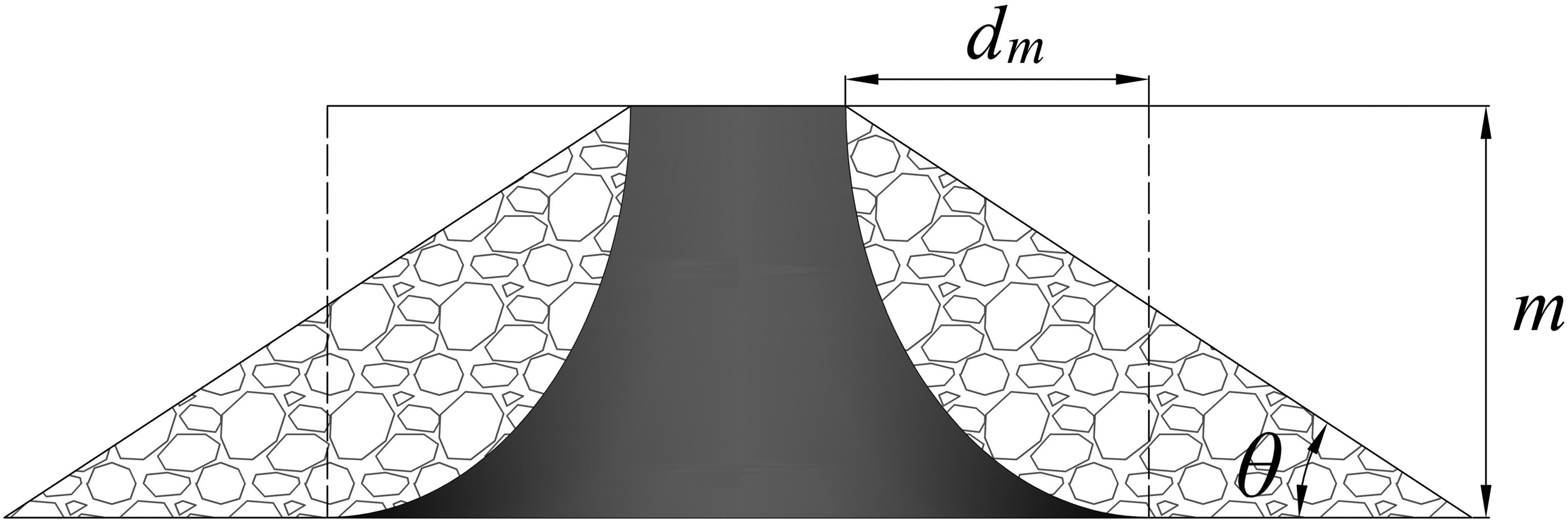
Strip pillar stripping model.

Where
As shown in Figure 4, the edges of the two sides of the coal pillar are first damaged by the redistribution of stress under the action of long-range stress, and then gradually expand inward until the junction of the elastic and plastic zones. It is considered that the damaged part of the coal pillar is in the limiting equilibrium state. Based on the stress balance theory of loose medium, the calculation formula for the width of the limit equilibrium zone of coal pillar stress is established (Hou and Ma, 1989).
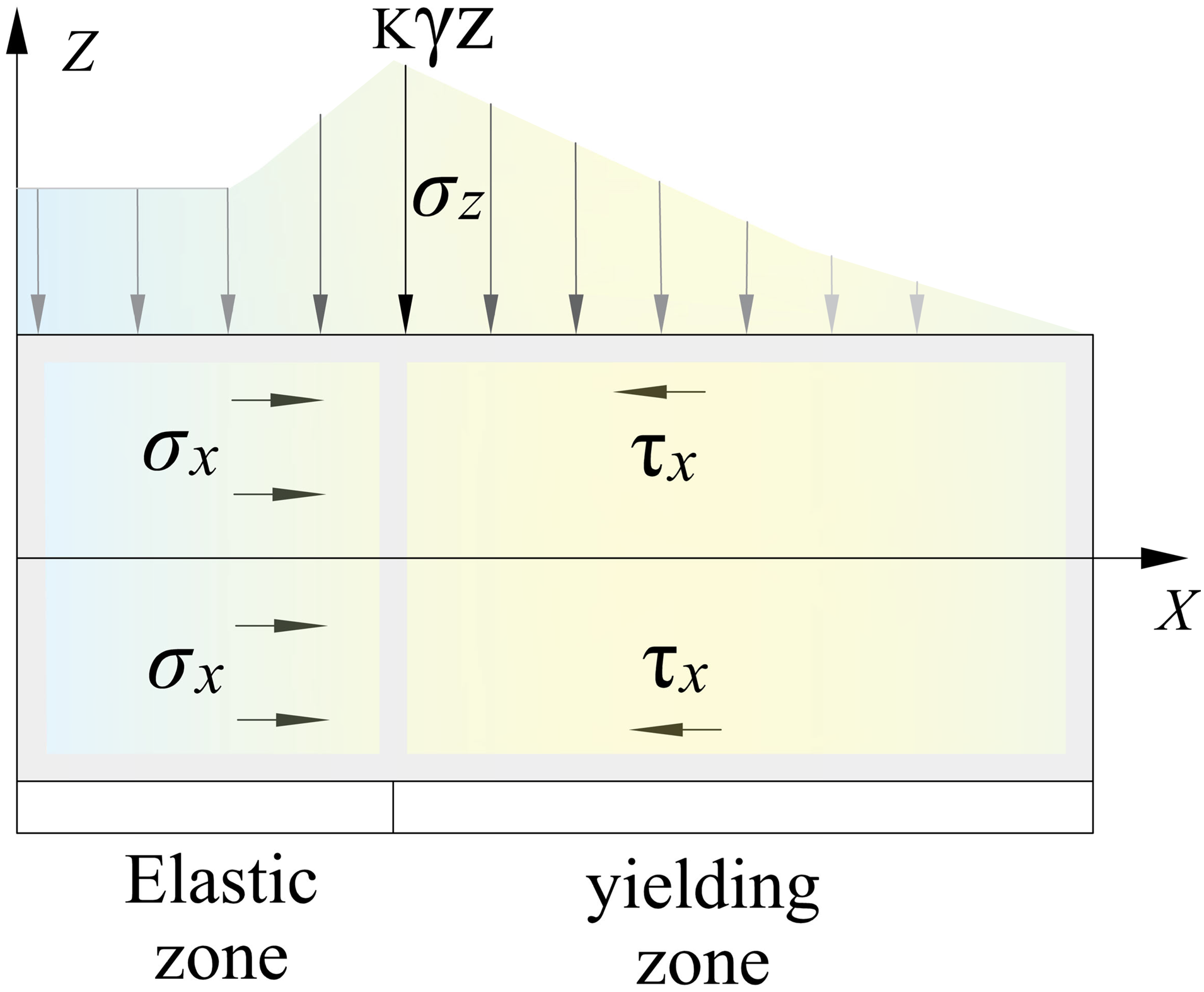
Stress model of strip pillar.

Where K is the stress concentration coefficient of the coal pillar,
Prediction method of surface residual subsidence of strip mining
PIM is based on stochastic medium theory, which treats rock motion as a stochastic process obeying statistical laws, and has been widely used to predict surface motion and deformations in coal mining. As shown in Figure 5, if the coal seam coordinate system is
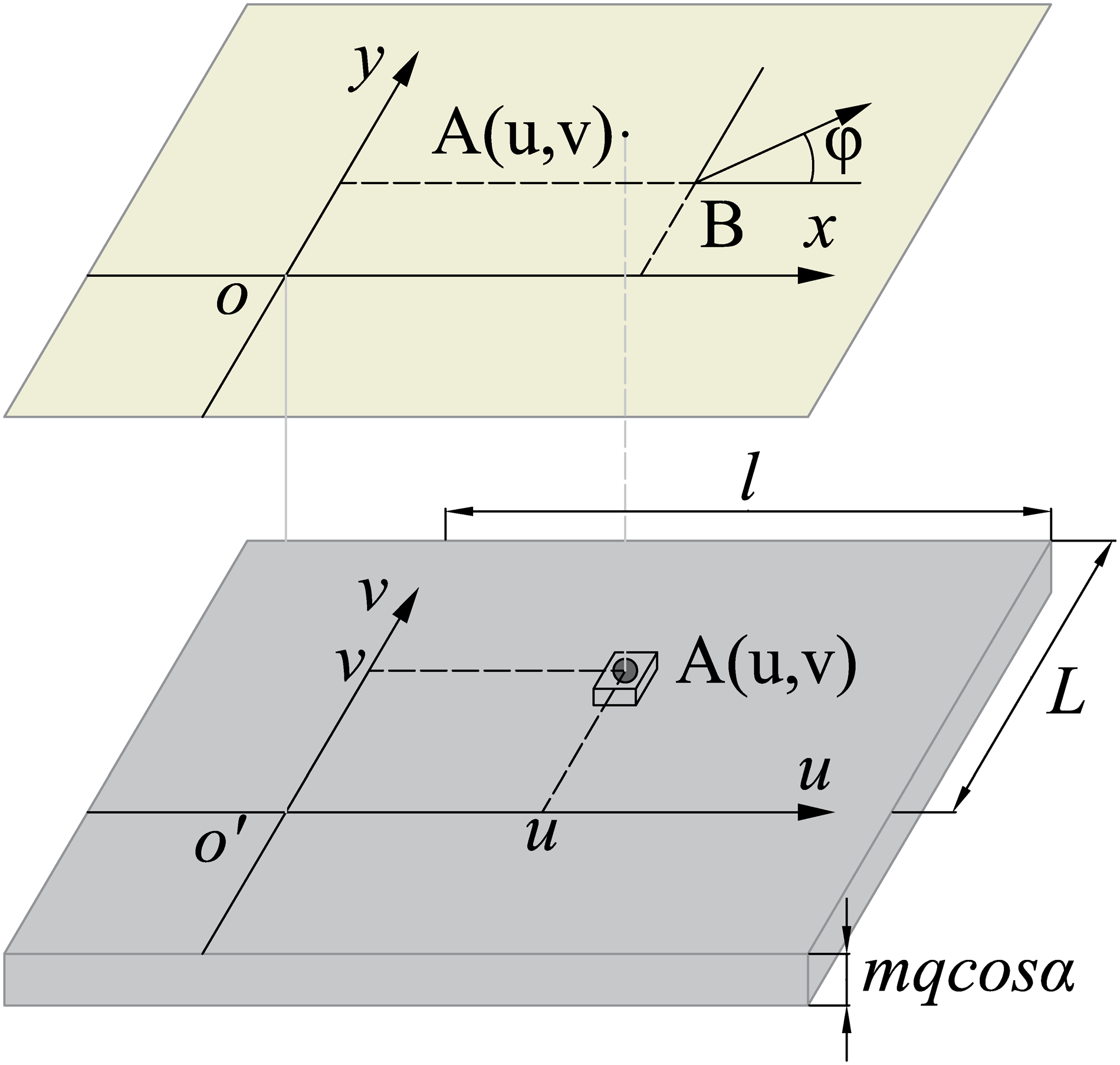
Schematic diagram of three-dimensional PIM.

Where r is the main influence radius.
The coordinate system is established with the intersection of the open-off cut and one side of the coal wall as the origin, with the strike as the x-axis and the dip as the y-axis, and the direction of the intersection of the open-off cut and the coal wall on the other side is positive.
Because the equivalent mining thickness of the under-compacted area is quite different from the equivalent mining thickness of coal pillar stripping and yielding and residual voids, when the under-compacted area is compacted, the coal pillar yield and stripping area and residual voids have not been fully compacted. In order to simplify the calculation, this paper divides the method for predicting the surface residual subsidence of strip mining into two stages. The first stage is the synchrotron subsidence phase in the under-compact area, the stripping and yielding area of the coal pillar, and the residual voids. It is considered that the mining height at this stage is the final compression amount of the fractured rock mass in the goaf. The second stage is the synchrotron subsidence phase of the coal pillar stripping and yielding region and the residual void. At this time, the under-compacted area has been compacted, and the coal pillar stripping and yielding area and the residual voids have not been compacted, which induces continuous subsidence of the surface. The mining height at this stage is Synchronous subsidence of the under-compacted area, the coal pillar stripping and yielding area and the residual voids
Under the effect of overlying strata stress and other factors, some fragmented rock mass squeezed into the residual voids. Considering engineering safety and simplifying the calculation, the variation of the residual voids due to the squeezing of fragmentary rock mass into the residual void is not taken into account. After the coal pillar yielding, the plastic zone will lose its bearing capacity. Considering the most unfavorable conditions, the width of the coal pillar on both sides of the goaf should be considered as the increase in the width of the goaf.
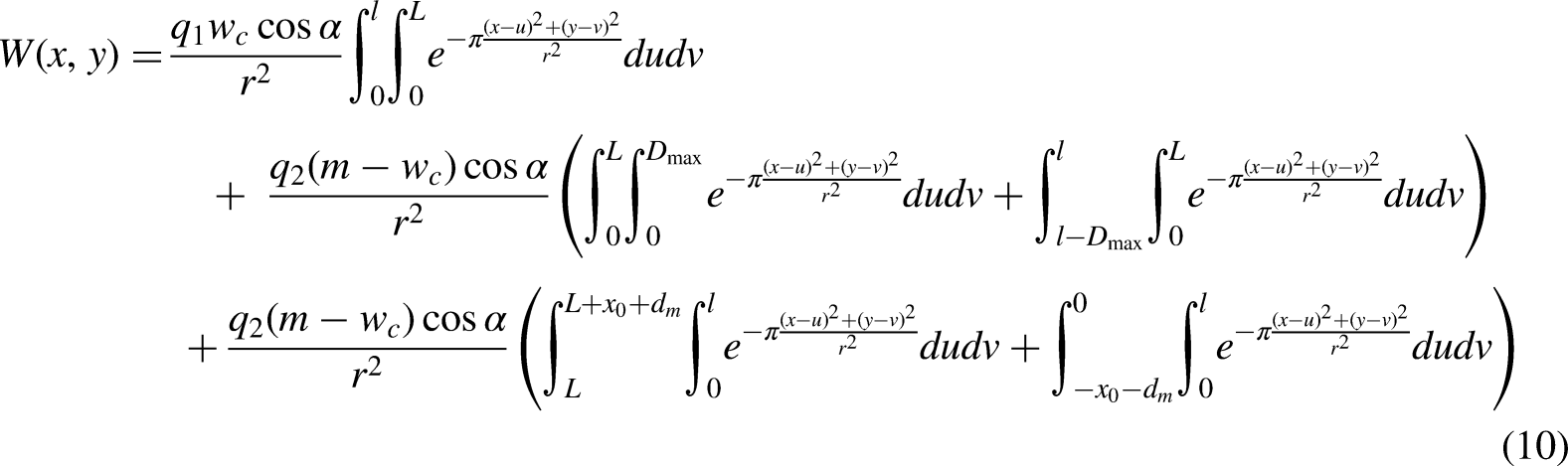
Based on the PIM, the predicted model for the subsidence of surface residuals due to the simultaneous settling of under-compacted area, coal pillar stripping and yielding areas, and residual voids is as follows (Deng et al., 2014).

Where
Synchronous subsidence of the coal pillar stripping and yielding area and the residual voids
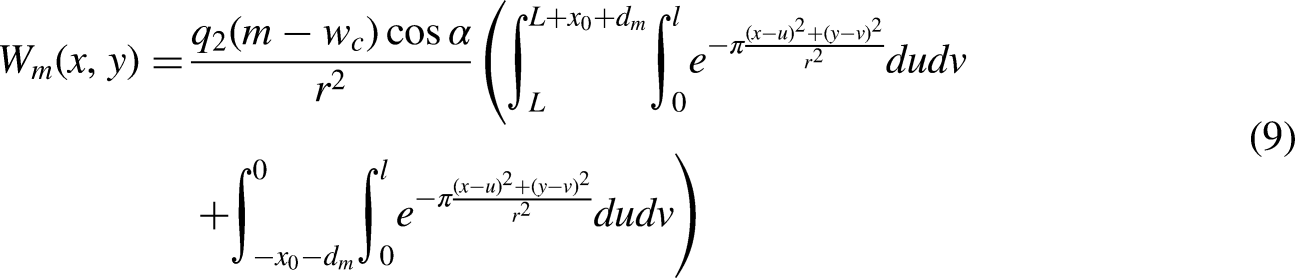
According to the calculation formula for the maximum overhang length of the roof strata, the estimated model for surface residual subsidence caused by residual voids at this stage is:

According to the calculation formula of the coal pillar yielding and stripping, the prediction model for surface residual subsidence caused by coal pillar yielding and stripping at this stage is:
Case study
Overview of the study area
A mining area is located in Shandong Province, where the terrain is flat and the transportation is convenient. The strata in the area primarily comprise the Ordovician, Middle Carboniferous Benxi Formation, Upper Carboniferous Taiyuan Formation, Lower Permian Shanxi Formation, Lower Shihezi Formation, Upper Permian Upper Shihezi Formation, and Quaternary. The Quaternary is the thickest, ranging from 266.50 to 280.85 m, with an average thickness of 273.68 m. The average mining thickness of the coal seam is 2.41 m, the average mining depth is 373.929 m, the coal seam dip angle is 2°∼9°, and the working face length is between 50~187 m.
As shown in Figure 6, the proposed viaduct is a north-south and east-west direction hub spanning multiple old strip mines to serve as a north-south transportation corridor in the central city. It is an important link between the central urban area and suburban railway stations, and plays an important role in promoting the integration of old urban areas with new ones.
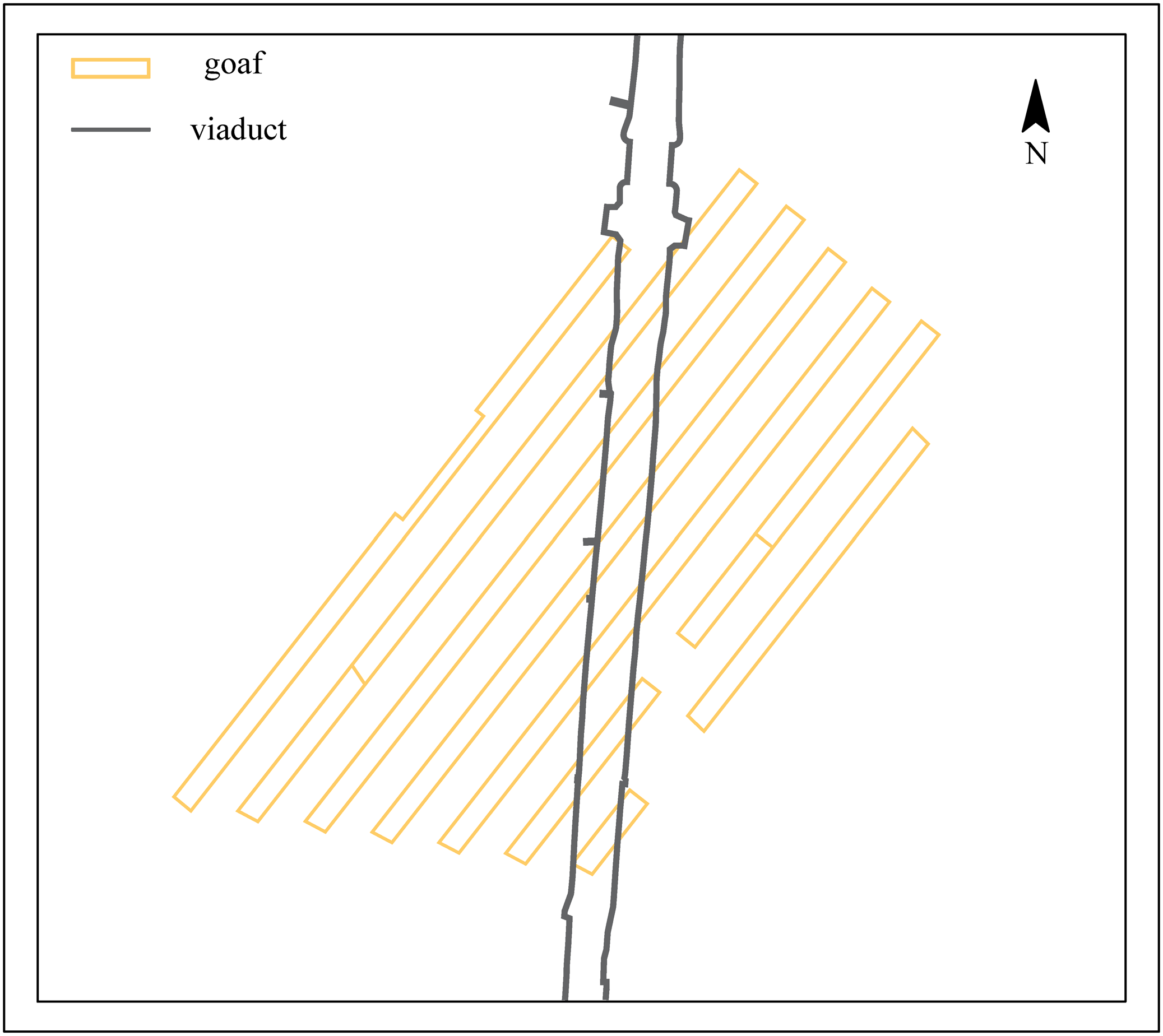
Relative position of the proposed viaduct and the old strip mining goaf.
Prediction method for surface residual subsidence of strip mining
Since the rock mass in the caving zone is relatively weak, the caving zone of the rock mass is taken as 1.28, and the height of the caving zone is 8.66 m from Eq. (1).
The mechanical parameters of the fractured rock mass in the caving zone is shown in Table 1:
Mechanical parameters of fractured rock mass.

According to Eq. (2), the final compression of the fractured rock mass in the goaf is 0.143 m.
Based on the measured and empirical data, the parameters of the method of calculating the maximum yielding width of the coal pillar on both sides of the working face based on the unified strength theory are given in Table 2:
Mechanical parameters of coal pillar.

Substituting into Eq. (5), the yield zone width of the coal pillar is 4.983 m.
The peeled body has an angle of repose of 45° and a bulking coefficient of 1.1. According to Eq. (4), the calculated peeling width of the coal pillar is 1.117 m.
Considering the most unfavorable case, it is considered that the total width of the side of the coal pillar from which the load is lost is 4.983 + 1.117 = 6.100 m.
The mechanical parameters of the cantilever beam are shown in Table 3.
Taking into Eq. (3), the length of the residual voids is 7.296 m.
Cantilever beam mechanical parameters.

This paper adopts the laboratory self-developed software: mining subsidence application system V1.2.2. By studying the essence of the double integral in the mathematical model of PIM, the system uses the Simpson formula and the trapezoidal formula to combine control accuracy to guarantee prediction accuracy.
The prediction parameters of PIM at each stage are shown in Table 4.
Parameters of PIM.
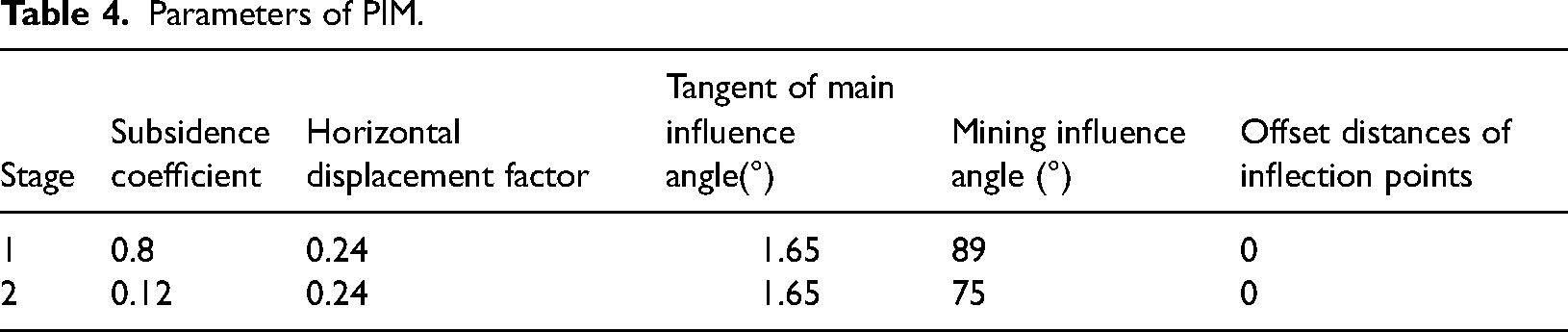
According to the geological mining conditions of the proposed viaduct site, the above parameters are brought into the PIM to obtain residual subsidence contours, residual horizontal movement contours, residual surface inclination contours, etc. The extreme values of surface residual movement and deformation that may be caused by the activation of the goaf are shown in Table 5. Given spatial constraints, solely the contours for surface residual subsidence are presented in Figure 7.
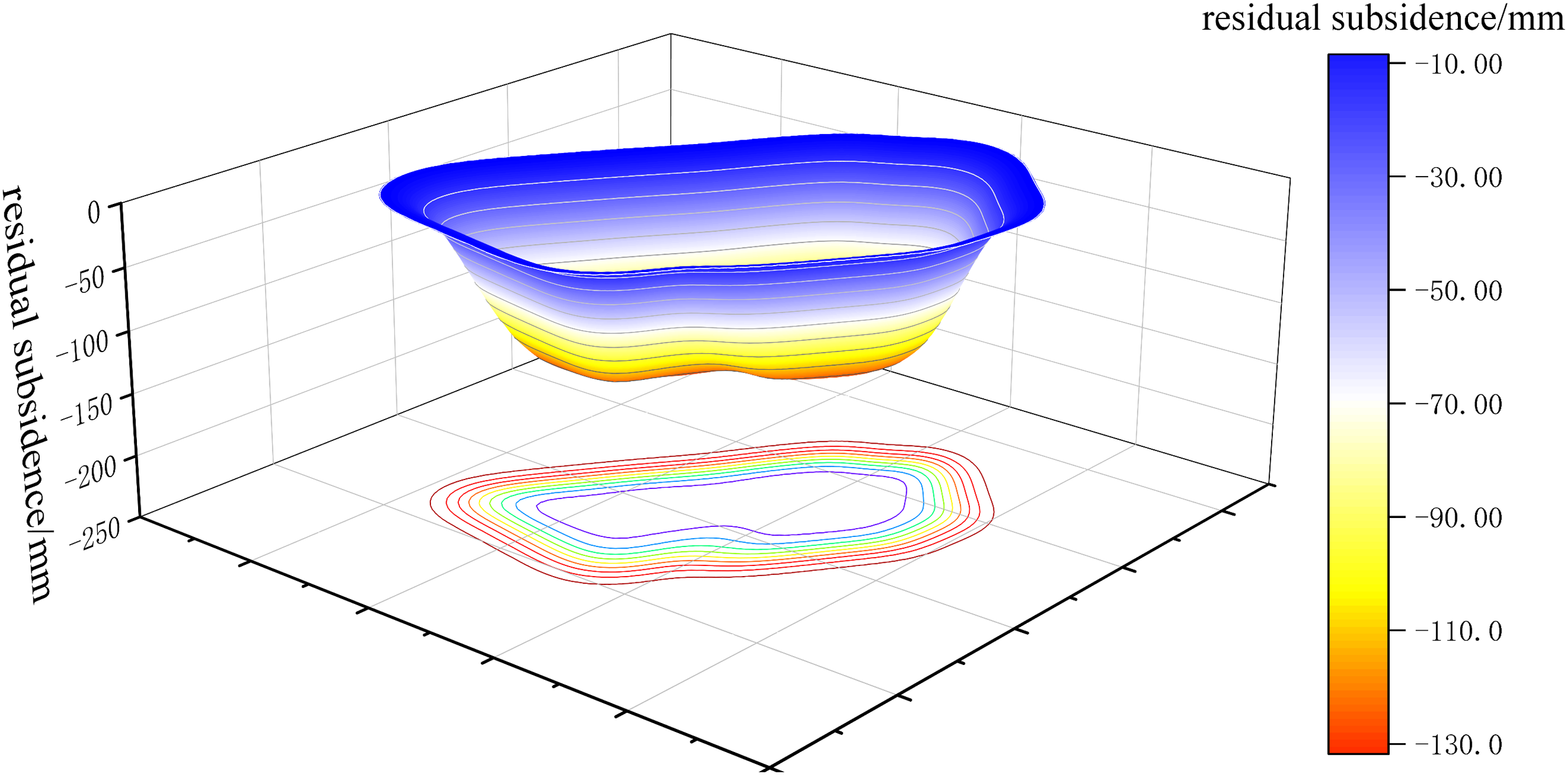
Contour map of surface residual subsidence in strip mining.
Extremum of residual movement and deformation of the proposed viaduct site.

Viaduct stability evaluation
Considering the stripping and yielding of the coal pillar and the most unfavorable conditions, the total width of the lost bearing capacity is the sum of the stripping width and the yielding width. The effective width of the coal pillar may be reduced to 35.4 m, and the equivalent width of the strip goaf will be increased to 64.5 m. The calculated stability coefficient of the coal pillar is 1.37. As shown in Table 6, with reference to the “Code for investigation of geotechnical engineering in the coal mine goaf,” the evaluation of the site stability of the proposed viaduct project is: basically stable.
Site stability grade of strip mining goaf according to coal pillar safety and stability coefficient.

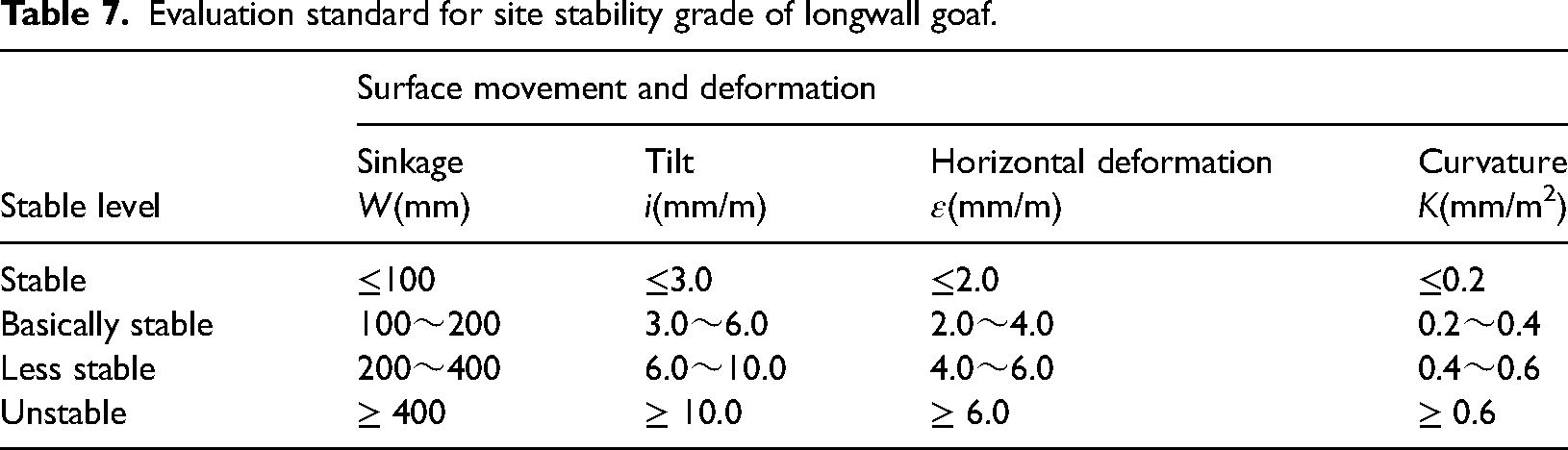
According to “Guidelines for Design and Construction of Highway Engineering in the Mined-out Area,” the stability of the goaf site can be divided into four grades: stable, basically stable, less stable and unstable based on the surface residual subsidence, as shown in the following table.
According to the predictions, the maximum residual subsidence of the proposed viaduct area is 102 mm, the maximum horizontal movement is 28 mm, the maximum lateral deformation is 0.4 mm/m, and the maximum tilt deformation is 0.5 mm/m. According to Table 7, the topography, horizontal deformation and curvature of the area are all within the ‘stable’ range, but the maximum sink gradually increases from the edge of the target to the center, and the stability level of some regions of the viaduct is essentially stable, as shown in Figure 8.
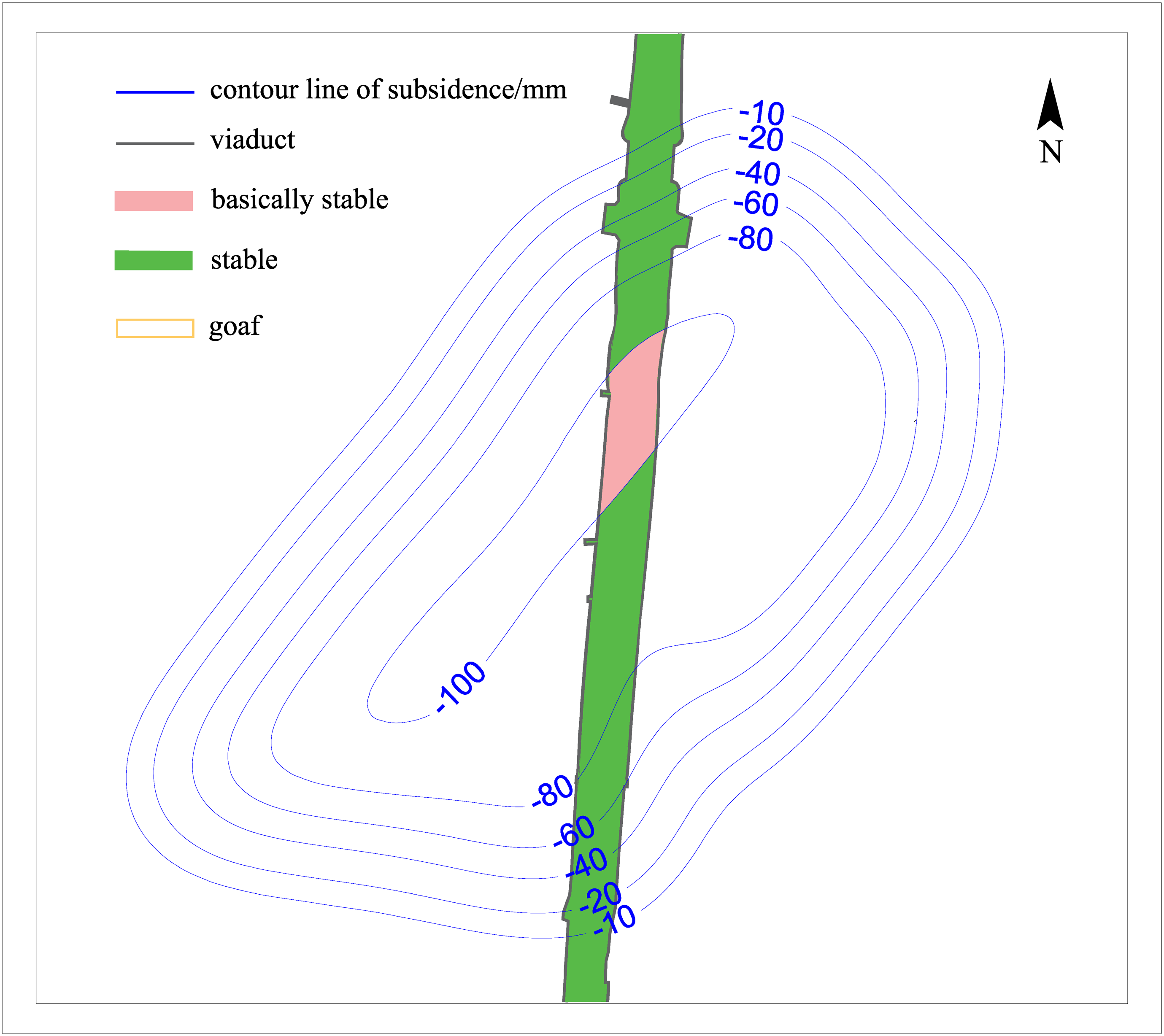
The contour map of the surface residual subsidence and the schematic diagram of the basic stable area of the viaduct.
Evaluation standard for site stability grade of longwall goaf.
According to the “Guidelines for Design and Construction of Highway Engineering in the Mined-out Area,” the evaluation criteria for the stability of the foundations of highway engineering around the goaf should be based on the allowable deformation of the highway engineering foundation as follows (Table 8):
Allowable deformation of goaf foundation.
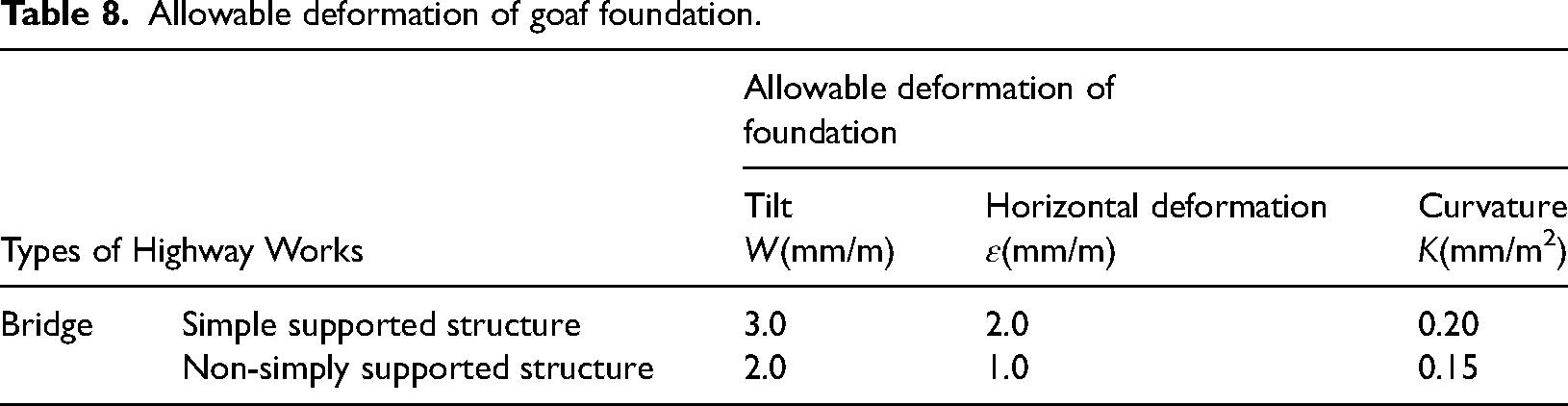
According to the calculation results of the surface residual subsidence of the proposed project site, combined with the comprehensive evaluation of the stability of the goaf site, the allowable deformation of the highway engineering foundation and the degree of mutual influence between the goaf and the proposed project. If a simply supported or non-simply supported highway bridge with a simple structure is built on the site, it can be determined to have a substantially stable foundation and be substantially suitable for construction.
Conclusions
Strip mining is commonly employed in coal resource-based suburban areas to safeguard overlying structures and buildings. As the city continues to grow and expand, land for construction is becoming more and more tight, and the use of the old strip mines in the suburbs to alleviate the shortage of land resources in the city's development and transformation is inevitable. However, the old mined-out areas of the strip mining are easily “activated,” resulting in surface residual subsidence, causing problems such as poor foundations, and threatening the safety and stability of the buildings (structures) above. In this paper, we analyze the mechanism of surface residual subsidence in strip mining in order to accurately predict the surface residual subsidence and make reasonable use of the old mined areas. The results show that the main reasons for the surface residual subsidence in the old strip mining goaf are: under the long-term action of external factors such as groundwater and overlying rock stress, the caving rock mass in the old strip mining goaf is gradually compacted, the residual voids collapses and coal pillars strip and yield. Based on this, a residual subsidence prediction method was proposed that takes into account compaction of fractured rock masses, collapse of residual voids, and yielding and stripping of coal pillar. This provides an important reference for constructors of old strip mining goafs, as well as a crucial decision-making basis for governments involved in overall urban planning. This method was used to evaluate the site construction suitability of a goaf site for the construction of a viaduct. In contrast to the related specification requirements, the goaf area is suitable for the construction of simply supported or non-simply supported highway bridges.
Footnotes
Acknowledgements
This work was funded by the Joint Funds of the National Natural Science Foundation of China (U21A20109), National Natural Science Foundation of China (42174048), Natural Science Foundation of Jiangsu Province (BK20220158), Scientific Research Project of Jiangsu Bureau of Geological and Mineral Exploration (2021KY08), and the CNPC Innovation Found (2023DQ02-0108).
Declaration of conflicting interests
The authors declared no potential conflicts of interest with respect to the research, authorship, and/or publication of this article.
Funding
The authors disclosed receipt of the following financial support for the research, authorship, and/or publication of this article: This work was funded by the Joint Funds of the National Natural Science Foundation of China (U21A20109), National Natural Science Foundation of China (42174048), Natural Science Foundation of Jiangsu Province (BK20220158), Scientific Research Project of Jiangsu Bureau of Geological and Mineral Exploration (2021KY08), and the CNPC Innovation Found (2023DQ02-0108).
Ethical approval
This article does not involve animal experiments or human experiments, thus no ethical approval are required.
