




Abstract
This study performs the simulation and energy, exergy, and economic analyses of an organic Rankine cycle (ORC) integrated with a natural gas combined cycle. Working fluids studied in this research are ammonia, isobutane, R-11, R-113, and R-141b. The power plant and ORC are simulated using Aspen HYSYS software. The results show that using the ORC leads to an improvement in the thermo-economic indexes of the combined cycle power plant. The sensitivity analysis also demonstrated that using ammonia and isobutane as working fluids results in the highest exergy destruction and the lowest exergy and energy efficiencies; therefore, they are unsuitable. On the other hand, a comparison of thermo-economic results illustrated that among the studied working fluids, R-113 is the desirable selection. According to the simulation, it is deduced that employing R-113 working fluid leads to the net power generation of the plant increasing by 2.48%, the cost of electricity decreasing by 10.75%, and the total energy efficiency of the power plant increasing by 6.02%.
Introduction
Natural gas processing leading to electricity production by relevant power plants plays a principal role in the energy sector worldwide (Gas, 2006). The electricity produced by natural gas accounts for about 25% of global electricity generation; outstanding countries contain Russia, the United States, Iran, and Saudi Arabia (Johnson and Keith, 2004). However, environmental challenges and the energy economics of such plants impose some defects. Although the air pollution related to natural gas-fueled power plants is lower than in other fossil fuel-driven frameworks, their further contribution to the energy market causes climate changes and staggering extraction costs to export (Mao et al., 2005). In this regard, the maximum use of natural gas energy is suggested through innovative arrangements resulting in higher electricity production capacities and efficiencies (Brito et al., 2017). Also, the modification can be applied to the system’s operation mode (Hoseinzadeh and Stephan Heyns, 2022) and considering the environmental impact enhances its advantages (Hoseinzadeh and Astiaso Garcia, 2022).
Some studies working on natural gas-based power plants are reviewed in the following. Gazzani et al. (2013) simulated a natural gas-fueled power plant and tried to mitigate the carbon dioxide (CO2) footprint using a CO2 capture unit. They used different sorbents and evaluated the environmental capability resulting in an 86% reduction in CO2 emission. Agrawal et al. (2014) developed a case study of a natural gas-based power plant with a capacity of 350 MW in India to decrease its CO2 footprint. They added a steam power generation cycle into the base framework and observed reduced environmental impacts. In a study by He and Ricardez-Sandoval (2016), they dynamically simulated a natural gas combined cycle (NGCC) producing 453 MW of electricity. They employed a post-combustion CO2 capture framework to reduce the CO2 footprint. Their effort led to a 90% reduction in the CO2 released. The thermodynamic, economic, and environmental aspects of encompassing an NGCC with a post-combustion CO2 capture unit were investigated by Hu et al. (2017). The simulation demonstrated that the unit cost of the electricity and CO2 avoided experienced an 8.7% and 27.5% decline compared to the sole NGCC. Jiang et al. (2019) utilized activated carbon adsorption to capture the CO2 released in a natural gas-driven power plant. They parametrically examined their idea resulting in better thermodynamic and environmental performances. Qureshi et al. (2021) surveyed the part-load operation of an NGCC in combination with a CO2 capture unit for adoptive wasted gas recirculation in different arrangements (parallel, series, and hybrid). They parametrically analyzed these arrangements and compared the environmental and thermodynamic facilities making promising outcomes. Considering Iran’s natural gas-based Shahrood power plant, Haghghi et al. (2020) developed a multigeneration system to increase thermodynamic performance and improve environmental impacts. To this end, they tried to produce cooling, hot steam, and hydrogen through the heat wasted, resulting in a thermal efficiency of 68.7%. Reddy et al. (2012) employed a Fresnel-based solar field to assist an NGCC and evaluated the impact of the solar field's features on the energetic and exergetic performances. Their results showed that this technique augmented the power production capacity by 10% with an exergetic efficiency of 50%. Rashid et al. (2019) also followed the use of solar energy added to an NGCC to enhance the scheme's performance. They used parabolic trough solar collectors and found that the annual electrical efficiency could enhance from 15.2% to 26.1% compared to the mode without the effect of solar energy. Fichera et al. (2022) utilized a molten carbonate fuel cell (MCFC) to capture CO2 released from an NGCC. Their idea led to reducing the CO2 emission from 416.5 to 66.67 kg/MWh with an exergetic efficiency of 53.3%.
The organic Rankine cycle (ORC) is a flexible and notable technology in low- and medium-operating temperatures, capable of launching with waste heat (Cao et al., 2020). Using organic working fluids, the ORC is a promising suggestion for joining combined cycles to improve the quality of the outputs and diminish the irreversibility of the whole scheme (El Haj Assad et al., 2021; Haghghi et al., 2020). Also, the ORC has the feasibility to couple with various systems (Ahmadi et al., 2021; Aryanfar et al., 2022; Assad et al., 2021). Furthermore, it can be utilized besides the other subsystems (Ahmadi et al., 2020; Ehyaei et al., 2020). The wasted heat recovery provides the feasibility of producing various products (Mahmoudan et al., 2021). Some related studies are reviewed in the following. Hossainpour (2019) proposed the use of waste heat recovery for a coal-fueled oxy-fuel plant with a production capacity of 300 MW via an ORC. The results of the environmental, economic, and thermodynamic analyses designated a feasible integration. Hoseinzadeh and Stephan Heyns (2021) aimed to analyze a power plant with a capacity of 400 MW from energy, exergy, economic, and environmental. Li et al. (2019) evaluated utilizing an ORC for waste heat recovery in an extractive distillation system with and without an economizer. According to the study, the total thermal efficiency was increased by 3.4%, and the total annual cost was reduced by 30.3% using the ORC and economizer compared to the base system. The economic capability of integrating a liquid energy storage unit with an ORC was assessed by Tafone et al. (2020). In their paper, the levelized cost of storage descended by around 10% using the ORC. Li et al. (2021) established an ORC for waste heat recovery in a combined cooling, heating, and power generation framework driven by biomass fuel. They examined the effect of climate conditions in different areas in China, resulting in better thermodynamic and environmental performances. The feasibility of integrating an ORC to recover the heat wasted by a high-temperature fuel cell and other integrated cycles was evaluated and thermodynamically analyzed by Haghghi et al. (2019). They also provided environmental and economic analyses in another study; the results exhibited a sensible enhancement of the system's performance. Cao et al. (2022) proposed and optimized the waste heat recovery process for a marine diesel engine leading to an 11.3% increase in the thermal efficiency of the engine. Also, the waste heat recovery brought an optimum exergetic efficiency of 37.4% with a levelized cost of electricity of 0.1413$/kWh.
This study provides an opportunity to examine the feasibility of integrating an ORC with an NGCC regarding the waste-to-energy concept. Toward this, the base NGCC and NGCC + ORC cycles are simulated in Aspen HYSYS v10; the energy, exergy, environmental, and cost analyses are also implanted. Moreover, different organic working fluids are considered to use in the ORC to have a comparative study and select the efficient working fluid. A sensitivity analysis is also carried out to show the effect of the temperature of the heat source on the main variables, including the required flow rate of the working fluid, turbine power generation capacity, exergy destruction rate of the ORC cycle, and exergy efficiency of the ORC.
Process description
Description of the base case process
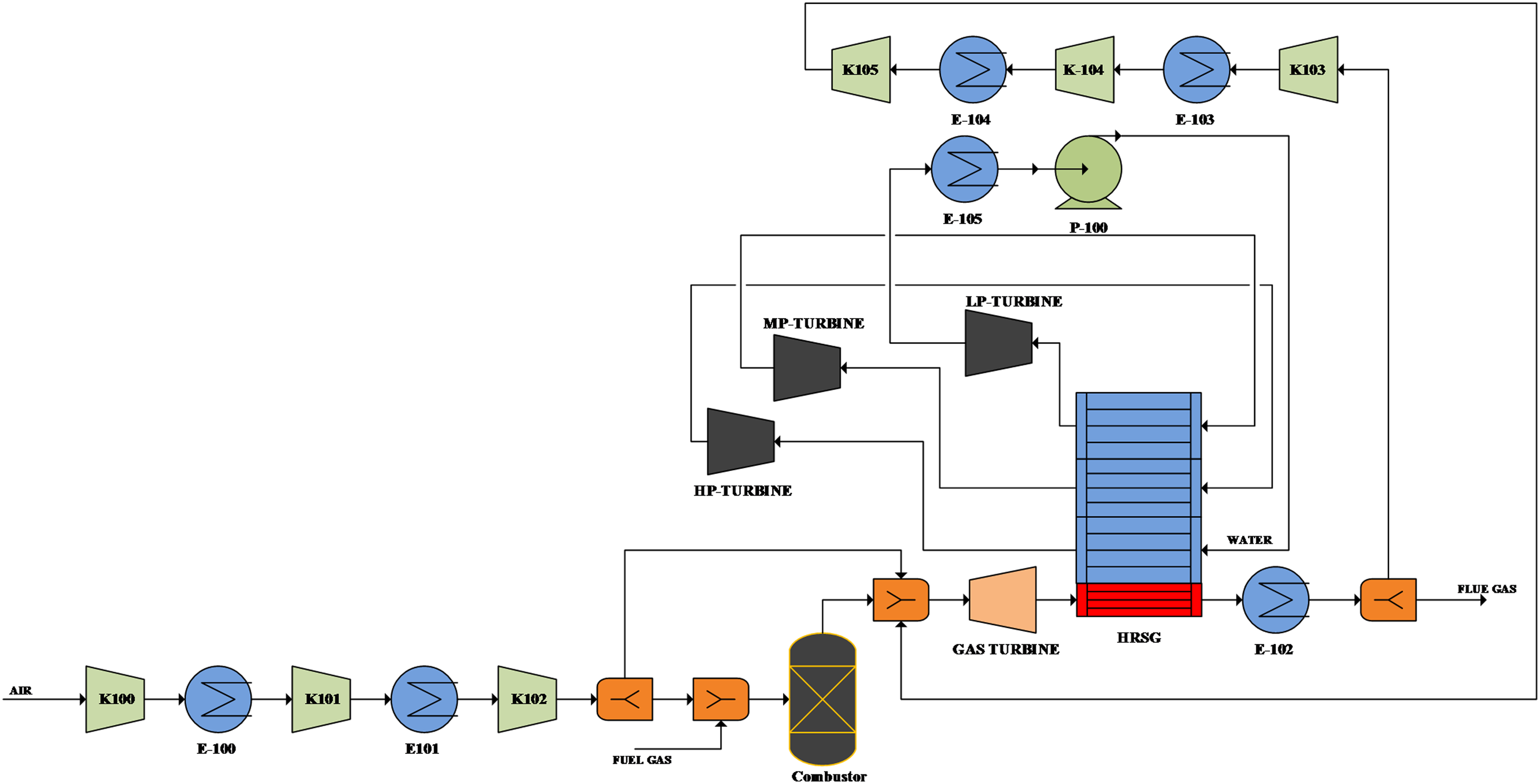
Figure 1 depicts the schematic of the combined cycle power plant considering all the equipment. This figure includes compressors (K), combustor, heat recovery steam generator (HRSG), pump (P), and heat exchangers (E) (Al Hashmi et al., 2018). According to the process flow diagram, the fresh air is first compressed by compressors 100 to 102, and for inter-cooling the air between compressors, coolers 100 and 101 are employed.
The schematic of the process flow diagram of the studied natural gas combined cycle.
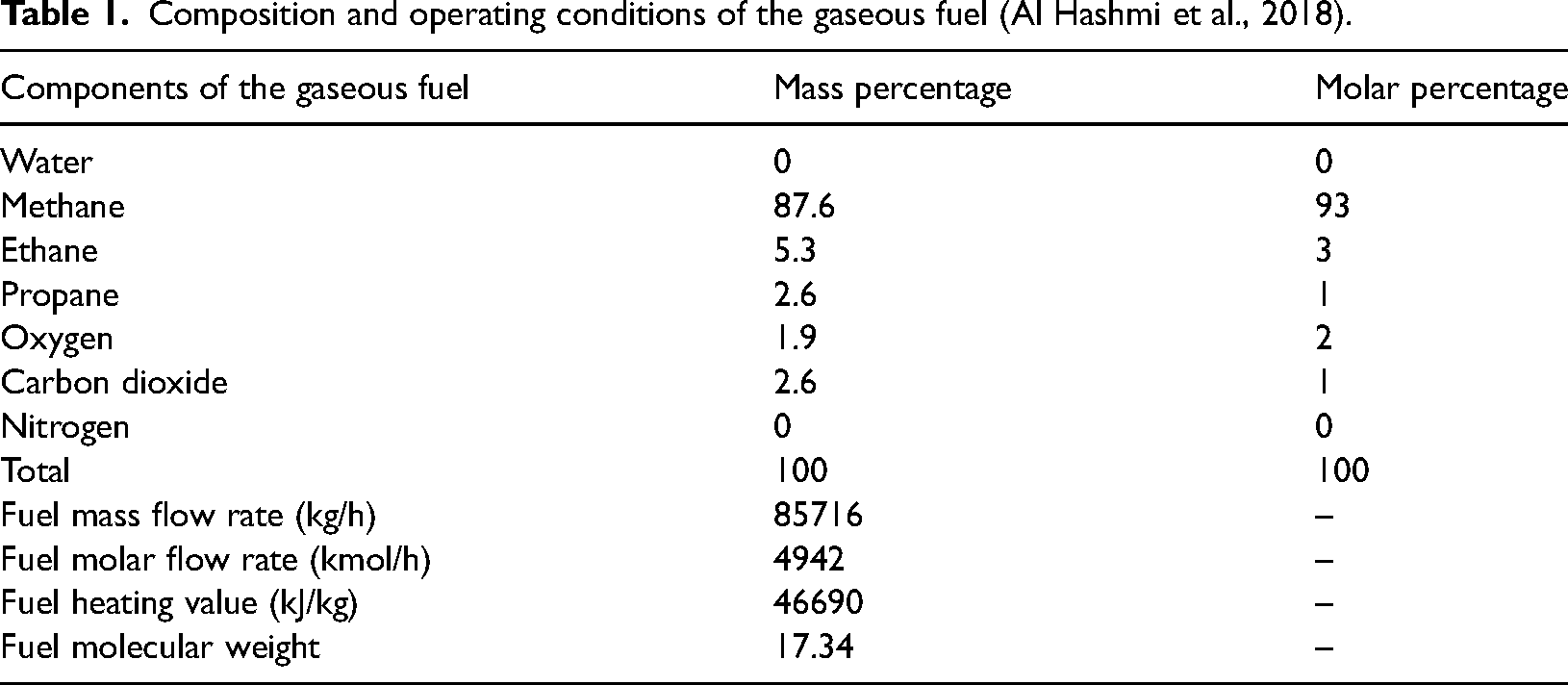
Air that leaves compressor 102 enters a splitter where a portion of air does not mix with the fuel. This portion is sent into the gas turbine along with combustion gases. The gaseous fuel (its composition and conditions are given in Table 1) mixes with the combustion air (oxidizer) and injects into the combustor. Hot combustion gases mix with the separated portion of the air stream and flow into the turbine, where power is generated due to gas expansion, and gas temperature also decreases (Al Hashmi et al., 2018).
Composition and operating conditions of the gaseous fuel (Al Hashmi et al., 2018).
The temperature of the combustion gas is still high; consequently, it should be re-utilized for power generation. For this purpose, the HRSG system is employed. The heat source, i.e. hot combustion gas, enters the HRSG, where on its other side water stream flows throughout the heat exchangers for low-pressure, medium-pressure, and high-pressure steam generation. The stream of hot gases leaves the HRSG at a lower temperature. Cooler 102 cools down the flue gas, which is done since a portion of the flue gas is being recycled to the gas turbine to reduce emissions and increase power plant efficiency. This technique is called flue gas recirculation (FGR).
A portion of the flue gas enters a network of compressors (K-103 to K-105) to be compressed to the pressure at the gas turbine inlet and then expands in the gas turbine along with air and combustion gases. The water stream is pressurized by pump 100 and flows through the HRSG system to steam being produced and injected into the steam turbines for power generation. Three HP, MP, and LP turbines are employed for power generation. After producing the steam flow, it is first injected into the high-pressure turbine.
The fluid leaving the high-pressure turbine at a lower temperature re-enters the HRSG heat exchanger and then is fed to the medium-pressure turbine in the vapor phase at medium pressure. After expansion, the steam again enters the heat exchanger HRSG in a two-phase state and is then injected into the low-pressure turbine in the vapor phase. Therefore, electricity is generated in three stages. In heat exchanger 105, the outlet stream of the low-pressure steam turbine condenses. Then since its pressure drops due to thermodynamic changes, it is pressurized in pump 100, and the cycle is closed (Al Hashmi et al., 2018).
Structure of the proposed process
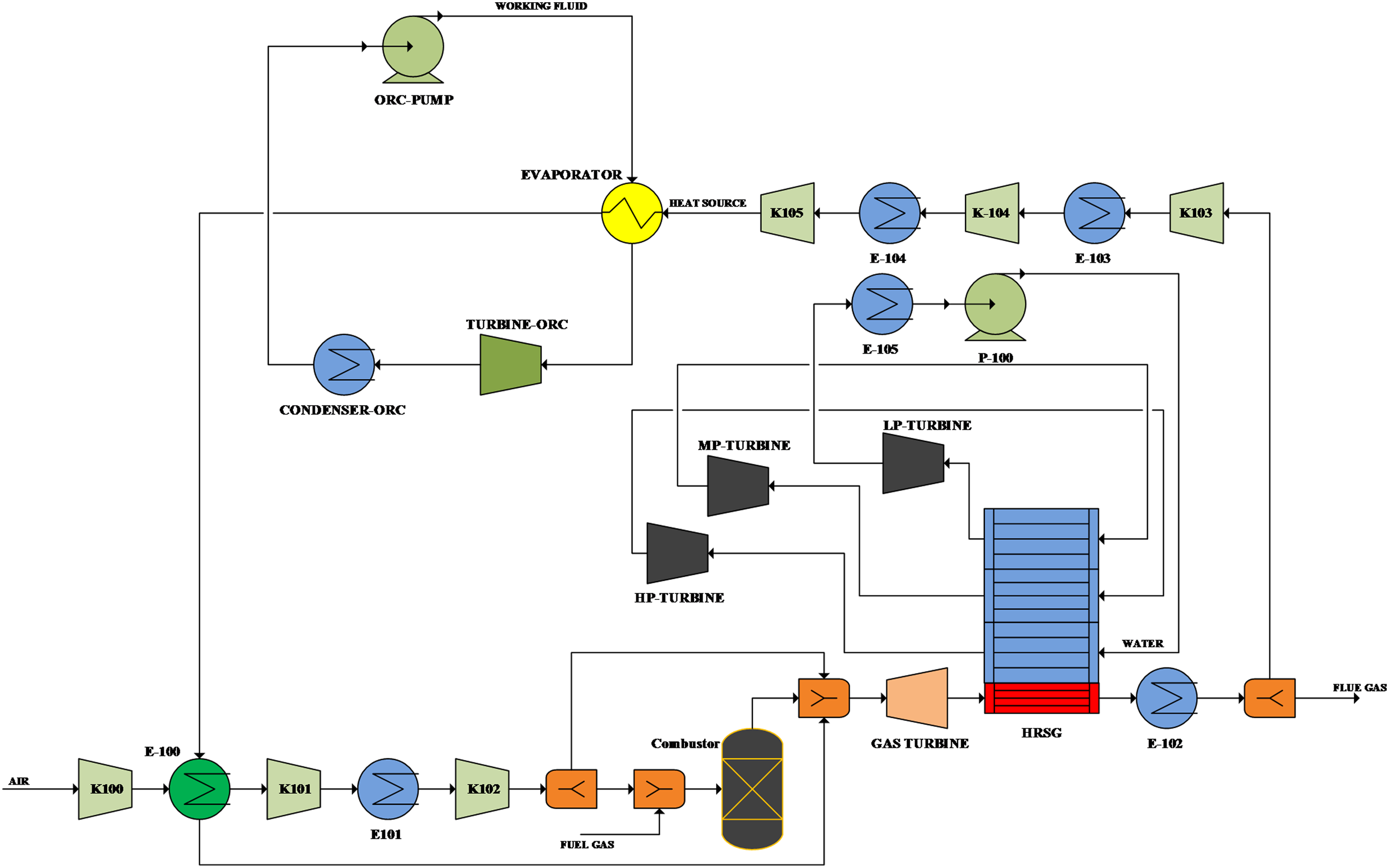
The ORC requires a heat source for electricity generation. In the present study, the heat source point, which should be supplied from the natural gas combined cycle, is at the outlet of compressor 105, leading to a suitable temperature to feed the ORC.
As shown in Figure 2, this stream enters the evaporator of the ORC and, after heating the working fluid, leaves the downstream cycle at a lower temperature. Its temperature increases in heat exchanger 100 again. This heating is conducted because the temperature of the outlet stream of compressor 105 should reduce and increase before its injection into the gas turbine. Otherwise, the temperature after the turbine is lower by a few degrees, which its effect on the HRSG system exhibits itself as a reduction in electricity generation and plant efficiency, even by using ORC. It is not desirable and contrasts with the objectives of the present study.
Schematic of the process flow diagram of the combined cycle coupled with ORC.
As a result, heat exchanger 100 works with a cooling fluid in the base case; in this case, it works in an integrated model, and the heat transfer is of process-process type. Therefore, using the low temperature of the heat source that leaves the ORC, the temperature of the compressed air decreases and the temperature of the stream injected into the gas turbine increases sufficiently, and the overall performance of the power generation is not disturbed.
Hence, the working fluid coming from compressor 105 in the new case and with the addition of ORC to NGCC, experiences the following thermodynamic stages:
It is cooled down in the ORC evaporator. In heat exchanger 100, this stream experiences an increase in temperature again, and it is sent into the gas turbine.
Choosing the working fluid
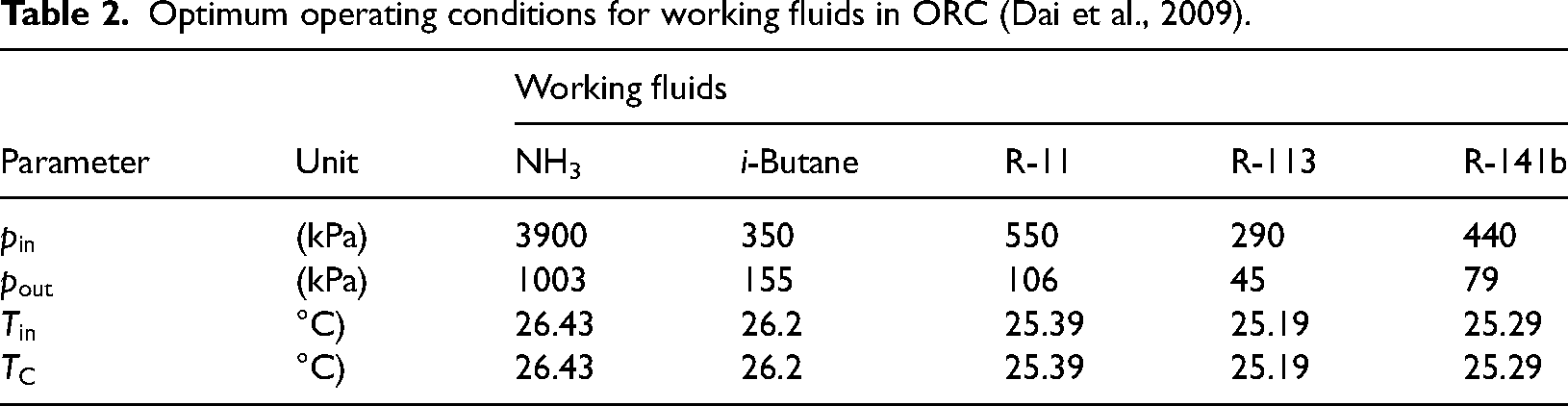
According to the study by Dai et al. (2009), five working fluids are considered, each of which can be utilized for electricity generation in the ORC. These researchers also report the operating conditions of the working fluids. These conditions are defined in the simulation. Working fluids are as follows:
Ammonia Isobutane R-11 refrigerant R-113 refrigerant R-141b refrigerant
Liu et al. (2004) analyzed the performance of an ORC cycle affected by the working fluids. They assessed the effect of different working fluids on thermal efficiency and total heat-recovery efficiency. Hung (2001) studied the heat recovery performance of an ORC with different working fluids such as benzene, toluene, p-xylene, R-113, and R-123. They stated that p-xylene leads to the highest efficiency. While benzene and p-xylene have the lowest irreversibility in high-temperature heat recovery, R-113 and R-123 show the best performance for low-temperature heat recovery. Hung et al. (1997) investigated the influence of different working fluids, such as benzene, ammonia, R-11, R-12, R-134a, and R-113, on the energy and exergy efficiencies of the ORC cycle.
In Table 2, the operating conditions for the mentioned working fluids are given. Here,
Optimum operating conditions for working fluids in ORC (Dai et al., 2009).
Simulation and methodology
Software introduction
Aspen HYSYS v10 is one of the most powerful engineering simulation software employed in the chemical engineering field. Almost all the refineries, petrochemical plants, and other relative industries worldwide use this software in their projects. Aspen HYSYS is a product of Aspen Tech Company, one of the strongest simulation tools and software in engineering. This is because of its strong thermodynamic basis. Flexible design, high accuracy, and strength due to the available fluid package for different materials cause Aspen HYSYS to provide realistic and reliable simulations. Using Aspen HYSYS, in different processes in the oil, gas, and petrochemical industries, like refinery processes, can be modelled. Properties of different chemical and petrochemical materials are available in its libraries, which can assist the user. In addition, in this software, one can design all the equipment required in the process individually and separately and then perform the simulation.
Simulation and unit operation
As mentioned, to develop the simulation flowsheet for NGCC and NGCC + ORC processes, Aspen HYSYS v10 is employed. It is advanced software from the thermodynamic aspect and provides all the process design requirements for a chemical engineer. This software has a special financial tool in which the most important financial parameters are calculated, and the results are available in Aspen Process Economic Analyzer (APEA) part. Moreover, it includes modules in which one could perform a well and professional analysis of heat exchangers, distillation columns, or air coolers.
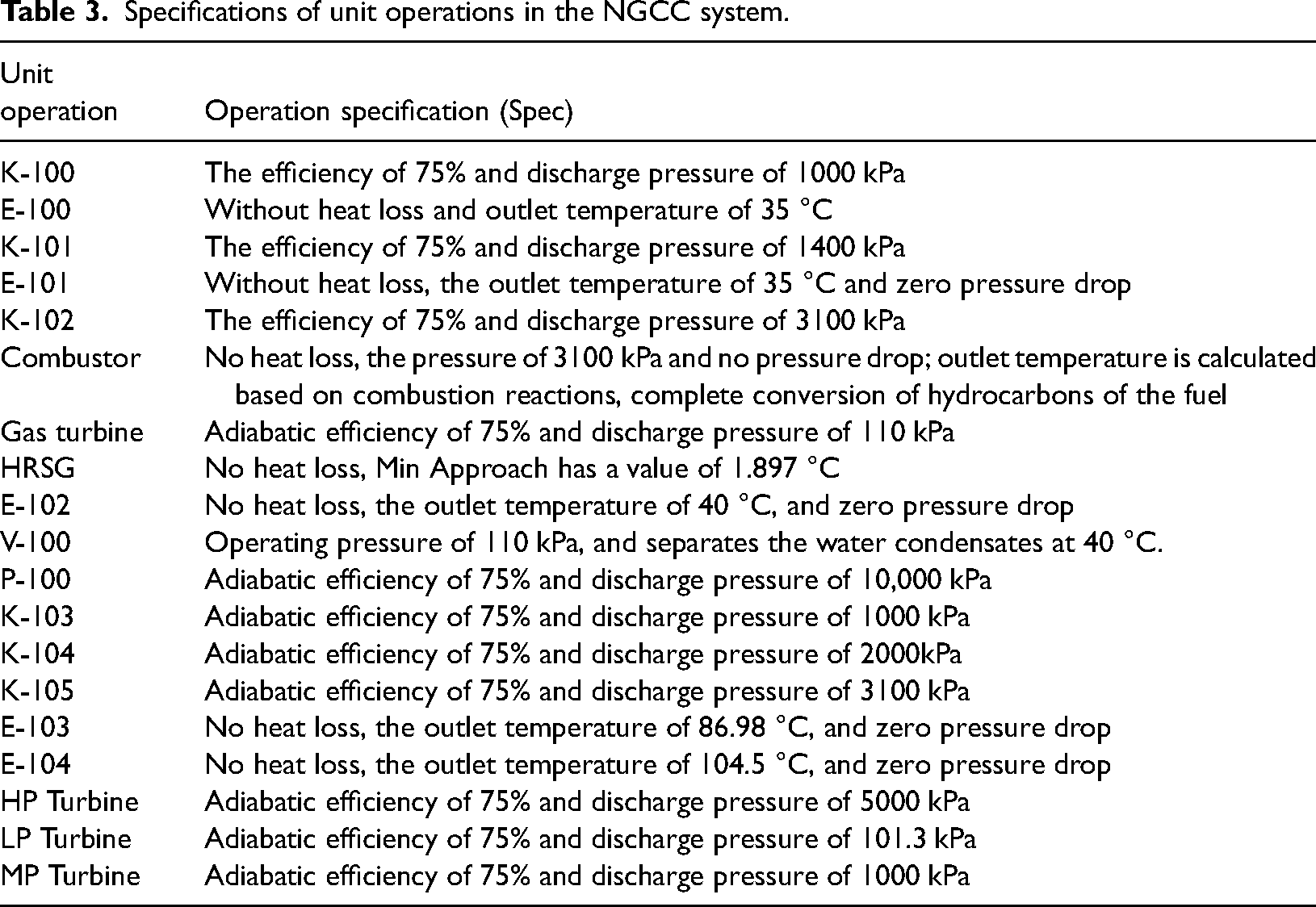
In the process shown in Figure 1, there is a series of unit operations, and for simulation, it is required to enter their operating information called spec. This action is called unit operations convergence. This information is presented in Table 3, and they are used for the convergence of the equipment and the whole NGCC system.
Specifications of unit operations in the NGCC system.
Stoichiometric combustion air
Stoichiometric combustion is a theoretical point defined to achieve the optimum oxygen and gaseous fuel mixture for obtaining the highest possible heat in the combustor and maximum combustion efficiency. The natural gas and compressed air mixture burns in the combustor, and its hydrocarbon content converts to CO2. Reactions that are used to estimate the theoretically required air are given in Equations (1)–(3) (Al Hashmi et al., 2018):


The air-to-fuel ratio (AFR) is calculated based on the mass balance for carbon, oxygen, hydrogen, and nitrogen atoms in the complete combustion equations 1 to 3. Solving these four-atom mass balances results in a value of 9.9 for the molar stoichiometric AFR and 16.91 for its mass counterpart. Hence, 384.53 kg/s of stoichiometric air is required for gaseous fuel combustion. In addition, to achieve the complete conversion of natural gas during combustion in the gas turbine, 10% of the excess air (EA) should be injected. To calculate the amount of excess air, Equation (4) is suggested (Al Hashmi et al., 2018):

In some cases, the excess air ratio (EAR) is used in the calculation, which is written as Equation (5) (Al Hashmi et al., 2018):
Simulation fluid package
The Peng–Robinson fluid package in Aspen HYSYS is employed in the present simulation. This package is developed and improved with the software team in Aspen. This fluid package is extensively recommended for simulating a wide range of oil, gas, petrochemical, and power plant processes (Amann et al., 2009; Farajollahi and Hossainpour, 2017; Ystad et al., 2013). The formulation of Peng–Robinson equation of state is as Equation (6):
Peng–Robinson fluid package can be used for a wide range of operating conditions. This fluid package is recommended for processes containing aromatic, natural gas dehydration, raw oil treatment, cryogenic separation systems, methanol, ethers, rich-hydrogen processes, carbon dioxide, methane, argon, air separation, and syngas production.
Analyses of the processes
Energy analysis
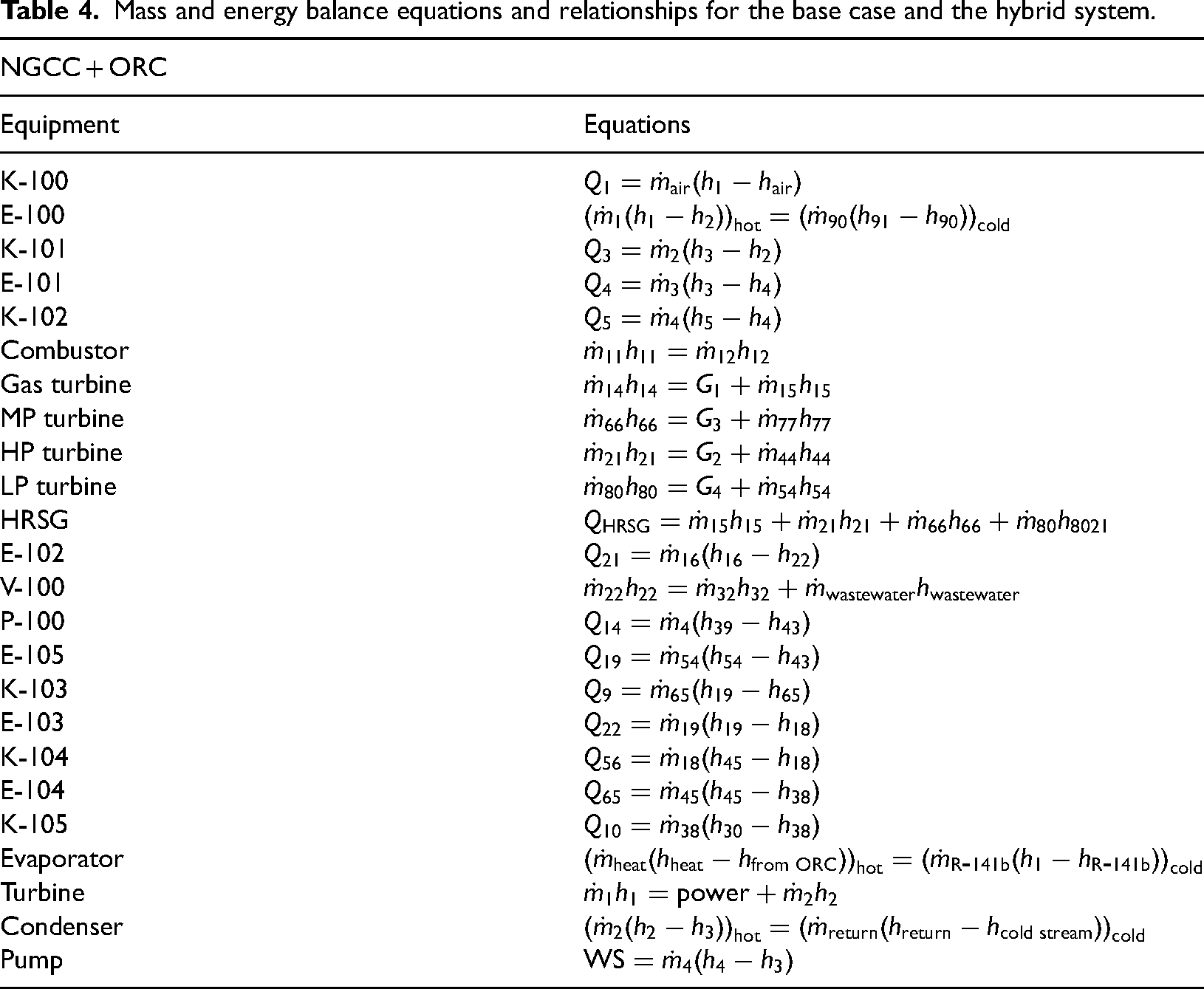
In the present study, comprehensive energy analysis is performed on the NGCC and NGCC + ORC cycles, and the mass and energy balance equations for unit operations are given in Table 4. These equations are written based on the general simultaneous mass and energy balance for a system (Equation (7)) (Dai et al., 2009).
Mass and energy balance equations and relationships for the base case and the hybrid system.
The final goal of the energy analysis is to calculate the energy efficiency (



In addition, 

Exergy analysis
In the present study, the following items are considered for the exergy analysis of the NGCC and NGCC + ORC cycles as the key parameters (Rocha et al., 2021):
At first, the exergy efficiency of equipment is obtained by dividing product exergy by fuel exergy:


Governing exergy equations for the power plant in the base and hybrid cases.
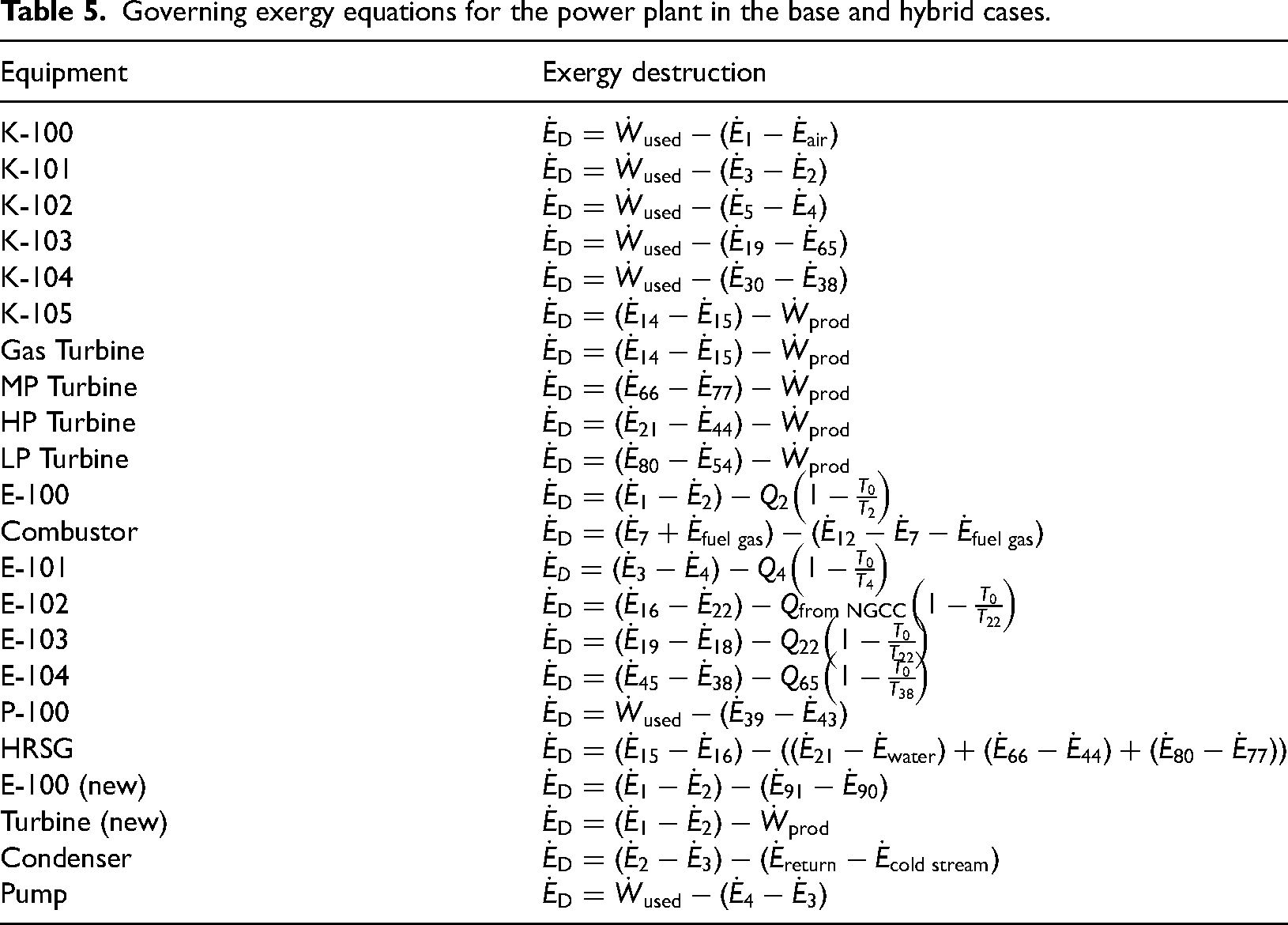
The equipment exergy destruction percentage is obtained by dividing the exergy destruction rate of the equipment by the total exergy destruction rate of the system.

Environmental analysis
In this simulation, the environmental analysis concerns the net carbon dioxide (CO2) emission rate. The net CO2 emission rate is the summation of direct and indirect emissions:

Direct emission denotes the flow rate of CO2 released to the atmosphere in the stack flue gas. This is the same for both NGCC and NGCC + ORC cases. Indirect emission is the total emission due to electricity and heat supply, which is written as Equation (20). In the power plant cycle, the required electricity for air and FGR compressors and pumps are supplied by the turbines of the cycle. As a result, it can be said that the indirect emission will be zero. Consequently, Equation (19) can be re-written as Equation (21):
Economic analysis
Here, the competitive parameter of total annualized cost (TAC) is considered, which depends on two parameters of capital expenses (CAPEX) and total operational expenses (OPEX). These two parameters are calculated using the financial tool APEA in Aspen HYSYS. CRF play a role in total annualized cost calculation and depends on two parameters, the interest rate of 8% (i) and the plant’s economic lifetime of 30 years (m). Economic parameters can be determined using Equations (22) and (23) (Mores et al., 2014):


Results and discussion
Validation
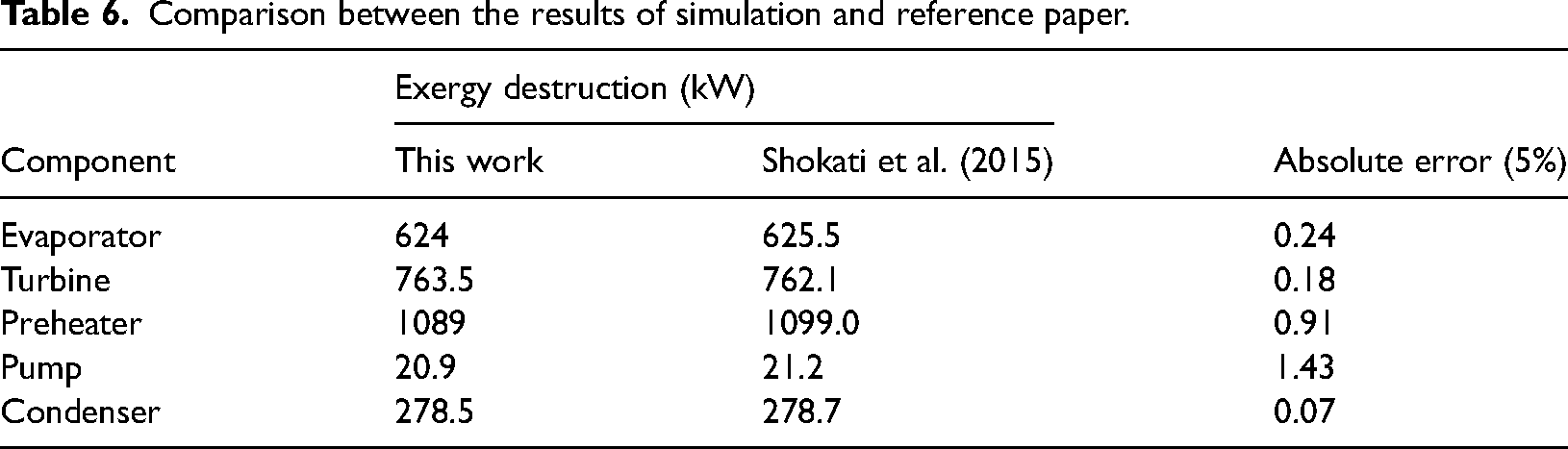
The validity of the basic ORC thermodynamic model has been established by verifying it against published data provided by Shokati et al. (2015). The simulation results are compared to this reference in Table 6 under similar operating conditions. The comparison reveals that the values of parameters obtained in the present study and those reported in the literature are in good agreement. It is noteworthy that the simulation and reference data correspond well.
Comparison between the results of simulation and reference paper.
Sensitivity analysis
Effect of heat source temperature on the variables
The effect of the heat source temperature on the required flow rate of the working fluid is presented in Figure 3. According to Figure 3, increasing heat source temperatures increases the required flow rate for all the studied working fluids of the ORC. Based on this figure, it can be observed that the rising trend for fluids with the R prefix is more significant than ammonia and isobutane, which can be because of the boiling point. The flow rate of the working fluid increases with the temperature of the heat source since the design spec in the evaporator is adjusted in a way that the software calculates the maximum required flow rate for working fluid at evaporator temperature. Thus, when the heat source has a higher temperature, further working fluid is required to have saturated vapor at the evaporator outlet and turbine inlet.
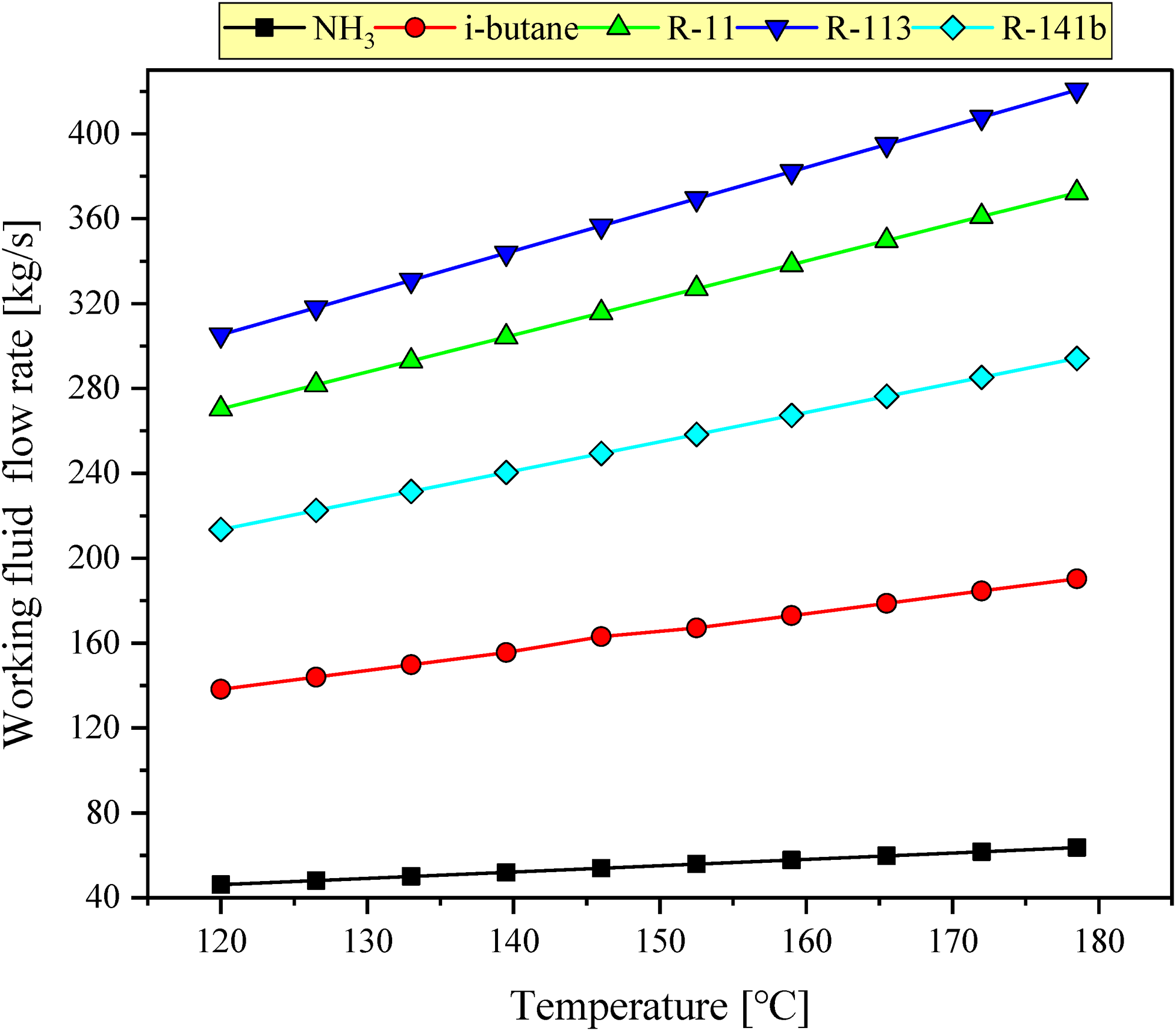
Effect of heat source temperature on the required flow rate of the working fluid.
The effect of the heat source temperature on the turbine power generation is shown in Figure 4. Referring to Figure 4, increasing the temperature of the heat source in ORC raises the generated power in the ORC turbine. This can be explained using the mass and energy balance around the turbine:
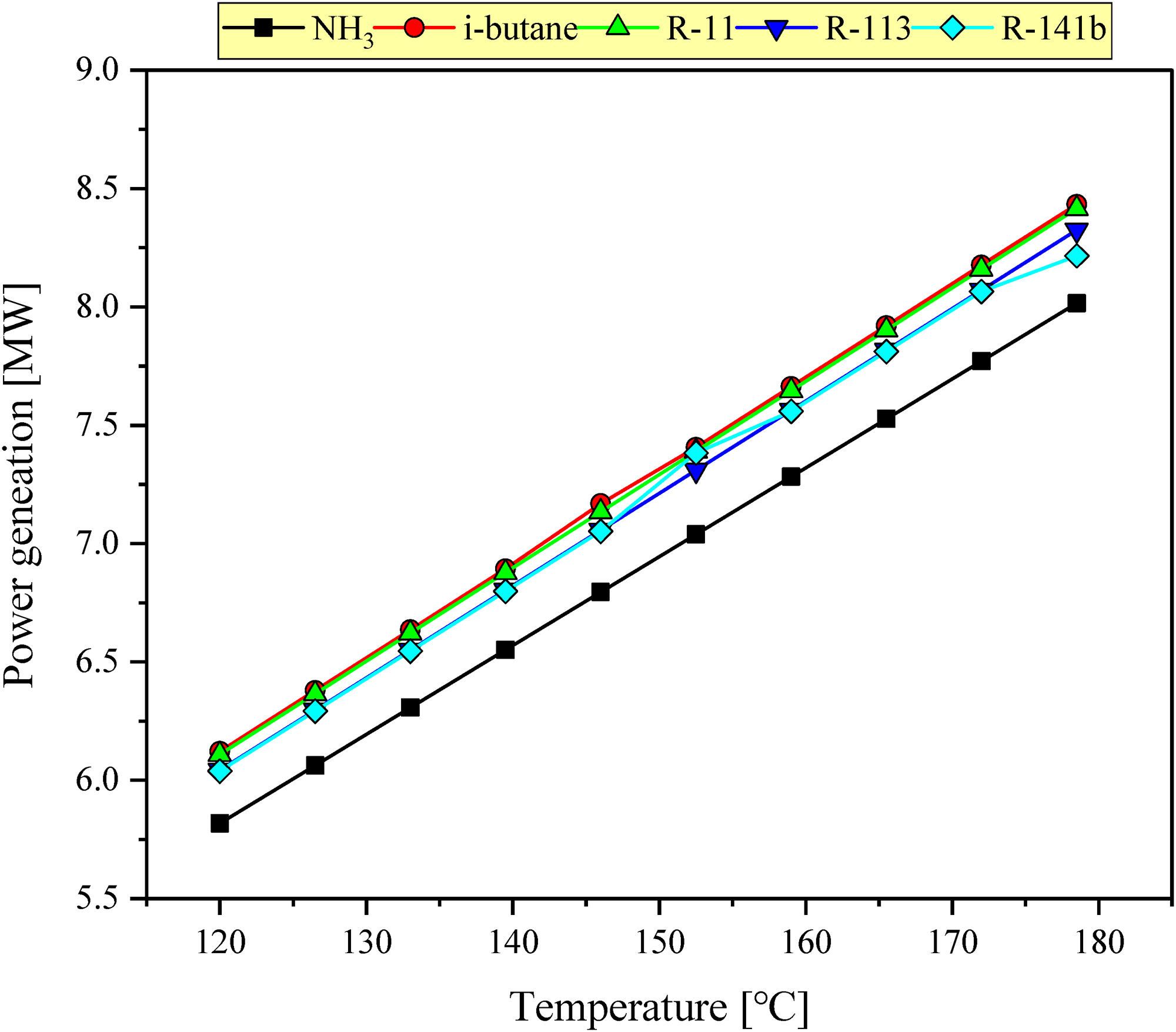
Effect of heat source temperature on the turbine power generation.
Based on Equation (25), the turbine’s power is directly related to the working fluid flow rate. Therefore, it is expected that by increasing the flow rate of the ORC working fluid, further power can be generated in the turbine. It is pointed out that based on Figure 3, increasing the flow rate of working fluid with an increase in heat source temperature was explained.
In Figure 5, the variation in the total exergy destruction rate of ORC against the heat source temperature is measured. As Figure 5 depicts, the increase in the heat source temperature results in decline in the exergy destruction for working fluids with the R prefix and a rise in exergy destruction for ammonia and isobutane. This is an important result in the total exergy efficiency evaluation of cycles.
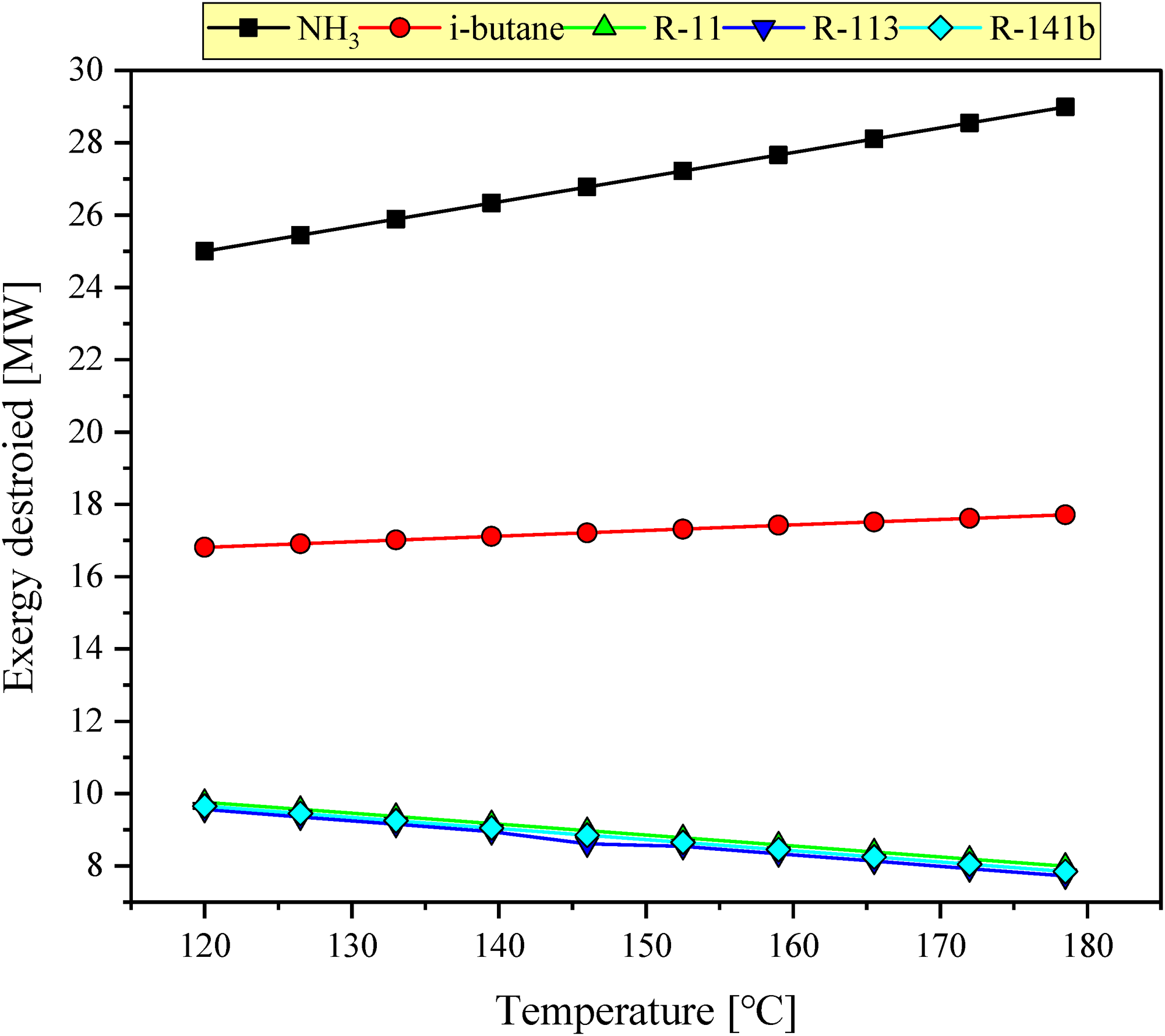
Effect of heat source temperature on the total exergy destruction rate of the ORC cycle.
Figure 6 shows the influence of the heat source temperature on the total exergy efficiency of the ORC. The total exergy efficiency of the ORC cycle for all the working fluids exhibits an increasing trend with the growth of heat source temperature, which is illustrated in Figure 6. However, the important issue is the significant difference between the efficiency of the cycle using ammonia and isobutane as the working fluid and using working fluids with the R prefix.
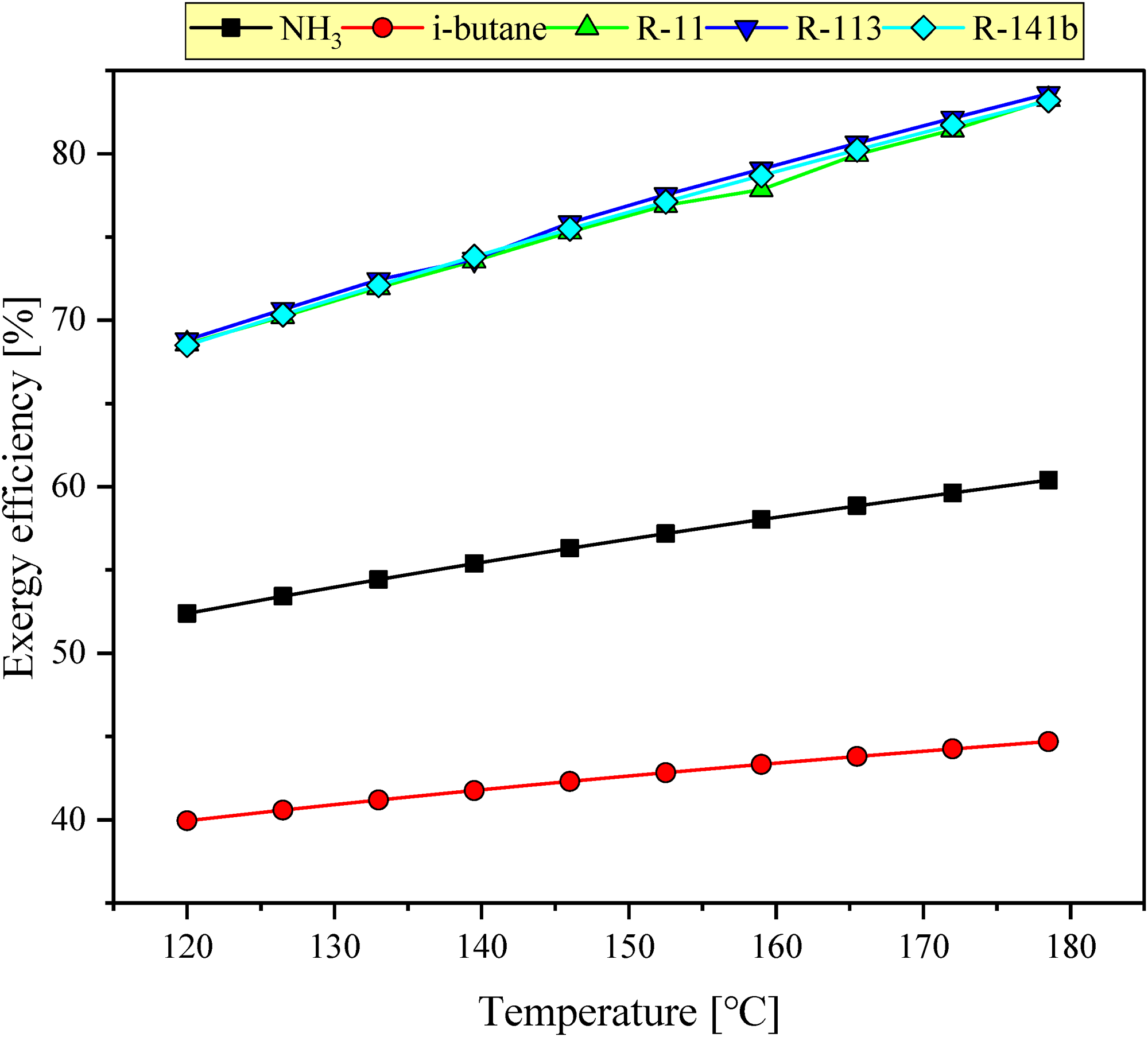
Effect of heat source temperature on the exergy efficiency of the ORC.
Simulation results for the studied working fluids
Results of using ammonia
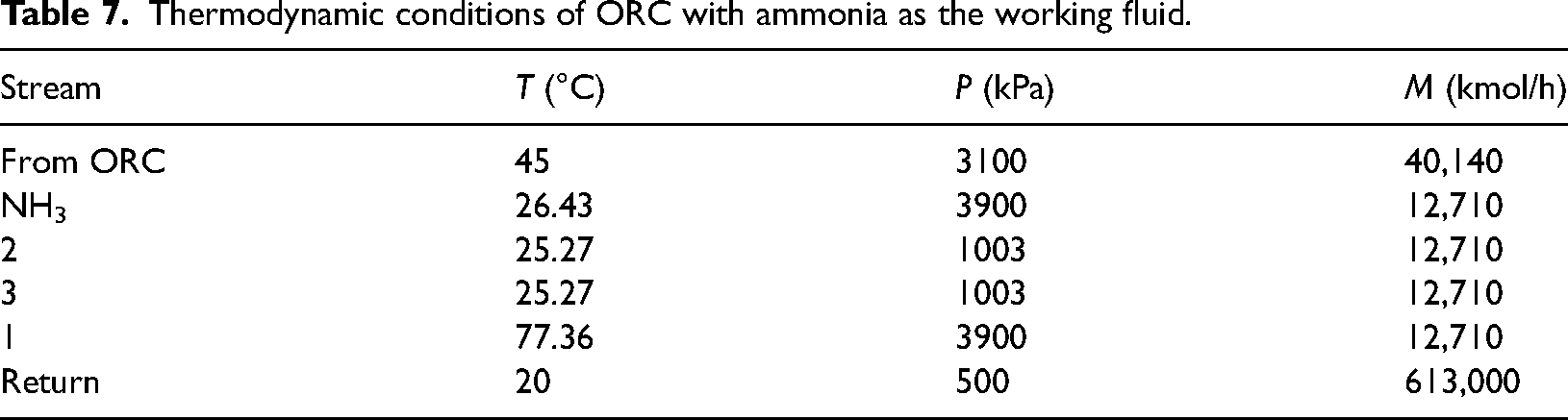
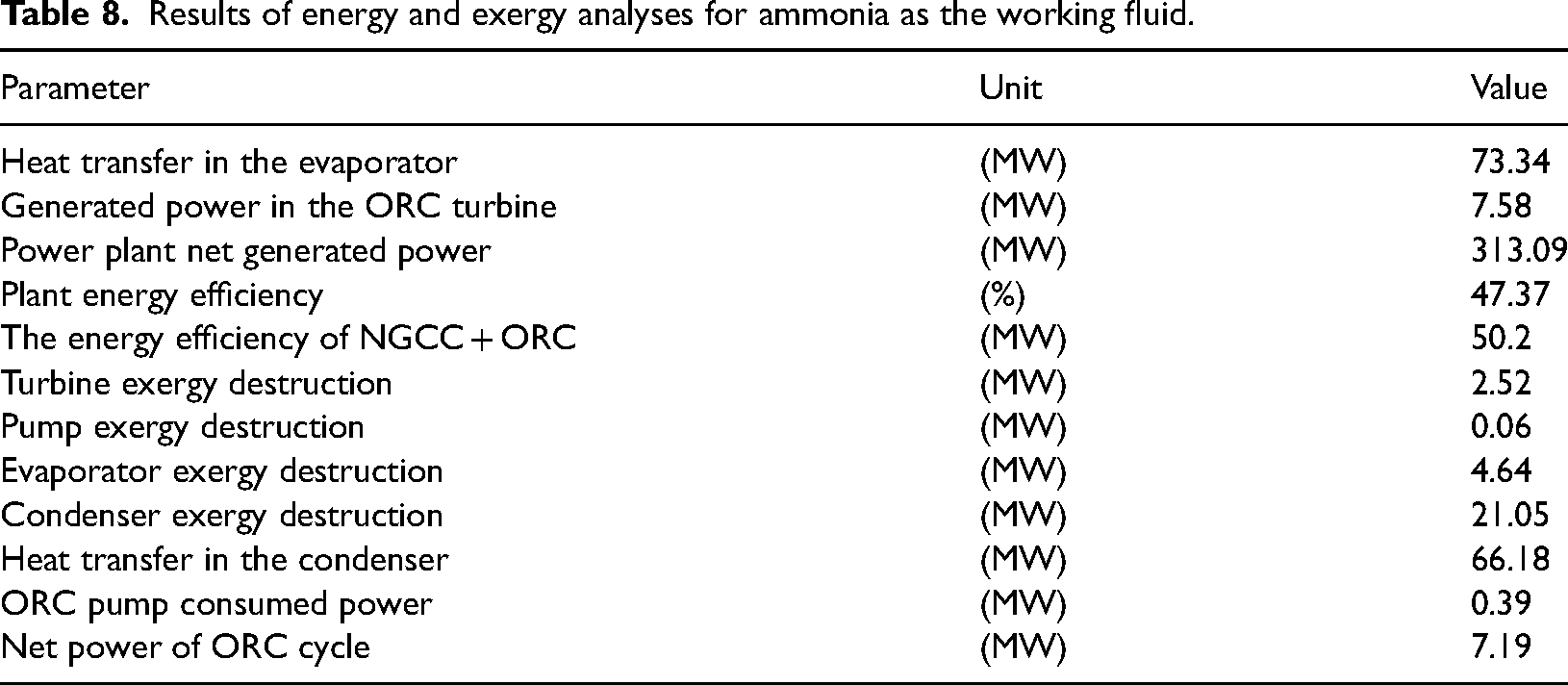
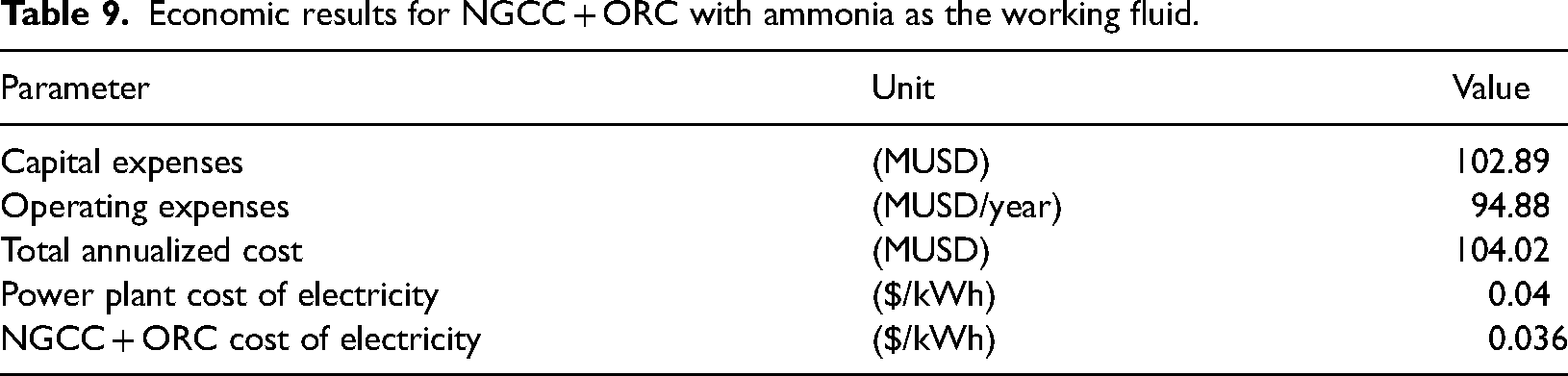
In Tables 7 to 9, the simulation results for the power plant integrated with the ORC employing ammonia as the working fluid are presented. Based on the results, using ammonia leads to an enhancement of the plant's total energy efficiency and a reduction in the cost of electricity from 0.04 to 0.036 USD/kWh. Furthermore, the results demonstrate that the required flow rate of this working fluid of the ORC is 12,710 kmol/h, which leaves the evaporator as a saturated vapor to be utilized for power generation in the turbine.
Thermodynamic conditions of ORC with ammonia as the working fluid.
Results of energy and exergy analyses for ammonia as the working fluid.
Economic results for NGCC + ORC with ammonia as the working fluid.
Results of using isobutane
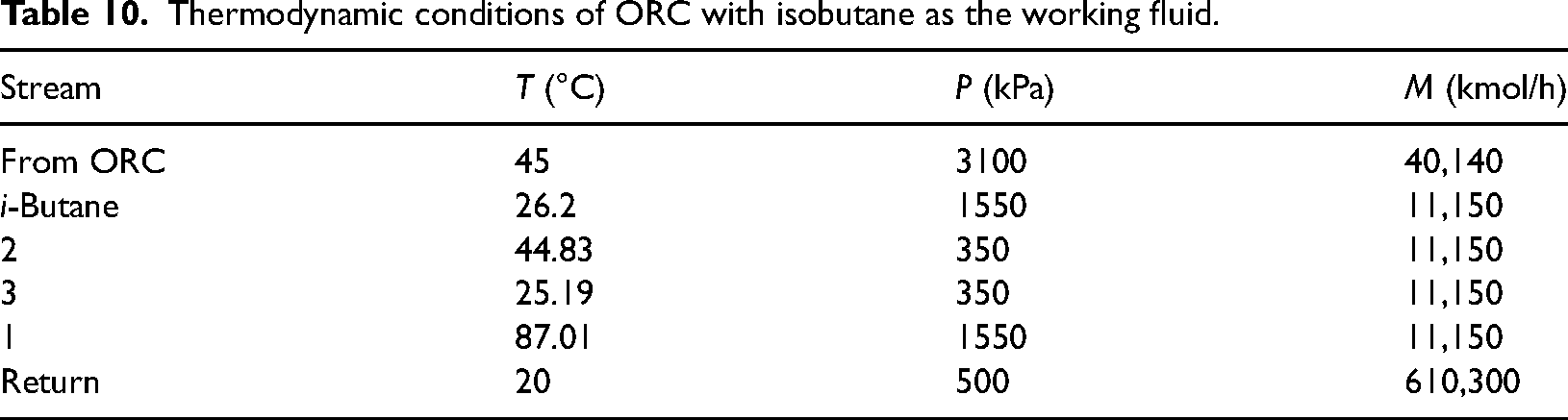
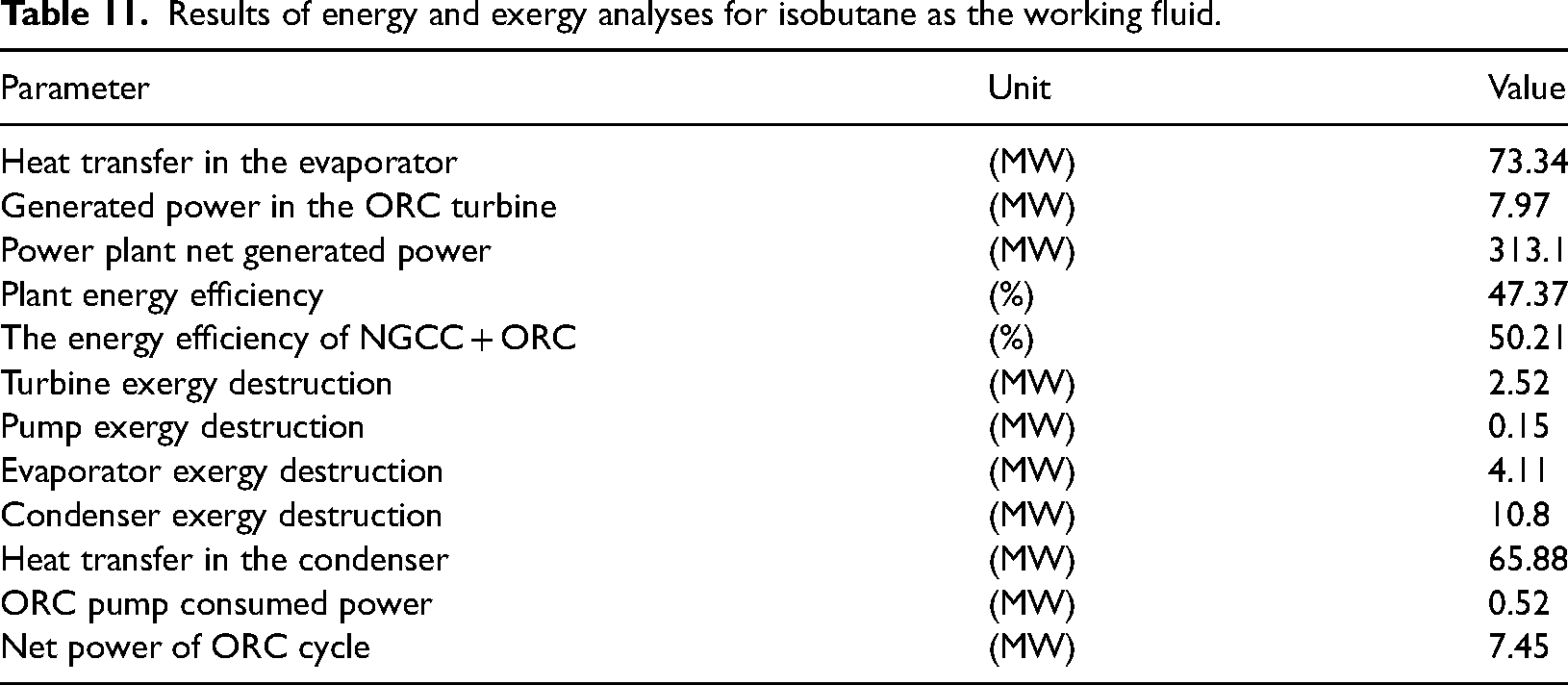
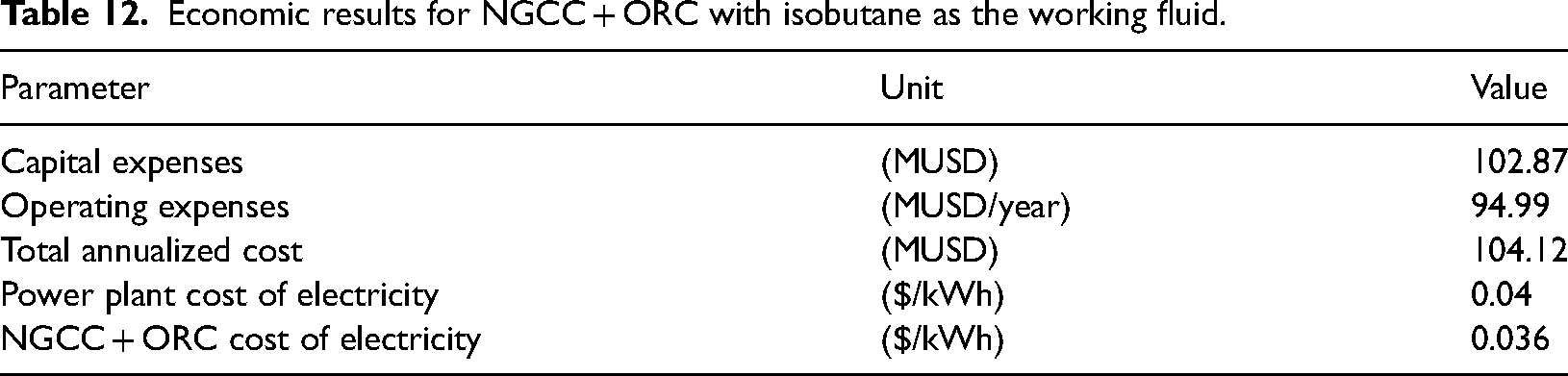
The simulation results for the ORC using isobutane as the working fluid are reported in Tables 10 to 12. Based on the specified spec for the evaporator, the required flow rate of the working fluid is 11,150 kmol/h, which this stream produces 7974 kW power in the turbine through expansion from 1550 to 350 kPa. The net power generation of the cycle with this working fluid is determined as 7450.7 kW.
Thermodynamic conditions of ORC with isobutane as the working fluid.
Results of energy and exergy analyses for isobutane as the working fluid.
Economic results for NGCC + ORC with isobutane as the working fluid.
Results of using R-11
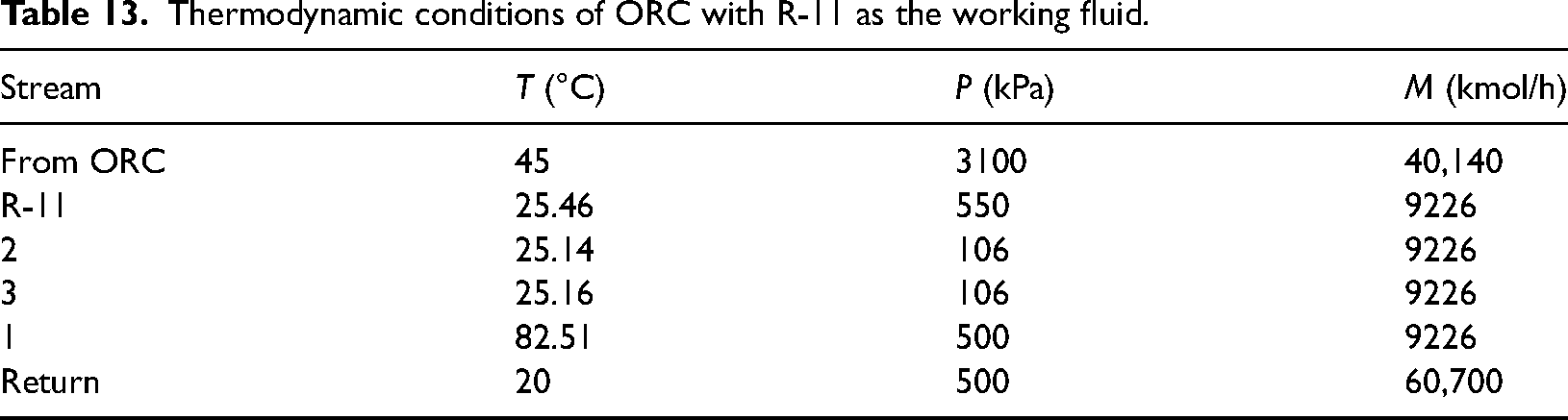
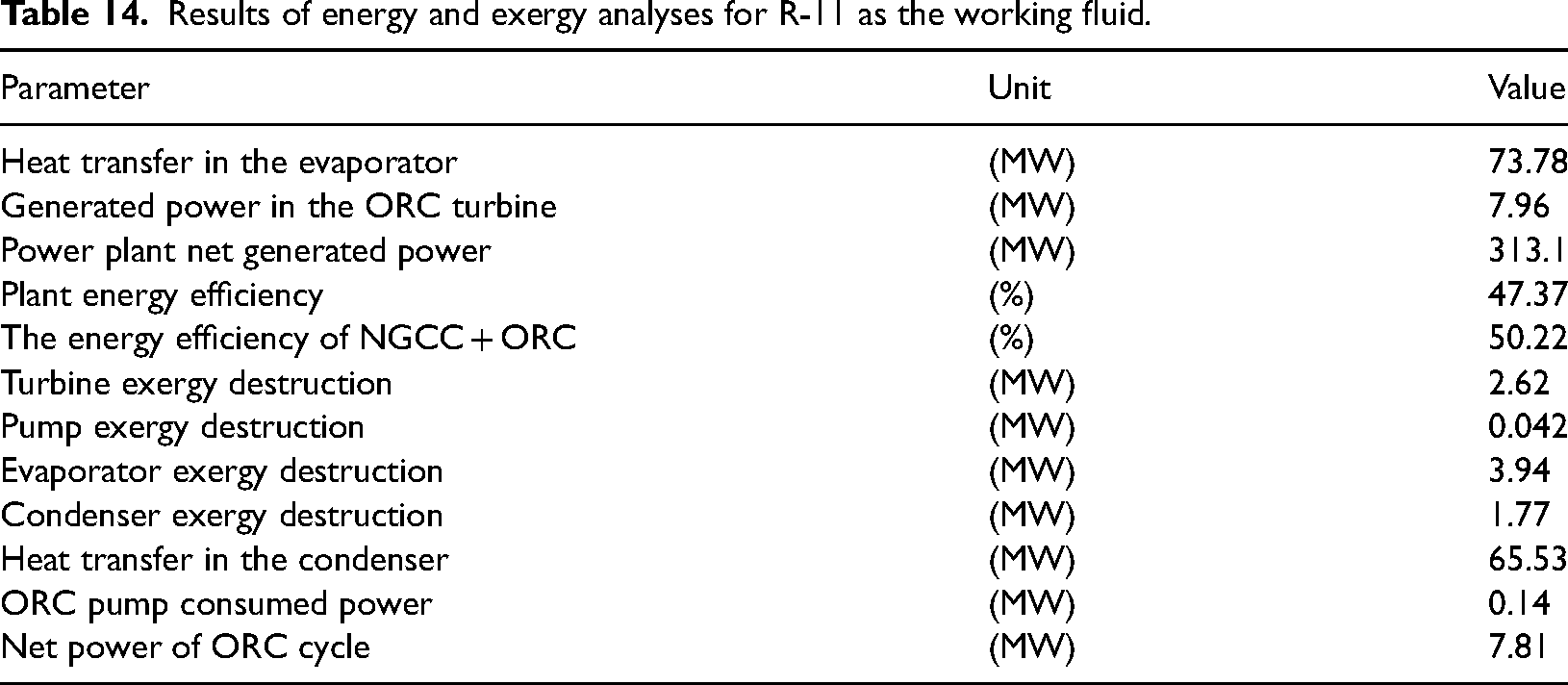
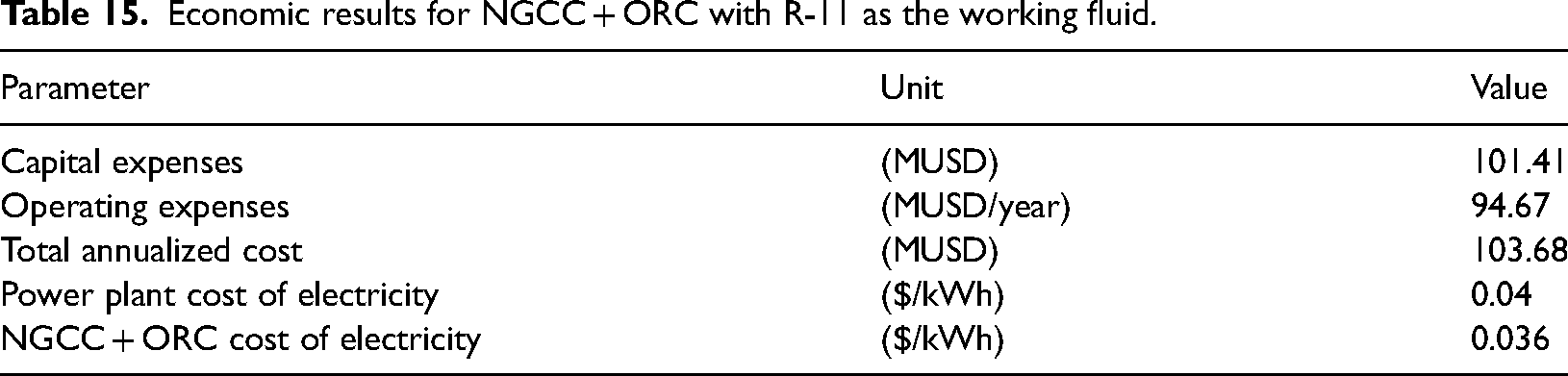
According to the Aspen HYSYS simulation results, using R-11 as the working fluid leads to net power generation of 7814.7 kW, and for producing this power, 9226 kilomoles per hour of the working fluid is required, which absorbs the necessary heat from the heat source in the evaporator and feeds it to the turbine. In this case, the energy efficiency of the plant is 50.22%, which is higher compared to the base case. Increasing energy efficiency translates into a decrease in the cost of electricity from 0.04 to 0.0358 USD/kWh. Simulation results for this case are presented in Tables 13 to 15.
Thermodynamic conditions of ORC with R-11 as the working fluid.
Results of energy and exergy analyses for R-11 as the working fluid.
Economic results for NGCC + ORC with R-11 as the working fluid.
Results of using R-113
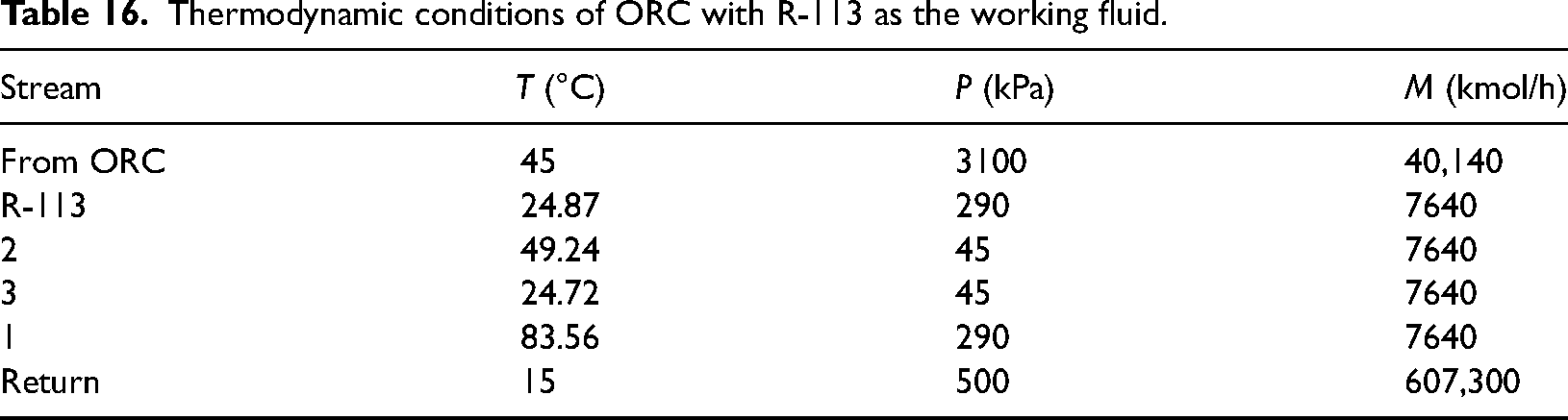
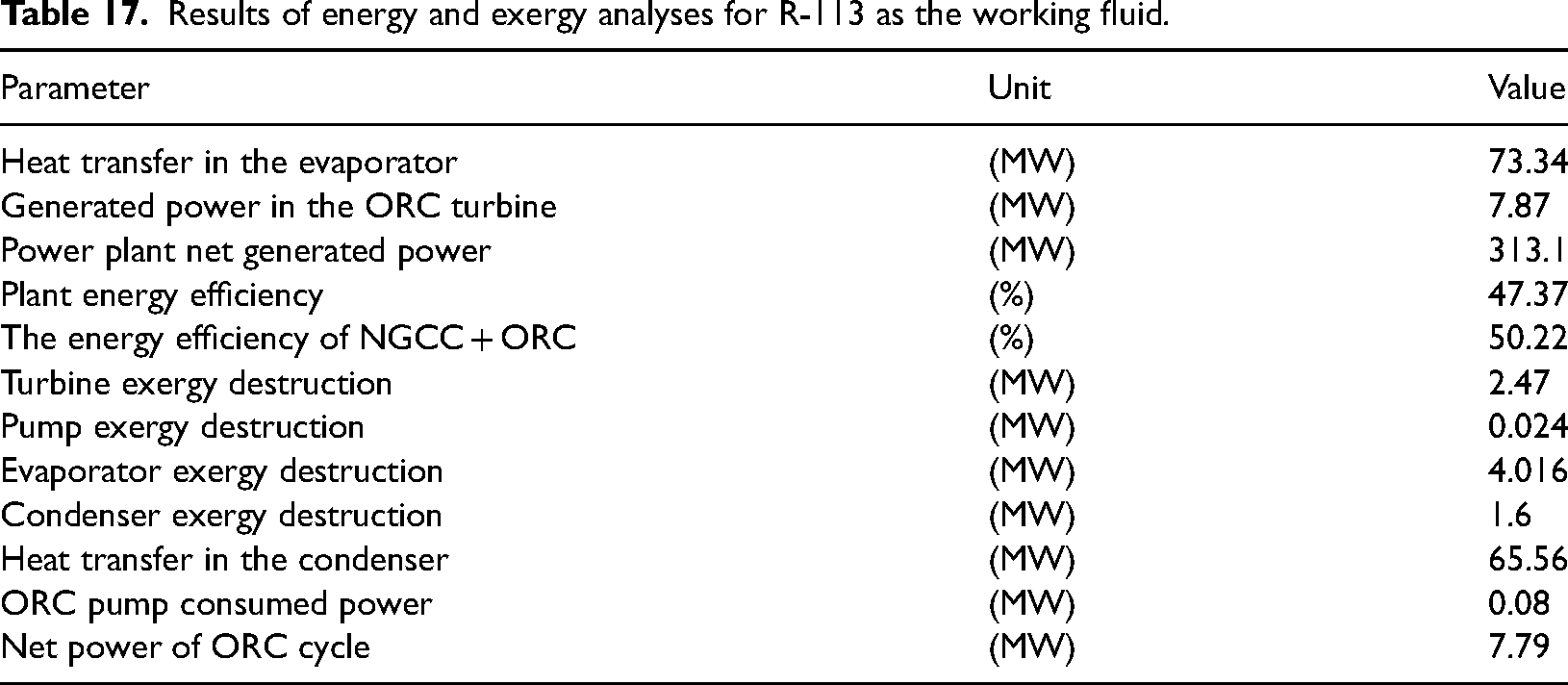
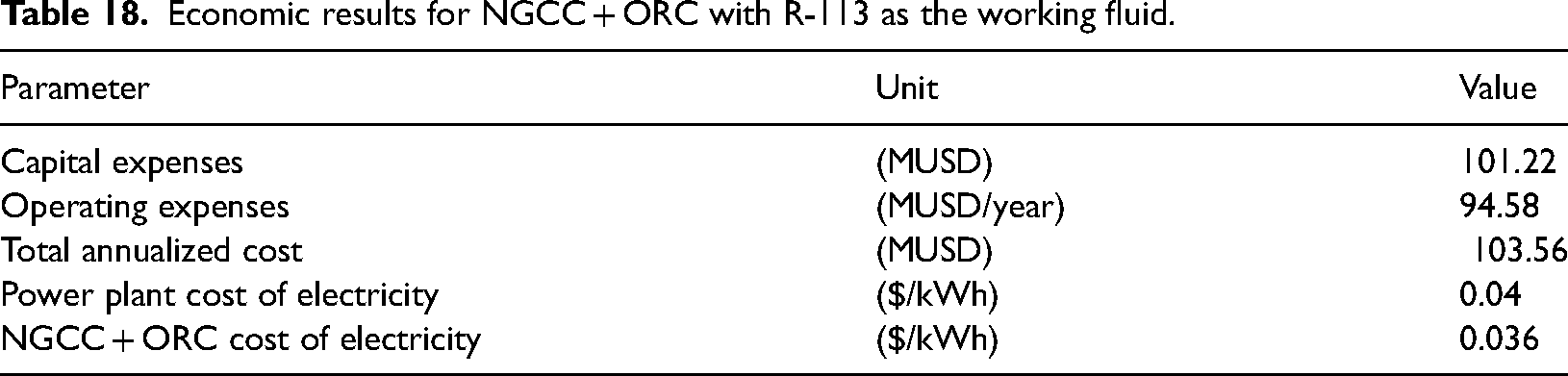
In Tables 16 to 18, the simulation results for the case with R-113 as the working fluid are reported. According to the result, using this working fluid enhances the thermodynamic efficiency of the power plant, which shows its influence on the cost of electricity. The required flow rate for this working fluid is 7640 kmol/h, which through expansion from 290 to 45 kPa generates 7870 kW power in the turbine.
Thermodynamic conditions of ORC with R-113 as the working fluid.
Results of energy and exergy analyses for R-113 as the working fluid.
Economic results for NGCC + ORC with R-113 as the working fluid.
Results of using R-141b
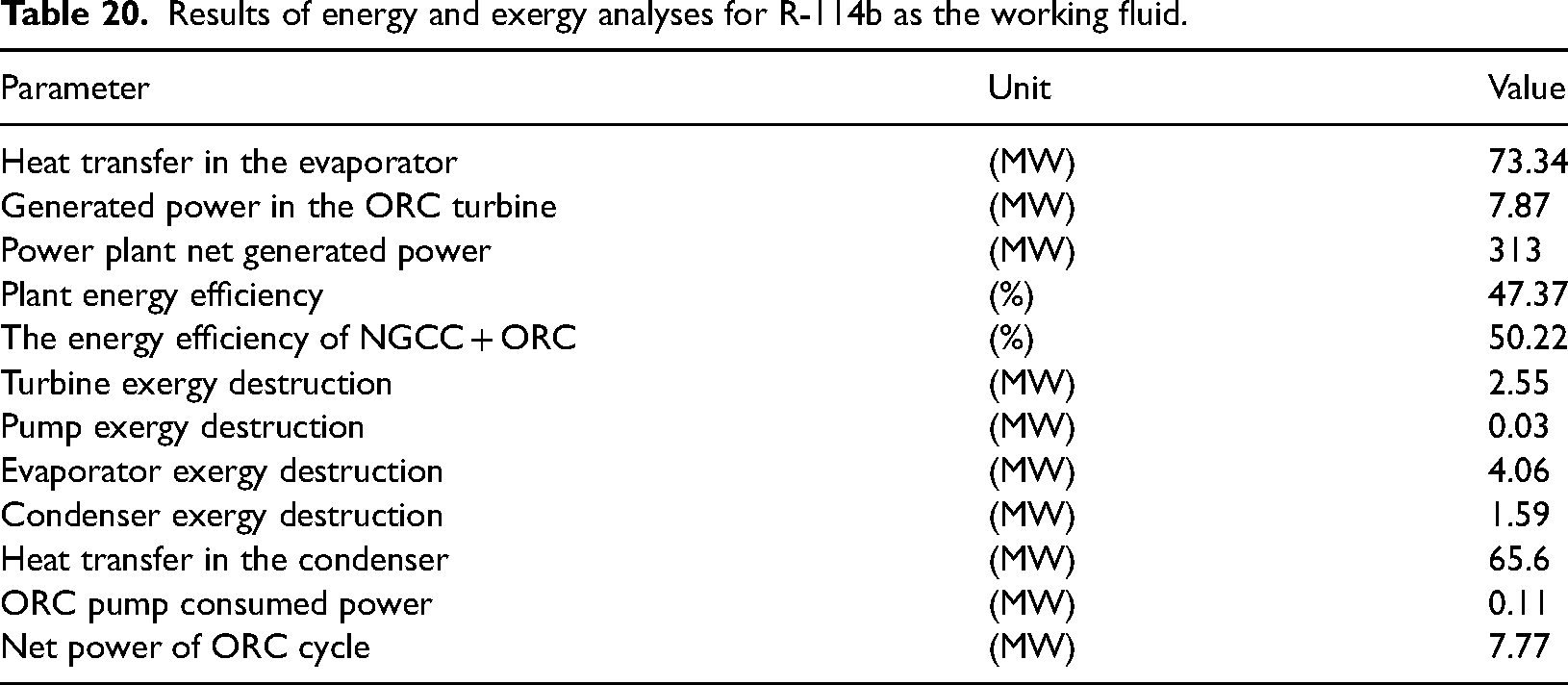
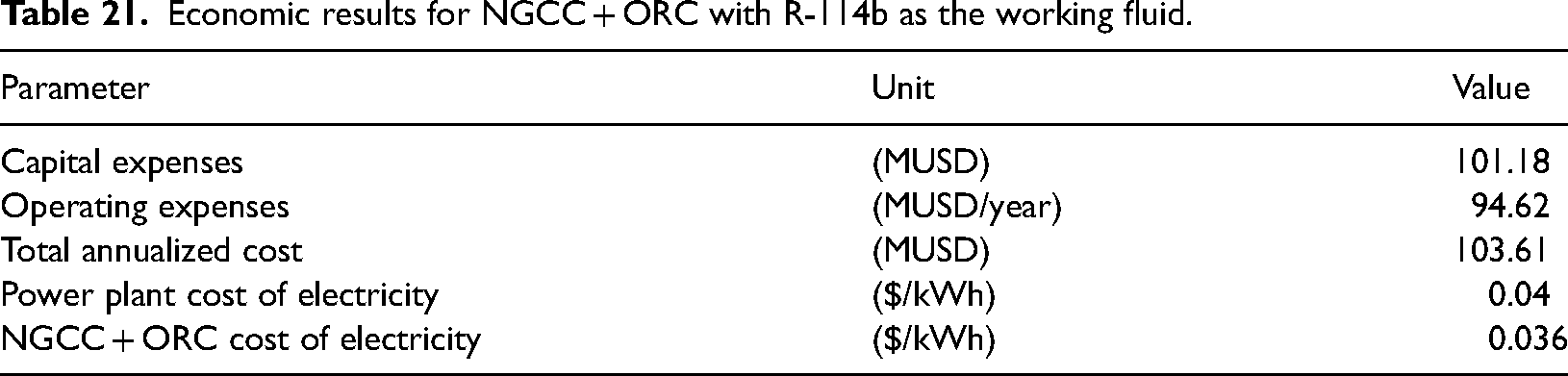
The last working fluid that was studied is R-141b, and the simulation results for this case are given in Tables 19 to 21. Using this working fluid results in a net power generation of 7756.1 kW. Moreover, the total energy efficiency of the power plant after the addition of ORC with the mentioned working fluid becomes 50.22%, which shows a significant improvement. Similar to the other working fluids, in this case also the cost of electricity is lower than that of NGCC.
Thermodynamic conditions of ORC with R-141b as the working fluid.

Results of energy and exergy analyses for R-114b as the working fluid.
Economic results for NGCC + ORC with R-114b as the working fluid.
Comparison of the results
In this section, the key results of different working fluids are compared and shown in Figures 7 to 11. According to Figure 7, the exergy destruction of ORC with ammonia and isobutane as working fluid is considerably higher than in the cases that use working fluids with the R prefix, which results in a reduction in the exergy efficiency of ORC with ammonia and isobutane. Based on this study, using R-113 causes the lowest exergy destruction in ORC. The exergy destruction of ORC with this working fluid is 71.3% and 53.88% less than that of ORC with ammonia and isobutane, respectively.
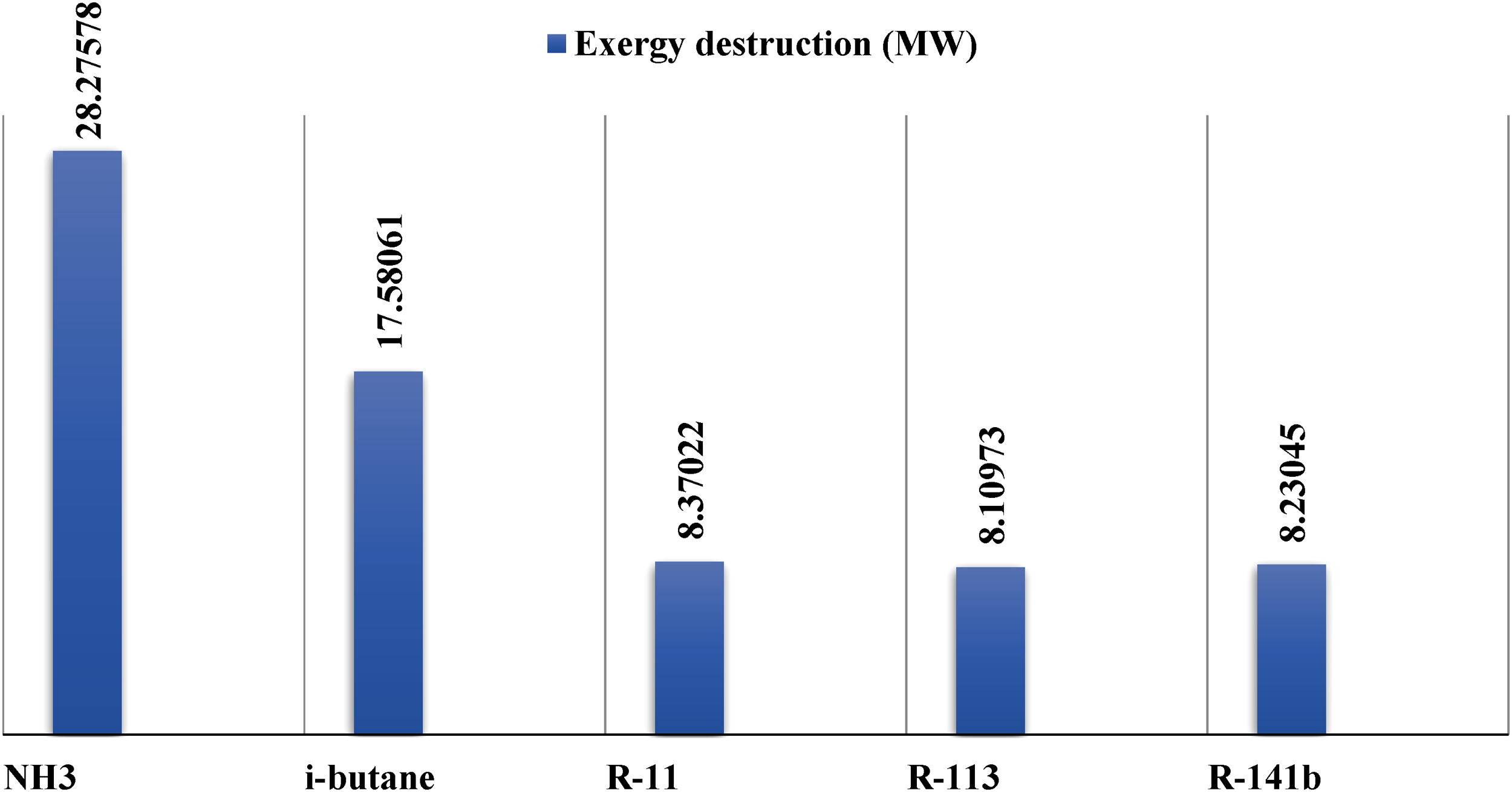
Comparison of total exergy destruction of ORC using the studied working fluids.
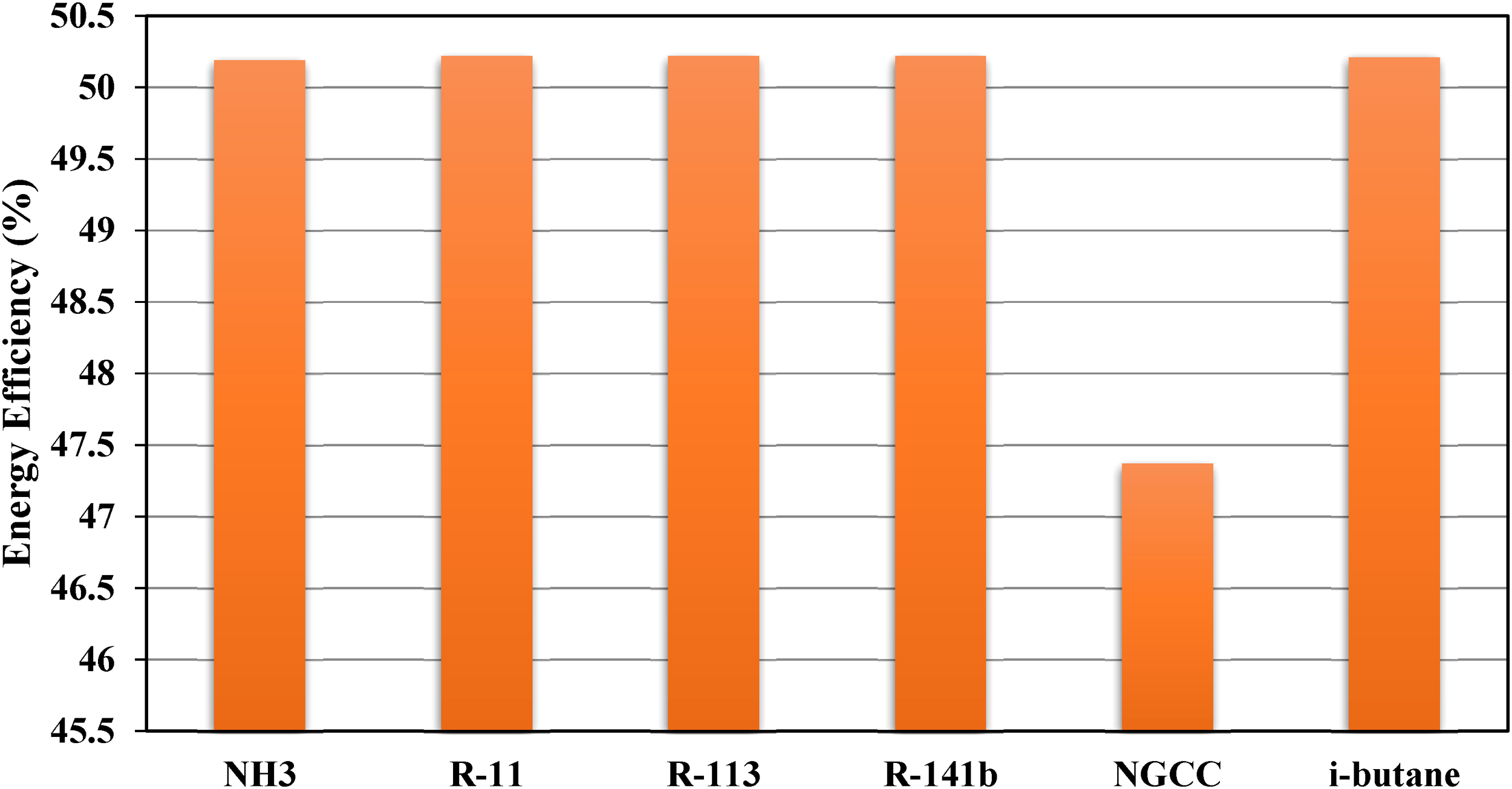
Comparison between the total energy efficiency of power plant with and without the working fluids.
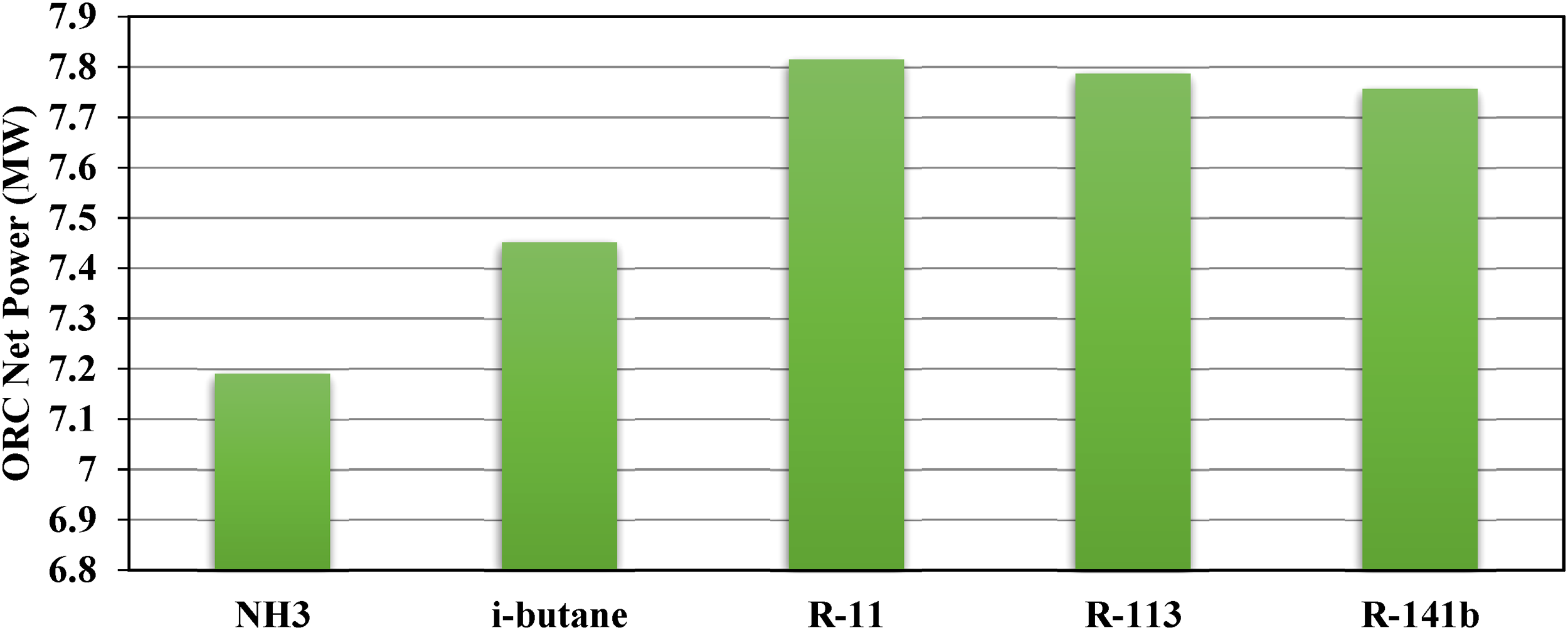
Comparison of net power generation using studied working fluids.
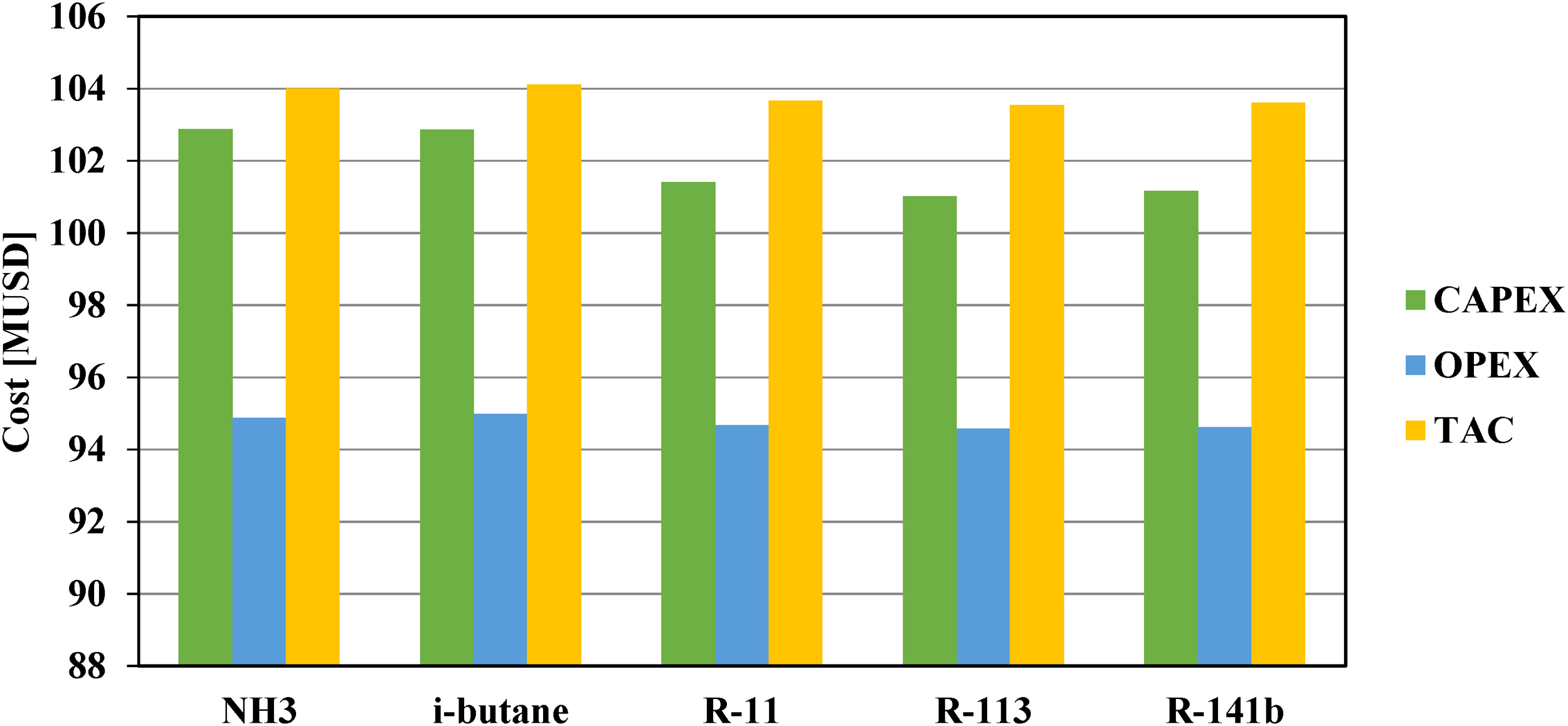
Comparison of total costs of power plant with different working fluids.
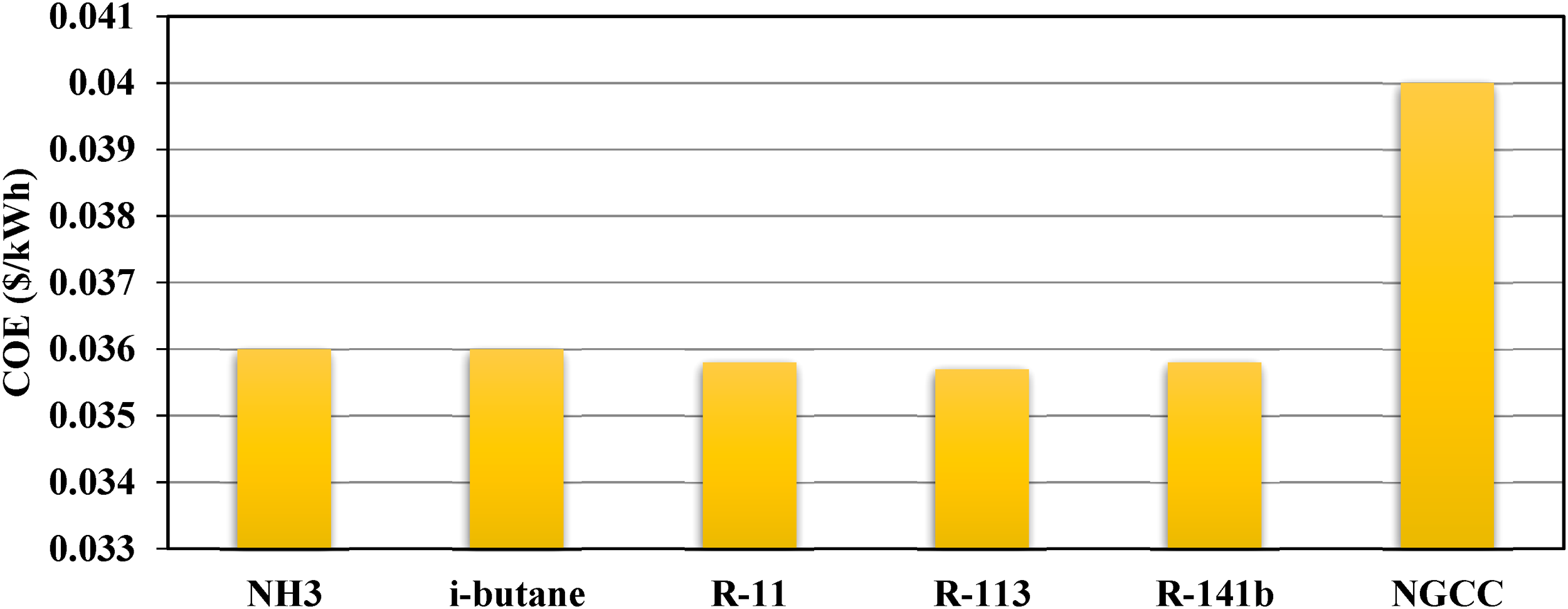
Comparison between the cost of electricity in different cases.
On the other hand, based on Figure 8, it can be said that integrating ORC with the NGCC power plant improves the total energy efficiency in general, and among all the studied working fluids, those with the R prefix could achieve energy efficiency of 50.2%, which is higher than NGCC by 2.8%. It seems that high and significant exergy destruction in the cases with ammonia and isobutane as working fluid affects the energy efficiency of the ORC cycle and makes it decline.
Exergy destruction plays an important role in thermodynamic performance. Figure 9 shows that the net power generation of the turbine for cases with ammonia and isobutane as working fluid is significantly lower than that of R-11, R-113, and R-114b as the working fluid. Therefore, it emphasizes the importance of exergy destruction in studying a thermodynamic cycle. According to Figure 9, when the ORC works with ammonia as the working fluid, power generation in the turbine is 3.5% less than isobutane, 8% less than R-11, 7.67% lower than R-113 case, and 7.3% less than R-141b case. This demonstrates the superiority of working fluids with the R prefix for power generation in the ORC.
Figures 10 and 11 compare the ORCs considering the economic performance. According to Figure 10, the capital cost of ORC with ammonia as the working fluid is higher than in all the other cases. Furthermore, operating expenses have the highest value for isobutane working fluid. This comparison demonstrates that using ammonia and isobutane increases the total annualized cost of the scheme too. However, TAC for R-11, R-113, and R-141b show a similar trend and with a significant difference compared to ammonia and isobutane.
Similarly, increasing TAC causes the cost of electricity for ammonia and isobutane cases to be higher than the other three working fluids cases. It should be noted that according to Figure 11, integrating ORC reduces the cost of electricity compared to NGCC. Nevertheless, with a more precise comparison, it is clear that fluids with the R prefix perform better.
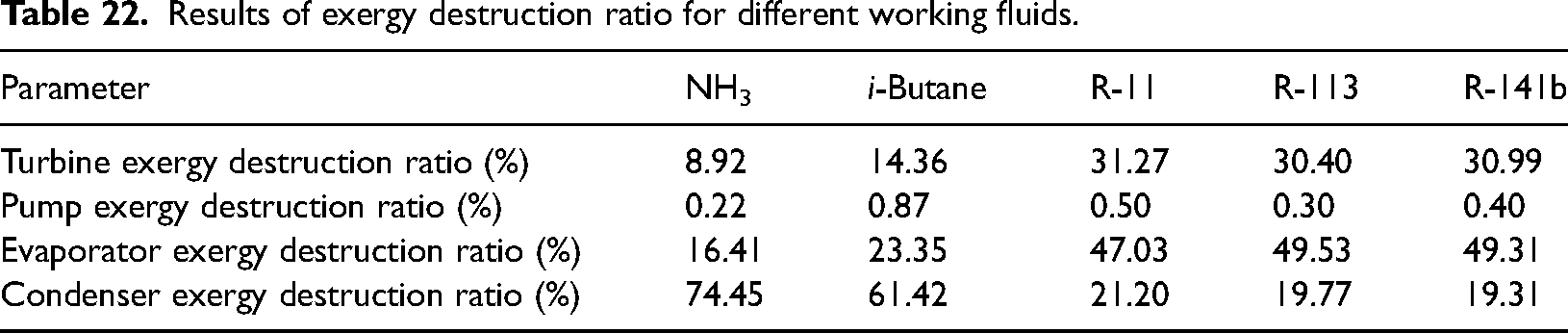
Finally, a comparative study of exergy destruction ratio for different components considering various working fluids is presented in Table 22.
Results of exergy destruction ratio for different working fluids.
Conclusion
The study investigated the potential capacity of the Natural Gas Combined Cycle power plant and the use of different working fluids, including ammonia, isobutane, R-11, R-113, and R-141b, in the ORC system. The results indicated that the integration of ORC with NGCC enhances the technical and economic characteristics of the plant. However, the selection of an appropriate working fluid is a significant challenge in achieving the desired improvement in the cycle.
The study identified the recirculated flue gas leaving the last compressor as the suitable heat source for the ORC and the basis of ORC design. The parametric study conducted on the temperature of the heat source showed that R-11, R-113, and R-141b are better working fluid choices than isobutane and ammonia due to lower exergy destruction, higher net power generation in the turbine, and higher total energy efficiency.
The economic analysis revealed that ammonia and isobutane are disadvantageous compared to R-11, R-113, and R-141b and could not achieve lower total annualized cost. Although the cost of electricity for ammonia and isobutane cases is lower than NGCC, it is the highest among all the studied working fluids. Therefore, these two working fluids cannot be used to attain maximum improvement in the cycle at the studied conditions, and there are better alternatives.
Overall, it can be concluded that R-11, R-113, and R-141b are better choices for the ORC system in NGCC power plants. However, a more precise and detailed comparison showed that R-113 has close technical characteristics with the other two and provides lower total annualized cost (TAC) and cost of electricity (COE).
Implications of the study
The study provides insights into the potential of integrating ORC with natural gas combined cycle power plants. The findings of this study demonstrate that integrating ORC with NGCC can significantly improve the thermo-economic performance of the power plant. Furthermore, this study identifies the most suitable working fluid for this integration. The results of the sensitivity analysis also indicate that careful selection of the working fluid is critical for achieving maximum benefits.
Limitations of the study
This study has several limitations that need to be considered while interpreting the results. Firstly, the simulation is based on a specific set of operating conditions, which may not be representative of all real-world scenarios. Secondly, the study does not consider the environmental impact of the ORC integration with the NGCC power plant. Lastly, the economic analysis considers only the capital and operational costs and does not include externalities such as environmental and social costs.
Future scope
The findings of this study provide a foundation for future research on ORC integration with natural gas combined cycle power plants. Future studies could focus on evaluating the performance of ORC with other heat sources such as flue gases from other sources like biomass power plants and waste incineration plants. Additionally, future research could investigate the environmental impact of the ORC integration and incorporate it into the economic analysis. Furthermore, future research could explore the potential of using different working fluids or optimizing the operating conditions to further improve the performance of the power plant. While the present study does not directly address the cost of CO2 sequestration during energy production in the plants, it is crucial to evaluate the influence of CO2 emissions on the selection of working fluids and working conditions. Future research should aim to address this limitation by quantitatively analyzing the cost of CO2 emissions and comparing it to the performance of different working fluids and working conditions. By including this analysis, the study’s implications can be improved significantly, particularly in the context of climate change and carbon neutrality goals. We thank the reviewer for their insightful suggestion, and we will certainly consider this issue in our future work.
Footnotes
Declaration of conflicting interests
The author(s) declared no potential conflicts of interest with respect to the research, authorship, and/or publication of this article.
Funding
The author(s) disclosed receipt of the following financial support for the research, authorship, and/or publication of this article: In 2022, the first batch of Jiangsu industry university research cooperation project “research and development of cold chain logistics intelligent stowage system based on big data technology” was funded by the fund.
In 2022, Jiangsu Provincial and Department-affiliated colleges and universities were funded by the “Research on the Classroom Revolution Practice of Management from the Perspective of “Help Classroom” (Project No.: ZX222105002,) for the construction of the key professional group “e-commerce professional group” of Jiangsu provincial and departmental universities.
Novel coronavirus pneumonia background, a study on the construction of emergency logistics system in the central city of Jiangsu and Jiangsu Province in 2020 (Project No.: 2020SJA1823, Jiangsu), a general project of philosophy and Social Sciences in universities and colleges.
The project of Jiangsu University Students’ innovation and entrepreneurship training program in 2020: investigation and Research on urban emergency logistics system based on the new coronavirus epidemic—Taking Huai’an, an important central city in Northern Jiangsu as an example (Project No.: 202012805022y) is funded by the fund.
