




Abstract
This study endeavors to identify how urbanization and energy factors (use, prices, and policies) have influenced CO2 emission patterns per capita among the 48 U.S. states and the District of Columbia from 2000 to 2015. To examine interconnections between state-level emissions, three different spatial panel data models are estimated: the spatial autoregressive model, spatial error model, and the spatial Durbin model models. This study makes contributions to the literature by applying a spatial panel data approach and including policies on urbanization and renewable standards. Urbanization is found to have a statistically significant, negative direct effect on emissions, yet a negative spillover effect such that a 1.0% increase in state i's urbanization level leads to a 0.30% decrease in its own state's emissions, but a 0.012% increase in an adjacent state j's emissions. Although state-level emissions are increased by higher energy use and coal consumption, both energy prices and renewable portfolio standards decrease emissions both within their own and adjacent states.
Keywords
Introduction
Due to concerns about global climate change, the public has an interest in policies that advocate limiting the rise of CO2 emissions. Studies of urban environmental transition emphasize that urbanization can have both negative and positive effects on the environment making it difficult to determine the net effect a priori (Cole and Neumayer, 2004; Liddle and Lung, 2010). Examining the linkages among CO2 emissions, urbanization, and other factors are significant as the United States is the second largest aggregate emitter globally from 2020 to 2050, based upon its share of global energy-related CO2 emissions and global roadmap for building and construction (International Energy Agency [IEA], 2020). The availability of state-level data from EIA and the Carbon Dioxide Information Analysis Center (CDIAC) is the basic information required to study CO2 emissions, urbanization, energy consumption, and socioeconomic variables in the United States (Figure 1). This research investigates how urbanization and other variables reflecting energy use impact carbon emissions in the United States.
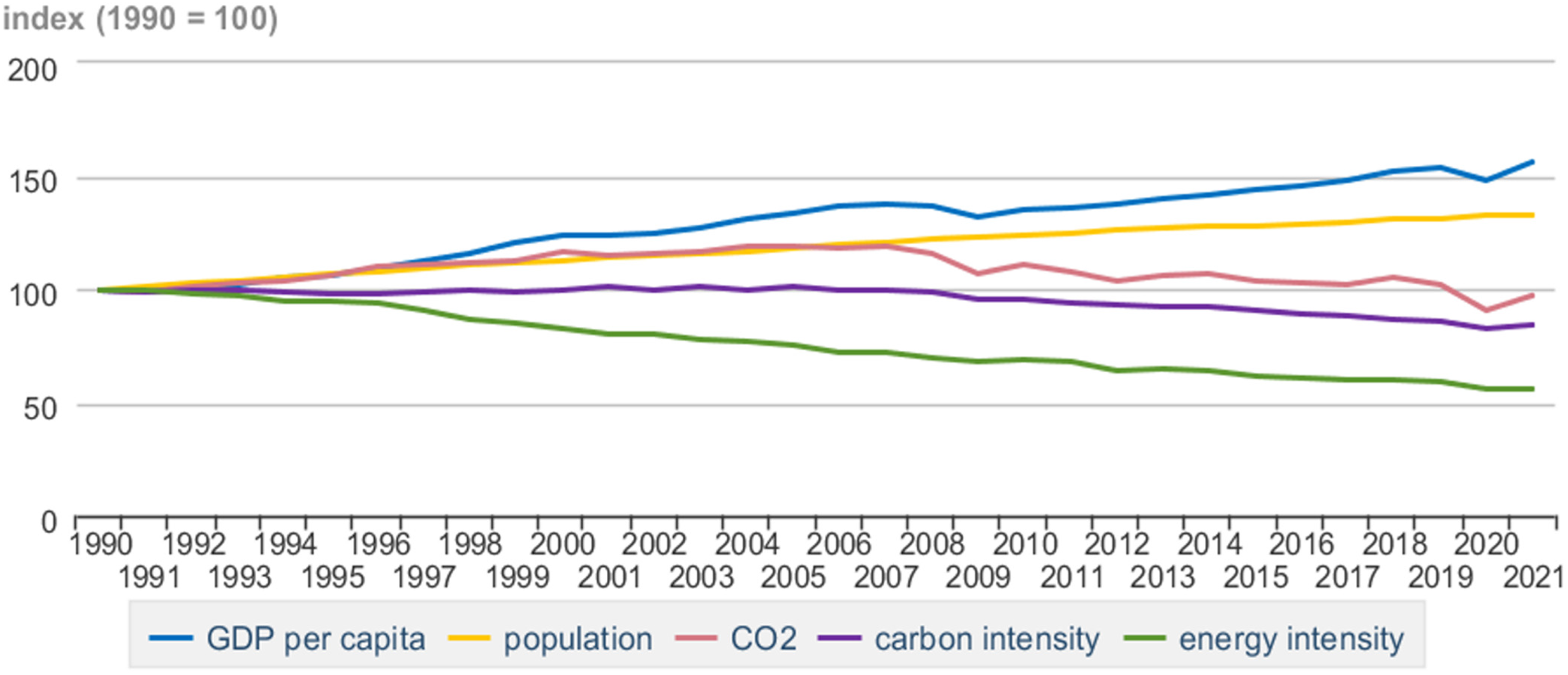
Trends in energy-related carbon dioxide emissions and key indicators in the U.S.
The principal forces driving the U.S. CO2 emissions come from urbanization, transportation, coal-fired power plants, and energy use (Bekun, 2022; Mujtaba et al., 2022, Adedoyin et al., 2021; York et al., 2003; Aldy, 2005; Carson, 2010; Newman and Kenworthy, 1999; Gonzalez, 2009; Cole and Neumayer, 2004; Andrews, 2008; Davis et al., 2011; Tawfeeq et al., 2020; Ongan et al., 2022; Iwata et al., 2012; Burnett et al., 2013; Sadorsky, 2014; Shahbaz et al., 2017). Most previous studies have assumed that interjurisdiction regions are independent, thereby ignoring spatial interactions. However, one region's energy inputs often rely on neighboring regions. For example, urban areas in one state utilize electricity generated in another state. Thus, ignoring spatial dependence may lead to biased parameters when using an OLS approach to explain CO2 emissions (Elhorst, 2009; Lesage and Pace, 2009; Baltagi et al., 2012). Spillover impacts resulting from spatial lags of CO2 emissions across states include factors such as: (1) regionally distributed electricity from more than 3,200 fossil fuel–fired power plants in the U.S. (U.S. EIA, 2016); (2) urbanization and its impact on own state and neighboring state emissions; and (3) transportation of goods and its spillover effects of emissions across states.
Furthermore, a controversial discourse has recently advanced about the subject of whether CO2 emissions measurement must be based upon space-related consumption or production method (Davis et al., 2011; Peters et al., 2011). Production-based accounting (PBA) of CO2 emissions for fossil fuel consumption estimates the greenhouse gas emissions from all the coal, crude oil, and gas consumed in a state by power plants, residential, and industrial production of goods and services. While the PBA has several drawbacks. First, it excludes CO2 emissions driving from international trade and transportation. Since such CO2 emissions do not occur within a specific state, its impact on specific territories is complicated. Second, industries that are energy-intensive in states with CO2 emission regulations and taxes may move into other states with fewer regulations and lower costs of energy. However, the goods and services produced in the less regulated states could then be exported to the more regulated states. Hence, reducing CO2 emissions in one state might be directly correlated with rising CO2 emissions in other states. Third, the CO2 emission leakage from the outsource production of carbon-intensive goods to the United States is a reallocation of CO2 emissions to states. Thus, one state's production can also be driven by consumption in other states. Consumption-based accounting (CBA) is an approach to consider these issues. It subtracts all CO2 emissions that are incorporated in exported goods and services from states, including CO2 emissions of transportation, and the contained CO2 emissions in the inventories of the importing states (Aldy, 2005; Auffhammer and Carson, 2008; Peters et al., 2011; Tawfeeq et al., 2020). Hence, with respect to production-based inventories, low-emission states may be less clean in the CBA approach and high CO2 emissions states could produce goods for the standard of living of low CO2 emission states. Thus, previous research has found that CO2 emissions are primarily driven by city size, population, GDP, and an economy's energy consumption.
We utilized several complementary methods to investigate the problem in this study, arguing that the contradiction between urbanization and CO2 emissions arises not only from different scales of analysis (i.e., state versus national) but also from limitations in how previous studies theorized and estimated the factors of CO2 emissions and urbanization. To address this shortcoming, we synthesize insights from nonspatial and spatial econometric methods to develop a framework for understanding how urbanization and energy factors affect CO2 emissions across 48 states and District of Columbia in the United States. Hence, the spatial linkage is examined by determining spatial panel data models that are control for spatial impacts over time and space (LeSage and Pace, 2009; Aldy, 2005). Indeed, estimated parameters might be biased when spatial correlation is not considered.
Using spatial econometric models is an adequate approach to study the effects of urbanization, per-capita gross state product (GSP), energy use, energy prices, and coal consumption on CO2 emissions by state level from 2000 to 2015. Additionally, the spatial reliance signifies that an energy policy implemented in one state could have spillover impacts in neighboring states (Kindle and Shawhan, 2011). The estimate of such spillovers is significant to determine the direct and indirect impacts of state-level policies adopted in the United States which affect the level of CO2 emissions. Hence, this study attempts to control spatial correlation in estimating the impact of urbanization and other driving forces on CO2 emissions.
In this context, the objective of this study is to examine the spillover impacts of changes in energy use and urbanization growth on CO2 emissions in the US. More importantly, the main goal of this study is to provide a basic reference for inverters and policy makers to make proper decisions and set CO2 emission reduction targets and policies.
This research makes novel contributions to literature through its use of a spatial panel data approach. More specifically, we have taken into consideration urbanization and energy-related factors on CO2 emissions when examining state-level panel data for 2000–2015. This time period captures recent developments in state-level economic growth and energy use policies, like state-level passage of renewable portfolio standards (RPS). Moreover, this period covered pre-recession and post-recession of 2008 in the U.S. economy.
Theoretical model
Urban areas are the center of energy consumption and the consumption of fossil fuels in transportation, electricity, and industrial goods, all of which generate CO2 emissions. However, many power plants and industrial firms are in rural regions and they burn fossil fuels—emitting a high amount of CO2 and polluting the entire environment. It has been theoretically shown that an increase in energy use occurs in urban areas relative to higher economic activities and income levels (Canadell et al., 2007). Moreover, Itkonen (2012) assumes that energy consumption and income are linearly associated. Itkonen (2012) modifies the EEO model by examining the effect of income on CO2 emissions when the consumption of energy has a positive linear relationship with income. Also, Jaforullah and King (2017) model CO2 emissions, using the EEO approach to identify determinants of CO2 emissions. The EEO model, although, indicates that energy consumption is a function of income; energy use and income are two critical exogenous variables of CO2 emissions. However, based upon their model, they concluded that the consumption of energy was not an independent determinant of CO2 emissions (Jaforullah and King, 2017).
We argue that energy consumption can be used as an independent variable to explain CO2 emissions. First, most of the empirical studies on the relationships between energy use, GDP, and CO2 emissions have included energy consumption as a main independent variable (Soytas et al., 2007; Martinez-Zarzoso and Maruotti, 2011; Wang, et al., 2011; Chuai et al., 2012; Tawfeeq et al., 2019; Sadorsky, 2014). This literature has focused on the linkages between CO2 emissions, income, and energy consumption by utilizing energy use variables as explanatory variables. Second, a single study by Jaforullah and King (2017) may not be generalizable to ignore the energy consumption effect on CO2 emissions. Lastly, the spatial spillover effects of both income and energy consumption on CO2 emissions in other states will be explored in this research; hence, both variables are included in the model below.
The idea of spatial spillovers among economic activities is related to the concept of economic distance, which indicates that the closer two locations are to one another in a geographic distance, the more possibility that their economies are interconnected (Conley and Ligon, 2002). Spatial linkages suggest that policies adopted in one region would impact whether policies are implemented in neighboring regions. Thus, a U.S. state is more likely to adopt a law and or policy if its neighboring states have already done so (Mooney, 2001). In fact, geographical location has been identified as a critical factor of cross-region economic growth due to indicators like the diffusion of technology (Tawfeeq et al., 2019). We could argue that CO2 emissions may decrease with technological development, then the diffusion of technology would likely enhance the conditions of neighboring environment.
Furthermore, it is considered that spatial panel data models have been divided into two categories. One is nondynamic, which has been utilized in the context of forecasting recently (Elhorst, 2009; Baltagi et al., 2012). Another spatial panel is dynamic which controls for either time-invariant heterogeneity across geographical areas or spatial autocorrelation between areas (Anselin, 2002; Anselin et al., 2008). Since the main empirical aim of this study is to precisely model the main drivers of CO2 emissions at the U.S. state level, we formulate dynamic spatial panel data models.
Given the theoretical concepts cited in the literature above, we can formulate an equation as follows:


The main factors which lead to spillover impacts across states allow us to include spatial lags. First, there exist more than 3200 fossil fuel–fired power plants within all states in the United States (EIA, 2016, 2020), and these power plants are likely to spillover emissions to neighboring states. The second factor giving rise to spatial lags is urbanization and its impact on the own state and neighboring state. The third factor is interstate goods transportation which leads to consider spillover effects of pollution across states for energy consumption. These would suggest that state-level urbanization and energy use would lead to state spillover impacts of CO2 emissions by spatial lags. The spatial dependence method provides the theoretical basis for the literature on interstate level impacts of CO2 emissions. Anselin (2002) states two important motivations for considering spatial impacts in regression models from a theory-driven as well as data-driven perspective. A theory-driven framework follows from the formal specification of spatial interaction, which are interacting agents and social interaction in an econometric model, where an explicit interest in the spatial interaction of a particular variable conquers and a theoretical model creates the model specification.
If we have two regions




Consistent with the intuition of correlation between state CO2 emissions through commerce (Carson, 2010), we integrate a term for spatial spillover effects to account for the relationship between states that might have spatial linkages within states and among neighboring states for CO2 emissions. In other words, we argue that there is a potential spatial linkage between state-level urbanization rate, energy prices, renewable energy policies, economic activities, and state-level coal and energy consumptions which in turn generate CO2 emissions. Accordingly, there are five types of spatial models that might consider investigating the spatial linkage between CO2 emissions, energy and coal consumption, urbanization, energy prices, renewable energy policies, and GSP. The first type is an SLM, in which the dependent variable, CO2 emissions, in state i is affected by the CO2 emissions in state j. There are five different spatial models. The first one is the spatial autoregressive lag model where the dependent variable in neighbor j influences the dependent variable in neighbor i and vice versa. The second is an SEM (assumes dependency in the error term). The third is a model or spatial lag of control variables that assumes that only control variables play a direct role in determining dependent variables. Lastly, there are two other models which are SDM and Spatial Error Durbin Model that include spatial lags of the control variables as well as the dependent variable and a spatial lag of the control variables (WX), as well as spatially dependent disturbances.
In this study, we applied three types of spatial models. The first type is an SLM, in which the dependent variable, CO2 emissions, in state i is impacted by the CO2 emissions in state j. This specification captures spatial spillover effects of the CO2 emissions in one state expected to increase the likelihood of similar impacts in neighboring states. The second type of spatial model involves a spatial lag of the dependent variable and a spatial lag of the explanatory variables; this is referred to as an SDM. In this model, it is assumed that there is not only spatial dependence within the dependent variable but the determinants of demand for energy such as energy prices and GSP in one state are directly impacted by neighboring states. The third type of spatial dependence is SEM in which the error terms across different spatial units are correlated. With spatial error in an ordinary least squares regression, the assumption of uncorrelated (independently distributed) errors is violated, and as a result, the estimates are inefficient. We will compare the model specifications of each of these spatial models against the traditional, nonspatial panel data model.
Empirical model
In this study, we examine the linkages between energy factors, urbanization, and CO2 emissions while controlling for possible spatial impacts in the panel data. To test and estimate the proper spatial model, this study selects an ordinary panel model, spatial lag model (SAR), SEM and the SDM. In addition, the SDM is utilized to determine direct and indirect effects which contain a spatially lagged dependent variable and spatially lagged independent variables (LeSage and Pace, 2009). According to the variables that are described, we can have a main empirical model to estimate which is given by the following:


Following the previous discussion, there are three main types of spatial panel specifications to explore spatial relationships between variables. Consistent with the insight of a simple spatial method, the Spatial Autoregressive Regression (SAR) model is:
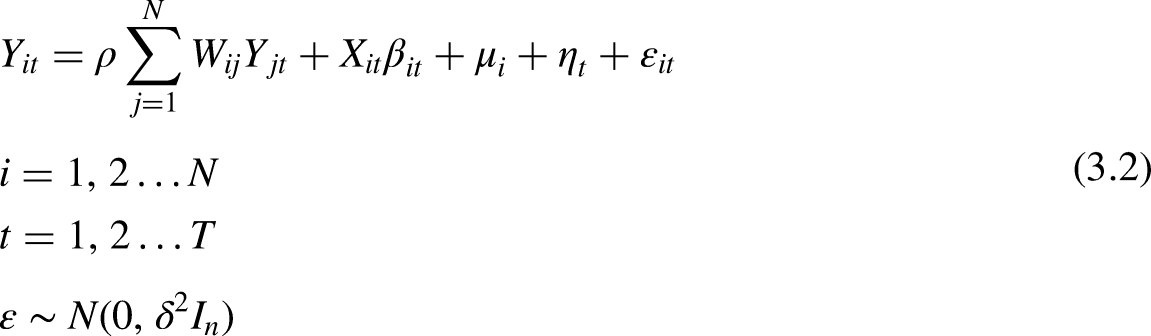
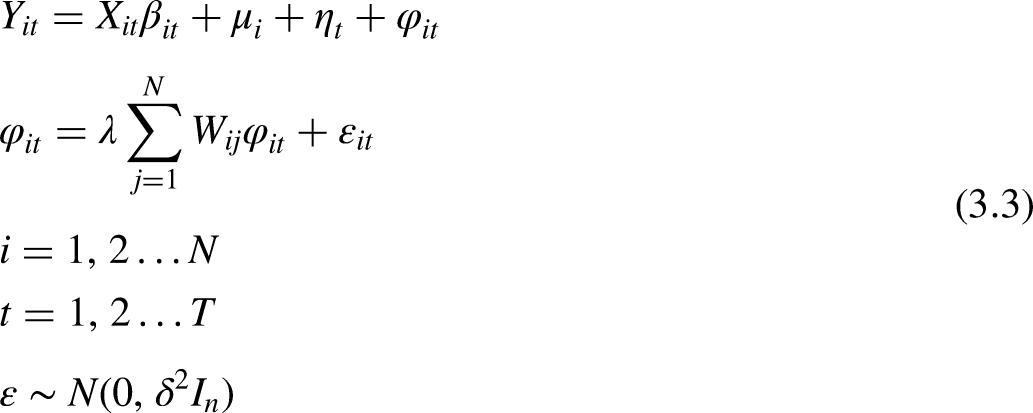
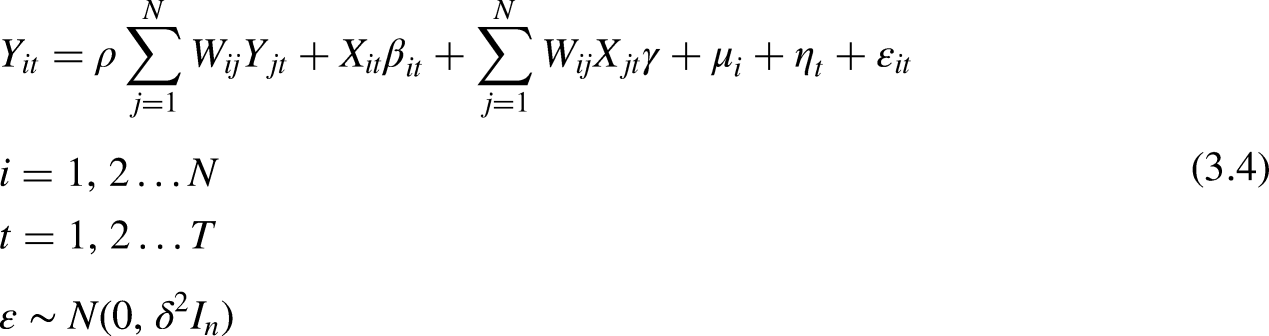
In order to specify nonspatial panel models against the spatial models (i.e. SAR and SEM), we utilize several Lagrange Multiplier (LM) tests. These tests examine whether the spatial models approach offers a proper specification. Moreover, we explore the joint significance of state fixed effects (




Data description
A panel dataset of 48 states and the District of Columbia is used from 2000 to 2015. Data for CO2 emissions, energy consumption, coal consumption, and energy prices are obtained from the U.S EIA
2
(2016) and the CDIAC.
3
Per capita CO2 is computed by total state CO2 emissions divided by state population. Emissions are estimated through the emissions–energy–output model (Itkonen, 2012):

Finally, urbanization rate represents the percentage of urban areas in each state according to the USCB 4 . The GSP variable is based on state-level economic output converted to real values with a base year of 2009. RPS is an energy policy instrument that aims to stimulate the supply of renewable energy in the U.S. electricity markets. This variable takes a value of one starting in the year that a state has passed the RPS law and zero otherwise using DSIRE 5 . Descriptive statistics for all variables are shown in Table 1, and all variables are converted to logarithms for the analyses.
Descriptive statistics.
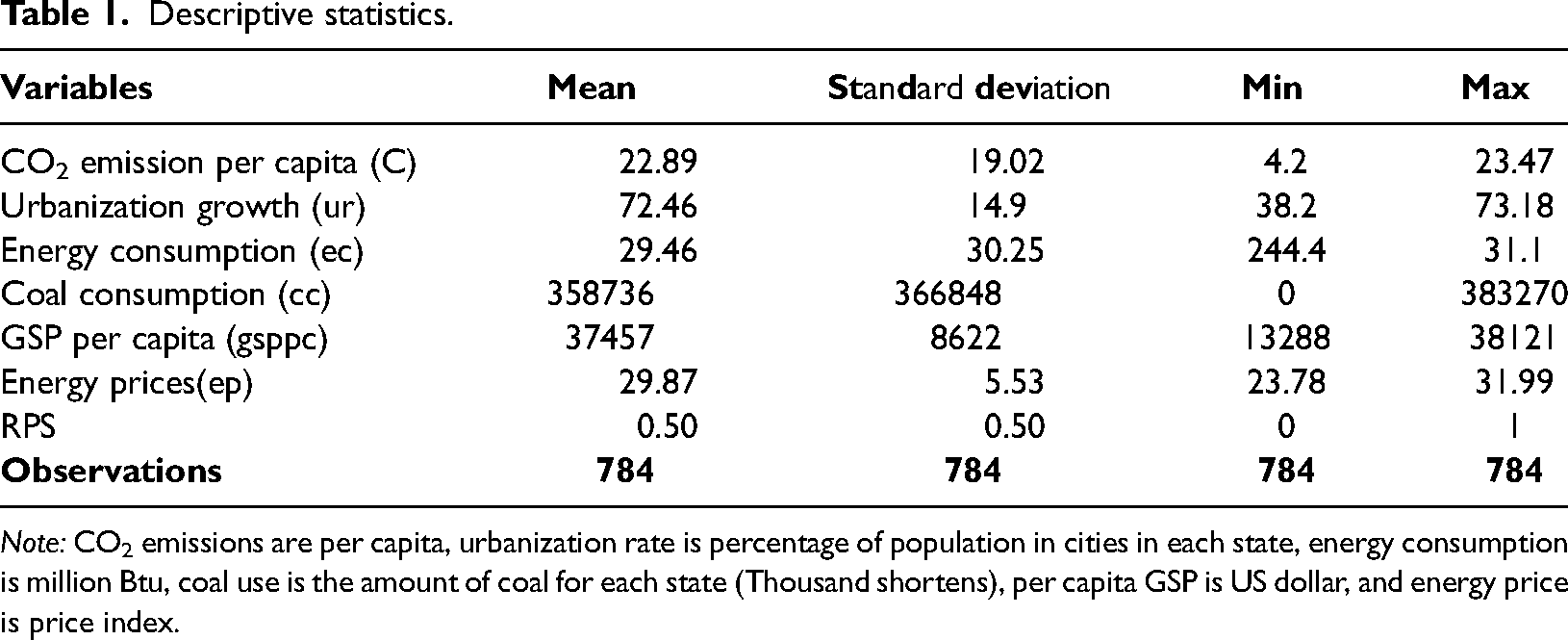
Note: CO2 emissions are per capita, urbanization rate is percentage of population in cities in each state, energy consumption is million Btu, coal use is the amount of coal for each state (Thousand shortens), per capita GSP is US dollar, and energy price is price index.
Results and discussion
The Hausman test results show that the calculated χ2 is 32.86 (Table 2), which denotes that the estimated parameters are biased under the specification of random effects. Based upon the LR tests in Table 2 for nonspatial models, we can conclude that both the state and time period fixed effects should be added to the model. As noted earlier, the Wald tests show that the SDM is the best spatial panel model (Table 2).
Post diagnostic tests.
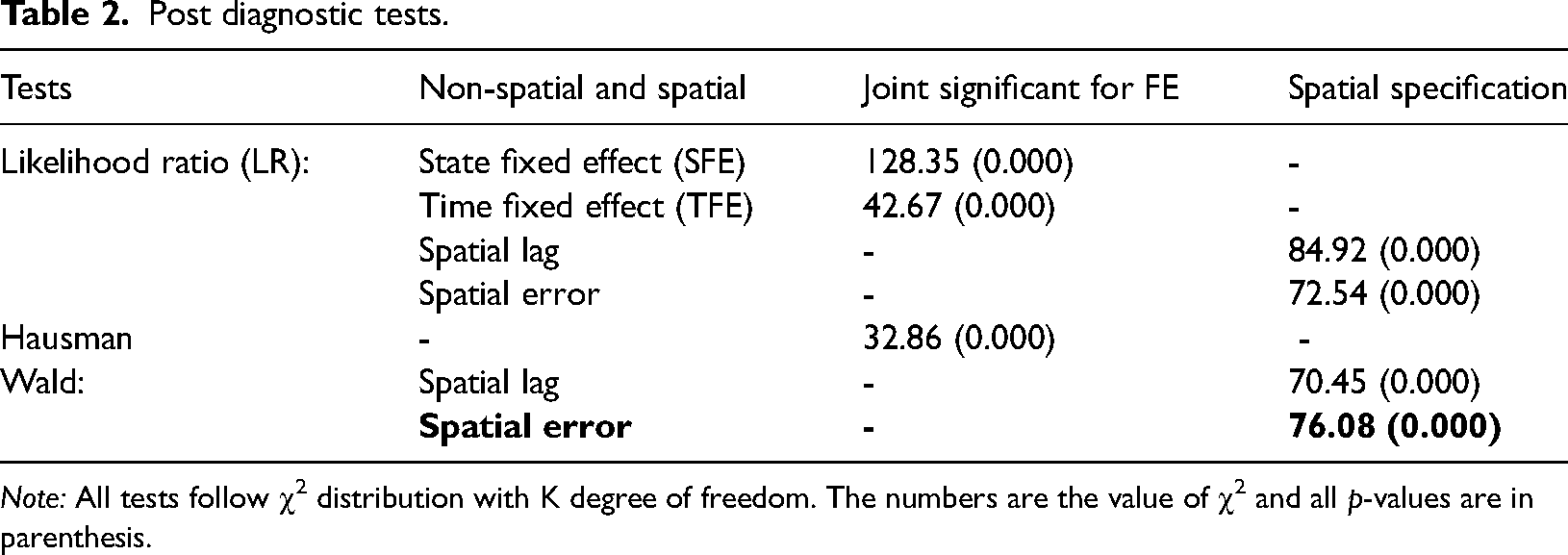
Note: All tests follow χ2 distribution with K degree of freedom. The numbers are the value of χ2 and all p-values are in parenthesis.
Table 3 shows the results of the SDM. The ρsdm coefficient is positive and statistically significant, justifying the use of spatial econometric models by indicating the presence of a spatial autoregressive impact. This coefficient shows that an increase in CO2 emissions in neighboring states leads to an increase of approximately 0.2 times emissions in adjacent states. This result implies that if spatial dependence is ignored, interpreting estimated impacts with OLS will be incorrect.
Estimation results of non-spatial, panel data models.
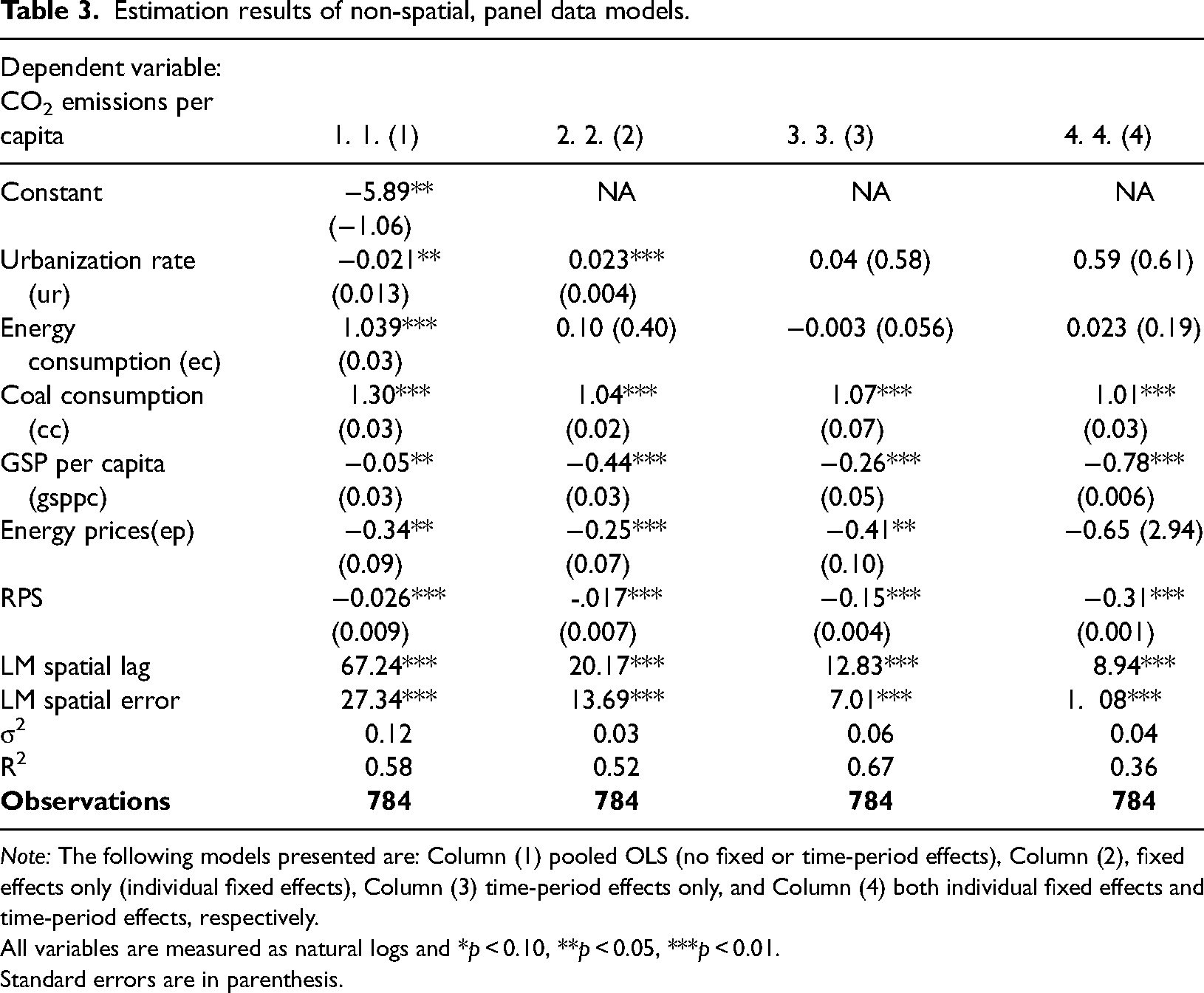
Note: The following models presented are: Column (1) pooled OLS (no fixed or time-period effects), Column (2), fixed effects only (individual fixed effects), Column (3) time-period effects only, and Column (4) both individual fixed effects and time-period effects, respectively.
All variables are measured as natural logs and *p < 0.10, **p < 0.05, ***p < 0.01.
Standard errors are in parenthesis.
Statistically significant and negative direct effects include urbanization rate, energy prices, RPS, and per capita GSP, while energy use and coal consumption have statistically significant positive direct effects (Table 3). These results indicate that increased urbanization, energy prices, and economic growth along with the passage of an RPS will decrease state-level CO2 emissions, while increasing coal consumption and energy use will lead to increased emissions. Coal consumption dramatically increases CO2 emissions with a 1% increase leading to an own state increase of 1.31% in emissions and a total effect of more than double at 2.54%. The size of the total effect for coal consumption indicates that encouraging the replacement of coal with renewable or natural gas energy plays a critical role in decreasing CO2 emissions.
Table 4 reports the estimation results for direct and indirect effects from the SDM model. Among the direct effects, each independent variable has a statistically significant impact at a 1% level, except for coal consumption which is significant at the 5% level. Table 4 illustrates direct and indirect impacts of predictors on CO2 emissions. Indirect effects are statistically significant apart from per capita GSP. The negative direct effect and positive indirect effect of urbanization rate suggest that growth in urbanization will reduce own state CO2 emissions while at the same time increasing emissions of neighboring states. These results imply that a 1% increase in urbanization is linked with a 0.3% decrease in own state per capita CO2 emissions and an 0.012% increase in per capita emissions in neighboring states. The intuition here is that the total effect of urbanization advances reductions in CO2 emissions so growing cities across the United States has a total effect of decreasing CO2 emissions.
Estimation results of direct, indirect, and total effect of the SDM.
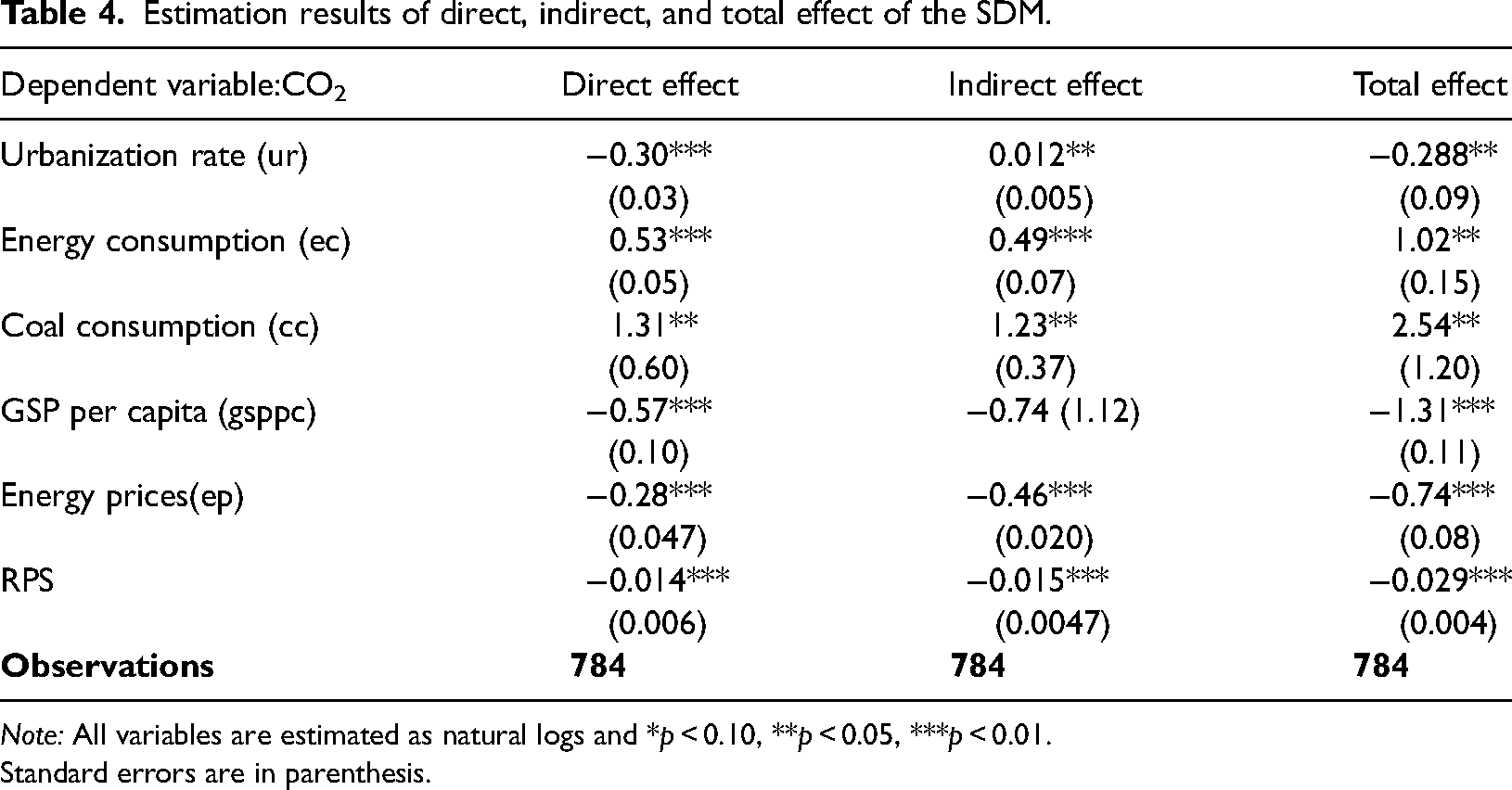
Note: All variables are estimated as natural logs and *p < 0.10, **p < 0.05, ***p < 0.01.
Standard errors are in parenthesis.
Energy and coal consumption have positive direct and indirect effects on CO2 emissions, implying that an increase in either one leads to emission increases, both own state and neighboring states. In fact, coal and energy consumption as electrical energy in power plants generate CO2 emissions. The statistically significant effect of per capita GSP is negative within own state emission, but the indirect effect is not statistically significant. This result suggests that if the own state per capita GSP increases, it will lead to own state CO2 emissions reductions, but not reductions in neighboring states. The estimated coefficients on the GSP are all highly significant and consistent with the inverted U-shaped relationship illustrated by the environmental Kuznets curve (EKC) hypothesis. As shown in Table 3, the negative direct and indirect effects of energy prices suggest that if state-level energy prices increase, this effect will not only decrease in-state CO2 emissions but also CO2 emissions from neighboring states by an even larger amount. The estimate shows that energy price linkage to CO2 emissions is inelastic in the short run. This indicates that the result is consistent with expectations as in the short run consumers do not have the possibility to change their quantity of energy and can only alter the behavior of consumers (Bhattacharyya, 2011). In other words, if one state increases its energy prices then it has a negative, short-run impact on its own CO2 emissions. In accordance with the law of demand it is expected that all coefficients on the prices are negative (Table 3).
Finally, with negative direct and indirect effects, if an RPS is implemented in one state, it will lead to reductions in own state CO2 emissions as well as an equally large reduction of emissions in neighboring states. This effect is indicative of interstate electricity transport and renewable energy certificates for electricity generation that can be traded across state lines.
The estimated results for spatial models are reported in Table 5. The results show that at a 1% statistical significance level, CO2 emissions are a decreasing function of explanatory variables for urbanization rate, energy prices, RPS, and per capita GSP. Table 5 also reveals that at a 1% statistical significance level, CO2 emissions are increasing functions of energy use and coal consumption. The ρsdm coefficient in the SDM model is statistically significant with contiguity-based matrix, justifying the use of spatial econometric models by indicating the presence of a spatial autoregressive impact. Therefore, dynamic spillover long-run linkages between fossil fuel energy use and urbanization are of importance to energy policy makers in the United States. Policy toward lessening coal consumption might have a significant impact on the reduction of CO2 emissions in the states. The implications of this study for policy are as follows. First, U.S. utilities are using more clean energy and substituting natural gas for coal, as this substitution is affected by both efficiency and the price of natural gas. Since the coal industry has been in crisis, it is proper policy to promote exporting coal to other countries might be a solution to overcome the industry's crisis. Second, since there are not statistically significant, long-run impacts from any variables on coal consumption in the post shale gas time period, the expansion of shale gas production has substantially changed the factors that determine coal consumption. On the one hand, this substitution has resulted in important shifts in the U.S. energy market and reducing CO2 emissions. On the other hand, this substitution implies that another proper policy could be to encourage using coal for other uses (i.e. manufacturing or steel industry).
Estimation results of spatial panel data models
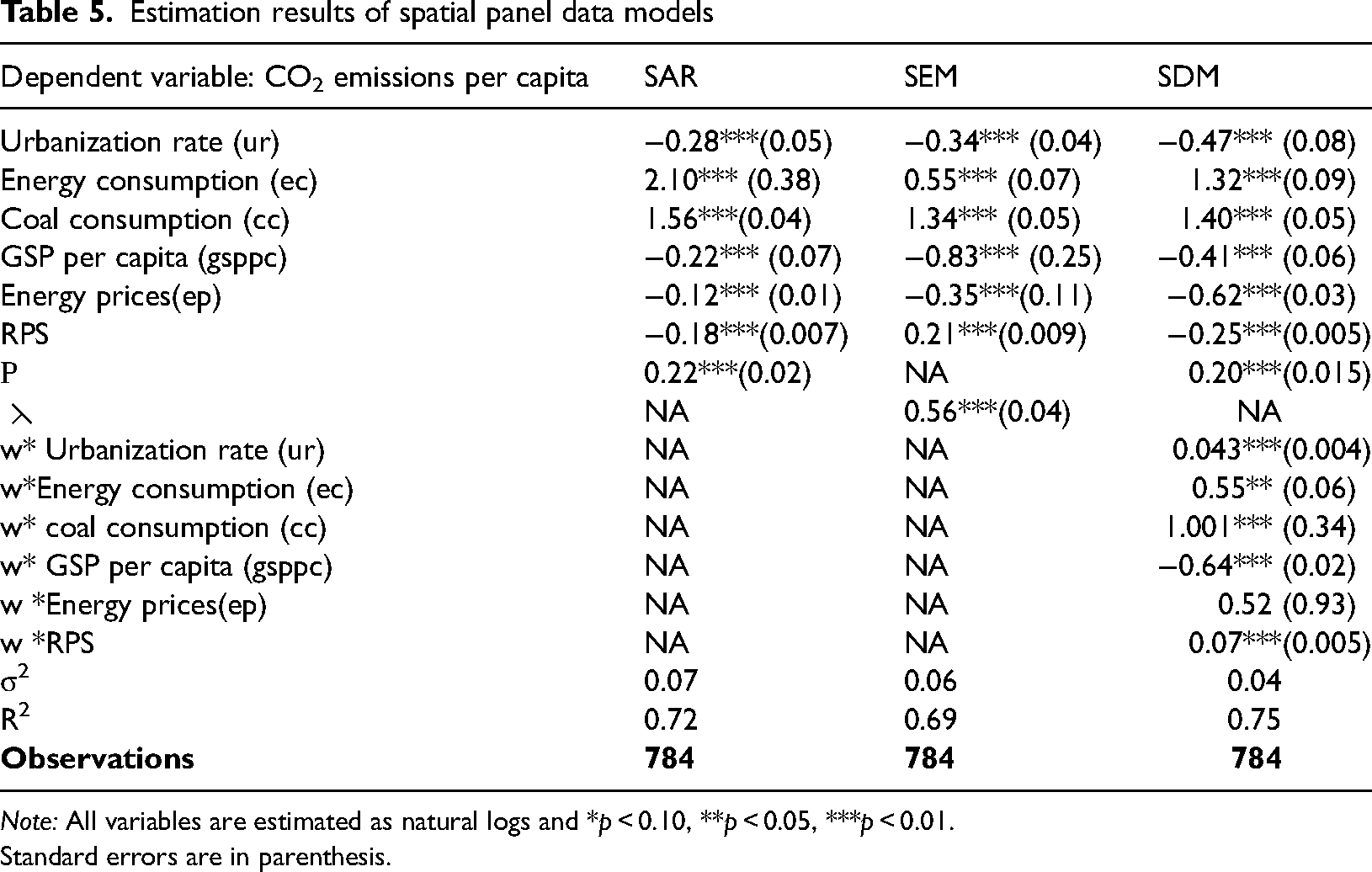
Note: All variables are estimated as natural logs and *p < 0.10, **p < 0.05, ***p < 0.01.
Standard errors are in parenthesis.
These empirical results not only contribute to advancing the current literature but also deserve certain attention from energy policy makers in the U.S. market. Since more than 90% coal have been used in power plants in the United States, as capacities of power plants are decreasing and new capacities are being established to replace them, power firms are promoting to use of more efficient and cost-effective energy sources (i.e. natural gas) to build new power plants over coal-fired plants. Given the coal issue of the energy market in the United States, more study needs to be undertaken to offer a comprehensive resource for policymakers pursuing actual solutions to alleged problems surrounding this industry. Thus, a U.S. state is more likely to adopt a law and or policy if its neighboring states have already done so (Mooney, 2001). In fact, geographical location has been identified as a critical factor of cross-region economic growth due to indicators like the diffusion of technology (Keller, 2004). We could argue that CO2 emissions may decrease with technological development, then the diffusion of technology would likely enhance conditions of neighboring environment. It is important to develop federal and state policy to manage CO2 emissions in the cities. Moreover, other policies to decrease CO2 emissions would promote developing urban areas and implement a renewable energy policy.
Conclusions
The empirical results suggest that urbanization rate, energy prices, RPS, and per-capita GSP are inversely related to CO2 emissions in their own states. These results imply that increased urban development, economic growth, and the implementation of RPS all reduce CO2 emissions at the state level. The SDM also shows that while more urbanization reduces the own state CO2 emissions, it increases CO2 emissions of neighboring states by about 1/3 amount of the own state reduction. One possible reason for this positive indirect effect of urbanization stems from interstate transportation of goods and services. As urban areas grow, there is increased importation of goods and products from other states, which create energy-related CO2 emissions from the production and transportation of these goods.
The direct and indirect effect results of the energy use and coal consumption variables imply that higher coal consumption and energy use lead to higher CO2 emissions not only within a state but also on a regional basis. Hence, reducing fossil fuel use in an economy is an effective choice for decreasing CO2 emissions. Coal consumption has the highest impact on CO2 emissions of any variable, which suggests that an appropriate policy for reducing CO2 emissions is to use more efficient energy sources and renewable energy.
Our results contribute to the literature by quantifying opposite direct and indirect effects of urbanization on state-level CO2 emissions along with the negative effects of income and RPS on state-level emissions. The income effects provide additional support for the EKC, such that income growth reduces per capita CO2 emissions (Aldy, 2005; Tawfeeq et al., 2019). For RPS, the indirect effects of CO2 emission reductions are as large as the own state direct effects, indicating that cross-border impacts are important. This result is important due to the prominence of state and local government actions in climate change mitigation now that the U.S. government has withdrawn from the Paris Climate Accords.
However, this study suffers from several limitations. First, the problem of measurement error of CO2 emissions that is consistent with the rest of literature since CO2 emission is based on the measurement of emissions from the burning of fossil fuels and not real ambient CO2 emissions. Second, there are other factors that contribute to CO2 emissions that include land use conversions from natural areas or farm to urban which are necessary to create urbanization. These factors are not accounted for in this analysis. Third, the spatial panel data process could suffer from problems of endogeneities within the independent variables and issue of theoretical framework.
The impacts of factors and independent variables from Table 4 are essentially consistent with the previous literature and theoretical expectations offered in literature review and the theoretical model (Newman and Kenworthy, 1999; Cole and Neumayer, 2004; Andrews, 2008; Gonzalez, 2009; Jaforullah and King, 2017). More specifically, our results are in line with the findings of Liddle and Lung (2010), Poumanyvong and Kaneko (2010), Chuai et al. (2012), and Burnett et al. (2013) since they had evidence favorable to the effects of urbanization, GDP, and the energy factors (use, prices, and policies) on CO2 emissions. However, our study contrasts with some of these studies since our findings show that urbanization has negative direct effect and positive indirect effects on CO2 emissions at the state level in the United States. Finally, this study only provides a primary interpretation of the effect of urbanization on CO2 emissions based upon state-level data. Hence, it excludes more explicit factors examining city size, green technologies implemented, substitutions of renewable energy for fossil fuels, and structural changes among various economic sectors in the U.S. urban areas. Future work could be to more directly investigate the roles of economic activities, sectors of economy in urban areas, renewable energy sources, and other excluded factors in explaining the effect of urbanization on environment and economic development. We look forward to future study along with these lines.
Footnotes
Declaration of conflicting interests
The author(s) declared no potential conflicts of interest with respect to the research, authorship, and/or publication of this article.
Funding
The author(s) received no financial support for the research, authorship, and/or publication of this article.
