




Abstract
In order to investigate the influence of particle size on the flotation behavior of coal slime, industrial analysis, elementary analysis, and particle size composition analysis were carried out on coal slime. The coal slime is divided into three sizes: −0.5 + 0.25, −0.25 + 0.074, and −0.074 mm, and full −0.5 mm particle sizes. Through contact angle measurement, wetting heat measurement, and step-by-step release test to investigate the hydrophobicity of each particle size; in addition, the flotation kinetics test of different particle sizes coal slime was also carried out. The results show that the particle size has a significant effect on the flotation behavior of fine coal slime. The medium particle size −0.25 + 0.074 mm has the best hydrophobicity, followed by −0.5 + 0.25 mm, again −0.5 mm, and finally −0.074 mm particle sizes. Use Origin software to fit six kinetic models to the test data of coal slime flotation kinetics, and analyze the maximum combustible recovery
Introduction
Coal is the main energy source for power generation and coking in China (Kato and Matsueda, 2018), and it is also an important resource to promote the growth of the national economy (Chang et al., 2017). With the gradual depletion of high-quality coal resources, the demand for the washing of high-ash refractory coal is increasing (Ni et al., 2018). Separating combustibles from high-ash coal slime plays an important role in improving the calorific value and utilization efficiency of pulverized coal (Xia et al., 2019). The mineral impurities in coal are the main factor causing environmental pollution and affect the combustion efficiency of coal (Xing et al., 2017). Coal separation is an effective method to improve coal quality, remove gangue minerals and organic sulfur, and is also an important factor in reducing environmental pollution and transportation costs (Shi et al., 2018; Xia, 2018). Flotation is a physicochemical separation technology that is widely used in mineral and coal fine particles. It is an effective method for separation using the difference in surface hydrophobicity and floatability between coal and gangue particles (Ma et al., 2018; Peng et al., 2018). The step-by-step release test can understand the floatability of coal slime of different particle sizes and determine its hydrophobicity (Chen et al., 2019). The hydrophobicity of coal slime is the main factor affecting the flotation behavior and recovery of coal slime (Niu et al., 2018).
In the process of coal slime flotation, due to mechanical coating and water entrainment, clay minerals have an adverse effect on the flotation of fine coal slime, resulting in low flotation recovery and poor flotation selectivity (Xing et al., 2017). The flotation efficiency is related to the collision, attachment, and detachment between particles and bubbles, and the particle size of coal slime has a significant effect on the flotation behavior of mineral particles (Ai et al., 2017Wang and Tao, 2017; Zhang et al., 2017). The collision efficiency of fine particles and bubbles, particles and collectors is lower than that of the optimal flotation particle size (Miettinen et al., 2010; Yang et al., 2019). In the coarser and cleaner flotation process of bituminous coal, the recovery of medium-sized flotation combustibles is the highest (Ni et al., 2016). In the study of the influence of medium particle size on the frother properties in the process of coal slime flotation, three particle sizes of coarse (−0.5 + 0.25 mm), medium (−0.25 + 0.074 mm), and fine particle sizes (−0.074 mm) are selected. Carrying out single and mixed flotation, the results show that the flotation results of each particle size are quite different (Tan et al., 2019).
As we all know, the flotation process can be regarded as a time-to-recovery flotation process, and a flotation kinetic model combining recovery and rate function is usually used to evaluate flotation behavior (Ni et al., 2016). Therefore, the flotation time recovery curve is widely used to describe the flotation kinetics, and it can also be completely described by a mathematical model (Zhang et al., 2013). Flotation kinetics is a dynamic system that describes the cumulative combustible recovery of the flotation process as a function of the flotation time to reflect the flotation rate (Zhu et al., 2020).The final recovery
Based on the above research, the contact angle, wetting heat, and step-by-step release tests are used to investigate the effect of particle size on the flotation behavior of coal slime. Six kinetic flotation models were selected to evaluate the effect of particle size on the behavior of coal slime flotation. The maximum cumulative combustible recovery (
Experimental
Materials
The test coal sample was collected from a coal preparation plant in China. The raw coal used was dried under natural conditions, and then crushed and screened to use slime <0.5 mm for the test study. The test coal sample was stored in a sealed test bag spare. The industrial analysis and element analysis of coal slime are shown in Table 1.
Comprehensive table of industrial analysis and elemental analysis of coal slime.
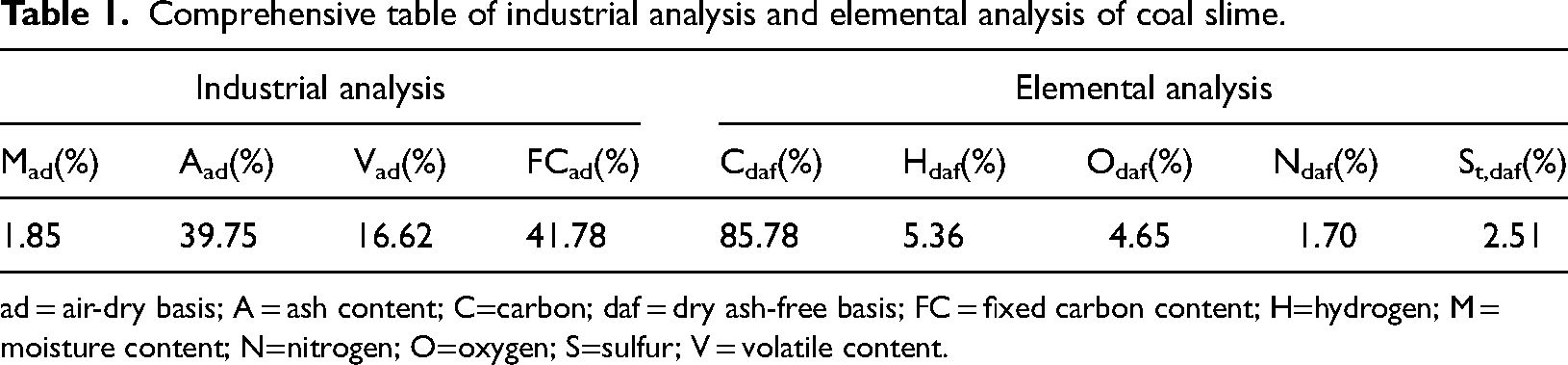
ad = air-dry basis; A = ash content; C=carbon; daf = dry ash-free basis; FC = fixed carbon content; H=hydrogen; M = moisture content; N=nitrogen; O=oxygen; S=sulfur; V = volatile content.
It can be seen from Table 1 that the moisture content of the air-dry basis for the preparation of coal slime samples is 1.85%, the ash content of the air-dry basis is 39.75%, the total sulfur content of the air-dry basis is 2.51%, and the total sulfur content of the dry basis is 1.49%. The coal slime belongs to high-ash, low-sulfur coal slime.
Phase test and screening test
X-ray diffractometer (XRD) was used to analyze the phase composition of coal slime. The small sieving test of coal sample is carried out according to “Test Method for Coal Sieving” (GB/T477-2008). The screen sizes of the test set of sieve are: 0.5, 0.25, 0.125, 0.074, and 0.045 mm. Weigh 200 g coal sample for wet sieving to obtain 5 sizes of products, which are dried, weighed, and tested for ash.
Contact angle measurement
The contact angle is measured to reflect the influence of particle size on the hydrophobicity of coal slime. Firstly, press the three-size and full-size coal samples, weigh 150 mg of powder into the tablet model, apply a pressure of 60 Mpa on the tablet machine, hold for 3 min, and demold to obtain small round tablets with a diameter of about 1 cm. A contact angle meter (HARKE-SPCAX3, Beijing Harco) was used to measure the contact angles of the three-size and full-size samples. The deionized water droplets are taken on the surface of the small disc to take an image, and the contact angle is measured by image analysis, and the average value is measured three times for each test. All measurements are performed at room temperature.
Wetting heat measurement
The wetting heat is measured by a C80 calorimeter (Setaram, France). Using deionized water as the wetting fluid, the wetting heat between water and coal slime was measured by microcalorimetry to study the effect of particle size on the hydrophobicity of coal slime. Before measuring the wetting heat of each particle size, weigh 0.2 g of coal slime sample into the bottom of the calorimeter, and place 2 ml of deionized water on the top. After the baseline of the calorimeter is completely stabilized, the film is broken through the moving rod so that the deionized water is in contact with the coal sample. Calculate the wetting heat by integrating the heat flow curve by the baseline integration method.
Flotation tests
The step-by-step release test adopts XFD-1.0 L single tank flotation machine for test. The concentration of coal sample slurry of the three-size and full-size sample is fixed to 100 g/L, the mixing speed is fixed to 1800 r/min, the aeration rate is fixed to 0.06 m3/h, the amount of collector dosage (kerosene), and frother dosage (secoctyl alcohols) is fixed at 600 and 100 g/t, respectively. According to “Coal Preparation Laboratory Step-by-Step Release Flotation Test Method” (MT/T 144-1997), after a rough selection and multiple selections, the clean coal, and tailings that float out are filtered, dried, weighed, and ash measured. The kinetic flotation test adopts the flotation conditions of the step-by-step release test. Stir fully in the flotation tank for 2 min, add the collector dosage, add the frother dosage after another 2 min, and open the aeration valve after another 1 min. Aerate for 10 s, collect clean coal for 3 min, and collect tailings. The collection time of the frother product in the flotation test is 10, 20, 40, 60, 100, and 180 s. Finally, all products are filtered and dried, weighed, and ash measured. The flotation result evaluation method is evaluated in accordance with GB/T 34164-2017 “Method for Evaluating the Effect of Coal Preparation Plant Flotation Process,” and the calculation is carried out with the following formula:
where
Flotation kinetic models
Flotation kinetics is based on uniformity of chemical kinetics to investigate the law of flotation rate, reflecting the speed of the flotation process (Zhu et al., 2020). In the present article, six flotation kinetic models are selected to investigate the influence of different particle sizes on the flotation behavior of coal slime. The models are shown in Table 2. Use Origin software to fit the cumulative combustible recovery of clean coal collected at 10, 20, 40, 60, 100, and 180 s in the three-size and full-size coal slime flotation tests to 6 flotation kinetic models. The flotation rate constant (k) is defined as function of the cumulative combustible recovery of flotation concentrate and flotation time. The maximum combustible recovery (
Six flotation kinetic models.
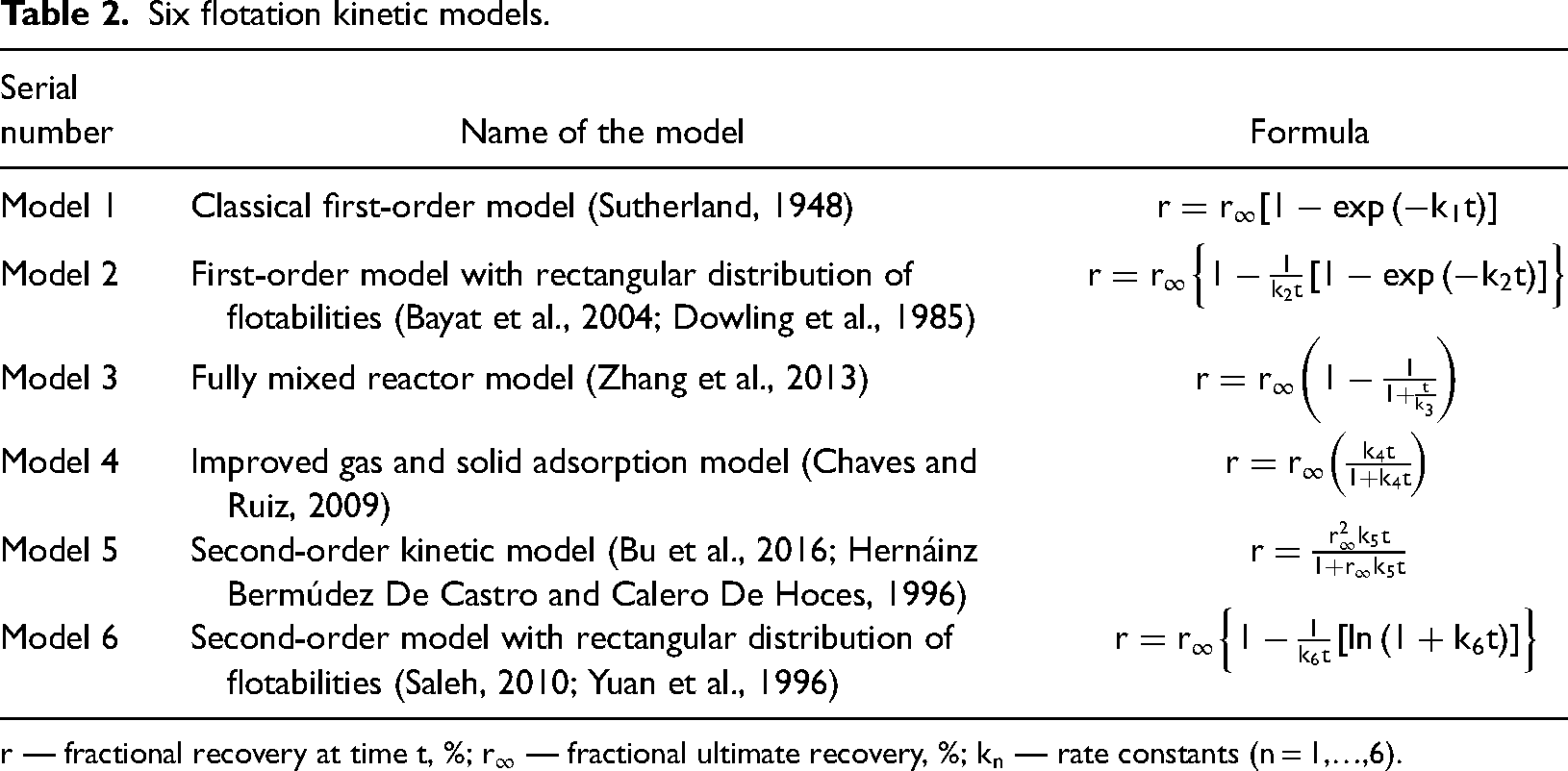
r — fractional recovery at time t, %;
Results and discussion
Phase and particle size analysis of coal slime
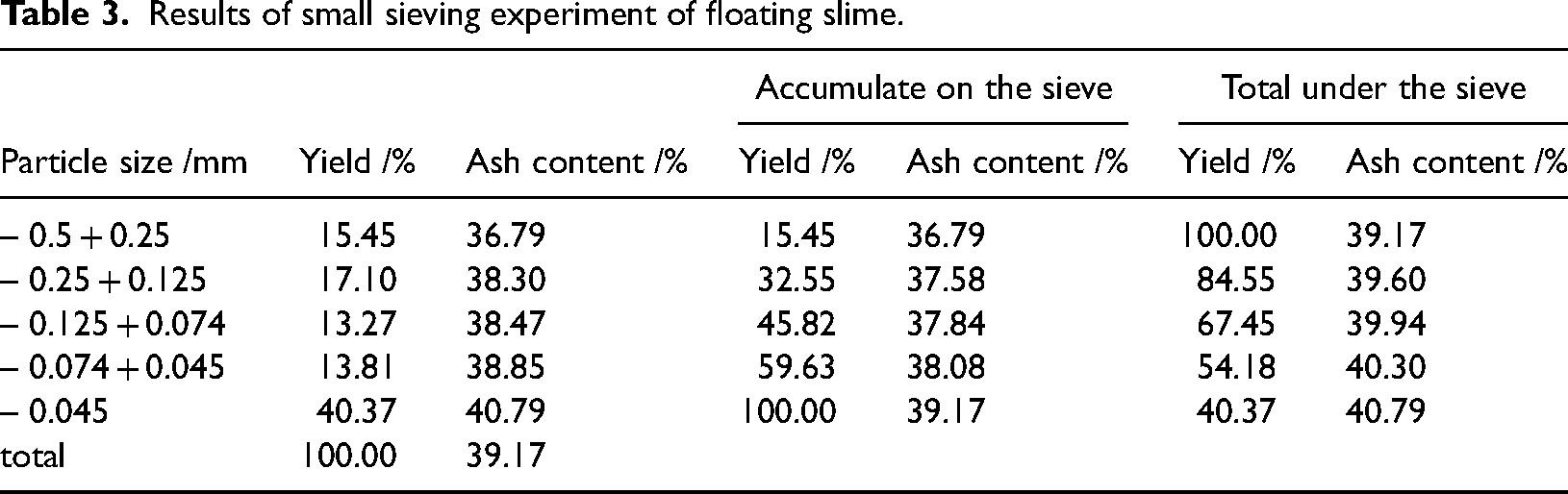
XRD was used to determine the mineral composition of coal slime particles, and X-ray diffraction pattern is shown in Figure 1. The results of screening test of coal slime are shown in Table 3.
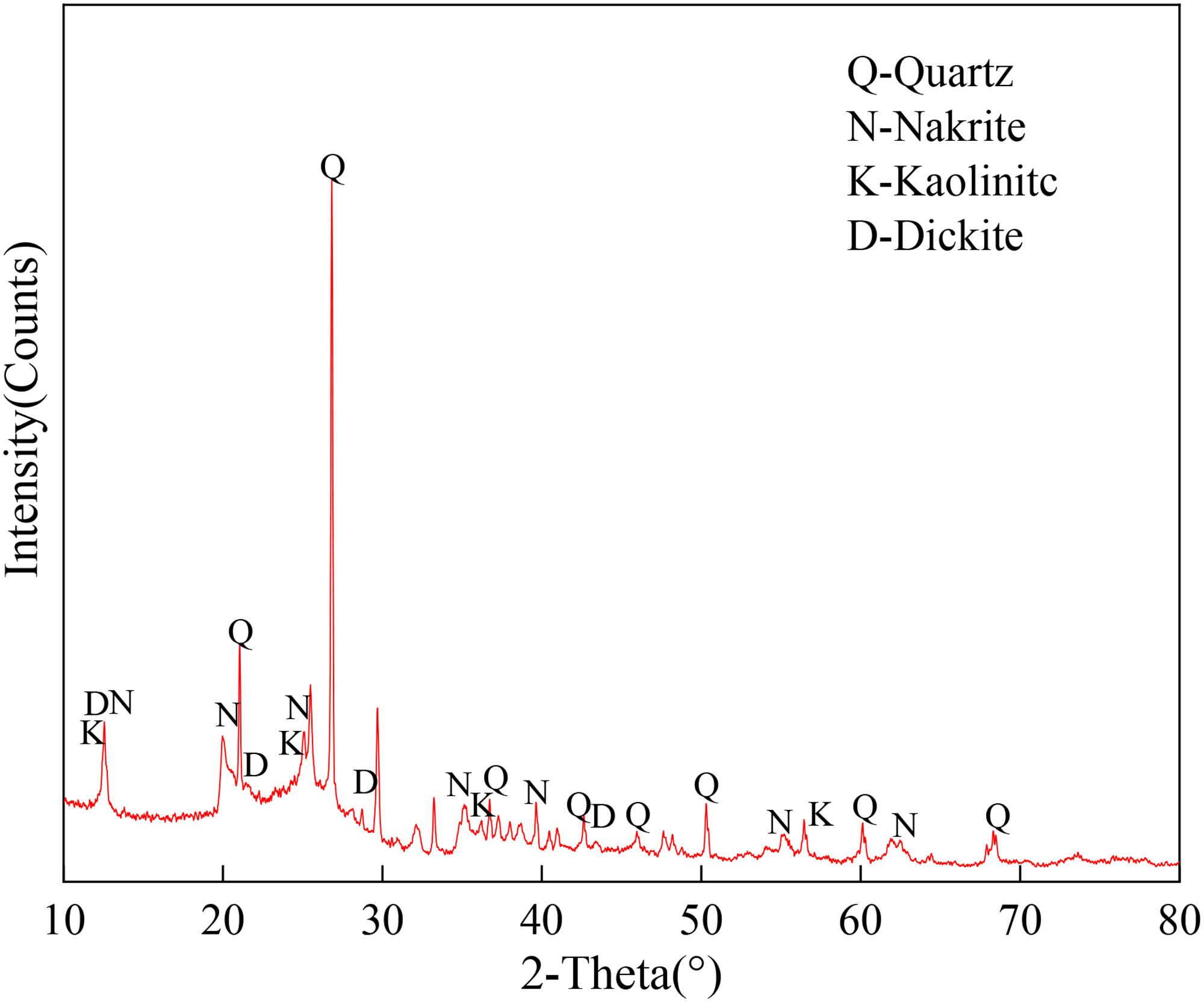
X-ray diffractometer pattern of coal slime.
Results of small sieving experiment of floating slime.
It can be seen from Figure 1 that the main component minerals of coal slime are quartz, nacre, kaolinite, double kaolinite, etc., among which nacre, kaolinite, and double kaolin are clay minerals, which are extremely easy to mud. As a result, the flotation reagent consumes a large amount and easily enters the clean coal through entrainment and cover, which increases the ash content of clean coal.
It can be seen from Table 3 that the yield of −0.5 + 0.25 mm particle size is 15.45%, the ash content is 36.79%, the yield of −0.25 mm particle size is 84.55%, the cumulative ash content is 39.60%, and the yield of −0.25 + 0.074 mm medium particle size is 30.37%, this particle size is the better feed particle size for flotation, and particle size composition of coal slime is suitable for flotation (Shi et al., 2016). The dominant particle size of coal slime sample is −0.074 mm, the yield is 54.18%, and the cumulative ash content is 40.30%, which is a high-ash fine mud. According to the test of classification sizes flotation, particle size has a significant effect on the distribution of coal slime ash. Therefore, three classification sizes are selected: −0.5 + 0.25, −0.25 + 0.074, and −0.074 mm, and full-size −0.5 mm to investigate the effect of particle size on the flotation behavior of coal slime frother.
Contact angle analysis
The contact angle measurement is an effective tool to investigate the difference in hydrophobicity of mineral surfaces (Chen et al., 2017; Xia and Yang, 2013). The contact angle can directly reflect the strength of hydrophobicity of coal slime particle surface. The larger the contact angle, the better the hydrophobicity.The contact angles of different particle sizes are shown in Figure 2.
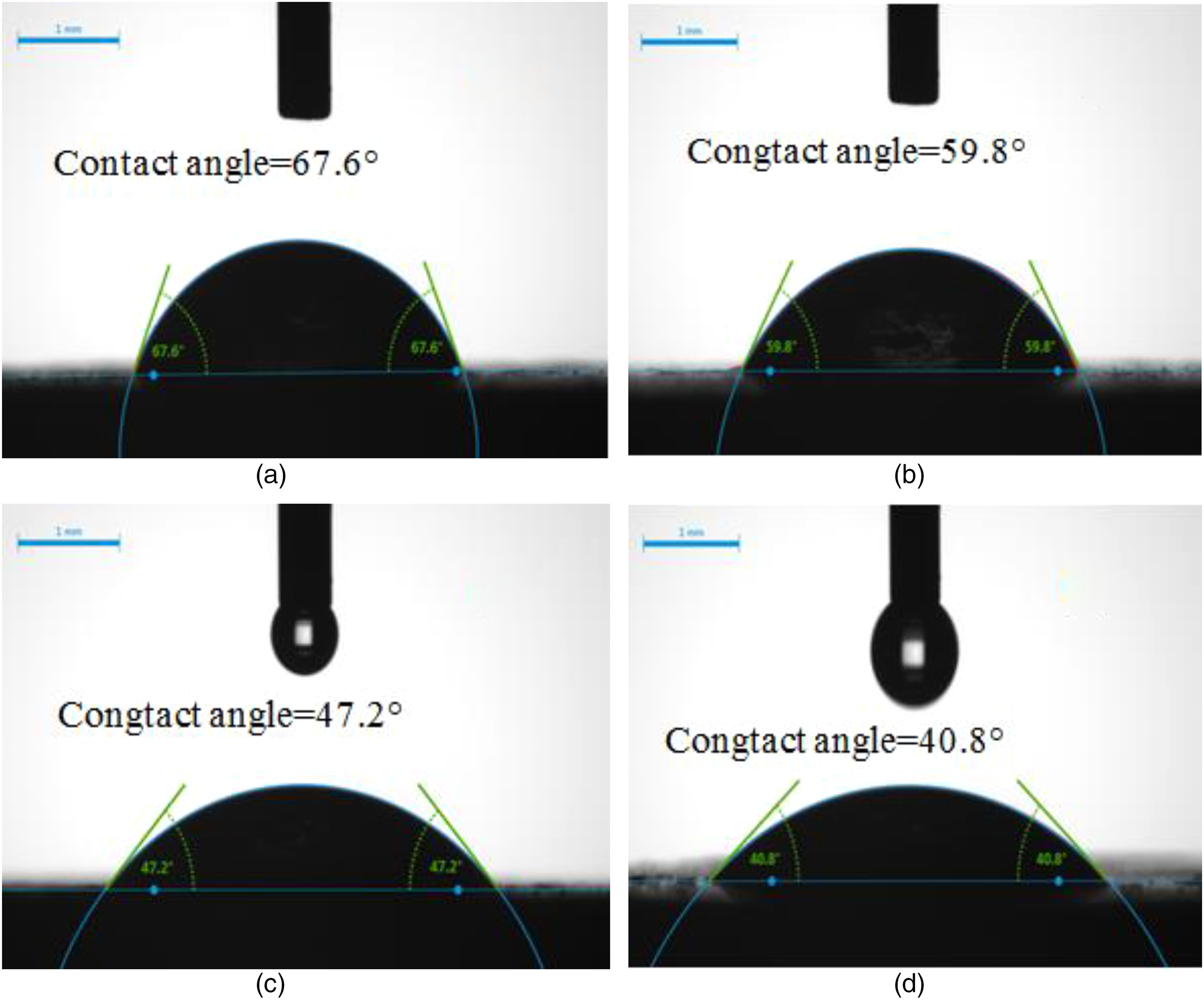
Contact angle of three-size and full-size coal slime (a: −0.25 + 0.074 mm particle size; b: −0.5 + 0.25 mm particle size; c: −0.5 mm particle sizes; d: −0.074 mm particle size).
It can be seen from Figure 2 that the contact angles of the three-size: −0.25 + 0.074, −0.5 + 0.25, and −0.074 mm are 67.6°, 59.8°, and 40.8°, respectively, and full-size: −0.5 mm. The contact angle is 47.2°. The contact angle of the full-size −0.5 mm particle size is smaller than the contact angle of the particle sizes −0.25 + 0.074 and −0.5 + 0.25 mm, but greater than contact angle of the particle size −0.074 mm. The −0.25 + 0.074 mm particle size of coal slime has the largest contact angle. This particle size of coal slime has the best hydrophobicity.
Wetting heat analysis
The measurement of wetting heat can reflect the hydrophobicity of the surface of different particle sizes of coal slime (Xia et al., 2019). The change of wetting heat of coal slime of different particle sizes before and after kerosene quenching and tempering is shown in Figure 3.
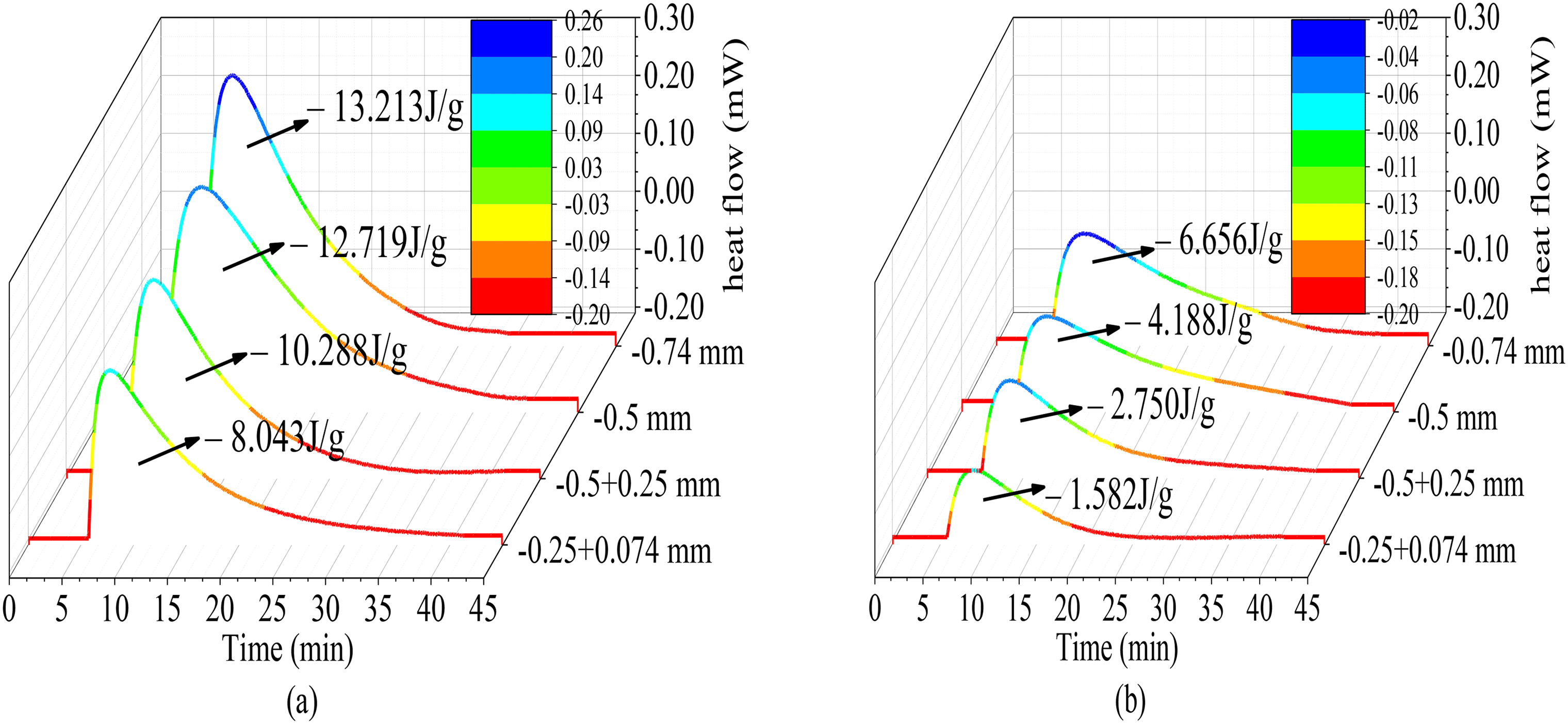
Wetting heat of coal slime of different particle sizes (a:wetting heat before tempering; b: wetting heat after tempering).
It can be seen from Figure 3 that the heat flow curve has obvious differences for different particle sizes of coal slime, and the negative value of the heat of wetting indicates that the adsorption process is exothermic and spontaneous. In the first three sizes of quenching and tempering: −0.25 + 0.074, −0.5 + 0.25, and −0.074 mm; the wetting heat value of the three-size is −8.043, −10.288, and −13.213 J/g; full-size: −0.5 mm particle size has a wetting heat value of −12.719 J/g. Three sizes of kerosene after quenching and tempering : −0.25 + 0.074, −0.5 + 0.25, and −0.074 mm; the wetting heat value of the three-size is −1.582, −2.750, and −6.656 J/g; full-size: −0.5 mm particle size has a wetting heat value of −4.188 J/g. After kerosene quenching and tempering, the absolute value of the wetting heat value of different particle sizes is smaller than the absolute value before quenching and tempering. The smaller the absolute value of the wetting heat, the weaker the reaction between coal slime and water molecules,the stronger the hydrophobicity (Yang et al., 2019). The absolute value of heat of wetting of −0.25 + 0.074 mm coal slime is smaller than −0.5 + 0.25, −0.074, and −0.5 mm coal slimes. The particle size of coal slime has a significant effect on wetting heat. This is consistent with the contact angle analysis.
Step-by-step release test analysis
In order to investigate the floatability of coal slime of different particle sizes, a step-by-step release test was carried out on coal slime of different particle sizes. The test results are shown in Figure 4.
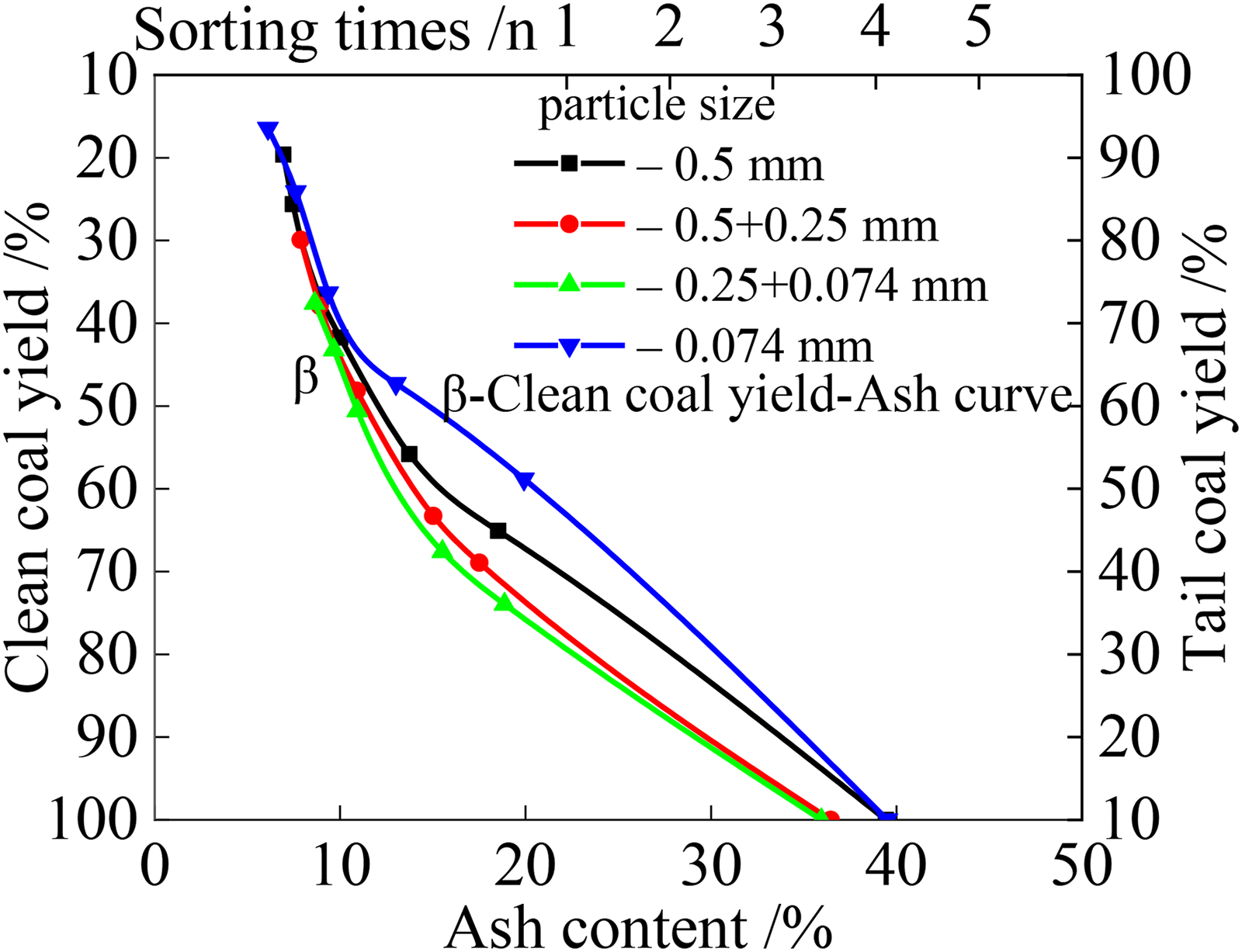
Step-by-step release test of coal slime of different particle sizes.
It can be seen from Figure 4 that different particle sizes of coal slimes are subjected to a step-by-step release test under the same flotation conditions. When the clean coal ash content is 10.5%, the yield of −0.5, −0.5 + 0.25, −0.25 + 0.074, and −0.074 mm particle sizes of coal slime is: 43.69%, 46.32%, 48.10%, and 41.89%, respectively, and the corresponding theoretical clean coal combustible recovery: 64.56%, 65.24%, 67.22%, and 61.98%. According to “Coal (Mud) Floatability Evaluation Method” (GB/T30047-2013) for evaluation. From the combustible recovery body of the clean coal of different particle sizes, it can be seen that: −0.25 + 0.074 mm particle size coal slime has better floatability, followed by −0.5 + 0.25 mm, and again −0.5 mm, and finally −0.074 mm particle size coal slime. This is consistent with contact angle analysis results.
Effect of particle size on flotation kinetics
In the flotation process, the relationship between cumulative combustible recovery of clean coal of different particle sizes and flotation time is shown in Figure 5.
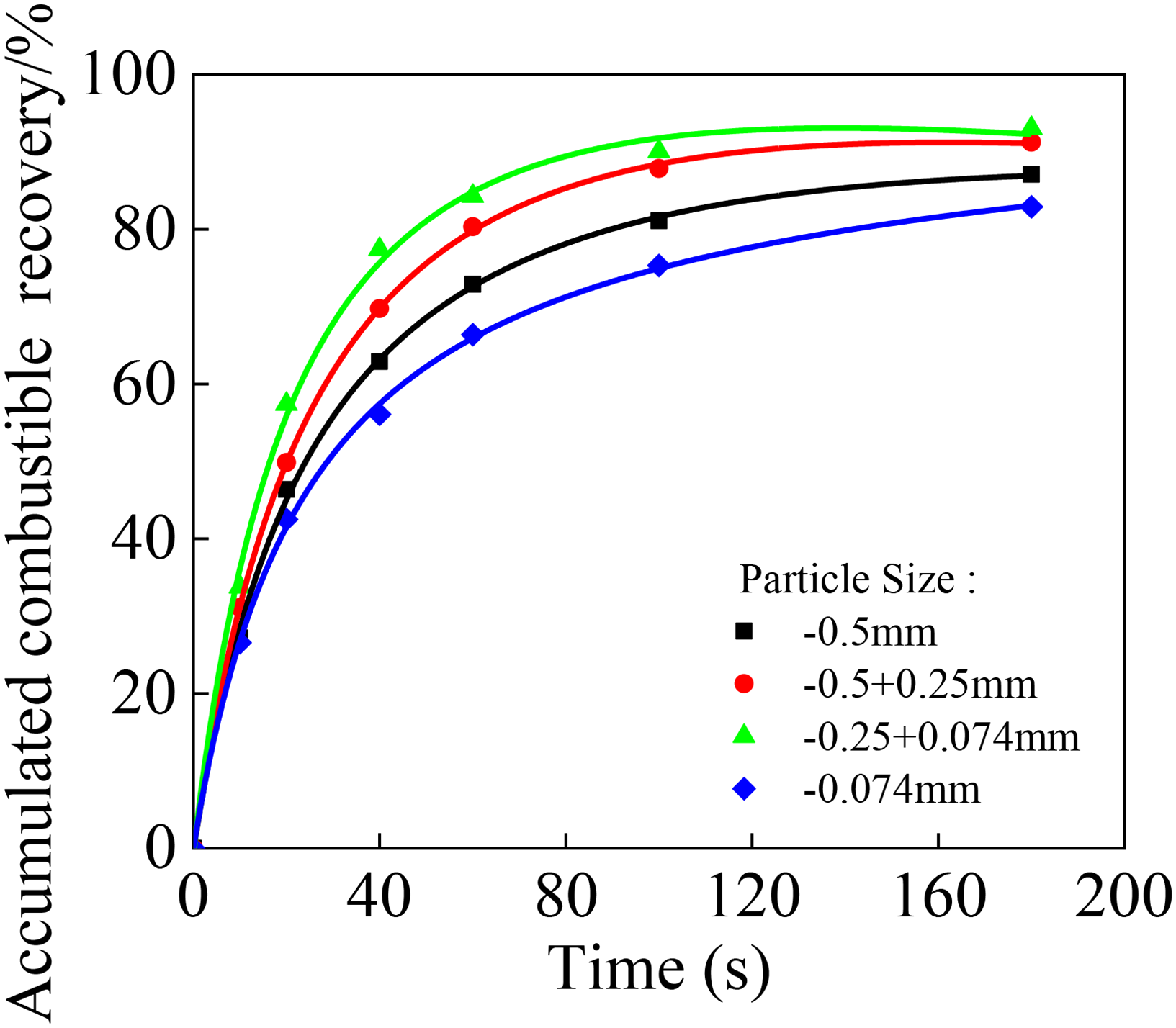
Effect of particle size on the accumulated combustible recovery of clean coal.
It can be seen from Figure 5 that the accumulative combustible recovery of −0.25 + 0.074 mm particle size of clean coal increases faster than −0.5 + 0.25, −0.5, and −0.074 mm is the slowest. In the whole flotation process, the combustible recovery of the clean coal of each particle size ranges from large to small: −0.25 + 0.074, −0.5 + 0.25, −0.5, −0.074, and −0.25 + 0.074 mm has the largest flotation kinetic curve slope in the early stage of flotation, and −0.074 mm particle size has the smallest flotation kinetic curve slope in the early stage of flotation. In the 60 s flotation time, the cumulative combustible recovery of −0.25 + 0.074 and −0.5 + 0.25 mm particle sizes of clean coal reached 80%, while −0.074 and −0.5 mm particle sizes needed more. After more flotation time, after 180 s, the final combustible recovery of all particle sizes exceeds 80%. After the classification treatment, the separation efficiency of part of coal slime is improved, and the combustible recovery is higher in −0.25 + 0.074 mm flotation.
Analysis of the kinetic model of coal slime flotation of different particle sizes
In the flotation kinetics test of coal slime of different particle sizes, the data of the cumulative combustible recovery of the clean coal at 10, 20, 40, 60, 100, and 180 s were recorded, and the kinetics were fitted to 6 flotation kinetics using Origin software (Table 2). The maximum combustible recovery (
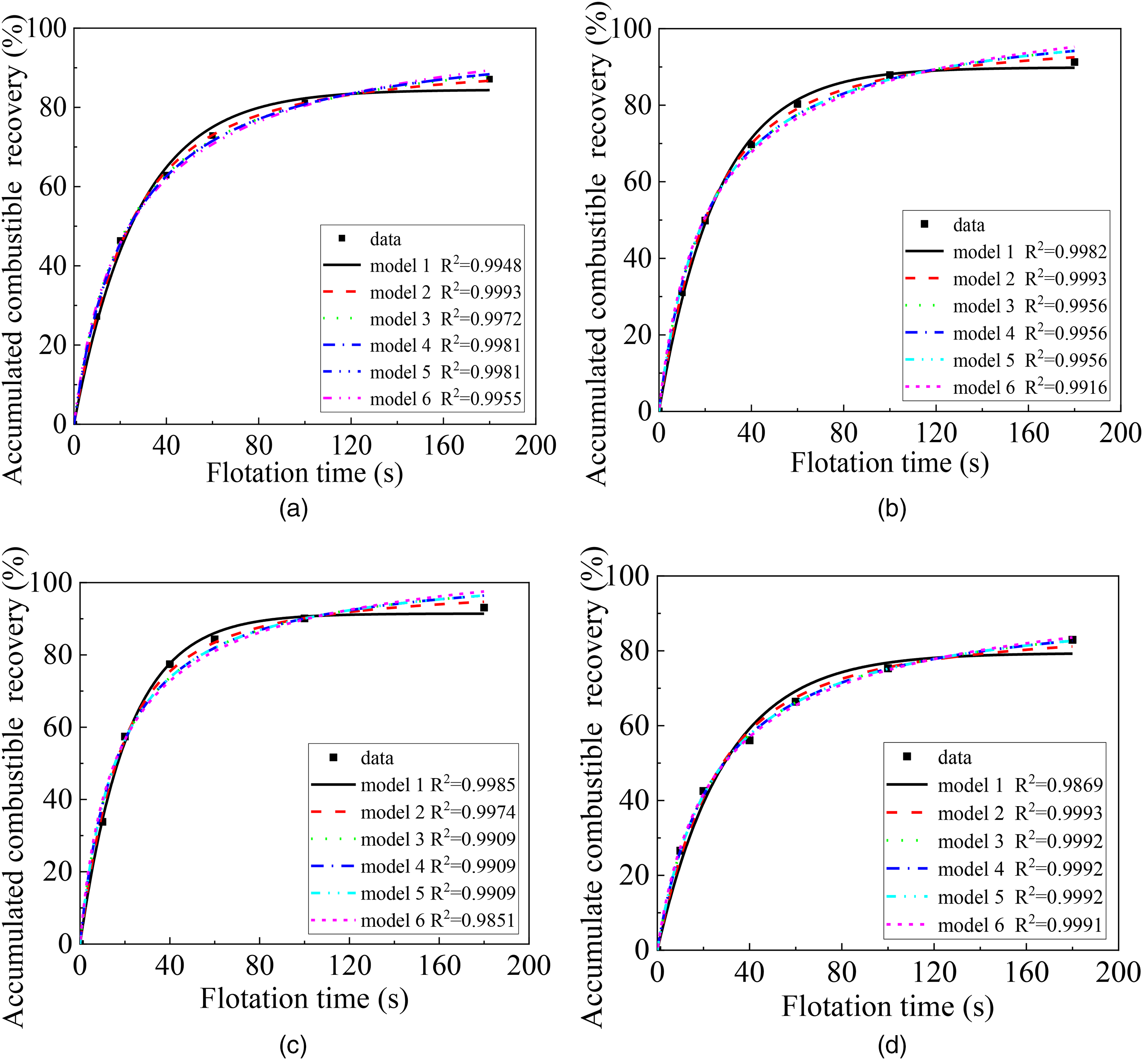
Comparison of six kinetic models and different particle sizes of coal slime flotation test data (a: −0.5 mm particle size; b: −0.5 + 0.25 mm particle size; c: −0.25 + 0.074 mm particle sizes; d: −0.074 mm particle size).
Nonlinear regression results of six models fitting different particle sizes coal slime flotation data.
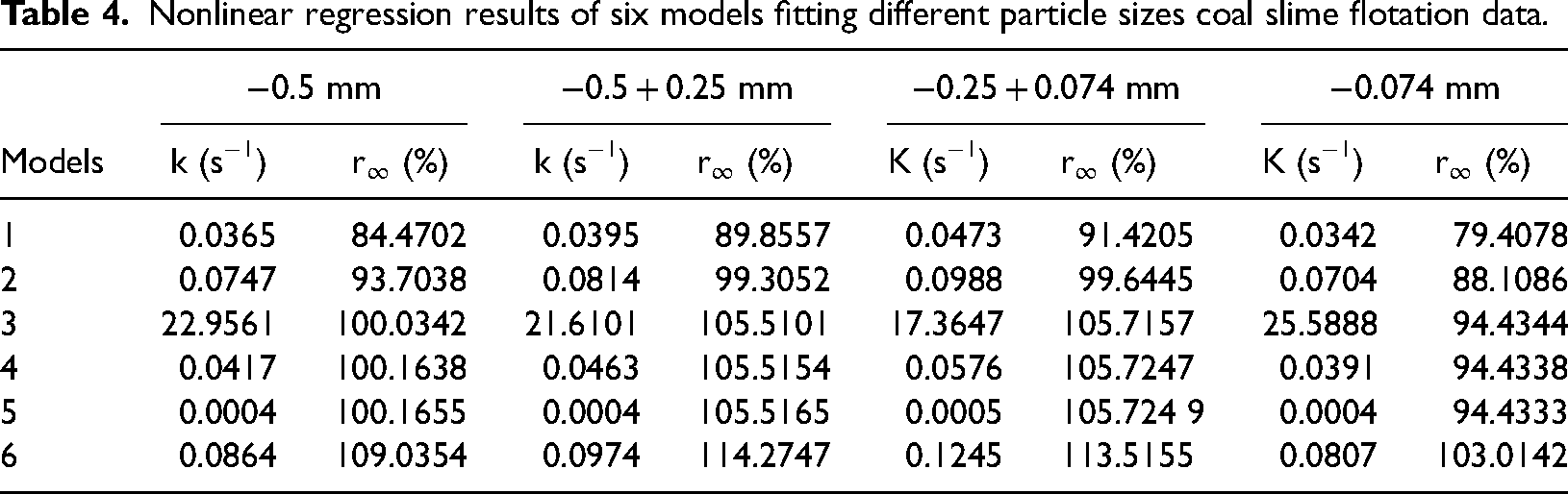
It can be seen from Table 4 that the test value of
The test data fitted with six kinetic models were used for further evaluation. It can be seen from Figure 6 that the correlation coefficient
Conclusions
Three sizes are obtained through experimental research: −0.25 + 0.074, −0.5 + 0.25, and −0.074 mm, the contact angles are 67.6°, 59.8°, and 40.8°, respectively, and the full-size −0.5 mm, the contact angle is 47.2°. It can be seen that the contact angle of −0.25 + 0.074 mm particle size of coal slime is the largest. This particle size of coal slime has the best hydrophobicity.
Before and after quenching and tempering of collector, the wetting heat value of three sizes of −0.25 + 0.074, −0.5 + 0.25, and −0.074 mm increased from −8.043 to −1.582 J/g, −10.288 increased to −2.750 J/g, and −13.213 increased to −6.665 J/g, the full-size increased from −12.719 to −4.188 J/g, a negative value indicates that the adsorption process is exothermic and spontaneous, the smaller the absolute value of the wetting heat, the stronger the hydrophobicity of coal slime.
Through the flotation test, it can be obtained that the cumulative combustible recovery of −0.25 + 0.074 mm particle size clean coal increases faster than −0.5 + 0.25, −0.5, and −0.074 mm particle size clean coal is the slowest. The separation efficiency of part of coal slime is improved after the classification treatment, and the −0.25 + 0.074 mm particle size coal slime has a higher combustibles recovery during the flotation.
In the flotation of full-size and three-size coal slime, the medium size can obtain the largest flotation number rate constant. The medium size shows better flotation behavior during the flotation process. The fitting results of flotation data show that coal slime flotation can be better described for each particle size with first-order model with rectangular distribution of flotabilities.
Footnotes
Acknowledgements
The authors acknowledge financial supports from the Cultivation project of Guizhou University (No.[2020]13) and National Natural Science Foundation of China (51864010).
Declaration of conflicting interests
The author(s) declared no potential conflicts of interest with respect to the research, authorship, and/or publication of this article.
Funding
The author(s) received financial supports from the Cultivation project of Guizhou University (No. [2020]13) and National Natural Science Foundation of China (51864010) for the research, authorship, and/or publication of this article.
